Article

Phosphate Fertilizers’ Dual Role in Cadmium-Polluted Acidic Agricultural Soils: Dosage Dependency and Passivation Potential


1
Beijing Key Laboratory of Farmland Soil Pollution Prevention and Remediation, College of Resources and Environmental Sciences, China Agricultural University, Beijing 100193, China
2
School of Agriculture, Sun Yat-sen University, Shenzhen 518107, China
*
Author to whom correspondence should be addressed.
Agronomy 2024, 14(10), 2201; https://doi.org/10.3390/agronomy14102201

Submission received: 13 August 2024 / Revised: 11 September 2024 / Accepted: 19 September 2024 / Published: 25 September 2024
(This article belongs to the Section Soil and Plant Nutrition)

Abstract

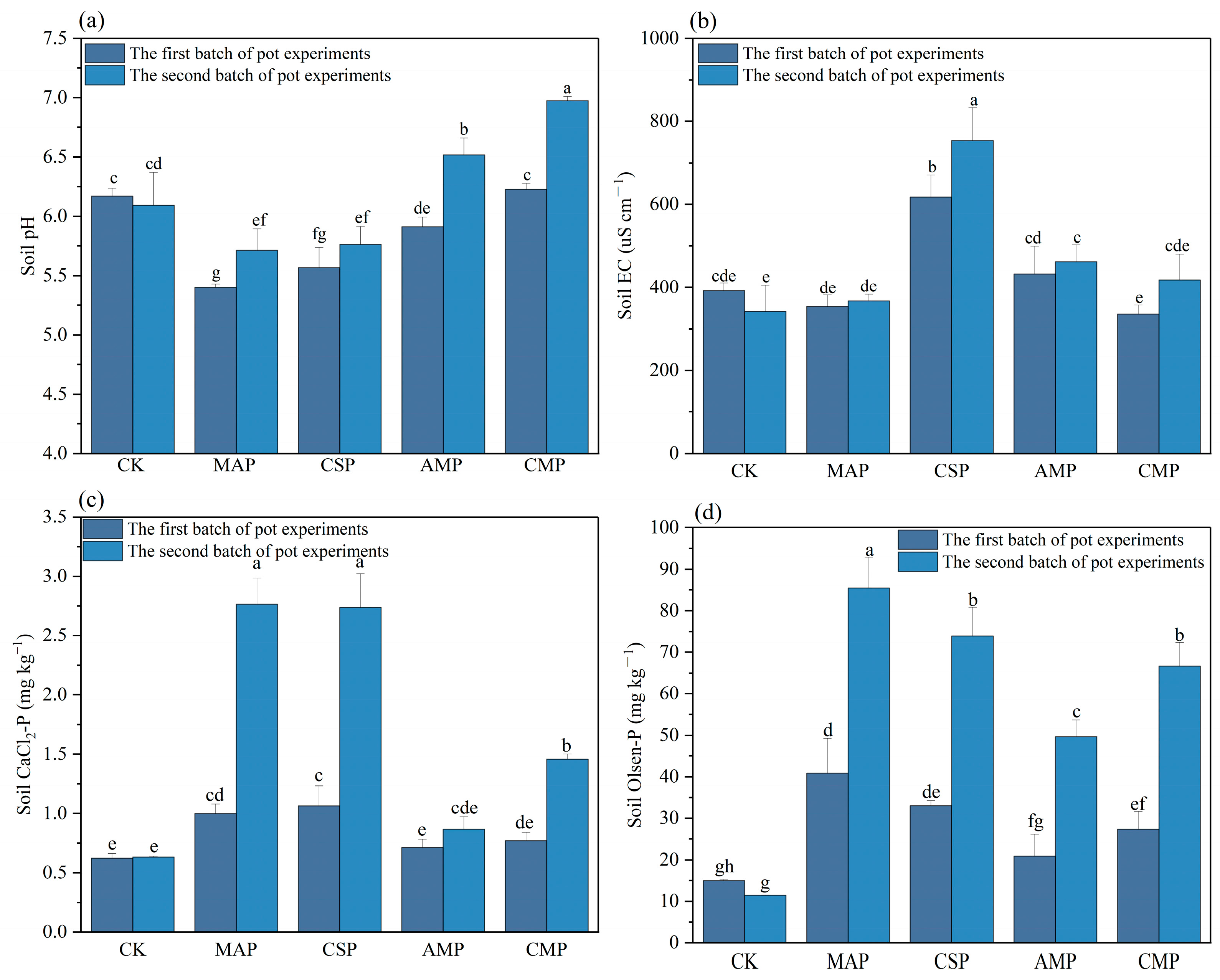
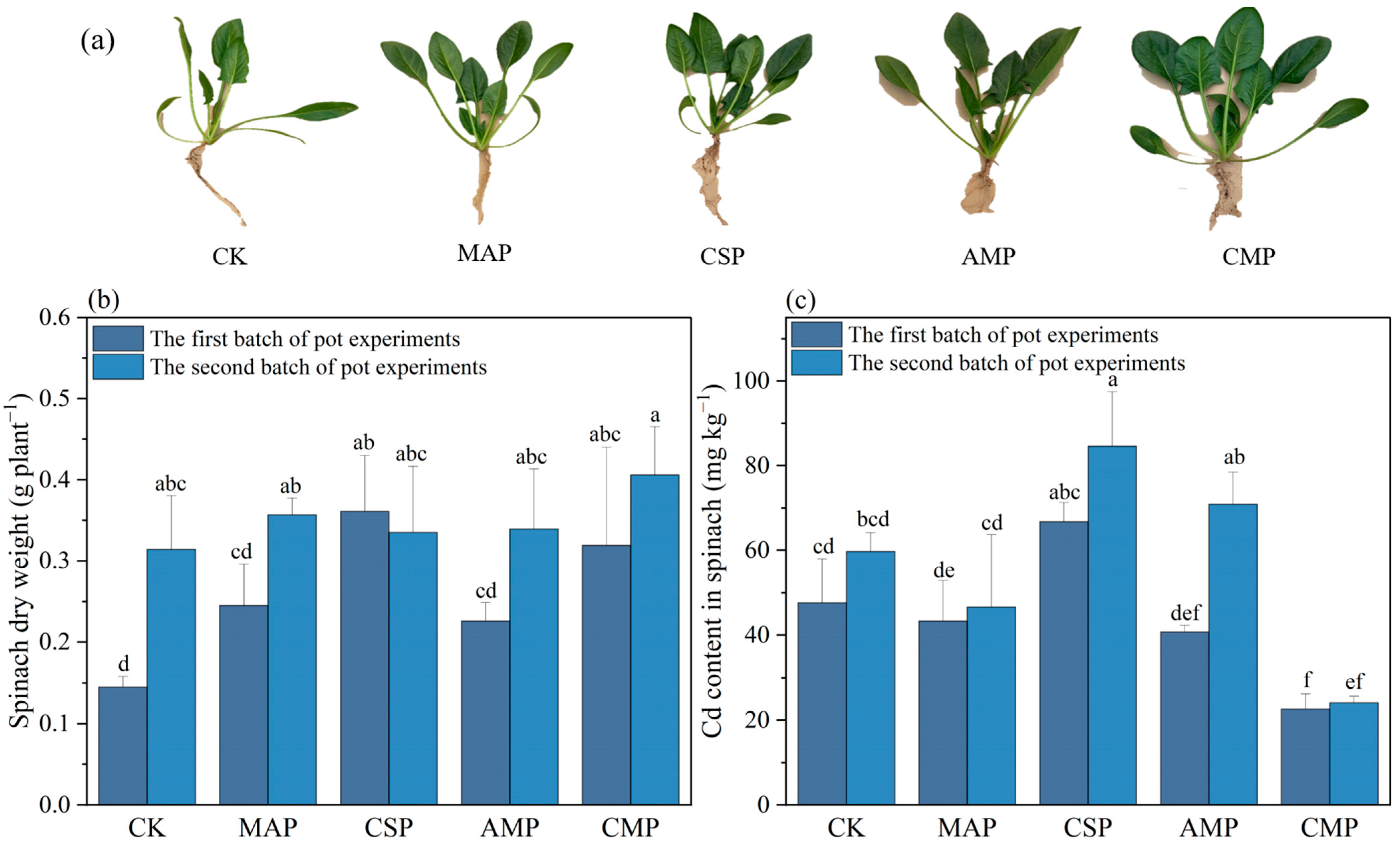
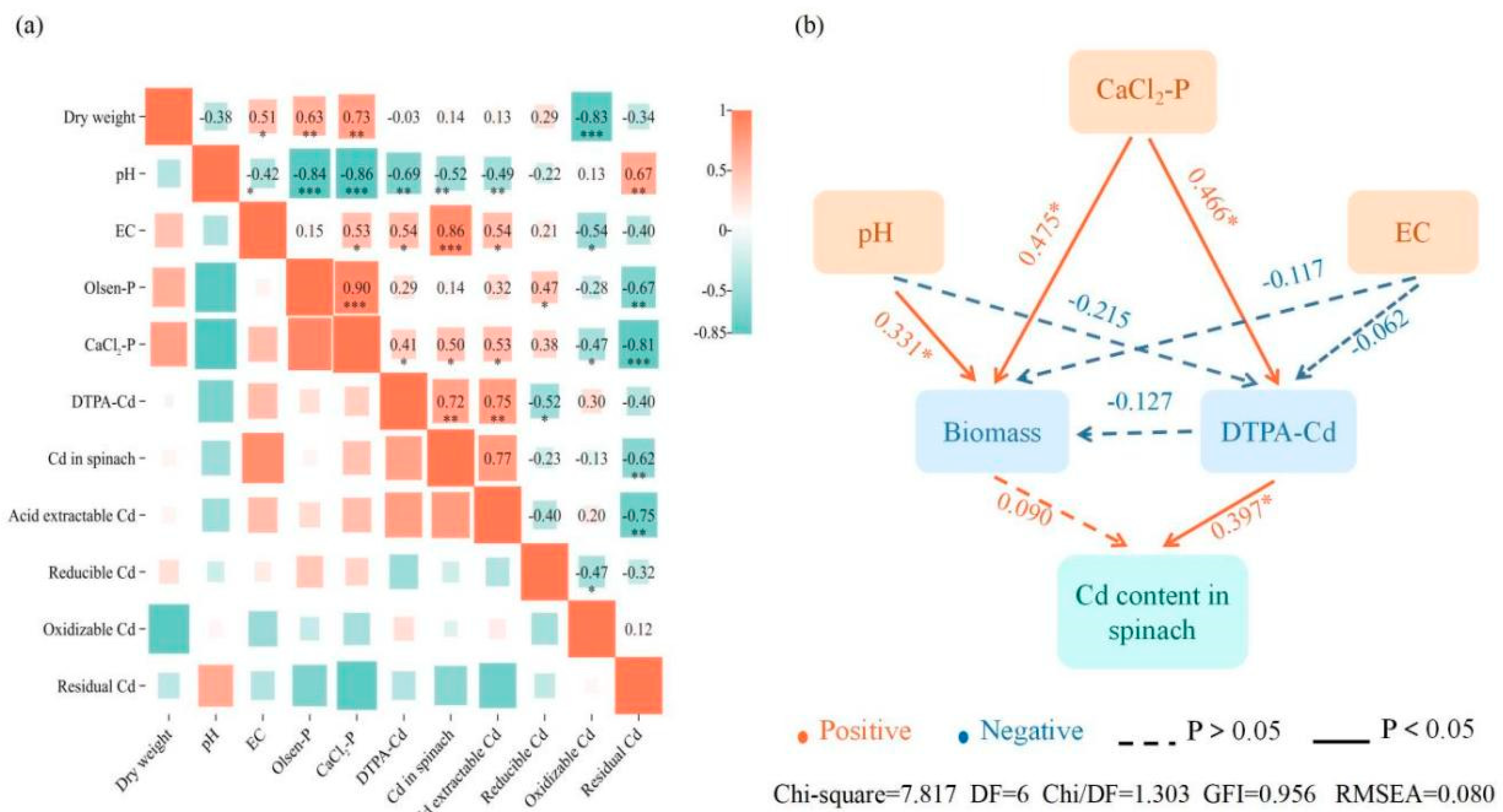
Cadmium (Cd) contamination in agricultural soils is a common issue, posing health risks as it enters the human body through the food chain. Commonly used phosphate fertilizers (PFs) not only provide essential phosphorus (P) nutrients to crops but also serve as P-containing materials for immobilizing heavy metals (HMs) like Cd in soils. Therefore, understanding the passivation effects of PFs on soil Cd and their potential influencing factors is crucial for mitigating soil Cd pollution. In this study, the impact of multi-crop applications (75 mg P kg−1, 150 mg P kg−1) of four kinds of PFs on reducing soil Cd toxicity and decreasing Cd accumulation in spinach was investigated. The results indicated that under the low application rate (75.0 mg P kg−1), all PFs could passivate Cd, and CMP demonstrated the most effective passivation of Cd. However, under the high application rate (150 mg P kg−1), the immobilization effect diminished or even activated Cd. Among the different types of PFs, CMP application alleviated soil acidification and significantly reduced soil-available Cd, showing the best performance in promoting spinach growth and Cd inhibition. These results suggest that PF application in Cd-contaminated soils affects spinach growth and Cd accumulation, with soil pH, available phosphorus (AP), and Cd dynamics being crucial; moreover, low-P, micronutrient-rich, alkaline PFs like CMP optimize spinach yields and minimize Cd uptake, and excessive application of soluble PFs decreases pH, increases Cd mobility, and poses health risks, suggesting a need for balanced fertilizer use.
Keywords: phosphate fertilizer; heavy metal uptake; cadmium remediation; spinach; acidic soils phosphate fertilizer; heavy metal uptake; cadmium remediation; spinach; acidic soils