Article

Soil Habitats Are Affected by Fungal Waste Recycling on Farmland in Agro-Pastoral Ecotone in Northern China

College of Desert Control Science and Engineering, Inner Mongolia Agricultural University, Hohhot 010018, China
*
Author to whom correspondence should be addressed.
Agronomy 2023, 13(9), 2432; https://doi.org/10.3390/agronomy13092432

Submission received: 12 June 2023 / Revised: 18 August 2023 / Accepted: 14 September 2023 / Published: 21 September 2023
(This article belongs to the Special Issue Agricultural Waste Management in a Circular Economy Perspective)

Abstract

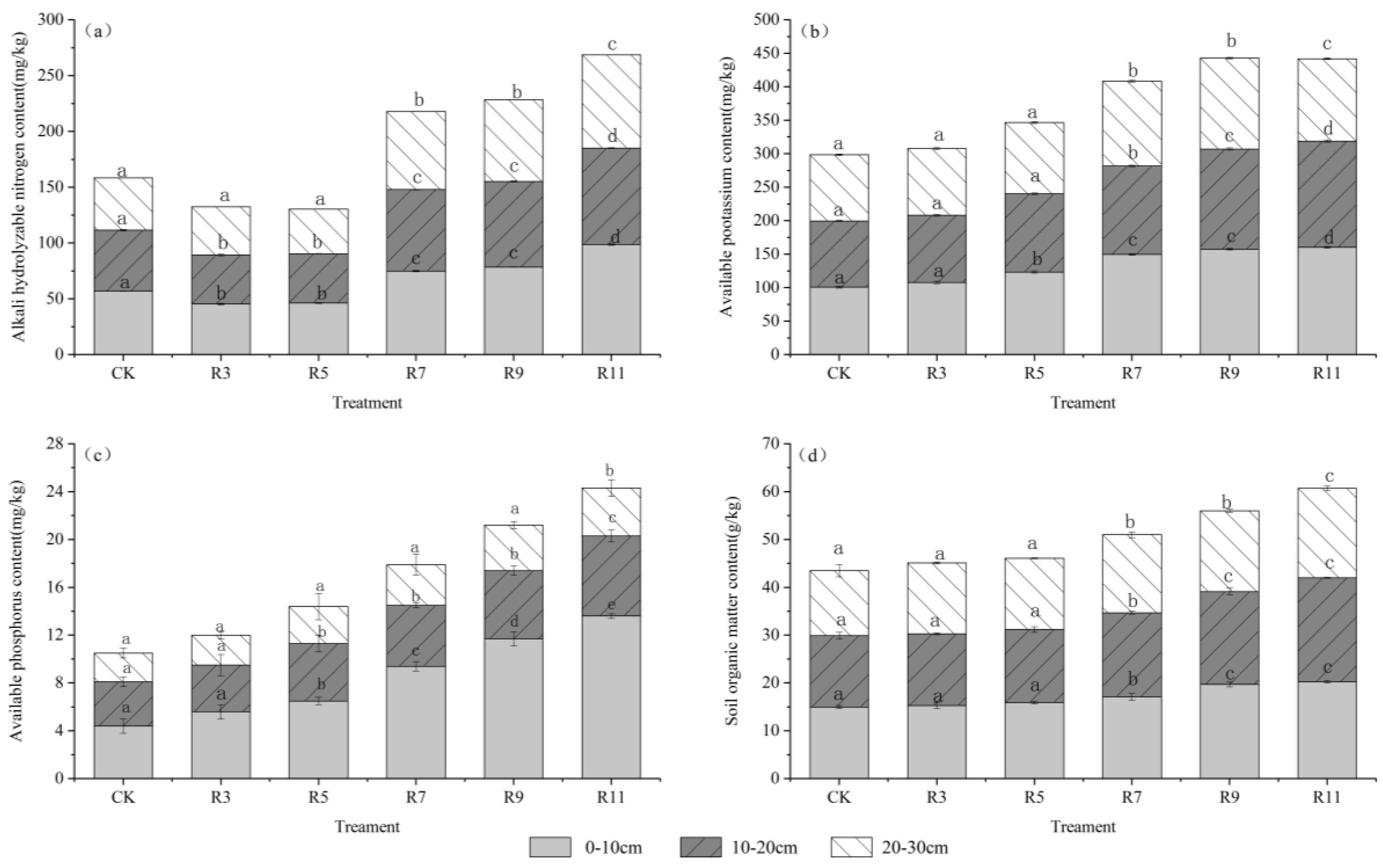
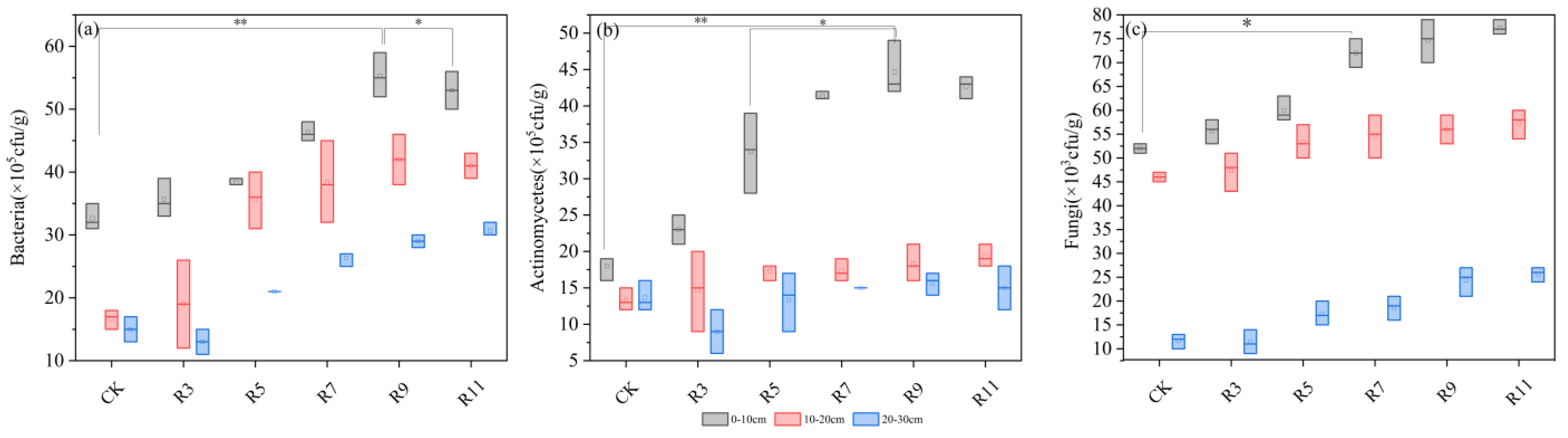
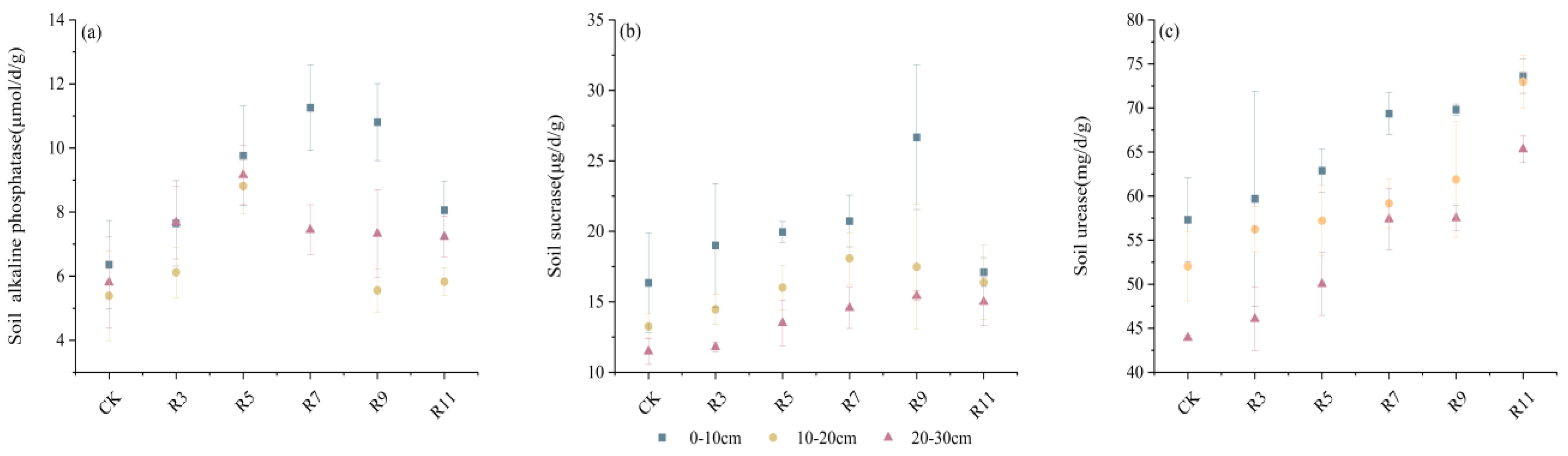
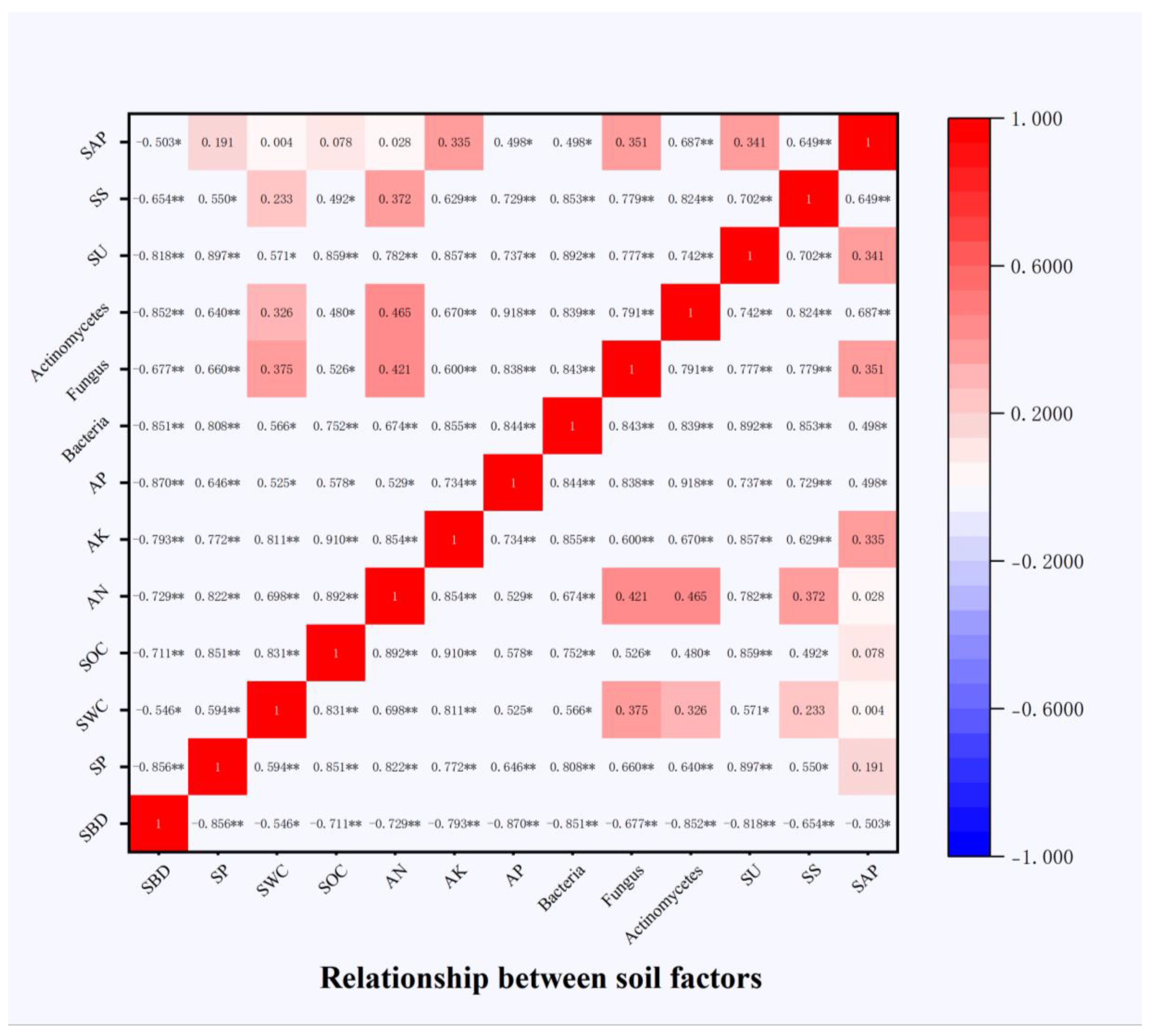
As part of the ecological barrier and an essential element of food security, the agro-pastoral ecotone is vital in northern China. Since soil fertility in northern China is low due to frequent surface disturbances, it is necessary to improve the properties of the soil. This study aims to examine the impact of fungal residue return on soil properties based on six treatments (CK: 0 kg/40 m2; R3: 90 kg/40 m2; R5: 150 kg/40 m2; R7: 210 kg/40 m2; R9: 270 kg/40 m2; R11: 330 kg/40 m2;) of fungal residue return concentration experimental data from 0 to 30 cm soil depth. The results showed that the effect of fungal residue returning on soil habits was greater at 0–10 cm of the surface layer. The bulk density can be reduced to 25.83% of CK, and water content can be increased up to 26.26%. Adding fungal residue to the field led to a greater increase in soil parameters (SOM and AP), and this characteristic effect continued as the return concentration increased. The number of soil bacteria and actinomycetes remained stable, and the amount of fungi was at its lowest. Compared with CK, the number of bacteria, fungi, and actinomycetes increased by 1.94 times, 1.46 times, and 1.71 times, respectively. After the residue was returned to the field, AK had the strongest correlation with other factors (p < 0.01), and microorganism and enzyme activities were strongly correlated (p < 0.01). In conclusion, this study presents a new method of resource utilization of downstream wastes in the food industry while simultaneously providing natural, pollution-free improvements to the soil, which is very beneficial to increasing crop yield.
Keywords: fungus return; agro-pastoral ecotone; soil properties; soil fertility fungus return; agro-pastoral ecotone; soil properties; soil fertility