Article

Soil Organic Carbon Significantly Increases When Perennial Biomass Plantations Are Reverted Back to Annual Arable Crops


1
Department of Sustainable Crop Production, Università Cattolica del Sacro Cuore, Via Emilia Parmense, 84, 29122 Piacenza, Italy
2
Institute of Biological and Environmental Sciences, School of Biological Sciences, University of Aberdeen, 23 St. Machar Drive, Aberdeen AB24 3UU, UK
*
Author to whom correspondence should be addressed.
Agronomy 2023, 13(2), 447; https://doi.org/10.3390/agronomy13020447

Submission received: 22 December 2022 / Revised: 26 January 2023 / Accepted: 30 January 2023 / Published: 2 February 2023
(This article belongs to the Section Farming Sustainability)

Abstract

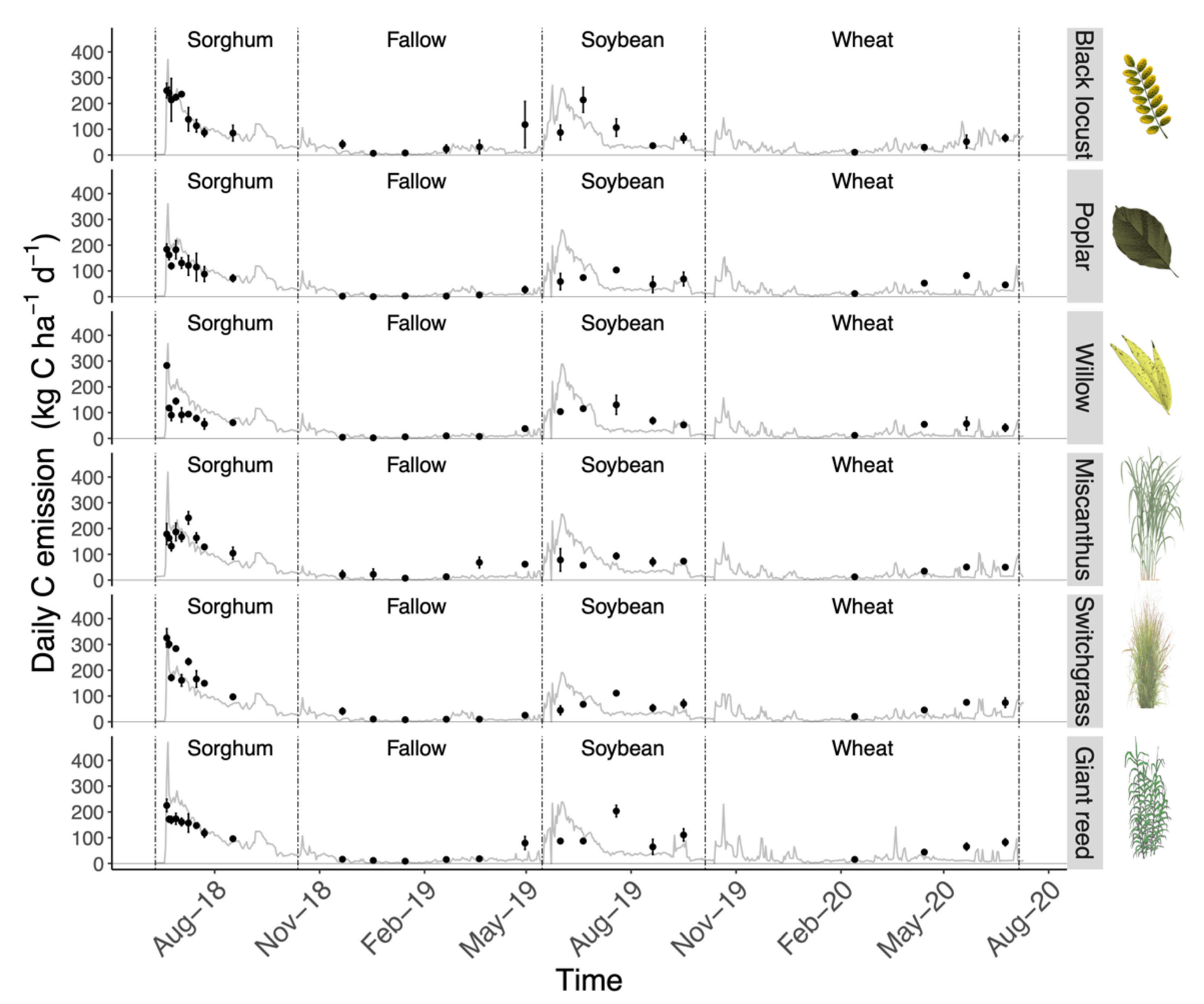
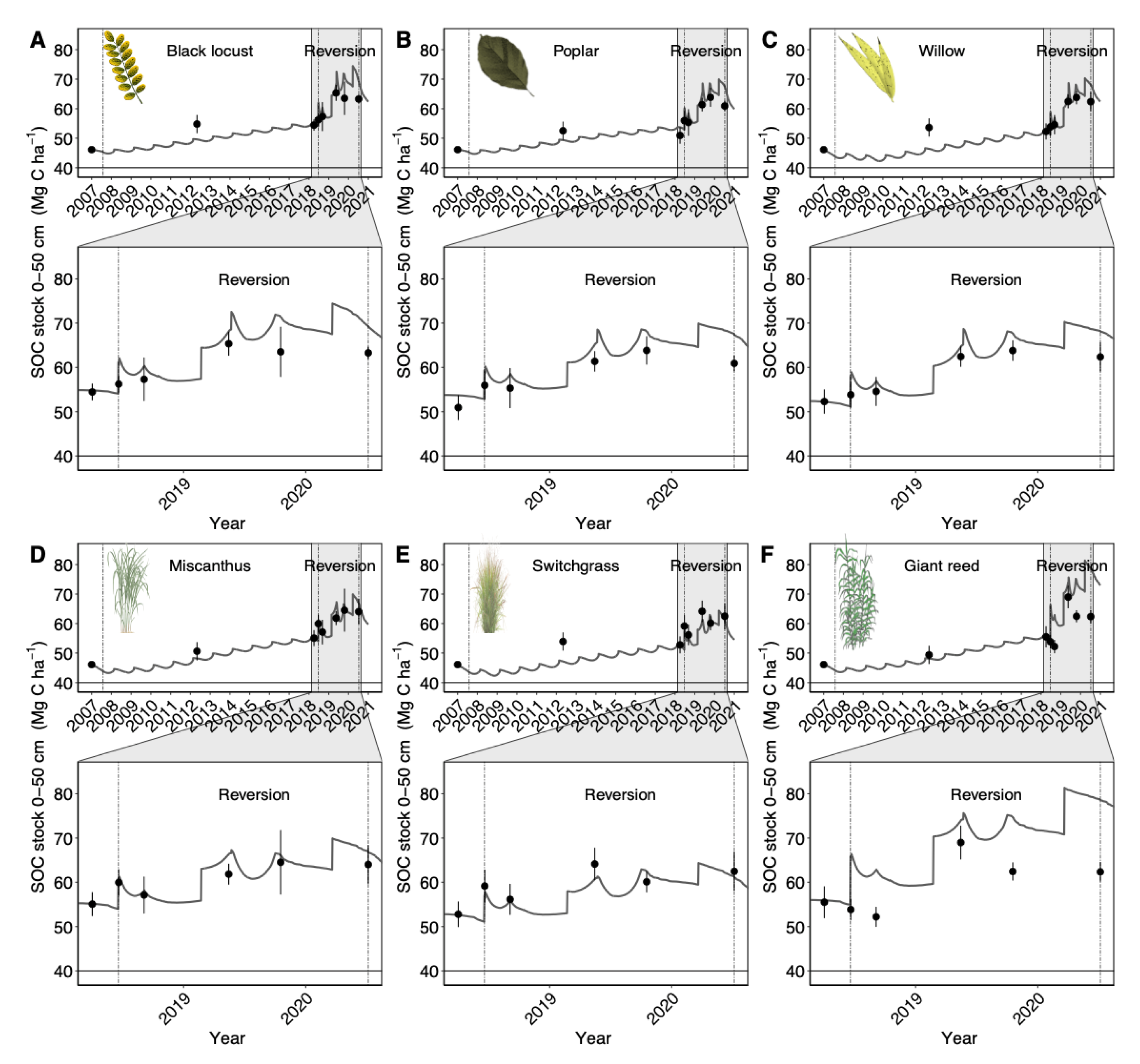
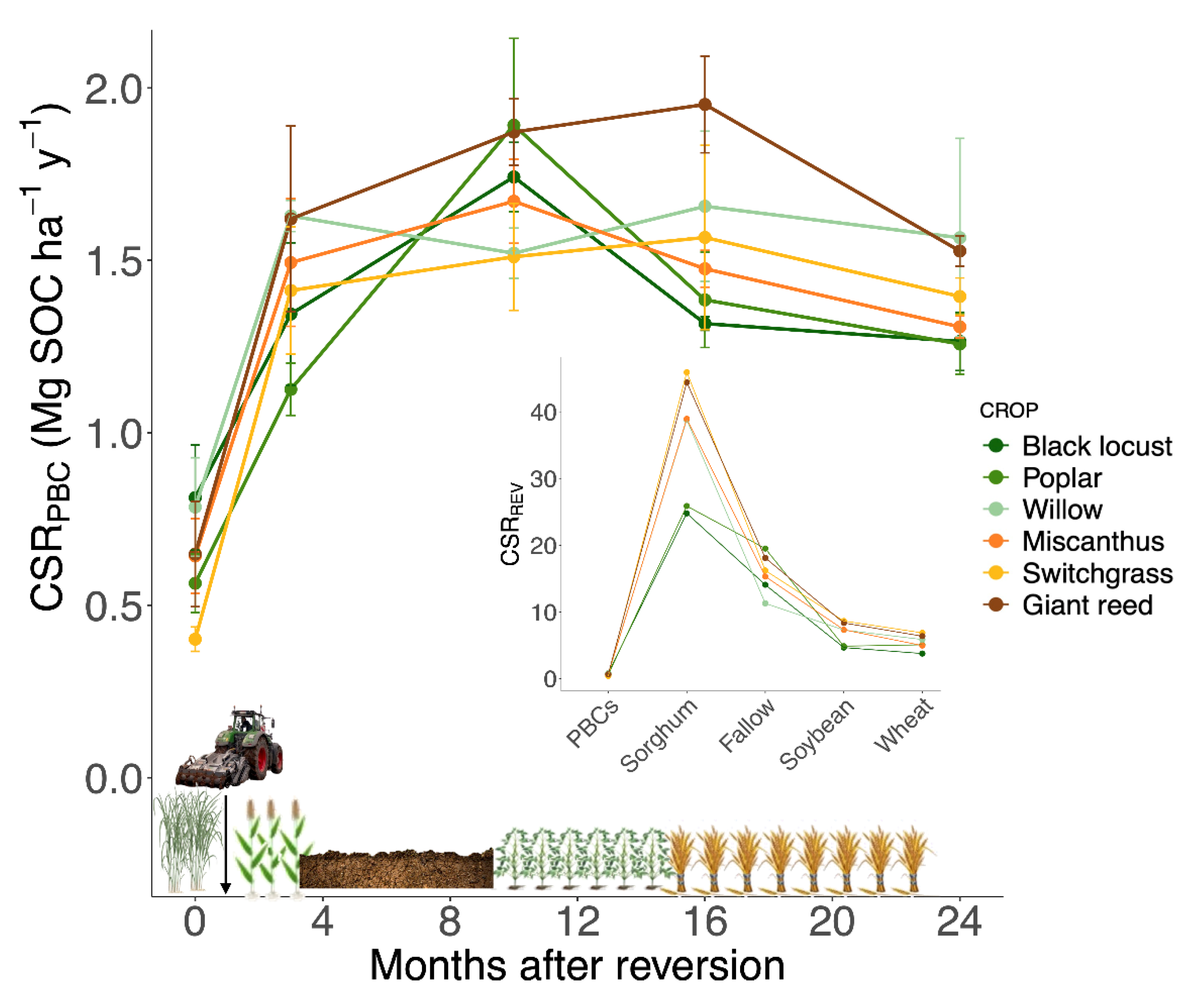
The cultivation of perennial biomass crops (PBCs) on marginal lands is necessary to provide feedstock for the bio-based EU economy and accrue environmental benefits through carbon (C) sequestration in soil. Short rotation coppice (SRC) species, e.g., willow, black locust, and poplar, and perennial rhizomatous grasses, e.g., miscanthus, switchgrass, and giant reed, have been tested in many EU projects in the last 10 years to investigate their productive potential and contribution to the mitigation of climate change. A major knowledge gap regarding PBCs is the fate of accumulated soil organic carbon (SOC), once PBC plantations are reverted to arable crops. In this study, the effects of PBCs reversion on SOC and carbon-dioxide emission (CO2) were monitored over a 2-year period in a long-term (11-year) multispecies trial of six PBCs: Three SRC species including poplar (Populus spp.), willow (Salix spp.), and black locust (Robinia pseudoacacia), and three herbaceous rhizomatous grasses including miscanthus (Miscanthus x giganteus), switchgrass (Panicum virgatum), and giant reed (Arundo donax). The SOC change and GHG emissions were then modeled with the ECOSSE model. Two years after the reversion, SOC increased significantly for all PBCs with no significant difference between them. During the PBC cultivation phase, 5.35 Mg SOC ha−1 was sequestered while 10.95 Mg SOC ha−1 was added by reversion, which indicated that 67% of SOC sequestration occurred after the reversion. The ECOSSE model was successfully used to simulate SOC sequestration trajectories (R2 = 0.77) and CO2 emission from soil (R2 = 0.82) after the reversion of the six PBCs. This indicated that the high SOC sequestration rate after the reversion was due to humification of belowground biomass (roots + rhizomes/stumps), which had been mulched and incorporated into the reversion layer (0–30 cm). This occurred in the first 2 months (on average 5.47 Mg SOC ha−1 y−1) and in the first year after the reversion (1.3–1.8 Mg SOC ha−1 y−1). Considering the entire PBCs cultivation cycle (13 years of PBCs + reversion), PBCs showed annual SOC sequestration rates higher than 1 Mg SOC ha−1 y−1, placing PBCs cultivation and reversion as one of the most promising agricultural practices to combine biomass production, with the recovery of marginal lands to agricultural production through increasing the SOC.
Keywords: perennial biomass crops; soil organic carbon; ECOSSE; miscanthus; switchgrass; giant reed; black locust; poplar; willow; reversion perennial biomass crops; soil organic carbon; ECOSSE; miscanthus; switchgrass; giant reed; black locust; poplar; willow; reversion