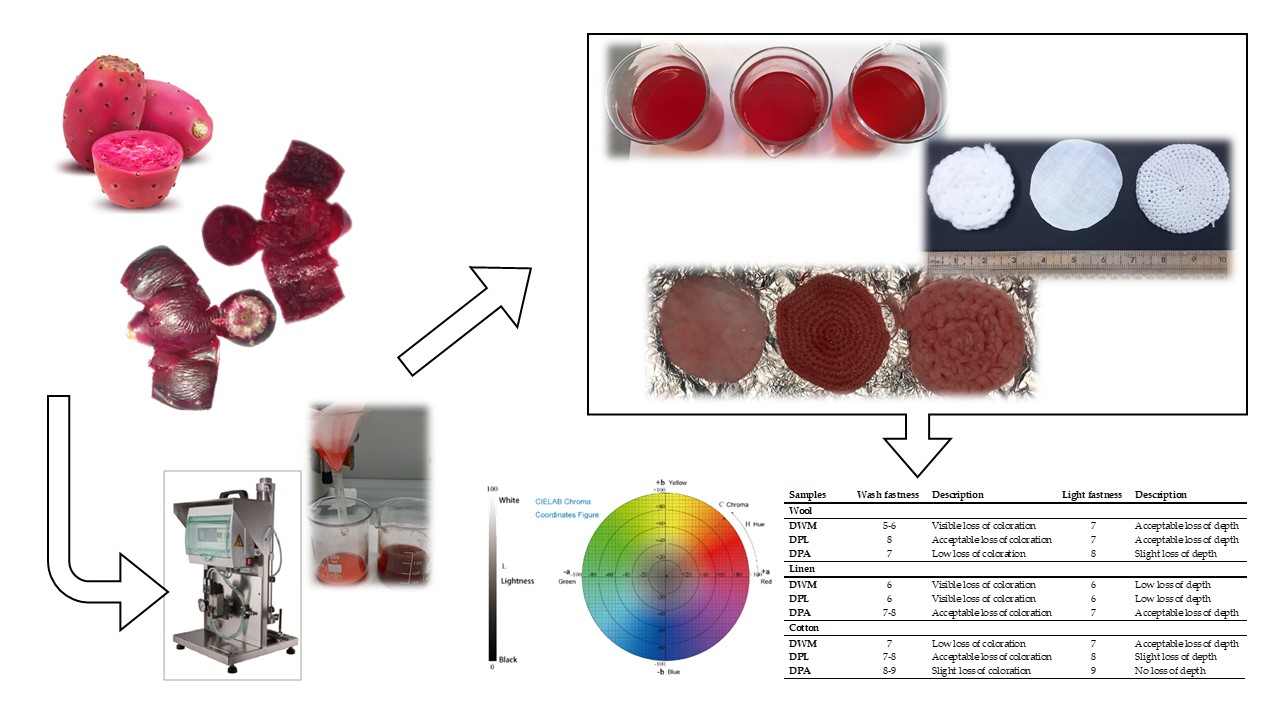
Recovery and Valorization of Bioactive and Functional Compounds from the Discarded of Opuntia ficus-indica (L.) Mill. Fruit Peel

 ,
,  ,
,  ,
,  and
and Abstract
Share and Cite
Scarano, P.; Tartaglia, M.; Zuzolo, D.; Prigioniero, A.; Guarino, C.; Sciarrillo, R. Recovery and Valorization of Bioactive and Functional Compounds from the Discarded of Opuntia ficus-indica (L.) Mill. Fruit Peel. Agronomy 2022, 12, 388. https://doi.org/10.3390/agronomy12020388
Scarano P, Tartaglia M, Zuzolo D, Prigioniero A, Guarino C, Sciarrillo R. Recovery and Valorization of Bioactive and Functional Compounds from the Discarded of Opuntia ficus-indica (L.) Mill. Fruit Peel. Agronomy. 2022; 12(2):388. https://doi.org/10.3390/agronomy12020388
Chicago/Turabian StyleScarano, Pierpaolo, Maria Tartaglia, Daniela Zuzolo, Antonello Prigioniero, Carmine Guarino, and Rosaria Sciarrillo. 2022. "Recovery and Valorization of Bioactive and Functional Compounds from the Discarded of Opuntia ficus-indica (L.) Mill. Fruit Peel" Agronomy 12, no. 2: 388. https://doi.org/10.3390/agronomy12020388
APA StyleScarano, P., Tartaglia, M., Zuzolo, D., Prigioniero, A., Guarino, C., & Sciarrillo, R. (2022). Recovery and Valorization of Bioactive and Functional Compounds from the Discarded of Opuntia ficus-indica (L.) Mill. Fruit Peel. Agronomy, 12(2), 388. https://doi.org/10.3390/agronomy12020388