Article

Collection Guidelines to Achieve a Viable Caper Commercial Propagation
by
María Laura Foschi
1,2,
Mariano Juan
1,
Bernardo Pascual
1 and
Nuria Pascual-Seva
1,*
1
Departamento Producción Vegetal, Universitat Politècnica de València, 46022 Valencia, Spain
2
Horticulture and Floriculture, Agriculture Faculty, National University of Cuyo, Mendoza M5528AHB, Argentina
*
Author to whom correspondence should be addressed.
Agronomy 2022, 12(1), 74; https://doi.org/10.3390/agronomy12010074

Submission received: 3 December 2021 / Revised: 23 December 2021 / Accepted: 27 December 2021 / Published: 29 December 2021

Abstract

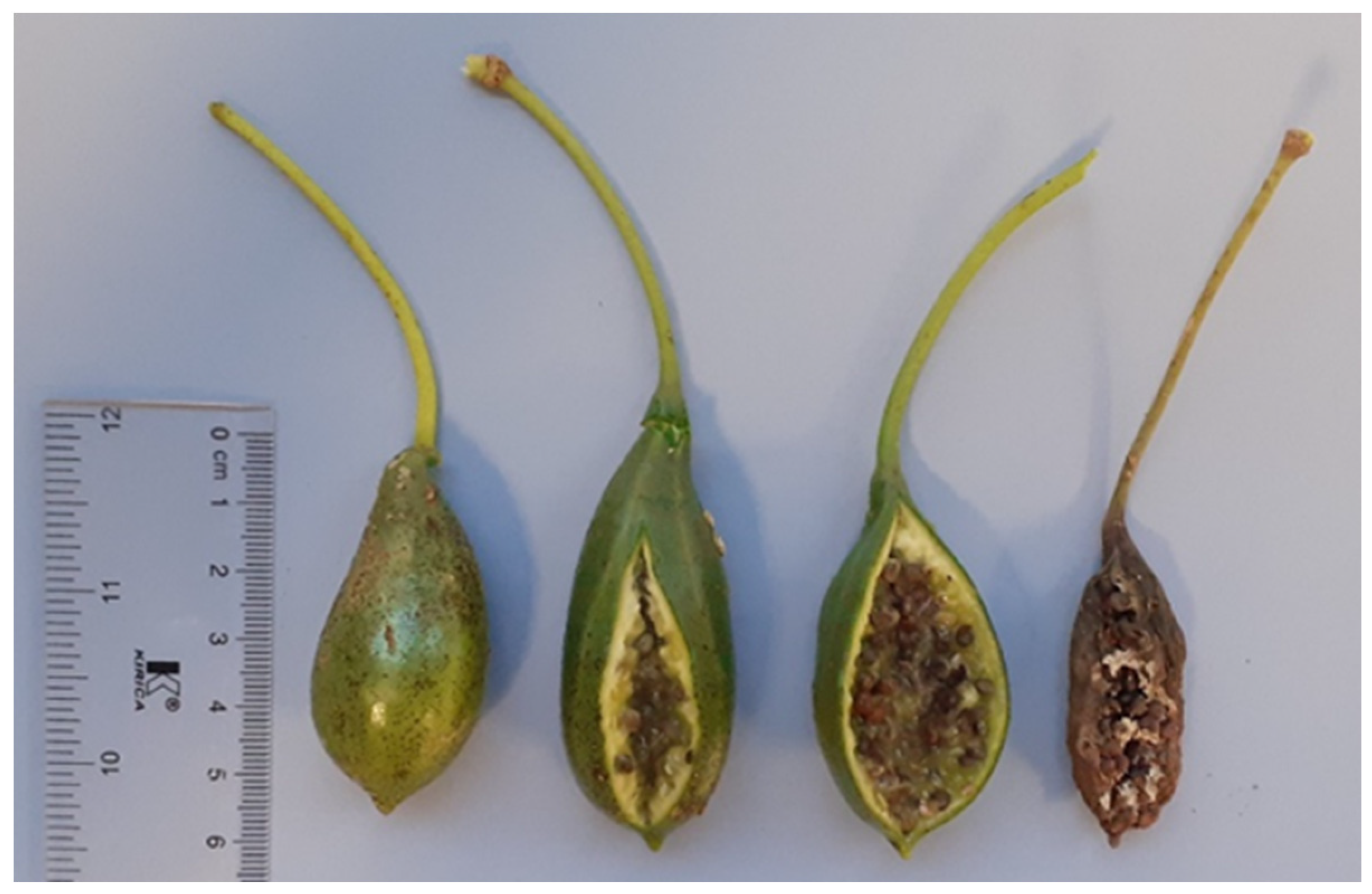
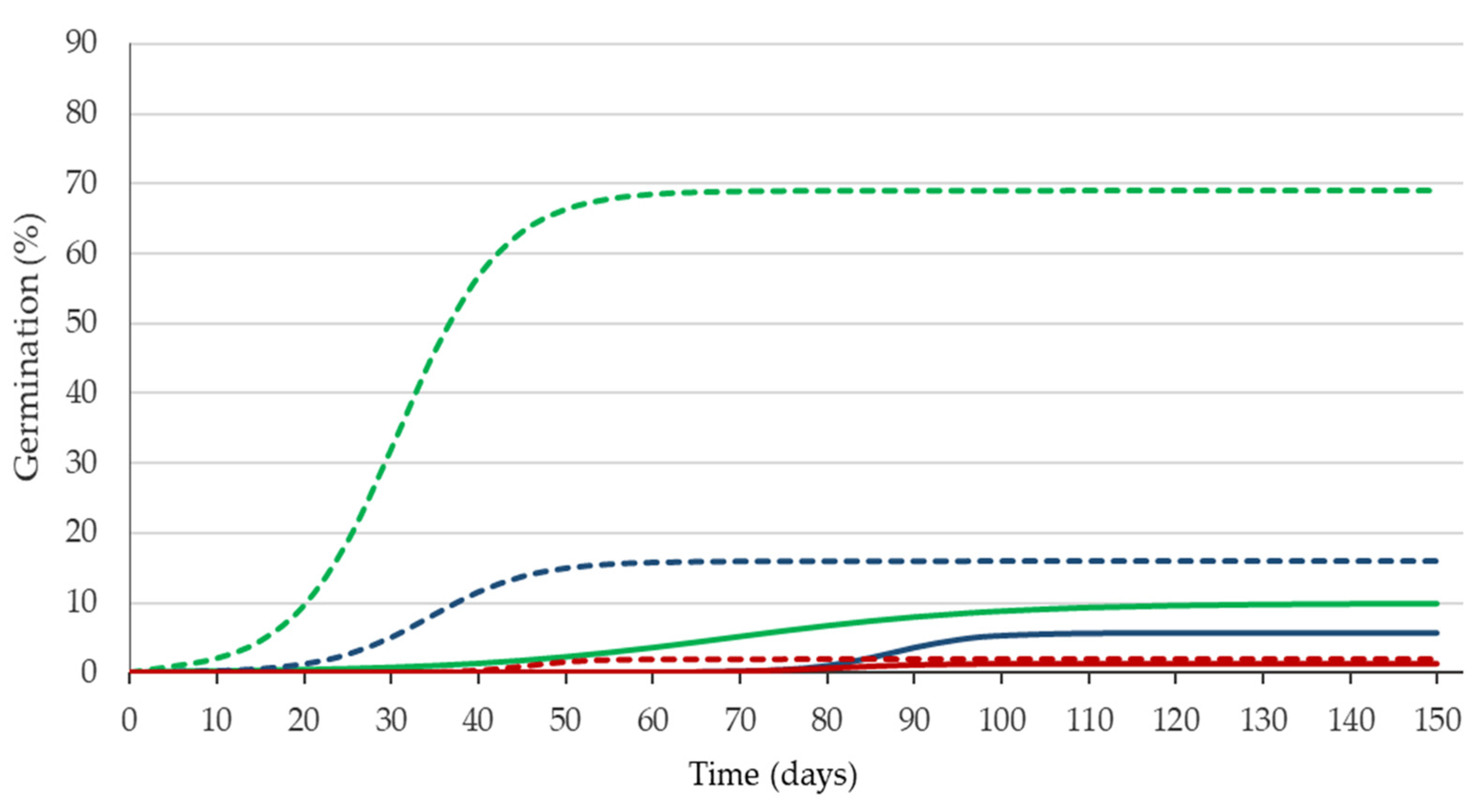
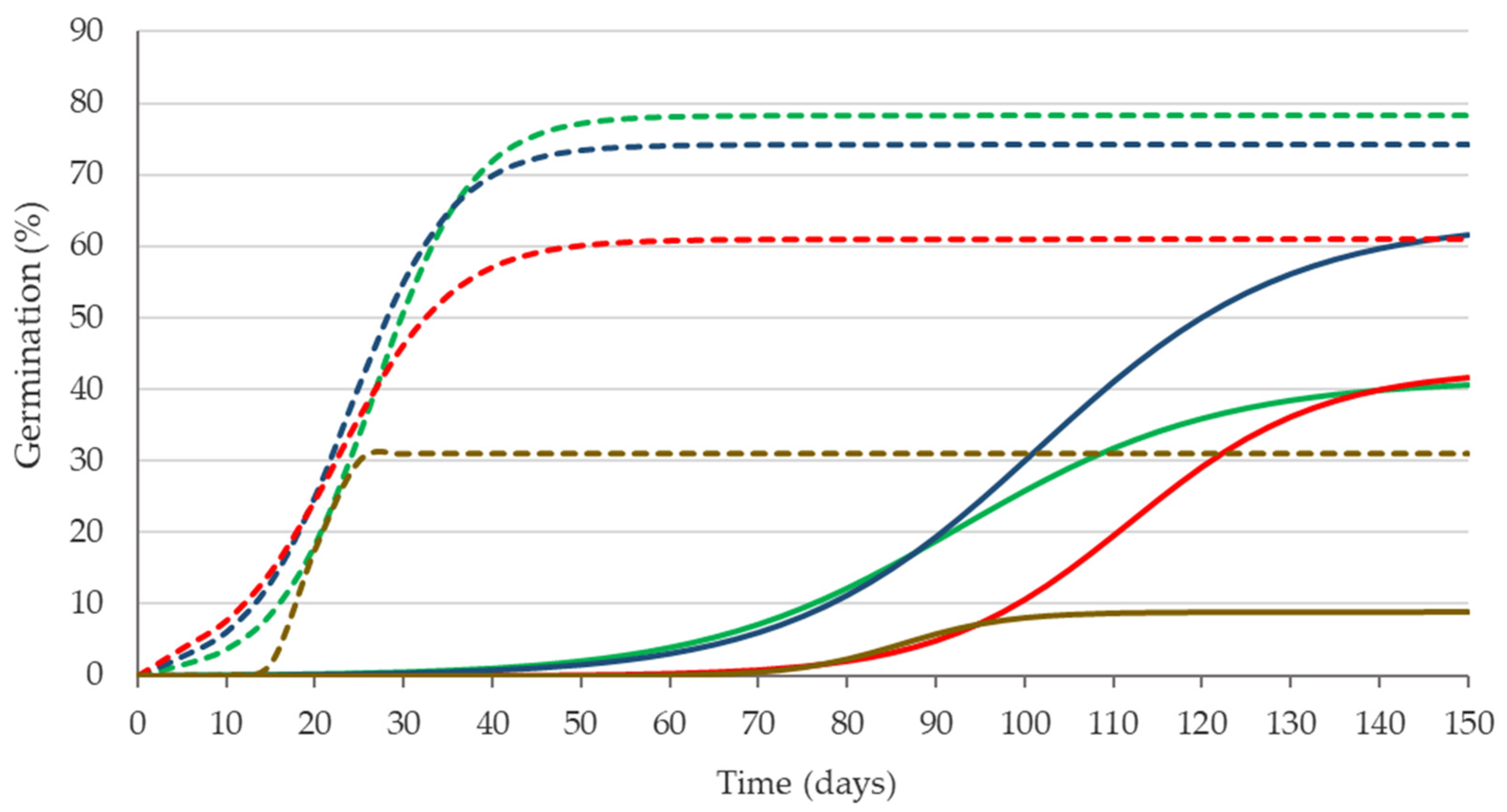
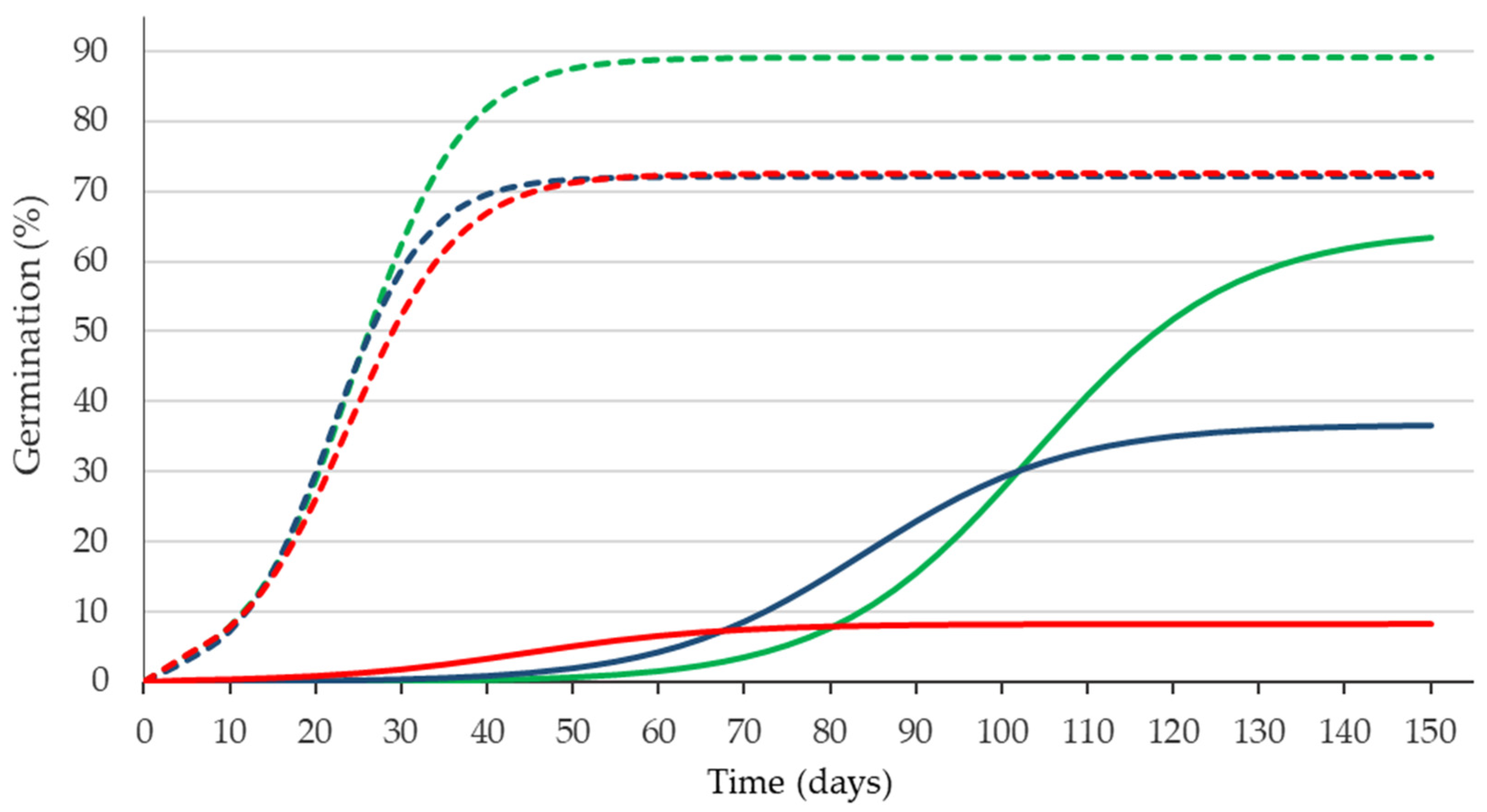
The caper (Capparis spinosa L.) is a perennial plant characteristic of the Mediterranean region that presents difficulties in its propagation, both vegetatively and by seeds. The main aim of this study is to provide collection guidelines to achieve a viable caper commercial propagation, for which three experiments were undertaken to determine the viability and germination in different seed lots. In the first experiment, commercial and own produced seeds (collected with the same criteria as commercial seeds) were analysed; the commercial seeds presented the lowest viability and germination. The second experiment analysed the effect of the fruit (from which the seeds were extracted) at its maturation stage, obtaining the lowest seed viability and germination in the seeds extracted from the dry fruits. In the third experiment, seed viability and germination were analysed immediately after collection, following a short drying period (3 d), and after six storage months. Viability and germination decreased with seed storage. Overall, it can be stated that caper seeds are sensitive to desiccation; consequently, a general rule of thumb is to collect the fruits once a week, to extract the seeds, and to plant them immediately for germination.
Keywords: Capparis spinosa L.; seed viability; germination percentage; seed moisture content; gibberellic acid Capparis spinosa L.; seed viability; germination percentage; seed moisture content; gibberellic acid