Article

Effect of Asynchronous Light and Temperature Fluctuations on Plant Traits in Indoor Growth Facilities

1
Department of Environmental Sciences—Botany, University of Basel, 4056 Basel, Switzerland
2
Department of Research and Development, Heliospectra, 414 58 Gothenborg, Sweden
*
Author to whom correspondence should be addressed.
Agronomy 2021, 11(4), 755; https://doi.org/10.3390/agronomy11040755

Submission received: 22 February 2021 / Revised: 2 April 2021 / Accepted: 9 April 2021 / Published: 13 April 2021

Abstract

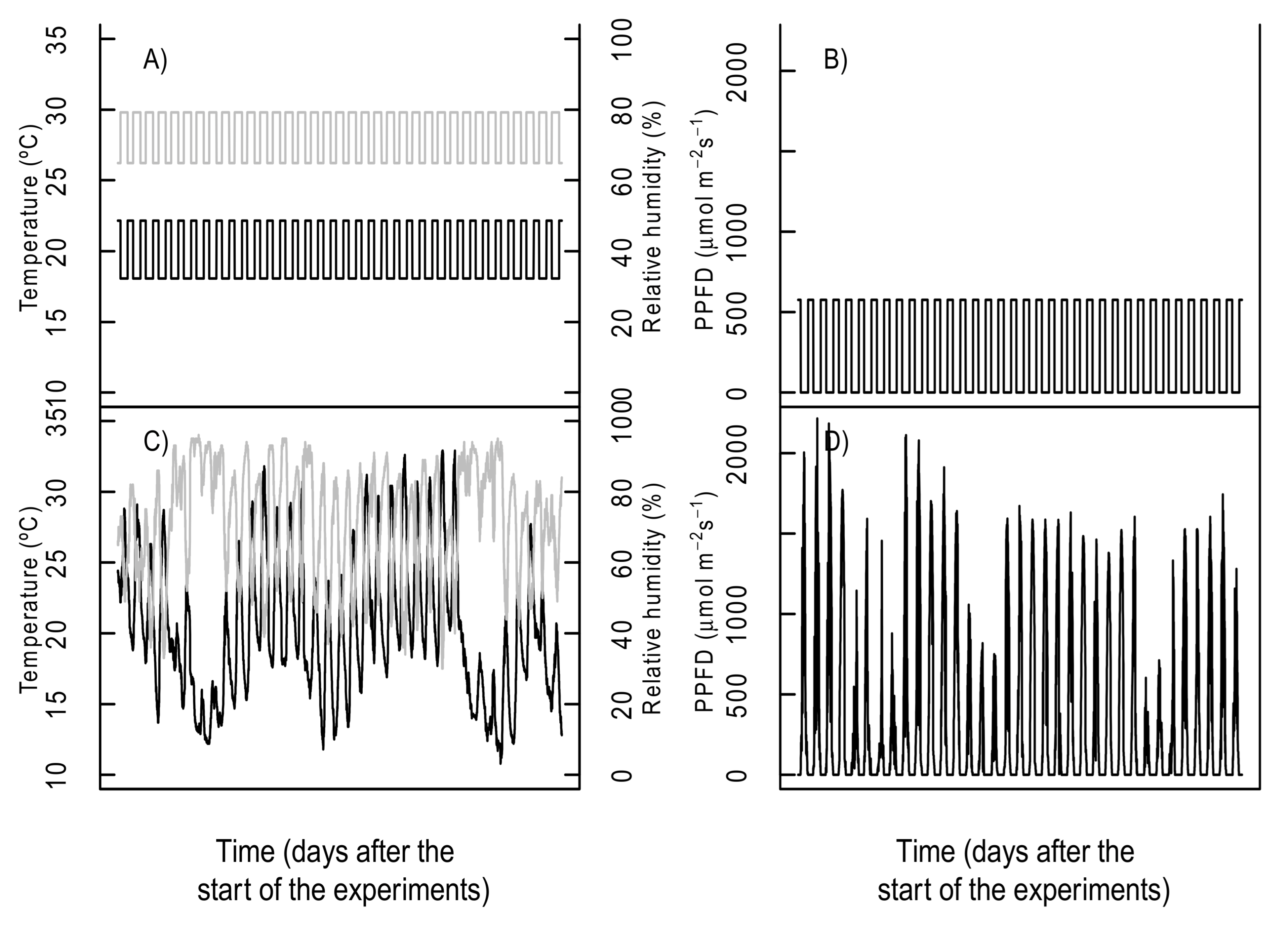
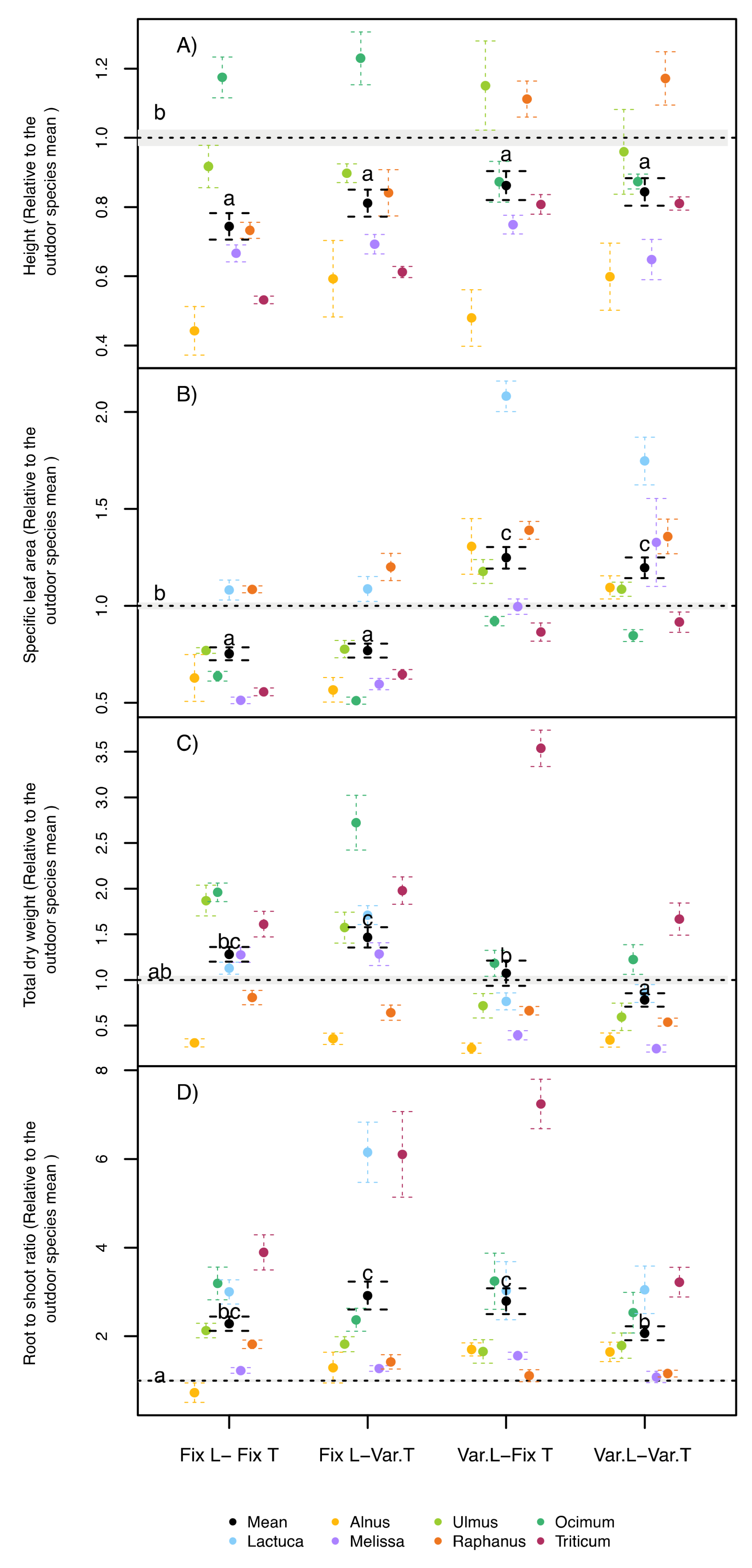
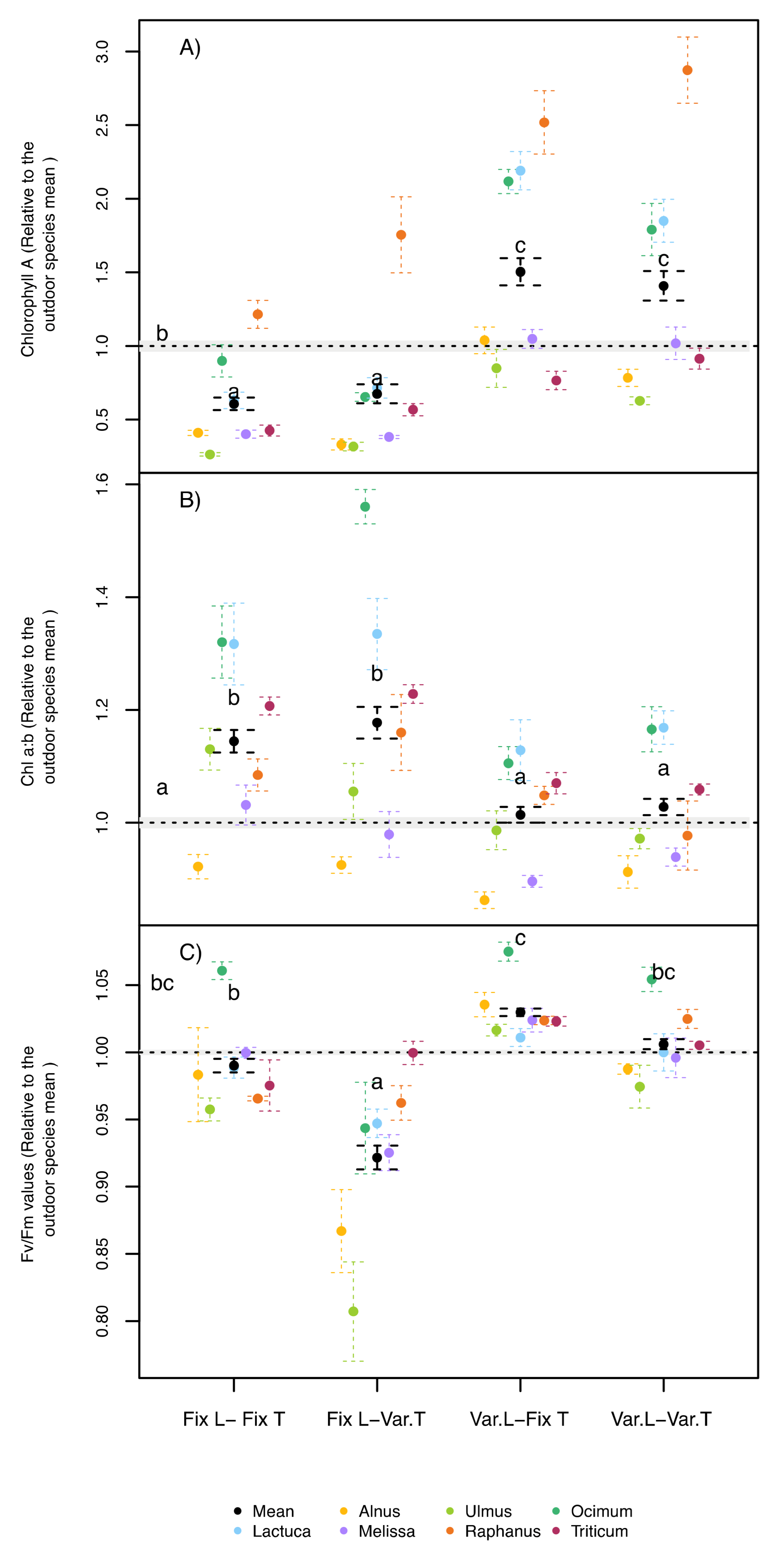
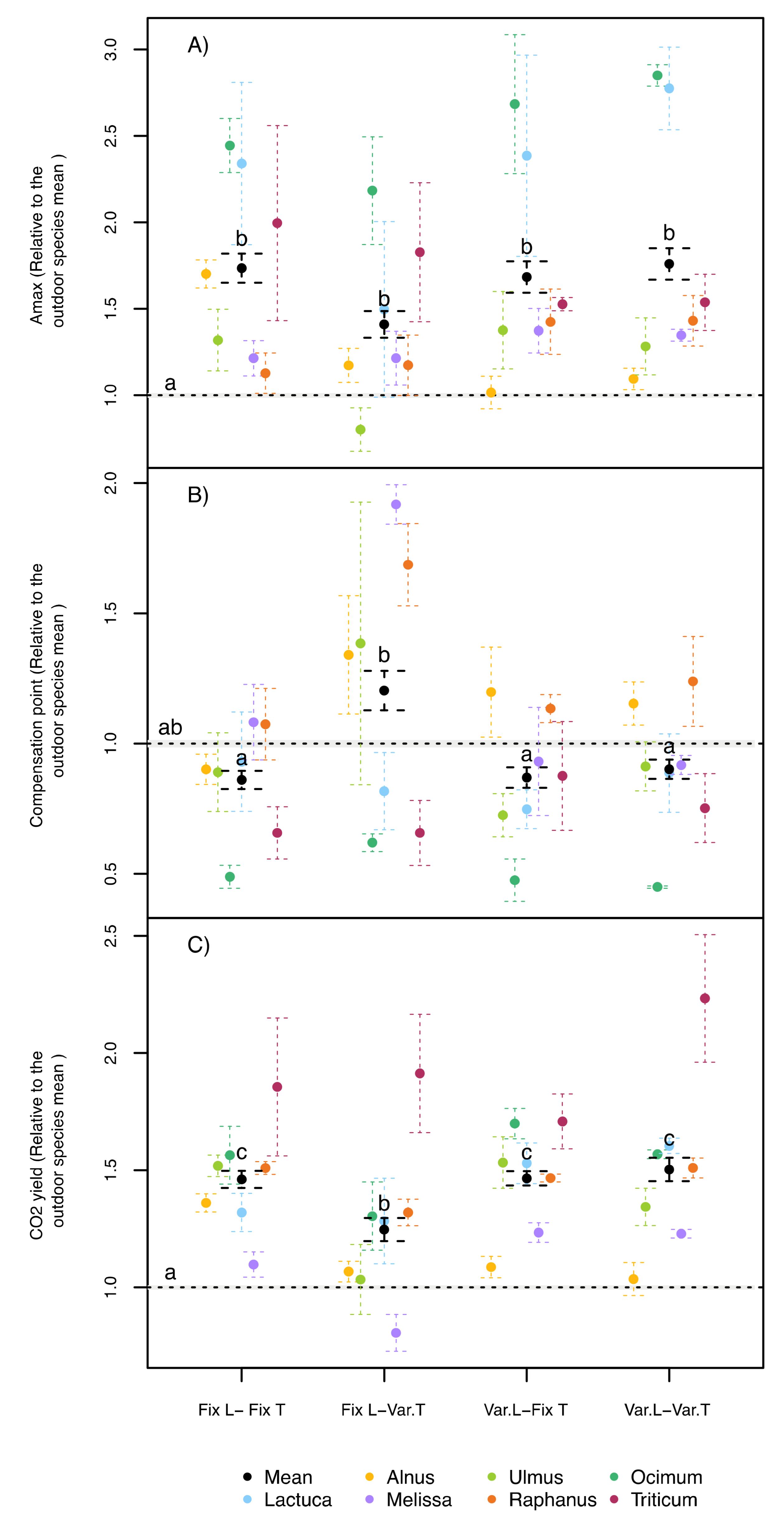
Several studies have recommended the incorporation of environmental fluctuations in indoor experiments if closer-to-natural results in plant experiments are desired. Previous authors have suggested that if these fluctuations are not applied in synchrony, a stress effect could be present since plants have evolved to cope with synchronic environmental fluctuations. This study aimed to identify the effect of disparity in fluctuations of two important environmental variables, light quantity and temperature, on the growth of seven plant species from different functional plant types. A full-factorial combination of light and temperature under fixed or variable conditions was applied in phytotrons, and plant performance under these conditions was compared with a previous field trial. In all phytotron treatments, the average light and temperature conditions were the same as in the initial field trial. Productivity, leaf gas exchange, chlorophyll fluorescence, pigmentation, and other leaf traits were recorded in all species at the end of the experiments. Most plant trait responses were highly dependent on species and treatment, but some general trends were observed. Light fluctuations were mainly responsible for increases in specific leaf area (SLA) and chlorophyll a concentration, as well as for reductions in total dry weight and chlorophyll a/b ratio, independent if in combination with fluctuation or fixed temperatures. When fixed light conditions were combined with variable temperatures, the plants showed on average lower Fv/Fm values, Amax, and CO2 yield, while under variable light conditions and fixed temperatures, Fv/Fm increased compared with fully fixed or variable conditions. Although significant differences of plant traits between the field trial and all phytotron treatments were present (likely due to differences in other parameters that were not controlled in the phytotrons), our results still suggest that a synchronous variation of environmental factors lead to a more natural-like plant growth than if these factors are fixed or vary asynchronously.
Keywords: dynamic light; dynamic temperature; natural growth; controlled environment dynamic light; dynamic temperature; natural growth; controlled environment