Article

Comparison of Methods to Evaluate Rice (Oryza sativa) Germplasm for Tolerance to Low Temperature at the Seedling Stage

1
Department of Crop Sciences, University of Illinois at Urbana-Champaign (UIUC), Urbana, IL 61801, USA
2
International Rice Research Institute (IRRI), Los Baños, Laguna 4031, Philippines
*
Author to whom correspondence should be addressed.
Present address: Noble Research Institute, LLC, 2510 Sam Noble Parkway, Ardmore, OK 73401, USA.
Agronomy 2021, 11(2), 385; https://doi.org/10.3390/agronomy11020385

Submission received: 22 December 2020 / Revised: 9 February 2021 / Accepted: 17 February 2021 / Published: 21 February 2021
(This article belongs to the Special Issue The Adaptation of Agriculture to Climatic Change)

Abstract

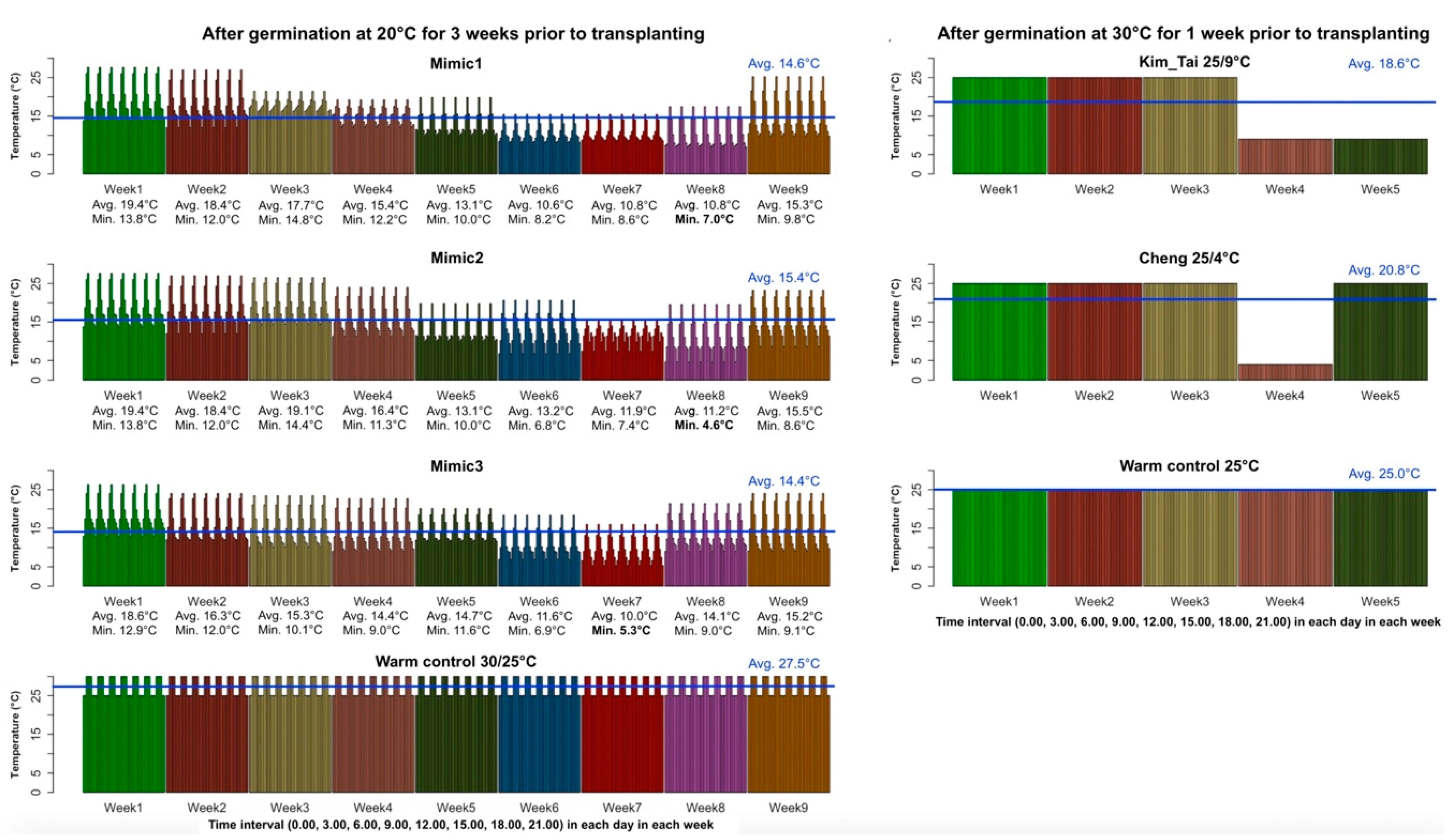
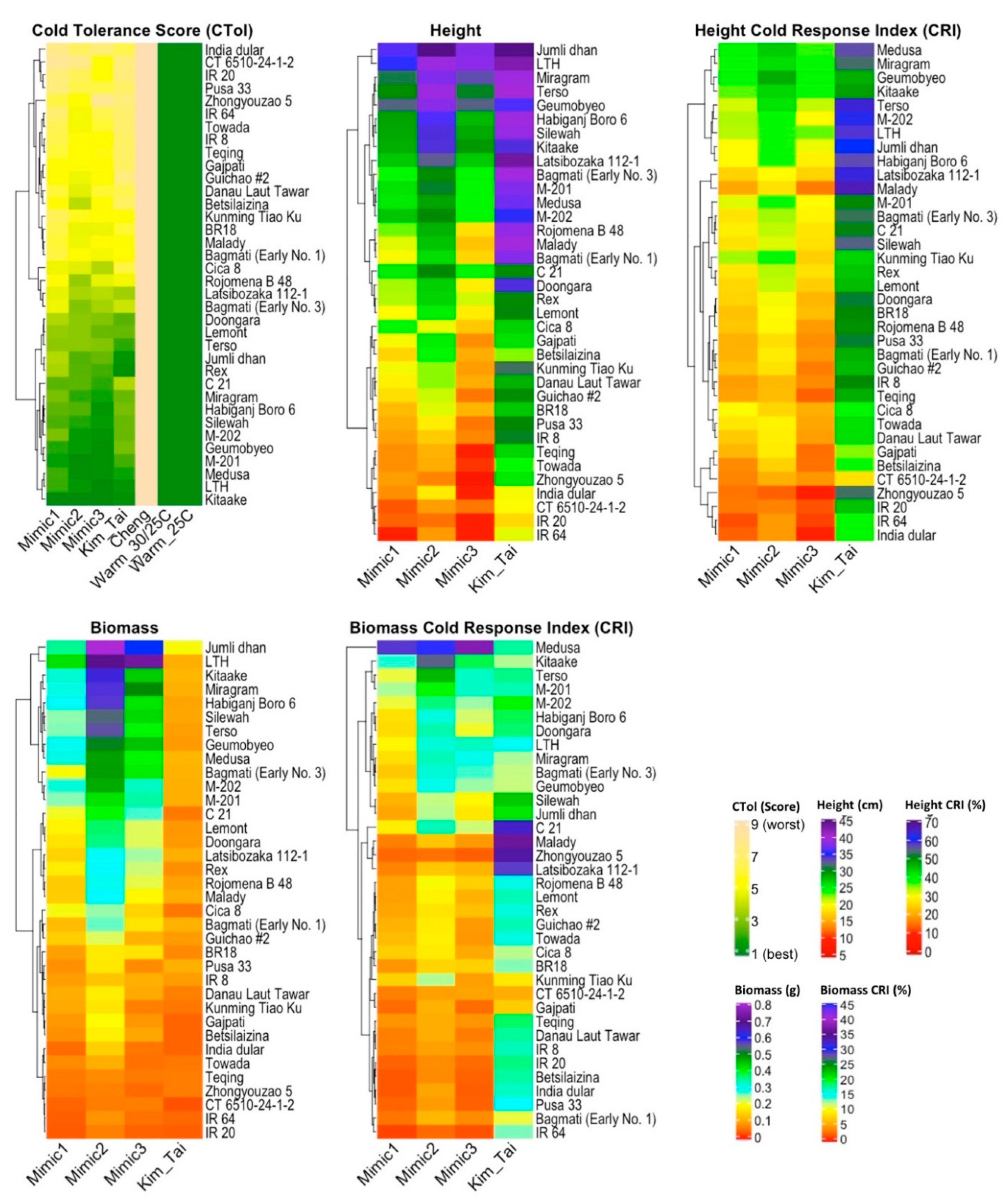
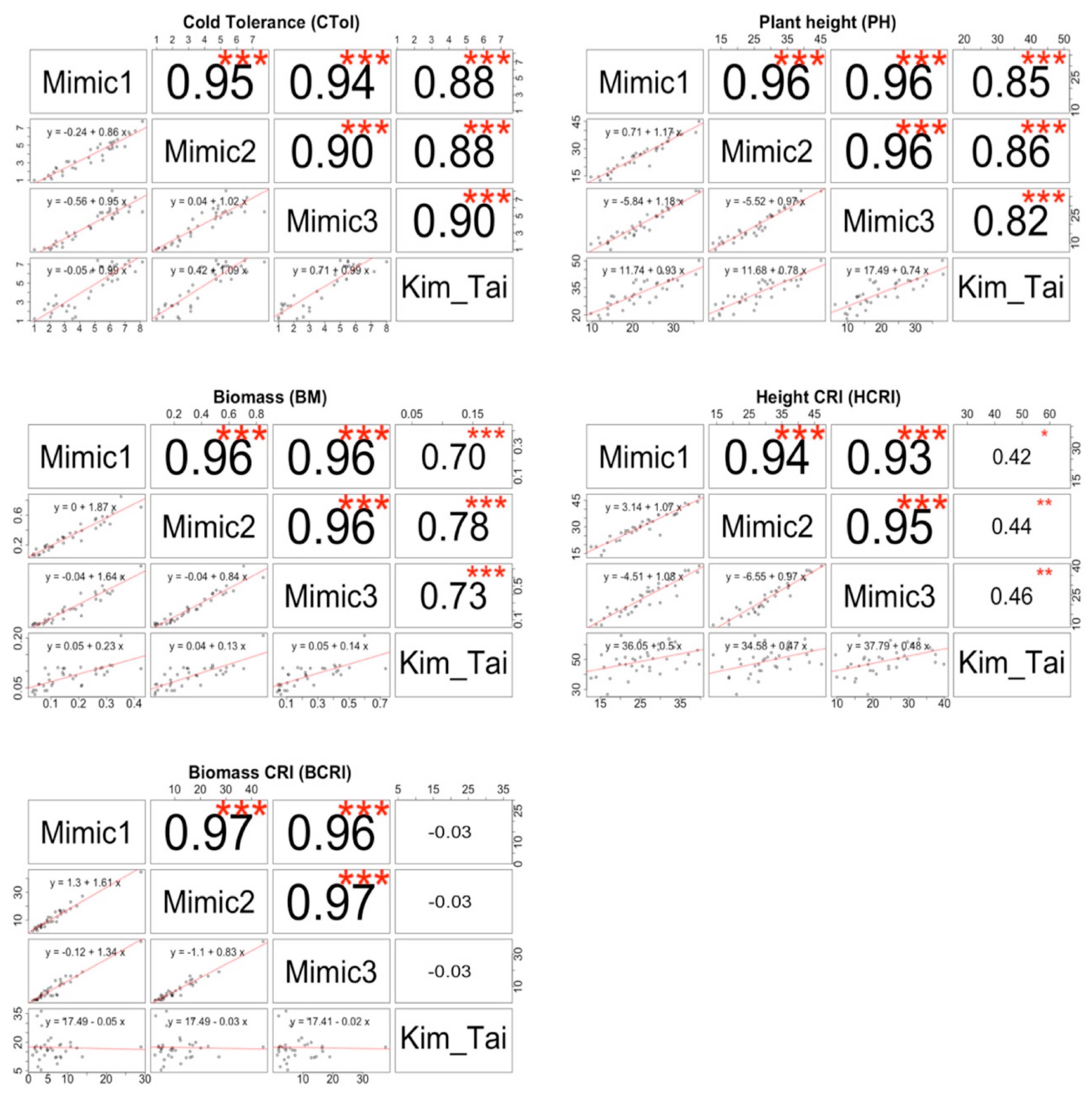
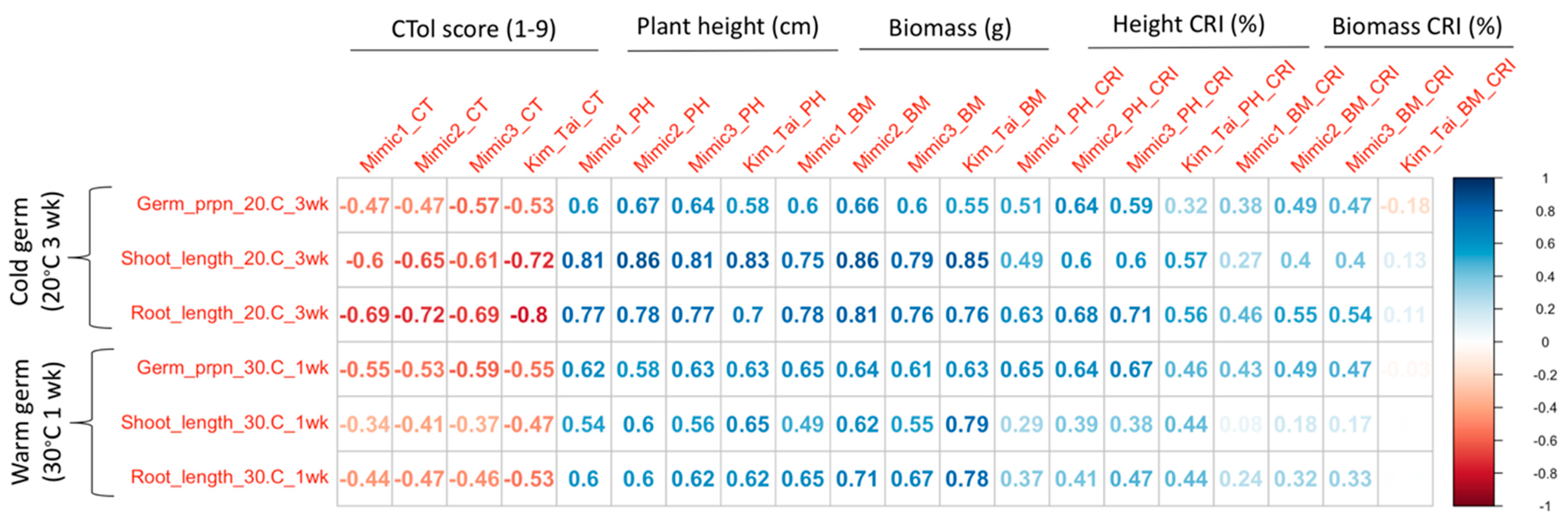
Low temperature stress at the seedling stage is a major constraint to rice (Oryza sativa) production. Previously developed screening protocols typically germinate seed and establish seedlings under warm constant-temperature conditions that are optimal for growth, prior to initiating a constant low-temperature challenge. We developed three controlled-environment protocols mimicking extreme cold boro (winter) seasons based on 25 years weather data from Bangladesh to test the hypothesis that by more closely replicating field conditions, greater information about cultivars could be obtained compared to standard protocols. Root and shoot growth after germination in a Petri dish at 20 °C for three weeks gave similar results as visual scores of transplanted seedlings in a standard five-week protocol. Moreover, transplanted seedlings at the end of the nine-week mimic protocols showed large differences in height and dry biomass, whereas for the standard protocols, growth during the warm pre-treatment substantially masked these genotypic differences. Thus, initial screening of large rice germplasm panels can be most efficiently accomplished with a short-duration germination test at low temperature. However, more effective differentiation of cultivars can be accomplished by measuring transplanted seedling growth from the newly-developed mimic protocols. These results will facilitate the development of improved rice cultivars.
Keywords: seedling stage; low temperature; chilling tolerance; rice seedling stage; low temperature; chilling tolerance; rice