Article

Fruit Morphological Measurement Based on Three-Dimensional Reconstruction

1
College of Information and Electrical Engineering, China Agricultural University, Qinghuadonglu No.17, HaiDian District, Beijing 100083, China
2
Engineering Practice Innovation Center, China Agricultural University, Qinghuadonglu No.17, HaiDian District, Beijing 100083, China
*
Author to whom correspondence should be addressed.
Agronomy 2020, 10(4), 455; https://doi.org/10.3390/agronomy10040455

Submission received: 3 March 2020 / Revised: 19 March 2020 / Accepted: 20 March 2020 / Published: 25 March 2020
(This article belongs to the Special Issue Smart Decision-Making Systems for Precision Agriculture)

Abstract

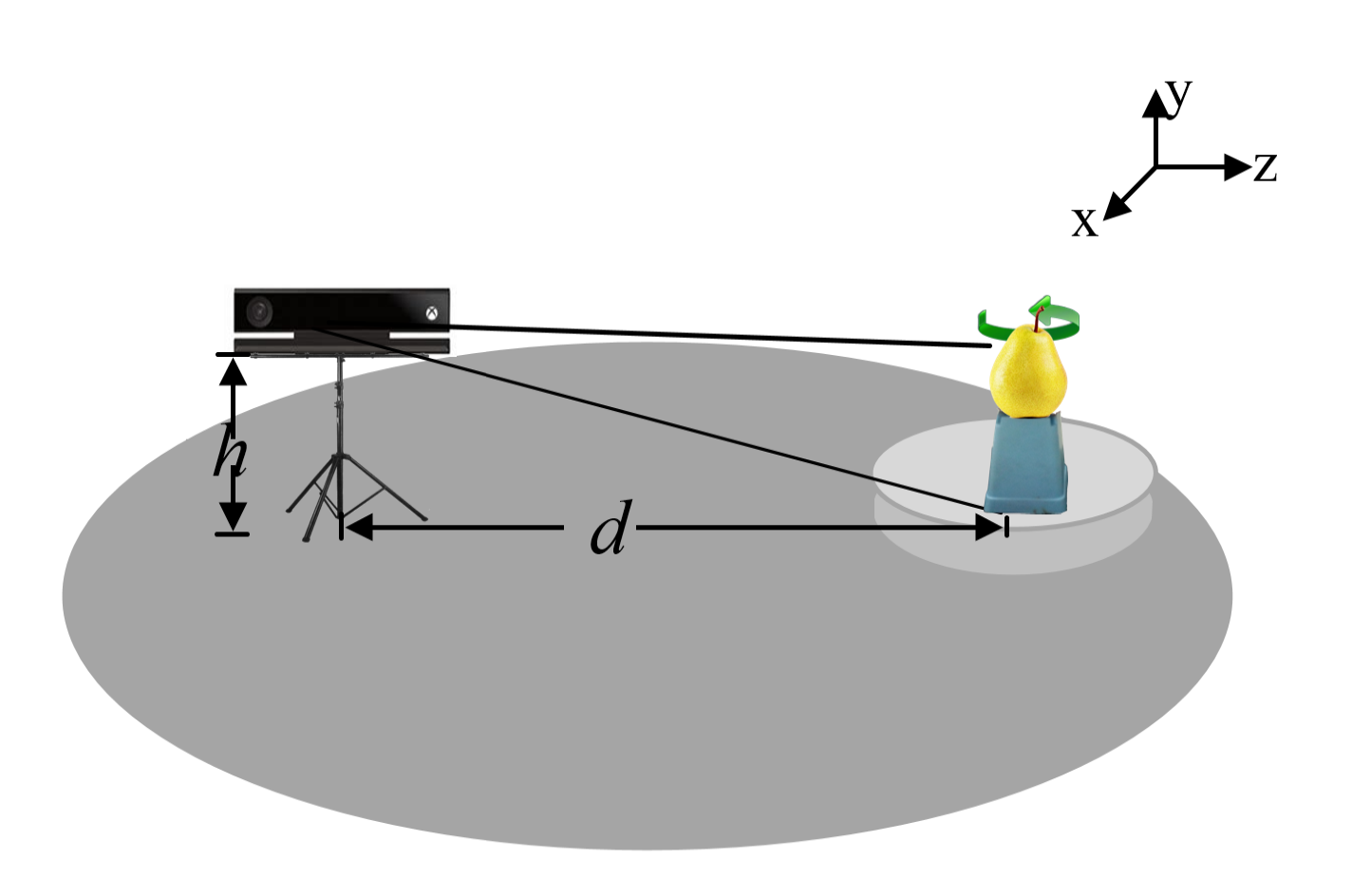
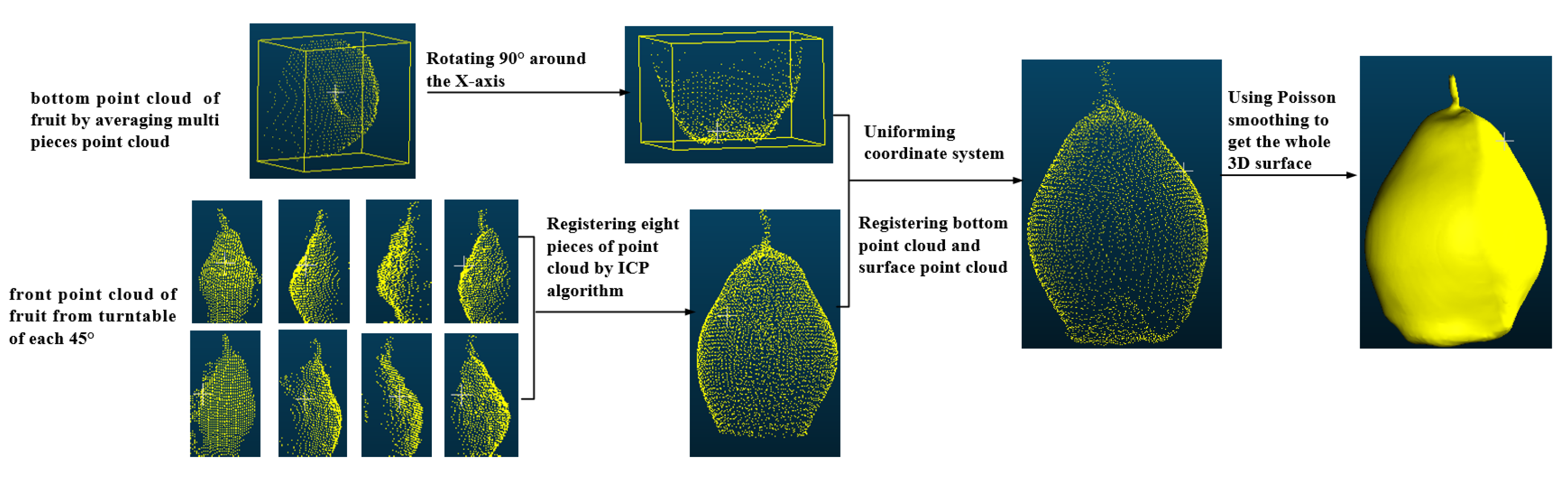
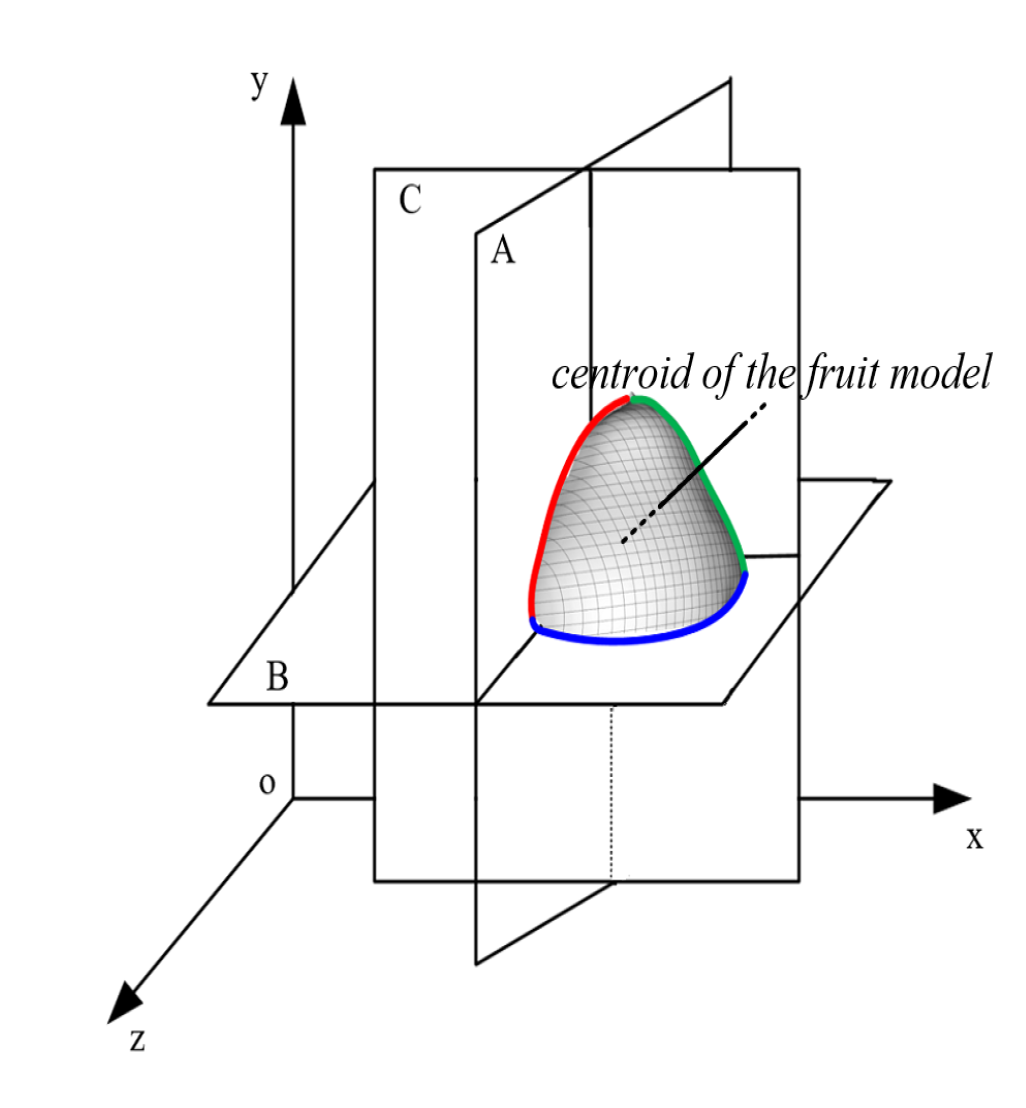
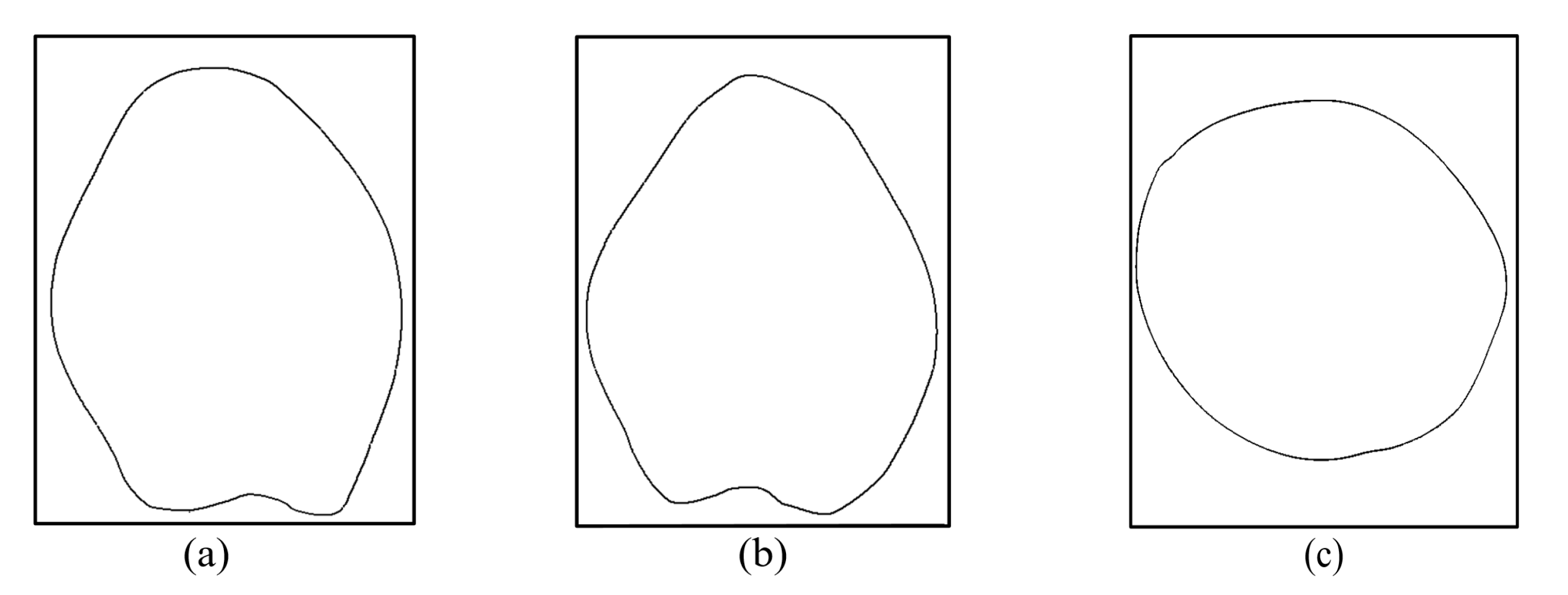
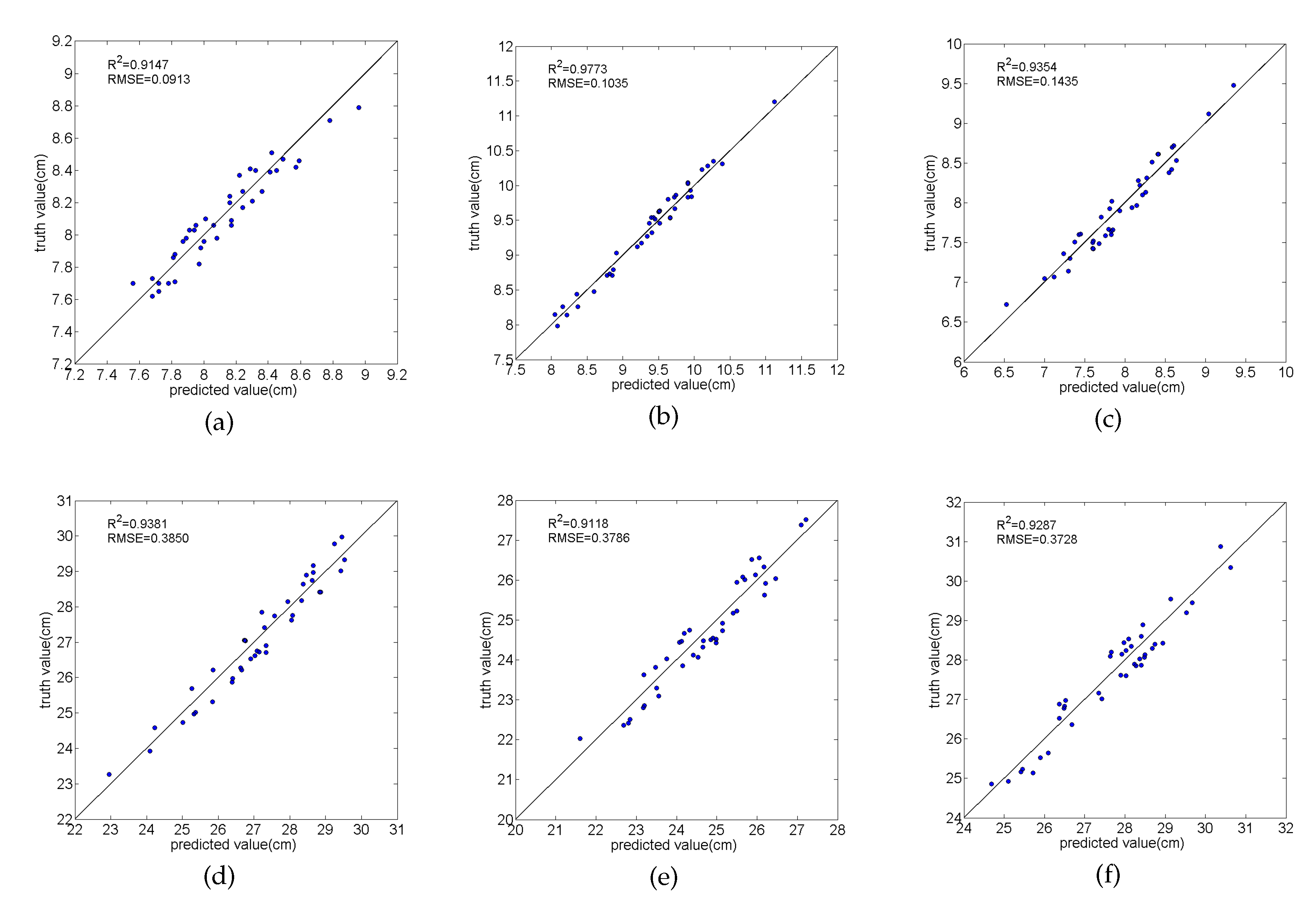
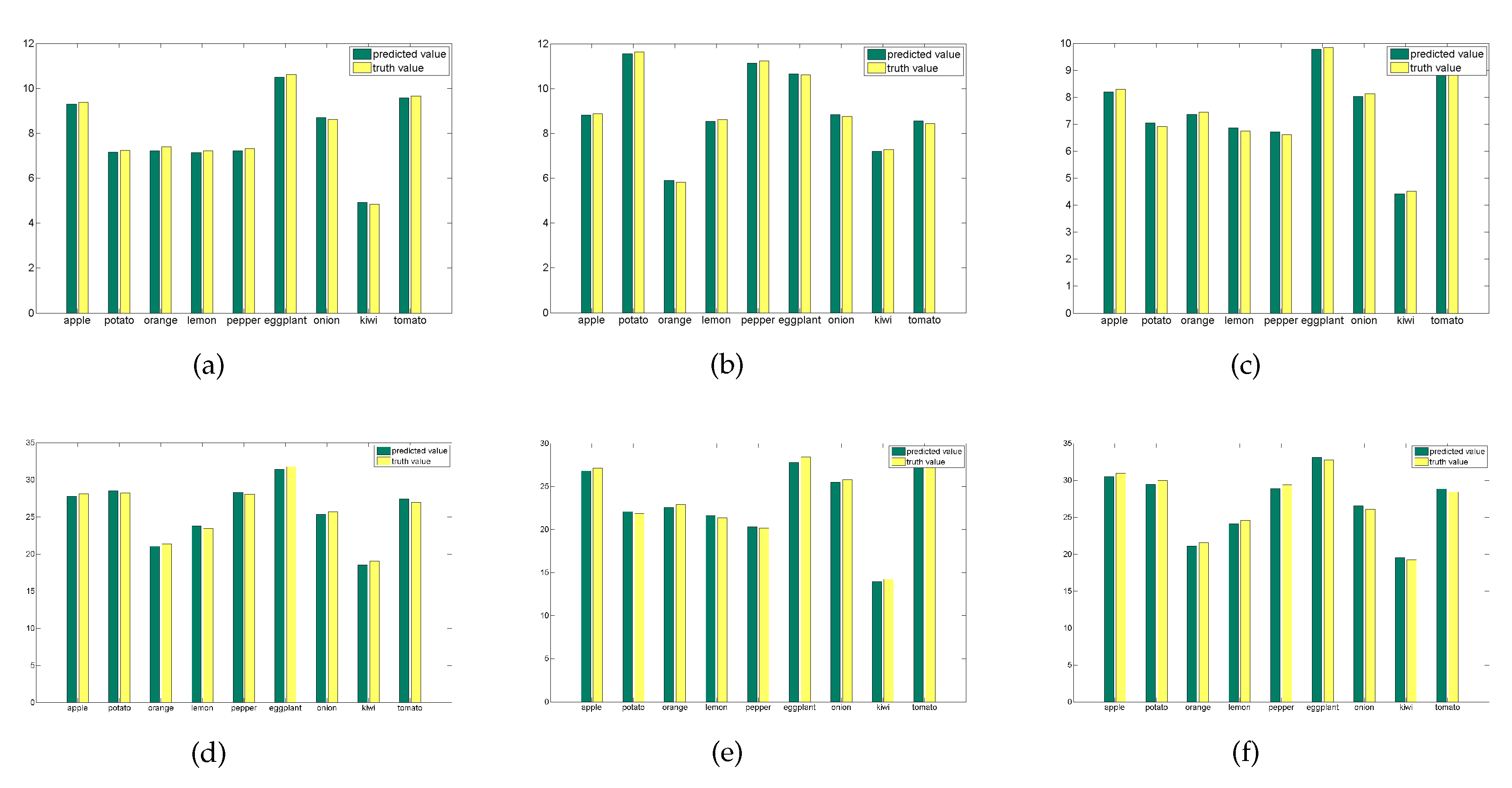
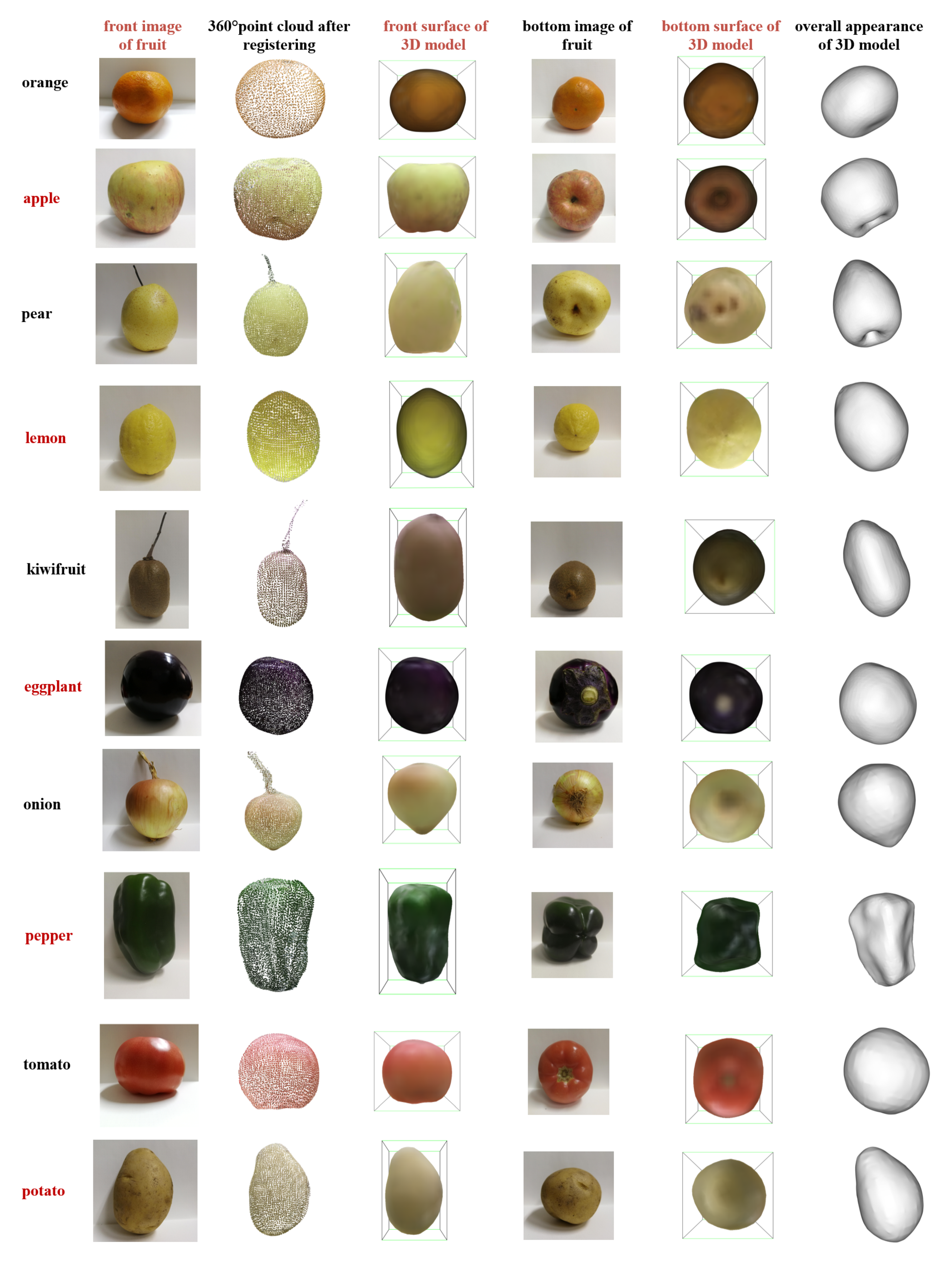
Three-dimensional (3D) shape information is valuable for fruit quality evaluation. Grading of the fruits is one of the important postharvest tasks that the fruit processing agro-industries do. Although the internal quality of the fruit is important, the external quality of the fruit influences the consumers and the market price significantly. To solve the problem of feature size extraction in 3D fruit scanning, this paper proposes an automatic fruit measurement scheme based on a 2.5-dimensional point cloud with a Kinect depth camera. For getting a complete fruit model, not only the surface point cloud is obtained, but also the bottom point cloud is rotated to the same coordinate system, and the whole fruit model is obtained by iterative closest point algorithm. According to the centroid and principal direction of the fruit, the cut plane of the fruit is made in the x-axis, y-axis, and z-axis respectively to obtain the contour line of the fruit. The experiment is divided into two groups, the first group is various sizes of pears to get the morphological parameters; the second group is the various colors, shapes, and textures of many fruits to get the morphological parameters. Comparing the predicted value with the actual value shows that the automatic extraction scheme of the size information is effective and the methods are universal and provide a reference for the development of the related application.
Keywords: 3D-measurement; fruit feature point; fruit model; point cloud 3D-measurement; fruit feature point; fruit model; point cloud