Review

Recent Advances in Nanostructured Conducting Polymers: from Synthesis to Practical Applications
by
Duong Nguyen Nguyen
1 and
Hyeonseok Yoon
1,2,*
1
Department of Polymer Engineering, Graduate School, Chonnam National University, 77 Yongbong-ro, Buk-gu, Gwangju 61186, Korea
2
School of Polymer Science and Engineering, Chonnam National University, 77 Yongbong-ro, Buk-gu, Gwangju 61186, Korea
*
Author to whom correspondence should be addressed.
Polymers 2016, 8(4), 118; https://doi.org/10.3390/polym8040118
Submission received: 3 March 2016 / Revised: 19 March 2016 / Accepted: 25 March 2016 / Published: 31 March 2016
(This article belongs to the Special Issue Conductive Polymers 2016)

Abstract

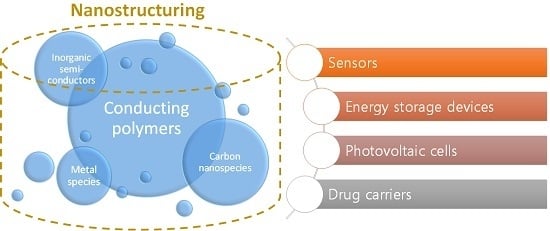
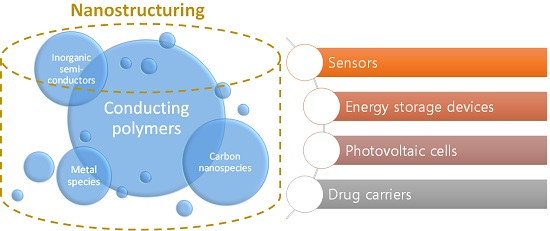
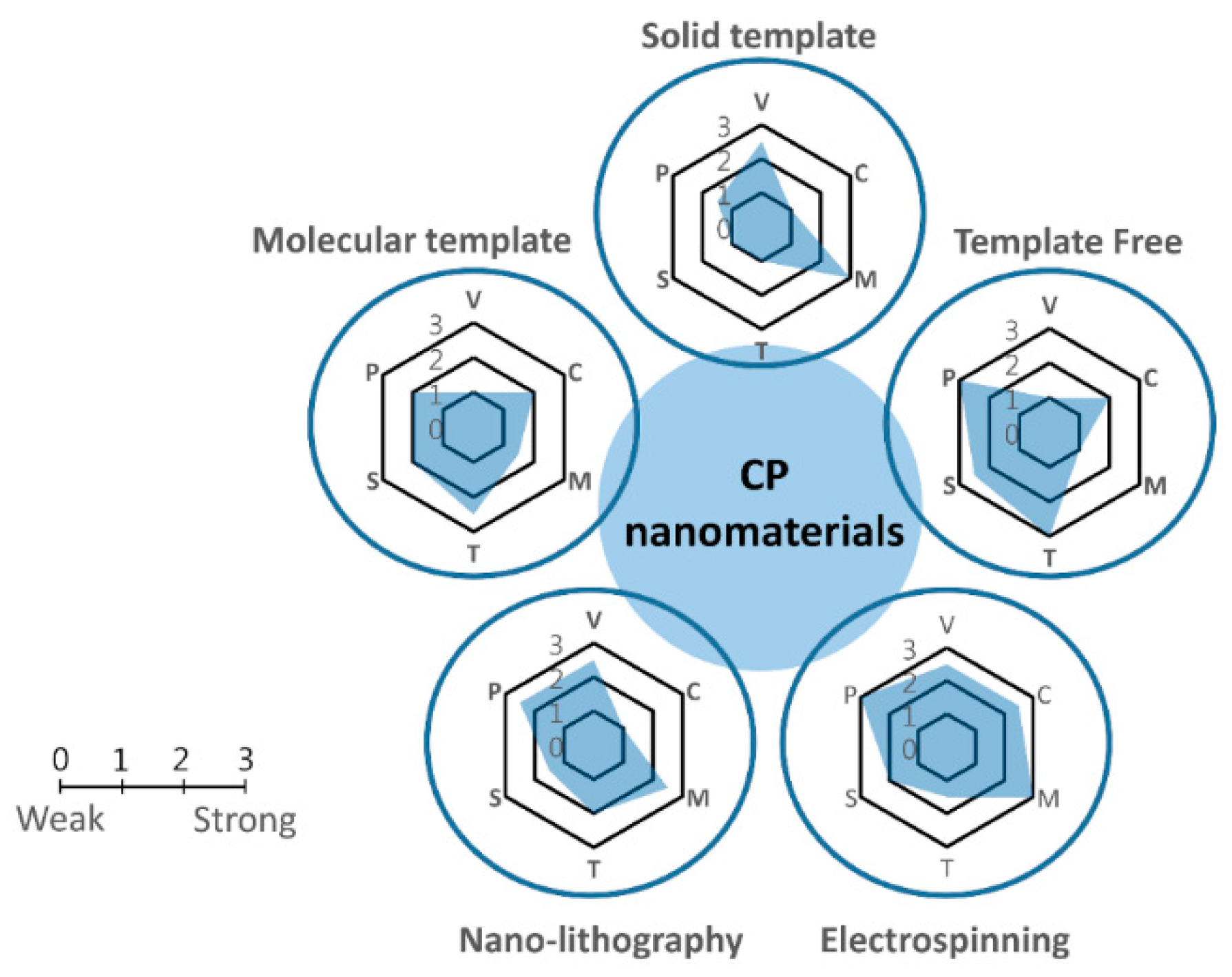
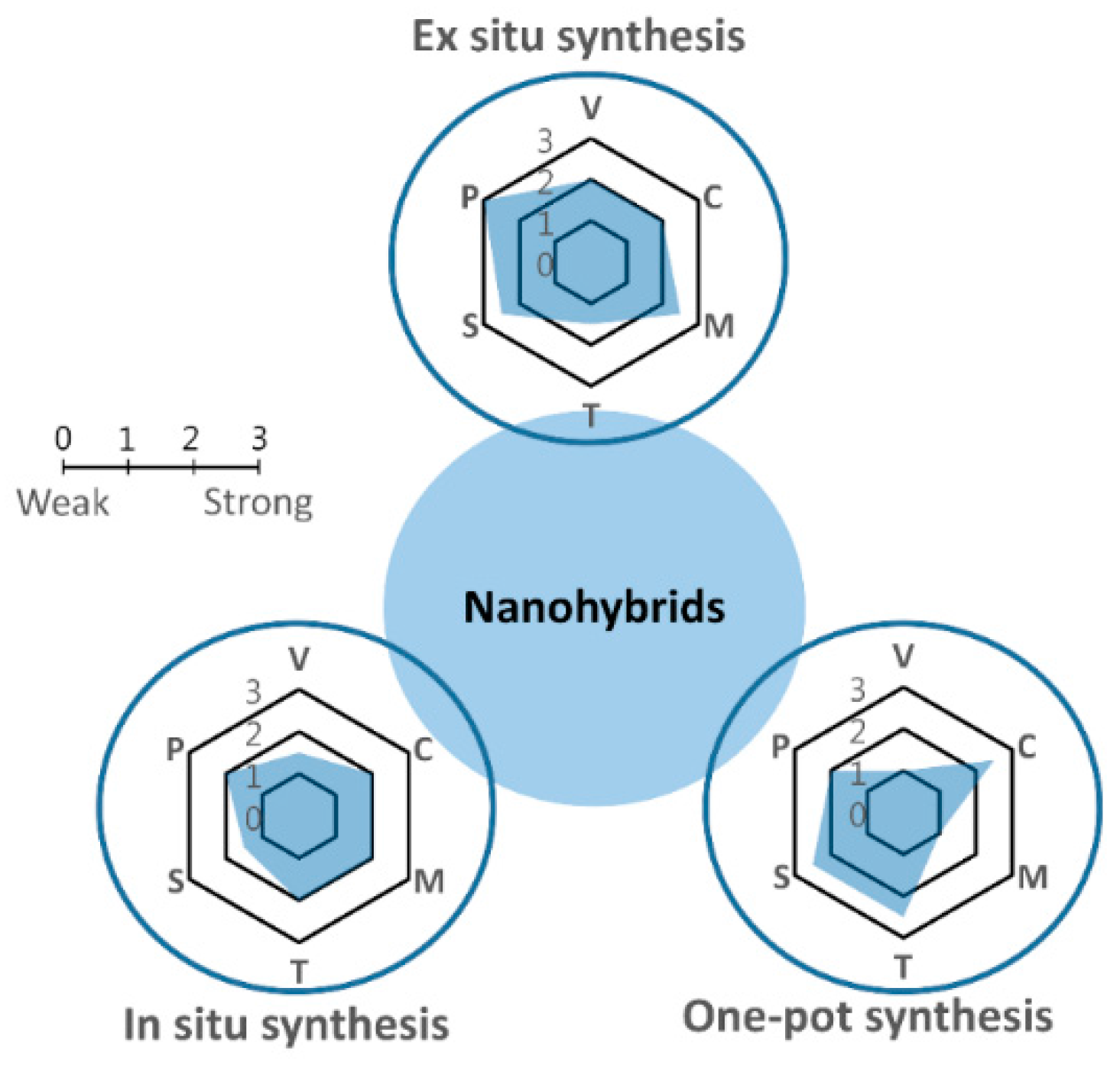
Conducting polymers (CPs) have been widely studied to realize advanced technologies in various areas such as chemical and biosensors, catalysts, photovoltaic cells, batteries, supercapacitors, and others. In particular, hybridization of CPs with inorganic species has allowed the production of promising functional materials with improved performance in various applications. Consequently, many important studies on CPs have been carried out over the last decade, and numerous researchers remain attracted to CPs from a technological perspective. In this review, we provide a theoretical classification of fabrication techniques and a brief summary of the most recent developments in synthesis methods. We evaluate the efficacy and benefits of these methods for the preparation of pure CP nanomaterials and nanohybrids, presenting the newest trends from around the world with 205 references, most of which are from the last three years. Furthermore, we also evaluate the effects of various factors on the structures and properties of CP nanomaterials, citing a large variety of publications.
Keywords: conducting polymers; nanomaterials; nanohybrids; synthesis methods; applications conducting polymers; nanomaterials; nanohybrids; synthesis methods; applications
Graphical Abstract