Article

ICAR ATRP of Acrylonitrile under Ambient and High Pressure
Suzhou Key Laboratory of Macromolecular Design and Precision Synthesis, Jiangsu Key Laboratory of Advanced Functional Polymer Design and Application, Department of Polymer Science and Engineering, College of Chemistry, Chemical Engineering and Materials Science, Soochow University, Suzhou 215123, China
*
Authors to whom correspondence should be addressed.
These authors contributed equally to this work.
Polymers 2016, 8(3), 59; https://doi.org/10.3390/polym8030059
Submission received: 1 February 2016 / Revised: 12 February 2016 / Accepted: 18 February 2016 / Published: 2 March 2016
(This article belongs to the Special Issue Controlled/Living Radical Polymerization)

Abstract

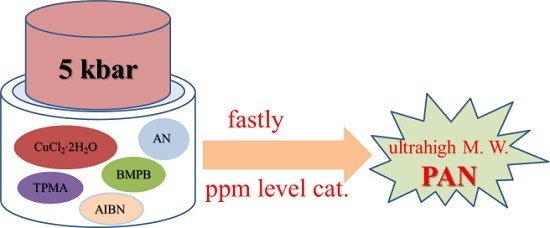
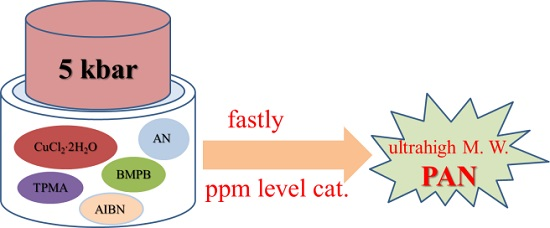
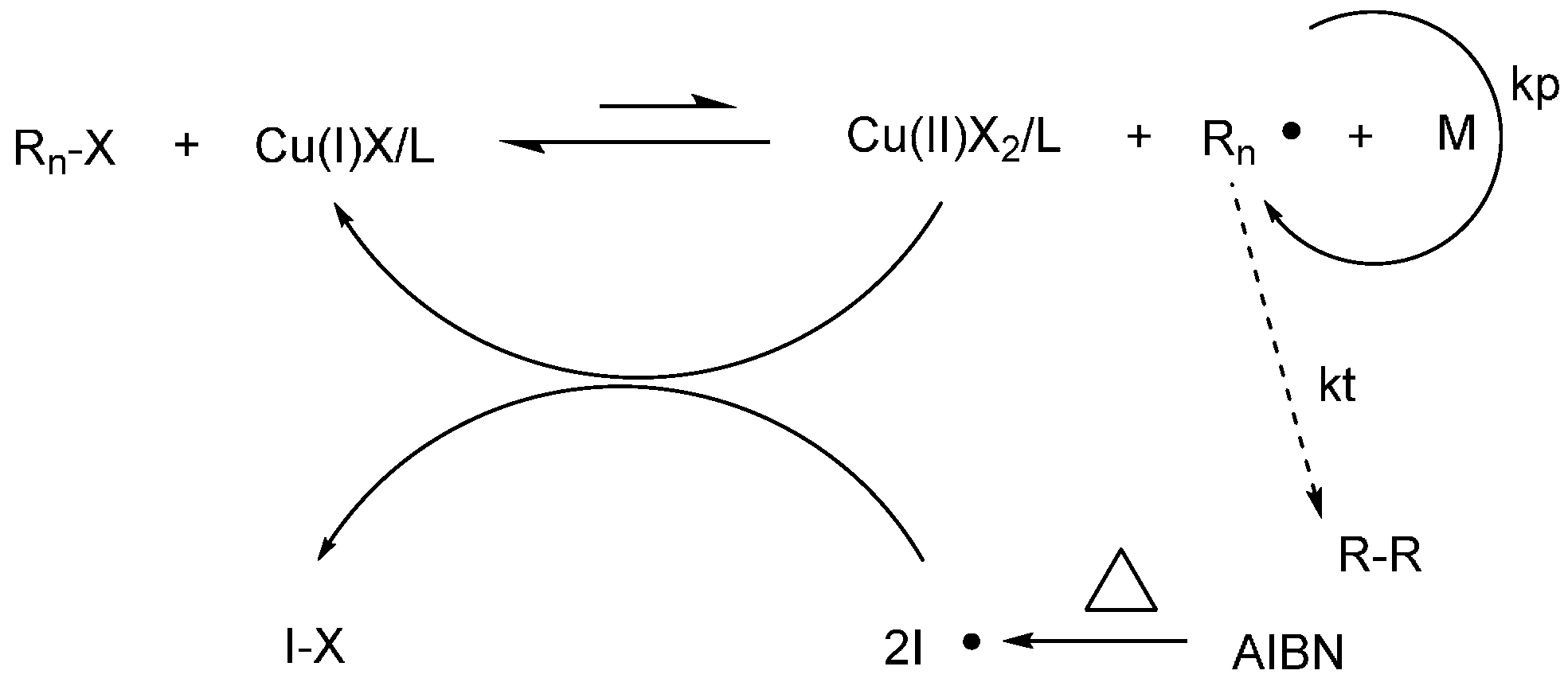
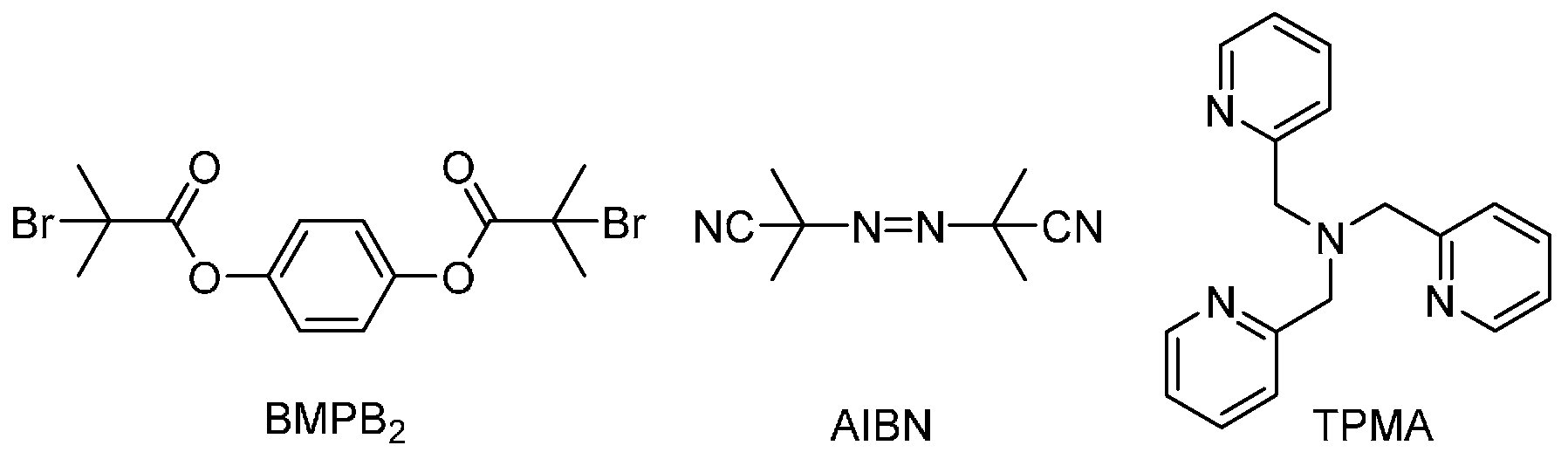
It is well known that well-defined polyacrylonitrile (PAN) with high molecular weight (Mw > 106 g·mol−1) is an excellent precursor for high performance carbon fiber. In this work, a strategy for initiators for a continuous activator regeneration atom transfer radical polymerization (ICAR ATRP) system for acrylonitrile (AN) was firstly established by using CuCl2·2H2O as the catalyst and 2,2′-azobis(2-methylpropionitrile) (AIBN) as the thermal initiator in the presence of ppm level catalyst under ambient and high pressure (5 kbar). The effect of catalyst concentration and polymerization temperature on the polymerization behaviors was investigated. It is important that PAN with ultrahigh viscosity and average molecular weight (Mη = 1,034,500 g·mol−1) could be synthesized within 2 h under high pressure.
Keywords: ICAR ATRP; ambient pressure; high pressure; PAN ICAR ATRP; ambient pressure; high pressure; PAN
Graphical Abstract