Valorization of Fishmeal Wastewater for Polyhydroxyalkanoate (PHA) Production by Bacillus cereus: Process Optimization and Scale-Up



Abstract
1. Introduction
2. Materials and Methods
2.1. Microorganism and Culture Conditions
2.2. Raw Wastewater Preparation and Physicochemical Analysis
2.2.1. Physicochemical Characterization of Raw Wastewater
2.2.2. Effect of Dilution on Bacterial Growth and PHA Production
2.3. Pretreatment of Wastewater via Batch Fermentation
2.4. Bacterial Adaptation to Effluent-Based Media
2.5. Assessing the Impact of Inoculum Adaptation on Bacterial Proliferation and PHA Synthesis
2.6. Optimization of the Carbon-to-Nitrogen Ratio
2.7. Impact of Raw Fish Oil on PHA Synthesis
2.8. Monitoring Fermentation and Scale-Up
2.9. Methods for Analysis
2.9.1. Extraction and Measurement of PHA
2.9.2. Fourier-Transform Infrared Spectroscopy (FTIR)
2.9.3. Nuclear Magnetic Resonance (NMR) Spectroscopy
2.9.4. Differential Scanning Calorimetry (DSC)
2.9.5. Thermogravimetric Analysis (TGA)
2.9.6. Scanning Electron Microscopy (SEM)
2.9.7. X-Ray Analysis
2.10. Statistical Analysis
3. Results and Discussion
3.1. Physicochemical Characterization of Fishmeal Wastewater
3.2. Effect of Effluent Dilution on Biomass Growth and PHA Production
3.3. Effect of Fermented Substrate on Biomass Growth, PHA Production, and Polymer Quality
3.4. How Bacterial Adaptation Affects the Growth of Biomass and PHA
3.5. Glucose Effects on PHA Production
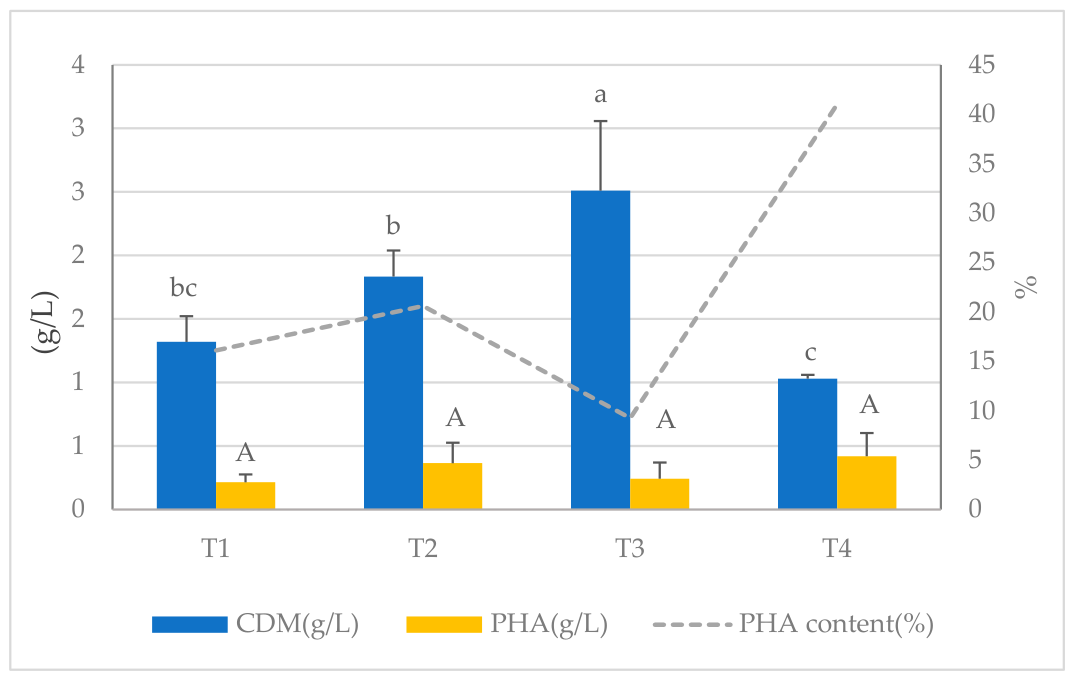
3.6. The Impact of Raw Fish Oil Supplementation on PHA Production
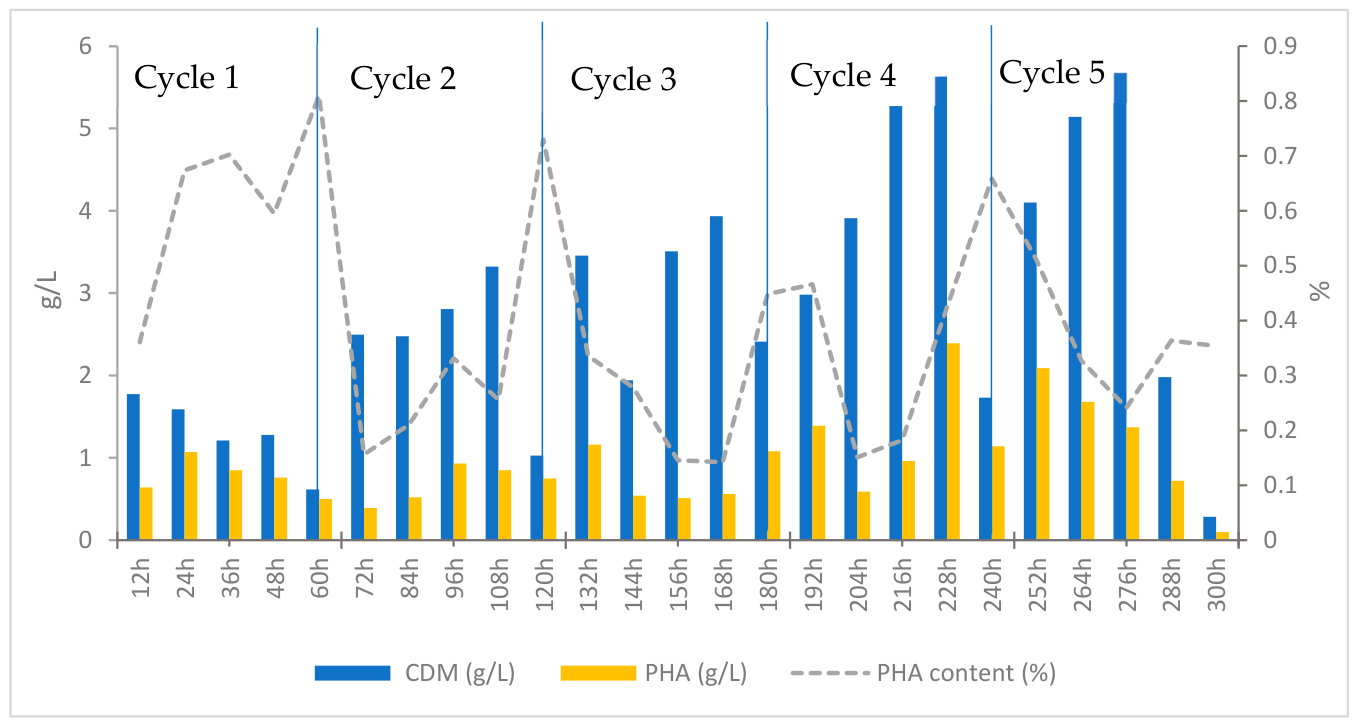
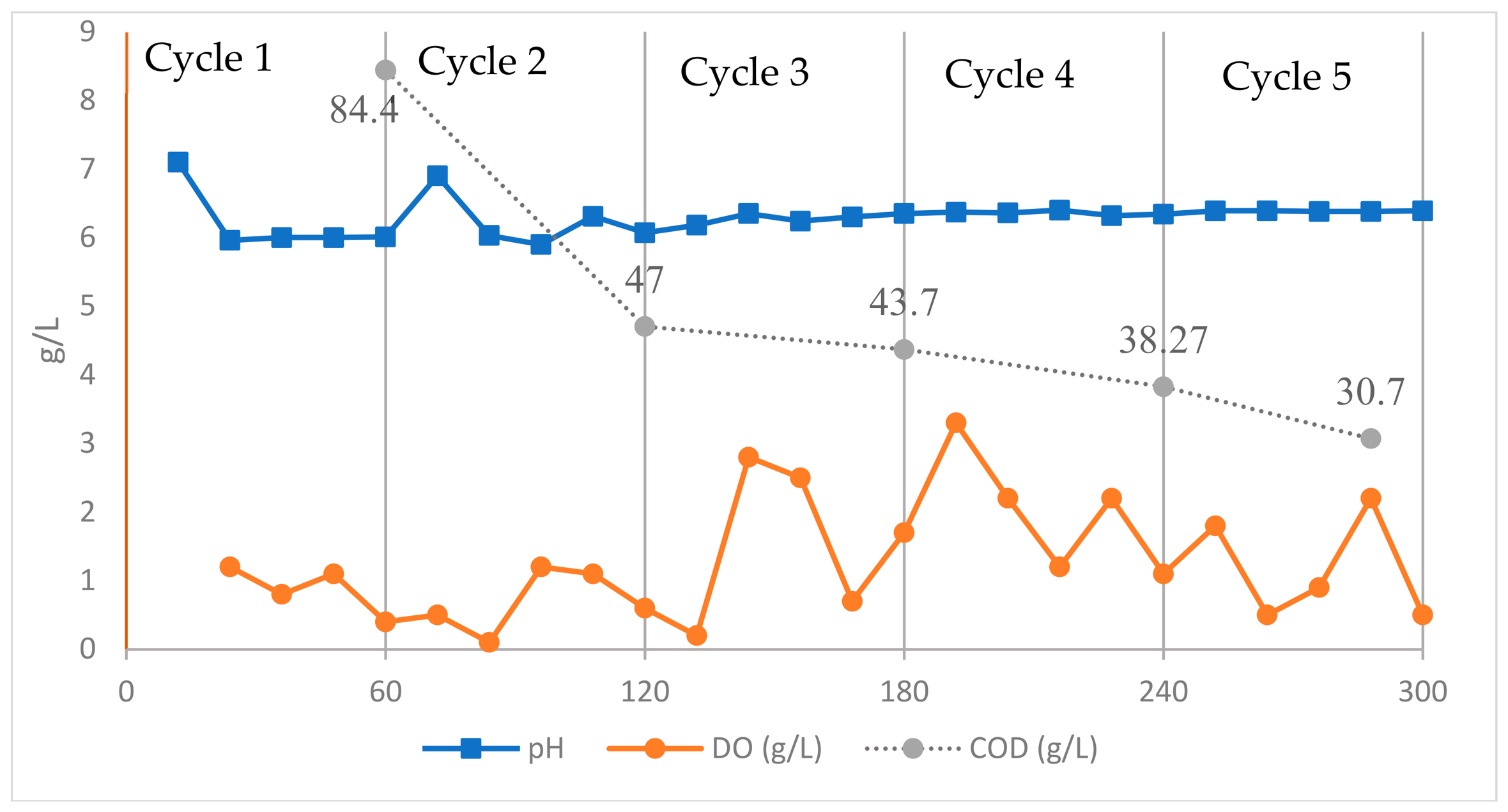
3.7. Scale-Up Performance of Bacillus cereus in Repeated-Batch Fermentation
3.8. Analytical Characterization of Extracted PHA
3.8.1. FTIR Characterization of PHA During Scale-Up Fermentation
3.8.2. Nuclear Magnetic Resonance (NMR) Spectroscopy
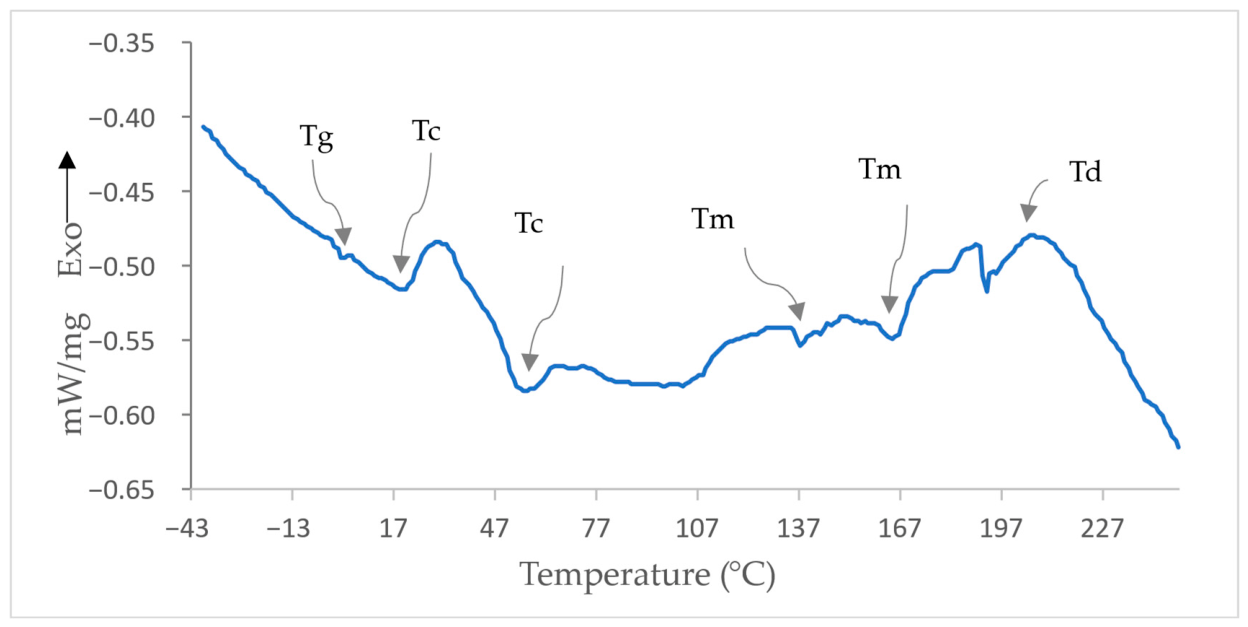
3.8.3. Differential Scanning Calorimetry (DSC)
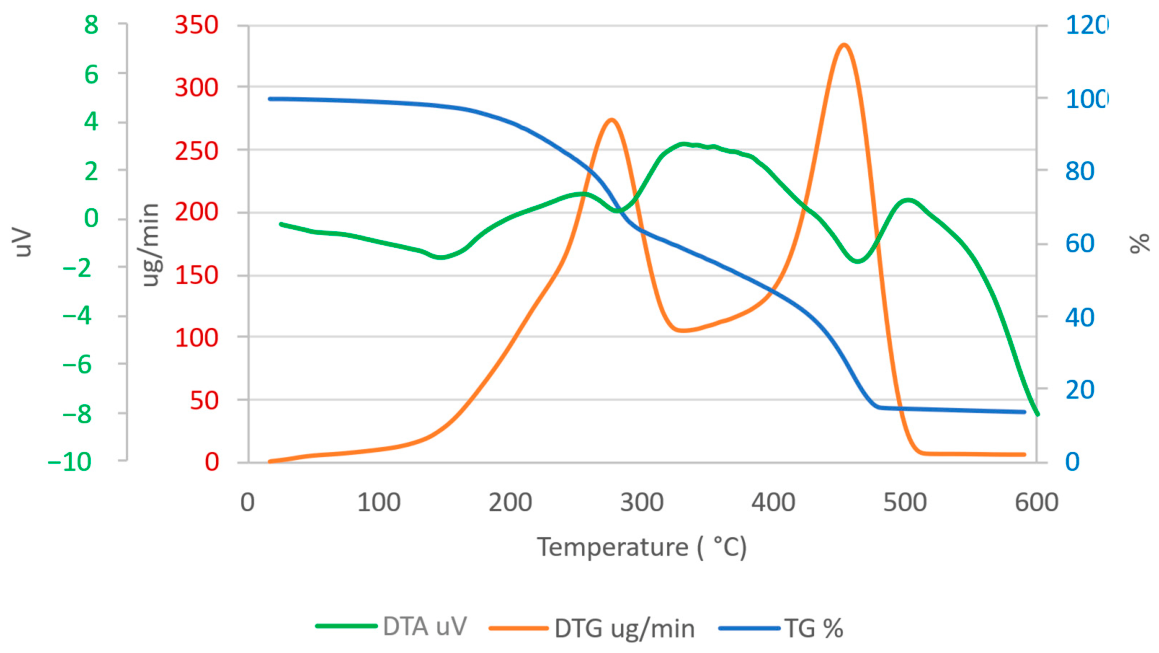
3.8.4. Thermal Stability
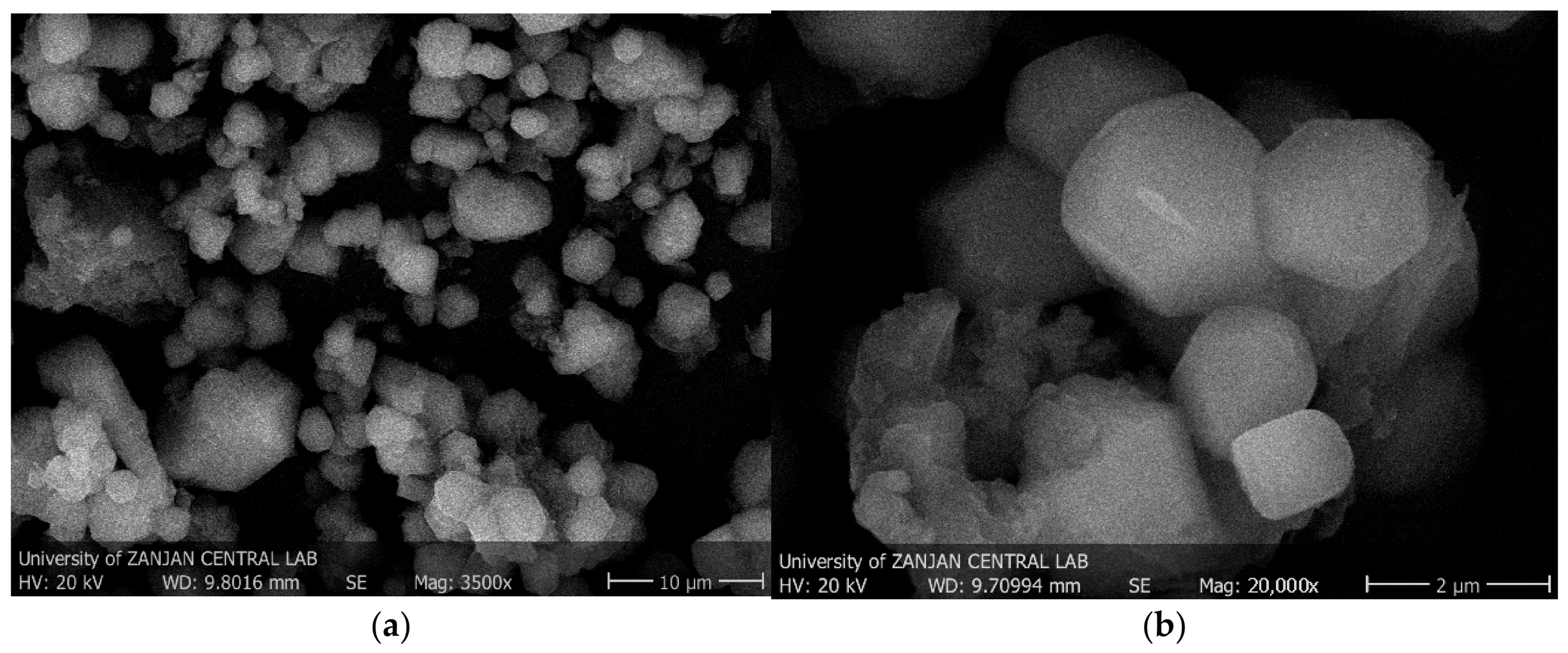
3.8.5. Morphological Characterization (SEM Analysis)
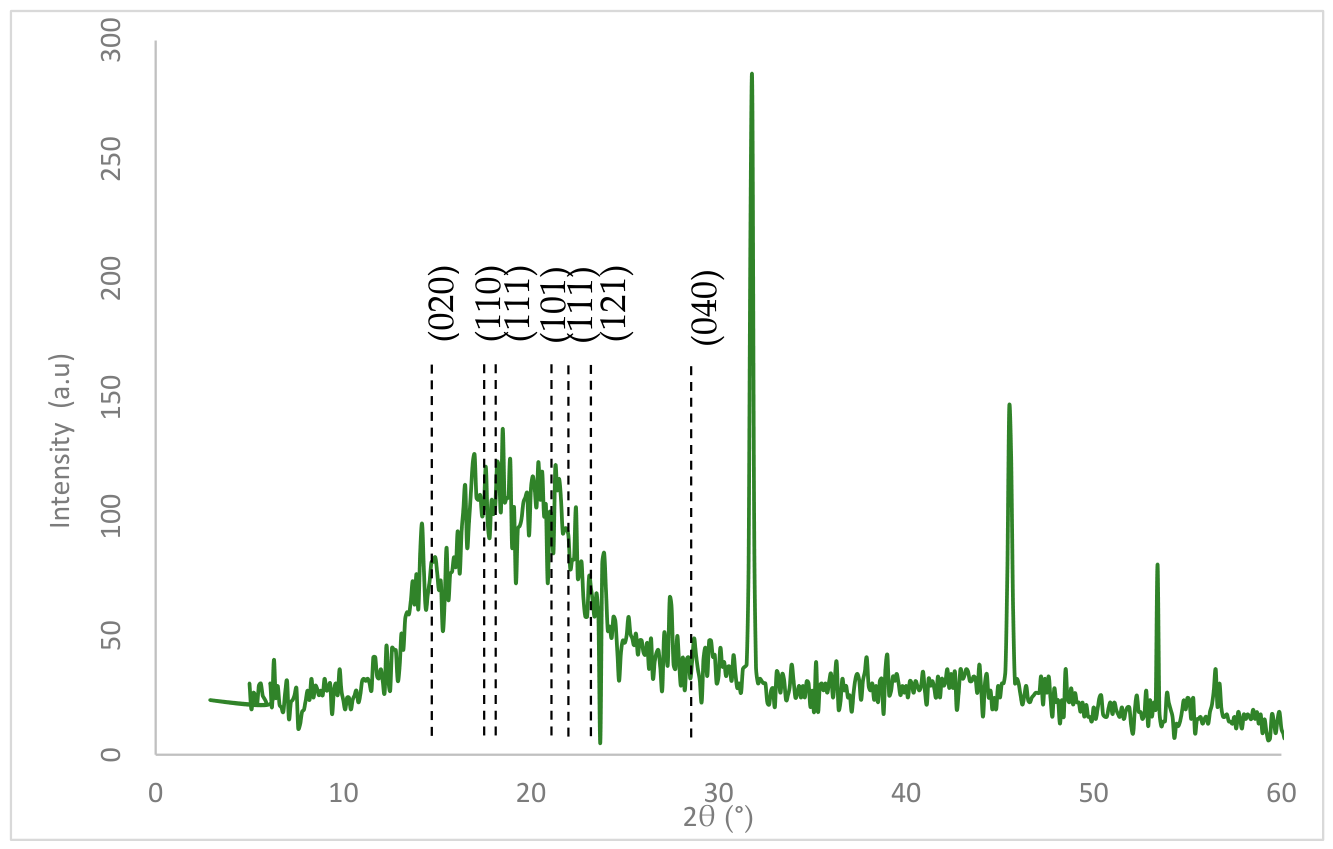
3.8.6. X-Ray Diffraction (XRD) Analysis
4. Conclusions
Author Contributions
Funding
Institutional Review Board Statement
Data Availability Statement
Acknowledgments
Conflicts of Interest
Abbreviations
| PHA | Polyhydroxyalkanoate |
| FPW | Fish-processing wastewater |
| COD | Chemical oxygen demand |
| CDW | Cell dry weight |
| CDM | Cell dry mass |
| FTIR | Fourier-transform infrared spectroscopy |
| NMR | Nuclear magnetic resonance |
| DSC | Differential scanning calorimetry |
| TGA | Thermogravimetric analysis |
| SEM | Scanning electron microscopy |
| XRD | X-ray diffraction |
| TS | Total solids |
| TSS | Total suspended solids |
| TKN | Total Kjeldahl nitrogen |
| TAN | Total ammonia nitrogen |
| TOC | Total organic carbon |
| VFAs | Volatile fatty acids |
| EPS | Extracellular polymeric substances |
| LCFAs | Long-chain fatty acids |
| PHB | Poly(3-hydroxybutyrate) |
| 3-HD | 3-hydroxyhexadecanoic acid |
References
- Raza, Z.A.; Riaz, S.; Banat, I.M. Polyhydroxyalkanoates: Properties and chemical modification approaches for their functionalization. Biotechnol. Prog. 2018, 34, 29–41. [Google Scholar] [CrossRef] [PubMed]
- Sudesh, K.; Iwata, T. Sustainability of biobased and biodegradable plastics. CLEAN—Soil Air Water 2008, 36, 433–442. [Google Scholar] [CrossRef]
- Kim, M.S.; Chang, H.; Zheng, L.; Yan, Q.; Pfleger, B.F.; Klier, J.; Huber, G.W. A review of biodegradable plastics: Chemistry, applications, properties, and future research needs. Chem. Rev. 2023, 123, 9915–9939. [Google Scholar] [CrossRef]
- Lalonde, J.N.; Pilania, G.; Marrone, B.L. Materials designed to degrade: Structure, properties, processing, and performance relationships in polyhydroxyalkanoate biopolymers. Polym. Chem. 2025, 16, 235–265. [Google Scholar] [CrossRef]
- Dilkes-Hoffman, L.S.; Lane, J.L.; Grant, T.; Pratt, S.; Lant, P.A.; Laycock, B. Environmental impact of biodegradable food packaging when considering food waste. J. Clean. Prod. 2018, 180, 325–334. [Google Scholar] [CrossRef]
- Mahato, R.P.; Kumar, S.; Singh, P. Production of polyhydroxyalkanoates from renewable resources: A review on prospects, challenges and applications. Arch. Microbiol. 2023, 205, 172. [Google Scholar] [CrossRef] [PubMed]
- Liu, Q.; Zhang, H.; Deng, B.; Zhao, X. Poly(3-hydroxybutyrate) and poly(3-hydroxybutyrate-co-3-hydroxyvalerate): Structure, property, and fiber. Int. J. Polym. Sci. 2014, 2014, 374368. [Google Scholar] [CrossRef]
- Yaashikaa, P.R.; Kumar, P.S.; Varjani, S. Valorization of agro-industrial wastes for biorefinery process and circular bioeconomy: A critical review. Bioresour. Technol. 2022, 343, 126126. [Google Scholar] [CrossRef]
- Sharma, V.; Tsai, M.L.; Nargotra, P.; Chen, C.W.; Kuo, C.H.; Sun, P.P.; Dong, C.D. Agro-industrial food waste as a low-cost substrate for sustainable production of industrial enzymes: A critical review. Catalysts 2022, 12, 1373. [Google Scholar] [CrossRef]
- Bhardwaj, A.K.; Thakur, B.; Tripathi, S.K.; Turabayev, M.E.; Aljulaih, A.A.; Kharlamova, T.S.; Kulinich, S.A. Recent advances in valorizing agricultural waste: A sustainable approach. Waste Biomass Valori. 2025, 1–28. [Google Scholar] [CrossRef]
- Vallejos, M.B.; Marcos, M.S.; Barrionuevo, C.; Olivera, N.L. Fish-processing effluent discharges influenced physicochemical properties and prokaryotic community structure in arid soils from Patagonia. Sci. Total Environ. 2020, 714, 136882. [Google Scholar] [CrossRef]
- Bulynina, S.S.; Ziganshina, E.E.; Terentev, A.D.; Ziganshin, A.M. Treatment of wastewater from the fish processing industry and production of valuable algal biomass with a biostimulating effect. Phycology 2025, 6, 2. [Google Scholar] [CrossRef]
- Getino, L.; Martín, J.L.; Chamizo-Ampudia, A. A review of polyhydroxyalkanoates: Characterization, production, and application from waste. Microorganisms 2024, 12, 2028. [Google Scholar] [CrossRef]
- Ghalamara, S.; Brazinha, C.; Silva, S.; Pintado, M. Valorization of fish processing by-products: Biological and functional properties of bioactive peptides. Curr. Food Sci. Technol. Rep. 2024, 2, 393–409. [Google Scholar] [CrossRef]
- Khoshnevisan, B.; Duan, N.; Tsapekos, P.; Awasthi, M.K.; Liu, Z.; Mohammadi, A.; Liu, H. A critical review on livestock manure biorefinery technologies: Sustainability, challenges, and future perspectives. Renew. Sustain. Energy Rev. 2021, 135, 110033. [Google Scholar] [CrossRef]
- Umesh, M.; Suresh, S.; Sarojini, S.; Santosh, A.S. A sustainable approach for fish waste valorization through polyhydroxyalkanoate production by Bacillus megaterium NCDC0679 and its optimization studies. Biomass Convers. Biorefin. 2025, 15, 23703–23715. [Google Scholar] [CrossRef]
- Kumar, P. Microbial cell factories as a source of bioenergy and biopolymers. In Frontiers in Soil and Environmental Microbiology; CRC Press: Boca Raton, FL, USA, 2020; pp. 207–216. [Google Scholar]
- Alshehrei, F. Biodegradation of synthetic and natural plastic by microorganisms. J. Appl. Environ. Microbiol. 2017, 5, 8–19. [Google Scholar] [CrossRef]
- Valappil, S.P.; Peiris, D.; Langley, G.J.; Herniman, J.M.; Boccaccini, A.R.; Bucke, C.; Roy, I. Polyhydroxyalkanoate (PHA) biosynthesis from structurally unrelated carbon sources by a newly characterized Bacillus spp. J. Biotechnol. 2007, 127, 475–487. [Google Scholar] [CrossRef]
- Naseem, A.; Rasul, I.; Raza, Z.A.; Muneer, F.; ur Rehman, A.; Nadeem, H. Bacterial production of polyhydroxyalkanoates (PHAs) using various waste carbon sources. PeerJ 2024, 12, e17936. [Google Scholar] [CrossRef] [PubMed]
- Yong, T.K.; Musa, M.N.S.; Abdulla, R.; Derman, E. Synthesis and characterization of bioplastics, polyhydroxyalkanoates produced from sugarcane bagasse by using Bacillus cereus. Biocatal. Agric. Biotechnol. 2024, 58, 103181. [Google Scholar] [CrossRef]
- Xu, X.; Li, Z.; Ma, Q.; Gu, P. Application of Bacillus cereus for synthesis of polyhydroxyalkanoates from industrial corn starch residue. Int. J. Biol. Macromol. 2025, 289, 138785. [Google Scholar] [CrossRef]
- Puja Nelluri, R.K.; Rout, D.K.; Tammineni, T.J.; Joshi, S.; Sivaranjani, S. Technologies for management of fish waste & value addition. Food Hum. 2024, 2, 100228. [Google Scholar] [CrossRef]
- Saravanan, A.; Senthil Kumar, P.; Hemavathy, R.V.; Jeevanantham, S.; Jawahar, M.J.; Neshaanthini, J.P.; Saravanan, R. A review on synthesis methods and recent applications of nanomaterial in wastewater treatment: Challenges and future perspectives. Chemosphere 2022, 307, 135713. [Google Scholar] [CrossRef]
- Chavan, S.; Yadav, B.; Tyagi, R.D.; Drogui, P. A review on production of polyhydroxyalkanoate (PHA) biopolyesters by thermophilic microbes using waste feedstocks. Bioresour. Technol. 2021, 341, 125900. [Google Scholar] [CrossRef] [PubMed]
- Zhila, N.O.; Kiselev, E.G.; Volkov, V.V.; Mezenova, O.Y.; Sapozhnikova, K.Y.; Shishatskaya, E.I.; Volova, T.G. Properties of degradable polyhydroxyalkanoates synthesized from new waste fish oils (WFOs). Int. J. Mol. Sci. 2023, 24, 14919. [Google Scholar] [CrossRef]
- Loan, T.T.; Trang, D.T.Q.; Huy, P.Q.; Ninh, P.X.; Van Thuoc, D. A fermentation process for the production of poly(3-hydroxybutyrate) using waste cooking oil or waste fish oil as inexpensive carbon substrate. Biotechnol. Rep. 2022, 33, e00700. [Google Scholar] [CrossRef]
- Simutis, R.; Lübbert, A. Bioreactor control improves bioprocess performance. Biotechnol. J. 2015, 10, 1115–1130. [Google Scholar] [CrossRef]
- AOAC International. Official Methods of Analysis of AOAC International, 21st ed.; AOAC International: Gaithersburg, MD, USA, 2019. [Google Scholar]
- ASTM D1426-22; Standard Test Method for Ammonia Nitrogen (TAN) in Water. ASTM International: West Conshohocken, PA, USA, 2022. Available online: https://www.astm.org (accessed on 25 January 2025).
- American Public Health Association (APHA). Standard Methods for the Examination of Water and Wastewater, 23rd ed.; APHA: Washington, DC, USA, 2017; Available online: https://www.standardmethods.org (accessed on 26 December 2024).
- Dubber, D.; Gray, M. The relationship between chemical oxygen demand (COD) and total organic carbon (TOC) in water analysis. Environ. Monit. J. 2010, 15, 210–215. [Google Scholar]
- Bolla, M.; Pettinato, M.; Ferrari, P.F.; Fabiano, B.; Perego, P. Polyhydroxyalkanoates production from laboratory to industrial scale: A review. Int. J. Biol. Macromol. 2025, 310, 143255. [Google Scholar] [CrossRef]
- Dash, S.; Mohapatra, S.; Samantaray, D.P.; Sethi, A.K. Production of polyhydroxyalkanoates by sugar cane rhizospheric soil bacterial isolates. J. Pure Appl. Microbiol. 2014, 8, 4889–4895. [Google Scholar]
- Chuah, J.; Yamada, M.; Taguchi, S.; Sudesh, K.; Doi, Y.; Numata, K. Biosynthesis and characterization of polyhydroxyalkanoate containing 5-hydroxyvalerate units: Effects of 5HV units on biodegradability, cytotoxicity, mechanical and thermal properties. Polym. Degrad. Stab. 2013, 98, 331–338. [Google Scholar] [CrossRef]
- Lau, N.-S.; Tsuge, T.; Sudesh, K. Formation of new polyhydroxyalkanoate containing 3-hydroxy-4-methylvalerate monomer in Burkholderia species. Appl. Microbiol. Biotechnol. 2011, 89, 1599–1609. [Google Scholar] [CrossRef]
- Contreras, A.R.; Koller, M.; Dias, M.M.S.; Monfort, M.C.; Braunegg, G.; Calvo, M.S.M. High production of poly(3-hydroxybutyrate) from a wild Bacillus megaterium Bolivian strain. J. Appl. Microbiol. 2013, 114, 1378–1387. [Google Scholar] [CrossRef] [PubMed]
- Bhagowati, P.; Pradhan, S.; Dash, H.R.; Das, S. Production, optimization and characterization of polyhydroxybutyrate, a biodegradable plastic by Bacillus sp. Biosci. Biotechnol. Biochem. 2015, 79, 1454–1463. [Google Scholar] [CrossRef]
- Katsara, A.; Coughlan, N.E.; Jansen, M.A. Characterization of seafood processing wastewater: Processing procedures and physicochemical variability. Environ. Pollut. 2025, 383, 126761. [Google Scholar] [CrossRef]
- Jamieson, B.L.; Gagnon, G.A.; Gonçalves, A.A. Physicochemical characterization of Atlantic Canadian seafood processing plant effluent. Mar. Pollut. Bull. 2017, 116, 137–142. [Google Scholar] [CrossRef]
- Tan, G.Y.A.; Chen, C.L.; Li, L.; Ge, L.; Wang, L.; Razaad, I.M.N.; Li, Y.; Zhao, L.; Mo, Y.; Wang, J.Y. Start a research on biopolymer polyhydroxyalkanoate (PHA): A review. Polymers 2014, 6, 703–754. [Google Scholar] [CrossRef]
- Koller, M.; Braunegg, G. Potential and prospects of continuous polyhydroxyalkanoate (PHA) production. Bioengineering 2015, 2, 94–121. [Google Scholar] [CrossRef]
- Chen, G.Q.; Jiang, X.R. Engineering microorganisms for improving polyhydroxyalkanoate biosynthesis. Curr. Opin. Biotechnol. 2018, 53, 20–25. [Google Scholar] [CrossRef] [PubMed]
- Albuquerque, M.G.; Carvalho, G.; Kragelund, C.; Silva, A.F.; Barreto Crespo, M.T.; Reis, M.A.; Nielsen, P.H. Link between microbial composition and carbon substrate-uptake preferences in a PHA-storing community. ISME J. 2013, 7, 1–12. [Google Scholar] [CrossRef]
- Doi, Y. Polyhydroxyalkanoates. In Handbook of Biodegradable Polymers; CRC Press: Boca Raton, FL, USA, 1997; Volume 7, pp. 79–86. [Google Scholar]
- Bengtsson, S.; Pisco, A.R.; Reis, M.A.; Lemos, P.C. Production of polyhydroxyalkanoates from fermented sugar cane molasses by a mixed culture enriched in glycogen accumulating organisms. J. Biotechnol. 2010, 145, 253–263. [Google Scholar] [CrossRef] [PubMed]
- Reddy, M.V.; Mohan, S.V. Effect of substrate load and nutrients concentration on the polyhydroxyalkanoates (PHA) production using mixed consortia through wastewater treatment. Bioresour. Technol. 2012, 114, 573–582. [Google Scholar] [CrossRef] [PubMed]
- Albuquerque, M.G.E.; Martino, V.; Pollet, E.; Avérous, L.; Reis, M.A.M. Mixed culture polyhydroxyalkanoate (PHA) production from volatile fatty acid (VFA)-rich streams: Effect of substrate composition and feeding regime on PHA productivity, composition and properties. J. Biotechnol. 2011, 151, 66–76. [Google Scholar] [CrossRef]
- Choi, J.; Lee, S.Y. Factors affecting the economics of polyhydroxyalkanoate production by bacterial fermentation. Appl. Microbiol. Biotechnol. 1999, 51, 13–21. [Google Scholar] [CrossRef]
- Morgan-Sagastume, F.; Karlsson, A.; Johansson, P.; Pratt, S.; Boon, N.; Lant, P.; Werker, A. Production of polyhydroxyalkanoates in open, mixed cultures from a waste sludge stream containing high levels of soluble organics, nitrogen and phosphorus. Water Res. 2010, 44, 5196–5211. [Google Scholar] [CrossRef]
- Obruca, S.; Sedlacek, P.; Koller, M.; Kucera, D.; Pernicova, I. Involvement of polyhydroxyalkanoates in stress resistance of microbial cells: Biotechnological consequences and applications. Biotechnol. Adv. 2018, 36, 856–870. [Google Scholar] [CrossRef] [PubMed]
- Shamala, T.R.; Divyashree, M.S.; Davis, R.; Kumari, K.S.; Vijayendra, S.V.; Raj, B. Production and characterization of bacterial polyhydroxyalkanoate copolymers and evaluation of their blends by Fourier transform infrared spectroscopy and scanning electron microscopy. Indian J. Microbiol. 2009, 49, 251–258. [Google Scholar] [CrossRef] [PubMed]
- Sudesh, K.; Abe, H.; Doi, Y. Synthesis, structure and properties of polyhydroxyalkanoates: Biological polyesters. Prog. Polym. Sci. 2000, 25, 1503–1555. [Google Scholar] [CrossRef]
- Vu, D.H.; Wainaina, S.; Taherzadeh, M.J.; Åkesson, D.; Ferreira, J.A. Production of polyhydroxyalkanoates (PHAs) by Bacillus megaterium using food waste acidogenic fermentation derived volatile fatty acids. Bioengineered 2021, 12, 2480–2498. [Google Scholar] [CrossRef]
- Laycock, B.; Halley, P.; Pratt, S.; Werker, A.; Lant, P. The chemomechanical properties of microbial polyhydroxyalkanoates. Prog. Polym. Sci. 2013, 38, 536–583. [Google Scholar] [CrossRef]
- Munir, S.; Jamil, N. Polyhydroxyalkanoates (PHA) production in bacterial co-culture using glucose and volatile fatty acids as carbon source. J. Basic Microbiol. 2018, 58, 247–254. [Google Scholar] [CrossRef] [PubMed]
- Ray, S.; Kalia, V.C. Polyhydroxyalkanoate production and degradation patterns in Bacillus species. Ind. J. Microbiol. 2017, 57, 387–392. [Google Scholar] [CrossRef]
- Singh, S.; Sithole, B.; Lekha, P.; Permaul, K.; Govinden, R. Optimization of cultivation medium and cyclic fed-batch fermentation strategy for enhanced polyhydroxyalkanoate production by Bacillus thuringiensis using a glucose-rich hydrolyzate. Bioresour. Bioprocess. 2021, 8, 11. [Google Scholar] [CrossRef]
- Madison, L.L.; Huisman, G.W. Metabolic engineering of poly(3-hydroxyalkanoates): From DNA to plastic. Microbiol. Mol. Biol. Rev. 1999, 63, 21–53. [Google Scholar] [CrossRef]
- Chen, G.Q. Plastics completely synthesized by bacteria: Polyhydroxyalkanoates. In Plastics from Bacteria: Natural Functions and Applications; Springer: Berlin/Heidelberg, Germany, 2009; pp. 17–37. [Google Scholar]
- Koller, M.; Bona, R.; Braunegg, G.; Hermann, C.; Horvat, P.; Kroutil, M.; Varila, P. Production of polyhydroxyalkanoates from agricultural waste and surplus materials. Biomacromolecules 2005, 6, 561–565. [Google Scholar] [CrossRef] [PubMed]
- Palmeiro-Sánchez, T.; Campos, J.L.; Mosquera-Corral, A. Bioconversion of organic pollutants in fish-canning wastewater into volatile fatty acids and polyhydroxyalkanoate. Int. J. Environ. Res. Pub. Health 2021, 18, 10176. [Google Scholar] [CrossRef]
- Możejko-Ciesielska, J.; Kiewisz, R. Bacterial polyhydroxyalkanoates: Still fabulous? Microbiol. Res. 2016, 192, 271–282. [Google Scholar] [CrossRef] [PubMed]
- Surendran, A.; Lakshmanan, M.; Chee, J.Y.; Sulaiman, A.M.; Thuoc, D.V.; Sudesh, K. Can polyhydroxyalkanoates be produced efficiently from waste plant and animal oils? Front. Bioeng. Biotechnol. 2020, 8, 169. [Google Scholar]
- Kourmentza, C.; Plácido, J.; Venetsaneas, N.; Burniol-Figols, A.; Varrone, C.; Gavala, H.N.; Reis, M.A.M. Recent advances and challenges towards sustainable polyhydroxyalkanoate (PHA) production. Bioengineering 2017, 4, 55. [Google Scholar] [CrossRef] [PubMed]
- Kannah, R.Y.; Kumar, M.D.; Kavitha, S.; Banu, J.R.; Tyagi, V.K.; Rajaguru, P.; Kumar, G. Production and recovery of polyhydroxyalkanoates (PHA) from waste streams—A review. Bioresour. Technol. 2022, 366, 128203. [Google Scholar] [CrossRef]
- Koller, M. A review on established and emerging fermentation schemes for microbial production of polyhydroxyalkanoate (PHA) biopolyesters. Fermentation 2018, 4, 30. [Google Scholar] [CrossRef]
- Ramsay, B.A.; Lomaliza, K.; Chavarie, C.; Dube, B.; Bataille, P.; Ramsay, J. Production of poly-(beta-hydroxybutyric-co-beta-hydroxyvaleric) acids. Appl. Environ. Microbiol. 1990, 56, 2093–2098. [Google Scholar] [CrossRef]
- Gutschmann, B.; Maldonado Simões, M.; Schiewe, T.; Schröter, E.S.; Münzberg, M.; Neubauer, P.; Riedel, S.L. Continuous feeding strategy for polyhydroxyalkanoate production from solid waste animal fat at laboratory- and pilot-scale. Microb. Biotechnol. 2023, 16, 295–306. [Google Scholar] [CrossRef]
- Madhusoodhanan, G.; Ks, S.; Hariharapura, R.C.; Somashekara, D.M. Cascading beta-oxidation intermediates for the polyhydroxyalkanoate copolymer biosynthesis by metabolic flux using co-substrates and inhibitors. Des. Monomers Polym. 2023, 26, 1–14. [Google Scholar] [CrossRef]
- Huisman, G.W.; Wonink, E.; de Koning, G.; Preusting, H.; Witholt, B. Synthesis of poly (3-hydroxyalkanoates) by mutant and recombinant Pseudomonas strains. Appl. Microbiol. Biotechnol. 1992, 38, 1–5. [Google Scholar] [CrossRef]
- Fukui, T.; Doi, Y. Efficient production of polyhydroxyalkanoates from plant oils by Alcaligenes eutrophus and its recombinant strain. Appl. Microbiol. Biotechnol. 1998, 49, 333–336. [Google Scholar] [CrossRef]
- Lee, S.Y.; Wong, H.H.; Choi, J.I.; Lee, S.H.; Lee, S.C.; Han, C.S. Production of medium-chain-length polyhydroxyalkanoates by high-cell-density cultivation of Pseudomonas putida under phosphorus limitation. Biotechnol. Bioeng. 2000, 68, 466–470. [Google Scholar] [CrossRef]
- Sharifyazd, S.; Asadzadeh, M.; Levin, D.B. Modelling cell growth and polyhydroxyalkanoate (PHA) polymer synthesis by Pseudomonas putida LS46 under oxygen-limiting conditions. Curr. Biotechnol. 2022, 11, 39–50. [Google Scholar] [CrossRef]
- Steinbüchel, A. Polyhydroxyalkanoic acids. In Biomaterials: Novel Materials from Biological Sources; Palgrave Macmillan UK: London, UK, 1991; pp. 123–213. [Google Scholar]
- Braunegg, G.; Lefebvre, G.; Genser, K.F. Polyhydroxyalkanoates, biopolyesters from renewable resources: Physiological and engineering aspects. J. Biotechnol. 1998, 65, 127–161. [Google Scholar] [CrossRef]
- García, A.; Ferrer, P.; Albiol, J.; Castillo, T.; Segura, D.; Peña, C. Metabolic flux analysis and the NAD(P)H/NAD(P)+ ratios in chemostat cultures of Azotobacter vinelandii. Microb. Cell Factor. 2018, 17, 10. [Google Scholar] [CrossRef] [PubMed]
- Koller, M.; Salerno, A.; Dias, M.; Reiterer, A.; Braunegg, G. Modern biotechnological polymer synthesis: A review. Food Technol. Biotechnol. 2010, 48, 255–269. [Google Scholar]
- Mozejko-Ciesielska, J.; Szacherska, K.; Marciniak, P. Pseudomonas species as producers of eco-friendly polyhydroxyalkanoates. J. Polym. Environ. 2019, 27, 1151–1166. [Google Scholar] [CrossRef]
- Isak, I.; Patel, M.; Riddell, M.; West, M.; Bowers, T.; Wijeyekoon, S.; Lloyd, J. Quantification of polyhydroxyalkanoates in mixed and pure cultures biomass by Fourier transform infrared spectroscopy: Comparison of different approaches. Lett. Appl. Microbiol. 2016, 63, 139–146. [Google Scholar] [CrossRef]
- Teixeira, M.A.; Leite, I.; Gonçalves, R.; Vilaça, H.; Guise, C.; Silva, C. Comprehensive evaluation of wet-spun polyhydroxyalkanoate fibres: Morphology, crystallinity, and thermal properties. Fibers 2025, 13, 111. [Google Scholar] [CrossRef]
- Shah, S.; Kumar, A. Production and characterization of polyhydroxyalkanoates from industrial waste using soil bacterial isolates. Braz. J. Microbiol. 2021, 52, 715–726. [Google Scholar] [CrossRef]
- Xiao, N.; Jiao, N.; Liu, Y. In vivo and in vitro observations of polyhydroxybutyrate granules formed by Dinoroseobacter sp. JL 1447. Int. J. Biol. Macromol. 2015, 74, 467–475. [Google Scholar] [CrossRef]
- Linton, E.; Rahman, A.; Viamajala, S.; Sims, R.C.; Miller, C.D. Polyhydroxyalkanoate quantification in organic wastes and pure cultures using a single-step extraction and 1H NMR analysis. Water Sci. Technol. 2012, 66, 1000–1006. [Google Scholar] [CrossRef]
- Tu, W.L.; Hsiung, Y.C.; Liang, C.H.; Huang, J.M.; Ou, C.M.; Guo, G.L. Polyhydroxyalkanoate production from food packaging waste paper. BioResources 2023, 19, 539–551. [Google Scholar] [CrossRef]
- Don, T.M.; Chen, C.W.; Chan, T.H. Preparation and characterization of poly(hydroxyalkanoate) from the fermentation of Haloferax mediterranei. J. Biomater. Sci. Polym. Ed. 2006, 17, 1425–1438. [Google Scholar] [CrossRef]
- Matsusaki, H.; Abe, H.; Doi, Y. Biosynthesis and properties of poly(3-hydroxybutyrate-co-3-hydroxyalkanoates) by recombinant strains of Pseudomonas sp. 61-3. Biomacromolecules 2000, 1, 17–22. [Google Scholar] [CrossRef] [PubMed]
- Mizuno, S.; Katsumata, S.; Hiroe, A.; Tsuge, T. Biosynthesis and thermal characterization of polyhydroxyalkanoates bearing phenyl and phenylalkyl side groups. Polym. Degrad. Stab. 2014, 109, 379–384. [Google Scholar] [CrossRef]
- Van Thuoc, D.; My, D.N.; Loan, T.T.; Sudesh, K. Utilization of waste fish oil and glycerol as carbon sources for polyhydroxyalkanoate (PHA) production by Salini vibrio sp. M318. Int. J. Biol. Macromol. 2018, 141, 885–892. [Google Scholar] [CrossRef] [PubMed]
- Manoli, M.T.; Hernández-Herreros, N.; Rivero-Buceta, V.; Rodríguez, A.; Prieto, M.A. Protocol for obtaining polyhydroxyalkanoates from microbial cultures: Production, quantification, and analytical assays. STAR Protoc. 2025, 6, 104261. [Google Scholar] [CrossRef]
- Sharma, P.K.; Munir, R.I.; Blunt, W.; Dartiailh, C.; Cheng, J.; Charles, T.C.; Levin, D.B. Synthesis and physical properties of polyhydroxyalkanoate polymers with different monomer compositions by recombinant Pseudomonas putida LS46 expressing a novel PHA synthase (PhaC116) enzyme. Appl. Sci. 2017, 7, 242. [Google Scholar] [CrossRef]
- Savenkova, L.; Gercberga, Z.; Bibers, I.; Kalnin, M. Effect of 3-hydroxy valerate content on some physical and mechanical properties of polyhydroxyalkanoates produced by Azotobacter chroococcum. Process Biochem. 2000, 36, 445–450. [Google Scholar] [CrossRef]
- Tian, J.; Zhang, R.; Wu, Y.; Xue, P. Additive manufacturing of wood flour/polyhydroxyalkanoates (PHA) fully bio-based composites based on micro-screw extrusion system. Mater. Des. 2021, 199, 109418. [Google Scholar] [CrossRef]
- Laycock, B.; Arcos-Hernandez, M.V.; Langford, A.; Buchanan, J.; Halley, P.J.; Werker, A.; Pratt, S. Thermal properties and crystallization behavior of fractionated blocky and random polyhydroxyalkanoate copolymers from mixed microbial cultures. J. Appl. Polym. Sci. 2014, 131, 40836. [Google Scholar] [CrossRef]
- Sin, M.C.; Gan, S.N.; Annuar, M.S.M.; Tan, I.K.P. Thermodegradation of medium-chain-length poly (3-hydroxyalkanoates) produced by Pseudomonas putida from oleic acid. Polym. Degrad. Stab. 2010, 95, 2334–2342. [Google Scholar]
- Balakrishna Pillai, A.; Jaya Kumar, A.; Kumarapillai, H. Biosynthesis of poly(3-hydroxybutyrate-co-3-hydroxyvalerate) (PHBV) in Bacillus aryabhattai and cytotoxicity evaluation of PHBV/poly(ethylene glycol) blends. 3 Biotech 2020, 10, 32. [Google Scholar] [CrossRef]
- Hu, L.; Wei, X.Y.; Guo, X.H.; Lv, H.P.; Wang, G.H. Investigation on the kinetic behavior, thermodynamic and volatile products analysis of chili straw waste pyrolysis. J. Environ. Chem. Eng. 2021, 9, 105859. [Google Scholar] [CrossRef]
- Aoyagi, Y.; Yamashita, K.; Doi, Y. Thermal degradation of poly [(R)-3-hydroxybutyrate], poly [ε-caprolactone], and poly [(S)-lactide]. Polym. Degrad. Stab. 2002, 76, 53–59. [Google Scholar] [CrossRef]
- Pappalardo, F.; Fragalà, M.; Mineo, P.G.; Damigella, A.; Catara, A.F.; Palmeri, R.; Rescifina, A. Production of filmable medium-chain-length polyhydroxyalkanoates produced from glycerol by Pseudomonas mediterranea. Int. J. Biol. Macromol. 2014, 65, 89–96. [Google Scholar] [CrossRef] [PubMed]
- Gumel, A.M.; Annuar, M.S.M.; Heidelberg, T. Biosynthesis and characterization of polyhydroxyalkanoates copolymers produced by Pseudomonas putida Bet001 isolated from palm oil mill effluent. PLoS ONE 2012, 7, e45214. [Google Scholar] [CrossRef]
- Guo, W.; Song, C.; Kong, M.; Geng, W.; Wang, Y.; Wang, S. Simultaneous production and characterization of medium-chain-length polyhydroxyalkanoates and alginate oligosaccharides by Pseudomonas mendocina NK-01. Appl. Microbiol. Biotechnol. 2011, 92, 791–801. [Google Scholar] [CrossRef]
- Cha, S.H.; Son, J.H.; Jamal, Y.; Zafar, M.; Park, H.S. Characterization of polyhydroxyalkanoates extracted from wastewater sludge under different environmental conditions. Biochem. Eng. J. 2016, 112, 1–12. [Google Scholar] [CrossRef]
- Bugnicourt, E.; Cinelli, P.; Lazzeri, A.; Alvarez, V.A. Polyhydroxyalkanoate (PHA): Review of synthesis, characteristics, processing and potential applications in packaging. Express Polym. Lett. 2014, 8, 791–808. [Google Scholar] [CrossRef]
- Grigore, M.E.; Grigorescu, R.M.; Iancu, L.; Ion, R.M.; Zaharia, C.; Andrei, E.R. Methods of synthesis, properties and biomedical applications of polyhydroxyalkanoates: A review. J. Biomater. Sci. Polym. Ed. 2019, 30, 695–712. [Google Scholar] [CrossRef] [PubMed]
- de Carvalho Benini, K.C.C.; Ornaghi, H.L.; de Medeiros, N.M.; Pereira, P.H.F.; Cioffi, M.O.H. Thermal characterization and lifetime prediction of the PHBV/nanocellulose biocomposites using different kinetic approaches. Cellulose 2020, 27, 7503–7522. [Google Scholar] [CrossRef]
- Venezia, V.; Prieto, C.; Evtoski, Z.; Marcoaldi, C.; Silvestri, B.; Vitiello, G.; Luciani, G.; Lagaron, J.M. Electrospun hybrid TiO2/humic substance PHBV films for active food packaging applications. J. Ind. Eng. Chem. 2023, 124, 510–522. [Google Scholar] [CrossRef]
- Santos Conti, D.; Yoshida, M.I.; Pezzin, S.H.; Ferreira Coelho, L.A. Phase behavior of poly(3-hydroxybutyrate)/poly(3-hydroxybutyrate-co-3-hydroxyvalerate) blends. Fluid Phase Equilib. 2007, 261, 79–84. [Google Scholar] [CrossRef]





| Parameter | Value |
|---|---|
| pH | 6.67 |
| Total solids (TS) | 144,533.3 |
| Total suspended solids (TSS) | 80,244 |
| Chemical oxygen demand (COD) | 112,000 |
| Total organic carbon (TOC) | 37,316.9 |
| Total Kjeldahl nitrogen (TKN) | 462 |
| Total ammonia nitrogen (TAN) | 124.05 |
| Dilution (%) | CDM (g/L) | PHA Content (%) | PHA Yield (g/L) |
|---|---|---|---|
| 25% | 0.347 ± 0.13 b | 8.87 ± 3.45 a | 0.03 ± 0.01 a |
| 50% | 0.426 ± 0.165 b | 6.69 ± 3.54 a | 0.027 ± 0.01 a |
| 75% | 0.726 ± 0.051 a | 7.04 ± 2.07 a | 0.052 ± 0.02 a |
| 100% | 0.433 ± 0.064 b | 5.81 ± 3.27 b | 0.024 ± 0.01 a |
| Treatment | CDM (g/L) | PHA (g/L) | PHA Content (%) |
|---|---|---|---|
| 50% Unfermented | 0.424 ± 0.165 a | 0.0172 ± 0.013 a | 6.69 ± 3.54 c |
| 50% Fermented | 1.022 ± 0.281 c | 0.375 ± 0.113 d | 31.87 ± 5.76 a |
| 100% Unfermented | 0.433 ± 0.064 a | 0.0243 ± 0.013 a | 5.81 ± 3.27 c |
| 100% Fermented | 0.970 ± 0.217 b | 0.249 ± 0.069 c | 25.64 ± 3.97 b |
Disclaimer/Publisher’s Note: The statements, opinions and data contained in all publications are solely those of the individual author(s) and contributor(s) and not of MDPI and/or the editor(s). MDPI and/or the editor(s) disclaim responsibility for any injury to people or property resulting from any ideas, methods, instructions or products referred to in the content. |
© 2026 by the authors. Licensee MDPI, Basel, Switzerland. This article is an open access article distributed under the terms and conditions of the Creative Commons Attribution (CC BY) license.
Share and Cite
Ehsan-nasab, Z.; Taheri, A.; Dehghani Soufi, M. Valorization of Fishmeal Wastewater for Polyhydroxyalkanoate (PHA) Production by Bacillus cereus: Process Optimization and Scale-Up. Polymers 2026, 18, 1044. https://doi.org/10.3390/polym18091044
Ehsan-nasab Z, Taheri A, Dehghani Soufi M. Valorization of Fishmeal Wastewater for Polyhydroxyalkanoate (PHA) Production by Bacillus cereus: Process Optimization and Scale-Up. Polymers. 2026; 18(9):1044. https://doi.org/10.3390/polym18091044
Chicago/Turabian StyleEhsan-nasab, Zeinab, Ali Taheri, and Masoud Dehghani Soufi. 2026. "Valorization of Fishmeal Wastewater for Polyhydroxyalkanoate (PHA) Production by Bacillus cereus: Process Optimization and Scale-Up" Polymers 18, no. 9: 1044. https://doi.org/10.3390/polym18091044
APA StyleEhsan-nasab, Z., Taheri, A., & Dehghani Soufi, M. (2026). Valorization of Fishmeal Wastewater for Polyhydroxyalkanoate (PHA) Production by Bacillus cereus: Process Optimization and Scale-Up. Polymers, 18(9), 1044. https://doi.org/10.3390/polym18091044