Fracture Toughness and Failure Mechanisms of Glass-Reinforced Plastics Based on an Epoxy Matrix Modified with Polysulfone and an Active Diluent
 ,
,  , , ,
, , ,  and
and
Abstract
1. Introduction
2. Materials and Methods
2.1. Materials
2.2. Preparation of Binders
2.3. Preparation of GFRP
2.4. Characterization and Measurement
3. Results and Discussion
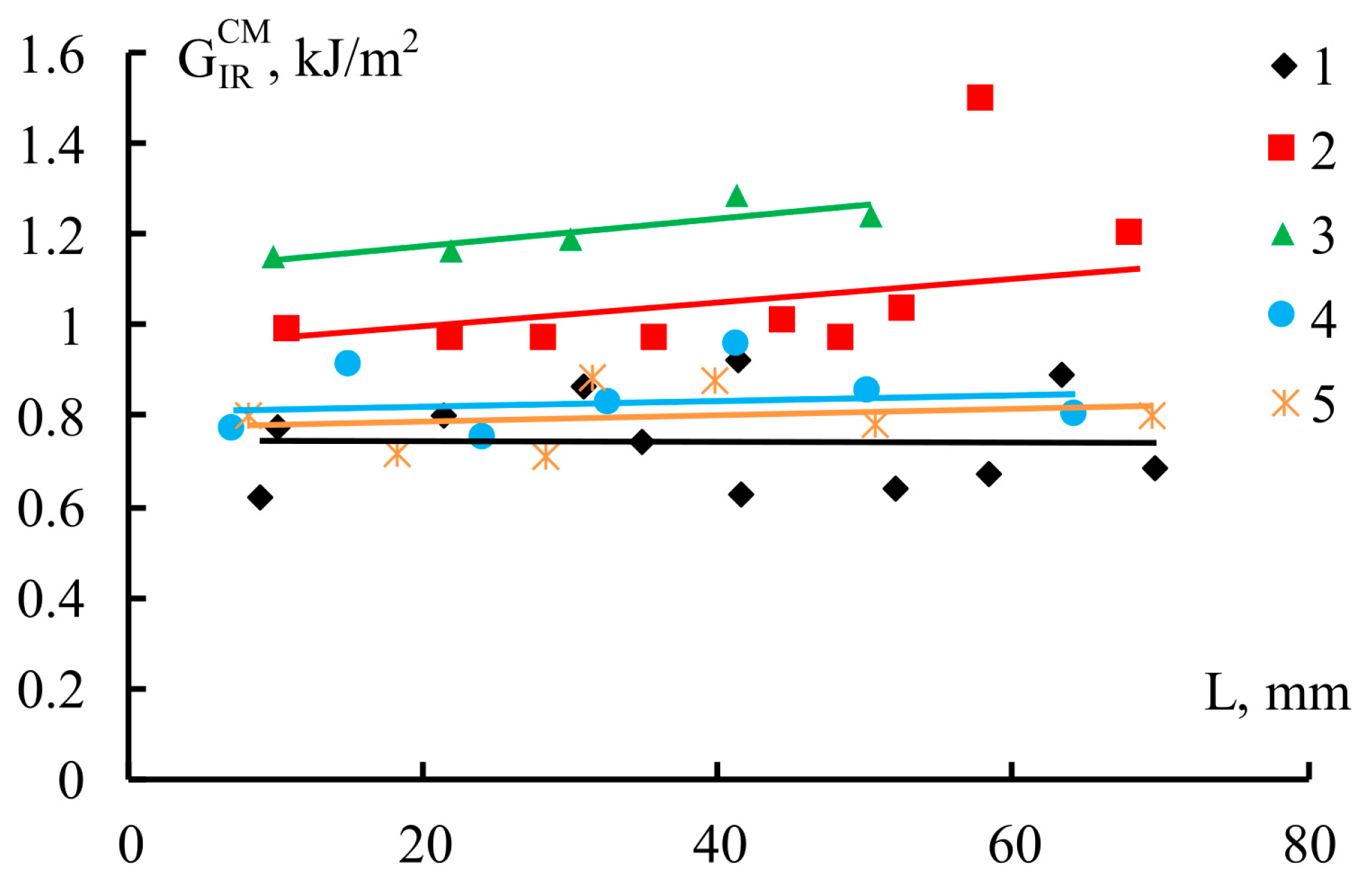
3.1. Fracture Toughness of GFRP
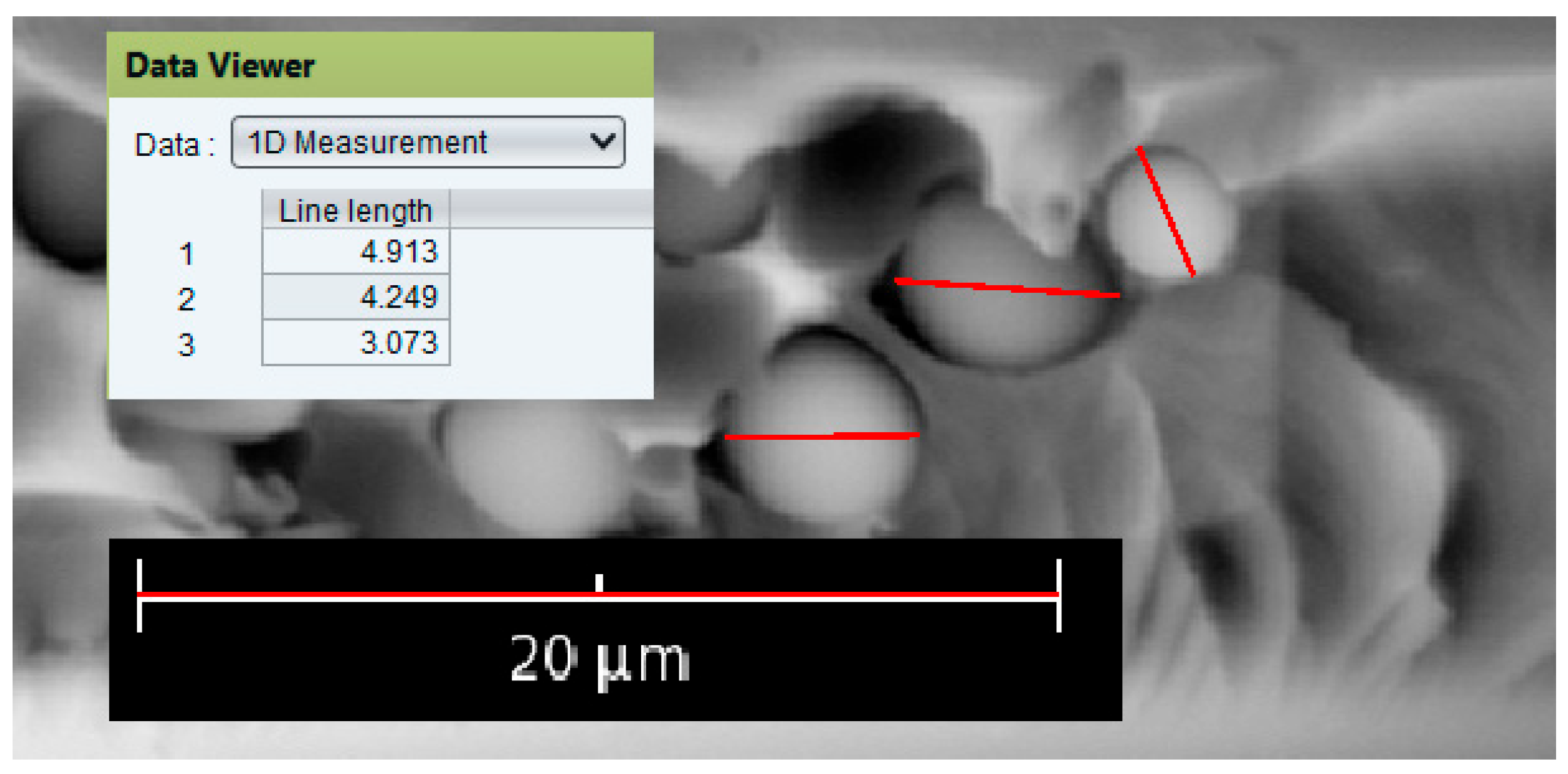
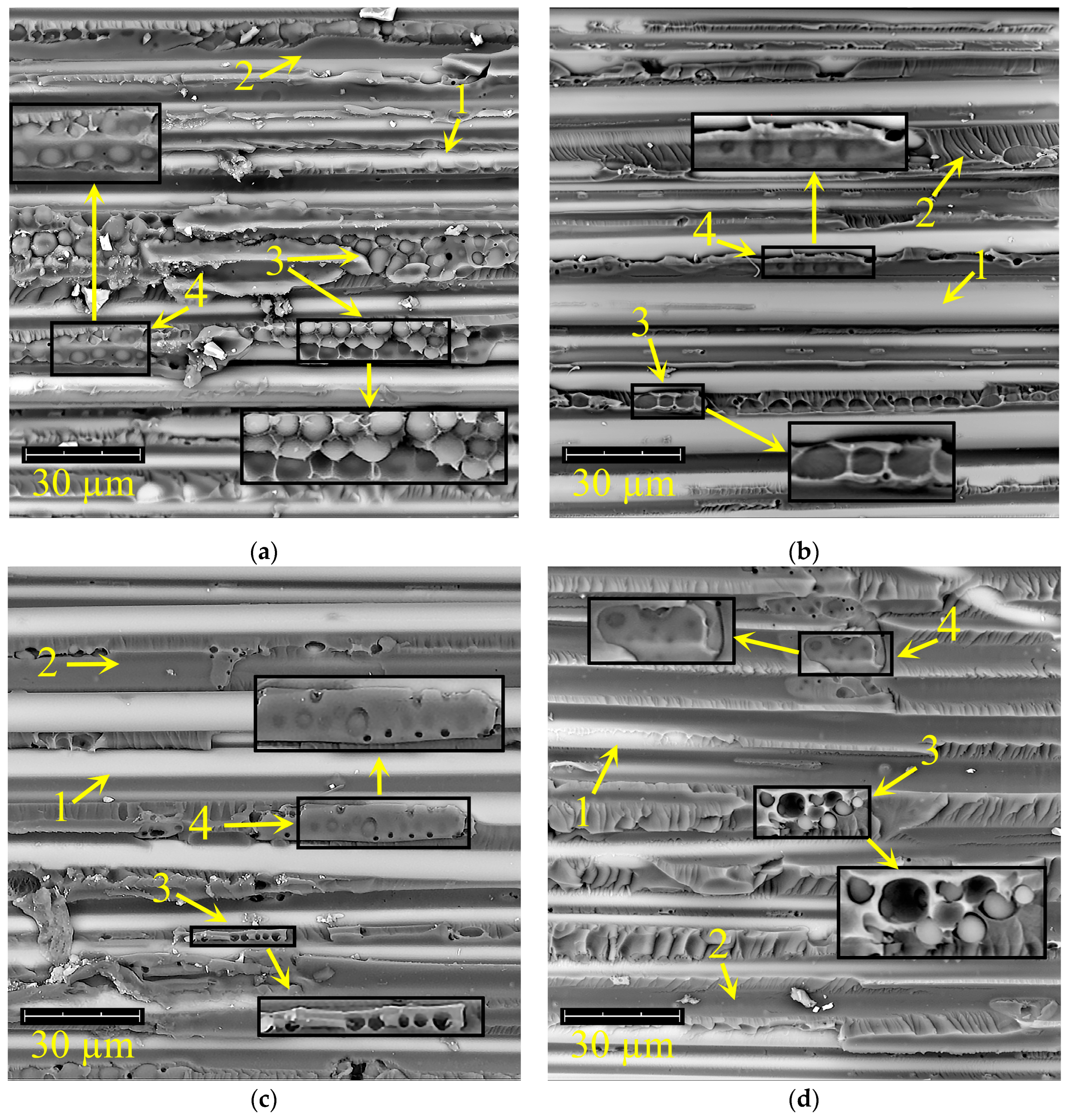
3.2. Structural and Morphological Study
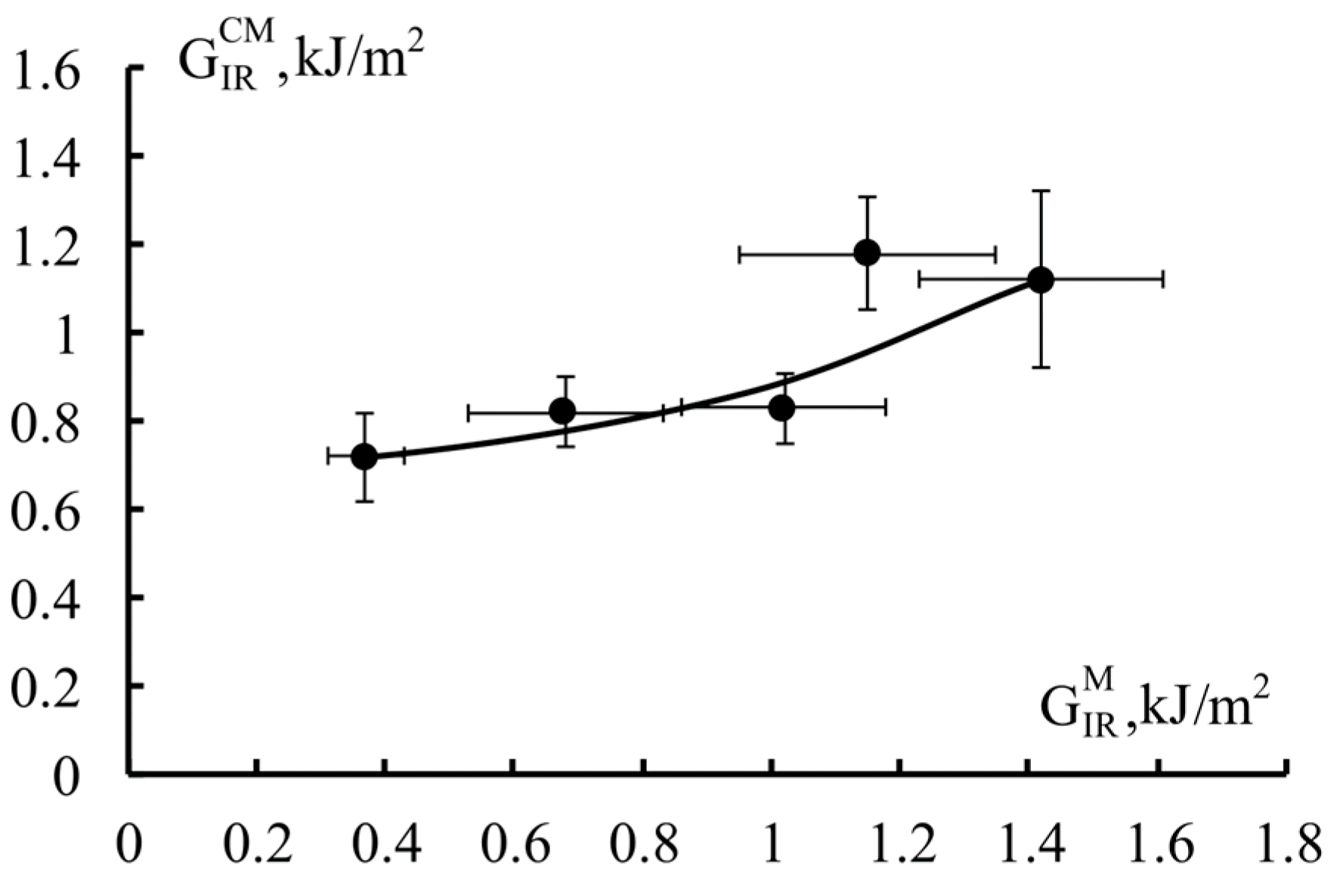
3.3. Dependence of GIR of Reinforced Plastics on the GIR of Matrices
4. Conclusions
Author Contributions
Funding
Institutional Review Board Statement
Data Availability Statement
Conflicts of Interest
References
- Fekiač, J.J.; Krbata, M.; Kohutiar, M.; Janík, R.; Kakošová, L.; Breznická, A.; Eckert, M.; Mikuš, P. Comprehensive Review: Optimization of Epoxy Composites, Mechanical Properties, & Technological Trends. Polymers 2025, 17, 271. [Google Scholar] [CrossRef] [PubMed]
- Diniță, A.; Ripeanu, R.G.; Ilincă, C.N.; Cursaru, D.; Matei, D.; Naim, R.I.; Tănase, M.; Portoacă, A.I. Advancements in Fiber-Reinforced Polymer Composites: A Comprehensive Analysis. Polymers 2023, 16, 2. [Google Scholar] [CrossRef] [PubMed]
- Chae, G.-S.; Park, H.-W.; Lee, J.-H.; Shin, S. Comparative Study on the Impact Wedge-Peel Performance of Epoxy-Based Structural Adhesives Modified with Different Toughening Agents. Polymers 2020, 12, 1549. [Google Scholar] [CrossRef] [PubMed]
- Neves, R.M.; Ornaghi, H.L.; Zattera, A.J.; Amico, S.C. Toughening Epoxy Resin with Liquid Rubber and Its Hybrid Composites: A Systematic Review. J. Polym. Res. 2022, 29, 340. [Google Scholar] [CrossRef]
- Mousavi, S.R.; Estaji, S.; Paydayesh, A.; Arjmand, M.; Jafari, S.H.; Nouranian, S.; Khonakdar, H.A. A Review of Recent Progress in Improving the Fracture Toughness of Epoxy-based Composites Using Carbonaceous Nanofillers. Poly. Compos. 2022, 43, 1871–1886. [Google Scholar] [CrossRef]
- Sahu, M.; Raichur, A.M. Synergistic Effect of Nanotextured Graphene Oxide Modified with Hollow Silica Microparticles on Mechanical and Thermal Properties of Epoxy Nanocomposites. Compos. Part B Eng. 2022, 245, 110175. [Google Scholar] [CrossRef]
- Brooker, R.D.; Kinloch, A.J.; Taylor, A.C. The Morphology and Fracture Properties of Thermoplastic-Toughened Epoxy Polymers. J. Adhes. 2010, 86, 726–741. [Google Scholar] [CrossRef]
- Ma, H.; Aravand, A.; Falzon, B.G. Synergistic Enhancement of Fracture Toughness in Multiphase Epoxy Matrices Modified by Thermoplastic and Carbon Nanotubes. Compos. Sci. Technol. 2021, 201, 108523. [Google Scholar] [CrossRef]
- Białkowska, A.; Bakar, M.; Kucharczyk, W.; Zarzyka, I. Hybrid Epoxy Nanocomposites: Improvement in Mechanical Properties and Toughening Mechanisms—A Review. Polymers 2023, 15, 1398. [Google Scholar] [CrossRef]
- Tangthana-umrung, K.; Mahmood, H.; Zhang, X.; Gresil, M. Enhancing Interlaminar Fracture Toughness of Woven Carbon Fibre/Epoxy Composites with Engineering Thermoplastic and Carbon-Based Nanomaterials. Compos. Struct. 2022, 282, 115073. [Google Scholar] [CrossRef]
- Zhang, J.; Zhang, Z.; Huang, R.; Tan, L. Advances in Toughening Modification Methods for Epoxy Resins: A Comprehensive Review. Polymers 2025, 17, 1288. [Google Scholar] [CrossRef] [PubMed]
- Ma, H.; Aravand, M.A.; Falzon, B.G. Influence on Fracture Toughness Arising from Controlled Morphology of Multiphase Toughened Epoxy Resins in the Presence of Fibre Reinforcement. Compos. Sci. Technol. 2022, 217, 109095. [Google Scholar] [CrossRef]
- Solodilov, V.I.; Tretyakov, I.V.; Petrova, T.V.; Kireynov, A.V.; Korokhin, R.A.; Yurkov, G.Y. Influence of Polyethersulfone on the Fracture Toughness of Epoxy Matrices and Reinforced Plastics on Their Basis. Mech. Compos. Mater. 2023, 59, 743–756. [Google Scholar] [CrossRef]
- Sun, Z.; Xu, L.; Chen, Z.; Wang, Y.; Tusiime, R.; Cheng, C.; Zhou, S.; Liu, Y.; Yu, M.; Zhang, H. Enhancing the Mechanical and Thermal Properties of Epoxy Resin via Blending with Thermoplastic Polysulfone. Polymers 2019, 11, 461. [Google Scholar] [CrossRef]
- Zheng, N.; Huang, Y.; Liu, H.-Y.; Gao, J.; Mai, Y.-W. Improvement of Interlaminar Fracture Toughness in Carbon Fiber/Epoxy Composites with Carbon Nanotubes/Polysulfone Interleaves. Compos. Sci. Technol. 2017, 140, 8–15. [Google Scholar] [CrossRef]
- Wang, D.; Guo, Z.; Zhao, L.; Li, H.; Liu, C.; Zhang, G.; Xiao, W.; Zheng, S.; Su, K.; Zhang, Y.; et al. Mechanical Properties, Thermal Stability, and Phase Structure of Polysulfone Toughened Epoxy Structural Adhesive. J. Appl. Polym. Sci. 2025, 142, e57574. [Google Scholar] [CrossRef]
- Francis, B.; Lakshmana Rao, V.; Jose, S.; Catherine, B.K.; Ramaswamy, R.; Jose, J.; Thomas, S. Poly(Ether Ether Ketone) with Pendent Methyl Groups as a Toughening Agent for Amine Cured DGEBA Epoxy Resin. J. Mater. Sci. 2006, 41, 5467–5479. [Google Scholar] [CrossRef]
- Karthikeyan, L.; Mathew, D.; Robert, T.M. Poly(Ether Ether Ketone)-bischromenes: Synthesis, Characterization, and Influence on Thermal, Mechanical, and Thermo Mechanical Properties of Epoxy Resin. Polym. Adv. Technol. 2019, 30, 1061–1071. [Google Scholar] [CrossRef]
- Voleppe, Q.; Ballout, W.; Van Velthem, P.; Bailly, C.; Pardoen, T. Enhanced Fracture Resistance of Thermoset/Thermoplastic Interfaces through Crack Trapping in a Morphology Gradient. Polymer 2021, 218, 123497. [Google Scholar] [CrossRef]
- Chen, H.; Zhu, Z.; Patil, D.; Bajaj, D.; Verghese, N.; Jiang, Z.; Sue, H.-J. Mechanical Properties of Reactive Polyetherimide-Modified Tetrafunctional Epoxy Systems. Polymer 2023, 270, 125763. [Google Scholar] [CrossRef]
- Lee, S.-Y.; Kang, M.-J.; Kim, S.-H.; Rhee, K.Y.; Lee, J.-H.; Park, S.-J. Roles of Small Polyetherimide Moieties on Thermal Stability and Fracture Toughness of Epoxy Blends. Polymers 2021, 13, 3310. [Google Scholar] [CrossRef] [PubMed]
- Li, H.; Zhao, L.; Su, K.; Feng, H.; Wang, D.; Qu, C. A Comparative Study on the Rheological, Thermal, and Mechanical Performance of Epoxy Resin Modified with Thermoplastics. J. Adhes. Sci. Technol. 2021, 35, 1393–1403. [Google Scholar] [CrossRef]
- Zhang, Y.; Ling, Q.; Lu, X.; Fang, Q.; Sun, F. Rheology, Morphological Evolution, Thermal, and Mechanical Properties of Epoxy Modified with Polysulfone and Cellulose Nanofibers. J. Appl. Polym. Sci. 2020, 137, 48628. [Google Scholar] [CrossRef]
- Zheng, N.; Sun, W.; Liu, H.-Y.; Huang, Y.; Gao, J.; Mai, Y.-W. Effects of Carboxylated Carbon Nanotubes on the Phase Separation Behaviour and Fracture-Mechanical Properties of an Epoxy/Polysulfone Blend. Compos. Sci. Technol. 2018, 159, 180–188. [Google Scholar] [CrossRef]
- Khalina, M.; Beheshty, M.H.; Salimi, A. The Effect of Reactive Diluent on Mechanical Properties and Microstructure of Epoxy Resins. Polym. Bull. 2019, 76, 3905–3927. [Google Scholar] [CrossRef]
- Flores, H.A.; Ayude, M.A.; Riccardi, C.C.; Fasce, L.A. Influence of a Reactive Diluent on Curing Kinetics, Internal Curing Process, and Mechanical Performance of Filament Wound Glass Fiber-Reinforced Epoxy Composite Pipes. Polym. Eng. Sci. 2019, 59, 344–354. [Google Scholar] [CrossRef]
- Pastarnokienė, L.; Jonikaitė-Švėgždienė, J.; Lapinskaitė, N.; Kulbokaitė, R.; Bočkuvienė, A.; Kochanė, T.; Makuška, R. The Effect of Reactive Diluents on Curing of Epoxy Resins and Properties of the Cured Epoxy Coatings. J. Coat. Technol. Res. 2023, 20, 1207–1221. [Google Scholar] [CrossRef]
- Li, J.; Zhao, H.; Sui, G. Renewable Green Reactive Diluent for Bisphenol a Epoxy Resin System: Curing Kinetics and Properties. RSC Adv. 2022, 12, 31699–31710. [Google Scholar] [CrossRef]
- Petrova, T.V.; Tretyakov, I.V.; Kireynov, A.V.; Shapagin, A.V.; Budylin, N.Y.; Alexeeva, O.V.; Beshtoev, B.Z.; Solodilov, V.I.; Yurkov, G.Y.; Berlin, A.A. Structure and Properties of Epoxy Polysulfone Systems Modified with an Active Diluent. Polymers 2022, 14, 5320. [Google Scholar] [CrossRef]
- Solodilov, V.I.; Korokhin, R.A.; Gorbatkina, Y.A.; Kuperman, A.M. Comparison of Fracture Energies of Epoxy-Polysulfone Matrices and Unidirectional Composites Based on Them. Mech. Compos. Mater. 2015, 51, 177–190. [Google Scholar] [CrossRef]
- Solodilov, V.I.; Gorbatkina, Y.A. Properties of Unidirectional GFRPs Based on an Epoxy Resin Modified with Polysulphone or an Epoxyurethane Oligomer. Mech. Compos. Mater. 2006, 42, 513–526. [Google Scholar] [CrossRef]
- Petrova, T.V.; Tretyakov, I.V.; Solodilov, V.I. Technological Parameters of Epoxypolysulphone Binders Modified with Furfuryl Glycidyl Ether. Russ. J. Phys. Chem. B 2023, 17, 177–181. [Google Scholar] [CrossRef]
- ISO 1172:2023; Textile-glass-reinforced plastics – Prepregs, moulding compounds and laminates – Determination of the textile-glass and mineral-filler content using calcination methods. International Organization for Standardization (ISO): Geneva, Switzerland, 2023.
- Solodilov, V.I.; Bazhenov, S.L.; Gorbatkina, Y.A.; Kuperman, A.M. Determination of the Interlaminar Fracture Toughness of Glass-Fiber-Reinforced Plastics on Ring Segments. Mech. Compos. Mater. 2003, 39, 407–414. [Google Scholar] [CrossRef]
- Sørensen, B.F.; Jacobsen, T.K. Large-Scale Bridging in Composites: R-Curves and Bridging Laws. Compos. Part A Appl. Sci. Manuf. 1998, 29, 1443–1451. [Google Scholar] [CrossRef]






| PSU/FGE Ratio | Component Content | |||
|---|---|---|---|---|
| EO | PSU | FGE | TEAT | |
| Ref | 0.91 | - | - | 0.09 |
| 1/0 | 0.77 | 0.15 | - | 0.08 |
| 1/0.5 | 0.71 | 0.14 | 0.07 | 0.08 |
| 1/1 | 0.66 | 0.13 | 0.13 | 0.08 |
| 0.75/1 | 0.68 | 0.10 | 0.14 | 0.08 |
| PSU/FGE Ratio | Reference | 1/0 | 1/0.5 | 1/1 | 0.75/1 |
|---|---|---|---|---|---|
| , kJ/m2 | 0.72 ± 0.1 | 1.12 ± 0.2 | 1.18 ± 0.13 | 0.83 ± 0.08 | 0.82 ± 0.08 |
| PSU/FGE Ratio | Reference | 1/0 | 1/0.5 | 1/1 | 0.75/1 |
|---|---|---|---|---|---|
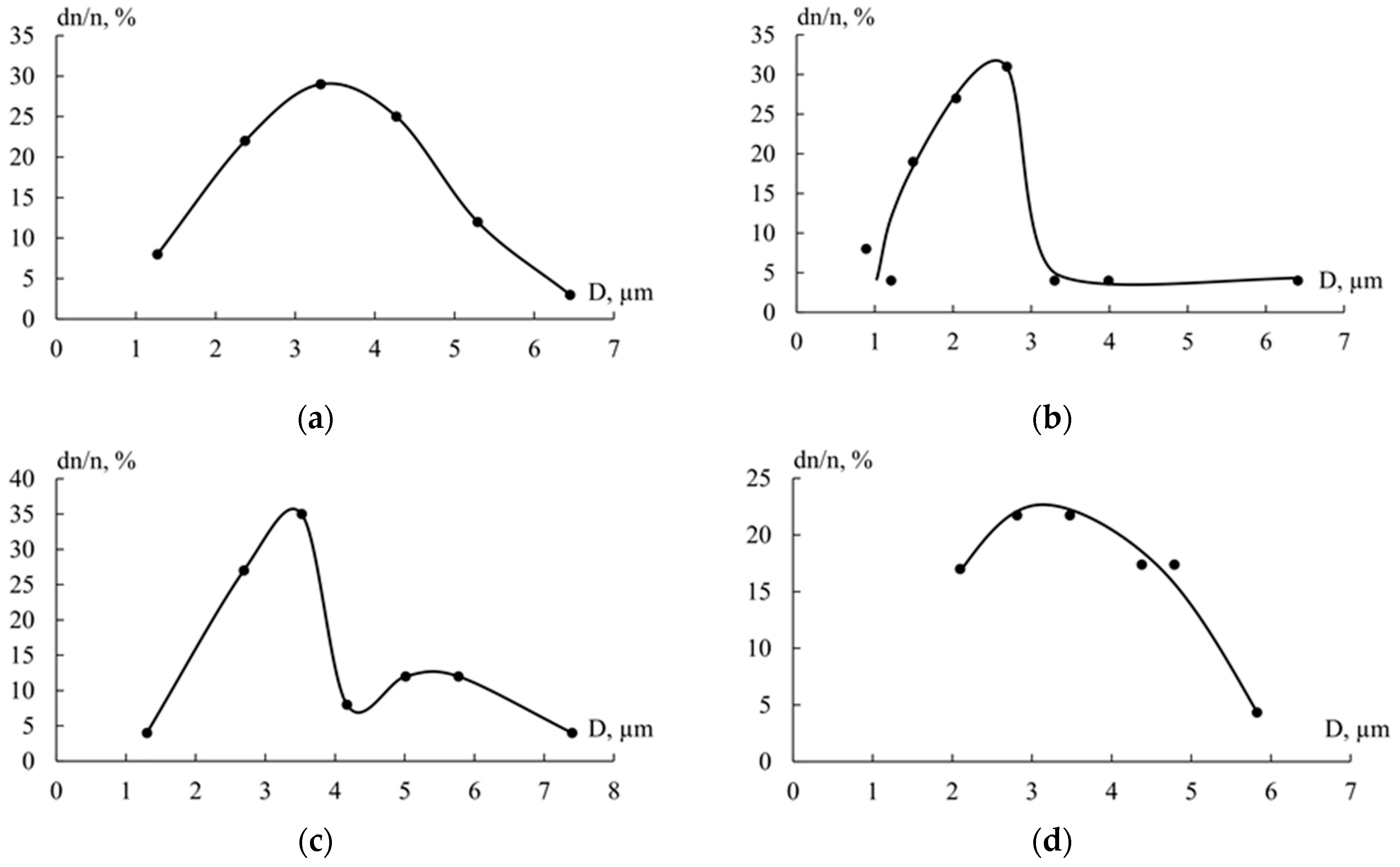
| D, µm | - | 3.32 ± 0.31 | 2.69 ± 0.21 | 3.52 ± 0.27 5.39 ± 0.49 | 3.15 ± 0.41 |
Disclaimer/Publisher’s Note: The statements, opinions and data contained in all publications are solely those of the individual author(s) and contributor(s) and not of MDPI and/or the editor(s). MDPI and/or the editor(s) disclaim responsibility for any injury to people or property resulting from any ideas, methods, instructions or products referred to in the content. |
© 2026 by the authors. Licensee MDPI, Basel, Switzerland. This article is an open access article distributed under the terms and conditions of the Creative Commons Attribution (CC BY) license.
Share and Cite
Petrova, T.V.; Tretyakov, I.V.; Alexeeva, O.V.; Sergeev, A.Y.; Korokhin, R.A.; Solodilov, V.I.; Yurkov, G.Y.; Berlin, A.A. Fracture Toughness and Failure Mechanisms of Glass-Reinforced Plastics Based on an Epoxy Matrix Modified with Polysulfone and an Active Diluent. Polymers 2026, 18, 991. https://doi.org/10.3390/polym18080991
Petrova TV, Tretyakov IV, Alexeeva OV, Sergeev AY, Korokhin RA, Solodilov VI, Yurkov GY, Berlin AA. Fracture Toughness and Failure Mechanisms of Glass-Reinforced Plastics Based on an Epoxy Matrix Modified with Polysulfone and an Active Diluent. Polymers. 2026; 18(8):991. https://doi.org/10.3390/polym18080991
Chicago/Turabian StylePetrova, Tuyara V., Ilya V. Tretyakov, Olga V. Alexeeva, Andrey Yu. Sergeev, Roman A. Korokhin, Vitaliy I. Solodilov, Gleb Yu. Yurkov, and Alexander Al. Berlin. 2026. "Fracture Toughness and Failure Mechanisms of Glass-Reinforced Plastics Based on an Epoxy Matrix Modified with Polysulfone and an Active Diluent" Polymers 18, no. 8: 991. https://doi.org/10.3390/polym18080991
APA StylePetrova, T. V., Tretyakov, I. V., Alexeeva, O. V., Sergeev, A. Y., Korokhin, R. A., Solodilov, V. I., Yurkov, G. Y., & Berlin, A. A. (2026). Fracture Toughness and Failure Mechanisms of Glass-Reinforced Plastics Based on an Epoxy Matrix Modified with Polysulfone and an Active Diluent. Polymers, 18(8), 991. https://doi.org/10.3390/polym18080991