The Influence of Polymer Fibers on the Properties of Foam Concrete with a Complex Nanomodifying Additive: Finite Element Analysis and Experimental Study

 ,
,  ,
,  ,
,  ,
,  , ,
, ,
Abstract
1. Introduction
- Polypropylene fibers [21,22,23] are a prevalent and economical choice for enhancing the structure and characteristics of FC. Crack resistance is enhanced, shrinkage is reduced, and frost resistance is increased by polypropylene fibers. Their mechanism of action is based on the creation of a spatial network that prevents the development of microcracks.
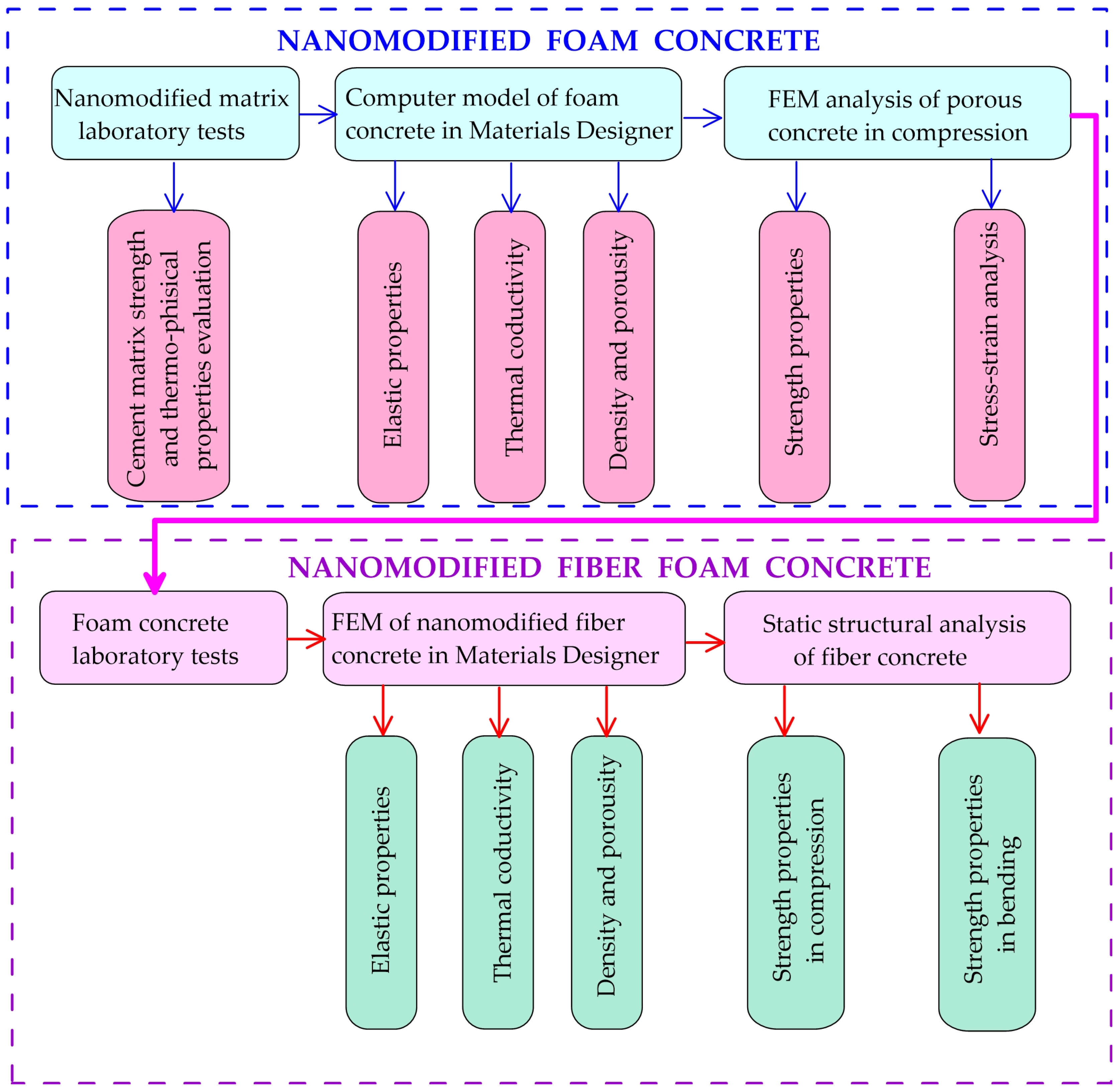
- Experimental study of the correlation between the composition, structure, and properties of FRFC with microsilica and alumina nanoparticles;
- Development of a finite element model of FRFC and calibration of the parameters of the nonlinear behavior of concrete under compression and bending.
- Identification of patterns in the stress–strain state of FRFC under compressive and bending loads.
- Examining experimental and numerical data to identify optimal formulation and technological factors affecting FRFC strength.
2. Materials and Methods
2.1. Materials and Research Sequence
2.2. Experimental Research Methods
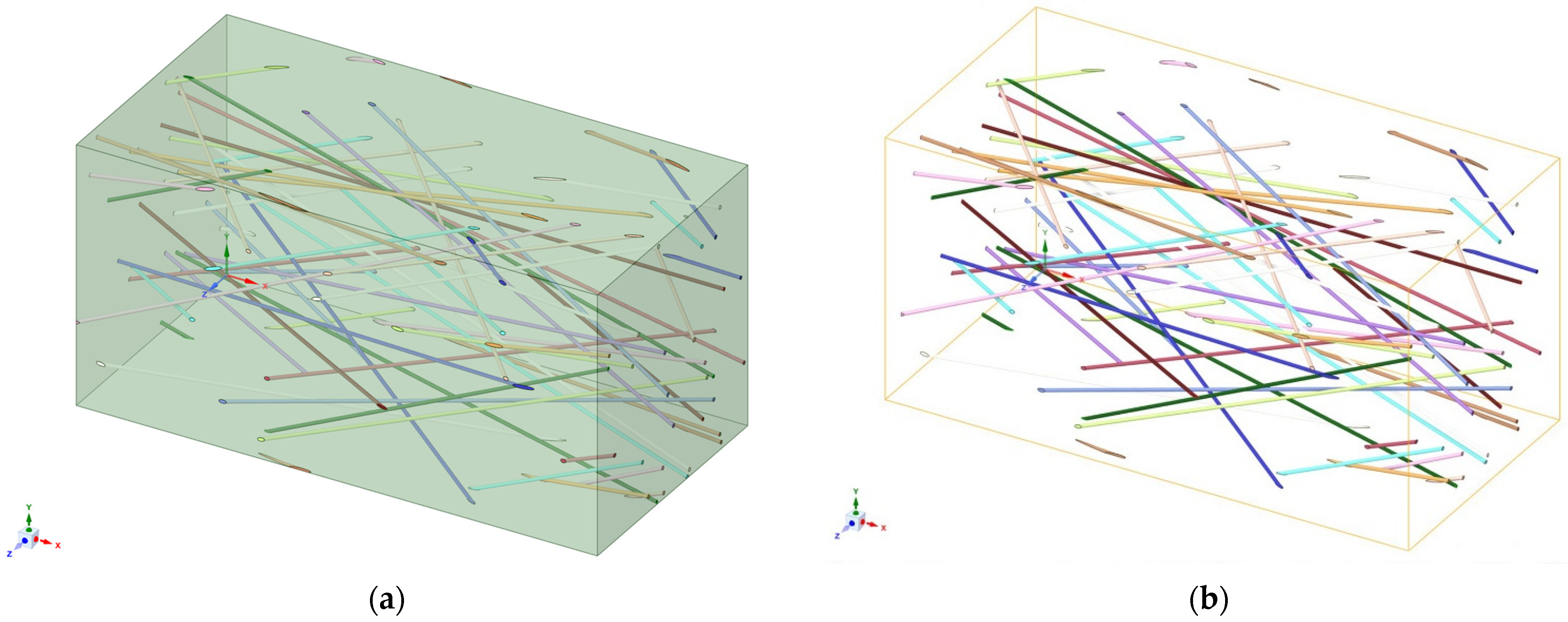
2.3. FEM Modeling
2.4. Calibration of the Menetrey-Willam Model
3. Results and Discussion
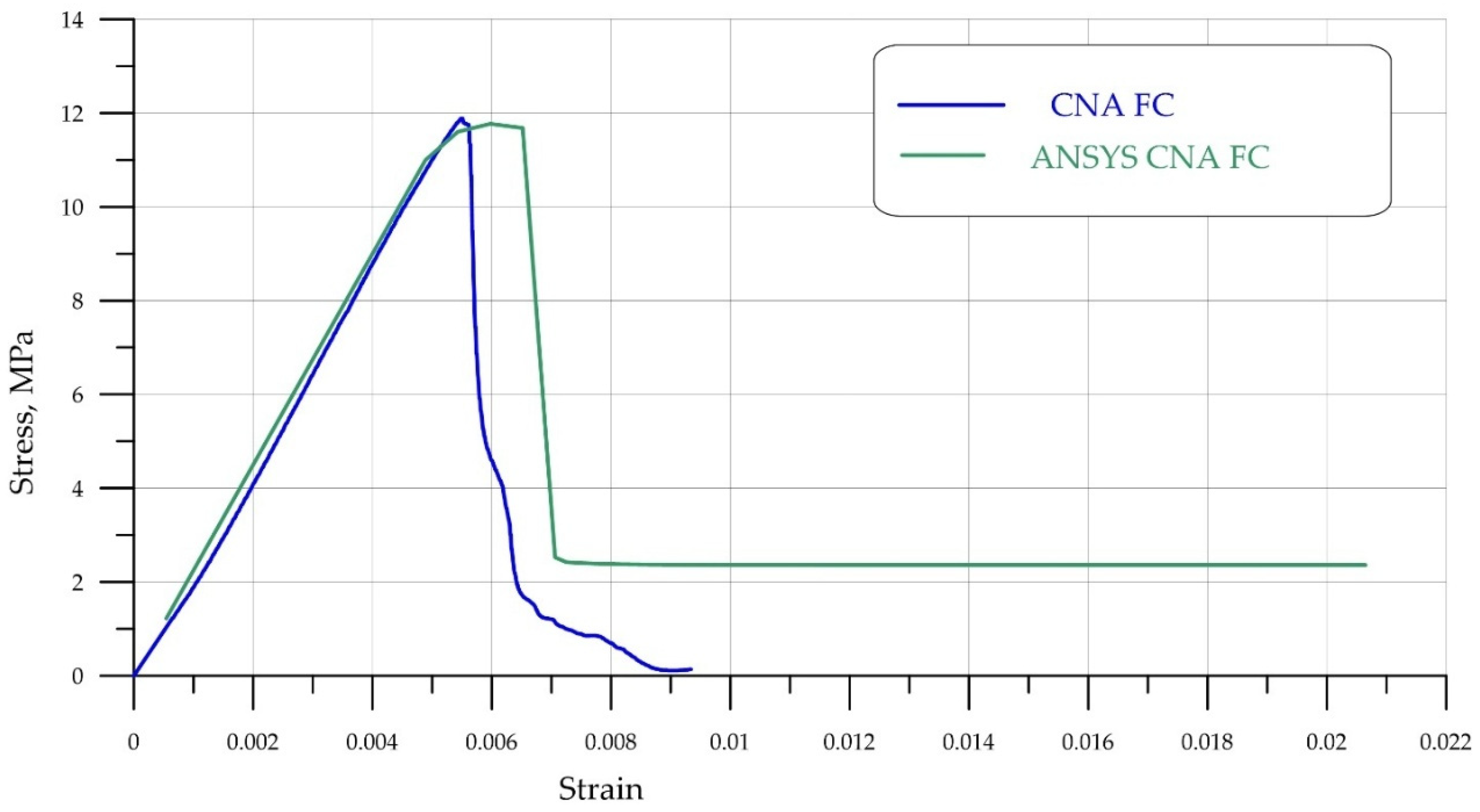
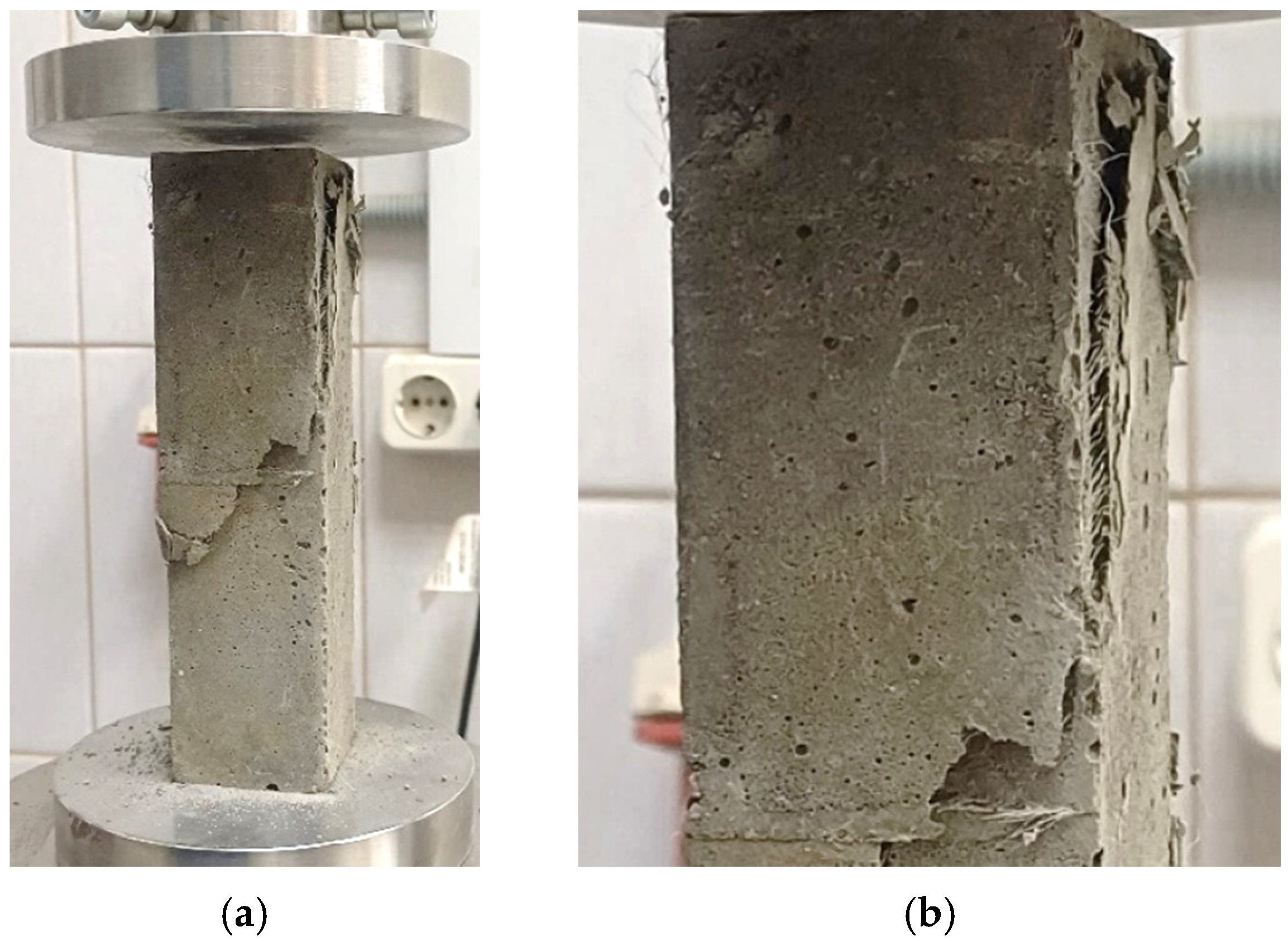
3.1. Model Verification Using Experimental Data on Foam Concrete Prism Compression
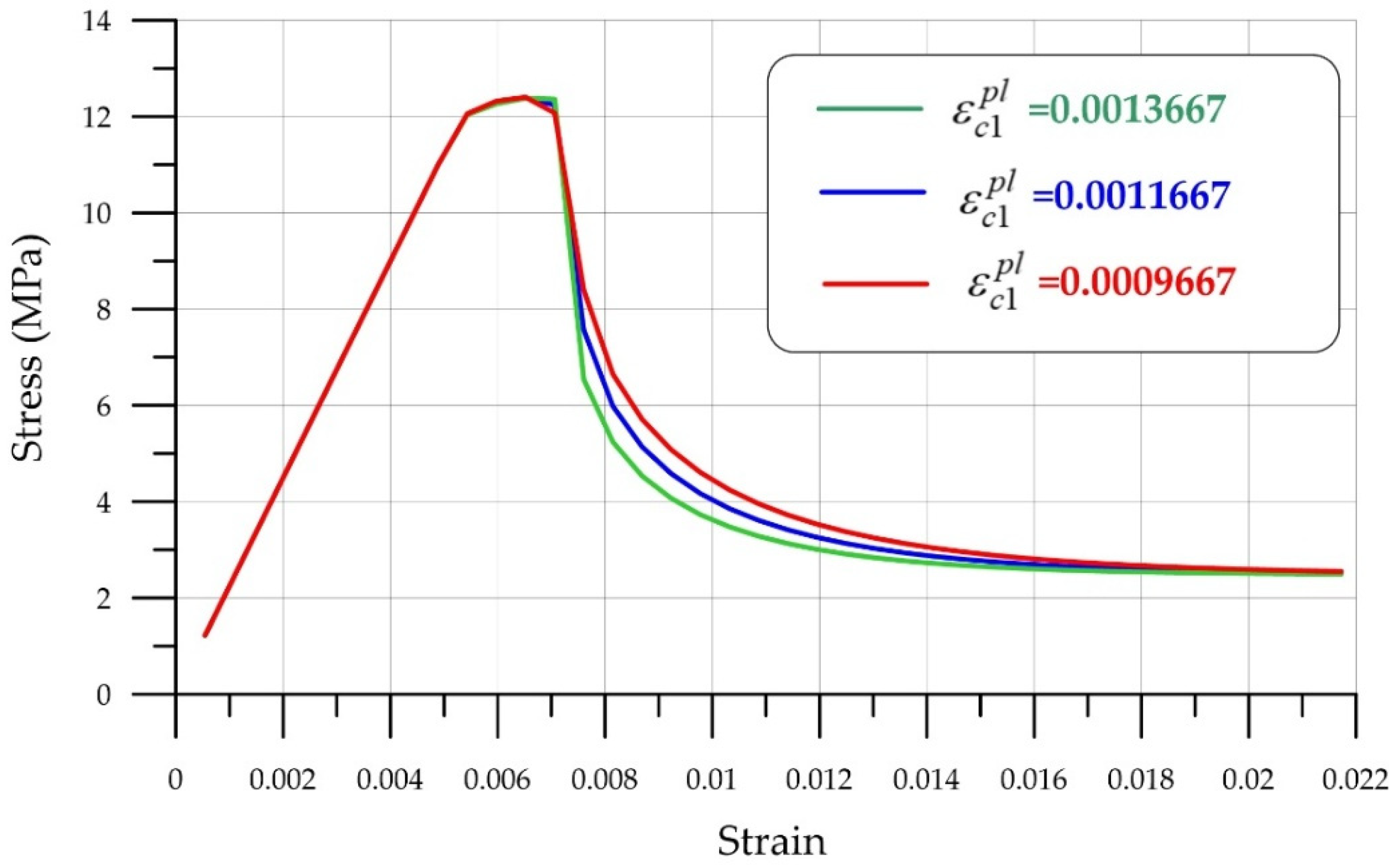
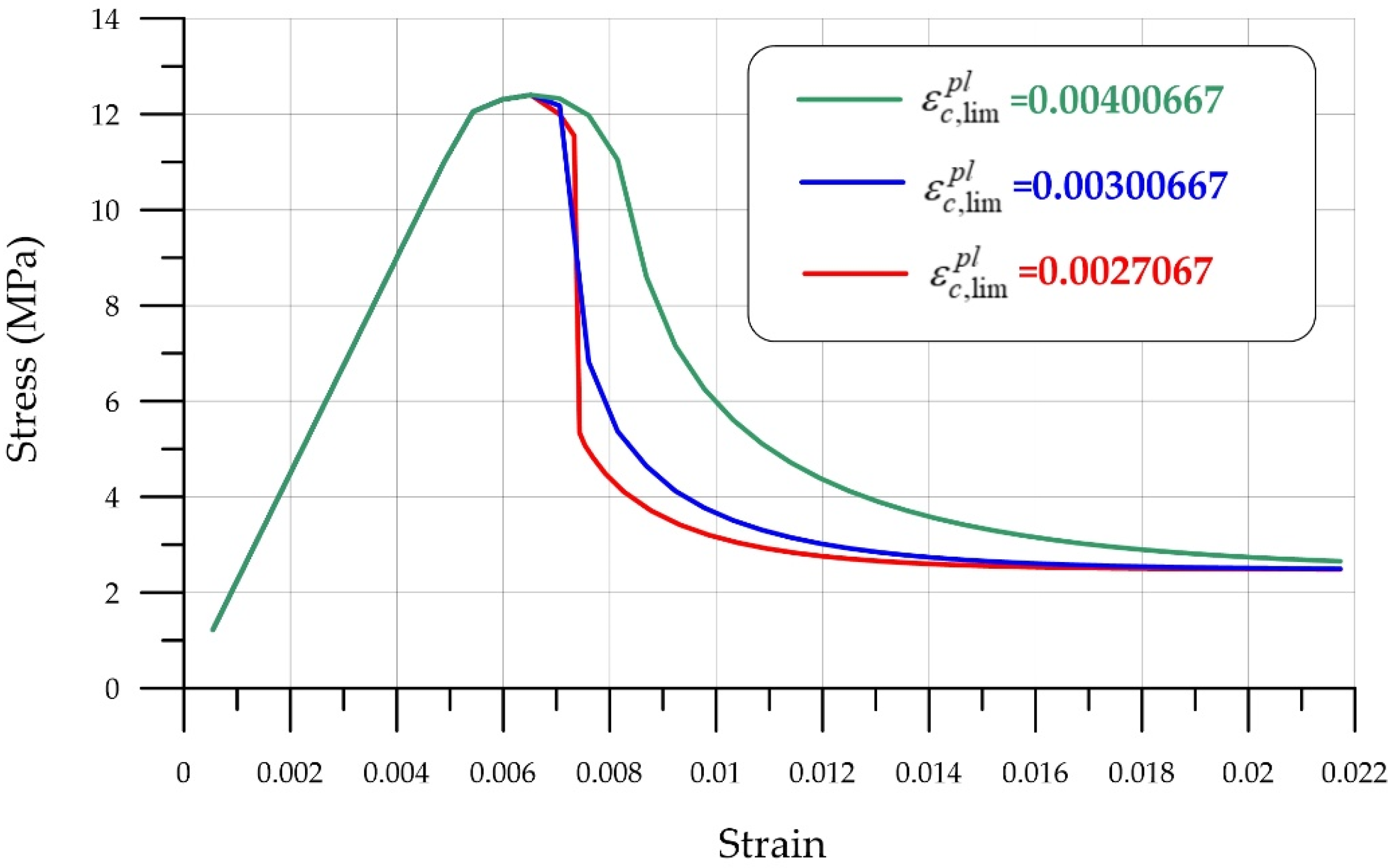
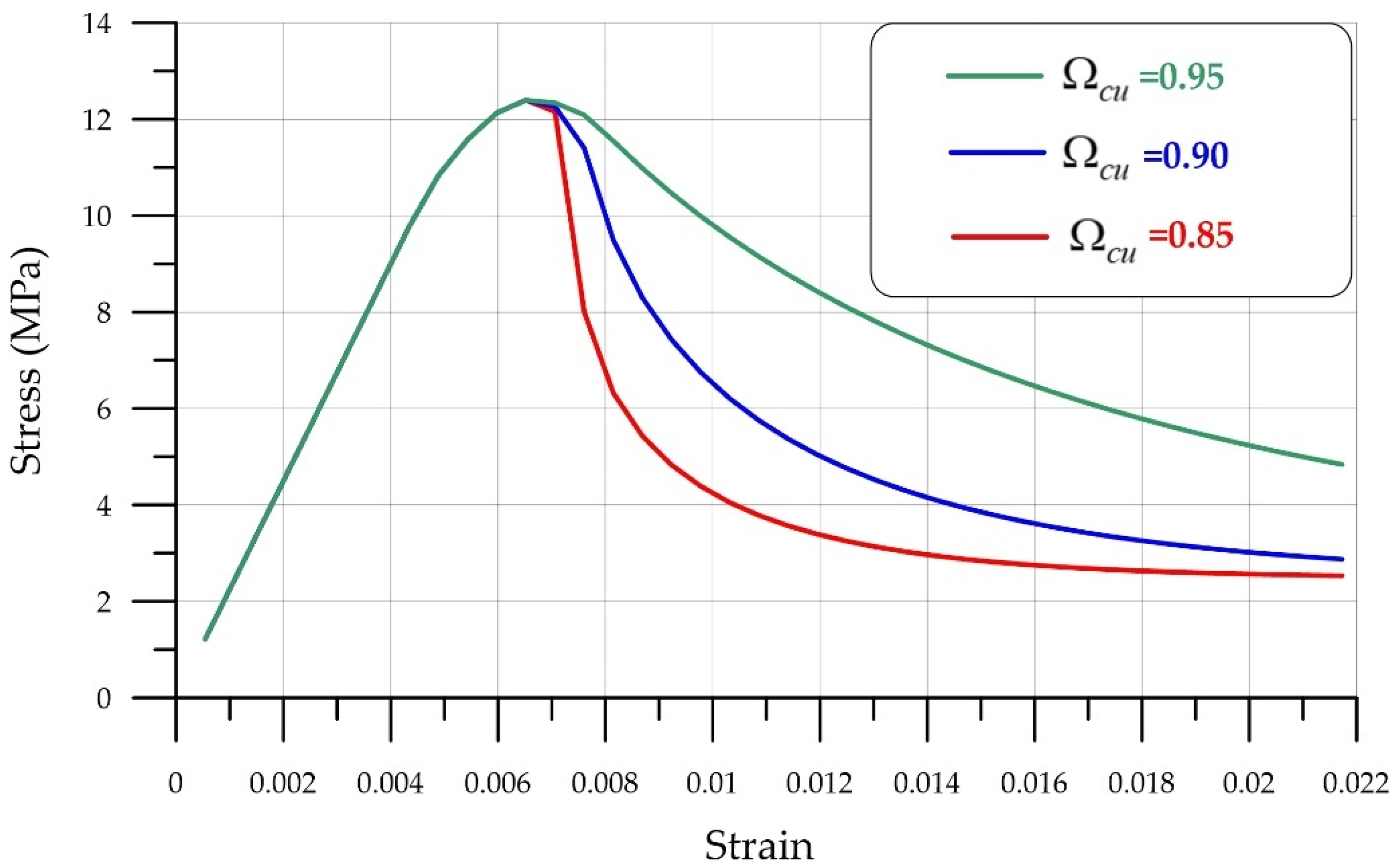
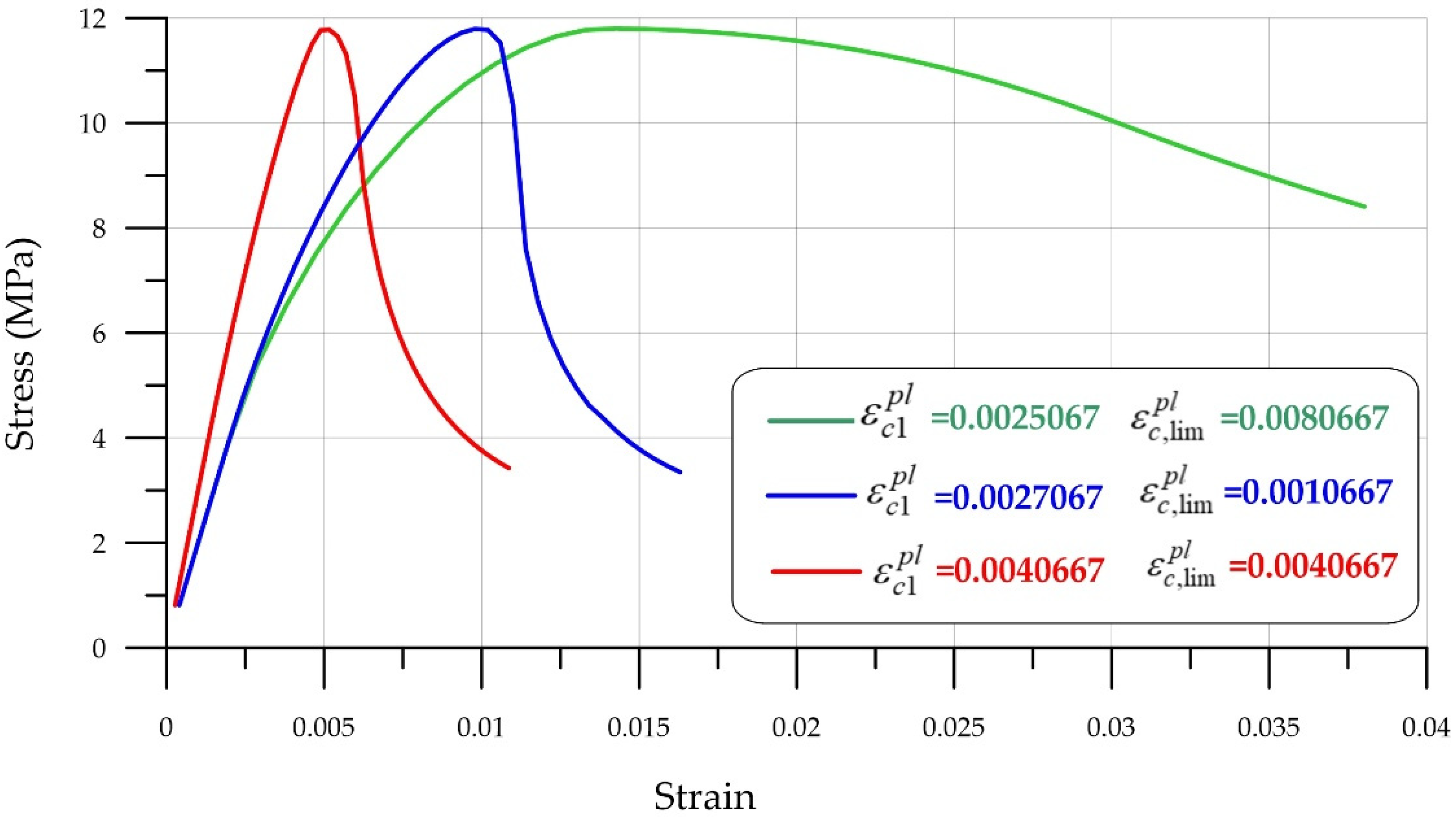
3.2. Parametric Modeling of Foam Concrete Using the Menetrey-Willam Model
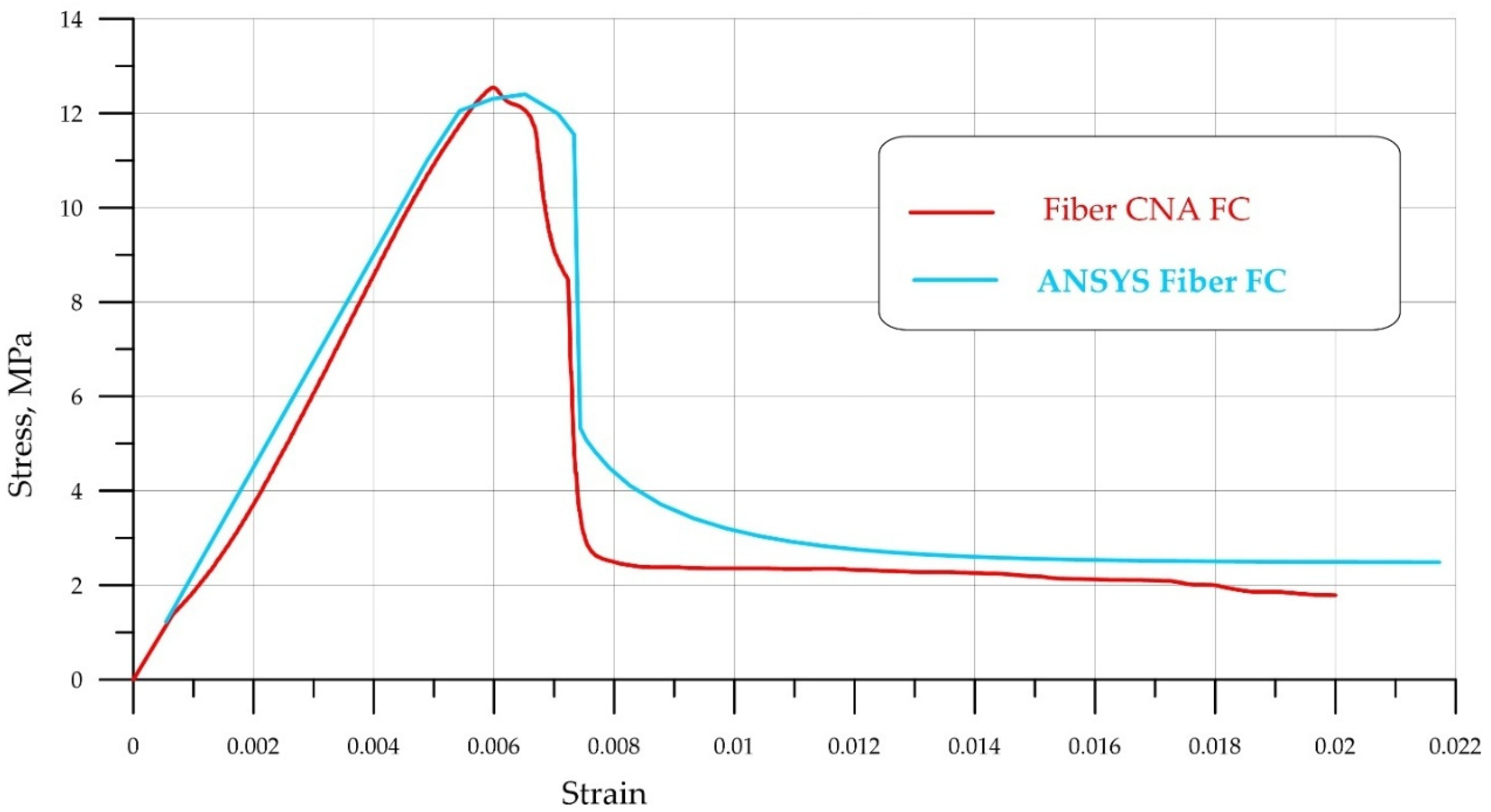
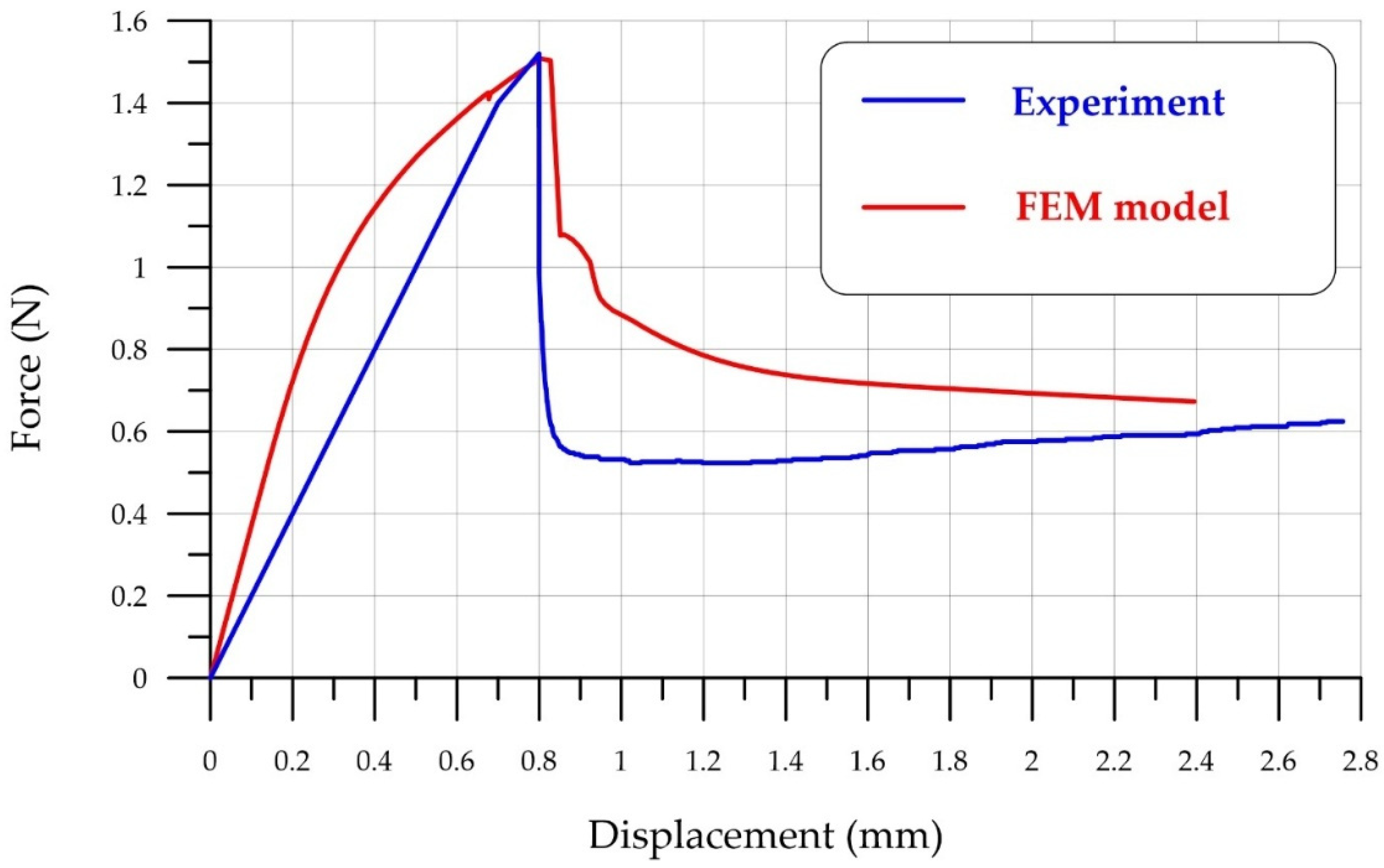
3.3. Model Verification and Analysis of the Effect of Polymer Fiber on the Bending Stress–Strain
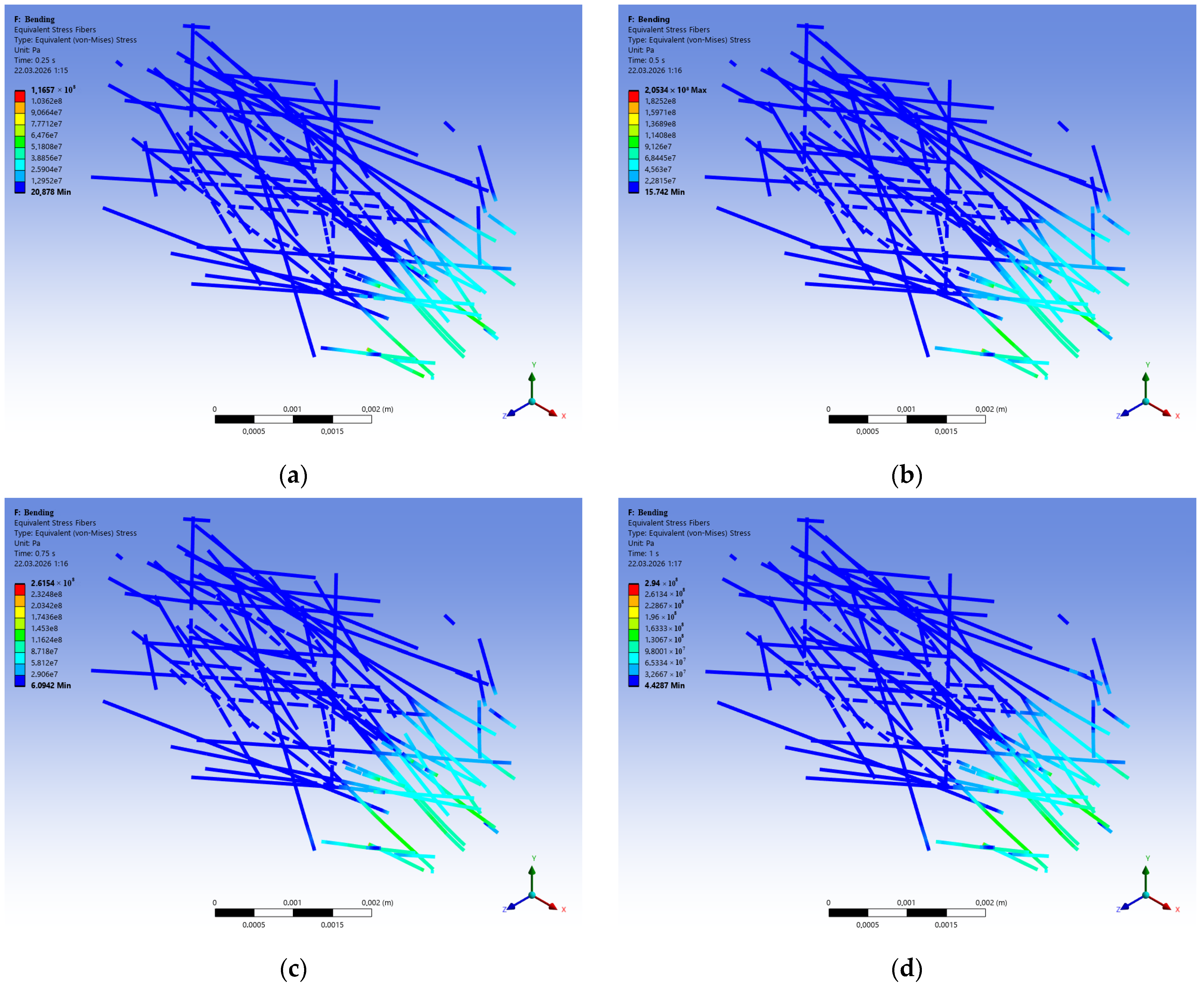
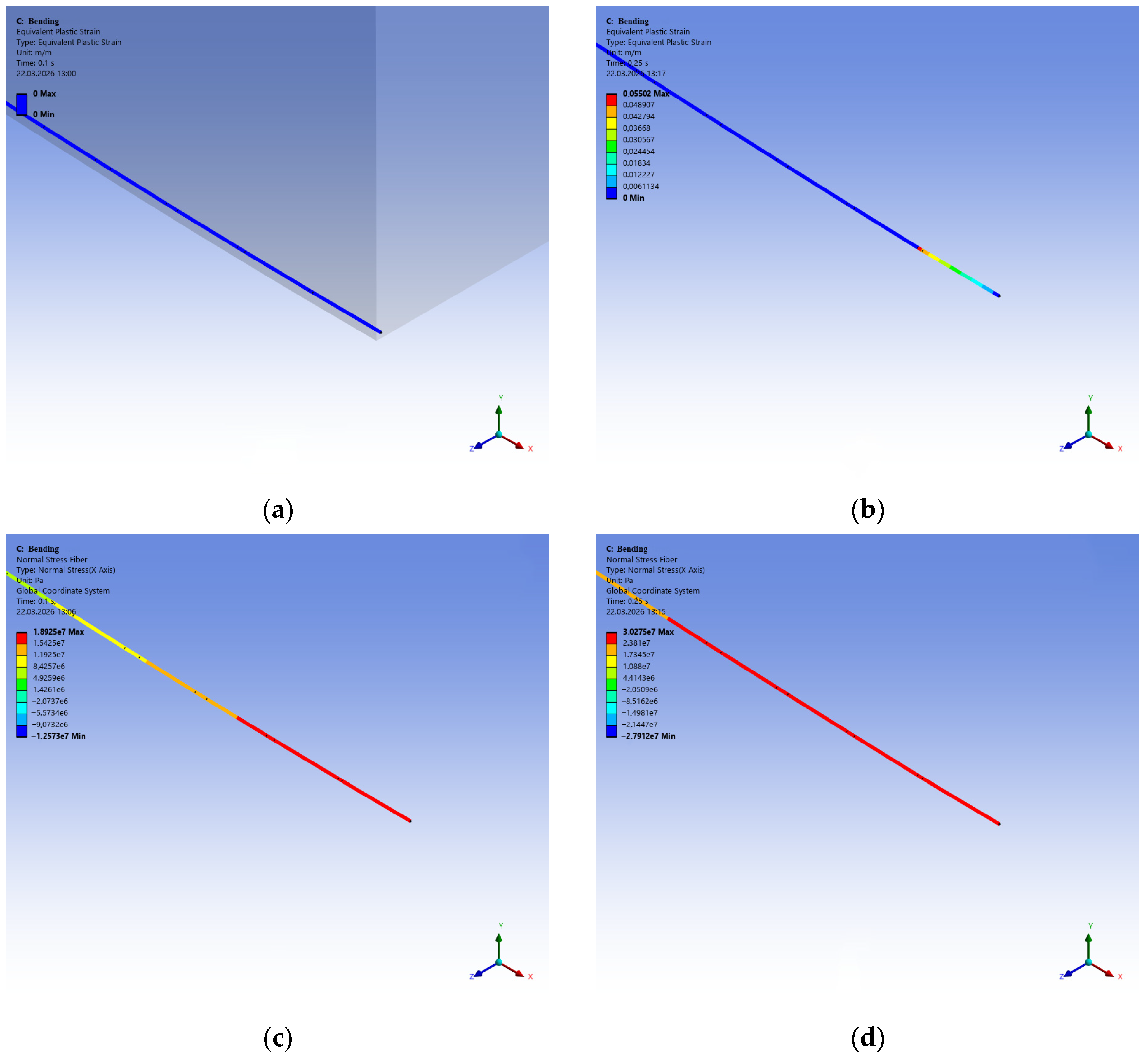
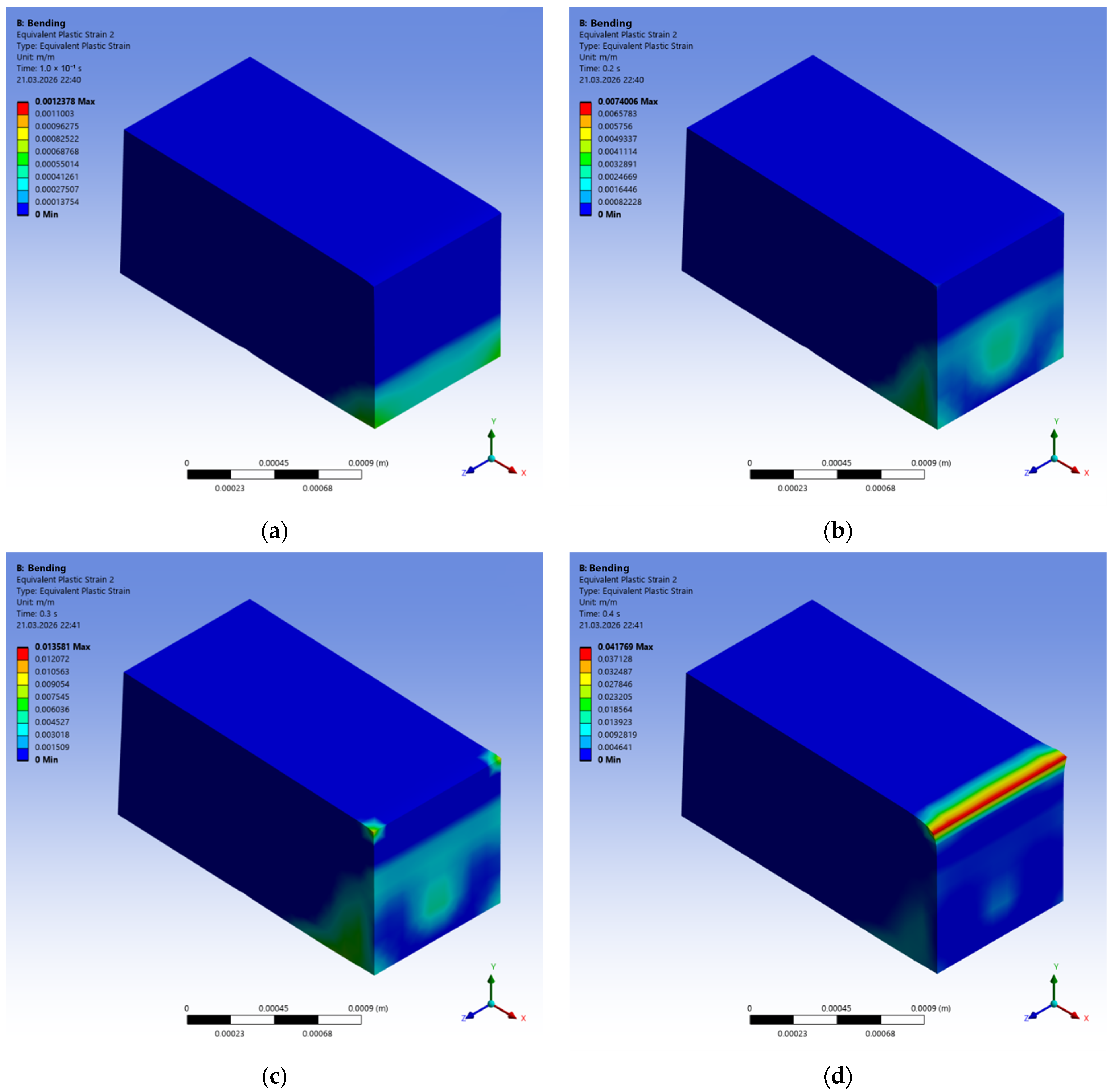
3.4. Analysis of the Stress–Strain State of Fiber-Reinforced Foam Concrete in Bending
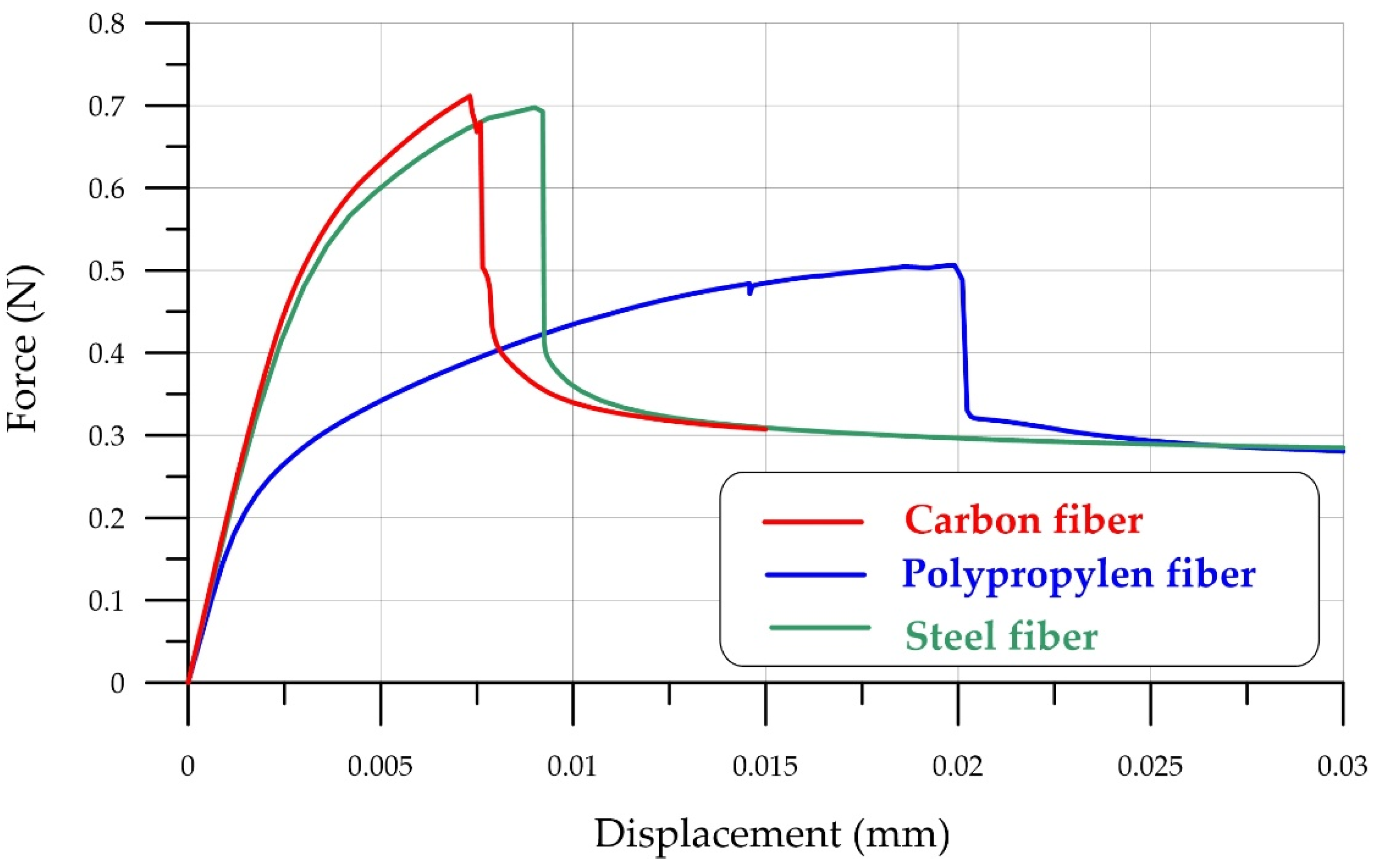
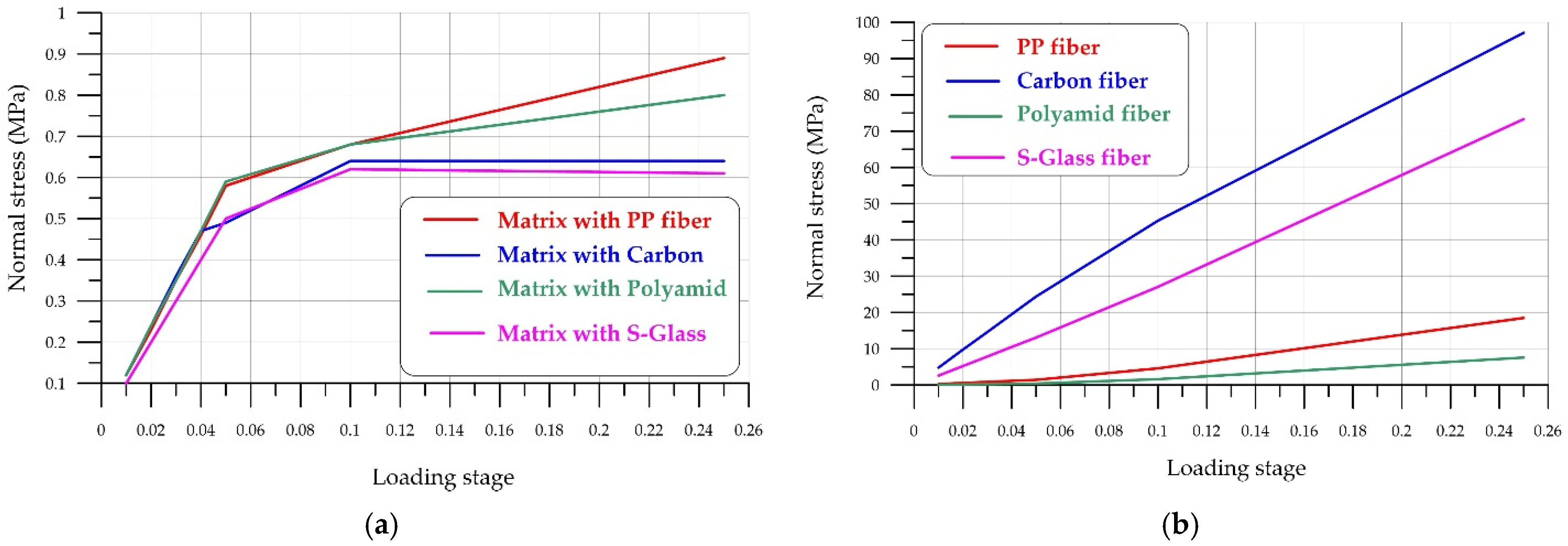
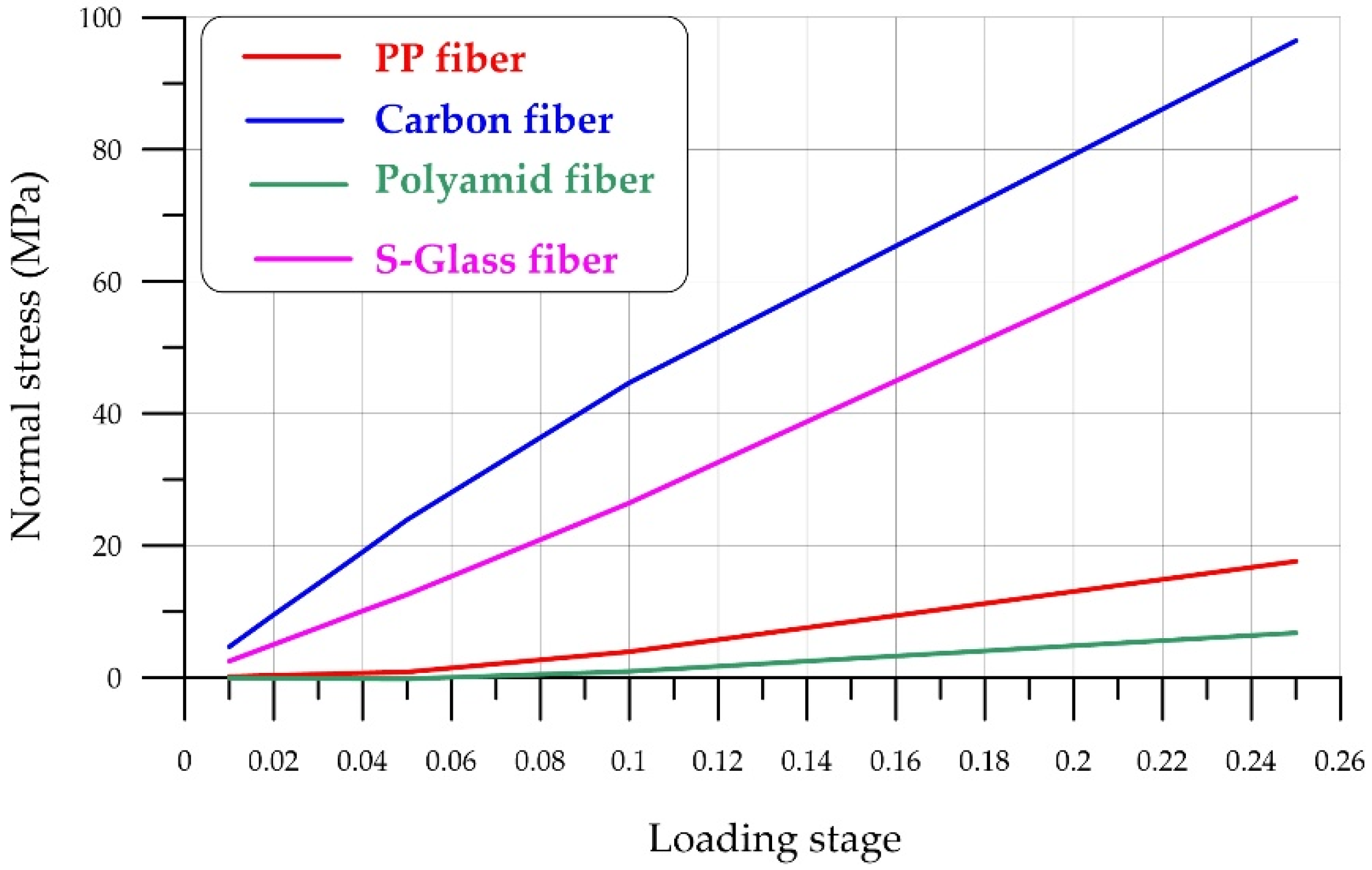
3.5. Comparison of Different Fiber Types
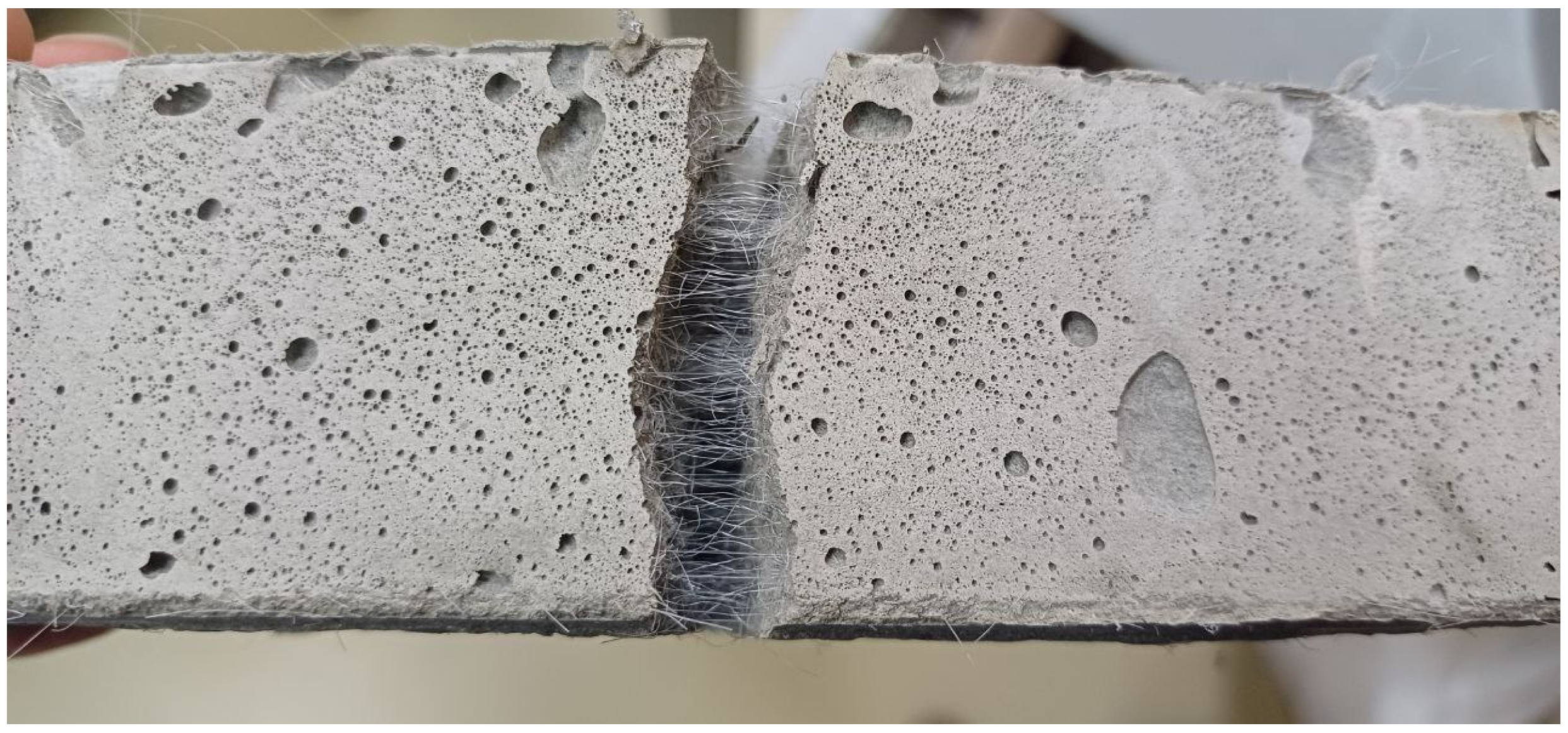
3.6. Evaluation of Fiber Adhesion Properties in Bending
4. Conclusions
- (1)
- A new FRFC composition was developed containing a complex nanomodifying additive consisting of mineral components, nanoparticles, and a plasticizing additive in the following ratio: FA—80%; MS—18%; NA—2%. Polypropylene fiber was added to the composition at a content of 3.9 kg/m3.
- (2)
- An FEM model based on the Menetrey-Willam approach was developed, and an analysis of the stress–strain state of FRFC under compression and bending was conducted. An algorithm for calibrating the parameters of the Menetrey-Willam model was proposed, and a comparison of the numerical and experimental data was conducted. The comparison revealed good qualitative and quantitative agreement between the results for active loading and softening of FRFC during failure.
- (3)
- The stress–strain state of FRFC was analyzed with the inclusion of various types of fibers: steel, polypropylene, polyamide, carbon, and glass fiber. A comparison of the plastic deformations of the foam concrete matrix and fibers showed that polypropylene fiber provides good deformation properties of the composite. Steel or carbon fibers increase the strength of FRFC, but they degrade deformation properties and do not fully utilize the fiber’s potential.
- (4)
- The adhesion properties of the fibers and the foam concrete matrix were analyzed. It was shown that high-modulus polymer fibers quickly lose their adhesive properties and degrade the deformation properties of the composite compared to polypropylene fibers.
- (5)
- It has been experimentally established and numerically confirmed that CNA FRFC with polypropylene fiber increases compressive strength by 20% and flexural strength by 80%.
Author Contributions
Funding
Institutional Review Board Statement
Data Availability Statement
Acknowledgments
Conflicts of Interest
Abbreviations
| PPF | Polypropylene fiber |
| CNA | Complex nanomodifying additive |
| FC | Foam concrete |
| FRFC | Fiber-reinforced foam concrete |
| CF | Carbon fiber |
| SF | Steel fiber |
References
- Pan, G.; Gong, H.; Sun, Z.; Chen, L.; Liu, Z.; Gao, L. Towards high-performance low-carbon foam concrete: A review on multi-component synergy and pore structure optimization. J. Build. Eng. 2026, 120, 115570. [Google Scholar] [CrossRef]
- Song, Q.; Hu, Y.; Niu, D.; Zhao, H.; Xia, J.; Bao, J.; Li, R.; Wang, Y.; Xue, S.; Tang, X.; et al. Research on durability of foam concrete: A systematic review. J. Build. Eng. 2026, 117, 114839. [Google Scholar] [CrossRef]
- Liu, J.; Liu, Y.; Ma, X.; Xu, H.; Wu, X.; Liu, M.; Zhuge, Y. Thermal performance optimisation of foam concrete for energy-efficient construction: A state-of-the-art review. J. Build. Eng. 2025, 112, 113899. [Google Scholar] [CrossRef]
- Stel’makh, S.A.; Shcherban’, E.M.; Beskopylny, A.N.; Mailyan, L.R.; Meskhi, B.; Shilov, A.A.; Mailyan, A.L.; Zakieva, N.I.; Chernil’nik, A.; El’shaeva, D. Structural Formation and Properties of Eco-Friendly Foam Concrete Modified with Coal Dust. J. Compos. Sci. 2023, 7, 519. [Google Scholar] [CrossRef]
- Iozzino, F.; Fragnito, A.; Mauro, G.M.; Roselli, C. Preliminary Optimization of Steady-State and Dynamic Thermal Performance of 3D Printed Foamed Concrete. Thermo 2026, 6, 13. [Google Scholar] [CrossRef]
- Beskopylny, A.N.; Stel’makh, S.A.; Shcherban’, E.M.; Shakhalieva, D.M.; Chernil’nik, A.; Shcherban’, N.; Vyalikov, I.; Budovskiy, A. Mechanical Properties and Microstructure of Environmentally Friendly Foam Concrete with Fly Ash Modified with Micro- and Nano-SiO2. Materials 2026, 19, 814. [Google Scholar] [CrossRef]
- Rajpurohit, K.; Shaikh, S.A.; Pandey, A.K.; Bagla, H.K. Synthetic polymers and nanostructured materials additives for engineered cementitious materials: Plausible route for recycled polymer utilization. Hybrid Adv. 2025, 11, 100555. [Google Scholar] [CrossRef]
- Beskopylny, A.N.; Stel’makh, S.A.; Shcherban’, E.M.; Saidumov, M.S.; Abumuslimov, A.; Mezhidov, D.; Wang, Z. Eco-Friendly Foam Concrete with Improved Physical and Mechanical Properties, Modified with Fly Ash and Reinforced with Coconut Fibers. Constr. Mater. Prod. 2025, 8, 1. [Google Scholar] [CrossRef]
- Behera, D.; Liu, K.-Y.; Rachman, F.; Worku, A.M. Innovations and Applications in Lightweight Concrete: Review of Current Practices and Future Directions. Buildings 2025, 15, 2113. [Google Scholar] [CrossRef]
- Ahmed, S.A.; Ebrahem, E.; El-Feky, M.S. Achieving sustainable performance: Synergistic effects of nano-silica and recycled expanded polystyrene in lightweight structural concrete. Sci. Rep. 2024, 14, 26648. [Google Scholar] [CrossRef] [PubMed]
- Mohtadi, A.; Ghomeishi, M.; Dehghanbanadaki, A. Machine learning-based prediction of thermal conductivity in foamed concrete: Influence of nano-microsilica compounds and air content using XGBoost. Ain Shams Eng. J. 2025, 16, 103833. [Google Scholar] [CrossRef]
- Mahajan, D.S.; Muhammad, S. Effect of alkali activation and foaming on the chemistry, microstructure, and mechanical properties of copper slag–based sustainable cellular concrete blocks. Mater. Chem. Phys. 2026, 355, 132217. [Google Scholar] [CrossRef]
- Wu, C.; Jierula, A.; Tang, F.; Wu, J.; Oh, T. Preparation of foamed concrete with bentonite instead of cement: Compressive strength and durability. Constr. Build. Mater. 2026, 510, 145297. [Google Scholar] [CrossRef]
- Zhou, G.; Su, R.K.L. A Review on Durability of Foam Concrete. Buildings 2023, 13, 1880. [Google Scholar] [CrossRef]
- Li, R.; Yin, Z.; Lin, H. Research Status and Prospects for the Utilization of Lead–Zinc Tailings as Building Materials. Buildings 2023, 13, 150. [Google Scholar] [CrossRef]
- Wei, C.; Liu, X.; Zhan, Z.; Wu, P. Utilization of solid wastes for aerated concrete preparation: Mechanical properties and microstructural analysis. J. Build. Eng. 2024, 82, 108235. [Google Scholar] [CrossRef]
- Meskhi, B.; Beskopylny, A.N.; Stel’makh, S.A.; Shcherban’, E.M.; Mailyan, L.R.; Beskopylny, N.; Chernil’nik, A.; El’shaeva, D. Insulation Foam Concrete Nanomodified with Microsilica and Reinforced with Polypropylene Fiber for the Improvement of Characteristics. Polymers 2022, 14, 4401. [Google Scholar] [CrossRef]
- Li, M.; Hu, Y.; Rao, L.; Jiang, L.; Li, J.; Zhou, S.; Sun, H.; Peng, S.; Pang, X.; Chen, Y.; et al. Numerical Analysis on Mechanical Properties of Different Fiber-Reinforced Cold-Formed Steel–Concrete Composite Corner Columns. Polymers 2025, 17, 2365. [Google Scholar] [CrossRef] [PubMed]
- Al Tekreeti, M.; Bahadori-Jahromi, A.; Room, S.; Tariq, Z. Optimized Machine Learning Models for Predicting Compressive, Tensile, and Flexural Strengths of Multi-Fiber Recycled Aggregate Concrete. J. Compos. Sci. 2026, 10, 144. [Google Scholar] [CrossRef]
- Ünverdi, M.; Bayqra, S.H.; Kaya, Y.; Özen, S.; Mardani, A.; Ramyar, K. Mechanical Performance, Statistical Optimization, and Environmental Impact of Roller-Compacted Concrete Reinforced with Waste and Industrial Fibers. Buildings 2026, 16, 1167. [Google Scholar] [CrossRef]
- Jadooe, A.; Whwah, M.S.; Al-Hussainy, H.A.; Kaishesh, A.J.; Pinto, H.A.S.; Bernardo, L.F.A.; Dulaimi, A. Effects of Silica Fume, Perlite, and Polypropylene Fibers on the Mechanical Properties of Lightweight Polystyrene Concrete Composite. J. Compos. Sci. 2026, 10, 124. [Google Scholar] [CrossRef]
- Caggiano, A.; Pepe, M.; Xargay, H.; Martinelli, E. Analytical Modeling of the Postcracking Response Observed in Hybrid Steel/Polypropylene Fiber-Reinforced Concrete. Polymers 2020, 12, 1864. [Google Scholar] [CrossRef] [PubMed]
- Li, F.; Jin, S.; Cheng, P.; Wang, Z.; Yang, Z. Study on Mechanical Properties and Carbon Emission Analysis of Polypropylene Fiber-Reinforced Brick Aggregate Concrete. Polymers 2024, 16, 3535. [Google Scholar] [CrossRef] [PubMed]
- Zhao, Q.; Yang, Z.; Zhang, X.; Xia, Z.; Xiong, K.; Yan, J. An Experimental Study on the Mechanical Properties and ANN-Based Prediction of a Tensile Constitutive Model of ECCs. Polymers 2025, 17, 3183. [Google Scholar] [CrossRef] [PubMed]
- Ji, Y.; Pei, Z. Investigation of Mechanical Properties of Ultra-High-Performance Polyethylene-Fiber-Reinforced Recycled-Brick-Aggregate Concrete. Polymers 2023, 15, 4573. [Google Scholar] [CrossRef]
- Jueyendah, S.; Ağcakoca, E. An Interpretable Ensemble Machine Learning Framework for Predicting the Ultimate Flexural Capacity of BFRP-Reinforced Concrete Beams. Polymers 2026, 18, 601. [Google Scholar] [CrossRef]
- Sun, H.; Shen, J.; Su, X.; Sun, Y.; Jiang, H.; Cui, Z.; Yang, X. Fatigue characteristics and mechanical evaluation of basalt fiber reinforced composite material concrete under freeze-thaw cycles. Sci. Rep. 2026, 16, 1990. [Google Scholar] [CrossRef]
- Xu, X.; Li, Y.; Liang, R. Mechanical Behavior and Modeling of Polypropylene Fiber-Reinforced Cemented Tailings Interface with Granite Under Shear Loading: Effects of Roughness and Curing Time. Buildings 2026, 16, 913. [Google Scholar] [CrossRef]
- Guo, P.; Zhang, H.; Ge, E.; Lin, M.; Jia, H.; Zhang, Y.; Fan, X. Optimization and Performance Study of 3D Printed Concrete Mixture for Underground Utility Tunnels. Buildings 2026, 16, 859. [Google Scholar] [CrossRef]
- Li, S.; Qiu, S.; Zheng, H.; Yu, H. Influence of fibers on the multiscale properties of fly ash and slag based geopolymer foam concrete. Constr. Build. Mater. 2026, 515, 145596. [Google Scholar] [CrossRef]
- Beskopylny, A.N.; Stel’makh, S.A.; Shcherban’, E.M.; Shakhalieva, D.M.; Chernil’nik, A.; Panfilov, I.; Beskopylny, N.; Özkılıç, Y.O. Finite Element Modeling and Experimental Study of Foam Concrete and Polystyrene Concrete. Buildings 2026, 16, 737. [Google Scholar] [CrossRef]
- Harshavardhan, G.; Thiagu, H.; Ravichandran, P.T. The Experimental and Numerical Behaviour of Short Columns with Foam Concrete Using Steel Fibre and Polypropylene Fiber. In Proceedings of the International Conference on Civil Engineering Innovative Development in Engineering Advances (ICC IDEA—2025), Lecture Notes in Civil Engineering; Spring: Berlin/Heidelberg, Germany, 2026; Volume 749, pp. 147–154. [Google Scholar] [CrossRef]
- Sriram, S.; Thiagu, H. Analytical and Experimental Study of Wall Panel with Steel and Polypropylene Fibre in Foam Concrete. In Proceedings of the International Conference on Civil Engineering Innovative Development in Engineering Advances (ICC IDEA—2025), Lecture Notes in Civil Engineering; Spring: Berlin/Heidelberg, Germany, 2026; Volume 749, pp. 13–19. [Google Scholar] [CrossRef]
- Khan, M.; Shakeel, M.; Khan, K.; Akbar, S.; Khan, A. A Review on Fiber-Reinforced Foam Concrete. Eng. Proc. 2022, 22, 13. [Google Scholar] [CrossRef]
- Thangavel, R.; Shukla, S.K.; Madhavan, M.K. Fiber-Reinforced Foam Concrete Using Quarry Micro Fines and Sugarcane Bagasse Ash: A Box–Behnken Design Optimization and Performance Assessment. Sustainability 2026, 18, 1517. [Google Scholar] [CrossRef]
- Amran, M.; Fediuk, R.; Vatin, N.; Huei Lee, Y.; Murali, G.; Ozbakkaloglu, T.; Klyuev, S.; Alabduljabber, H. Fibre-Reinforced Foamed Concretes: A Review. Materials 2020, 13, 4323. [Google Scholar] [CrossRef] [PubMed]
- Beskopylny, A.N.; Shcherban’, E.M.; Stel’makh, S.A.; Mailyan, L.R.; Meskhi, B.; Varavka, V.; Chernil’nik, A.; Pogrebnyak, A. Improved Fly Ash Based Structural Foam Concrete with Polypropylene Fiber. J. Compos. Sci. 2023, 7, 76. [Google Scholar] [CrossRef]
- Klyuev, S.V.; Khezhev, T.A.; Pukharenko, Y.V.; Klyuev, A.V. Fiber Concrete on the Basis of Composite Binder and Technogenic Raw Materials. Mater. Sci. Forum. 2018, 931, 603–607. [Google Scholar] [CrossRef]
- Fediuk, R.S.; Lesovik, V.S.; Svintsov, A.P.; Mochalov, A.V.; Kulichkov, S.V.; Stoyushko, N.Y.; Gladkova, N.A.; Timokhin, R.A. Self-compacting concrete using pretreatmented rice husk ash. Mag. Civ. Eng. 2018, 79, 66–76. [Google Scholar] [CrossRef]
- Lesovik, V.; Voronov, V.; Glagolev, E.; Fediuk, R.; Alaskhanov, A.; Amran, Y.H.M.; Murali, G.; Baranov, A. Improving the behaviors of foam concrete through the use of composite binder. J. Build. Eng. 2020, 17, 101414. [Google Scholar] [CrossRef]
- Ecemis, A.S.; Karalar, M.; Beskopylny, A.N.; Stel’makh, S.A.; Shcherban’, E.M.; Aksoylu, C.; Madenci, E.; Özkılıç, Y.O. The Influence of Fiber-Form Waste Tire Aggregates on the Flexural Strength, Ductility, and Energy Dissipation of Pultruded GFRP–Rubberized Concrete Hybrid Beams. Polymers 2025, 17, 3274. [Google Scholar] [CrossRef]
- Beskopylny, A.N.; Shcherban’, E.M.; Stel’makh, S.A.; Chernilnik, A.; Elshaeva, D.; Ananova, O.; Mailyan, L.D.; Muradyan, V.A. Optimization of the Properties of Eco-Concrete Dispersedly Reinforced with Hemp and Flax Natural Fibers. J. Compos. Sci. 2025, 9, 56. [Google Scholar] [CrossRef]
- Shcherban’, E.M.; Stel’makh, S.A.; Beskopylny, A.N.; Meskhi, B.; Efremenko, I.; Shilov, A.A.; Vialikov, I.; Ananova, O.; Chernil’nik, A.; Elshaeva, D. Composition, Structure and Properties of Geopolymer Concrete Dispersedly Reinforced with Sisal Fiber. Buildings 2024, 14, 2810. [Google Scholar] [CrossRef]
- Klyuev, S.V.; Klyuev, A.V.; Ayubov, N.A.; Fediuk, R.S.; Levkina, E.V. Finite Element Design and Analysis of Sustainable Mono-Reinforced and Hybrid-Reinforced Fiber geopolymers. Adv. Eng. Res. 2025, 25, 171–185. [Google Scholar] [CrossRef]
- Kondratieva, T.N.; Chepurnenko, A.S. Prediction of Rheological Parameters of Polymers by Machine Learning Methods. Adv. Eng. Res. 2024, 24, 36–47. [Google Scholar] [CrossRef]
- Yang, J.; Guo, Y.; Wu, Y.; Zhang, J. Dynamic Response of Fiber–Metal Laminates Sandwich Beams under Uniform Blast Loading. Materials 2024, 17, 4482. [Google Scholar] [CrossRef]
- Luo, Z.; Yu, N.; Li, Z.; Wang, Y.; Cai, Y.; Liu, G. Crash test and evaluation of EPS foam-filled UHPC sandwich retrofitted concrete barriers. Eng. Struct. 2025, 345, 121589. [Google Scholar] [CrossRef]
- Huang, J.-Q.; Dan, M.-L.; Chong, X.; Jiang, Q.; Feng, Y.-L.; Wang, Y.-W. Out-of-plane shear performance of textile reinforced concrete sandwich panel: Numerical analysis and parametric study. Structures 2025, 71, 108080. [Google Scholar] [CrossRef]
- Ashrafi, E.; Farzam, M. An Experimental Approach to Lightweight Aggregate Concrete Material Modeling Parameters Under Cyclic and Biaxial Loadings. Int. J. Concr. Struct. Mater. 2025, 19, 43. [Google Scholar] [CrossRef]
- Xu, S.; Fu, P.; Liu, Y.; Huang, T.; Wang, X.; Li, Y. Experimental and 3D Simulation Research on the Mechanical Properties of Cold-Bonded Fly Ash Lightweight Aggregate Concrete Exposed to Different High Temperatures. Materials 2025, 18, 4991. [Google Scholar] [CrossRef] [PubMed]
- Dmitriev, A.; Novozhilov, Y.; Mikhalyuk, D.; Lalin, V. Calibration and Validation of the Menetrey-Willam Constitutive Model for Concrete. Constr. Unique Build. Struct. 2020, 88, 8804. [Google Scholar] [CrossRef]
- Santos, L.M.; Lima, P.R.L.; Santos, G.J.B. Menetrey-Willam numerical model for analysis of fiber reinforced concrete beams. Rev. IBRACON Estrut. Mater. 2025, 18, e18211. [Google Scholar] [CrossRef]
- GOST 310.4-81; Interstate Standard. Cements. Methods for Determining Flexural and Compressive Strength. Izdatel’stvo Standartov: Moscow, Russia, 1981. Available online: https://rosgosts.ru/file/gost/91/100/gost_310.4-81.pdf (accessed on 2 February 2026).
- EN 12390-3:2019; Testing Hardened Concrete—Part 3: Compressive Strength of Test Specimens. iTeh Standards: Etobicoke, ON, Canada, 2019. Available online: https://standards.iteh.ai/catalog/standards/cen/7eb738ef-44af-436c-ab8e-e6561571302c/en-12390-3-2019 (accessed on 2 February 2026).
- GOST 24452-2023; Concretes. Methods of Prismatic, Compressive Strength, Modulus of Elasticity and Poisson’s Ratio Determination. Rosstandart/Institute for Standardization: Moscow, Russia, 2024. Available online: https://meganorm.ru/Data/819/81927.pdf (accessed on 10 April 2026).
- ASTM c1609/1609M-10; Standard Test Method for Flexural Performance of Fiber Reinforced Concrete (Using Beam with Third-Point Loading). ASTM: West Conshohocken, PA, USA, 2010.
- Li, L.; Li, X.; Wang, B.; Tao, J.; Shi, K. A review on interfacial bonding behavior between fiber and concrete. J. Build. Eng. 2025, 105, 112455. [Google Scholar] [CrossRef]
- Ji, H.; Lee, D.; Kim, J.-H.; Yang, S.-B.; Park, B.; Kwon, D.J. Identification of critical factors governing the failure behavior of fiber-reinforced composites: Proposal of a weakness parameter. Compos. Part B Eng. 2026, 318, 113648. [Google Scholar] [CrossRef]
- Li, V.C.; Wu, H.; Chan, Y. Effect of plasma treatment of polyethylene fibers on interface and cementitious composite properties. J. Am. Ceram. Soc. 1996, 79, 700–704. [Google Scholar] [CrossRef]
- Francioso, V.; Moro, C.; Castillo, A.; Velay-Lizancos, M. Effect of elevated temperature on flexural behavior and fibers-matrix bonding of recycled PP fiber-reinforced cementitious composite. Constr. Build. Mater. 2021, 269, 121243. [Google Scholar] [CrossRef]
- Huang, H.; Luo, J.; Peng, C.; Sun, T.; Deng, T.; Hu, J.; Kasimova, G.A.; Nurmirzayev, A.D.U.; Dongshuai, H.; Wei, J.; et al. Interfacial bond between modified micro carbon fiber and high-strength cement paste in UHPC: Bond-slip tests and molecular dynamic simulation. Cem. Concr. Compos. 2023, 142, 105168. [Google Scholar] [CrossRef]
- Abd, S.M.; Hadi, R.; Abdal, S.; Shamim, S.; Najm, H.M.; Sabri, M.M.S. Effect of Using Glass Fiber Reinforced Polymer (GFRP) and Deformed Steel Bars on the Bonding Behavior of Lightweight Foamed Concrete. Buildings 2023, 13, 1153. [Google Scholar] [CrossRef]
- Kos, Ž.; Kroviakov, S.; Kryzhanovskyi, V.; Hedulian, D. Strength, Frost Resistance, and Resistance to Acid Attacks on Fiber-Reinforced Concrete for Industrial Floors and Road Pavements with Steel and Polypropylene Fibers. Materials 2022, 15, 8339. [Google Scholar] [CrossRef] [PubMed]





| Indicator | Actual Value |
|---|---|
| Portland cement CEM I 42.5 N (PC) (CEMROS, Stary Oskol, Russia) | |
| Specific surface area (m2/kg) | 350 |
| Normal density (%) | 29 |
| Setting time (hours-min) | 3–10 |
| Setting time (hours-min) | 4–40 |
| Compressive strength after 28 days (MPa) | 52.3 |
| Bending strength after 28 days (Mpa) | 8.1 |
| Quartz sand (QS) (Subsoil, Samarskoye village, Russia) | |
| Bulk density (kg/m3) | 1348 |
| Apparent density (kg/m3) | 2575 |
| The content of dust and clay particles (%) | 0.12 |
| Fly ash (FA) (Novocherkassk State District Power Plant, Novocherkassk, Russia) | |
| Bulk density (kg/m3) | 932 |
| Microsilica (MS) (NLMK, Lipetsk, Russia) | |
| Bulk density (kg/m3) | 152 |
| Nanosized aluminum oxide (NA) particles (Shandong Tiancheng Chemical Co., Ltd., Yanzhou, China) | |
| Average particle diameter (D50) (nm) NA | 20–30 |
| Specific surface area of particles (m2/g) | 130 |
| Rospena (R) foaming agent (Rospena, Moscow, Russia) | |
| Density (g/cm3) | 1.1 |
| Stability (hours) | 1–3.5 |
| Polypropylene fiber (PF) (CEMMIX, Moscow, Russia) | |
| Length (mm) | 10–12 |
| Diameter (µm) | 34 |
| Density (g/cm3) | 0.91 |
| Tensile Strength (MPa) | 320 |
| Elastic Modulus (GPa) | 6 |
| Powdered plasticizing additive C-3 (CEMMIX, Moscow, Russia) | |
| Appearance | Brown powder |
| pH | 8 ± 1 |
| Mixture Type | PC (kg/m3) | QS (kg/m3) | CNA (kg/m3) | PF (kg/m3) | Water (L) | Rospena (kg/m3) |
|---|---|---|---|---|---|---|
| Foam concrete | 325.0 | 530 | 0 | 0 | 160 | 9.75 |
| Fiber foam concrete | 292.5 | 530 | 32.5 | 3.9 | 160 | 9.75 |
| Concrete Type | Sample Marking | Flexural Strength, MPa | |
|---|---|---|---|
| Sample | Group | ||
| Foam concrete | FC1 | 11.10 | 11.8 |
| FC2 | 13.80 | ||
| FC3 | 11.70 | ||
| FC4 | 12.40 | ||
| FC5 | 10.90 | ||
| FC6 | 10.90 | ||
| Fiber foam concrete | FFC1 | 15.80 | 14.07 |
| FFC2 | 12.90 | ||
| FFC3 | 13.60 | ||
| FFC4 | 13.80 | ||
| FFC5 | 14.30 | ||
| FFC6 | 14.00 | ||
| Concrete Type | Sample Marking | Flexural Strength, MPa | |
|---|---|---|---|
| Sample | Group | ||
| Foam concrete | FC1 | 1.84 | 1.8 |
| FC2 | 1.80 | ||
| FC3 | 1.76 | ||
| FC4 | 1.85 | ||
| FC5 | 1.79 | ||
| FC6 | 1.82 | ||
| Fiber foam concrete | FFC1 | 3.54 | 3.38 |
| FFC2 | 3.09 | ||
| FFC3 | 3.52 | ||
| FFC4 | 3.58 | ||
| FFC5 | 3.25 | ||
| FFC6 | 3.28 | ||
| Fiber Type | Yield Strength, MPa | Ultimate Strength, MPa | Foam Concrete | |
|---|---|---|---|---|
| Resilience Modulus, J × m−3 | Toughness Modulus, J × m−3 | |||
| FC without fibers | 8 | 11.8 | 24.0 | 608 |
| Polypropylene fiber | 320 | 500 | 41.6 | 1877 |
| Steel fibers | 250 | 460 | 112.1 | 1402 |
| Carbon 395 | 2000 | 2200 | 144.2 | 1798 |
Disclaimer/Publisher’s Note: The statements, opinions and data contained in all publications are solely those of the individual author(s) and contributor(s) and not of MDPI and/or the editor(s). MDPI and/or the editor(s) disclaim responsibility for any injury to people or property resulting from any ideas, methods, instructions or products referred to in the content. |
© 2026 by the authors. Licensee MDPI, Basel, Switzerland. This article is an open access article distributed under the terms and conditions of the Creative Commons Attribution (CC BY) license.
Share and Cite
Beskopylny, A.N.; Stel’makh, S.A.; Shcherban’, E.M.; Shakhalieva, D.M.; Chernil’nik, A.; Panfilov, I.; Beskopylny, N.; Li, Z.; Kong, W. The Influence of Polymer Fibers on the Properties of Foam Concrete with a Complex Nanomodifying Additive: Finite Element Analysis and Experimental Study. Polymers 2026, 18, 988. https://doi.org/10.3390/polym18080988
Beskopylny AN, Stel’makh SA, Shcherban’ EM, Shakhalieva DM, Chernil’nik A, Panfilov I, Beskopylny N, Li Z, Kong W. The Influence of Polymer Fibers on the Properties of Foam Concrete with a Complex Nanomodifying Additive: Finite Element Analysis and Experimental Study. Polymers. 2026; 18(8):988. https://doi.org/10.3390/polym18080988
Chicago/Turabian StyleBeskopylny, Alexey N., Sergey A. Stel’makh, Evgenii M. Shcherban’, Diana M. Shakhalieva, Andrei Chernil’nik, Ivan Panfilov, Nikita Beskopylny, Zhipeng Li, and Weiyi Kong. 2026. "The Influence of Polymer Fibers on the Properties of Foam Concrete with a Complex Nanomodifying Additive: Finite Element Analysis and Experimental Study" Polymers 18, no. 8: 988. https://doi.org/10.3390/polym18080988
APA StyleBeskopylny, A. N., Stel’makh, S. A., Shcherban’, E. M., Shakhalieva, D. M., Chernil’nik, A., Panfilov, I., Beskopylny, N., Li, Z., & Kong, W. (2026). The Influence of Polymer Fibers on the Properties of Foam Concrete with a Complex Nanomodifying Additive: Finite Element Analysis and Experimental Study. Polymers, 18(8), 988. https://doi.org/10.3390/polym18080988