Green and Scalable Manufacturing of Biodegradable Polymer Scaffolds: Solvent-Free Processing, Supercritical CO2 and Melt Electrowriting



Abstract
1. Introduction
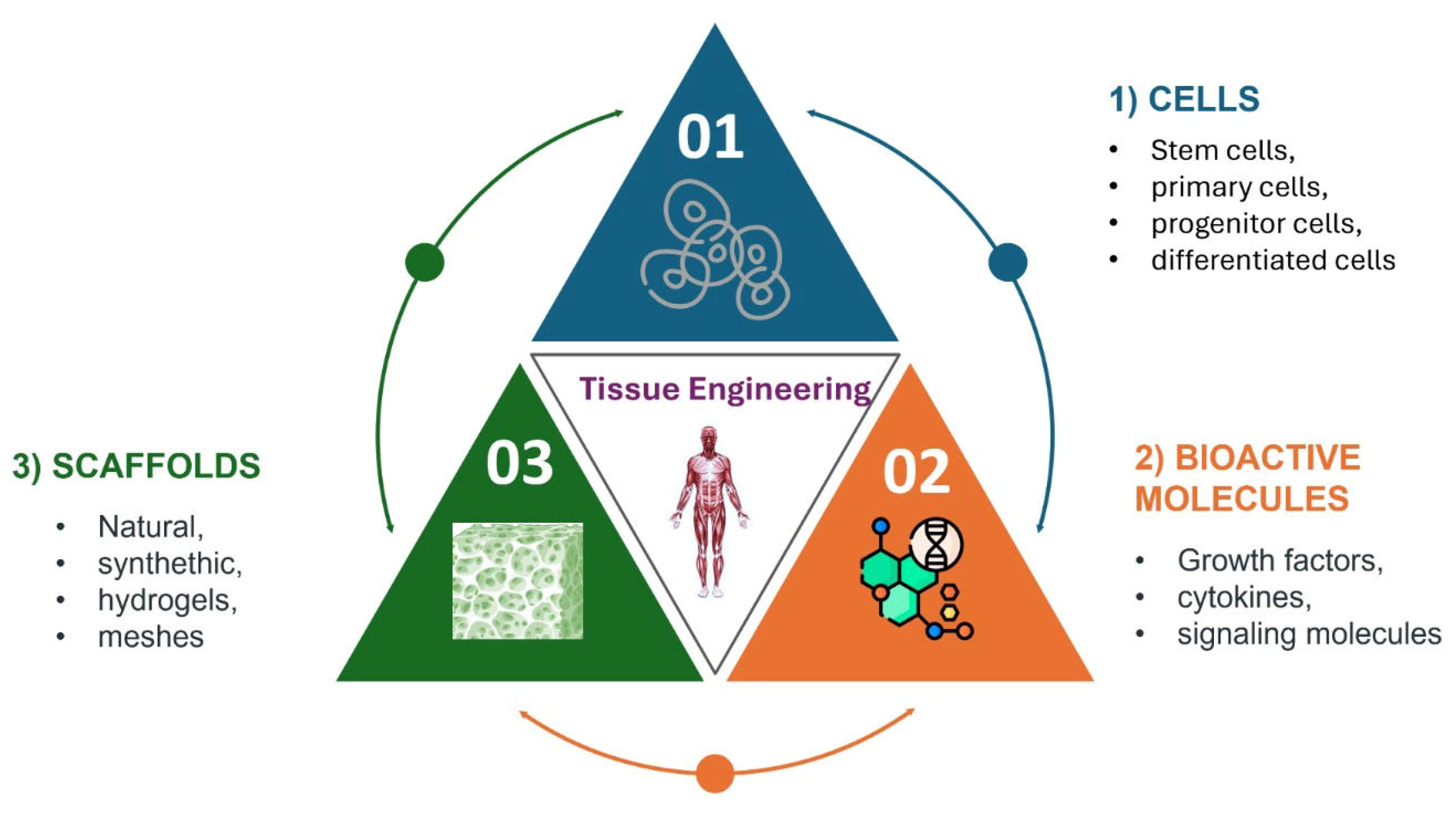
1.1. Global Sustainability Challenges in Tissue Engineering
1.2. Clinical and Regulatory Drivers for Green Manufacturing
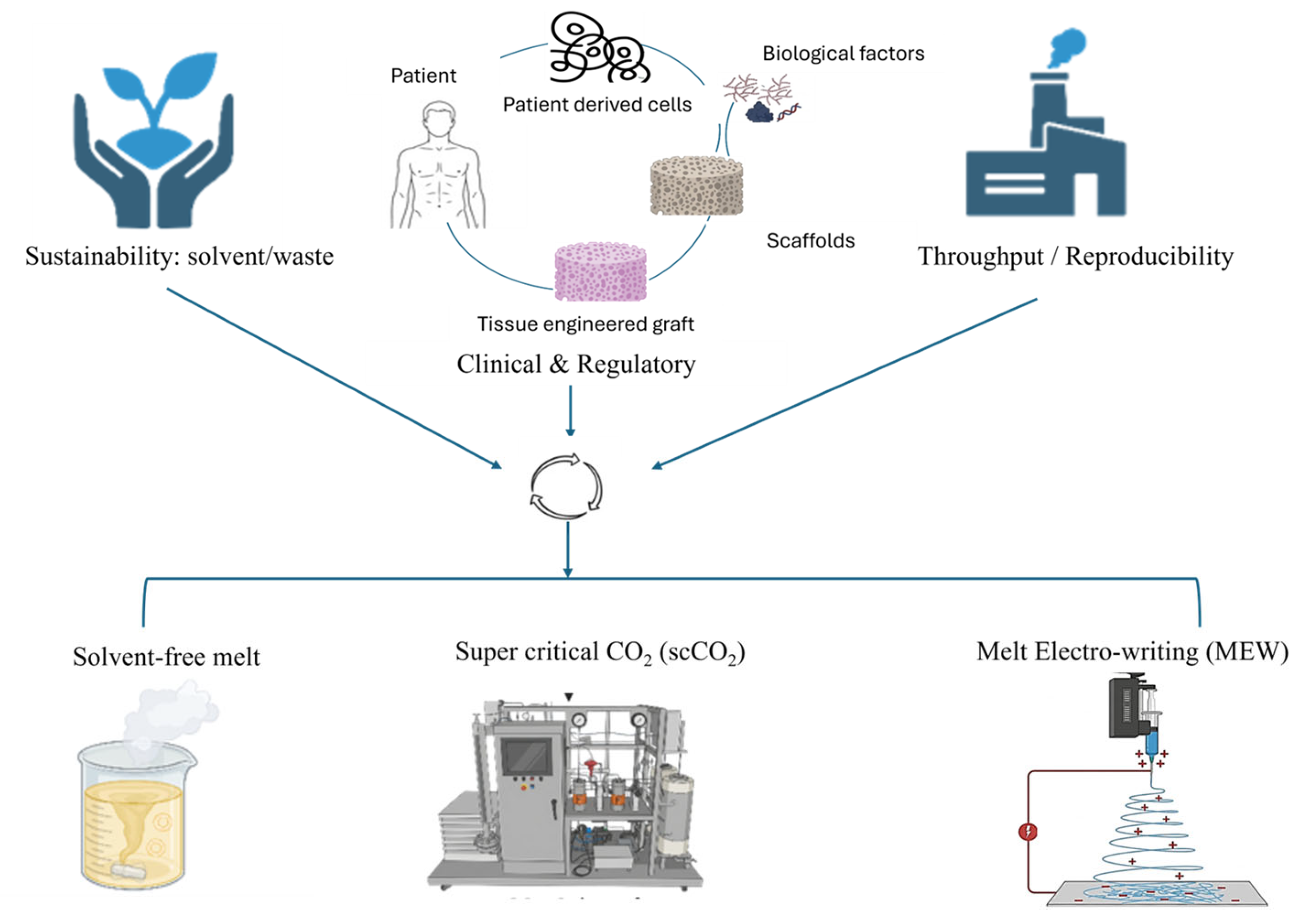
1.3. From Laboratory Innovation to Industrial Translation
1.4. Scope and Structure of This Review
1.5. Definitional Framework: Solvent-Free, Green, and Scalable Are Related but Not Interchangeable
2. Biodegradable Polymers Suitable for Green Scaffold Manufacturing
2.1. Synthetic Biodegradable Polymers
Beyond Homopolymers: Block, Graft, and Segmented Copolymer Architectures
2.2. Natural Biodegradable Polymers
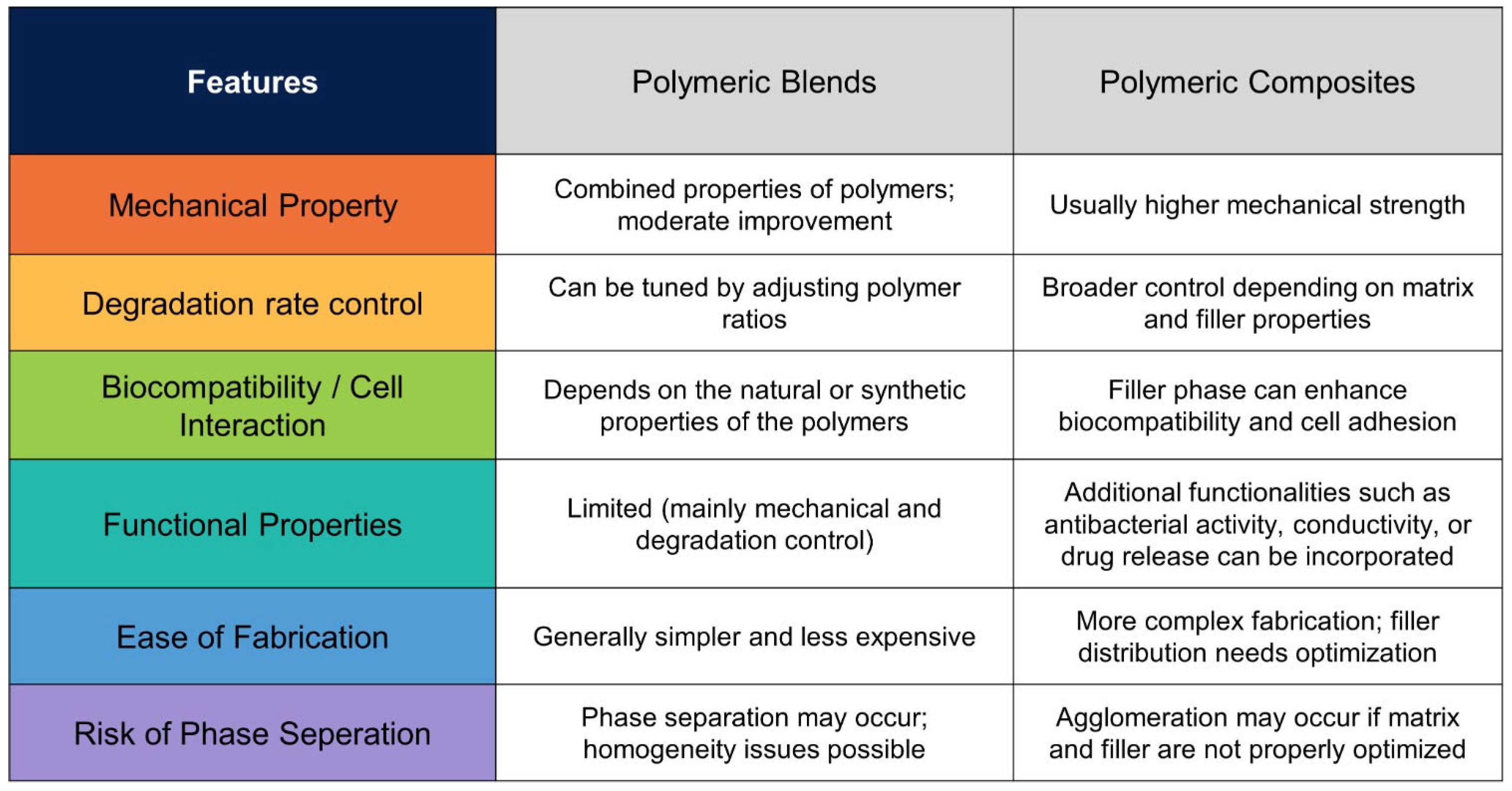
2.3. Polymer Blends and Composite Systems
2.4. Structure–Processing Properties Relationships
2.5. Processing Windows for Printability, Biocompatibility, and Cellular Responses
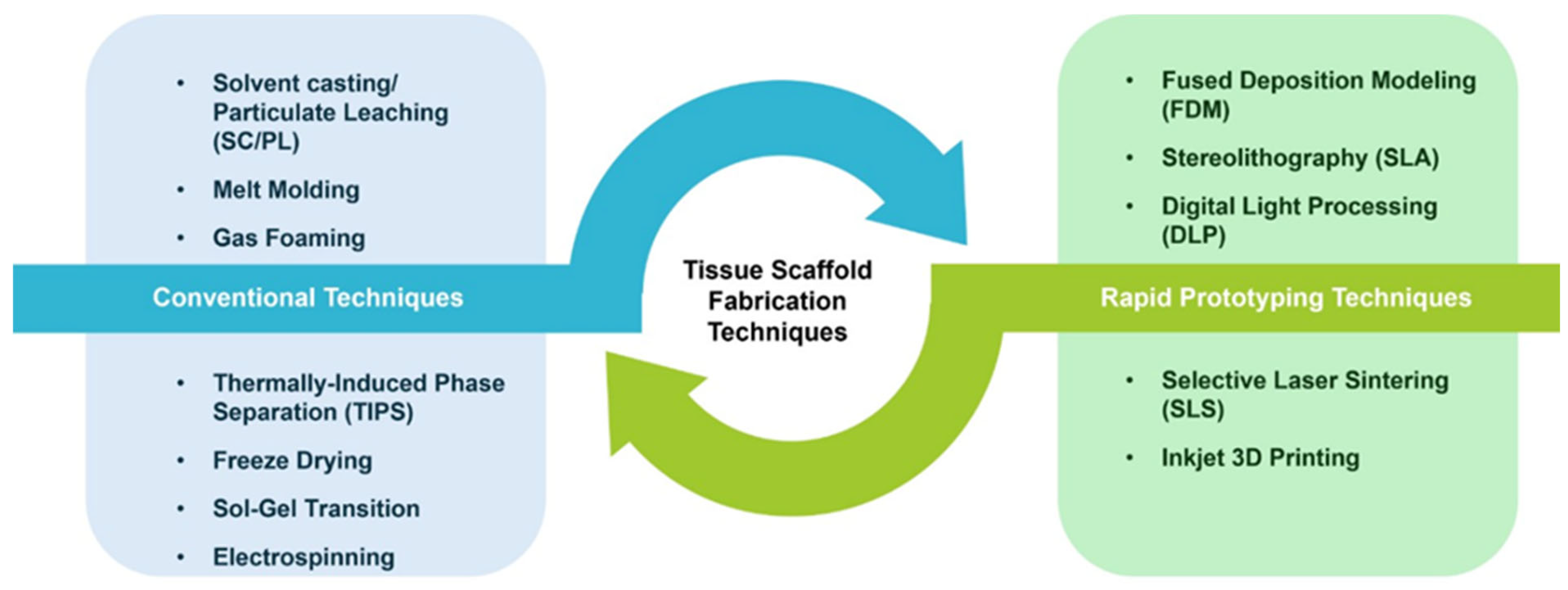
3. Green and Scalable Manufacturing Methods for Tissue Scaffold Production
4. Solvent-Free Manufacturing Routes for Biodegradable Polymer Scaffolds
4.1. Melt Extrusion and Melt Molding Approaches
4.1.1. Melt Molding: Compression Molding, Injection Molding, and Extrusion Molding
4.1.2. Melt Extrusion Compounding and Filament Manufacturing for Scaffold Production
4.1.3. Material-Extrusion Additive Manufacturing for Architected Porous Scaffolds
4.1.4. Hybrid Melt-Based Routes: Microcellular Injection Molding and Sacrificial Leaching
4.2. Solid-State and Low-Temperature Solvent-Free Methods
4.2.1. Immiscible Blending and Benign Porogen Extraction with Solid-State Foaming
4.2.2. Solid-State Mixing (Cryomilling) + Molding + Leaching for Improved Pore Uniformity
4.2.3. Microsphere-Based Scaffolds and Low-Temperature CO2 Sintering
4.2.4. Powder-Based Sintering: Selective Laser Sintering (SLS)
4.3. Advantages and Limitations of Solvent-Free Processing
4.4. Scale-Up, Cost, and Manufacturing Throughput
4.4.1. Scale-Up Trajectories by Process Family
4.4.2. Dominant Cost Drivers and Practical Cost-Containment Levers
4.4.3. Economic Challenges and Risk Management for Scale-Up and Clinical Use
5. Supercritical CO2-Based Scaffold Manufacturing
5.1. Fundamentals of Supercritical CO2 Technology
5.1.1. Why scCO2 Is Attractive for Biomaterial Manufacturing
5.1.2. Polymer-CO2 Interactions: Sorption, Swelling, and Plasticization
5.1.3. Solubility Limitations and Implications for Polymer Selection
5.1.4. Generic Process Steps and Controllable Knobs
5.2. scCO2 Foaming of Biodegradable Polymers
5.2.1. Solid-State vs. Melt-State scCO2 Foaming
5.2.2. Persistent Morphological Challenges: Skin Layer and Interconnectivity
5.2.3. Composite Scaffolds and the Role of Fillers
5.3. scCO2-Assisted Drug and Growth Factor Loading
5.3.1. scCO2-Assisted Impregnation/Deposition: Principle and Clinical Relevance
5.3.2. Growth Factors: Opportunities and Constraints
5.4. Hybrid scCO2 Processing Strategies
5.4.1. Foaming + Templating/Leaching for Enhanced Interconnectivity and Gradients
5.4.2. scCO2 Foaming as Post-Processing for Additively Manufactured Scaffolds
5.4.3. One-Pot Foaming + Sterilization and the “Terminal Processing” Concept
5.5. Scalability, Equipment Design, and Industrial Feasibility
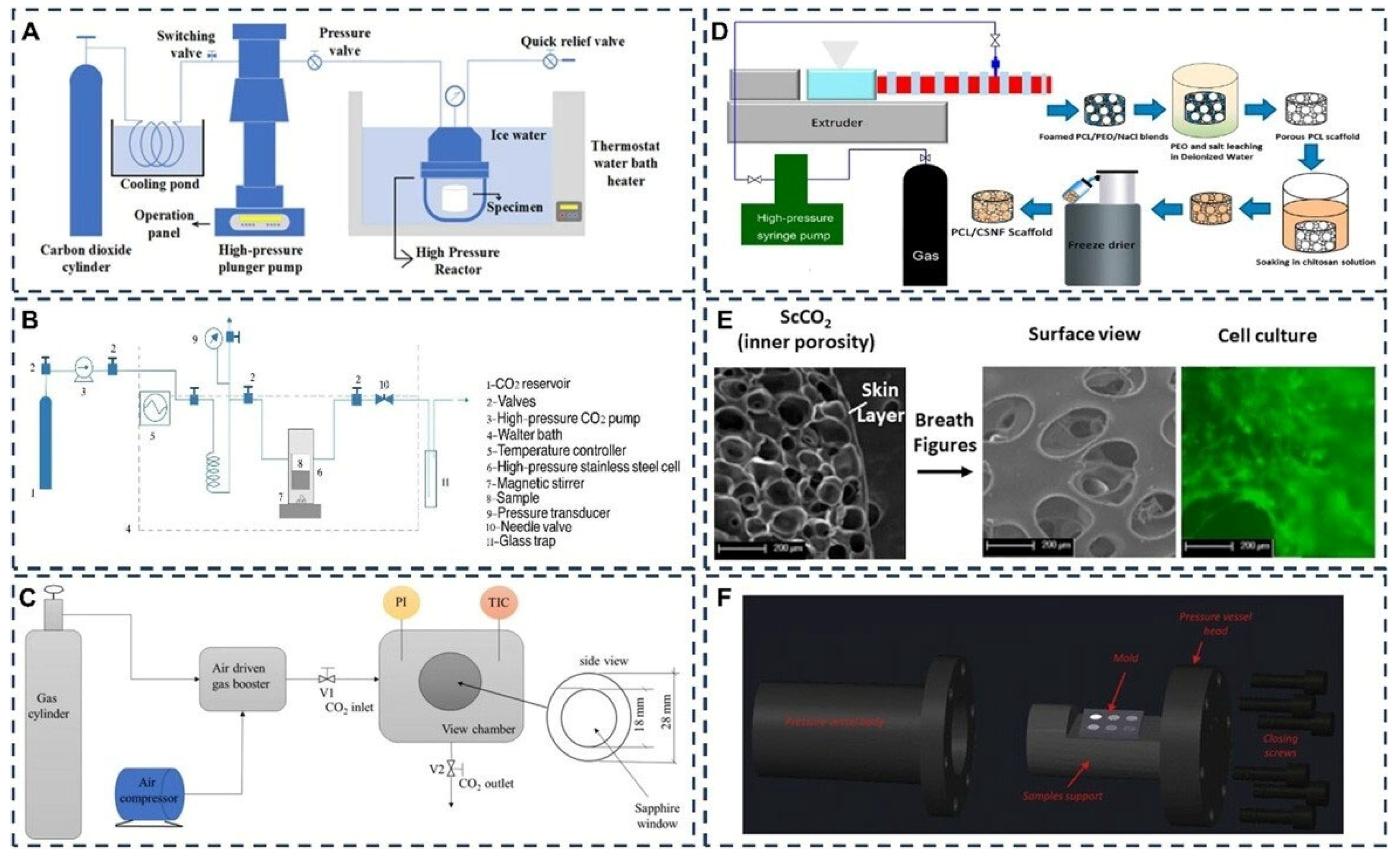
5.5.1. Equipment Building Blocks for scCO2 Foaming and Loading
5.5.2. Throughput Pathways: Batch vs. Continuous Processing
5.5.3. Scale-Up Constraints Unique to Porous Scaffolds
5.5.4. Cost, Sustainability, and Operational Considerations
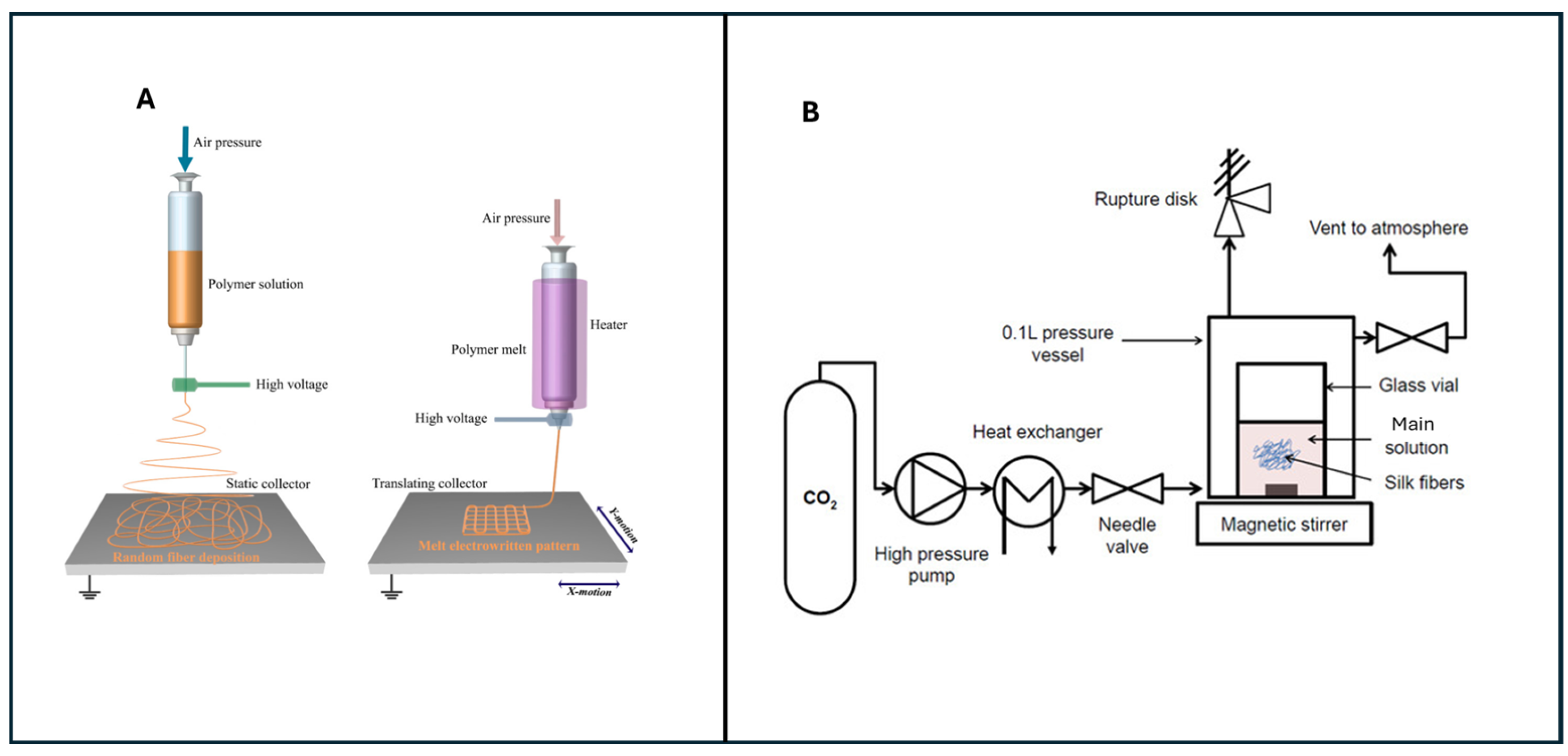
6. Melt Electrowriting (MEW) as a Green Precision Manufacturing Tool
6.1. Fundamental Principles of Melt Electrowriting
6.2. Scaffold Architecture and Design Freedom
6.3. Mechanical and Biological Performance of MEW Scaffolds
6.4. Integration of MEW with Other Green Techniques
6.5. Challenges in Scaling up MEW
7. Comparative Evaluation of Green Manufacturing Strategies
8. Hybrid Manufacturing: Combining scCO2, MEW, and Melt Processing for Hierarchical Scaffolds
8.1. Why Hybrid Scaffolds Are Needed
8.2. MEW + scCO2 (Conceptual Integration Pathways)
8.3. Melt Extrusion/FFF + MEW
8.4. Hybrid Workflow Design Rules
8.5. Proposed Roadmap for Industrial-Scale Translation
9. Integration of Artificial Intelligence in Manufacturing
10. Future Perspectives and Research Priorities
11. Conclusions
Author Contributions
Funding
Data Availability Statement
Conflicts of Interest
References
- Hsiung, N.; Ju, Y.; Yang, K.; Yang, P.; Zeng, W.; Zhao, H.; Zou, P.; Ye, J.; Yi, K.; Wang, X. Organoid-based tissue engineering for advanced tissue repair and reconstruction. Mater. Today Bio 2025, 33, 102093. [Google Scholar] [CrossRef] [PubMed]
- Qin, L.; Yang, S.; Zhao, C.; Yang, J.; Li, F.; Xu, Z.; Zhang, Y.; Liu, H.; Wang, X.; Chen, Y.; et al. Prospects and challenges for the application of tissue engineering technologies in the treatment of bone infections. Bone Res. 2024, 12, 28. [Google Scholar] [CrossRef] [PubMed]
- Chimerad, M.; Barazesh, A.; Zandi, M.; Zarkesh, I.; Moghaddam, A.; Borjian, P.; Ahmadi, S.; Karimi, M.; Rezaei, M.; Hosseini, R. Tissue engineered scaffold fabrication methods for medical applications. Int. J. Polym. Mater. Polym. Biomater. 2023, 72, 1455–1479. [Google Scholar] [CrossRef]
- Vesvoranan, O.; Anup, A.; Hixon, K.R. Current Concepts and Methods in Tissue Interface Scaffold Fabrication. Biomimetics 2022, 7, 151. [Google Scholar] [CrossRef]
- da Silva, R.G.L. The advancement of artificial intelligence in biomedical research and health innovation: Challenges and opportunities in emerging economies. Glob. Health 2024, 20, 44. [Google Scholar] [CrossRef]
- Cristiano, W.; De Marchi, C.; di Domenico, K.; Punzo, O.; Mancini, A.; Mancini, L. The elephant in the room in greenhouse gases emissions: Rethinking healthcare systems to face climate change. A Rapid Scoping review. Environ. Sci. Eur. 2024, 36, 24. [Google Scholar] [CrossRef]
- Belal, M.M.; Shukla, V.; Balasubramanian, S. Greening the Pharmaceutical Supply Chain. Bus. Strategy Environ. 2025, 34, 1917–1948. [Google Scholar] [CrossRef]
- Kumari, D.; Janmeda, P.; Singh, D. Sources, exposure, metabolism, transportation, ecological effects, preventive measures and alternatives of carcinogenic methylene chloride: A review. Discov. Toxicol. 2024, 1, 15. [Google Scholar] [CrossRef]
- Al-Zyoud, W.; Haddadin, D.; Hasan, S.A.; Jaradat, H.; Kanoun, O. Biocompatibility Testing for Implants: A Novel Tool for Selection and Characterization. Materials 2023, 16, 6881. [Google Scholar] [CrossRef]
- Pai, S.; Hebbar, A.; Selvaraj, S. A critical look at challenges and future scopes of bioactive compounds and their incorporations in the food, energy, and pharmaceutical sector. Environ. Sci. Pollut. Res. 2022, 29, 35518–35541. [Google Scholar] [CrossRef] [PubMed]
- Thangaraju, P.; Varthya, S.B. ISO 10993: Biological Evaluation of Medical Devices. In Medical Device Guidelines and Regulations Handbook; Timiri Shanmugam, P.S., Thangaraju, P., Palani, N., Sampath, T., Eds.; Springer International Publishing: Cham, Switzerland, 2022; pp. 163–183. [Google Scholar] [CrossRef]
- Szymanski, L.; Kiernozek, M.; Gromadka, B.; Straszecka, W.; Wiktorek-Smagur, A.; Matak, D. Chemical Characterization in Medical Device Evaluation: Current Practices, Regulatory Requirements, and Future Directions. Ann. Biomed. Eng. 2025, 53, 1068–1079. [Google Scholar] [CrossRef]
- Wróbel, M.; Rytel, H.; Jaszczyszyn, I.; Maj, M.; Malejczyk, J.; Janiuk, I.R. Models of cartilage repair with autologous mesenchymal stem cells seeded on scaffolds: A systematic narrative review. Front. Bioeng. Biotechnol. 2026, 14, 1762579. [Google Scholar] [CrossRef] [PubMed]
- Patil, D.; Tian, J.; Jiang, K.; Westover, C.; Thummalapalli, S.V.; Ramanathan, A.; Liu, Y.; Zhang, H.; Kim, J.; Chen, X.; et al. AI-Directed 3D Printing of Hierarchical Polyurethane Foams. Adv. Sci. 2025, 13, e15122. [Google Scholar] [CrossRef] [PubMed]
- Zhou, Y.; Tian, Y.; Zhang, M. Technical development and application of supercritical CO2 foaming technology in PCL foam production. Sci. Rep. 2024, 14, 6825. [Google Scholar] [CrossRef] [PubMed]
- Chen, M.Y.; Fang, J.J.; Lee, J.N.; Periasamy, S.; Yen, K.C.; Wang, H.C.; Lin, Y.H.; Huang, C.Y.; Tsai, M.S.; Liu, C.H.; et al. Supercritical Carbon Dioxide Decellularized Xenograft-3D CAD/CAM Carved Bone Matrix Personalized for Human Bone Defect Repair. Genes 2022, 13, 755. [Google Scholar] [CrossRef]
- Yin, Y.; Yang, H.; Han, W.; Guo, C.; Mu, Q.; Yang, H.; Li, X.; Zhang, Y.; Wang, J.; Zhao, L.; et al. Melt Electrowriting for Biomimetic Tissue Engineering: Advances in Scaffold Design, Materials, and Multifunctional Applications. Polym. Adv. Technol. 2025, 36, e70067. [Google Scholar] [CrossRef]
- Jia, J.; Lei, Q.; Liu, Z.; Zhang, X.; Guan, X.; Bai, Z.; Wang, H.; Chen, Y.; Li, X.; Zhao, L.; et al. Advances in Melt-Electrowriting of Fibrous Bioscaffolds: A High-Resolution Manufacturing Strategy for Tissue Regeneration. Adv. Fiber Mater. 2026, 8, 499–525. [Google Scholar] [CrossRef]
- Saiz, P.G.; Reizabal, A.; Vilas-Vilela, J.L.; Dalton, P.D.; Lanceros-Mendez, S. Materials and Strategies to Enhance Melt Electrowriting Potential. Adv. Mater. 2024, 36, 2312084. [Google Scholar] [CrossRef]
- Xu, R.; Fang, Y.; Zhang, Z.; Cao, Y.; Yan, Y.; Gan, L.; Xu, J.; Zhou, G. Recent Advances in Biodegradable and Biocompatible Synthetic Polymers Used in Skin Wound Healing. Materials 2023, 16, 5459. [Google Scholar] [CrossRef]
- Satchanska, G.; Davidova, S.; Petrov, P.D. Natural and Synthetic Polymers for Biomedical and Environmental Applications. Polymers 2024, 16, 1159. [Google Scholar] [CrossRef]
- Teixeira, M.A.; Amorim, M.T.P.; Felgueiras, H.P. Poly(Vinyl Alcohol)-Based Nanofibrous Electrospun Scaffolds for Tissue Engineering Applications. Polymers 2020, 12, 7. [Google Scholar] [CrossRef]
- Filimon, A.; Dobos, A.M.; Onofrei, M.D.; Serbezeanu, D. Polyvinyl Alcohol-Based Membranes: A Review of Research Progress on Design and Predictive Modeling of Properties for Targeted Application. Polymers 2025, 17, 1016. [Google Scholar] [CrossRef] [PubMed]
- Ramaraju, H.; Verga, A.S.; Steedley, B.J.; Kowblansky, A.P.; Green, G.E.; Hollister, S.J. Investigation of the biodegradation kinetics and associated mechanical properties of 3D-printed polycaprolactone during long-term preclinical testing. Biomaterials 2025, 321, 123257. [Google Scholar] [CrossRef] [PubMed]
- Chen, D.R.; Bei, J.Z.; Wang, S.G. Polycaprolactone microparticles and their biodegradation. Polym. Degrad. Stab. 2000, 67, 455–459. [Google Scholar] [CrossRef]
- Bartnikowski, M.; Dargaville, T.R.; Ivanovski, S.; Hutmacher, D.W. Degradation mechanisms of polycaprolactone in the context of chemistry, geometry and environment. Prog. Polym. Sci. 2019, 96, 1–20. [Google Scholar] [CrossRef]
- Omidian, H.; Wilson, R.L. PLGA Implants for Controlled Drug Delivery and Regenerative Medicine: Advances, Challenges, and Clinical Potential. Pharmaceuticals 2025, 18, 631. [Google Scholar] [CrossRef]
- Wi, J.; Choi, J.; Lee, S.-H. PLA-Based Biodegradable Polymer from Synthesis to the Application. Polymers 2025, 18, 121. [Google Scholar] [CrossRef]
- Stevanović, M.M.; Qian, K.; Huang, L.; Vukomanović, M. PLGA-Based Co-Delivery Nanoformulations: Overview, Strategies, and Recent Advances. Pharmaceutics 2025, 17, 1613. [Google Scholar] [CrossRef]
- Yamaguchi, Y.; Li, Z.; Zhu, X.; Liu, C.; Zhang, D.; Dou, X. Correction: Polyethylene oxide (PEO) and polyethylene glycol (PEG) polymer sieving matrix for RNA capillary electrophoresis. PLoS ONE 2015, 10, e0131265. [Google Scholar] [CrossRef]
- Kong, X.B.; Tang, Q.Y.; Chen, X.Y.; Tu, Y.; Sun, S.Z.; Sun, Z.L. Polyethylene glycol as a promising synthetic material for repair of spinal cord injury. Neural Regen. Res. 2017, 12, 1003–1008. [Google Scholar] [CrossRef]
- Vach Agocsova, S.; Culenova, M.; Birova, I.; Omanikova, L.; Moncmanova, B.; Danisovic, L.; Koller, J.; Varga, I.; Mrazik, J.; Kovac, M.; et al. Resorbable Biomaterials Used for 3D Scaffolds in Tissue Engineering: A Review. Materials 2023, 16, 4267. [Google Scholar] [CrossRef] [PubMed]
- Zhao, Y.; Liu, H. Application of PLCL as a biodegradable polymer in biomedical engineering. J. Mater. Sci. Mater. Med. 2026, 37, 46. [Google Scholar] [CrossRef] [PubMed]
- Bahraminasab, M.; Arabhalvaei, M.; Ghanbari, M.A. Indirect 3D printing in tissue engineering: Expanding materials used for improved scaffold functionality. Biomed. Eng. OnLine 2025, 24, 147. [Google Scholar] [CrossRef] [PubMed]
- Kutikov, A.B.; Song, J. Biodegradable PEG-Based Amphiphilic Block Copolymers for Tissue Engineering Applications. ACS Biomater. Sci. Eng. 2015, 1, 463–480. [Google Scholar] [CrossRef]
- Amirsadeghi, A.; Gudeti, P.K.R.; Tock, S.; Koch, M.; Parisi, D.; Kamperman, M.; Włodarczyk-Biegun, M.K. Melt Electrowriting of Elastic Scaffolds Using PEOT-PBT Multi-block Copolymer. Adv. Healthc. Mater. 2025, 14, 2402914. [Google Scholar] [CrossRef]
- Bakirci, E.; Frank, A.; Gumbel, S.; Otto, P.F.; Fürsattel, E.; Tessmer, I.; Schmidt, H.; Dalton, P.D. Melt Electrowriting of Amphiphilic Physically Crosslinked Segmented Copolymers. Macromol. Chem. Phys. 2021, 222, 2100259. [Google Scholar] [CrossRef]
- Chandrakar, A.; van der Spoel, M.; Beeren, I.; Giacomini, F.; Mondadori, C.; Eischen-Loges, M.J.; Müller, A.; Schubert, D.; Klein, T.; Weber, S.; et al. Melt electrowriting of hydrophilic/hydrophobic multiblock copolymers for bone tissue regeneration. Biomater. Adv. 2025, 169, 214167. [Google Scholar] [CrossRef]
- Osman, M.A.; Virgilio, N.; Rouabhia, M.; Mighri, F. Development and Characterization of Functional Polylactic Acid/Chitosan Porous Scaffolds for Bone Tissue Engineering. Polymers 2022, 14, 5079. [Google Scholar] [CrossRef]
- Samir, A.; Ashour, F.H.; Hakim, A.A.A.; Bassyouni, M. Recent advances in biodegradable polymers for sustainable applications. npj Mater. Degrad. 2022, 6, 68. [Google Scholar] [CrossRef]
- Khosravi, A.; Fereidoon, A.; Khorasani, M.M.; Naderi, G.; Ganjali, M.R.; Zarrintaj, P.; Seidi, F.; Farokhi, M.; Vossoughi, M.; Ghorbani, M.; et al. Soft and hard sections from cellulose-reinforced poly(lactic acid)-based food packaging films: A critical review. Food Packag. Shelf Life 2020, 23, 100429. [Google Scholar] [CrossRef]
- Zarrintaj, P.; Seidi, F.; Youssefi Azarfam, M.; Khodadadi Yazdi, M.; Erfani, A.; Barani, M.; Chauhan, N.P.S.; Rabiee, N.; Kuang, T. Biopolymer-based composites for tissue engineering applications: A basis for future opportunities. Compos. B Eng. 2023, 258, 110701. [Google Scholar] [CrossRef]
- Izadi, H.; Asadi, H.; Bemani, M. Chitin: A comparison between its main sources. Front. Mater. 2025, 12, 1537067. [Google Scholar] [CrossRef]
- Islam, M.A.; Hasan, M.N.; Evan, M.S.H.; Uddin, M.J.; Tulin, W.S.; Islam, M.S.; Rahman, M.M.; Hossain, M.S.; Kabir, M.H.; Chowdhury, F.A.; et al. Chitin nanofibers: Recent advances in preparation and applications in biomedical and beyond. RSC Adv. 2025, 15, 14655–14690. [Google Scholar] [CrossRef] [PubMed]
- Shahin Shamsabadi, A.; Zhang, Z.; Rumi, S.S.; Chabi, S.; Lucia, L.A.; Abidi, N. High-pressure CO2 treatment of cellulose, chitin and chitosan: A mini review and perspective. Int. J. Biol. Macromol. 2025, 308, 142097. [Google Scholar] [CrossRef] [PubMed]
- Haider, A.; Khan, S.; Iqbal, D.N.; Khan, S.U.; Haider, S.; Mohammad, K.; Islam, S.; Rahman, M.; Hossain, M.; Ali, M.; et al. Chitosan as a tool for tissue engineering and rehabilitation: Recent developments and future perspectives—A review. Int. J. Biol. Macromol. 2024, 278, 134172. [Google Scholar] [CrossRef]
- Sahoo, D.R.; Biswal, T. Alginate and its application to tissue engineering. SN Appl. Sci. 2021, 3, 30. [Google Scholar] [CrossRef]
- Wang, C.; Zhao, W.; Ma, N.; Chen, L.; Lu, J.; Liu, S.; Zhang, Y.; Wang, H.; Li, X.; Zhou, J. Chitosan/Gelatin/Carrageenan as a Composite Scaffolding Material for Cartilage Tissue Engineering. J. Med. Biol. Eng. 2025, 45, 447–457. [Google Scholar] [CrossRef]
- Pasini, C.; Re, F.; Trenta, F.; Russo, D.; Sartore, L. Gelatin-Based Scaffolds with Carrageenan and Chitosan for Soft Tissue Regeneration. Gels 2024, 10, 426. [Google Scholar] [CrossRef]
- Amirrah, I.N.; Lokanathan, Y.; Zulkiflee, I.; Wee, M.F.M.R.; Motta, A.; Fauzi, M.B. A Comprehensive Review on Collagen Type I Development of Biomaterials for Tissue Engineering: From Biosynthesis to Bioscaffold. Biomedicines 2022, 10, 2307. [Google Scholar] [CrossRef]
- Asti, A.; Gioglio, L. Natural and synthetic biodegradable polymers: Different scaffolds for cell expansion and tissue formation. Int. J. Artif. Organs 2014, 37, 187–205. [Google Scholar] [CrossRef]
- Rashid, A.B.; Showva, N.N.; Hoque, M.E. Gelatin-based scaffolds: An intuitive support structure for regenerative therapy. Curr. Opin. Biomed. Eng. 2023, 26, 100452. [Google Scholar] [CrossRef]
- Subramanian, M.N. Polymer Blends and Composites: Chemistry and Technology; John Wiley & Sons: Hoboken, NJ, USA, 2017. [Google Scholar]
- Maurya, A.K.; de Souza, F.M.; Dawsey, T.; Gupta, R.K. Biodegradable polymers and composites: Recent development and challenges. Polym. Compos. 2024, 45, 2896–2918. [Google Scholar] [CrossRef]
- Aishwarya, B.K.; Revathi, V.; Singh, N.; Mathew, L.; Dhamija, K.; Fallah, M.H.; Kumar, R.; Sharma, P.; Gupta, A.; Verma, S.; et al. Biodegradable Polymer Biomaterials for Tissue Engineering Applications: A Critical Review. In E3S Web of Conferences; EDP Sciences: Les Ulis, France, 2024; p. 529. [Google Scholar] [CrossRef]
- Olonisakin, K.; Mohanty, A.K.; Thimmanagari, M.; Misra, M. Recent advances in biodegradable polymer blends and their biocomposites: A comprehensive review. Green Chem. 2025, 27, 11656–11704. [Google Scholar] [CrossRef]
- Gupta, A.P.; Kumar, V. New emerging trends in synthetic biodegradable polymers–Polylactide: A critique. Eur. Polym. J. 2007, 43, 4053–4074. [Google Scholar] [CrossRef]
- Reddy, M.S.B.; Ponnamma, D.; Choudhary, R.; Sadasivuni, K.K. A comparative review of natural and synthetic biopolymer composite scaffolds. Polymers 2021, 13, 1105. [Google Scholar] [CrossRef] [PubMed]
- Zhang, L.; Dong, Y.; Zhang, N.; Shi, J.; Zhang, X.; Qi, C.; Li, Y.; Wang, H.; Chen, J.; Liu, M.; et al. Potentials of sandwich-like chitosan/polycaprolactone/gelatin scaffolds for guided tissue regeneration membrane. Mater. Sci. Eng. C 2020, 109, 110618. [Google Scholar] [CrossRef]
- Patel, D.K.; Dutta, S.D.; Hexiu, J.; Ganguly, K.; Lim, K.T. Bioactive electrospun nanocomposite scaffolds of poly(lactic acid)/cellulose nanocrystals for bone tissue engineering. Int. J. Biol. Macromol. 2020, 162, 1429–1441. [Google Scholar] [CrossRef]
- Rajzer, I.; Kurowska, A.; Jabłoński, A.; Jatteau, S.; Śliwka, M.; Ziąbka, M.; Kowalski, P.; Nowak, M.; Wójcik, A.; Kaczmarek, B. Layered gelatin/PLLA scaffolds fabricated by electrospinning and 3D printing- for nasal cartilages and subchondral bone reconstruction. Mater. Des. 2018, 155, 297–306. [Google Scholar] [CrossRef]
- Kirillova, A.; Yeazel, T.R.; Asheghali, D.; Petersen, S.R.; Dort, S.; Gall, K.; Gaharwar, A.K.; Khademhosseini, A.; Yuk, H.; Sun, W. Fabrication of Biomedical Scaffolds Using Biodegradable Polymers. Chem. Rev. 2021, 121, 11238–11304. [Google Scholar] [CrossRef]
- Jang, J.W.; Min, K.E.; Kim, C.; Shin, J.; Lee, J.; Yi, S. Review: Scaffold Characteristics, Fabrication Methods, and Biomaterials for the Bone Tissue Engineering. Int. J. Precis. Eng. Manuf. 2023, 24, 511–529. [Google Scholar] [CrossRef]
- Sachlos, E.; Czernuszka, J.T.; Gogolewski, S.; Dalby, M. Making tissue engineering scaffolds work. Review on the application ofsolid freeform fabrication technology to the production of tissue engineering scaffolds. Eur. Cell Mater. 2003, 5, 29–40. [Google Scholar] [CrossRef] [PubMed]
- Prasad, A. State of art review on bioabsorbable polymeric scaffolds for bone tissue engineering. Mater. Today Proc. 2021, 44, 1391–1400. [Google Scholar] [CrossRef]
- Pavan Kalyan, B.; Kumar, L. 3D Printing: Applications in Tissue Engineering, Medical Devices, and Drug Delivery. AAPS PharmSciTech 2022, 23, 92. [Google Scholar] [CrossRef] [PubMed]
- Kumar, A.; Jacob, A. Techniques in scaffold fabrication process for tissue engineering applications: A review. J. Appl. Biol. Biotechnol. 2022, 10, 163–176. [Google Scholar] [CrossRef]
- Eltom, A.; Zhong, G.; Muhammad, A. Scaffold Techniques and Designs in Tissue Engineering Functions and Purposes: A Review. Adv. Mater. Sci. Eng. 2019, 2019, 3429527. [Google Scholar] [CrossRef]
- Do, A.V.; Smith, R.; Acri, T.M.; Geary, S.M.; Salem, A.K. 3D printing technologies for 3D scaffold engineering. In Functional 3D Tissue Engineering Scaffolds: Materials, Technologies, and Applications; Deng, Y., Kuiper, J., Eds.; Woodhead Publishing: Cambridge, UK, 2018; pp. 203–234. [Google Scholar] [CrossRef]
- Adel, I.M.; Elmeligy, M.F.; Elkasabgy, N.A. Conventional and Recent Trends of Scaffolds Fabrication: A Superior Mode for Tissue Engineering. Pharmaceutics 2022, 14, 306. [Google Scholar] [CrossRef]
- Resende, M.A.A.; Rigo, E.C.S.; Vercik, A. Printability of Bioinks: A Consolidated Definition for Additive Manufacturing. ACS Omega 2025, 10, 58110–58122. [Google Scholar] [CrossRef]
- Contreras Raggio, J.I.; Pardo, M.; Núñez, P.; Millán, C.; Siqueira, G.; Palza, H.; Vivanco, J.F.; Aiyangar, A.K. Effect of Processing Parameters on the Printability and Mechano-Biological Properties of Polycaprolactone–Bioactive Glass Composites for 3D-Printed Scaffold Fabrication. Polymers 2025, 17, 1554. [Google Scholar] [CrossRef]
- Ju, H.; Mirihanage, W.; Wang, W.; Kilic, Z.M. Review on Melt Electrowriting Modelling and Applications. Machines 2025, 13, 763. [Google Scholar] [CrossRef]
- García-Jarana, B.; Valor, D.; García-Casas, I.; Sánchez-Oneto, J.; Mantell, C.; Portela, J.R.; Sánchez, M.; Gómez, J.; López, A.; Fernández, R.; et al. Hydrothermal Treatment to Enhance Supercritical CO2 Polycaprolactone Foaming Processes for Tissue Engineering Scaffolds. Polymers 2025, 17, 3076. [Google Scholar] [CrossRef] [PubMed]
- Picado-Tejero, D.; Mendoza-Cerezo, L.; Rodríguez-Rego, J.M.; Carrasco-Amador, J.P.; Marcos-Romero, A.C. Recent Advances in 3D Bioprinting of Porous Scaffolds for Tissue Engineering: A Narrative and Critical Review. J. Funct. Biomater. 2025, 16, 328. [Google Scholar] [CrossRef]
- Garima Sharma, D.; Mittal, N. Greener nanomaterials for soft tissue regeneration: Diagnostic and therapeutic advances. J. Drug Deliv. Sci. Technol. 2025, 106, 106747. [Google Scholar] [CrossRef]
- Rabiee, N. Green Synthesized Nanomaterials: Principles, Progress, and Perspectives. In Green Nanomaterials: Sustainable Innovations and Diverse Applications; American Chemical Society: Washington, DC, USA, 2025; Volume 1520, pp. 1–27. [Google Scholar] [CrossRef]
- Huston, M.; Debella, M.; Dibella, M.; Gupta, A. Green synthesis of nanomaterials. Nanomaterials 2021, 11, 2130. [Google Scholar] [CrossRef] [PubMed]
- Sadiq, M.U.; Shah, A.; Haleem, A.; Shah, S.M.; Shah, I. Eucalyptus globulus Mediated Green Synthesis of Environmentally Benign Metal Based Nanostructures: A Review. Nanomaterials 2023, 13, 2019. [Google Scholar] [CrossRef]
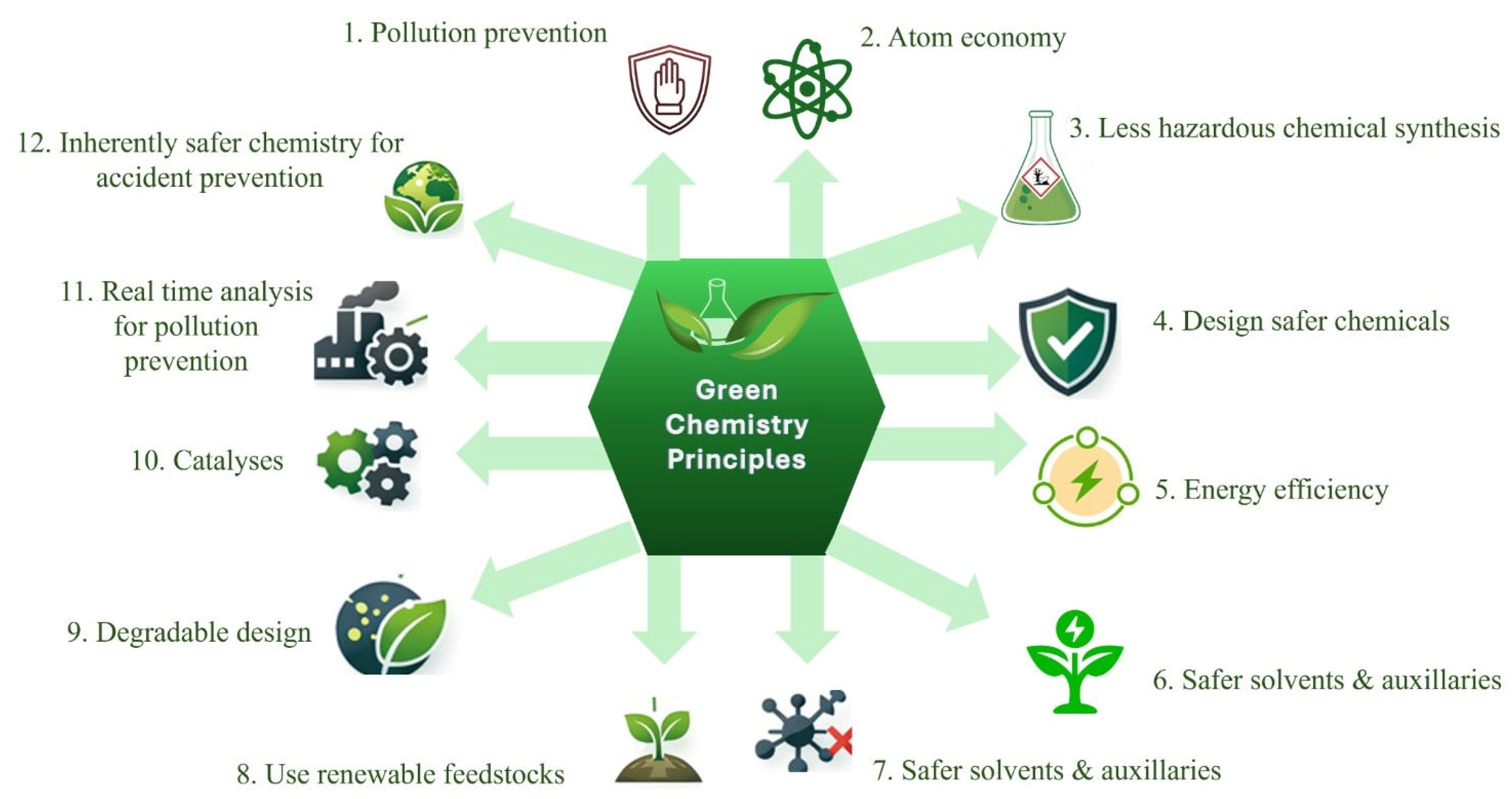
- Anastas, P.T.; Warner, J.C. Green chemistry: Theory and Practice; Oxford university press: Oxford, UK, 2000. [Google Scholar]
- Jahangirian, H.; Lemraski, E.G.; Rafiee-Moghaddam, R.; Webster, T.J. A review of using green chemistry methods for biomaterials in tissue engineering. Int. J. Nanomed. 2018, 13, 5953–5969. [Google Scholar] [CrossRef]
- Santos-Rosales, V.; Iglesias-Mejuto, A.; García-González, C.A. Solvent-free approaches for the processing of scaffolds in regenerative medicine. Polymers 2020, 12, 533. [Google Scholar] [CrossRef]
- de Wit, R.J.J.; van Dis, D.J.; Bertrand, M.E.; Tiemessen, D.; Siddiqi, S.; Oosterwijk, E.; van Griensven, M.; Ito, K.; van Blitterswijk, C.A.; Malda, J. Scaffold-based tissue engineering: Supercritical carbon dioxide as an alternative method for decellularization and sterilization of dense materials. Acta Biomater. 2023, 155, 323–332. [Google Scholar] [CrossRef]
- Afghah, F.; Dikyol, C.; Altunbek, M.; Koc, B. Biomimicry in Bio-Manufacturing: Developments in Melt Electrospinning Writing Technology Towards Hybrid Biomanufacturing. Appl. Sci. 2019, 9, 3540. [Google Scholar] [CrossRef]
- Singh, M.; Dey, E.S.; Bhand, S.; Dicko, C. Supercritical Carbon Dioxide Impregnation of Gold Nanoparticles Demonstrates a New Route for the Fabrication of Hybrid Silk Materials. Insects 2022, 13, 18. [Google Scholar] [CrossRef]
- Esquivel, A.; Marcelino, S.; Veiga, F.; Olvera-Trejo, D. Machinability of Sintered Metallic Materials in Additive Manufacturing. Appl. Sci. 2025, 15, 12455. [Google Scholar] [CrossRef]
- Gonçalves, L.F.F.F.; Reis, R.L.; Fernandes, E.M. Forefront Research of Foaming Strategies on Biodegradable Polymers and Their Composites by Thermal or Melt-Based Processing Technologies: Advances and Perspectives. Polymers 2024, 16, 1286. [Google Scholar] [CrossRef] [PubMed]
- Albdiry, M. Effect of melt blending processing on mechanical properties of polymer nanocomposites: A review. Polym. Bull. 2024, 81, 5793–5821. [Google Scholar] [CrossRef]
- Maksoud, F.J.; de la Paz, M.F.V.; Hann, A.J.; Thanarak, J.; Reilly, G.C.; Claeyssens, F.; Koutsos, V.; Dawson, J.I.; Stevens, M.M.; Oreffo, R.O.C. Porous biomaterials for tissue engineering: A review. J. Mater. Chem. B 2022, 10, 8111–8165. [Google Scholar] [CrossRef]
- Okolie, O.; Kumar, A.; Edwards, C.; Lawton, L.A.; Oke, A.; McDonald, S.; Akpan, U.; Brown, P.; Wilson, J.; Taylor, R.; et al. Bio-Based Sustainable Polymers and Materials: From Processing to Biodegradation. J. Compos. Sci. 2023, 7, 213. [Google Scholar] [CrossRef]
- Wang, F.; Tankus, E.B.; Santarella, F.; Rohr, N.; Sharma, N.; Märtin, S.; Michalscheck, M.; Maintz, M.; Cao, S.; Thieringer, F.M. Fabrication and Characterization of PCL/HA Filament as a 3D Printing Material Using Thermal Extrusion Technology for Bone Tissue Engineering. Polymers 2022, 14, 669. [Google Scholar] [CrossRef]
- Cossé, A.; König, C.; Lamprecht, A.; Wagner, K.G. Hot Melt Extrusion for Sustained Protein Release: Matrix Erosion and In Vitro Release of PLGA-Based Implants. AAPS PharmSciTech 2017, 18, 15–26. [Google Scholar] [CrossRef]
- Sarikhani, B.; Imani, R.; Razfar, M.R. A review on gradient and hierarchical scaffolds: Mechanical design and fabrication via electrospinning and extrusion techniques. Biomed. Mater. 2026, 21, 12004. [Google Scholar] [CrossRef]
- Rajeshirke, M.; Fidan, I.; Naikwadi, V.; Alkunte, S.; Gupta, A.; Mohammadizadeh, M. Material extrusion–based multi-material 3D printing: A holistic review of recent advances. Int. J. Adv. Manuf. Technol. 2025, 139, 149–174. [Google Scholar] [CrossRef]
- Banerjee, R.; Ray, S.S. Role of Rheology in Morphology Development and Advanced Processing of Thermoplastic Polymer Materials: A Review. ACS Omega 2023, 8, 27969–28001. [Google Scholar] [CrossRef]
- Fambri, L.; Migliaresi, C. Crystallization and thermal properties. In Poly(Lactic Acid): Synthesis, Structures, Properties, Processing, Applications, and End of Life; Wiley: Hoboken, NJ, USA, 2022; pp. 135–151. [Google Scholar] [CrossRef]
- Spedicati, M.; Zoso, A.; Mortati, L.; Chiono, V.; Marcello, E.; Carmagnola, I. Three-Dimensional Microfibrous Scaffold with Aligned Topography Produced via a Combination of Melt-Extrusion Additive Manufacturing and Porogen Leaching for In Vitro Skeletal Muscle Modeling. Bioengineering 2024, 11, 332. [Google Scholar] [CrossRef] [PubMed]
- Jeon, I.Y.; Jeon, Y.M.; Choi, J.H.; Lee, S.; Kim, M.; Kim, J.H.; Park, J.; Yoon, H.; Lee, K.; Jung, S. In situ printing of biodegradable implant for healing critical-sized bone defect. Device 2025, 3, 100873. [Google Scholar] [CrossRef]
- Wang, J. Injection Molding and Special Injection Molding Technologies of Polymer and Polymer Composites. Polymers 2025, 18, 124. [Google Scholar] [CrossRef] [PubMed]
- Allaf, R.M. The effect of PEO/NaCl dual porogens in the fabrication of porous PCL membranes via a solid-state blending approach. Sci. Rep. 2025, 15, 454. [Google Scholar] [CrossRef]
- Huang, A.; Jiang, Y.; Napiwocki, B.; Mi, H.; Peng, X.; Turng, L.S. Fabrication of poly(ϵ-caprolactone) tissue engineering scaffolds with fibrillated and interconnected pores utilizing microcellular injection molding and polymer leaching. RSC Adv. 2017, 7, 43432–43444. [Google Scholar] [CrossRef]
- Ma, L.; Jiang, W.; Li, W. Solvent-free fabrication of tissue engineering scaffolds with immiscible polymer blends. Int. J. Polym. Mater. Polym. Biomater. 2014, 63, 510–517. [Google Scholar] [CrossRef]
- Jonnalagadda, J.B.; Rivero, I.V. Effect of cryomilling times on the resultant properties of porous biodegradable poly(e-caprolactone)/poly(glycolic acid) scaffolds for articular cartilage tissue engineering. J. Mech. Behav. Biomed. Mater. 2014, 40, 33–41. [Google Scholar] [CrossRef]
- Zhu, Y.; Chen, S.; Zhang, C.; Ikoma, T.; Guo, H.; Zhang, X.; Li, J.; Wang, Y.; Liu, H.; Zhao, L. Novel microsphere-packing synthesis, microstructure, formation mechanism and in vitro biocompatibility of porous gelatin/hydroxyapatite microsphere scaffolds. Ceram. Int. 2021, 47, 32187–32194. [Google Scholar] [CrossRef]
- Singh, M.; Sandhu, B.; Scurto, A.; Berkland, C.; Detamore, M.S. Microsphere-based scaffolds for cartilage tissue engineering: Using subcritical CO2 as a sintering agent. Acta Biomater. 2010, 6, 137–143. [Google Scholar] [CrossRef]
- Han, W.; Kong, L.; Xu, M. Advances in selective laser sintering of polymers. Int. J. Extrem. Manuf. 2022, 4, 42002. [Google Scholar] [CrossRef]
- Mansouri Moghaddam, M.; Aghajanzadeh, M.S.; Imani, R. Engineering therapeutic scaffolds: Integrating drug delivery with tissue regeneration. J. Mater. Chem. B 2025, 13, 10780–10835. [Google Scholar] [CrossRef]
- Allaf, R.M. Melt-molding technologies for 3D scaffold engineering. In Functional 3D Tissue Engineering Scaffolds: Materials, Technologies, and Applications; Elsevier: Amsterdam, The Netherlands, 2018; pp. 75–100. [Google Scholar] [CrossRef]
- Calore, A.R.; Srinivas, V.; Anand, S.; Albillos-Sanchez, A.; Looijmans, S.F.S.P.; van Breemen, L.C.A.; Bouten, C.V.C.; Smits, A.I.P.M.; Moroni, L.; van Blitterswijk, C.A. Shaping and properties of thermoplastic scaffolds in tissue regeneration: The effect of thermal history on polymer crystallization, surface characteristics and cell fate. J. Mater. Res. 2021, 36, 3914–3935. [Google Scholar] [CrossRef]
- Alblawi, A.; Ranjani, A.S.; Yasmin, H.; Gupta, S.; Bit, A.; Rahimi-Gorji, M. Scaffold-free: A developing technique in field of tissue engineering. Comput. Methods Programs Biomed. 2020, 185, 105148. [Google Scholar] [CrossRef]
- Eryildiz, M.; Altan, M. Fabrication of polylactic acid/halloysite nanotube scaffolds by foam injection molding for tissue engineering. Polym. Compos. 2020, 41, 757–767. [Google Scholar] [CrossRef]
- Hasanzadeh, R.; Azdast, T.; Mojaver, M.; Darvishi, M.M.; Park, C.B. Cost-effective and reproducible technologies for fabrication of tissue engineered scaffolds: The state-of-the-art and future perspectives. Polymer 2022, 244, 124681. [Google Scholar] [CrossRef]
- Loewner, S.; Heene, S.; Baroth, T.; Heymann, H.; Cholewa, F.; Blume, H.; Blume, C. LRecent advances in melt electro writing for tissue engineering for 3D printing of microporous scaffolds for tissue engineering. Front. Bioeng. Biotechnol. 2022, 10, 896719. [Google Scholar] [CrossRef]
- Love, E.J.; Pelligand, L.; Taylor, P.M.; Murrell, J.C.; Sear, J.W. Pharmacokinetic-pharmacodynamic modelling of intravenous buprenorphine in conscious horses. Vet. Anaesth. Analg. 2015, 42, 17–29. [Google Scholar] [CrossRef]
- Jiang, J.; Li, Z.; Yang, H.; Wang, X.; Li, Q.; Turng, L.S. Microcellular injection molding of polymers: A review of process know-how, emerging technologies, and future directions. Curr. Opin. Chem. Eng. 2021, 33, 100694. [Google Scholar] [CrossRef]
- Yang, S.; Wu, H.; Peng, C.; He, J.; Pu, Z.; Lin, Z.; Li, Y.; Zhang, R.; Wang, T.; Chen, X.; et al. From the microspheres to scaffolds: Advances in polymer microsphere scaffolds for bone regeneration applications. Biomater. Transl. 2024, 5, 274–299. [Google Scholar] [CrossRef]
- Abdulsalam, L.; Abubakar, S.; Permatasari, I.; Lawal, A.A.; Uddin, S.; Ullah, S.; Khan, M.I.; Ahmed, R.; Hussain, T.; Iqbal, M.; et al. Advanced Biocompatible and Biodegradable Polymers: A Review of Functionalization, Smart Systems, and Sustainable Applications. Polymers 2025, 17, 2901. [Google Scholar] [CrossRef]
- Kheir, O.; Jacoby, A.; Verwulgen, S. Risk Identification and Analysis in the Development of Medical Devices Among Start-Ups: Towards a Broader Risk Management Framework. Med. Devices Evid. Res. 2022, 15, 349–363. [Google Scholar] [CrossRef]
- Barry, J.J.A.; Silva, M.M.C.G.; Popov, V.K.; Shakesheff, K.M.; Howdle, S.M. Supercritical carbon dioxide: Putting the fizz into biomaterials. Philos. Trans. R. Soc. A Math. Phys. Eng. Sci. 2006, 364, 249–261. [Google Scholar] [CrossRef]
- Bhamidipati, M.; Scurto, A.M.; Detamore, M.S. The future of carbon dioxide for polymer processing in tissue engineering. Tissue Eng. Part B Rev. 2013, 19, 221–232. [Google Scholar] [CrossRef]
- Khoshvaght-Aliabadi, M.; Zahiri, A.H.; Ahn, H.S.; Kim, S.M.; Mahian, O. Improving channel layouts in printed circuit heat exchangers for efficient supercritical carbon dioxide cooling. Int. J. Therm. Sci. 2025, 215, 109932. [Google Scholar] [CrossRef]
- Perera, H.; Rahmanian, V.; Sohail, M.; Mohammadkhah, S.; Ahuja, A.; Khan, S.A. Using Supercritical CO2 for Viscosity Reduction of Polymers: A Data-Driven Modeling Approach for Predicting the Diffusive Properties of Polystyrene Melt. Ind. Eng. Chem. Res. 2025, 64, 16700–16710. [Google Scholar] [CrossRef]
- Pantić, M.; Horvat, G.; Berk Bevc, M.; Knez, Ž.; Novak, Z. Design and synthesis of novel polycaprolactone-chitosan based scaffolds using supercritical carbon dioxide. J. CO2 Util. 2024, 80, 102697. [Google Scholar] [CrossRef]
- Masmoudi, Y.; Tassaing, T.; Borschneck, D.; Badens, E. Supercritical CO2 Sorption Within Polymers Used in Medical Devices and Their Packaging. J. Appl. Polym. Sci. 2026, 143, e58100. [Google Scholar] [CrossRef]
- Yeo, S.D.; Kiran, E. Formation of polymer particles with supercritical fluids: A review. J. Supercrit. Fluids 2005, 34, 287–308. [Google Scholar] [CrossRef]
- Haurat, M.; Dumon, M. Amorphous Polymers’ Foaming and Blends with Organic Foaming-Aid Structured Additives in Supercritical CO2, a Way to Fabricate Porous Polymers from Macro to Nano Porosities in Batch or Continuous Processes. Molecules 2020, 25, 5320. [Google Scholar] [CrossRef]
- Markočič, E.; Škerget, M.; Knez, Ž. Solubility and diffusivity of CO2 in poly(l-lactide)–hydroxyapatite and poly(d,l-lactide-co-glycolide)–hydroxyapatite composite biomaterials. J. Supercrit. Fluids 2011, 55, 1046–1051. [Google Scholar] [CrossRef]
- Girard, E.; Tassaing, T.; Marty, J.D.; Destarac, M. Structure–Property Relationships in CO2-philic (Co)polymers: Phase Behavior, Self-Assembly, and Stabilization of Water/CO2 Emulsions. Chem. Rev. 2016, 116, 4125–4169. [Google Scholar] [CrossRef]
- Lu, W.; Ma, M.; Xu, H.; Zhang, B.; Cao, X.; Guo, Y. Gelatin nanofibers prepared by spiral-electrospinning and cross-linked by vapor and liquid-phase glutaraldehyde. Mater. Lett. 2015, 140, 1–4. [Google Scholar] [CrossRef]
- Klonos, P.A.; Bikiaris, D.N.; Kyritsis, A. Molecular Mobility in Nanocomposites Based on Renewable Semicrystalline Polyesters. In Dynamics of Composite Materials; Springer International Publishing: Cham, Switzerland, 2022; pp. 87–121. [Google Scholar] [CrossRef]
- Zhang, J.; Yang, S.; Yang, X.; Xi, Z.; Zhao, L.; Cen, L.; Wang, Y.; Liu, H.; Chen, X.; Li, M.; et al. Novel Fabricating Process for Porous Polyglycolic Acid Scaffolds by Melt-Foaming Using Supercritical Carbon Dioxide. ACS Biomater. Sci. Eng. 2018, 4, 694–706. [Google Scholar] [CrossRef]
- Souri, M.; Chiani, M.; Farhangi, A.; Mehrabi, M.R.; Nourouzian, D.; Raahemifar, K.; Ahmadi, A.; Ghorbani, M.; Kazemi, M.; Moradi, H. Anti-COVID-19 Nanomaterials: Directions to Improve Prevention, Diagnosis, and Treatment. Nanomaterials 2022, 12, 783. [Google Scholar] [CrossRef]
- Tang, S.; Huang, G.; Li, C.; Li, Z.; Xie, Y.; Wu, F.; Xie, D.; Feng, D. Supercritical CO2-foamed hierarchically porous PLA/PBS-based scaffold for advanced bone regeneration. Biomater. Adv. 2026, 181, 214663. [Google Scholar] [CrossRef]
- Gunasekaran, H.B.; Ponnan, S.; Thirunavukkarasu, N.; Laroui, A.; Wu, L.; Wang, J. Rapid Carbon Dioxide Foaming of 3D Printed Thermoplastic Polyurethane Elastomers. ACS Appl. Polym. Mater. 2022, 4, 1497–1511. [Google Scholar] [CrossRef]
- Casalini, T.; Cingolani, A.; Scibona, E. Modeling the Microenvironment-Dependent Degradation of Drug-Loaded Polylactic- co-glycolic Microparticles. Ind. Eng. Chem. Res. 2021, 60, 10683–10698. [Google Scholar] [CrossRef]
- Massias, T.; de Paiva Lacerda, S.; Resende de Azevedo, J.; Letourneau, J.-J.; Dos Santos, P.; Bolzinger, M.-A.; Espitalier, F. A proof-of-concept study of coupled supercritical CO2-assisted processes to produce solid self-assembled drug delivery systems (S-SADDS). J. Cryst. Growth 2023, 616, 127245. [Google Scholar] [CrossRef]
- Tseng, H.T.; Lin, Y.W.; Sung, S.Y.; Tsai, Y.T.; Liu, C.W.; Hsu, P.S.; Wang, J.H.; Chen, Y.L.; Lee, K.H. Advances and Challenges of Tissue Vascular Scaffolds and Supercritical Carbon Dioxide Technology in Cardiovascular Diseases. Tissue Eng. Regen. Med. 2025, 22, 273–284. [Google Scholar] [CrossRef]
- Zhang, Y.; Zhou, C.; Xie, Q.; Xia, L.; Liu, L.; Bao, W.; Li, Y.; Wang, H.; Chen, J.; Zhao, L.; et al. Dual release scaffolds as a promising strategy for enhancing bone regeneration: An updated review. Nanomedicine 2025, 20, 371–388. [Google Scholar] [CrossRef]
- Pöttgen, S.; Wischke, C. Alternative Techniques for Porous Microparticle Production: Electrospraying, Microfluidics, and Supercritical CO2. Pharm. Res. 2025, 42, 1461–1480. [Google Scholar] [CrossRef]
- Faba, S.; Agüero, Á; Arrieta, M.P.; Martínez, S.; Romero, J.; Torres, A.; García, M.; López, F.; Sánchez, R.; Pérez, L.; et al. Foaming of 3D-Printed PLA/CaCO3 Composites by Supercritical CO2 Process for Sustainable Food Contact Materials. Polymers 2024, 16, 798. [Google Scholar] [CrossRef]
- Coppola, B.; Menotti, F.; Longo, F.; Banche, G.; Mandras, N.; Palmero, P. New Generation of Osteoinductive and Antimicrobial Polycaprolactone-Based Scaffolds in Bone Tissue Engineering: A Review. Polymers 2024, 16, 1668. [Google Scholar] [CrossRef]
- Shi, J.; Kang, X.; Mao, L.; Jiang, Y.; Zhao, S.; Liu, Y. Supercritical CO2-applied equipment for chemical synthesis and transformation: Current status and perspectives. Chem. Eng. J. 2023, 459, 141608. [Google Scholar] [CrossRef]
- Ghosh, A.; Orasugh, J.T.; Ray, S.S.; Chattopadhayay, D. Foaming Technology. In Polymeric Foams: Fundamentals and Types of Foams (Volume 1); ACS Symposium Series; American Chemical Society: Washington, DC, USA, 2023; Volume 1439, pp. 63–89. [Google Scholar] [CrossRef]
- Athanasoulia, I.G.; Louli, V.; Schinas, P.; Rinotas, V.; Douni, E.; Tarantili, P.A.; Karageorgiou, V.; Gounari, E.; Papadopoulou, L.; Tsiridis, E. The effect of foaming process with supercritical CO2 on the morphology and properties of 3D porous polylactic acid scaffolds. Polym. Eng. Sci. 2022, 62, 2459–2475. [Google Scholar] [CrossRef]
- Da Porto, C.; Natolino, A.; Scalet, M. Improved Sustainability in Wine Industry Byproducts: A Scale-up and Economical Feasibility Study for High-Value Compounds Extraction Using Modified SC-CO2. ACS Omega 2022, 7, 33845–33857. [Google Scholar] [CrossRef]
- Kade, J.C.; Dalton, P.D. Polymers for Melt Electrowriting. Adv. Healthc. Mater. 2021, 10, e2001232. [Google Scholar] [CrossRef]
- Dalton, P.D. Melt electrowriting with additive manufacturing principles. Curr. Opin. Biomed. Eng. 2017, 2, 49–57. [Google Scholar] [CrossRef]
- Mueller, K.M.A.; Hangleiter, A.; Burkhardt, S.; Rojas-González, D.M.; Kwade, C.; Pammer, S.T.; Schneider, J.; Müller, R.; Vogel, F.; Schmidt, L.; et al. Filament-Based Melt Electrowriting Enables Dual-Mode Additive Manufacturing for Multiscale Constructs. Small Sci. 2023, 3, 2300021. [Google Scholar] [CrossRef]
- O’Neill, K.L.; Dalton, P.D. A Decade of Melt Electrowriting. Small Methods 2023, 7, 2201589. [Google Scholar] [CrossRef]
- Hochleitner, G.; Chen, F.; Blum, C.; Dalton, P.D.; Amsden, B.; Groll, J. Melt electrowriting below the critical translation speed to fabricate crimped elastomer scaffolds with non-linear extension behaviour mimicking that of ligaments and tendons. Acta Biomater. 2018, 72, 110–120. [Google Scholar] [CrossRef]
- Mieszczanek, P.; Corke, P.; Mehanian, C.; Dalton, P.D.; Hutmacher, D.W. Towards industry-ready additive manufacturing: AI-enabled closed-loop control for 3D melt electrowriting. Commun. Eng. 2024, 3, 158. [Google Scholar] [CrossRef]
- Malikmammadov, E.; Tanir, T.E.; Kiziltay, A.; Hasirci, V.; Hasirci, N. PCL and PCL-based materials in biomedical applications. J. Biomater. Sci. Polym. Ed. 2018, 29, 863–893. [Google Scholar] [CrossRef]
- Terranova, P.; Mueller, K.M.A.; Biebl, D.; D’Amore, A.; Mela, P. A versatile 5-axis melt electrowriting platform for unprecedented design freedom of 3D fibrous scaffolds. Addit. Manuf. 2024, 93, 104431. [Google Scholar] [CrossRef]
- Janarthanan, G.; Chand, R.; Vijayavenkataraman, S. Recent advances in non-planar collectors for melt electrowriting (MEW): Creating physiologically relevant scaffold structures for tissue engineering. Prog. Biomed. Eng. 2025, 7, 042002. [Google Scholar] [CrossRef]
- Shahverdi, M.; Seifi, S.; Akbari, A.; Mohammadi, K.; Shamloo, A.; Movahhedy, M.R. Melt electrowriting of PLA, PCL, and composite PLA/PCL scaffolds for tissue engineering application. Sci. Rep. 2022, 12, 19935. [Google Scholar] [CrossRef]
- Meng, J.; Boschetto, F.; Yagi, S.; Marin, E.; Adachi, T.; Chen, X.; Li, Y.; Wang, H.; Zhang, L.; Suzuki, K. Design and manufacturing of 3D high-precision micro-fibrous poly (l-lactic acid) scaffold using melt electrowriting technique for bone tissue engineering. Mater. Des. 2021, 210, 110063. [Google Scholar] [CrossRef]
- von Witzleben, M.; Hahn, J.; Richter, R.F.; de Freitas, B.; Steyer, E.; Schütz, K.; Müller, A.; Becker, T.; Hoffmann, S.; Krüger, L.; et al. Tailoring the pore design of embroidered structures by melt electrowriting to enhance the cell alignment in scaffold-based tendon reconstruction. Biomater. Adv. 2024, 156, 213708. [Google Scholar] [CrossRef]
- Santschi, M.X.T.; Huber, S.; Bujalka, J.; Imhof, N.; Leunig, M.; Ferguson, S.J. Mechanical and Biological Evaluation of Melt-Electrowritten Polycaprolactone Scaffolds for Acetabular Labrum Restoration. Cells 2022, 11, 3450. [Google Scholar] [CrossRef]
- Federici, A.S.; Tornifoglio, B.; Lally, C.; Garcia, O.; Kelly, D.J.; Hoey, D.A. Melt electrowritten scaffold architectures to mimic tissue mechanics and guide neo-tissue orientation. J. Mech. Behav. Biomed. Mater. 2024, 150, 106292. [Google Scholar] [CrossRef]
- Meng, J.; Boschetto, F.; Yagi, S.; Marin, E.; Adachi, T.; Chen, X.; Li, Y.; Wang, H.; Zhang, L.; Suzuki, K. Enhancing the bioactivity of melt electrowritten PLLA scaffold by convenient, green, and effective hydrophilic surface modification. Mater. Sci. Eng. C Mater. Biol. Appl. 2022, 135, 112686. [Google Scholar] [CrossRef]
- de Carvalho, A.B.G.; Cardoso, L.M.; Anselmi, C.; Dal-Fabbro, R.; Campos, T.M.B.; Borges, A.L.S.; Silva, R.M.; Oliveira, P.F.; Santos, J.A.; Ribeiro, M.T.; et al. Melt electrowriting of bioglass-laden poly(ε-caprolactone) scaffolds for bone regeneration. J. Mater. Chem. B 2025, 13, 3864–3875. [Google Scholar] [CrossRef]
- Blum, C.; Weichhold, J.; Hochleitner, G.; Stepanenko, V.; Würthner, F.; Groll, J.; Müller, R.; Hutmacher, D.; Dalton, P.D.; Lee, J. Controlling Topography and Crystallinity of Melt Electrowritten Poly(ε-Caprolactone) Fibers. 3D Print. Addit. Manuf. 2021, 8, 315–321. [Google Scholar] [CrossRef]
- Han, Y.; Lian, M.; Sun, B.; Jia, B.; Wu, Q.; Qiao, Z.; Zhang, L.; Wang, H.; Chen, X.; Liu, Y. Preparation of high precision multilayer scaffolds based on Melt Electro-Writing to repair cartilage injury. Theranostics 2020, 10, 10214–10230. [Google Scholar] [CrossRef]
- Böhm, C.; Tandon, B.; Hrynevich, A.; Teßmar, J.; Dalton, P.D. Processing of Poly(lactic-co-glycolic acid) Microfibers via Melt Electrowriting. Macromol. Chem. Phys. 2022, 223, 2100417. [Google Scholar] [CrossRef]
- Pelin, G.; Sonmez, M.; Pelin, C.-E. The Use of Additive Manufacturing Techniques in the Development of Polymeric Molds: A Review. Polymers 2024, 16, 1055. [Google Scholar] [CrossRef]
- Größbacher, G.; Bartolf-Kopp, M.; Gergely, C.; Bernal, P.N.; Florczak, S.; de Ruijter, M.; Groll, J.; Dalton, P.D.; Lee, J.; Moroni, L. Volumetric Printing Across Melt Electrowritten Scaffolds Fabricates Multi-Material Living Constructs with Tunable Architecture and Mechanics. Adv. Mater. 2023, 35, e2300756. [Google Scholar] [CrossRef]
- Han, Y.; Jia, B.; Lian, M.; Sun, B.; Wu, Q.; Sun, B.; Zhang, L.; Wang, H.; Chen, X.; Liu, Y. High-precision, gelatin-based, hybrid, bilayer scaffolds using melt electro-writing to repair cartilage injury. Bioact. Mater. 2021, 6, 2173–2186. [Google Scholar] [CrossRef]
- Snow, F.; Doyle, S.E.; Liu, E.; Rauch DDe Millett, D.; Wilding-Mcbride, J.; Dalton, P.D.; Lee, J.; Moroni, L.; Groll, J.; Hutmacher, D. A detailed guide to melt electro-writing for tissue engineering applications. Biofabrication 2025, 17, 42004. [Google Scholar] [CrossRef]
- Ionita, C.N.; Mokin, M.; Varble, N.; Bednarek, D.R.; Xiang, J.; Snyder, K.V.; Tutino, V.M.; Levy, E.I.; Meng, H.; Rudin, S. Challenges and limitations of patient-specific vascular phantom fabrication using 3D Polyjet printing. Proc. SPIE Int. Soc. Opt. Eng. 2014, 9038, 164–175. [Google Scholar] [CrossRef]
- Molière, M.; Privat, R.; Jaubert, J.-N.; Geiger, F. Supercritical CO2 Power Technology: Strengths but Challenges. Energies 2024, 17, 1129. [Google Scholar] [CrossRef]
- Hodaei, M.; Mandelis, A. Quantitative osteoporosis diagnosis of porous cancellous bone using poroelastodynamic modal analysis. J. Acoust. Soc. Am. 2023, 154, 3101–3124. [Google Scholar] [CrossRef] [PubMed]
- Hernandez, J.L.; Woodrow, K.A. Medical Applications of Porous Biomaterials: Features of Porosity and Tissue-Specific Implications for Biocompatibility. Adv. Healthc. Mater. 2022, 11, 2102087. [Google Scholar] [CrossRef] [PubMed]
- Heinemann, C.; Buchner, F.; Lee, P.S.; Bernhardt, A.; Kruppke, B.; Wiesmann, H.-P.; Fischer, H.; Müller, R.; Schubert, D.; Klein, T. Effects of Gamma Irradiation and Supercritical Carbon Dioxide Sterilization on Methacrylated Gelatin/Hyaluronan Hydrogels. J. Funct. Biomater. 2023, 14, 317. [Google Scholar] [CrossRef] [PubMed]
- Nguyen, H.C.; Alamray, F.; Kamal, M.; Diana, T.; Mohamed, A.; Algarni, M.; Hassan, A.; Ali, S.; Khan, R.; Ahmed, N. Computational prediction of drug solubility in supercritical carbon dioxide: Thermodynamic and artificial intelligence modeling. J. Mol. Liq. 2022, 354, 118888. [Google Scholar] [CrossRef]
- Santos-Rosales, V.; Magariños, B.; Alvarez-Lorenzo, C.; García-González, C.A. Combined sterilization and fabrication of drug-loaded scaffolds using supercritical CO2 technology. Int. J. Pharm. 2022, 612, 121362. [Google Scholar] [CrossRef]
- Gholivand, S.; Tan, T.B.; Yusoff, M.M.; Choy, H.W.; Teow, S.J.; Wang, Y.; Lim, K.S.; Lee, H.J.; Ahmad, R.; Abdullah, N. Advanced fabrication of complex biopolymer microcapsules via RSM-optimized supercritical carbon dioxide solution-enhanced dispersion: A comparative analysis of various microencapsulation techniques. Food Chem. 2024, 452, 139591. [Google Scholar] [CrossRef]
- Montes, A.; Pereyra, C.; García-Casas, I.; Valor, D.; León-Marcos, L. Pore Formation in Biodegradable Polymers via Supercritical CO2 Foaming: Mechanisms, Characterization, and Applications. In Progress on Porous Media Research—Fundamentals and Applications; Xu, H., Pan, R., Ke, H., Yang, L., Eds.; IntechOpen: London, UK, 2025. [Google Scholar] [CrossRef]
- Plamadiala, I.; Croitoru, C.; Pop, M.A.; Roata, I.C. Enhancing Polylactic Acid (PLA) Performance: A Review of Additives in Fused Deposition Modelling (FDM) Filaments. Polymers 2025, 17, 191. [Google Scholar] [CrossRef]
- Abdal-hay Ali, A.; Kocak Oztug, N.A.; Sheikh, F.; Han, P.; Anwar, S.; Fournier, B.; El-Ghazaly, M.; Hassan, A.; Rahman, M.; Khan, S. Fabrication of 3D Bioactive Melt Electrowriting Composite Scaffold with High Osteogenic Potential. Colloids Surf. B Biointerfaces 2024, 245, 114270. [Google Scholar] [CrossRef]
- Devlin, B.L.; Allenby, M.C.; Ren, J.; Pickering, E.; Klein, T.J.; Paxton, N.C.; Moroni, L.; Groll, J.; Dalton, P.D.; Lee, J. Materials Design Innovations in Optimizing Cellular Behavior on Melt Electrowritten (MEW) Scaffolds. Adv. Funct. Mater. 2024, 34, 2313092. [Google Scholar] [CrossRef]
- Law, A.C.C.; Wang, R.; Chung, J.; Kucukdeger, E.; Liu, Y.; Barron, T.; Zhang, H.; Chen, X.; Li, Y.; Wong, K. Process Parameter Optimization for Reproducible Fabrication of Layer Porosity Quality of 3D-printed Tissue Scaffold. J. Intell. Manuf. 2023, 35, 1825–1844. [Google Scholar] [CrossRef]
- Tapia, G.; Elwany, A. A Review on Process Monitoring and Control in Metal-Based Additive Manufacturing. J. Manuf. Sci. Eng. 2014, 136, 060801. [Google Scholar] [CrossRef]
- Gleadall, A.; Visscher, D.; Yang, J.; Thomas, D.; Segal, J. Review of additive manufactured tissue engineering scaffolds: Relationship between geometry and performance. Burn. Trauma. 2018, 6, 19. [Google Scholar] [CrossRef] [PubMed]
- Yang, Y.; Lin, Q.; Hou, Z.; Yang, G.; Shen, L. Three-Dimensional-Printed Osteochondral Scaffold with Biomimetic Surface Curvature for Osteochondral Regeneration. Pharmaceutics 2025, 17, 153. [Google Scholar] [CrossRef]
- Kong, M.; Zeng, Y.; Wu, Z.; Deng, H.; Zhang, B.; Feng, D.; Li, Y.; Wang, X.; Chen, J.; Liu, H. Artificial intelligence for design strategies of tissue engineering materials. Fundam. Res. 2025, in press. [Google Scholar] [CrossRef]
- Fu, R.K.; Chen, Z.; Tian, H.; Hu, J.; Bu, F.; Zheng, P.; Wang, Y.; Liu, X.; Zhang, L.; Zhao, J. A review on the applications of machine learning in biomaterials, biomechanics, and biomanufacturing for tissue engineering. Smart Mater. Med. 2025, 6, 171–204. [Google Scholar] [CrossRef]
- Ahsan, M.M.; Liu, Y.; Raman, S.; Siddique, Z. Digital Twins in Additive Manufacturing: A systematic review. Internet Things 2025, 33, 101692. [Google Scholar] [CrossRef]
- Wu, Y.; Ding, X.; Wang, Y.; Ouyang, D. Harnessing the power of machine learning into tissue engineering: Current progress and future prospects. Burn. Trauma. 2024, 12, 53. [Google Scholar] [CrossRef]
- Liu, M.; Zhou, Y.; Mei, X.; Yu, Z.; Guan, B.; Xiao, Y.; Wang, H.; Chen, J.; Li, Y.; Zhang, L. AI-driven biomaterial design: An intelligent closed loop from reverse design to biological response. Front. Cell Dev. Biol. 2026, 13, 1755565. [Google Scholar] [CrossRef]





| Solvent-Free Route | Typical Achievable Architecture/Resolution | Scale & Throughput (Relative) | Strengths (Performance + Translation) | Key Constraints/Failure Modes | Key CPPs (Control Levers) | Key CQAs (to Verify Release + Performance) |
|---|---|---|---|---|---|---|
| Melt molding (compression/injection/extrusion) + porogen leaching (aqueous) | Open-cell porosity achievable; pore size mainly set by porogen size/shape & fraction. Compression-molding polymer/porogen composites can improve thickness control before leaching. | High (industrial polymer processing). Main bottleneck: post-leaching + drying cycle time. | Scalable, reproducible, cost-effective, compatible with established molding infrastructure. Porosity/pore size tunable via porogen design. | Thermal degradation risk (hot spots, long residence time). Not truly a single step due to leaching/drying. Risk of incomplete porogen removal and pore non-uniformity. | Molding temperature (relative to Tg/Tm), pressure, residence time; mixing/porogen dispersion; porogen size/fraction; leaching time/agitation; drying conditions. | Mw retention/crystallinity; residual porogen/moisture; pore size distribution + interconnectivity; mechanical properties; dimensional accuracy. |
| Material extrusion AM (FDM/FFF)(filament-fed or pellet/screw-fed) | CAD-designed, fully interconnected macropore networks. Example (PCL): channel size 160–700 µm; porosity 48–77%. | Medium (serial build). Scale via multi-nozzle/parallel printing; pellet/screw feeding reduces filament-supply bottleneck. | High architectural control + reproducibility; patient-specific constructs (image-to-CAD). No solvent removal step. | High processing temperature limits the co-printing of cells/thermostable factors. Anisotropy and nozzle-limited resolution; filament availability constraints (filament-fed). | Nozzle temperature; extrusion rate; layer height; raster spacing/angle; print speed; build orientation; cooling. | Strand diameter; pore size/interconnectivity; dimensional fidelity; mechanical anisotropy; thermal degradation indicators (Mw). |
| Solid-state/dense-gas foaming (CO2/N2) ± salt leaching/extractable porogen | Pore size: few µm → several hundred µm; porosity ~10% → >90% (parameter-dependent). Often closed-cell/skin layer unless combined with porogens; hierarchical pores possible (e.g., ~312 µm macro + ~38 µm micro). | Medium (batch pressure-vessel cycles). Scale is limited by vessel volume, cycle time, and gas management. | Avoids organic solvents and chemical blowing agents; tunable pore size/porosity via PT–t and depressurization rate. | Closed pores/poor interconnectivity + skin layer formation; architecture gradients from gas penetration. Less deterministic global architecture vs. AM unless combined with molding/AM. | Saturation pressure/temperature/time; depressurization rate; foaming temperature; porogen content/size; post-annealing. | Open porosity + permeability/interconnectivity; skin layer thickness; pore size distribution; mechanical integrity. |
| Microsphere-based scaffolds: thermal sintering (heat) | Bottom-up assembly; interconnected pores; compatible with pore-size gradients. Over-sintering can cause pore occlusion and loss of interconnectivity. | Medium (batch). Scale depends on microsphere production, packing uniformity, and thermal uniformity. | Simple, low-cost consolidation; shape-specific constructs. Microspheres support spatial modulation and can act as 3D culture substrates; inorganic fillers are feasible. | Thermal exposure can compromise heat-labile bioactives. Shrinkage/warpage and pore occlusion if sintering is excessive. | Sintering temperature/time (relative to Tg/Tm); heating/cooling rate; microsphere size distribution; packing density. | Degree of fusion; interconnected porosity; mechanical properties; dimensional stability; bioactive activity retention (if incorporated/post-loaded). |
| Low-temperature CO2 sintering (sub-critical/pressurized CO2 plasticization) | Surface-limited plasticization enables fusion below Tg/Tm while preserving particle shape. Potential for single-step consolidation; cell-seeding reported under specific conditions. | Emerging → Medium. Requires pressure equipment; scale limited by cycle time and CO2 handling/validation. | Avoids high temperatures and organic solvents; maintains shape-specific scaffolds. CO2 can act as processing aid (and may assist sterilization under some conditions). | Parameter sensitivity; limited process window. CO2 sterilization effect can constrain simultaneous cell loading at high pressures/long exposures. | CO2 pressure; exposure time; temperature; depressurization profile; particle packing. | Interconnected porosity; shrinkage; mechanical properties. Cell viability (if applicable) and residual processing effects. |
| Powder-bed fusion: Selective laser sintering (SLS) | CAD-defined, layer-by-layer; sub-mm feature capability. Properties depend on delivered energy density (laser power, scan spacing, beam speed). Example (PCL): 2 mm square channels, 700 µm struts; porosity 44.8–76.5%. | Medium–High (industrial AM exists). Scale via build volume/nesting; needs powder qualification and powder-removal steps. | Single-step fabrication of complex architectures; strong parameter control over microstructure. Not limited to filament feedstock. | Powder availability/consistency (medical grade); thermal degradation/warpage; trapped powder removal. Surface roughness and variability with energy density. | Laser power; scan speed; hatch spacing; layer thickness; bed temperature; powder PSD/flowability; atmosphere control. | Dimensional accuracy; porosity/interconnectivity; mechanical properties; Mw/crystallinity; residual powder/contamination. |
| Polymer System | Key MEW Parameters (Reported) | Fiber Outcome & Architecture | Porosity | Degradation Rate | Application/Validation (Headline Finding) | Ref. |
|---|---|---|---|---|---|---|
| PCL (poly(ε-caprolactone)) | T = 85 °C; V = 4 kV; gap = 1.2 mm; nozzle = 25 G–30 G; P = 0.5–4 bar; collector velocity = 1.2 × CTS–15 × CTS (e.g., 484–1763 mm min−1 for 25 G). | Fiber dia ≈0.10–33.6 µm (tuned by nozzle/pressure/speed). Example constructs: 150 µm pores; controllable surface topography + crystallinity. | ~70–85% | 12–24+ months (Slow) | Parameter–structure map for tuning PCL micro-topography/crystallinity (design lever for mechanics/degradation/cell cues). | [162] |
| PCL (Mn ≈ 45 k) + 10 wt% HA–PCL (deep layer); cytokine-loaded PLGA microspheres (inkjet interlayers) | Barrel T = 65 °C; needle = 21G; P = 0.1 MPa (~1 bar); gap = 2–4 mm; V = 3 kV at 2 mm, +1.5 kV per +1 mm (≈3–6 kV); 10 layers; pores: 100 µm (surface), 200 µm (mid/deep). | MEW fiber scale reported as 1–20 µm; smooth fibers; zonal pore design (100/200 µm) + multi-layer composition. | ~75–90% (Gradient structure) | Biphasic (PLGA degrades in 1–2 months; PCL/HA network persists >12 months) | Cartilage defect repair (rabbit): zonal scaffold + growth factor delivery; BMSC adhesion/proliferation/differentiation (in vitro) and improved repair (in vivo). | [163] |
| PCL (neat) | Nozzle T = 100 °C; flow = 10 µL min−1; gap = 5 mm; collector T = 60 °C; CTS ≈ 60 mm s−1; print speed ≈ 65 mm s−1; V = 2–2.5 kV (1st layer) → 4.5–5 kV (10th layer). | Fiber dia 5–15 µm; 10-layer box scaffolds; pore size ≈ 140–160 µm. | ~70–85% | 12–24+ months (Slow) | Cytocompatible ordered microfibrous scaffolds (L929, HUVEC); demonstrates PCL MEW on modified commercial FDM platform. | [155] |
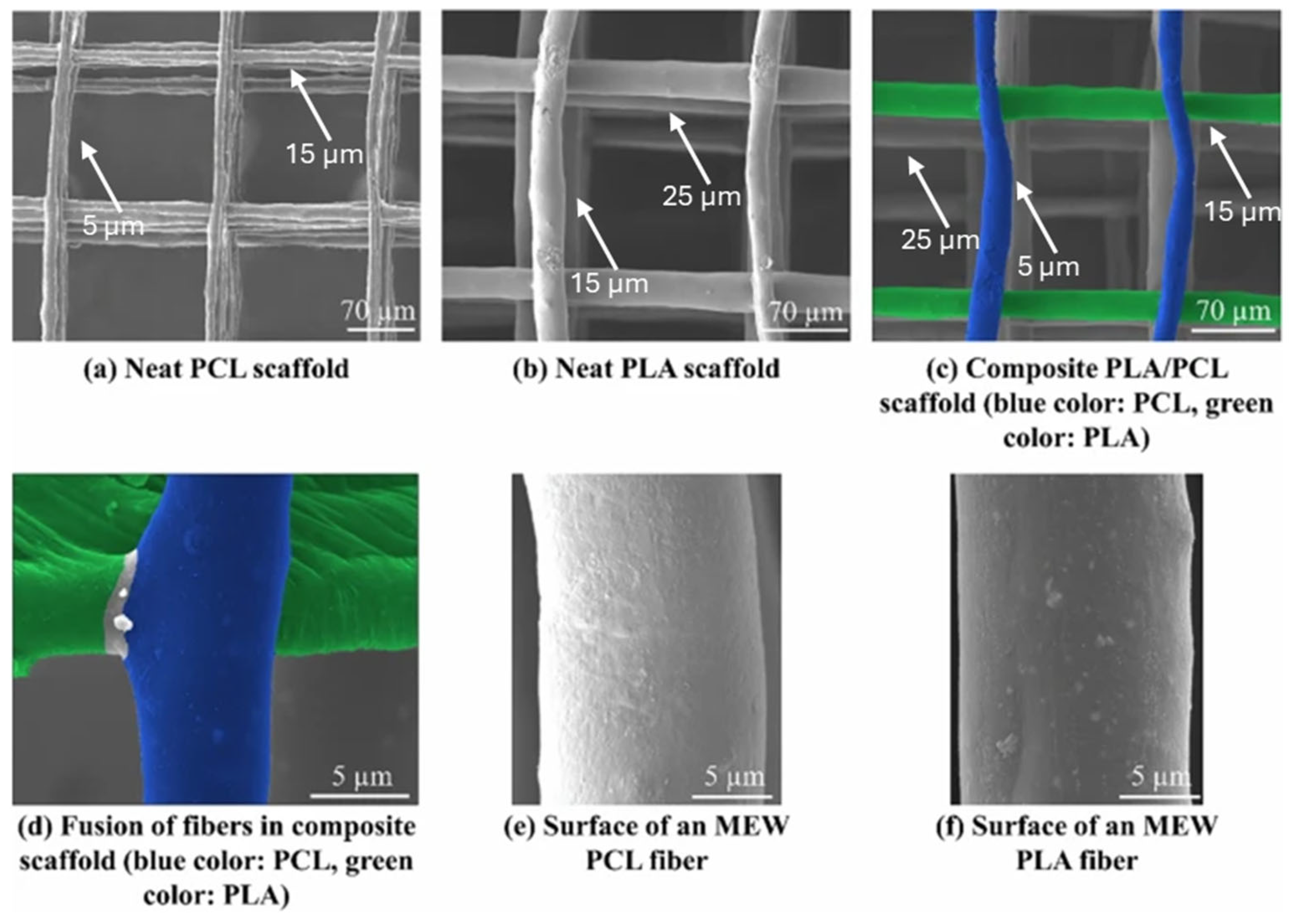
| PLA (neat) | Nozzle T = 230 °C; flow = 10 µL min−1; gap = 5 mm; collector T = 60 °C; CTS ≈ 60 mm s−1; print speed ≈ 65 mm s−1; V = 3.5–4 kV (1st layer) → 6–6.5 kV (10th layer). | Fiber dia 15–25 µm; 10-layer box scaffolds; pore size ≈ 140–160 µm. | ~75–80% | 6–12 months (Moderate) | Head-to-head comparison vs. PCL (mechanics/roughness/cell response); demonstrates high-T MEW of PLA with stable stacking. | [155] |
| PLGA ± acetyl-tributyl-citrate (ATEC) plasticizer (10–20 wt%) | Needle = 25G (ID 0.26 mm); gap = 3.5 mm; nozzle protrusion = 0.5 mm; V = 5.0 kV (head) and −0.5 kV (collector); ambient 20 °C, RH 40%; T_syringe/T_nozzle = 165/144 °C (PLGA), 157/136 °C (PLGA10), 150/129 °C (PLGA20). | PLGA fiber dia drifted ≈ 20.6 → 27.4 µm during first 3.5 h; PLGA10 yielded ≈ 14.1 ± 1.7 µm (first 3.5 h) and improved stability; demonstrates plasticizer-enabled MEW window. | ~70–85% | 1–6 months (Noted as faster-degrading systems) | Expands MEW material palette toward faster-degrading systems; quantifies thermal history/diameter drift (translation-critical for reproducibility). | [164] |
| Bisurea-based segmented copolymers: (AB)n and (ABAC)n with PDMS and/or PPO-PEG-PPO segments (amphiphilic, physically cross-linked) | T = 100 °C; V = 3 kV; gap = 2.2 mm; P = 0.5–1 bar; collector speed = 500–2800 mm min−1. | Fiber dia 7.6 ± 3.0 µm (2800 mm min−1, 1 bar) to 59.0 ± 12.5 µm (500 mm min−1, 1 bar); 500 µm fiber spacing; accurate stacking up to ~20 layers; smooth fibers + strong inter-layer bonding. | >80% (High, due to large spacing) | Highly tunable based on block ratios | Tunable hydrophilicity/hydrophobicity; cytotoxicity + cell adhesion assessed; candidate for soft-tissue interfaces and self-healing fiber fusion. | [37] |
| PEOT-PBT (mesh design) | Designed pore gap = 400 µm; T = 195 °C; nozzle dia = 250 µm; P = 5 kPa; speed = 60 mm s−1; gap = 2 mm; V = 2 kV; 8 layers (printed in nitrogen atmosphere). | Fiber dia 19.4 ± 2.9 µm; gap 378.1 ± 9.4 µm. | ~80–90% | Months to years (Depends on PEOT:PBT ratio) | Elastic scaffolds for soft tissue regeneration: NIH-3T3 viability; ~98.9% pore bridging at day 28; reduced α-SMA expression over time. | [36] |
| PEOT-PBT (semi-random design) | Designed strand gap = 800 µm; T = 195 °C; nozzle dia = 350 µm; P = 4 kPa; speed = 20 mm s−1; gap = 2 mm; V = 3.5 kV; 8 layers (higher V used to induce semi-random deposition). | Fiber dia 19.9 ± 2.1 µm; gap 438.6 ± 80.6 µm; wavy/randomized fibers via jet instability. | ~85–95% | Months to years (Depends on PEOT:PBT ratio) | Mechanically compliant ‘semi-random’ architecture; enables softer constructs vs. regular mesh while maintaining micro-fiber scale. | [36] |
| PCL (control mesh in PEOT-PBT study) | Designed pore gap = 400 µm; T = 100 °C; nozzle dia = 300 µm; P = 25 kPa; speed = 13 mm s−1; gap = 3 mm; V = 6.15 kV; 8 layers. | Fiber dia 18.3 ± 1.9 µm; gap 378.2 ± 8.2 µm. | ~80–90% | 12–24 months (Slow) | Benchmark PCL conditions used for direct mechanical/biological comparison to PEOT-PBT elastomer scaffolds. | [36] |
| Criteria | Solvent-Free Processing | scCO2 Processing | MEW |
|---|---|---|---|
| Environmental impact assessment | High; lessens chemical waste and gets rid of hazardous chemicals | Extremely high; CO2 is safe for the environment, recyclable, and non-toxic | High; little chemical waste; solvent-free method |
| Chemical purity | High; the absence of organic solvents | Extremely high; no solvent remains are left by CO2 | High; solvent-free thermal processing |
| Energy requirements | Moderate (because of the heating procedures) | High (due to high-pressure requirements) | Moderate (because of electrical field management and heating) |
| Process complexity | Quite simple | More complex | Moderate complexity |
| Morphological characteristics (pore size, porosity) | Pore size is controlled and limited | High porosity and a network of interconnected pores | Pore architecture is extremely accurate and controlled |
| Mechanical properties (elastic modulus, strength) | Moderate | Moderate | Controllable fiber orientation and high mechanical strength |
| Biodegradation kinetics | Material dependent | Increased degradation as a result of increased porosity | Adaptable degradation based on scaffold design |
| Biocompatibility | Good | Excellent | Excellent |
| Operational cost | Low | High | Moderate |
| Industrial feasibility | High production speed | Moderate; specific instruments required | Increasing but still limited |
| Application-oriented method selection | Ideal for scaffolds made of biodegradable polymers | Especially appropriate for drug delivery systems and highly porous scaffolds | Excellent for bone, cartilage, and vascular tissue engineering precise scaffolds |
Disclaimer/Publisher’s Note: The statements, opinions and data contained in all publications are solely those of the individual author(s) and contributor(s) and not of MDPI and/or the editor(s). MDPI and/or the editor(s) disclaim responsibility for any injury to people or property resulting from any ideas, methods, instructions or products referred to in the content. |
© 2026 by the authors. Licensee MDPI, Basel, Switzerland. This article is an open access article distributed under the terms and conditions of the Creative Commons Attribution (CC BY) license.
Share and Cite
Arancı, K.; Kızılkurtlu, A.A. Green and Scalable Manufacturing of Biodegradable Polymer Scaffolds: Solvent-Free Processing, Supercritical CO2 and Melt Electrowriting. Polymers 2026, 18, 974. https://doi.org/10.3390/polym18080974
Arancı K, Kızılkurtlu AA. Green and Scalable Manufacturing of Biodegradable Polymer Scaffolds: Solvent-Free Processing, Supercritical CO2 and Melt Electrowriting. Polymers. 2026; 18(8):974. https://doi.org/10.3390/polym18080974
Chicago/Turabian StyleArancı, Kübra, and Ahmet Akif Kızılkurtlu. 2026. "Green and Scalable Manufacturing of Biodegradable Polymer Scaffolds: Solvent-Free Processing, Supercritical CO2 and Melt Electrowriting" Polymers 18, no. 8: 974. https://doi.org/10.3390/polym18080974
APA StyleArancı, K., & Kızılkurtlu, A. A. (2026). Green and Scalable Manufacturing of Biodegradable Polymer Scaffolds: Solvent-Free Processing, Supercritical CO2 and Melt Electrowriting. Polymers, 18(8), 974. https://doi.org/10.3390/polym18080974