Phytic Acid and Its Derivatives as Valuable Flame Retardants for Polymer Systems: Current State of the Art and Perspectives



Abstract

1. Introduction
2. Phytic Acid and Phytates: General Flame-Retardant Mechanisms
3. Flame-Retardant Systems Based on Phytic Acid
3.1. Bulk Polymers
3.1.1. Phytic Acid for the Preparation of Nanoparticles and Other Flame-Retardant Systems
3.1.2. Phytic Acid for the Manufacturing of Functional Polymeric Coatings
3.1.3. Phytic Acid for the Preparation of Functional Aerogels, Cryogels, and Hydrogels
3.1.4. Phytic Acid for the Flame Retardation of Wood-Based Materials
3.2. Phytic Acid in Textile Materials
3.3. Phytic Acid in Foams
4. Flame-Retardant Systems Based on Phytates
4.1. Phytates in Bulk Polymers
4.2. Phytates in Textiles
4.3. Phytates in Foams
4.4. Phytates in Wood-Based Materials
5. Conclusions and Perspectives
Author Contributions
Funding
Data Availability Statement
Conflicts of Interest
Abbreviations
| APP | Ammonium polyphosphate |
| EVA | Ethylene vinyl acetate |
| FGI | Fire growth index |
| FIGRA | Fire growth rate |
| GO | Graphene oxide |
| LbL | Layer-by-layer |
| LDHs | Layered double hydroxides |
| LOI | Limiting oxygen index |
| LP | Dimethyl phosphite lysine |
| MA | Melamine |
| MARHE | Maximum average rate of heat emission |
| MPA | Melamine-phytate |
| MOFs | Metal–organic frameworks |
| PA-Ni | PA-Ni |
| PA | Phytic acid |
| PANI | Polyaniline |
| PEI | Polyethyleneimine |
| PET | Polyethylene terephthalate |
| pHRR | Peak heat release rate |
| PLA | Poly(lactic acid) |
| POSS | Polyhedral oligomeric silsesquioxane |
| PP | Polypropylene |
| pSPR | Peak smoke production rate |
| PU | Polyurethane |
| PUA | Polyurea |
| PUF | Polyurethane foam |
| PVA | Polyvinyl alcohol |
| RPUF | Rigid polyurethane foam |
| SA | Sodium alginate |
| SPR | Smoke production rate |
| TA | Tannic acid |
| THR | Total heat release |
| TSP | Total smoke production |
| TSR | Total smoke release |
| WFPP | Wood flour polypropylene |
| ZIF-67 | Zeolitic Imidazole Framework-67 |
References
- Liu, B.; Zhao, H.; Wang, Y. Advanced Flame-retardant Methods for Polymeric Materials. Adv. Mater. 2022, 34, 2107905. [Google Scholar] [CrossRef]
- Vahabi, H.; Saeb, M.R.; Malucelli, G. Analysis of Flame Retardancy in Polymer Science; Elsevier: Amsterdam, The Netherlands, 2022; ISBN 9780128242612. [Google Scholar]
- Liu, M.; Qiao, J.; Zhang, X.; Guo, Z.; Liu, X.; Lin, F.; Yang, M.; Fan, J.; Wu, X.; Huang, Z. Flame Retardant Strategies and Applications of Organic Phase Change Materials: A Review. Adv. Funct. Mater. 2025, 35, 2412492. [Google Scholar] [CrossRef]
- Sabet, M. Advancements in Halogen-Free Polymers: Exploring Flame Retardancy, Mechanical Properties, Sustainability, and Applications. Polym. Technol. Mater. 2024, 63, 1794–1818. [Google Scholar] [CrossRef]
- Bifulco, A.; Chen, J.; Sekar, A.; Klingler, W.W.; Gooneie, A.; Gaan, S. Recycling of Flame Retardant Polymers: Current Technologies and Future Perspectives. J. Mater. Sci. Technol. 2024, 199, 156–183. [Google Scholar] [CrossRef]
- Yin, Z.; Jiang, Z.; Wu, T. The Development and Application of Contemporary Phosphorus Flame Retardants: A Review. Front. Mater. 2025, 12, 1508000. [Google Scholar] [CrossRef]
- Yang, Y.; Li, Z.; Wu, G.; Chen, W.; Huang, G. A Novel Biobased Intumescent Flame Retardant through Combining Simultaneously Char-Promoter and Radical-Scavenger for the Application in Epoxy Resin. Polym. Degrad. Stab. 2022, 196, 109841. [Google Scholar] [CrossRef]
- Alongi, J.; Han, Z.; Bourbigot, S. Intumescence: Tradition versus Novelty. A Comprehensive Review. Prog. Polym. Sci. 2015, 51, 28–73. [Google Scholar] [CrossRef]
- Singh, I.; Sivaramakrishna, A. Phosphorus-Based Polymeric Flame Retardants–Recent Advances and Perspectives. ChemistrySelect 2024, 9, e202401485. [Google Scholar] [CrossRef]
- Malucelli, G. Bio-Sourced Flame Retardants for Textiles: Where We Are and Where We Are Going. Molecules 2024, 29, 3067. [Google Scholar] [CrossRef] [PubMed]
- Chen, M.; Guo, Q.; Yuan, Y.; Li, A.; Lin, B.; Xiao, Y.; Xu, L.; Wang, W. Recent Advancements of Bio-Derived Flame Retardants for Polymeric Materials. Polymers 2025, 17, 249. [Google Scholar] [CrossRef] [PubMed]
- Dowbysz, A.; Samsonowicz, M.; Kukfisz, B. Recent Advances in Bio-Based Additive Flame Retardants for Thermosetting Resins. Int. J. Environ. Res. Public Health 2022, 19, 4828. [Google Scholar] [CrossRef]
- Costes, L.; Laoutid, F.; Brohez, S.; Dubois, P. Bio-Based Flame Retardants: When Nature Meets Fire Protection. Mater. Sci. Eng. R Rep. 2017, 117, 1–25. [Google Scholar] [CrossRef]
- Howell, B.A.; Daniel, Y.G.; Ostrander, E.A. Flame Retardants from Renewable Sources: Food Waste, Plant Oils, and Starch. In Green Polymer Chemistry: New Products, Processes, and Applications; ACS Symposium Series; American Chemical Society: Washington, DC, USA, 2018; Volume 1310, pp. 25–405. [Google Scholar]
- Mamay Daget, T.; Birlie Kassie, B.; Tadesse Abate, M.; Fantahun Teshome, M.; Mastewal Arega, M.; Atalie, D. Eco-Friendly and Bio-Based Approaches for Flame-Retardant Functionalization of Textile Materials: A Review. Polym. Technol. Mater. 2024, 63, 1887–1916. [Google Scholar] [CrossRef]
- Sonnier, R.; Taguet, A.; Ferry, L.; Lopez-Cuesta, J.-M. Towards Bio-Based Flame Retardant Polymers; Springer Briefs in Molecular Science; Springer: Berlin/Heidelberg, Germany, 2018. [Google Scholar]
- Huo, S.; Song, P.; Yu, B.; Ran, S.; Chevali, V.S.; Liu, L.; Fang, Z.; Wang, H. Phosphorus-Containing Flame Retardant Epoxy Thermosets: Recent Advances and Future Perspectives. Prog. Polym. Sci. 2021, 114, 101366. [Google Scholar] [CrossRef]
- Levchik, S. Phosphorus-Based Flame Retardants. In Non-Halogenated Flame Retardant Handbook; Morgan, A.B., Ed.; John Wiley & Sons: Hoboken, NJ, USA, 2021; Chapter 2; pp. 23–99. [Google Scholar]
- Lazar, S.T.; Kolibaba, T.J.; Grunlan, J.C. Flame-Retardant Surface Treatments. Nat. Rev. Mater. 2020, 5, 259–275. [Google Scholar] [CrossRef]
- Nazir, R.; Gaan, S. Recent Developments in P(O/S)–N Containing Flame Retardants. J. Appl. Polym. Sci. 2020, 137, 47910. [Google Scholar] [CrossRef]
- Mishra, N.; Vasava, D. Recent Developments in S-Triazine Holding Phosphorus and Nitrogen Flame-Retardant Materials. J. Fire Sci. 2020, 38, 552–573. [Google Scholar] [CrossRef]
- Arastehnejad, N.; Sulaiman, M.R.; Gupta, R.K. Nitrogen-Based Ecofriendly Flame Retardants for Polyurethane Foams. In Polyurethane Chemistry: Renewable Polyols and Isocyanates; ACS Symposium Series; American Chemical Society: Washington, DC, USA, 2021; Volume 1380, pp. 167–185. [Google Scholar]
- Kim, H.-H.; Sim, M.-J.; Lee, J.-C.; Cha, S.-H. The Effects of Chemical Structure for Phosphorus-Nitrogen Flame Retardants on Flame Retardant Mechanisms. J. Mater. Sci. 2023, 58, 6850–6864. [Google Scholar] [CrossRef]
- Malkappa, K.; Prasad, C.; Kang, C.S.; Jeong, S.-G.; Sangaraju, S.; Shin, E.J.; Choi, H.Y. Recent Developments of Phosphorous–Nitrogen-Based Effective Intumescent Flame-Retardant for Polymers and Textiles. Polym. Bull. 2025, 82, 5139–5199. [Google Scholar] [CrossRef]
- Malucelli, G.; Bosco, F.; Alongi, J.; Carosio, F.; Di Blasio, A.; Mollea, C.; Cuttica, F.; Casale, A. Biomacromolecules as Novel Green Flame Retardant Systems for Textiles: An Overview. RSC Adv. 2014, 4, 46024–46039. [Google Scholar] [CrossRef]
- Karaseva, V.; Bergeret, A.; Lacoste, C.; Fulcrand, H.; Ferry, L. New Biosourced Flame Retardant Agents Based on Gallic and Ellagic Acids for Epoxy Resins. Molecules 2019, 24, 4305. [Google Scholar] [CrossRef] [PubMed]
- Wang, X.; Yang, G.; Guo, H. Tannic Acid as Biobased Flame Retardants: A Review. J. Anal. Appl. Pyrolysis 2023, 174, 106111. [Google Scholar] [CrossRef]
- Gnanasekar, P.; Feng, M.; Yan, N. Facile Synthesis of a Phosphorus-Containing Sustainable Biomolecular Platform from Vanillin for the Production of Mechanically Strong and Highly Flame-Retardant Resins. ACS Sustain. Chem. Eng. 2020, 8, 17417–17426. [Google Scholar] [CrossRef]
- Xu, Y.; Zhang, K.; Wang, J.; Wang, Y. Biopolymer-Based Flame Retardants and Flame-Retardant Materials. Adv. Mater. 2025, 37, 2414880. [Google Scholar] [CrossRef]
- Alongi, J.; Carletto, R.A.; Bosco, F.; Carosio, F.; Di Blasio, A.; Cuttica, F.; Antonucci, V.; Giordano, M.; Malucelli, G. Caseins and Hydrophobins as Novel Green Flame Retardants for Cotton Fabrics. Polym. Degrad. Stab. 2014, 99, 111–117. [Google Scholar] [CrossRef]
- Ortelli, S.; Malucelli, G.; Cuttica, F.; Blosi, M.; Zanoni, I.; Costa, A.L. Coatings Made of Proteins Adsorbed on TiO2 Nanoparticles: A New Flame Retardant Approach for Cotton Fabrics. Cellulose 2018, 25, 2755–2765. [Google Scholar] [CrossRef]
- Alongi, J.; Carletto, R.A.; Di Blasio, A.; Carosio, F.; Bosco, F.; Malucelli, G. DNA: A Novel, Green, Natural Flame Retardant and Suppressant for Cotton. J. Mater. Chem. A 2013, 1, 4779–4785. [Google Scholar] [CrossRef]
- Isarov, S.A.; Lee, P.W.; Towslee, J.H.; Hoffman, K.M.; Davis, R.D.; Maia, J.M.; Pokorski, J.K. DNA as a Flame Retardant Additive for Low-Density Polyethylene. Polymer 2016, 97, 504–514. [Google Scholar] [CrossRef]
- Carosio, F.; Di Blasio, A.; Alongi, J.; Malucelli, G. Green DNA-Based Flame Retardant Coatings Assembled through Layer by Layer. Polymer 2013, 54, 5148–5153. [Google Scholar] [CrossRef]
- Yang, H.; Yu, B.; Xu, X.; Bourbigot, S.; Wang, H.; Song, P. Lignin-Derived Bio-Based Flame Retardants toward High-Performance Sustainable Polymeric Materials. Green Chem. 2020, 22, 2129–2161. [Google Scholar] [CrossRef]
- Tian, F.; Wu, Y.; Xu, H.; Chen, H.; Wang, B.; Zhu, C.; She, Y.; Jin, Y.; Liu, Y.; Wang, S.; et al. Lignin-Derived Core-Shell Flame Retardants for Fire-Safety Rigid Polyurethane (RPU) Insulations. Constr. Build. Mater. 2024, 451, 138749. [Google Scholar] [CrossRef]
- Yang, Z.; Guo, W.; Yang, P.; Hu, J.; Duan, G.; Liu, X.; Gu, Z.; Li, Y. Metal-Phenolic Network Green Flame Retardants. Polymer 2021, 221, 123627. [Google Scholar] [CrossRef]
- Mokhena, T.C.; Mochane, M.J.; Sadiku, E.R.; Ray, S.S. (Eds.) Biomaterials as Green Flame Retardants; Springer: Singapore, 2024. [Google Scholar]
- Bloot, A.P.M.; Kalschne, D.L.; Amaral, J.A.S.; Baraldi, I.J.; Canan, C. A Review of Phytic Acid Sources, Obtention, and Applications. Food Rev. Int. 2023, 39, 73–92. [Google Scholar] [CrossRef]
- Begum, A.; Kawser, M.; Sams, S.; Begum, P.; Khatun, M.; Mostafa, S.; Akhtaruzzaman, M.; Islam, S.N. Phytic Acid- an AntiNutrient Nutraceutical in Ethnic Vegetables Growing Wildly in Tribal Regions of Bangladesh. J. Dis. Med. Plants 2020, 6, 16–21. [Google Scholar] [CrossRef]
- Zhou, J.R.; Erdman, J.W., Jr. Phytic Acid in Health and Disease. Crit. Rev. Food Sci. Nutr. 1995, 35, 495–508. [Google Scholar] [CrossRef] [PubMed]
- Wang, R.; Guo, S. Phytic Acid and Its Interactions: Contributions to Protein Functionality, Food Processing, and Safety. Compr. Rev. Food Sci. Food Saf. 2021, 20, 2081–2105. [Google Scholar] [CrossRef]
- Mokhena, T.C.; Sadiku, E.R.; Ray, S.S.; Mochane, M.J.; Matabola, K.P.; Motloung, M. Flame Retardancy Efficacy of Phytic Acid: An Overview. J. Appl. Polym. Sci. 2022, 139, e52495. [Google Scholar] [CrossRef]
- Liu, Y.; Zhang, A.; Cheng, Y.; Li, M.; Cui, Y.; Li, Z. Recent Advances in Biomass Phytic Acid Flame Retardants. Polym. Test. 2023, 124, 108100. [Google Scholar] [CrossRef]
- Sykam, K.; Försth, M.; Sas, G.; Restás, Á.; Das, O. Phytic Acid: A Bio-Based Flame Retardant for Cotton and Wool Fabrics. Ind. Crops Prod. 2021, 164, 113349. [Google Scholar] [CrossRef]
- Howell, B.A. Thermal Degradation of Organophosphorus Flame Retardants. Polymers 2022, 14, 4929. [Google Scholar] [CrossRef]
- Wendels, S.; Chavez, T.; Bonnet, M.; Salmeia, K.A.; Gaan, S. Recent Developments in Organophosphorus Flame Retardants Containing P-C Bond and Their Applications. Materials 2017, 10, 784. [Google Scholar] [CrossRef]
- Salmeia, K.A.; Gaan, S.; Malucelli, G. Recent Advances for Flame Retardancy of Textiles Based on Phosphorus Chemistry. Polymers 2016, 8, 319. [Google Scholar] [CrossRef] [PubMed]
- Malucelli, G. Nanostructured Flame-Retardant Layer-by-Layer Architectures for Cotton Fabrics: The Current State of the Art and Perspectives. Nanomaterials 2024, 14, 858. [Google Scholar] [CrossRef]
- Yang, H.; Yu, B.; Song, P.; Maluk, C.; Wang, H. Surface-Coating Engineering for Flame Retardant Flexible Polyurethane Foams: A Critical Review. Compos. Part B Eng. 2019, 176, 107185. [Google Scholar] [CrossRef]
- Mhlabeni, T.L.; Chemere, E.B.; Jamiru, T.; Mhike, W. Flame Retardancy of Biopolymers Enhanced by Bio-Based Flame Retardants: A Review. J. Fire Sci. 2025, 43, 79–114. [Google Scholar] [CrossRef]
- Salmeia, K.A.; Gaan, S. An Overview of Some Recent Advances in DOPO-Derivatives: Chemistry and Flame Retardant Applications. Polym. Degrad. Stab. 2015, 113, 119–134. [Google Scholar] [CrossRef]
- Yang, Y.; Wang, D.-Y.; Jian, R.-K.; Liu, Z.; Huang, G. Chemical Structure Construction of DOPO-Containing Compounds for Flame Retardancy of Epoxy Resin: A Review. Prog. Org. Coat. 2023, 175, 107316. [Google Scholar] [CrossRef]
- Wang, X.; Xing, W.; Tang, G. Advances in Novel Flame-Retardant Technologies for Fire-Safe Polymeric Materials. Molecules 2024, 29, 573. [Google Scholar] [CrossRef]
- Stovall, B.J.; Long, T.E. A Survey of Recent Publications on Polymers Employing Reactive, Halogen-free Flame-retardant Functionalities. Polym. Int. 2024, 73, 677–694. [Google Scholar] [CrossRef]
- Quan, Y.; Zhang, W.; Marquez, J.A.D.; Guo, L.; Tanchak, R.; Shen, R.; Wang, Q. Sustainable Biomass-Based Flame Retardants: Recent Advances in Starch, Phytic Acid, and Chitosan Systems for Polymeric Materials. Emerg. Manag. Sci. Technol. 2025, 5, e016. [Google Scholar] [CrossRef]
- Zhao, Z.; Prabhakar, M.N.; Zhang, Z.; Li, C.; Le, L.; Liu, M.; Yu, R. A Comprehensive Review of Phytic Acid as a Bio-Based Flame Retardant for Polymer Composites. J. Vinyl Addit. Technol. 2025, 51, e70035. [Google Scholar] [CrossRef]
- Jiang, H.; Hu, Y.; Jiang, Y.; Qiu, R.; Huang, H. Inhibition Mechanism of Bio-Based Phytic Acid Chelate-Mediated Interfacial Assembly of Mn and Ni: Elucidation by Experiment of Downward Flame Spread and Analysis of Thermal Degradation with TG-IR-MS. Fire Saf. J. 2025, 153, 104382. [Google Scholar] [CrossRef]
- Shen, H.; Liu, Y.; Wang, P.; Qin, S.; Shi, X.; Chu, D.; Liu, S. Preparation of Multifunctional Flame Retardant Composite Wood by Doping Poplar Cell Walls with Metal Phytates. Cellulose 2024, 31, 9435–9454. [Google Scholar] [CrossRef]
- Zhang, T. A New Application of MoS2@AG@PA Prepared by Irradiation: Synergizing with Magnesium Hydroxide to Enhance Fire Safety and Other Key Properties of EVA Composites. J. Appl. Polym. Sci. 2024, 141, e56164. [Google Scholar] [CrossRef]
- Xu, S.Y.; Li, D.Y.; Wang, W.R.; Lin, L.; Sun, Y.; Li, J.H.; Li, L.F. A Special Core–Shell Material (Mxene@Ag@Phytate) to Improve EVA Composite Fire Safety, Radiation Cross-Linking Effect, and Electromagnetic Shielding. Nucl. Sci. Tech. 2025, 36, 28. [Google Scholar] [CrossRef]
- Wang, L.; Yan, W.; Zhong, C.; Chen, C.; Luo, Q.; Pan, Y.; Tang, Z.; Xu, S. Construction of TiO2-Based Decorated with Containing Nitrogen-Phosphorus Bimetallic Layered Double Hydroxides for Simultaneously Improved Flame Retardancy and Smoke Suppression Properties of EVA. Mater. Today Chem. 2024, 36, 101952. [Google Scholar] [CrossRef]
- Quan, Y.; Tanchak, R.N.; Zhang, Z.; Wang, Q. Efficient and Sustainable Synthesis of ZIF-67 for Synergistically Improving Reaction-to-Fire Properties of Biomass-Based Polypropylene Composites. J. Therm. Anal. Calorim. 2024, 149, 2585–2592. [Google Scholar] [CrossRef]
- Lv, X.; Dong, J.; Xia, M.; Li, J.; Shi, Y.; Zhang, C. Bimetallic Effect of Hybrid Flame Retardant on Flame Retardant Performance in Polypropylene. Languimir 2025, 41, 4736–4747. [Google Scholar] [CrossRef]
- Ma, L.; Wang, Y.; Gao, J.; Zhu, Z. Construction of MXene-Based Flame Retardant with Multiple Carbonization towards for Reducing Fire Hazard and Smoke Release of Epoxy Resin. Eur. Polym. J. 2024, 215, 113253. [Google Scholar] [CrossRef]
- Luo, J.; Zhou, K.; Tu, B.; Shi, Y.; Lu, K.; Qian, X.; Shi, C. Fire-Retardant, Smoke-Suppressive and Sustainable Diatomite-Based Auxiliaries for Highly Fire-Resistant Epoxy Resin. Adv. Powder Technol. 2024, 35, 104639. [Google Scholar] [CrossRef]
- Ling, C.; Zhang, W. A Facile and Sustainable Preparation of Effective Biomass Macromolecular Flame Retardants for Epoxy Resins with Improved Flame Retardation, Smoke Suppression, and Mechanical Performance. J. Appl. Polym. Sci. 2025, 142, e56450. [Google Scholar] [CrossRef]
- Zuo, C.; Zhang, Y.; Tan, W.; Zhao, J.; Jiang, L.; Ren, Y. Design of a Novel Bio-Based Inherent Flame-Retardant Epoxy Resin with Anti-Dripping, Self-Healing and Reprocessability and Its Recycling in Durable Multifunctional Lyocell Fabric. Chem. Eng. J. 2025, 506, 160196. [Google Scholar] [CrossRef]
- Winarta, J.; Shan, B.; Mcintyre, S.M.; Ye, L.; Wang, C.; Liu, J.; Mu, B. A Decade of UiO-66 Research: A Historic Review of Dynamic Structure, Synthesis Mechanisms, and Characterization Techniques of an Archetypal Metal–Organic Framework. Cryst. Growth Des. 2019, 20, 1347–1362. [Google Scholar] [CrossRef]
- Gong, K.; Yin, L.; Wu, Z.; Zhou, K.; Yu, W.W. MXene Nanohybrids Assembled with Phytic Acid-Modified UiO-66 toward Mechanically Reinforced, Fire-Resistant and Smoke-Suppressed Epoxy Composites. Chem. Eng. J. 2025, 505, 159605. [Google Scholar] [CrossRef]
- Ji, X.; Yu, Y.; Liu, J. Phytochemical COF-Modified Magnesium–Aluminum Hydrotalcite for Improving Flame Retardancy and Mechanical Properties of Epoxy Resins. J. Appl. Polym. Sci. 2025, 142, e57118. [Google Scholar] [CrossRef]
- Mo, Y.; Cheng, Z.; Xie, Y.; Chu, J.; Xie, S.; Meng, Y.; Wu, F. A Bio-Based Polyol with Synergetic Phosphorous and Nitrogenous Effect for Constructing Intrinsic Flame-Retardant Flexible Polyurethane Foam. J. Polym. Environ. 2024, 32, 3142–3158. [Google Scholar] [CrossRef]
- Han, S.; Li, S. Enhancing Flame Retardancy, Anti-Impact, and Corrosive Resistance of TPU Nanocomposites Using Surface Decoration of α-ZrP. Polym. Comp. 2024, 45, 9209–9223. [Google Scholar] [CrossRef]
- Zhang, X.; Wang, F.; He, L. Flame-Retardant Shape-Stabilized Phase Change Composites with Superior Solar-to-Thermal Conversion. Sol. Energy Mater. Sol. Cells 2024, 274, 112996. [Google Scholar] [CrossRef]
- Zhao, B.; Song, F.; Pan, Z.; Tian, L.; Zhang, T. Construction of Flame-Retardant and Recyclable Tung Oil-Based Polyurethane Composite Foam: A Green Way to Comprehensive Utilization. Chem. Eng. J. 2025, 509, 161433. [Google Scholar] [CrossRef]
- Yin, D.; Zhai, M.; Wang, X.; Hu, S.; Zhao, X. Fully Bio-Based Thermoplastic Polyurethane Composites with Enhanced Flame Retardancy via Phytic Acid Integration. Mater. Today Commun. 2025, 45, 112348. [Google Scholar] [CrossRef]
- Ren, X.; Long, S.; Chen, X.; Wang, X.; Yang, X.; Yu, H. Accessible Preparation of a Novel Nitrogen-Phosphorus Synergetic Nanocellulose-Based Flame Retardant with Excellent Char-Forming Ability for Enhancing the Anti-Melting Droplet Property of PA66. Int. J. Biol. Macromol. 2025, 289, 138951. [Google Scholar] [CrossRef]
- Ning, Y.; Liu, R.; Chi, W.; An, X.; Zhu, Q.; Xu, S.; Wang, L. A Chitosan Derivative/Phytic Acid Polyelectrolyte Complex Endowing Polyvinyl Alcohol Film with High Barrier, Flame-Retardant, and Antibacterial Effects. Int. J. Biol. Macromol. 2024, 259, 129240. [Google Scholar] [CrossRef] [PubMed]
- Zhang, Z.; Zhou, Z.; Huang, J.; Wang, Y. A Flame Retardant Poly Vinyl Alcohol/Graphene Oxide/Phytic Acid Composite for a Quick Response and Ultra-Long Fire Alarm. J. Mater. Chem. A 2024, 12, 6050–6066. [Google Scholar] [CrossRef]
- Yu, J.; Xu, X.; Zhuang, Z.; Tan, J.; Huang, W.; Ou, R.; Liu, Z.; Liu, T.; Wang, Q. Double-Crosslinked Polyvinyl Alcohol/Starch Bioplastic with Superior Water-Resistance and Flame Retardancy. Int. J. Biol. Macromol. 2024, 281, 136139. [Google Scholar] [CrossRef] [PubMed]
- Wu, H.; Lai, D. Flame Retardant Polyvinyl Alcohol Film with Self-Releasing Carbon Dioxide and Ammonia from Phytic Acid and Urea. J. App. Polym. Sci. 2024, 141, e56258. [Google Scholar] [CrossRef]
- Song, K.; Bi, X.; Yu, C.; Pan, Y.; Vahabi, H.; Realinho, V.; He, J. A Gas-Steamed Route to Mesoporous Open Metal−Organic Framework Cages Enhancing Flame Retardancy and Smoke Suppression of Polyurea. ACS App. Mater. Inter. 2024, 16, 7617–7630. [Google Scholar] [CrossRef]
- Li, Q.; Song, X.; Pan, Y.-T.; Sun, J.; Bifulco, A.; Yang, R. Dual Function of Carboxymethyl Cellulose Scaffold: A One-Stone-Two-Birds Strategy to Prepare Double-layer Hollow ZIF-67 Derivates for Flame Retardant Epoxy Composites. J. Colloid Interface Sci. 2024, 674, 445–458. [Google Scholar] [CrossRef]
- Bansal, K.; Mansouri, S.; Bajwa, D.; Swarup, S.; Quadir, M. Synthesis of Phytic Acid-Layered Zinc Oxide Hybrid Nanoparticles and Their Flame-Retardant Applications in Polyurethane Coatings. J. Coat. Technol. Res. 2024, 21, 369–382. [Google Scholar] [CrossRef]
- Han, S.; Li, S.; Zhang, X.; Liu, D.; Guo, S.; Wang, B.; Meng, Q. Enhancing the Protective Performance of Anti-Impact, Corrosion Resistant and Flame Retardant Polyurea Coatings Using Bio-Based Supramolecular Decorated Montmorillonite. Constr. Build. Mater. 2024, 435, 136721. [Google Scholar] [CrossRef]
- Yi, L.; Lu, J.; Su, J.; Zhai, S.; Han, J. A Nimble Strategy for Enabling Bioderived Flame Retardants with Strikingly Enhanced Interfacial Compatibility in Poly (Lactic Acid) Composites. Int. J. Biol. Macromol. 2024, 270, 132260. [Google Scholar] [CrossRef]
- Qin, W.; Zhang, R.; Fu, Y.; Chang, J. A Novel Bio-Based Ferric Flame Retardant Effectively Improving the Flame Retardancy and Mechanical Properties of Polylactic Acid. Int. J. Biol. Macromol. 2024, 281, 136908. [Google Scholar] [CrossRef] [PubMed]
- Ling, M.; Yin, N.; Chen, Y.; Zhou, Z.; Chen, H.; Dai, C.; Huang, J. Construction of Polylactic Acid-Based Flame Retardant Composites by Zinc Oxide and Bamboo Carbon. Carbon Lett. 2024, 34, 665–675. [Google Scholar] [CrossRef]
- Zhong, W.; Xu, P.; Niu, D.; Wang, Q.; Yang, W.; Zhang, X.; Liu, T.; Ma, P. Enhanced Flame Retardancy, Ultraviolet Shielding, and Preserved Mechanical Properties of Polylactic Acid with Fully Biobased Multifunctional Additives by a Green Method. ACS Sustain. Chem. Eng. 2024, 12, 4017–4027. [Google Scholar] [CrossRef]
- Wang, Y.; Gao, J.; Ma, L.; Ge, H.; Zhu, G.; Zhu, Z. Full Bio-Based Flame Retardant towards Multifunctional Polylactic Acid: Crystallization, Flame Retardant, Antibacterial and Enhanced Mechanical Properties. Int. J. Biol. Macromol. 2024, 280, 135891. [Google Scholar] [CrossRef] [PubMed]
- Gao, J.; Wang, Y.; Ma, L.; Ge, H.; Zhu, G.; Lin, X.; Zheng, L.; Wang, L.; Zhu, Z. A Bio-Based Phosphorus-Containing Flame Retardant towards Highly Flame Retardancy, Improved Crystallization and Impact Toughness of PLA. React. Funct. Polym. 2025, 208, 106152. [Google Scholar] [CrossRef]
- Lu, J.; Yi, L.; Su, J.; Han, J. Aqueous Green One-Pot Preparation of Highly Efficient Bioderived Flame Retardant with Favorable Interfacial Compatibility for Polylactic Acid. Int. J. Biol. Macromol. 2025, 307, 141836. [Google Scholar] [CrossRef]
- Wang, Y.; Gao, J.; Zhu, G.; Rao, W.; Lin, X.; Zhu, Z. Bio-Based Molecules with Ionically Bonded Phosphorus toward Ultra-High Flame-Retardant Efficiency of PLA Plastics. Int. J. Biol. Macromol. 2025, 286, 138560. [Google Scholar] [CrossRef]
- Adisa, A.; Asante, J.K.O.; Ojijo, V.O.; Mapossa, B.; Mhike, W. Polyaniline as a Dual Flame Retardant and Electrostatic Dissipative Additive in Polyethylene Nanocomposites. J. Vinyl Addit. Technol. 2025, 31, 339–355. [Google Scholar] [CrossRef]
- Szadkowski, B.; Rybiński, P.; Sarlin, E.; Marzec, A. Bio-Functionalization of Fillers with Natural Phytic Acid for Sustainable Flame-Retardant Agents for Natural Rubber Composites. Ind. Crops Prod. 2024, 222, 119504. [Google Scholar] [CrossRef]
- Liu, Y.; Wang, J.; Yue, H.; Du, Z.; Cheng, X.; Wang, H.; Cheng, F.; Du, X. Flame-Retardant Phytic Acid–Decorated Thermoplastic Starch/Halloysite Nanotube Composite Films with Enhanced Mechanical Strength and Excellent Barrier Properties. Carbohydr. Polym. 2024, 323, 121465. [Google Scholar] [CrossRef]
- Wang, Y.; Zhang, M.; Wang, P.; Wang, D.; Li, T.; Bai, H.; Zhang, X.; Xia, B.; Dong, W. Bioinspired Sustainable Cellulose-Based Nanocomposites with Remarkable Flame-Retardant Performance. J. Mater. Chem. A 2024, 12, 24477–24487. [Google Scholar] [CrossRef]
- Antoun, K.; Besserer, A.; El Hage, R.; Segovia, C.; Sonnier, R.; Brosse, N. Environmentally-Friendly, Binder-Free, Non-Flammable Particleboard with Enhanced Properties. Ind. Crops Prod. 2024, 222, 119578. [Google Scholar] [CrossRef]
- Kang, H.; Yan, H.; Guo, R.; Wu, J.; Wang, Y.; Tian, J. Caramelization-Inspired Bio-Based Waterborne Fire-Resistant Coating for Various Substrates. Chem. Eng. J. 2024, 502, 158016. [Google Scholar] [CrossRef]
- Zhong, Z.; Huo, Y.; An, Y.; Liu, W.; Dou, Y. Bionic Octopus Tentacle Structure-Inspired Engineering of HPP@PBA Nanotubes: Towards Mechanically Reinforced Epoxy Nanocomposites with Outstanding Flame Retardancy and Smoke Suppression. Eur. Polym. J. 2024, 221, 113510. [Google Scholar] [CrossRef]
- Mansouri, S.; Hazra, R.S.; Swarup, S.; Quadir, M. Design of a Bio-Based Flame-Retardant Epoxy/Amine Cross-Linked Coatings. J. Appl. Polym. Sci. 2024, 141, e56279. [Google Scholar] [CrossRef]
- Lin, B.; Cai, W.; Qi, L.; Cui, T.; Li, Z.; Ziaur, M.; Fei, B.; Hu, Y.; Xing, W. Double-Shell Microstructures Based on Thermochromic Materials and Biomass Flame Retardants towards Solving the Fire and Icing Hazards. Chem. Eng. J. 2024, 488, 150877. [Google Scholar] [CrossRef]
- Chen, Z.; Zhang, H.; Duan, H.; Shi, C. Improvement of Thermal and Optical Responses of Short-Term Aged Thermochromic Asphalt Binder by Warm-Mix Asphalt Technology. J. Clean. Prod. 2021, 279, 123675. [Google Scholar] [CrossRef]
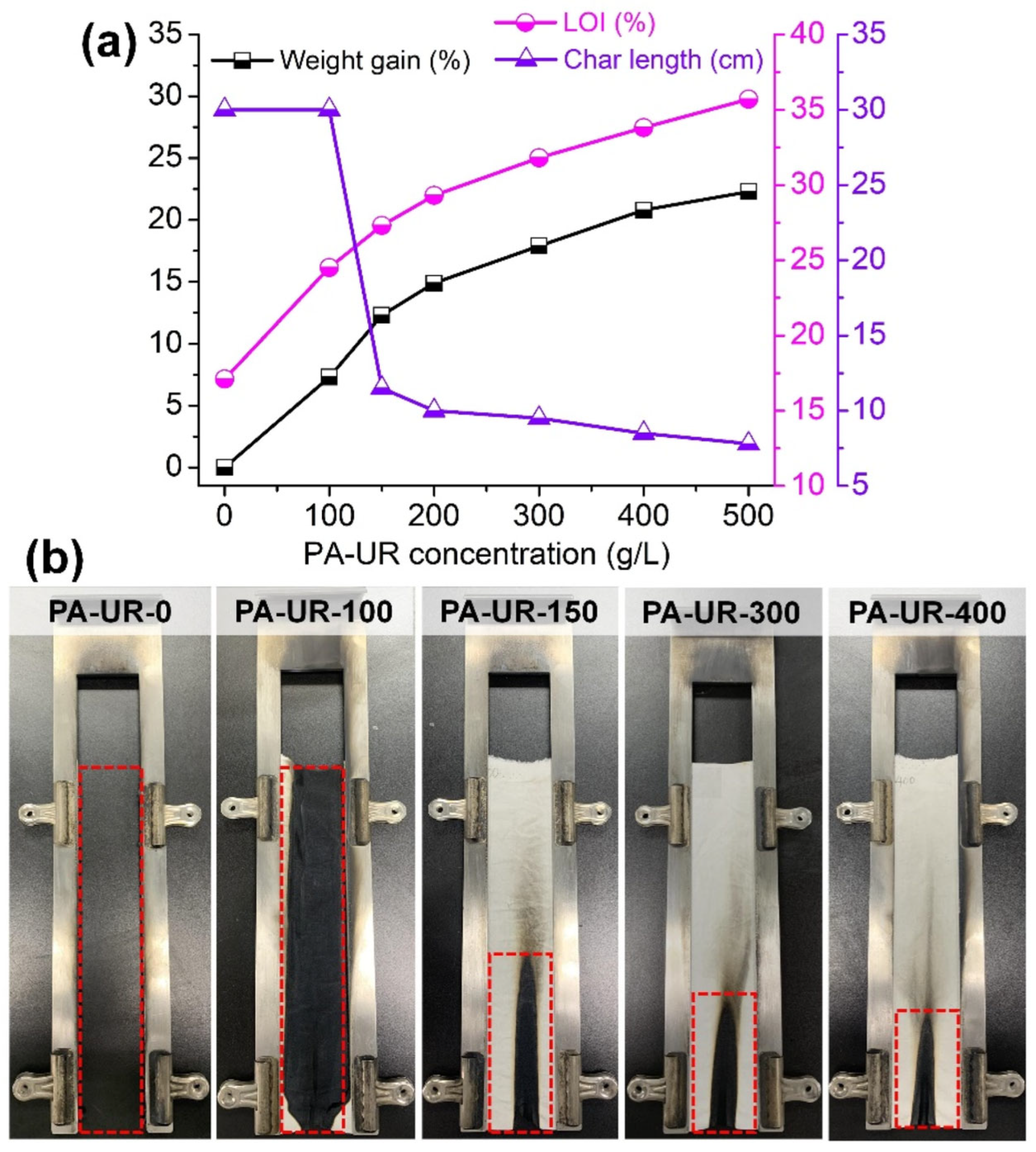
- Li, S.; Zhao, F.; Wang, X.; Liu, Z.; Guo, J.; Li, Y.; Tan, S.; Xin, Z.; Zhao, S.; Li, L. A Green Flame Retardant Coating Based on One-Step Aqueous Complexation of Phytic Acid and Urea for Fabrication of Lightweight and High Toughness Flame Retardant EPS Insulation Board. Polym. Degrad. Stab. 2024, 219, 110597. [Google Scholar] [CrossRef]
- Chen, S.; Zeng, Y.; Bi, W.; Zhuo, H.; Zhong, H. Development of a UiO-66 Based Waterborne Flame-Retardant Coating for PC/ABS Material. Polymers 2024, 16, 275. [Google Scholar] [CrossRef]
- Wang, H.; Lin, Y.; Sun, J.; Wang, X.; Yu, H.; Deng, K.; Zeng, R. Phytic Acid/Sodium Alginate Coating to Enhance Flame Retardancy of Rigid Polyurethane Foam: A Novel Strategy for Fire Safety. J. Appl. Polym. Sci. 2025, 142, e56842. [Google Scholar] [CrossRef]
- Cai, W.; Lin, B.; Qi, L.; Cui, T.; Li, Z.; Wang, J.; Li, S.; Cao, C.; Ziaur, M.; Hu, X.; et al. Bio-Based and Fireproof Radiative Cooling Aerogel Film: Achieving Higher Sustainability and Safety. Chem. Eng. J. 2024, 488, 150784. [Google Scholar] [CrossRef]
- Gong, L.; An, X.; Ma, C.; Wang, R.; Zhou, X.; Liu, C.; Li, N.; Liu, Z. Double Cross-Linked Biomass Aerogels with Enhanced Mechanical Strength and Flame Retardancy for Construction Thermal Insulation. Int. J. Biol. Macromol. 2024, 281, 136304. [Google Scholar] [CrossRef] [PubMed]
- Liu, J.; Zhan, H.; Song, J.; Wang, C.; Zhao, T.; Fu, B. Facile Construction of Flame-Resistant and Thermal-Insulating Sodium Alginate Aerogel Incorporating N- and P-Elements. Polymers 2024, 16, 2814. [Google Scholar] [CrossRef]
- Varamesh, A.; Zhu, Y.; Hu, G.; Wang, H.; Rezania, H.; Li, Y.; Lu, Q.; Ren, X.; Jiang, F.; Bryant, S.L.; et al. Fully Biobased Thermal Insulating Aerogels with Superior Fire-Retardant and Mechanical Properties. Chem. Eng. J. 2024, 495, 153587. [Google Scholar] [CrossRef]
- Liu, E.; Nie, H.; Zhang, H.; Chang, Y.; Ren, Y.; Chen, Z. Biomimetic Aerogels of Small Intestinal Villi Guided by Biobased Electrolyte Ligands: High Flame Retardation, Heat Insulation, Antibacterial and Degradation Performance. Chem. Eng. J. 2025, 504, 158665. [Google Scholar] [CrossRef]
- Chen, M.; Zhu, J.; Zhang, K.; Zhou, H.; Gao, Y.; Fan, J.; Chen, R.; Wang, H. Carbon Nanofiber/Polyaniline Composite Aerogel with Excellent Electromagnetic Interference Shielding, Low Thermal Conductivity, and Extremely Low Heat Release. Nano-Micro Lett. 2025, 17, 80. [Google Scholar] [CrossRef]
- Wang, C.; Yu, B.; Zhao, T.; Yang, F.; Chen, M.; Zhu, X.; Cai, Z.; Fu, B. Chitosan Cryogels Incorporated with Phytic Acid-Modified UiO-66-NH2 for Enhanced Flame-Retardant Performance. Carbohydr. Polym. 2025, 353, 123259. [Google Scholar] [CrossRef]
- Wang, S.; Yan, G.; Zheng, Y.; Jiao, Y.; Xu, J. Full Biomass-Based Polylactic Acid (PLA) Aerogel with Robust Flame Retardancy and Long-Term Early Fire Warning. Colloids Surf. A Physicochem. Eng. Asp. 2025, 717, 136811. [Google Scholar] [CrossRef]
- Xu, J.; Su, X.; Xue, D.; Li, X.; Wang, R.; Sun, Y.; Deng, Z.; Jiang, H.; Su, Z.; Zhu, L.; et al. A Dual-Nucleophilic Ester-Induced Supramacromolecular Fire-Proof Hydrogel Coating for Protecting Polymers. J. Colloid Interface Sci. 2025, 682, 849–863. [Google Scholar] [CrossRef] [PubMed]
- Li, X.; Li, A.; Xun, M.; Cui, S.; Sun, K.; Peng, H. A Pullulan Polysaccharide-Based Flame-Retardant Polyelectrolyte Hydrogel for High-Safety Flexible Zinc Ion Capacitors. Int. J. Biol. Macromol. 2025, 284, 138037. [Google Scholar] [CrossRef]
- Pan, Y.; Wang, W.; Zhang, D.; Lü, T. Construction of a Continuous Flame-Retardant Network Made from Wood in Epoxy Resin. Cellulose 2024, 31, 8311–8319. [Google Scholar] [CrossRef]
- Yang, Y.; Yang, H.; Huo, H.; Shi, H.; Ran, X. Bio-Based Hybrid Adhesive with Superior Bonding Strength and Excellent Flame Retardancy. Ind. Crop. Prod. 2024, 222, 120079. [Google Scholar] [CrossRef]
- Bao, X.; Li, X.; Zhong, Y.; Fan, S.; Huang, Z.; Guan, X.; Chen, X.; Lin, J. Enhancing Flame-Retardant and Smoke-Suppression Properties of Wooden Materials with Phytic Acid-Added Composite Flame Retardants. Ind. Crops Prod. 2024, 220, 119223. [Google Scholar] [CrossRef]
- Wang, X.; Zhang, S.; Wang, M.; Cao, J. Enhancing Water Resistance and Flame Retardancy of Wood through Phytic Acid Catalyzed In-Situ Polyesterification. Ind. Crop. Prod. 2024, 215, 118647. [Google Scholar] [CrossRef]
- Fan, Z.; Wang, X.; Yu, L.; Liu, Y.; Yang, G.; Guo, H. 2D Mesh-Knots Metal Organic Frameworks Functionalized with Phytic Acid for Improving Flame Retardancy. J. Mol. Struct. 2025, 1321, 14006. [Google Scholar] [CrossRef]
- Liang, Y.; Xu, J.; Ahmed, N.; Shi, J.; Wen, M.; Yan, N. Construction of Biomass-Based Flame-Retardant, Antimicrobial and Hydrophobic Wood Coatings with POSS Organic-Inorganic Nanoparticles. Eur. Polym. J. 2024, 219, 113370. [Google Scholar] [CrossRef]
- Tang, D.; He, Y.; Sun, H.; Li, X.; Liu, Y.; Wang, Q. Economical Electrostatic Assembly of Halogen-Free Coatings Imparting Hydrophobic, Flame-Retardant, and Fuel-Recycling Properties to Wood Pulp Paper. Ind. Crop. Prod. 2024, 222, 120078. [Google Scholar] [CrossRef]
- Yan, C.; Fang, Y.; Yang, R.; Yan, M.; Wang, W.; Song, Y.; Wang, Q. A Novel Organic-Inorganic Hybrid Ceramicizable Intumescent Coating for Wood Fire Protection. Prog. Org. Coat. 2025, 200, 109037. [Google Scholar] [CrossRef]
- Wu, H.; Wen, T.; Ding, Q.; Zhang, J.; Du, G.; Charrier, B.; Essawy, H.; Pizzi, A.; Yuan, Z.; Zhou, X.; et al. A Sustainable Adhesive via One-Pot Simple Preparation Derived from Bio-Sourced Phytic Acid and Corn Starch for Green Wood Panels: Ideal Bonding Performance and Ultra-High Flame Retardancy. Chem. Eng. J. 2025, 508, 161026. [Google Scholar] [CrossRef]
- Fan, Z.; Li, Y.; He, J.; Song, B.; Chang, M. Bio-Based Intelligent Multifunctional Coating for Wood: Flame Retardancy, Fire Warning, Smoke Suppression, Thermal Insulation and Antibacterial Activity. Constr. Build. Mater. 2025, 465, 140244. [Google Scholar] [CrossRef]
- Fan, Z.; He, J.; Fang, X.; Yang, G.; Guo, H. Biomimetic Mineralization Self-Assembled Biobased Functional Wood: Improving the Flame Retardant, Hydrophobic, and Catalytic Detoxification Properties of Sustainable Green Building Materials. Chem. Eng. J. 2025, 509, 161431. [Google Scholar] [CrossRef]
- Wei, A.; Wang, S.; Lu, X.; Zou, Y.; Xiang, C.; Xu, F.; Sun, L.; Lu, Y. Construction of Durable Biomass-Based Flame Retardant with High Phosphorus and Nitrogen Contents for Wood Coatings. Polym. Degrad. Stab. 2025, 232, 111160. [Google Scholar] [CrossRef]
- Gu, K.; Zhang, X.; Dong, Z.; Chen, H.; Xu, M.; Sun, Z.; Han, S.; Zhang, J.; Yu, Y.; Hou, J. Deep Learning-Aided Preparation and Mechanism Revaluation of Waste Wood Lignocellulose-Based Flame-Retardant Composites. Int. J. Biol. Macromol. 2025, 306, 141690. [Google Scholar] [CrossRef] [PubMed]
- Shen, H.; Yu, M.; Wang, P.; Chu, D.; Liu, S. Multifunctional Wood Composites Featuring Synergistic Flame Retardant, Smoke Suppression, and Superhydrophobic Functionalities. Ind. Crops Prod. 2025, 228, 120852. [Google Scholar] [CrossRef]
- Yan, C.; Fang, Y.; Yang, R.; Yan, M.; Wang, W.; Song, Y.; Wang, Q. Preparation of Amino Wood Coatings with Superior Flame Retardancy, Smoke Suppression, and Transparency Using Fully Bio-Based Flame Retardants. Polym. Degrad. Stab. 2025, 234, 111213. [Google Scholar] [CrossRef]
- Shi, X.; Jing, C.; Luo, H.; Shi, H.; Wang, D. A Flame Retardant Coating Based on Amino Acid and Phytic Acid for Cotton Fabrics. Polym. Degrad. Stab. 2024, 230, 111069. [Google Scholar] [CrossRef]
- Yan, C.; Yang, M.; Cao, J.; Zhao, Y.; Yu, C.; Zhao, H. Bio-Based Phytic Acid/Amino Acid Complex Coating for Antimicrobial and Flame-Retardant Cotton Fabrics. Int. J. Biol. Macromol. 2024, 269, 132135. [Google Scholar] [CrossRef]
- Wang, Y.; Ren, J.; Ou, M.; Piao, J.; Lian, R.; Cui, J.; Guan, H.; Jiao, C.; Chen, X. Construction of Composite Self-Assembly Coating Based on Chitosan for Enhancing the Flame-Retardant and Antibacterial Performances of Cotton Fabric. Int. J. Biol. Macromol. 2024, 275, 133355. [Google Scholar] [CrossRef]
- Wu, J.; Wu, L.; Xu, P.; Fang, Y.; Liu, J. Construction of Multifunctional Coating for Polyester/Cotton Fabrics Using Layer-by-Layer Assembly of Biomaterials and Spraying of Fluorine-Free Polydimethylsiloxane. Ind. Crop. Prod. 2024, 219, 119083. [Google Scholar] [CrossRef]
- Safdar, F.; Ashraf, M.; Abid, A.; Javid, A.; Iqbal, K. Eco-Friendly, Efficient and Durable Flame Retardant Coating for Cotton Fabrics Using Phytic Acid/Silane Hybrid Sol. Mater. Chem. Phys. 2024, 311, 128568. [Google Scholar] [CrossRef]
- Fang, Y.; Qi, D.; Wu, L. Flame Retardant Cotton Fabrics with Ultra-Fast and Long-Term Fire Early Warning Response. Int. J. Biol. Macromol. 2024, 271, 132673. [Google Scholar] [CrossRef] [PubMed]
- Li, Q.; Zong, Y.; Jiang, Y.; Zhang, J.; Zhao, R.; Chen, J.; Shi, Y.; Tan, L. Functionalization of Cotton Fabrics through PEI/PA/FeAl Ternary System with Enhanced Flame Retardance and Antibacterial Properties. Cellulose 2024, 31, 6517–6533. [Google Scholar] [CrossRef]
- Yang, X.; Li, X.; Guo, W.; Mohammadi, A.; Shabestari, M.E.; Li, R. Advanced Phosphorus–Protein Hybrid Coatings for Fire Safety of Cotton Fabrics, Developed Through the Layer-by-Layer Assembly Technique. Polymers 2025, 17, 945. [Google Scholar] [CrossRef]
- Bao, Q.; Tian, Y.; Cong, W. Bio-Inspired Fabrication of Multifunctional Cotton Fabric with Durable Flame Retardancy and Superhydrophobicity for Oil-Water Separation Application. Cellulose 2025, 32, 1149–1169. [Google Scholar] [CrossRef]
- Islam, T.; Mahiuddin, S.; Raktim, R.; Tanvir, R. Nature-Based Flame-Retardant Finish for Cotton Fabric Using Banana Pseudostem Saps. Cellulose 2025, 32, 3483–3495. [Google Scholar] [CrossRef]
- Zhu, W.; Xu, S.; Yang, X.; Song, K.; Liu, S.; Wang, S. Synergistic Effect of the Phytic Acid-Halamine as a Novel Durability, Antibacterial and Flame Retardant System for Cotton Fibers. Sci. Total Environ. 2025, 971, 179095. [Google Scholar] [CrossRef] [PubMed]
- Wang, B.; Zhang, L.; Song, W.; Liu, Y. Alkaline Amino Acid Modification Based on Biological Phytic Acid for Preparing Flame-Retardant and Antibacterial Cellulose-Based Fabrics. Int. J. Biol. Macromol. 2024, 276, 134002. [Google Scholar] [CrossRef]
- Wang, B.; Song, W.; Sun, Y.; Yang, J.; Liu, Y. A Higher Durability Flame Retardant for Regenerated Cellulose Fabrics Based on Fully Bio-Based Phytic Acid and L-Arginine. Int. J. Biol. Macromol. 2025, 308, 142377. [Google Scholar] [CrossRef]
- Dong, X.T.; Wang, T.C.; Wang, F.; Fang, Y.; Song, Y. Construction of Adenosine Triphosphate/Phytic Acid/Dicyandiamide Lyocell Fabrics with High Fire Safety and Well Wearing Property. Cellulose 2025, 32, 1237–1251. [Google Scholar] [CrossRef]
- Zou, P.; Liu, Z.; Yang, D.; Li, Y.; Li, L.; Liu, M.; Xu, J. Electrostatically Self-Assembled N/P Synergistic Flame-Retardant Lyocell Fabric with Superior Fire Alarm Performance. Colloids Surf. A Physicochem. Eng. Asp. 2025, 717, 136854. [Google Scholar] [CrossRef]
- Ishak, A.; Longuet, C.; Otazaghine, B.; Sonnier, R. Enhancing Flame Retardancy of Flax Fabrics through Phytic Acid Grafting. ACS Appl. Polymer Mater. 2024, 6, 5642–5652. [Google Scholar] [CrossRef]
- Ao, X.; Crouse, R.; Guerrero-mu, G. A Facile Biomass-Based Coating for Flax Fabric toward Plant Fiber/Biobased Epoxy Composite with Enhanced Fire Safety. Polym. Degrad. Stab. 2025, 231, 111057. [Google Scholar] [CrossRef]
- Yang, J.; Sun, Y.; Song, W.; Liu, Y. A Novel Phosphorus/Boron-Containing Flame Retardant for Improving the Flame Retardancy of Ramie Fiber Reinforced Epoxy Composites. Constr. Build. Mater. 2024, 451, 138814. [Google Scholar] [CrossRef]
- Kulkarni, S.; St, J.; Xia, Z.; Bouldin, R.; Kumar, J.; Mosurkal, R.; Nagarajan, R. Advanced Multifunctional Fabrics Enabled by Bioinspired Coatings. Prog. Org. Coat. 2024, 197, 108737. [Google Scholar] [CrossRef]
- Yu, Z.; Zhu, Z.; Zhang, Y.; Li, X.; Liu, X.; Qin, Y.; Zheng, Z. Biodegradable and Flame-Retardant Cellulose-Based Wearable Triboelectric Nanogenerator for Mechanical Energy Harvesting in Firefighting Clothing. Carbohydr. Polym. 2024, 334, 122040. [Google Scholar] [CrossRef]
- Liu, J.; Qi, P.; Chen, F.; Zhang, J.; Li, H.; Sun, J.; Gu, X. A Universal Eco-Friendly Flame Retardant Strategy for Polylactic Acid Fabrics and Other Polymer Substrates. Int. J. Biol. Macromol. 2024, 260, 129411. [Google Scholar] [CrossRef] [PubMed]
- Wu, Y.; Chai, Y.; Yu, L.; Gao, W.; Bai, Y. Eco-Friendly Flame-Retardant Polyamide 6 Fabrics with Balanced Flame Retardant and Mechanical Strength via Composite Synergies. Prog. Org. Coat. 2025, 204, 109165. [Google Scholar] [CrossRef]
- Ding, F.; Maddalena, L.; Ren, X.; Carosio, F. Flame Retardant Behavior and Smoke Suppression of Gelatin/Phytic Acid/Clay Complexes on PET Fabric. Prog. Org. Coat. 2025, 200, 108969. [Google Scholar] [CrossRef]
- Ma, X.; Zhang, Y.; Yu, H.; Jia, B.; Wang, X.; Chen, X. Enhancing Flame Retardancy, Antibacterial Activity and UV Resistance of Polyamide 66 Fabric by Fully Biobased Intumescent Flame-Retardant Nanocellulose Coating. Int. J. Biol. Macromol. 2024, 283, 137994. [Google Scholar] [CrossRef]
- Wang, Y.; Zhang, Y.; Du, J.; Tao, Y.; Hu, J.; Lv, Y.; Lu, J.; Fu, C.; Wang, H.; Yuan, Z. A Novel Iron Ion Cross-Linking Strategy Dramatically Improves the Strength and Flame Retardant of Degradable Foams from Rice Straw Fibers. Adv. Compos. Hybrid Mater. 2025, 8, 11. [Google Scholar] [CrossRef]
- Yu, J.; Sun, L.; Ding, L.; Cao, Y.; Liu, X.; Ren, Y.; Li, Y. A UV-Curable Coating Constructed from Bio-Based Phytic Acid, D-Sorbitol and Glycine for Flame Retardant Modification of Rigid Polyurethane Foam. Polym. Degrad. Stab. 2024, 227, 110892. [Google Scholar] [CrossRef]
- Liu, M.; Huang, R.; Shi, Y.; Xu, P.; Xie, S.; Fu, L.; Gao, J.; Tang, L. Fabrication of Fire-Retardant and Impact-Resistant Hierarchical Rigid Porous Composites via Surface Coating Strategy. ACS Appl. Polym. Mater. 2024, 6, 7254–7264. [Google Scholar] [CrossRef]
- Duan, X.; Zhu, J.; Li, C.; Fang, H.; Zhou, W.; Xu, S. Assembly of Phytic Acid-Ni2+ via Bionic Poly-Dopamine-Mediated to Construct a Core-Shell MgCO3 for Fire-Safe EVA Composites. Compos. Commun. 2025, 56, 102340. [Google Scholar] [CrossRef]
- Li, D.; Feng, M.; Cai, H.; Zhang, Y.; Yao, H.; Zhang, Z.; Bao, J.; Bu, X.; Zhou, Y. Ammonium Polyphosphate@Melamine Phytate-Layered Double Hydroxides: A Loaded Core–Shell Flame Retardant for Flame Retardancy and Smoke Suppression in Polypropylene. New J. Chem. 2024, 48, 10432–10445. [Google Scholar] [CrossRef]
- Zhang, X.; Wang, Z.; Ding, S.; Wang, Z.; Xie, H. Fabrication of Flame-Retardant Ammonium Polyphosphate Modified Phytic Acid-Based Rigid Polyurethane Foam with Enhanced Mechanical Properties. Polymers 2024, 16, 2229. [Google Scholar] [CrossRef]
- Zhang, X.; Wang, Z.; Ding, S.; Wang, Z. Fabrication of Nickel Phytate Modified Bio-Based Polyol Rigid Polyurethane Foam with Enhanced Compression-Resistant and Improved Flame-Retardant. Sci. Rep. 2024, 14, 16651. [Google Scholar] [CrossRef]
- Lu, Y.; Feng, J.; Chu, T.; Huo, S.; Xie, H.; Xu, Z.; Wang, H.; Song, P. A 2D Biobased P/N-Containing Aggregate for Boosting Fire Retardancy of PA6/Aluminum Diethylphosphinate via Synergy. J. Mater. Sci. Technol. 2024, 198, 73–82. [Google Scholar] [CrossRef]
- Kong, Z.; Chen, Y.; Ye, T.; Hao, J.; Shi, H.; Hao, F.; Zheng, R. Comparison of Blending and Bonding of Phytic Acid Arginine Salt and Cellulose Nanofibers on Their Synergistic Flame-Retardant Effect in Poly (Butylene Succinate). Int. J. Biol. Macromol. 2025, 294, 139331. [Google Scholar] [CrossRef]
- Kang, M.-M.; He, X.; Cui, J.; Wang, J.; Hu, W.; Zhu, L.; Shao, Z.-B. Aldehyde-Free and Bio-Based Durable Coatings for Cellulose Fabrics with High Flame Retardancy, Antibacteria and Well Wearing Performance. Int. J. Biol. Macromol. 2024, 258, 128744. [Google Scholar] [CrossRef]
- Liu, Y.-W.; Hu, B.-Q.; Guan, J.-P.; Cheng, X.-W.; Chen, R. Biomass Phytate Salt-Based Flame-Retardant Polyurethane Coating for Outdoor Polyester Fabric: A Long-Lasting Solution. Polym. Test. 2024, 135, 108467. [Google Scholar] [CrossRef]
- Li, H.; Zheng, Z.; Liu, Y.; Wang, H.; Zheng, Z. Construction of Fully Bio-based Flame Retardant and Antibacterial Coating on Polyester Fabric with Chitosan and Ammonium Phytate. J. Appl. Polym. Sci. 2024, 141, e55940. [Google Scholar] [CrossRef]
- Zhou, C.; Ma, Y.; Rong, H.; Yu, X.; Liu, S.; Deng, L.; Zhang, J.; Li, S.; Dong, A. Cotton Fabric with Durable Flame Retardancy, Robust Superhydrophobicity and Reliable UV Shielding. Cellulose 2024, 31, 10025–10043. [Google Scholar] [CrossRef]
- Wu, C.; Wu, Z.-X.; Long, S.-J.; Luo, X.; Cheng, X.-W.; Guan, J.-P. Covalent Grafting of Reactive Phytate Salt for Durable Flame-Retardant Functionalization of Protein Silk Fabric. Int. J. Biol. Macromol. 2024, 283, 137956. [Google Scholar] [CrossRef]
- Wu, C.; Lu, L.; Wu, Z.; Cheng, X.; Guan, J. Fully Biobased Approach for Sustainable Flame Retardancy, Antibacterial and Anti-UV Modification of Silk Fabric. Ind. Crop. Prod. 2024, 222, 119557. [Google Scholar] [CrossRef]
- Liu, H.; Li, P.; Xu, Y.-J.; Zhu, P.; Liu, Y. Eco-Friendly Flame-Retardant Coatings Based on γ-Ureidopropyltriethoxysilane for Cotton Fabrics with Improved Flame Retardancy and Mechanical Properties. Sustain. Mater. Technol. 2024, 39, e00821. [Google Scholar] [CrossRef]
- Dong, S.; Huang, Y.-T.; Zhang, X.; Cheng, S.-S.; Cheng, X.-W.; Guan, J.-P. Enhancing the Flame Retardancy of Polyester/Cotton Blend Fabrics Using Biobased Urea–Phytate Salt. Materials 2024, 17, 1346. [Google Scholar] [CrossRef]
- Cheng, X.-W.; Liu, Y.-W.; Jin, J.-H.; Guan, J.-P.; Chen, R. Metallic Phytates Modified Polyurethane Coating for Constructing Long-Lasting Flame-Retardant Outdoor Polyester Fabric. Prog. Org. Coat. 2024, 188, 108205. [Google Scholar] [CrossRef]
- Liu, H.; Li, P.; Zhu, P.; Liu, Y. Preparation and Properties of Flame Retardant and Hydrophobic Cotton Fabrics Based on Poly-(Dimethylsiloxane-Co-Diphenylsiloxane, Dihydroxy Terminated)/Ammonia Phytate. Int. J. Biol. Macromol. 2024, 268, 131750. [Google Scholar] [CrossRef]
- Cheng, X.-W.; Song, J.-Y.; Wang, Z.-Y.; Guan, J.-P.; Zhu, Y.-W. Multifunctional Coating for Polyester/Spandex Fabric with Phytate Salt Doped Carbon Black Dispersion. Colloids Surf. A Physicochem. Eng. Asp. 2025, 706, 135809. [Google Scholar] [CrossRef]
- Cheng, X.-W.; Yao, Y.-F.; Meng, C.-W.; Liu, Y.-W.; Guan, J.-P. Sustainable Phytate Salt as Phosphorus-and Nitrogen-Rich Flame-Retardant for Polyurethane-Coated Polyamide 6 Fabric. Colloids Surf. A Physicochem. Eng. Asp. 2025, 709, 136169. [Google Scholar] [CrossRef]
- Zhang, X.; Li, R.; Sun, S.; Wang, Z.; Xie, H. Effect of Prepared Barium Phytate on Thermal Stability and Combustion Properties of Flexible Polyurethane Foams. Fire Mater. 2024, 48, 483–494. [Google Scholar] [CrossRef]
- Kang, F.; Zhang, T.; Deng, J.; Zhang, L.; Bai, Z.; Pan, J. Effect of Melamine-Modified Zinc Phytate on the Flame Retardancy and Smoke Suppression of Silicone Rubber Foams. J. Appl. Polym. Sci. 2025, 142, e57018. [Google Scholar] [CrossRef]
- Gao, Y.; Feng, S.; Yan, L.; Chu, T.; Wang, Z.; Xiao, J.; Xie, H.; Zhang, J.; Wang, Z. Flame Retardancy of Densified Wood Modified by Bio-Material Based Flame Retardant. Fire Technol. 2024, 60, 3671–3688. [Google Scholar] [CrossRef]



| Polymeric System | Flame-Retardant Additives and Strategies | Fire Performance (in Comparison with Pristine System) | Ref. |
|---|---|---|---|
| Polyurethane coatings | Phytic acid-coated zinc oxide nanoparticles |
| [84] |
| Polyvinyl alcohol-based films | Polyelectrolyte complex of N-(2-hydroxyl) -propyl-3-trimethylammonium chitosan chloride and phytic acid |
| [78] |
| Polyvinyl alcohol/starch bioplastics | Phytic acid and dialdehyde starch |
| [80] |
| Polyurea coating | Double-shell microcapsules, made of melamine resin and phytic acid/chitosan hybrids |
| [102] |
| Ethylene vinyl acetate copolymer | Hybrids made by growing silver nanoparticles on 2D molybdenum disulfide; subsequent coating of the hybrids with phytic acid | Decrease in pHRR, THR, and TSR (by 48, 43, and 41%, respectively) | [60] |
| Ethylene vinyl acetate copolymer | Silver nanoparticles modified with MXene, then coating them with phytic acid | Decrease in pHRR (by 30%) and TSP (28%) | [61] |
| Poly(lactic acid) | Structures based on phytic acid, terephthalic dihydrazide, and iron salts |
| [87] |
| Poly(lactic acid) | Intumescent filler based on phytic acid, chitosan, and resveratrol |
| [90] |
| Poly(lactic acid) | A system based on phytic acid and 2-aminothiazole |
| [91] |
| Polypropylene | ZIF-67 and phytic acid | Reduction in HRR, TSP, and SEA (by 53, 22, and 19%, respectively) | [63] |
| Aerogel composed of (hydroxypropyl)methyl cellulose-methyltrimethoxysilane | Protonated polyethyleneimine- phytic acid ligands |
| [111] |
| Poly(lactic acid)-based aerogel | Phytic acid and hydroxyapatite |
| [114] |
| Epoxy resin | Halloysite nanotubes functionalized with a coating made of phytic acid, polyaniline, and CoFe-Prussian blue analog nanoparticles |
| [100] |
| Epoxy resin | Diatomite with melamine formaldehyde-phytic acid |
| [66] |
| Epoxy resin | Phytic acid-modified UiO-66 self-assembled onto MXene nanosheets | Lower pHRR (by 32%) and pSPR (by 36%) | [70] |
| Polymeric System | Flame-Retardant Additives and Strategies | Fire Performance (in Comparison with Pristine System) | Ref. |
|---|---|---|---|
| Wood | Coating made of amino resin with tannic acid and phytic acid, containing glass powders or silica | LOI of around 49.8% Reduction in THR and TSP (both by 79%) | [124] |
| Wood | Coating made of chitosan, phytic acid, hydrolyzed collagen, and 2D zeolite | LOI of 29.5% Decrease in first pHRR (by 71%), in THR (by 75%), and in second pHRR (by 53%) | [126] |
| Wood | Coating made of melamine resin containing corn starch and phytic acid | Decrease in pHRR (by 31%) and in TSP (by 48%) | [131] |
| Polymeric System | Flame-Retardant Additives and Strategies | Fire Performance (in Comparison with Pristine System) | Ref. |
|---|---|---|---|
| Cotton fabric | Coating made of phosphite lysine and phytic acid |
| [132] |
| Cotton fabric | Coating treatment based on phytic acid, chitosan, epichlorohydrin-modified aramid nanofibers, ionic liquid, and a solution of Cu ions |
| [134] |
| Cotton fabric | Layer-by-layer assembly composite coating made of carbon nanotubes, graphene oxide, chitosan, and phytic acid |
| [137] |
| Cotton fabric | Impregnation with in situ growth of zeolitic imidazolate framework-8, phytic acid, and spraying of polydimethylsiloxane |
| [140] |
| Cotton fabric | Treatment based on phytic acid and N-halamine |
| [142] |
| Lyocell fabrics | Amino acid flame retardants from phytic acid and protein decomposition products (arginine, lysine, histidine) |
| [143] |
| Lyocell fabrics | Phytic acid and L-arginine |
| [144] |
| Flax fabrics | Coating made of phytic acid and chitosan, obtained from polysaccharides |
| [148] |
| Polyamide 6 fabric | Coating made of phytic acid and ethanolamine | 9.2% higher LOI | [153] |
| Polymeric System | Flame-Retardant Additives and Strategies | Fire Performance (in Comparison with Pristine System) | Ref. |
|---|---|---|---|
| Rigid polyurethane foam | Phytic acid, D-sorbitol, and glycine |
| [157] |
| Rigid polyurethane foam composites | Coating made of polyborosiloxane/ phytic acid/polyethylenimine | A decrease in pHRR (70%) and THR (57%) | [158] |
| Polyurethane foam | In situ immobilization of iron phenylphosphinate on the surface of phytic acid activated tung meal-based carbon |
| [75] |
| Rigid polyurethane foam | Aerogel based on phytic acid and sodium alginate |
| [106] |
| Polymeric System | Flame-Retardant Additives and Strategies | Fire Performance (in Comparison with Pristine System) | Ref. |
|---|---|---|---|
| Polyester fabrics | Biomass-derived phytate salt into a waterborne polyurethane coating |
| [166] |
| Silk fabric | Vanillin phytate |
| [169] |
| Cotton fabrics | Eco-friendly coating made of poly(dimethylsiloxane-co-diphenylsiloxane) dihydroxy terminated and ammonia phytate |
| [174] |
| Polyamide 6 fabrics | Four bio-based phytate salts through the ionic reaction of phytic acid with polyhexamethylene biguanidine, polyethyleneimine, melamine, or chitosan |
| [176] |
| Polymeric System | Flame-Retardant Additives and Strategies | Fire Performance (in Comparison with Pristine System) | Ref. |
|---|---|---|---|
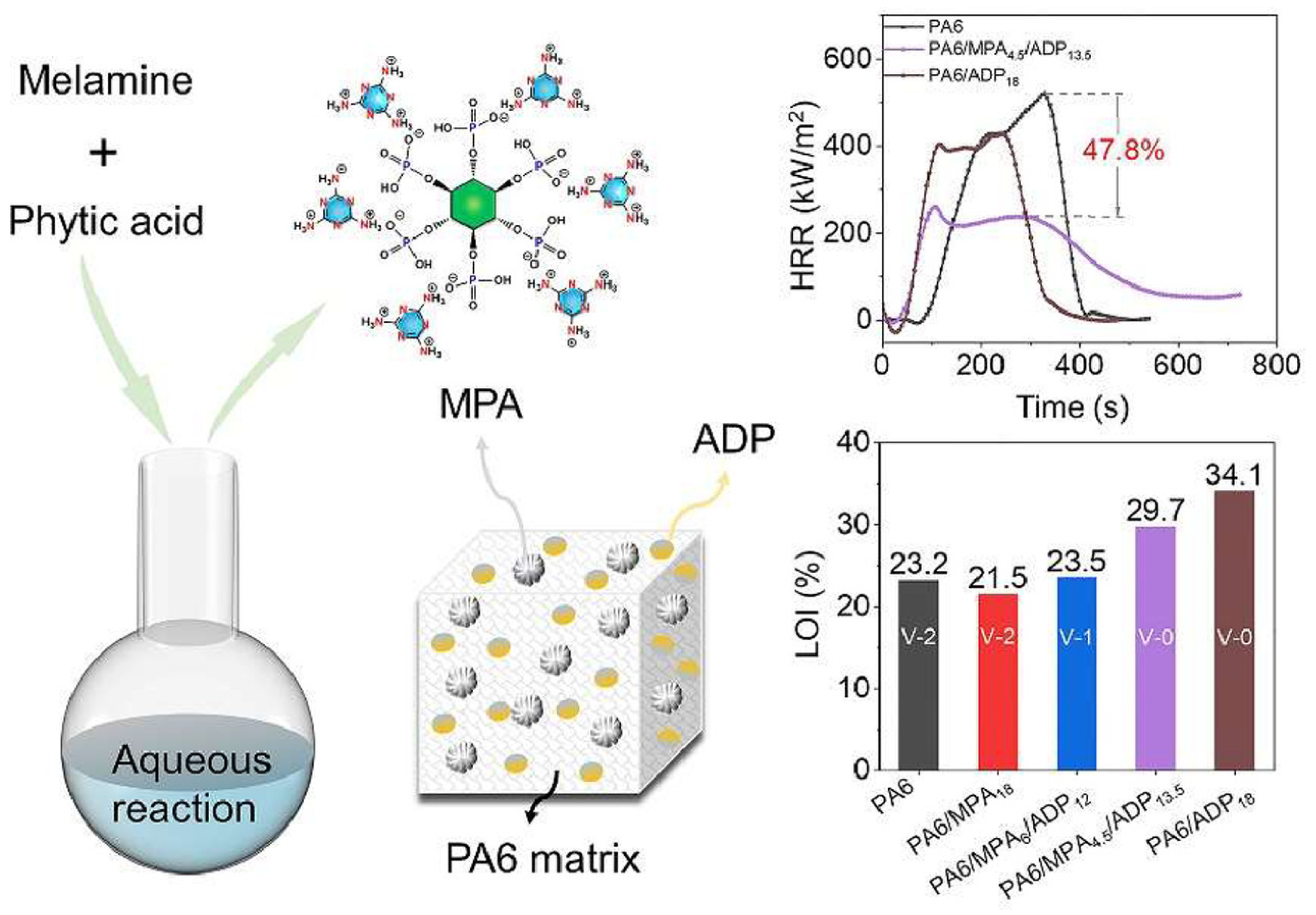
| Polyamide 6 | Melamine-phytate aggregate and aluminum diethylphosphinate |
| [163] |
| Polypropylene | Melamine phytate coated on the surface of ammonium polyphosphate and loaded with layered double hydroxide |
| [160] |
| Rigid poly urethane foam | Soybean oil-based polyol and nickel phytate |
| [162] |
| Flexible polyurethane foams | Barium phytate |
| [177] |
Disclaimer/Publisher’s Note: The statements, opinions and data contained in all publications are solely those of the individual author(s) and contributor(s) and not of MDPI and/or the editor(s). MDPI and/or the editor(s) disclaim responsibility for any injury to people or property resulting from any ideas, methods, instructions or products referred to in the content. |
© 2026 by the authors. Licensee MDPI, Basel, Switzerland. This article is an open access article distributed under the terms and conditions of the Creative Commons Attribution (CC BY) license.
Share and Cite
Bifulco, A.; Malucelli, G. Phytic Acid and Its Derivatives as Valuable Flame Retardants for Polymer Systems: Current State of the Art and Perspectives. Polymers 2026, 18, 671. https://doi.org/10.3390/polym18060671
Bifulco A, Malucelli G. Phytic Acid and Its Derivatives as Valuable Flame Retardants for Polymer Systems: Current State of the Art and Perspectives. Polymers. 2026; 18(6):671. https://doi.org/10.3390/polym18060671
Chicago/Turabian StyleBifulco, Aurelio, and Giulio Malucelli. 2026. "Phytic Acid and Its Derivatives as Valuable Flame Retardants for Polymer Systems: Current State of the Art and Perspectives" Polymers 18, no. 6: 671. https://doi.org/10.3390/polym18060671
APA StyleBifulco, A., & Malucelli, G. (2026). Phytic Acid and Its Derivatives as Valuable Flame Retardants for Polymer Systems: Current State of the Art and Perspectives. Polymers, 18(6), 671. https://doi.org/10.3390/polym18060671