Assessing Sustainability in the Textile Sector: A Review of LCA, LCC, and S-LCA Methodologies with a Focus on Polymeric Textile Materials and Circular Strategies Along with Future Perspectives



Abstract
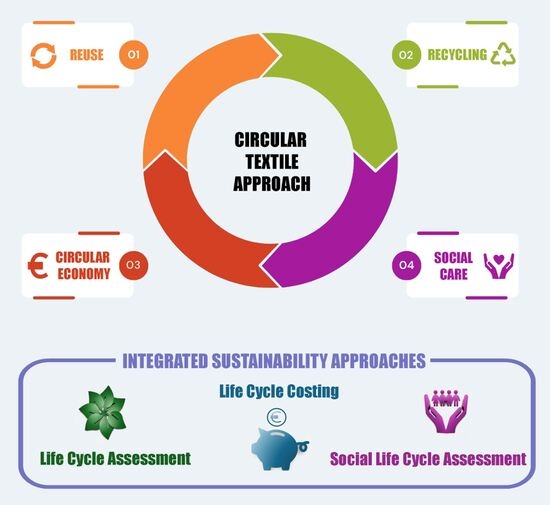
1. Introduction
- (1)
- What are the conceptual foundations and methodological principles of LCA, LCC, and S-LCA in the context of sustainability assessment?
- (2)
- How are LCA, LCC, and S-LCA currently applied in the textile sector?
- (3)
- limitations and research gaps hinder the effective use of life cycle-based tools in supporting circular strategies for polymer-based textiles?
- (4)
- To what extent do existing studies allow for comparability and integration across environmental, economic, and social dimensions?
2. What Are the Conceptual Foundations and Methodological Principles of LCA, LCC, and S-LCA in the Context of Sustainability Assessment?
2.1. Life Cycle Assessment
2.2. Life Cycle Cost Analysis
2.3. Social Life Cycle Analysis
3. How Are LCA, LCC, and S-LCA Currently Applied Across Different Stages of the Textile Value Chain?

| Functional Units | Circular Approach Used | Effect on Environmental Impacts | Reference |
|---|---|---|---|
| Lifecycle of a polyester workwear jacket for at least 4 years |
|
| [47] |
| Lifecycle of a mattress made of natural fiber for at least 10 years |
|
| [48] |
| Lifecycle of a polyester t-shirt for single use |
|
| [49] |
| Lifecycle of cotton jeans for 200 uses |
|
| [50] |
| Lifecycle of a roller-towel for single use |
|
| [51] |
| Lifecycle of insulation panel for cars for at least 10 years |
|
| [52] |
| Lifecycle of a polyester/wool sweater for single use |
|
| [53] |
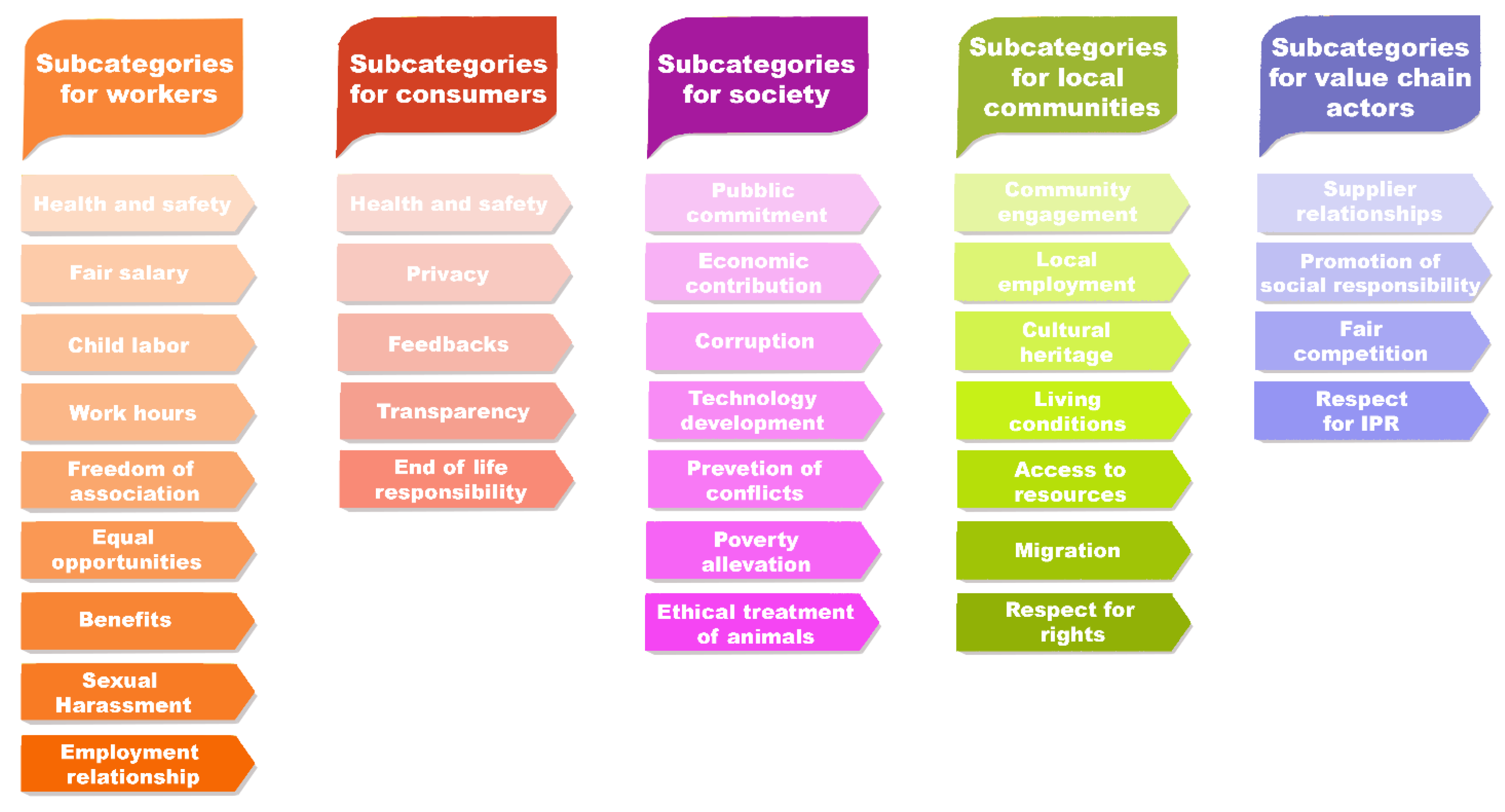
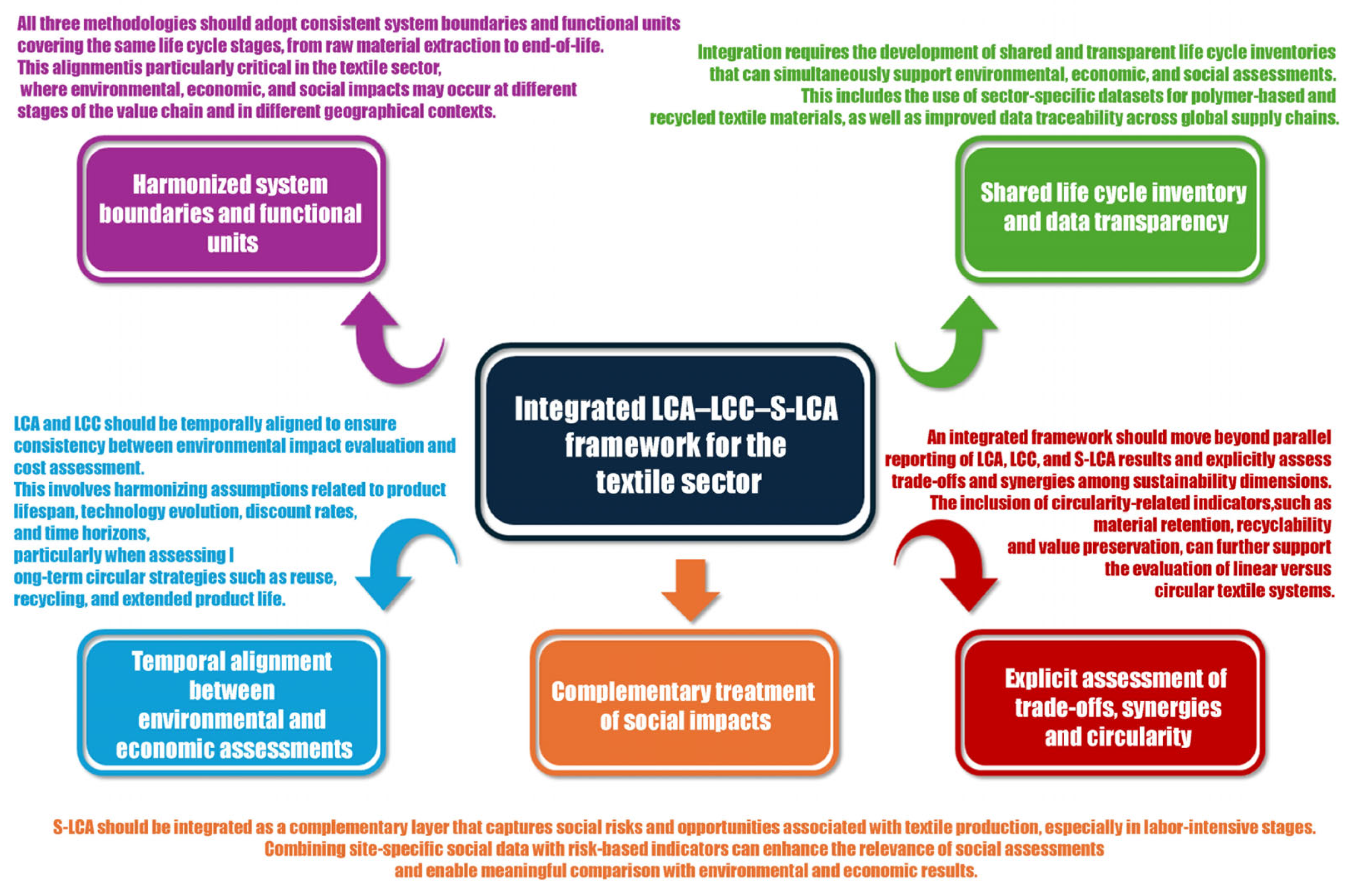
4. To What Extent Do Existing Studies Allow for Comparability and Integration Across Environmental, Economic, and Social Dimensions?
5. What Limitations and Research Gaps Hinder the Effective Use of Life Cycle-Based Tools in Supporting Circular Strategies for Polymer-Based Textiles?
6. Conclusions
Author Contributions
Funding
Institutional Review Board Statement
Data Availability Statement
Acknowledgments
Conflicts of Interest
References
- Alberghini, M.; Hong, S.; Lozano-Sánchez, L.; Korolovych, V.; Huang, Y.; Signorato, F.; Zandavi, H.; Fucetola, C.; Uluturk, I.; Tolstorukov, M.; et al. Sustainable polyethylene fabrics with engineered moisture transport for passive cooling. Nat. Sustain. 2021, 4, 715–724. [Google Scholar] [CrossRef] [Scilit]
- De Felice, F.; Fareed, A.G.; Zahid, A.; Nenni, M.E.; Petrillo, A. Circular economy practices in the textile industry for sustainable future: A systematic literature review. J. Clean. Prod. 2025, 486, 144547. [Google Scholar] [CrossRef] [Scilit]
- Panda, S.K.B.C.; Sen, K.; Mukhopadhyay, S. Sustainable pretreatments in textile wet processing. J. Clean. Prod. 2021, 329, 129725. [Google Scholar] [CrossRef] [Scilit]
- Broega, A.C.; Jordão, C.; Martins, S.B. Textile sustainability: Reuse of clean waste from the textile and apparel industry. In Proceedings of the IOP Conference Series: Materials Science and Engineering, Busan, Korea, 25–27 August 2017; Purpose Led Publishing: Melville, NY, USA, 2017; Volume 254, p. 192006. [Google Scholar]
- Konwar, M. Textile Industry and Its Environmental Impacts: A Review. Indian J. Pure Appl. Biosci. 2020, 8, 134–139. [Google Scholar] [CrossRef] [Scilit]
- Fonseca, A.; Ramalho, E.; Gouveia, A.; Henriques, R.; Figueiredo, F.; Nunes, J. Systematic Insights into a Textile Industry: Reviewing Life Cycle Assessment and Eco-Design. Sustainability 2023, 15, 15267. [Google Scholar] [CrossRef] [Scilit]
- Harris, J. Sustainability and Sustainable Development. Int. Soc. Ecol. Econ. 2003, 1, 1–12. [Google Scholar]
- Khan, M.A. Sustainable development: The key concepts, issues and implications. Keynote Paper Given at the International Sustainable Development Research Conference, 27–29 March 1995, Manchester, UK. Sustain. Dev. 1995, 3, 63–69. [Google Scholar] [CrossRef] [Scilit]
- Alves, L.; Sá, M.; Cruz, E.F.; Alves, T.; Alves, M.; Oliveira, J.; Santos, M.; da Cruz, A.M. A Traceability Platform for Monitoring Environmental and Social Sustainability in the Textile and Clothing Value Chain: Towards a Digital Passport for Textiles and Clothing. Sustainability 2024, 16, 82. [Google Scholar] [CrossRef] [Scilit]
- Edirisinghe, L.G.L.M.; de Alwis, A.A.P.; Wijayasundara, M. Sustainable circular practices in the textile product life cycle: A comprehensive approach to environmental impact mitigation. Environ. Chall. 2024, 16, 100985. [Google Scholar] [CrossRef] [Scilit]
- Becker, A.; Gries, T. Sustainability in the Textile Industry; Springer: Singapore, 2023. [Google Scholar]
- Xu, W.; Jia, F.; Chen, L.; Schoenherr, T. Editorial: Sustainable transition in textile and apparel industry. J. Clean. Prod. 2024, 443, 141081. [Google Scholar] [CrossRef] [Scilit]
- Smith, N.C. Corporate Social Responsibility: Not Whether, But How. Calif. Manage. Rev. 2003, 45, 52–76. [Google Scholar] [CrossRef] [Scilit]
- Hackenhaar, I.C.; Moraga, G.; Thomassen, G.; Taelman, S.E.; Dewulf, J.; Bachmann, T.M. A comprehensive framework covering Life Cycle Sustainability Assessment, resource circularity and criticality. Sustain. Prod. Consum. 2024, 45, 509–524. [Google Scholar] [CrossRef] [Scilit]
- Llatas, C.; Soust-Verdaguer, B.; Passer, A. Implementing Life Cycle Sustainability Assessment during design stages in Building Information Modelling: From systematic literature review to a methodological approach. Build. Environ. 2020, 182, 107164. [Google Scholar] [CrossRef] [Scilit]
- Sala, S.; Amadei, A.; Beylot, A.; Ardente, F. The evolution of life cycle assessment in European policies over three decades. Int. J. Life Cycle Assess. 2021, 26, 2295–2314. [Google Scholar] [CrossRef] [Scilit]
- Mondello, G.; Mistretta, M.; Salomone, R.; Loprieno, A.D.; Cortesi, S.; Mancuso, E. Life Cycle Thinking in decision-making for sustainability: From public policies to private businesses. Energy and Sustainable Economic Development Cover: Cristina Lanari Editorial review: Giuliano Ghisu Printing: ENEA Tecnographic Laboratory-Frascati Resea. In Proceedings of the 12th Italian LCA Network Conference, Messina, Italy, 11–12 June 2018; ISBN 978-88-8286-372-2. [Google Scholar]
- Lujan-Ornelas, C.; Güereca, L.; Franco-Garcia, L.; Heldeweg, M. A Life Cycle Thinking Approach to Analyse Sustainability in the Textile Industry: A Literature Review. Sustainability 2020, 12, 10193. [Google Scholar] [CrossRef] [Scilit]
- Skone, T.J. Governmental Regulations, Guidance, and Standards Employing Life Cycle Analysis. In Encyclopedia of Sustainable Technologies; Abraham, M.A., Ed.; Elsevier: Oxford, UK, 2017; pp. 289–292. [Google Scholar]
- Finnveden, G.; Hauschild, M.Z.; Ekvall, T.; Guinée, J.; Heijungs, R.; Hellweg, S.; Koehler, A.; Pennington, D.; Suh, S. Recent developments in Life Cycle Assessment. J. Environ. Manag. 2009, 91, 1–21. [Google Scholar] [CrossRef] [Scilit] [PubMed]
- Torkayesh, A.E.; Rajaeifar, M.A.; Rostom, M.; Malmir, B.; Yazdani, M.; Suh, S.; Heidrich, O. Integrating life cycle assessment and multi criteria decision making for sustainable waste management: Key issues and recommendations for future studies. Renew. Sustain. Energy Rev. 2022, 168, 112819. [Google Scholar] [CrossRef] [Scilit]
- Mattos Batista de Moraes, F.; Kulay, L.; Trianni, A. Integrating life cycle assessment and ecodesign to improve product effectiveness and environmental performance: A novel approach. Sustain. Prod. Consum. 2025, 55, 76–89. [Google Scholar] [CrossRef] [Scilit]
- Nieminen, E.; Linke, M.; Tobler, M.; Vanderbeke, B. EU COST Action 628: Life cycle assessment (LCA) of textile products, eco-efficiency and definition of best available technology (BAT) of textile processing. J. Clean. Prod. 2007, 15, 1259–1270. [Google Scholar] [CrossRef] [Scilit]
- Vyrkou, A.; Aryblia, M.; Savvakis, N.; Nicacio, I.; Siddique, O.; Arampatzis, G.; Angelis-Dimakis, A. Dynamic vs. real time life cycle assessment. Clean. Environ. Syst. 2025, 18, 100296. [Google Scholar] [CrossRef] [Scilit]
- Mordaschew, V.; Tackenberg, S. The Product Environmental Footprint—A Critical Review. Procedia Comput. Sci. 2024, 232, 493–503. [Google Scholar] [CrossRef] [Scilit]
- Mungcharoen, T.R.U.T. Approach on Life Cycle Costing (LCC) and its benefits What is Life Cycle Costing. 2013. Available online: http://thai-german-cooperation.info/download/201305_ecolabel_1530_thamrongrut_LCC.pdf (accessed on 15 December 2025).
- Gluch, P.; Baumann, H. The life cycle costing (LCC) approach: A conceptual discussion of its usefulness for environmental decision-making. Build. Environ. 2004, 39, 571–580. [Google Scholar] [CrossRef] [Scilit]
- Rizos, V.; Behrens, A.; Kafyeke, T.; Hirschnitz-Garbers, M.; Ioannou, A. The Circular Economy: Barriers and Opportunities for SMEs. In The Circular Economy: Barriers and Opportunities for SMEs. CEPS Working Documents No. 412/September 2015; 2015. Available online: https://cdn.ceps.eu/wp-content/uploads/2015/09/WD412%20GreenEconet%20SMEs%20Circular%20Economy.pdf (accessed on 15 December 2025).
- Bhatnagar, A.; Härri, A.; Levänen, J.; Niinimäki, K. Exploring the role of social life cycle assessment in transition to circular economy: A systematic review. Resour. Conserv. Recycl. 2024, 207, 107702. [Google Scholar] [CrossRef] [Scilit]
- Ashraf, A.I.; Mohareb, E.; Vahdati, M.; Khandakar, A. Social Life Cycle Assessment (S-LCA) of formal and informal waste collectors in decentralized waste to compost facility. Clean. Environ. Syst. 2025, 17, 100284. [Google Scholar] [CrossRef] [Scilit]
- Gunawan, Y.; Matahariza, A.; Putri, W.K. The Dark Side Of Fast Fashion: Examining the Exploitation of Garment Workers in Bangladesh. J. Huk. Peradil. 2023, 12, 441. [Google Scholar] [CrossRef] [Scilit]
- Fidan, F.Ş.; Aydoğan, E.K.; Uzal, N. Comprehensive analysis of social subcategories throughout life cycle assessment approach for the textile industry. Int. J. Life Cycle Assess. 2025, 30, 1464–1479. [Google Scholar] [CrossRef] [Scilit]
- Rosenbaum, E.; Mancini, L.; Vasta, A.; Sala, S.; Dewulf, J. Social Life Cycle Assessment—State of the Art and Challenges for Product Policy Support; Publications Office of the European Union: Luxembourg, 2015. [Google Scholar]
- Bianco, I.; Picerno, G.; Blengini, G.A. Life Cycle Assessment (LCA) of Worsted and Woollen processing in wool production: ReviWool® noils and other wool co-products. J. Clean. Prod. 2023, 415, 137877. [Google Scholar] [CrossRef] [Scilit]
- Muthukumarana, T.T.; Karunathilake, H.P.; Punchihewa, H.K.G.; Manthilake, M.M.I.D.; Hewage, K.N. Life cycle environmental impacts of the apparel industry in Sri Lanka: Analysis of the energy sources. J. Clean. Prod. 2018, 172, 1346–1357. [Google Scholar] [CrossRef] [Scilit]
- Periyasamy, A.P.; Wiener, J.; Militky, J. 4-Life-Cycle Assessment of Denim; The Textile Institute Book Series; Muthu, S.S., Ed.; Woodhead Publishing: Sawston, UK, 2017; pp. 83–110. [Google Scholar]
- Moazzem, S.; Crossin, E.; Daver, F.; Wang, L. Baseline scenario of carbon footprint of polyester T-shirt. J. Fiber Bioeng. Inform. 2018, 11, 1–14. [Google Scholar] [CrossRef] [Scilit]
- Bech, N.M.; Birkved, M.; Charnley, F.; Laumann Kjaer, L.; Pigosso, D.C.A.; Hauschild, M.Z.; McAloone, T.C.; Moreno, M. Evaluating the Environmental Performance of a Product/Service-System Business Model for Merino Wool Next-to-Skin Garments: The Case of Armadillo Merino®. Sustainability 2019, 11, 5854. [Google Scholar] [CrossRef] [Scilit]
- Wiedemann, S.G.; Yan, M.-J.; Henry, B.K.; Murphy, C.M. Resource use and greenhouse gas emissions from three wool production regions in Australia. J. Clean. Prod. 2016, 122, 121–132. [Google Scholar] [CrossRef] [Scilit]
- Abagnato, S.; Rigamonti, L.; Grosso, M. Life cycle assessment applications to reuse, recycling and circular practices for textiles: A review. Waste Manag. 2024, 182, 74–90. [Google Scholar] [CrossRef] [Scilit]
- Dahlbo, H.; Aalto, K.; Eskelinen, H.; Salmenperä, H. Increasing textile circulation—Consequences and requirements. Sustain. Prod. Consum. 2017, 9, 44–57. [Google Scholar] [CrossRef] [Scilit]
- Farrant, L.; Olsen, S.I.; Wangel, A. Environmental benefits from reusing clothes. Int. J. Life Cycle Assess. 2010, 15, 726–736. [Google Scholar] [CrossRef] [Scilit]
- Koligkioni, A.; Parajuly, K.; Sørensen, B.L.; Cimpan, C. Environmental Assessment of End-of-Life Textiles in Denmark. Procedia CIRP 2018, 69, 962–967. [Google Scholar] [CrossRef] [Scilit]
- Payet, J. Assessment of Carbon Footprint for the Textile Sector in France. Sustainability 2021, 13, 2422. [Google Scholar] [CrossRef] [Scilit]
- Moazzem, S.; Wang, L.; Daver, F.; Crossin, E. Environmental impact of discarded apparel landfilling and recycling. Resour. Conserv. Recycl. 2021, 166, 105338. [Google Scholar] [CrossRef] [Scilit]
- Semba, T.; Sakai, Y.; Ishikawa, M.; Inaba, A. Greenhouse Gas Emission Reductions by Reusing and Recycling Used Clothing in Japan. Sustainability 2020, 12, 8214. [Google Scholar] [CrossRef] [Scilit]
- Braun, G.; Som, C.; Schmutz, M.; Hischier, R. Environmental Consequences of Closing the Textile Loop—Life Cycle Assessment of a Circular Polyester Jacket. Appl. Sci. 2021, 11, 2964. [Google Scholar] [CrossRef] [Scilit]
- Glew, D.; Stringer, L.C.; Acquaye, A.A.; McQueen-Mason, S. How do end of life scenarios influence the environmental impact of product supply chains? comparing biomaterial and petrochemical products. J. Clean. Prod. 2012, 29–30, 122–131. [Google Scholar] [CrossRef] [Scilit]
- Horn, S.; Mölsä, K.M.; Sorvari, J.; Tuovila, H.; Heikkilä, P. Environmental sustainability assessment of a polyester T-shirt—Comparison of circularity strategies. Sci. Total Environ. 2023, 884, 163821. [Google Scholar] [CrossRef] [Scilit]
- Levänen, J.; Uusitalo, V.; Härri, A.; Kareinen, E.; Linnanen, L. Innovative recycling or extended use? Comparing the global warming potential of different ownership and end-of-life scenarios for textiles. Environ. Res. Lett. 2021, 16, 54069. [Google Scholar] [CrossRef] [Scilit]
- Mölsä, K.M.; Horn, S.; Dahlbo, H.; Rissanen, M. Linear, reuse or recycling? An environmental comparison of different life cycle options for cotton roller towels. J. Clean. Prod. 2022, 374, 133976. [Google Scholar] [CrossRef] [Scilit]
- dos Santos Pegoretti, T.; Mathieux, F.; Evrard, D.; Brissaud, D.; de França Arruda, J.R. Use of recycled natural fibres in industrial products: A comparative LCA case study on acoustic components in the Brazilian automotive sector. Resour. Conserv. Recycl. 2014, 84, 1–14. [Google Scholar] [CrossRef] [Scilit]
- Wiedemann, S.G.; Biggs, L.; Clarke, S.J.; Russell, S.J. Reducing the Environmental Impacts of Garments through Industrially Scalable Closed-Loop Recycling: Life Cycle Assessment of a Recycled Wool Blend Sweater. Sustainability 2022, 14, 1081. [Google Scholar] [CrossRef] [Scilit]
- Zamani, B.; Sandin, G.; Peters, G.M. Life cycle assessment of clothing libraries: Can collaborative consumption reduce the environmental impact of fast fashion? J. Clean. Prod. 2017, 162, 1368–1375. [Google Scholar] [CrossRef] [Scilit]
- Giungato, P.; Rana, R.L.; Nitti, N.; Cavallari, C.; Tricase, C. Carbon Footprint of Surgical Masks Made in Taranto to Prevent SARS-CoV-2 Diffusion: A Preliminary Assessment. Sustainability 2021, 13, 9296. [Google Scholar] [CrossRef] [Scilit]
- Snigdha, H.M.; Bandyopadhyay, S. Environmental footprints of disposable and reusable personal protective equipment--a product life cycle approach for body coveralls. J. Clean. Prod. 2023, 394, 136166. [Google Scholar] [CrossRef] [Scilit]
- Vozzola, E.; Overcash, M.; Griffing, E. Environmental considerations in the selection of isolation gowns: A life cycle assessment of reusable and disposable alternatives. Am. J. Infect. Control 2018, 46, 881–886. [Google Scholar] [CrossRef] [Scilit]
- Van Der Velden, N.M.; Patel, M.K.; Vogtländer, J.G. LCA benchmarking study on textiles made of cotton, polyester, nylon, acryl, or elastane. Int. J. Life Cycle Assess 2014, 19, 331–356. [Google Scholar] [CrossRef] [Scilit]
- Amicarelli, V.; Bux, C.; Spinelli, M.P.; Lagioia, G. Life cycle assessment to tackle the take-make-waste paradigm in the textiles production. Waste Manag. 2022, 151, 10–27. [Google Scholar] [CrossRef] [Scilit]
- Mehmeti, A.; Abdelhafez, A.A.M.; Ellssel, P.; Todorovic, M.; Calabrese, G. Performance and Sustainability of Organic and Conventional Cotton Farming Systems in Egypt: An Environmental and Energy Assessment. Sustainability 2024, 16, 6637. [Google Scholar] [CrossRef] [Scilit]
- Textile Product Life Cycle Costing (LCC). Available online: https://www.textileschool.com/28891/textile-product-life-cycle-costing-lcc/ (accessed on 15 December 2025).
- Mousavi, K.; Kowsari, E.; Ramakrishna, S.; Chinnappan, A.; Gheibi, M. A Comprehensive Review of Greenwashing in the Textile Industry (Life Cycle Assessment, Life Cycle Cost, and Eco-Labeling). Environ. Dev. Sustain. 2024, 27, 21737–21777. [Google Scholar] [CrossRef] [Scilit]
- Anceschi, A.; Trotta, F.; Zoccola, M.; Caldera, F.; Magnacca, G.; Patrucco, A. From Waste to Worth: Innovative Pyrolysis of Textile Waste into Microporous Carbons for Enhanced Environmental Sustainability. Polymers 2025, 17, 341. [Google Scholar] [CrossRef] [Scilit]
- Fidan, F.Ş.; Aydoğan, E.K.; Uzal, N. Sustainability assessment of denim fabric made of PET fiber and recycled fiber from postconsumer PET bottles using LCA and LCC approach with the EDAS method. Integr. Environ. Assess. Manag. 2024, 20, 2347–2365. [Google Scholar] [CrossRef] [Scilit]
- Fatima, A.; Khan, F.U.; Hussain, M.; Malik, R.N. Sustainability assessment of home textiles made of recycled PET fibre using life cycle assessment and life cycle costing analyses. Sci. Total Environ. 2025, 982, 179652. [Google Scholar] [CrossRef] [Scilit] [PubMed]
- Ratnasingam, J.; Ioras, F.; Bennet, M. Malaysian wooden furniture industry: Study of safety standards, compliance and consequential implications. Int. Wood Prod. J. 2010, 1, 15–20. [Google Scholar] [CrossRef] [Scilit]
- Shahid, S.; Khan, R.E.A. Informal sector economy, child labor and economic growth in developing economies: Exploring the interlinkages. Asian Dev. Policy Rev. 2020, 8, 277–287. [Google Scholar] [CrossRef] [Scilit]
- Lenzo, P.; Traverso, M.; Salomone, R.; Ioppolo, G. Social Life Cycle Assessment in the Textile Sector: An Italian Case Study. Sustainability 2017, 9, 2092. [Google Scholar] [CrossRef] [Scilit]
- Thakker, A.; Sun, D. Sustainable Development Goals for Textiles and Fashion. Environ. Sci. Pollut. Res. 2023, 30, 101989–102009. [Google Scholar] [CrossRef] [Scilit]
- Muñoz-Torres, M.J.; Fernández-Izquierdo, M.Á.; Ferrero-Ferrero, I.; Escrig-Olmedo, E.; Rivera-Lirio, J.M. Social Life Cycle Analysis of Textile Industry Impacts for Greater Social Sustainability of Global Supply Chains. Systems 2023, 11, 8. [Google Scholar] [CrossRef] [Scilit]
- Mármol, C.; Martín-Mariscal, A.; Picardo, A.; Peralta, E. Social Life Cycle Assessment for Industrial Product Development: A Comprehensive Review and Analysis. Heliyon 2023, 9, e22861. [Google Scholar] [CrossRef] [Scilit] [PubMed]
- Liu, Y.; Zhu, L.; Zhang, C.; Ren, F.; Huang, H.; Liu, Z. Life cycle assessment of melange yarns from the manufacturer perspective. Int. J. Life Cycle Assess. 2020, 25, 588–599. [Google Scholar] [CrossRef] [Scilit]
- La Rosa, A.D.; Grammatikos, S.A. Comparative Life Cycle Assessment of Cotton and Other Natural Fibers for Textile Applications. Fibers 2019, 7, 101. [Google Scholar] [CrossRef] [Scilit]
- Kazan, H.; Akgul, D.; Kerc, A. Life cycle assessment of cotton woven shirts and alternative manufacturing techniques. Clean Technol. Environ. Policy 2020, 22, 849–864. [Google Scholar] [CrossRef] [Scilit]
- Fidan, F.Ş.; Aydoğan, E.K.; Uzal, N. An integrated life cycle assessment approach for denim fabric production using recycled cotton fibers and combined heat and power plant. J. Clean. Prod. 2021, 287, 125439. [Google Scholar] [CrossRef] [Scilit]
- Martin, M.; Herlaar, S. Environmental and social performance of valorizing waste wool for sweater production. Sustain. Prod. Consum. 2021, 25, 425–438. [Google Scholar] [CrossRef] [Scilit]
- Wang, C.; Wang, L.; Liu, X.; Du, C.; Ding, D.; Jia, J.; Yan, Y.; Wu, G. Carbon footprint of textile throughout its life cycle: A case study of Chinese cotton shirts. J. Clean. Prod. 2015, 108, 464–475. [Google Scholar] [CrossRef] [Scilit]
- Bierer, A.; Götze, U.; Meynerts, L.; Sygulla, R. Integrating Life Cycle Costing and Life Cycle Assessment Using Extended Material Flow Cost Accounting. J. Clean. Prod. 2014, 108. [Google Scholar] [CrossRef] [Scilit]


| Dimension | LCA | LCC | S-LCA |
|---|---|---|---|
| Primary Goal | Assess environmental impacts across the product’s entire life cycle. | Quantify total costs of ownership over a product’s lifespan. | Analyze social and socio-economic impacts across all life cycle stages. |
| Focus Area | Environmental sustainability | Economic sustainability | Social sustainability |
| Key indicators | GHG emissions (CO2 eq), energy & water use, eutrophication, toxicity | Initial investment, operating & maintenance costs, disposal costs | Fair wages, occupational safety, child labor, access to services |
| Standards | ISO 14040/14044, EU Product Environmental Footprint (PEF) | ISO 15686-5 (adapted from construction industry) | UNEP/SETAC Guidelines (2009, 2020) |
| Strengths | Scientifically robust; widely adopted in environmental policy | Reveals medium- and long-term costs; supports sustainable procurement | Emphasizes human rights, community impacts, and ethical sourcing |
| Challenges | Inconsistent system boundaries, poor or hidden data, complex impact modeling | Unpredictable input data, assumption-heavy, lacks treatment of externalities | Lack of suitable data, qualitative indicators and harmonized databases |
| Textile Applications | Impact assessment of materials/processes/end-of-life (e.g., cotton vs. PET) | Cost–benefit analysis of sustainable textiles (e.g., rPET denim) | Evaluation of labor conditions along the supply chain |
Disclaimer/Publisher’s Note: The statements, opinions and data contained in all publications are solely those of the individual author(s) and contributor(s) and not of MDPI and/or the editor(s). MDPI and/or the editor(s) disclaim responsibility for any injury to people or property resulting from any ideas, methods, instructions or products referred to in the content. |
© 2026 by the authors. Licensee MDPI, Basel, Switzerland. This article is an open access article distributed under the terms and conditions of the Creative Commons Attribution (CC BY) license.
Share and Cite
Anceschi, A.; Mossotti, R.; Patrucco, A. Assessing Sustainability in the Textile Sector: A Review of LCA, LCC, and S-LCA Methodologies with a Focus on Polymeric Textile Materials and Circular Strategies Along with Future Perspectives. Polymers 2026, 18, 534. https://doi.org/10.3390/polym18040534
Anceschi A, Mossotti R, Patrucco A. Assessing Sustainability in the Textile Sector: A Review of LCA, LCC, and S-LCA Methodologies with a Focus on Polymeric Textile Materials and Circular Strategies Along with Future Perspectives. Polymers. 2026; 18(4):534. https://doi.org/10.3390/polym18040534
Chicago/Turabian StyleAnceschi, Anastasia, Raffaella Mossotti, and Alessia Patrucco. 2026. "Assessing Sustainability in the Textile Sector: A Review of LCA, LCC, and S-LCA Methodologies with a Focus on Polymeric Textile Materials and Circular Strategies Along with Future Perspectives" Polymers 18, no. 4: 534. https://doi.org/10.3390/polym18040534
APA StyleAnceschi, A., Mossotti, R., & Patrucco, A. (2026). Assessing Sustainability in the Textile Sector: A Review of LCA, LCC, and S-LCA Methodologies with a Focus on Polymeric Textile Materials and Circular Strategies Along with Future Perspectives. Polymers, 18(4), 534. https://doi.org/10.3390/polym18040534