Methanotrophic Poly(hydroxybutyrate) Through C1 Fermentation and Downstream Process Development: Molar Mass, Thermal and Mechanical Characterization

 ,
,  , , ,
, , ,  ,
,  and
and
Abstract
1. Introduction
2. Experimental Part
2.1. Materials and Methods
2.1.1. Biomass Growth
2.1.2. Biomass Chloroform Extraction
2.1.3. Enzymatic Treatment of Biomass
2.1.4. PHB Molecular Characterization
2.1.5. Calorimetry
2.1.6. Dynamic-Mechanical Thermal Analysis
2.1.7. Tensile Test Analysis
2.1.8. Analysis of PHB by Gas Chromatography
2.1.9. Sampling and Statistical Evaluation of the Results
3. Results and Discussion
3.1. PHB Production
3.2. PHB Extraction
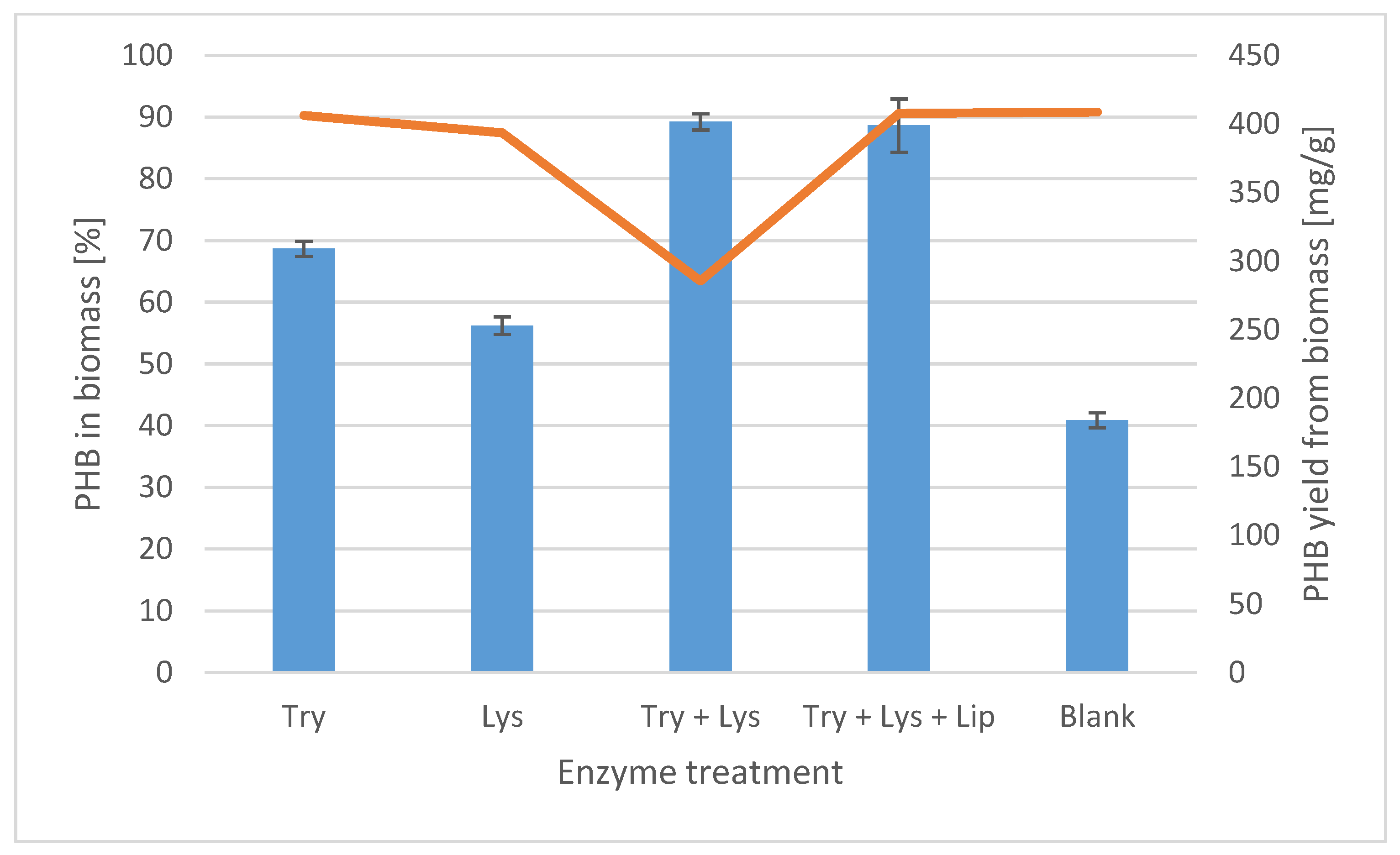
3.3. Enzymatic Treatment of Biomass
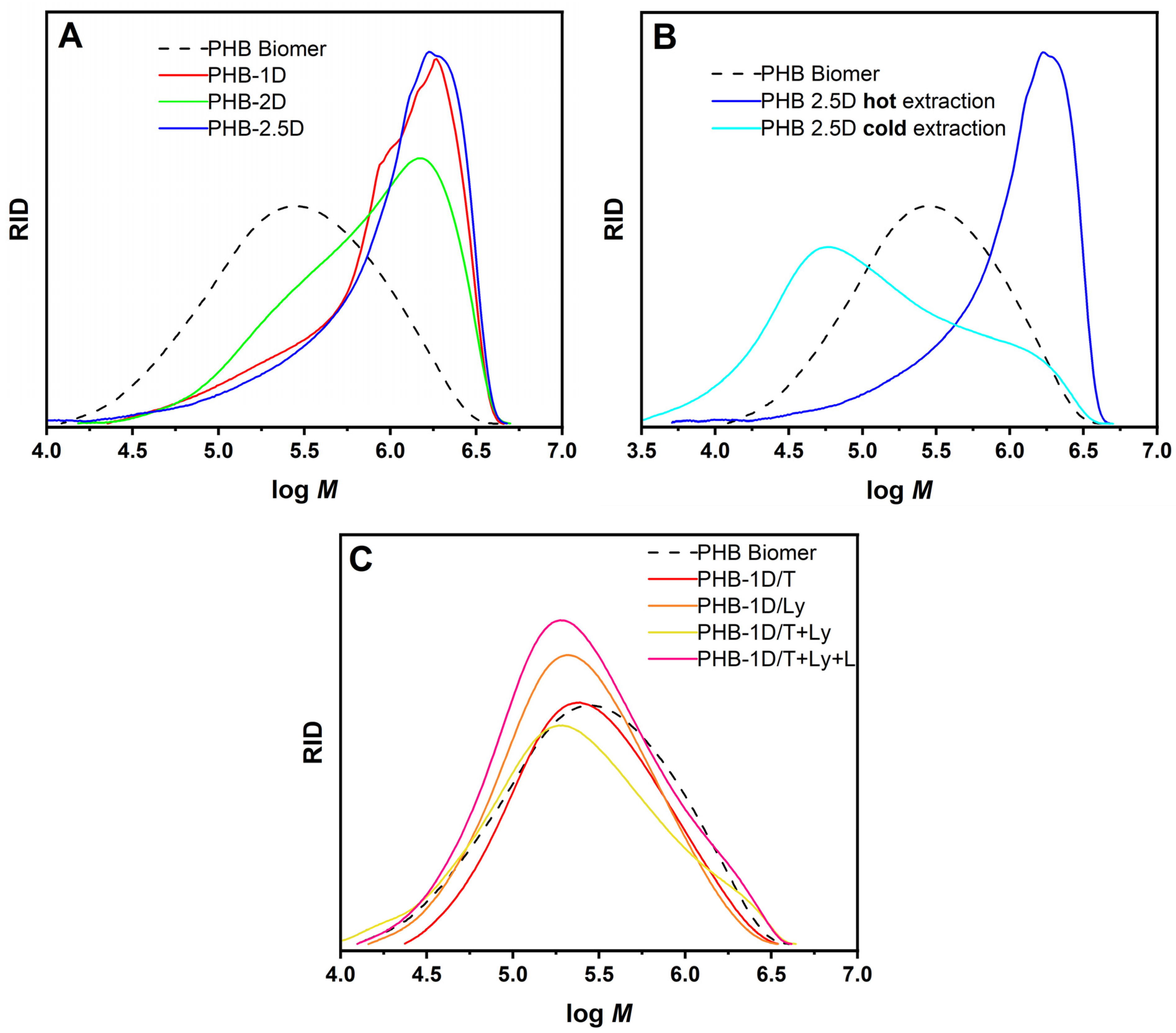
3.4. Molecular Characterization by GPC
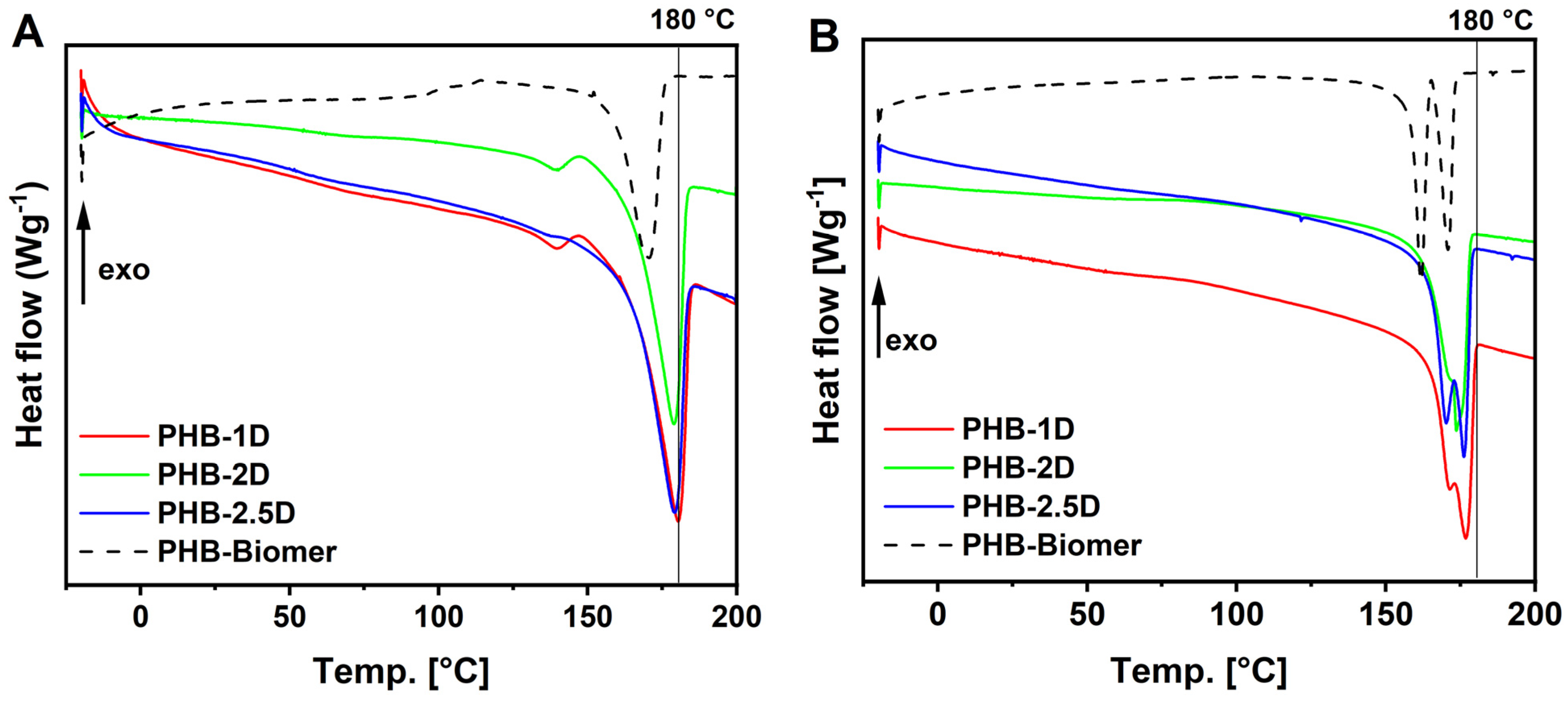
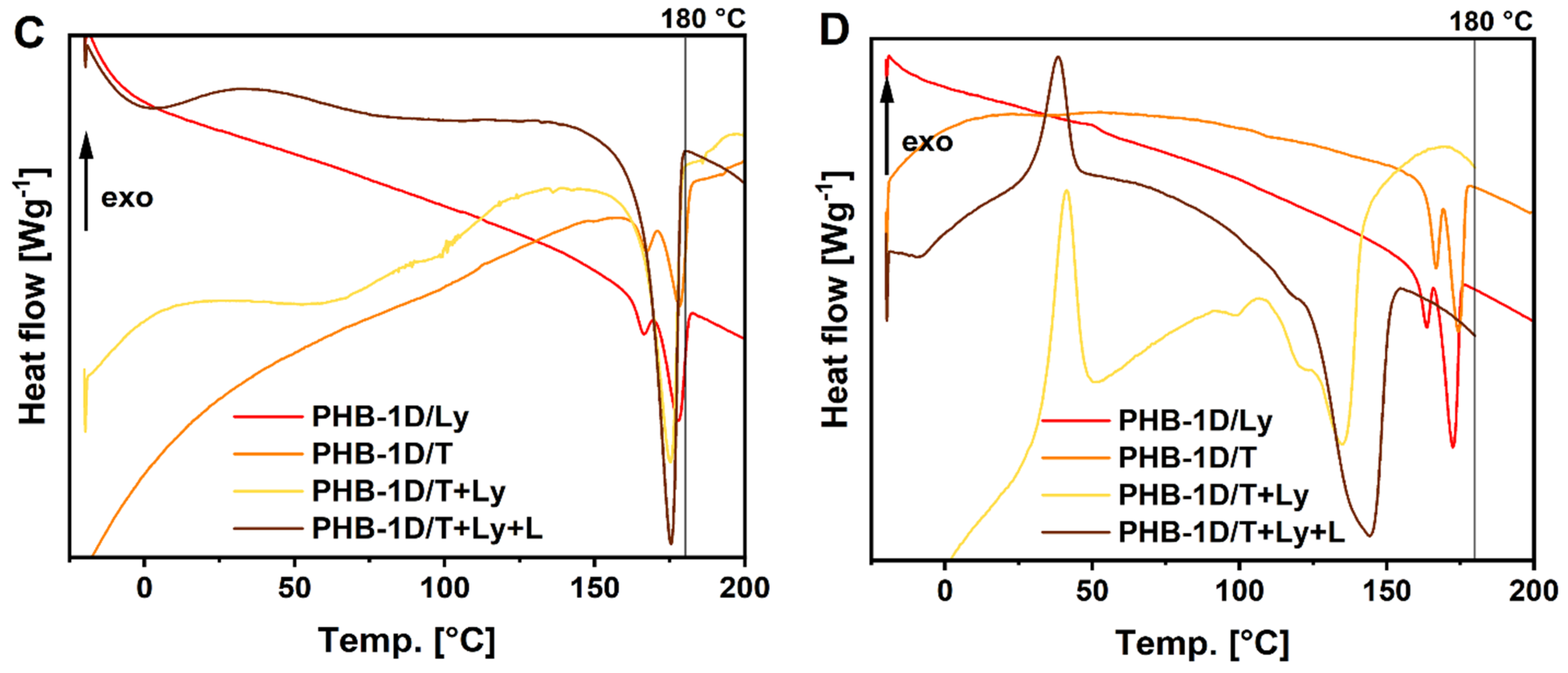
3.5. Thermal Properties Obtained from DSC
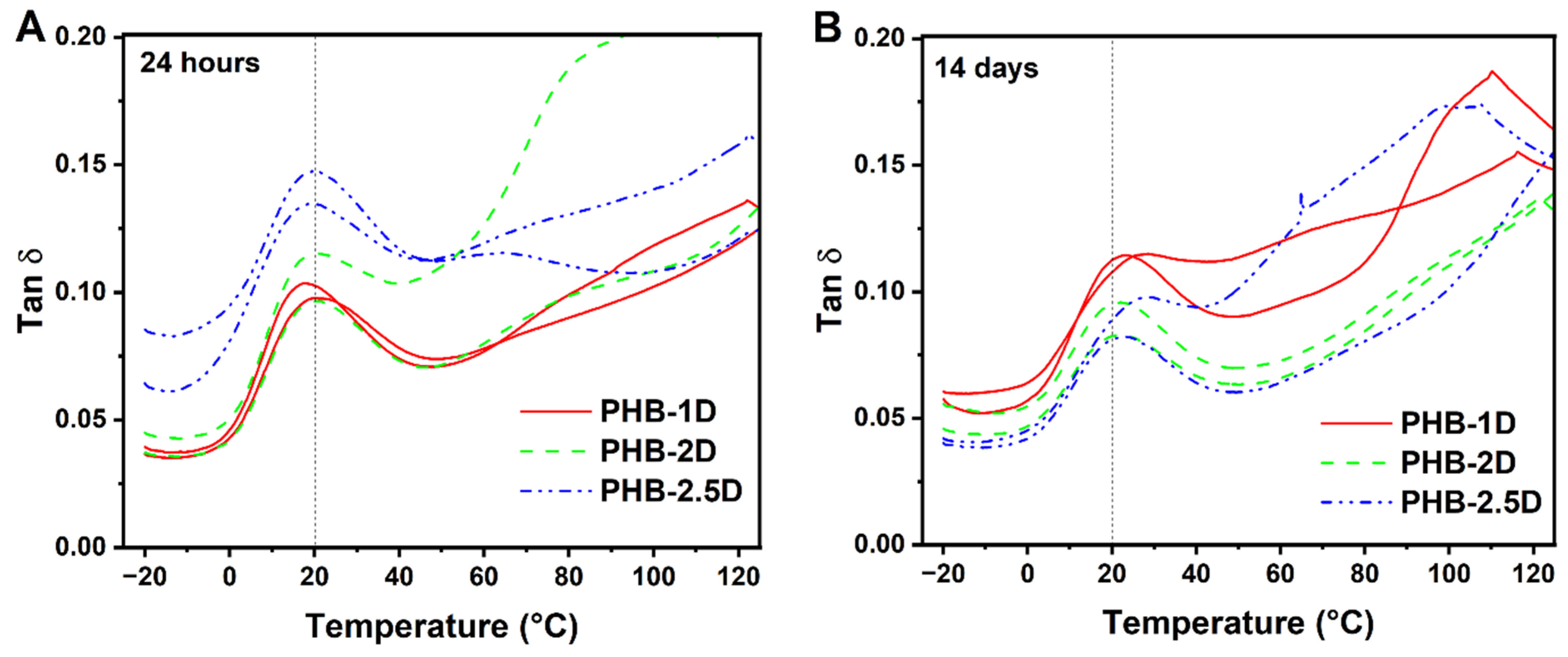
3.6. DMTA Characterization of the PHB
3.7. Tensile Test
4. Conclusions
5. Outlook
Supplementary Materials
Author Contributions
Funding
Data Availability Statement
Conflicts of Interest
References
- World Population Review. Available online: https://worldpopulationreview.com/country-rankings/arable-land-by-country (accessed on 18 August 2025).
- ISO (International Sugar Organization). 2024. Available online: https://www.isosugar.org/sugarsector/sugar (accessed on 18 August 2024).
- Zhang, T.T.; Wang, X.W.; Zhou, J.T.; Zhang, Y. Enrichments of methanotrophic–heterotrophic cultures with high poly-β-hydroxybutyrate (PHB) accumulation capacities. J. Environ. Sci. 2018, 65, 133–143. [Google Scholar] [CrossRef]
- Enerdata. 2024. Available online: https://yearbook.enerdata.net/natural-gas/world-natural-gas-production-statistics.html (accessed on 18 August 2024).
- Lackner, M.; Kamravamanesh, D.; Krampl, M.; Itzinger, R.; Paulik, C.; Chodak, I.; Herwig, C. Characterization of photosynthetically synthesized poly(3-hydroxybutyrate) using a randomly mutated strain of Synechocystis sp. PCC 6714. Int. J. Biobased Plast. 2019, 1, 48–59. [Google Scholar] [CrossRef]
- Anderson, A.J.; Dawes, E.A. Occurrence, metabolism, metabolic role, and industrial uses of bacterial polyhydroxyalkanoates. Microbiol. Rev. 1990, 54, 450–472. [Google Scholar] [CrossRef] [PubMed]
- Aramvash, A.; Moazzeni-Zavareh, F.; Gholami-Banadkuki, N. Comparison of different solvents for extraction of polyhydroxybutyrate from Cupriavidus necator. Eng. Life Sci. 2018, 18, 20–28. [Google Scholar] [CrossRef] [PubMed]
- Jiang, G.; Johnston, B.; Townrow, D.; Radecka, I.; Koller, M.; Chaber, P.; Adamus, G.; Kowalczuk, M. Biomass extraction using non-chlorinated solvents for biocompatibility improvement of polyhydroxyalkanoates. Polymers 2018, 10, 731. [Google Scholar] [CrossRef]
- Didion, Y.P.; Vargas, M.V.G.A.; Tjaslma, T.G.; Woodley, J.; Nikel, P.I.; Malankowska, M.; Su, Z.; Pinelo, M. A novel strategy for extraction of intracellular poly(3-hydroxybutyrate) from engineered Pseudomonas putida using deep eutectic solvents: Comparison with traditional biobased organic solvents. Sep. Purif. Technol. 2024, 338, 126465. [Google Scholar] [CrossRef]
- Koller, M. Established and advanced approaches for recovery of microbial polyhydroxyalkanoate (PHA) biopolyesters from surrounding microbial biomass. EuroBiotech J. 2020, 4, 113–126. [Google Scholar] [CrossRef]
- Pagliano, G.; Galletti, P.; Samorì, C.; Zaghini, A.; Torri, C. Recovery of polyhydroxyalkanoates from single and mixed microbial cultures: A review. Front. Bioeng. Biotechnol. 2021, 9, 624021. [Google Scholar] [CrossRef]
- de Koning, G.; Witholt, B. A process for the recovery of poly(hydroxyalkanoates) from Pseudomonads Part 1: Solubilization. Bioprocess Eng. 1997, 17, 7–13. [Google Scholar] [CrossRef]
- Kapritchkoff, F.M.; Viotti, A.P.; Alli, R.C.P.; Zuccolo, M.; Pradella, J.G.C.; Maiorano, A.E.; Miranda, E.A.; Bonomi, A. Enzymatic recovery purification of polyhydroxybutyrate produced by Ralstonia eutropha. J. Biotechol. 2006, 122, 453–462. [Google Scholar] [CrossRef]
- Neves, A.; Müller, J. Use of enzymes in extraction of polyhydroxyalkanoates produced by Cupriavidus necator. Biotechnol. Progr. 2012, 26, 1575–1580. [Google Scholar] [CrossRef]
- Gutt, B.; Kehl, K.; Ren, Q.; Boesel, L.F. Using ANOVA models to compare and optimize extraction protocols of P3HBHV from Cupriavidus necator. Ind. Eng. Chem. Res. 2016, 55, 10355–10365. [Google Scholar] [CrossRef]
- Safaeian, P.; Yazdian, F.; Khosravi-Darani, K.; Rashedi, H.; Lackner, M. P3HB from CH4 using methanotrophs: Aspects of bioreactor, fermentation process and modelling for cost-effective biopolymer production. Front. Bioeng. Biotechnol. 2023, 11, 1137749. [Google Scholar] [CrossRef]
- Lackner, M.; Löhr, A.; Schill, F.; Van Essche, M. Rim Driven Thruster as Innovative Propulsion Element for Dual Phase Flows in Plug Flow Reactors. Fluids 2024, 9, 168. [Google Scholar] [CrossRef]
- Koller, M.; Niebelschutz, H.; Braunegg, G. Strategies for recovery and purification of poly[(R)-3-hydroxyalkanoates] (PHA) biopolyesters from surrounding biomass. Eng. Life Sci. 2013, 13, 549–562. [Google Scholar] [CrossRef]
- Mongili, B.; Azim, A.A.; Garofalo, S.F.; Batuecas, E.; Re, A.; Bocchini, S.; Fino, D. Novel insights in dimethyl carbonate-based extraction of polyhydroxybutyrate (PHB). Biotechnol. Biofuels 2021, 14, 13. [Google Scholar] [CrossRef] [PubMed]
- Abbasi, M.; Coats, E.R.; McDonald, A.G. Green solvent extraction and properties characterization of Poly(3-hydroxybutyrate-co-3-hydroxyvalerate) biosynthesized by mixed microbial consortia fed fermented dairy manure. Bioresour. Technol. Rep. 2022, 18, 101065. [Google Scholar] [CrossRef]
- Yashavanth, P.R.; Maiti, S.K. Recovery and characterization of polyhydroxybutyrate from Chlorogloea fritschii TISTR 8527 using halogenated and green solvents. J. Appl. Phycol. 2024, 36, 2593–2606. [Google Scholar] [CrossRef]
- Wongmoon, C.; Napathorn, S.C. Optimization for the efficient recovery of poly(3-hydroxybutyrate) using the green solvent 1,3-dioxolane. Front. Bioeng. Biotechnol. 2022, 10, 1086636. [Google Scholar] [CrossRef]
- Nayir, T.Y.; Konuk, S.; Kara, S. Extraction of polyhydroxyalkanoate from activated sludge using supercritical carbon dioxide process and biopolymer characterization. J. Biotechnol. 2023, 364, 50–57. [Google Scholar] [CrossRef]
- Liu, L.-Y.; Xie, G.-J.; Xing, D.-F.; Liu, B.-F.; Ding, J.; Ren, N.-Q. Biological conversion of methane to polyhydroxyalkanoates: Current advances, challenges, and perspectives. Environ. Sci. Ecotechnol. 2020, 2, 100029. [Google Scholar] [CrossRef]
- Wendlandt, K.-D.; Jechorek, M.; Helm, J.; Stattmeister, U. Producing poly-3-hydroxybutyrate with a high molecular mass from methane. J. Biotechnol. 2001, 86, 127–133. [Google Scholar] [CrossRef] [PubMed]
- Wendlandt, K.-D.; Jechorek, M.; Helm, J.; Stattmeister, U. Production of PHB with a high molecular mass from methane. Polym. Degrad. Stab. 1998, 59, 191–194. [Google Scholar] [CrossRef]
- Helm, J.; Wendlandt, K.-D.; Jechorek, M.; Stattmeister, U. Potassium deficiency results in accumulation of ultra-high molecular weight poly-β-hydroxybutyrate in a methane-utilizing mixed culture. J. Appl. Microbiol. 2008, 105, 1054–1061. [Google Scholar] [CrossRef] [PubMed]
- Zhang, Y.; Xin, J.; Chen, L.; Song, H.; Xia, C. Biosynthesis of poly-3-hydroxybutyrate with a high molecular weight by methanotroph from methane methanol. J. Nat. Gas Chem. 2008, 17, 103–109. [Google Scholar] [CrossRef]
- de Koning, G.J.M.; Scheeren, A.H.C.; Lemstra, P.J.; Peeters, M.; Reynaers, H. Crystallization phenomena in bacterial poly[(R)-3-hydroxybutyrate]: 3. toughening via texture Changes. Polymer 1994, 35, 4598–4605. [Google Scholar] [CrossRef]
- Chodák, I. Polyhydroxyalkanoates: Properties and Modification for High Volume Applications, Degradable Polymers, Principles and Applications, 2nd ed.; Scott, G., Ed.; Kluwer Academic Publishers: Dordrecht, The Netherlands; Boston, MA, USA; London, UK, 2002; pp. 295–319. [Google Scholar]



| Sample | Mn a × 103 (g mol−1) | Mw a × 103 (g mol−1) | Ɖ a | Tm1 b °C | Tm2 b °C | ∆Hm b (Jg−1) | Xc c (%) |
|---|---|---|---|---|---|---|---|
| PHB-1D | 758.6 | 1504.2 | 2.00 | - | 180.5 | 102.23 | 70.00 |
| PHB-2D | 409.1 | 1101.5 | 2.69 | - | 179.0 | 101.18 | 69.30 |
| PHB-2.5D | 413.6 | 1407.0 | 3.39 | - | 179.3 | 102.06 | 69.90 |
| PHB-Biomer® | 165.1 | 487.1 | 2.95 | - | 171.2 | 87.94 | 60.00 |
| Sample PHB-1D/ Enzyme | Mn a × 103 (g mol−1) | Mw a × 103 (g mol−1) | Ɖ a | Tm1 b °C | Tm2 b °C | ∆Hm b (Jg−1) | Xc c (%) |
|---|---|---|---|---|---|---|---|
| PHB-1D/T | 206.2 | 479.0 | 2.32 | 167.5 | 178.2 | 76.89 | 52.45 |
| PHB-1D/Ly | 166.9 | 406.8 | 2.43 | 166.2 | 177.6 | 62.60 | 42.70 |
| PHB-1D/T + Ly | 134.2 | 464.2 | 3.46 | - | 175.2 | 68.09 | 46.45 |
| PHB-1D/T + Ly + L | 160.7 | 464.0 | 2.88 | - | 175.4 | 73.00 | 49.80 |
| Sample | σB, MPa | εB, % | E, MPa | Tg(DMTA), °C | ||||
|---|---|---|---|---|---|---|---|---|
| 24 h | 14 d | 24 h | 14 d | 24 h | 14 d | 24 h | 14 d | |
| PHB-1D | - | - | - | - | - | - | 20.5 | 26.0 |
| PHB-2D | - | - | - | - | - | - | 20.9 | 22.1 |
| PHB-2.5D | - | - | - | - | - | - | 19.6 | 23.4 |
| PHBexp | 38.3 ± 2.3 | 38.0 ± 1.5 | 2.9 ± 0.3 | 2.0 ± 0.2 | 3523 ± 148 | 4370 ± 107 | - | - |
| PHB-Biomer® | 53.6 ± 2.4 | 55.4 ± 1.6 | 3.4 ± 0.3 | 2.8 ± 0.1 | 4122 ± 384 | 4870 ± 184 | 19.4 | |
| Sample | Before | After | Change | ||
|---|---|---|---|---|---|
| Mw a × 103 (g mol−1) | Ɖ a | Mw a × 103 (g mol−1) | Ɖ a | % | |
| PHBexp | 1 135.5 | 1.98 | 854.0 | 1.91 | −25 |
| PHB Biomer | 487.1 | 2.95 | 462.7 | 1.95 | −5 |
Disclaimer/Publisher’s Note: The statements, opinions and data contained in all publications are solely those of the individual author(s) and contributor(s) and not of MDPI and/or the editor(s). MDPI and/or the editor(s) disclaim responsibility for any injury to people or property resulting from any ideas, methods, instructions or products referred to in the content. |
© 2026 by the authors. Licensee MDPI, Basel, Switzerland. This article is an open access article distributed under the terms and conditions of the Creative Commons Attribution (CC BY) license.
Share and Cite
Lackner, M.; Jurečková, Ľ.; Chmelová, D.; Ondrejovič, M.; Borská, K.; Vykydalová, A.; Sedničková, M.; Peidayesh, H.; Chodák, I.; Danko, M. Methanotrophic Poly(hydroxybutyrate) Through C1 Fermentation and Downstream Process Development: Molar Mass, Thermal and Mechanical Characterization. Polymers 2026, 18, 248. https://doi.org/10.3390/polym18020248
Lackner M, Jurečková Ľ, Chmelová D, Ondrejovič M, Borská K, Vykydalová A, Sedničková M, Peidayesh H, Chodák I, Danko M. Methanotrophic Poly(hydroxybutyrate) Through C1 Fermentation and Downstream Process Development: Molar Mass, Thermal and Mechanical Characterization. Polymers. 2026; 18(2):248. https://doi.org/10.3390/polym18020248
Chicago/Turabian StyleLackner, Maximilian, Ľubomíra Jurečková, Daniela Chmelová, Miroslav Ondrejovič, Katarína Borská, Anna Vykydalová, Michaela Sedničková, Hamed Peidayesh, Ivan Chodák, and Martin Danko. 2026. "Methanotrophic Poly(hydroxybutyrate) Through C1 Fermentation and Downstream Process Development: Molar Mass, Thermal and Mechanical Characterization" Polymers 18, no. 2: 248. https://doi.org/10.3390/polym18020248
APA StyleLackner, M., Jurečková, Ľ., Chmelová, D., Ondrejovič, M., Borská, K., Vykydalová, A., Sedničková, M., Peidayesh, H., Chodák, I., & Danko, M. (2026). Methanotrophic Poly(hydroxybutyrate) Through C1 Fermentation and Downstream Process Development: Molar Mass, Thermal and Mechanical Characterization. Polymers, 18(2), 248. https://doi.org/10.3390/polym18020248