Effects of Artificial Hydrothermal Aging on Crush Boxes Made from Glass, Carbon and Aramid Fiber-Reinforced Hybrid Composites




Abstract
1. Introduction
2. Materials and Methods
2.1. Material Properties
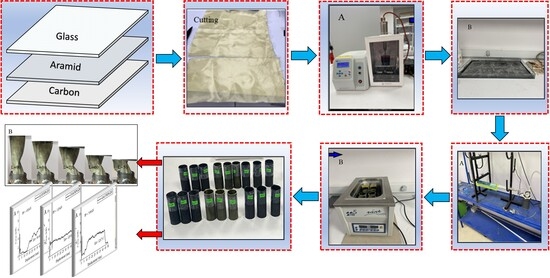
2.2. Preparation of Composites
2.3. Crush Test Procedures
3. Results and Discussion
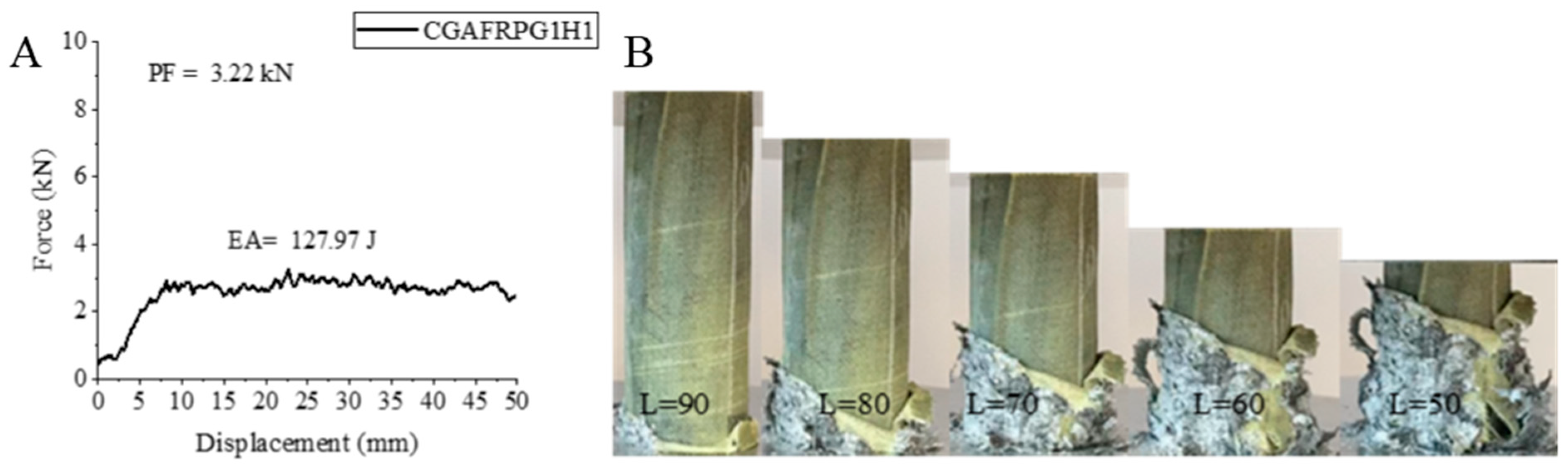
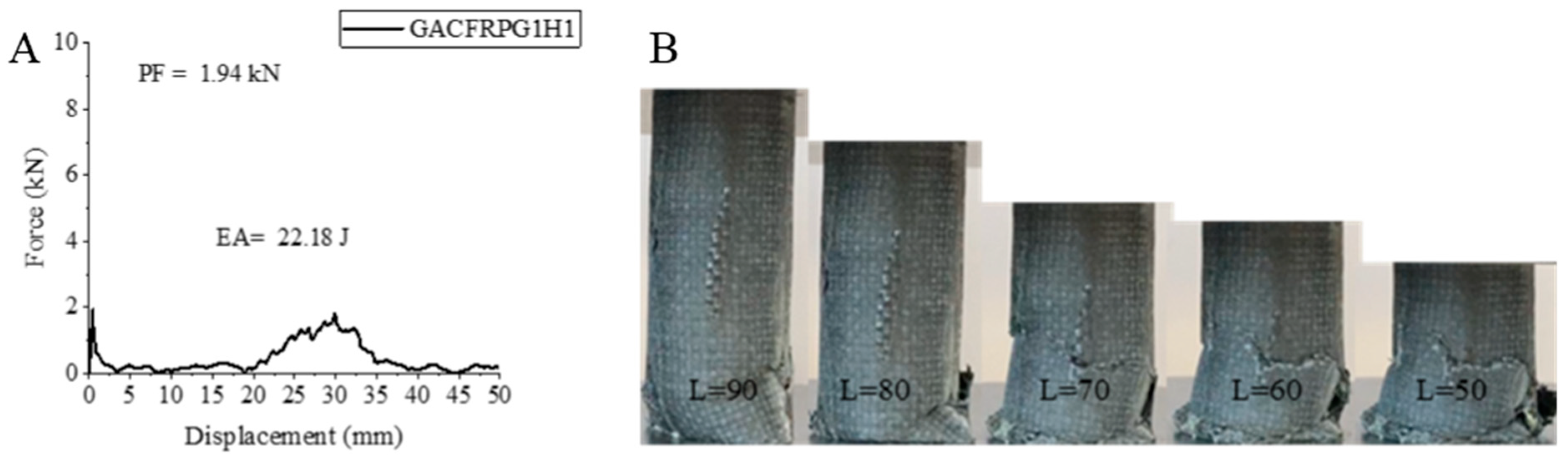
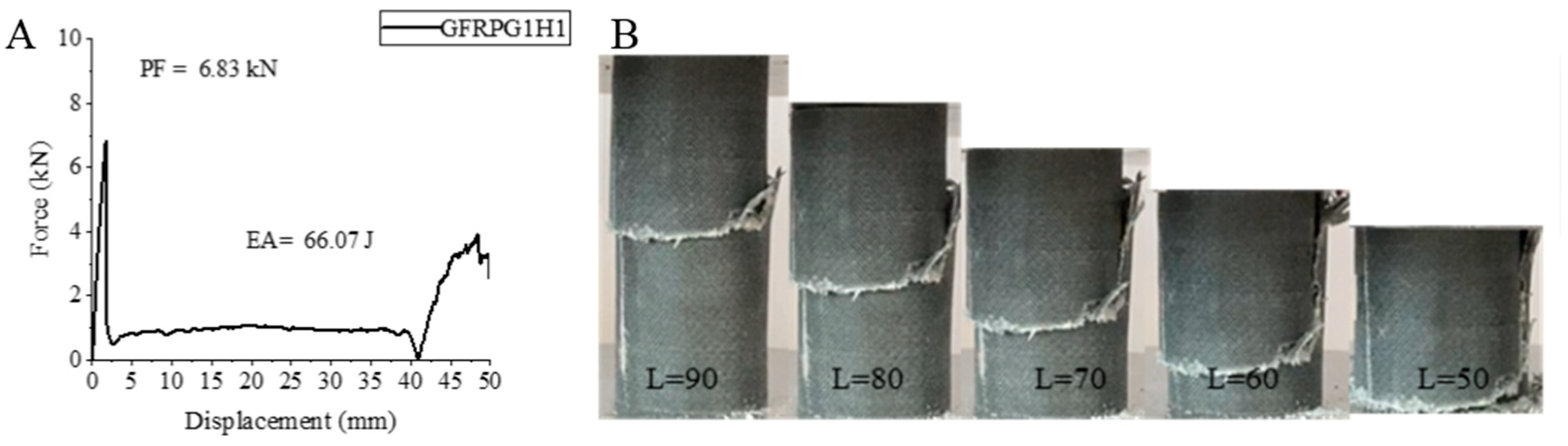
3.1. Results for GFRPG1H1—GACFRPG1H1 Samples
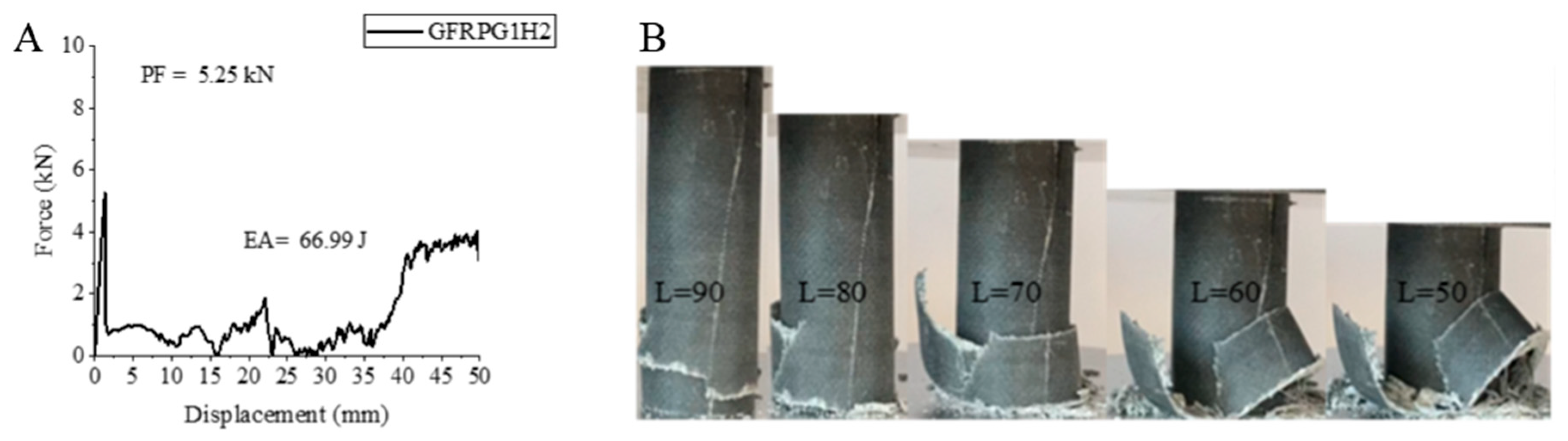
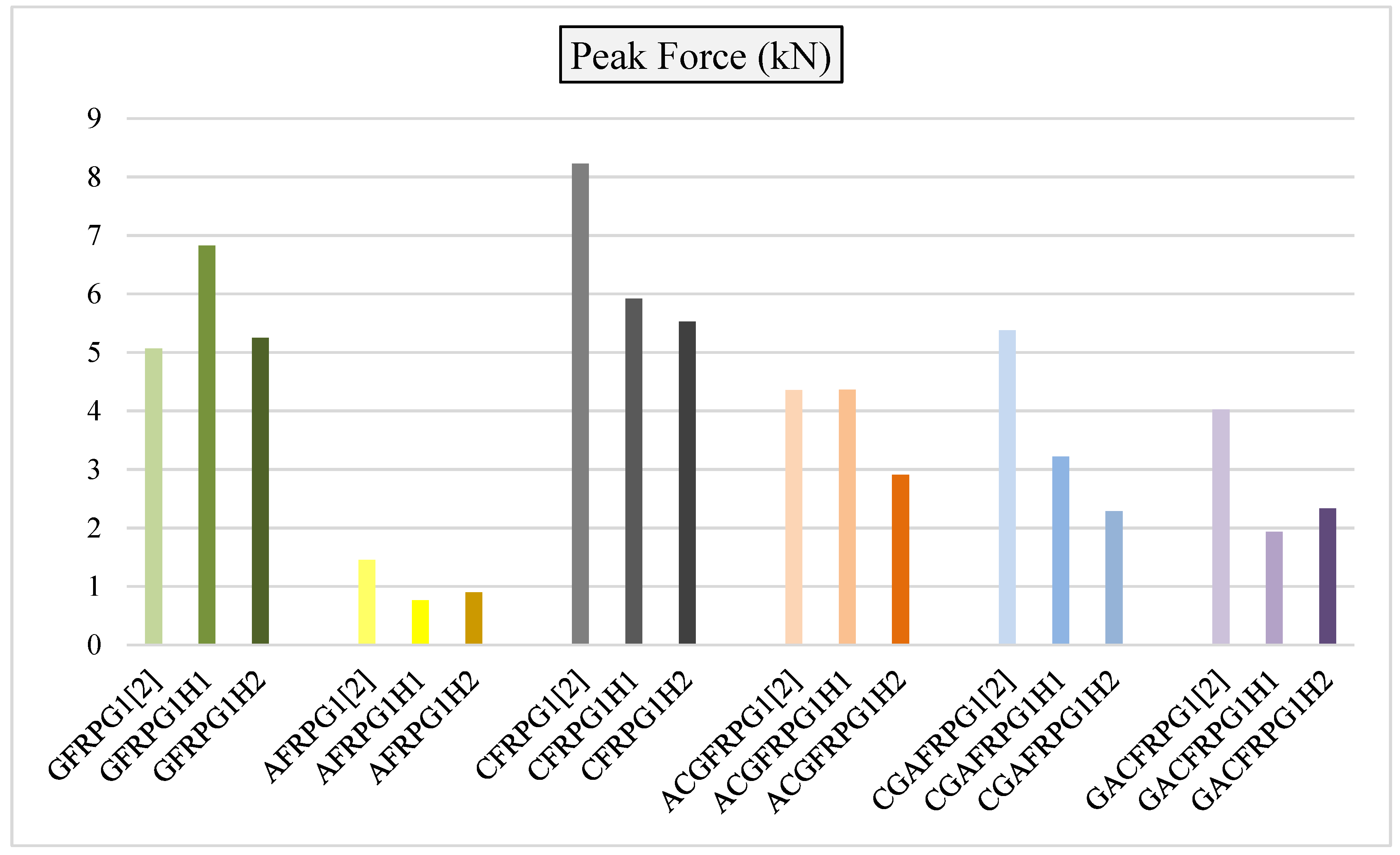
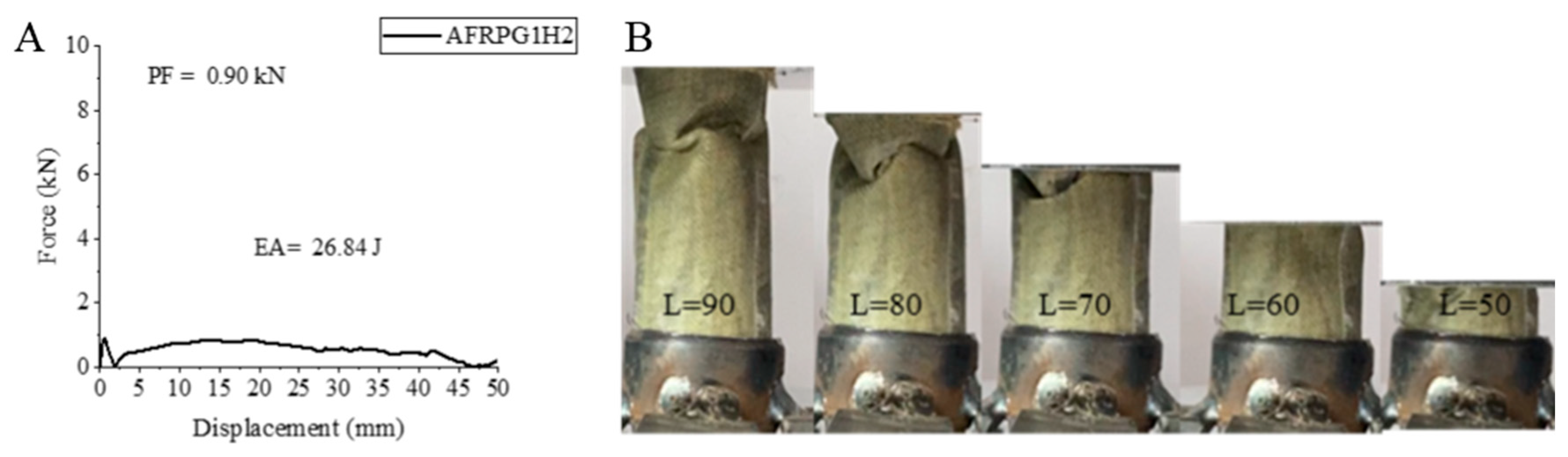
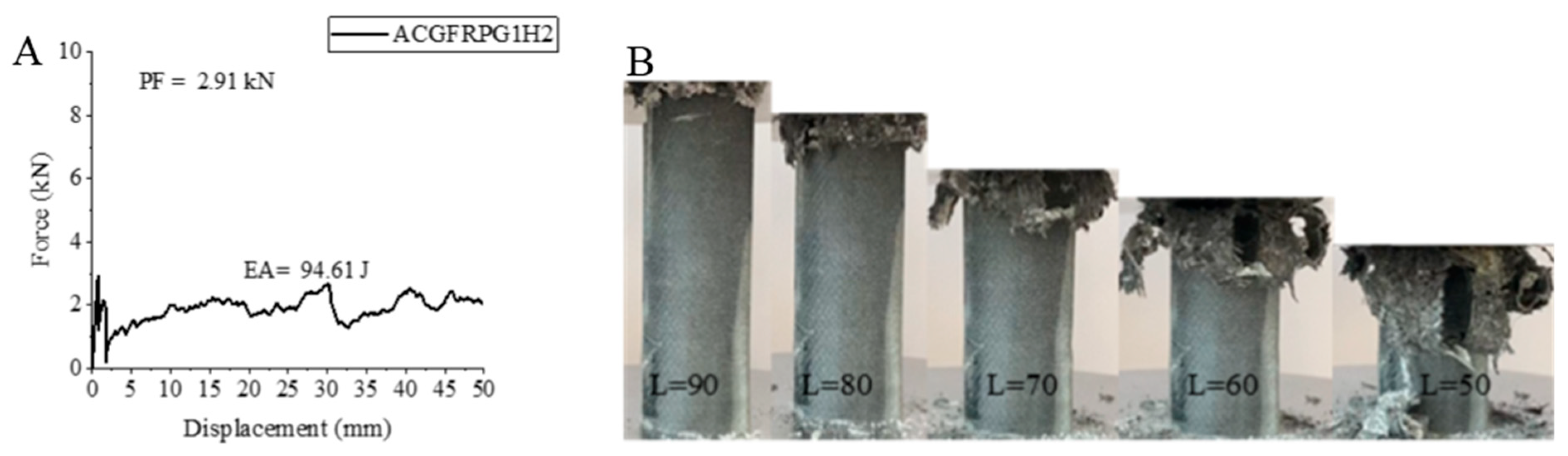
3.2. Results for GFRPG1H2—GACFRPG1H2 Samples
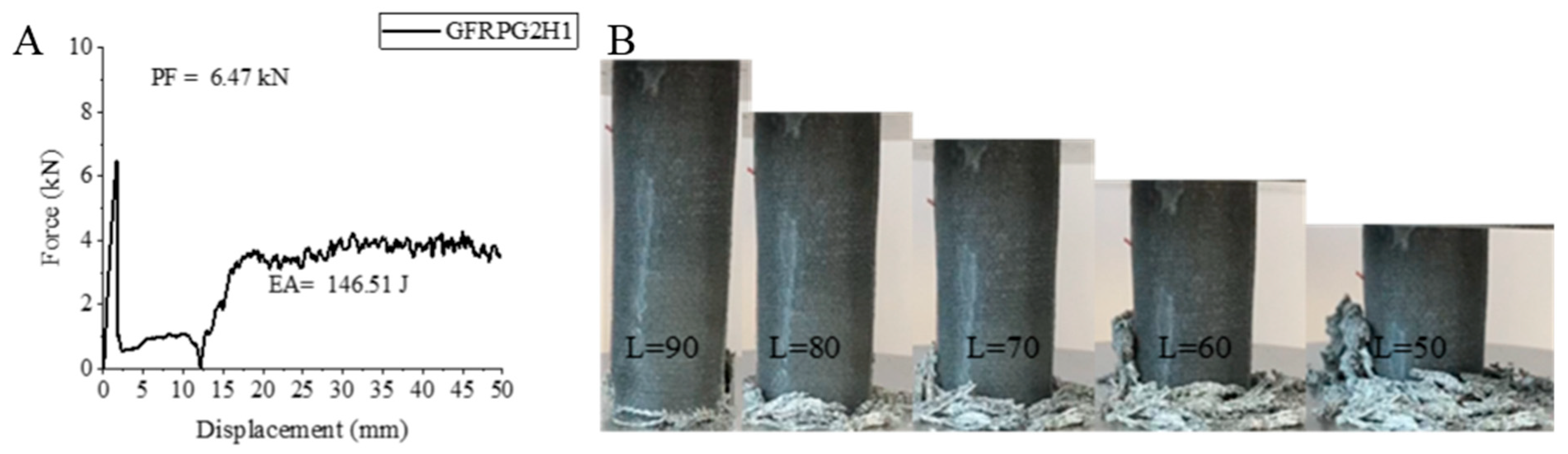
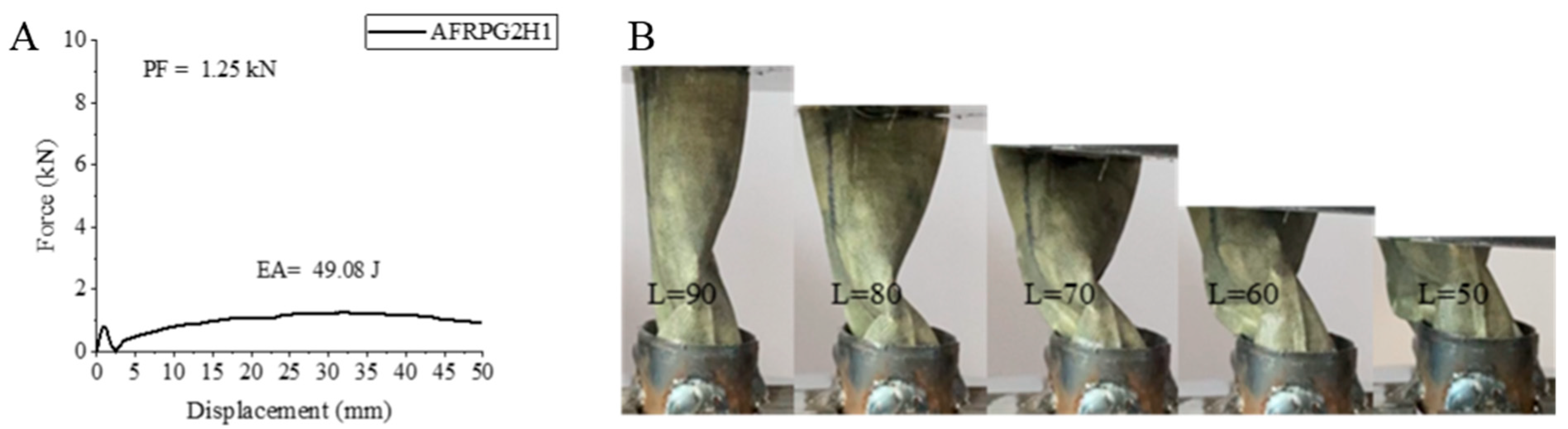
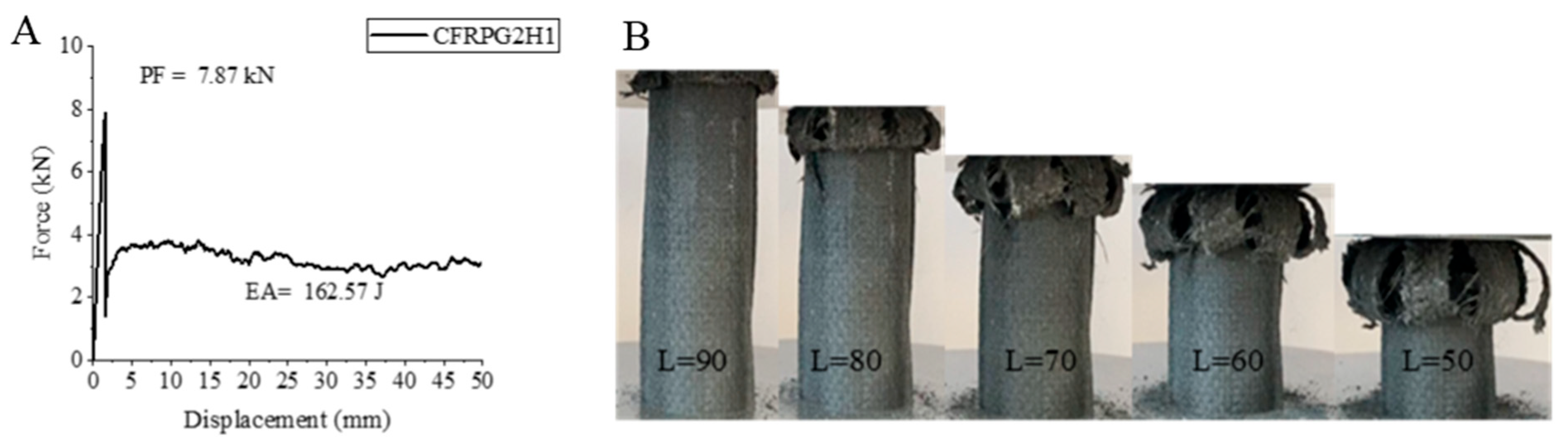
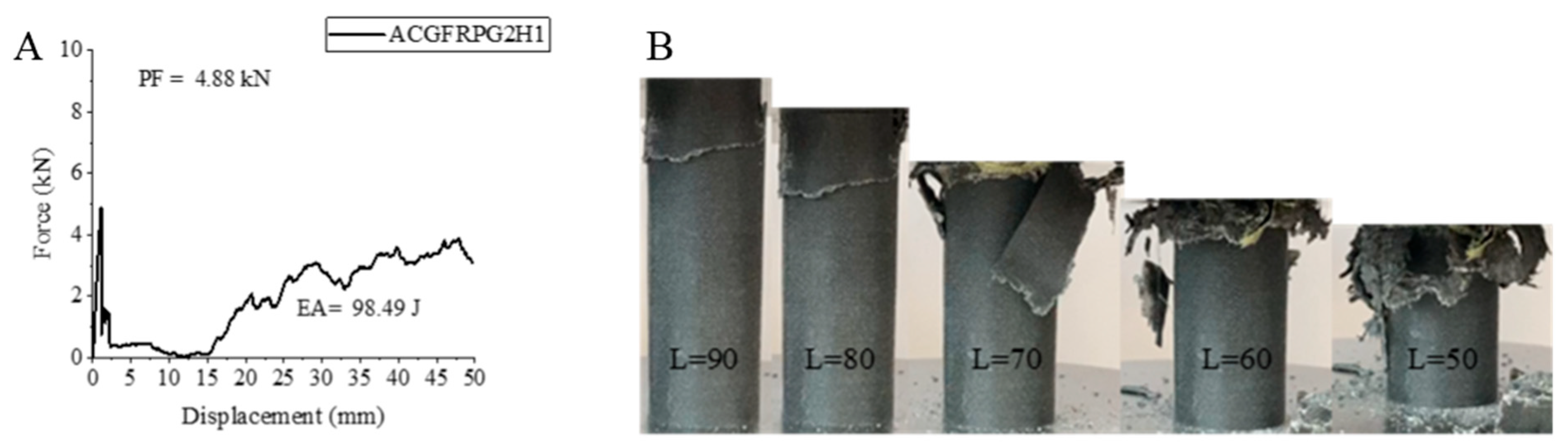
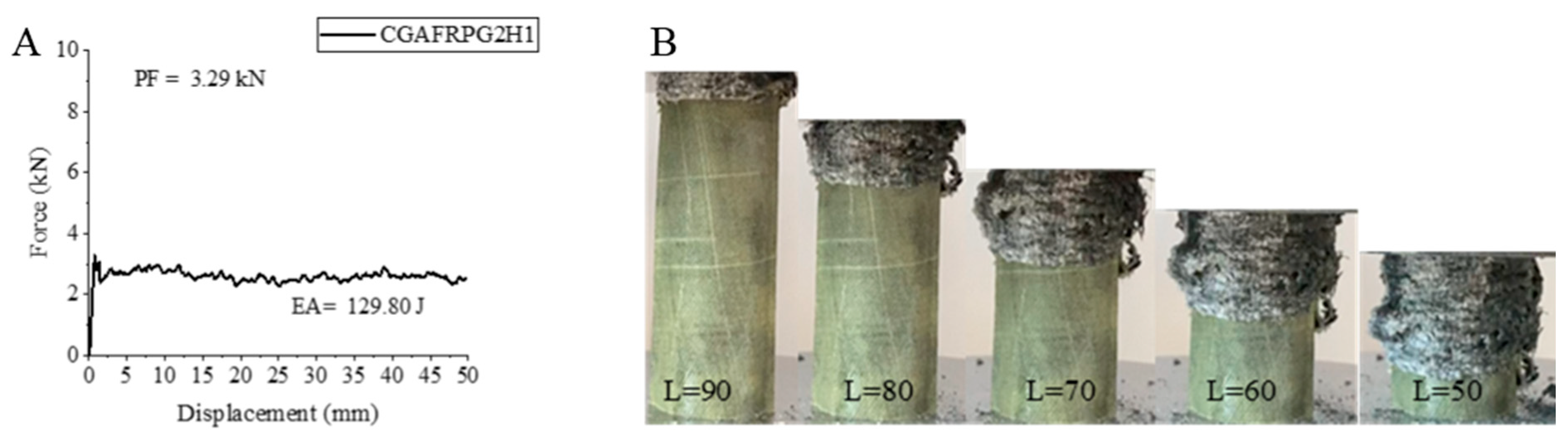
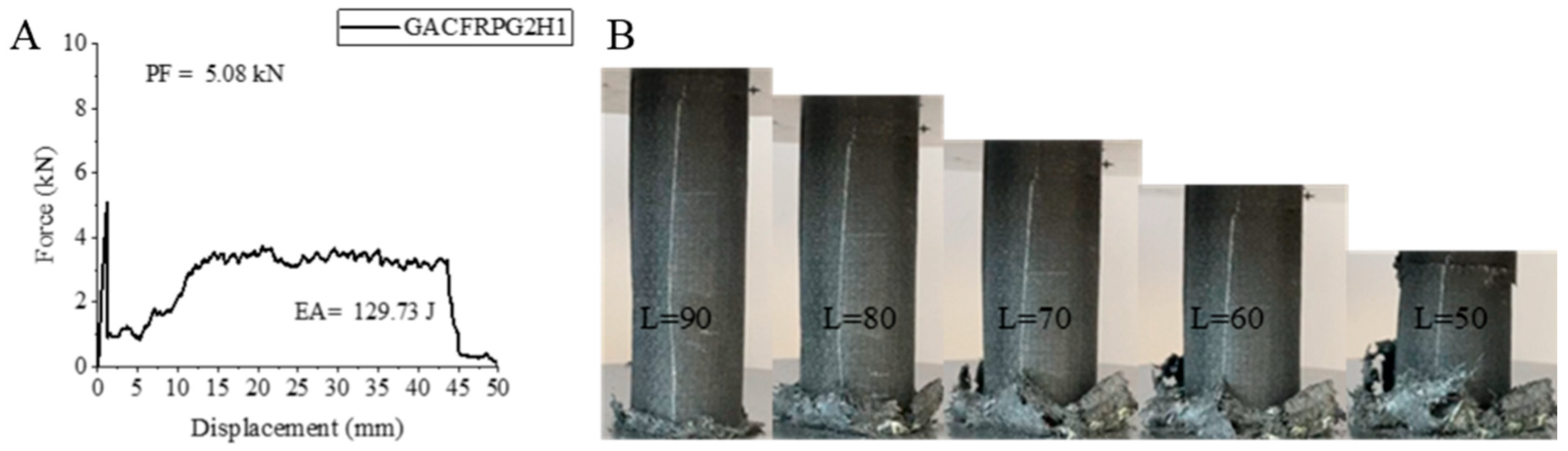
3.3. Results for GFRPG2H1—GACFRPG2H1 Samples
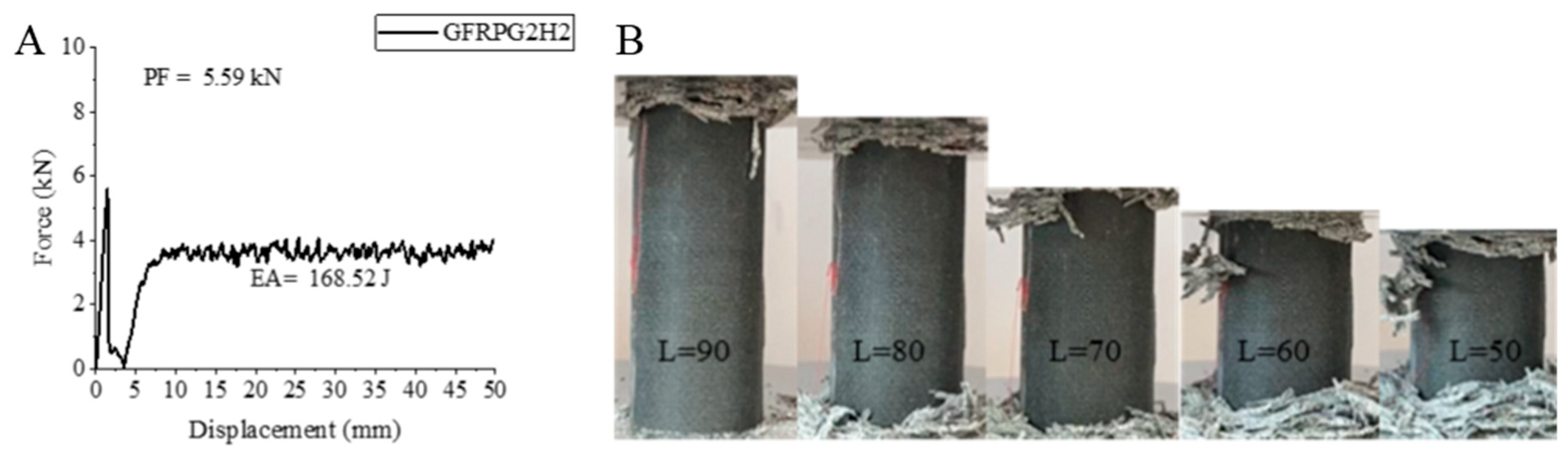
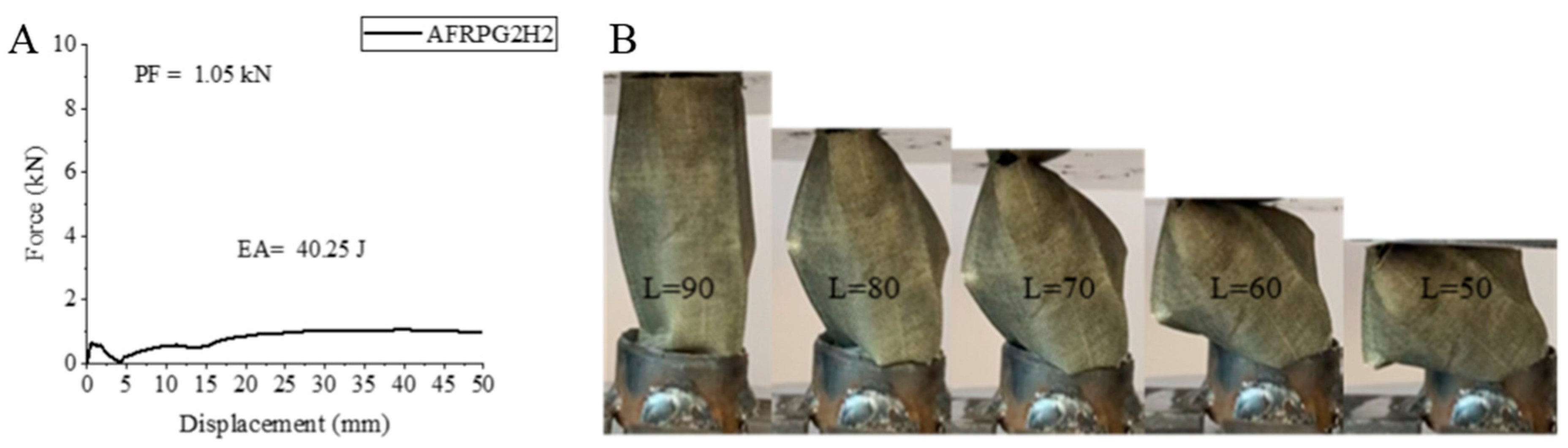
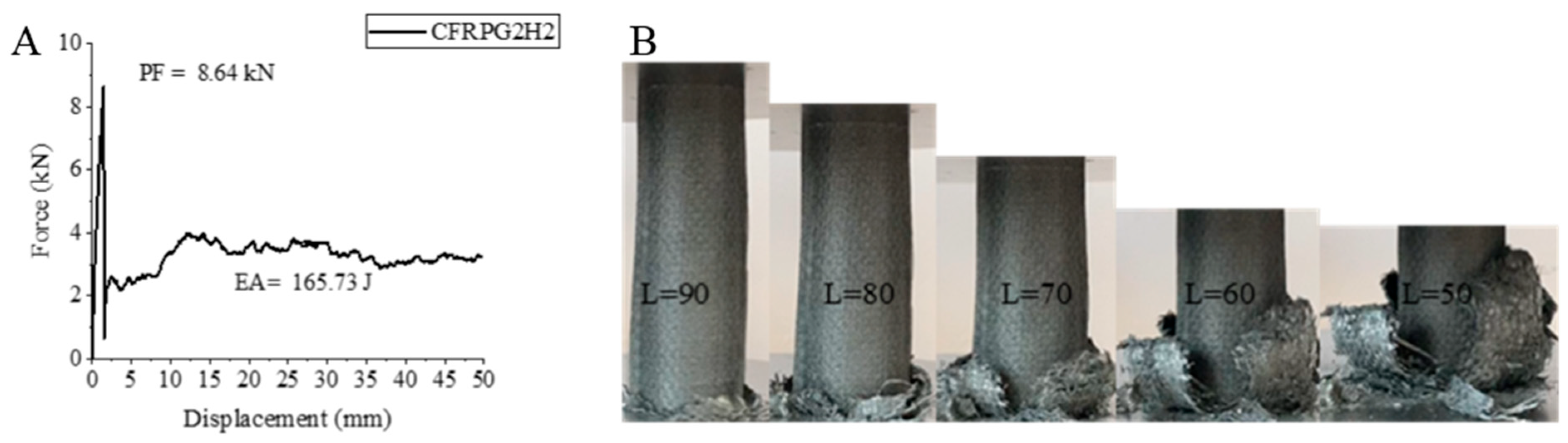
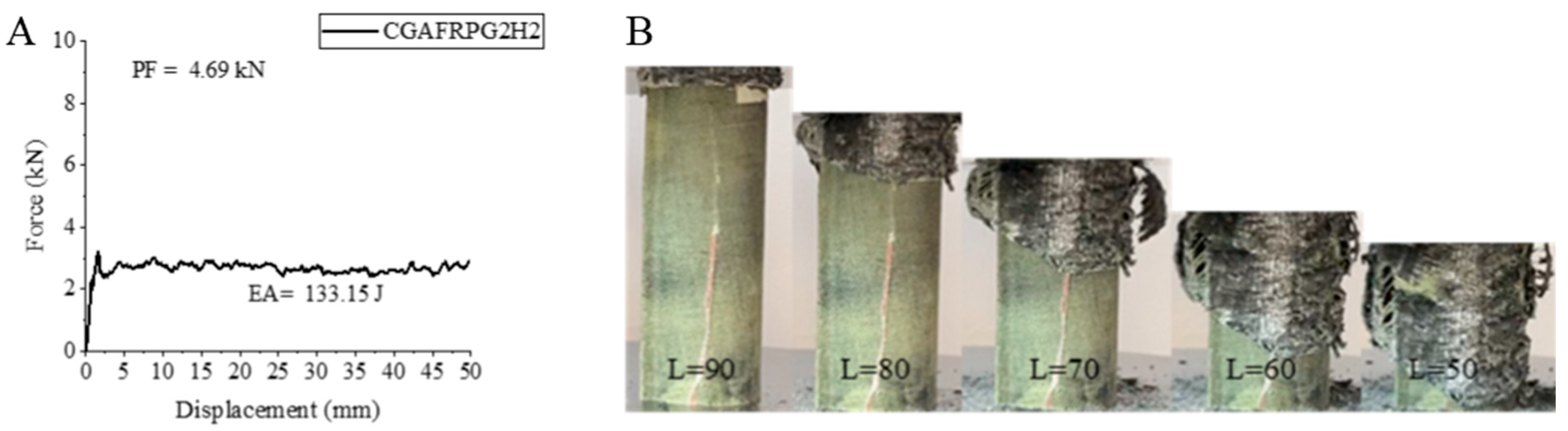
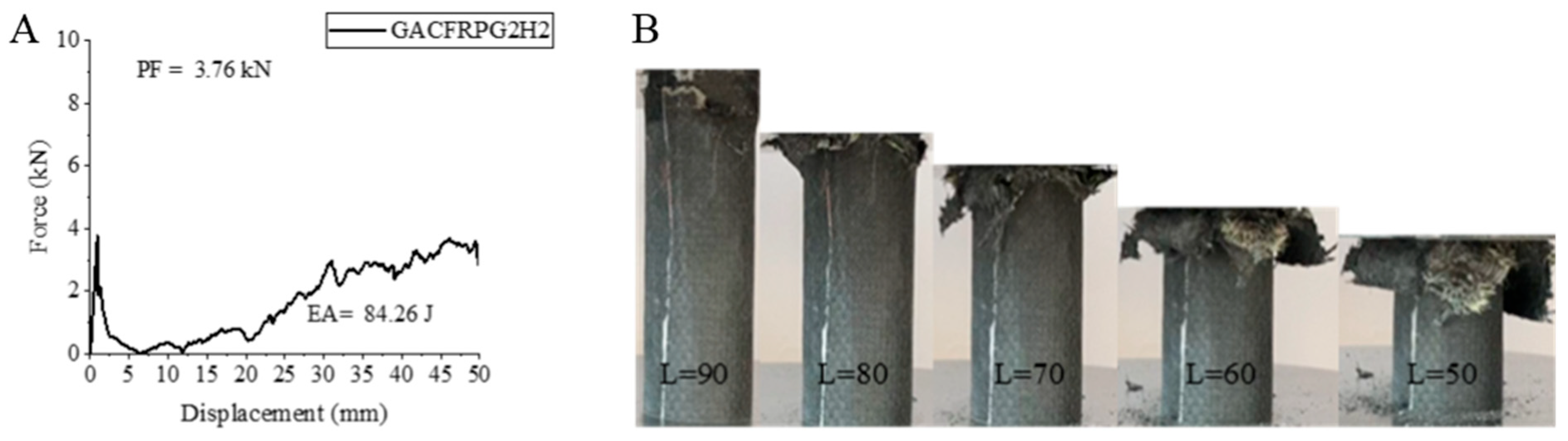
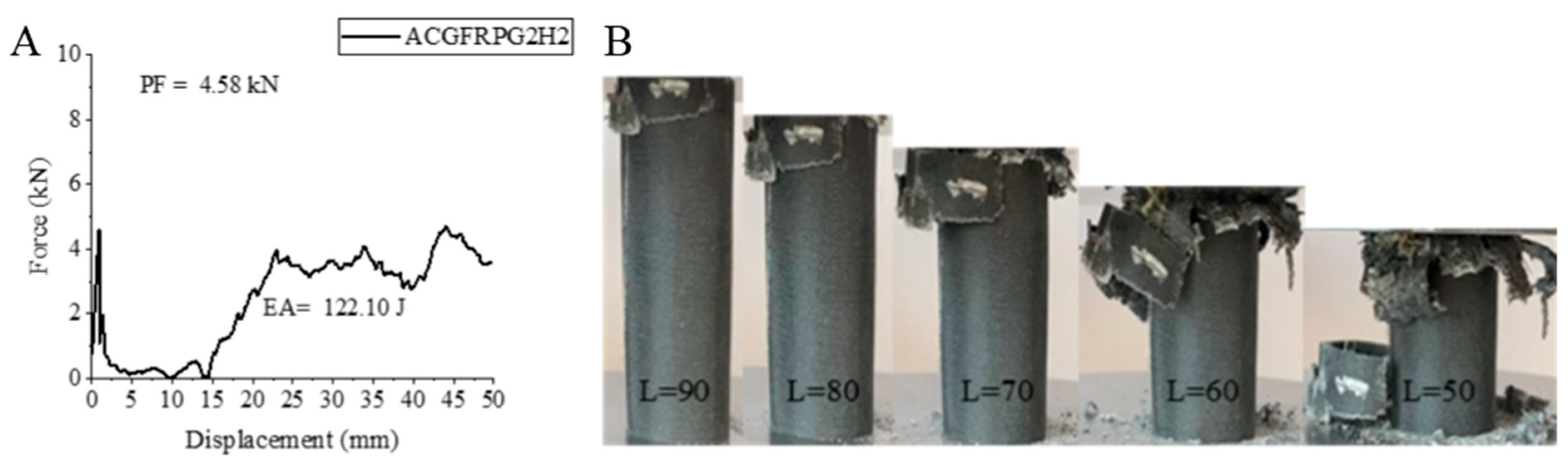
3.4. Results for GFRPG2H2—GACFRPG2H2 Samples
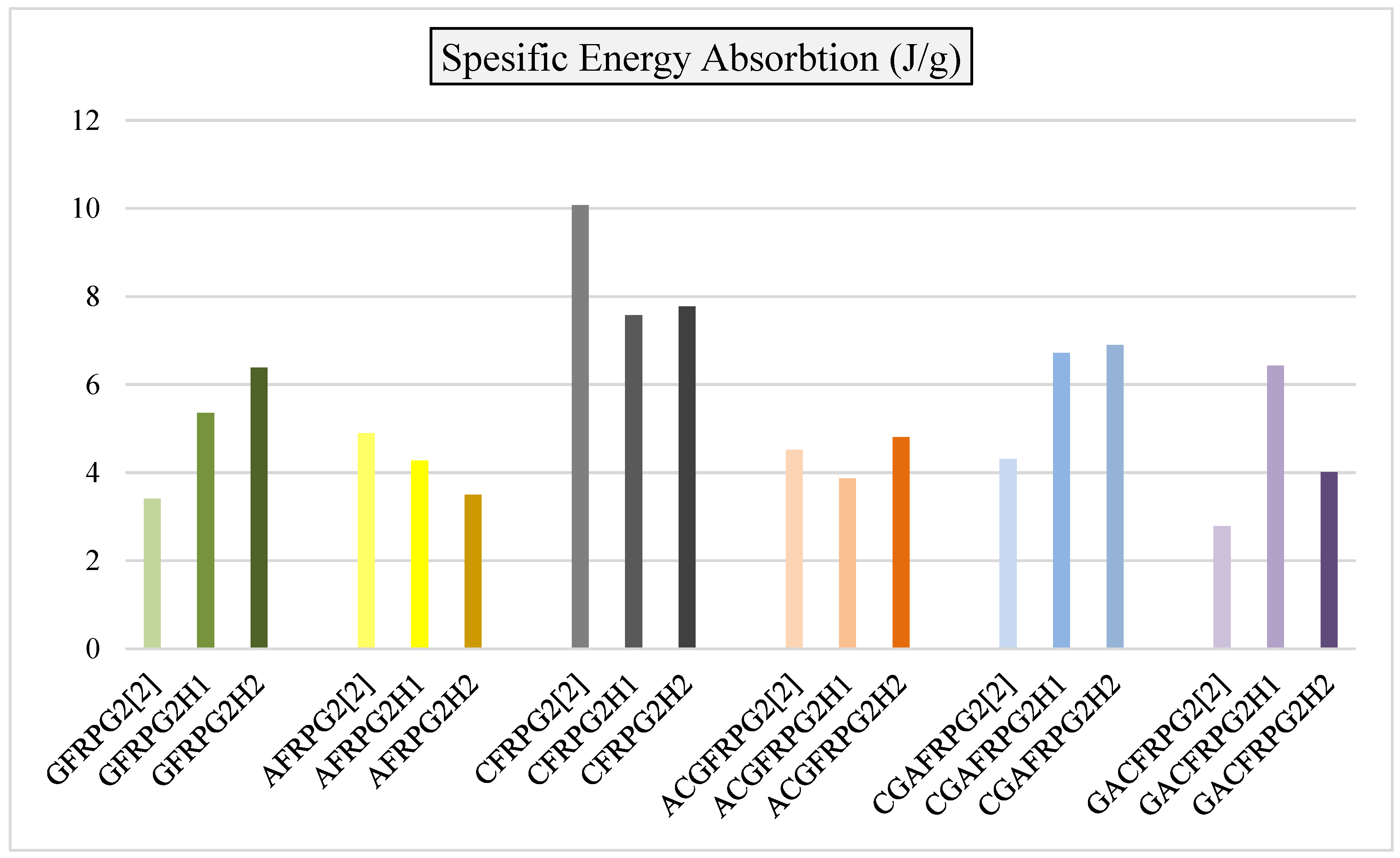
3.5. Comparison of Samples
4. Conclusions
- ➢
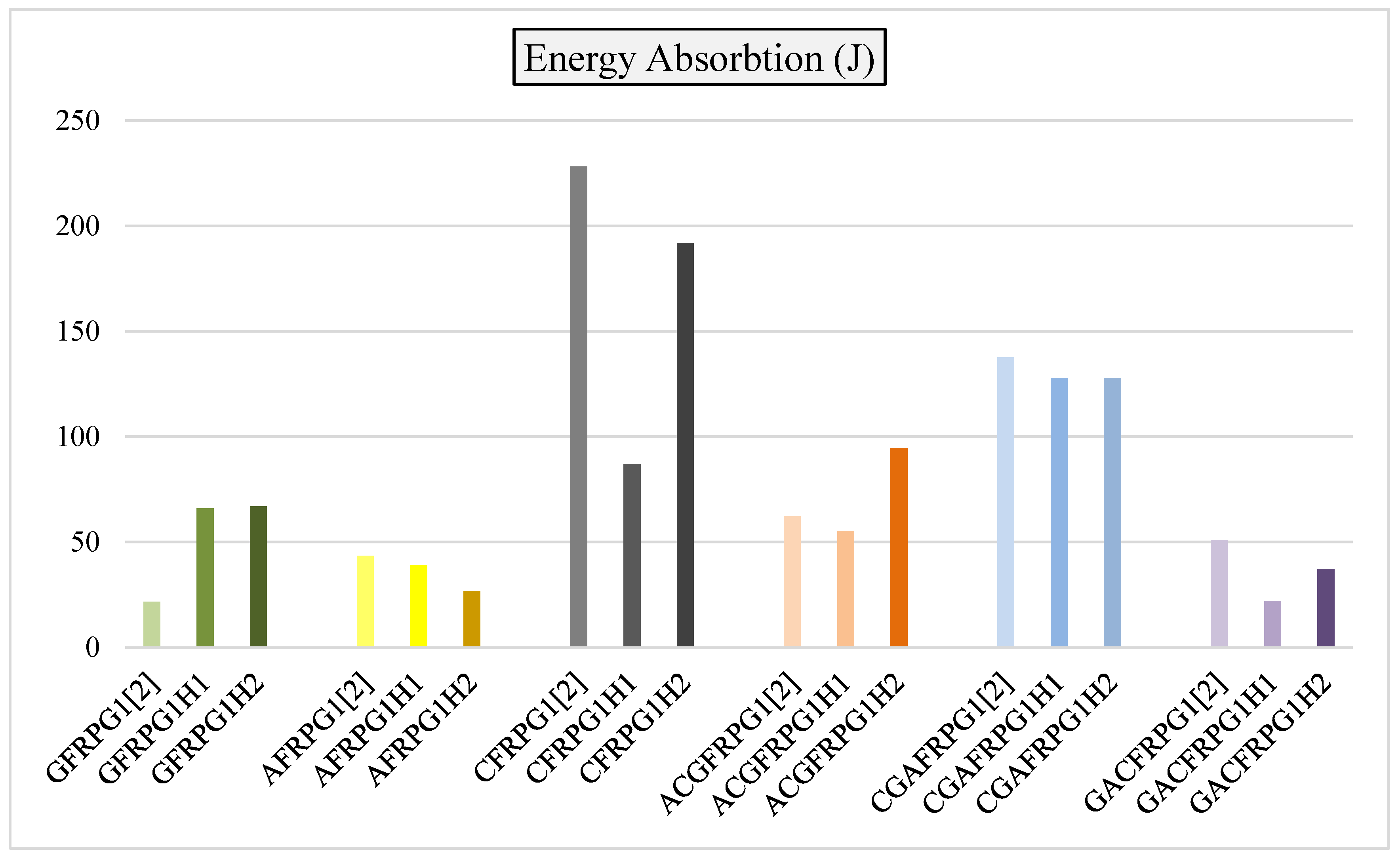
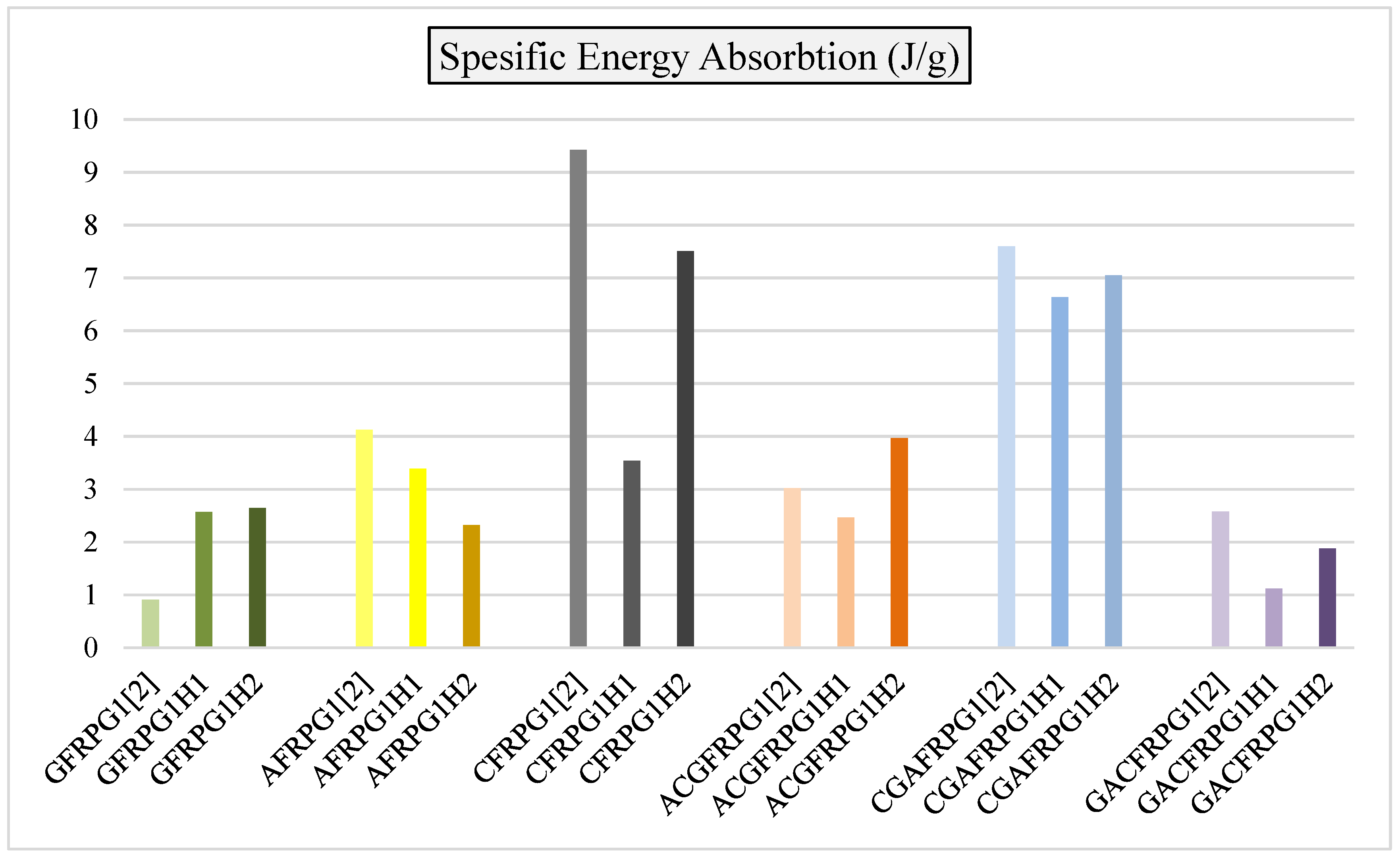
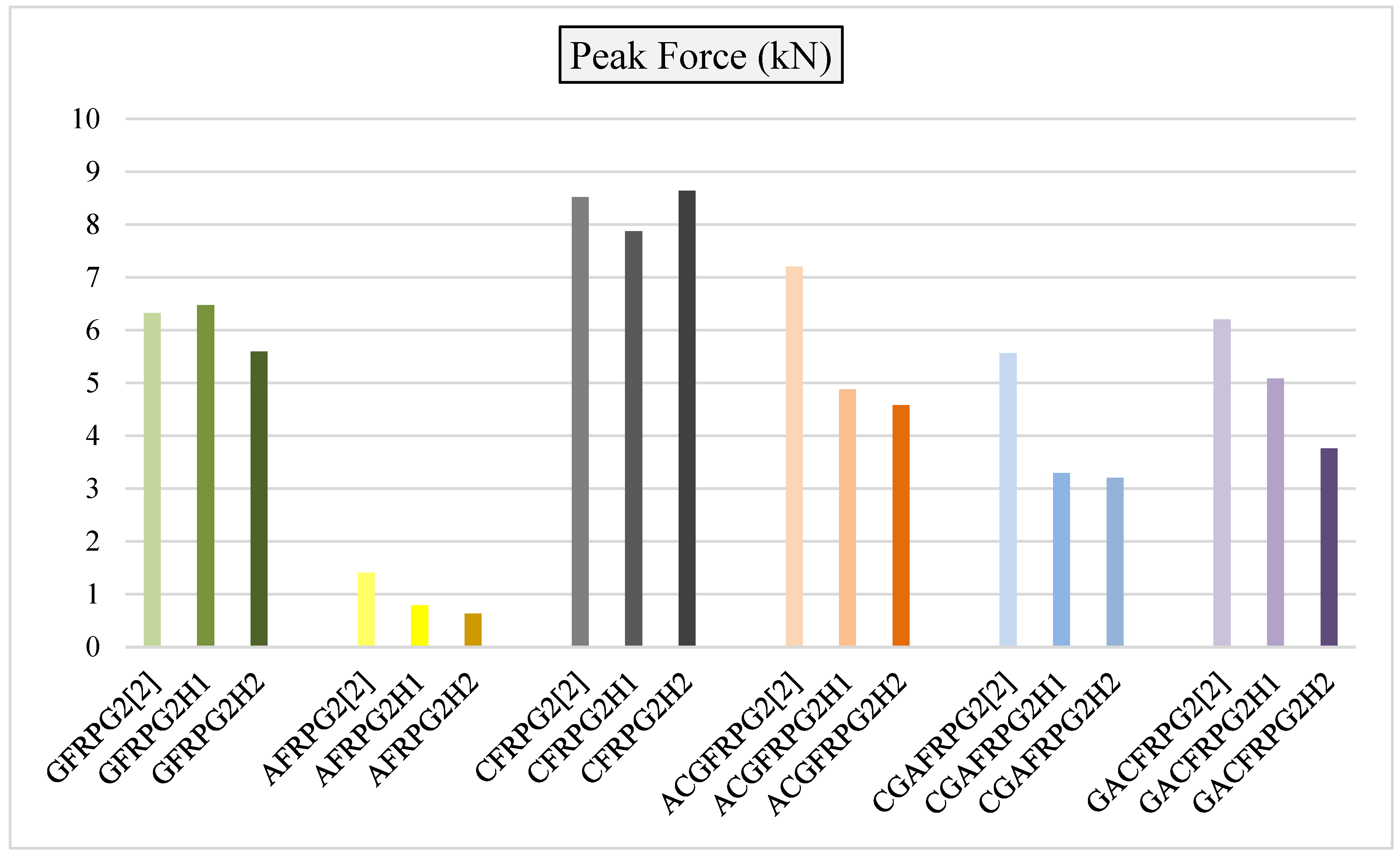
- The highest peak force value was observed in the CFRPG2H2 sample, which is a sample containing 0.50% graphene subjected to 1000 h of hydrothermal aging. The highest specific energy absorption value is also in this sample.
- ➢
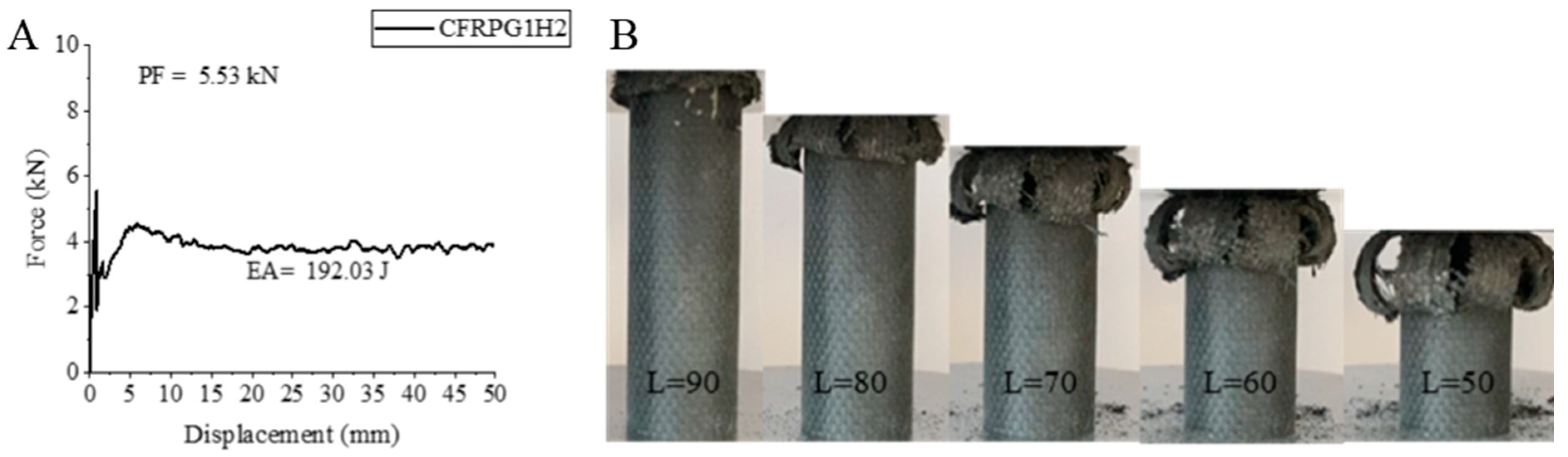
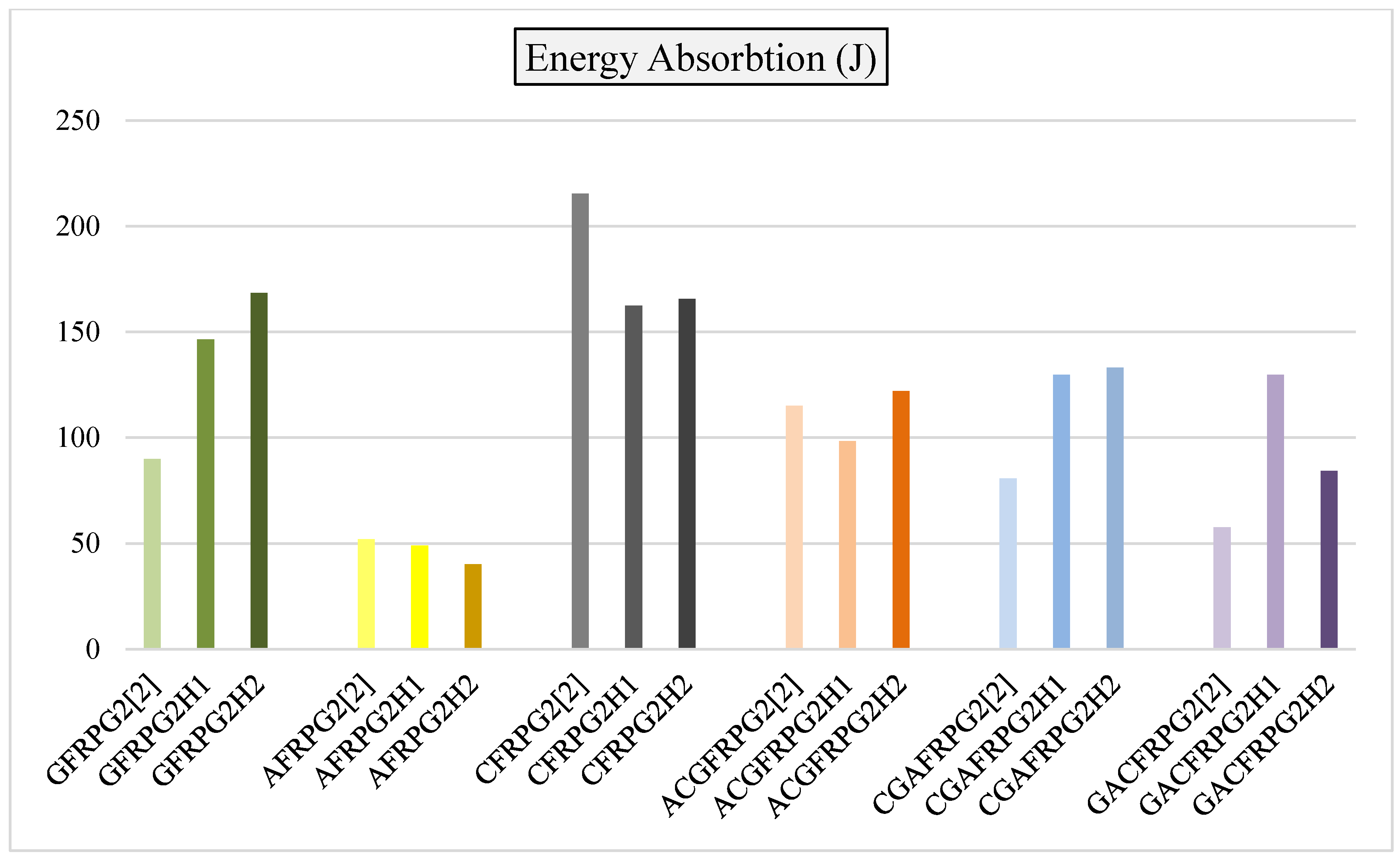
- Among the samples the highest energy absorption value was obtained with the CFRPG1H2 sample, which is another carbon sample, that is, the sample that was hydrothermally aged for 500 h and contained 0.50% graphene.
- ➢
- The lowest peak force was obtained in the AFRPG2H2 sample with aramid fiber, which has low epoxy absorption.
- ➢
- The lowest energy absorption value and specific energy absorption value were observed in the hybrid sample GACFRPG1H1, which contained 500 h aged glass fiber with 0.25% graphene addition inside.
- ➢
- Although decreases were generally observed in the first stage of the hydrothermal aging process, increases were observed in some samples with the extension of the aging period.
- ➢
- As the graphene addition rate increased, general increases were observed in the values of the samples. These increases revealed that the increase in graphene addition reduced the effects of hydrothermal aging.
- ➢
- As a result, carbon fiber-reinforced crush boxes are recommended as crush boxes.
Author Contributions
Funding
Institutional Review Board Statement
Data Availability Statement
Conflicts of Interest
References
- Erkek, B.; Kosedag, E.; Adin, H. Hybridization effect on energy absorption capacity of composite crash boxes. Polym. Compos. 2024, 45, 12349–12361. [Google Scholar] [CrossRef] [Scilit]
- Erkek, B.; Kosedag, E.; Adin, H. The impact of graphene filler on the energy absorption of hybrid composite crash boxes. Int. J. Mech. Mater. Des. 2024, 21, 339–355. [Google Scholar] [CrossRef] [Scilit]
- Bockenheimer, C.; Fata, D.; Possart, W. New aspects of aging in epoxy networks. II. Hydrothermal aging. J. Appl. Polym. Sci. 2004, 91, 369–377. [Google Scholar] [CrossRef] [Scilit]
- El-baky, M.A.; Attia, M. Water absorption effect on the in-plane shear properties of jute–glass–carbon-reinforced composites using Iosipescu test. J. Compos. Mater. 2019, 53, 3033–3045. [Google Scholar] [CrossRef] [Scilit]
- Chakraverty, A.P.; Mohanty, U.K.; Mishra, S.C.; Biswal, B.B. Effect of Hydrothermal immersion and Hygrothermal Conditioning on Mechanical Properties of GRE Composite. IOP Conf. Ser. Mater. Sci. Eng. 2017, 178, 012013. [Google Scholar] [CrossRef] [Scilit]
- Soykok, I.F.; Sayman, O.; Ozen, M.; Korkmaz, B. Failure analysis of mechanically fastened glass fiber/epoxy composite joints under thermal effects. Compos. Part B Eng. 2013, 45, 192–199. [Google Scholar] [CrossRef] [Scilit]
- Mourad, A.-H.I.; Abdel-Magid, B.M.; El-Maaddawy, T.; Grami, M.E. Effect of Seawater and Warm Environment on Glass/Epoxy and Glass/Polyurethane Composites. Appl. Compos. Mater. 2010, 17, 557–573. [Google Scholar] [CrossRef] [Scilit]
- Malik, M.; Saxena, P. A comparative assessment of hydrothermal aging effects on performance and failure modes of additively manufactured continuous basalt fiber-reinforced thermoplastic composites. Compos. Part Appl. Sci. Manuf. 2025, 199, 109195. [Google Scholar] [CrossRef] [Scilit]
- Zhang, X.; Xu, X.; Yang, Y.; Hao, J.; Wu, Z. Hydrothermal aging of carbon fiber reinforced polyether ether ketone composites: Behavior, mechanism and life prediction. Polym. Compos. 2025, 46, 13307–13323. [Google Scholar] [CrossRef] [Scilit]
- Glaskova-Kuzmina, T.; Pinto, R.; Zukiene, K.; Monastyreckis, G.; Spacek, V.; Zeleniakiene, D. Hydrothermal Aging of Basalt Fiber-Reinforced Epoxy Composites Modified with Star-Like Polymer. Polym. Compos. 2025, pc.70315. [Google Scholar] [CrossRef] [Scilit]
- Yu, P.; Yu, Z.; Zhou, X.; Xu, W. Crash Performance of Inward-Inverting Composite Tubes Filled with Foam: Experimentation and Simulation. Materials 2023, 16, 6378. [Google Scholar] [CrossRef] [Scilit]
- Dirgantara, T.; Jusuf, A.; Kurniati, E.O.; Gunawan, L.; Putra, I.S. Crashworthiness analysis of foam–filled square column considering strain rate effect of the foam. Thin-Walled Struct. 2018, 129, 365–380. [Google Scholar] [CrossRef] [Scilit]
- Djamaluddin, F. Optimization of foam-filled crash-box under axial loading for pure electric vehicle. Results Mater. 2024, 21, 100505. [Google Scholar] [CrossRef] [Scilit]
- Kosedag, E. The effect of halloysite nanotubes reinforced epoxy filler on the crushing behavior of aluminum tubes. J. Appl. Polym. Sci. 2024, 141, e54902. [Google Scholar] [CrossRef] [Scilit]
- Kösedağ, E. Investigation of the Effect of Filling Ratio on Mechanical Properties of Pumice Filled Epoxy-Based Composites. Gazi Üniv. Fen Bilim. Derg. Part C Tasar. Teknol. 2023, 11, 431–438. [Google Scholar] [CrossRef] [Scilit]
- De Biasio, A.; Ghasemnejad, H.; Srimanosaowapak, S.; Watson, J.W. Development of multi aluminium foam-filled crash box systems to improve crashworthiness performance of road Service vehicle. Eur. J. Mech.-A Solids 2025, 109, 105433. [Google Scholar] [CrossRef] [Scilit]
- Nguyen, H.; Nguyen, D.; Tran, H.; Tran-van, T. Investigation on multi-corners crash-box structure subjected to axial crushing. J. Phys. Conf. Ser. 2025, 2949, 012051. [Google Scholar] [CrossRef] [Scilit]
- Ciampaglia, A.; Patruno, L.; Ciardiello, R. Design of a Lightweight Origami Composite Crash Box: Experimental and Numerical Study on the Absorbed Energy in Frontal Impacts. J. Compos. Sci. 2024, 8, 224. [Google Scholar] [CrossRef] [Scilit]
- El-baky, M.A.A.; Allah, M.M.A.; Kamel, M.; Abdel-Aziem, W. Fabrication of Glass/Jute Hybrid Composite over Wrapped Aluminum Cylinders: An Advanced Material for Automotive Applications. Fibers Polym. 2023, 24, 143–155. [Google Scholar] [CrossRef] [Scilit]
- Qin, X.; Ma, Q.; Gan, X.; Cai, M.; Cai, W. Failure analysis and multi-objective optimization of crashworthiness of variable thickness Al-CFRP hybrid tubes under multiple loading conditions. Thin-Walled Struct. 2023, 184, 110452. [Google Scholar] [CrossRef] [Scilit]
- Zhu, G.; Zhao, X.; Shi, P.; Yu, Q. Crashworthiness Analysis and Design of Metal/CFRP Hybrid Structures Under Lateral Loading. IEEE Access 2019, 7, 64558–64570. [Google Scholar] [CrossRef] [Scilit]
- Zhu, G.; Sun, G.; Liu, Q.; Li, G.; Li, Q. On crushing characteristics of different configurations of metal-composites hybrid tubes. Compos. Struct. 2017, 175, 58–69. [Google Scholar] [CrossRef] [Scilit]
- Zhang, X.; Zhang, H.; Wen, Z. Axial crushing of tapered circular tubes with graded thickness. Int. J. Mech. Sci. 2015, 92, 12–23. [Google Scholar] [CrossRef] [Scilit]
- Yildirim, H.; Pihtili, H.; Çetïnkaya, Ş. Investigation of torsional behaviors of carbon/epoxy shafts at a different orientation angles by experimental and finite element method which manufactured with filament winding method using composite materials. Eur. J. Technol. 2016, 6, 16–25. [Google Scholar]
- Kim, J.-S.; Yoon, H.-J.; Shin, K.-B. A study on crushing behaviors of composite circular tubes with different reinforcing fibers. Int. J. Impact Eng. 2011, 38, 198–207. [Google Scholar] [CrossRef] [Scilit]
- El-baky, M.A.A.; Allah, M.M.A.; Kamel, M.; Abd-Elaziem, W. Lightweight cost-effective hybrid materials for energy absorption applications. Sci. Rep. 2022, 12, 21101. [Google Scholar] [CrossRef] [Scilit]
- Alshahrani, H.; Sebaey, T.A.; Hegazy, D.A.; El-Baky, M.A.A. Effects of halloysite clay nanotubes on the energy absorption and failure mechanisms of glass/epoxy composite tubes subjected to quasi-static axial crushing. Polym. Compos. 2022, 43, 7099–7117. [Google Scholar] [CrossRef] [Scilit]
- Alshahrani, H.; Sebaey, T.A.; Hegazy, D.A.; El-baky, M.A.A. Development of efficient energy absorption components for crashworthiness applications: An experimental study. Polym. Adv. Technol. 2022, 33, 2921–2942. [Google Scholar] [CrossRef] [Scilit]
- Gupta, R.; Kumar, G.; Bisaria, H.; Zafar, S. Effect of graphene nanoparticles on electrical, mechanical and viscoelastic behavior of CFRP multifunctional multiscale composites. Polym. Compos. 2025, 46, 6885–6899. [Google Scholar] [CrossRef] [Scilit]
- Li, R.; Ye, L.; Li, G. Long-Term Hydrothermal Aging Behavior and Aging Mechanism of Glass Fibre Reinforced Polyamide 6 Composites. J. Macromol. Sci. Part B 2018, 57, 67–82. [Google Scholar] [CrossRef] [Scilit]
- Fulmali, A.O.; Sen, B.; Nayak, B.A.; Prusty, R.K. Effect of repeated hydrothermal cycling on the durability of glass fiber/epoxy composites with and without carbon nanotube reinforcement. Polym. Compos. 2021, 42, 6160–6172. [Google Scholar] [CrossRef] [Scilit]
- Alessi, S.; Pitarresi, G.; Spadaro, G. Effect of hydrothermal ageing on the thermal and delamination fracture behaviour of CFRP composites. Compos. Part B Eng. 2014, 67, 145–153. [Google Scholar] [CrossRef] [Scilit]
- Ahmad, M.A.; Ridzuan, M.J.; Majid, M.A.; Sapuan, S.M.; Ismail, M.S.; Razlan, Z.M.; Shahriman, A.B. Thermal behaviour of graphene nanoplatelets and multiwalled carbon nanotubes filled-glass fibre-reinforced epoxy composites. J. Therm. Anal. Calorim. 2024, 149, 6063–6080. [Google Scholar] [CrossRef] [Scilit]
- Bedi, S.S.; Mallesha, V.; Mahesh, V.; Mahesh, V.; Ponnusami, S.A. Investigation of low-percentage graphene reinforcement on the mechanical behaviour of additively manufactured polyethylene terephthalate glycol composites. J. Thermoplast. Compos. Mater. 2024, 37, 910–930. [Google Scholar] [CrossRef] [Scilit]
- Chen, D.; Li, J.; Sun, K.; Fan, J. Graphene-reinforced metal matrix composites: Fabrication, properties, and challenges. Int. J. Adv. Manuf. Technol. 2023, 125, 2925–2965. [Google Scholar] [CrossRef] [Scilit]
- El-Ghazaly, A.; Anis, G.; Salem, H.G. Effect of graphene addition on the mechanical and tribological behavior of nanostructured AA2124 self-lubricating metal matrix composite. Compos. Part Appl. Sci. Manuf. 2017, 95, 325–336. [Google Scholar] [CrossRef] [Scilit]
- Xian, G.; Bai, Y.; Qi, X.; Wang, J.; Tian, J.; Xiao, H. Hygrothermal aging on the mechanical property and degradation mechanism of carbon fiber reinforced epoxy composites modified by nylon 6. J. Mater. Res. Technol. 2024, 33, 6297–6306. [Google Scholar] [CrossRef] [Scilit]
- Fang, M.; Zhang, N.; Huang, M.; Lu, B.; Lamnawar, K.; Liu, C.; Shen, C. Effects of Hydrothermal Aging of Carbon Fiber Reinforced Polycarbonate Composites on Mechanical Performance and Sand Erosion Resistance. Polymers 2020, 12, 2453. [Google Scholar] [CrossRef] [Scilit]
- Sepetcioglu, H.; Gunoz, A.; Kara, M. Effect of hydrothermal ageing on the mechanical behaviour of graphene nanoplatelets reinforced basalt fibre epoxy composite pipes. Polym. Polym. Compos. 2021, 29, S166–S177. [Google Scholar] [CrossRef] [Scilit]
- Zuo, W.; Luo, Q.; Li, Q.; Sun, G. Effect of thermal and hydrothermal aging on the crashworthiness of carbon fiber reinforced plastic composite tubes. Compos. Struct. 2023, 303, 116136. [Google Scholar] [CrossRef] [Scilit]
- Oğuz, Z.A.; Özbek, Ö.; Erkliğ, A.; Bozkurt, Ö.Y. Hydrothermal aging effect on crushing characteristics of intraply hybrid composite pipes. Eng. Struct. 2023, 297, 117011. [Google Scholar] [CrossRef] [Scilit]














| Fibers | Density (g/cm3) | Tensile Strength (MPa) | Poisson’s Ratio | Elongation (%) | Young’s Modulus (GPa) | Shear Modulus (GPa) |
|---|---|---|---|---|---|---|
| Glass | 1.3 | 3400 | 0.22 | 1.8–3.2 | 76 | 33 |
| Carbon | 1.5 | 4300–4600 | 0.38 | 1.75–1.98 | 2550 | 110 |
| Aramid | 1.4 | 3000–3150 | 0.279 | 2.5–3.6 | 67 | 16.2 |
| Density (g/cm3) | 1.13–1.17 |
| Viscosity (mPas) | 700–900 |
| Operating temperature before applying heat treatment (°C) | −60 to +50 |
| Operating temperature after applying heat treatment (°C) | −60 to +80 |
| Application temperature (°C) | +10 to +50 |
| Samples | Fiber Type * | Graphene Ratio (%) | Hydrothermal Aging Time (Hours) |
|---|---|---|---|
| GFRPG1H1 | Glass | 0.25 | 500 |
| AFRPG1H1 | Aramid | 0.25 | 500 |
| CFRPG1H1 | Carbon | 0.25 | 500 |
| ACGFRPG1H1 | Aramid–Carbon–Glass | 0.25 | 500 |
| CGAFRPG1H1 | Carbon–Glass–Aramid | 0.25 | 500 |
| GACFRPG1H1 | Glass–Aramid–Carbon | 0.25 | 500 |
| GFRPG1H2 | Glass | 0.25 | 1000 |
| AFRPG1H2 | Aramid | 0.25 | 1000 |
| CFRPG1H2 | Carbon | 0.25 | 1000 |
| ACGFRPG1H2 | Aramid–Carbon–Glass | 0.25 | 1000 |
| CGAFRPG1H2 | Carbon–Glass–Aramid | 0.25 | 1000 |
| GACFRPG1H2 | Glass–Aramid–Carbon | 0.25 | 1000 |
| GFRPG2H1 | Glass | 0.50 | 500 |
| AFRPG2H1 | Aramid | 0.50 | 500 |
| CFRPG2H1 | Carbon | 0.50 | 500 |
| ACGFRPG2H1 | Aramid–Carbon–Glass | 0.50 | 500 |
| CGAFRPG2H1 | Carbon–Glass–Aramid | 0.50 | 500 |
| GACFRPG2H1 | Glass–Aramid–Carbon | 0.50 | 500 |
| GFRPG2H2 | Glass | 0.50 | 1000 |
| AFRPG2H2 | Aramid | 0.50 | 1000 |
| CFRPG2H2 | Carbon | 0.50 | 1000 |
| ACGFRPG2H2 | Aramid–Carbon–Glass | 0.50 | 1000 |
| CGAFRPG2H2 | Carbon–Glass–Aramid | 0.50 | 1000 |
| GACFRPG2H2 | Glass–Aramid–Carbon | 0.50 | 1000 |
| Tubes | F Maximum (kN) | Energy Absorption (J) | Weight (g) | Specific Energy Absorption J/g |
|---|---|---|---|---|
| GFRPG1H1 | 6.83 | 66.07 | 25.65 | 2.57 |
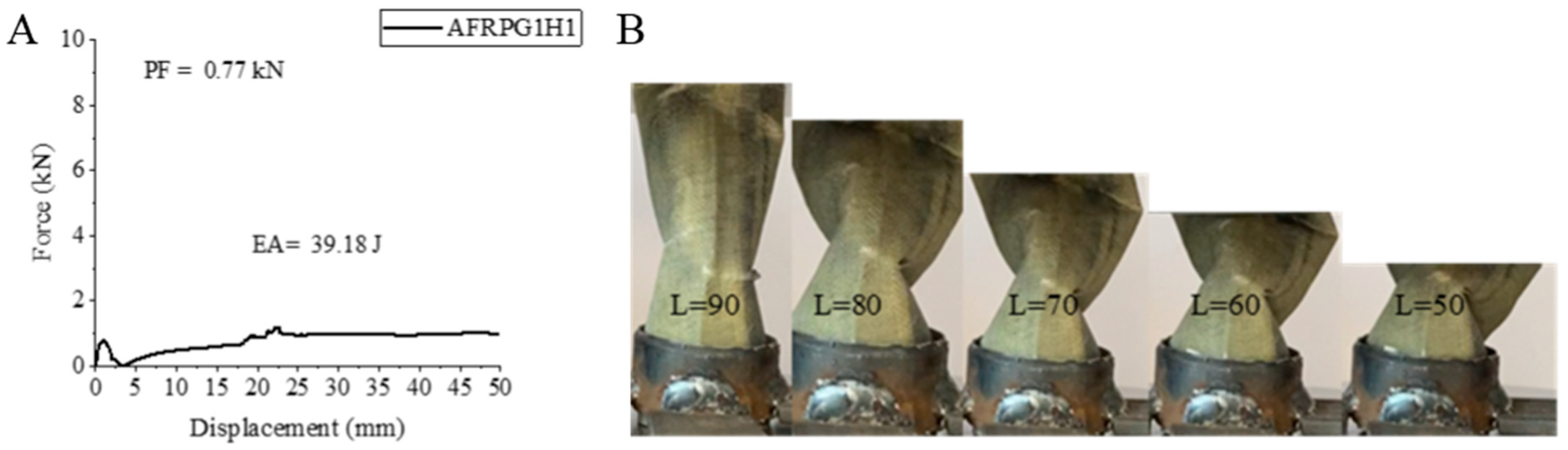
| AFRPG1H1 | 0.77 | 39.18 | 11.54 | 3.39 |
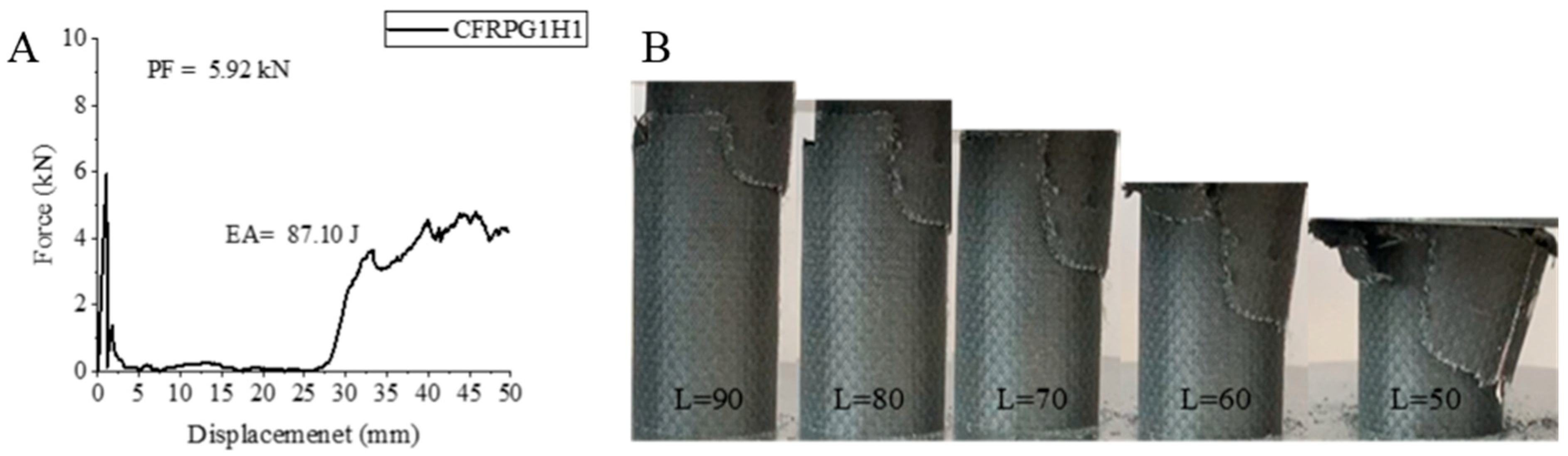
| CFRPG1H1 | 5.92 | 87.10 | 24.59 | 3.54 |
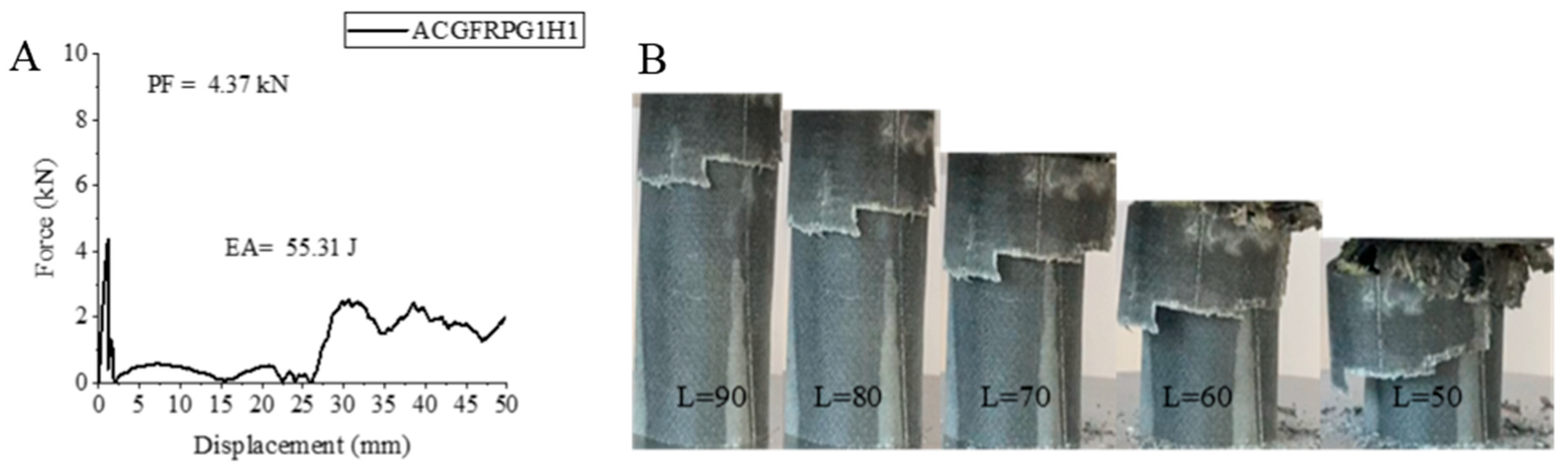
| ACGFRPG1H1 | 4.37 | 55.31 | 22.31 | 2.47 |
| CGAFRPG1H1 | 3.22 | 127.97 | 19.27 | 6.64 |
| GACFRPG1H1 | 1.94 | 22.18 | 19.77 | 1.12 |
| Tubes | F Maximum (kN) | Energy Absorption (J) | Weight (g) | Specific Energy Absorption (J/g) |
|---|---|---|---|---|
| GFRPG1H2 | 5.25 | 66.99 | 25.25 | 2.65 |
| AFRPG1H2 | 0.90 | 26.84 | 11.56 | 2.32 |
| CFRPG1H2 | 5.53 | 192.03 | 25.56 | 7.51 |
| ACGFRPG1H2 | 2.91 | 94.61 | 23.83 | 3.97 |
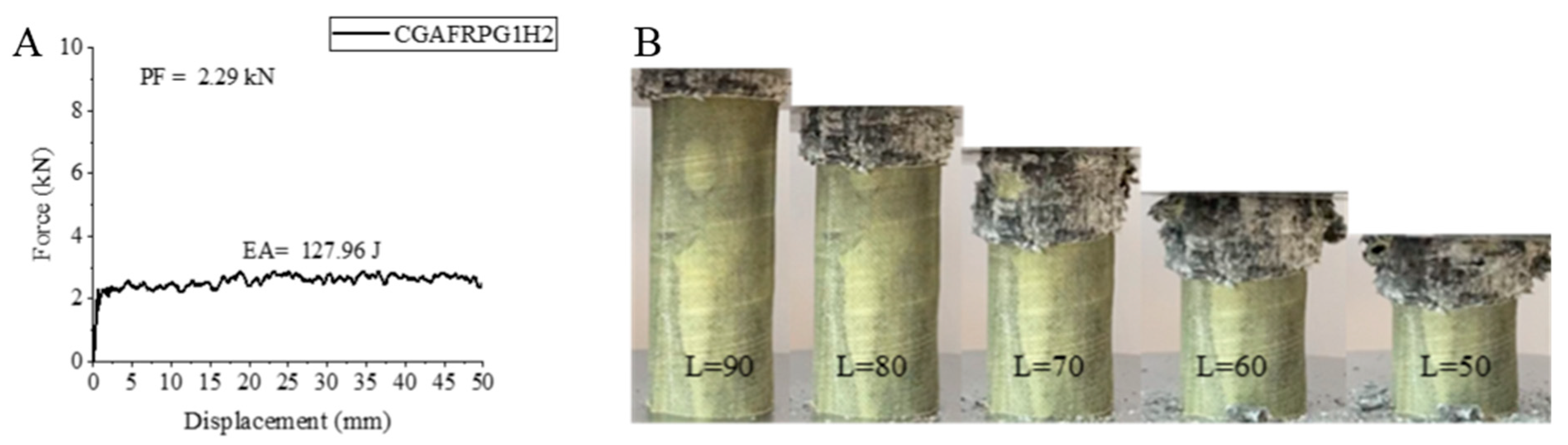
| CGAFRPG1H2 | 2.29 | 127.96 | 18.14 | 7.05 |
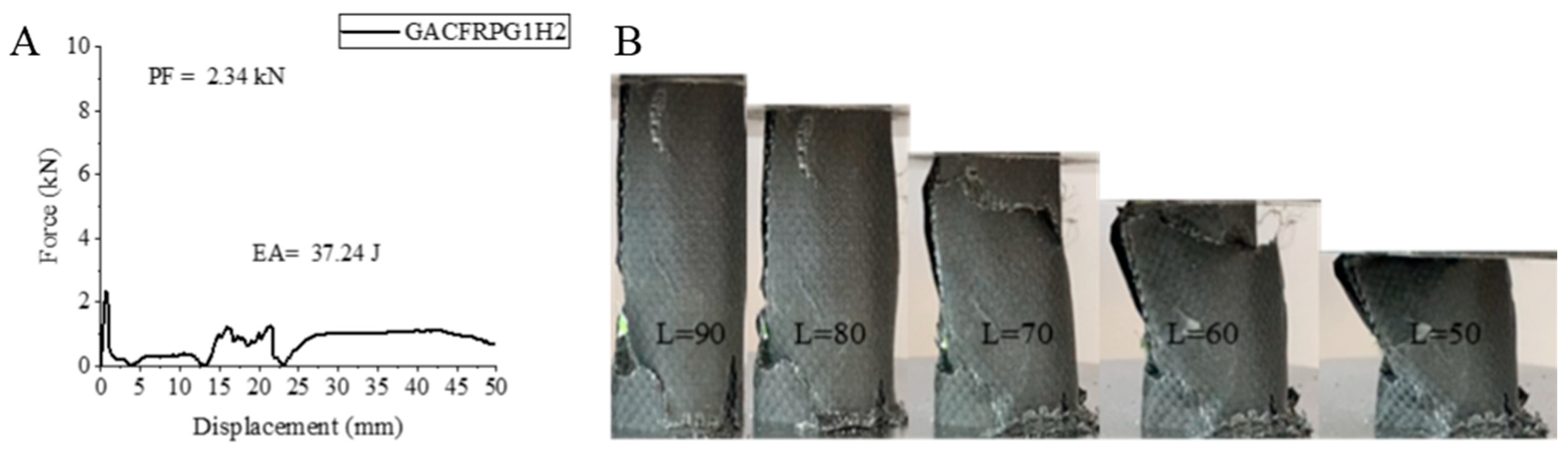
| GACFRPG1H2 | 2.34 | 37.24 | 19.77 | 1.88 |
| Tubes | F Maximum (kN) | Energy Absorption (J) | Weight (g) | Specific Energy Absorption (J/g) |
|---|---|---|---|---|
| GFRPG2H1 | 6.47 | 146.51 | 27.33 | 5.36 |
| AFRPG2H1 | 0.79 | 49.08 | 11.46 | 4.28 |
| CFRPG2H1 | 7.87 | 162.57 | 21.43 | 7.58 |
| ACGFRPG2H1 | 4.88 | 98.49 | 25.41 | 3.87 |
| CGAFRPG2H1 | 3.29 | 129.80 | 19.29 | 6.72 |
| GACFRPG2H1 | 5.08 | 129.73 | 20.17 | 6.43 |
| Tubes | F Maximum (kN) | Energy Absorption (J) | Weight (g) | Specific Energy Absorption (J/g) |
|---|---|---|---|---|
| GFRPG2H2 | 5.59 | 168.52 | 26.35 | 6.39 |
| AFRPG2H2 | 0.63 | 40.25 | 11.47 | 3.50 |
| CFRPG2H2 | 8.64 | 165.73 | 21.30 | 7.78 |
| ACGFRPG2H2 | 4.58 | 122.10 | 25.35 | 4.81 |
| CGAFRPG2H2 | 3.20 | 133.15 | 19.29 | 6.90 |
| GACFRPG2H2 | 3.76 | 84.26 | 20.95 | 4.02 |
Disclaimer/Publisher’s Note: The statements, opinions and data contained in all publications are solely those of the individual author(s) and contributor(s) and not of MDPI and/or the editor(s). MDPI and/or the editor(s) disclaim responsibility for any injury to people or property resulting from any ideas, methods, instructions or products referred to in the content. |
© 2026 by the authors. Licensee MDPI, Basel, Switzerland. This article is an open access article distributed under the terms and conditions of the Creative Commons Attribution (CC BY) license.
Share and Cite
Erkek, B.; Adin, M.Ş.; Kosedag, E.; Bronis, M.; Adin, H. Effects of Artificial Hydrothermal Aging on Crush Boxes Made from Glass, Carbon and Aramid Fiber-Reinforced Hybrid Composites. Polymers 2026, 18, 249. https://doi.org/10.3390/polym18020249
Erkek B, Adin MŞ, Kosedag E, Bronis M, Adin H. Effects of Artificial Hydrothermal Aging on Crush Boxes Made from Glass, Carbon and Aramid Fiber-Reinforced Hybrid Composites. Polymers. 2026; 18(2):249. https://doi.org/10.3390/polym18020249
Chicago/Turabian StyleErkek, Baran, Mehmet Şükrü Adin, Ertan Kosedag, Mateusz Bronis, and Hamit Adin. 2026. "Effects of Artificial Hydrothermal Aging on Crush Boxes Made from Glass, Carbon and Aramid Fiber-Reinforced Hybrid Composites" Polymers 18, no. 2: 249. https://doi.org/10.3390/polym18020249
APA StyleErkek, B., Adin, M. Ş., Kosedag, E., Bronis, M., & Adin, H. (2026). Effects of Artificial Hydrothermal Aging on Crush Boxes Made from Glass, Carbon and Aramid Fiber-Reinforced Hybrid Composites. Polymers, 18(2), 249. https://doi.org/10.3390/polym18020249