Surface Erosion–Corona Synergistic Degradation Characteristics and Material Adaptability of High-Temperature Vulcanized Silicone Rubber in Desert Regions


Abstract
1. Introduction
2. Materials
2.1. HTV Silicone Rubber Formulation
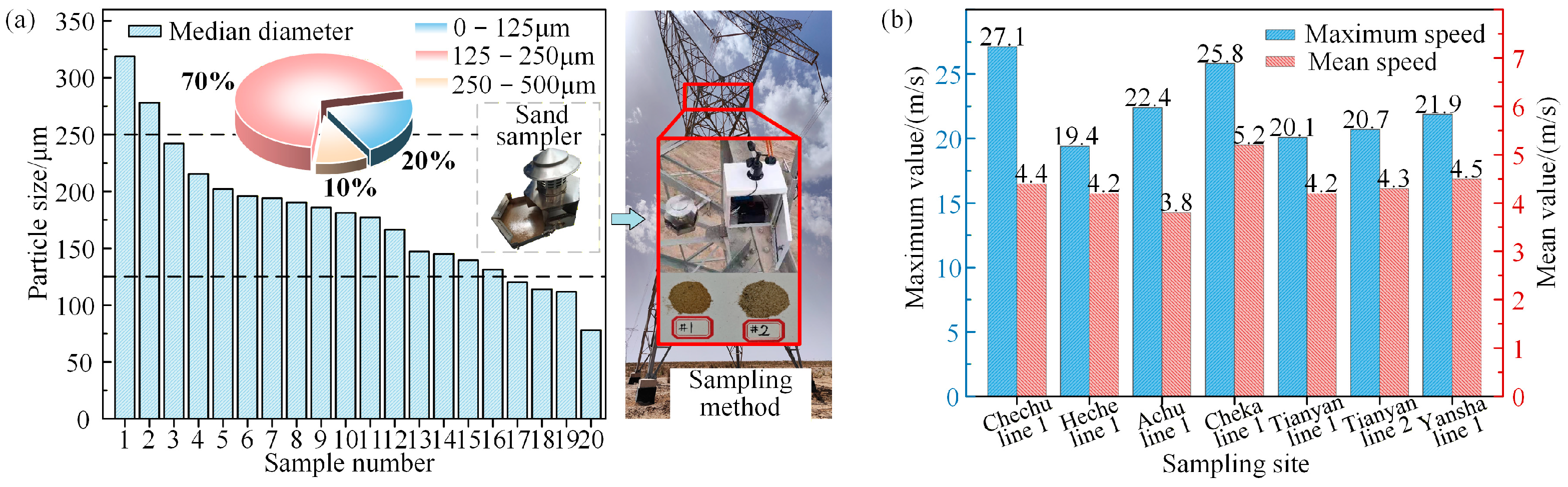
2.2. Abrasive Particles
3. Methods
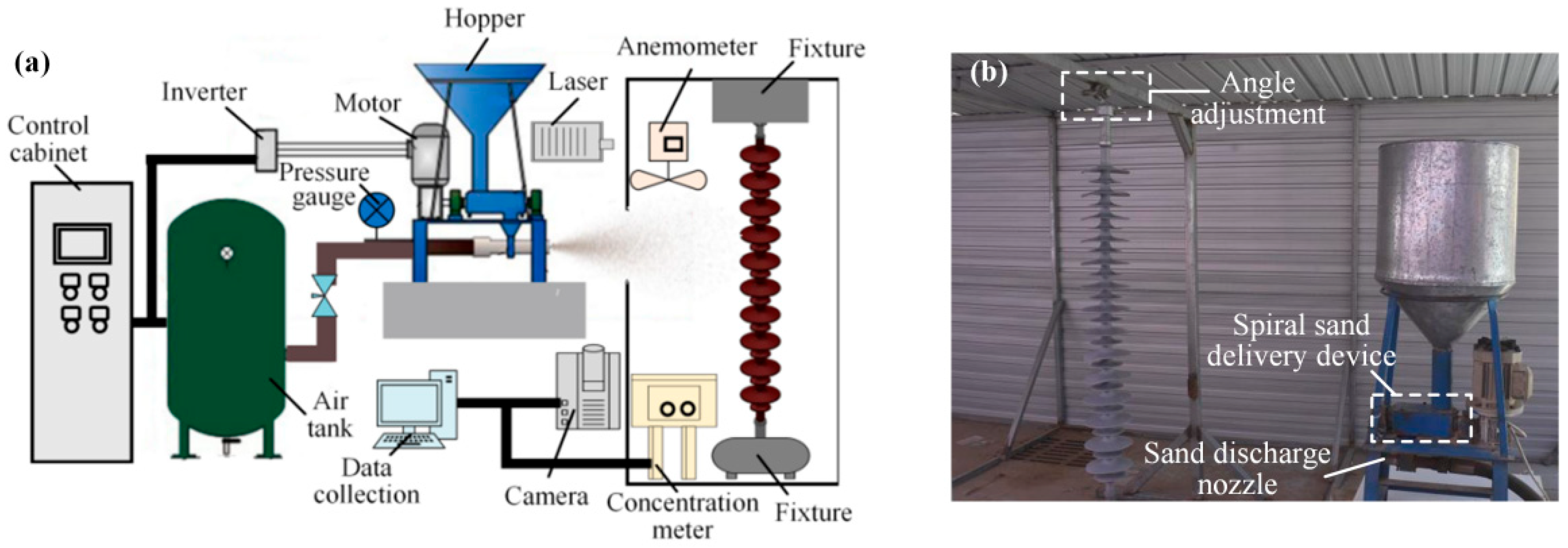
3.1. Windblown Sand Erosion Test Apparatus and Method
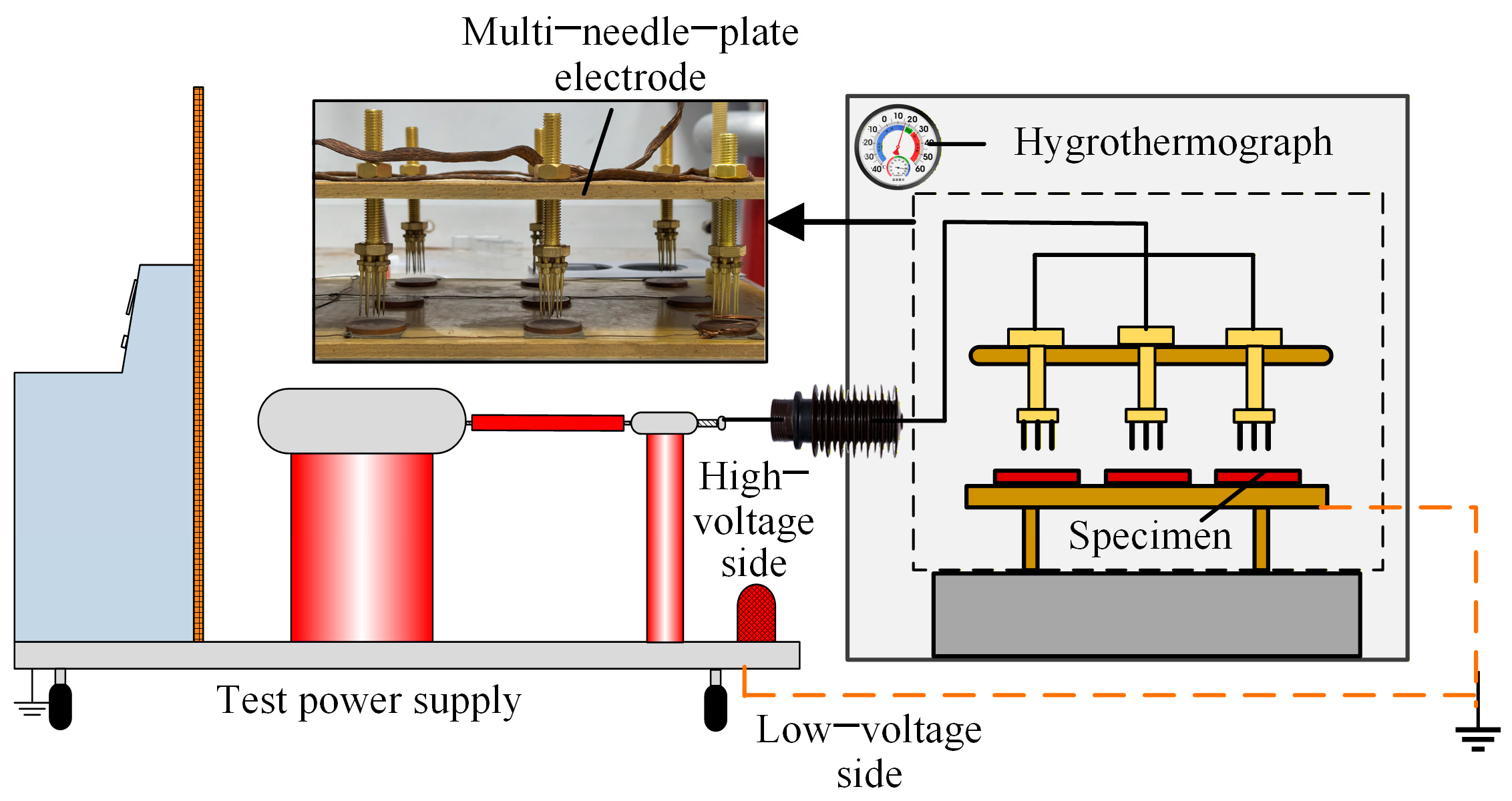
3.2. Corona Aging Test Apparatus and Method
3.3. Experimental Procedures
4. Results and Discussion
4.1. Performance Changes Under Sand Erosion
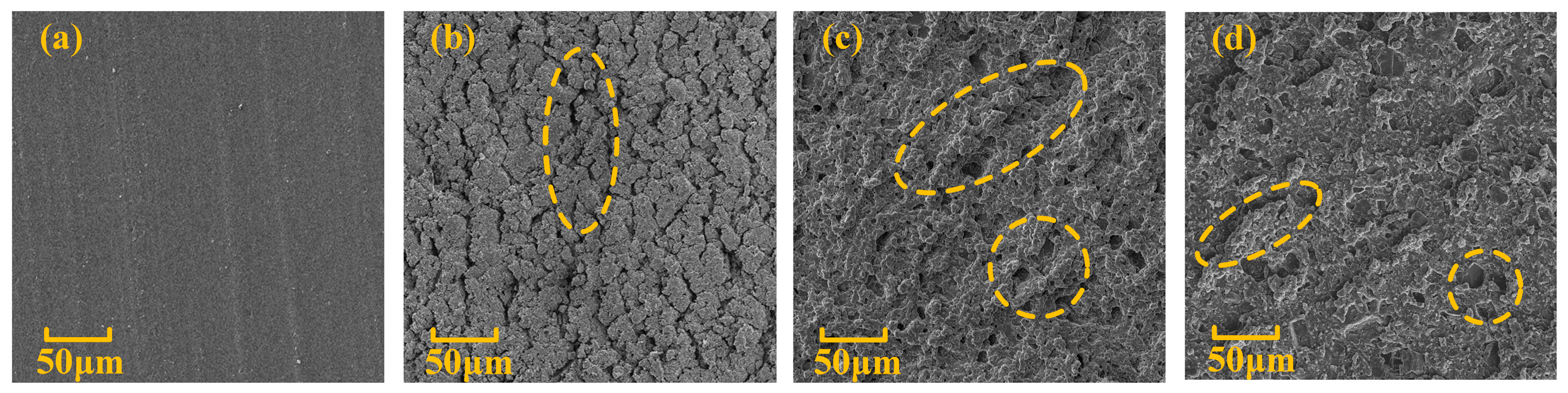
4.1.1. Micro-Morphology
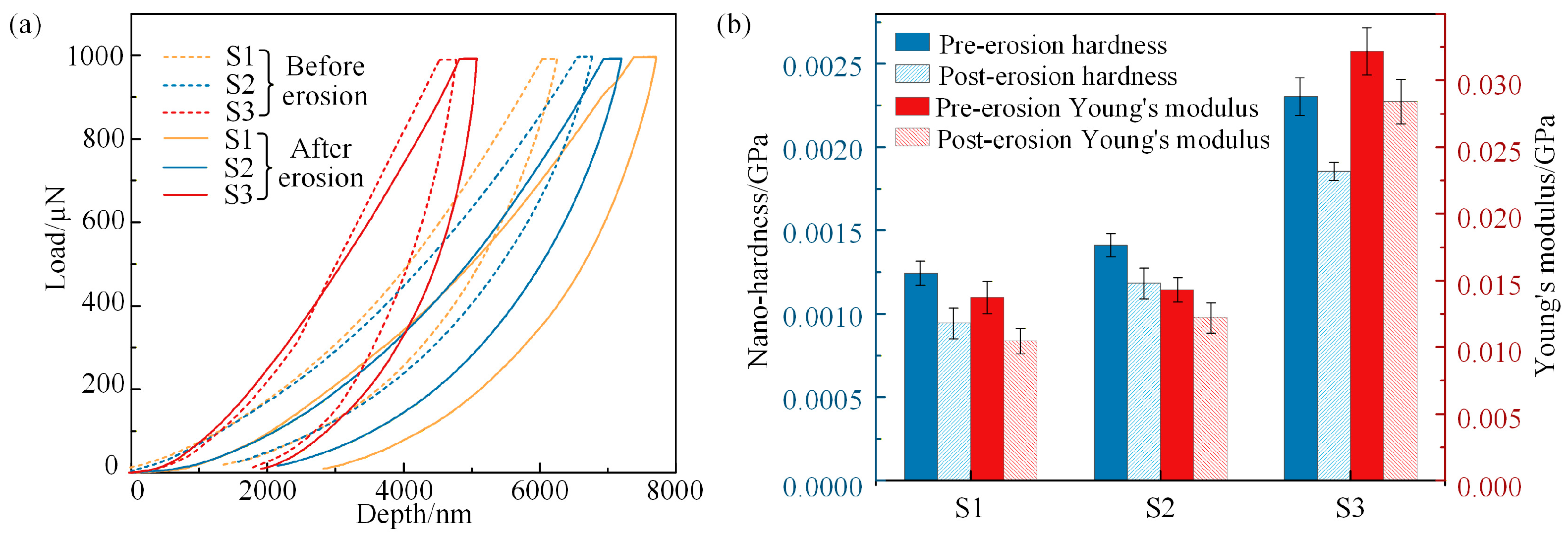
4.1.2. Micro-Mechanical Properties
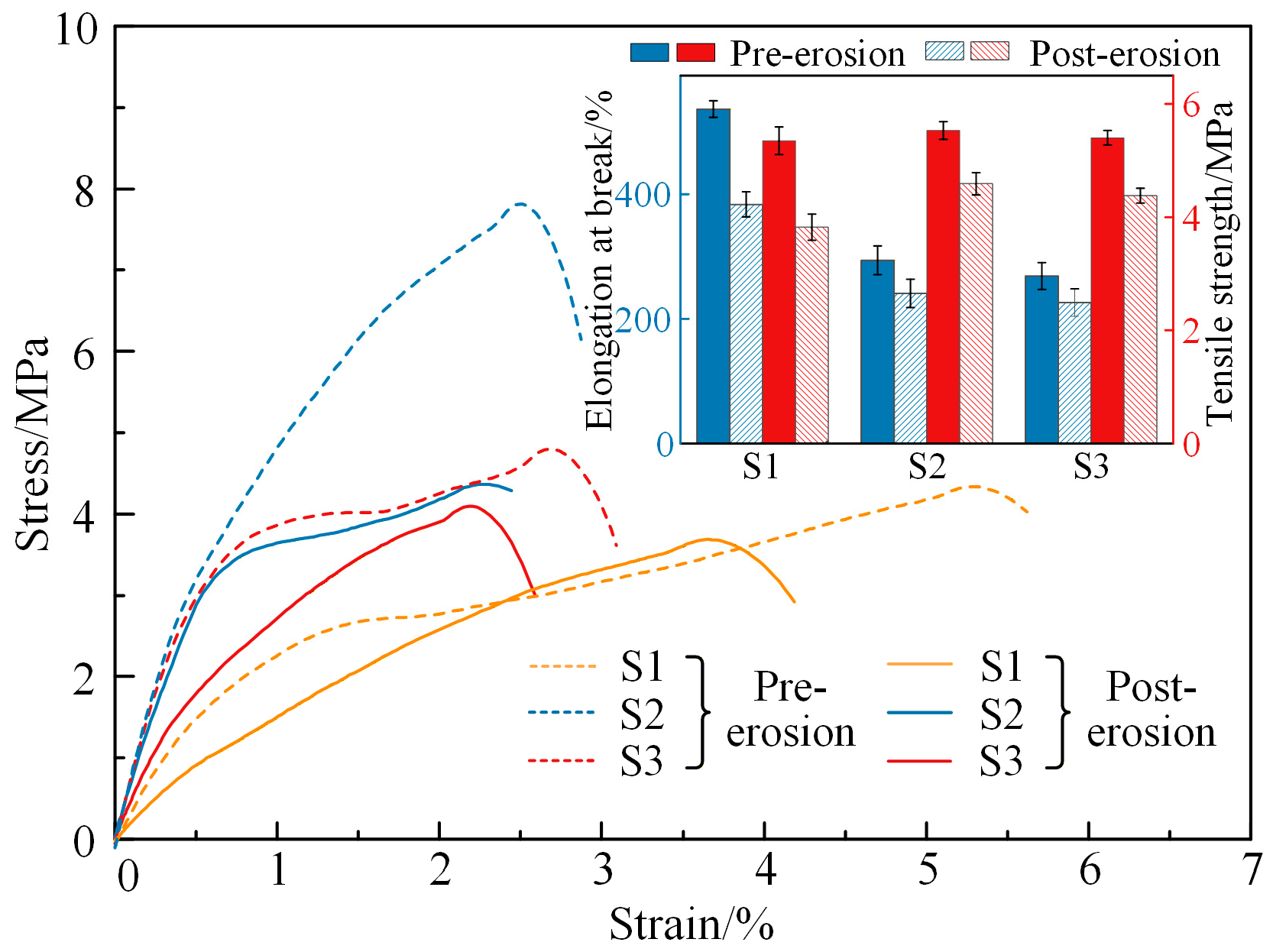
4.1.3. Macro-Mechanical Properties
4.2. Performance Changes Under the Synergistic Effect of Erosion and Corona
4.2.1. Surface Morphology and Elemental Distribution
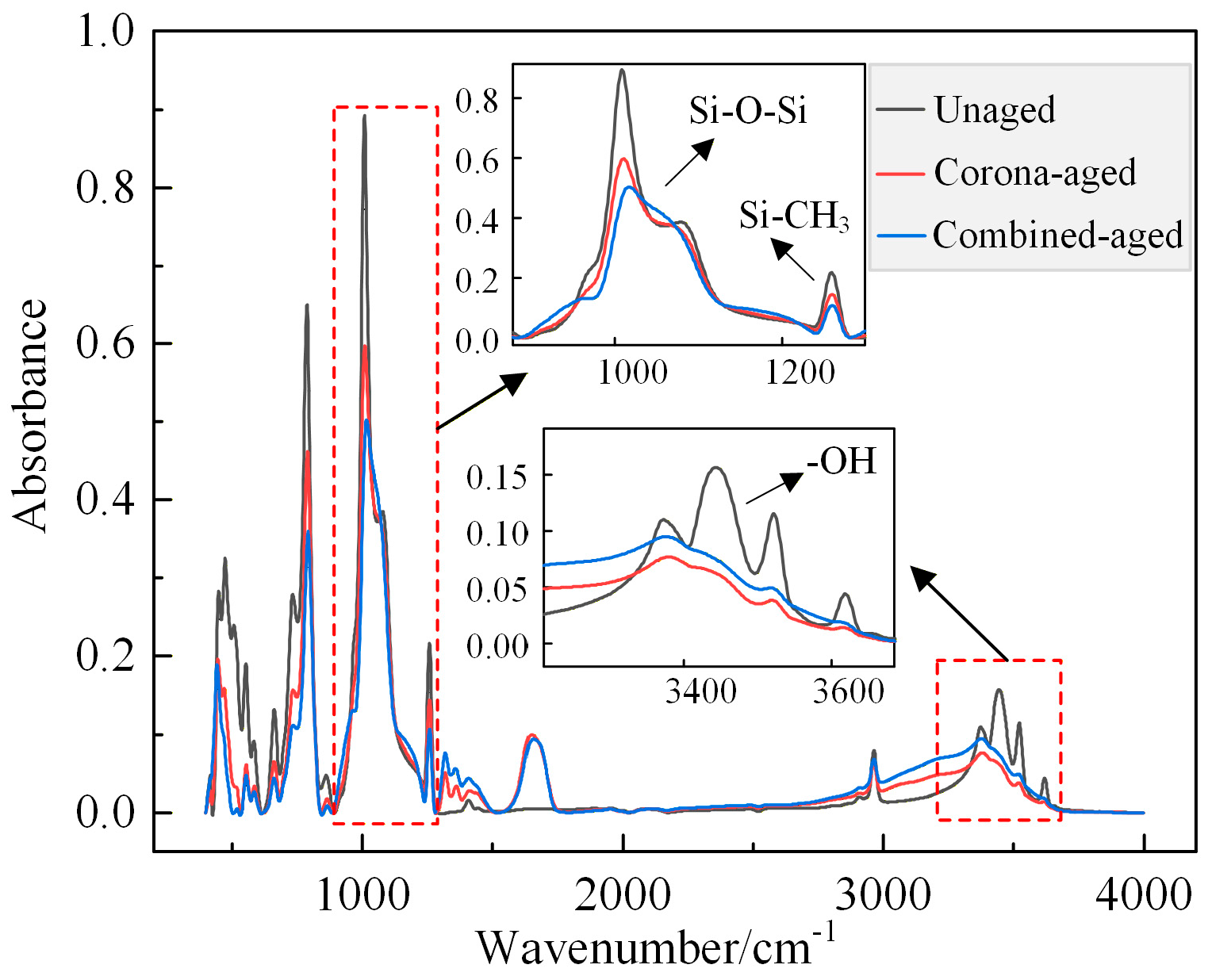
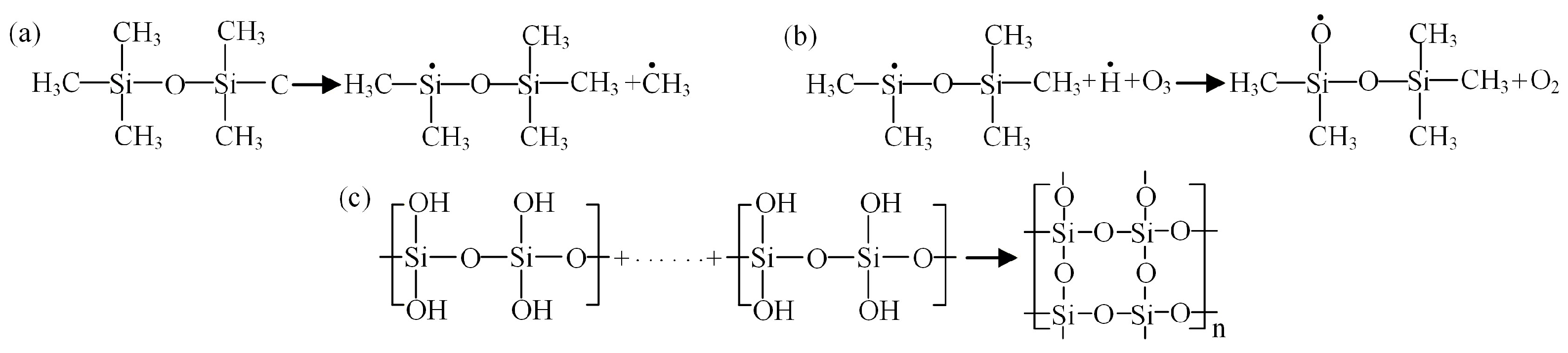
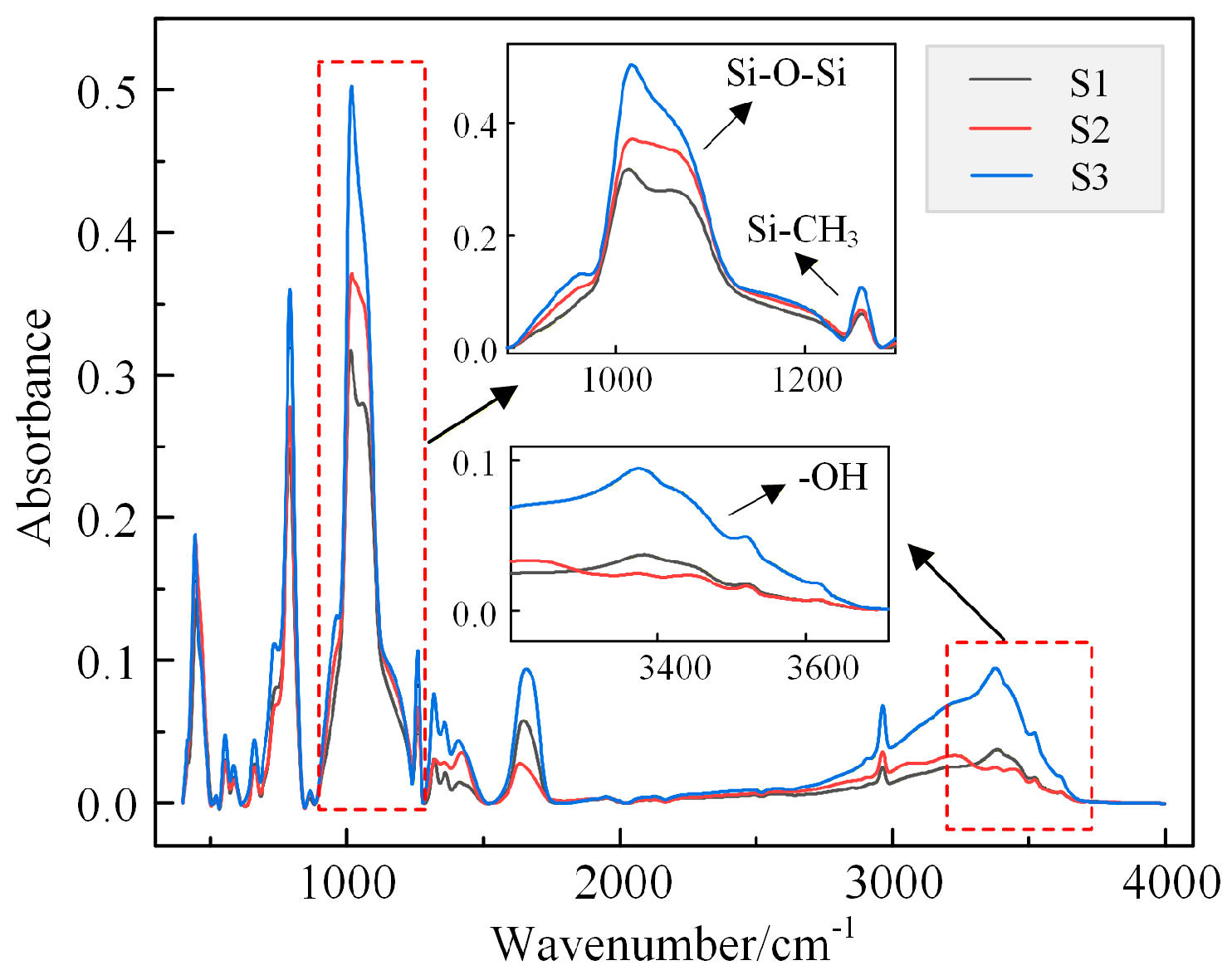
4.2.2. Physicochemical Properties
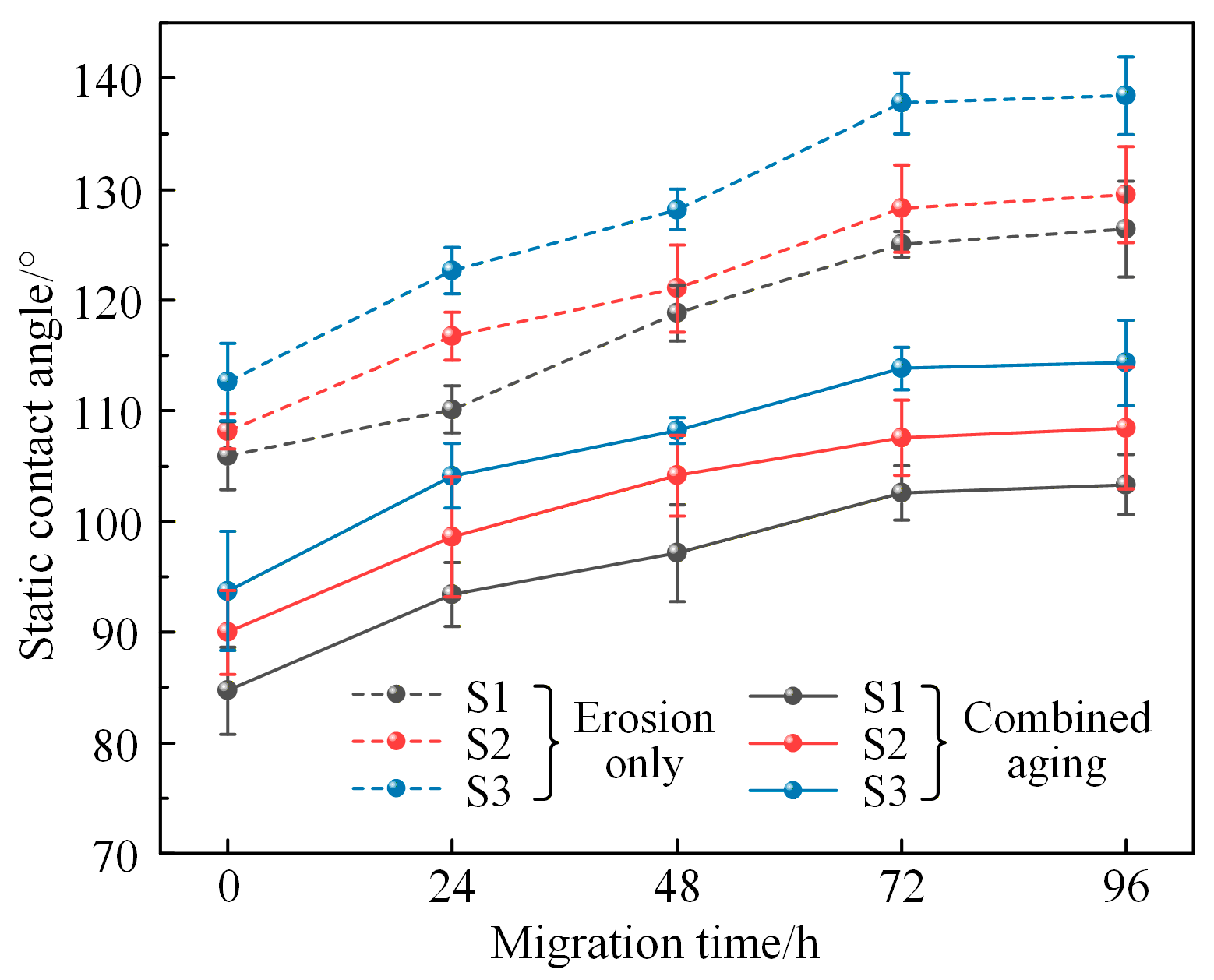
4.2.3. Hydrophobic Transfer Property
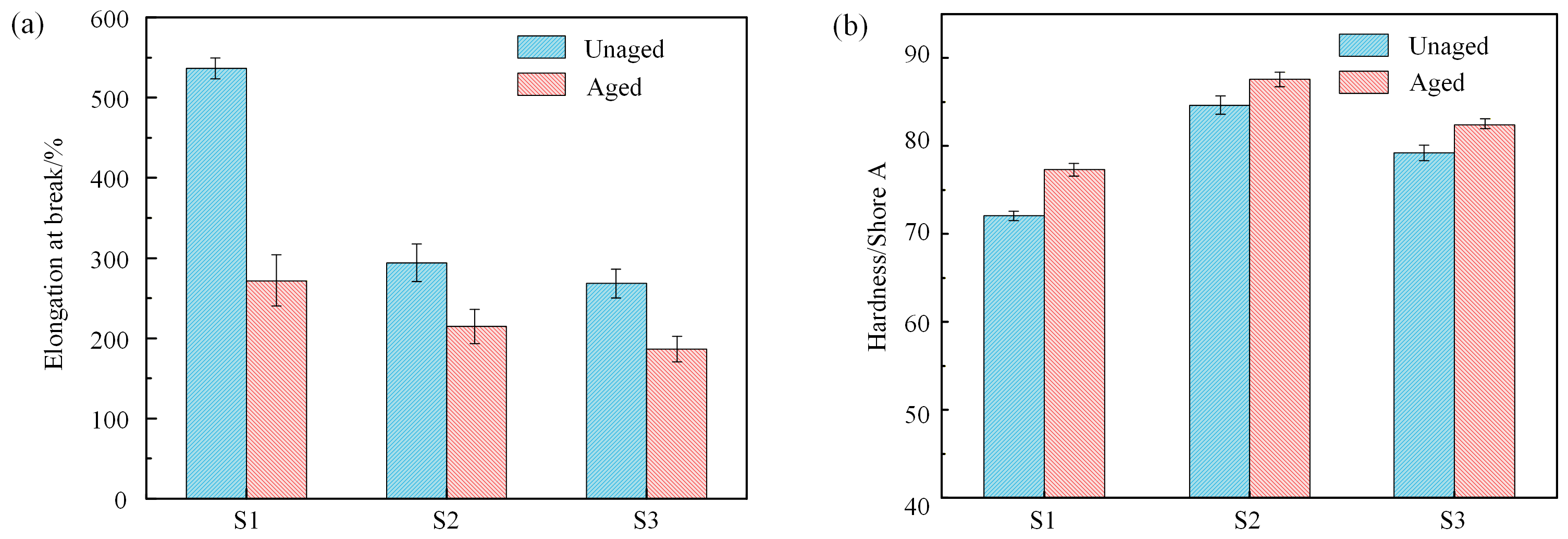
4.2.4. Mechanical Properties
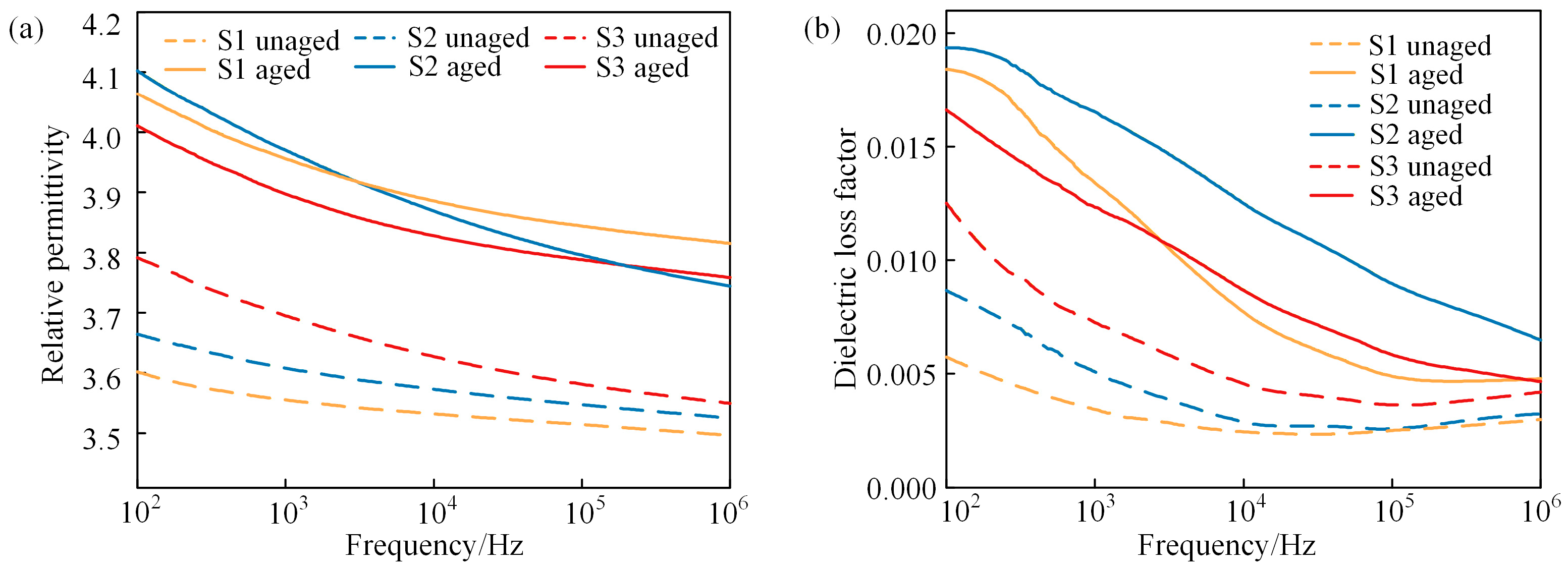
4.2.5. Surface Resistivity and Dielectric Properties
4.3. Selection Method of HTV Silicone Rubber for Composite Insulators in Desert Regions
5. Conclusions
- (1)
- Under single windblown sand erosion, the formation of surface micro-cracks and spalling layers is the primary cause of the decline in multi-scale mechanical properties such as nano-hardness and elongation at break. The lower the hardness of the HTV silicone rubber, the more readily its surface structural integrity is compromised during sand particle impact, and the weaker its erosion wear resistance.
- (2)
- Windblown erosion exerts an accelerating effect on corona aging. Under the synergistic effect of erosion and corona aging, high-energy electrons and ozone molecules generated by corona discharge penetrate deep into the material along the fissures created by erosion, causing aging to propagate in depth and accelerating the corona aging process.
- (3)
- The hardness of HTV silicone rubber materials is positively correlated with their corona aging resistance after erosion. Among the three tested materials, the S3 silicone rubber retained relatively intact micro-morphology and molecular structure after combined aging treatment, exhibited the smallest degradation in mechanical and electrical properties, and demonstrated the best environmental adaptability to desert regions. It is recommended that the S3 silicone rubber be preferentially selected as the sheath material for composite insulators in such regions.
Author Contributions
Funding
Institutional Review Board Statement
Data Availability Statement
Conflicts of Interest
References
- Ito, M.; Kato, K.; Sugihara, H.; Kichimi, T.; Song, J.; Kurokawa, K. A Preliminary Study on Potential for Very Large-Scale Photovoltaic Power Generation (VLS-PV) System in the Gobi Desert from Economic and Environmental Viewpoints. Sol. Energy Mater. Sol. Cells 2003, 75, 507–517. [Google Scholar] [CrossRef] [Scilit]
- Song, C.; Guo, Z.; Liu, Z.; Hongyun, Z.; Liu, R.; Zhang, H. Application of Photovoltaics on Different Types of Land in China: Opportunities, Status and Challenges. Renew. Sustain. Energy Rev. 2024, 191, 114146. [Google Scholar] [CrossRef] [Scilit]
- Liu, Y.; Zhang, R.-Q.; Ma, X.-R.; Wu, G.-L. Combined Ecological and Economic Benefits of the Solar Photovoltaic Industry in Arid Sandy Ecosystems. J. Clean. Prod. 2020, 262, 121376. [Google Scholar] [CrossRef] [Scilit]
- Wu, G.; Fan, Y.; Guo, Y.; Xiao, S.; Liu, Y.; Gao, G.; Zhang, X. Aging Mechanisms and Evaluation Methods of Silicone Rubber Insulator Sheds: A Review. IEEE Trans. Dielectr. Electr. Insul. 2024, 31, 965–979. [Google Scholar] [CrossRef] [Scilit]
- Rowland, S.M.; Robertson, J.; Xiong, Y.; Day, R.J. Electrical and Material Characterization of Field-Aged 400 kV Silicone Rubber Composite Insulators. IEEE Trans. Dielectr. Electr. Insul. 2010, 17, 375–383. [Google Scholar] [CrossRef] [Scilit]
- Chakraborty, R.; Reddy, B.S. Studies on High Temperature Vulcanized Silicone Rubber Insulators under Arid Climatic Aging. IEEE Trans. Dielectr. Electr. Insul. 2017, 24, 1751–1760. [Google Scholar] [CrossRef] [Scilit]
- Hamza, A.-S.H.A.; Abdelgawad, N.M.K.; Arafa, B.A. Effect of Desert Environmental Conditions on the Flashover Voltage of Insulators. Energy Convers. Manag. 2002, 43, 2437–2442. [Google Scholar] [CrossRef] [Scilit]
- Zhang, X.; Kuang, S.; Wu, S.; Zhuang, W.; He, C. Analysis of Aging Characteristics of Umbrella Skirts of Composite Insulators Operating under the Influence of a Wind and Sand Environment in South Xinjiang. Materials 2024, 17, 680. [Google Scholar] [CrossRef] [Scilit] [PubMed]
- Lu, M.; Zeng, S.; Gao, C.; Liu, Y.; Yan, X.; Liu, Z.; Zhang, G. Aging Analysis of HTV Silicone Rubber Under Coupled Corona Discharge, Humidity and Cyclic Thermal Conditions. Electronics 2025, 14, 4071. [Google Scholar] [CrossRef] [Scilit]
- Zeng, S.; Li, W.; Zhao, X.; Peng, Y.; Liu, Y.; Yan, X.; Zhang, G. Degradation of HTV Silicone Rubber in Composite Insulators under UVB-Corona Coupling Effect in Simulated Plateau Environments. Polym. Degrad. Stab. 2025, 238, 111354. [Google Scholar] [CrossRef] [Scilit]
- Bi, M.; Deng, R.; Jiang, T.; Chen, X.; Pan, A.; Zhu, L. Study on Corona Aging Characteristics of Silicone Rubber Material under Different Environmental Conditions. IEEE Trans. Dielectr. Electr. Insul. 2022, 29, 534–542. [Google Scholar] [CrossRef] [Scilit]
- Han, Y.; Liang, X.; Wang, Z.; Wang, X.; Sun, Y. Impact of Corona Aging on the Electrical Performance of SiC/Epoxy Composites. IEEE Trans. Dielectr. Electr. Insul. 2026, 33, 201–208. [Google Scholar] [CrossRef] [Scilit]
- Hu, G.; Ma, J.; Yuan, G.; Shen, K.; Wang, H. Effect of Hard Particles on the Tribological Properties of Hydrogenated Nitrile Butadiene Rubber under Different Lubricated Conditions. Tribol. Int. 2022, 169, 107457. [Google Scholar] [CrossRef] [Scilit]
- Tarodiya, R.; Levy, A. Surface Erosion Due to Particle-Surface Interactions—A Review. Powder Technol. 2021, 387, 527–559. [Google Scholar] [CrossRef] [Scilit]
- Liu, R.; Su, J.; Zhang, T.; Ke, L. Fretting Wear Behaviors of Silicone Rubber under Dry Friction and Different Lubrication Conditions. Materials 2024, 17, 2598. [Google Scholar] [CrossRef] [Scilit] [PubMed]
- Besztercey, G.; Karger-Kocsis, J.; Szaplonczay, P. Solid Particle Erosion of Electrically Insulating Silicon and EPDM Rubber Compounds. Polym. Bull. 1999, 42, 717–724. [Google Scholar] [CrossRef] [Scilit]
- Khan, U.A.; Al-Soufi, K.; Asif, M.; Alhems, L. Impact of Damaged Housing on the Performance of Field Aged Composite High Voltage Insulators. Eng. Fail. Anal. 2024, 166, 108876. [Google Scholar] [CrossRef] [Scilit]
- Cheng, L.; Wang, L.; Guan, Z.; Zhang, F. Aging Characterization and Lifespan Prediction of Silicone Rubber Material Utilized for Composite Insulators in Areas of Atypical Warmth and Humidity. IEEE Trans. Dielectr. Electr. Insul. 2016, 23, 3547–3555. [Google Scholar] [CrossRef] [Scilit]
- Ma, B.; Andersson, J.; Gubanski, S. Evaluating Resistance of Polymeric Materials for Outdoor Applications to Corona and Ozone. IEEE Trans. Dielectr. Electr. Insul. 2010, 17, 555–565. [Google Scholar] [CrossRef] [Scilit]
- Belhiteche, E.H.; Rondot, S.; Moudoud, M.; Dony, P.; Jbara, O. Electrical Insulation Properties of Silicone Rubber under Accelerated Corona and Thermal Aging. Polym. Eng. Sci. 2021, 61, 706–715. [Google Scholar] [CrossRef] [Scilit]
- Wang, Y.; Yu, H.; Li, L.; Li, J.; Sun, J.; Shi, J.; Li, J. Long-Term Trend of Dust Event Duration over Northwest China. Sci. Total Environ. 2024, 951, 175819. [Google Scholar] [CrossRef] [Scilit] [PubMed]
- Mu, L.; Su, J.; Mo, X.; Peng, N.; Xu, Y.; Wang, M.; Wang, J. The Temporal-Spatial Variations and Potential Causes of Dust Events in Xinjiang Basin During 1960–2015. Front. Environ. Sci. 2021, 9, 727844. [Google Scholar] [CrossRef] [Scilit]
- ISO37; Rubber, Vulcanized or Thermoplastic—Determination of Tensile Stress-Strain Properties. ISO: Geneva, Switzerland, 2005.
- IEC TS 62073:2016; Guidance on the Measurement of Hydrophobicity of Insulator Surfaces. IEC: Geneva, Switzerland, 2016.
- IEC 62631-3-1:2016; Dielectric and Resistive Properties of Solid Insulating Materials—Part 3-1: Determination of Resistive Properties (DC Methods)—Volume Resistance and Volume Resistivity—General Method. IEC: Geneva, Switzerland, 2016.
- ASTM D150-22; Standard Test Methods for AC Loss Characteristics and Permittivity (Dielectric Constant) of Solid Electrical Insulation. ASTM International: West Conshohocken, PA, USA, 2022.
- Oliver, W.C.; Pharr, G.M. An Improved Technique for Determining Hardness and Elastic Modulus Using Load and Displacement Sensing Indentation Experiments. J. Mater. Res. 1992, 7, 1564–1583. [Google Scholar] [CrossRef] [Scilit]
- Bao, W.; Liang, X.; Liu, Y.; Gao, Y.; Wang, J. Effects of AC and DC Corona on the Surface Properties of Silicone Rubber: Characterization by Contact Angle Measurements and XPS High Resolution Scan. IEEE Trans. Dielectr. Electr. Insul. 2017, 24, 2911–2919. [Google Scholar] [CrossRef] [Scilit]
- Yang, Y.; Wang, Z.; Peng, X.; Huang, Z.; Fang, P. Influence of Crosslinking Extent on Free Volumes of Silicone Rubber and Water Diffusion after Corona Discharge. Materials 2022, 15, 6833. [Google Scholar] [CrossRef] [Scilit]
- Qiao, X.; Zeng, W.; Ye, W.; Dai, X.; Zhang, J.; Ming, Y. Mechanisms of Key Performance Degradation in Silicone Rubber Polymer Insulation for High-Voltage Composite Bushings Under Coupled Temperature, Humidity, and Corona Aging. Polymers 2026, 18, 935. [Google Scholar] [CrossRef] [Scilit] [PubMed]
- Min, D.; Yan, C.; Huang, Y.; Li, S.; Ohki, Y. Dielectric and Carrier Transport Properties of Silicone Rubber Degraded by Gamma Irradiation. Polymers 2017, 9, 533. [Google Scholar] [CrossRef] [Scilit] [PubMed]



| Type | Methyl Vinyl Silicone Gum/Phr | Alumina Trihydrate/Phr | Fumed Silica/Phr |
|---|---|---|---|
| S1 | 100 | 122~128 | 28~32 |
| S2 | 100 | 117~123 | 33~37 |
| S3 | 100 | 112~118 | 36~40 |
| Type | Hardness/Shore A | Tensile Strength/MPa | Elongation at Break/% | Tear Strength/(N∙mm−1) |
|---|---|---|---|---|
| S1 | 72.1 | 5.35 | 536 | 16.55 |
| S2 | 79.2 | 5.53 | 287 | 11.20 |
| S3 | 84.6 | 5.40 | 308 | 13.90 |
| Element Content/% | Pre-Combined Aging | Post-Combined Aging | ||||
|---|---|---|---|---|---|---|
| S1 | S2 | S3 | S1 | S2 | S3 | |
| C | 42.75 | 43.26 | 44.77 | 12.79 | 10.64 | 15.32 |
| O | 25.29 | 26.34 | 27.12 | 39.53 | 44.07 | 41.33 |
| Si | 21.03 | 21.86 | 21.38 | 37.52 | 37.26 | 36.84 |
| Al | 10.93 | 8.54 | 6.73 | 10.16 | 8.03 | 6.51 |
| Type | Resistivity Before Aging (Ω·m) | Q1 | Q3 | IQR | Resistivity After Combined Aging (Ω·m) | Q1 | Q3 | IQR |
|---|---|---|---|---|---|---|---|---|
| S1 | 3.41 × 10¹⁵ | 3.32 × 10¹⁵ | 3.49 × 10¹⁵ | 1.70 × 10¹⁴ | 9.51 × 10¹¹ | 9.40 × 10¹¹ | 9.65 × 10¹¹ | 2.50 × 10¹⁰ |
| S2 | 2.89 × 10¹⁵ | 2.75 × 10¹⁵ | 2.93 × 10¹⁵ | 1.80 × 10¹⁴ | 8.21 × 10¹¹ | 8.11 × 10¹¹ | 8.34 × 10¹¹ | 2.30 × 10¹⁰ |
| S3 | 2.97 × 10¹⁵ | 2.84 × 10¹⁵ | 3.06 × 10¹⁵ | 2.20 × 10¹⁴ | 9.82 × 10¹³ | 9.69 × 10¹³ | 9.98 × 10¹³ | 2.90 × 10¹² |
| Type | Wind–Sand Erosion | Combined Sand–Corona Aging | ||||||
|---|---|---|---|---|---|---|---|---|
| Nano-Hardness | Young’s Modulus | Elongation at Break | Tensile Strength | Elongation at Break | Surface Resistivity | Relative Permittivity | Dielectric Loss Factor | |
| S1 | 24.10% (↓) | 23.71% (↓) | 28.48% (↓) | 15.50% (↓) | 49.39% (↓) | 4 orders of magnitude (↓) | 12.83% (↑) | 191.23% (↑) |
| S2 | 21.02% (↓) | 14.24% (↓) | 15.91% (↓) | 9.21% (↓) | 30.45% (↓) | 4 orders of magnitude (↓) | 11.96% (↑) | 113.95% (↑) |
| S3 | 19.38% (↓) | 11.61% (↓) | 17.99% (↓) | 10.88% (↓) | 26.88% (↓) | 2 orders of magnitude (↓) | 5.79% (↑) | 59.20% (↑) |
Disclaimer/Publisher’s Note: The statements, opinions and data contained in all publications are solely those of the individual author(s) and contributor(s) and not of MDPI and/or the editor(s). MDPI and/or the editor(s) disclaim responsibility for any injury to people or property resulting from any ideas, methods, instructions or products referred to in the content. |
© 2026 by the authors. Licensee MDPI, Basel, Switzerland. This article is an open access article distributed under the terms and conditions of the Creative Commons Attribution (CC BY) license.
Share and Cite
Geng, J.; Li, J.; Li, L.; Wang, P.; Tian, Z.; Liu, W. Surface Erosion–Corona Synergistic Degradation Characteristics and Material Adaptability of High-Temperature Vulcanized Silicone Rubber in Desert Regions. Polymers 2026, 18, 2051. https://doi.org/10.3390/polym18172051
Geng J, Li J, Li L, Wang P, Tian Z, Liu W. Surface Erosion–Corona Synergistic Degradation Characteristics and Material Adaptability of High-Temperature Vulcanized Silicone Rubber in Desert Regions. Polymers. 2026; 18(17):2051. https://doi.org/10.3390/polym18172051
Chicago/Turabian StyleGeng, Jianghai, Jingwei Li, Lingling Li, Ping Wang, Zhengbo Tian, and Wei Liu. 2026. "Surface Erosion–Corona Synergistic Degradation Characteristics and Material Adaptability of High-Temperature Vulcanized Silicone Rubber in Desert Regions" Polymers 18, no. 17: 2051. https://doi.org/10.3390/polym18172051
APA StyleGeng, J., Li, J., Li, L., Wang, P., Tian, Z., & Liu, W. (2026). Surface Erosion–Corona Synergistic Degradation Characteristics and Material Adaptability of High-Temperature Vulcanized Silicone Rubber in Desert Regions. Polymers, 18(17), 2051. https://doi.org/10.3390/polym18172051