The Mechanisms of the Initiation Step in Ring-Opening Polymerization of β-Lactones: A Review



Abstract
1. Introduction
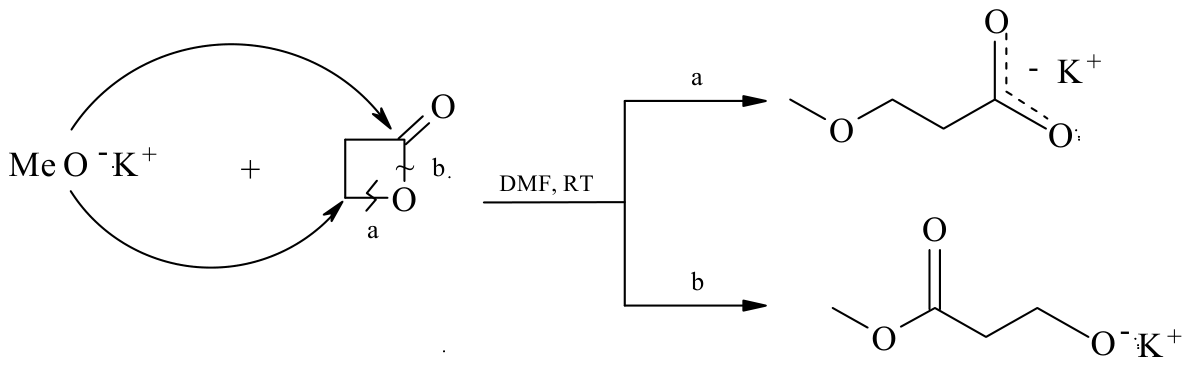
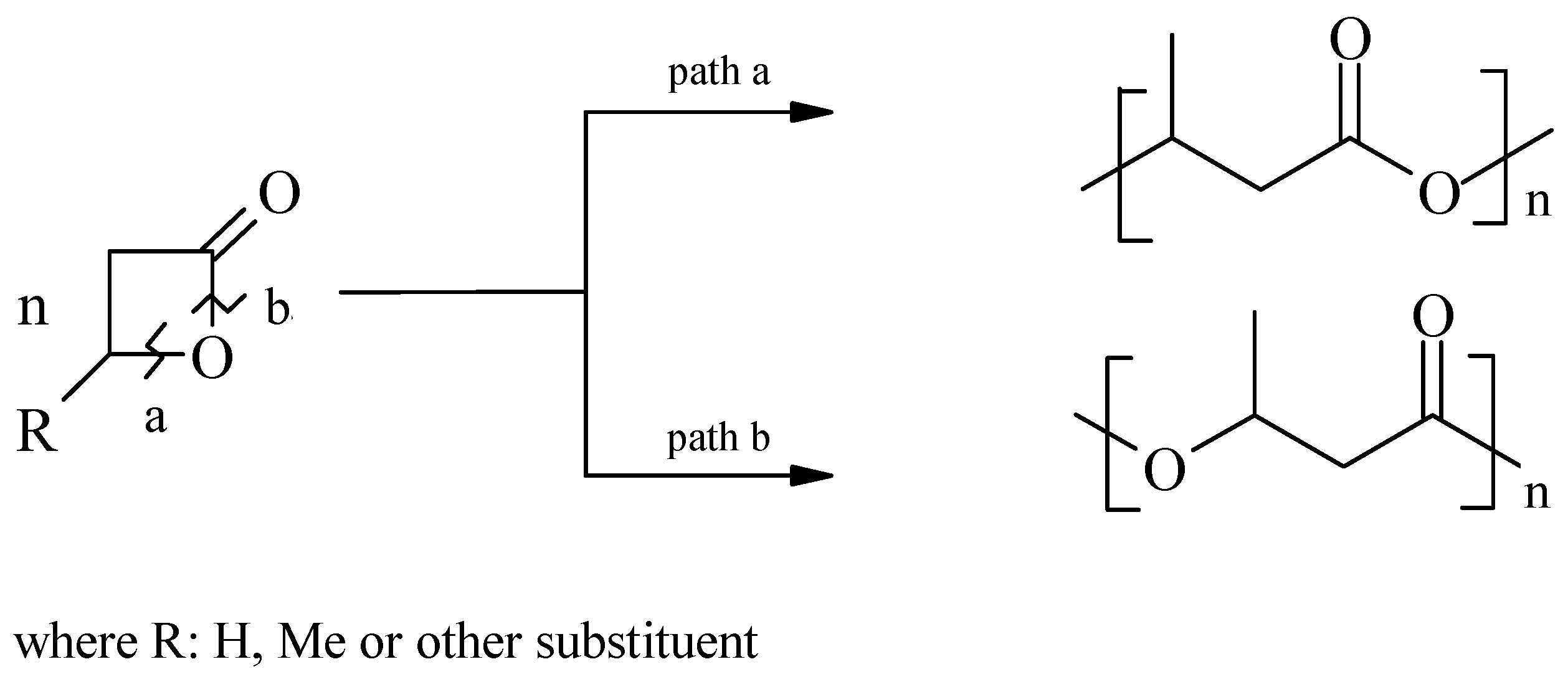
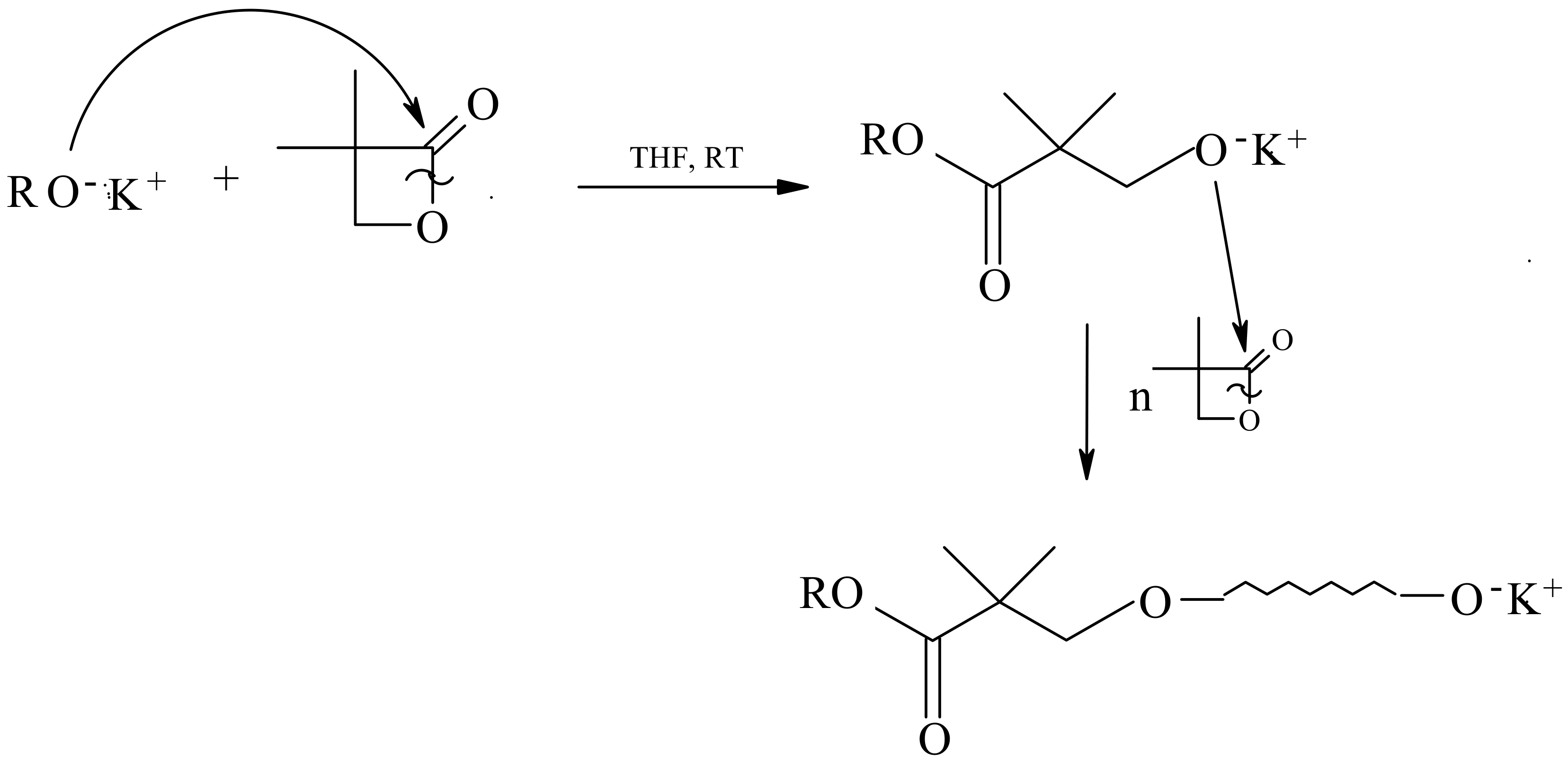
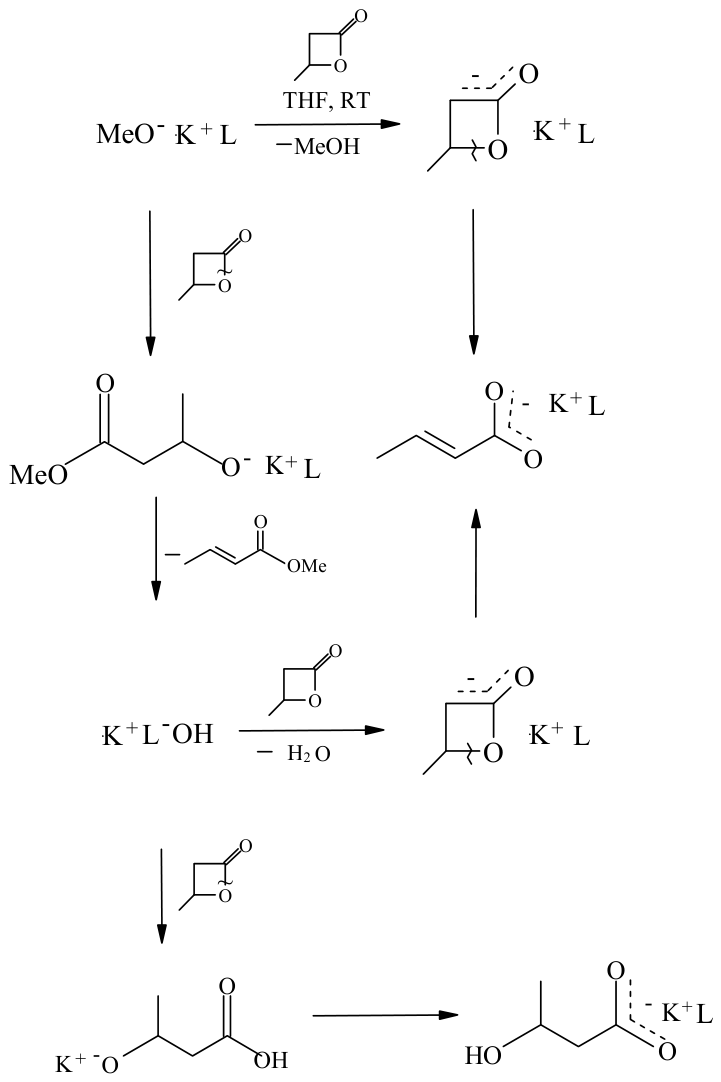
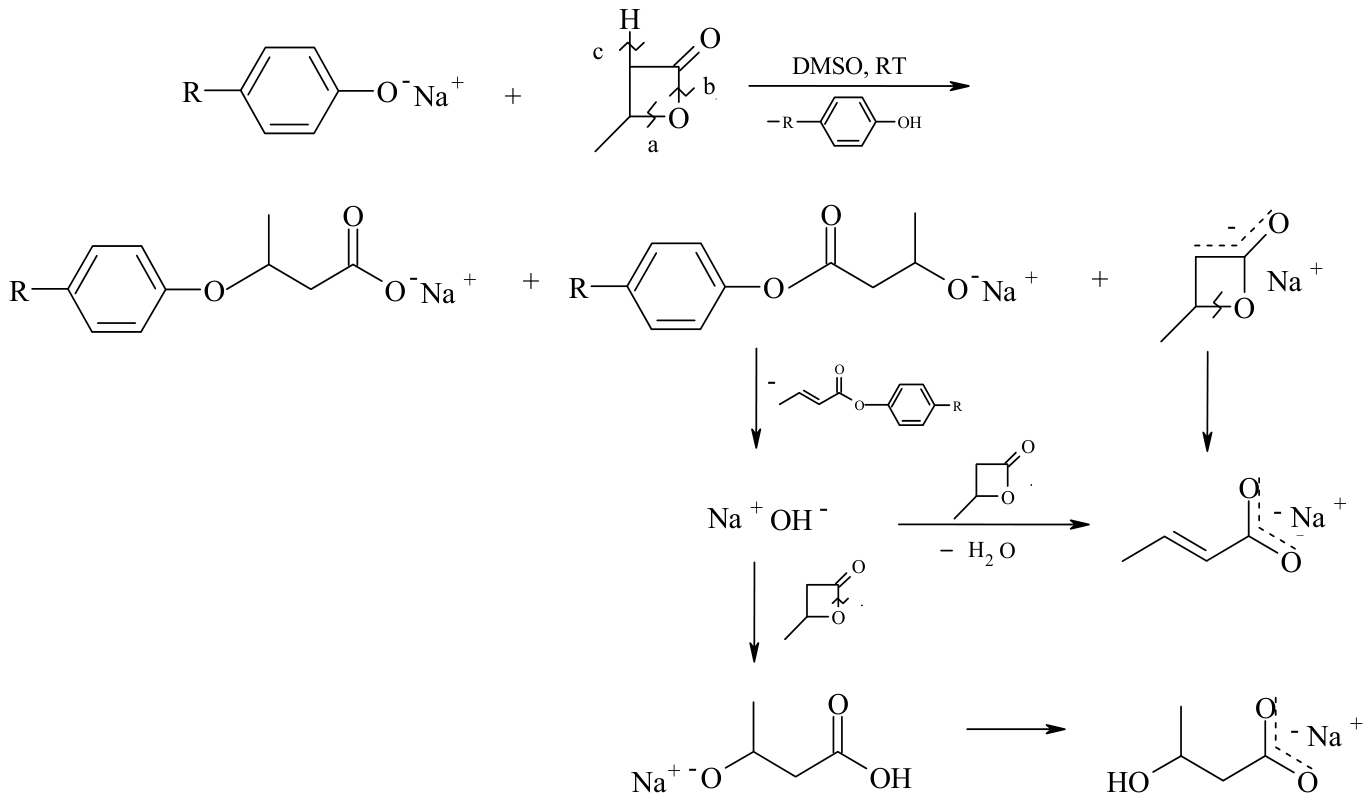
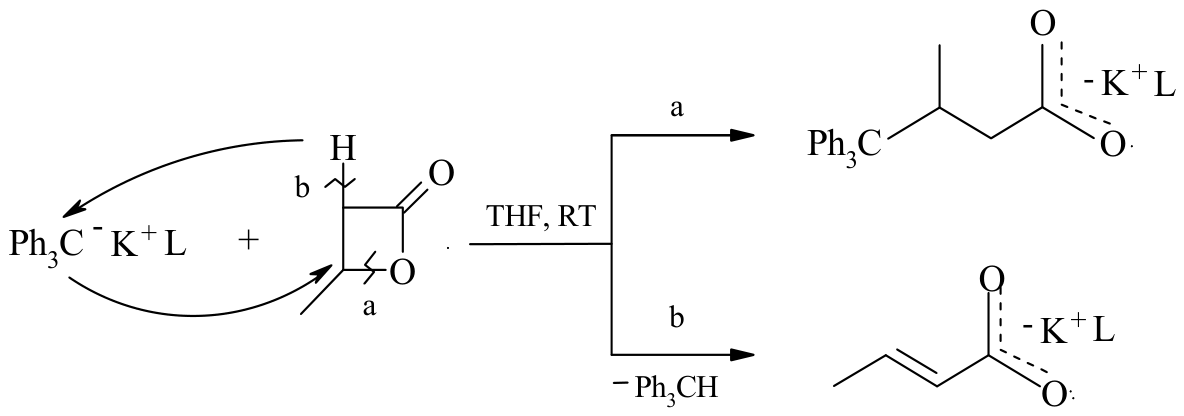
- Anionic ROP: active chain-end (carboxylate anion) mechanism (path a).
- Cationic ROP:
- (a)
- Active chain-end (cyclic tertiary oxonium cation) (ACE) mechanism (path a).
- (b)
- Activated monomer (AM) mechanism (path b).
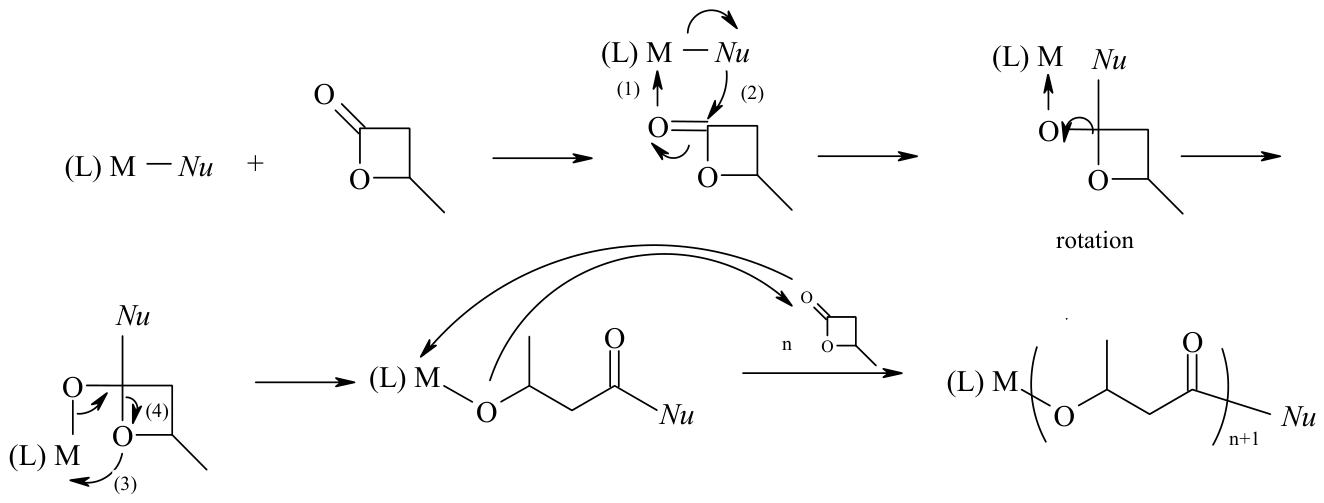
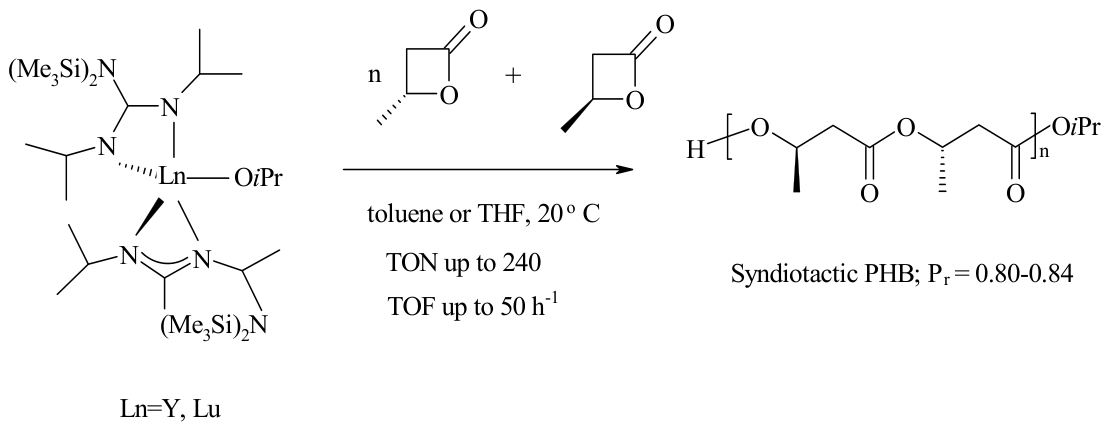
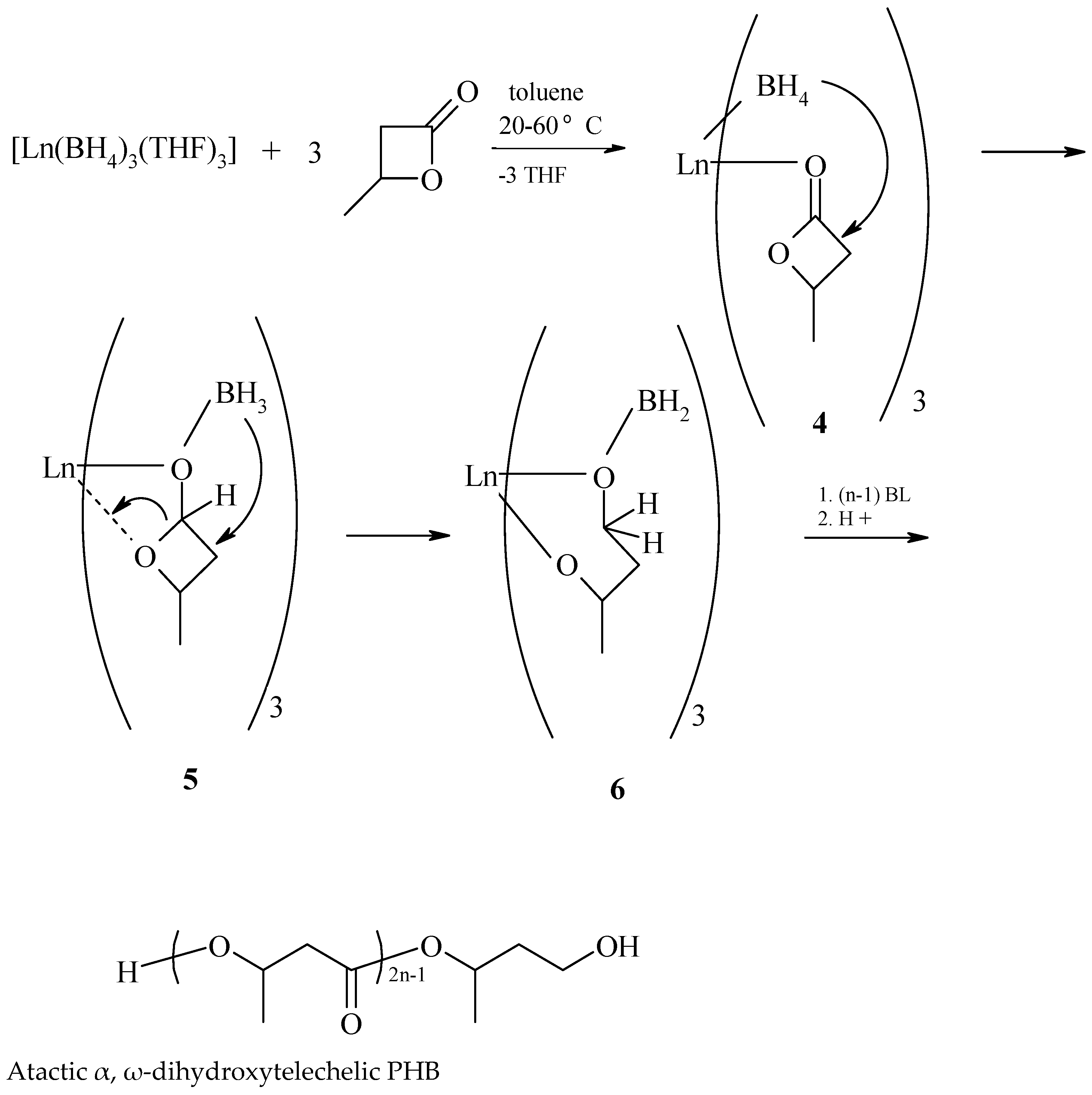
- Coordinative ROP: coordination–insertion mechanism (path b).
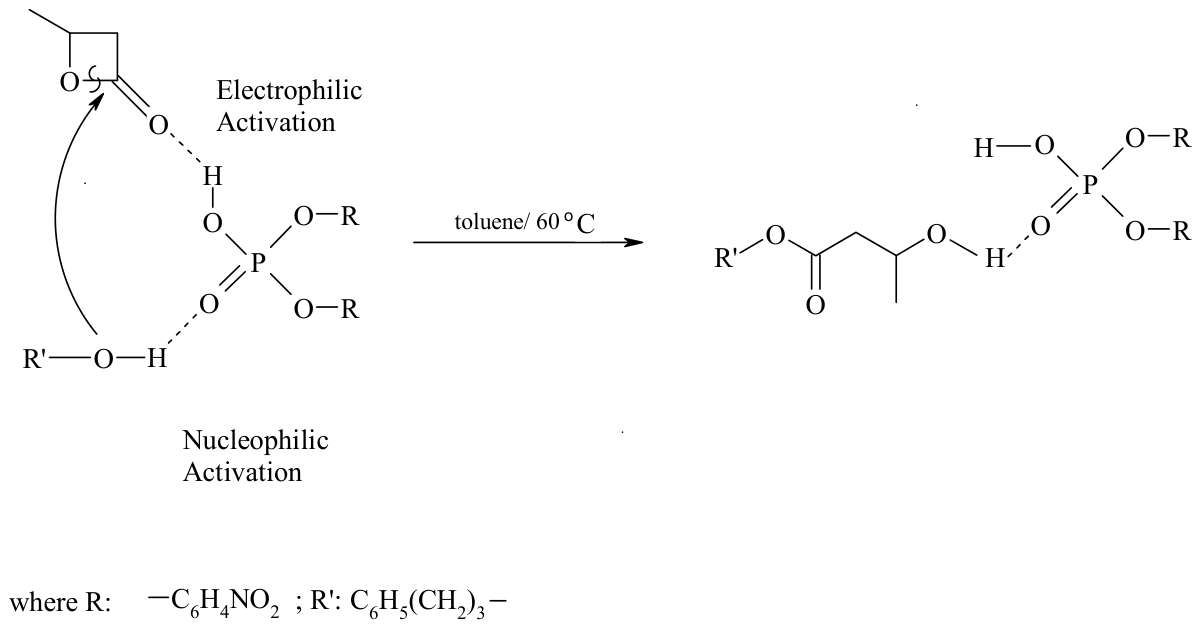
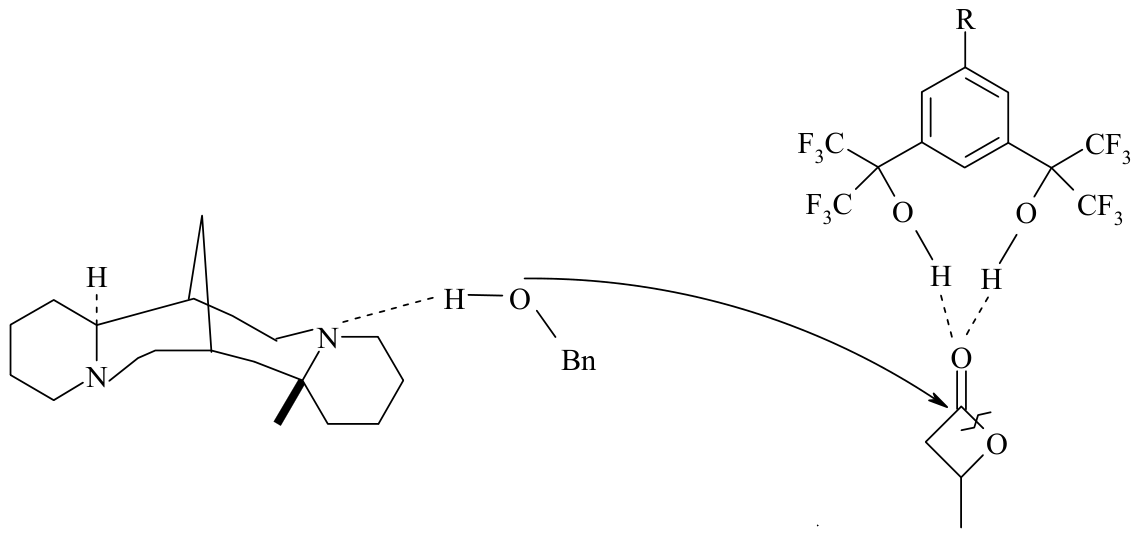
- Supramolecular-based ROP: non-covalent activated monomer/initiator mechanism (path b).
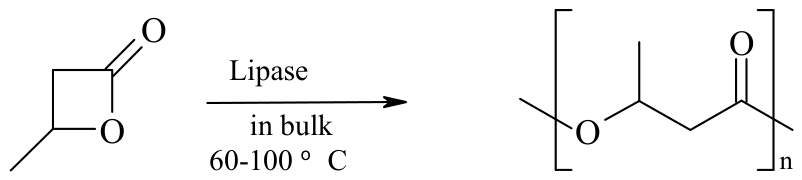
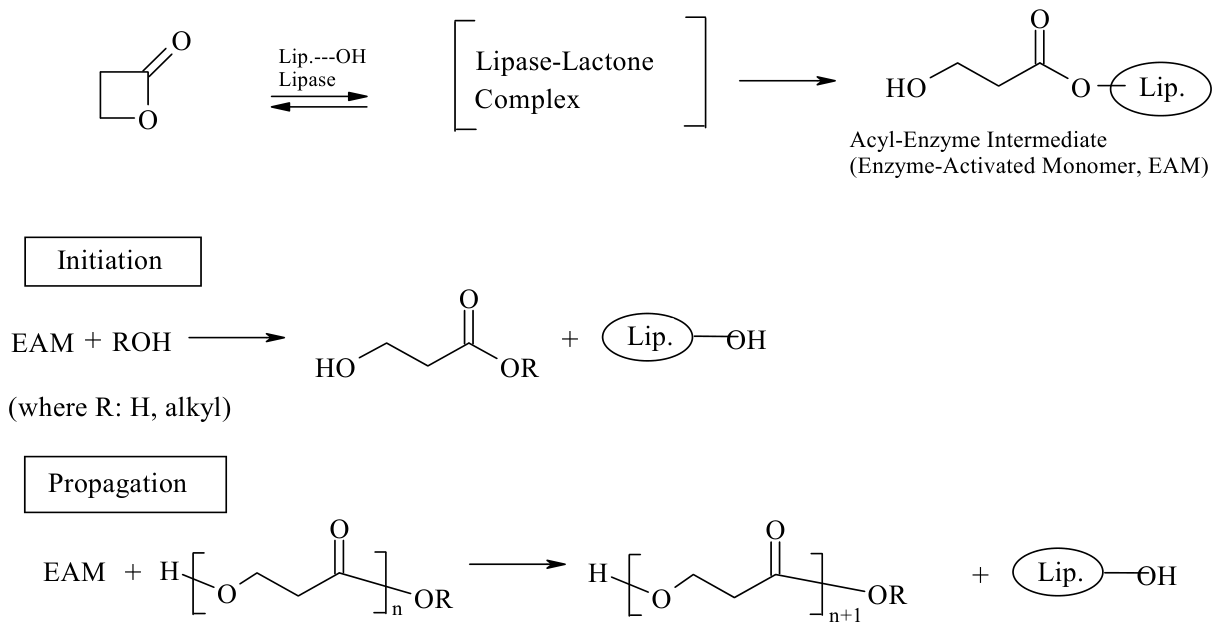
- Enzymatic ROP: activated monomer mechanism (path b).
2. Anionic ROP
2.1. Initiation Using Ionic Alkali Metal Salts
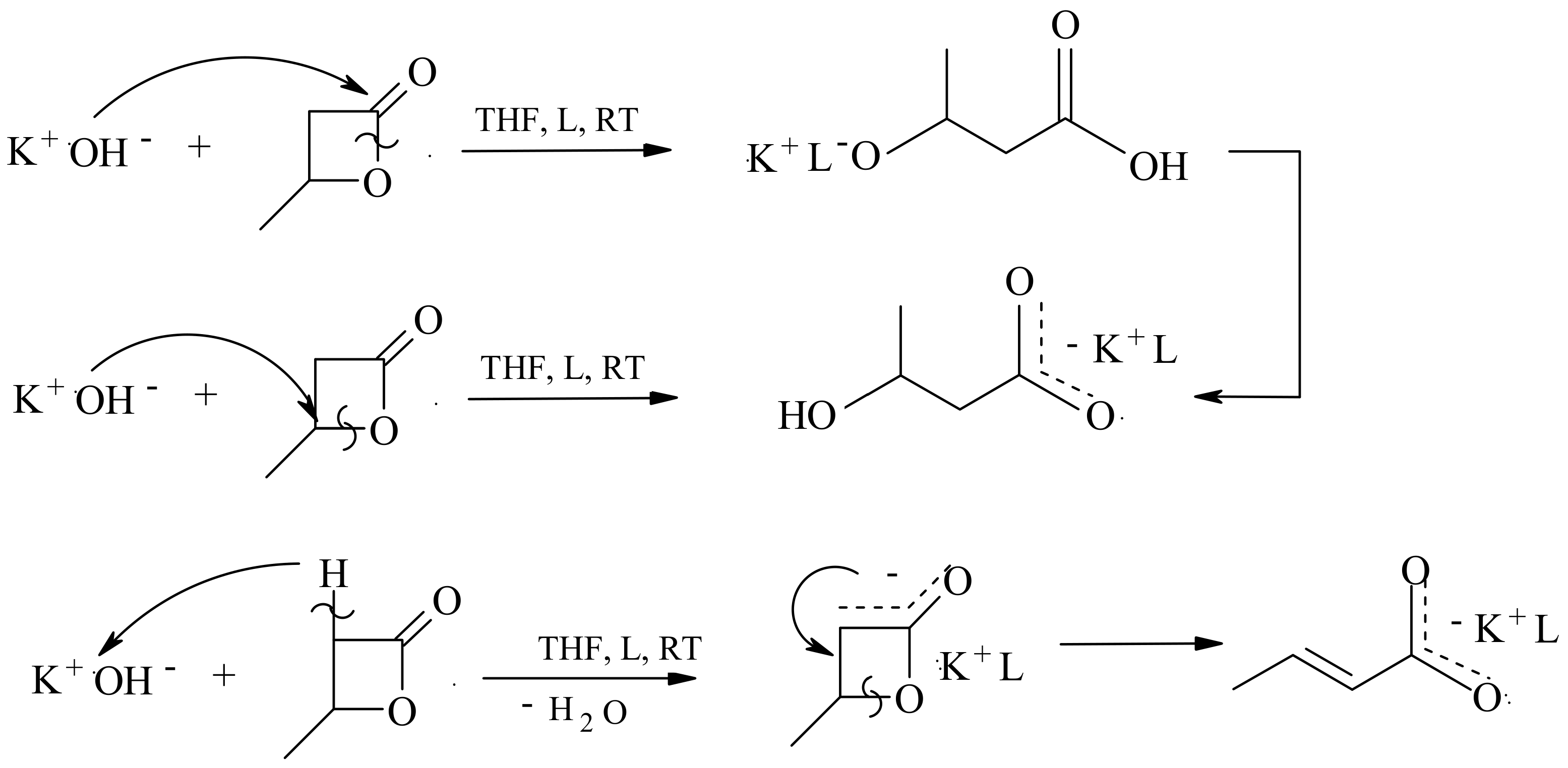
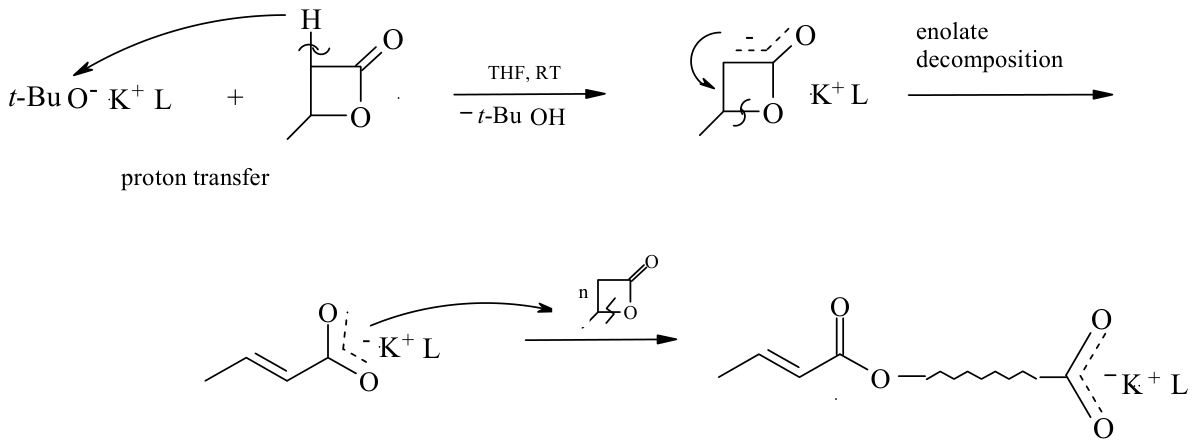
2.1.1. Strong Bases
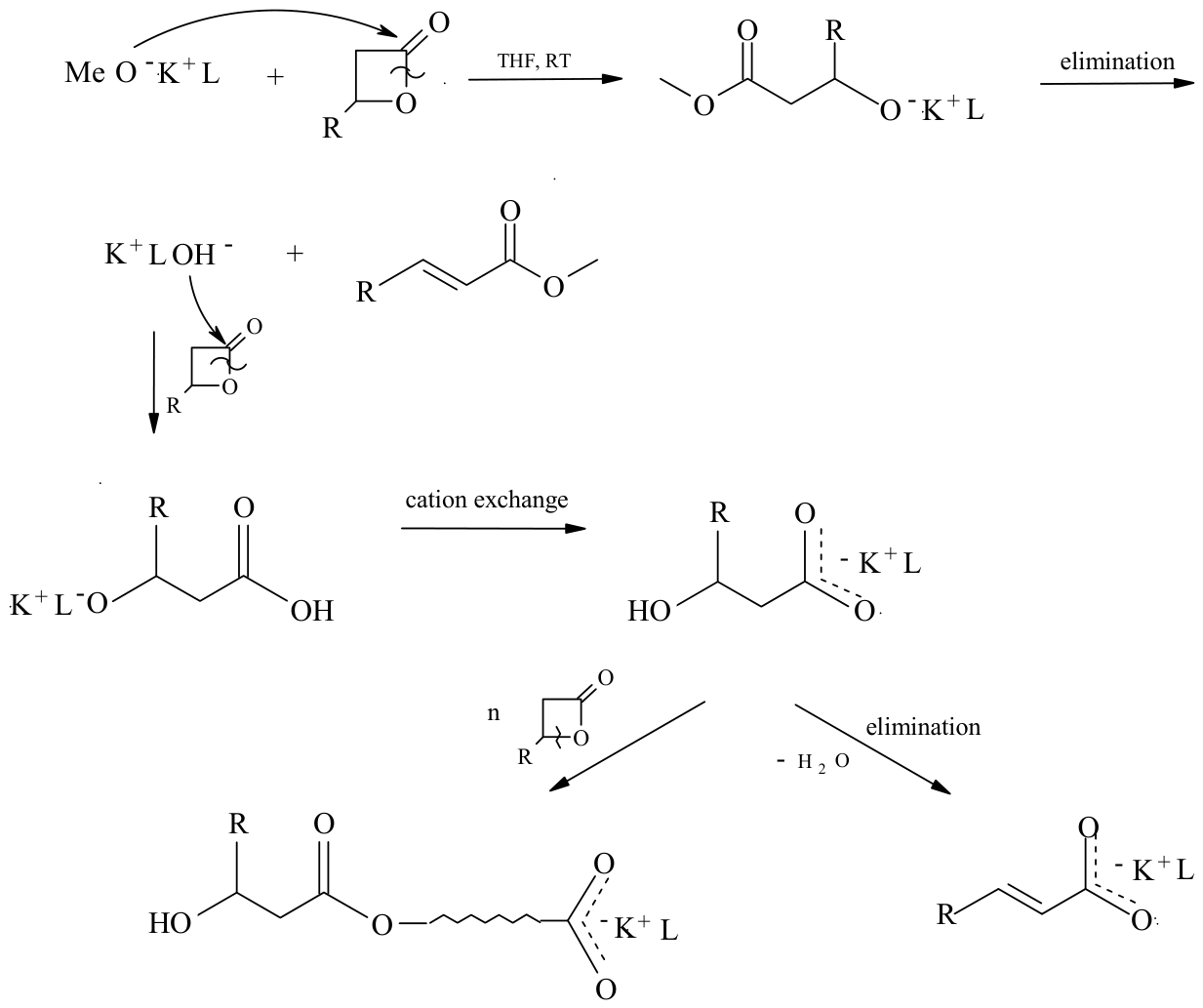
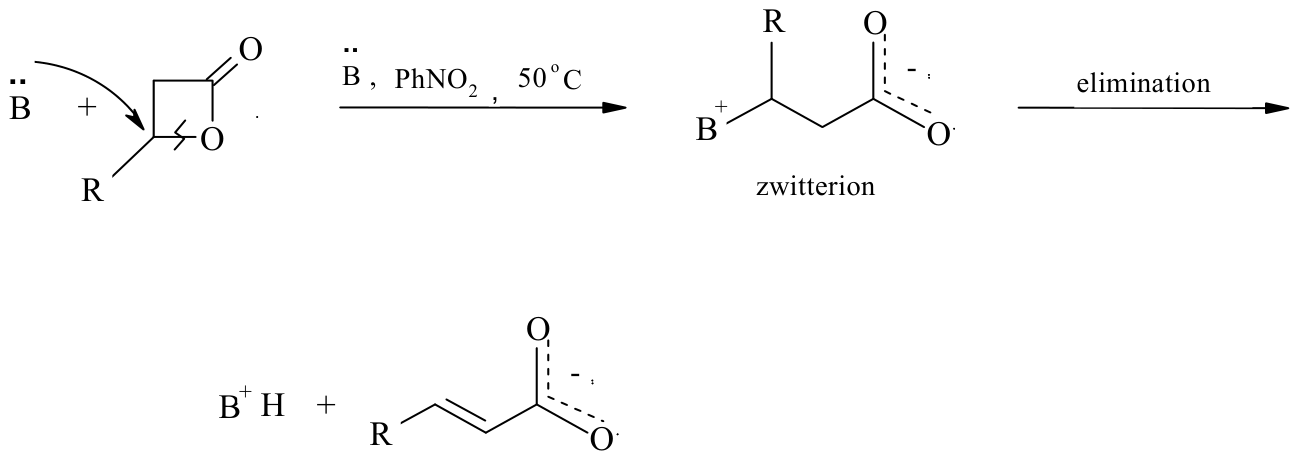
2.1.2. Nucleophilic Reagents
2.1.3. Nucleophilic Bases
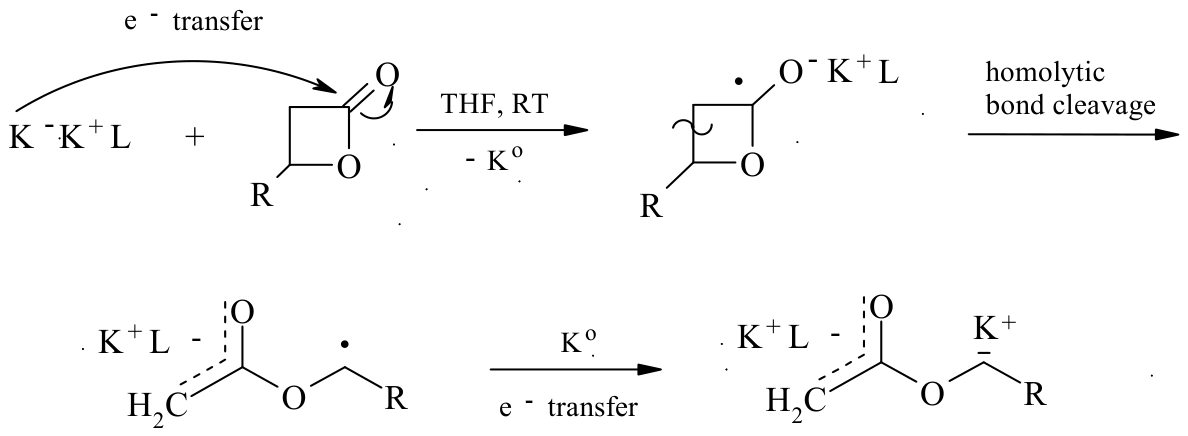
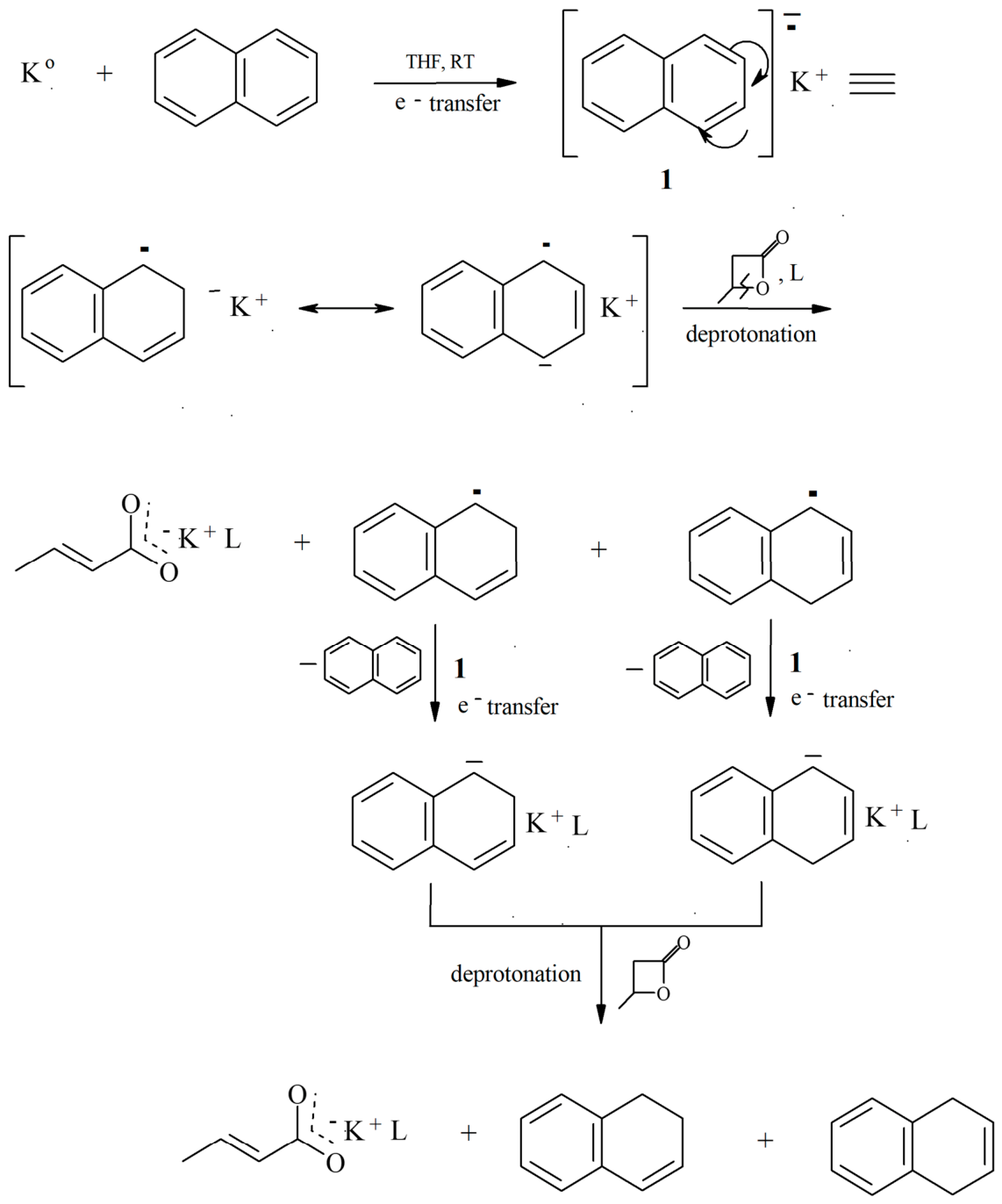
2.1.4. Two-Electron Transfer Reagents
2.2. Initiation by Metal-Free Systems (Organocatalysts)
2.2.1. Ionic Salts
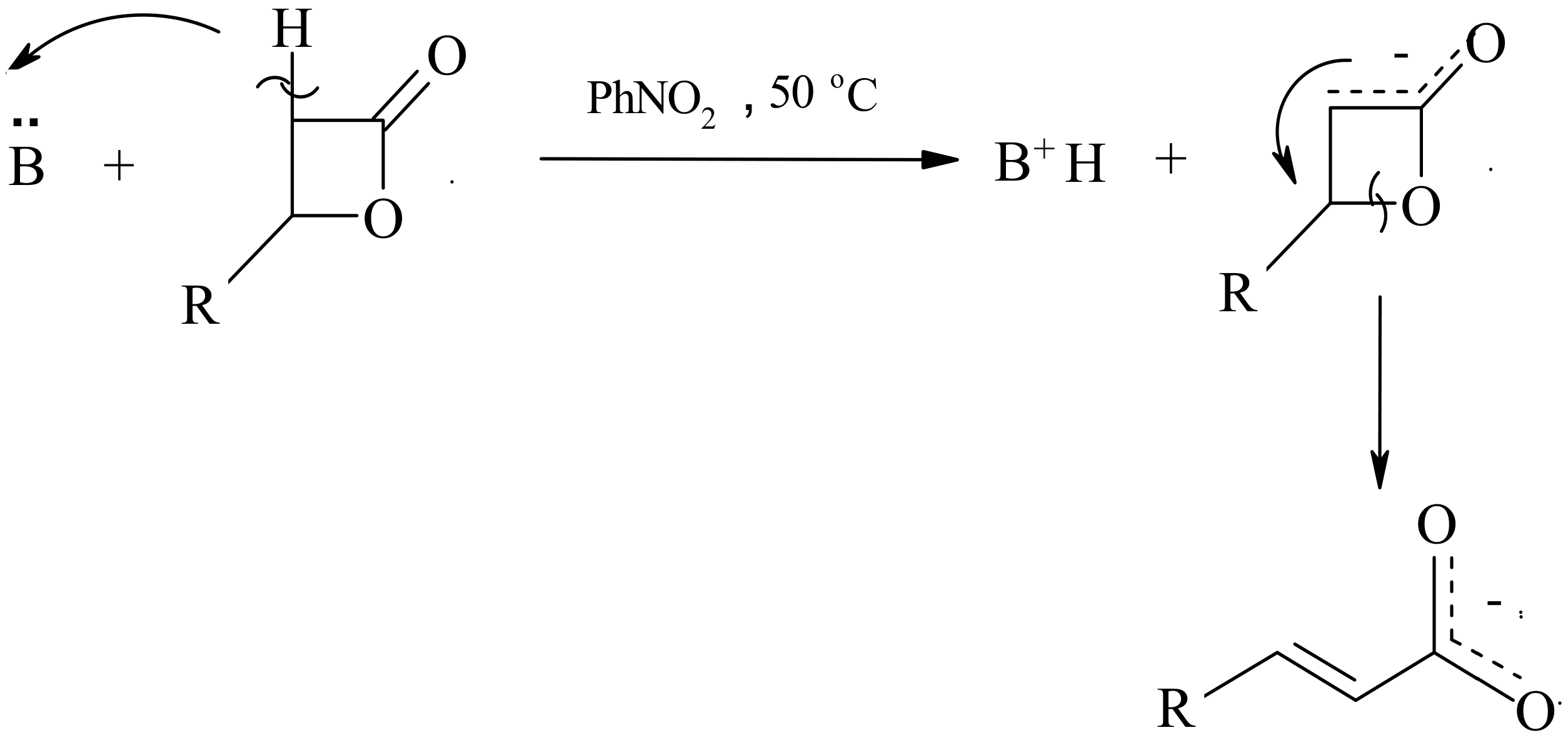
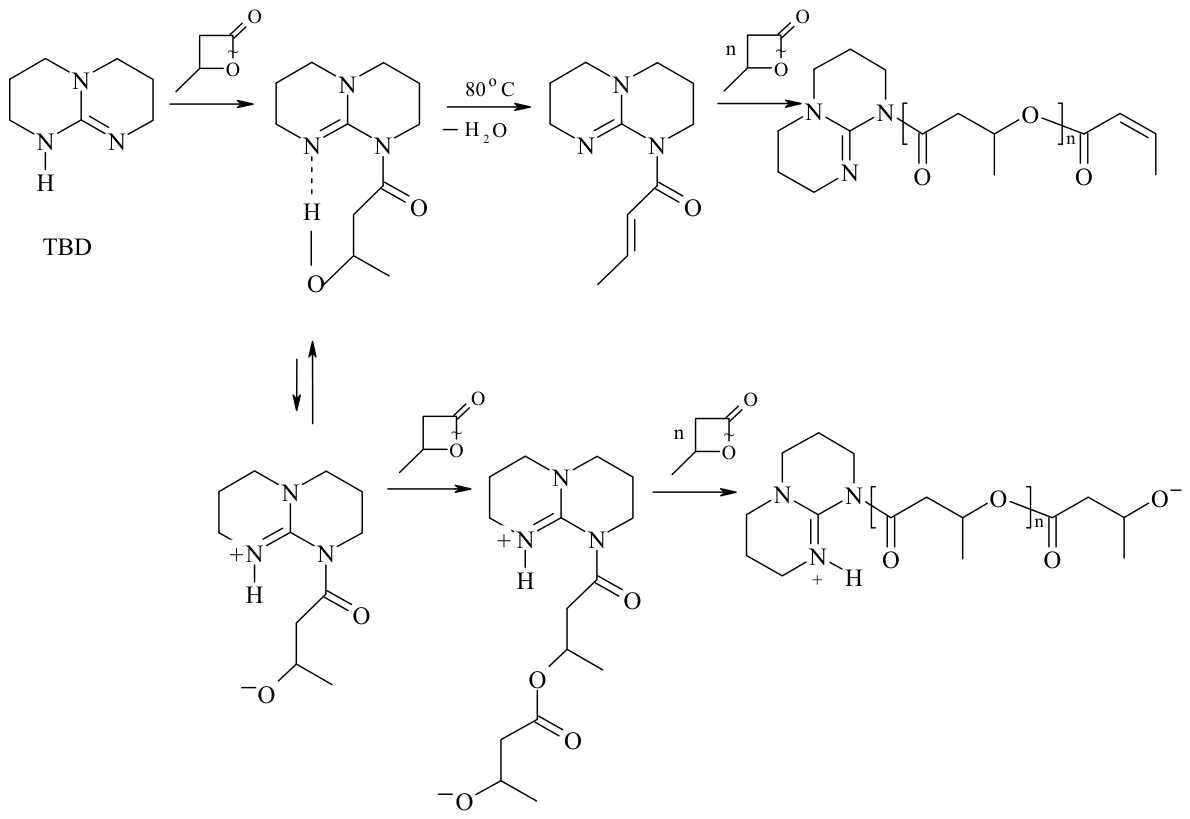
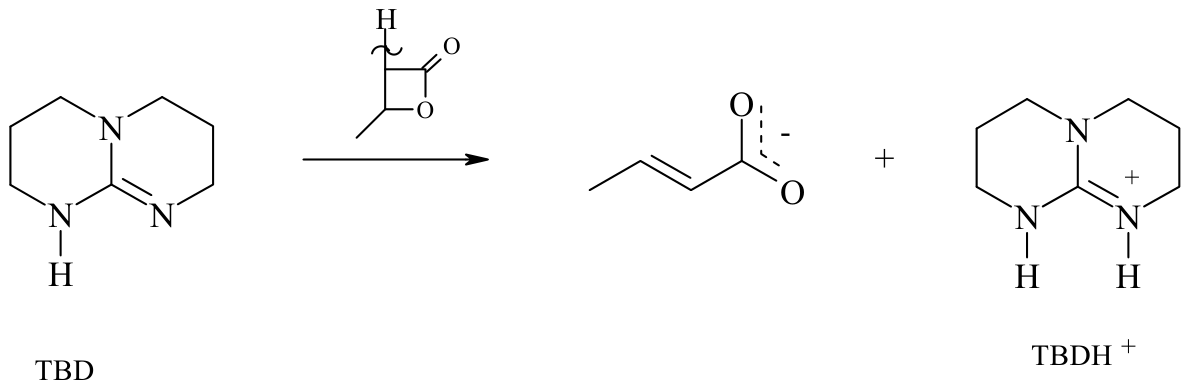
2.2.2. Neutral Bases
3. Cationic ROP
3.1. Salts of Complex or Noncomplex Anions (Counterions)
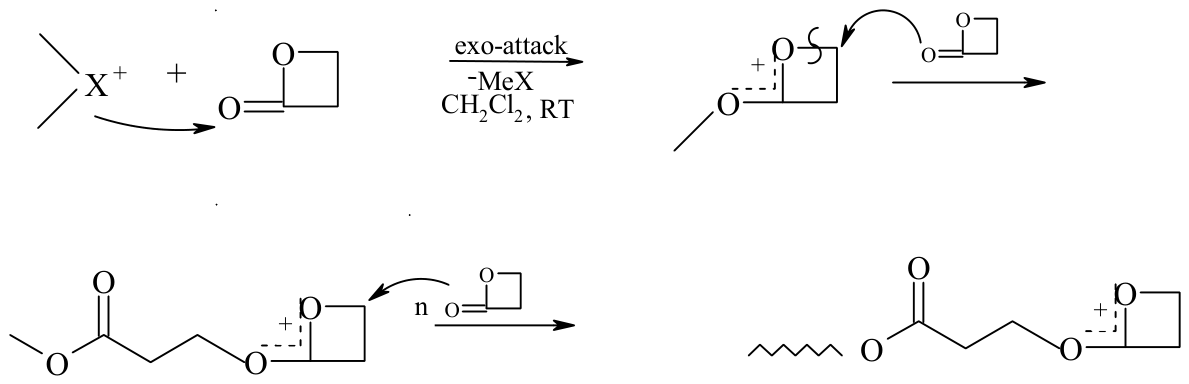
3.1.1. Electrophilic Reagents
3.1.2. Hydride Anion Acceptors
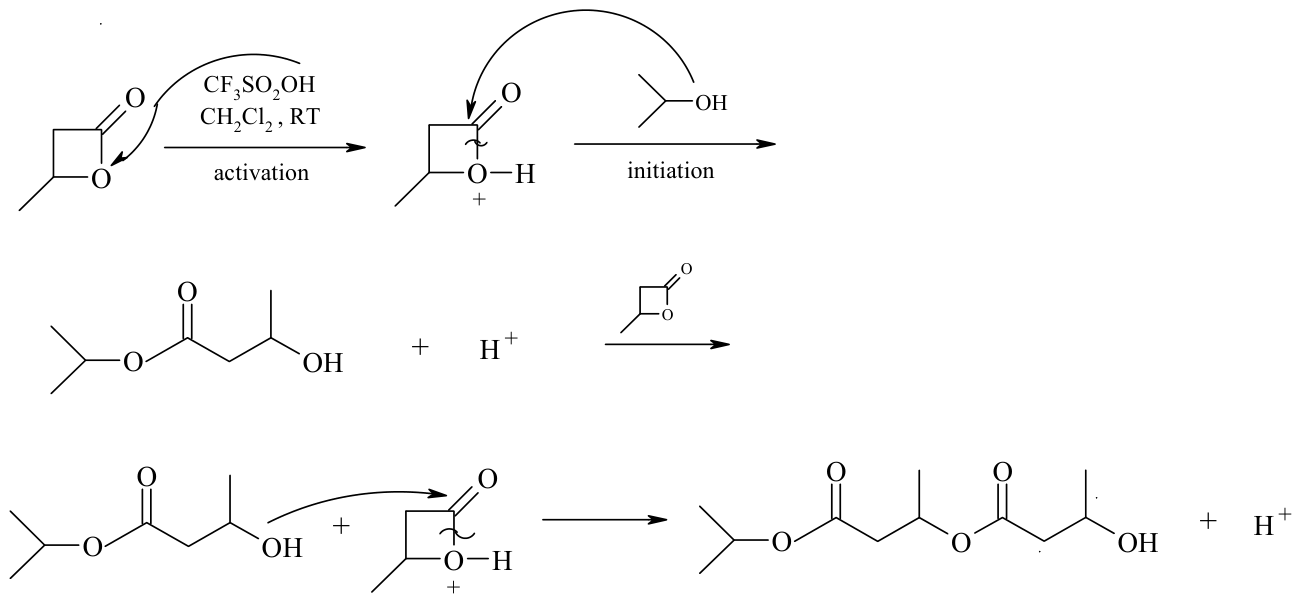
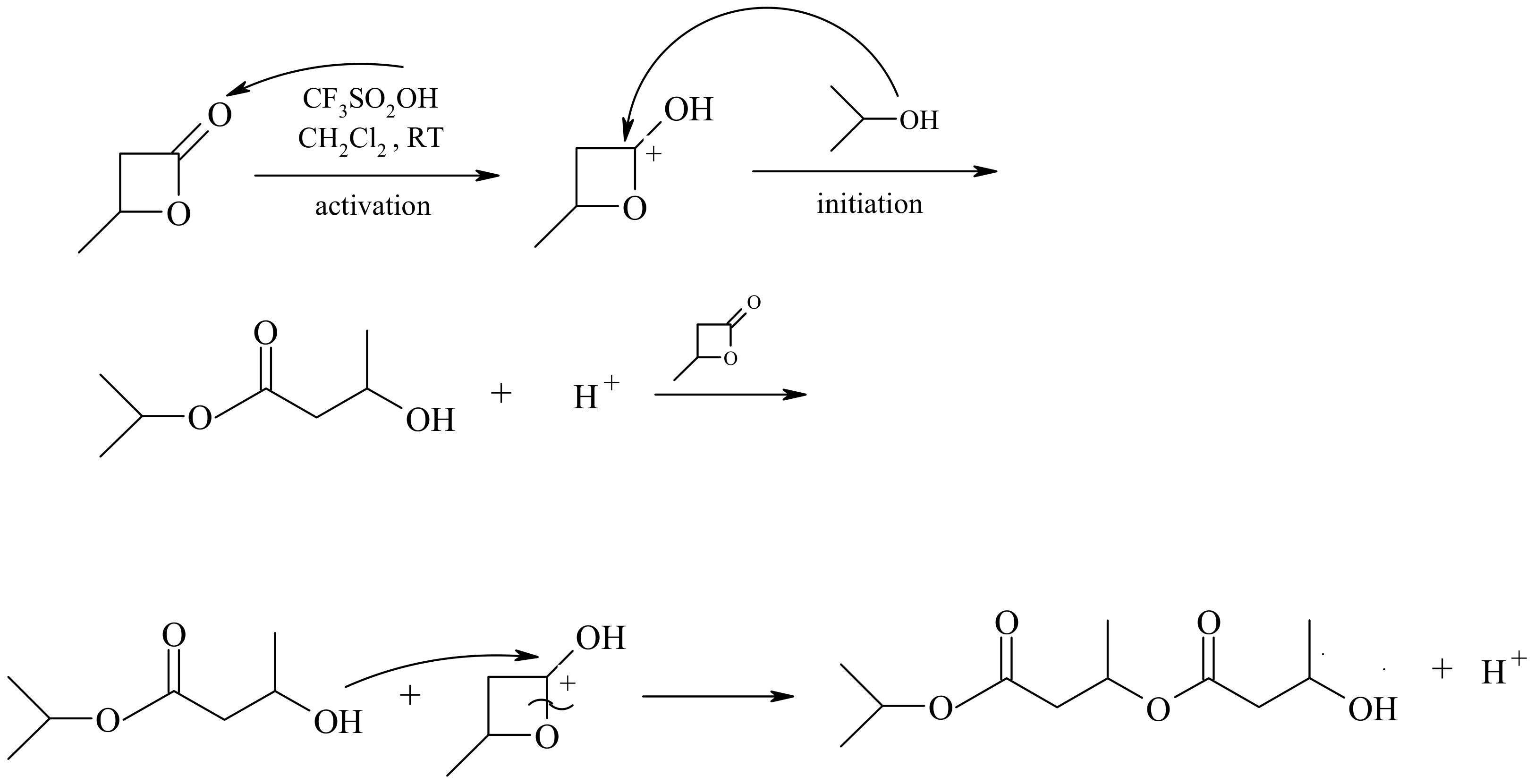
3.2. Electrophilic Reagent/Hydroxylic Compound Systems
3.3. Acid/Alcohol Systems
4. Coordinative (Pseudoanionic) ROP
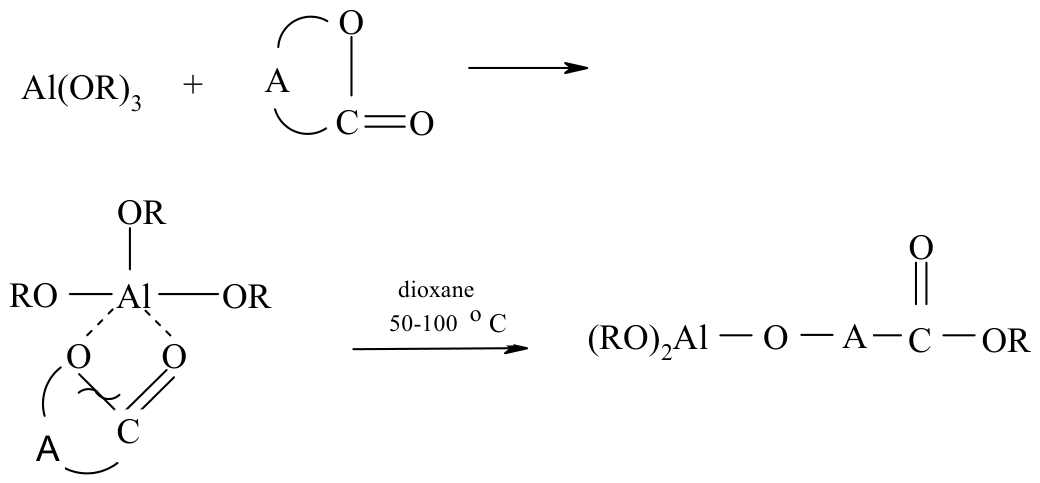
4.1. Initiation with Simple Homoleptic Metal Complexes
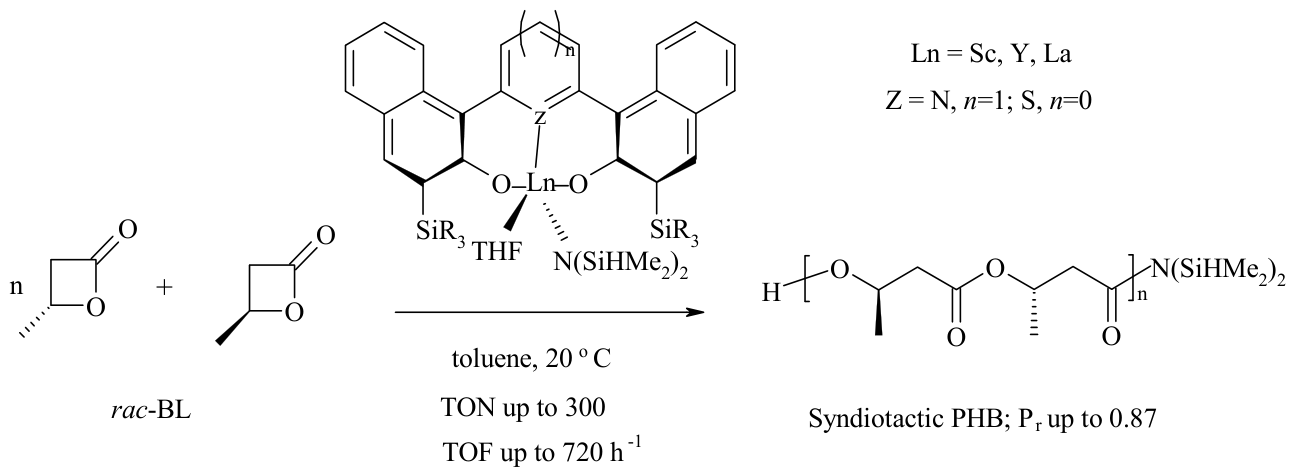
4.2. Initiation with Discrete Heteroleptic Metal Complexes
5. Supramolecular-Based ROP
6. Enzymatic ROP
7. Conclusions
Author Contributions
Funding
Data Availability Statement
Conflicts of Interest
References
- Chen, G.-Q. A microbial polyhydroxyalkanoates (PHA) based bio- and materials industry. Chem. Soc. Rev. 2009, 38, 2434–2446. [Google Scholar] [CrossRef] [PubMed]
- Lu, J.; Tappel, R.C.; Namura, C.T. Mini-review: Biosynthesis of poly(hydroxyalkanoates). J. Macromol. Sci. Part C Polym. Rev. 2009, 49, 226–248. [Google Scholar] [CrossRef]
- Sudesh, K.; Abe, H.; Doi, Y. Synthesis, structure and properties of polyhydroxyalkanoates: Biological polyesters. Prog. Polym. Sci. 2000, 25, 1503–1555. [Google Scholar] [CrossRef]
- Doi, Y. Microbial Polyesters; VCH Publishers, Inc.: New York, NY, USA, 1990. [Google Scholar]
- Dubois, P.; Coulembier, O.; Raquez, J.-M. (Eds.) Handbook of Ring-Opening Polymerization; Wiley: Weinheim, Germany, 2009; pp. 227–254. [Google Scholar]
- Zhang, Y.; Gross, R.A.; Lenz, R.W. Stereochemistry of the Ring-Opening Polymerization of (S)-β-Butyrolactone. Macromolecules 1990, 23, 3206–3212. [Google Scholar] [CrossRef]
- Penczek, S.; Cypryk, M.; Duda, A.; Kubisa, P.; Słomkowski, S. Living ring-opening polymerizations of heterocyclic monomers. Prog. Polym. Sci. 2007, 32, 247–282. [Google Scholar] [CrossRef]
- Dale, J.; Schwartz, J.-E. Macrocyclic oligolactones by oligomerization of simple lactones. Acta Chim. Scand. 1986, B40, 559. [Google Scholar] [CrossRef]
- Kricheldorf, H.R.; Scharnagl, N. Polylactones. 17. Anionic Polymerization of β-D,L-Butyrolactone. J. Macromol. Sci.-Chem. 1989, 26, 951–968. [Google Scholar] [CrossRef]
- Jedliński, Z.; Kowalczuk, M.; Kurcok, P. What is the real mechanism of anionic polymerization of β-lactones by potassium alkoxides? A critical approach. Macromolecules 1991, 24, 1218–1219. [Google Scholar] [CrossRef]
- Grobelny, Z.; Golba, S.; Jurek-Suliga, J. Ring-opening polymerization of β-butyrolactone in the presence of alkali metal salts: Investigation of initiation course and determination of polymers structure by MALDI-TOF mass spectrometry. Polym. Bull. 2019, 76, 4951–4966. [Google Scholar] [CrossRef]
- Kurcok, P.; Matuszowicz, A.; Jedliński, Z. Anionic polymerization of β-lactones initiated with potassium hydride. A convenient route to polyester macromonomers. Macromol. Rapid Commun. 1995, 16, 201–206. [Google Scholar] [CrossRef]
- Jedliński, Z.; Kowalczuk, M.; Główkowski, W.; Grobelny, J.; Szwarc, M. Novel polymerization of β-butyrolactone initiated by potassium naphthalenide in the presence of a crown ether or a cryptand. Macromolecules 1991, 24, 349–352. [Google Scholar] [CrossRef]
- Penczek, S.; Duda, A.; Libiszowski, J. Mechanisms of aliphatic cyclic ester polymerization initiated with tin(II) octoate. Macromol. Symp. 1998, 128, 241–254. [Google Scholar] [CrossRef]
- Kawalec, M.; Adamus, G.; Kurcok, P.; Kowalczuk, M.; Foltran, I.; Focarete, L.; Scandola, M. Carboxylate-induced degradation of poly(3-hydroxybutyrate). Biomacromolecules 2007, 8, 1053–1058. [Google Scholar] [CrossRef]
- Kwiecień, M.; Kawalec, M.; Kurcok, P.; Kowalczuk, M.; Adamus, G. Mechanism of thermal degradation of poly(3-hydroxybutyrate). Polym. Degrad. Stab. 2014, 110, 71–79. [Google Scholar] [CrossRef]
- Hofman, A.; Słomkowski, S.; Penczek, S. Structure of active centers and mechanism of the anionic polymerization of lactones. Makromol. Chem. 1984, 185, 91–101. [Google Scholar] [CrossRef]
- Sosnowski, S.; Stomkowski, S.; Penzek, S. Kinetics and mechanism of ε-caprolactone polymerization initiated by tin(II) octoate. Macromolecules 1993, 26, 5526–5527. [Google Scholar] [CrossRef]
- Kurcok, P.; Kowalczuk, M.; Hennek, K.; Jedliński, Z. Anionic polymerization of β-Lactones initiated with alkali-metal alkoxides: Reinvestigation of the polymerization mechanism. Macromolecules 1992, 25, 2017–2020. [Google Scholar] [CrossRef]
- Kurcok, P.; Jedliński, Z.; Kowalczuk, M. Reactions of β-Lactones with Potassium Alkoxides and Their Complexes with 18-Crown-6 in Aprotic Solvents. J. Org. Chem. 1993, 58, 4219–4220. [Google Scholar] [CrossRef]
- Jedliński, Z.; Kurcok, P.; Matuszowicz, A.; Dubois, P.; Jerome, R.; Kricheldorf, H.R. Substituent effect in anionic polymerization of β-lactones initiated by alkali metal alkoxides. Macromol. Rapid Commun. 1995, 16, 513–519. [Google Scholar]
- Duda, A. Anionic polymerization of 4-methyl-2-oxetanone (β-butyrolactone). J. Polym. Sci. Part A Polym. Chem. 1992, 30, 21–29. [Google Scholar] [CrossRef]
- Jedliński, Z.; Kowalczuk, M.; Kurcok, P.; Adamus, G.; Matuszowicz, B.; Sikorska, W.; Gross, R.A.; Xu, J.; Lenz, R.W. Stereochemical control in the anionic polymerization of β-butyrolactone initiated with alkali-metal alkoxides. Macromolecules 1996, 29, 3773–3777. [Google Scholar] [CrossRef]
- Grobelny, Z.; Matlengiewicz, M.; Golba, S.; Jurek-Suliga, J.; Swinarew, A.; Skrzeczyna, K.; Michalak, M.; Swinarew, B. Ring-Opening Polymerization of Lactones Initiated with Metal Hydroxide-Activated Macrocyclic Ligands: Determination of Mechanism and Structure of Polymers. Int. J. Polym. Anal. Charact. 2015, 20, 457–468. [Google Scholar] [CrossRef]
- Domiński, A.; Konieczny, T.; Zięba, M.; Klim, M.; Kurcok, P. Anionic Polymerization of β-Butyrolactone Initiated with Sodium Phenoxides. The Effect of the Initiator Basicity/Nucleophilicity on the ROP Mechanism. Polymers 2019, 11, 1221. [Google Scholar] [CrossRef]
- Jedliński, Z. Alkali metal supramolecular complexes and their significance in organic chemistry. Pure Appl. Chem. 1993, 63, 483–488. [Google Scholar] [CrossRef]
- Jedliński, Z. Novel chemistry of β-lactones anionic polymerization. Makromol. Chem. Macromol. Symp. 1993, 73, 65–76. [Google Scholar] [CrossRef]
- Lenz, R.W.; Jedliński, Z. Anionic and coordination polymerization of 3-butyrolactone. Macromol. Symp. 1996, 107, 149–161. [Google Scholar] [CrossRef]
- Szwarc, M. Ionic Polymerization Fundamentals; Carl Hanser Verlag: Munich, Germany, 1996; p. 69. [Google Scholar]
- Grobelny, Z.; Stolarzewicz, A.; Morejko, B.; Pisarski, W.; Maercker, A.; Skibiński, A.; Krompiec, S.; Rzepa, J. C-O and not C-C bond cleavage starts the polymerization of β-butyrolactone with potassium anions of alkalides. Macromolecules 2006, 39, 6832–6837. [Google Scholar] [CrossRef]
- Jedliński, Z.; Stolarzewicz, A.; Grobelny, Z. Decomposition of 18-crown-6 solutions in tetrahydrofuran containing dissolved potassium. Makromol. Chem. 1986, 187, 795–799. [Google Scholar] [CrossRef]
- Grobelny, Z.; Stolarzewicz, A.; Sokół, M.; Grobelny, J.; Janeczek, H. Enhanced Stability of Potassium Solutions in Tetrahydrofuran Containing 15-Crown-5. J. Phys. Chem. 1992, 96, 5193–5196. [Google Scholar] [CrossRef]
- Perrin, C.L.; Wang, J.; Szwarc, M. Two-Electron Transfer from Potassium Anion to Peroxides: Simultaneous or Stepwise? J. Am. Chem. Soc. 2000, 122, 4569–4572. [Google Scholar] [CrossRef]
- Grobelny, Z.; Stolarzewicz, A.; Swinarew, A.; Szczepański, M.; Maercker, A. Electron-Transfer Processes Mediated by Alkalides: A Critical Approach. Mini-Rev. Org. Chem. 2007, 4, 254–267. [Google Scholar] [CrossRef]
- Grobelny, Z.; Stolarzewicz, A.; Piekarnik, B.; Maercker, A. Homogeneous Two-Electron-Transfer Initiation of Anionic Polymerization with Potassium Potassides. Curr. Org. Chem. 2008, 12, 564–575. [Google Scholar] [CrossRef]
- Kawalec, M.; Smiga-Matuszowicz, M.; Kurcok, P. Counterion and Solvent Effects on the Anionic Polymerization of β-Butyrolactone Initiated with Acetic Acid Salt. Eur. Polym. J. 2008, 44, 3556–3563. [Google Scholar] [CrossRef]
- Adamus, G.; Kowalczuk, M. Anionic Ring-Opening Polymerization of β-Alkoxymethyl-Substituted β-Lactones. Biomacromolecules 2008, 9, 696–703. [Google Scholar] [CrossRef]
- Coulembier, O.; Delva, X.; Hedrick, J.L.; Waymouth, R.M.; Dubois, P. Tailor-made Degradable Polyesters from β-Butyrolactone and Cyclic Carbonates via Organocatalysis. Macromolecules 2007, 40, 8560–8567. [Google Scholar] [CrossRef]
- Brulé, E.; Guérineau, V.; Vermaut, P.; Prima, F.; Balogh, J.; Maron, L.; Slawin, A.M.Z.; Nolan, S.P.; Thomas, C.M. Ring-opening polymerization of rac-lactide using N-heterocyclic carbene complexes. Polym. Chem. 2013, 4, 2414–2423. [Google Scholar] [CrossRef]
- Kawalec, M.; Coulembier, O.; Garbaux, P.; Sobota, M.; De Winder, J.; Dubois, P.; Kowalczuk, M.; Kurcok, P. Traces do matter-Purity of 4-methyl-2-oxetanone and its effect on anionic ring-opening polymerization as evidenced by phosphazene superbase catalysis. React. Funct. Polym. 2012, 72, 509–520. [Google Scholar] [CrossRef]
- De Winter, J.; Coulembier, O.; Garbaux, P.; Dubois, P. High molecular weight poly(α,α′,β-trisubstituted β-lactones) as generated by metal-free phosphazene catalysts. Macromolecules 2010, 43, 10291–10296. [Google Scholar] [CrossRef]
- Etienne, Y.; Soulas, R. Suppression du Stade d’Initiation dans une Polycondensation du Second Type: Ouverture des β-Lactones par les Bétaïnes. J. Polym. Sci. Part C Polym. Symp. 1963, 4, 1061–1074. [Google Scholar] [CrossRef]
- Jaacks, V.; Mathes, N. Formation of macrozwitterions in the polymerization of β-lactones initiated by tertiary amines. 2nd communication on macrozwitterions1. Makromol. Chem. 1970, 131, 295–303. [Google Scholar] [CrossRef]
- Mathes, N.; Jaacks, V. Formation of macrozwitterions in the polymerization of β-propiolactone initiated by betaine. 4th Communication on Macrozwitterions. Makromol. Chem. 1971, 142, 209–225. [Google Scholar] [CrossRef]
- Yamashita, Y.; Asakura, T.; Okada, M.; Ito, K. NMR studies on the microstructure of copolymers of 1.3-dioxolane and 1.3.5-trioxane. Makromol. Chem. 1969, 129, 1–11. [Google Scholar] [CrossRef]
- Jaffredo, C.G.; Carpentier, J.-F.; Guillame, S.M. Controlled ROP of β-butyrolactone simply mediated by amidine, guanidine, and phosphazene organocatalysts. Macromol. Rapid Commun. 2012, 33, 1938–1944. [Google Scholar] [CrossRef] [PubMed]
- Moins, S.; Henoumont, C.; De Winter, J.; Khalil, A.; Laurent, S.; Cammas-Marion, S.; Coulembier, O. Phosphazene-mediated anionic ring-opening polymerization of β-butyrolactone: Effect of water and catalyst structure. Polym. Chem. 2018, 9, 1840. [Google Scholar] [CrossRef]
- Shakaroun, R.M.; Jéhan, P.; Alaaeddine, A.; Carpentier, J.-F.; Gauillaume, S.M. Organocatalyzed ring-opening polymerization (ROP) of functional β-lactones: New insights into the ROP mechanism and poly(hydroxyalkanoate)s (PHAs) macromolecular structure. Polym. Chem. 2020, 11, 2640–2652. [Google Scholar] [CrossRef]
- Klein, D.R. Organic Chemistry; Wiley: Hoboken, NJ, USA, 2020; p. 1014. [Google Scholar]
- Ito, K.; Inoue, T.; Yamashita, Y. Ring-opening polymerization of β-propiolactone. Macromol. Chem. 1968, 117, 279. [Google Scholar] [CrossRef]
- Hofman, A.; Szymański, R.; Słomkowski, S.; Penczek, S. Structure of active species in the cationic polymerization of β-propiolactone and ε-caprolactone. Makromol. Chem. 1984, 185, 655–667. [Google Scholar] [CrossRef]
- Stannett, V.; Szwarc, M. Polycondensation of six-membered lactones. J. Polym. Sci. 1953, 10, 587–591. [Google Scholar] [CrossRef]
- Kricheldorf, H.R.; Jonte, J.M.; Dunsing, R. Polylactones. 7. The mechanism of cationic polymerization of β-propiolactone and ε-caprolactone. Makromol. Chem. 1986, 187, 771–785. [Google Scholar] [CrossRef]
- Basko, M.; Duda, A.; Kazmierski, S.; Kubisa, P. Cationic Copolymerization of Racemic-β-Butyrolactone with L,L-Lactide: One-Pot Synthesis of Block Copolymers. J. Polym. Chem. Part A Polym. Chem. 2013, 51, 4873–4884. [Google Scholar] [CrossRef]
- Khomyakov, A.K.; Lyudvig, Y.B.; Gorelikov, A.T.; Shapet’ko, N.N. Polymerization of β-propiolactone by the action of trityl salts. Polym. Sci. U.S.R.R. 1977, 19, 1005–1010. [Google Scholar] [CrossRef]
- Khomyakov, A.K.; Lyudvig, Y.B.; Gorelikov, A.T.; Shapet’ko, N.N. The polymerization characteristics of lactones in the presence of trityl salts. Polym. Sci. U.S.R.R. 1976, 18, 1209–1218. [Google Scholar] [CrossRef]
- Gresham, T.L.; Jansen, J.E.; Shaver, F.W.; Gregory, J.T. β-Propiolactone. II. Reactions with salts of inorganic acids. J. Am. Chem. Soc. 1948, 70, 999–1001. [Google Scholar] [CrossRef]
- Jaipuri, F.A.; Bower, E.D.; Pohl, N.L. Protic acid-catalyzed polymerization of β-lactones for the synthesis of chiral polyesters. Tetrahedron Asymmetry 2003, 14, 3249–3252. [Google Scholar] [CrossRef]
- Khalil, A.; Cammas-Marion, S.; Coulembier, O. Organocatalysis applied to the ring-opening polymerization of β-lactones: A brief overview. J. Polym. Sci. Part A Polym. Chem. 2019, 57, 657–672. [Google Scholar] [CrossRef]
- Couffin, A.; Martin-Vaca, B.; Bourissou, D.; Navarro, C. Selective O-acyl ring-opening of β-butyrolactone catalyzed by trifluoromethane sulfonic acid: Application to the preparation of well-defined block copolymers. Polym. Chem. 2014, 5, 161–168. [Google Scholar] [CrossRef]
- Ouhadi, T.; Stevens, C.; Teyssie, P. Coordination–Insertion polymerization of lactones initiated by metal alkoxides. Makromol. Chem. Suppl. 1975, 1, 191–201. [Google Scholar] [CrossRef]
- Kricheldorf, H.R.; Berl, M.; Scharnagl, N. Poly(lactones). 9. Polymerization mechanism of metal alkoxide initiated polymerizations of lactide and various lactones. Macromolecules 1988, 21, 286–293. [Google Scholar] [CrossRef]
- Kohn, F.E.; von Ommen, J.G.; Feijen, J. The mechanism of the ring-opening polymerization of lactide and glycolide. Eur. Polym. J. 1983, 19, 1081–1088. [Google Scholar] [CrossRef]
- Kemnitzer, J.E.; McCarthy, S.P.; Gross, R.A. Syndiospecific ring-opening polymerization of β-butyrolactone to form predominantly syndiotactic poly(β-hydroxybutyrate) using tin(IV) catalysts. Macromolecules 1993, 26, 6143–6150. [Google Scholar] [CrossRef]
- Kricheldorf, H.R.; Lee, S.-R.; Scharnagl, N. Poly(lactones). 13. Ring-opening polymerization mechanism of cyclic esters: Synthesis and kinetics. Macromolecules 1994, 27, 3139. [Google Scholar] [CrossRef]
- Kricheldorf, H.R.; Eggerstedt, S. Polylactones. 41. Polymerizations of β-d,l-Butyrolactone with Dialkyltinoxides as Initiators. Macromolecules 1997, 30, 5693–5697. [Google Scholar] [CrossRef]
- Hori, Y.; Suzuki, M.; Yamaguchi, A.; Nishishita, T. Ring-Opening Polymerization of Optically Active β-Butyrolactone Using Distannoxane Catalysts: Synthesis of High-Molecular-Weight Poly(3-Hydroxybutyrate). Macromolecules 1993, 26, 5533–5534. [Google Scholar] [CrossRef]
- Hori, Y.; Hagiwara, T. Ring-opening polymerization of β-butyrolactone catalysed by distannoxane complexes: Study of the mechanism. Int. J. Biol. Macromol. 1999, 25, 237–245. [Google Scholar] [CrossRef] [PubMed]
- Arcana, M.; Giani-Beaune, O.; Schue, F.; Amass, W.; Amass, A. Synthesis of poly(β-hydroxybutyrate) stereoisomers: A model study of the ring-opening copolymerization of (R,S)-β-butyrolactone. Polym. Int. 2000, 49, 1348–1355. [Google Scholar] [CrossRef]
- Save, M.; Soum, A. Controlled ring-opening polymerization of lactones and lactides initiated by lanthanum isopropoxide: Mechanistic studies. Macromol. Chem. Phys. 2002, 203, 2591–2603. [Google Scholar] [CrossRef]
- Le Borgne, A.; Spassky, N. Stereoelective polymerization of β-butyrolactone. Polymer 1989, 30, 2312–2319. [Google Scholar] [CrossRef]
- Ebrahimi, T.; Aluthge, D.C.; Hatzikiriakas, S.G.; Mehrkhodavandi, P. Stereoselective ring-opening polymerization of rac-β-butyrolactone using aluminum complexes. Macromolecules 2016, 49, 8812–8824. [Google Scholar] [CrossRef]
- Shaik, M.; Peterson, J.; Du, G. Cyclic and Linear Polyhydroxylbutyrates from Ring-Opening Polymerization of β-Butyrolactone with Amido-Oxazolinate Zinc Catalysts. Macromolecules 2019, 52, 157–166. [Google Scholar] [CrossRef]
- Gruszka, W.; Walker, L.C.; Shaver, M.P.; Garden, J.A. In Situ Versus Isolated Zinc Catalysts in the Selective Synthesis of Homo and Multi-block Polyesters. Macromolecules 2020, 53, 4294–4302. [Google Scholar] [CrossRef]
- Jiang, J.; Rajendiran, S.; Piao, L.; Yoon, S. Ring-opening polymerization of β-butyrolactone catalyzed by heterogeneous catalysts selective polymerization of β-butyrolactone. Top. Catal. 2017, 60, 750–754. [Google Scholar] [CrossRef]
- Yang, C.; Yang, J.; Li, W.B.; Lu, X.B.; Liu, Y. Highly Stereoselective Organocatalytic Ring-Opening Polymerization of β-Butyrolactone. Angew. Chem. Int. Ed. 2022, 61, e202116208. [Google Scholar] [CrossRef] [PubMed]
- Vagin, S.; Winnacker, M.; Kronast, A.; Altenbuchner, P.T.; Deglmann, P.; Sinkel, C.; Loss, R.; Rieger, B. Aluminum-catalyzed ring-opening polymerization of β-butyrolactone: Mechanism and stereocontrol. ChemCatChem 2015, 7, 3963–3971. [Google Scholar] [CrossRef]
- Dakshinamoorthy, D.; Peruch, F. Ring-opening polymerization of β-butyrolactone catalyzed by metal complexes: Synthesis of stereoregular poly(3-hydroxybutyrate). J. Polym. Sci. Part A Polym. Chem. 2011, 49, 5176–5185. [Google Scholar] [CrossRef]
- Altmann, H.J.; Machat, M.R.; Wolf, A.; Gurtler, C.; Wang, D.; Buchmeiser, M.R. Highly stereoselective polymerization of β-butyrolactone using chiral aluminum catalysts. J. Polym. Sci. 2021, 59, 274–281. [Google Scholar] [CrossRef]
- Saha, T.K.; Mandal, M.; Chakraborty, D.; Ramkumar, V. Aluminium and zinc complexes as catalysts for ring-opening polymerization of lactones: Synthesis and mechanistic insights. New J. Chem. 2013, 37, 949–960. [Google Scholar] [CrossRef]
- Saha, T.K.; Rajashekar, B.; Gowda, R.R.; Ramkumar, V.; Chakraborty, D. Zinc complexes of NNN pincer ligands as efficient catalysts for lactone polymerization. Dalton Trans. 2010, 39, 5091–5093. [Google Scholar] [CrossRef]
- Saha, T.V.; Ramkumar, V.; Chakraborty, D. Highly active zinc catalysts for the ring-opening polymerization of β-butyrolactone. Inorg. Chem. 2011, 50, 2720–2722. [Google Scholar] [CrossRef]
- Jeffery, B.J.; Whitelaw, E.L.; Garcia-Vivo, D.; Stewart, J.A.; Mahon, M.F.; Davidson, M.G.; Jones, M.D. Stereoselective ring-opening polymerization of racemic β-butyrolactone using organometallic catalysts. Chem. Commun. 2011, 47, 12328–12330. [Google Scholar] [CrossRef] [PubMed]
- Luciano, E.; Buonerba, A.; Grassi, A.; Milione, S.; Capetchione, C. Organocatalyzed stereoselective polymerization of β-butyrolactone: Synthesis of poly(3-hydroxybutyrate) with controlled microstructure. J. Polym. Sci. Part A Polym. Chem. 2016, 54, 3132–3139. [Google Scholar] [CrossRef]
- Ajellal, N.; Bougahyi, M.; Amgoune, A.; Thomas, C.M.; Bondon, A.; Pillin, I.; Grohens, Y.; Carpentier, J.-F. Syndiotactic-enriched poly(3-hydroxybutyrate)s via stereoselective ring-opening polymerization of racemic β-butyrolactone with discrete yttrium catalysts. Macromolecules 2009, 42, 987–993. [Google Scholar] [CrossRef]
- Carpentier, J.-F. Discrete metal catalysts for stereoselective ring-opening polymerization of chiral racemic β-lactones. Macromol. Rapid Commun. 2010, 31, 1696–1705. [Google Scholar] [CrossRef] [PubMed]
- Rieth, L.R.; Moore, D.R.; Lobkovsky, E.B.; Coates, G.W. Single-site β-diiminate zinc catalysts for the ring-opening polymerization of β-butyrolactone and β-valerolactone to poly(3-hydroxyalkanoates). J. Am. Chem. Soc. 2002, 124, 15239–15248. [Google Scholar] [CrossRef]
- Zintl, M.; Molnar, F.; Urban, T.; Bernhart, V.; Preishuber-Pflügl, P.; Rieger, B. Variably isotactic poly(hydroxybutyrate) from racemic β-butyrolactone: Microstructure control by achiral chromium(III) salophen complexes. Angew. Chem. Int. Ed. 2008, 47, 3458–3460. [Google Scholar] [CrossRef] [PubMed]
- Ajellal, N.; Lyubov, D.M.; Sinenkov, M.A.; Fukin, G.K.; Cherkasov, A.V.; Thomas, C.M.; Carpentier, J.-F.; Trifonov, A.A. Bis(guanidinate) alkoxide complexes of lanthanides: Synthesis, structures and use in immortal and stereoselective ring-opening polymerization of cyclic esters. Chem. Eur. J. 2008, 14, 5440–5448. [Google Scholar] [CrossRef] [PubMed]
- Ajellal, N.; Durieux, G.; Delevoye, L.; Tricot, G.; Dujardin, C.; Thomas, C.M.; Gauvin, R.M. Polymerization of racemic β-butyrolactone using supported catalysts: A simple access to isotactic polymers. Chem. Commun. 2010, 46, 1032–1034. [Google Scholar] [CrossRef]
- Grunova, E.; Kirillov, E.; Roisnel, T.; Carpentier, J.-F. Isospecific living polymerization of 1-hexene by a readily accessible zinc guanidinate complex. Dalton Trans. 2010, 39, 6739–6752. [Google Scholar] [CrossRef]
- Walsh, D.J.; Hyatt, M.G.; Miller, S.A.; Guironnet, D. Recent Trends in Catalytic Polymerizations. ACS Catal. 2019, 9, 11153–11188. [Google Scholar] [CrossRef]
- Chapurina, Y.; Klitzke, J.; Casagrande, O.; Awada, M.; Doreet, V.; Kirillov, E.; Carpentier, J.-F. Scandium versus yttrium {amino-alkoxy-bis(phenolate)} complexes for the stereoselective ring-opening polymerization of racemic lactide and β-butyrolactone. Dalton Trans. 2014, 43, 14322–14333. [Google Scholar] [CrossRef]
- Ligny, R.; Hänninen, M.M.; Guillaume, S.M.; Carpentier, J.-F. Highly Syndiotactic or Isotactic Polyhydroxyalkanoates by Ligand-Controlled Yttrium-Catalyzed Stereoselective Ring-Opening Polymerization of Functional Racemic β-Lactones. Angew. Chem. Int. Ed. 2017, 56, 10388–10393. [Google Scholar] [CrossRef]
- Shakaroun, R.R.; Li, H.; Jehan, P.; Blot, M.; Alaaeddine, A.; Carpentier, J.-F.; Guillaume, S.M. Stereoselective ring-opening polymerization of functional β-lactones: Influence of the exocyclic side-group. Polym. Chem. 2021, 12, 4022–4034. [Google Scholar] [CrossRef]
- Guillaume, S.M.; Annunziata, L.; del Rosai, I.; Iftner, C.; Maron, L.; Roesky, P.W.; Schmid, M. Ring-Opening Polymerization of Racemic β-Butyrolactone Promoted by Rare-Earth Trisborohydride Complexes: Toward a PHB-Diol. Polym. Chem. 2013, 4, 3077–3087. [Google Scholar] [CrossRef]
- Bruckmoser, J.; Pongratz, S.; Rieger, B. Hight Throughput Approach in the Ring-Opening Polymerization of β-Butyrolactone Enables Rapid Evaluation of Yttrium Salan Catalysts. Organometallics 2023, 42, 876–884. [Google Scholar] [CrossRef]
- Bruckmaser, J.; Pongratz, S.; Stieglitz, L.; Rieger, B. Highly Isoselective Ring-Opening Polymerization of rac-Butyrolactone: Access to Synthetic Poty (3-Hydroxybutyrate) with Polyolefin-like Material Properties. J. Am. Chem. Soc. 2023, 145, 11494–11498. [Google Scholar] [CrossRef]
- Jiang, J.; Choi, J.; Yoon, S. Living ring-opening of β-butyrolactone initiated by mononuclear zirconium compounds containing sterically hindered N,O-chelate and anionic dimethylamide ligands. RCS Adv. 2023, 13, 10379–10383. [Google Scholar]
- Ga, J.; Zhu, D.; Zhang, W.; Solan, G.A.; Ma, Y.; Sun, W.-H. Recent progress in the application of group 1,2 & 13 metal complexes as catalysts for the ring-opening polymerization of cyclic esters. Inorg. Chem. Front. 2019, 6, 2619–2652. [Google Scholar]
- Young, M.S.; LaPointe, A.N.; MacMillan, S.M.; Coates, G.W. Highly Enantioselective Polymerization of β-Butyrolactone by a Bimetallic Magnesium Catalyst: An Independent Relationship Between Favored and Unfavored Enantiomers. J. Am. Chem. Soc. 2024, 146, 18032–18040. [Google Scholar] [CrossRef]
- Garcia-Valle, F.M.; Tabernero, V.; Cuenza, T.; Mosquera, M.E.G.; Cano, J.; Millione, S. Biodegradable PHB from rac-β-Butyrolactone: Highly Controlled ROP Mediated by a Penta-coordinated Aluminum Complex. Organometallics 2018, 37, 837–840. [Google Scholar] [CrossRef]
- Xu, C.; Yu, L.; Mehrkhodavandi, P. Highly controlled immortal polymerization of β-butyrolactone by a dinuclear indium catalyst. Chem. Commun. 2012, 48, 6806–6808. [Google Scholar] [CrossRef]
- Quan, S.M.; Diaconescu, P.L. High activity of an indium alkoxide complex toward the ring-opening polymerization of cyclic esters. Chem. Commun. 2015, 51, 9643–9646. [Google Scholar] [CrossRef]
- Bruckmoser, J.; Henschel, D.; Vagin, S.; Rieger, B. Combining high activity with broad monomer scope: Indium salon catalysts in the ring-opening polymerization of various cyclic esters. Catal. Sci. Technol. 2022, 12, 3295–3302. [Google Scholar] [CrossRef]
- Löfgren, A.; Albertsson, A.-C.; Dubois, P.; Jérôme, R. Recent Advances in Ring-Opening Polymerization of Lactones and Related Compounds. J. Macromol. Sci. Part C Polym. Rev. 1995, 35, 379–418. [Google Scholar] [CrossRef]
- Thomas, C.M. Stereocontrolled ring-opening polymerization of cyclic esters synthesis of new polyester microstructures. Chem. Soc. Rev. 2010, 39, 165–173. [Google Scholar] [CrossRef] [PubMed]
- Huang, H.; Xiong, W.; Huang, Y.; Li, K.; Cai, Z.; Zhu, J. Siprosalen catalysts enable the chemical synthesis of stereoregular poly(hydroxyalkanoates). Nat. Catal. 2023, 6, 720–728. [Google Scholar] [CrossRef]
- Muiruri, J.K.; Yeo, J.C.; Zhu, Q.; Ye, E.; Loh, X.J.; Li, Z. Poly(hydroxyalkanoates): Production, Applications and End-of-Life Strategies-Life Cycle Assessment Nexus. ACS Sustain. Chem. Eng. 2022, 10, 3387–3406. [Google Scholar] [CrossRef]
- Makiguchi, K.; Saito, T.; Satoh, T.; Kakuchi, T. Bis(4-nitrophenyl) phosphate as an efficient organocatalyst for ring-opening polymerization of β-butyrolactone leading to end-functionalized and diblock polyesters. J. Polym. Sci. Part A Polym. Chem. 2014, 52, 2032–2039. [Google Scholar] [CrossRef]
- Takashima, Y.; Osaki, M.; Harada, A. Stereocomplex formation between enantiomeric poly(lactide)s in aqueous solution. J. Am. Chem. Soc. 2004, 126, 13588–13589. [Google Scholar] [CrossRef]
- Osaki, M.; Takashima, Y.; Yamaguchi, H.; Morada, A. Stereocomplex formation of poly(lactic acid)s in aqueous media: Effect of molecular weight and concentration. Macromolecules 2007, 40, 3154–3158. [Google Scholar] [CrossRef]
- Coulembier, O.; Sanders, D.P.; Nelson, A.; Hollenbeck, A.N.; Horn, H.W.; Rice, J.E.; Fujiwara, M.; Dubois, P.; Hedrick, J.L. Hydrogen-bonding catalysts based on fluorinated alcohol derivatives for living polymerization. Angew. Chem. Int. Ed. 2009, 121, 5272–5275. [Google Scholar] [CrossRef]
- Xie, W.; Li, J.; Chen, D.; Wang, P.G. Ring-opening polymerization of β-butyrolactone by thermophilic lipases. Macromolecules 1997, 30, 6997–6998. [Google Scholar] [CrossRef]
- Matsumura, S.; Suzuki, Y.; Tsukada, K.; Toshima, K. Lipase-catalyzed ring-opening polymerization of β-butyrolactone to the cyclic and linear poly(3-hydroxybutyrate). Macromolecules 1998, 31, 6444–6449. [Google Scholar] [CrossRef]
- Namekawa, S.; Uyama, H.; Kobayashi, S. Lipase-catalyzed ring-opening polymerization of lactones in water. Polym. J. 1998, 30, 269–271. [Google Scholar] [CrossRef]
- Namekawa, S.; Suda, S.; Uyama, H.; Kobayashi, S. Lipase-catalyzed ring-opening polymerization of lactones to polyesters and its mechanistic aspects. Int. J. Biol. Macromol. 1999, 25, 145–151. [Google Scholar] [CrossRef]
- Kikuchi, H.; Uyama, H.; Kobayashi, S. Lipase-catalyzed ring-opening polymerization of substituted lactones. Polym. J. 2002, 34, 835–840. [Google Scholar] [CrossRef]
- Kobayashi, S. Mechanistic aspects of enzymatic ring-opening polymerization of lactones by lipase. Macromol. Symp. 2006, 240, 178–186. [Google Scholar] [CrossRef]
- Yang, Y.; Yu, Y.; Zhang, Y.; Liu, C.; Shi, W.; Li, Q. Lipase/esterase-catalyzed ring-opening polymerization: A green polyester synthesis technique. Process Biochem. 2011, 46, 1900–1908. [Google Scholar] [CrossRef]
- Zhao, H.; Nathaniel, G.A.; Merenini, P.C. Enzymatic ring-opening polymerization (ROP) of lactides and lactone in ionic liquids and organic solvents: Digging the controlling factors. RSC Adv. 2017, 7, 48639–48648. [Google Scholar] [CrossRef]
- Namekawa, S.; Uyama, H.; Kobayashi, S. Lipase-catalyzed ring-opening polymerization and copolymerization of β-propiolactone. Polym. J. 1996, 28, 730–731. [Google Scholar] [CrossRef]




















Disclaimer/Publisher’s Note: The statements, opinions and data contained in all publications are solely those of the individual author(s) and contributor(s) and not of MDPI and/or the editor(s). MDPI and/or the editor(s) disclaim responsibility for any injury to people or property resulting from any ideas, methods, instructions or products referred to in the content. |
© 2026 by the authors. Licensee MDPI, Basel, Switzerland. This article is an open access article distributed under the terms and conditions of the Creative Commons Attribution (CC BY) license.
Share and Cite
Grobelny, Z.; Golba, S.; Jurek-Suliga, J. The Mechanisms of the Initiation Step in Ring-Opening Polymerization of β-Lactones: A Review. Polymers 2026, 18, 1488. https://doi.org/10.3390/polym18121488
Grobelny Z, Golba S, Jurek-Suliga J. The Mechanisms of the Initiation Step in Ring-Opening Polymerization of β-Lactones: A Review. Polymers. 2026; 18(12):1488. https://doi.org/10.3390/polym18121488
Chicago/Turabian StyleGrobelny, Zbigniew, Sylwia Golba, and Justyna Jurek-Suliga. 2026. "The Mechanisms of the Initiation Step in Ring-Opening Polymerization of β-Lactones: A Review" Polymers 18, no. 12: 1488. https://doi.org/10.3390/polym18121488
APA StyleGrobelny, Z., Golba, S., & Jurek-Suliga, J. (2026). The Mechanisms of the Initiation Step in Ring-Opening Polymerization of β-Lactones: A Review. Polymers, 18(12), 1488. https://doi.org/10.3390/polym18121488