Fresh-State Characteristics of Geopolymer Mortars for 3D Printing: Mix Design, Rheology and Early-Age Performance


 , , and
Abstract
1. Introduction
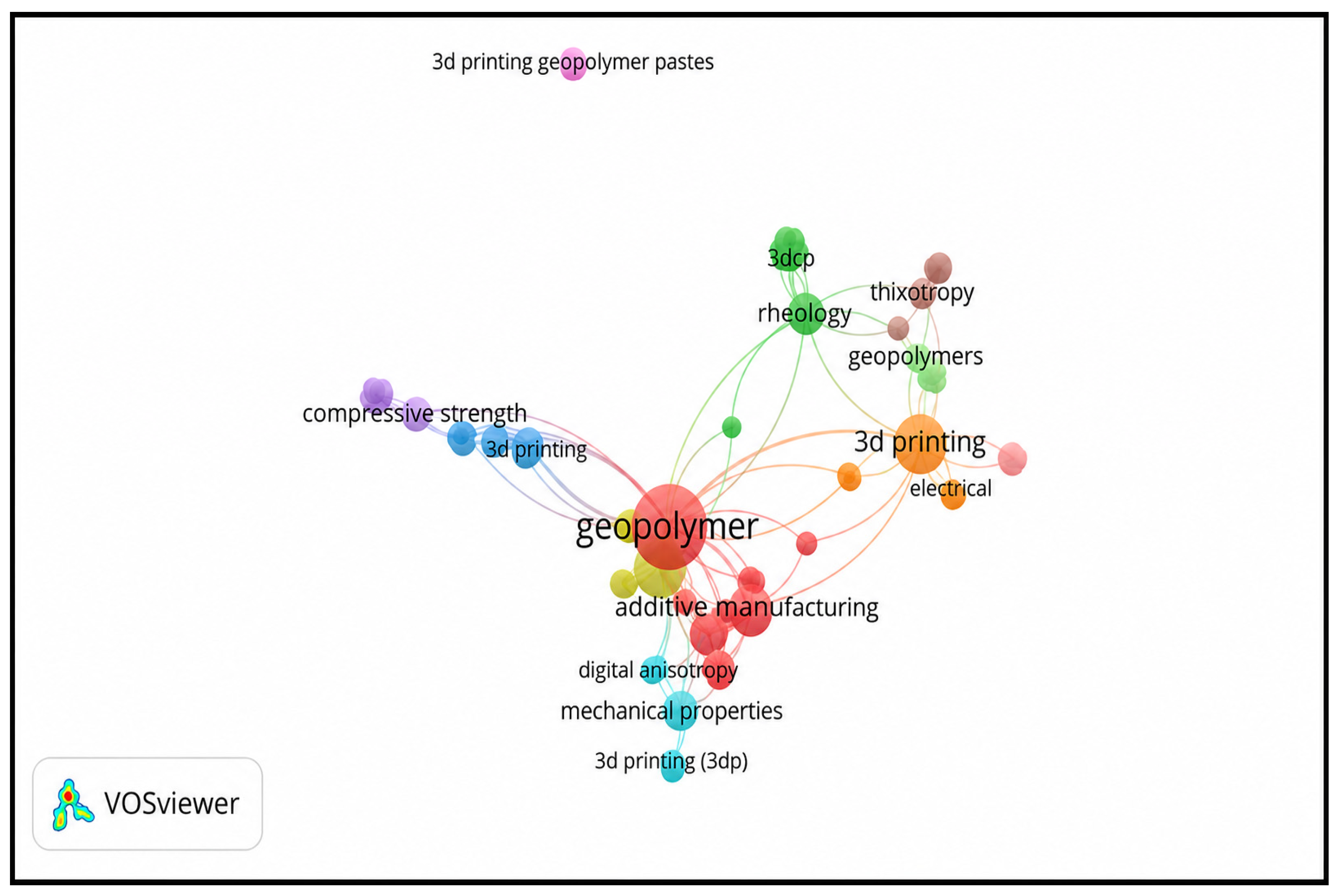
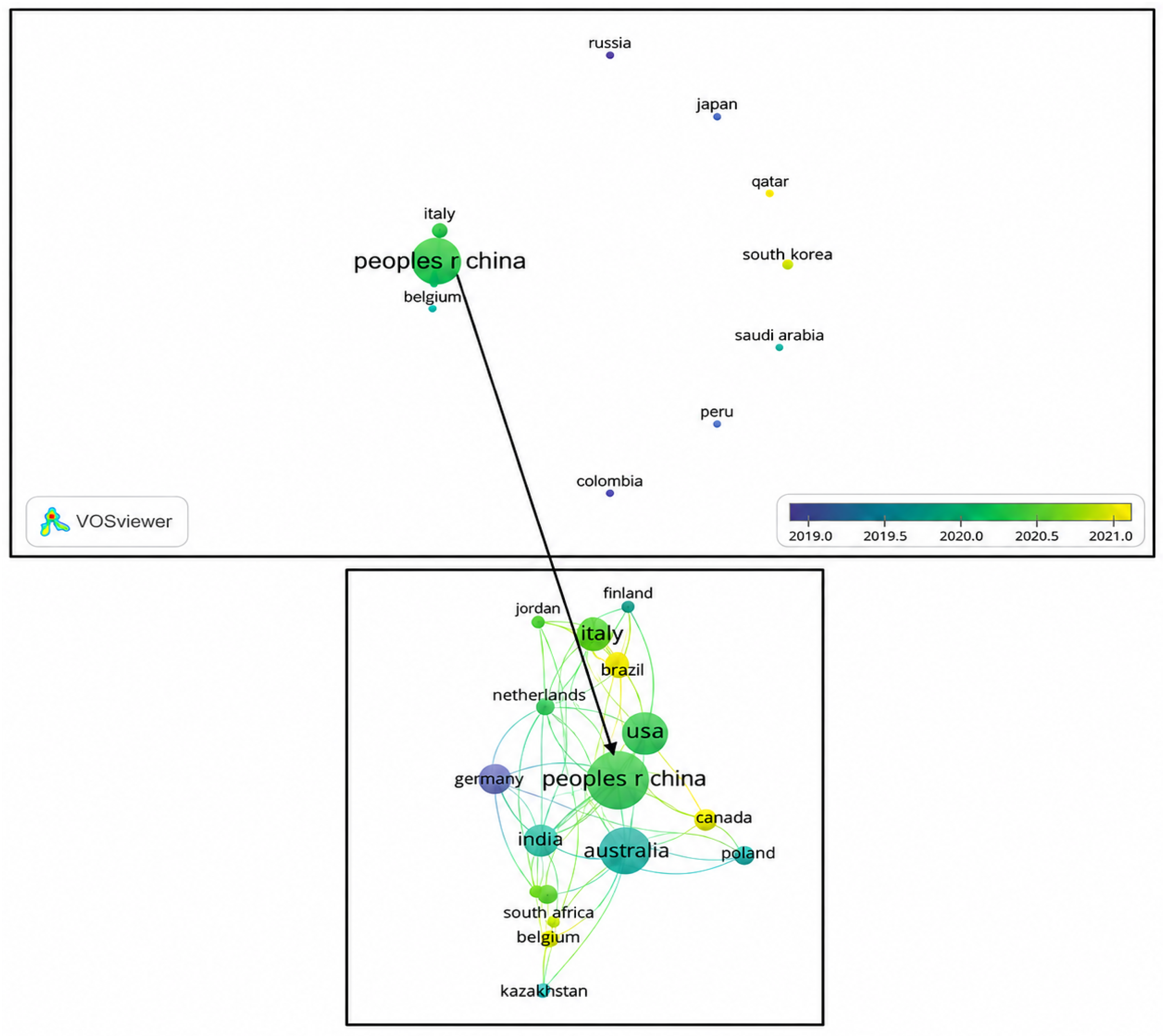
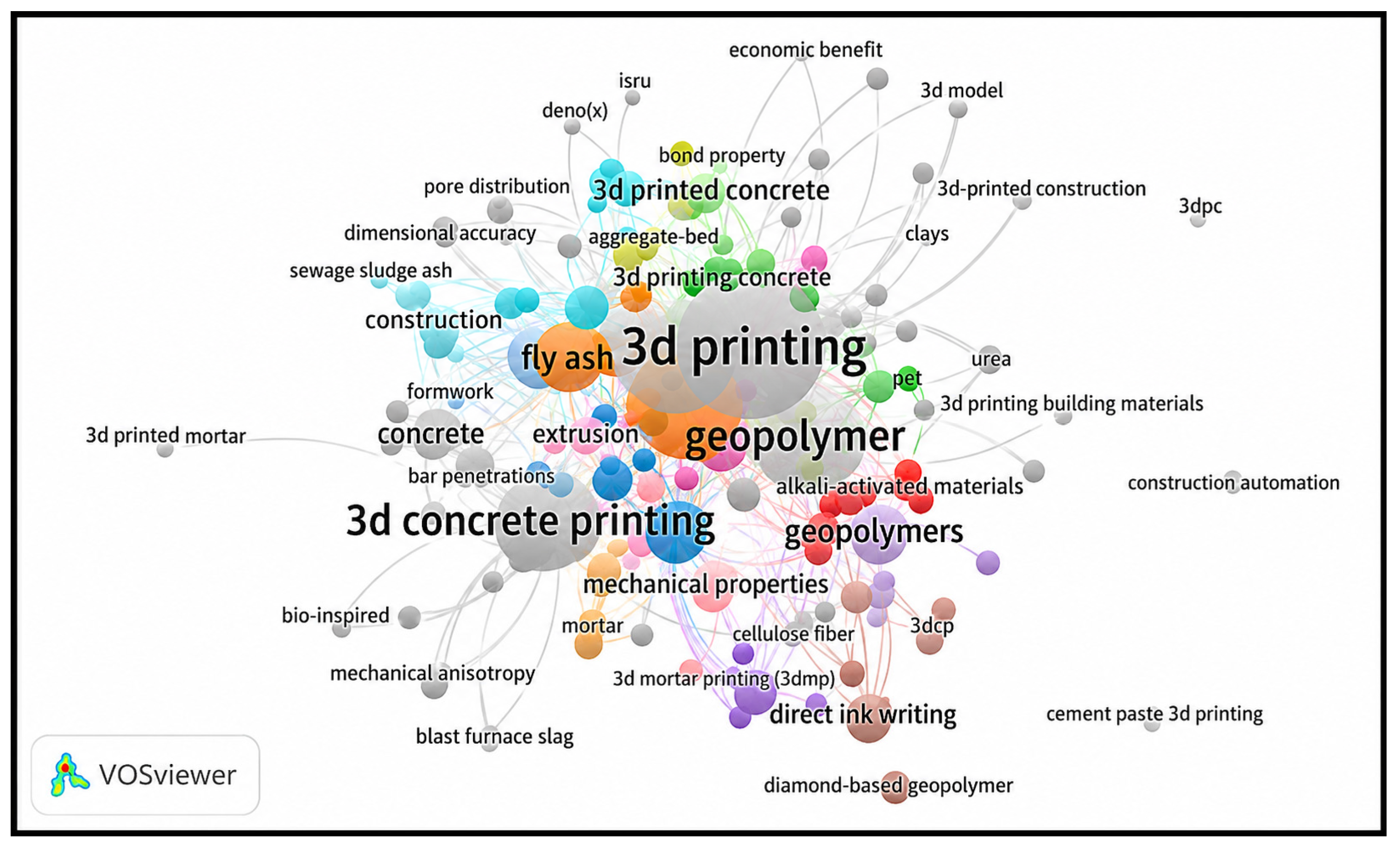
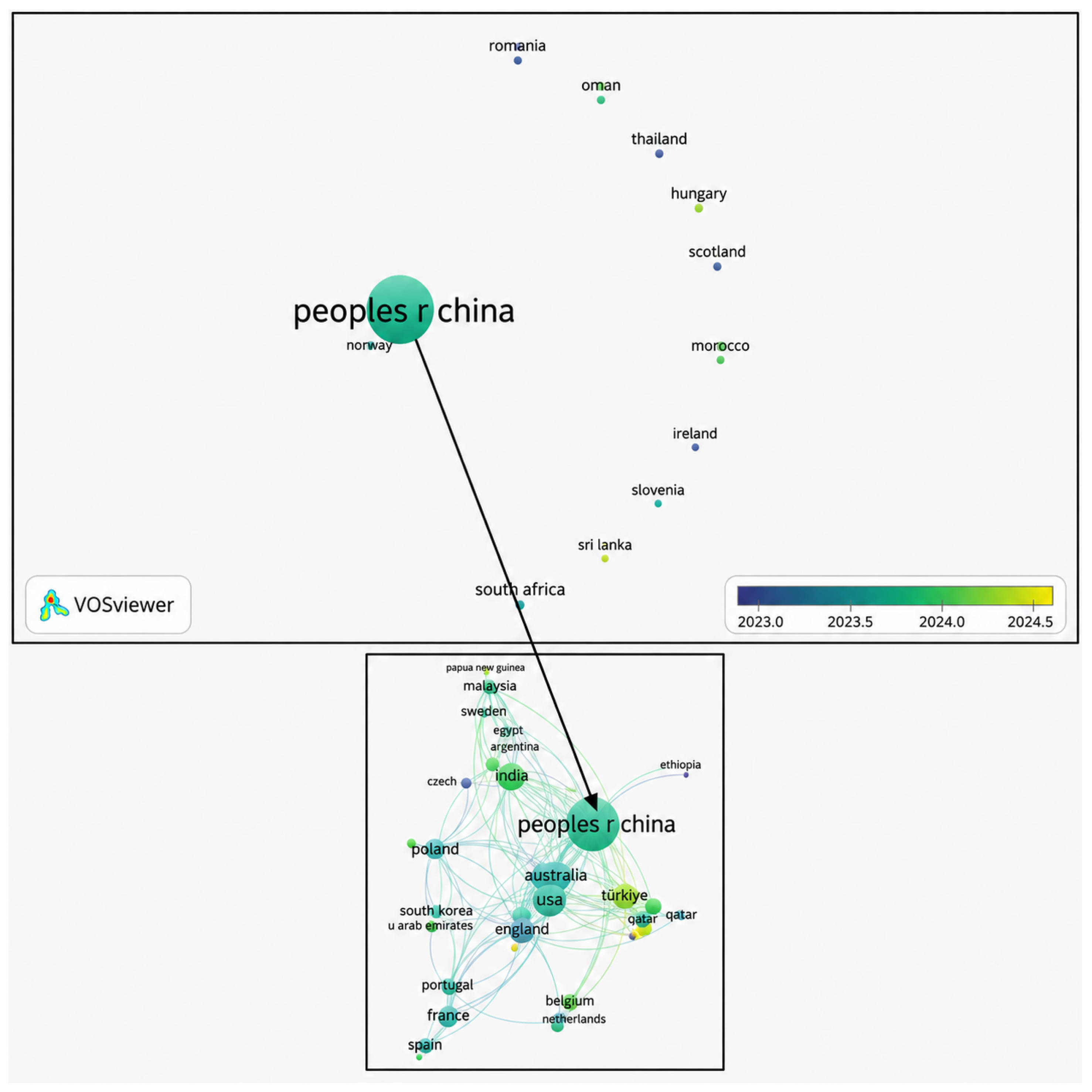
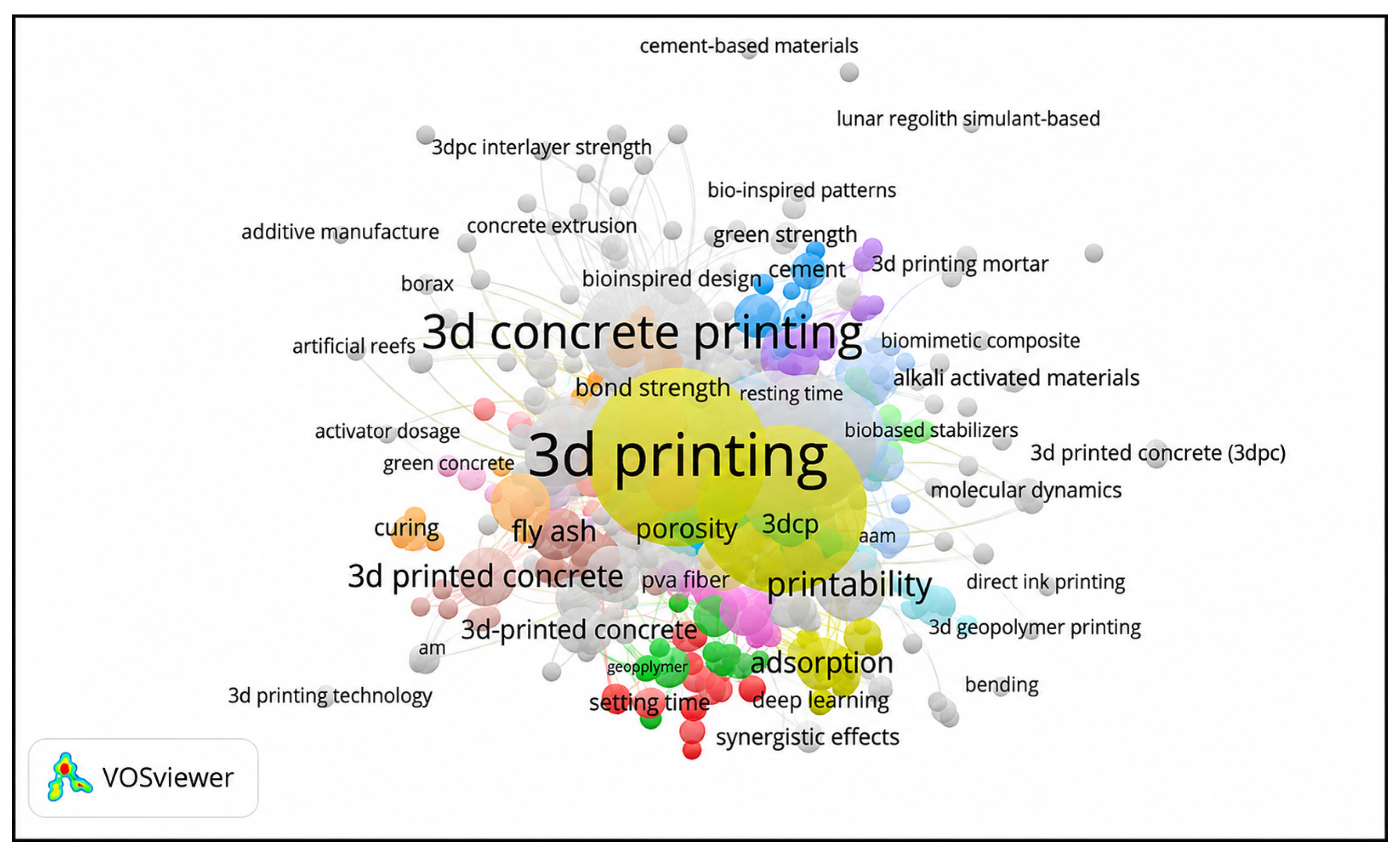
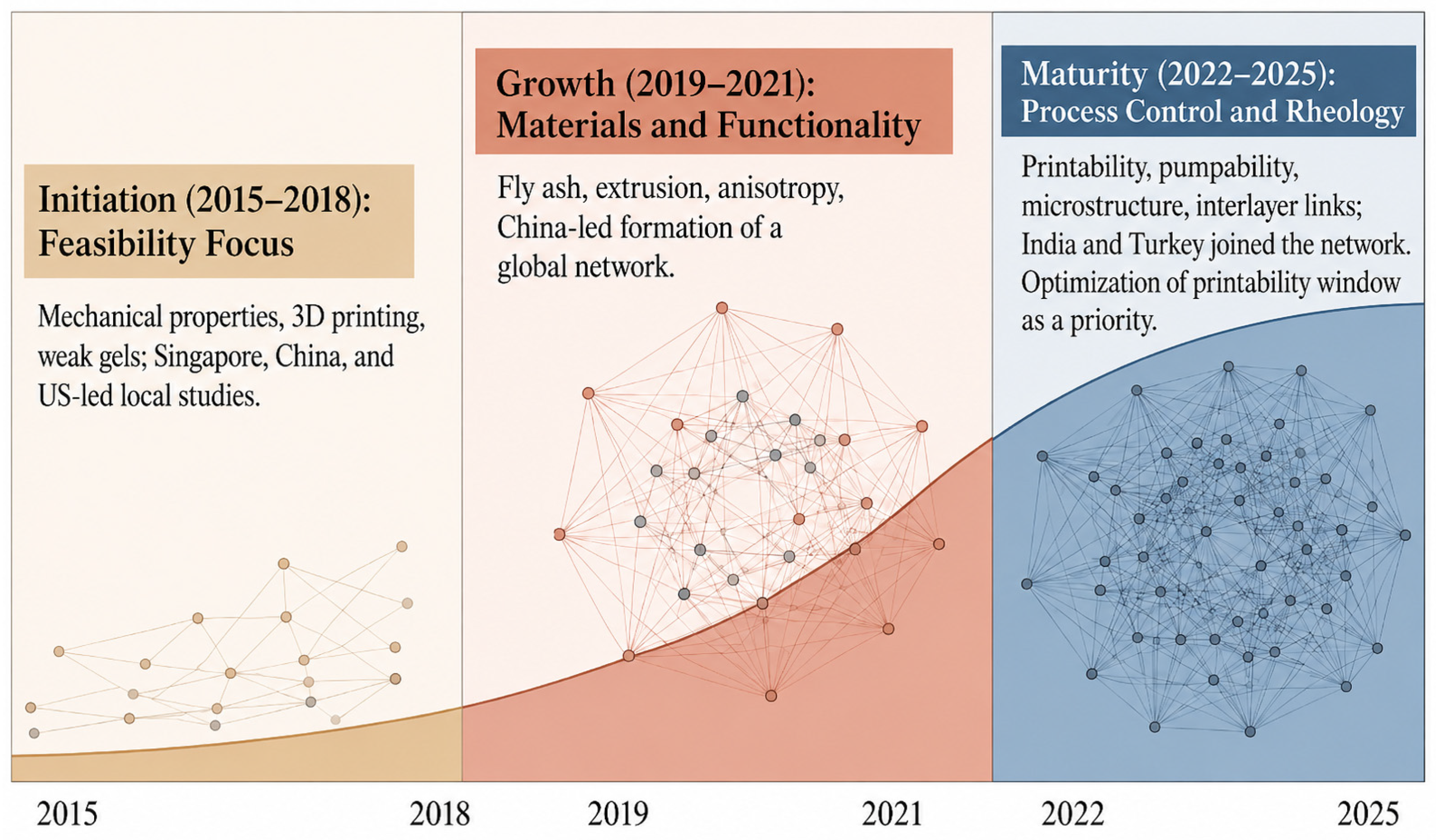
2. Evolution of 3D-Printed Geopolymer Research: A Bibliometric Perspective
3. Geopolymerization-Controlled Rheology and Printability in 3D-Printed Geopolymer Mortars
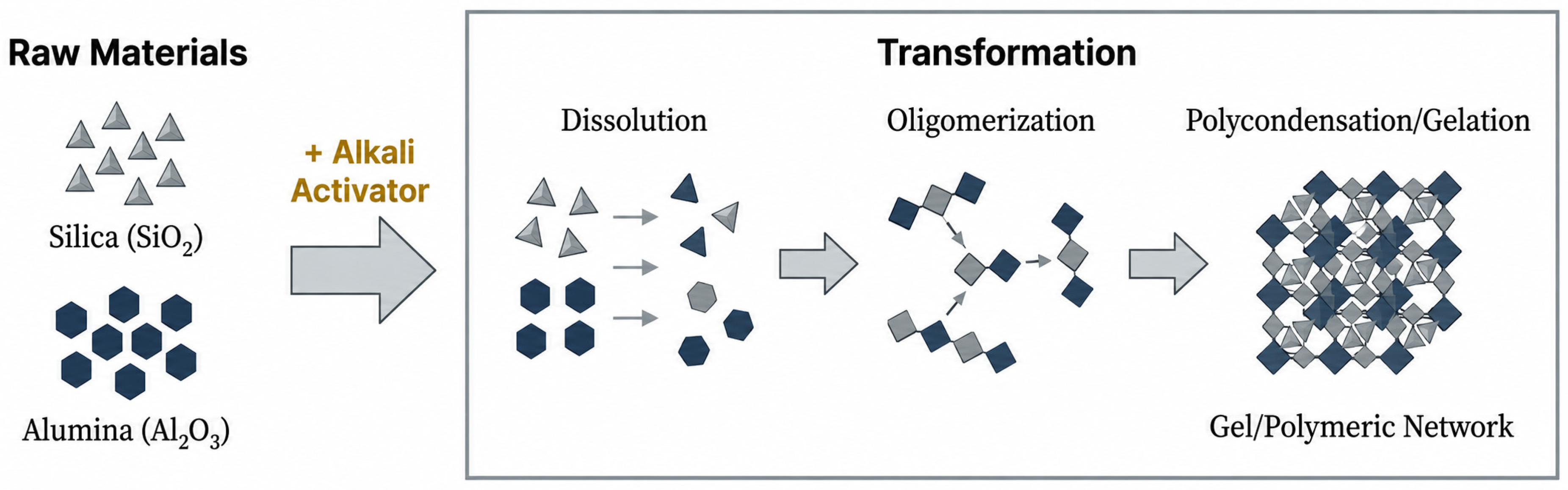
3.1. Geopolymerization and Rheological Evolution
3.2. Dynamic and Static Yield Stress
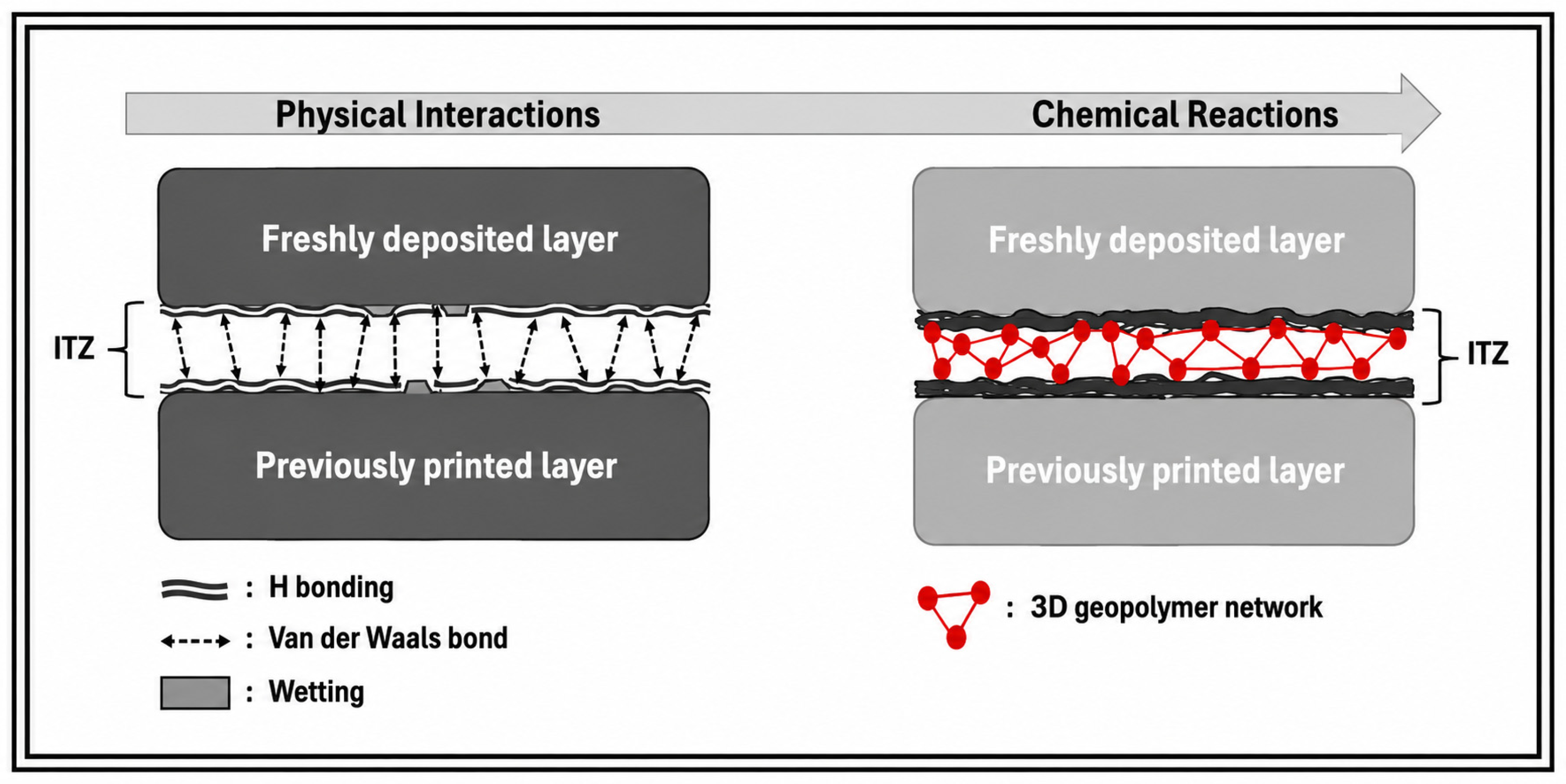
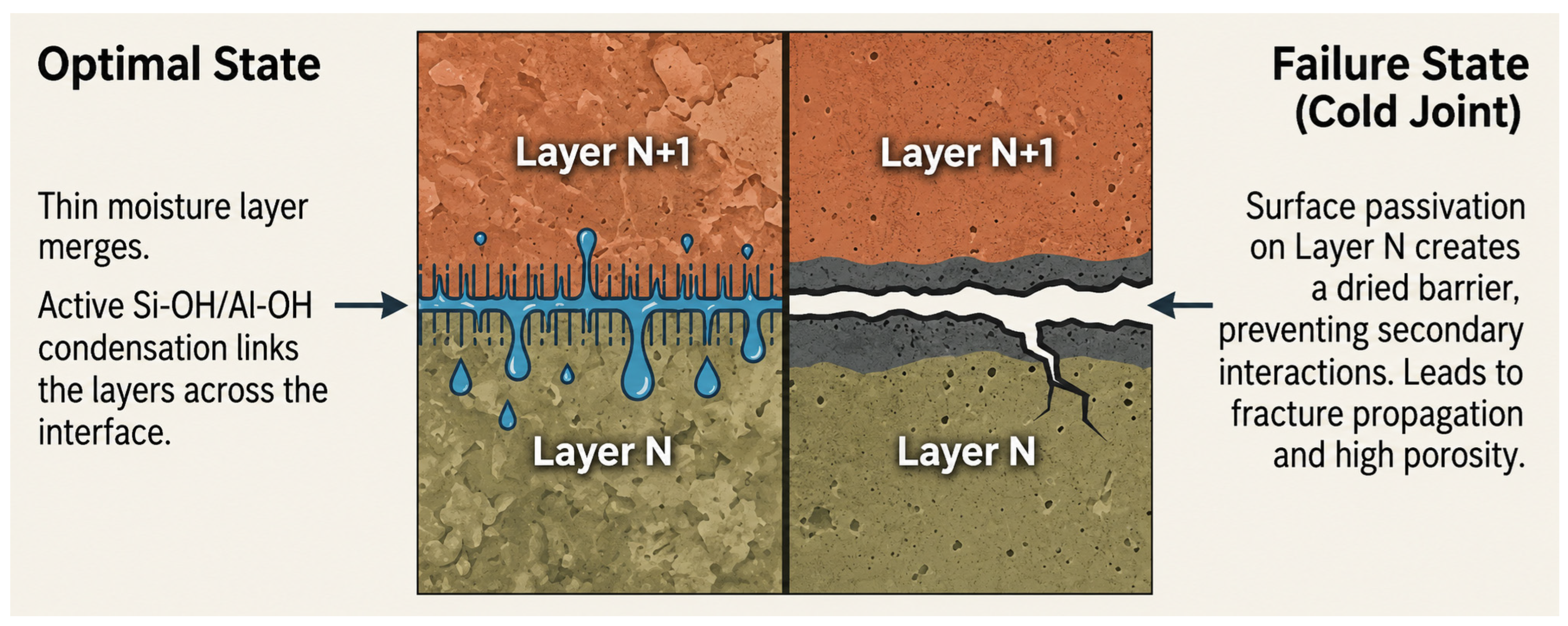
3.3. Printability Window and Interlayer Bonding
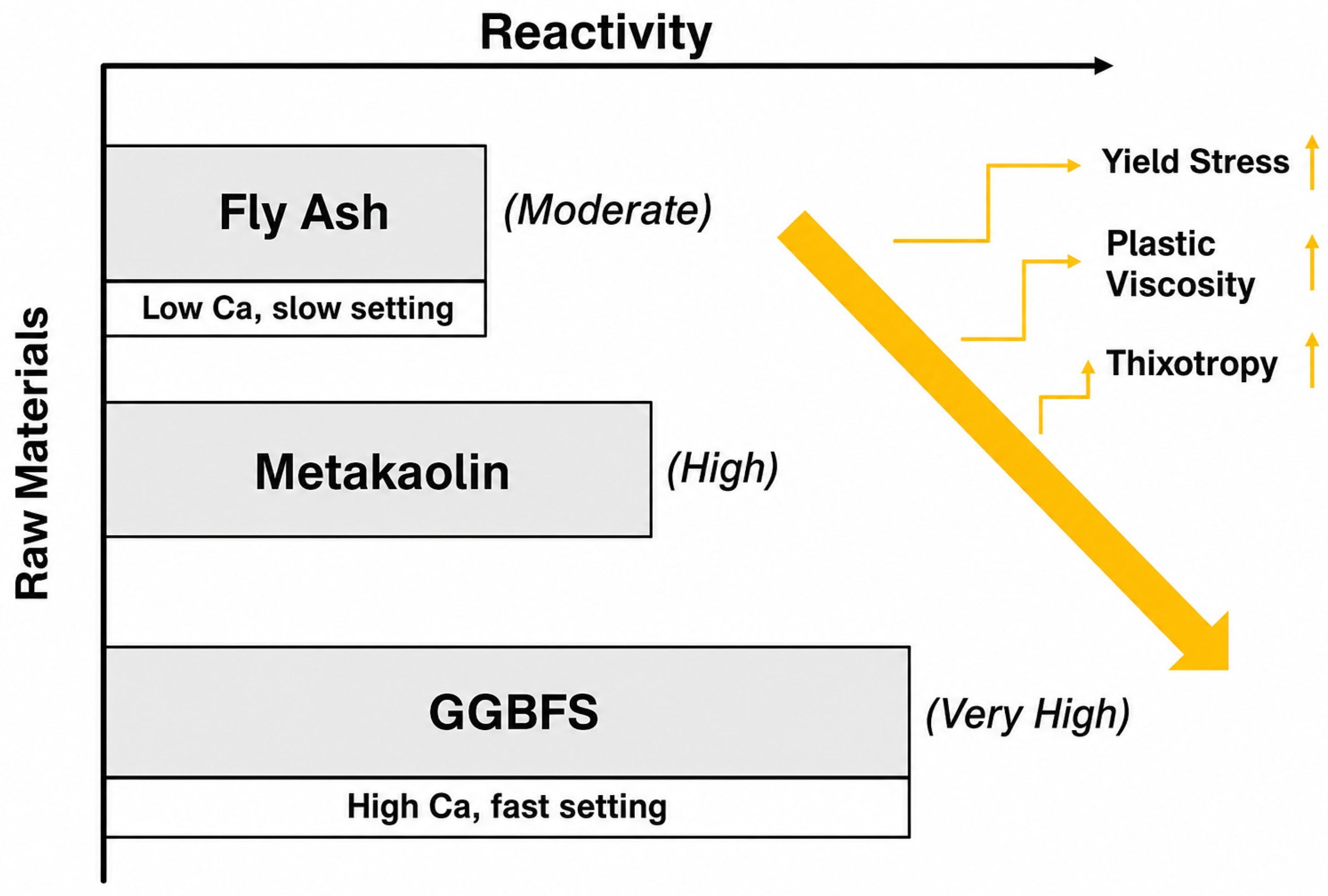
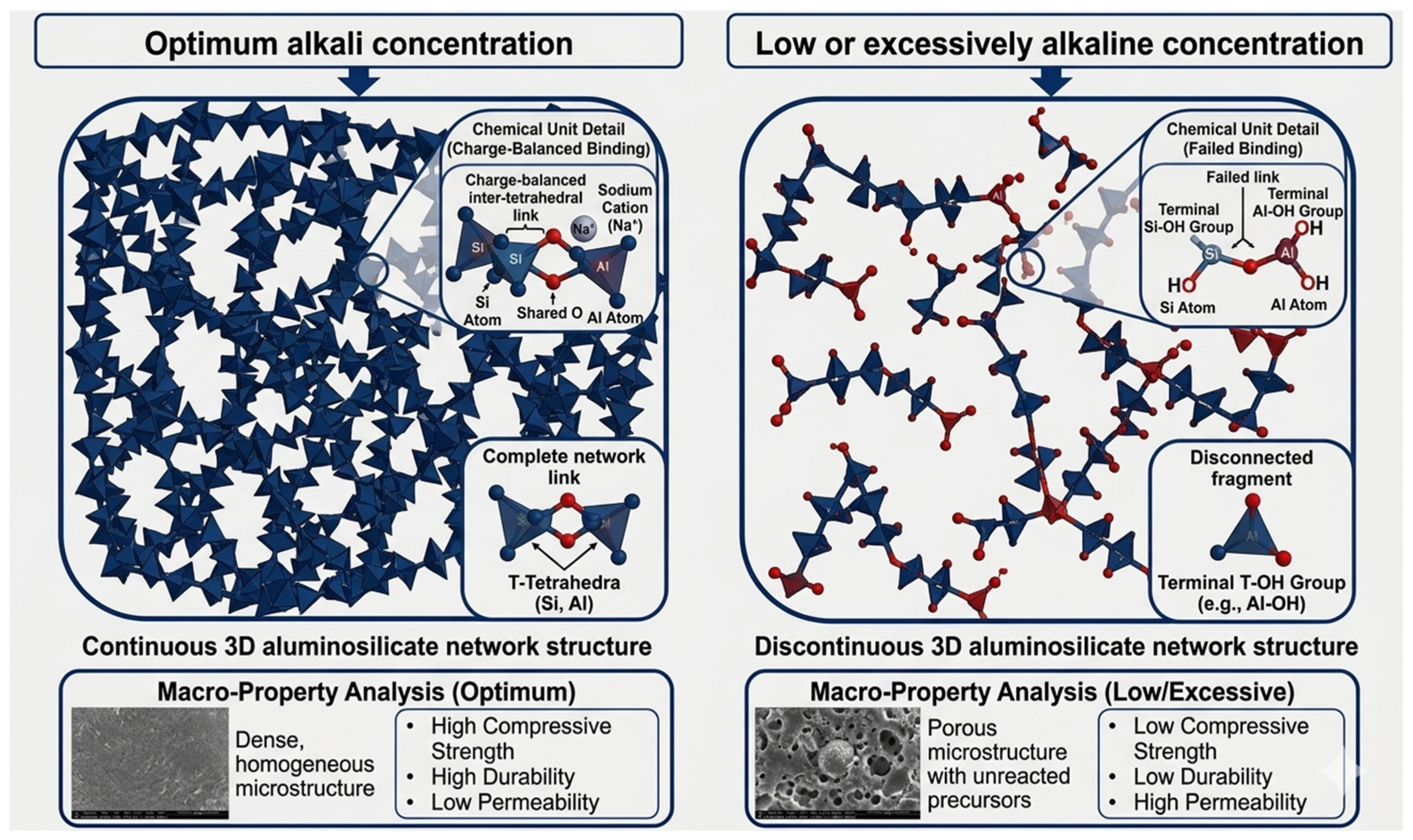
3.4. Effect of Mixture Chemistry on Printability
3.5. Temperature, Open Time, and Process Optimization
Practical Challenges in Hot and Arid Climates and Potential Advantages
3.6. The Effect of Fiber Addition on Fresh State Characteristics and Printability
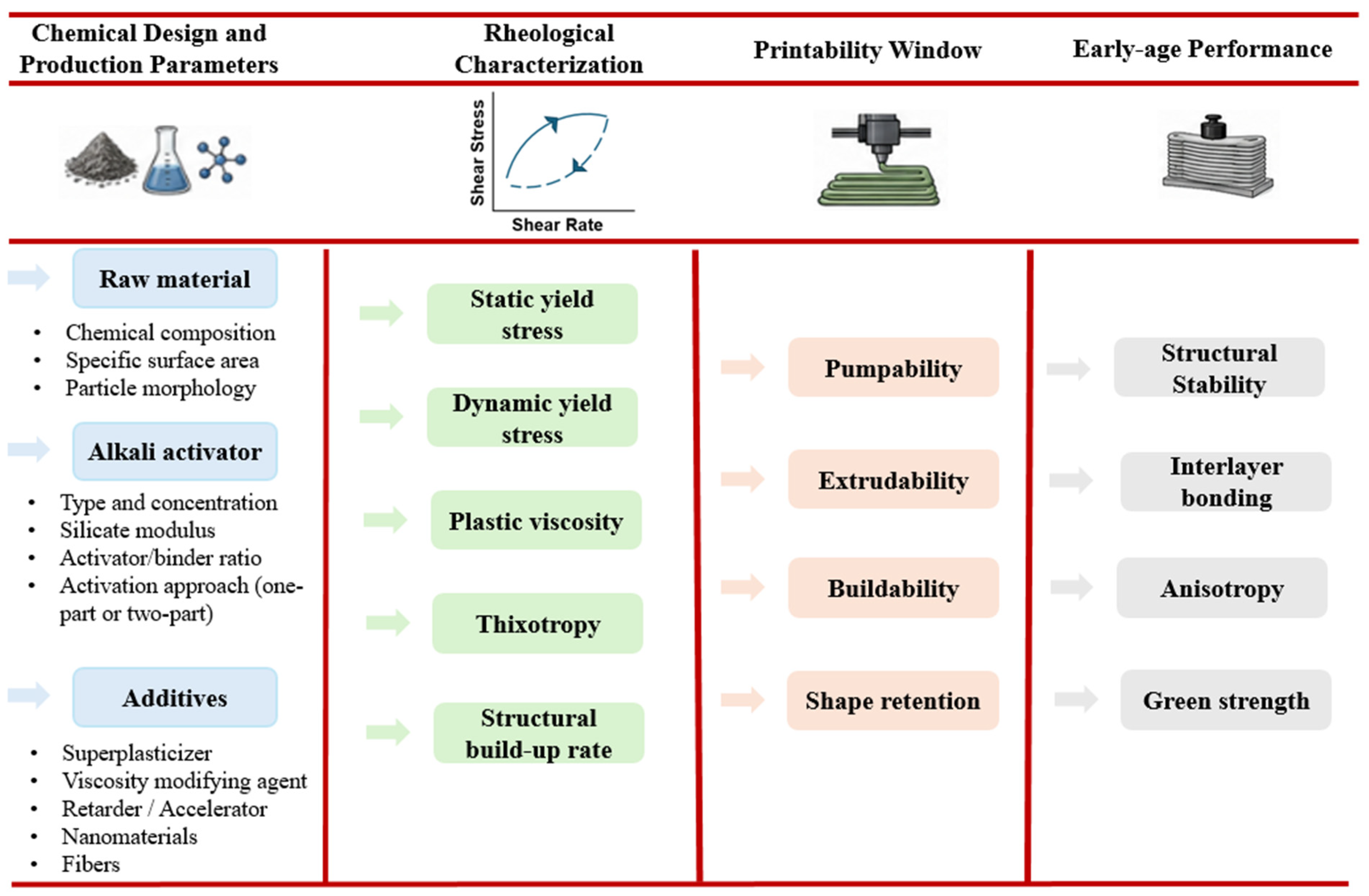
4. Fresh-State Requirements for 3D-Printable Geopolymer Mortars
4.1. Comparison of One-Part and Two-Part Geopolymer Systems in Extrusion-Based 3D Printing
4.2. Experimental Methods Used to Characterize Fresh-State Behavior
4.3. Fresh-State Rheological Requirements Across Pumping, Extrusion, and Post-Deposition Stages
4.4. Rheological Ranges and Practical Printability Window
4.5. Measurement Protocols and Standardized Reporting of Fresh-State Properties
4.6. Optimization Strategies and Practical Adjustment Framework
5. Conclusions
6. Future Directions for 3D-Printed Geopolymers
6.1. Development of Standardized Rheo-Chemical Kinetic Models
6.2. New Design That Combines Geopolymerization Chemistry and Rheological Evolution
6.3. Strengthening Interlayer Bonding
6.4. Determination of Long-Term Performance
6.5. Conducting Sustainability and Life Cycle Analyses
Author Contributions
Funding
Institutional Review Board Statement
Data Availability Statement
Acknowledgments
Conflicts of Interest
References
- Moradi, S.; Jonny Klakegg, O. Conceptualization of collaboration, cooperation, and coordination in construction projects. IOP Conf. Ser. Earth Environ. Sci. 2024, 1389, 012021. [Google Scholar] [CrossRef]
- Salam, M.; Forsythe, P.; Killen, C. Collaboration in the detailed design phase of construction projects—A study of interdisciplinary teams. In Proceedings of the Annual Conference of the International Group for Lean Construction, Lille, France, 26 June–2 July 2023. [Google Scholar]
- Sharma, S. Evaluating Key Challenges and Optimization Strategies for Enhancing Labor Productivity on Construction Sites. J. Civ. Constr. Eng. 2025, 11, 24–41. [Google Scholar] [CrossRef]
- Gürsoy, Ş.; Aydoğan, F.B.Ç. 06 February 2023 Kahramanmaraş earthquakes (Mw= 7.8 and 7.6) field observations and preliminary assessment report. Eng. Sci. Technol. Int. J. 2024, 60, 101898. [Google Scholar] [CrossRef]
- Mertol, H.C.; Tunç, G.; Akış, T.; Kantekin, Y.; Aydın, İ.C. Investigation of RC buildings after 6 February 2023, Kahramanmaraş, Türkiye earthquakes. Buildings 2023, 13, 1789. [Google Scholar] [CrossRef]
- Qaidi, S.; Yahia, A.; Tayeh, B.A.; Unis, H.; Faraj, R.; Mohammed, A. 3D printed geopolymer composites: A review. Mater. Today Sustain. 2022, 20, 100240. [Google Scholar] [CrossRef]
- Shilar, F.A.; Ganachari, S.V.; Patil, V.B.; Bhojaraja, B.E.; Khan, T.Y.; Almakayeel, N. A review of 3D printing of geopolymer composites for structural and functional applications. Constr. Build. Mater. 2023, 400, 132869. [Google Scholar] [CrossRef]
- Zhang, J.; Wang, J.; Dong, S.; Yu, X.; Han, B. A review of the current progress and application of 3D printed concrete. Compos. Part A Appl. Sci. Manuf. 2019, 125, 105533. [Google Scholar] [CrossRef]
- Ricciotti, L.; Apicella, A.; Perrotta, V.; Aversa, R. Geopolymer materials for extrusion-based 3D-printing: A review. Polymers 2023, 15, 4688. [Google Scholar] [CrossRef]
- Zhu, J.; Cervera, M.; Ren, X. Buildability of complex 3D-printed concrete geometries using Peridynamics. Autom. Constr. 2024, 165, 105575. [Google Scholar] [CrossRef]
- Mymrin, V.; Pedroso, D.E.; Pedroso, C.; Alekseev, K.; Avanci, M.A.; Winter, E., Jr.; Cechin, L.; Rolim, P.H.B.; Iarozinski, A.; Catai, R.E. Environmentally clean composites with hazardous aluminum anodizing sludge, concrete waste, and lime production waste. J. Clean. Prod. 2018, 174, 380–388. [Google Scholar] [CrossRef]
- Mohamad, N.; Muthusamy, K.; Embong, R.; Kusbiantoro, A.; Hashim, M.H. Environmental impact of cement production and Solutions: A review. Mater. Today Proc. 2022, 48, 741–746. [Google Scholar] [CrossRef]
- Naqi, A.; Jang, J.G. Recent progress in green cement technology utilizing low-carbon emission fuels and raw materials: A review. Sustainability 2019, 11, 537. [Google Scholar] [CrossRef]
- Nasir, M.; Mahmood, A.H.; Bahraq, A.A. History, recent progress, and future challenges of alkali-activated binders—An overview. Constr. Build. Mater. 2024, 426, 136141. [Google Scholar] [CrossRef]
- Wang, H.; Shen, J.; Shahzad, Q.; Sun, X.; Dong, W. Performance Optimization of Green Mortar Using Graded Ferrochrome Slag and Dune Sand as Aggregates. Int. J. Concr. Struct. Mater. 2025, 19, 86. [Google Scholar] [CrossRef]
- Davidovits, J. Geopolymers: Inorganic polymeric new materials. J. Therm. Anal. Calorim. 1991, 37, 1633–1656. [Google Scholar] [CrossRef]
- Luo, Y.; Yang, L.; Wang, D.; Zhang, Q.; Wang, Z.; Xing, M.; Xue, G.; Zhang, J.; Liu, Z. Effect of GGBFS on the mechanical properties of metakaolin-based self-compacting geopolymer concrete. J. Build. Eng. 2024, 96, 110501. [Google Scholar] [CrossRef]
- Ekinci, E.; Kantarcı, F.; Maraş, M.M.; Ekinci, E.; Türkmen, İ.; Demirboğa, R. Historiography, Current Practice and Future Perspectives: A Critical Review of Geopolymer Binders. Sustainability 2025, 17, 9204. [Google Scholar] [CrossRef]
- Zhong, H.; Zhang, M. 3D printing geopolymers: A review. Cem. Concr. Compos. 2022, 128, 104455. [Google Scholar] [CrossRef]
- Barve, P.; Bahrami, A.; Shah, S. Geopolymer 3D printing: A comprehensive review on rheological and structural performance assessment, printing process parameters, and microstructure. Front. Mater. 2023, 10, 1241869. [Google Scholar] [CrossRef]
- Liu, X.; Hu, J.; Guo, X. Printability and interlayer bonding property of 3D printed fiber reinforced geopolymer (3DP-FRG). J. Build. Eng. 2024, 87, 109060. [Google Scholar] [CrossRef]
- Franchin, G.; Scanferla, P.; Zeffiro, L.; Elsayed, H.; Baliello, A.; Giacomello, G.; Pasetto, M.; Colombo, P. Direct ink writing of geopolymeric inks. J. Eur. Ceram. Soc. 2017, 37, 2481–2489. [Google Scholar] [CrossRef]
- Sakhare, V.; Najar, M.; Deshpande, S. Printing performance of 3D-printed geopolymer through pumpability–extrudability–buildability properties—A review. Archit. Sci. Rev. 2026, 69, 88–112. [Google Scholar] [CrossRef]
- Babafemi, A.J.; Kolawole, J.T.; Miah, M.J.; Paul, S.C.; Panda, B. A concise review on interlayer bond strength in 3D concrete printing. Sustainability 2021, 13, 7137. [Google Scholar] [CrossRef]
- Yao, H.; Xie, Z.; Li, Z.; Huang, C.; Yuan, Q.; Zheng, X. The relationship between the rheological behavior and interlayer bonding properties of 3D printing cementitious materials with the addition of attapulgite. Constr. Build. Mater. 2022, 316, 125809. [Google Scholar] [CrossRef]
- Keppert, M.; Koňáková, D.; Pommer, V.; Vejmelková, E.; Černý, R. Reactivity of precursors for geopolymerization studied by isothermal calorimetry. J. Therm. Anal. Calorim. 2024, 149, 10619–10631. [Google Scholar] [CrossRef]
- Chen, K.; Liu, Q.; Chen, B.; Zhang, S.; Ferrara, L.; Li, W. Effect of raw materials on the performance of 3D printing geopolymer: A review. J. Build. Eng. 2024, 84, 108501. [Google Scholar] [CrossRef]
- Nath, S.K.; Kumar, S. Role of alkali concentration on reaction kinetics of fly ash geopolymerization. J. Non-Cryst. Solids 2019, 505, 241–251. [Google Scholar]
- Muthukrishnan, S.; Ramakrishnan, S.; Sanjayan, J. Effect of alkali reactions on the rheology of one-part 3D printable geopolymer concrete. Cem. Concr. Compos. 2021, 116, 103899. [Google Scholar] [CrossRef]
- Ma, G.; Yan, Y.; Zhang, M.; Sanjayan, J. Effect of steel slag on 3D concrete printing of geopolymer with quaternary binders. Ceram. Int. 2022, 48, 26233–26247. [Google Scholar] [CrossRef]
- Sheng, Z.; Zhu, B.; Cai, J.; Han, J.; Zhang, Y.; Pan, J. Influence of waste glass powder on printability and mechanical properties of 3D printing geopolymer concrete. Dev. Built Environ. 2024, 20, 100541. [Google Scholar] [CrossRef]
- Chen, Y.; Liu, C.; Cao, R.; Chen, C.; Mechtcherine, V.; Zhang, Y. Systematical investigation of rheological performance regarding 3D printing process for alkali-activated materials: Effect of precursor nature. Cem. Concr. Compos. 2022, 128, 104450. [Google Scholar] [CrossRef]
- Yuan, Q.; Gao, C.; Huang, T.; Zuo, S.; Yao, H.; Zhang, K.; Huang, Y.; Liu, J. Factors influencing the properties of extrusion-based 3D-printed alkali-activated fly ash-slag mortar. Materials 2022, 15, 1969. [Google Scholar] [CrossRef]
- Bong, S.H.; Nematollahi, B.; Nazari, A.; Xia, M.; Sanjayan, J. Method of optimisation for ambient temperature cured sustainable geopolymers for 3D printing construction applications. Materials 2019, 12, 902. [Google Scholar] [CrossRef]
- Khalid, L.W.; Mermerdaş, K.; Bzeni, D.K.; Jawad, D.J. Determination of appropriate mix proportion of carbon fiber reinforced geopolymer composite for 3D printing technology. J. Build. Eng. 2025, 100, 111751. [Google Scholar] [CrossRef]
- Pan, K.; Cheng, Y.; Qu, G.; Yuan, Z.; Liu, G. Development and optimization of geopolymer-based 3D printing materials utilizing industrial solid waste: Rheological properties and practical applications. Constr. Build. Mater. 2025, 491, 142719. [Google Scholar] [CrossRef]
- Souza, M.T.; Simão, L.; de Moraes, E.G.; Senff, L.; de Castro Pessôa, J.R.; Ribeiro, M.J.; de Oliveira, A.P.N. Role of temperature in 3D printed geopolymers: Evaluating rheology and buildability. Mater. Lett. 2021, 293, 129680. [Google Scholar] [CrossRef]
- Vlachakis, C.; Perry, M.; Biondi, L.; McAlorum, J. 3D printed temperature-sensing repairs for concrete structures. Addit. Manuf. 2020, 34, 101238. [Google Scholar] [CrossRef]
- Zoude, C.; Prud’homme, E.; Johannes, K.; Gremillard, L. The Mechanical Properties of Geopolymers as a Function of Their Shaping and Curing Parameters. Ceramics 2024, 7, 873–892. [Google Scholar] [CrossRef]
- Zhou, Y.; Althoey, F.; Alotaibi, B.S.; Gamil, Y.; Iftikhar, B. An overview of recent advancements in fibre-reinforced 3D printing concrete. Front. Mater. 2023, 10, 1289340. [Google Scholar] [CrossRef]
- Ogura, H.; Nerella, V.N.; Mechtcherine, V. Developing and testing of strain-hardening cement-based composites (SHCC) in the context of 3D-printing. Materials 2018, 11, 1375. [Google Scholar] [CrossRef] [PubMed]
- Ji, G.; Ding, T.; Xiao, J.; Du, S.; Li, J.; Duan, Z. A 3D printed ready-mixed concrete power distribution substation: Materials and construction technology. Materials 2019, 12, 1540. [Google Scholar] [CrossRef]
- Denker, M.; Gharehpapagh, B.; Gruhn, R.; Pose, S.; Korniejenko, K.; Grab, T.; Zeidler, H. Compressive strength of geopolymer with recycled carbon fibres manufactured in air and in water by casting and additive manufacturing. Front. Built Environ. 2025, 11, 1620385. [Google Scholar] [CrossRef]
- Chen, W.; Pan, J.; Zhu, B.; Ma, X.; Zhang, Y.; Chen, Y.; Li, X.; Meng, L.; Cai, J. Improving mechanical properties of 3D printable ‘one-part’geopolymer concrete with steel fiber reinforcement. J. Build. Eng. 2023, 75, 107077. [Google Scholar] [CrossRef]
- Han, K.; Gu, F.; Yang, H.; Tian, X.; Du, X. PVA fiber reinforced red mud-based geopolymer for 3D printing: Printability, mechanical properties and microanalysis. J. Build. Eng. 2024, 97, 110733. [Google Scholar] [CrossRef]
- Shoaei, P.; Kjøniksen, A.L.; Pamies, R.; Pilehvar, S. Characterization of 3D-printable geopolymer mortars: Effect of binder composition and basalt fiber reinforcement. Case Stud. Constr. Mater. 2024, 20, e03335. [Google Scholar] [CrossRef]
- Zhu, X.; Wang, J.; Yang, M.; Xiao, J.; Zhang, Y.; Gilabert, F.A. Performance modulation and optimization of PE fiber reinforced 3D-printed geopolymer. Constr. Build. Mater. 2024, 429, 136449. [Google Scholar] [CrossRef]
- Favier, A.; Hot, J.; Habert, G.; Roussel, N.; de Lacaillerie, J.B.D.E. Flow properties of MK-based geopolymer pastes. A comparative study with standard Portland cement pastes. Soft Matter 2014, 10, 1134–1141. [Google Scholar] [CrossRef] [PubMed]
- Hou, S.; Duan, Z.; Xiao, J.; Ye, J. A review of 3D printed concrete: Performance requirements, testing measurements and mix design. Constr. Build. Mater. 2021, 273, 121745. [Google Scholar] [CrossRef]
- Jaji, M.B.; Babafemi, A.J.; van Zijl, G.P. Mechanical performance of extrusion-based two-part 3D-printed geopolymer concrete: A review of advances in laboratory and real-scale construction projects. Mater. Today Sustain. 2025, 31, 101131. [Google Scholar] [CrossRef]
- Christ, J.; Perrot, A.; Ottosen, L.M.; Koss, H. Rheological characterization of temperature-sensitive biopolymer-bound 3D printing concrete. Constr. Build. Mater. 2024, 411, 134337. [Google Scholar] [CrossRef]
- Panda, B.; Singh, G.B.; Unluer, C.; Tan, M.J. Synthesis and characterization of one-part geopolymers for extrusion based 3D concrete printing. J. Clean. Prod. 2019, 220, 610–619. [Google Scholar] [CrossRef]
- Rehman, A.U.; Kim, J.H. 3D concrete printing: A systematic review of rheology, mix designs, mechanical, microstructural, and durability characteristics. Materials 2021, 14, 3800. [Google Scholar] [CrossRef]
- Barve, P.; Bahrami, A.; Shah, S. A comprehensive review on effects of material composition, mix design, and mixing regimes on rheology of 3D-Printed geopolymer concrete. Open Constr. Build. Technol. J. 2024, 18, e18748368292859. [Google Scholar] [CrossRef]
- Si, W.; Khan, M.; McNally, C. A comprehensive review of rheological dynamics and process parameters in 3D concrete printing. J. Compos. Sci. 2025, 9, 299. [Google Scholar] [CrossRef]
- Panda, B.; Tan, M.J. Experimental study on mix proportion and fresh properties of fly ash based geopolymer for 3D concrete printing. Ceram. Int. 2018, 44, 10258–10265. [Google Scholar] [CrossRef]
- Panda, B.; Unluer, C.; Tan, M.J. Investigation of the rheology and strength of geopolymer mixtures for extrusion-based 3D printing. Cem. Concr. Compos. 2018, 94, 307–314. [Google Scholar] [CrossRef]
- Kondepudi, K.; Subramaniam, K.V.L. Formulation of alkali-activated fly ash-slag binders for 3D concrete printing. Cem. Concr. Compos. 2021, 119, 103983. [Google Scholar]
- Munir, Q.; Peltonen, R.; Kärki, T. Printing parameter requirements for 3D printable geopolymer materials prepared from industrial side streams. Materials 2021, 14, 4758. [Google Scholar] [CrossRef]
- Ekinci, M.Ö.; Belendir, U.; Demiral, N.Ç.; Şahin, O.; İlcan, H.; Şahmaran, M.; Lachemi, M. Sustainable lightweight thermal insulating geopolymer mortars from end-of-life materials for 3D printing. Constr. Build. Mater. 2026, 520, 145977. [Google Scholar]
- Nematollahi, B.; Vijay, P.; Sanjayan, J.; Nazari, A.; Xia, M.; Naidu Nerella, V.; Mechtcherine, V. Effect of polypropylene fibre addition on properties of geopolymers made by 3D printing for digital construction. Materials 2018, 11, 2352. [Google Scholar] [CrossRef] [PubMed]
- Hay, R.; Celik, K. Effects of water-to-binder ratios (w/b) and superplasticizer on physicochemical, microstructural, and mechanical evolution of limestone calcined clay cement (LC3). Constr. Build. Mater. 2023, 391, 131529. [Google Scholar] [CrossRef]
- Sunarsih, E.S.; As’ad, S.; Sam, A.R.M.; Kristiawan, S.A. Properties of fly ash-slag-based geopolymer concrete with low molarity sodium hydroxide. Civ. Eng. J. 2023, 9, 381–392. [Google Scholar] [CrossRef]
- Yoo, D.Y.; Banthia, N.; You, I.; Lee, S.J. Recent advances in cementless ultra-high-performance concrete using alkali-activated materials and industrial byproducts: A review. Cem. Concr. Compos. 2024, 148, 105470. [Google Scholar] [CrossRef]
- Tajunnisa, Y.; Arrafid, R.N.; Bayuaji, R.; Nurhadi, H. Rheology Analysis of 3D Printed Geopolymer Based on High Calcium Fly Ash. IPTEK J. Eng. 2024, 10, 196–204. [Google Scholar] [CrossRef]
- Roussel, N. Rheological requirements for printable concretes. Cem. Concr. Res. 2018, 112, 76–85. [Google Scholar] [CrossRef]
- RILEM. 276-DFC: Digital Fabrication with Cement-Based Materials. Available online: https://www.rilem.net/groupe/276-dfc-digital-fabrication-with-cement-based-materials-351 (accessed on 7 January 2026).
- RILEM. 266-MRP: Measuring Rheological Properties of Cement-Based Materials. Available online: https://www.rilem.net/groupe/266-mrp-measuring-rheological-properties-of-cement-based-materials-333 (accessed on 7 January 2026).
- Campos, R.S.; Maciel, G.F. Test protocol and rheological model influence on determining the rheological properties of cement pastes. J. Build. Eng. 2021, 44, 103206. [Google Scholar] [CrossRef]
- ASTM C1749-17a; Standard Guide for Measurement of the Rheological Properties of Hydraulic Cementitious Paste Using a Rotational Rheometer. ASTM International: West Conshohocken, PA, USA, 2017.
- Jayathilakage, R.; Rajeev, P.; Sanjayan, J. Rheometry for concrete 3D printing: A review and an experimental comparison. Buildings 2022, 12, 1190. [Google Scholar] [CrossRef]
- Kaliyavaradhan, S.K.; Ambily, P.S.; Prem, P.R.; Ghodke, S.B. Test methods for 3D printable concrete. Autom. Constr. 2022, 142, 104529. [Google Scholar] [CrossRef]



| Parameter | Sample Contents | Key Findings | Reference |
|---|---|---|---|
| Activator Concentration (5, 7.5, 10%), Mixing Time, Use of Retarder (0.5, 1, 1.5%) | GGBFS and FA-based one-part geopolymer activated with anhydrous sodium metasilicate |
| [29] |
| Steel Slag Content (0, 10, 20, 30, 40%) | Steel slag was used in amounts ranging from 0% to 40%. |
| [30] |
| Fiber content (0.1, 0.2, 0.3, 0.4, and 0.5%) and interval time (0, 10, 20, 30, 40, 50 min) | 3D printed fiber reinforced geopolymer (3DP-FRG) with PP fibers |
| [21] |
| Waste glass powder usage ratio (0, 10, 20, 30, and 40%) | GGBFS and FA-based geopolymer concrete with waste glass powder |
| [31] |
| GGBFS/FA replacement ratios were changed (25, 50, 75, 100%) | GGBFS, FA, and SF |
| [32] |
| FA/GGBFS ratio (1, 2, and 3), Silicate Modulus (0, 0.3, 0.5, and 1), and sand/binder ratio (0.8, 1, 1.1, 1.2) | Alkali-activated FA/GGBFS |
| [33] |
| SiO2/Na2O (2.0 and 3.22 and SiO2/K2O (2.02 and 2.22) | FA and GGBFS-based geopolymer |
| [34] |
| NaOH concentrations (8, 10, and 12M) and Na2SiO3/NaOH ratio (1 and 2) | FA and GGBFS-based geopolymer |
| [35] |
| FA (40%), GGBFS, Calcium Carbide slag, and Silica fume (Slag was replaced by calcium carbide slag at (2–16%) or by silica fume at (1–8%), and thickener addition | Different raw material-based geopolymer paste |
| [36] |
| Fiber Parameters | Key Findings | Reference |
|---|---|---|
| Steel fibers of different lengths (6, 8, 10 mm) and different dosages (0.5, 1%) |
| [44] |
| Polyvinyl alcohol (PVA) fibers (0, 0.3%, 0.6%, 0.9%, and 1.2%) |
| [45] |
| Carbon fiber (0, 0.3, and 0.6%) |
| [35] |
| Basalt Fiber (0.5 and 1%) |
| [46] |
| Polyethylene fibers (0.2, 0.4, and 0.6%) |
| [47] |
| Polypropylene fibers (0, 0.1, 0.2, 0.3, 0.4, 0.5%) |
| [21] |
Disclaimer/Publisher’s Note: The statements, opinions and data contained in all publications are solely those of the individual author(s) and contributor(s) and not of MDPI and/or the editor(s). MDPI and/or the editor(s) disclaim responsibility for any injury to people or property resulting from any ideas, methods, instructions or products referred to in the content. |
© 2026 by the authors. Licensee MDPI, Basel, Switzerland. This article is an open access article distributed under the terms and conditions of the Creative Commons Attribution (CC BY) license.
Share and Cite
Türkmen, İ.; Ekinci, E.; Kantarci, F.; Ekinci, E.; Alyamani, A.A.; Karakoc, M.B.; Demirboğa, R.; Ayaz, Y. Fresh-State Characteristics of Geopolymer Mortars for 3D Printing: Mix Design, Rheology and Early-Age Performance. Polymers 2026, 18, 1479. https://doi.org/10.3390/polym18121479
Türkmen İ, Ekinci E, Kantarci F, Ekinci E, Alyamani AA, Karakoc MB, Demirboğa R, Ayaz Y. Fresh-State Characteristics of Geopolymer Mortars for 3D Printing: Mix Design, Rheology and Early-Age Performance. Polymers. 2026; 18(12):1479. https://doi.org/10.3390/polym18121479
Chicago/Turabian StyleTürkmen, İbrahim, Enes Ekinci, Fatih Kantarci, Ergun Ekinci, Abdulrahman Ahmad Alyamani, Mehmet Burhan Karakoc, Ramazan Demirboğa, and Yasar Ayaz. 2026. "Fresh-State Characteristics of Geopolymer Mortars for 3D Printing: Mix Design, Rheology and Early-Age Performance" Polymers 18, no. 12: 1479. https://doi.org/10.3390/polym18121479
APA StyleTürkmen, İ., Ekinci, E., Kantarci, F., Ekinci, E., Alyamani, A. A., Karakoc, M. B., Demirboğa, R., & Ayaz, Y. (2026). Fresh-State Characteristics of Geopolymer Mortars for 3D Printing: Mix Design, Rheology and Early-Age Performance. Polymers, 18(12), 1479. https://doi.org/10.3390/polym18121479