Mechanical Performance of Uncompatibilized Recycled Polypropylene Biocomposites Filled with Corn, Banana, and Barley Agro-Industrial Residue Fibers


Abstract
1. Introduction
2. Materials and Methods
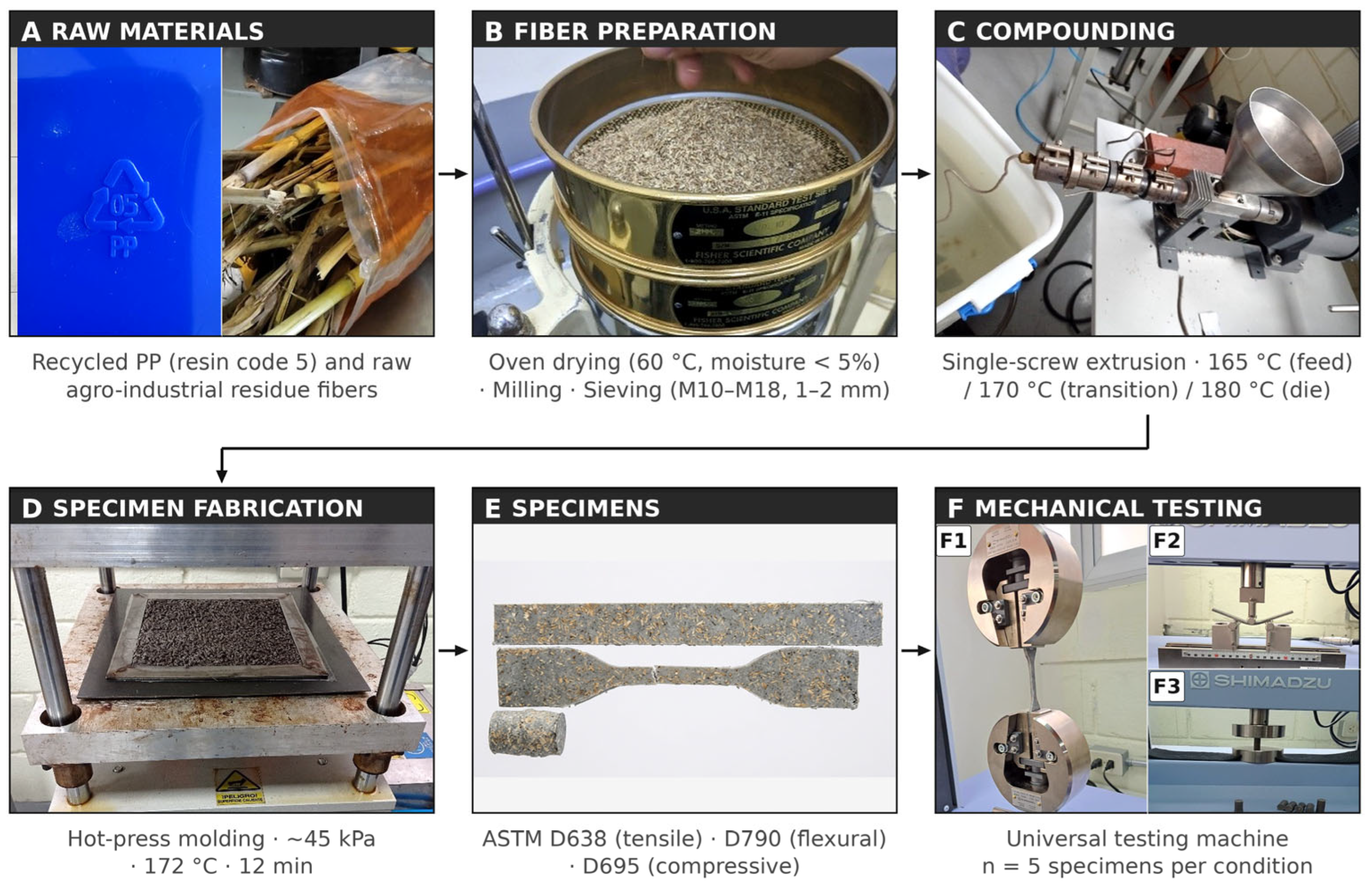
2.1. Raw Materials
2.2. Material Preparation
2.3. Composite Formulation
2.4. Extrusion Processing
2.5. Compression Molding
2.6. Mechanical Testing
2.7. Statistical Analysis
3. Results
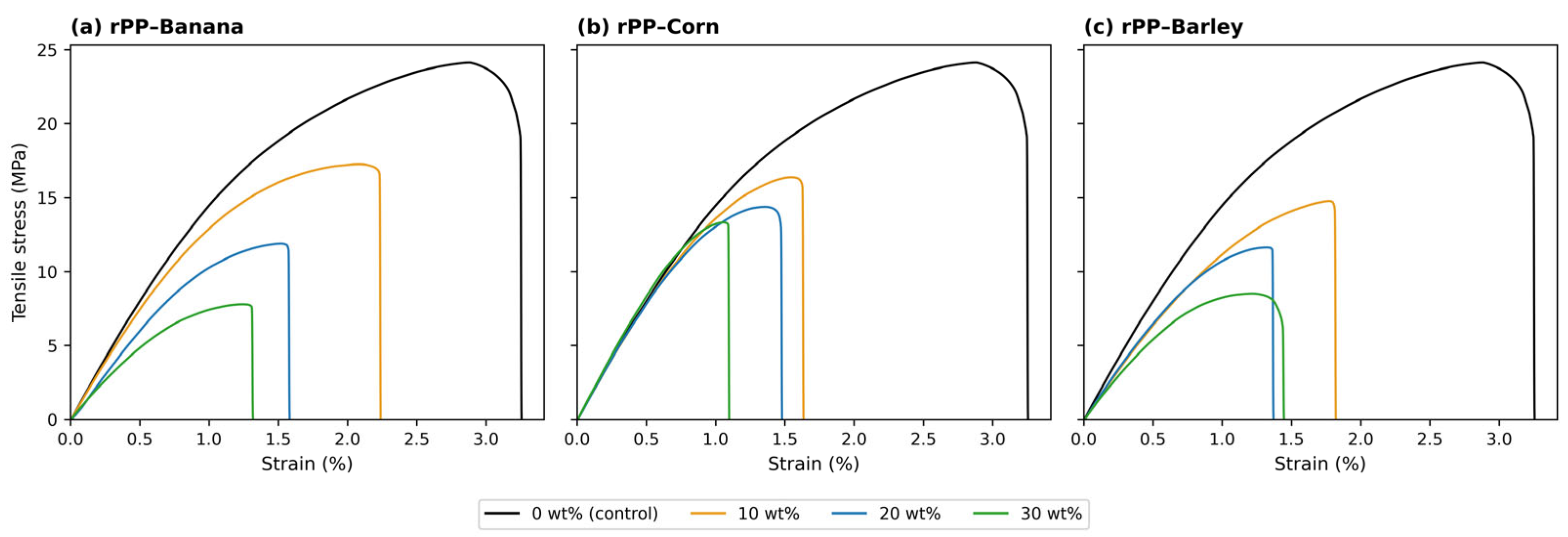
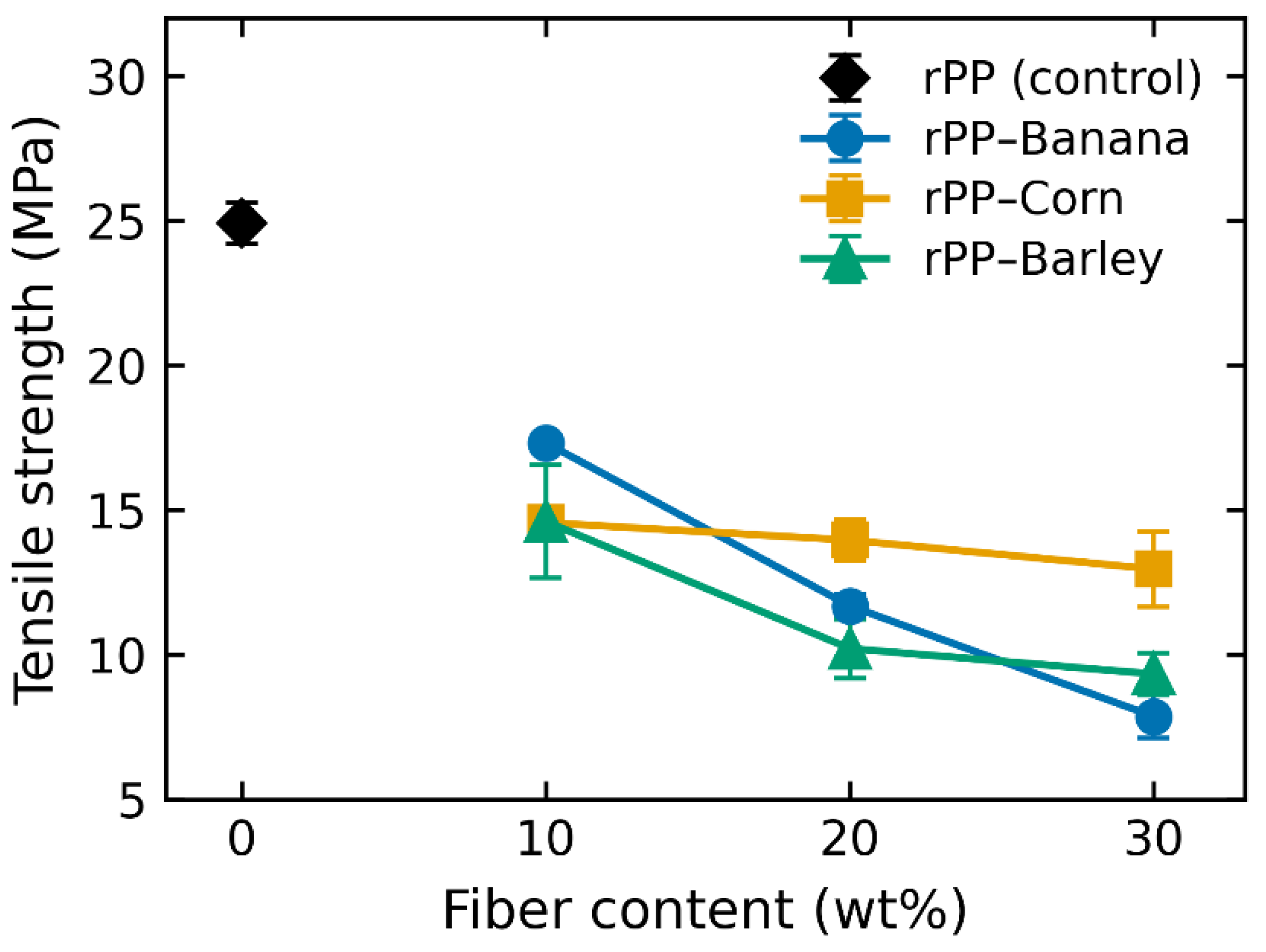
3.1. Tensile Properties
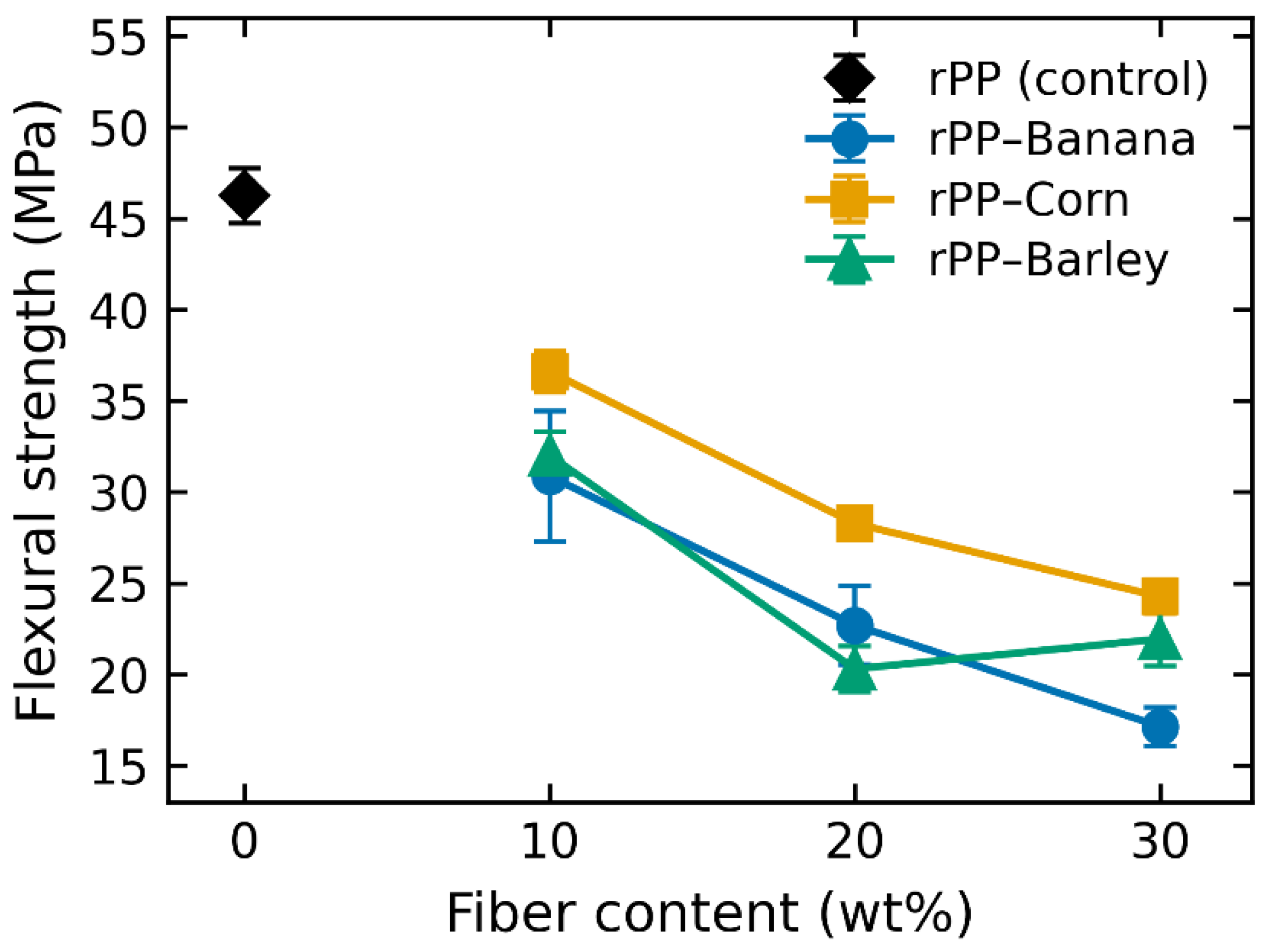
3.2. Flexural Properties
3.3. Compressive Properties
4. Discussion
4.1. Effect of Fiber Type on Mechanical Performance
4.2. Effect of Fiber Concentration and the 20 wt% Performance Plateau
4.3. Loading-Mode-Dependent Behavior
4.4. Benchmarking with the Literature
4.5. Practical Implications
4.6. Limitations and Future Work
5. Conclusions
- Fiber concentration is the dominant driver of mechanical performance across all three loading modes, consistently accounting for the largest share of explained variance in the ANOVA models. Tensile strength declined monotonically with fiber loading across all systems, with banana composites experiencing the largest reduction (−68% at 30 wt%) and corn composites exhibiting exceptional concentration stability (−11% reduction between 10 and 30 wt% loadings).
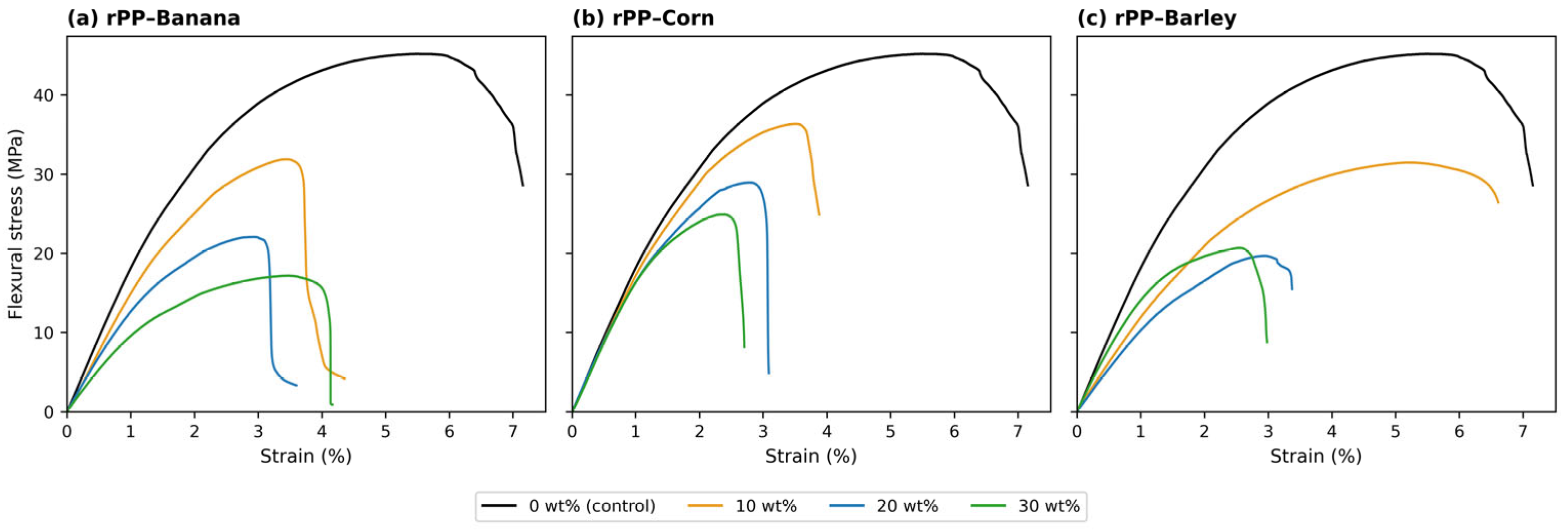
- Under flexural loading, corn fiber composites achieved the best absolute performance retention at all concentrations (36.60 MPa at 10 wt%, −21% relative to neat rPP). The type × concentration interaction was unambiguously significant under flexion (F = 8.331, p < 0.001) but only borderline under tension (p = 0.065), confirming that bending is the most discriminating loading mode for revealing fiber-type-specific concentration responses. Barley fiber exhibited a unique non-monotonic flexural response, with partial strength recovery between 20 and 30 wt%, not observed under any other loading condition or fiber system.
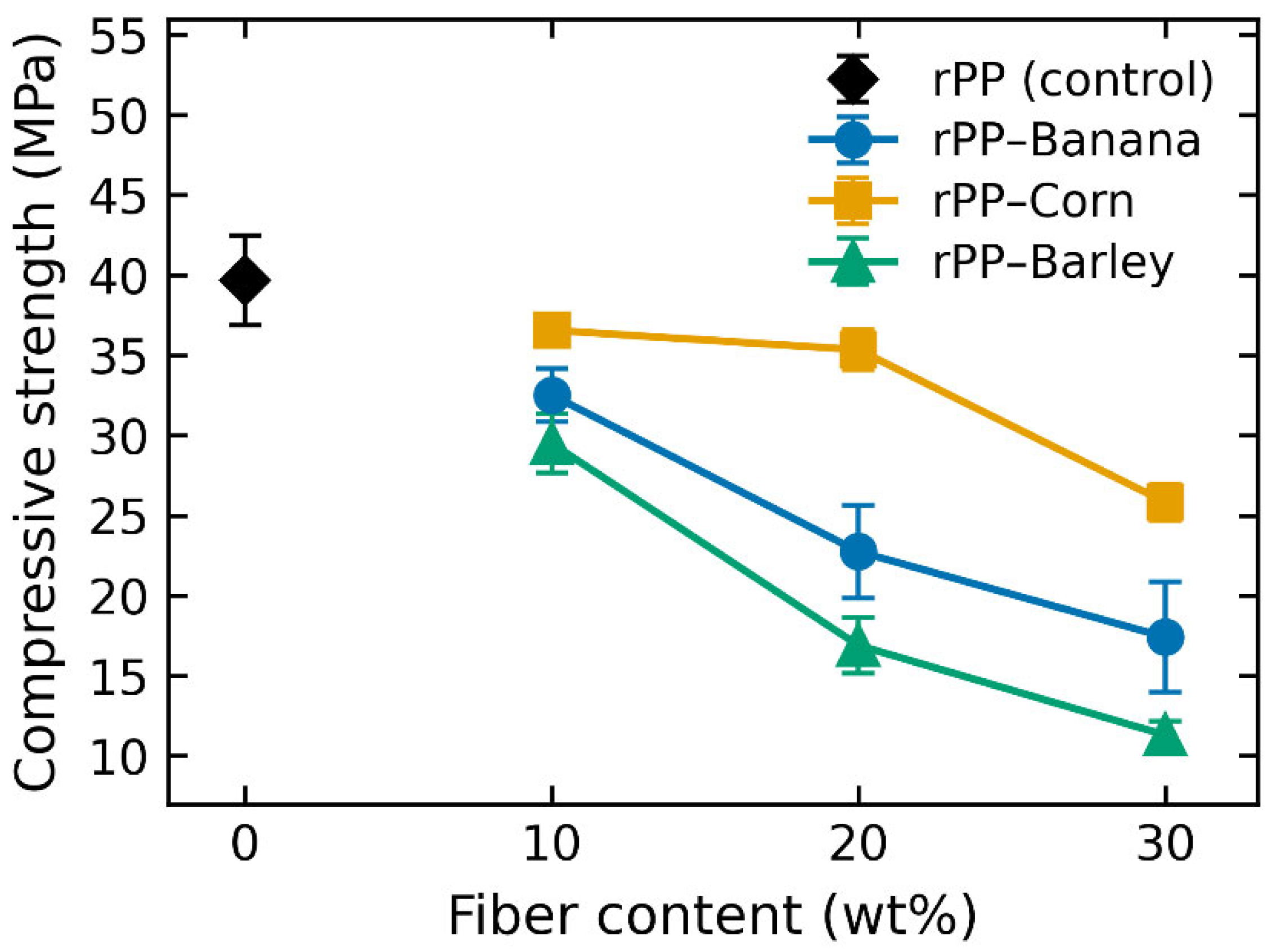
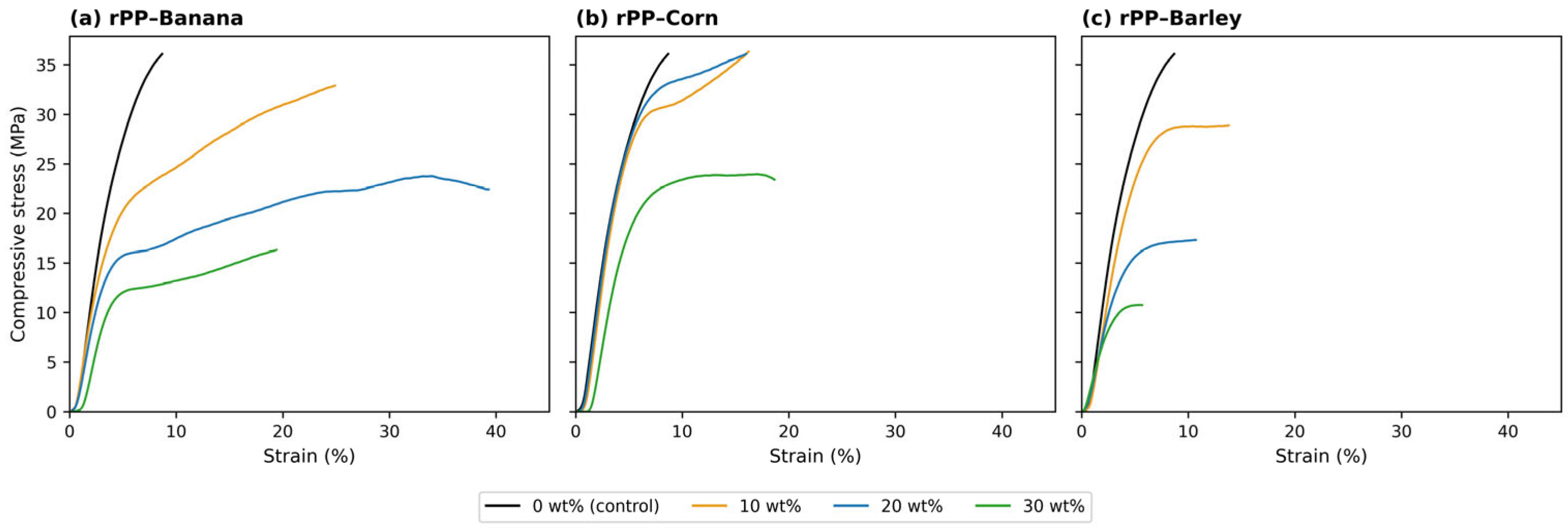
- Compressive loading was the mode most strongly differentiated by fiber type: the fiber type F-statistic reached F = 81.231—nearly 17-fold higher than under tension—and all three fiber systems were mutually distinguishable by Tukey HSD, the only loading mode achieving complete statistical separation. The 2.3-fold performance gap between corn (25.84 MPa) and barley (11.30 MPa) at 30 wt% is the largest inter-fiber divergence observed across all tests, indicating that fiber type selection is most mechanically consequential under compressive loading.
- A performance plateau at approximately 20 wt% was identified under both tensile (p = 0.250) and flexural (p = 0.635) loading: the 20–30 wt% increment produced no statistically significant strength reduction in either mode. This plateau does not extend to compressive loading, where all concentration increments produced significant reductions (all p < 0.001). The convergence of this threshold across two loading modes, and its absence under a third, has not been previously reported for uncompatibilized natural fiber–rPP systems.
- Collectively, these results demonstrate that mechanical characterization under a single loading mode provides an incomplete picture of biocomposite performance. Corn fiber composites at 10–20 wt% emerge as the most versatile formulation across all loading modes tested, and the loading-mode-resolved mechanical baseline established here supports the technical viability of uncompatibilized rPP biocomposites—formulated entirely from post-consumer plastic and local agro-industrial residues—for non-structural applications.
- Future research should prioritize (i) SEM-EDS analysis of fracture surfaces to verify the inferred failure mechanisms; (ii) evaluation of impact resistance, creep, and moisture absorption relevant to non-structural applications; (iii) systematic comparison with MAPP-compatibilized formulations to quantify the improvement margin attainable through interfacial modification; and (iv) finer concentration sampling between 10 and 30 wt% to characterize the plateau thresholds. Subsequent stages of this research line are directed toward the applied development of biocomposite-based non-structural construction components, with translation of the resulting outcomes to industrial partners in the regional construction sector.
Supplementary Materials
Author Contributions
Funding
Institutional Review Board Statement
Data Availability Statement
Acknowledgments
Conflicts of Interest
References
- Alsabri, A.; Tahir, F.; Al-Ghamdi, S.G. Environmental impacts of polypropylene (PP) production and prospects of its recycling in the GCC region. Mater. Today Proc. 2022, 56, 2245–2251. [Google Scholar] [CrossRef]
- Ragaert, K.; Delva, L.; Van Geem, K. Mechanical and chemical recycling of solid plastic waste. Waste Manag. 2017, 69, 24–58. [Google Scholar] [CrossRef]
- Al-Salem, S.M.; Lettieri, P.; Baeyens, J. Recycling and recovery routes of plastic solid waste (PSW): A review. Waste Manag. 2009, 29, 2625–2643. [Google Scholar] [CrossRef]
- Rajmohan, K.V.; Ramya, C.; Viswanathan, M.R.; Varjani, S. Plastic pollutants: Effective waste management for pollution control and abatement. Curr. Opin. Environ. Sci. Health 2019, 12, 72–84. [Google Scholar] [CrossRef]
- Kamarudin, S.H.; Mohd Basri, M.S.; Rayung, M.; Abu, F.; Ahmad, S.; Norizan, M.N.; Osman, S.; Sarifuddin, N.; Desa, M.S.Z.M.; Abdullah, U.H.; et al. A review on natural fiber reinforced polymer composites (NFRPC) for sustainable industrial applications. Polymers 2022, 14, 3698. [Google Scholar] [CrossRef]
- Skosana, S.J.; Khoathane, C.; Malwela, T. Driving towards sustainability: A review of natural fiber reinforced polymer composites for eco-friendly automotive light-weighting. J. Reinf. Plast. Compos. 2025, 44, 754–780. [Google Scholar] [CrossRef]
- Pickering, K.L.; Efendy, M.G.A.; Le, T.M. A review of recent developments in natural fibre composites and their mechanical performance. Compos. Part A Appl. Sci. Manuf. 2016, 83, 98–112. [Google Scholar] [CrossRef]
- Al-Oqla, F.M.; Hayajneh, M.T.; Al-Shrida, M.M. Mechanical performance, thermal stability and morphological analysis of date palm fiber reinforced polypropylene composites toward functional bio-products. Cellulose 2022, 29, 3293–3309. [Google Scholar] [CrossRef]
- Burgada, F.; Fages, E.; Quiles-Carrillo, L.; Lascano, D.; Ivorra-Martinez, J.; Arrieta, M.P.; Fenollar, O. Upgrading recycled polypropylene from textile wastes in wood plastic composites with short hemp fiber. Polymers 2021, 13, 1248. [Google Scholar] [CrossRef] [PubMed]
- Verma, A.; Dagale, M.; Mahajan, R.; Bhole, K. Hybrid natural fibers composites with jute and banana fibers: A review. In Proceedings of the 2021 International Conference on Nanotechnology Engineering (ICNTE), Navi Mumbai, India, 9–10 July 2021; pp. 1–7. [Google Scholar] [CrossRef]
- Kumar, R.N.; Rao, C.R.; Srikant, P.; Rao, B.R. Mechanical properties of corn fiber reinforced polypropylene composites using Taguchi method. Mater. Today Proc. 2015, 2, 3084–3092. [Google Scholar] [CrossRef]
- Valadez-González, A.; Cervantes-Uc, J.M.; Olayo, R.; Herrera-Franco, P.J. Effect of fiber surface treatment on the fiber–matrix bond strength of natural fiber reinforced composites. Compos. Part B Eng. 1999, 30, 309–320. [Google Scholar] [CrossRef]
- Bledzki, A.K.; Mamun, A.A.; Volk, J. Barley husk and coconut shell reinforced polypropylene composites: The effect of fibre physical, chemical and surface properties. Compos. Sci. Technol. 2010, 70, 840–846. [Google Scholar] [CrossRef]
- Gupta, U.S.; Dhamarikar, M.; Dharkar, A.; Chaturvedi, S.; Tiwari, S.; Namdeo, R. Surface modification of banana fiber: A review. Mater. Today Proc. 2021, 43, 904–915. [Google Scholar] [CrossRef]
- Paul, S.A.; Joseph, K.; Mathew, G.D.G.; Pothen, L.A.; Thomas, S. Influence of polarity parameters on the mechanical properties of composites from polypropylene fiber and short banana fiber. Compos. Part A Appl. Sci. Manuf. 2010, 41, 1380–1387. [Google Scholar] [CrossRef]
- Biswal, T.; Sahoo, D.R.; Acharya, S.K. Synthesis and study of mechanical properties of polypropylene (PP)/banana nano-filler biocomposites. Mater. Today Proc. 2023, 74, 726–729. [Google Scholar] [CrossRef]
- Faruk, O.; Bledzki, A.K.; Fink, H.-P.; Sain, M. Biocomposites reinforced with natural fibers: 2000–2010. Prog. Polym. Sci. 2012, 37, 1552–1596. [Google Scholar] [CrossRef]
- Morales, M.A.; Atencio Martinez, C.L.; Marañon, A.; Hernandez, C.; Michaud, V.; Porras, A. Development and characterization of rice husk and recycled polypropylene composite filaments for 3D printing. Polymers 2021, 13, 1067. [Google Scholar] [CrossRef]
- Pearson, P.; Bodin, S.; Gittelson, A.; Kinney, S.; McCarty, J.; Stevenson, G.; Albertengo, J. Fire in the Fields: Moving Beyond the Damage of Open Agricultural Burning on Communities, Soil, and the Cryosphere; Climate and Clean Air Coalition (CCAC): Paris, France, 2015; Available online: https://breathelife2030.org/wp-content/uploads/2016/09/Fire-in-the-Fields-OB-ReportA4-Final_22nov2015.pdf (accessed on 2 March 2026).
- Pinakana, S.D.; Raysoni, A.U.; Sayeed, A.; Gonzalez, J.L.; Temby, O.; Wladyka, D.; Sepielak, K.; Gupta, P. Review of agricultural biomass burning and its impact on air quality in the continental United States of America. Environ. Adv. 2024, 16, 100546. [Google Scholar] [CrossRef]
- Ministerio de Producción, Comercio Exterior, Inversiones y Pesca (MPCEIP); Ministerio del Ambiente, Agua y Transición Ecológica (MAATE). Estrategia Nacional de Economía Circular Inclusiva (ENECI); MPCEIP/MAATE: Quito, Ecuador, 2024; Available online: https://www.ambienteyenergia.gob.ec/wp-content/uploads/sites/2/downloads/2024/10/Estrategia-Nacional-de-Economia-Circular-Inclusiva-ENECI.pdf (accessed on 2 March 2026).
- ASTM D7611/D7611M-13; Standard Practice for Coding Plastic Manufactured Articles for Resin Identification. ASTM International: West Conshohocken, PA, USA, 2013.
- Jassim, N.A.S.; Anber, M.A.; Alhar, S.M.S. Effect of high processing temperature on the rheological and morphological properties of recycled polypropylene. Ann. Chim. Sci. Mater. 2024, 48, 721–727. [Google Scholar] [CrossRef]
- Azwa, Z.N.; Yousif, B.F.; Manalo, A.C.; Karunasena, W. A review on the degradability of polymeric composites based on natural fibres. Mater. Des. 2013, 47, 424–442. [Google Scholar] [CrossRef]
- Feldmann, M. The effects of the injection moulding temperature on the mechanical properties and morphology of polypropylene man-made cellulose fibre composites. Compos. Part A Appl. Sci. Manuf. 2016, 87, 146–152. [Google Scholar] [CrossRef]
- Mohamed, M.A.; Jaafar, J.; Ibrahim, M.A.A.; Yusup, E.M.; Siregar, J.P.; Osman, S.A.; Cionita, T.; Fitriyana, D.F.; Oumer, A.N. Experimental investigation on the influence of processing pressure on mechanical properties of pineapple leaf fiber reinforced tapioca biopolymer composites. J. Mech. Eng. 2025, 14, 82–94. [Google Scholar] [CrossRef]
- Khondker, O.A.; Ishiaku, U.S.; Nakai, A.; Hamada, H. A novel processing technique for thermoplastic manufacturing of unidirectional composites reinforced with jute yarns. Compos. Part A Appl. Sci. Manuf. 2005, 36, 1305–1315. [Google Scholar] [CrossRef]
- ASTM D638-03; Standard Test Method for Tensile Properties of Plastics. ASTM International: West Conshohocken, PA, USA, 2003.
- ASTM D790-03; Standard Test Methods for Flexural Properties of Unreinforced and Reinforced Plastics and Electrical Insulating Materials. ASTM International: West Conshohocken, PA, USA, 2003.
- ASTM D695-02a; Standard Test Method for Compressive Properties of Rigid Plastics. ASTM International: West Conshohocken, PA, USA, 2002.
- Montgomery, D.C. Design and Analysis of Experiments, 10th ed.; Wiley: Hoboken, NJ, USA, 2019. [Google Scholar]
- Flandez, J.; González, I.; Resplandis, J.B.; El Mansouri, N.-E.; Vilaseca, F.; Mutjé, P. Management of corn stalk waste as reinforcement for polypropylene injection moulded composites. BioResources 2012, 7, 1836–1849. [Google Scholar] [CrossRef]
- Sobczak, L.; Lang, R.W.; Haider, A. Polypropylene composites with natural fibers and wood—General mechanical property profiles. Compos. Sci. Technol. 2012, 72, 550–557. [Google Scholar] [CrossRef]




| Test | Standard | Geometry | Key Dimensions |
|---|---|---|---|
| Tensile | ASTM D638-03 | Dog-bone (Type IV) | Thickness: 3.2 mm; Width: 19 mm; Length: 115 mm |
| Flexural | ASTM D790-03 | Rectangular bar | Thickness: 3.2 mm; Width: 12.7 mm; Length: 125 mm |
| Compressive | ASTM D695-02a | Cylinder | Length: 25.4 mm; Diameter: 12.7 mm |
| Composite | Fiber Type | Fiber Content (wt%) | Tensile Strength (MPa) | Elastic Modulus (MPa) | Max. Elongation (%) |
|---|---|---|---|---|---|
| rPP | — | 0 | 24.91 ± 0.72 | 1577 ± 24 | 2.75 |
| rPP–Banana | Banana | 10 | 17.32 ± 0.21 | 1523 ± 31 | 2.04 |
| 20 | 11.69 ± 0.41 | 1216 ± 35 | 1.57 | ||
| 30 | 7.86 ± 0.75 | 940 ± 85 | 1.17 | ||
| rPP–Corn | Corn | 10 | 14.56 ± 0.42 | 1259 ± 67 | 1.43 |
| 20 | 13.96 ± 0.71 | 1572 ± 70 | 1.39 | ||
| 30 | 12.96 ± 1.30 | 1718 ± 117 | 0.97 | ||
| rPP–Barley | Barley | 10 | 14.61 ± 1.95 | 1380 ± 34 | 1.63 |
| 20 | 10.21 ± 1.02 | 1268 ± 35 | 1.38 | ||
| 30 | 9.33 ± 0.73 | 1151 ± 86 | 1.24 |
| Source | SS | df | MS | F | p-Value |
|---|---|---|---|---|---|
| Fiber type | 0.854 | 2 | 0.427 | 4.775 | 0.013 |
| Concentration | 22.677 | 3 | 7.559 | 84.559 | 0.000 |
| Type × Concentration | 1.149 | 6 | 0.192 | 2.143 | 0.065 |
| Error | 4.291 | 48 | 0.089 | — | — |
| Total | 204.709 | 60 | — | — | — |
| Composite | Fiber Type | Fiber Content (wt%) | Flexural Strength (MPa) | Elastic Modulus (MPa) | Max. Flexural Strain (%) |
|---|---|---|---|---|---|
| rPP | — | 0 | 46.25 ± 1.49 | 1710 ± 55 | 5.88 |
| rPP–Banana | Banana | 10 | 30.87 ± 3.59 | 1456 ± 99 | 3.45 |
| 20 | 22.69 ± 2.16 | 1259 ± 31 | 3.26 | ||
| 30 | 17.14 ± 1.06 | 847 ± 42 | 3.17 | ||
| rPP–Corn | Corn | 10 | 36.60 ± 1.12 | 1552 ± 54 | 3.86 |
| 20 | 28.27 ± 0.79 | 1698 ± 49 | 2.51 | ||
| 30 | 24.26 ± 0.95 | 1654 ± 119 | 2.05 | ||
| rPP–Barley | Barley | 10 | 32.01 ± 1.30 | 1049 ± 71 | 6.01 |
| 20 | 20.29 ± 1.25 | 973 ± 107 | 2.88 | ||
| 30 | 21.94 ± 1.49 | 1428 ± 37 | 2.67 |
| Source | SS | df | MS | F | p-Value |
|---|---|---|---|---|---|
| Fiber type | 6.166 | 2 | 3.083 | 8.872 | 0.001 |
| Concentration | 102.838 | 3 | 34.279 | 98.635 | 0.000 |
| Type × Concentration | 17.372 | 6 | 2.895 | 8.331 | 0.000 |
| Error | 16.682 | 48 | 0.348 | — | — |
| Total | 1082.979 | 60 | — | — | — |
| Composite | Fiber Type | Fiber Content (wt%) | Compressive Strength (MPa) | Elastic Modulus (MPa) | Max. Compressive Strain (%) |
|---|---|---|---|---|---|
| rPP | — | 0 | 39.67 ± 2.79 | 1145 ± 67 | 7.94 |
| rPP–Banana | Banana | 10 | 32.52 ± 0.65 | 674 ± 15 | 26.28 |
| 20 | 22.75 ± 3.89 | 570 ± 8 | 29.37 | ||
| 30 | 17.42 ± 5.44 | 475 ± 6 | 18.13 | ||
| rPP–Corn | Corn | 10 | 36.56 ± 0.33 | 789 ± 39 | 15.57 |
| 20 | 35.34 ± 2.26 | 805 ± 37 | 15.20 | ||
| 30 | 25.84 ± 1.14 | 585 ± 34 | 18.33 | ||
| rPP–Barley | Barley | 10 | 29.50 ± 3.85 | 647 ± 18 | 13.59 |
| 20 | 16.89 ± 1.76 | 489 ± 35 | 9.93 | ||
| 30 | 11.30 ± 0.87 | 401 ± 42 | 5.46 |
| Source | SS | df | MS | F | p-Value |
|---|---|---|---|---|---|
| Fiber type | 1136.212 | 2 | 568.106 | 81.231 | 0.000 |
| Concentration | 3823.249 | 3 | 1274.416 | 182.223 | 0.000 |
| Type × Concentration | 424.268 | 6 | 70.711 | 10.111 | 0.000 |
| Error | 335.698 | 48 | 6.994 | — | — |
| Total | 55,645.789 | 60 | — | — | — |
Disclaimer/Publisher’s Note: The statements, opinions and data contained in all publications are solely those of the individual author(s) and contributor(s) and not of MDPI and/or the editor(s). MDPI and/or the editor(s) disclaim responsibility for any injury to people or property resulting from any ideas, methods, instructions or products referred to in the content. |
© 2026 by the authors. Licensee MDPI, Basel, Switzerland. This article is an open access article distributed under the terms and conditions of the Creative Commons Attribution (CC BY) license.
Share and Cite
García, J.F.; Febres, J.D. Mechanical Performance of Uncompatibilized Recycled Polypropylene Biocomposites Filled with Corn, Banana, and Barley Agro-Industrial Residue Fibers. Polymers 2026, 18, 1384. https://doi.org/10.3390/polym18111384
García JF, Febres JD. Mechanical Performance of Uncompatibilized Recycled Polypropylene Biocomposites Filled with Corn, Banana, and Barley Agro-Industrial Residue Fibers. Polymers. 2026; 18(11):1384. https://doi.org/10.3390/polym18111384
Chicago/Turabian StyleGarcía, Juan Fernando, and Juan Diego Febres. 2026. "Mechanical Performance of Uncompatibilized Recycled Polypropylene Biocomposites Filled with Corn, Banana, and Barley Agro-Industrial Residue Fibers" Polymers 18, no. 11: 1384. https://doi.org/10.3390/polym18111384
APA StyleGarcía, J. F., & Febres, J. D. (2026). Mechanical Performance of Uncompatibilized Recycled Polypropylene Biocomposites Filled with Corn, Banana, and Barley Agro-Industrial Residue Fibers. Polymers, 18(11), 1384. https://doi.org/10.3390/polym18111384