1. Introduction
Carbon fiber-reinforced polymers (CFRPs), owing to their high specific strength, high specific modulus, excellent corrosion resistance, and superior structural designability, have been widely used in aerospace, marine engineering, rail transportation, high-end equipment, and new energy structures [
1,
2]. With the development of advanced manufacturing and lightweight structures, composite materials are required not only to possess high static load-bearing capacity, but also to exhibit improved damage tolerance and service reliability [
3,
4]. For laminated composites, bonding solely by resin in the thickness direction lacks continuous reinforcement, resulting in far lower interlayer properties than in-plane properties and making the material more susceptible to damage initiation and propagation. Once delamination occurs under external loading, cracks tend to propagate along the interface, leading to a series of failure events such as further delamination, local instability, stiffness degradation, and loss of load-bearing capacity. Therefore, interlaminar fracture toughness (ILFT) is widely regarded as a key indicator for evaluating the damage tolerance and service reliability of CFRP laminates [
5,
6,
7].
Extensive studies have been conducted worldwide to improve the ILFT of CFRP laminates. Existing approaches have mainly focused on interlaminar structural modification and matrix/interlayer toughening, such as introducing interleaves, films, nanofibrous veils, nanofillers, or hybrid toughening layers to promote crack deflection, fiber bridging, matrix deformation, and crack-path reconfiguration. Earlier representative studies have shown that electrospun nanofibrous veils, multiscale fiber-toughening strategies, interlocking thin-ply structures, and soluble or insoluble veils can improve interlaminar crack resistance by altering crack propagation paths and increasing energy dissipation [
8,
9,
10,
11]. More recent studies have further extended these strategies. Ou et al. [
12] enhanced the Mode I and Mode II ILFT of unidirectional CFRP laminates by tailoring the microstructural heterogeneity of a CNT/epoxy toughening layer, showing that crack-path regulation and toughening-layer architecture strongly affect delamination resistance. Wang et al. [
13] introduced polyethersulfone/graphene oxide (PES/GO) composite films into CFRP laminates and evaluated the improvement in fracture toughness using both DCB and ENF tests, with SEM observations used to analyze the corresponding damage mechanisms. Narongdej et al. [
14] investigated non-woven polyamide veils under different curing pressures and showed that interlayer configuration and processing conditions can significantly influence both Mode I and Mode II ILFT. Wu et al. [
15] proposed an intrinsic–extrinsic multiscale interlaminar toughening strategy using multi-walled carbon nanotubes and core–shell rubber, further demonstrating that matrix deformation, crack-path modification, and multiscale energy-dissipation mechanisms are closely related to ILFT improvement. These studies indicate that current research has increasingly focused on interlayer design, matrix modification, and crack-path control. Nevertheless, most of these approaches introduce additional toughening phases or interlaminar structures, making it difficult to isolate the role of the resin system itself under comparable fiber type, resin content, and laminate configuration.
However, in addition to externally introduced toughening phases and interlaminar structural design, the intrinsic mechanical properties of the resin matrix itself are also fundamental factors affecting ILFT. The resin matrix is not merely a simple bonding phase for fibers; its molecular chain flexibility, crosslinking structure, modulus, ductility, and deformation-related energy-dissipation capability may influence local crack-tip deformation, matrix yielding behavior, crack-tip blunting, and crack growth resistance [
16]. Studies on epoxy toughening have shown that rubber particles, thermoplastic components, inorganic nanoparticles, and carbon nanomaterials can all enhance the intrinsic fracture toughness of the resin by inducing mechanisms such as shear yielding, cavitation, crack deflection, and local plastic deformation [
17,
18,
19,
20,
21]. These findings suggest that improving matrix toughness not only alters the fracture behavior of the resin itself, but may also further affect crack initiation, crack propagation paths, and fracture energy dissipation in CFRP laminates. Therefore, compared with focusing solely on the role of externally added toughening phases, investigating the effect of the intrinsic properties of the resin matrix on interlaminar fracture behavior, without introducing additional interlaminar toughening structures, is helpful for achieving a clearer understanding of the role of matrix-related factors in interlaminar toughening.
In recent years, some studies have begun to focus on the transfer relationship between resin matrix toughening and interlaminar toughening in composites. Ouyang et al. [
22] investigated the mechanical response of carbon fiber composites from the perspective of matrix resin toughening and pointed out that improved matrix toughness can influence internal damage evolution and residual load-bearing capacity. Wang et al. [
23] toughened carbon fiber/epoxy laminates with short fibers and found that the short fibers could induce more complex crack propagation paths in the interlaminar region, thereby increasing resistance to interlaminar crack growth through mechanisms such as bridging, pull-out, and interfacial friction. Weng et al. [
24] further proposed the concept of “from matrix toughening to interlaminar toughening”. After introducing short carbon nanotubes into the epoxy matrix, the maximum strain, maximum stress, and fracture toughness of the resin matrix were improved; when further fabricated into CFRP laminates, the Mode I ILFT was also markedly enhanced. These studies indicate that the deformation and energy-dissipation capability at the resin-matrix scale can be transferred through the crack-tip process zone to the interlaminar crack growth process in laminates, thereby altering fracture surface morphology and crack propagation behavior.
Although previous studies have demonstrated that externally introduced toughening phases, interfacial modification, and interlaminar structural design can effectively improve ILFT, these approaches usually alter the resin matrix, interfacial morphology, interlaminar structure, and local stress-transfer paths simultaneously. As a result, it is difficult to isolate the role of the intrinsic mechanical response of the resin matrix in the interlaminar fracture process. For engineering CFRP laminates, even when the same carbon fibers and similar laminate configurations are used, differences in strength, modulus, ductility, and fracture energy dissipation among resin systems may still significantly affect apparent interfacial fracture behavior, crack-tip process zone, and crack propagation paths. At present, comparative studies on the relationship among intrinsic resin properties, crack propagation behavior, and ILFT still need further development, particularly those aimed at evaluating the intrinsic role of the resin matrix while minimizing differences in fiber type and laminate structure. More importantly, the connection between resin properties and ILFT should be understood through the crack-tip deformation process and the corresponding loading mode. Under Mode I opening loading, resin ductility-related deformation may contribute to crack-tip blunting, resin tearing, and the formation of a more tortuous crack path. Under Mode II shear loading, the resin response may be more closely associated with matrix shear deformation, interfacial sliding resistance, crack deflection, and possible frictional dissipation. Therefore, clarifying how resin deformation capability is reflected in Mode I and Mode II interlaminar crack propagation is essential for connecting resin-level properties with laminate-level fracture resistance.
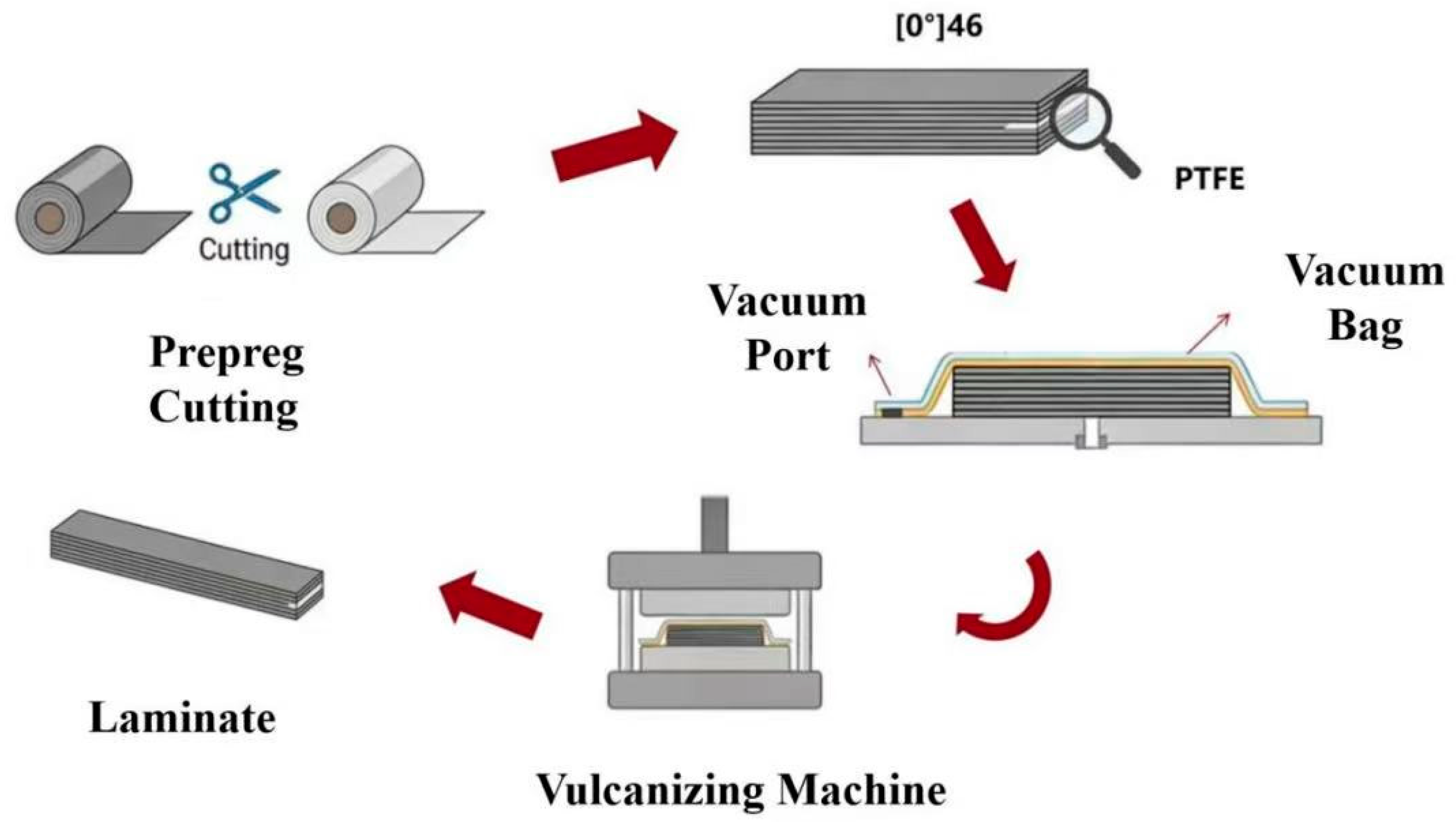
Based on the above considerations, the present work selected two representative epoxy resin systems with contrasting mechanical-performance characteristics. Group B was selected as a high-strength/high-modulus resin system, whereas Group T was selected as a high-toughness resin system with higher ductility-related deformation capability. This material selection was intended to provide a controlled comparison between a stiffness/strength-oriented resin and a toughness/deformation-oriented resin. To minimize the influence of non-resin-related variables, the same carbon fiber, resin content, calculated fiber volume fraction, unidirectional lay-up configuration, and laminate fabrication route were used for both systems. Tensile and flexural tests of neat resin castings, Mode I double cantilever beam (DCB) tests, Mode II end-notched flexure (ENF) tests, and SEM fractographic observations were conducted to examine how resin deformation capability is associated with crack-tip deformation, fracture-surface morphology, and loading-mode-dependent interlaminar fracture toughness (ILFT). The novelty of this work lies in establishing a controlled two-resin comparative framework that links neat resin mechanical response, microscopic fracture features, and Mode I/Mode II delamination resistance, rather than focusing only on external interlayers, nanofillers, or additional toughening phases.
3. Results and Discussion
3.1. Tensile/Flexural Properties and Mechanism Analysis of the Resins
To compare the differences in the intrinsic mechanical properties of the two resin systems, tensile and flexural tests were conducted on the cast resin specimens of Groups B and T, respectively. For both tensile and flexural tests of the neat resin cast specimens, six valid specimens were tested for each resin system, and the results are presented as the mean ± standard deviation, as shown in
Table 1. Overall, the HSHM resin in Group B exhibited slightly higher tensile strength/modulus and flexural strength/modulus than the HT resin in Group T, indicating greater stiffness and static load-bearing capacity. In contrast, the resin in Group T showed a significantly higher elongation at break than Group B, as confirmed by statistical analysis (
p < 0.05), suggesting that it could withstand greater deformation before failure and thus possessed stronger ductility-related deformation and energy-dissipation capability.
To further analyze the microscopic causes underlying the differences in flexural performance between the two resin systems, the fracture surfaces of flexural cast specimens were examined by SEM at different magnifications. As shown in
Figure 3, the fracture surface of Group B was relatively smooth at low magnification, while the high-magnification SEM image further revealed cleavage-like planes and river-pattern-like features. These features suggest a relatively brittle fracture response with limited local resin deformation, rather than extensive ductile tearing. In comparison, Group T exhibited a rougher fracture surface at low magnification, and the high-magnification SEM image showed more pronounced tear-ridge-like features, shear-step-like features, and fragmented resin debris. These observations indicate that Group T underwent more obvious local deformation and energy dissipation during fracture.
These SEM observations are consistent with the subsequent ILFT results. Group B showed smoother fracture surfaces and limited local resin deformation, corresponding to lower GIC and GIIC values of approximately 276 J/m2 and 530 J/m2, respectively. In contrast, Group T exhibited rougher fracture surfaces with tear-ridge-like and shear-step-like features, indicating more pronounced local deformation and energy dissipation, which is consistent with its higher GIC and GIIC values of approximately 485 J/m2 and 708 J/m2, respectively. However, the neat resin fracture morphology should not be interpreted as direct evidence of a one-to-one transfer or amplification of resin fracture behavior into laminate fracture modes. Rather, together with the ILFT results and laminate fracture-surface observations, it provides qualitative support for understanding how resin deformation capability may be reflected in laminate-level crack propagation through matrix deformation, fiber/resin interaction, and crack-path evolution.
3.2. Mode I ILFT Results and Fracture Mechanism Analysis
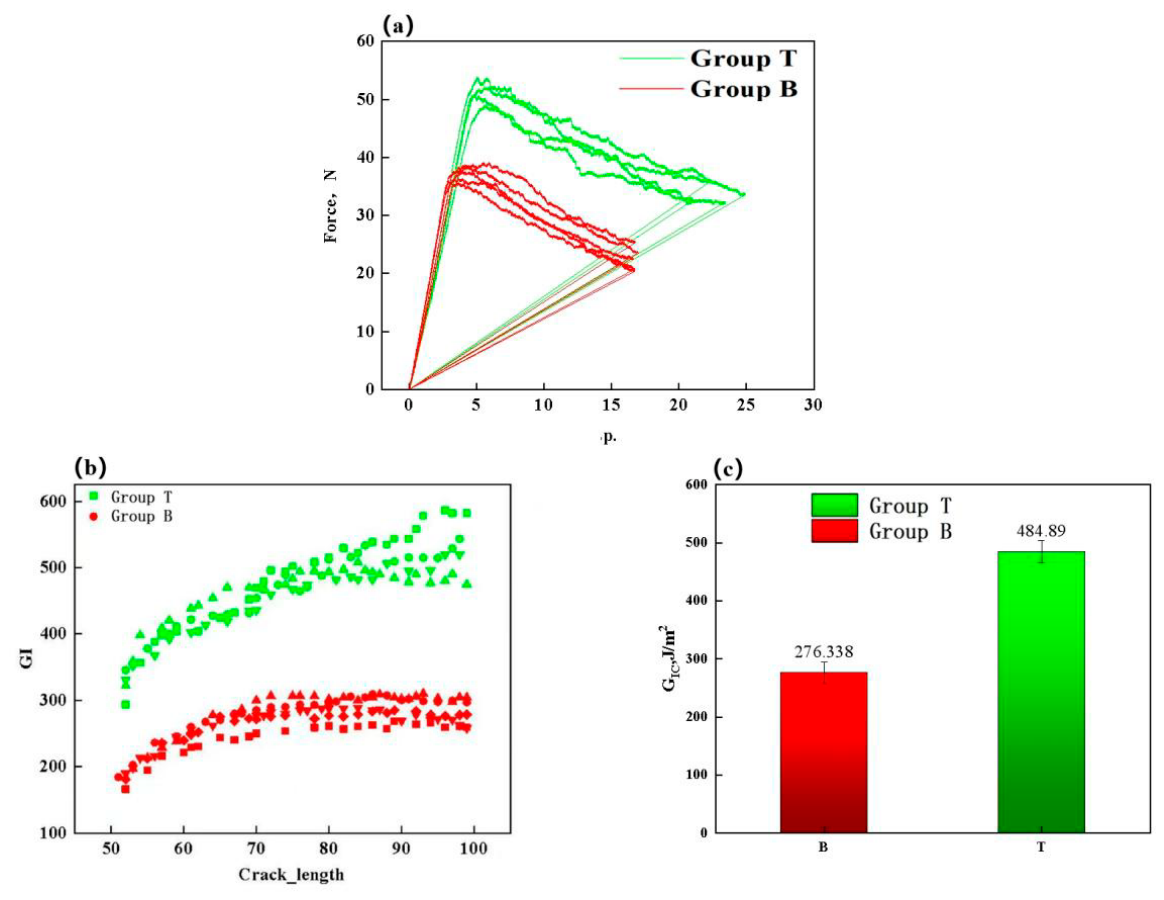
Mode I ILFT of laminates based on the two resin systems was evaluated using the DCB test. The results are shown in
Figure 4. The crack initiation point was identified according to the first visible crack advance from the pre-crack tip and the deviation from the initial linear region of the load–displacement curve, and the G
IC values were calculated using the compliance-corrected modified beam theory method according to ASTM D5528-01. As can be seen from the load–displacement curves, the two resin systems exhibited markedly different response characteristics during crack initiation and propagation. For Group B specimens, the load dropped rapidly after reaching the peak load, with a relatively fast post-peak decay. In contrast, Group T specimens not only showed a higher peak load, but also a much more gradual post-peak decrease, maintaining a relatively high load-bearing capacity over a larger displacement range. To provide a more quantitative comparison of the R-curve behavior, the crack growth resistance slope, k
R, was calculated by linear fitting of the G
IC-crack length data in the stable crack propagation region of 50–99 mm. The slope k
R reflects the increase rate of crack growth resistance during delamination propagation. The calculated k
R of Group B was 0.62 ± 0.41 J·m
−2·mm
−1, whereas that of Group T increased to 2.89 ± 1.50 J·m
−2·mm
−1. This result indicates that Group T exhibited a stronger increase in crack growth resistance during stable Mode I delamination propagation, which supports the more pronounced R-curve behavior observed in
Figure 4b. Further combined with the energy release rate–crack length curves, it can be seen that as the crack length increased, the G
IC of Group B specimens entered a relatively low plateau region after only a short propagation distance, indicating that the increase in crack growth resistance was limited, the energy dissipation zone ahead of the crack tip was small, and the material lacked sufficient sustained crack-arrest capability during stable crack propagation. By comparison, Group T specimens maintained a significantly higher G
IC level throughout the entire crack propagation process and exhibited a more pronounced R-curve effect; that is, as the crack propagated, the crack growth resistance of the material did not decay rapidly, but instead remained at a relatively high level over a longer propagation interval. This indicates that the HT resin system was able to develop a more sufficient plastic deformation and energy dissipation zone in the crack-tip region, thereby increasing resistance to crack growth and delaying the further development of interlaminar failure. The corresponding statistical results for GIC further confirm this trend. The average GIC of Group B was approximately 278.7 ± 18.5 J/m
2, whereas that of Group T increased to approximately 486.7 ± 18.5 J/m
2, representing an increase of about 74.6%. Error bars representing standard deviation were added to
Figure 4c. Statistical analysis confirmed that this improvement was significant (
p < 0.001). This significant improvement demonstrates that the HT resin system can markedly enhance the resistance of the interlaminar interface to opening-mode crack propagation, making the laminate less prone to rapid delamination failure under external loading. In other words, under the same fiber reinforcement system and similar laminate architecture, improving the toughness of the resin matrix directly enhances the interlaminar fracture behavior.
Further qualitative support can be obtained from SEM observations of the DCB fracture surfaces. As shown in
Figure 5, the overall DCB fracture surface of Group B is relatively flat, with smooth fiber surfaces and little resin residue, indicating that the crack propagated mainly along the interlaminar interface, while the matrix played only a limited role in deformation and energy dissipation. This exhibits the features consistent with interface-dominated debonding. In contrast, the fracture surface roughness of Group T is markedly higher. The fiber surfaces are more resin residue was observed, and local features such as resin tearing, stepped fracture, and discontinuous residue can be observed, indicating that the resin matrix appeared to participate more actively in deformation and energy dissipation during crack propagation. This shows that, in Group T, the proportion of matrix-involved failure during crack growth appeared to increase, accompanied by more resin tearing and rough fracture features. Owing to the involvement of matrix plastic failure, the actual crack propagation surface area and roughness appeared rougher, which is also the qualitative morphological evidence for the sharp increase in Mode I ILFT of the laminates in Group T.
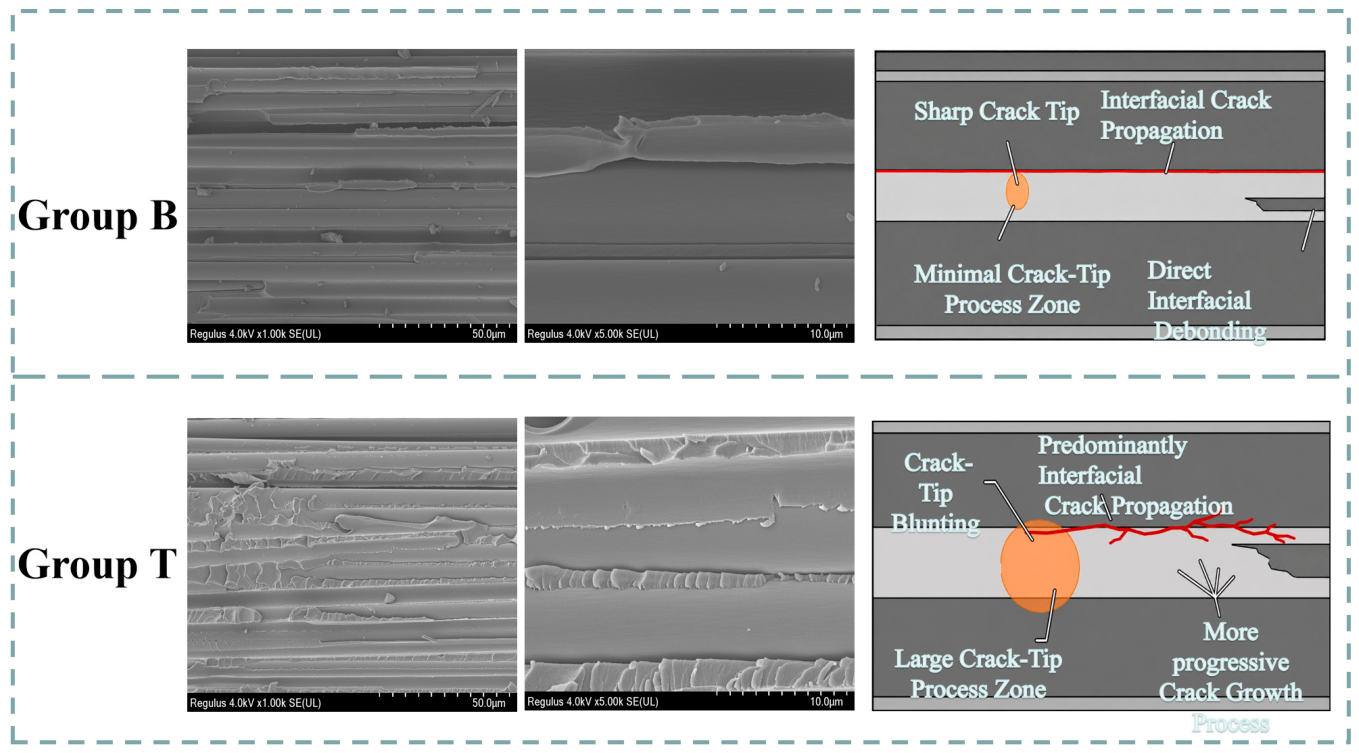
To further clarify the difference in crack propagation behavior between the two resin systems during Mode I interlaminar fracture, an experimentally supported schematic illustration is proposed in
Figure 6. This schematic is derived from the combined evidence of the DCB load–displacement curves, R-curve behavior, G
IC results and SEM fracture-surface observations, rather than from direct in situ observation of crack-tip evolution. For the high-strength, high-modulus resin system in Group B, the crack path is relatively straight, the crack tip remains relatively sharp, and the crack-tip process zone is small. This indicates that the local deformation capability of the Group B resin at the crack tip is limited, making it difficult to effectively blunt the crack tip through plastic deformation. As a result, the crack can continue to propagate along the interlaminar interface under relatively low resistance. Therefore, the Mode I interlaminar fracture process of Group B is closer to a low-energy-consumption, interface-dominated separation mode.
By contrast, the HT resin system in Group T exhibited a distinctly different crack propagation behavior. As shown in
Figure 6, crack-tip blunting suggest in Group T, the crack-tip process zone may have developed, and the crack path gradually changed from relatively straight to tortuous propagation, accompanied by local deflection and progressive crack growth. This indicates that the HT resin can form a larger local energy-dissipation zone ahead of the crack tip, so that crack propagation no longer advances rapidly along a single interface, but instead proceeds through resin deformation, crack deflection, and path reconstruction. Therefore, the improvement in Mode I ILFT in Group T does not simply arise from an increase in interfacial strength, but rather from the enhanced local deformation and energy-dissipation capacity at the crack tip after resin toughening. In other words, through mechanisms such as crack-tip blunting, crack deflection, and progressive propagation, the HT resin system is associated with the intrinsic energy-dissipation capability of the resin into the interlaminar crack growth process, thereby significantly increasing G
IC.
Accordingly, under Mode I opening loading, the translation of the resin’s intrinsic mechanical properties into ILFT is mainly reflected in the following aspects: a higher elongation at break endows the resin matrix with stronger local deformation capability at the crack tip, causing the crack tip to transition from a sharp, rapidly propagating state to a blunted, progressively propagating state; meanwhile, resin tearing and crack deflection increase the actual crack propagation path and the newly created fracture surface area, thereby converting the resin’s plastic energy-dissipation capacity into a higher GIC. This suggests that, within the present two-system comparison, the higher elongation at break and stronger local deformation capability of Group T are more closely associated with the improvement in Mode I interlaminar crack resistance than strength or modulus alone. However, this conclusion should not be generalized to all epoxy resin systems without further validation using a broader range of resin matrices.
3.3. Mode II ILFT Results and Fracture Mechanism Analysis
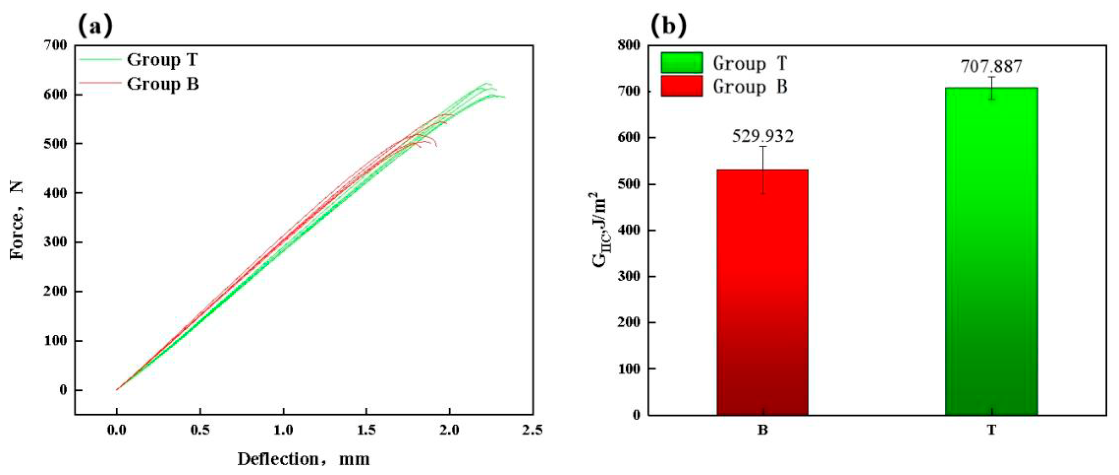
ENF tests were further carried out in this study to evaluate the Mode II ILFT of laminates based on the two resin systems. The results are shown in
Figure 7. In the ENF load–displacement curves, the initial linear region was used to characterize the elastic response before obvious crack propagation. The onset of crack propagation was determined from the deviation from this initial linear response and the corresponding change in compliance behavior. The peak load before rapid load drop or unstable crack extension was taken as P
max for G
IIC calculation; when no abrupt load drop was observed, the maximum load reached in the nonlinear loading stage was used as P
max. As can be seen from the load–displacement curves, both resin systems exhibited a good linear response during the initial loading stage, indicating that the overall stiffness of the specimens remained relatively stable during early loading and that no significant propagation of the interlaminar pre-crack had yet occurred. The subsequent deviation from linearity was therefore interpreted as the onset of nonlinear deformation and possible crack propagation, rather than as direct visual evidence of crack growth. As the load continued to increase, the specimens in both Group B and Group T gradually entered a nonlinear response stage. However, the specimens in Group T consistently exhibited a higher load-carrying capacity, with a peak load clearly greater than that of Group B. Moreover, after reaching the peak, Group T did not show a rapid unstable drop, but instead maintained a relatively gradual descending trend. The corresponding statistical results for Mode II ILFT show that the average G
IIC of Group T reached approximately 707.89 J/m
2, representing an increase of about 33.6% compared with Group B (529.93 J/m
2). Statistical analysis confirmed that this difference was significant (
p < 0.05).
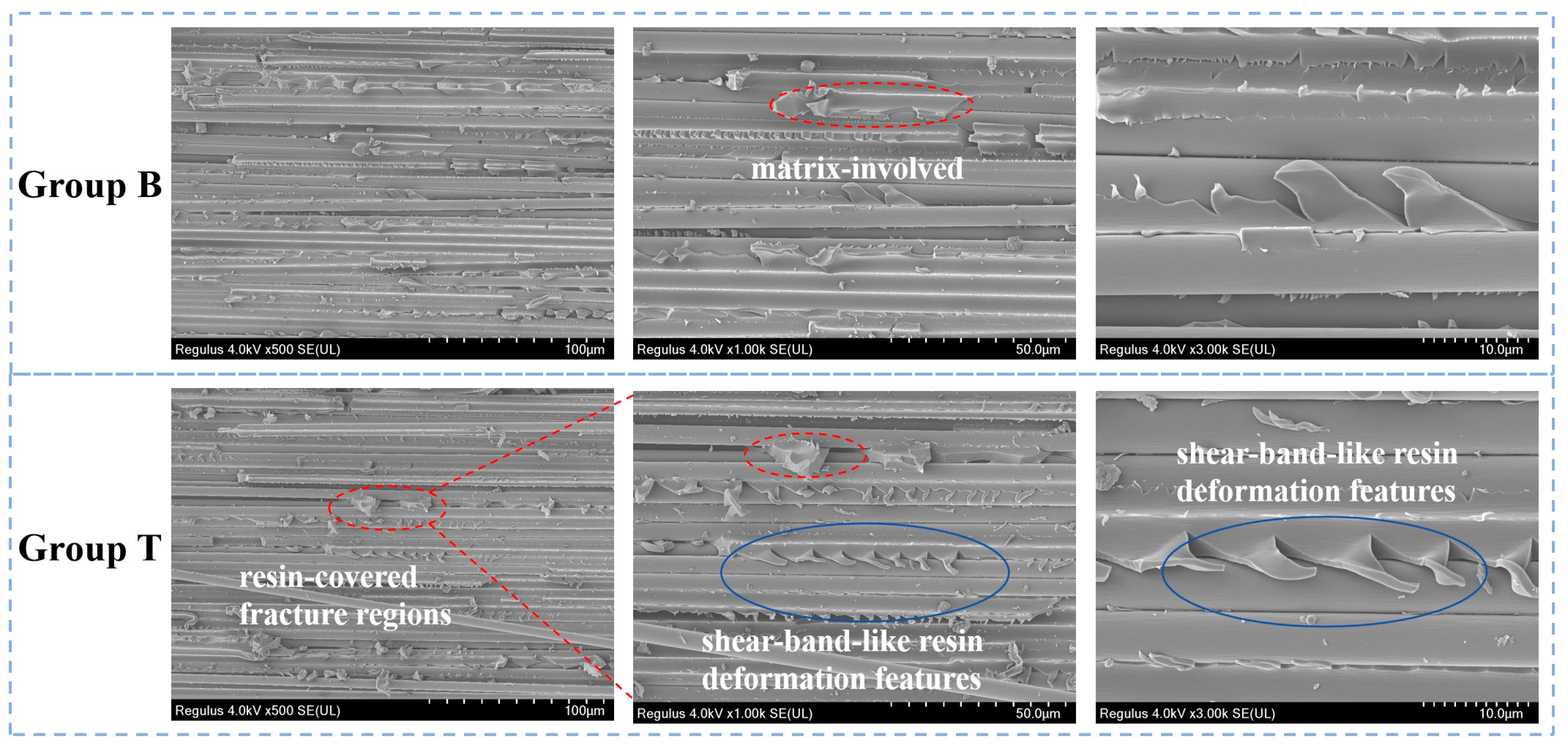
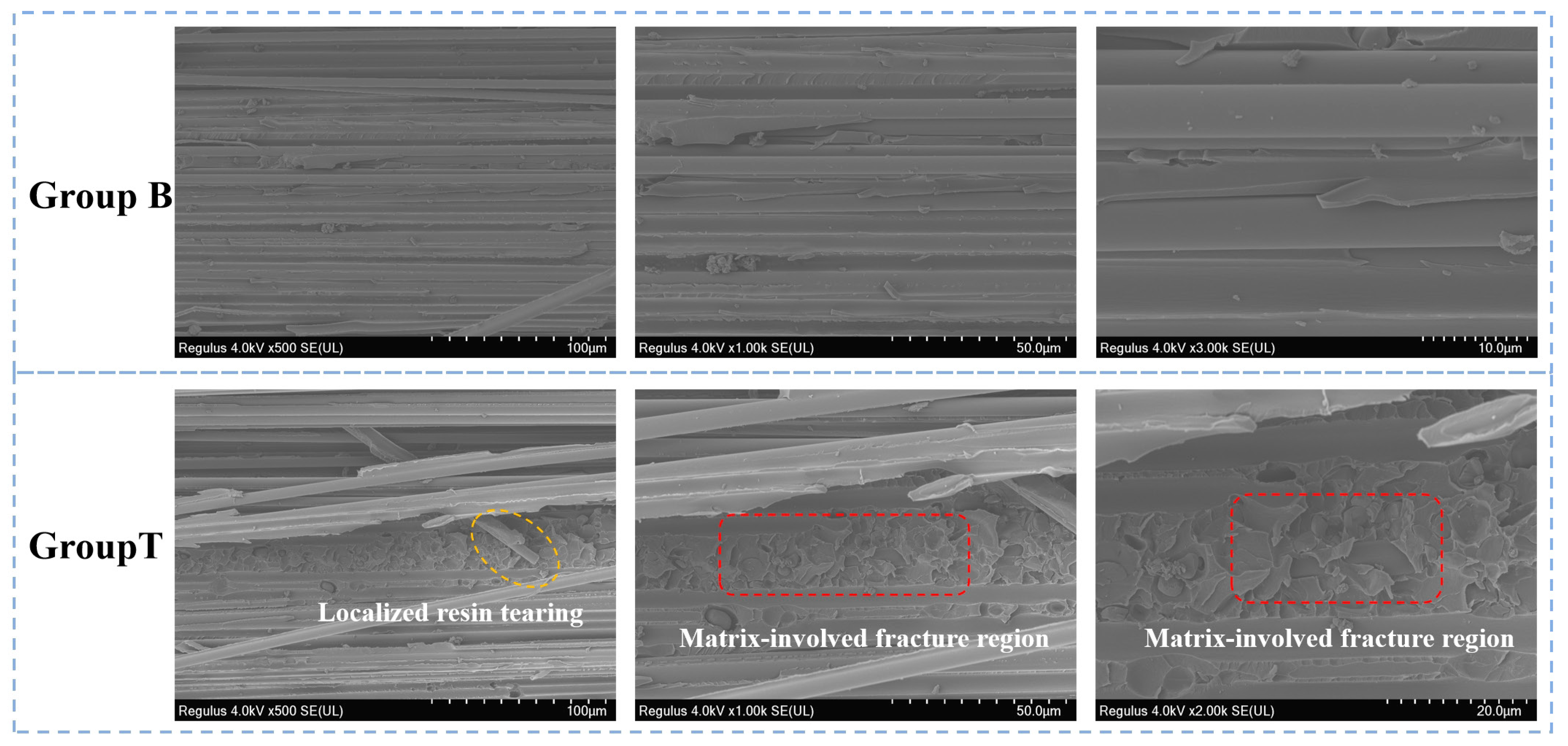
SEM observations were performed on the ENF fracture surfaces of specimens from the two resin systems. As shown in
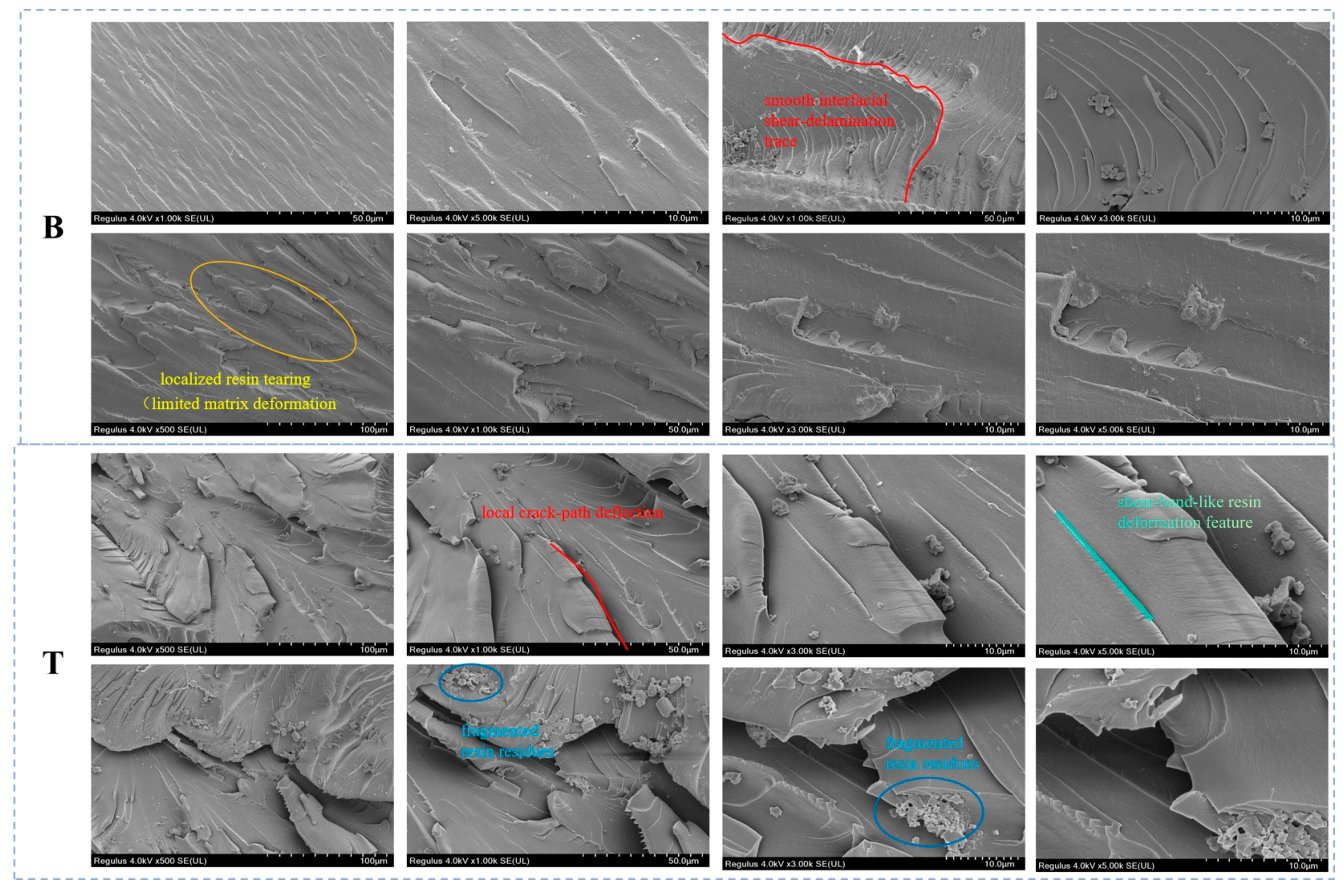
Figure 8, the fracture surface of Group B was relatively smooth overall, with a more localized interfacial crack propagation path and less visible resin residue. These features suggest that the crack propagated mainly along the interlaminar interface under shear loading, with limited matrix deformation during fracture. In contrast, the fracture surface of Group T exhibited more complex morphological features, including shear-band-like resin deformation features, fragmented resin residues, microcracks, and local crack-path deflection. These features are indicated by marked regions in
Figure 8 and are interpreted as morphological evidence of localized matrix shear deformation and resin tearing during Mode II crack propagation. Therefore, crack propagation in Group T was still dominated by interfacial delamination, but it was accompanied by more pronounced matrix participation and local crack-path deflection, which is consistent with its higher GIIC value.
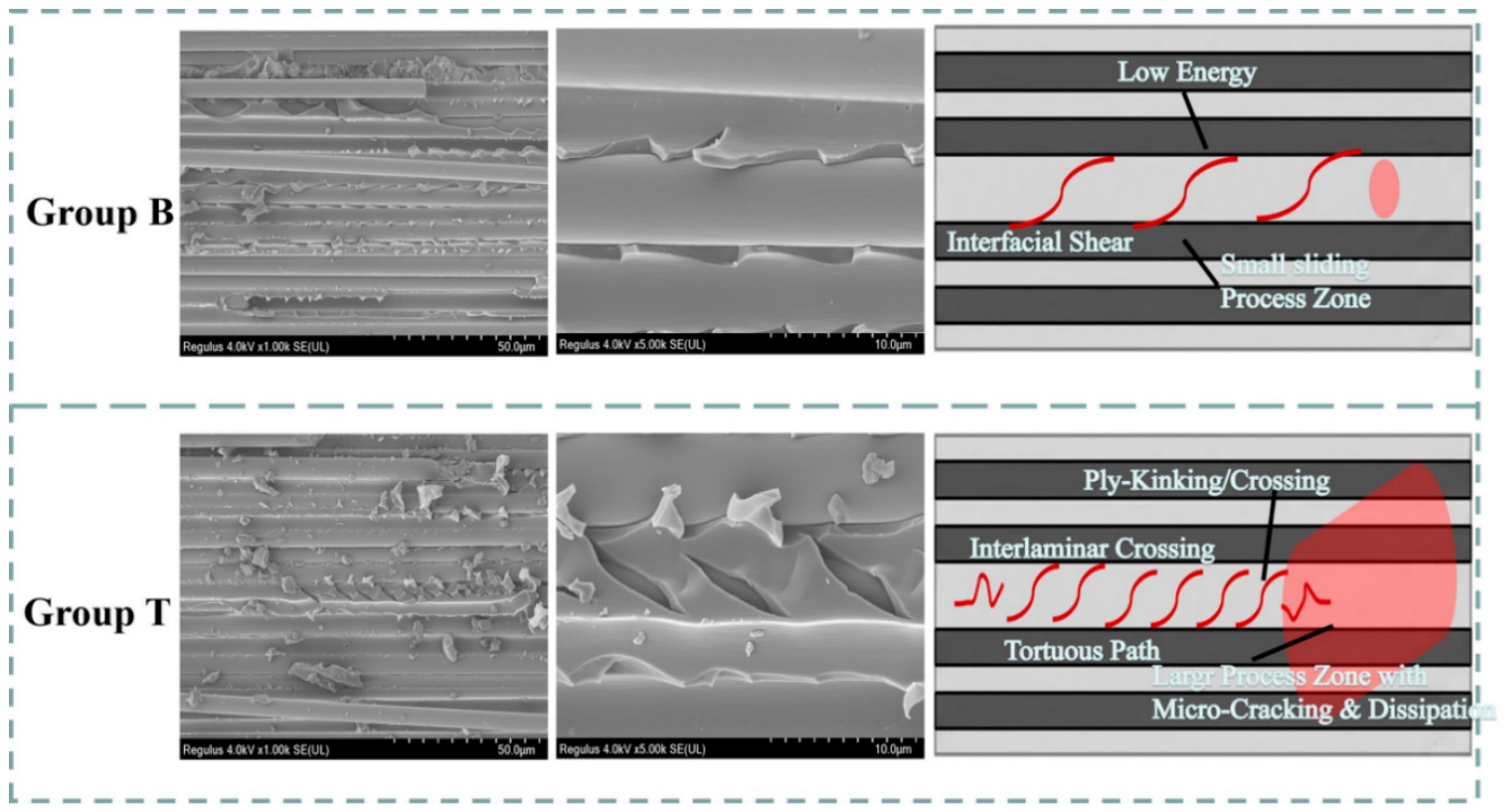
Based on the ENF test results and fracture surface observations,
Figure 9 further summarizes the crack propagation mechanisms of the two resin systems under shear loading. For Group B, the HSHM resin system, failure is dominated primarily by interfacial shear sliding. As shown in
Figure 8, although the crack path in Group B exhibits some undulation under shear loading, it still propagates mainly along the interlaminar interface overall, with a relatively localized crack growth region and a small shear process zone. This indicates that the local deformation capability of the Group B resin under shear loading is limited, so the crack tends to propagate through relatively concentrated interfacial shear sliding in a more direct manner, resulting in a relatively simple energy dissipation mechanism during fracture. In contrast, the crack propagation behavior in Group T, the HT resin system, changes significantly. As shown in
Figure 9, the crack path in Group T is no longer confined to a single interlaminar interface; instead, it undergoes multiple deflections under shear loading, accompanied by interlaminar crossover and local intralaminar fracture. Meanwhile, a larger shear process zone develops in the crack propagation region, indicating that shear-driven crack growth near the interface is more effectively constrained in the HT resin system and is accompanied by greater matrix shear energy dissipation. Therefore, under Mode II shear loading, the translation of the intrinsic mechanical properties of the resin into ILFT is manifested mainly as follows: the HT resin enhances resistance to interlaminar sliding through its greater shear deformability, causing crack propagation to evolve from single-interface sliding into a multi-path energy dissipation process involving shear deformation, crack deflection, interlaminar crossover, and local intralaminar failure. Unlike Mode I fracture, in which toughness enhancement is dominated by crack-tip blunting and opening-deformation energy dissipation, the improvement in Mode II fracture toughness arises more from the resin matrix’s constraint on shear sliding and its induced reconstruction of the crack path. It should be noted that the G
IIC obtained from the ENF test represents an apparent Mode II interlaminar fracture toughness. Under shear-dominated loading, frictional contact between the delaminated surfaces may contribute to the measured energy dissipation. Since this contribution was not independently quantified in the present study, the improvement in G
IIC of Group T should be interpreted as the combined effect of matrix shear deformation, crack-path reconstruction, resistance to interfacial shear crack propagation, fiber/matrix interaction, and possible frictional dissipation. It should also be noted that the resin shear properties, such as shear modulus, shear strength, and shear strain to failure, were not directly measured in this study. Therefore, a quantitative correlation between G
IIC and resin shear properties could not be established. The Mode II toughening mechanism proposed here is based on the ENF load–displacement behavior and post-fracture SEM morphology. Future work should include direct resin shear testing, such as Iosipescu or V-notched rail shear tests, to quantitatively clarify the relationship between matrix shear properties and Mode II ILFT. These results indicate that, for the two resin systems compared in this study, the effect of resin toughening on ILFT shows a certain dependence on loading mode, which provides useful guidance for material selection in CFRP structures subjected to different types of service loading.
3.4. Relationship Between Resin Deformation Capability and ILFT of Composites
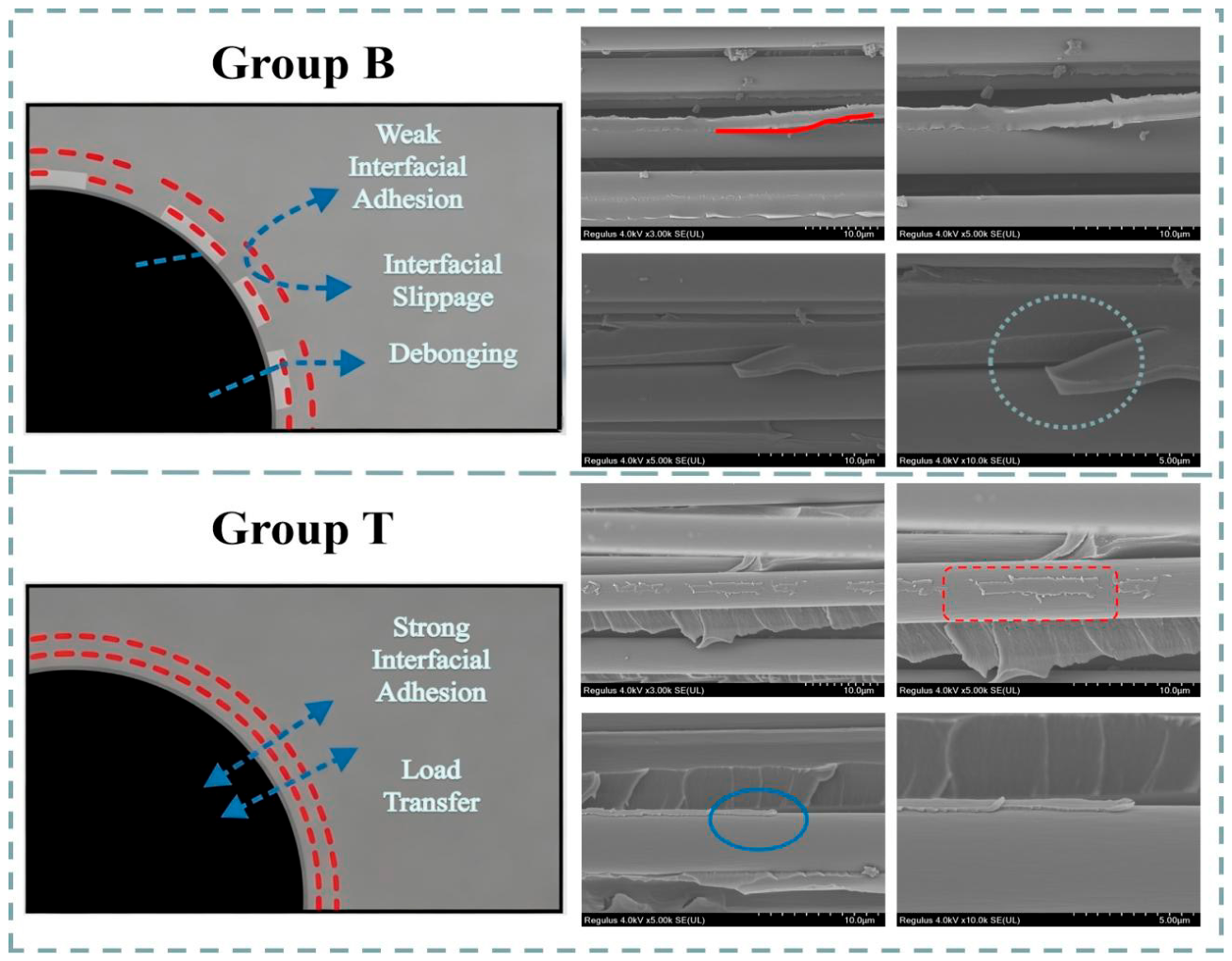
To further clarify the relationship between resin properties and interlaminar fracture mechanisms, the mechanical results and SEM observations can be considered together. Group B exhibited higher strength and modulus but lower elongation at break, which was consistent with the relatively smooth fracture surfaces, smoother exposed fibers, and limited resin residue observed in the resin and CFRP fracture morphologies. These features suggest that crack propagation in Group B was more prone to occur along the resin/fiber interface, with limited matrix deformation and energy dissipation. In contrast, although Group T showed slightly lower strength and modulus, its higher elongation at break corresponded to rougher fracture surfaces, more resin-covered fibers, tear ridges, shear steps, and local crack deflection. These microscopic features indicate that the resin matrix in Group T participated more actively in the fracture process through local deformation, resin tearing, and crack-path reconstruction. Therefore, the difference in ILFT between the two laminate groups should be interpreted by combining the resin’s ductility-related deformation capability, interfacial load transfer, and crack propagation behavior, as discussed below.
As shown in
Figure 10, the fiber surfaces on the fracture surface of Group B are relatively smooth, with more exposed interfacial areas and less resin residue. In some local regions, features of interfacial debonding and sliding can be observed, suggesting that crack propagation in Group B was more prone to occur along the resin/fiber interface. In contrast, more resin residue, torn ridges, step-like fracture features, and local adhesion traces can be observed on the fracture surface of Group T. These features indicate that the matrix in Group T participated to a greater extent in the fracture process during crack propagation and may reflect stronger apparent fiber/resin interaction or more effective local load transfer. However, no direct interfacial characterization, such as XPS, DMA, microbond testing, or single-fiber pull-out testing, was performed in this study. Therefore, the SEM observations should be interpreted as morphological evidence of different apparent interfacial fracture behavior, rather than direct proof of improved interfacial bonding strength.
The different apparent interfacial fracture morphologies may further influence the crack propagation path and fracture mode. For Group B, the relatively lower ductility of the resin makes it difficult to form a large deformation process zone near the crack tip, and local stress concentration may not be effectively relieved. Therefore, the crack tends to propagate along the resin/fiber interface or other weak interlaminar regions, corresponding to an interface-dominated fracture mode. For Group T, the higher elongation at break and more visible resin residue suggest that the matrix can participate more actively in the fracture process. As a result, crack propagation may involve local deflection, resin tearing, microcrack formation, and partial interlaminar crossover, leading to a more tortuous apparent crack path and more complex fracture morphology.
It should be noted that fracture surface area analysis, three-dimensional surface reconstruction, and image-based quantification of mixed failure-mode fractions were not performed in this study. Therefore, the discussion of crack-path reconstruction and mixed failure modes should be regarded as a qualitative mechanistic interpretation based on post-fracture SEM morphology and ILFT results, rather than as a quantitatively verified change in fracture surface area or failure-mode proportion. Future work should include three-dimensional profilometry, image-based crack-path tortuosity analysis, or quantitative failure-mode segmentation to further verify the relationship between crack-path reconstruction and ILFT improvement. Specifically, in the DCB test, the HT resin improves Mode I ILFT mainly through crack-tip blunting, expansion of the process zone, and resin tearing, causing the crack to evolve from direct interfacial separation to tortuous and progressive propagation, thereby enhancing Mode I ILFT; in the ENF test, it improves Mode II ILFT mainly by enhancing resistance to interfacial sliding and the shear energy dissipation capacity of the matrix, thereby inducing crack deflection, interlaminar crossover, and local intralaminar failure. Thus, for the two resin systems compared in this study, the effect of the intrinsic mechanical properties of the resin on the ILFT of CFRP cannot be directly explained by any single strength or modulus parameter alone, but should instead be comprehensively analyzed in conjunction with the local deformation capability of the resin, the damage characteristics near the interface, and the evolution of the crack propagation path.




 ,
,