3.1.1. Vapor Permeability and Water Solubility
Table 1 shows the effect of different gamma irradiation doses (2, 4, 8, 16, and 32 kGy) on the water vapor permeability and water solubility of the selected films.
For GS films, no significant differences (p ≤ 0.05) were observed at irradiation doses of 2, 4, and 8 kGy compared to the control. A reduction in WVP was only observed at higher doses (16 and 32 kGy). In the presence of 2% potassium sorbate, only the 4 kGy treatment resulted in reduced WVP relative to the control, although no significant differences were found when compared with the other doses (2, 8, and 16 kGy).
No statistically significant differences (p ≤ 0.05) were detected for GG films regardless of the irradiation dose. In contrast, GG2S exhibited a significant reduction in WVP at 2, 4, 8, and 16 kGy compared to the control, whereas no significant change was observed at 32 kGy.
These results are consistent with previous studies reporting that gamma irradiation can improve the barrier properties of polymeric systems by promoting structural rearrangements that reduce molecular mobility. For instance, de Lima et al. [
48] observed a significant decrease in water vapor permeability in bacterial cellulose/kappa-carrageenan films after irradiation at 25 kGy, which was attributed to increased structural compactness and stronger intermolecular interactions, such as hydrogen bonding. Similarly, Novianto et al. [
49] reported that gamma irradiation reduced the WVP of fish gelatin/agar films from 19.20 × 10
−3 g mm cm
−2 day
−1 kPa
−1 in the control to 14.89 × 10
−3 g mm cm
−2 day
−1 kPa
−1 at 30 kGy, due to the formation of a denser polymeric matrix. However, at 40 kGy, WVP increased again, indicating that excessive irradiation induced chain scission and created preferential pathways for water vapor diffusion. These findings support the hypothesis that moderate irradiation doses may improve barrier properties through structural reorganization, whereas excessive doses can promote degradation and compromise the integrity of the polymer network.
However, the absence of a consistent reduction in WVP at higher doses (e.g., 32 kGy) suggests that excessive irradiation may induce competing effects, such as chain scission, leading to increased free volume and potential disruption of the polymer network. This behavior indicates that the balance between crosslinking-like interactions and degradation processes plays a critical role in determining the final barrier performance of irradiated films.
Furthermore, the non-homogeneous behavior observed among formulations suggests that the irradiation effects were strongly dependent on film composition and structural organization. Moderate irradiation doses may have promoted partial matrix densification and improved intermolecular interactions, reducing molecular mobility and limiting water vapor diffusion. This interpretation is supported by SEM observations, which revealed compact and continuous morphologies without visible pores in most irradiated films, indicating preservation or slight reorganization of the polymer network. In contrast, at higher doses, the increase in water vapor permeability observed in some formulations may be associated with chain scission and disruption of intermolecular interactions, leading to increased free volume within the matrix. FTIR results corroborate this interpretation, since irradiation caused subtle changes in band intensity and hydrogen bonding interactions without major chemical modifications, suggesting that the effects occurred mainly at the molecular level. Differences among formulations may also be related to the distinct structural organization of starch- and gluten-based matrices and to the presence of potassium sorbate, which appeared to promote more homogeneous and compact structures in SEM micrographs. Therefore, the permeability behavior likely reflects the competition between structural stabilization and degradation processes induced by gamma irradiation.
Regarding water solubility, GS films showed reduced solubility at 2, 4, and 16 kGy compared to the non-irradiated control, with no significant differences among these doses. Conversely, solubility increased at 8 and 32 kGy. In GS films containing 2% sorbate, a significant increase in solubility was observed only at 16 kGy, whereas no statistically significant changes were detected at the other doses.
A different trend was observed for GG films, where only the 2 kGy dose led to a significant increase in solubility compared to the control, while higher doses showed no significant effect. The non-irradiated GG2S exhibited higher solubility than the irradiated samples, and no statistically significant differences were observed among the dose pairs 2–32, 2–16, and 4–16 kGy.
The reduction in solubility observed at specific irradiation doses can be associated with decreased water–polymer interactions and reduced availability of hydrophilic sites. According to Bansal and Arora [
50], irradiation can decrease water uptake in polymeric composites by reducing amorphous regions and improving interfacial interactions, which limits the accessibility of water molecules within the matrix. Similarly, Novianto et al. [
49] reported that the solubility of fish gelatin/agar films decreased from 41.34% in the control to 25.79% at 30 kGy, due to the formation of intra- and intermolecular interactions that restricted water penetration and reduced gelatin–water interactions. However, at 40 kGy, solubility slightly increased again, suggesting that chain scission and degradation processes became predominant over structural stabilization. Likewise, Sarmast et al. [
51] described similar reductions in water solubility in gamma-irradiated gelatin-based films. Studies on polyethylene- and polypropylene-based composites have also shown that irradiation reduces hydroxyl group availability and restricts water penetration, resulting in lower absorption and swelling. On the other hand, the increase in solubility observed at higher doses may be related to chain scission and molecular weight reduction, which enhances the formation of smaller, more water-soluble fragments. This behavior is consistent with the findings of Krieghoff et al. [
52], who reported that irradiation-induced degradation in biodegradable polymers leads to the formation of low-molecular-weight oligomers that are more readily soluble in aqueous environments. Therefore, the solubility behavior observed in this study reflects a competition between structural stabilization at moderate doses and degradation processes at higher irradiation levels.
Overall, the results indicate that gamma irradiation can modulate both barrier and water interaction properties of polymeric films, but its effects are highly dose-dependent. While moderate irradiation doses may enhance structural organization and reduce permeability and solubility, excessive doses can promote degradation, increasing solubility and compromising barrier performance. This balance between improved intermolecular interactions and chain scission is a key factor in determining the functional properties of irradiated biopolymer films.
3.1.2. Mechanical Properties
For GS films, irradiation generally reduced tensile strength compared to the non-irradiated control, regardless of the applied dose (
Table 2). No statistically significant differences were observed between 2 and 4 kGy, nor among the dose groups 4–8–16 kGy and 8–16–32 kGy. A similar trend was observed for GS2S, where no significant differences were found between 16 and 32 kGy, as well as between 2 and 8 kGy and 2 and 4 kGy.
This reduction in tensile strength suggests that chain scission may be the dominant mechanism in GS systems under gamma irradiation. Similar behavior has been reported for biodegradable and semi-crystalline polymers, in which irradiation induces a decrease in molecular weight and compromises mechanical integrity. According to Krieghoff et al. [
52], irradiation of polymers such as PLGA leads to chain cleavage and reduced structural cohesion, which negatively affects macroscopic mechanical performance. This mechanism is consistent with the behavior observed in the present starch–gelatin systems, which are more susceptible to degradation due to their hydrophilic and less densely packed structure. Furthermore, Zhou et al. [
53] reported that gamma irradiation may induce surface deformation and microcracks in starch granules, which can compromise the structural uniformity of starch-based materials. This effect may contribute to the reduction in tensile strength observed in GS films after irradiation.
In contrast, irradiation increased the tensile strength of GG and GG2S films at all tested doses compared to the control. This behavior is likely associated with the presence of sulfur-containing amino acids in gluten proteins, which are particularly sensitive to radiation-induced modifications [
54]. The absorbed energy may promote structural rearrangements and the formation of intermolecular interactions, resulting in enhanced mechanical resistance.
This improvement in tensile strength at lower irradiation doses is consistent with literature reports indicating that irradiation can promote the formation of reactive sites and enhance intermolecular interactions within polymer matrices. Bansal and Arora [
50] reported that polymers such as polypropylene (PP) and polyethylene (PE) exhibit increased tensile strength at moderate irradiation doses due to the formation of covalent bonds and improved chain interactions. In composite systems, this effect is even more pronounced, as irradiation enhances interfacial adhesion between components, leading to significant improvements in mechanical performance. Although the present systems are not fiber-reinforced composites, the protein–polymer interactions in gluten-based films may play a similar role, promoting network reinforcement under irradiation. Similar behavior was reported by Novianto et al. [
49], who observed a significant increase in tensile strength of fish gelatin/agar films after gamma irradiation. Tensile strength increased from 50.59 MPa in the non-irradiated control to a maximum value of 62.87 MPa at 30 kGy, indicating reinforcement of the polymeric network and improved structural integrity. However, at 40 kGy, tensile strength decreased to 53.78 MPa, suggesting that excessive irradiation promoted degradation and chain scission, which compromised the mechanical resistance of the films. These findings reinforce the hypothesis that moderate irradiation doses favor structural stabilization, whereas excessive doses may negatively affect mechanical performance.
Among the tested conditions, the 2 kGy dose was the most effective in increasing tensile strength, leading to an improvement of approximately 100% compared to the control. No statistically significant differences were observed between the dose pairs 16–32 kGy and 4–8 kGy. A similar trend was observed for GG2S, where 2 kGy produced the greatest increase in tensile strength, while no significant differences were found among 2–4–8 kGy or between 16 and 32 kGy.
The existence of an optimal irradiation dose is widely reported in the literature. According to Bansal and Arora [
50], tensile strength typically increases up to a certain irradiation level, after which degradation processes such as chain scission become predominant, leading to a decline or stabilization in mechanical properties. A similar trend was reported by Novianto et al. [
49], who identified 30 kGy as the most effective dose for improving the functional properties of fish gelatin/agar films. At this dose, water vapor permeability and water solubility were minimized, while tensile strength reached its highest value. However, at 40 kGy, the films showed increased permeability and solubility, accompanied by reduced tensile strength, indicating that degradation effects became predominant. This explains the plateau observed at higher doses (16 and 32 kGy) in the present study, where additional irradiation did not result in further improvements in tensile strength.
The effect of irradiation on elongation at break is also presented in
Table 3. For both GS and GG films, irradiation did not significantly affect elongation compared to the non-irradiated control at any of the evaluated doses. In contrast, films containing 2% sorbate (GG2S and GS2S) showed a reduction in elongation after irradiation, although no statistically significant differences were observed among the applied doses.
The reduction in elongation observed in sorbate-containing films indicates a decrease in flexibility, which may be associated with reduced chain mobility and increased stiffness of the polymer network. This behavior is consistent with previous studies on irradiated polyethylene and polypropylene systems, where elongation at break decreases progressively with increasing irradiation dose, leading to more brittle materials [
50]. The presence of sorbate may further influence this behavior by acting as a plasticizer prior to irradiation, while post-irradiation structural rearrangements restrict molecular mobility, resulting in lower elongation capacity.
In contrast, Novianto et al. [
49], reported that elongation at break remained relatively constant (approximately 3.6%) across all evaluated irradiation doses, suggesting that gamma irradiation strengthened the polymeric network without significantly compromising film flexibility. Differences between the present study and the literature may be associated with variations in film composition, particularly the presence of potassium sorbate and the distinct structural organization of starch- and gluten-based matrices.
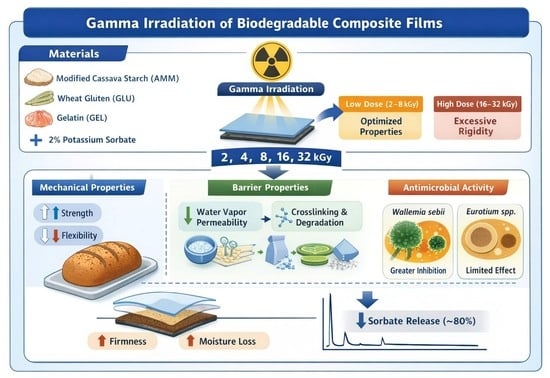
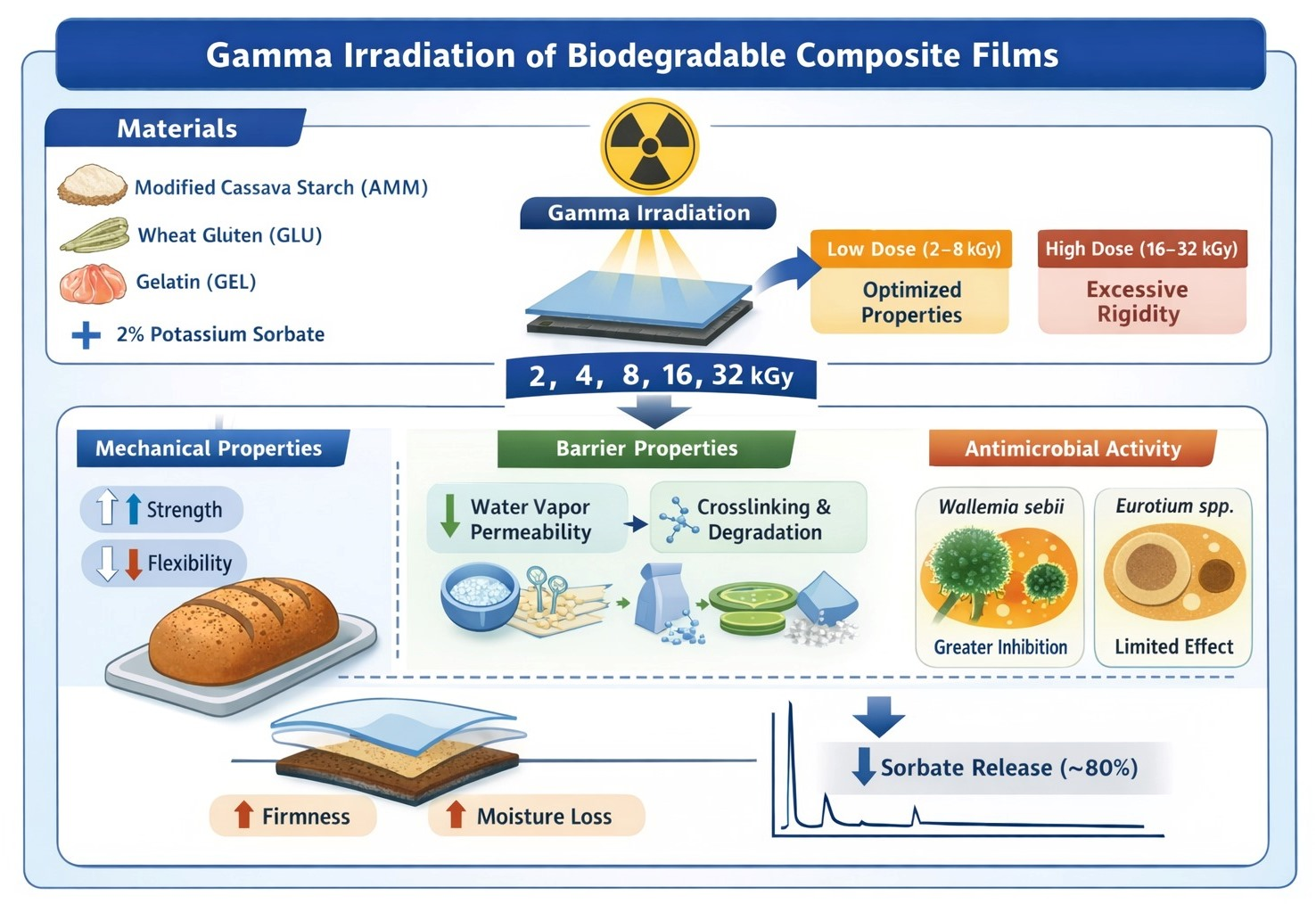
Based on the results obtained for the different irradiation doses, the 2 kGy dose was selected for the subsequent stages of the study. This choice was based on the improvement of mechanical properties, with increased tensile strength in two of the four films evaluated, in addition to avoiding the high stiffness observed at the higher doses (16 and 32 kGy). Furthermore, irradiation at 2 kGy reduced water vapor permeability, a desirable characteristic for packaging applications. This selection is also supported by literature findings indicating that low irradiation doses are often sufficient to promote beneficial structural modifications without inducing excessive degradation. As reported by Bansal and Arora [
50], moderate doses optimize the balance between crosslinking-like effects and chain scission, resulting in improved mechanical performance while maintaining material integrity. Therefore, the choice of 2 kGy represents a compromise between enhancing functional properties and preserving the structural stability of the films.
3.1.3. Evaluation of Antimicrobial Activity by Agar Diffusion of Irradiated Films
The antimicrobial activity of the films was evaluated against different fungal strains using agar diffusion assays (
Table 3). The results for
A chevalieri (
Table 4) showed that the incorporation of 2% potassium sorbate into GS irradiated and GG irradiated films did not result in statistically significant differences (
p > 0.05) in colony-forming units (CFU) compared to the control films. This behavior may be attributed to limited diffusion of potassium sorbate within the polymeric matrix, since antimicrobial effectiveness in active films depends primarily on the release and migration of the compound to the surrounding medium [
55]. In protein- and starch-based systems, strong intermolecular interactions can restrict molecular mobility, reducing the availability of the active agent at the interface.
This result contrasts with findings reported by de Lima et al. [
48], in which gamma irradiation (25 kGy) enhanced antimicrobial activity in cellulose-based films, leading to measurable inhibition halos even in matrices that previously showed low activity. In that study, irradiation promoted increased diffusion and/or activation of bioactive compounds, suggesting that the effect of irradiation on antimicrobial performance is strongly dependent on both the polymer matrix and irradiation dose.
These structural and diffusional limitations may have been further intensified by gamma irradiation, which, as indicated by HPLC (
Section 3.1.6) results, reduced the effective release of potassium sorbate from the films, thereby limiting its antimicrobial activity in diffusion-based assays. Additionally, irradiation (2 kGy) may have modified the polymer network through chain scission, reducing molecular weight and generating structural discontinuities. These changes can increase matrix hydrophilicity and create microvoids, potentially enhancing water uptake and affecting sorbate mobility [
56]. However, in control films without sorbate, irradiation did not improve antimicrobial performance, indicating that structural changes alone were insufficient to promote effective diffusion. According to de Lima et al. [
48] and Zaki et al. [
57], gamma irradiation can generate free radicals capable of enhancing antimicrobial activity by increasing the reactivity of incorporated compounds or promoting the breakdown of larger molecules into more bioavailable fractions. However, in the present study, this potential benefit was not observed, likely due to restricted mobility of potassium sorbate within the dense polymer network, highlighting that radical formation alone is not sufficient without effective release mechanisms.
In addition to CFU quantification, the inhibition halo was measured as the shortest distance between the film and the nearest colony, due to the non-uniform distribution of microbial growth. The inhibition halo ranged from 0 to 1.66 ± 1.15 mm, with no statistically significant differences (p > 0.05) among treatments according to Tukey’s test. These results indicate limited antimicrobial effectiveness against A. chevalieri under the tested conditions. The absence of inhibition zones in several treatments reinforces that potassium sorbate action was mainly contact-dependent, which is consistent with systems where diffusion is slow or restricted by the matrix structure.
For
A. montevidensis no significant differences (
p ≤ 0.05) in CFU counts were observed between films with and without sorbate. Although ANOVA indicated a significant overall effect for inhibition zone, Tukey’s test did not detect significant pairwise differences among formulations (
p > 0.05). The slight increase in inhibition halo with sorbate incorporation was not statistically significant. This discrepancy is likely due to high within-group variability and limited sample size, which are common in diffusion-controlled systems. Similar inconsistencies between statistical significance and observable antimicrobial trends have been reported in diffusion-based systems, where heterogeneous release profiles limit reproducibility [
48]. Moreover, Jagtap et al. [
58] demonstrated that irradiation-induced antimicrobial effects can be more pronounced in surface-driven mechanisms (e.g., biofilm inhibition) rather than diffusion-dependent assays, reinforcing the importance of the evaluation method.
The presence of potassium sorbate may also contribute to increased free volume within the polymer network by reducing intermolecular interactions and acting as a plasticizer. Free volume facilitates molecular mobility and diffusion. When combined with irradiation-induced chain scission, this effect may further loosen the polymer structure, slightly enhancing swelling and interfacial contact with the culture medium. Nevertheless, these effects were not sufficient to produce consistent statistical differences.
In contrast, for
Wallemia sebii, the addition of 2% potassium sorbate did not result in consistent statistically significant reductions in CFU across all formulations when evaluated by Tukey’s test. Although numerical reductions in fungal growth were observed, particularly in sorbate-containing films, these differences were not always statistically significant (
p > 0.05). Potassium sorbate is known to inhibit fungi by disrupting membrane transport and intracellular pH balance, being particularly effective against molds and yeasts under favorable conditions [
59]. Therefore, the greater numerical sensitivity of
W. sebii may be related to species-specific physiological differences.
This species-dependent response is consistent with the selective antimicrobial behavior reported by de Lima et al. [
48], where irradiated films showed higher effectiveness against Gram-positive microorganisms compared to Gram-negative ones, indicating that microbial structure and physiology significantly influence susceptibility.
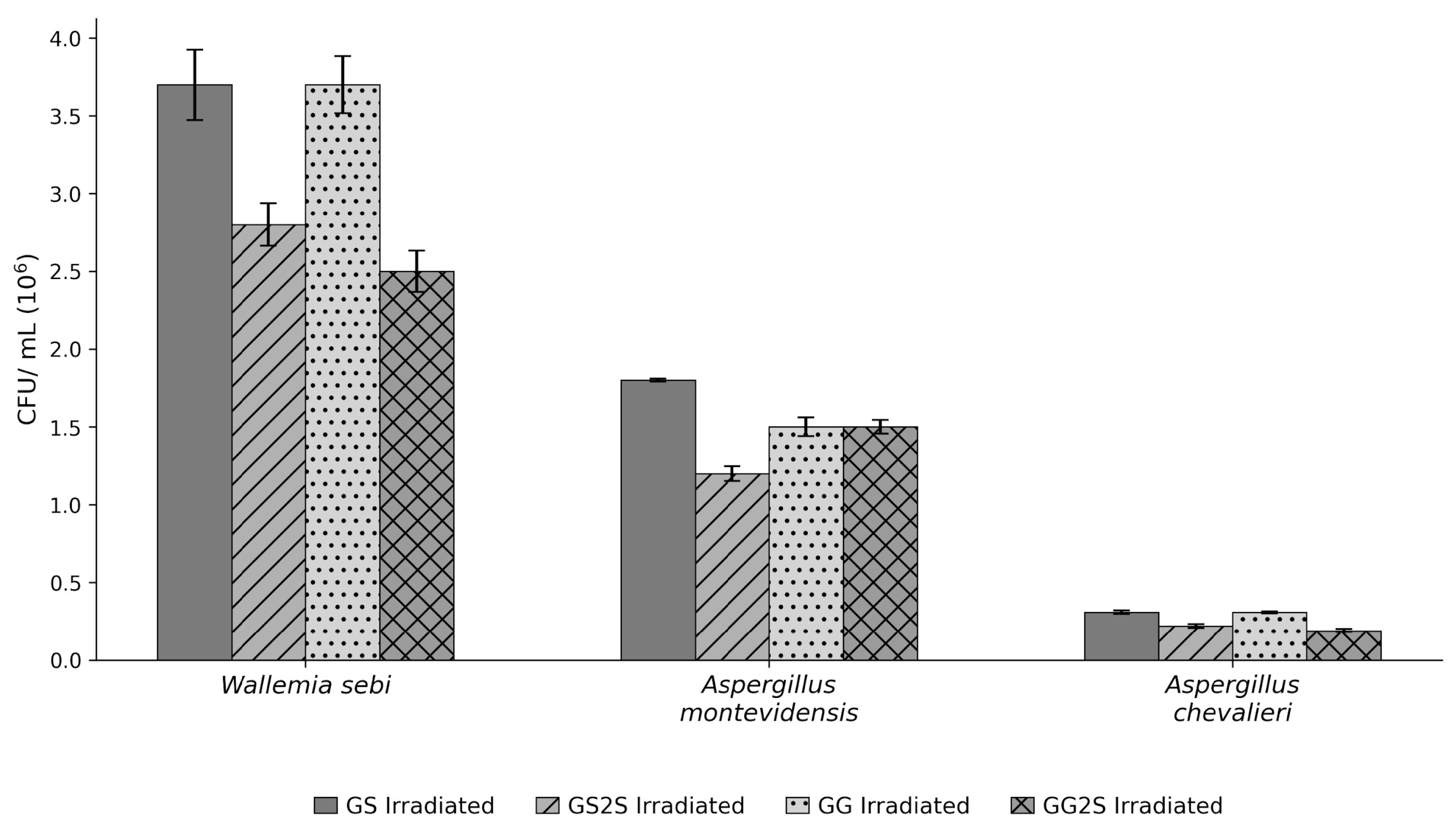
The GG formulation showed the most pronounced effect, with lower CFU values and larger inhibition halos (
Figure 1); however, only the inhibition zone GG2S irradiated showed a tendency toward higher values, while other comparisons did not differ significantly. For GS2S irradiated, no statistically significant differences were observed between control and sorbate-containing films for inhibition halo. Differences between matrices can be explained by release kinetics: gelatin-rich systems tend to swell and release active compounds more slowly, whereas gluten-based films may facilitate greater sorbate migration under certain conditions [
60].
Mass transport in these systems is governed by diffusivity and solubility. Diffusivity reflects molecular mobility within the matrix, while solubility describes the compatibility between sorbate and the polymer network. Factors such as pore size, chain flexibility, and polymer packing density, as well as environmental conditions (pH, water activity, and temperature), influence these parameters. Irradiation-induced structural changes may alter both diffusivity and solubility, resulting in heterogeneous and time-dependent release behavior. However, in the present study, this effect was not sufficient to produce consistent statistical separation.
In addition, irradiation-induced surface modifications, such as increased roughness and formation of nanostructures, have been reported to contribute to antimicrobial activity by limiting microbial adhesion and biofilm formation [
58]. However, such mechanisms are more relevant in solid surface applications and may not significantly influence diffusion-based antimicrobial assays, as observed in the present study.
Overall, the antimicrobial performance of the films depended on both the fungal species and the film composition. While limited effects were observed for
Aspergillus chevalieri and
Aspergillus montevidensis, more pronounced inhibition was detected for
Wallemia sebi. The GG2S formulation tended to show better antimicrobial performance compared to GS, particularly in terms of inhibition halo formation. Nevertheless, the overall antimicrobial response was constrained by diffusion-controlled release mechanisms, which are typically described by Fickian or quasi-Fickian behavior in biopolymer films [
60]. This indicates that optimizing release kinetics is essential to enhance antimicrobial efficacy.
Overall, the present findings differ from studies employing higher irradiation doses (25–60 kGy), where significant antimicrobial enhancement has been reported [
48,
58]. This discrepancy reinforces that the antimicrobial effectiveness of irradiated films depends not only on the presence of active compounds but also on irradiation dose, matrix composition, and the balance between structural modification and controlled release.
Based on these results, GG2S and GS2S films were selected for subsequent experiments, due to their consistent trends in antimicrobial activity, even in the absence of statistically significant differences in all parameters. These formulations represent a compromise between mechanical performance and controlled release, which is a critical requirement for the development of effective antimicrobial packaging systems.
3.1.4. Morphology
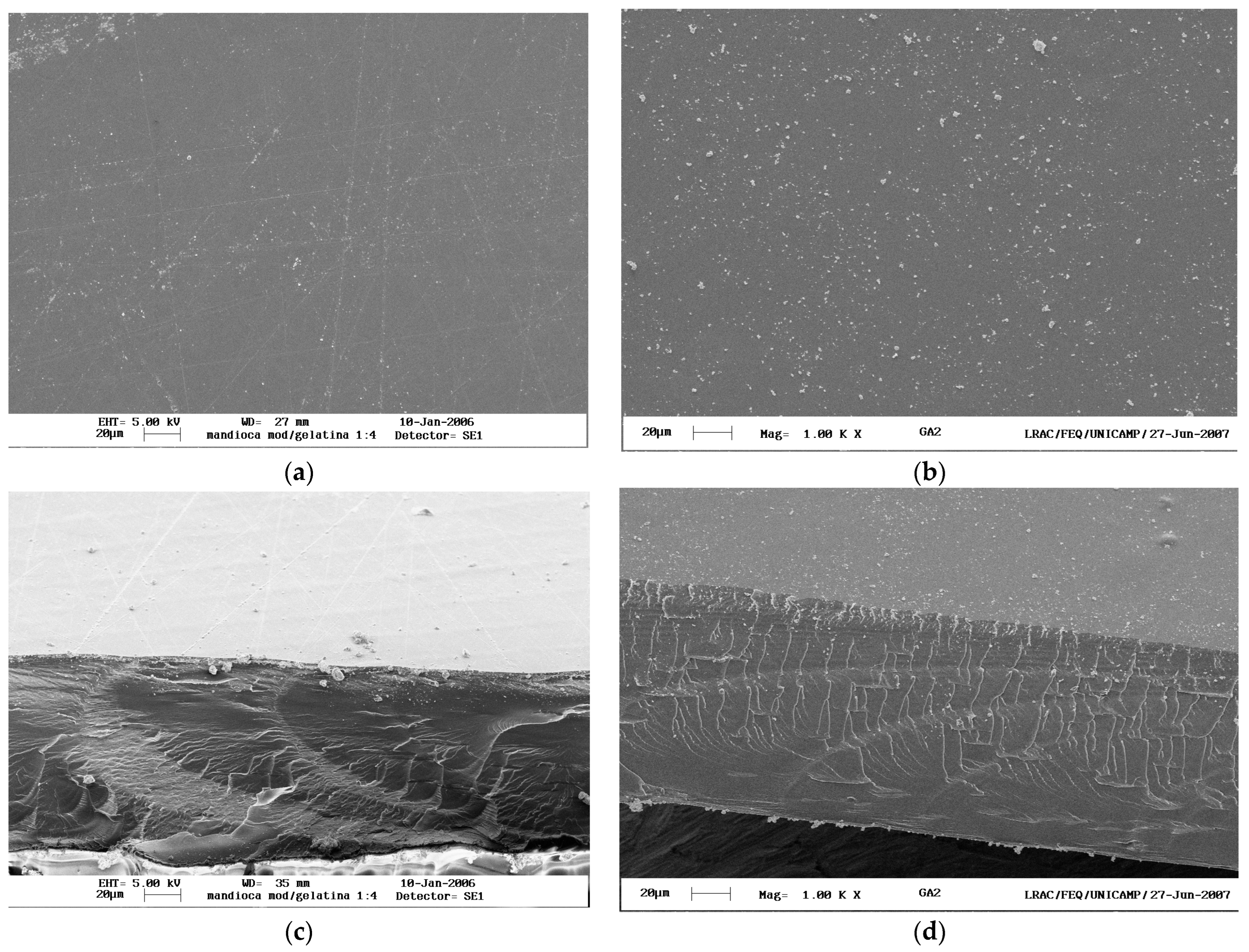
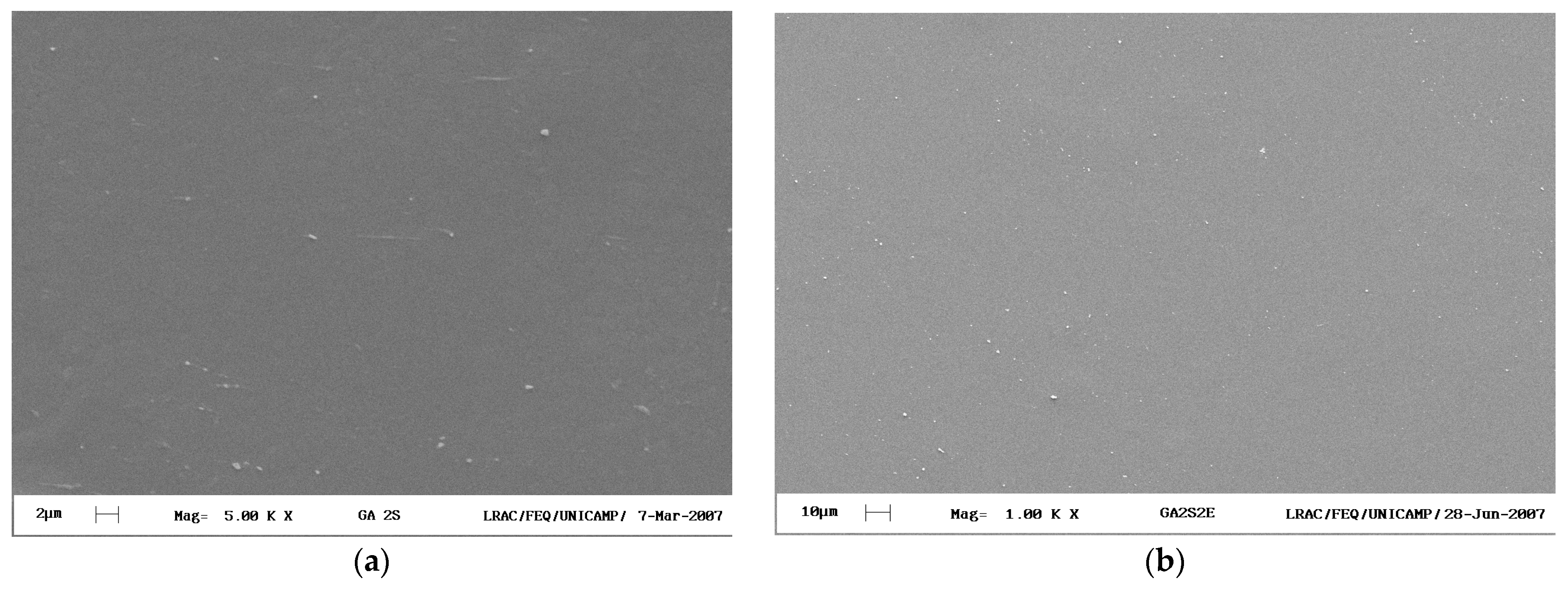
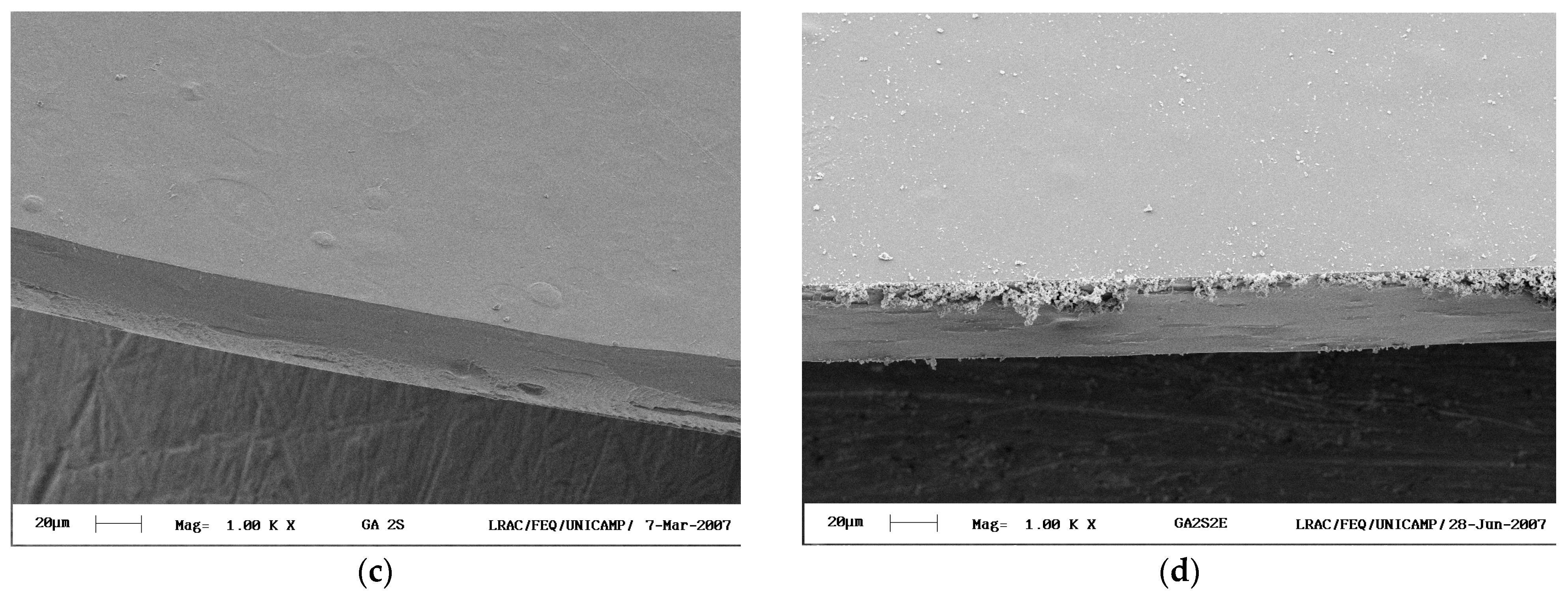
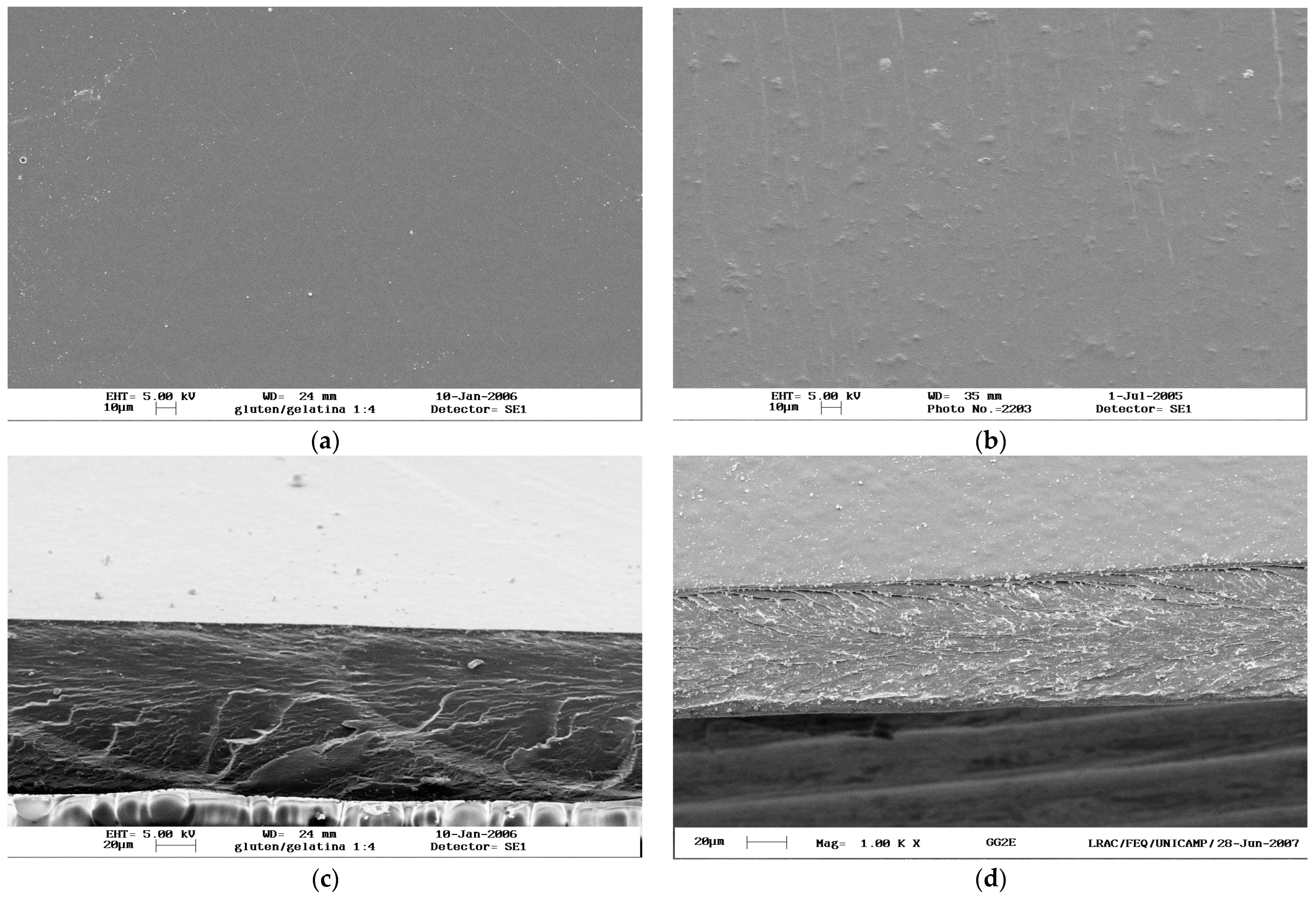
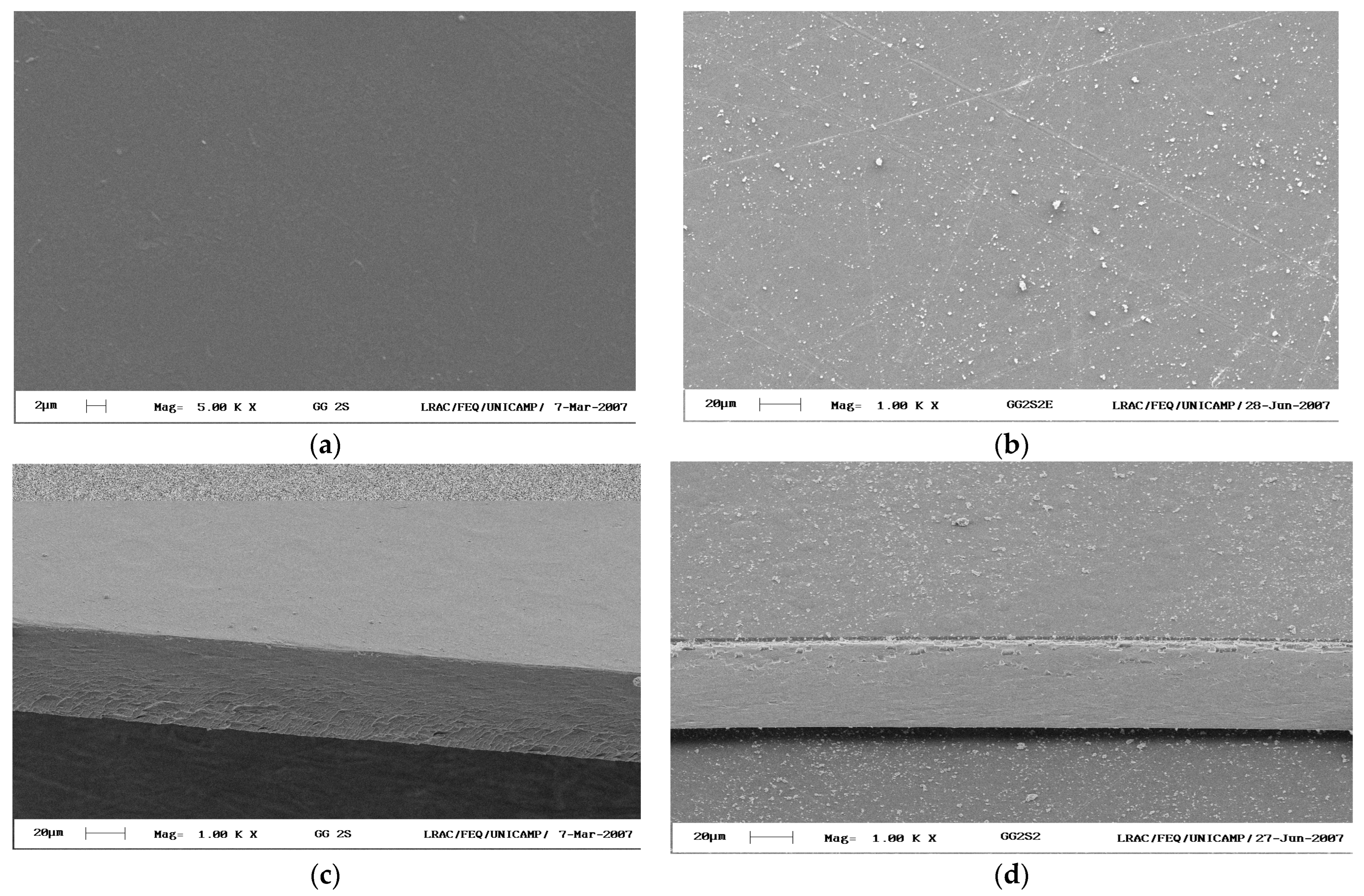
Scanning electron microscopy (SEM) micrographs of films prepared with and without potassium sorbate and subjected or not to gamma irradiation (2 kGy) are presented in
Figure 2,
Figure 3,
Figure 4 and
Figure 5. Surface and cross-sectional morphologies were evaluated to investigate possible structural changes induced by irradiation.
Overall, all film formulations exhibited continuous and compact morphologies, with no visible pores or major structural disruptions after irradiation. Non-irradiated films generally showed smooth and homogeneous surfaces, indicating good compatibility among the film-forming components and uniform matrix formation [
58]. Similar morphologies were maintained after irradiation, suggesting that the applied dose (2 kGy) was not sufficient to promote pronounced microstructural damage.
Localized surface heterogeneity and small fragments were occasionally observed in irradiated samples, particularly in GS and GG films (
Figure 2b and
Figure 4b). However, these structures appeared superficially deposited and were also detected in fractured cross-sections, suggesting that they were mainly associated with sample fragmentation during SEM preparation rather than intrinsic morphological alterations. Since irradiation may increase film rigidity, fracture during stub preparation could contribute to the deposition of fragments on the film surface. Although irradiation-induced roughness and discontinuities have been reported as intrinsic radiation effects associated with chain scission and structural rearrangements [
58,
61], such effects were not predominant in the present study.
Cross-sectional images revealed compact internal structures, with fibrillar organization particularly evident in GS and GG films (
Figure 2c,d and
Figure 4c,d). This morphology is likely related to the entangled gelatin network and its triple-helix organization, which contributes to film structural integrity. Small white streaks observed within some matrices may be associated with glycerol phase separation. No substantial differences were detected between irradiated and non-irradiated samples in the cross-sectional morphology.
Films containing potassium sorbate (GS2S and GG2S;
Figure 3 and
Figure 5) exhibited particularly homogeneous and dense internal structures, suggesting improved compatibility between film components. The incorporation of low-molecular-weight compounds may contribute to matrix homogeneity by occupying free volume and modifying polymer–polymer interactions [
50]. In these formulations, irradiation did not visibly alter either the surface or the internal morphology.
The preservation of compact and continuous morphologies after irradiation is consistent with previous reports indicating that moderate irradiation doses may promote subtle structural reorganization and increased intermolecular interactions without causing extensive morphological disruption [
48]. More pronounced effects, such as crack formation, roughness, and nanostructuring, are generally associated with higher irradiation doses [
58,
61]. Similar behavior has been reported for irradiated pectin/gelatin and soy protein isolate films, in which irradiation improved matrix homogeneity and reduced structural discontinuities [
62].
Overall, SEM observations indicate that gamma irradiation at 2 kGy did not induce major morphological changes in the polymer matrices. The films maintained structural integrity, suggesting that the irradiation effects observed in barrier and antimicrobial properties are more likely related to molecular-level modifications, such as rearrangement of intermolecular interactions, changes in free volume, and limited chain scission, rather than to large-scale microstructural alterations [
63]. These observations are consistent with the FTIR results, which also indicated only subtle structural modifications after irradiation.
3.1.5. FTIR Spectroscopy
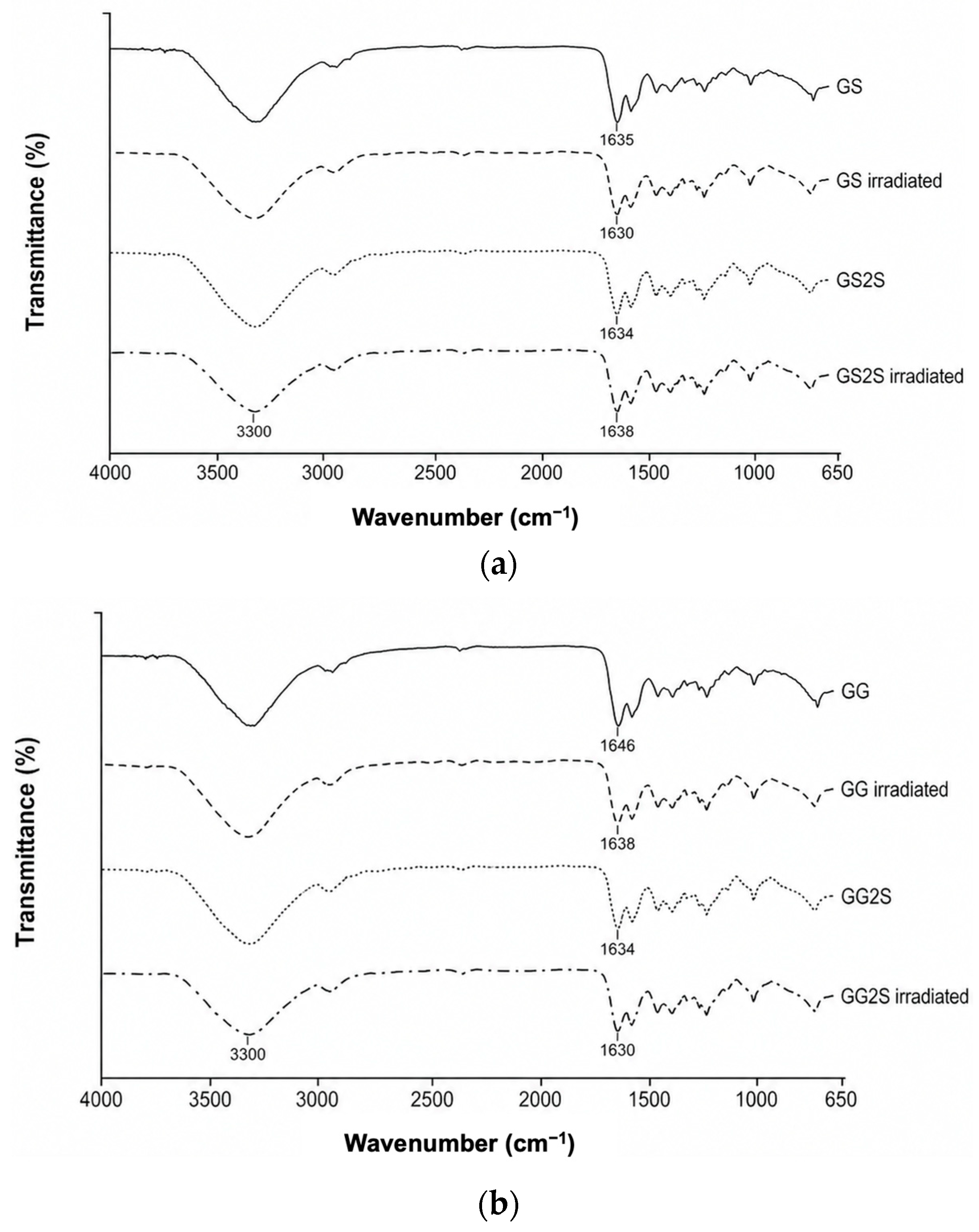
The main absorption bands were observed in the regions 1800–1000 cm
−1 and 2900–3300 cm
−1, typically associated with protein and polysaccharide structures present in the polymer matrix (
Figure 6).
In GS films (
Figure 6a), the disappearance of bands between 3900 and 3600 cm
−1 and 1800–1700 cm
−1 was observed after the addition of potassium sorbate. This behavior suggests modifications in the three-dimensional organization of the polymer network caused by the plasticizing effect of sorbate. The incorporation of low-molecular-weight compounds may reduce intermolecular interactions and increase chain mobility, affecting the vibrational modes detected in the spectra.
After gamma irradiation, the disappearance of these bands was also observed in GS and GS2S films, although no major changes in the overall spectral profile were detected. These effects may be associated with irradiation-induced structural rearrangements, such as crosslinking or chain scission, which can modify molecular conformation and vibrational intensities. Only vibrations that produce changes in the molecular dipole moment are detectable in infrared spectroscopy [
64].
This behavior is consistent with previous studies reporting that gamma irradiation predominantly induces chain scission, leading to a reduction in the intensity of characteristic absorption bands rather than the formation of new functional groups [
58,
65]. For example, Chikaoui [
65] observed a progressive decrease in FTIR band intensities in irradiated PET films, which was attributed to degradation of the polymer backbone. Similarly, Jagtap et al. [
58] reported significant reductions and even disappearance of absorption bands in irradiated polycarbonate, indicating cleavage of C–O–C and carbonate linkages.
Several absorption bands between 1800 and 1000 cm
−1 were mainly attributed to the gelatin component of the films. The intense bands observed between approximately 1650–1540 cm
−1 correspond to the characteristic Amide I and Amide II bands, typical of protein structures. The Amide I band, mainly associated with C=O stretching vibrations of peptide bonds, is highly sensitive to protein secondary structure and provides information on conformational organization within the matrix. The Amide II band, attributed to N–H bending coupled with C–N stretching vibrations, reflects hydrogen bonding interactions within the gelatin network [
64]. The presence of these bands indicates that the main protein structure of gelatin remained preserved after irradiation.
The preservation of these characteristic amide bands suggests that, at the applied dose (2 kGy), irradiation was not sufficient to cause extensive degradation of the protein backbone, which agrees with observations in biopolymer systems where moderate irradiation doses induce limited structural changes without complete disruption of the primary chemical structure [
48].
A band around 1235 cm
−1, corresponding to the Amide III region, is also identified in
Figure 6a, associated with C–N stretching and N–H bending vibrations of peptide bonds. Additionally, a band near 1450 cm
−1 was attributed to C–H vibrations of pyrrolidine rings present in proline and hydroxyproline residues characteristic of gelatin.
A broad band between 3060 and 3330 cm
−1, observed in
Figure 6a, was assigned to symmetric and asymmetric N–H stretching vibrations. In solid samples, these vibrations appear as broad bands due to extensive hydrogen bonding interactions between peptide groups [
64]. Changes in this region after irradiation may also reflect modifications in hydrogen bonding interactions, as reported for PEO/PVA systems, where irradiation altered O–H stretching bands due to rearrangement of intermolecular interactions and formation of new radical sites [
66,
67].
In addition to protein-related bands, characteristic absorptions of cassava starch were detected in the region 1200–900 cm
−1, corresponding to polysaccharide vibrational modes [
53]. A band near 1020 cm
−1 was observed and attributed to C–O and C–O–C stretching vibrations of glycosidic bonds in amylose and amylopectin. Similar bands around 1023 cm
−1 have been reported for starch-based materials [
54].
In irradiated polysaccharide-based systems, variations in this region are often associated with structural reorganization and increased amorphous character due to chain scission, as reported for polymer electrolytes and biopolymer composites [
48,
61]. The FTIR spectra of GG and GG2S films are presented in
Figure 6b. Overall, films prepared with GG and GS showed very similar spectra regardless of irradiation (
Figure 6). The main absorption bands in GG films were also observed in the regions 1800–1000 cm
−1 and 2900–3300 cm
−1, similarly to the GS.
As observed in starch-based films, intense bands between 1650 and 1540 cm−1, and bands near 1450 cm−1 and 1235 cm−1. These correspond to C=O stretching, N–H bending, and C–H vibrations of pyrrolidine rings, respectively. Their presence in both starch- and gluten-based films suggests that these absorptions mainly originate from gelatin, which was present in higher proportion in the formulations.
Wheat proteins contain sulfur-containing amino acids, and S–H stretching vibrations could theoretically appear between 2600 and 2550 cm
−1, However, such bands were not detected. The S–H band is generally weak and may be masked by stronger absorptions, especially those associated with carboxyl groups. In addition, hydrogen bonding involving O–H and N–H groups is stronger than that involving S–H, which may further reduce the detectability of these vibrations [
64].
The addition of 2% (
w/
v) potassium sorbate to GG non-irradiated films resulted in noticeable spectral changes, with fewer absorption bands compared with other spectra. This behavior may be attributed to the plasticizing effect of sorbate, which appears more pronounced in gluten-based films. This observation is consistent with the mechanical results presented in
Table 3, where gluten-based films showed a greater reduction in tensile strength and increased elongation compared with starch-based films. The presence of potassium sorbate may reduce hydrogen bonding within the polymer network, decreasing vibrational intensity and leading to the disappearance of some bands.
Similar reductions in band intensity and spectral simplification after additive incorporation and irradiation have been associated with decreased intermolecular interactions and partial disruption of ordered structures [
57].
Similar observations were reported by Vicentini [
68], who investigated cassava starch and gluten films by infrared spectroscopy. Increasing gluten concentration altered band shape and intensity, decreasing peaks between 1200 and 900 cm
−1 and increasing bands between 1700 and 1400 cm
−1. According to that study, bands between 1650 and 1530 cm
−1 correspond to the Amide I and Amide II bands of gluten proteins. The Amide I band reflects C=O stretching vibrations associated with protein secondary structure, whereas the Amide II band corresponds to combined N–H bending and C–N stretching vibrations of the peptide group –CO–NH.
Bands near 1650 and 1530 cm−1 were also observed in all the films. However, in composite systems containing gelatin, modified cassava starch or wheat gluten, potassium sorbate, and glycerol, the overlap of similar functional groups makes it difficult to attribute individual bands to specific components.
Overall, the FTIR results indicate that gamma irradiation at 2 kGy did not induce major chemical transformations in the polymer matrix but rather promoted subtle structural rearrangements, such as limited chain scission and modification of hydrogen bonding interactions. This behavior is consistent with the literature, which shows that low irradiation doses tend to cause mild degradation effects without significant alteration of the main chemical structure, whereas higher doses lead to pronounced bond cleavage and spectral intensity reduction [
57,
58,
65]. Overall, FTIR analysis did not provide clear evidence that gamma irradiation caused chemical changes capable of significantly affecting antimicrobial diffusion in the films.
3.1.6. Release of Potassium Sorbate from the Films
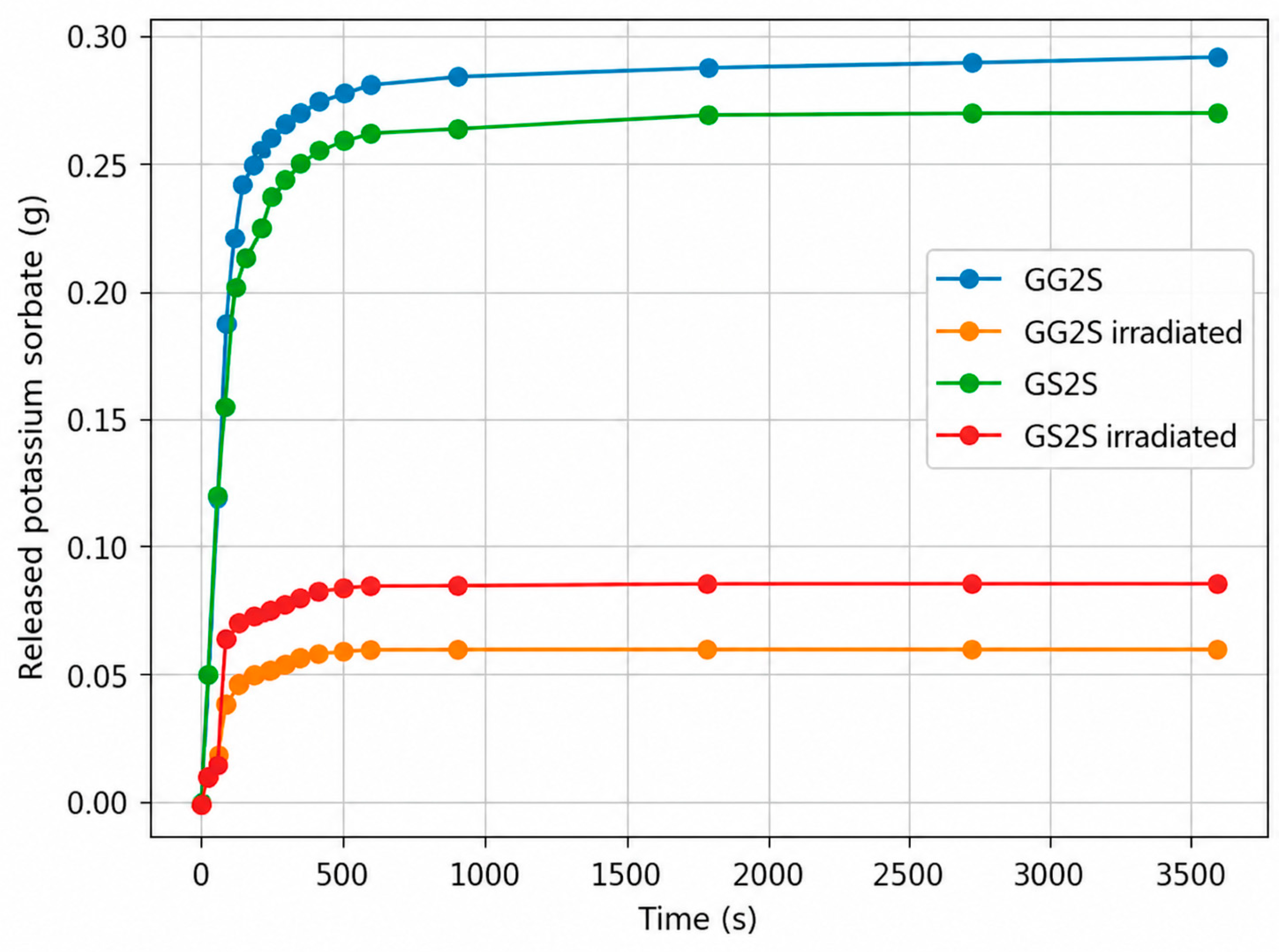
High-performance liquid chromatography (HPLC) was used to quantify the release of potassium sorbate from irradiated and non-irradiated films in order to evaluate whether differences in sorbate migration could explain the reduced antifungal activity observed in the halo inhibition assay (
Figure 7). HPLC is widely used for the separation and quantitative determination of compounds in complex matrices due to its high sensitivity and analytical resolution [
69]. Similar approaches have been applied to quantify sorbic acid in antimicrobial films and evaluate its migration into food systems [
43,
70].
Irradiated films released significantly lower amounts of potassium sorbate compared with the non-irradiated films for both formulations. In general, non-irradiated films released approximately five times more sorbate than irradiated films during the initial stages of the experiment.
The release profiles show a typical two-stage release behavior. An initial rapid release phase (burst release) was observed during the first minutes of the experiment, followed by a slower release stage approaching equilibrium (plateau). For non-irradiated films, sorbate release increased rapidly and began to stabilize after approximately 600 s, reaching equilibrium around 900 s. In contrast, irradiated films exhibited a slower release profile, with the reduction in sorbate release occurring around 150 s and equilibrium being reached at approximately 450 s. Quantitatively, GS2S films released approximately 68% more sorbate than GS2S irradiated films. Similarly, GG2S films released approximately 80% more sorbate than GG2S irradiated films.
These results indicate that gamma irradiation affected the diffusion behavior of potassium sorbate within the polymer matrix, reducing the release of the antimicrobial agent. When these results are considered together with the structural analyses performed in this study, a consistent interpretation emerges. FTIR analysis showed that the main functional groups associated with gelatin, starch, and gluten remained preserved after irradiation, indicating that no significant chemical modifications occurred in the polymer matrix. Likewise, SEM micrographs of both surface and cross-sections did not reveal major morphological differences between irradiated and non-irradiated films.
However, gamma irradiation may have induced subtle rearrangements within the polymer network, such as increased intermolecular interactions or partial crosslinking between polymer chains, which may reduce chain mobility and limit diffusion pathways for sorbate migration. In addition, the presence of glycerol as a plasticizer may influence the release behavior of the antimicrobial agent. In non-irradiated films, the plasticizing effect of glycerol likely increases polymer chain mobility and facilitates sorbate diffusion through the matrix. In contrast, irradiation may reduce this mobility by promoting stronger interactions between polymer chains, thereby restricting sorbate migration.
Among the different analyses performed to investigate the reduced antimicrobial effectiveness of irradiated films, the HPLC release analysis was the only method that provided quantitative evidence explaining this behavior. Although the release test was conducted in an aqueous medium, while the halo diffusion assay was performed in a solid culture medium with high water activity (aw ≈ 0.95), the results clearly demonstrated that irradiation significantly reduced potassium sorbate release from the films. Consequently, the reduced release of the antimicrobial compound likely explains the reduced fungal inhibition observed in the halo diffusion test.
Overall, these findings highlight an important trade-off in the development of irradiated active films. Although gamma irradiation may improve structural and mechanical properties of biopolymer-based films, it can also reduce the availability and release of the incorporated active compound. Therefore, the functionality of irradiated active packaging systems should not be evaluated only in terms of improved film properties, but also by considering the release behavior and antimicrobial effectiveness of the active agent. From an application perspective, these results indicate that optimizing release kinetics is essential to enhance antimicrobial performance. Strategies to improve sorbate release may include increasing plasticizer content to enhance chain mobility, adjusting polymer ratios to reduce matrix density, incorporating porogenic agents to create diffusion pathways, or designing multilayer systems to better control mass transfer. These approaches may help overcome the diffusion limitations observed in irradiated films and should be explored in future studies.





 ,
,