1. Introduction
Restorative dentistry has undergone a true revolution in recent decades, driven by technological advances that have redefined the way dental restorations are designed and manufactured. One of the most relevant milestones has been the incorporation of CAD/CAM (Computer-Aided Design/Computer-Aided Manufacturing) systems, which allow digital scanning of the oral cavity, the design of customized restorations in specialized software, and the precise fabrication of pieces through milling [
1].
In parallel, 3D printing has gained prominence as a versatile and efficient tool. Through additive manufacturing processes such as stereolithography (SLA) and digital light processing (DLP), it is possible to create three-dimensional structures layer by layer from liquid resins that polymerize under ultraviolet light [
2,
3]. This innovation has expanded production possibilities in both laboratory and clinical settings.
Both methods have demonstrated multiple benefits in daily practice. They have not only significantly reduced treatment time and the number of required visits but have also improved the accuracy of fit, decreased technical errors, and facilitated digital storage of working models [
4,
5]. CAD/CAM-milled restorations, in particular, offer consistent quality, improved predictability, and reduced risk of cross-contamination, although their implementation may represent a challenge for some professionals due to cost or the associated learning curve [
6].
The evolution of materials has been key to supporting these technological advances. In the 1930s, the first methacrylate resins were used as a base for dentures, cured by heat. Decades later, new formulations emerged, such as epoxy resins and subsequently the dimethacrylate BIS-GMA, introduced by Dr. Bowen in the 1960s, which remains one of the most widely used monomers today [
7].
Currently, the variety of available polymers allows processing by both milling and 3D printing. Materials such as acrylonitrile butadiene styrene (ABS), polylactic acid (PLA), polyamide (PA), polycarbonate (PC), and thermoset epoxy resins have proven useful for manufacturing everything from crowns to study models [
8]. The latter, in particular, require thermal or UV curing to reach their final properties, beginning with low viscosity that progressively increases during polymerization [
9].
Thanks to their versatility, these materials can accurately reproduce morphology, occlusion, and contact points of dental structures [
10]. In addition, the possibility of direct photopolymerization has simplified processes, avoiding steps such as firing or casting [
8].
Among the mechanical properties that determine the clinical success of a restoration, surface hardness and flexural strength stand out [
11]. The latter enables the material to withstand masticatory forces without fracturing and depends on both the chemical composition of the material and its processing and curing methods [
12,
13]. When this resistance is insufficient, fractures may occur, particularly in provisional restorations, compromising both the function and esthetics of the treatment [
12].
More recent hybrid materials, due to the incorporation of a resin matrix, have achieved flexural strength similar to that of natural teeth, making them suitable for areas subjected to functional loads [
14]. However, wear resistance remains an important clinical challenge, as it directly influences restoration longevity [
15]. Details such as polishing, for example, impact surface smoothness and wear resistance, thus affecting morphology over time [
16].
Provisional restorations, in addition to fulfilling an esthetic and functional role during treatment, allow the clinician to evaluate and adjust critical aspects such as margins, occlusion, and possible interferences before fabricating the definitive restoration [
17]. They may be used in procedures such as immediate implant loading, crown lengthening, or full-arch rehabilitations [
18]. Their clinical success depends, among other factors, on proper marginal adaptation, since poor sealing may promote plaque accumulation, cause gingival inflammation, or even lead to pulpal lesions [
19].
Comparative studies have shown that, when evaluating marginal and internal fit, crowns milled using CAD/CAM technology tend to exhibit superior physical properties compared with those produced by 3D printing [
20]. CAD/CAM-milled resins have overcome many of these limitations by reducing polymerization shrinkage and ensuring a more homogeneous and stable surface over time [
21]. This technological evolution has enabled progress toward metal-free restorations that are more esthetic and biocompatible, aligned with current patient demands [
22].
The objective of this study was to evaluate the mechanical properties—hardness and flexural strength—of printed resins compared with CAD/CAM-milled resins used in restorative dentistry.
The null hypothesis of this study was that there are no significant differences in mechanical properties between CAD/CAM-milled and 3D-printed resins.
2. Materials and Methods
2.1. Protocol and Registration
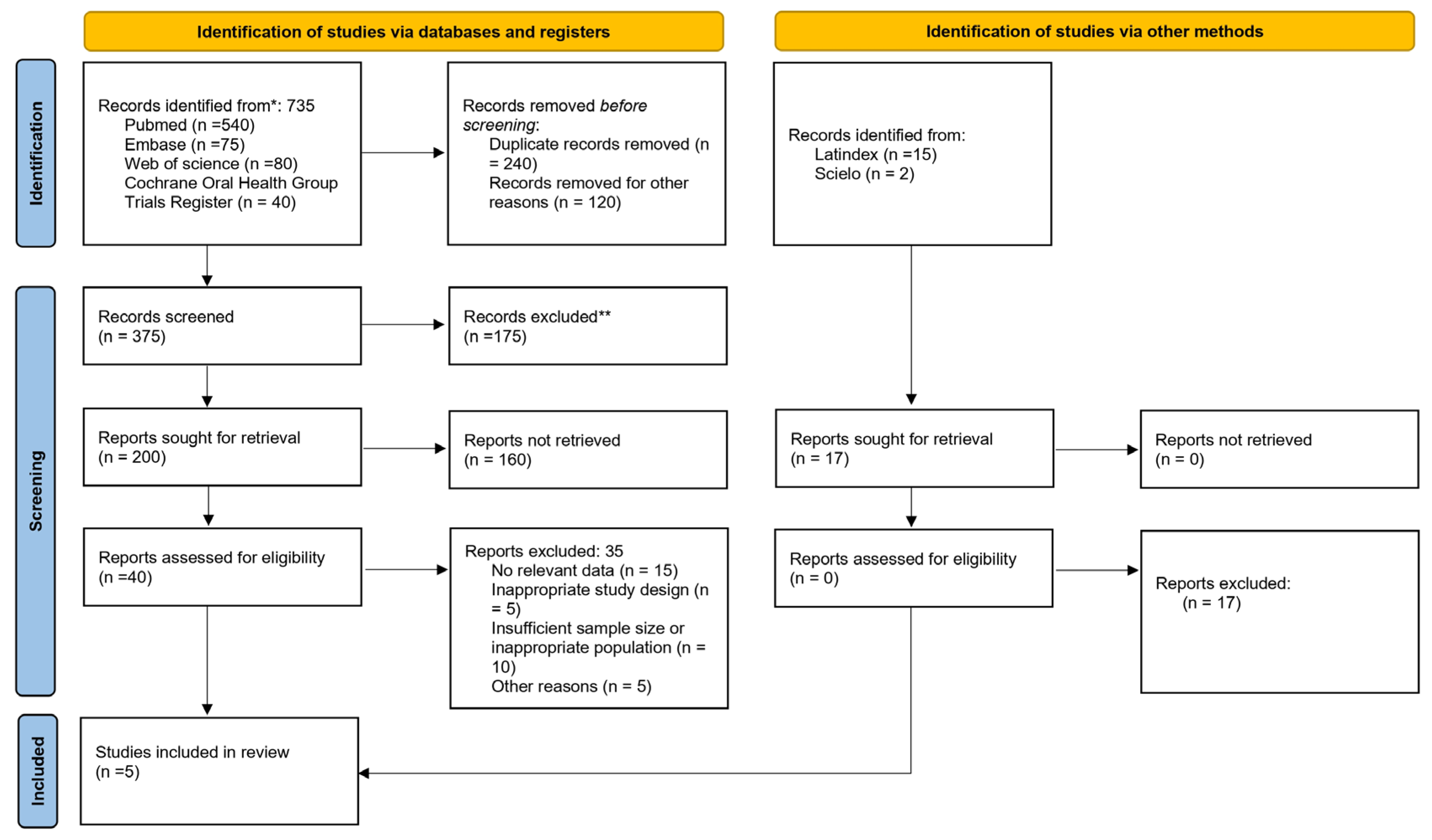
A systematic review was conducted following the principles defined in the Preferred Reporting Items for Systematic Review and Meta-Analysis Protocols (PRISMA 2020) (
Figure 1) [
23].
The review protocol was registered in the International Prospective Register of Systematic Reviews (PROSPERO; Centre for Reviews and Dissemination, University of York), under the identification CRD420251045547.
2.2. PICO Question
Do CAD/CAM-milled resins exhibit greater hardness and flexural strength than printed resins in provisional dental restorations?
P (Participants): Articles with in vitro studies using dental resins for provisional restorations were evaluated. I (Intervention): CAD/CAM-milled resins. C (Comparison): Resins obtained through 3D printing techniques (such as SLA or DLP). O (Outcome): The mechanical properties of flexural strength and hardness were compared.
2.3. Information Sources and Search Strategy
An electronic bibliographic search strategy was designed and implemented on 3 May 2025. This search included five main databases: PubMed (MEDLINE), Embase, Scopus, Web of Science, and LILACS (Latin American and Caribbean Health Sciences Literature). Additionally, a complementary search of gray literature was conducted using Google Scholar and ProQuest Dissertations & Theses Global. To organize references, manage the bibliography, and remove duplicates, Zotero software (version 6.0.37), developed by the Corporation for Digital Scholarship and the Roy Rosenzweig Center for History and New Media, George Mason University, Virginia, USA, was used. The selection of eligible articles was performed using Rayyan QCRI (Qatar Computing Research Institute, Doha, Qatar), which facilitated independent evaluation and screening by reviewers. The search strategy was based on the combination of keywords and specific MeSH terms adapted to each database, using the Boolean operators AND and OR. Keywords included terms related to the central topic, such as: “dental resins,” “CAD/CAM resins,” “printed resins,” “mechanical properties,” “hardness,” “flexural strength,” and “provisional restorations.” This process was complemented by a manual search in specialized peer-reviewed journals relevant to the field of restorative dentistry.
The full search strategy for PubMed (MEDLINE) was as follows:
(“dental resin” OR “resin materials” OR “CAD/CAM resin” OR “milled resin” OR “printed resin” OR “3D printed resin”) AND (“CAD/CAM” OR “computer-aided design” OR “computer-aided manufacturing” OR “milling”) AND (“3D printing” OR “additive manufacturing” OR “stereolithography” OR “digital light processing”) AND (“mechanical properties” OR “flexural strength” OR “hardness”). No restrictions were applied regarding publication year. Only studies published in English were included. When available, filters were applied to identify in vitro studies. The search strategy was adapted for each database using appropriate controlled vocabulary (e.g., MeSH terms) and syntax.
2.4. Inclusion and Exclusion Criteria
The exclusion criteria were as follows: (1) Studies lacking separate quantitative data on the mechanical properties of CAD/CAM resins; (2) studies omitting mention/specification of the types of thermal treatments applied to CAD/CAM; (3) studies involving cemented resin restorations; (4) studies focusing on other conditions, such as cavity preparation designs, surface analysis with tribochemical treatments, and analysis of physical properties; (5) studies that did not include resin materials; (6) studies with duplicated data from another included study; (7) reviews, letters, books, conference proceedings, case–control studies, case reports, case series, opinion articles, technical articles, posters, and guidelines; and full text not available, even after attempting to contact the corresponding authors (three attempts over a period of three weeks).
2.5. Study Selection Process and Data Extraction
Two investigators (CC and AO) independently performed data extraction using a customized extraction sheet specifically designed for this review. In case of discrepancies between the two reviewers, these were resolved by a third investigator (BVR), who acted as a blinded evaluator unaware of the study hypothesis. For each included study, the following data were recorded: first author, year of publication, country of origin, study type (in vitro), application (denture base or provisional crown), type of resin evaluated (CAD/CAM or printed), specific CAD/CAM and 3D-printed materials used, processing technology (milling or SLA/DLP 3D printing), sample size per group, mechanical properties analyzed (flexural strength and/or hardness), artificial aging protocols (primarily thermocycling), testing method employed (e.g., three-point bending test), and the main quantitative results reported. The main characteristics of the included studies are summarized in
Table 1.
The selection process was conducted in two phases. In the first phase, the titles and abstracts of all identified records were assessed to exclude those clearly irrelevant according to the predefined eligibility criteria. In the second phase, the full texts of potentially eligible studies were reviewed. In cases where any data considered essential for the review were unavailable or unclear, attempts were made to contact the corresponding author by email up to three times, with a one-week interval between each attempt, in order to obtain clarification or additional information.
Although dual independent screening and data extraction were performed, inter-rater agreement statistics (e.g., Cohen’s kappa) could not be calculated retrospectively due to the unavailability of individual reviewer decision records.
To improve the transparency and comparability of the included studies, a detailed summary of methodological and material-related variables is presented in
Table 2.
2.6. Risk of Bias (RoB) Assessment
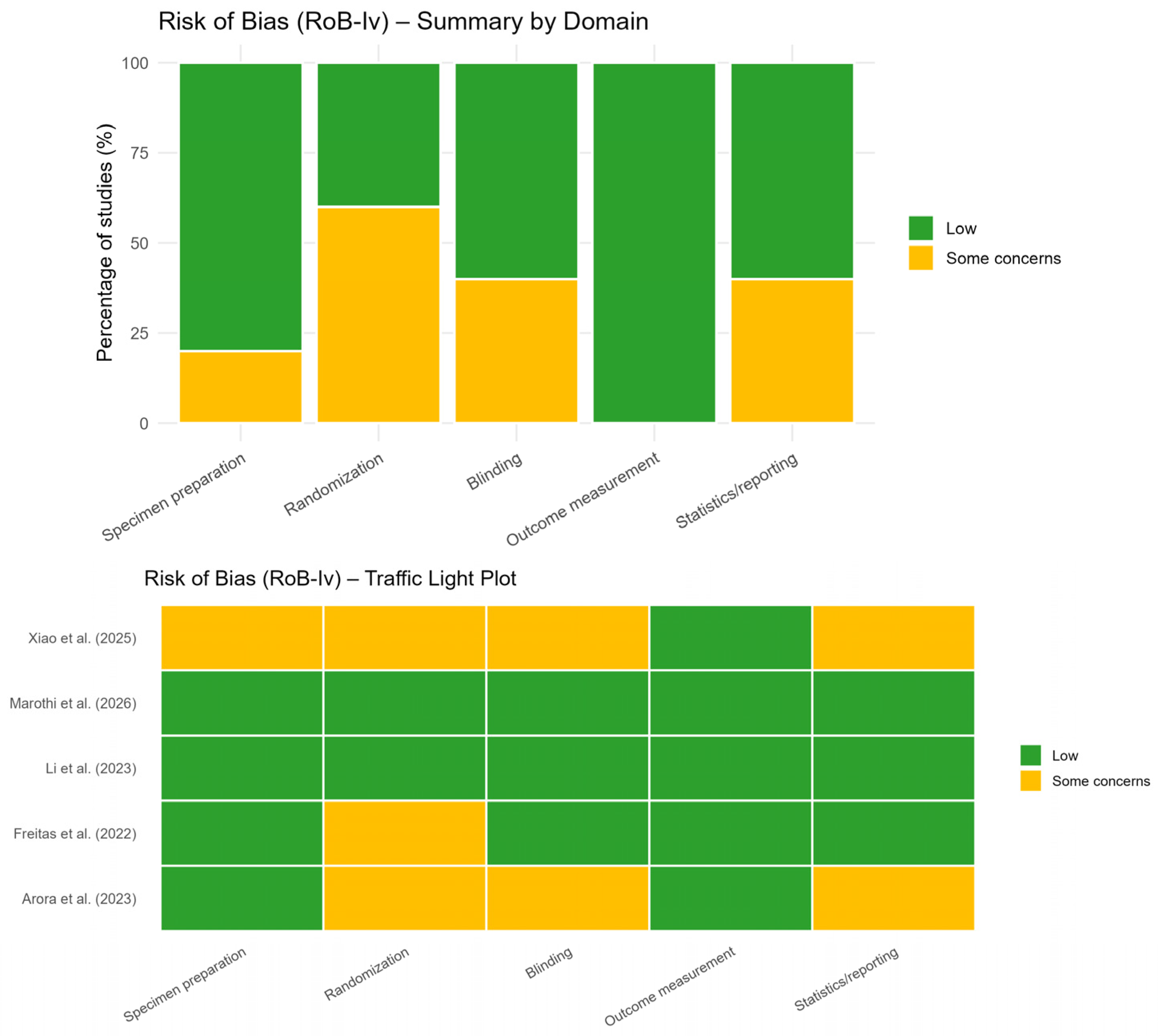
The methodological quality of the included studies was independently evaluated by two reviewers using the Risk of Bias tool for In Vitro Studies (RoB-Iv). The following domains were assessed: specimen preparation, randomization, blinding, outcome measurement, and statistical analysis/reporting. Each domain was classified as “low risk,” “some concerns,” or “high risk” of bias. Any disagreements were resolved through discussion until a consensus was reached. The results were presented graphically using traffic light plots and summary bar charts to provide a comprehensive overview of the risk of bias across studies and domains.
2.7. Statistical Analysis
2.7.1. Qualitative Analysis
A qualitative synthesis was conducted based on the extracted variables (
Table 1). All included studies were in vitro investigations evaluating denture base or provisional crown materials fabricated through CAD/CAM milling or SLA/DLP 3D printing. Flexural strength was the predominant outcome, while hardness was assessed in a subset of studies. Artificial aging through thermocycling was reported in only one study. Overall, the extracted data revealed a consistent methodological focus on comparative mechanical performance between subtractive and additive manufacturing techniques prior to quantitative meta-analytic synthesis.
2.7.2. Meta-Analysis
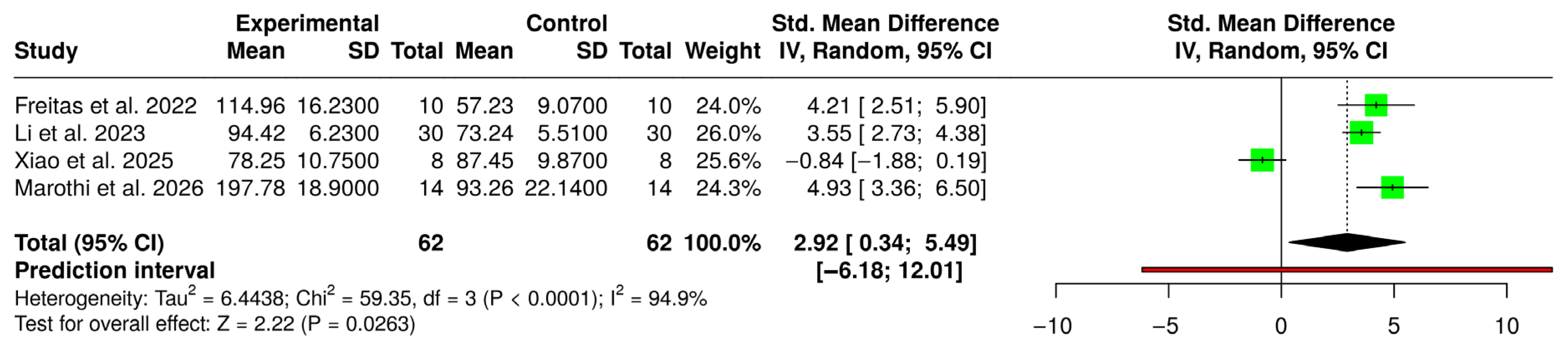
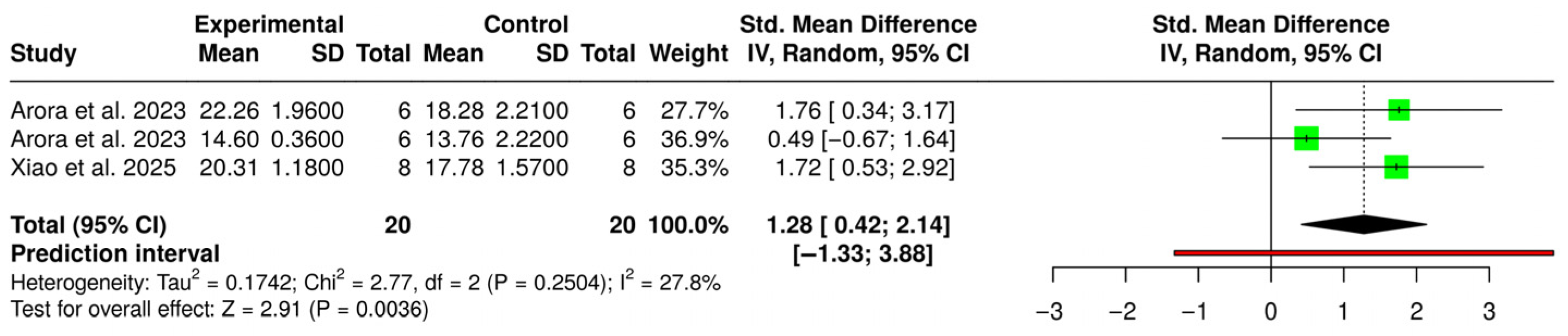
Quantitative synthesis was performed when at least three studies reported comparable outcomes. Separate meta-analyses were conducted for hardness and flexural strength. Hardness values across studies were obtained using different measurement scales, including Vickers hardness (VHN), Shore hardness, and Barcol hardness, which differ in indentation principles, load application, and scale units. Therefore, the standardized mean difference (SMD) with 95% confidence intervals (CI) was used as the summary effect measure to allow comparison across studies using different measurement scales and units. A random-effects model based on the DerSimonian and Laird inverse-variance method was applied to account for anticipated methodological and material heterogeneity, including differences in resin composition, manufacturing platforms, printing orientation, and post-curing protocols.
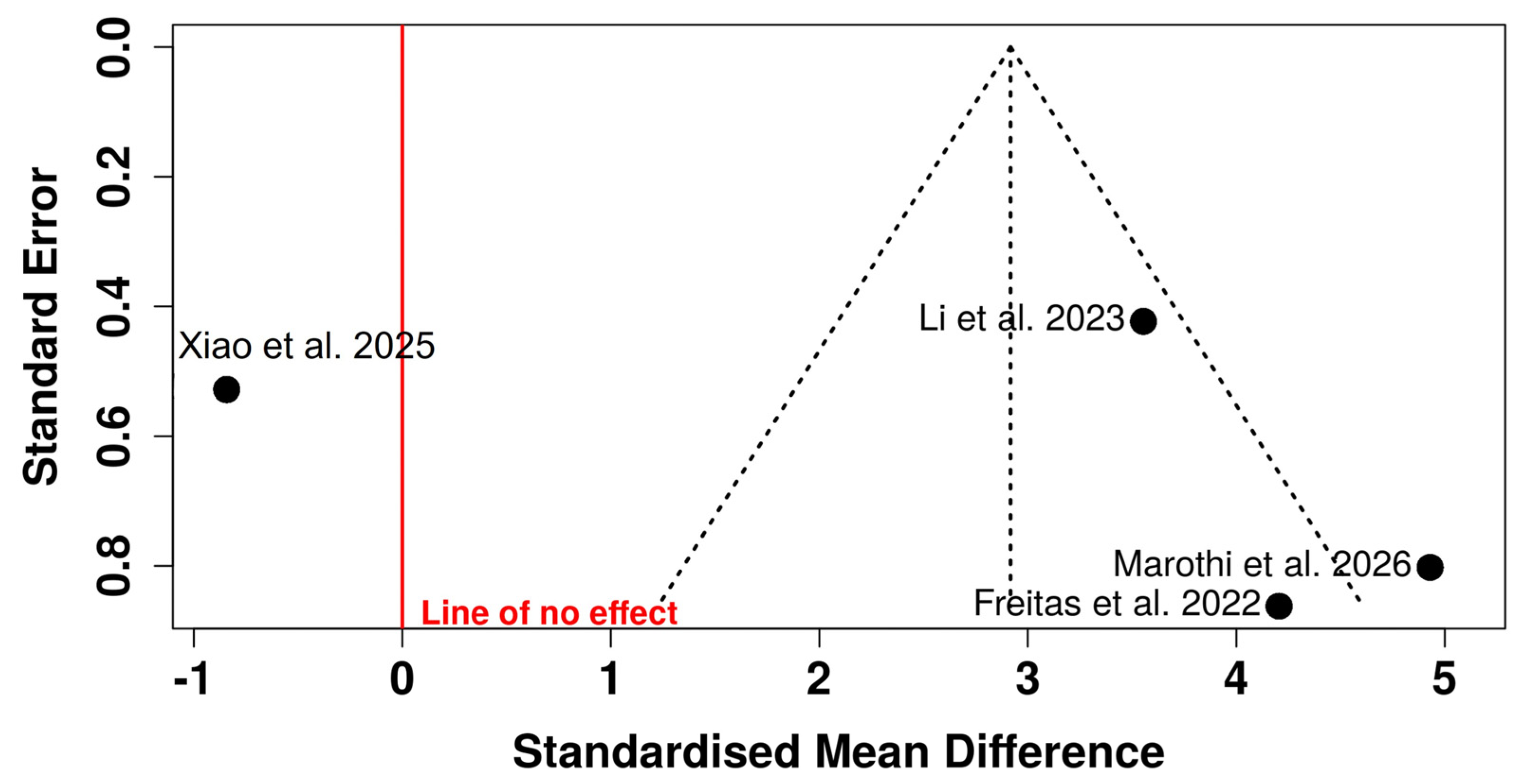
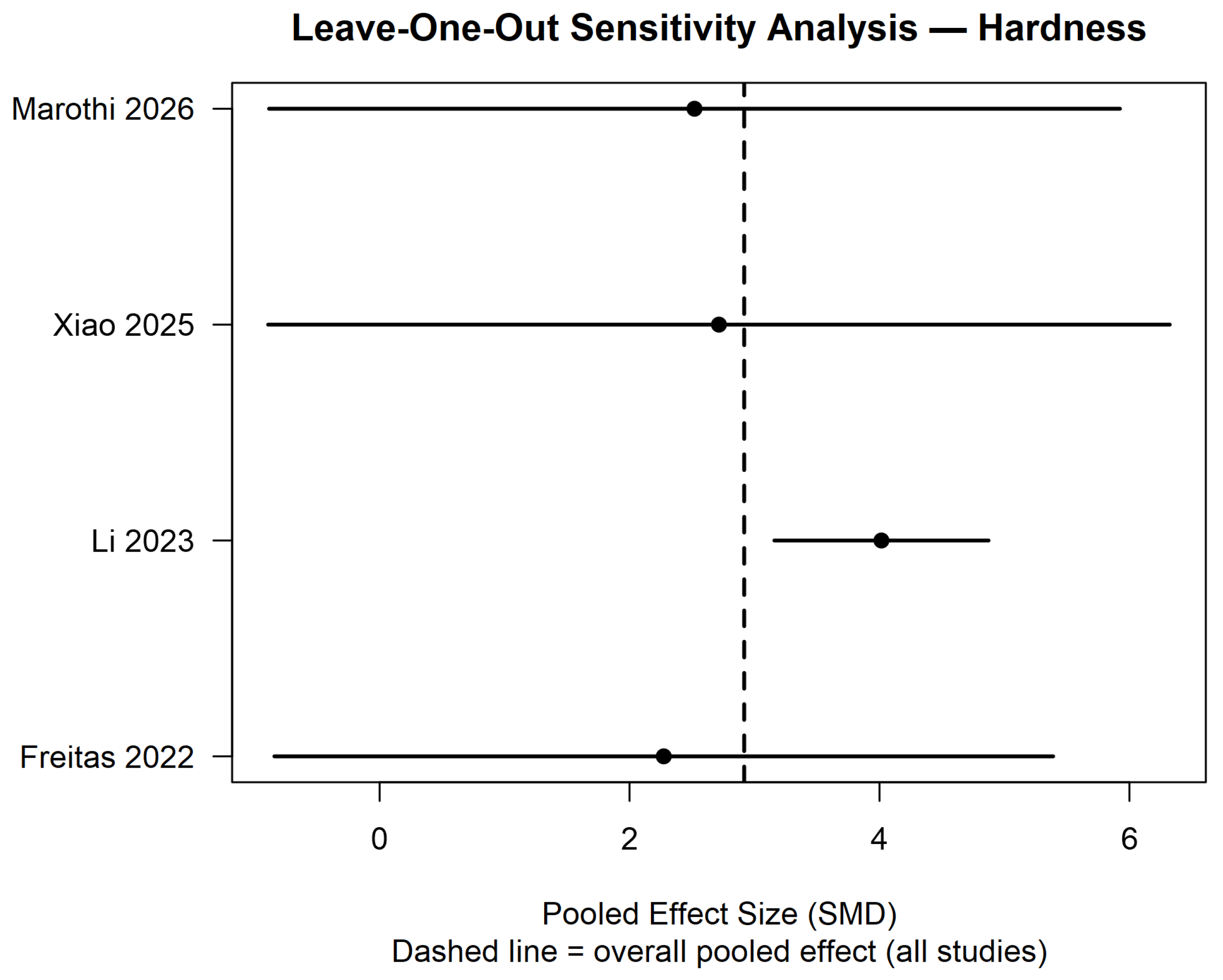
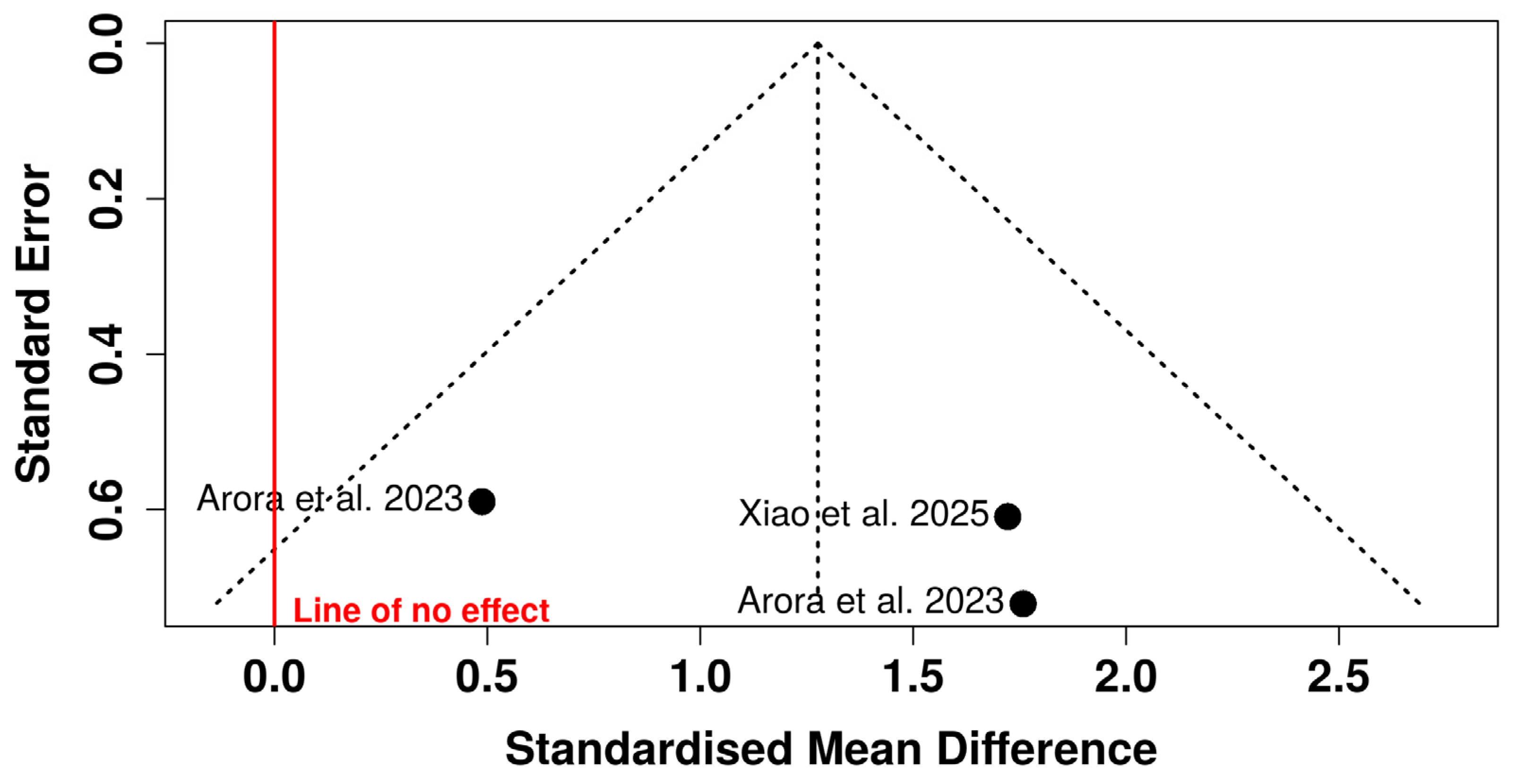
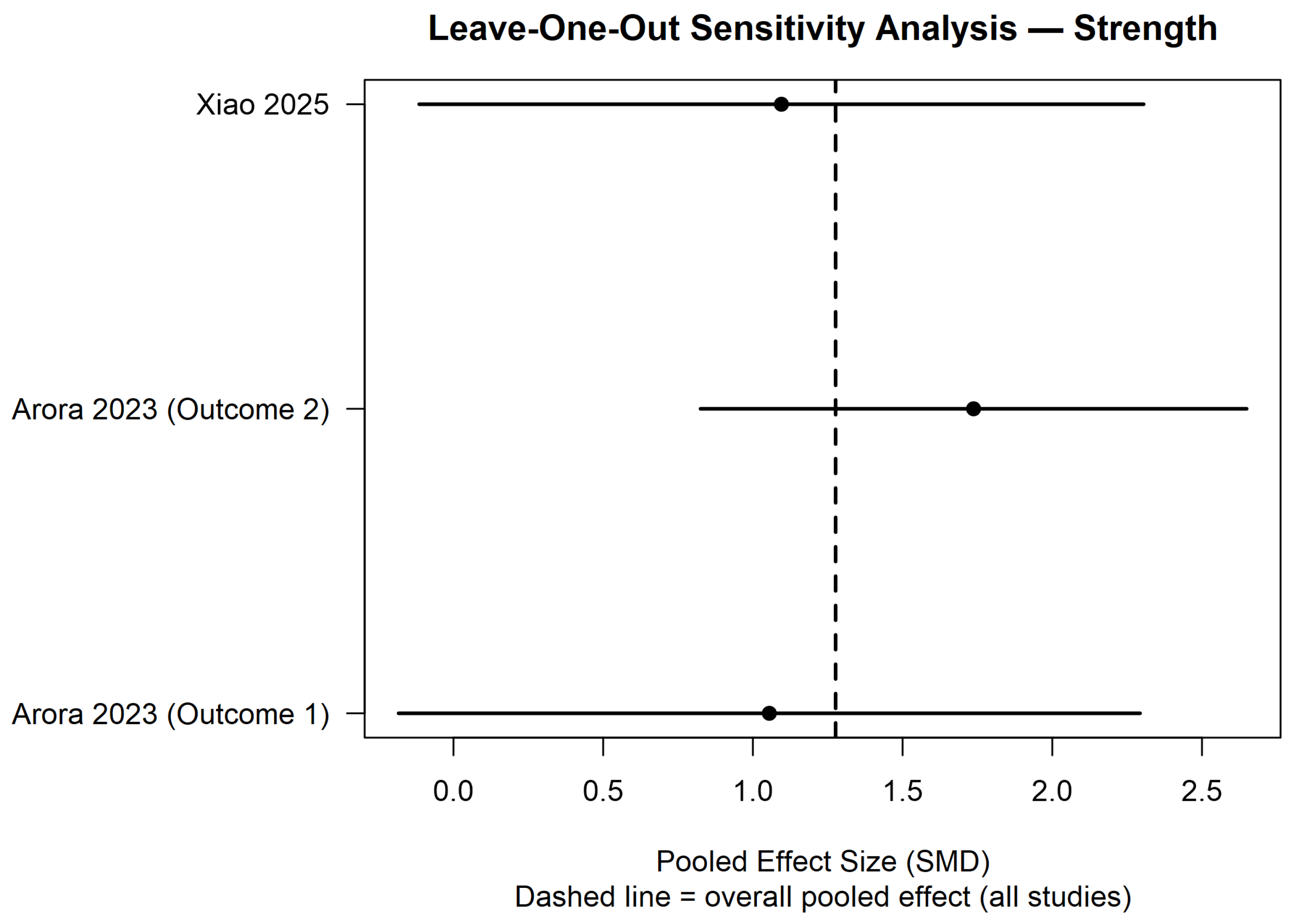
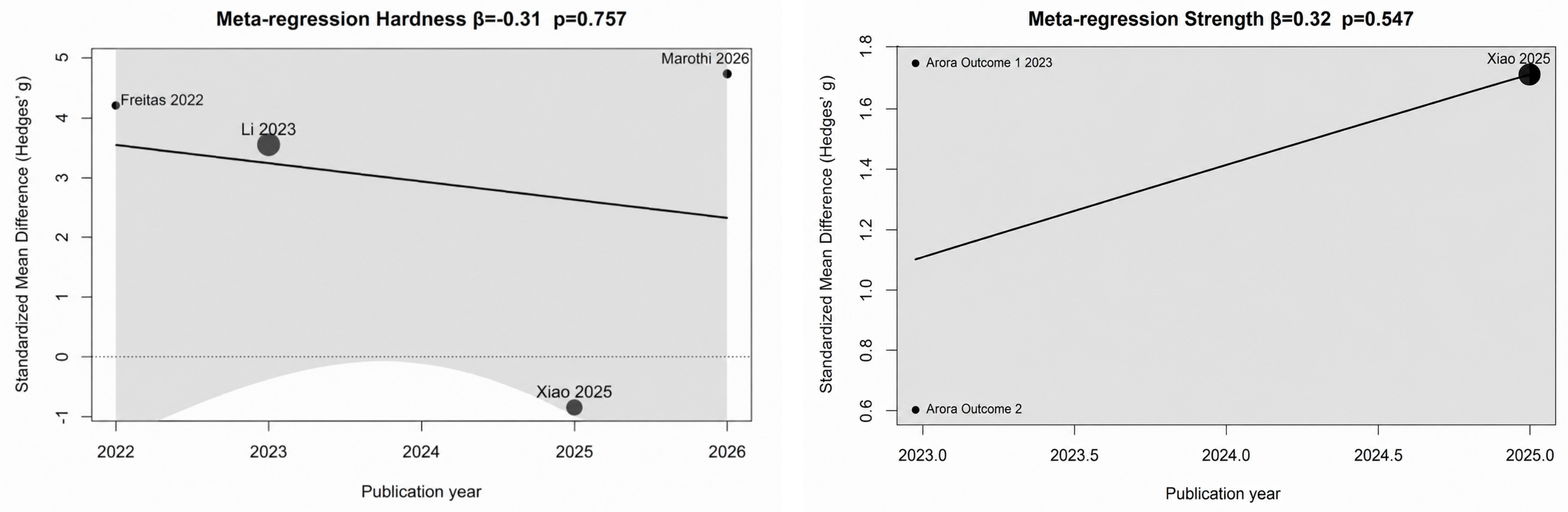
Statistical heterogeneity was assessed using Cochran’s Q test, the I2 statistic, and Tau2 (τ2). I2 values were interpreted as low (<25%), moderate (25–50%), or high (>50%) heterogeneity. Publication bias was evaluated through visual inspection of funnel plots and, when appropriate, by Egger’s regression test, with p < 0.05 considered indicative of potential asymmetry. Given the limited number of included studies per outcome, interpretation of funnel plot asymmetry was performed cautiously. Robustness of the pooled estimates was assessed using leave-one-out sensitivity analysis in which the meta-analysis was repeated sequentially, excluding one study at a time to determine the influence of individual studies on the overall effect size and heterogeneity. Additionally, meta-regression analysis was conducted to explore the potential influence of publication year on effect size. All statistical analyses were performed using Review Manager (RevMan 5.4, The Cochrane Collaboration) and R software version 4.3.2 (R Foundation for Statistical Computing, Vienna, Austria) with the meta package.
Subgroup analyses according to printing technology (SLA vs. DLP), hardness testing method (e.g., Vickers, Shore, and Barcol), and artificial aging conditions (thermocycling) were initially planned to explore potential sources of heterogeneity. However, due to the limited number of included studies and insufficient reporting across studies, these subgroup analyses were not feasible.
4. Discussion
The present systematic review with meta-analysis comparatively evaluated the mechanical performance of dental resins manufactured through milled CAD/CAM technology and additive manufacturing, with particular emphasis on their application in digital restorative dentistry. The findings demonstrated that milled resins exhibit significantly higher hardness and flexural strength values compared with 3D-printed resins, suggesting that the manufacturing method directly influences the final mechanical stability of these materials. The included experimental studies consistently reported greater structural stability in milled materials. De Freitas et al. [
24] observed that CAD/CAM materials present greater homogeneity and mechanical resistance than printed systems, which showed increased susceptibility to degradation following artificial aging. Similarly, Xiao et al. [
26] demonstrated that thermocycling has a greater impact on printed polymers, progressively reducing their mechanical properties and suggesting increased vulnerability to hydrolytic degradation.
These differences may be explained by the microstructure resulting from the polymerization process. CAD/CAM blocks are industrially polymerized under controlled pressure and temperature conditions, promoting polymer networks with higher crosslinking density and lower residual monomer content. Vincze et al. [
29] reported that such industrial polymerization produces materials with more consistent and predictable mechanical properties compared with those obtained through additive manufacturing techniques. In contrast, printed resins rely on layer-by-layer photopolymerization processes, in which post-curing efficiency and manufacturing parameters directly influence final structural integrity.
The degree of conversion and post-polymerization protocols represent critical factors affecting the mechanical performance of printed resins. Aktug Karademir et al. [
30] demonstrated that optimized post-curing significantly increases microhardness and structural stability, whereas Qiu et al. [
31] showed that wavelength, light intensity, and exposure time directly influence flexural strength and degree of conversion. These technological variables help explain the greater mechanical variability observed in printed materials and contribute to the heterogeneity detected in hardness analysis.
Printing orientation constitutes another relevant factor. Al-Dulaijan et al. [
32] reported significant variations in flexural strength depending on printing direction and post-curing duration, which has been attributed to the inherent anisotropy of additive manufacturing processes. Subsequent investigations have indicated that interlayer interfaces generated during printing may act as stress concentration zones, facilitating crack propagation under functional loading [
33,
34].
The findings of the present meta-analysis are consistent with recent evidence. Azab et al. [
35], in a systematic review with meta-analysis, reported higher flexural strength values in milled materials compared with printed ones, although their analysis primarily focused on denture base materials. Within the restorative context, Tayeb et al. [
36] and Park et al. [
37] have also described greater mechanical stability in milled materials intended for crowns and definitive restorations, supporting the trend observed in the present study.
Additional physicochemical factors may also influence long-term mechanical performance. Water absorption and hydrolytic degradation have been shown to more severely affect polymers with lower crosslinking density, promoting organic matrix plasticization and progressive reduction in mechanical properties [
38]. In contrast, highly polymerized CAD/CAM materials demonstrate greater dimensional stability and resistance to degradation [
39], which may explain their more consistent behavior under simulated intraoral conditions.
From a laboratory-based perspective, these findings suggest that CAD/CAM-milled resins may exhibit greater mechanical predictability under controlled in vitro conditions. Printed resins, in turn, may demonstrate comparatively lower mechanical performance in similar experimental settings. However, these results should be interpreted with caution, as all included studies were conducted under in vitro conditions that do not fully replicate the complex oral environment. Therefore, direct extrapolation to clinical indications remains limited. Nevertheless, the development of novel photopolymerizable formulations and improvements in printing and post-curing protocols continue to enhance the mechanical properties of these materials [
40,
41], potentially reducing the gap currently observed between both technologies.
The high heterogeneity identified in hardness analysis likely reflects differences in composition, filler content, printing technologies, and post-curing protocols among the included studies. Surface hardness is particularly sensitive to the degree of conversion and final polymerization conditions, which explains the observed dispersion. Conversely, the lower heterogeneity observed in flexural strength suggests that this property primarily depends on the overall structural integrity of the material.
Among the limitations of the present study are the limited number of available investigations, the predominance of in vitro studies, and the variability in experimental protocols [
42]. The absence of longitudinal clinical studies restricts direct extrapolation to real intraoral conditions, particularly regarding fatigue behavior and long-term mechanical stability.
Overall, the available evidence indicates that the manufacturing method remains a key determinant of the mechanical performance of resins used in digital dentistry. Although milled CAD/CAM resins currently demonstrate more consistent and predictable properties, ongoing optimization of photopolymerizable systems and additive manufacturing processes may progressively reduce the mechanical differences observed between milled and printed materials.
From a polymer science perspective, the apparently higher mechanical performance of CAD/CAM-milled resins under in vitro conditions may be attributed to fundamental differences in polymer network structure and processing conditions. Industrially polymerized CAD/CAM blocks are manufactured under high pressure and temperature, promoting a higher cross-linking density and a more homogeneous polymer network with reduced porosity. This results in improved load distribution and enhanced resistance to crack initiation and propagation. In contrast, 3D-printed resins undergo layer-by-layer photopolymerization, which may lead to incomplete polymerization, lower cross-linking density, and higher residual monomer content, particularly when post-curing protocols are suboptimal.
Additionally, the additive manufacturing process inherently introduces interfacial boundaries between layers, which can act as stress concentration sites and weaken interlayer bonding. These interfaces may facilitate crack propagation under mechanical loading, contributing to comparatively lower mechanical performance. Variations in light exposure, curing depth, and polymerization kinetics across layers may further increase structural anisotropy in printed materials. Collectively, these polymer-level differences provide a mechanistic explanation for the observed variability in mechanical performance between 3D-printed and CAD/CAM-milled resins.
The substantial heterogeneity observed in the hardness meta-analysis may be attributed to multiple methodological and material-related factors. Variations in resin composition, filler content, and degree of conversion across different commercial systems likely contributed to inconsistencies in mechanical performance. In addition, differences in additive manufacturing parameters, including printing orientation, layer thickness, and post-curing protocols, may have further influenced the results. The inclusion of studies evaluating both denture base materials and provisional crowns introduces additional variability due to differences in functional requirements and testing conditions. Furthermore, the relatively small sample sizes and limited number of included studies may have amplified the observed heterogeneity. Variability in testing methodologies may also be related to differences in adherence to international standards, such as ISO 20795-1, ISO 10477, and ISO 4049, which could further affect the comparability of results across studies. These factors should be carefully considered when interpreting the pooled estimates.
This study presents several important limitations that should be considered when interpreting the findings. First, all included studies were conducted under in vitro conditions, which do not fully replicate the complex mechanical, thermal, and biological environment of the oral cavity. Therefore, the direct clinical applicability of these results is limited. Second, the number of included studies was relatively small, which may affect the robustness and generalizability of the meta-analytic estimates. Third, substantial methodological heterogeneity was observed, particularly for hardness outcomes, likely due to differences in resin composition, manufacturing techniques, printing parameters, and post-curing protocols. Fourth, variability in testing methodologies—including differences in specimen preparation, loading conditions, and hardness testing parameters—may further contribute to inconsistencies across studies. Finally, the absence of longitudinal clinical studies prevents the evaluation of long-term performance under real intraoral conditions.
Despite these limitations, the available evidence provides useful insights into the mechanical behavior of resins fabricated using different digital technologies. However, the findings should be interpreted cautiously and within the context of laboratory-based conditions.
Future research should focus on well-designed standardized in vitro protocols to reduce methodological variability and improve comparability across studies. In addition, longitudinal clinical studies are needed to evaluate the long-term mechanical performance and survival of CAD/CAM-milled and 3D-printed resins under real intraoral conditions. Further investigations should also explore the influence of printing parameters, post-curing protocols, and material composition on mechanical properties, as well as the development of novel photopolymerizable materials with enhanced structural stability.
From a clinical perspective, it is important to recognize that the current findings are based on materials and technologies available at the time of the included studies. Given the rapid evolution of 3D printing technologies and the continuous development of new photopolymerizable resin formulations, future materials may exhibit improved mechanical performance that differs from the results observed in the present analysis. Therefore, the current evidence should be interpreted within the context of existing materials, and caution should be exercised when extrapolating these findings to next-generation 3D-printed resins.
Advanced microstructural characterization techniques, such as scanning electron microscopy (SEM) or transmission electron microscopy (TEM), may provide valuable insights into the internal architecture of CAD/CAM-milled and 3D-printed resins. These approaches can reveal differences in layer interfaces, porosity, and fracture patterns, thereby offering direct visual evidence to support the observed mechanical performance disparities. Although such analyses were beyond the scope of the present study, their integration into future research could significantly enhance the understanding of structure–property relationships in these materials.
It should be noted that, although the present review focuses on provisional restorations, a substantial proportion of the included studies evaluated denture base materials. While both applications involve polymer-based systems and share similar manufacturing technologies, their clinical indications differ. Therefore, caution is warranted when extrapolating these findings specifically to provisional crown performance. This represents an inherent limitation of the currently available evidence and highlights the need for more targeted studies focusing exclusively on provisional restorative materials.
Additionally, inter-rater agreement statistics (e.g., Cohen’s kappa) were not calculated, which limits the quantitative assessment of reviewer consistency during study selection and data extraction and represents a methodological limitation of this review.





 ,
,