1. Introduction
Stone mastic asphalt (SMA) is characterized by its stone-on-stone contact that is produced by the coarse aggregate structure, which helps sustain load and reduce rutting [
1,
2]. SMA has gained recognition all over the world for use in heavily trafficked areas [
2]. Stabilizing additives and recycled textile fibers are used to reduce the binder drain and improve the resistance against the rutting and cracking of SMA mixtures [
3,
4,
5]. The performance of SMA is better than that of HMA, and the higher values of dynamic modulus are reported for SMA mixtures as compared to the HMA mixtures [
6]. SMA has low noise with satisfactory skid resistance [
7].
Engineered bituminous composites play a critical role in pavement engineering by improving the material properties to meet increased traffic loading demands and climatic variability. Bitumen governs the aging behavior and viscoelastic response of asphalt concrete mixtures, despite being used in small proportions [
8]. Its inherent temperature- and time-dependent behavior makes engineering interventions essential to mitigate cracking at low temperatures and rutting at high temperatures [
9]. Consequently, engineered modifications to bitumen incorporating recycled materials, crumb rubber (CR) additives, and polymers have been widely implemented to enhance the durability and elasticity of asphalt pavements across a wide range of temperatures [
10,
11,
12]. Such engineered composites are considered effective solutions for improving pavement performance, extending service life, and addressing sustainability challenges related to material costs and environmental impacts [
13,
14,
15].
CR is an elastomer produced from waste tires that have completed their service life, so its usage in SMA warrants a reduction in the dumping of this waste, which pollutes the environment [
16]. The use of CR as a modifier helps address the Sustainable Development Goals by using waste material. Research shows that CR increases the stiffness, temperature stability, and pavement service life, reduces the desired thickness of pavement, improves the behavior of asphalt against rutting and reflective cracking, reduces noise pollution, and improves the skid resistance of the pavement [
7,
16,
17,
18,
19].
Kök et al. [
20] studied CR-modified (CRM) SMA mixtures and tested them for stiffness, permanent deformation, fatigue, and moisture susceptibility. CRM SMA mixtures performed better compared to control mixtures containing an unmodified binder. Rutting and fatigue resistance, along with moisture susceptibility, was investigated for CRM SMA by Xie and Shen. Improved rutting resistance was observed at 10% crumb rubber content under the specific test conditions [
21]. Mashaan et al. [
22] studied the stiffness and fatigue resistance of CRM SMA mixtures to reduce construction costs associated with expensive polymers. The modified SMA samples showed a higher stiffness modulus (3996 MPa) than neat mixtures (1370 MPa) without rubber at 5 °C. The fatigue life of modified SMA samples was significantly higher than that of non-modified samples. Tai Nguyen and Nhan Tran [
23] investigated the effect of curing time and CR content on the mechanical properties, especially the rutting performance of CRM asphalt concrete and SMA mixtures. The results revealed that adding 1.5 to 2% CR by weight of the mixture and keeping the curing time at 0 to 5 h (the longer the better at high temperatures) results in optimal performance of both mixtures regarding rutting resistance and other mechanical properties. CR was incorporated into SMA to test its potential for use in the heavy traffic and hot temperatures (20 °C to 30 °C) of Angola. It was also investigated whether adding rubber to the mix would waive the requirement for cellulose fibers, as they are not locally available. The mixture’s susceptibility to moisture was tested, and its resistance to fatigue and pavement deformation was evaluated. It was concluded that rubberized SMA performed well at high temperatures and provided effective, durable pavements without the need to import any additional material [
24]. Noura et al. [
25] utilized truck tire rubber as a modifier in SMA using wet and dry processes. The mixtures modified by the wet process exhibited higher elasticity, as their phase angle values were lower than those of SMA mixtures prepared with the dry process. The addition of CR to SMA results in improved fatigue life, better aging resistance, and reduced temperature susceptibility. Han et al. measured the short-term stress relaxation behavior of the CRM asphalt binder under a wet process within a linear viscoelastic region. The study results indicated that the maximum critical strain of CRM asphalt was approximately 1% at 10–15 °C [
26]. Gardezi and Hussain used scrap tire rubber in SMA and replaced cellulose fibers with munjin fiber to test the performance of SMA-25. Resistance to moisture susceptibility improved with the addition of CR to SMA [
27]. Ameli et al. [
28] tested the performance of CRM SMA using resilient modulus, dynamic creep, four-point beam fatigue, ITS, and the wheel tracker test. The tests concluded that CR enhanced the properties of the SMA mixture with an increased resilient modulus and ITS. The resistance offered to fatigue and rutting also improved with the inclusion of CR. A study by Jebur et al. [
29] evaluated the performance of SMA modified with CR (5% to 20%) as a binder modifier and cellulose fiber pellets (CFP) as a stabilizing agent. The drain down test, resilient modulus, tensile strength ratio, and fatigue life were used as performance indicators. The authors concluded that adding 15% CR and 0.4% CFP yields the optimal performance of the modified SMA samples across all performance indicators. Zakerzadeh et al. [
30] recently conducted a detailed review study investigating the effect of using waste tire rubber in SMA. The authors identified and discussed research gaps related to aggregate gradation, processing temperature, binder content, compaction technique, and the CR grain-size distribution and its concentration. The authors also highlighted that key performance indicators considered in the CRM SMA literature include moisture susceptibility, binder drain down, fatigue cracking, and permanent deformation (rutting), with dynamic modulus as a performance indicator missing. Calabi-Floody et al. [
31] validate the feasibility of a waste tire textile fiber (WTTF) additive as a sustainable substitute for cellulose in SMA mixtures. The WTTF-modified SMA demonstrated superior mechanical performance, including higher fatigue durability and improved moisture resistance.
Some recent studies have used machine learning models to predict the dynamic modulus of asphalt concrete mixtures. For instance, Ali et al. [
32] used an eXtreme Gradient Boosting (XGBoost) machine learning model to predict the dynamic modulus of HMA samples. The authors considered testing conditions, the mix’s volumetric properties, and gradation type as input parameters to the model. The results were also compared with the other well-known regression and machine learning (ML) models used to predict the dynamic modulus. The results indicated that the XGBoost model outperforms the other models. The authors suggested using deep neural networks to more accurately predict the dynamic modulus. Moussa and Owais [
33] conducted a study to predict the dynamic modulus of HMA using deep residual neural networks (DRNNs). The model outputs were compared with those of other commonly employed dynamic modulus prediction models: the Hirsch and Witczak (1-37A and 1-40D) models. The results revealed that DRNNs outperformed the other models, and the testing temperature and the binder’s stiffness characteristics were the most significant factors influencing the dynamic modulus. Hussain et al. [
34] developed an artificial neural network (ANN) model to predict the behavior of differential phase angle for wearing versus base course mixes using laboratory test data on 23 AC mixtures. The AC mixtures, comprising binders with different penetration grades, mix types, and mix proportions, were used to test the phase angle at different temperatures and loading frequencies. The results of the developed ANN model were also compared with other linear and non-linear models, and the ANN outperformed in accurately predicting the phase angle.
Existing studies typically examine the effect of fixed CR percentages without assessing the influence of varying modifier content. For instance, Morea et al. [
35] evaluated the effects of a fixed percentage of CR (22%) for the investigation of the dynamic modulus of high-viscosity CRM SMA without fibers, through the ITS method. Similarly, Xie and Shen [
21] investigated the dynamic modulus of CRM SMA with a 10% modifier content and an SMA 12.5 gradation, considering only three temperature levels (4, 20, and 45 °C) and four frequency bands (0.01, 0.1, 1.0, and 10 Hz). The present study fills this research gap by focusing on SMA 19 gradation mixtures and evaluating their dynamic modulus behavior under an expanded combination of temperatures (4.4 °C, 21.1 °C, 37.8 °C, and 54.4 °C) and loading frequencies (0.1, 0.5, 1, 5, 10, and 25 Hz) using the Asphalt Mixture Performance Tester (AMPT). Thus, it better simulates field conditions and makes a significant contribution to the existing literature.
Four major conclusions can be drawn from the existing literature. Firstly, several studies have focused on evaluating the rutting resistance and fatigue performance of HMA and SMA mixtures modified with CR. Adding CR in specific proportions (5% to 20%) to both sample types enhanced fatigue life and resistance to deformation, making them more resilient across various temperatures, frequencies, and loading conditions. Secondly, some studies employed statistical and machine learning methods to predict the dynamic modulus of conventional HMA (without adding CR). Thirdly, based on the literature reviewed, limited research has evaluated and predicted the dynamic modulus (|E|) of CRM SMA mixtures using conventional statistical or ML models. Fourthly, existing studies have largely limited their investigations to fixed CR contents, narrower temperature ranges, and coarse gradation types such as SMA 12.5. The lack of research involving a broader range of CR percentages, more comprehensive temperature and frequency conditions, and finer gradation types, such as SMA 19, limits the applicability of earlier findings. This study overcomes these limitations by evaluating multiple CR contents (0–12%), using SMA 19 gradation, and simulating realistic field conditions through an extended range of testing temperatures and loading frequencies. More specifically, the study investigates the effect of varying CR content on the dynamic modulus |E*| of CRM SMA to determine the optimal CR modification percentage. The study also employed an ANN model to predict the dynamic modulus |E*| of CRM SMA, a task not previously undertaken.
2. Materials and Methods
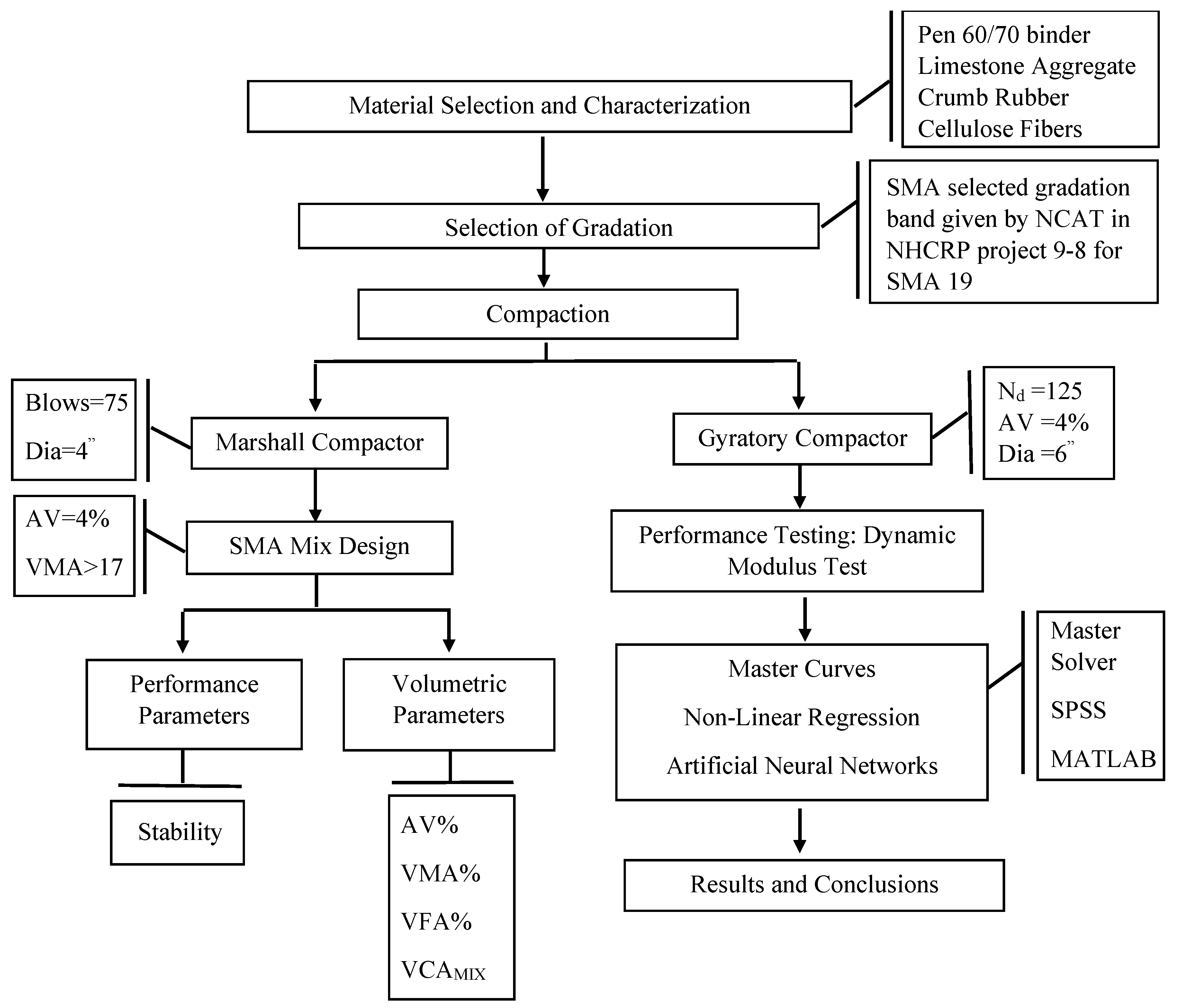
The methodology adopted for the research, including material selection and characterization, is shown in
Figure 1. In the first step, prerequisite data for the dynamic modulus testing of CRM SMA using an Asphalt Mixture Performance Tester (AMPT) were required. These data comprise the selection and characterization of material, including the type of binder and aggregates, gradation type, binder modifier, stabilizing additives, optimum asphalt content determination using the Marshall mix design method, and preparing modified SMA Superpave Gyratory samples using the obtained optimum asphalt content for the dynamic modulus testing. Specifically, the study employed a 60/70 penetration-grade binder, limestone aggregate, CR as a modifier, cellulose fibers as stabilizing additives, and SMA 19 gradation as specified by the National Center for Asphalt Technology (NCAT) in National Cooperative Highway Research Program (NCHRP) project 9-8. In the next step, non-linear regression and ANN models were developed to predict the dynamic modulus of CRM SMA mixtures, using temperature, frequency, and CR percentage as independent variables.
Marshall compacted specimens were fabricated to determine the gradation, bitumen content, and volumetrics of the specimens in line with the SMA mixture design as per NCHRP Report 425 [
36]. Gyratory samples were fabricated using a gyratory compactor to evaluate the mixture’s performance. Triplicate specimens were prepared for the dynamic modulus test at each percentage of CRM SMA using an AMPT, and master curves were generated using the master solver Excel sheet. The results were used for the analysis and development of prediction models using ANNs.
2.1. Material Selection and Characterization
Materials utilized in this research include aggregates, binder, crumb rubber, and stabilizing additives/cellulose fibers.
2.1.1. Aggregates
Crushed limestone aggregate was procured from the Babozai quarry site, Babozai, Pakistan and brought to the lab for testing. Aggregate characteristics hold immense importance due to the requirement of stone-on-stone contact when designing a mixture for SMA [
37]. The shape and hardness of aggregates are even more crucial for SMA as compared to conventional mixtures. The properties of aggregates utilized in this research are shown in
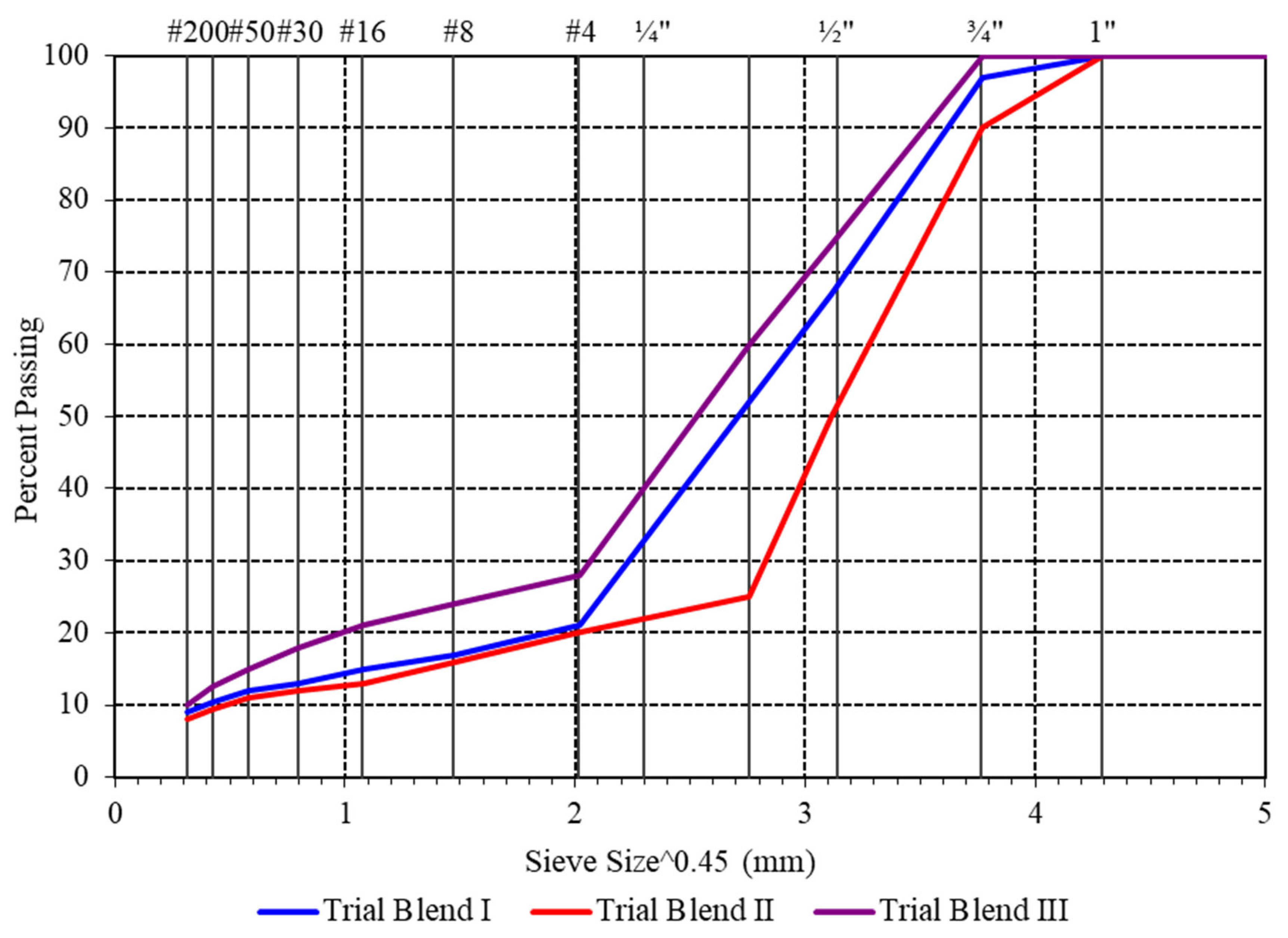
Table 1. In this study, the SMA 19 gradation band with a nominal maximum aggregate size (NMAS) of 19 mm was utilized. Three trial gradations were selected as per the criteria set in the standards and shown in the gradation chart (
Figure 2) as Trial Blend I, Trial Blend II, and Trial Blend III [
36]. The three trial gradations represent one at the coarse limit, one at the fine limit, and a third at the middle of the gradation band. These master specification limits for SMA gradation are given in the NCAT, NCHRP Project 9-8 [
36].
2.1.2. Bitumen
Bitumen was procured for this study from Attock Refinery Limited, Attock, Pakistan, with a penetration grade of 60/70. Conventional tests conducted on the bitumen are shown in
Table 2 along with the results. These tests were conducted for neat and modified bitumen.
2.1.3. Crumb Rubber
A local private firm, Sheikh Enterprises
®, Lahore, Pakistan, was engaged to produce CR from end-of-life tires via an ambient grinding process, yielding particles up to 0.5 mm. CR was mixed with bitumen using the wet process for modification of the binder. It should be noted that the present study adopted the wet process for crumb rubber modification, which promotes interaction between rubber particles and bitumen at elevated temperatures; however, previous studies have reported that the dry-process incorporation of crumb rubber may result in different rheological behavior and dynamic modulus responses, which warrants further investigation [
46,
47]. The properties of CR used in this study are displayed in
Table 3.
2.1.4. Stabilizer
Stabilizing additives are added to SMA to restrict the drain down of mastic in the storage, transport, and laying of the mixture. Cellulose fibers are the most effective binder-absorbing stabilizers or drainage inhibitors to date. For this study, granulated cellulose fibers (VIATOP
® Premium) in the form of pellets are used, produced by J. Rettenmaier and Sohne (JRS), Rosenberg, Germany. VIATOP
® Premium is a pelletized blend of ARBOCEL ZZ 8/1 and Bitumen 50/70 (
Table 4). It has excellent efficiency and a stabilizing effect as it provides a compact three-dimensional fiber mesh at a dosage rate of 0.3%, as listed in the specifications.
2.2. Preparation of Modified Binder
Crumb rubber was mixed with bitumen at 180 °C at a rotational speed of 1200 rpm for 45 min [
35,
48]. The temperature of the mix, mixing speed, and mixing time are critical to the proper mixing of CR into bitumen and to the formation of the CRM binder. Five different quantities of CR were added to the binder in separate batches. The percentages of CR added were 4%, 6%, 8%, 10%, and 12% (by the weight of the binder).
2.3. SMA Mix Design
Volumetric properties of the mix govern the design requirements of the SMA mix, which include air voids (V
a), voids in mineral aggregate (VMA), and voids in coarse aggregate (VCA), which represent the stone-on-stone contact [
49]. Three trial gradations (
Figure 2) were selected from the gradation bands specified for SMA 19 [
36]. VCA in the dry rodded condition (VCA
DRC) was determined for all of the three trial gradations, Trial Blend I, Trial Blend II, and Trial Blend III, using the AASHTO T19 standard [
50]. The density and VCA
DRC for all three trial blends selected for SMA 19 are presented in
Table 5.
Specimens were prepared using a Marshall compaction machine with 75 blows per face as per the standard procedure for heavy traffic volumes. Three specimens were prepared and compacted for each trial gradation blend at 6.5% asphalt content and 0.3% fiber content. Volumetrics for all the specimens were determined for further analysis (
Table 6).
Although the target air void content for SMA mixtures is 4%, Trial Blend I with 3.6% air voids was selected because it was the closest to the target value compared to Trial Blend II (3.3%) and Trial Blend III (2.9%), which deviated further from the specified requirement. It also met all SMA specification requirements (VMA > 17% and VCA < VCA
DRC). After selecting the optimum gradation for the mix, three asphalt contents (5.5, 6.0, and 6.5%) were used, and triplicate specimens were prepared using a Marshall compaction machine with a 0.3% fiber content. The volumetrics of these specimens will govern the optimum asphalt content for the mix (
Table 7).
The optimum asphalt content of 6.2% was determined by plotting Marshall volumetric properties and interpolating the asphalt content corresponding to 4% air voids, as recommended by NCHRP Report 425 for SMA mix design [
36]. Additionally, all volumetric parameters and stability requirements were verified at this interpolated content, confirming compliance with established design specifications. This asphalt content is also in correspondence with the minimum asphalt content required for the mix with respect to the aggregate’s bulk-specific gravity [
49]. It also satisfies all specifications for the SMA mix design outlined in NCHRP Report 425 [
36].
Table 8 lists the design asphalt content and volumetrics for the final mixture.
2.4. Specimen Fabrication for Performance Testing
CRM SMA was evaluated using dynamic modulus as the performance indicator. Specimens were fabricated using a Superpave Gyratory compactor at a design gyration level of 125, since the mixture was designed for heavy traffic with a design ESAL ≥ 30 million. The samples had a height of around 170 mm and a diameter of 150 mm. The height-to-diameter ratio of the specimens must be 1.5, achieved by coring the specimen to reduce the diameter from 150 mm to 100 mm and trimming the core ends to reduce the height from 170 mm to 150 mm.
2.5. Dynamic Modulus (|E*|) Test
The dynamic modulus test applies a sinusoidal load to the specimen to measure |E*| and phase angle (Ø) at specified temperatures and frequency bands [
51]. This test was conducted using UTS 6 Software installed in AMPT. The AMPT used for this research is manufactured by IPC Global. Studs or gauge points are attached to the sample with the help of a gauge point fixing jig that is designed to maintain the required gauge length of 70 mm for the studs. Axial strains and deformation in the specimen are measured with the help of LVDTs (linear variable differential transformers) fixed on these studs. The specimens are placed in an environmental chamber before testing for temperature equilibrium.
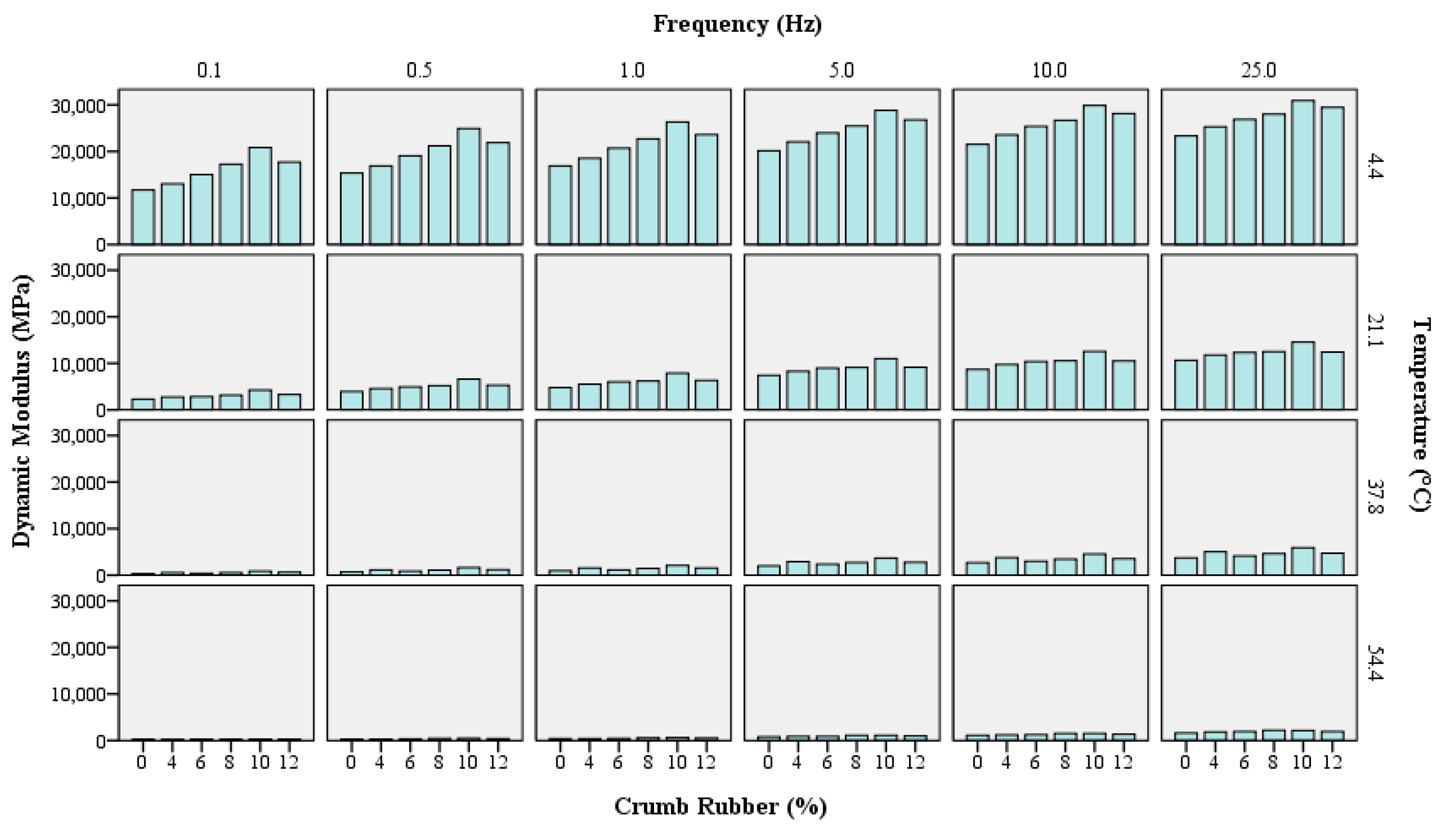
In this study, six frequencies (25, 10, 5, 1, 0.5 and 0.1 Hz) were selected, and the specimens were conditioned and loaded at four temperatures (4.4, 21.1, 37.8, and 54.4 °C). Three samples were prepared and tested for each CRM SMA percentage. |E*| and Ø were reported by the software with respect to the frequencies selected at each test temperature.
2.6. Dynamic Modulus Master Curves
Master curves are developed from the dynamic modulus results obtained from UTS 6 software, as recommended by AASHTO TP 62 [
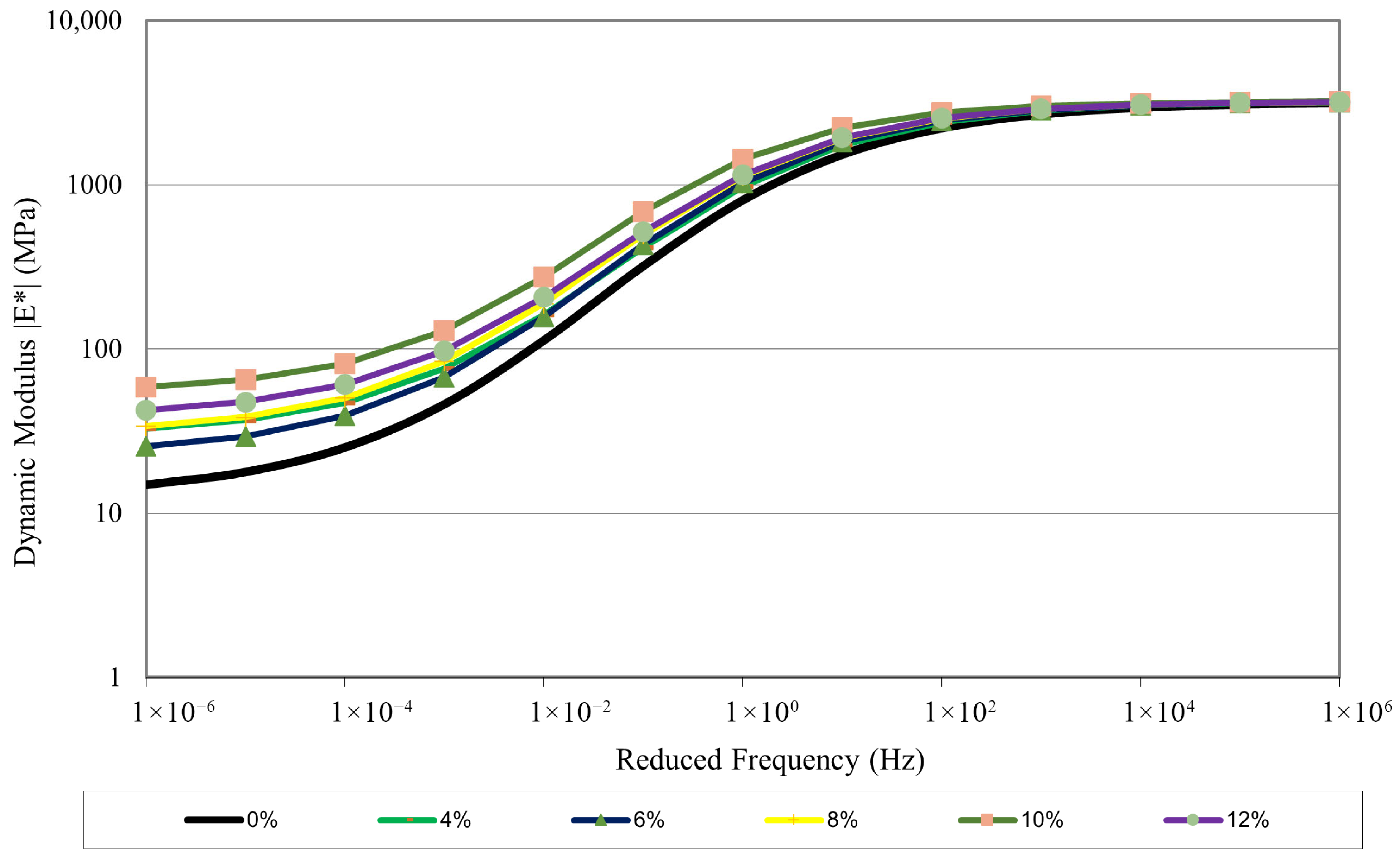
51]. Master curves are produced in the Microsoft Excel Spreadsheet, master solver, developed by Ramon Bonaquist, that fully characterizes asphalt mixtures. This is accomplished through the time–temperature superposition principle that employs a shift factor to transfer the |E*| values obtained at different temperatures to the reference temperature (21.1 °C). The adjustment needed to bring the data value to the reference temperature is explained by the shift factor.
2.7. Performance Modeling
2.7.1. Non-Linear Regression
The performance prediction model was generated in SPSS version 23 using |E*| as the performance indicator. The functional form selected for the model was Cobb–Douglas, which is widely used in cost-based empirical studies and to identify interactions among two or more variables with different functional forms [
52]. The Cobb–Douglas model, in its general, generic functional form, is shown in Equation (1).
represents the number of variables, i.e., 1, 2, 3, …, n
2.7.2. Artificial Neural Networks (ANNs)
The foundation of deep learning, a branch of machine learning, is formed by neural networks. The organization of the human brain influences the programming of neural networks [
34,
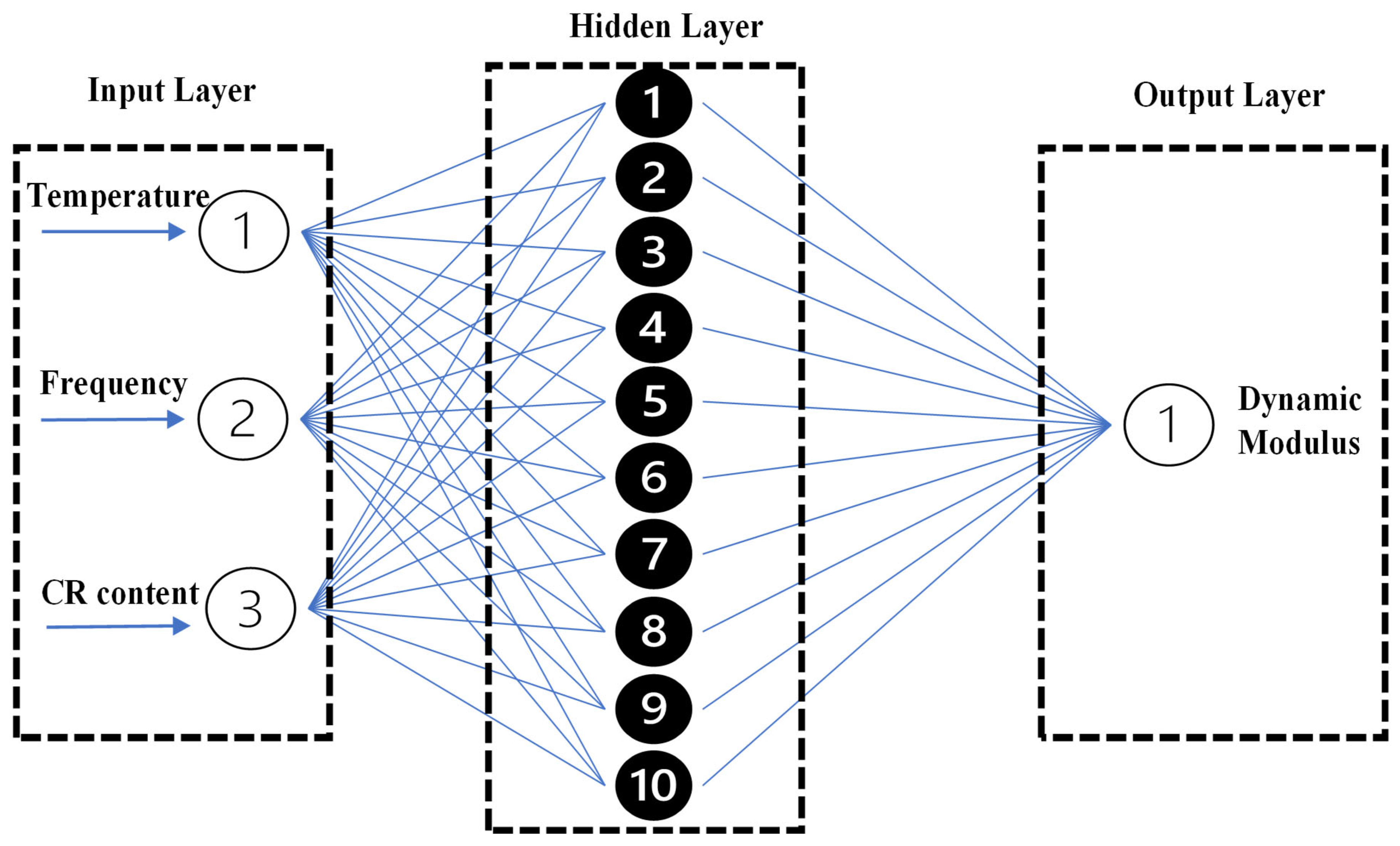
53]. Data are input into neural networks, which learn the structure of the data during training and produce outputs for new input values based on that training. Neural networks consist of layers composed of neurons, the core processing units. There are three types of layers: input, output, and hidden layers. Connections between neurons in different layers are mediated by channels. The input is received by the input layer, which transfers the data to the hidden layers for training and the computations required to predict the output, which is then fed to the output layer. Input and output variables are analyzed, and relationships are determined using computational algorithms, known as activation functions, found in the hidden layers. ANNs can identify the exact framework and relationship between input and output data.
4. Conclusions and Recommendations
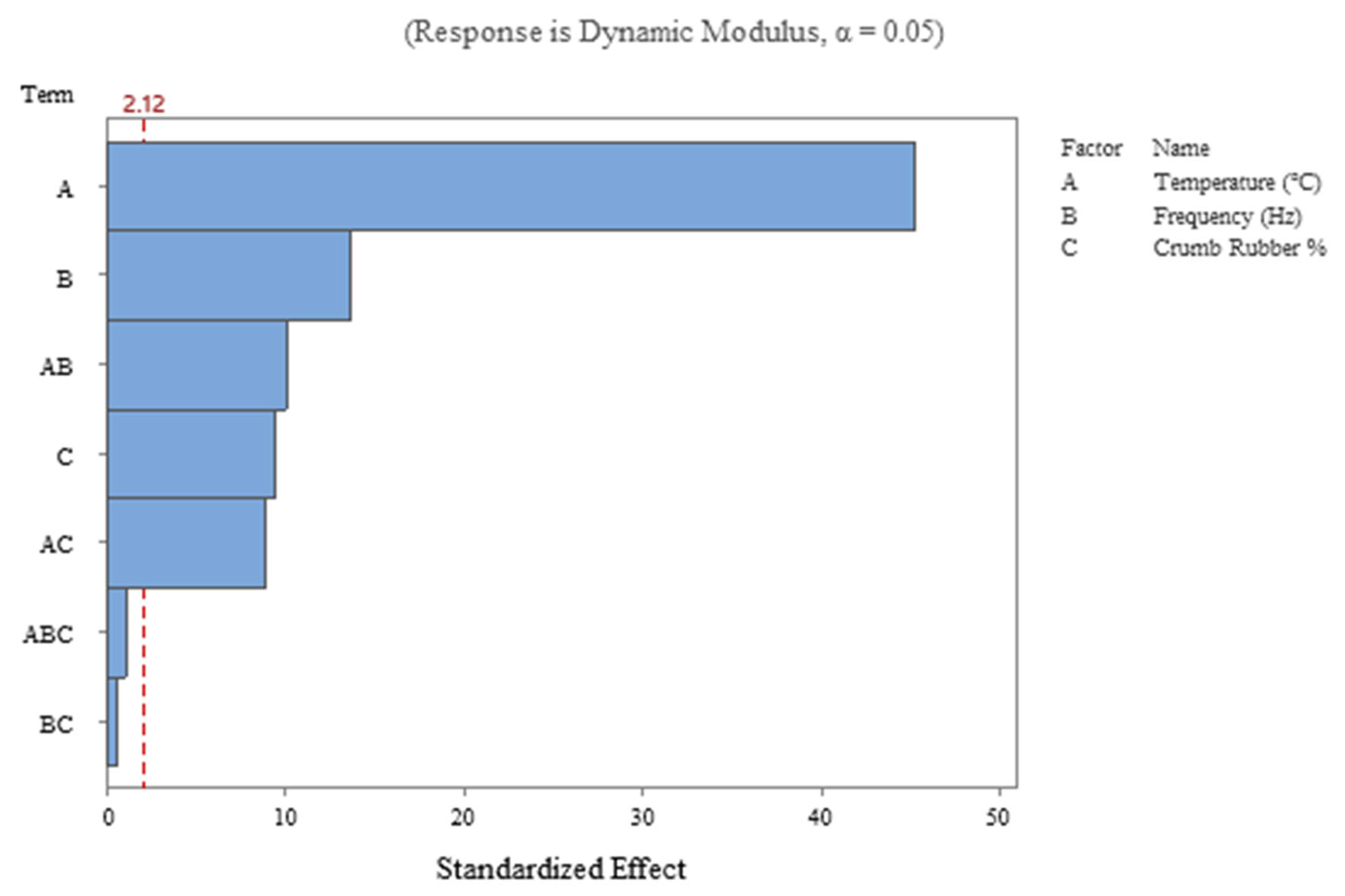
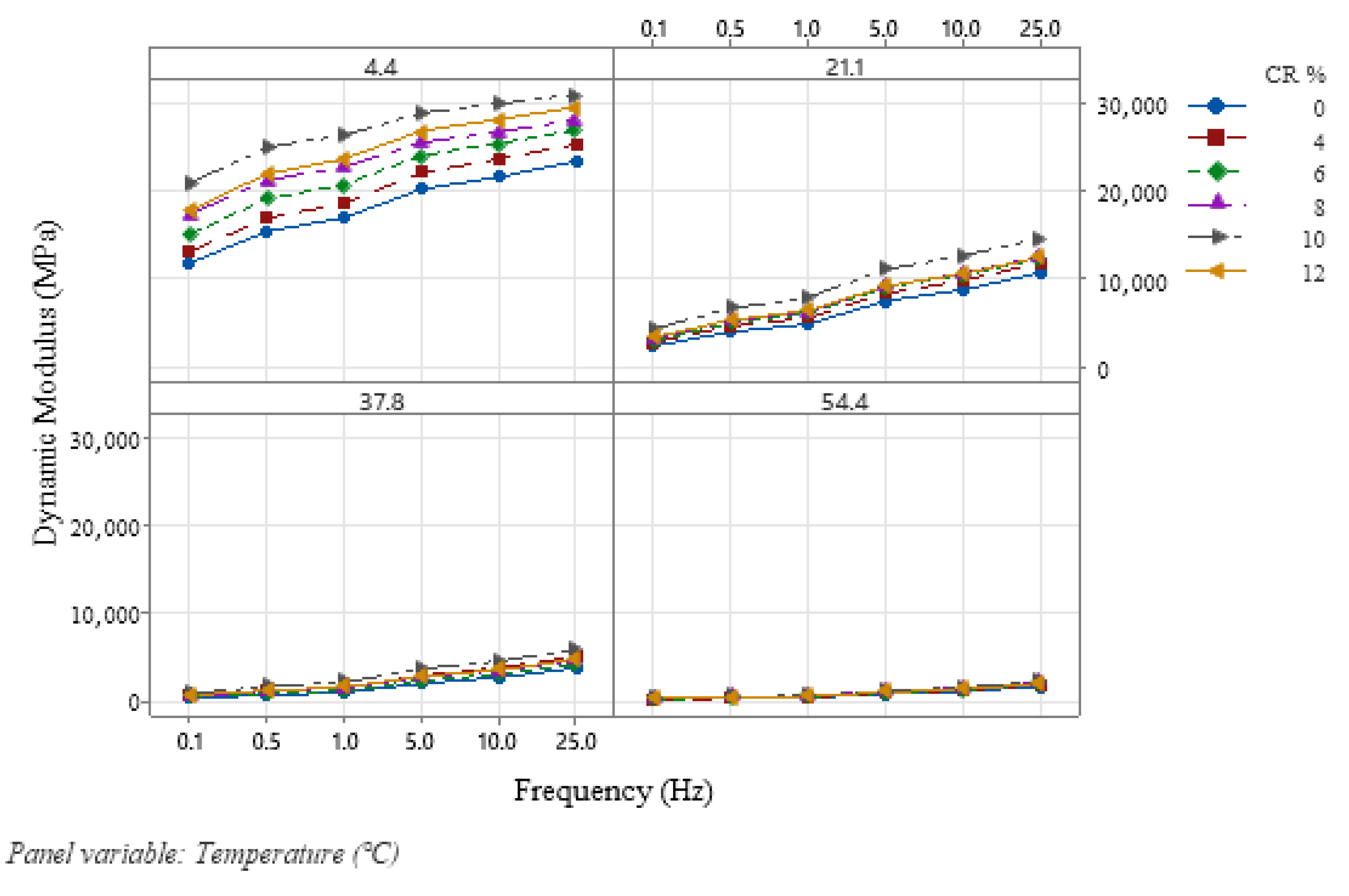
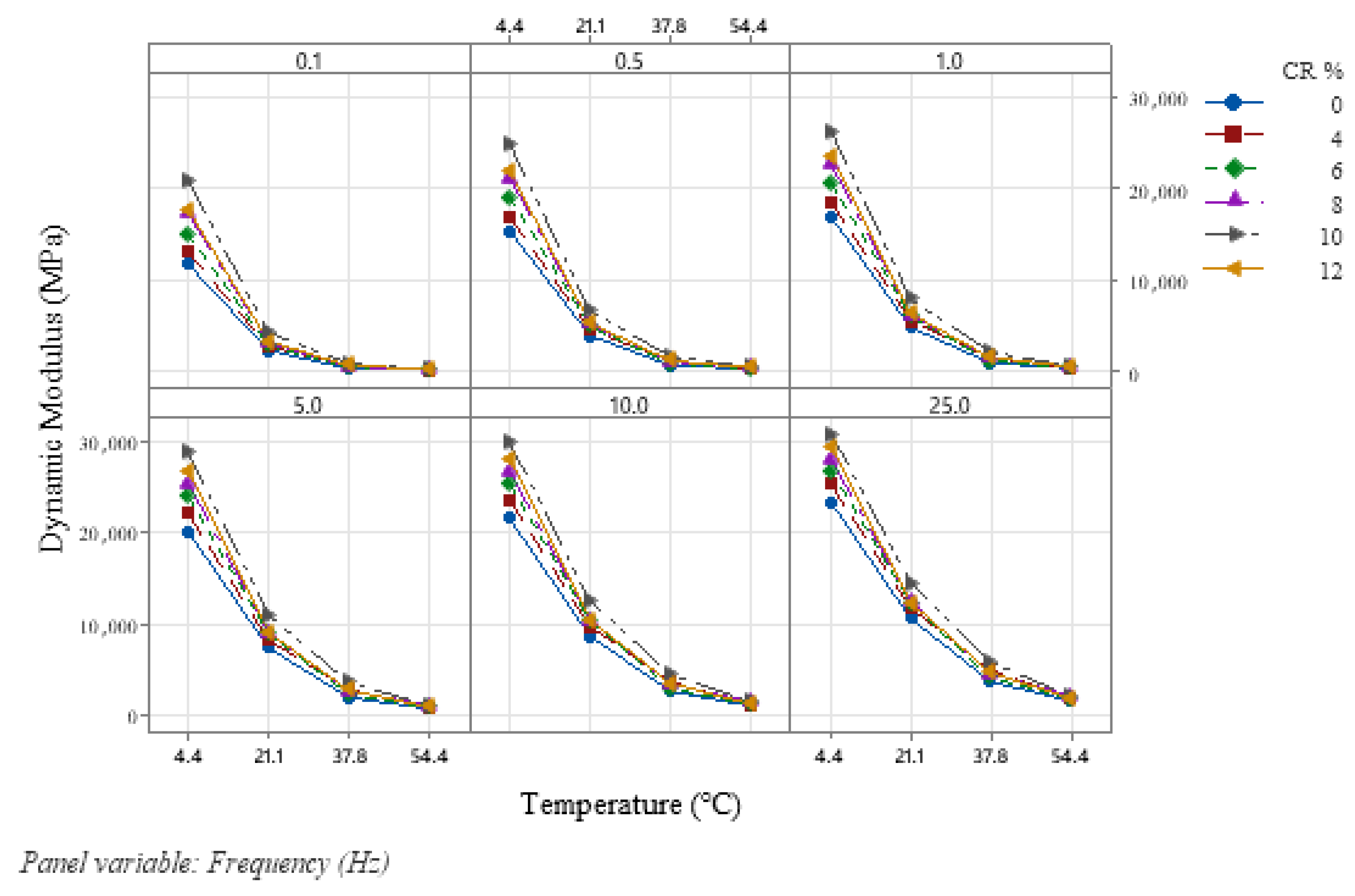
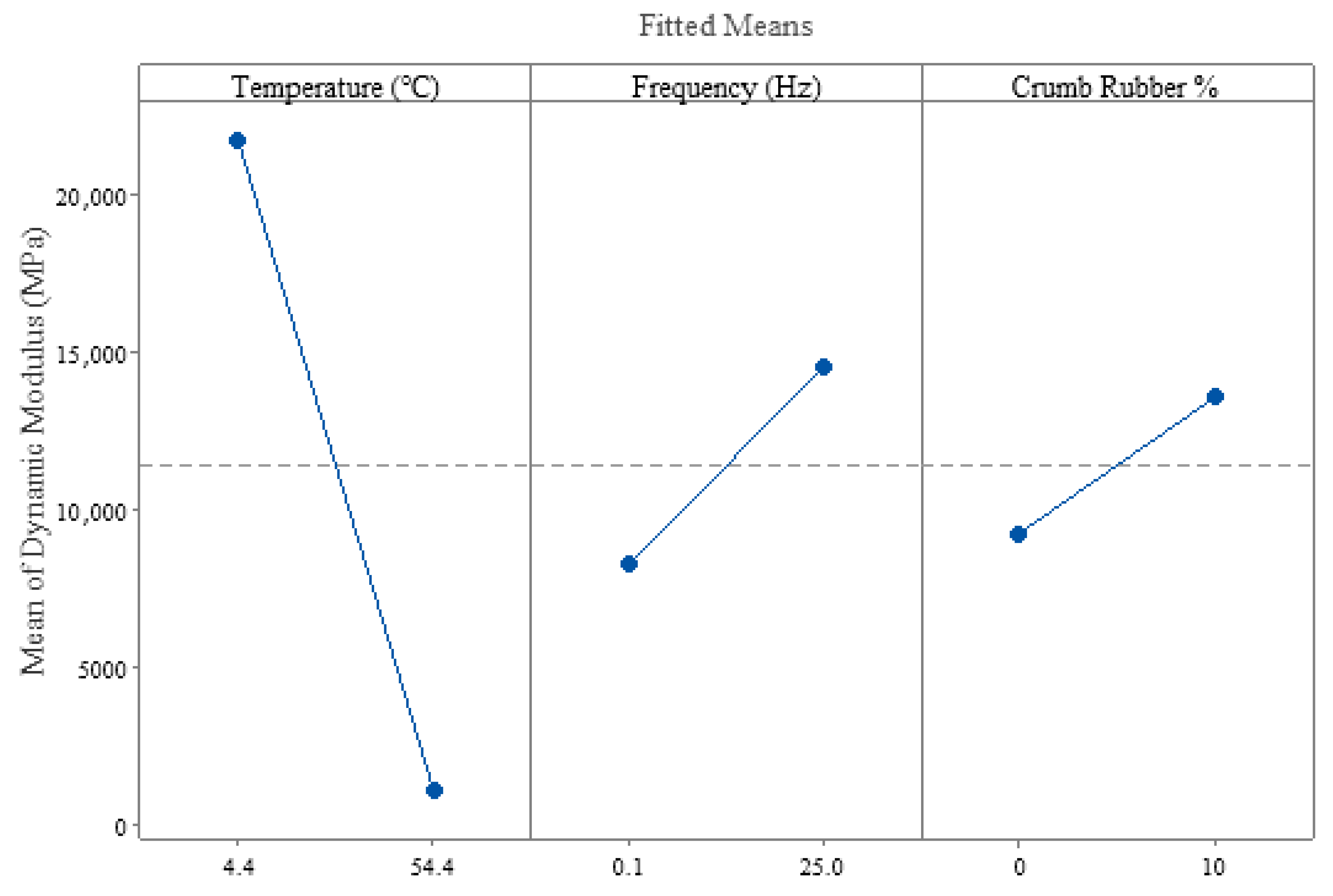
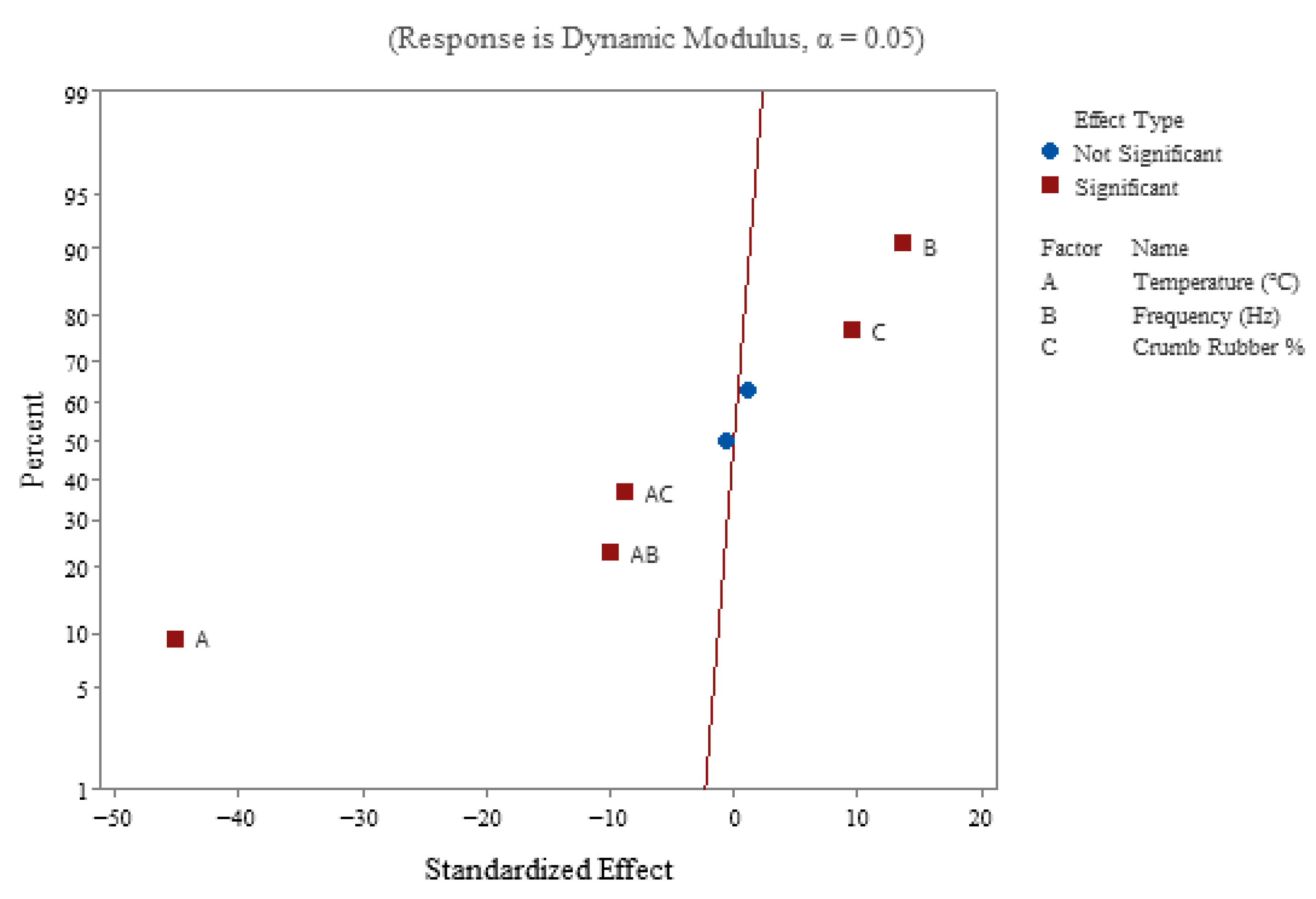
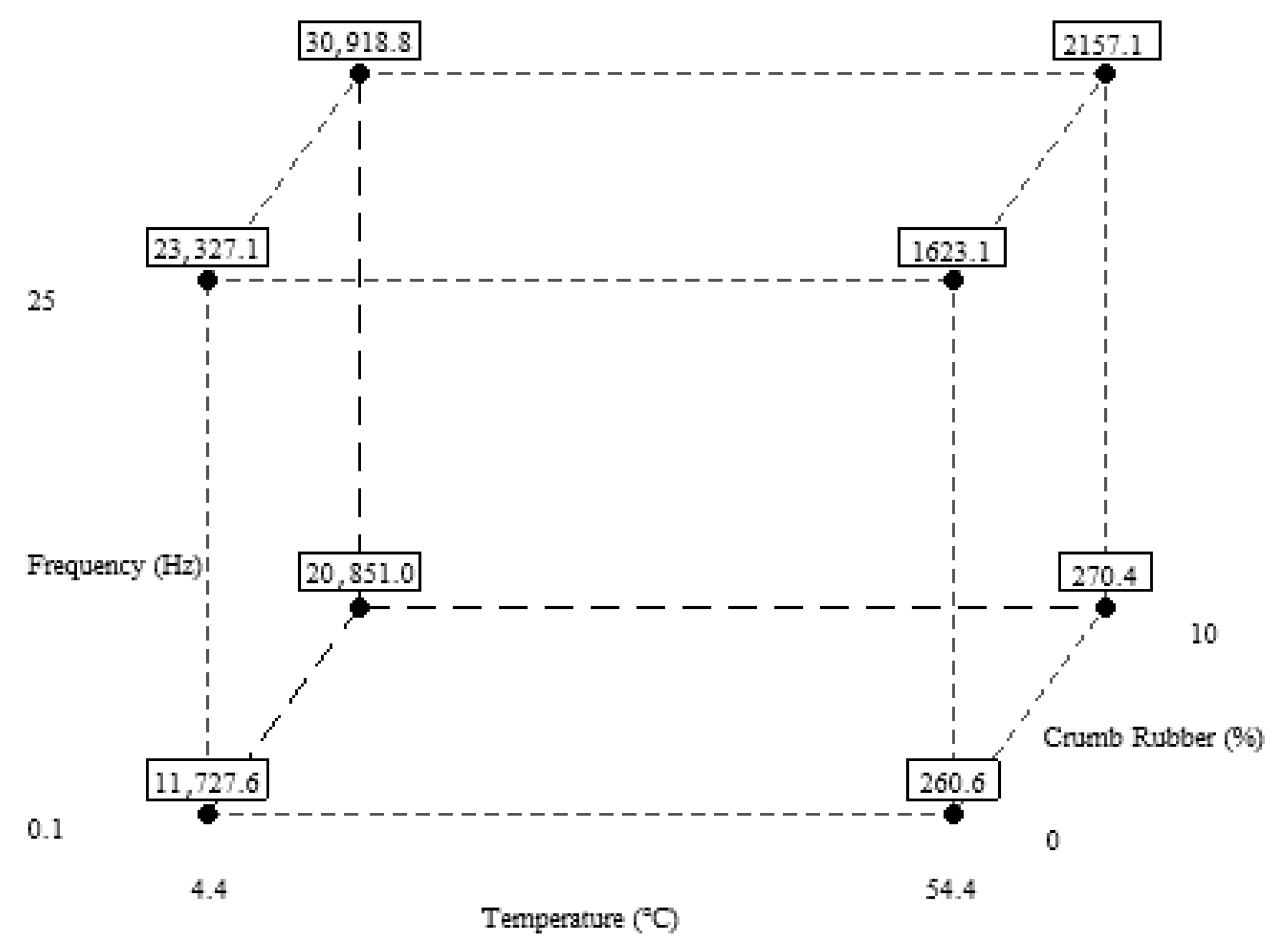
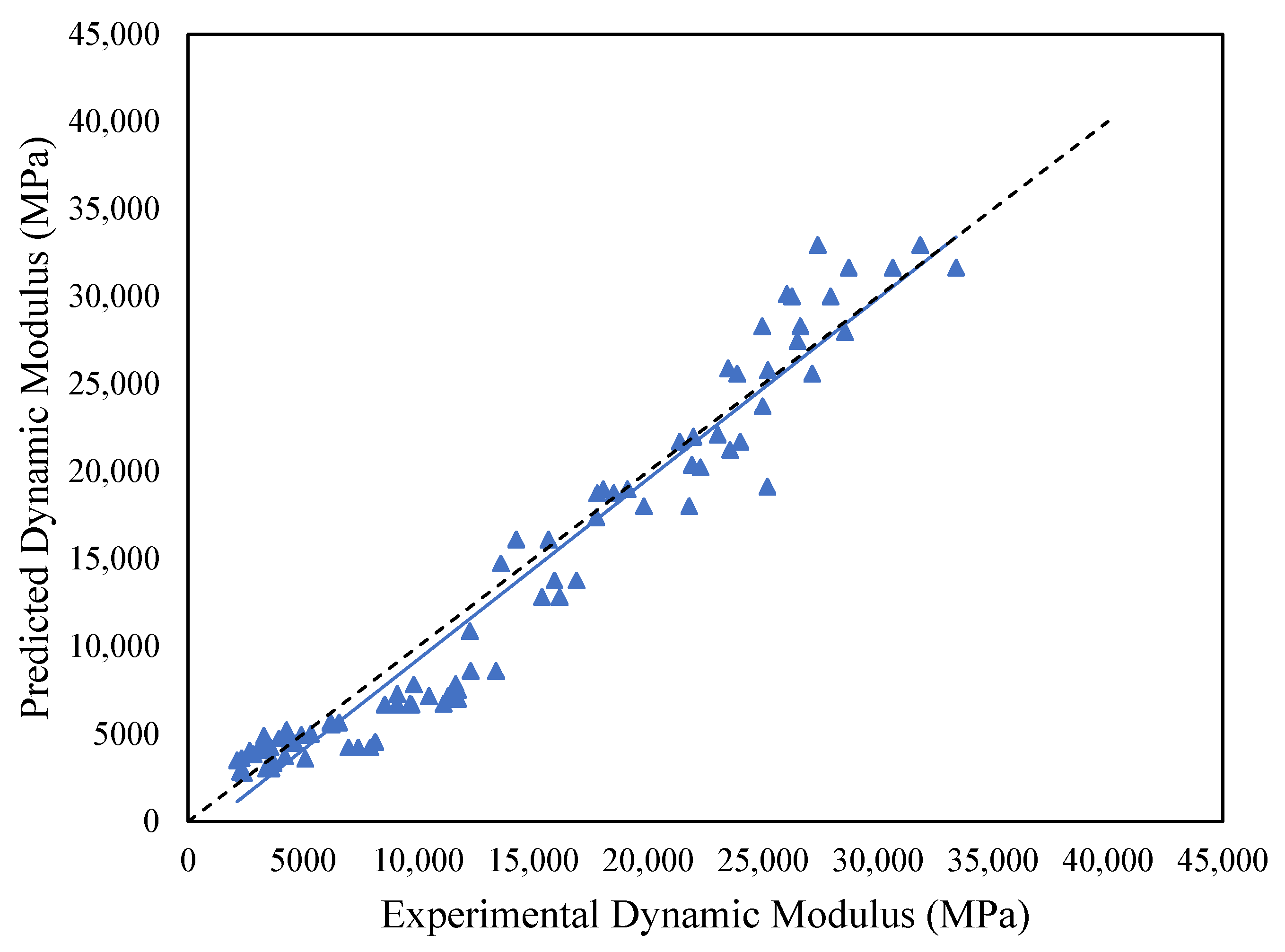
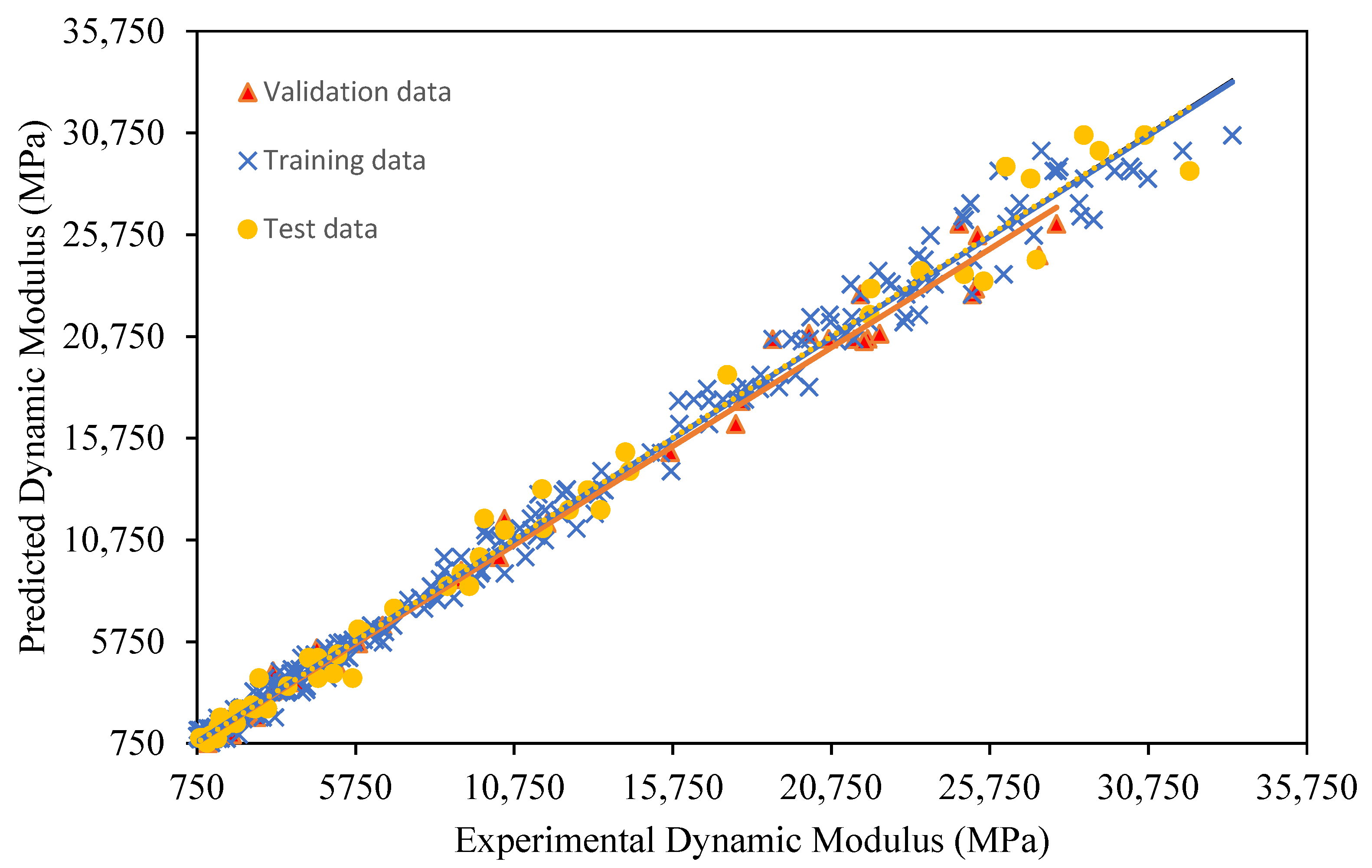
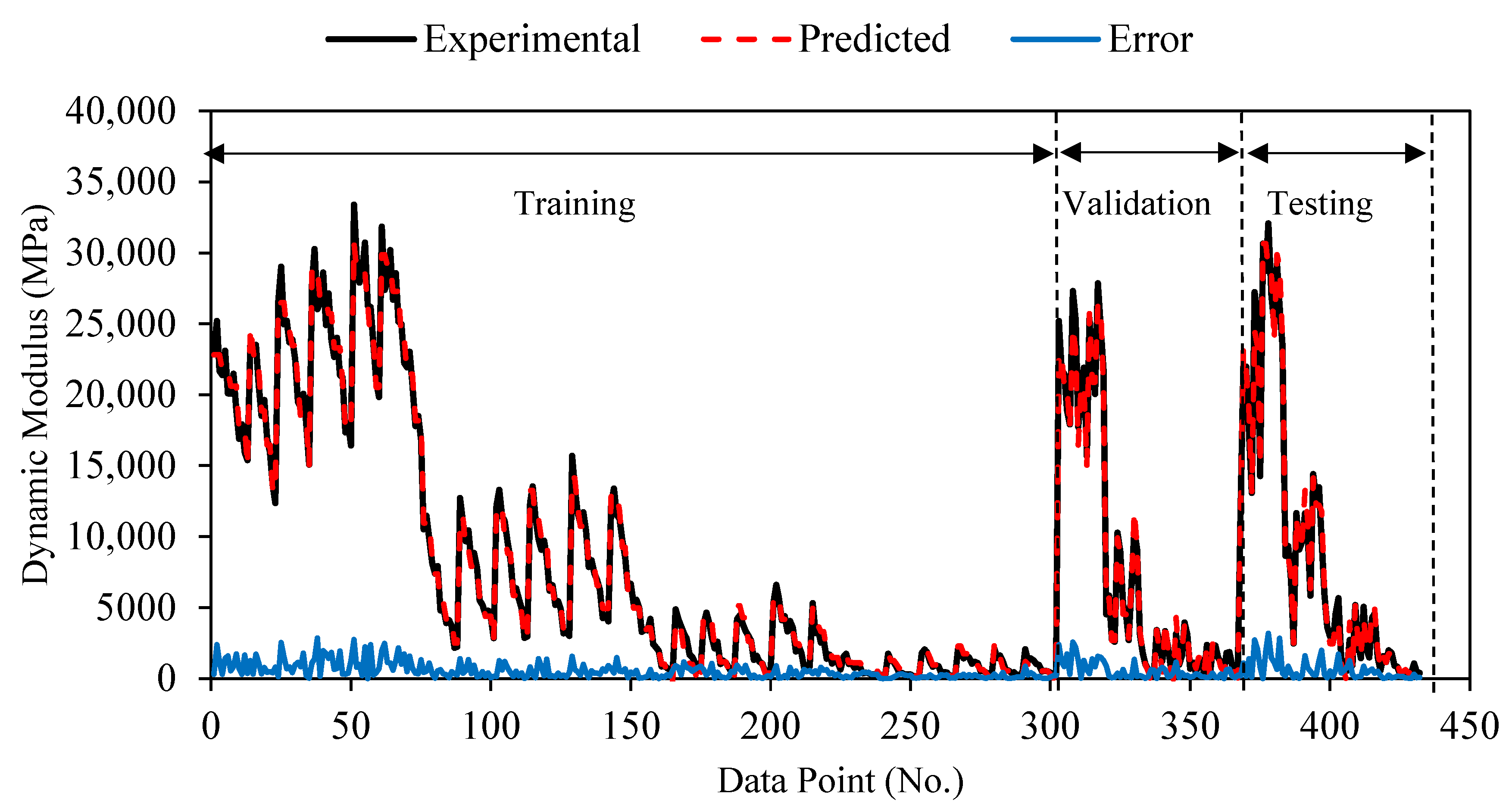
Conclusions are drawn for the study based on the experimental evaluation and statistical analysis of the results. The dynamic modulus of the SMA mixtures exhibited a peak response at 10% CR modification across all combinations of temperature and frequency sweeps. Higher |E| at intermediate temperatures (21.1 °C) suggests potentially improved rut resistance, though direct rutting tests would be required for validation. The addition of 10% CR to the mixture resulted in a 64% increase in dynamic modulus (on average) compared to the neat mixture, which signifies the stiffness potential of the rut-resistant mix. This 10% CR optimum should be interpreted specifically for the selected materials, mix design, and testing conditions, and higher CR contents may be viable under different mixture configurations and performance requirements. Temperature, frequency, and CR content significantly affect the response variable, i.e., |E*|. An increase in temperature results in a decrease in |E*|, and an increase in frequency dictates an increase in |E*|. The sensitivity analysis of the dynamic modulus shows that a change in temperature from 21.1 °C to 37.8 °C results in a 65% decrease in the dynamic modulus at a given frequency, and a change in frequency from 0.1 to 25 Hz results in a 72% increase in the dynamic modulus at a given temperature. Performance modeling using artificial neural networks (ANNs) yielded a coefficient of determination (R2) of 0.98, compared with 0.75 for non-linear regression. ANNs produced a better model than the non-linear regression model, as it showed a stronger correlation between experimental and predicted data.
Performance tests other than dynamic modulus can be conducted on CRM SMA to further characterize the mixtures. These tests include the flow number, flow time, Hamburg wheel tracker, etc. This study did not incorporate other important variables in the non-linear regression and ANN models developed, e.g., the percentage and type of asphalt, the mixture gradation, and the aggregate type, to obtain a more robust prediction of the dynamic modulus for CRM SMA. These parameters were considered in the initial experimental design to determine the dynamic modulus of CRM SMA mixtures, including a 60/70 penetration binder, an optimum asphalt content of 6.2%, SMA19 gradation selected from NCAT and NCHRP project 9-8, and limestone aggregates from Babozi quarry. However, these parameters were not incorporated in the statistical and ANN model development due to their standard fixed values. Future research can prepare more heterogeneous CRM SMA mixtures by accounting for all these variables, resulting in more robust predictions of dynamic modulus. The study used only a 60/70 penetration-grade binder, which limits its applicability to other binder grades. Future research could utilize 40/50 and 80/100 penetration-grade binders, in addition to 60/70, to broaden applicability. The developed ANN model is applicable only to SMA 19 with a 60/70 binder and 6.2% asphalt content, thereby limiting its practical utility for broader pavement design applications. This study used 432 data points to develop non-linear regression and ANN models. Future research can use more diverse SMA samples and larger datasets to improve the model’s robustness and generalizability. With appropriate retraining of the input–output variables, future studies can use the ANN framework to predict the dynamic modulus of conventional SMA mixtures and with other modifiers, e.g., SBS [
64,
65], ethylene vinyl acetate (EVA) [
66,
67], Polyethylene Terephthalate (PET) [
68,
69], and high-density polyethylene (HDPE) [
70]. While crumb rubber modification enhances stiffness and rutting resistance, its potential impact on low-temperature thermal cracking and fatigue damage behavior, particularly in relation to internal skeletal structure and force chain evolution under repeated loading, was not evaluated in this study and warrants further investigation.




 ,
,