Systematic Control of Epoxidation in Low-cis Hydroxyl-Terminated Polybutadiene (HTPB) and Its Impact on Polyurethane Properties


Abstract
1. Introduction
2. Materials and Methods
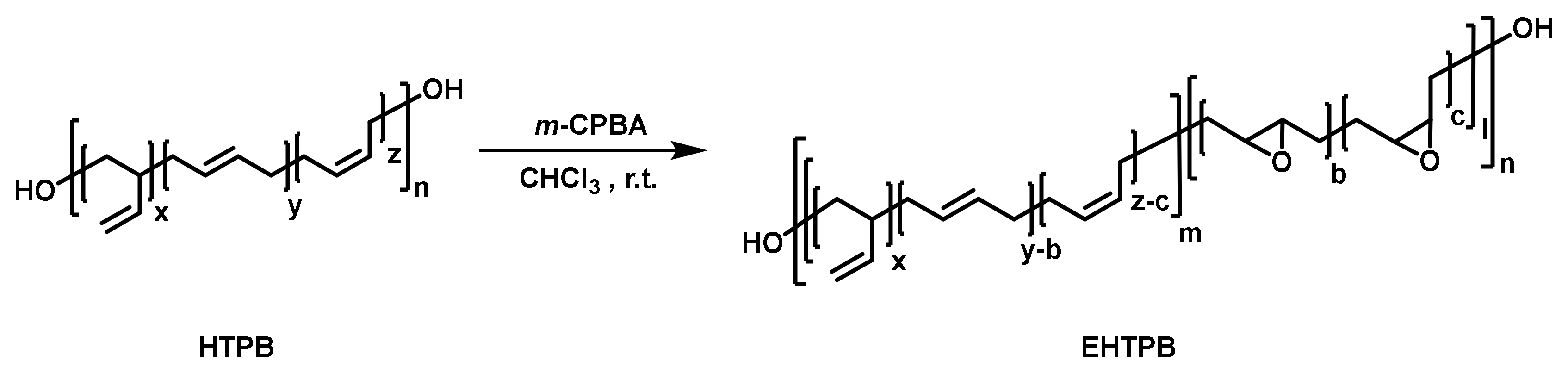
2.1. Synthesis of EHTPB
2.2. Preparation of Neat Polyurethane Sheets
2.3. Preparation of Filled Polyurethane Sheets
2.4. Preparation of Shear Test Specimens
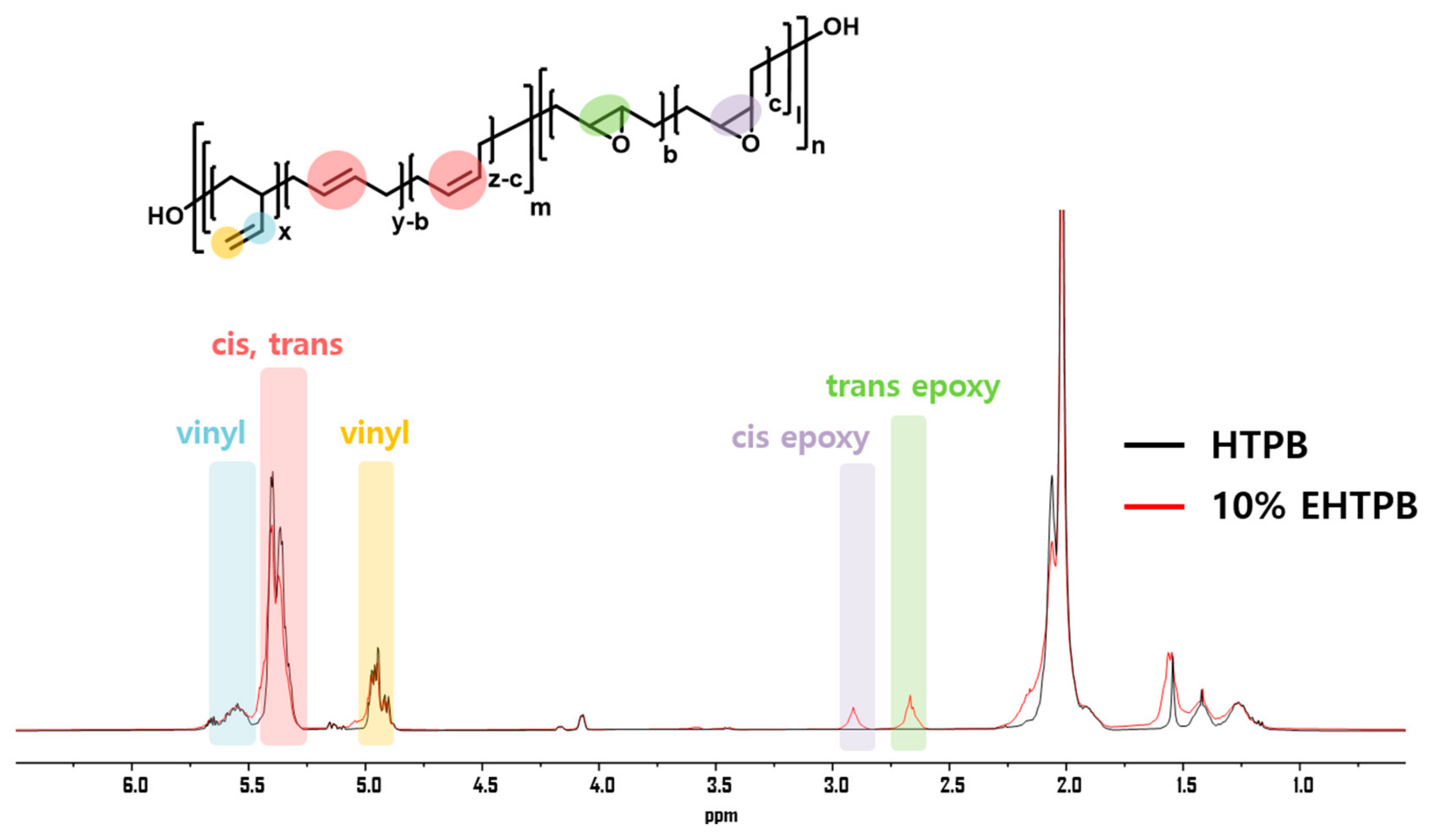
2.5. Determination of Epoxidation Conversion
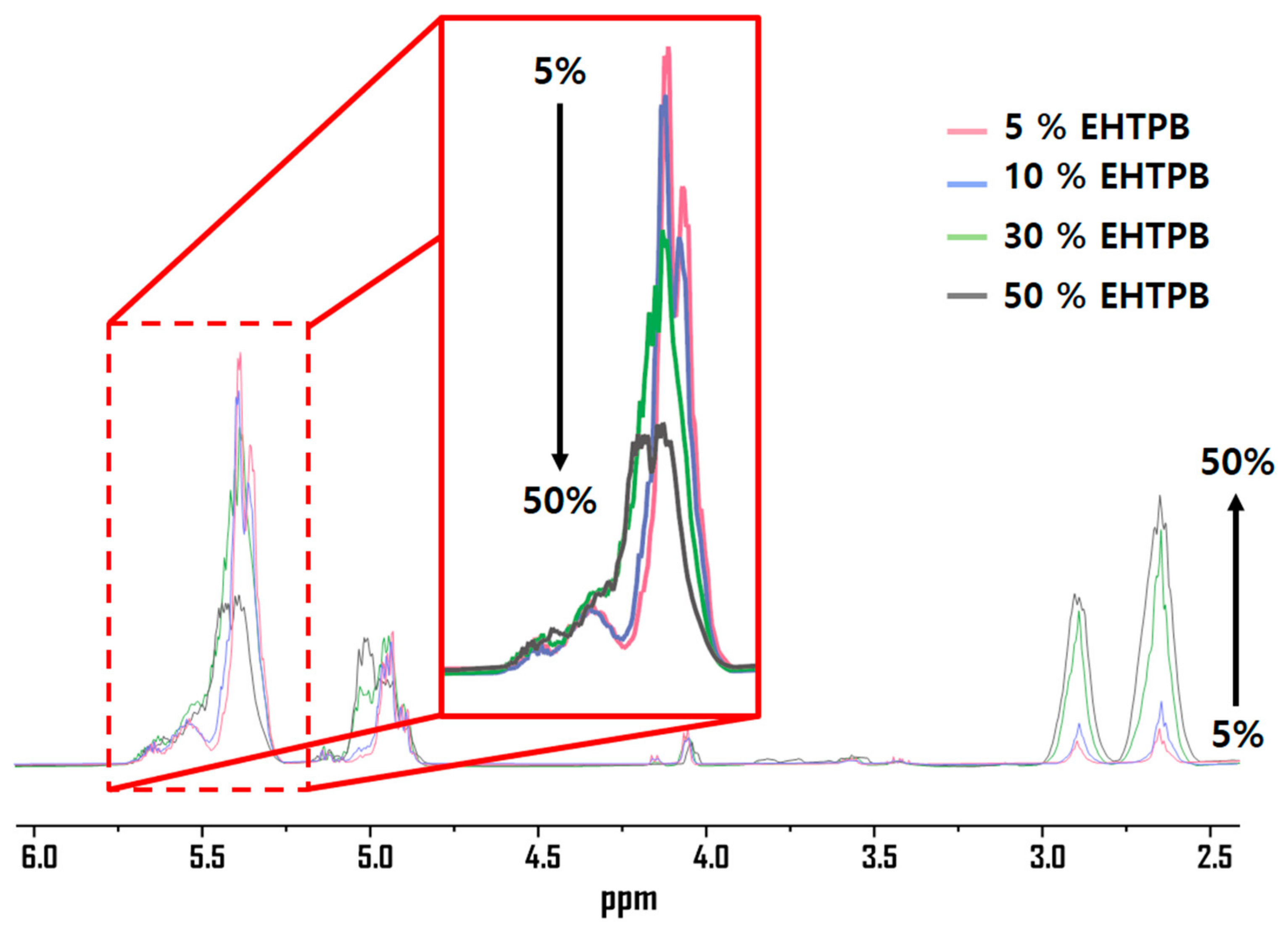
- 1,2-vinyl double bonds: 5.50–5.75 ppm (1H);
- 1,2-vinyl double bonds: 4.85–5.05 ppm (2H);
- 1,4-cis/trans double bonds: 5.25–5.50 ppm (2H);
- trans epoxy: 2.8–3.0 ppm (2H);
- cis epoxy: 2.55–2.75 ppm (2H);
- vinyl epoxy: 3 ppm (1H) and 2.5 ppm (2H).
2.6. Characterization
3. Results and Discussion
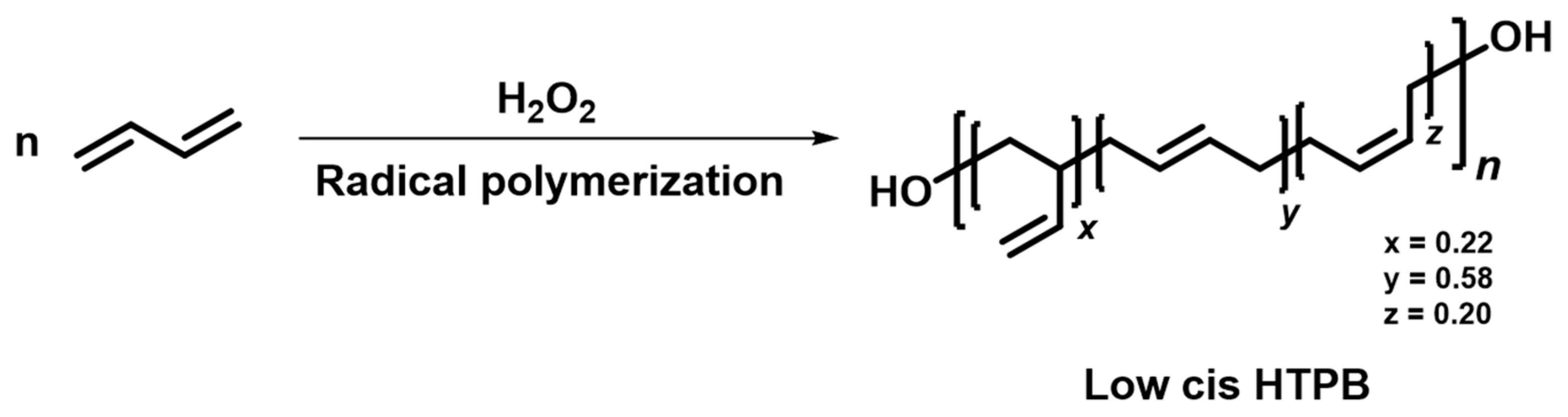
3.1. Synthesis of EHTPB
3.2. Structural Analysis of EHTPB
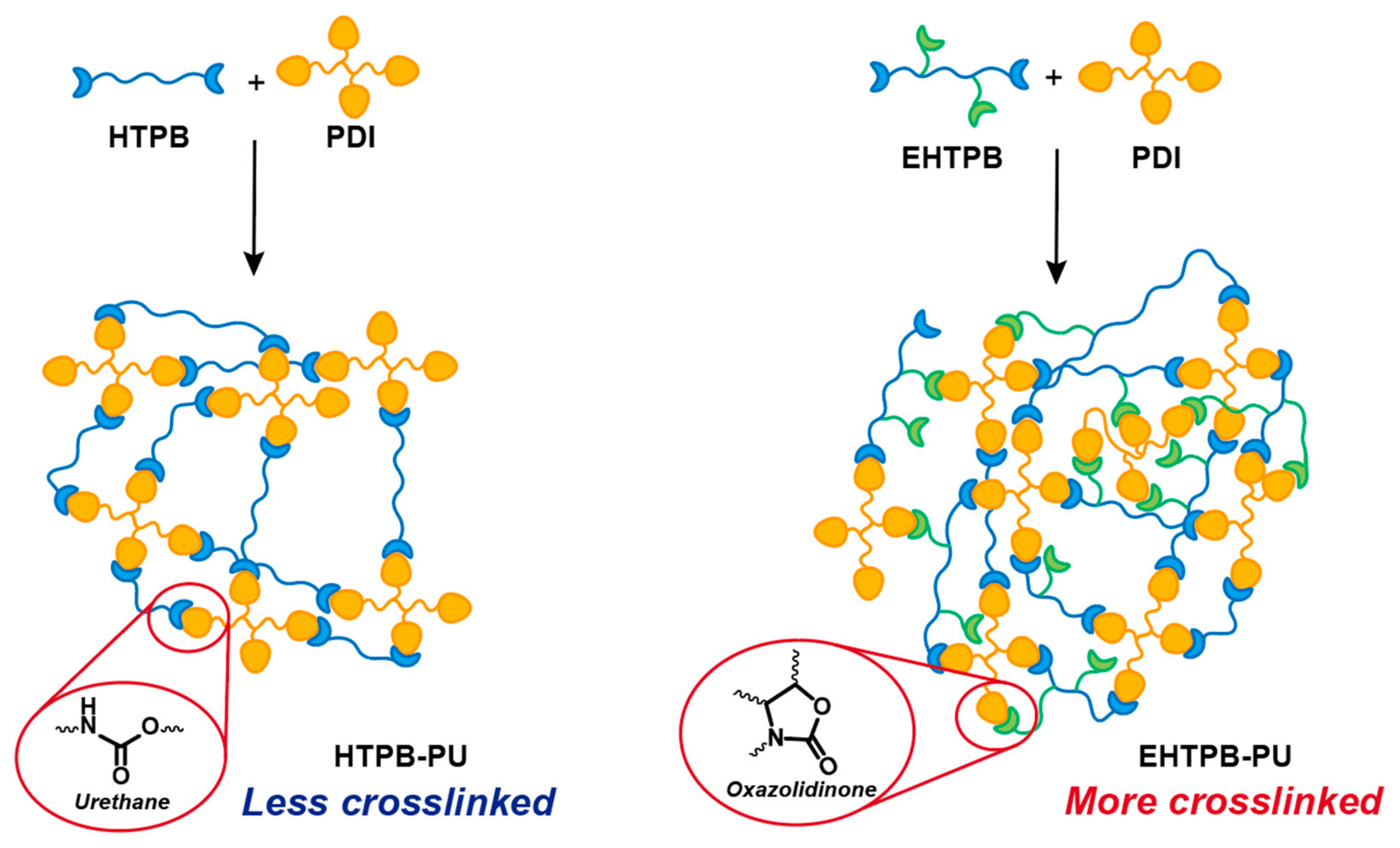
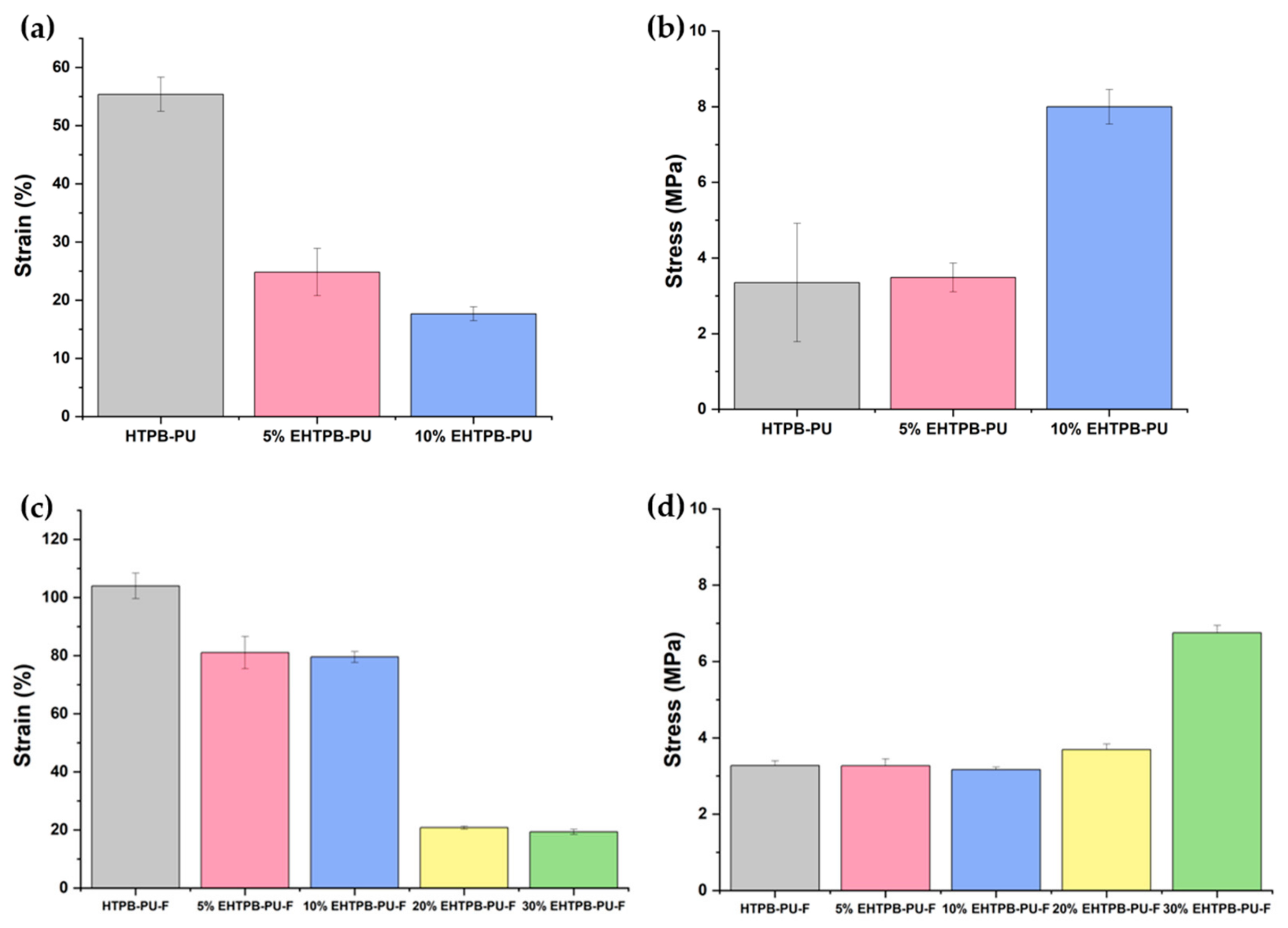
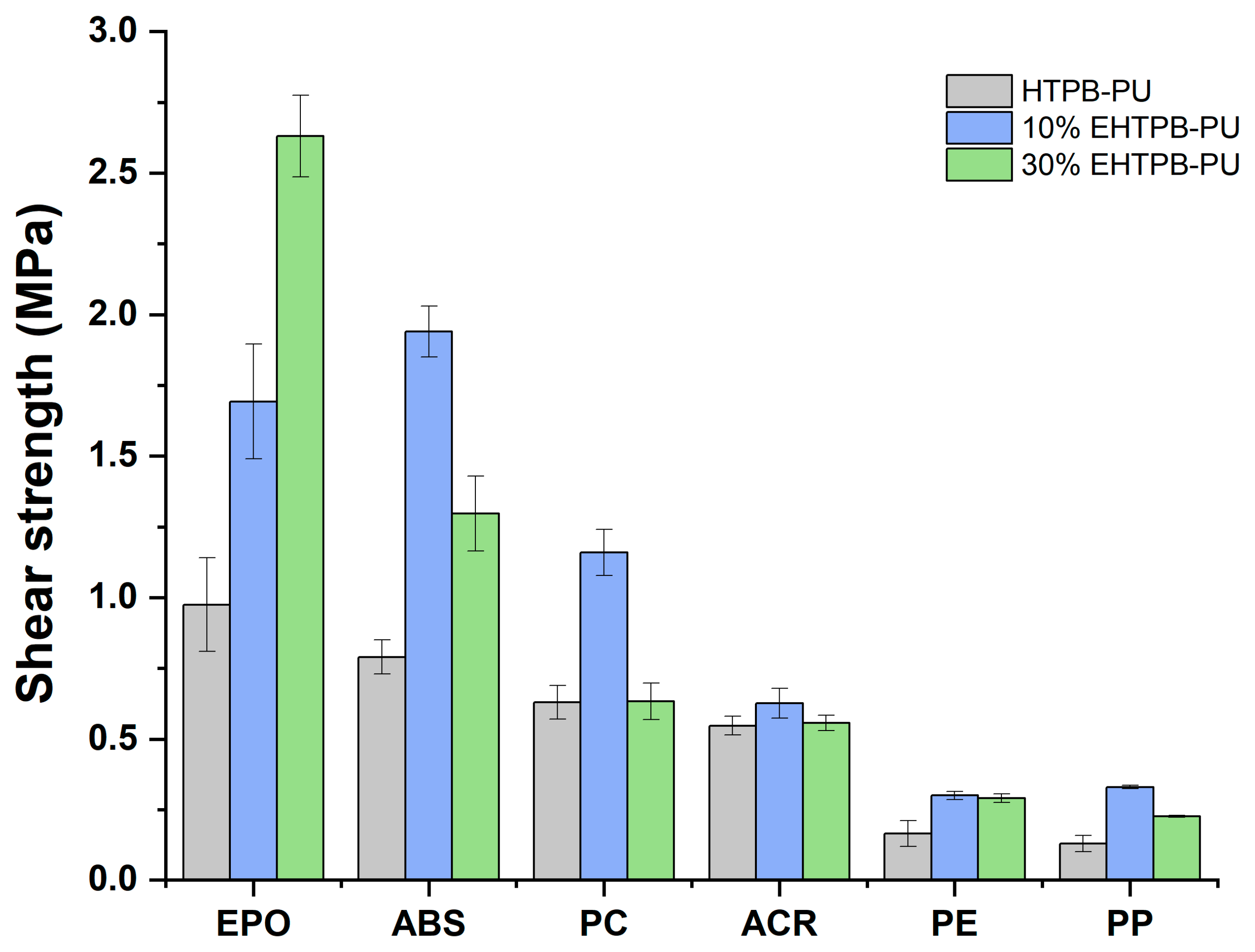
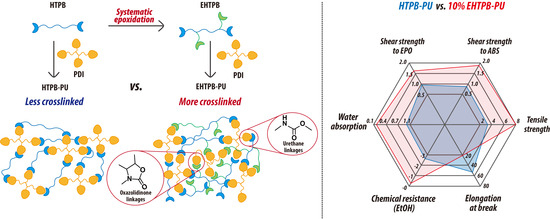
3.3. Analysis and Performance of EHTPB-PU
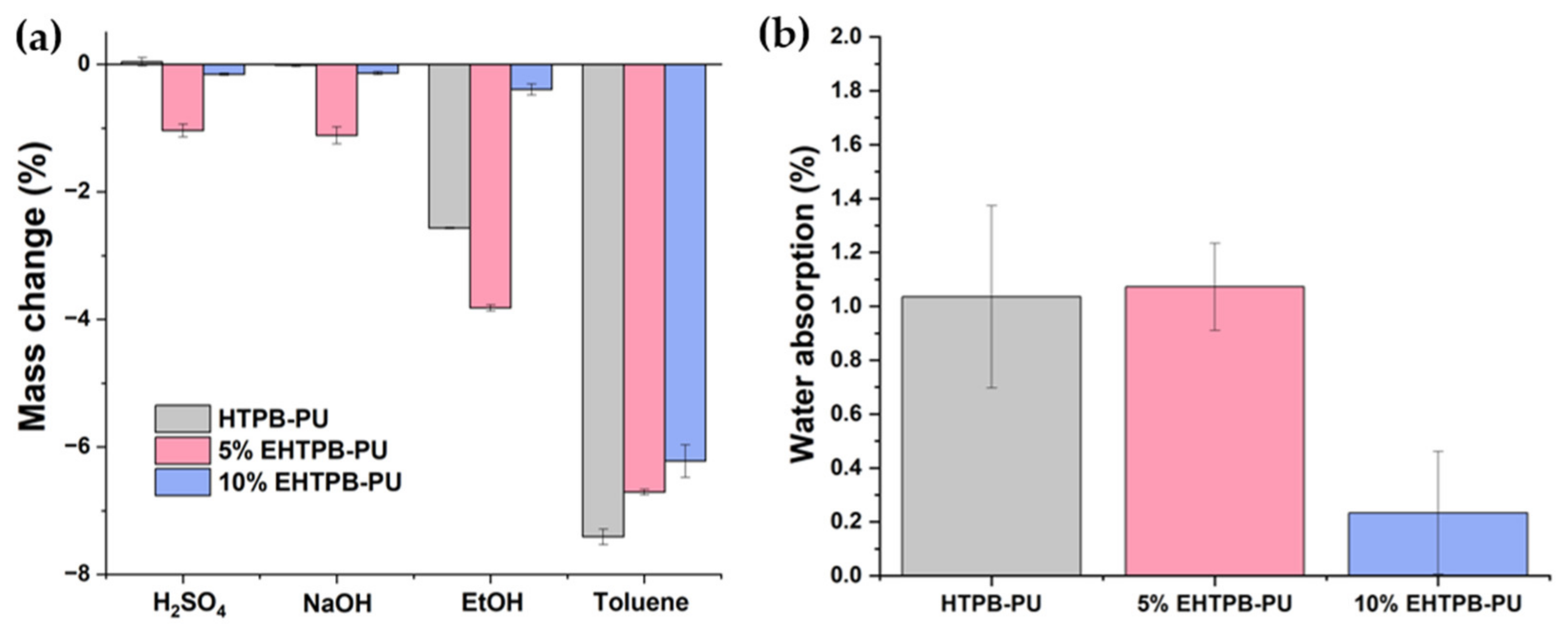
3.4. Chemical and Moisture Resistance of EHTPB-PU
4. Conclusions
Author Contributions
Funding
Institutional Review Board Statement
Data Availability Statement
Conflicts of Interest
References
- Gopala Krishnan, P.S.; Ayyaswamy, K.; Nayak, S.K. Hydroxy Terminated Polybutadiene: Chemical Modifications and Applications. J. Macromol. Sci. Chem. A 2013, 50, 128–138. [Google Scholar]
- Quagliano Amado, J.C.; Ross, P.G.; Mattos Silva Murakami, L.; Narciso Dutra, J.C. Properties of Hydroxyl-Terminal Polybutadiene (HTPB) and Its Use as a Liner and Binder for Composite Propellants: A Review of Recent Advances. Propellants Explos. Pyrotech. 2022, 47, e202100283. [Google Scholar] [CrossRef] [Scilit]
- Tu, J.; Xu, H.; Liang, L.; Li, P.; Guo, X. Preparation of high self-healing efficient crosslink HTPB adhesive for improving debonding of propellant interface. New J. Chem. 2020, 44, 19184–19191. [Google Scholar] [CrossRef] [Scilit]
- Yoon, S.; Lee, S.; Lee, J. Comprehensive Review on Post-Polymerization Modification of Hydroxyl-Terminated Polybutadiene (HTPB). Elast. Compos. 2024, 59, 108–120. [Google Scholar]
- Zhang, W.; Zhang, G.; Du, L.; Zhang, C.; Li, L.; Zhu, J.; Pei, J.; Wu, J. Synthesis of hydroxyl-terminated polybutadiene bearing pendant carboxyl groups by combination of anionic polymerization and blue light photocatalytic thiol-ene reaction and its pH-triggered self-assemble behavior. React. Funct. Polym. 2018, 127, 161–167. [Google Scholar]
- Zhou, W.; Zuo, J. Mechanical, thermal and electrical properties of epoxy modified with a reactive hydroxyl-terminated polystyrene-butadiene liquid rubber. J. Reinf. Plast. Compos. 2013, 32, 1359–1369. [Google Scholar] [CrossRef] [Scilit]
- Rahman, E.U.; Khan, A.; Humayun, M.; Khan, M.; Shah, N.; Rehman, N.; Shah, L.A.; Khan, M.S.; Bououdina, M. Preparation and characterization of hydroxyl-terminated polybutadiene graft ferrocene based composite. J. Polym. Res. 2024, 31, 362. [Google Scholar] [CrossRef] [Scilit]
- Dey, A.; Sikder, A.K.; Athar, J. Micro-structural effect on hydroxy terminated poly butadiene (HTPB) prepolymer and HTPB based composite propellant. Nanomed. J. 2017, 1, 104. [Google Scholar]
- Shankar, R.M.; Roy, T.K.; Jana, T. Terminal functionalized hydroxyl-terminated polybutadiene: An energetic binder for propellant. J. Appl. Polym. Sci. 2009, 114, 732–741. [Google Scholar] [CrossRef] [Scilit]
- Pournaghshband Isfahani, A.; Shahrooz, M.; Yamamoto, T.; Muchtar, A.; Ito, M.M.; Yamaguchi, D.; Takenaka, M.; Sivaniah, E.; Ghalei, B. Influence of microstructural variations on morphology and separation properties of polybutadiene-based polyurethanes. RSC Adv. 2021, 11, 15449–15456. [Google Scholar] [CrossRef] [Scilit]
- Prine, N. Characterization and Selection of Hydroxyl-Terminated Polybutadiene Polymers for High-Strain Applications. Bachelor’s Thesis, University of Southern Mississippi, Hattiesburg, MS, USA, 2018. [Google Scholar]
- Li, J.; Ning, Z.; Yang, W.; Yang, B.; Zeng, Y. Hydroxyl-Terminated Polybutadiene-Based Polyurethane with Self-Healing and Reprocessing Capabilities. ACS Omega 2022, 7, 10156–10166. [Google Scholar] [CrossRef] [Scilit] [PubMed]
- Zhang, X.; Zheng, J.; Fang, H.; Zhang, Y.; Bai, S.; He, G. High dimensional stability and low viscous response solid propellant binder based on graphene oxide nanosheets and dual cross-linked polyurethane. Compos. Sci. Technol. 2018, 161, 124–134. [Google Scholar] [CrossRef] [Scilit]
- Zhang, Q.; Shu, Y.; Liu, N.; Lu, X.; Shu, Y.; Wang, X.; Mo, H.; Xu, M. Hydroxyl terminated polybutadiene: Chemical modification and application of these modifiers in propellants and explosives. Cent. Eur. J. Energ. Mater. 2019, 16, 153–183. [Google Scholar] [CrossRef] [Scilit] [PubMed]
- Zhang, X.; Liu, Y.; Chai, T.; Ma, Z.; Jia, K. Curing Reaction Kinetics of the EHTPB-Based PBX Binder System and Its Mechanical Properties. Coatings 2020, 10, 1266. [Google Scholar] [CrossRef] [Scilit]
- Kim, S.; Lee, M.; Lee, W.B.; Choi, S.-H. Ionic-Group Dependence of Polyelectrolyte Coacervate Phase Behavior. Macromolecules 2021, 54, 7572–7581. [Google Scholar] [CrossRef] [Scilit]
- Ma, L.; Zhu, X.; Zhang, W.; Zhang, H.; Wang, J.; Qu, J. Study on the preparation and performance comparison of side-chain hydroxyl-terminated polybutadiene derivatives with narrowly molecular weight distribution used for polyurethane. Polym. Test. 2021, 104, 107389. [Google Scholar] [CrossRef] [Scilit]
- Touidjine, S.; Boulkadid, M.K.; Trache, D.; Akbi, H.; Guettiche, D.; Belkhiri, S.; Nourine, M. Review on energetic copolymer binders for propulsion applications: Synthesis and properties. J. Polym. Sci. 2023, 61, 2254–2275. [Google Scholar] [CrossRef] [Scilit]
- Sekkar, V.; Krishnamurthy, V.N.; Jain, S.R. Mechanical and Swelling Properties of Copolyurethanes based on Hydroxy-Terminated Polybutadiene and its hydrogenated analog. Propellants Explos. Pyrotech. 1997, 22, 289–295. [Google Scholar] [CrossRef] [Scilit]
- Šabata, S.; Hetflejš, J. Hydrogenation of low molar mass OH-telechelic polybutadienes catalyzed by homogeneous Ziegler nickel catalysts. J. Appl. Polym. Sci. 2002, 85, 1185–1193. [Google Scholar] [CrossRef] [Scilit]
- He, Y.N.; Li, Q.; Zhu, C.; Li, H.; Zheng, S.; Xue, Z.; Hu, Y. Synthesis and properties of thermoplastic polyethylene based polyurethanes (PE-PUs). J. Polym. Res. 2018, 25, 122. [Google Scholar] [CrossRef] [Scilit]
- Hosseini, S.R.; Alavi Nikje, M.M. Synthesis and characterization of novel epoxy-urethane coating and its graphene nanocomposites. Polym. Compos. 2023, 44, 2794–2803. [Google Scholar] [CrossRef] [Scilit]
- Zhang, Y.; Wang, G.; Xu, Y.; Sun, J.; Zhang, X.; Zheng, T.; Zhang, L. POSS/EHTPB synergistically toughened epoxy resin for cryogenic application. Polymer 2024, 300, 127013. [Google Scholar] [CrossRef] [Scilit]
- Li, H.; Zhao, L.; Su, K.; Feng, H.; Wang, D.; Qu, C. A comparative study on the rheological, thermal, and mechanical performance of epoxy resin modified with thermoplastics. J. Adhes. Sci. 2021, 35, 1393–1403. [Google Scholar] [CrossRef] [Scilit]
- Zhang, J.; Zhang, Z.; Huang, R.; Tan, L. Advances in Toughening Modification Methods for Epoxy Resins: A Comprehensive Review. Polymers 2025, 17, 1288. [Google Scholar] [CrossRef] [Scilit] [PubMed]
- Nikje, M.M.A.; Mozaffari, Z. Chemoselective epoxidation of hydroxyl-terminated polybutadiene (HTPB) using in-situ generated dimethyl dioxirane (DMD). Des. Monomers Polym. 2007, 10, 67–77. [Google Scholar] [CrossRef] [Scilit]
- Wang, Q.; Zhang, X.; Wang, L.; Mi, Z. Epoxidation of hydroxyl-terminated polybutadiene with hydrogen peroxide under phase-transfer catalysis. J. Mol. Catal. A Chem. 2009, 309, 89–94. [Google Scholar] [CrossRef] [Scilit]
- Wang, Q.; Zhang, X.; Wang, L.; Mi, Z. Kinetics of Epoxidation of Hydroxyl-Terminated Polybutadiene with Hydrogen Peroxide under Phase Transfer Catalysis. Ind. Eng. Chem. Res. 2009, 48, 1364–1371. [Google Scholar] [CrossRef] [Scilit]
- Nikje, M.M.A.; Hajifatheali, H. Nanoclay-Mediated Epoxidation of HTPB Using In-Situ-Generated Dimethyl Dioxirane. Des. Monomers Polym. 2011, 14, 155–165. [Google Scholar] [CrossRef] [Scilit]
- Nikje, M.M.A.; Hajifatheali, H. The role of cloisite 30B as a phase transfer catalyst (PTC) in polybutadiene epoxidation. Polym. Technol. Mater. 2011, 50, 1071–1076. [Google Scholar] [CrossRef] [Scilit]
- Zhou, Q.; Jie, S.; Li, B.-G. Preparation of Hydroxyl-Terminated Polybutadiene with High Cis-1,4 Content. Ind. Eng. Chem. Res. 2014, 53, 17884–17893. [Google Scholar] [CrossRef] [Scilit]
- De Risi, F.R.; D’Ilario, L.; Martinelli, A. Synthesis and characterization of epoxidized polybutadiene/polyaniline graft conducting copolymer. J. Polym. Sci. Part A Polym. Chem. 2004, 42, 3082–3090. [Google Scholar] [CrossRef] [Scilit]
- Cao, Z.; Zhou, Q.; Jie, S.; Li, B.-G. High cis-1,4 Hydroxyl-Terminated Polybutadiene-Based Polyurethanes with Extremely Low Glass Transition Temperature and Excellent Mechanical Properties. Ind. Eng. Chem. Res. 2016, 55, 1582–1589. [Google Scholar] [CrossRef] [Scilit]
- Min, X. A novel synthetic strategy for hydroxyl-terminated polybutadiene containing high cis-1,4 contents based on a Ni(ii)-coordinated anionic initiating system. RSC Adv. 2019, 9, 39037–39045. [Google Scholar] [CrossRef] [Scilit] [PubMed]
- Zhu, X.; Fan, X.; Zhao, N.; Liu, J.; Min, X.; Wang, Z. Comparative study of structures and properties of HTPBs synthesized via three different polymerization methods. Polym. Test. 2018, 68, 201–207. [Google Scholar] [CrossRef] [Scilit]
- Meng, D.; Sang, L.; Zhang, P.; Deng, J.; Guo, X. Properties of high cis-1,4 content hydroxyl-terminated polybutadiene and its application in composite solid propellants. Def. Technol. 2024, 40, 199–209. [Google Scholar] [CrossRef] [Scilit]
- Min, X.; Fan, X. A New Strategy for the Synthesis of Hydroxyl Terminated Polystyrene-b-Polybutadiene-b-Polystyrene Triblock Copolymer with High Cis-1, 4 Content. Polymers 2019, 11, 598. [Google Scholar] [CrossRef] [Scilit]
- Zhou, Q.; Jie, S.; Li, B.-G. Facile synthesis of novel HTPBs and EHTPBs with high cis-1,4 content and extremely low glass transition temperature. Polymer 2015, 67, 208–215. [Google Scholar] [CrossRef] [Scilit]
- Kébir, N.; Campistron, I.; Laguerre, A.; Pilard, J.-F.; Bunel, C.; Couvercelle, J.-P.; Gondard, C. Use of hydroxytelechelic cis-1,4-polyisoprene (HTPI) in the synthesis of polyurethanes (PUs). Part 1. Influence of molecular weight and chemical modification of HTPI on the mechanical and thermal properties of PUs. Polymer 2005, 46, 6869–6877. [Google Scholar] [CrossRef] [Scilit]
- Lee, F.; Radmall, R.; Heming, J.; Haddleton, D.; Lewtas, K.; McNally, T. Hydroxyl-terminated polybutadienes (HTPB) and glycidyl azide polymer (GAP) as solid rocket propellant binders: A review of synthesis and properties. Eur. Polym. J. 2025, 238, 114209. [Google Scholar] [CrossRef] [Scilit]
- Vilar, W.D.; Moutinho, M.T.M.; Menezes, S.M.C.; Coutinho, F.M.B. Characterization of hydroxyl-terminated polybutadiene. Polym. Bull. 1997, 38, 319–325. [Google Scholar] [CrossRef] [Scilit]
- ASTM D1002-10(2019); Standard Test Method for Apparent Shear Strength of Single-Lap-Joint Adhesively Bonded Metal Specimens. ASTM International: West Conshohocken, PA, USA, 2019.
- Aguiar, M.; de Menezes, S.C.; Akcelrud, L. Configurational double bond selectivity in the epoxidation of hydroxy-terminated polybutadiene with m-chloroperbenzoic acid. Macromol. Chem. Phys. 1994, 195, 3937–3948. [Google Scholar] [CrossRef] [Scilit]
- ASTM D412-16(2021); Standard Test Methods for Vulcanized Rubber and Thermoplastic Elastomers—Tension. ASTM International: West Conshohocken, PA, USA, 2016.
- ASTM D543-21; Standard Practices for Evaluating the Resistance of Plastics to Chemical Reagents. ASTM International: West Conshohocken, PA, USA, 2021.
- ASTM D570-22; Standard Test Method for Water Absorption of Plastics. ASTM International: West Conshohocken, PA, USA, 2018.
- Abdullin, M.I.; Basyrov, A.A.; Kukovinets, O.S.; Glazyrin, A.B.; Khamidullina, G.I. Epoxidation of syndiotactic 1,2-polybutadiene with peracids. Polym. Sci. Ser. B 2013, 55, 349–354. [Google Scholar] [CrossRef] [Scilit]
- Kawahara, E.M.; Ogawa, M.; Yamato, S.; Yamaguchi, T.; Hori, K.; Sumimoto, M. Theoretical and experimental mechanistic study of water molecule involvement in the Prilezhaev reaction. Phys. Chem. Chem. Phys. 2023, 25, 18102–18108. [Google Scholar] [CrossRef] [Scilit] [PubMed]
- Wu, K.; Liu, Y.; Ma, Y.; Tan, M.; Chai, T.; Hu, F.; Liao, L.; Pan, D.; Liu, C. Pretreatment of hydroxy-terminated polybutadiene (HTPB)/toluene diisocyanate (TDI) binder system for biodegradation. Adv. Compos. Hybrid Mater. 2021, 4, 96–103. [Google Scholar] [CrossRef] [Scilit]
- Zuchowska, D. Polybutadiene modified by epoxidation. 1. Effect of polybutadiene microstructure on the reactivity of double bonds. Polymer 1980, 21, 514–520. [Google Scholar] [CrossRef] [Scilit]
- Kordomenos, P.I.; Kresta, J.E. Thermal stability of isocyanate-based polymers. 1. Kinetics of the thermal dissociation of urethane, oxazolidone, and isocyanurate groups. Macromolecules 1981, 14, 1434–1437. [Google Scholar] [CrossRef] [Scilit]
- Yeganeh, H.; Jamshidi, S.; Talemi, P.H. Synthesis, characterization and properties of novel thermally stable poly(urethane-oxazolidone) elastomers. Eur. Polym. J. 2006, 42, 1743–1754. [Google Scholar] [CrossRef] [Scilit]
- Jung, K.-H.; Min, K.D.; Lee, C.-J.; Park, B.-G.; Jeong, H.; Koo, J.-M.; Lee, B.; Jung, S.-B. Effect of epoxy content in Ag nanoparticle paste on the bonding strength of MLCC packages. Appl. Surf. Sci. 2019, 495, 143487. [Google Scholar] [CrossRef] [Scilit]
- Yang, J.; He, X.; Wang, H.; Liu, X.; Lin, P.; Yang, S.; Fu, S. High-toughness, environment-friendly solid epoxy resins: Preparation, mechanical performance, curing behavior, and thermal properties. J. Appl. Polym. Sci. 2020, 137, 48596. [Google Scholar] [CrossRef] [Scilit]
- Zhou, W.; Li, X.; Cao, D.; Li, Y.; Zhang, C.; Li, Z.; Chen, F.; Li, T.; Cai, H.; Dang, Z.M. Simultaneously enhanced impact strength and dielectric properties of an epoxy resin modified with EHTPB liquid rubber. Polym. Eng. Sci. 2020, 60, 1984–1997. [Google Scholar] [CrossRef] [Scilit]
- Kim, S.; Sung, K.-S.; Kim, N. Surface Modification of Boron Nitride Particles and Its Effects on Thermal and Mechanical Properties of Epoxy/Benzoxazine Adhesives. Elast. Compos. 2025, 60, 93–98. [Google Scholar]
- Zhang, Y.; Hasegawa, K.; Kamo, S.; Takagi, K.; Takahara, A. Surface modification for enhanced lap shear strength of the epoxy-bonded joints consisting of metallic adherents and similar/dissimilar materials. ACS Appl. Polym. Mater. 2023, 5, 5381–5389. [Google Scholar] [CrossRef] [Scilit]
- Chailee, O.; Parnklang, T.; Mora, P.; Pothisiri, T.; Jubsilp, C.; Rimdusit, S. Epoxy-based composite adhesives with improved lap shear strengths at high temperatures for steel-steel bonded joints. J. Appl. Polym. Sci. 2020, 137, 49371. [Google Scholar] [CrossRef] [Scilit]





| HTPB | m-CPBA | Equivalent * | Target Conversion (%) | Conversion (%) |
|---|---|---|---|---|
| 110 g (37.9 mmol) | 25.0 g (144.9 mmol) | 0.07 | 5 | 5 |
| 110 g (37.9 mmol) | 75.1 g (435.0 mmol) | 0.21 | 15 | 15 |
| 110 g (37.9 mmol) | 150.2 g (870.4 mmol) | 0.43 | 30 | 30 |
Disclaimer/Publisher’s Note: The statements, opinions and data contained in all publications are solely those of the individual author(s) and contributor(s) and not of MDPI and/or the editor(s). MDPI and/or the editor(s) disclaim responsibility for any injury to people or property resulting from any ideas, methods, instructions or products referred to in the content. |
© 2025 by the authors. Licensee MDPI, Basel, Switzerland. This article is an open access article distributed under the terms and conditions of the Creative Commons Attribution (CC BY) license.
Share and Cite
Yoon, S.; Lee, J. Systematic Control of Epoxidation in Low-cis Hydroxyl-Terminated Polybutadiene (HTPB) and Its Impact on Polyurethane Properties. Polymers 2026, 18, 39. https://doi.org/10.3390/polym18010039
Yoon S, Lee J. Systematic Control of Epoxidation in Low-cis Hydroxyl-Terminated Polybutadiene (HTPB) and Its Impact on Polyurethane Properties. Polymers. 2026; 18(1):39. https://doi.org/10.3390/polym18010039
Chicago/Turabian StyleYoon, Sungyoung, and Jongbok Lee. 2026. "Systematic Control of Epoxidation in Low-cis Hydroxyl-Terminated Polybutadiene (HTPB) and Its Impact on Polyurethane Properties" Polymers 18, no. 1: 39. https://doi.org/10.3390/polym18010039
APA StyleYoon, S., & Lee, J. (2026). Systematic Control of Epoxidation in Low-cis Hydroxyl-Terminated Polybutadiene (HTPB) and Its Impact on Polyurethane Properties. Polymers, 18(1), 39. https://doi.org/10.3390/polym18010039