Article

Integrating Polypropylene Fibers and Cement in Clays for Sustainable Clay Bricks

Department of Civil Engineering, College of Engineering, King Saud University, Riyadh 11421, Saudi Arabia
*
Author to whom correspondence should be addressed.
Polymers 2025, 17(24), 3244; https://doi.org/10.3390/polym17243244
Submission received: 10 November 2025 / Revised: 26 November 2025 / Accepted: 1 December 2025 / Published: 5 December 2025

Abstract

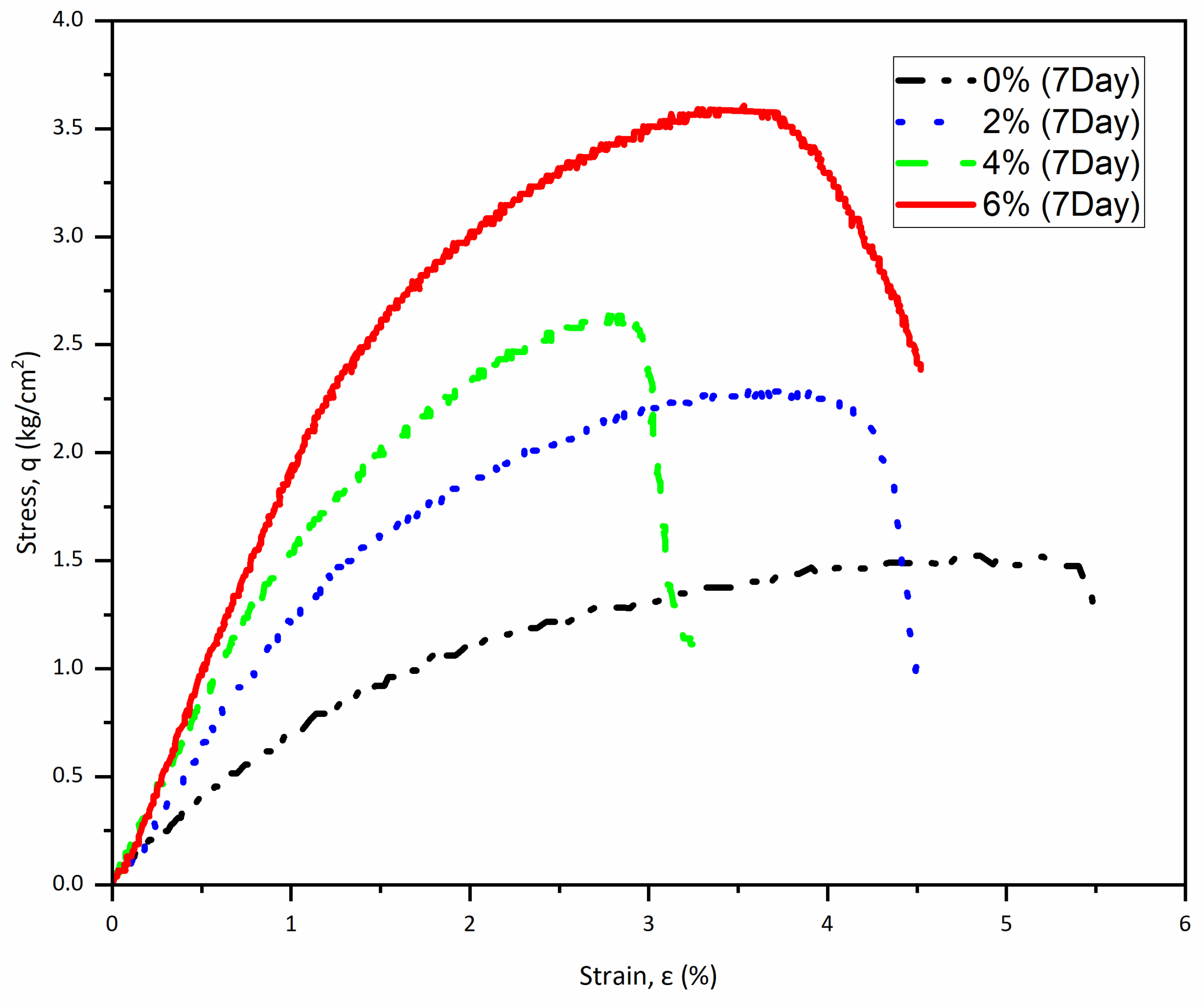
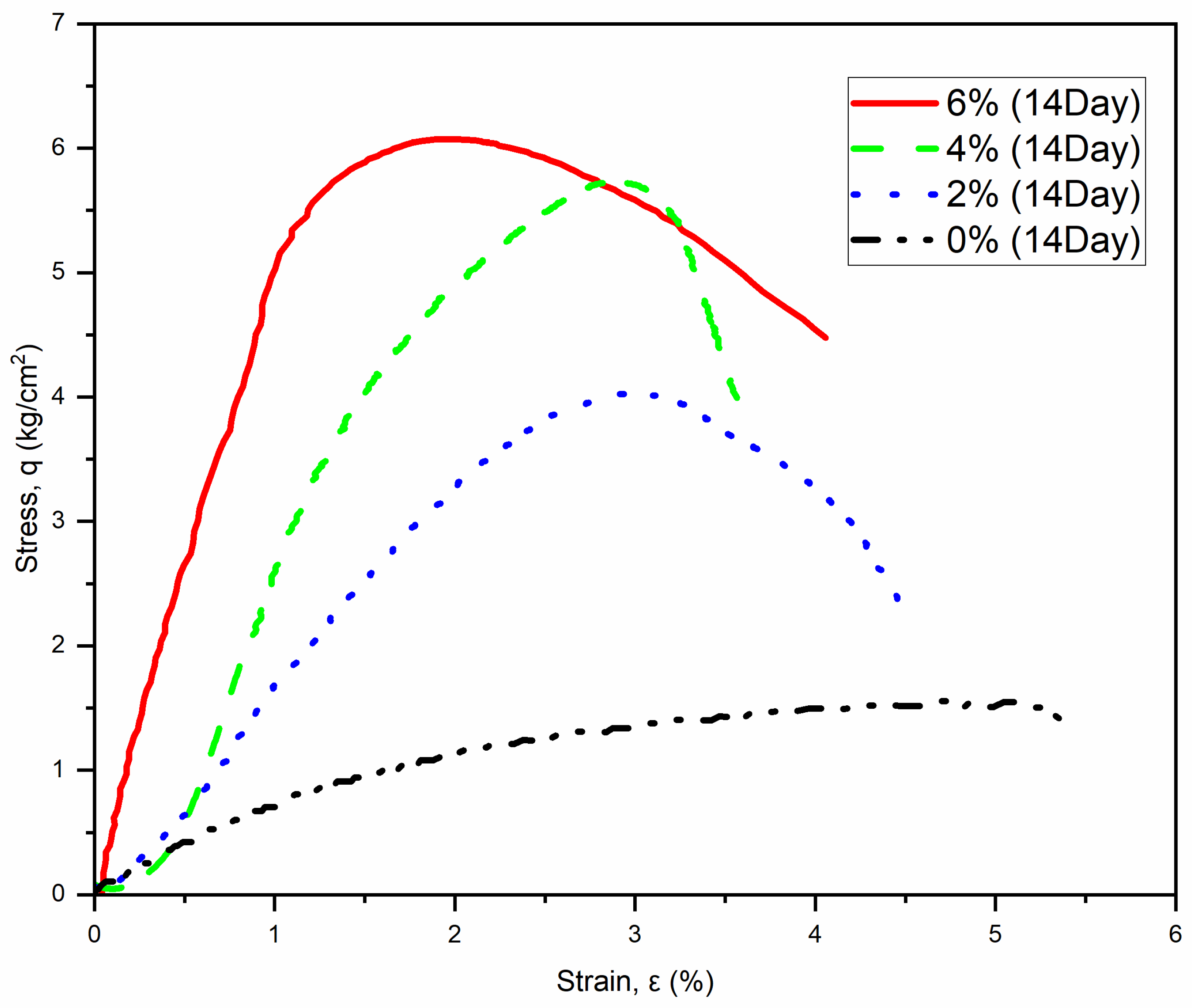
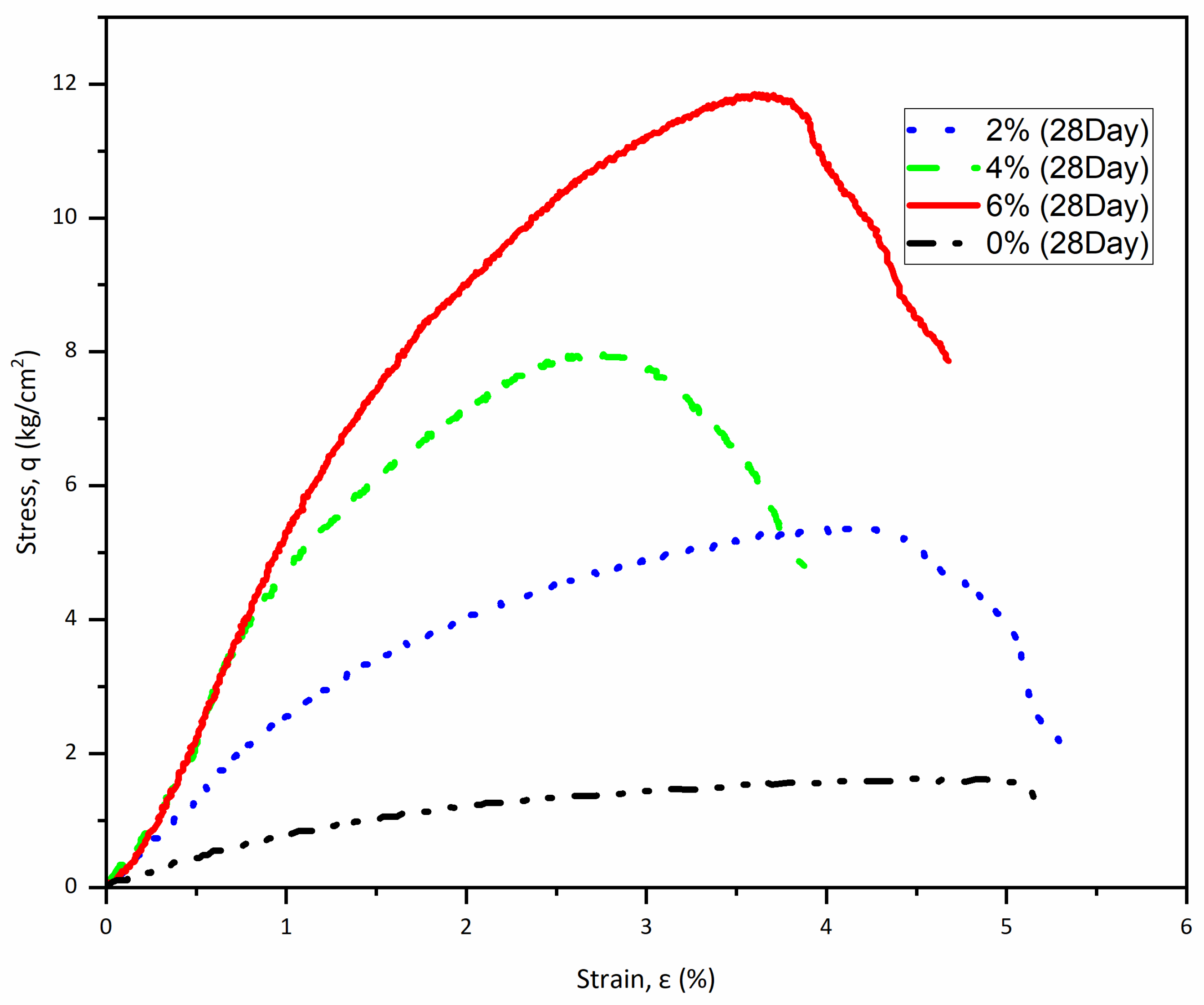
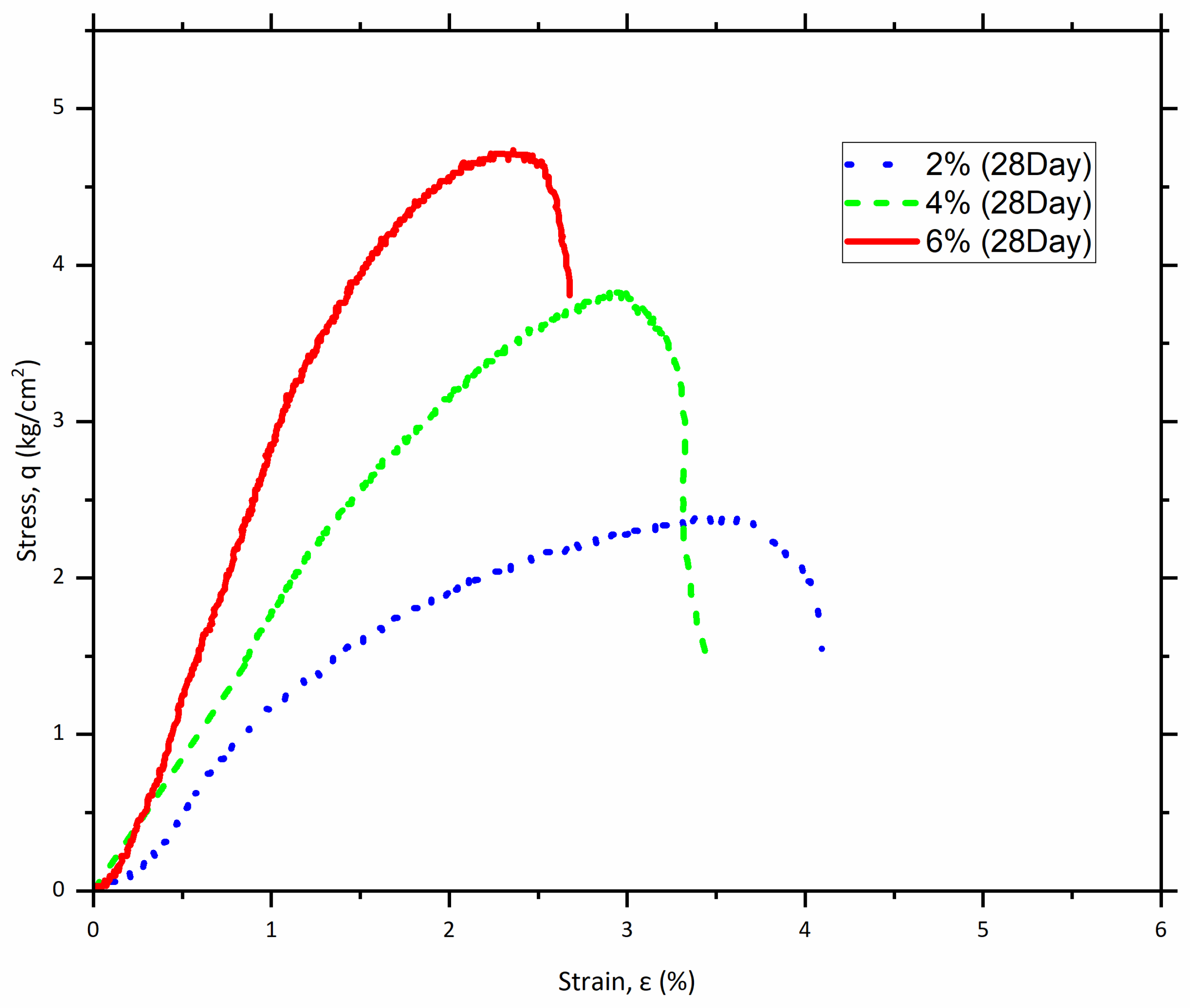
This study investigates how adding polypropylene fibers and cement affects the strength of highly plastic clay used in clay bricks. The research looked at various curing times to improve the strength of clay bricks for effective use in the construction industry. A fiber content of 0.2% was added to the clay and compared to untreated control samples improved with varied amounts of cement (2%, 4%, and 6%). The influence of curing on strength increase was explored, as well as the profile of the stress–strain relationship. The compressive strength increased by 53% to 140% after 7 days of curing, which is almost a quarter of the strength attained after 28 days. The results showed a considerable increase in strength, illustrating the cumulative benefits of longer curing times and the suggested additions. Fiber addition was shown to be associated with a significant increase in compressive strength. This advantage is due to the particle connection established by incorporating the fibers and cement into the mixture. Improvement in tensile and shear strength was investigated. It was also found that fibers made the material more ductile. It was noted that using cement alone can increase the compressive strength but cracking and shrinkage control may not be achieved. When compared to the untreated sample, mixtures containing 0.2% fibers and treated with 2%, 4%, and 6% cement increased compressive strength by 225%, 390%, and 630%, respectively. This improvement is comparable to a 2-, 4-, or 6-fold improvement. This increase will enhance the supporting capacity of the non-load-bearing clay bricks.
Keywords: clay bricks; polypropylene; cement; fibers; plastic clay; strength clay bricks; polypropylene; cement; fibers; plastic clay; strength