Article

Creation of Composite Aerogels Consisting of Activated Carbon and Nanocellulose Blended with Cross-Linked Biopolymers: Application as Ethylene Scavengers

by
Asadullah
1,2,3,4,
Kittaporn Ngiwngam
1,2,
Jaejoon Han
5,
Pornchai Rachtanapun
6,7,8,
Rafael Auras
9,*,
Thomas Karbowiak
10,
Duangjai Noiwan
11,
Masubon Thongngam
12 and
Wirongrong Tongdeesoontorn
1,2,*
1
School of Agro-Industry, Mae Fah Luang University, 333 Moo 1 Tasud, Chiang Rai 57100, Thailand
2
Research Center of Innovative Food Packaging and Biomaterials Unit, Mae Fah Luang University, 333 Moo 1 Tasud, Chiang Rai 57100, Thailand
3
School of Chemical Engineering, Institute of Engineering, Suranaree University of Technology, 111 University Avenue, Nakhon Ratchasima 30000, Thailand
4
Research Center of Chemical Engineering Department, Balochistan University of Informational Technology, Engineering and Management Sciences, Quetta 87300, Pakistan
5
Department of Food Bioscience and Technology, College of Life Sciences and Biotechnology, Korea University, Seoul 02841, Republic of Korea
6
Division of Packaging Technology, School of Agro-Industry, Faculty of Agro-Industry, Chiang Mai University, Chiang Mai 50100, Thailand
7
The Cluster of Agro Bio-Circular-Green Industry (Agro BCG), Chiang Mai University, Chiang Mai 50100, Thailand
8
Center of Excellence in Materials Science and Technology, Chiang Mai University, Chiang Mai 50200, Thailand
9
School of Packaging, Michigan State University, 448 Wilson Rd, East Lansing, MI 48824, USA
10
Institut Agro, INRAe, UMR PAM 1517, Université Bourgogne Franche-Comté, 1 Esplanade Erasme, 21000 Dijon, France
11
Department of Postharvest Technology, Faculty of Engineering and Agro-Industry, Maejo University, Chiang Mai 50290, Thailand
12
Department of Food Science and Technology, Faculty of Agro-Industry, Kasetsart University, Bangkok 10900, Thailand
*
Authors to whom correspondence should be addressed.
Polymers 2024, 16(21), 3081; https://doi.org/10.3390/polym16213081
Submission received: 21 August 2024 / Revised: 2 October 2024 / Accepted: 29 October 2024 / Published: 31 October 2024

Abstract

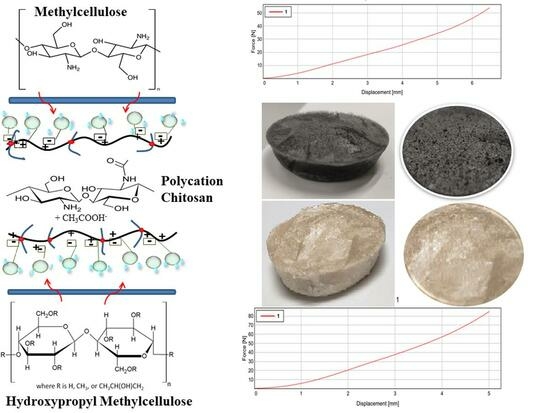
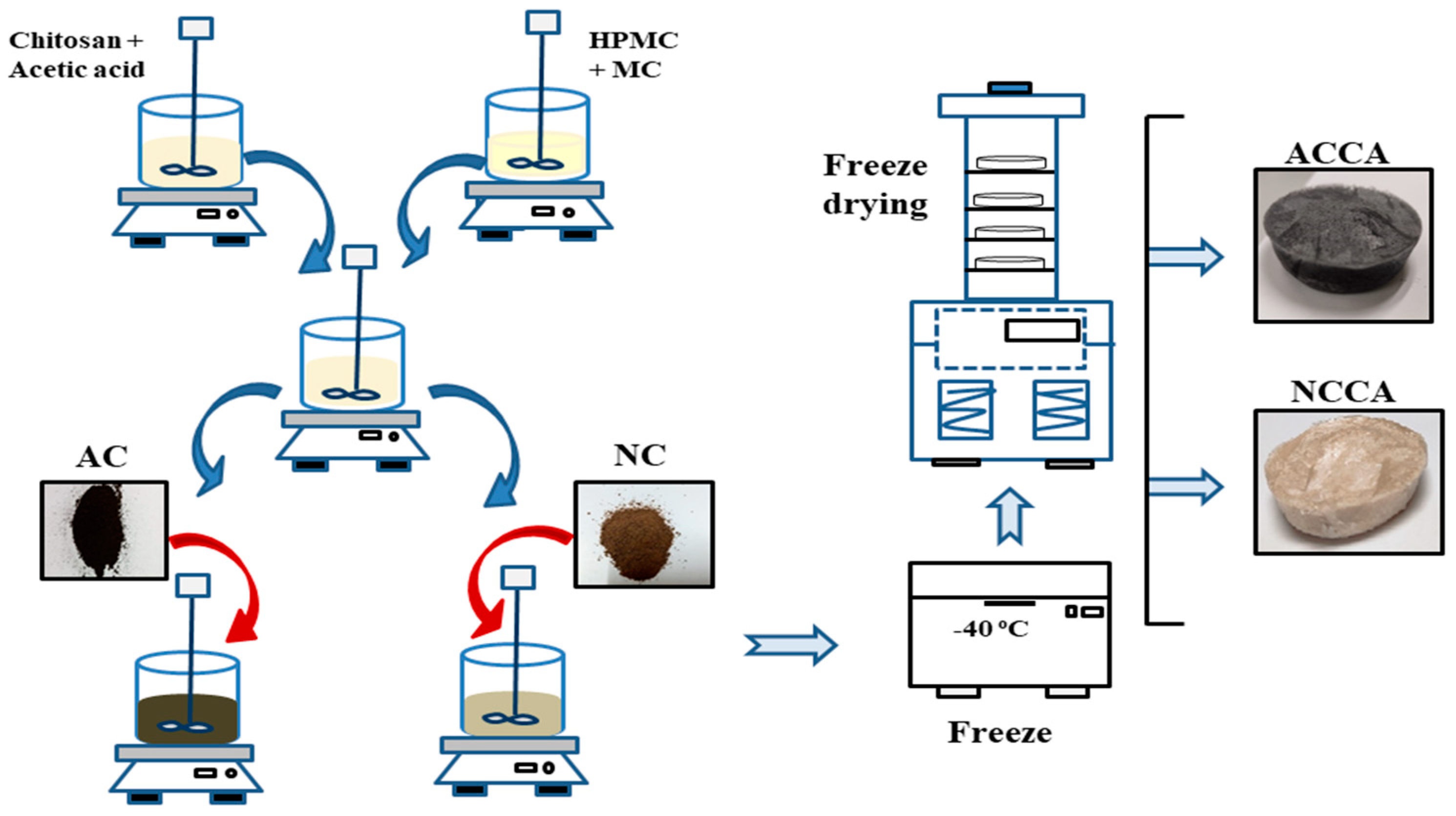
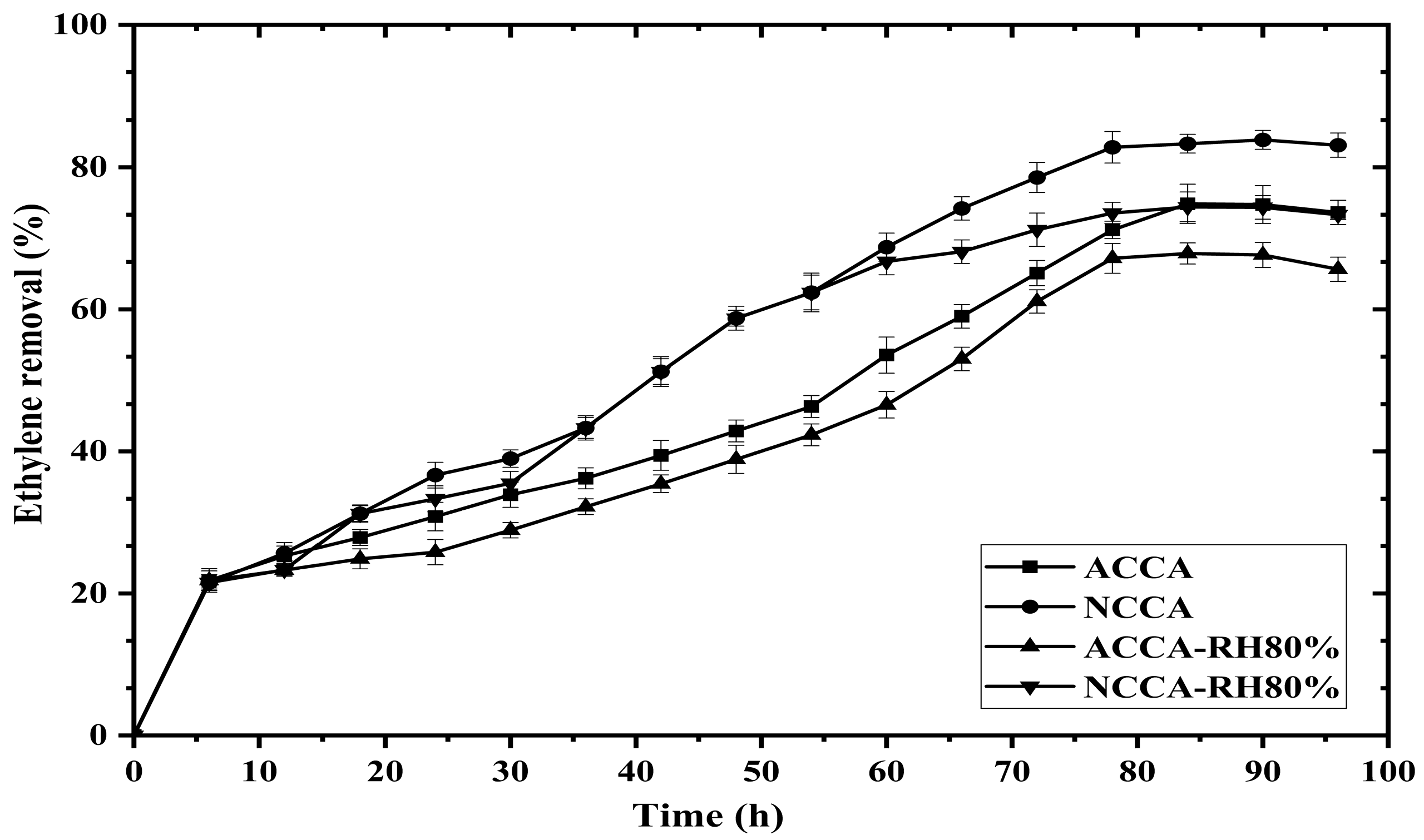
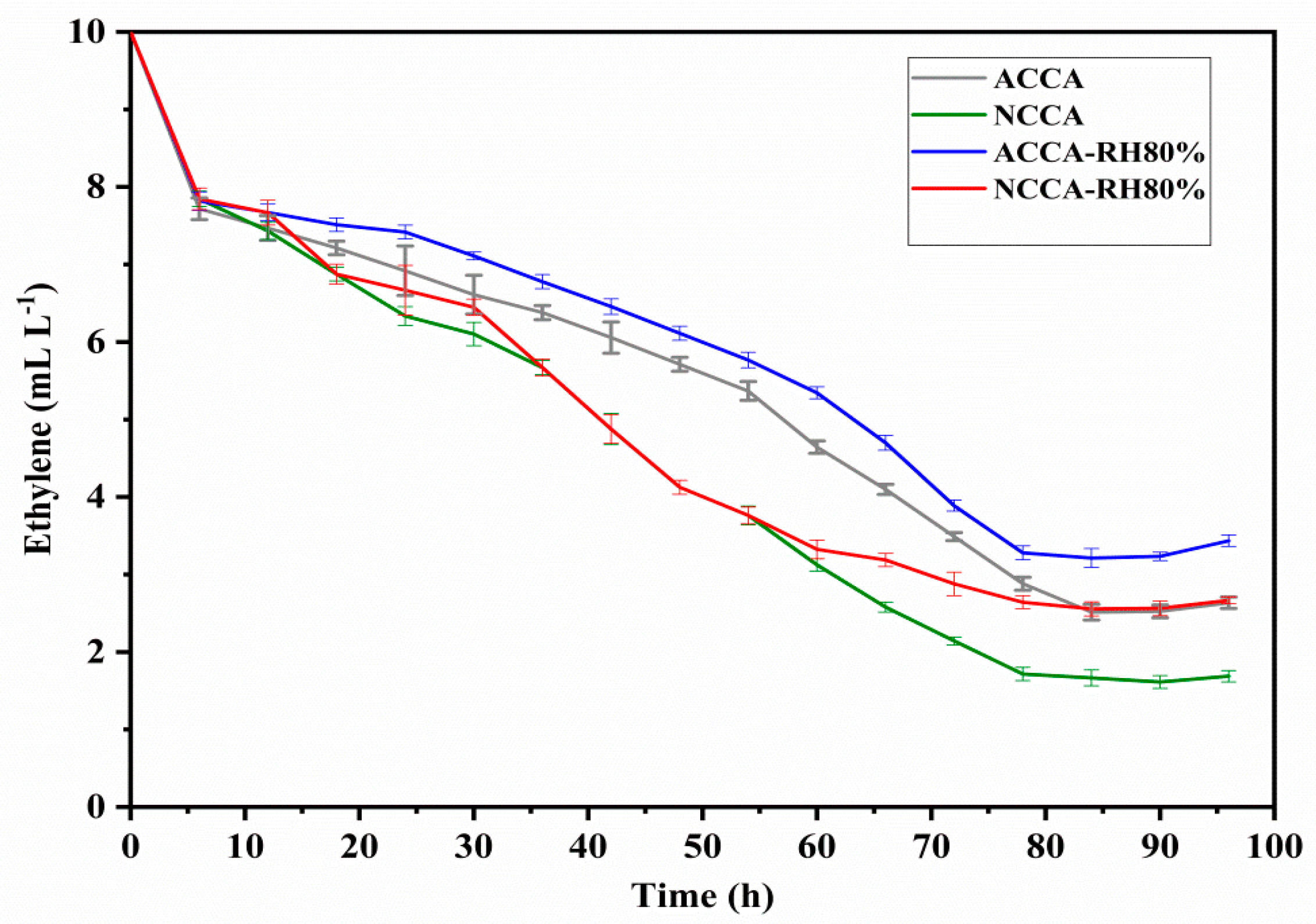
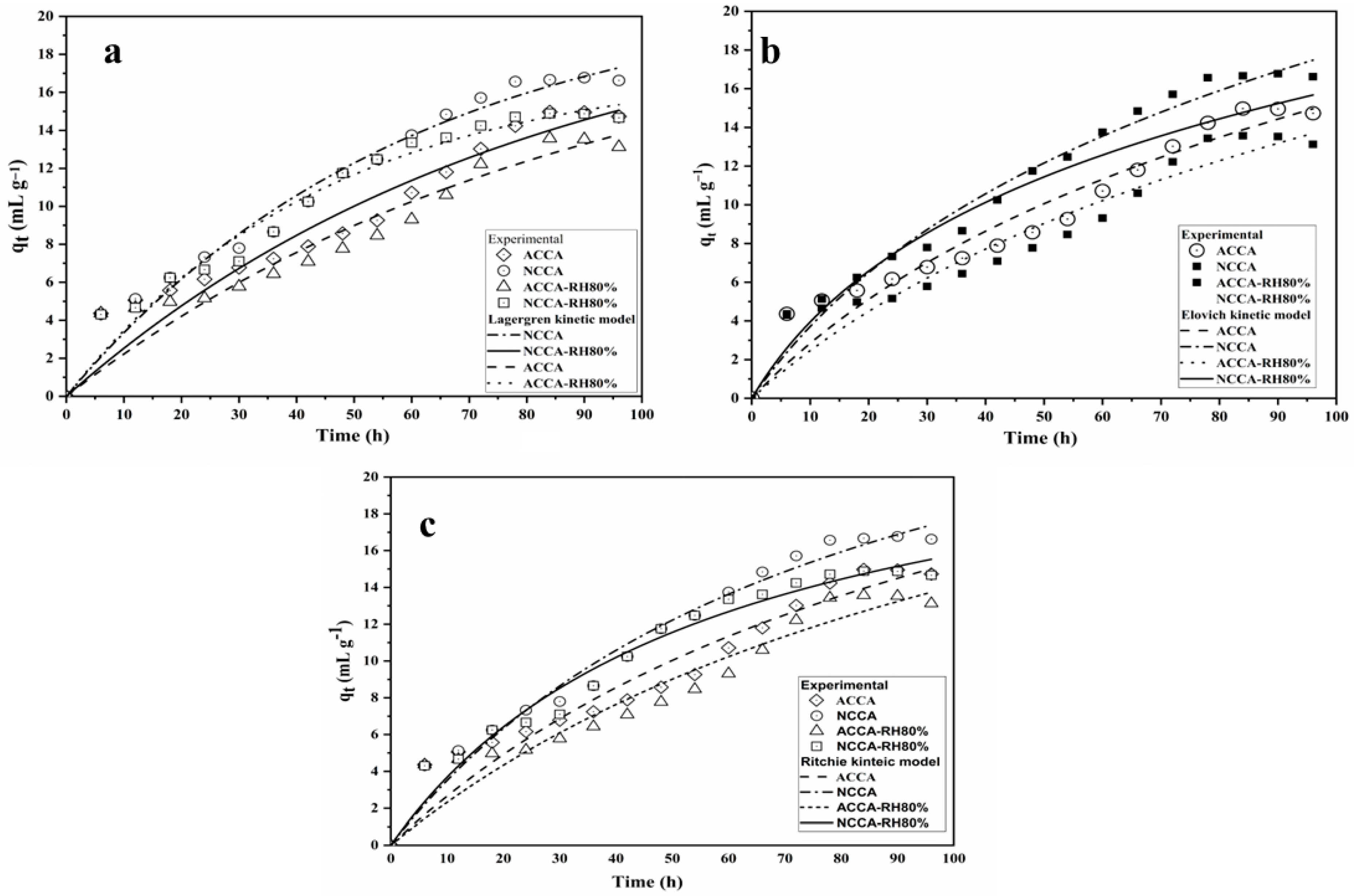
This study involved producing aerogels using activated carbon (AC) and nanocellulose (NC). Two distinct structured composites, AC composite aerogel (ACCA) and NC composite aerogel (NCCA), were developed by separately mixing AC and NC with identical proportions of cross-linked biopolymers: hydroxypropyl methylcellulose (HPMC), methylcellulose (MC), and chitosan (C). These aerogels were evaluated for their capability to adsorb ethylene gas through batch experiments, while the physical and chemical characteristics were thoroughly examined to determine their feasibility of removing ethylene. The resulting ACCA and NCCA aerogels exhibited low densities of 0.094 g cm−3 and 0.077 g cm−3, respectively, coupled with high porosity ranging between 95 and 96%. During the ethylene adsorption test, NCCA exhibited superior ethylene removal rates (~14.88–16.77 mL kg−1) compared to ACCA (~13.57–14.97 mL kg−1). Specifically, NCCA achieved a removal efficiency of 83.86% compared to 74.64% for ACCA. Kinetic model fitting yielded high R2 values ranging from 0.97 to 0.98 with the Lagergren kinetic model. These findings suggest the potential of composite aerogels to be incorporated into food packaging materials for dynamic ethylene capture, independent of environmental conditions, thereby providing promising routes for further development.
Keywords: activated carbon; nanocellulose; aerogel; ethylene gas; biopolymer; macadamia nutshell activated carbon; nanocellulose; aerogel; ethylene gas; biopolymer; macadamia nutshell
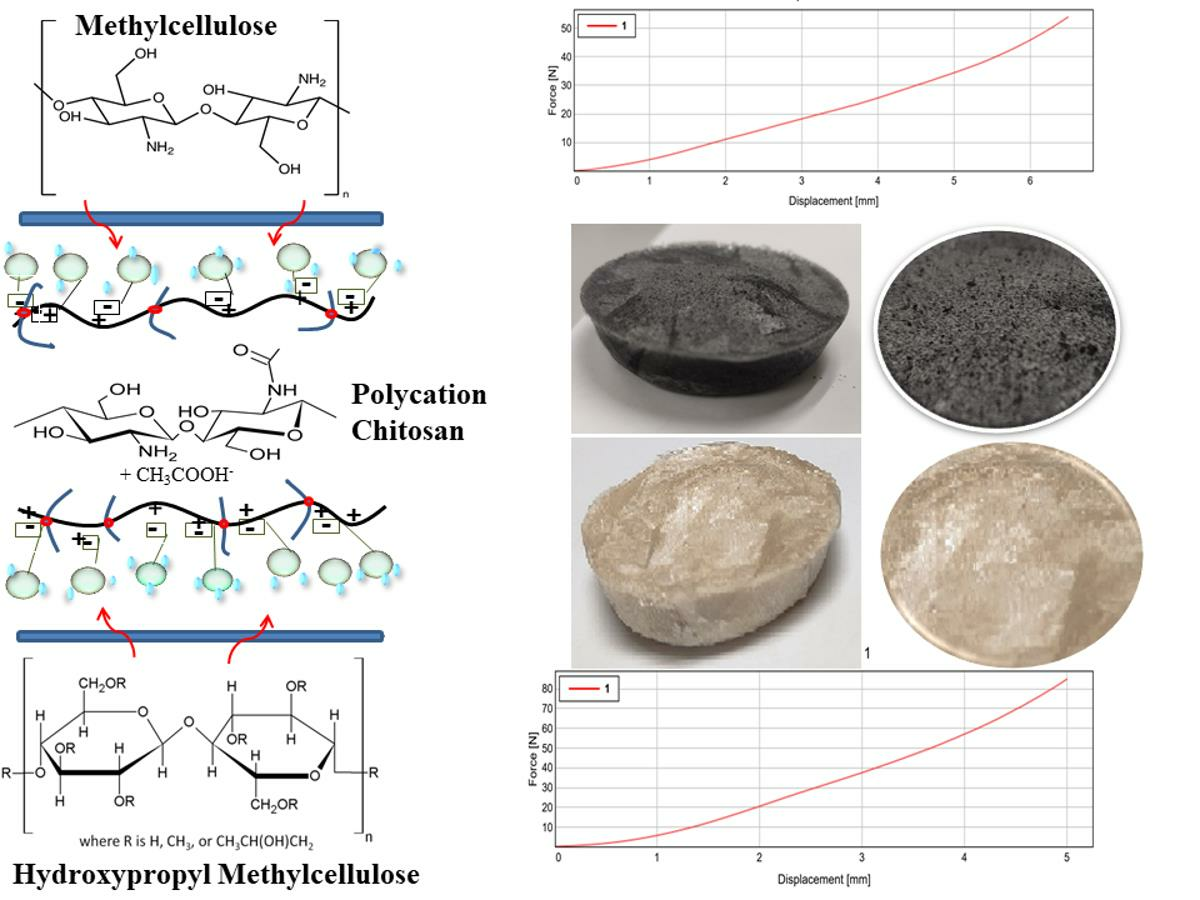
Graphical Abstract