Hydrogel Applicability for the Industrial Effluent Treatment: A Systematic Review and Bibliometric Analysis
 and
and
Abstract
1. Introduction
2. Materials and Methods
- -
- Inclusion criteria
- Studies in the final phase of publication;
- Scientific articles;
- Study period between 2015–2022;
- Works focused on the treatment of industrial wastewater through hydrogels as adsorption technologies;
- Publications in the English language.
- -
- Exclusion criteria
- Titles that do not have at least two keywords;
- Other languages;
- Review articles;
- Thesis, dissertations, books, conferences;
- Grey literature.
3. Results
3.1. Investigative Field Evolution
Literature Development from 2000–2022
3.2. Global Evolution of the Most Relevant Countries, Sources, and Authors
3.3. Thematic Evolution in the Period 2015–2022
3.4. Systematic Analysis of the Selected Literature
4. Discussion
5. Conclusions
Author Contributions
Funding
Institutional Review Board Statement
Data Availability Statement
Acknowledgments
Conflicts of Interest
References
- Schweitzer, L.; Noblet, J. Chapter 3.6—Water contamination and pollution. In Green Chemistry: An Inclusive Approach, 1st ed.; University of Massachusetts Boston: Boston, MA, USA, 2017; pp. 261–290. ISBN 9780128092705. [Google Scholar]
- Wang, Q.; Yang, Z. Industrial water pollution, water environment treatment, and health risks in China. Environ. Pollut. 2016, 218, 358–365. [Google Scholar] [CrossRef] [PubMed]
- Ilyas, M.; Ahmad, W.; Khan, H.; Yousaf, S.; Yasir, M.; Khan, A. Environmental and health impacts of industrial wastewater effluents in Pakistan: A review. Rev. Environ. Health 2019, 34, 171–186. [Google Scholar] [CrossRef] [PubMed]
- Crini, G.; Lichtfouse, E. Advantages and disadvantages of techniques used for wastewater treatment. Environ. Chem. Lett. 2018, 17, 145–155. [Google Scholar] [CrossRef]
- Wang, Q.; Wang, X.; Liu, Y.; Li, R. Urbanization and water consumption at national- and subnational-scale: The roles of structural changes in economy, population, and resources. Sustain. Cities Soc. 2021, 75, 103272. [Google Scholar] [CrossRef]
- Liu, J.; Wang, Y.; Yu, Z.; Cao, X.; Tian, L.; Sun, S.; Wu, P. A comprehensive analysis of blue water scarcity from the production, consumption, and water transfer perspectives. Ecol. Indic. 2017, 72, 870–880. [Google Scholar] [CrossRef]
- Rehman, A.; Chandio, A.A.; Hussain, I.; Luan, J. Fertilizer consumption, water availability and credit distribution: Major factors affecting agricultural productivity in Pakistan. J. Saudi Soc. Agric. Sci. 2019, 18, 269–274. [Google Scholar] [CrossRef]
- Kaika, M. The Water Framework Directive: A New Directive for a Changing Social, Political and Economic European Framework. Eur. Plan. Stud. 2003, 11, 299–316. [Google Scholar] [CrossRef]
- Rabadán, A.; Sáez-Martínez, F. Why european entrepreneurs in the water and waste management sector are willing to go beyond environmental legislation. Water 2017, 9, 151. [Google Scholar] [CrossRef]
- Kochskämper, E.; Challies, E.; Newig, J.; Jager, N.W. Participation for effective environmental governance? Evidence from Water Framework Directive implementation in Germany, Spain and the United Kingdom. J. Environ. Manag. 2016, 181, 737–748. [Google Scholar] [CrossRef]
- Giupponi, C.; Gain, A.K. Integrated water resources management (IWRM) for climate change adaptation. Reg. Environ. Chang. 2017, 17, 1865–1867. [Google Scholar] [CrossRef]
- Bebbington, J.; Unerman, J. Achieving the United Nations Sustainable Development Goals. Account. Audit. Account. J. 2018, 31, 2–24. [Google Scholar] [CrossRef]
- Priya Sharma, A.K.; Kaith, B.S.; Tanwar, V.; Bhatia, J.K.; Sharma, N.; Bajaj, S.; Panchal, S. RSM-CCD optimized sodium alginate/gelatin based ZnS-nanocomposite hydrogel for the effective removal of biebrich scarlet and crystal violet dyes. Int. J. Biol. Macromol. 2019, 129, 214–226. [Google Scholar] [CrossRef] [PubMed]
- Ertugay, N.; Acar, F.N. Removal of COD and color from direct blue 71 azo dye wastewater by fenton’s oxidation: Kinetic study. Arab. J. Chem. 2017, 10, S1158–S1163. [Google Scholar] [CrossRef]
- Piaskowski, K.; Świderska-Dąbrowska, R.; Zarzycki, P.K. Dye Removal from Water and Wastewater Using Various Physical, Chemical, and Biological Processes. J. AOAC Int. 2018, 101, 1371–1384. [Google Scholar] [CrossRef] [PubMed]
- Wang, J.; Chen, H. Catalytic ozonation for water and wastewater treatment: Recent advances and perspective. Sci. Total Environ. 2020, 704, 135249. [Google Scholar] [CrossRef] [PubMed]
- Kıvanç, M.R.; Yönten, V. A statistical optimization of methylene blue removal from aqueous solutions by Agaricus Campestris using multi-step experimental design with response surface methodology: Isotherm, kinetic and thermodynamic studies. Surf. Interfaces 2020, 18, 100414. [Google Scholar] [CrossRef]
- Li, T.; Liu, L.; Zhang, Z.; Han, Z. Preparation of nanofibrous metal-organic framework filter for rapid adsorption and selective separation of cationic dye from aqueous solution. Sep. Purif. Technol. 2020, 237, 116360. [Google Scholar] [CrossRef]
- Bento, R.M.; Almeida, M.R.; Bharmoria, P.; Freire, M.G.; Tavares, A.P. Improvements in the enzymatic degradation of textile dyes using ionic-liquid-based surfactants. Sep. Purif. Technol. 2020, 235, 116191. [Google Scholar] [CrossRef]
- Ozturk, D.; Yilmaz, A.E. Investigation of electrochemical degradation of Basic Red 13 dye in aqueous solutions based on COD removal: Numerical optimization approach. Int. J. Environ. Sci. Technol. 2020, 17, 3099–3110. [Google Scholar] [CrossRef]
- Zuo, S.; Li, D.; Xu, H.; Xia, D. An integrated microwave-ultraviolet catalysis process of four peroxides for wastewater treatment: Free radical generation rate and mechanism. Chem. Eng. J. 2020, 380, 122434. [Google Scholar] [CrossRef]
- Chen, J.; Zhang, X.; Shi, X.; Bi, F.; Yang, Y.; Wang, Y. Synergistic effects of octahedral TiO2-MIL-101(Cr) with two heterojunctions for enhancing visible-light photocatalytic degradation of liquid tetracycline and gaseous toluene. J. Colloid Interface Sci. 2020, 579, 37–49. [Google Scholar] [CrossRef] [PubMed]
- Bustos-Terrones, Y.A.; Hermosillo-Nevárez, J.J.; Ramírez-Pereda, B.; Vaca, M.; Rangel-Peraza, J.G.; Bustos-Terrones, V.; Rojas-Valencia, M.N. Removal of BB9 textile dye by biological, physical, chemical, and electrochemical treatments. J. Taiwan Inst. Chem. Eng. 2021, 121, 29–37. [Google Scholar] [CrossRef]
- Sezgin, N.; Balkaya, N. Adsorption of heavy metals from industrial wastewater by using polyacrylic acid hydrogel. Desalin. Water Treat. 2015, 57, 2466–2480. [Google Scholar] [CrossRef]
- Pereira, A.; Martins, A.; Paulino, A.; Fajardo, A.; Guilherme, M.; Faria, M.; Linde, G.; Rubira, A.; Muniz, E. Recent Advances in Designing Hydrogels from Chitin and Chitin-Derivatives and their Impact on Environment and Agriculture: A Review. Rev. Virtual Quim. 2017, 9, 370–386. [Google Scholar] [CrossRef]
- Tran, V.; Park, D.; Lee, Y. Hydrogel applications for adsorption of contaminants in water and wastewater treatment. Environ. Sci. Pollut. Res. 2018, 25, 24569–24599. [Google Scholar] [CrossRef]
- Samaddar, P.; Kumar, S.; Kim, K.H. Polymer hydrogels and their applications toward sorptive removal of potential aqueous pollutants. Polym. Rev. (Phila Pa) 2019, 59, 418–464. [Google Scholar] [CrossRef]
- Verma, A.; Thakur, S.; Mamba, G.; Prateek Gupta, R.; Thakur, P.; Thakur, V. Graphite modified sodium alginate hydrogel composite for efficient removal of malachite green dye. Int. J. Biol. Macromol. 2020, 148, 1130–1139. [Google Scholar] [CrossRef]
- Santos, C.M.D.C.; Pimenta, C.A.D.M.; Nobre, M.R.C. The PICO strategy for the research question construction and evidence search. Rev. Lat. Am. Enferm. 2007, 15, 508–511. [Google Scholar] [CrossRef]
- Pan, Y.; Yin, C.; Fernandez, C.; Fu, L.; Lin, C.T. A Systematic Review and Bibliometric Analysis of Flame-Retardant Rigid Polyurethane Foam from 1963 to 2021. Polymers 2022, 14, 3011. [Google Scholar] [CrossRef]
- Olisah, C.; Okoh, O.O.; Okoh, A.I. A bibliometric analysis of investigations of polybrominated diphenyl ethers (PBDEs) in biological and environmental matrices from 1992–2018. Heliyon 2018, 4, e00964. [Google Scholar] [CrossRef]
- Reis, C.H.B.; Buchaim, D.V.; Ortiz, A.D.C.; Fideles, S.O.M.; Dias, J.A.; Miglino, M.A.; Teixeira, D.D.B.; Pereira, E.D.S.B.M.; da Cunha, M.R.; Buchaim, R.L. Application of Fibrin Associated with Photobiomodulation as a Promising Strategy to Improve Regeneration in Tissue Engineering: A Systematic Review. Polymers 2022, 14, 3150. [Google Scholar] [CrossRef] [PubMed]
- Zhu, J.; Liu, W. A tale of two databases: The use of Web of Science and Scopus in academic papers. Scientometrics 2020, 123, 321–335. [Google Scholar] [CrossRef]
- Zyoud, S.H.; Waring, W.S.; Al-Jabi, S.W.; Sweileh, W.M. Global cocaine intoxication research trends during 1975–2015: A bibliometric analysis of Web of Science publications. Subst. Abus. Treat. Prev. Policy 2017, 12, 6. [Google Scholar] [CrossRef] [PubMed]
- Rovira, C.; Codina, L.; Guerrero-Solé, F.; Lopezosa, C. Ranking by Relevance and Citation Counts, a Comparative Study: Google Scholar, Microsoft Academic, WoS and Scopus. Future Internet 2019, 11, 202. [Google Scholar] [CrossRef]
- Aria, M.; Cuccurullo, C. Bibliometrix: An R-tool for comprehensive science mapping analysis. J. Informetr. 2017, 11, 959–975. [Google Scholar] [CrossRef]
- R Core Team. R: A Language and Environment for Statistical Computing (4.2.1). Available online: https://www.r-project.org (accessed on 28 October 2022).
- Haddaway, N.R.; Page, M.J.; Pritchard, C.C.; McGuinness, L.A. PRISMA 2020: An R package and Shiny app for producing PRISMA 2020-compliant flow diagrams, with interactivity for optimised digital transparency and Open Synthesis. Campbell Syst. Rev. 2022, 18, e1230. [Google Scholar] [CrossRef]
- Ouzzani, M.; Hammady, H.; Fedorowicz, Z.; Elmagarmid, A. Rayyan—A web and mobile app for systematic reviews. Syst. Rev. 2016, 5, 210. [Google Scholar] [CrossRef] [PubMed]
- Vrabel, M. Preferred Reporting Items for Systematic Reviews and Meta-Analyses. Oncol. Nurs. Forum 2015, 42, 552–554. [Google Scholar] [CrossRef] [PubMed]
- Moher, D.; Thombs, B.D.; McGrath, T.A.; Bossuyt, P.M.; Clifford, T.; Cohen, J.F.; Deeks, J.J.; Gatsonis, C.; Hooft, L.; Hunt, H.A.; et al. Preferred Reporting Items for a Systematic Review and Meta-analysis of Diagnostic Test Accuracy Studies. JAMA 2018, 319, 388. [Google Scholar] [CrossRef]
- Moher, D.; Liberati, A.; Tetzlaff, J.; Altman, D.G.; The PRISMA Group. Ítems de referencia para publicar Revisiones Sistemáticas y Metaanálisis: La Declaración PRISMA. Rev. Esp. Nutr. Hum. Diet. 2014, 18, 172–181. [Google Scholar] [CrossRef]
- UNESCO and Sustainable Development Goals. Available online: https://en.unesco.org/sustainabledevelopmentgoals (accessed on 30 October 2022).
- Sánchez, L.E.; Croal, P. Environmental impact assessment, from Rio-92 to Rio+20 and beyond. Ambient Soc. 2012, 15, 41–54. [Google Scholar] [CrossRef]
- Lupi, F.; Gentile, L.; Gabriele, D.; Mazzulla, S.; Baldino, N.; de Cindio, B. Olive oil and hyperthermal water bigels for cosmetic uses. J. Colloid Interface Sci. 2015, 459, 70–78. [Google Scholar] [CrossRef] [PubMed]
- Bashari, A.; Shirvan, A.; Shakeri, M. Cellulose-based hydrogels for personal care products. Polym. Adv. Technol. 2018, 29, 2853–2867. [Google Scholar] [CrossRef]
- Farjami, T.; Madadlou, A. An overview on preparation of emulsion-filled gels and emulsion particulate gels. Trends Food Sci. Technol. 2019, 86, 85–94. [Google Scholar] [CrossRef]
- Li, J.; Jia, X.; Yin, L. Hydrogel: Diversity of Structures and Applications in Food Science. Food Rev. Int. 2021, 37, 313–372. [Google Scholar] [CrossRef]
- Caliari, S.R.; Burdick, J.A. A practical guide to hydrogels for cell culture. Nat. Methods 2016, 13, 405–414. [Google Scholar] [CrossRef]
- Chaudhuri, O. Viscoelastic hydrogels for 3D cell culture. Biomater. Sci. 2017, 5, 1480–1490. [Google Scholar] [CrossRef]
- Skrzypczak, D.; Mikula, K.; Kossińska, N.; Widera, B.; Warchoł, J.; Moustakas, K.; Chojnacka, K.; Witek-Krowiak, A. Biodegradable hydrogel materials for water storage in agriculture—Review of recent research. Desalin. Water Treat. 2020, 194, 324–332. [Google Scholar] [CrossRef]
- Qu, B.; Luo, Y. Chitosan-based hydrogel beads: Preparations, modifications and applications in food and agriculture sectors—A review. Int. J. Biol. Macromol. 2020, 152, 437–448. [Google Scholar] [CrossRef]
- Fu, L.; Yu, A.; Lai, G. Conductive Hydrogel-Based Electrochemical Sensor: A Soft Platform for Capturing Analyte. Chemosensors 2021, 9, 282. [Google Scholar] [CrossRef]
- Charaya, H.; La, T.; Rieger, J.; Chung, H. Thermochromic and piezocapacitive flexible sensor array by combining composite elastomer dielectrics and transparent ionic hydrogel electrodes. Adv. Mater. Technol. 2019, 4, 1900327. [Google Scholar] [CrossRef]
- Jain, P.; Sahoo, K.; Mahiya, L.; Ojha, H.; Trivedi, H.; Parmar, A.S.; Kumar, M. Color removal from model dye effluent using PVA-GA hydrogel beads. J. Environ. Manag. 2021, 281, 111797. [Google Scholar] [CrossRef] [PubMed]
- Zhou, G.; Liu, C.; Chu, L.; Tang, Y.; Luo, S. Rapid and efficient treatment of wastewater with high-concentration heavy metals using a new type of hydrogel-based adsorption process. Bioresour. Technol. 2016, 219, 451–457. [Google Scholar] [CrossRef]
- Zhou, G.; Luo, J.; Liu, C.; Chu, L.; Ma, J.; Tang, Y.; Zeng, Z.; Luo, S. A highly efficient polyampholyte hydrogel sorbent based fixed-bed process for heavy metal removal in actual industrial effluent. Water Res. 2016, 89, 151–160. [Google Scholar] [CrossRef] [PubMed]
- Peñas, F.J.; Romo, A.; Isasi, J.R. Removal of cresols from water by packed beds of cyclodextrin-based hydrogels. J. Polym. Environ. 2021, 30, 1189–1198. [Google Scholar] [CrossRef]
- Burillo, J.C.; Castro-Larragoitia, J.; Burillo, G.; Ortega, A.; Medellin-Castillo, N. Removal of arsenic and iron from mine-tailing leachate using chitosan hydrogels synthesized by gamma radiation. Environ. Earth Sci. 2017, 76, 450. [Google Scholar] [CrossRef]
- Zhou, G.; Luo, J.; Liu, C.; Chu, L.; Crittenden, J. Efficient heavy metal removal from industrial melting effluent using fixed-bed process based on porous hydrogel adsorbents. Water Res. 2018, 131, 246–254. [Google Scholar] [CrossRef]
- Ma, J.; Liu, Y.; Ali, O.; Wei, Y.; Zhang, S.; Zhang, Y.; Cai, T.; Liu, C.; Luo, S. Fast adsorption of heavy metal ions by waste cotton fabrics based double network hydrogel and influencing factors insight. J. Hazard. Mater. 2018, 344, 1034–1042. [Google Scholar] [CrossRef]
- Jang, J.; Lee, D.S. Enhanced adsorption of cesium on PVA-alginate encapsulated Prussian blue-graphene oxide hydrogel beads in a fixed-bed column system. Bioresour. Technol. 2016, 218, 294–300. [Google Scholar] [CrossRef]
- Sharma, N.; Tiwari, A. Nanomagnetite-loaded poly (acrylamide-co-itaconic acid) hydrogel as adsorbent for effective removal of Mn2+from contaminated water. Desalin. Water Treat. 2015, 57, 5654–5672. [Google Scholar] [CrossRef]
- Lin, P.J.; Yang, M.C.; Li, Y.L.; Chen, J.H. Prevention of surfactant wetting with agarose hydrogel layer for direct contact membrane distillation used in dyeing wastewater treatment. J. Membr. Sci. 2015, 475, 511–520. [Google Scholar] [CrossRef]
- Wan, J.; Tao, T.; Zhang, Y.; Liang, X.; Zhou, A.; Zhu, C. Phosphate adsorption on novel hydrogel beads with interpenetrating network (IPN) structure in aqueous solutions: Kinetics, isotherms and regeneration. RSC Adv. 2016, 6, 23233–23241. [Google Scholar] [CrossRef]
- Yi, Q.; Tan, J.; Liu, W.; Lu, H.; Xing, M.; Zhang, J. Peroxymonosulfate activation by three-dimensional cobalt hydroxide/graphene oxide hydrogel for wastewater treatment through an automated process. Chem. Eng. J. 2020, 400, 125965. [Google Scholar] [CrossRef]
- He, S.; Zhang, F.; Cheng, S.; Wang, W. Synthesis of Sodium Acrylate and Acrylamide Copolymer/GO Hydrogels and Their Effective Adsorption for Pb2+ and Cd2+. ACS Sustain. Chem. Eng. 2016, 4, 3948–3959. [Google Scholar] [CrossRef]
- Song, X.H.; Goh, K.L.; Wang, K. The equilibrium and fixed-bed study of malachite green adsorption on chitosan hydrogels. Water Sci. Technol. 2019, 79, 1571–1579. [Google Scholar] [CrossRef]
- Yan, Y.Z.; Zheng, W.; Huang, D.Z.; Xiao, Z.Y.; Park, S.S.; Ha, C.S.; Zhai, S.R. Hierarchical multi-porous carbonaceous beads prepared with nano-CaCO3 in-situ encapsulated hydrogels for efficient batch and column removal of antibiotics from water. Microporous Mesoporous Mater. 2020, 293, 109830. [Google Scholar] [CrossRef]
- Pei, Y.Y.; Guo, D.M.; An, Q.D.; Xiao, Z.Y.; Zhai, S.R.; Zhai, B. Hydrogels with diffusion-facilitated porous network for improved adsorption performance. Korean J. Chem. Eng. 2018, 35, 2384–2393. [Google Scholar] [CrossRef]
- Bethi, B.; Manasa, V.; Srinija, K.; Sonawane, S.H. Intensification of Rhodamine-B dye removal using hydrodynamic cavitation coupled with hydrogel adsorption. Chem. Eng. Process. 2018, 134, 51–57. [Google Scholar] [CrossRef]
- Sharma, N.; Tiwari, A. Nano-ZnO-loaded poly (acrylamide-co-itaconic acid) hydrogel as adsorbent for effective removal of iron from contaminated water. Desalin. Water Treat. 2015, 57, 6463–6476. [Google Scholar] [CrossRef]
- Zhuang, Y.; Yu, F.; Chen, J.; Ma, J. Batch and column adsorption of methylene blue by graphene/alginate nanocomposite: Comparison of single-network and double-network hydrogels. J. Environ. Chem. Eng. 2016, 4, 147–156. [Google Scholar] [CrossRef]
- Gonçalves, H.; Fregolente, P.; de Andrade, G.; Maciel, M.R.; Fregolente, L. Development of a Hydrogel Column for Water Removal from Fuels. Chem. Eng. Trans. 2021, 86, 1117–1122. [Google Scholar] [CrossRef]
- Dong, S.; Wang, Y.; Li, J.; Zhang, D.; Zhou, Y.; Tong, Y. Tuning the crosslink structure of cationic hydrogel for enhanced chromium(VI) removal: The covalent and electrostatic co-crosslinked effects and adsorption mechanism. Chem. Eng. J. 2020, 394, 124944. [Google Scholar] [CrossRef]
- He, J.; Cui, A.; Ni, F.; Deng, S.; Shen, F.; Yang, G. A novel 3D yttrium based-graphene oxide-sodium alginate hydrogel for remarkable adsorption of fluoride from water. J. Colloid Interface Sci. 2018, 531, 37–46. [Google Scholar] [CrossRef] [PubMed]
- Yang, J.; Chen, X.; Zhang, J.; Wang, Y.; Wen, H.; Xie, J. Role of chitosan-based hydrogels in pollutants adsorption and freshwater harvesting: A critical review. Int. J. Biol. Macromol. 2021, 189, 53–64. [Google Scholar] [CrossRef]
- Mohammadzadeh, P.P.; Peighambardoust, S.J. A review on acrylic based hydrogels and their applications in wastewater treatment. J. Environ. Manag. 2018, 217, 123–143. [Google Scholar] [CrossRef]
- Junlapong, K.; Maijan, P.; Chaibundit, C.; Chantarak, S. Effective adsorption of methylene blue by biodegradable superabsorbent cassava starch-based hydrogel. Int. J. Biol. Macromol. 2020, 158, 258–264. [Google Scholar] [CrossRef]
- Shalla, A.H.; Yaseen, Z.; Bhat, M.A.; Rangreez, T.A.; Maswal, M. Recent review for removal of metal ions by hydrogels. Sep. Sci. Technol. 2018, 54, 89–100. [Google Scholar] [CrossRef]
- Birgersson, E.; Li, H.; Wu, S. Transient analysis of temperature-sensitive neutral hydrogels. J. Mech. Phys. Solids 2008, 56, 444–466. [Google Scholar] [CrossRef]
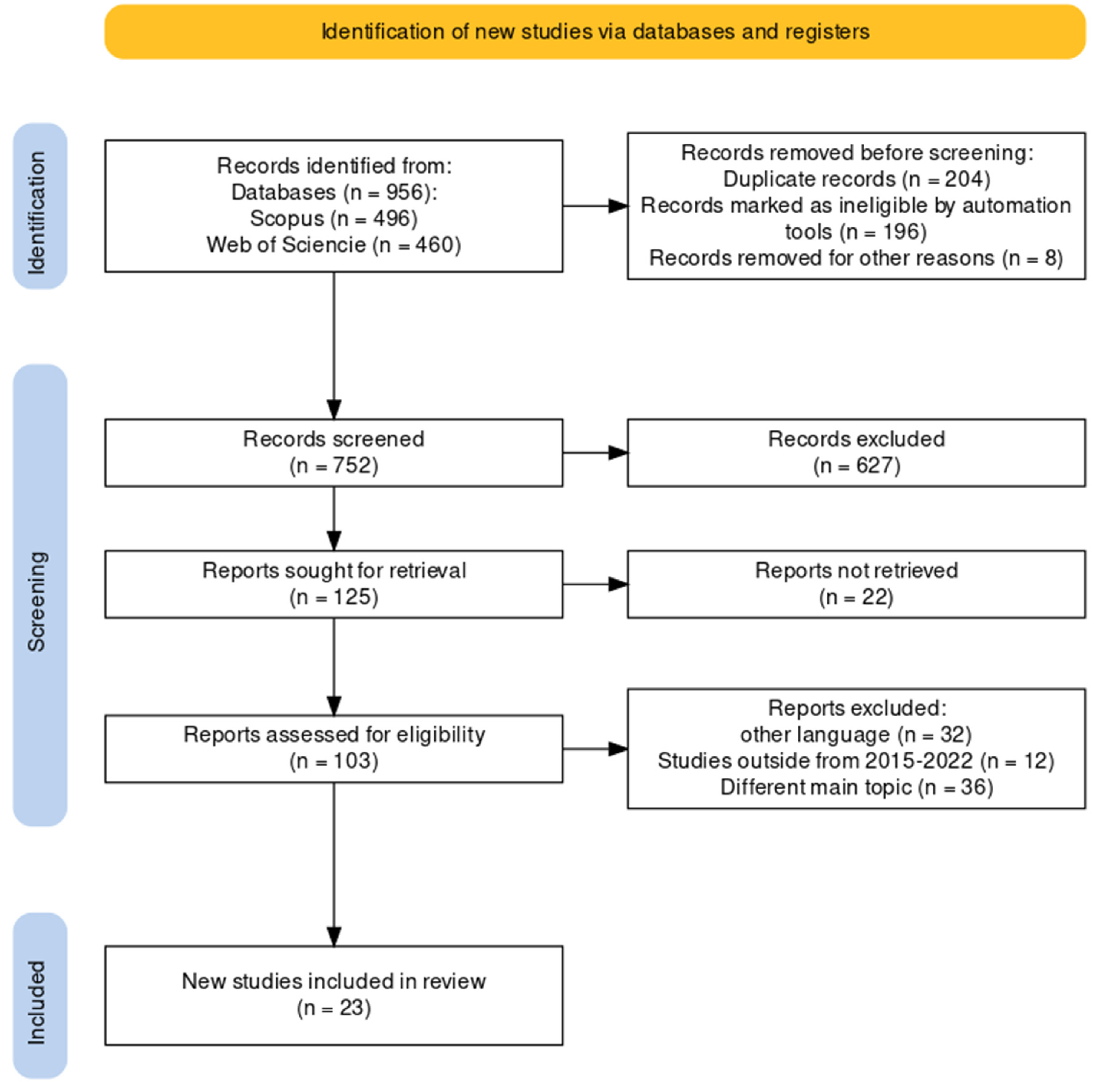
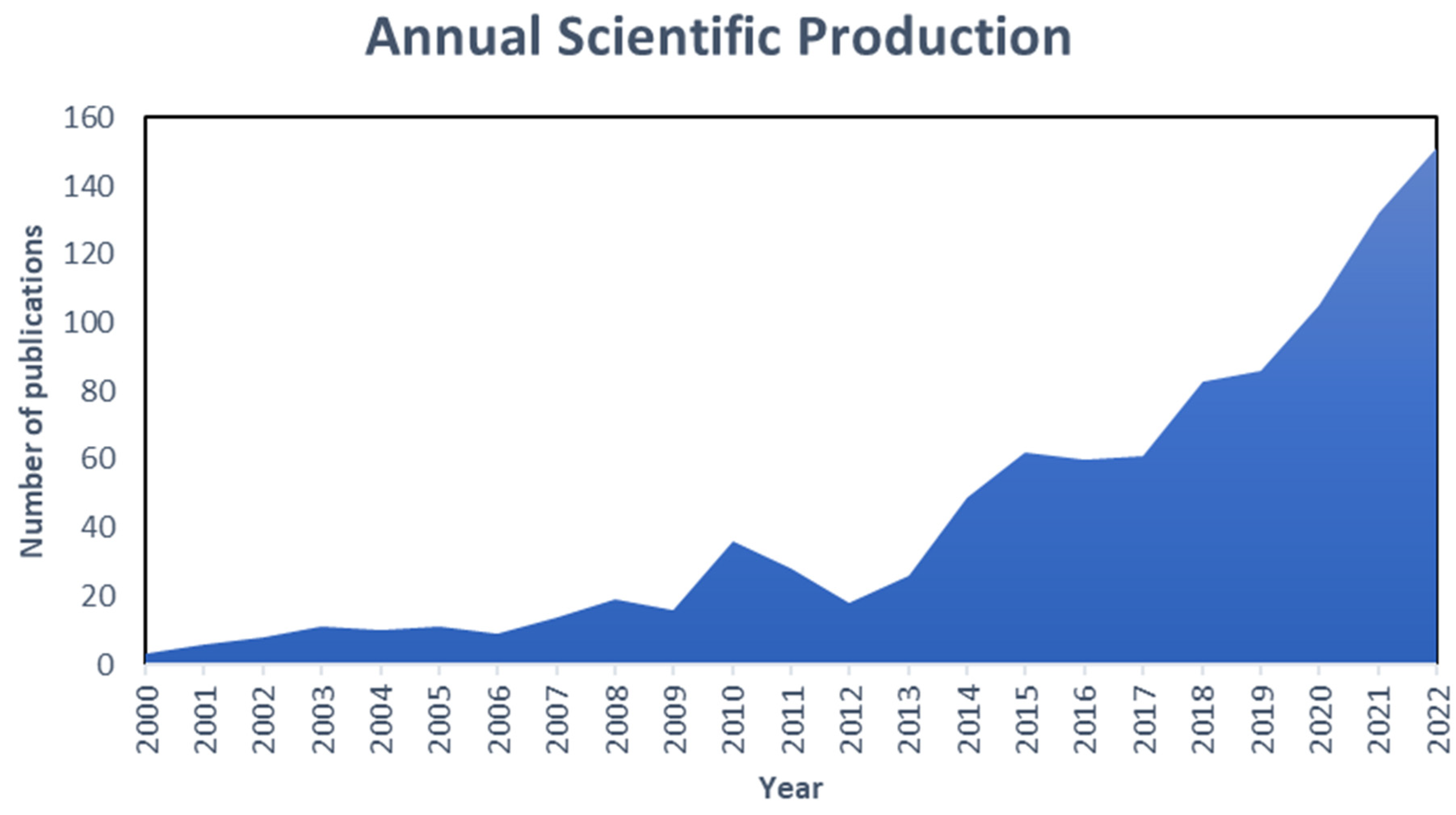
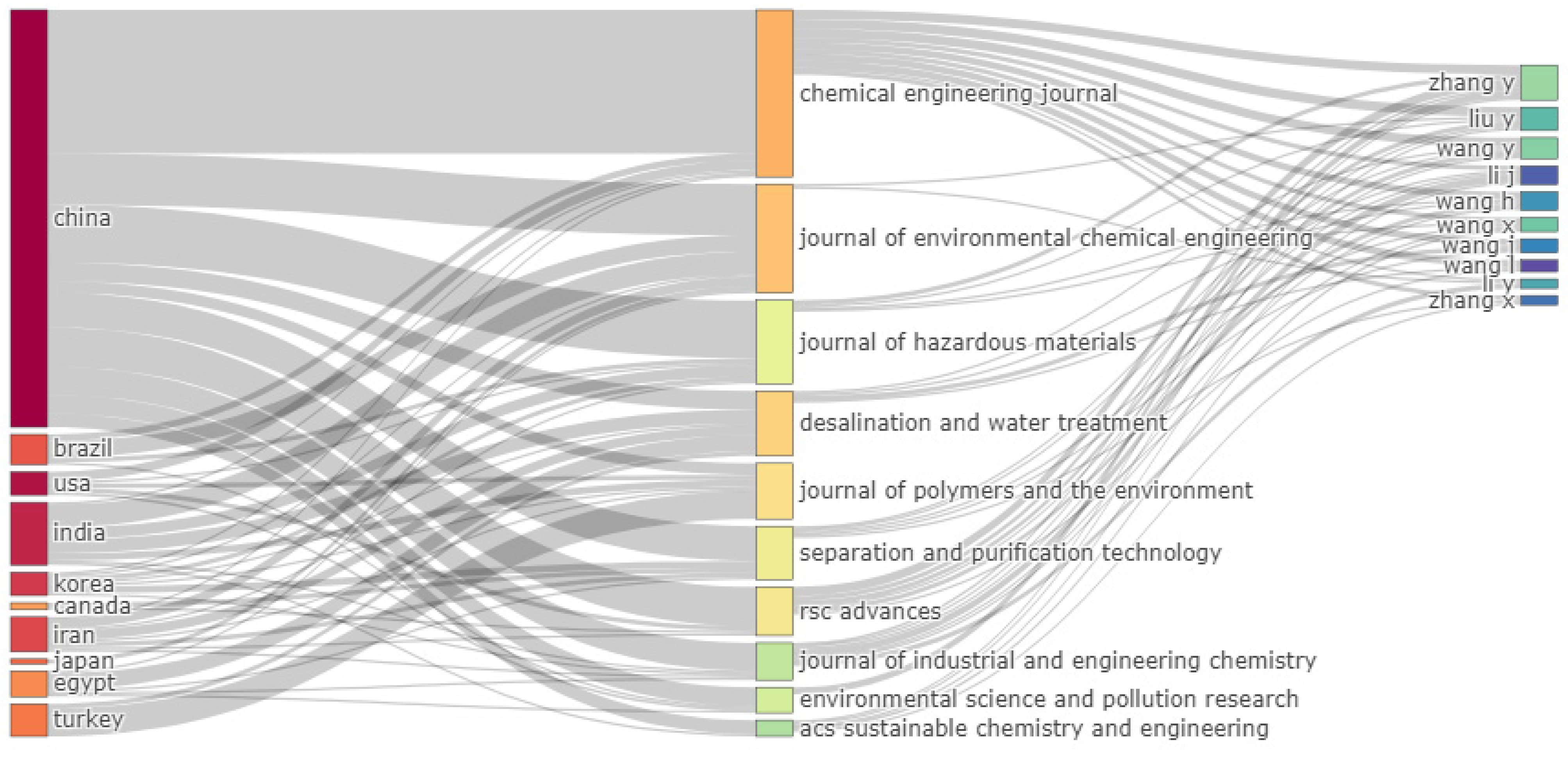


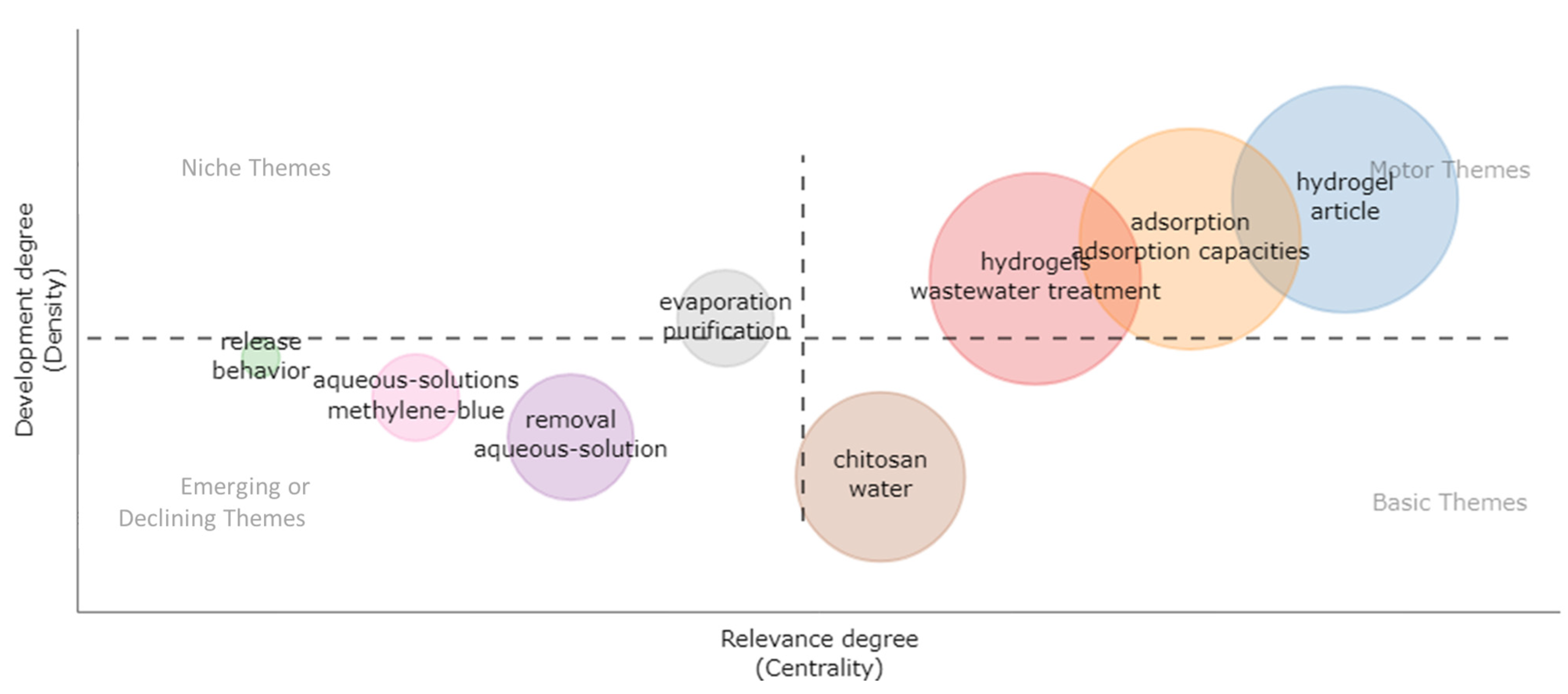
| Technology | Principle | Disadvantages |
|---|---|---|
| Catalytic ozonation [16] | Advanced oxidation | Short useful life of ozone, high energetic requirement, and sample contamination |
| Membrane filtration [4] | Physic separation | Short useful life of membranes, membrane soiling, and no membrane regeneration |
| Microwave catalysis [21] | Energetic decomposition | High investment costs and lack of secondary studies |
| Photocatalytic degradation [22] | Catalysis by ultraviolet light and catalysts of TiO2 (titanium dioxide) and ZnO (zinc oxide) | No applicability to the industrial level |
| Coagulation-flocculation [24] | Separation by conglomerates | Use of toxic chemicals and generation of sludge |
| Chemical oxidation [4] | Rupture of chemical bonds | High energetic demand |
| Electrochemical degradation [20] | Electrochemical reaction | Low efficiency and high operational costs |
| Electro- flocculation [4] | Conglomerate of contaminants through electric current | No applicability to the industrial level and high energetic requirement |
| Ion exchange [24] | Ion exchange between a solid and liquid without mass transfer | Soiling, costs in adsorbent regeneration, costs in adsorbent reactivation, maintenance costs |
| Chemical Precipitation [4] | Transformation through chemical reactions, evaporation, cooling, and so on, of dissolved compounds to a precipitable solid | Formation of large amounts of sludge |
| Adsorption [18] | Concentration of one or more components of a solute in an internal or external surface of a solid adsorbent | Performance depends on the adsorbent material selection, maintenance, and regeneration costs |
| Databases | Searching Algorithm |
|---|---|
| Scopus | TITLE (hydrogel* AND (water OR treatment OR tailing* OR effluent* OR adsorption)) AND NOT (drug OR cancer OR tumor OR delivery) |
| Web of Science | WC = (engineering) AND TI = (hydrogel OR hydrogels) AND TI = (water OR treatment OR tailing OR effluent OR adsorption) NOT TI = (drug OR tumor OR cancer) NOT AB = (drug OR tumor OR cancer) NOT AK = (drug OR tumor OR cancer) |
| Industrial Effluent Treatment | ||||||||||
|---|---|---|---|---|---|---|---|---|---|---|
| Author | Hydrogel (Adsorbent) | Sector | Objective | Equipment | Parameters | Contribution | Source | |||
| Removal Efficacy | Operation Conditions | Adsorption Isotherm | Adsorption Kinetics | |||||||
| Jain et al. | polyvinyl alcohol-glutaraldehyde cross-linked hydrogel beads (PVA/GA) | Textile Industry | Removal of industrial colorant Congo Red (CR) | Fixed-bed column | 25.9 mg/g CR | H * (cm) = 60 | Thomas model | PVA/GA hydrogel beads were synthesized; it was low cost and able to remove CR dye completely. The operation time was around 1–2 h. This process showed reutilization cycles, which could have been the seventh time. In addition, Thomas’s model perfectly described the fixed-bed breakthrough curve, where the internal and external mass diffusion did not limit the adsorption velocity. | [55] | |
| F (mL/min.) = 20 | ||||||||||
| pH = 6.0 | ||||||||||
| T (°C) = 25 | ||||||||||
| Batch reactor | 34 mg/g CR | pH = 6.0 | Harkins Jura | Pseudo-second order | ||||||
| T (°C) = 45 | ||||||||||
| Zhou et al. | amino-functionalized Starch/PAA hydrogel (NH2-Starch/PAA) | Metallurgical Industry | Heavy metal and organic carbon (TOC) removal from Shuikoushan Smelting Plant, Hengyang, Hunan province, China | Fixed-bed column | 94.3% Pb, 93.1% Cd, 71.6% Mn, | H (cm) = 10 | The synthesis of NH2-starch/PAA hydrogel for the elimination of the heavy metals from wastewater showed applicability in a large pH range, getting the equilibrium steady very quickly. Furthermore, the adsorbent showed clear advantages (high yield, easy regeneration, fast adsorption) concerning granular adsorbents and nano-adsorbents. | [56] | ||
| F (mL/min.) = 2.26 | ||||||||||
| 98.5% Ni, 93.5% Cu, 99% Cr y 99% TOC | pH = 5.0 | |||||||||
| T (°C) = 25 | ||||||||||
| Batch reactor | 256.4 mg/g Cd (II) | pH = 5.0 | Langmuir (Cd (II)) | Pseudo-first order to low concentrations and Pseudo-second order to high concentrations (Cd (II)) | ||||||
| T (°C) = 25 | ||||||||||
| Zhou, Luo, et al. | polyampholyte hydrogel strengthened with graphene oxide | Mining and metallurgical Industry | Heavy metal removal from Shuikoushan Smelting Plant, Hengyang, Hunan Province, China | Fixed-bed column | 99.9% Cd, 91.3% Zn, 44.1% Mn, | H (cm) = 10 | The design and synthesis of polyampholyte hydrogel strengthened with graphene oxide was done through polymerization with free radicals for the metallic ions’ adsorption from practical wastewater. The mechanical characteristics of hydrogels give them properties such as easy regeneration and reutilization. Additionally, the results showed a great removal capacity of heavy metals from industrial effluents. | [57] | ||
| F (mL/min.) = 2.26 | ||||||||||
| 50.2% Ni, 31.0% Cu | pH = 5.0 | |||||||||
| T (°C) = 25 | ||||||||||
| Batch reactor | 216.1 mg/g Pb (II) y 15.8 mg/g Cd (II) | pH = 5.0 Pb (II) y 6.0 Cd (II) | Langmuir | Pseudo-second order | ||||||
| T (°C) = 40 | ||||||||||
| Peñas et al. | Cyclodextrin-Based | Manufacturing Industry | Cresols removal from industrial effluents | Fixed-bed column | 6.2 mg/g (o-cresol), 11.6 mg/g (m-cresol) and 15.1 mg/g (p-cresol) | H (cm) = 7.5 | Dose–response model for the sorption step and a pulse-peak model for the regeneration step | Fixed-bed columns based on CDP hydrogels has been demonstrated to be effective for organic compound removal present on industrial effluents; it showed reutilization capacity and structural stability. The Cyclodextrin matrix was effective in the explicit elimination of cresols present in water; it also showed high yield and reutilization capacity through regeneration with methanol. | [58] | |
| F (mL/min.) = 2.60 | ||||||||||
| pH = 6.6 | ||||||||||
| Hydrogels (β-CDP) | T (°C) = 25 | |||||||||
| Batch reactor | 5.51 mg/g phenol | pH = 6.6 | Langmuir and Freundlich | - | ||||||
| T (°C) = 25 | ||||||||||
| Burillo et al. | chitosan network (net-CS) and chitosan network-N-vinylcaprolactam/N–N-dimethylacrylamide (netCS)-g-NVCL/DMAAm hydrogels | Mining Industry | Leached effluents (As (V) and Fe (III)) removal from the mining district of San Luis Potosi, Mexico | Batch reactor | 0.786 mg/g As (V) y 76.85 mg/g Fe (III) | pH = 2.9 | Freundlich | Pseudo-first order | Chitosan network (net-CS) hydrogels showed a high removal capacity of As and Fe from mining tailing, so that, this hydrogel is technically and economically preferable as removal materials by its low cost and easy operatively. Freundlich isotherm perfectly described the adsorption of chitosan network (net-CS) hydrogels; this model mentioned that the process showed heterogeneous adsorption; likewise, the pseudo-first order model suggested that the process was done by chemical adsorption. | [59] |
| T (°C) = 25 | ||||||||||
| Zhou et al. | double network Jute/Polyacrylic acid (Jute/PAA) | Metallurgical Industry | Heavy metals (Cd2+, Pb2+, Mg2+, Ca2+, K+, Na+, Cu2+, Zn2+, Mn2+) removal from Shuikoushan Smelting Plant, Hengyang, Hunan province, China | Fixed-bed column | 81.0% Pb, 79.3% Cd, 83.4% Cu, 29.8% Zn, 22.3% Mn, 96.2% Cr, 99.8% Fe | H (cm) = 10 | The Jute/PAA hydrogels synthesized showed great adsorption kinetic, well reutilization, and lower cost of raw materials. Jute/PAA hydrogels turned out to be effective in heavy metal removal of actual effluents coming from Shuikoushan Smelting Plant, Hengyang, Hunan province, China, achieving values below 0.001 mg/L in a time operation of 2 h. | [60] | ||
| F (mL/min.) = 2.26 | ||||||||||
| pH = 5.0 | ||||||||||
| T (°C) = 25 | ||||||||||
| Batch reactor | 401.7 mg/g de Cd2+ y 542.9 mg/g de Pb2+ | pH = 5.0 | Langmuir | Pseudo-first order | ||||||
| T (°C) = 25 | ||||||||||
| Ma et al. | double network hydrogel (Cellulose/PAM DNHs) | Mining-metallic Industry | Heavy metals (Cd (II), Cu (II), Pb (II), Zn (II) y Fe (II)) removal from Minmetals | Fixed-bed column | 99.8% Cd (II), 99.8% Cu (II), 99.7% Pb (II), | H (cm) = 15 | Waste cotton fabrics (WCF) reutilization to the synthesis of low-cost double network (Cellulose/PAM DNHs) hydrogels to heavy metals elimination from the Minmetals Copper Industry located in Hengyang, Hunan province, China. These hydrogels present a way of waste cotton valorization; likewise, heavy metal removal from industrial wastewater contributes to reducing pollutants from the environment and boosting the sustainability of natural resources. | [61] | ||
| F (mL/min.) = 5.75 | ||||||||||
| 99.9% Zn (II), 98.0% Fe (II) | pH = 5.0 | |||||||||
| The copper industry located in Hengyang, Hunan Province, China | T (°C) = 25 | |||||||||
| Batch reactor | 198,48 mg/g Cd (II), 138,90 mg/g Cu (II), 382,80 mg/g Pb (II), | pH = 5.0 | Langmuir | Pseudo-second order | ||||||
| T (°C) = 25 | ||||||||||
| Jang y Lee | PVA-alginate encapsulated Prussian blue graphene oxide (PB-GO) hydrogel beads | Nuclear Industry | 137Cs and 134Cs removal from a nuclear plant | Fixed-bed column | 164.5 mg/g | H (cm) = 20 | Yoon-Nelson Mathematical Model | PB-GO hydrogel beads could remove Cs contaminants from nuclear plant effluents, and they are developed in fixed-bed columns making them easy to scale for industrial applications. The Yoon–Nelson model correctly described the breakthrough curve of a fixed-bed column packed with PB-GO hydrogels. | [62] | |
| F (mL/min.) = 0.83 | ||||||||||
| pH = 7.0 | ||||||||||
| T (°C) = 20 | ||||||||||
| Sharma y Tiwari | nanomagnetite-loaded poly (Acrylamide-co-itaconic acid) hydrogel (PAI) | Mining and Metallurgical Industry | Mn (II) removal from industrial effluents | Fixed-bed column | 99.55 % Mn (II) | H (cm) = 10 | The nano magnetite-loaded poly (Acrylamide-co-itaconic acid) hydrogels (PAI) can be reutilized many times without present deficiency in adsorption capacity. Meanwhile, fixed-bed column parameters can be scaled easily to remove industrial effluents of high volume. | [63] | ||
| F (mL/min.) = 1 | ||||||||||
| pH = 6.0 | ||||||||||
| T (°C) = 25 | ||||||||||
| Batch reactor | 99.04% Mn (II) | pH = 6.0 | Freundlich | Pseudo-second order | ||||||
| T (°C) = 25 | ||||||||||
| Sezgin y Balkaya | polyacrylic acid (Aac) hydrogel | Galvanotechnic Industry | Cu (II), Ni (II), Zn (II), and total Cr from galvanotechnic industrial site in Istanbul | Batch reactor | 2.74 mg/g Cu (II),1.91 mg/g Ni (II), 6.83 mg/g Zn (II) y 6.61 mg/g total Cr | pH = acido | Freundlich | Pseudo-second order | Polyacrylic acid (Aac) hydrogel showed to be a great adsorbent of heavy metals from the galvanotechnic industry. Likewise, the adsorption process showed good economic characteristics, high efficacy, and low operation time for ionic contaminants elimination. | [24] |
| T = 20–50 °C | ||||||||||
| Lin et al. | Agarose hydrogel | Dyeing Industry | Suppression of surfactant wetting during the membrane distillation process to the wastewater industrial treatment | Membrane distillation | Membrane dimensions = 20 × 20 cm2 | The results showed the capacity of agarose hydrogels to eliminate surfactant wetting towards the distillation membranes during the treatment of dyes effluents. However, the raise in temperature detriments the efficacy of agarose hydrogels; it is recommended that the agarose hydrogel be changed to other ones, such as thermosensitive hydrogels. | [64] | |||
| F (L/min.) = 2 | ||||||||||
| pH = 6.0 | ||||||||||
| Tcold (°C) = 21, Thot (°C) = 60 | ||||||||||
| Wan et al. | poly N-isopropylacrylamide/aluminum alginate (PNIPAM/AA) IPN hydrogel beads | Agrochemical Industry | PO4−3 removal from wastewater | Fixed-bed column | 77.0% PO4−3 | H (cm) = 30 | Thomas model | The results showed PNIPAM/AA hydrogels had a strong capacity for phosphate adsorption and the studies made in fixed-bed columns to scale to the industrial level (large effluent volumes) in an easy way. The column adsorption showed a great removal of PO4-3 in 180 min of operation time. | [65] | |
| F (mL/min.) = 6 | ||||||||||
| pH = 3.0 | ||||||||||
| T (°C) = 35 | ||||||||||
| Batch reactor | 16.51 mg/g PO4−3 | pH = 3.0 | Freundlich y Slips | Pseudo-second order and intraparticle diffusion | ||||||
| T (°C) = 35 | ||||||||||
| Yi et al. | three-dimensional (3D) cobalt hydroxide (CoOOH)/graphene oxide (GO) hydrogel | Farming and Agrochemical Industry | Removal of organic pollutants from industrial wastewater | Degradation column | 95% | H (cm) = 10 | - | - | The degradation column system incorporated with CoOOH/GO hydrogels demonstrated excellent catalytic activity for the different organic pollutants; it also provided geometric information and operating conditions for its application on an industrial scale. | [66] |
| F (mL/min.) = 200 | ||||||||||
| pH = 6.0 | ||||||||||
| ∆P (Pa) = 2300 | ||||||||||
| He et al. | cross-linked sodium acrylate and acrylamide copolymer/graphene oxide (P (AANa-co-AM)/GO) hydrogels | Mining and Metallurgical Industry | Removal of heavy metals Pb2+ and Cd2+ | Fixed-bed column | 87.5% Pb2+ | H (cm) = 10 | The adsorption through hydrogels can simultaneously eliminate different heavy metals from industrial wastewater. Likewise, its efficacy was not prejudiced after 5 cycles of adsorption-regeneration. Thus, it was concluded GO/P (AANa-co-AM) hydrogels present a great operational yield in the treatment of industrial effluents. | [67] | ||
| F (mL/min.) = 2 | ||||||||||
| pH = 4.5 Pb2+ | ||||||||||
| T (°C) = 25 | ||||||||||
| Batch reactor | 452.3 mg/g Pb2+ and 196.4 mg/g Cd2+ | pH = 4.5 Pb2+ y 6.0 Cd2+ T (°C) = 25 | Langmuir | Pseudo-first orden | ||||||
| Song et al. | Chitosan hydrogel beads | Paper and Textile Industry | Malachite green (MG) oxalate removal from industrial effluents | Fixed-bed column | 100% MG | H (cm) = 25 | Modified Adams-Bohart model | Fixed-bed columns based on chitosan hydrogel beads demonstrated high malachite green (MG) adsorption from industrial effluents; the operation time was around 3 h, which is a great candidate for its scaling to an industrial level. Furthermore, the studies done on fixed-bed columns regarding adsorption kinetics were explained by a modified Adams–Bohart model due to the complexity of mass transfer mechanisms. | [68] | |
| F (mL/min.) = 0.97–4.95 | ||||||||||
| pH = 7.5 | ||||||||||
| T (°C) = 25 | ||||||||||
| Batch reactor | 91% MG | pH = 7.5 | Langmuir | Pseudo-second order | ||||||
| T = 25 °C | ||||||||||
| Yan et al. (2020) | nanoCaCO3 in-situ encapsulated hydrogels (CCx-CB) carbonaceous beads | Farming and Pharmaceutical Industry | Tetracycline (TC) removal from industrial effluent | Fixed-bed column | 69.6 mg/g TC | H (cm) = 10 | Thomas model | The results showed technical and economic viability regarding the utilization of CCx-CB hydrogels in fixed-bed columns for TC removal. Furthermore, economic results demonstrated a cost reduction when raw materials of industrial degree were utilized in the hydrogel preparations. | [69] | |
| F (mL/min.) = 1.00 | ||||||||||
| pH = 7.0 | ||||||||||
| T (°C) = 20 | ||||||||||
| Batch reactor | 279.3 mg/g TC | pH = 7.0 | Langmuir | Pseudo-second order | ||||||
| T (°C) = 20 | ||||||||||
| Pei et al. | Porous alginate-based hydrogel beads (porous ABH) | Paper and textile Industry | Methylene blue (MB) removal from textile industrial effluents | Fixed-bed column | 1907.76 mg/g MB | H (cm) = 12 | Thomas model | The study results showed great removal capacity for MB adsorption from industrial effluents using ABH-1:3 hydrogels. Furthermore, the removal percentage remained up to 75%, even after 10 reutilization cycles. Likewise, ABH-1:3 hydrogels demonstrated efficiency and efficacy in textile industrial contaminant removal. | [70] | |
| F (mL/min.) = 5 | ||||||||||
| T (°C) = 25 | ||||||||||
| Batch reactor | 1320 mg/g MB | pH = 2.0–12.0 | Langmuir | Pseudo-second order | ||||||
| T (°C) = 25 | ||||||||||
| Bethi et al. | Halloysite nanoclay embedded poly-acrylic acid (PAA) nanocomposite hydrogel | Textile Industry | Rhodamine (Rh-B) removal from textile industrial effluents | Hybrid system (Hydrodynamic cavitation + adsorption) | 65% Rh-B | Masa de hidrogel cargada (g) = 25 | Rh-B removal was around 65% through a hybrid hydrodynamic cavitation system and adsorption using halloysite nanoclay embedded poly-acrylic acid (PAA) nanocomposite hydrogel; in addition, it was found that efficacy rose to 72.85% when H2O2 was added to the hybrid system. | [71] | ||
| pH = 7.62 | ||||||||||
| Tiempo de operación (min) = 120 | ||||||||||
| Depuration and Purification Technology | ||||||||||
| Author | Hydrogel (Adsorbent) | Sector | Objective | Equipment | Parameters | Contribution | Source | |||
| Removal Efficacy | Operation Conditions | Adsorption Isotherm | Adsorption Kinetics | |||||||
| Sharma y Tiwari | nano-ZnO-loaded poly (acrylamide-co-itaconic acid) hydrogel (PAI) | Municipal and Industrial Contaminants in Water Bodies | Fe2+ and Fe3+ removal from Shankhini River (Dantewada, Chhattisgarh, India) | Fixed-bed column | 99.86% iron | H (cm) = 2 | Nano-ZnO-loaded poly (acrylamide-co-itaconic acid) hydrogel (PAI) showed the elimination capacity of iron from Shankhini River to have minimum capital cost and great efficacy. Likewise, its column parameters make scaling easy to treat high volumes of industrial effluents. | [72] | ||
| F (mL/min.) = 1.00 | ||||||||||
| pH = 4.0 | ||||||||||
| T (°C) = 25 | ||||||||||
| Batch reactor | 99.50% iron | pH = 4.0 | Freundlich | Pseudo-second order | ||||||
| T (°C) = 25 | ||||||||||
| Zhuang et al. | porous graphene (GO)/alginate double network nanocomposite beads (GAD) | Textile Contaminants in Water Bodies | Methylene blue (MB) removal from contaminated water | Fixed-bed column | 60.2% MB | H (cm) = 10 | The studies demonstrated the removal capacity of methylene blue (MB) through GA hydrogels in the water purification process. Furthermore, GO addition to the adsorbent structure allowed hydrogel production to be large scale and low-cost, which gives them economic and technical viability for industrial scale applications. | [73] | ||
| F (mL/min.) = 0.50 | ||||||||||
| pH = 8.0 | ||||||||||
| T (°C) = 25 | ||||||||||
| Batch reactor | 2.30 mg/g MB | pH = 8.0 | Freundlich | Pseudo-second order | ||||||
| T (°C) = 25 | ||||||||||
| Gonçalves et al. | poly (acrylamide-co-sodium acrylate) hydrogels (pAAm-co-SA) | Fuel and Biofuel Industry | Water adsorption from biofuels | sieve plate column | 94.1% water | H (cm) = NDA *** | Based on the results, it was concluded that the complete elimination of water from biodiesel was achieved. Likewise, bed configuration presents great advantages due to the geometry of its plates, which could eliminate water content from different fuels without any worries about bed clogging. | [74] | ||
| F (mL/min.) = 5.00 | ||||||||||
| T (°C) = 25 | ||||||||||
| pH = NDA | ||||||||||
| S. Dong et al. | layered double hydroxides-isethionate (LDH-ise) assisted covalent and electrostatic crosslinked cationic hydrogel (CH-LDH-ise) | Drinking and Underground Water Treatment | Remoción de Cr (VI) removal from aqueous solutions | Fixed-bed column | 100% | H (cm) = 10 | Adsorption efficacy of CH-LDH-ise hydrogels to Cr (VI) removal from water bodies and its reutilization capacity through fixed-bed column regeneration give it favorable characteristics of efficiency and fast ionic contaminants elimination from industrial effluents. In addition, an efficacy of nearly 100% Cr (VI) was observed through a treatment volume of 2250 bed volumes ** (BV). | [75] | ||
| F (mL/min.) = NDA | ||||||||||
| pH = NDA | ||||||||||
| T (°C) = 30 | ||||||||||
| Batch reactor | 408.4 mg/g Cr (VI) | pH = 7.0 | Sips | Pseudo-second order | ||||||
| T (°C) = 30 | ||||||||||
| He et al. | A novel 3D yttrium based-graphene oxide-sodium alginate hydrogel | Drinking Water Treatment | Water body purification through fluorides purification (F−) | Fixed-bed column | 152.3 mg/g F− | H (cm) = 4.5 | Thomas model | The obtained results showed high removal efficacy of fluorides from water bodies using Y-GO-SA hydrogels in batch and fixed-bed column processes Likewise, batch studies demonstrated more efficacy than adsorption studies of fixed-bed columns. On the other hand, adsorption columns presented a reutilization capacity through regeneration cycles, which is essential in water potabilization. | [76] | |
| F (mL/min.) = 0.2–0.5 | ||||||||||
| pH = 6.5 | ||||||||||
| T (°C) = 20 | ||||||||||
| Batch reactor | 288.96 mg/g F− | pH = 4.0 | Langmuir | Pseudo-first order and Pseudo-second order | ||||||
| T (°C) = 20 | ||||||||||
Disclaimer/Publisher’s Note: The statements, opinions and data contained in all publications are solely those of the individual author(s) and contributor(s) and not of MDPI and/or the editor(s). MDPI and/or the editor(s) disclaim responsibility for any injury to people or property resulting from any ideas, methods, instructions or products referred to in the content. |
© 2023 by the authors. Licensee MDPI, Basel, Switzerland. This article is an open access article distributed under the terms and conditions of the Creative Commons Attribution (CC BY) license (https://creativecommons.org/licenses/by/4.0/).
Share and Cite
Flores-Valenzuela, L.E.; González-Fernández, J.V.; Carranza-Oropeza, M.V. Hydrogel Applicability for the Industrial Effluent Treatment: A Systematic Review and Bibliometric Analysis. Polymers 2023, 15, 2417. https://doi.org/10.3390/polym15112417
Flores-Valenzuela LE, González-Fernández JV, Carranza-Oropeza MV. Hydrogel Applicability for the Industrial Effluent Treatment: A Systematic Review and Bibliometric Analysis. Polymers. 2023; 15(11):2417. https://doi.org/10.3390/polym15112417
Chicago/Turabian StyleFlores-Valenzuela, Luis Enrique, José Vulfrano González-Fernández, and María Verónica Carranza-Oropeza. 2023. "Hydrogel Applicability for the Industrial Effluent Treatment: A Systematic Review and Bibliometric Analysis" Polymers 15, no. 11: 2417. https://doi.org/10.3390/polym15112417
APA StyleFlores-Valenzuela, L. E., González-Fernández, J. V., & Carranza-Oropeza, M. V. (2023). Hydrogel Applicability for the Industrial Effluent Treatment: A Systematic Review and Bibliometric Analysis. Polymers, 15(11), 2417. https://doi.org/10.3390/polym15112417