Suberin Fatty Acid Hydrolysates from Outer Birch Bark for Hydrophobic Coating on Aspen Wood Surface


Abstract
1. Introduction
2. Materials and Methods
2.1. Materials
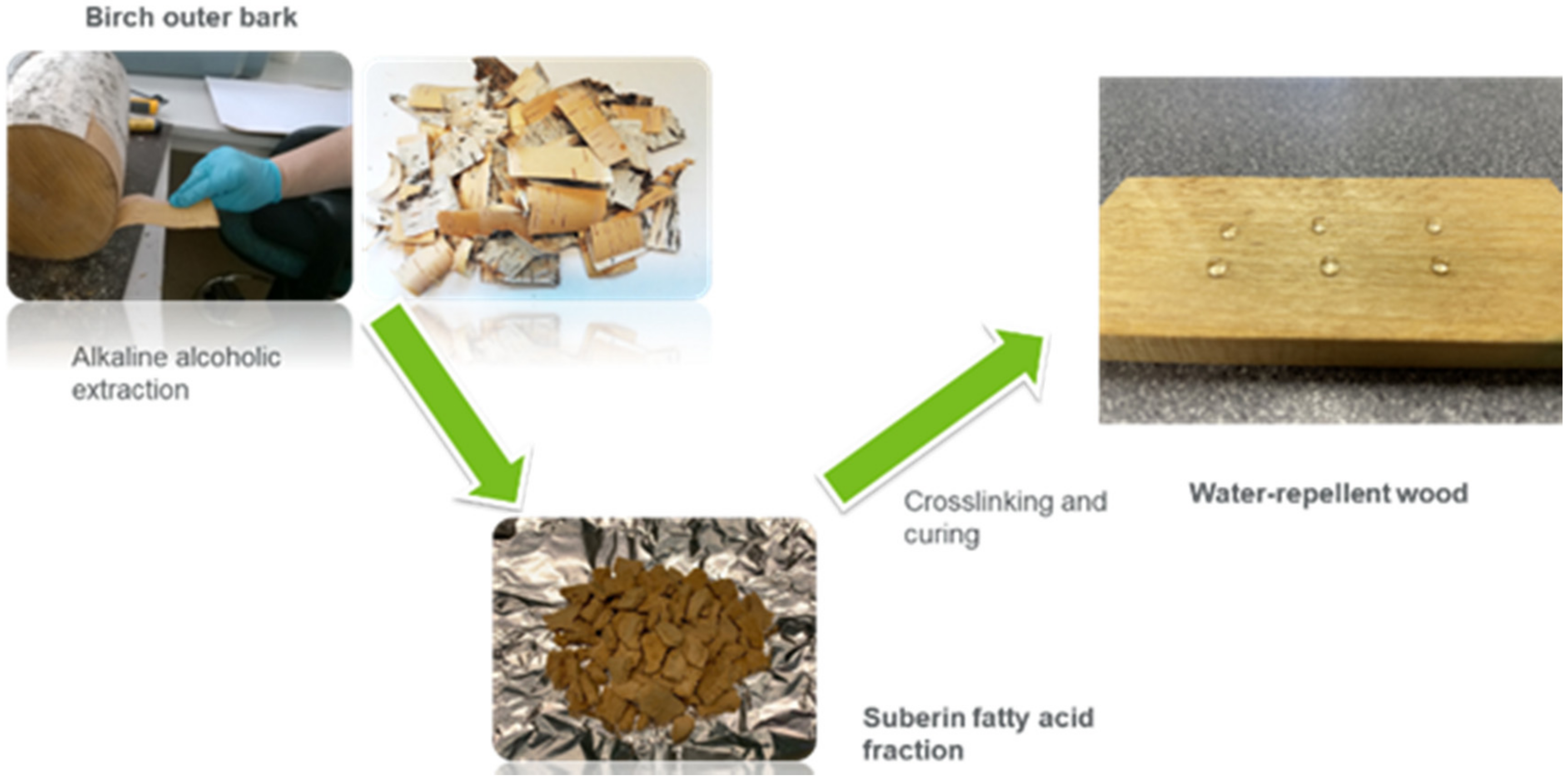
2.2. Suberin Fatty Acids Extraction Process
2.3. Wood Samples and Coating Solutions Preparation
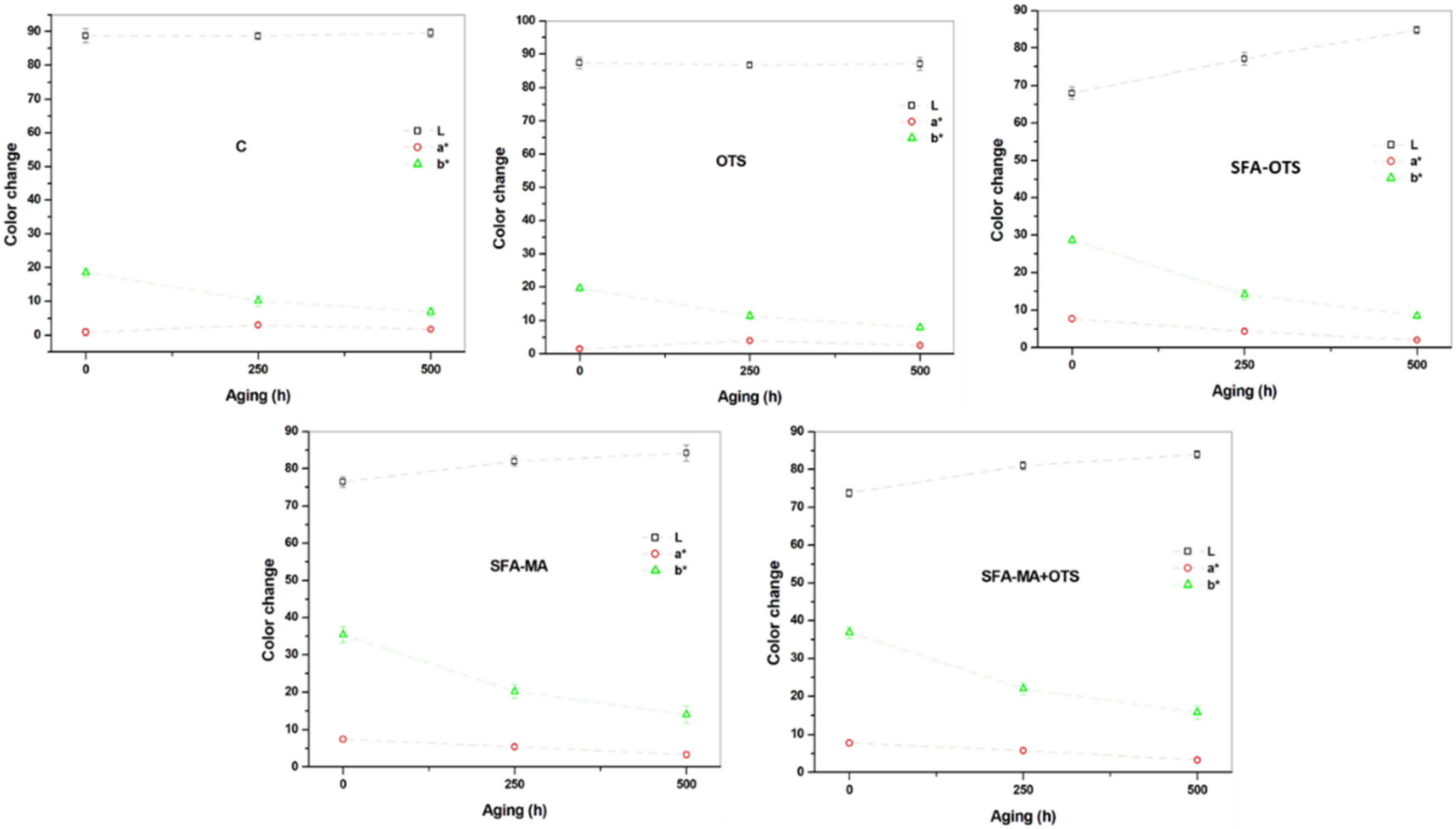
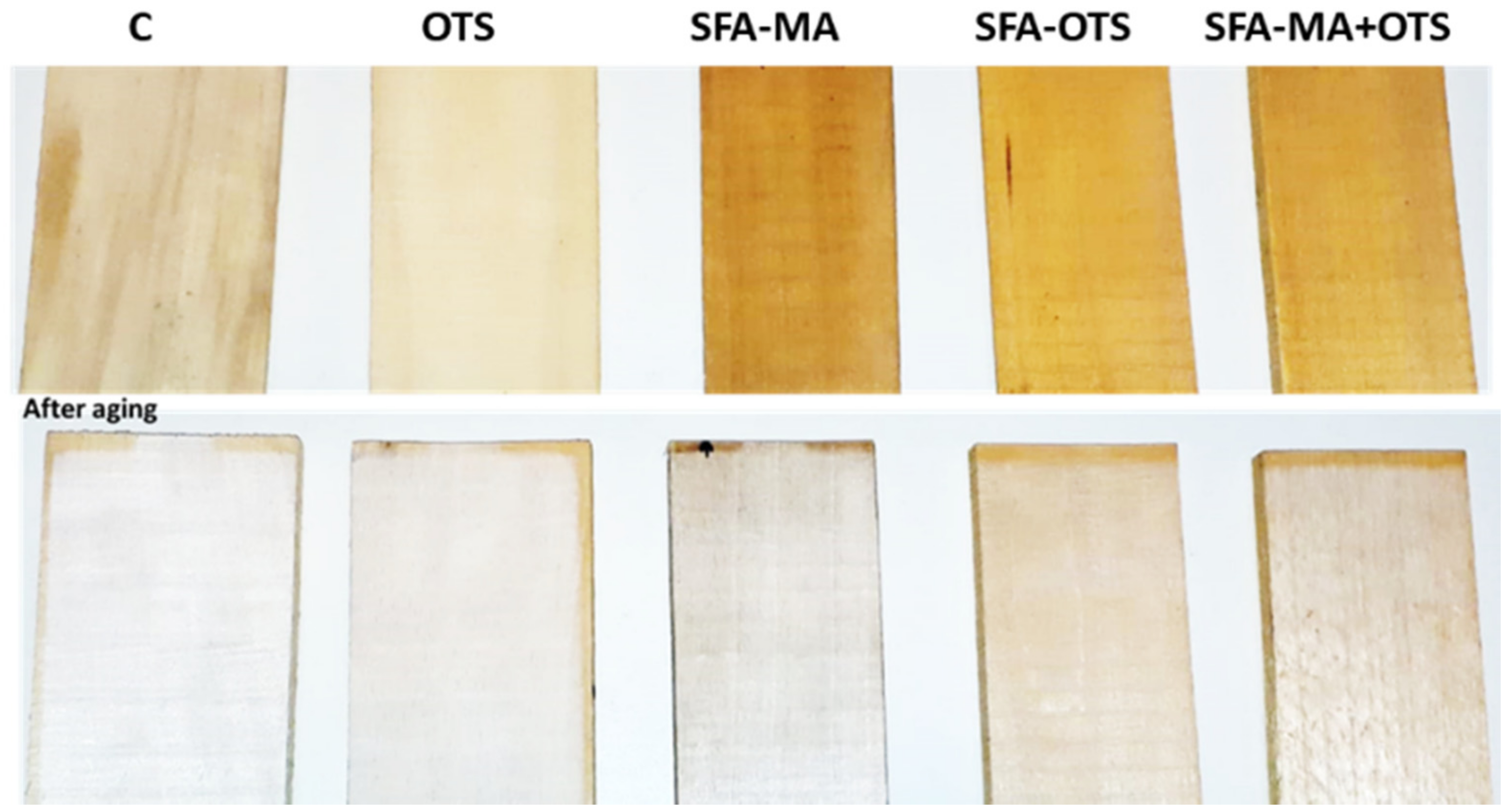
- SFA and maleic anhydride (MA) (treatment name, SFA–MA): Fixed amounts (70:30) of SFA and maleic anhydride as a hardener were mixed and boiled at 45 °C in ethanol. A manual brush coating was used to prepare a uniform two-layer coating of SFA–MA on wood and dried for 24 h at 105 °C;
- Treatment of coated samples with octadecyltrichlorosilane (OTS) (treatment name, SFA–MA + OTS): SFA–MA-coated samples dipped into a solution (1/100) (v/v) of OTS and n-hexane for 30 min and dried for 24 h at 105 °C;
- OTS treatment of sample: Wood samples dipped in a solution (1/100) (v/v) of OTS and n-hexane for 30 min and dried at 24 h at 105 °C;
- SFA–OTS: In 100 mL ethanol, 5 g SFA and 500 µL OTS were mixed and boiled at 120 °C (10 min) and cooled down to room temperature and applied manually to the wood surface (two coatings).
2.4. GC and GC-MS Analysis
2.5. SEM and EDS Analysis
2.6. Color Measurement
2.7. Water Contact Angle Measurement
2.8. ATR-FTIR Measurement
2.9. Artificial Aging
3. Results and Discussion
3.1. Analysis of the SFA Hydrolysates
3.2. Analysis of SFA Hydrolysates-Based Coatings
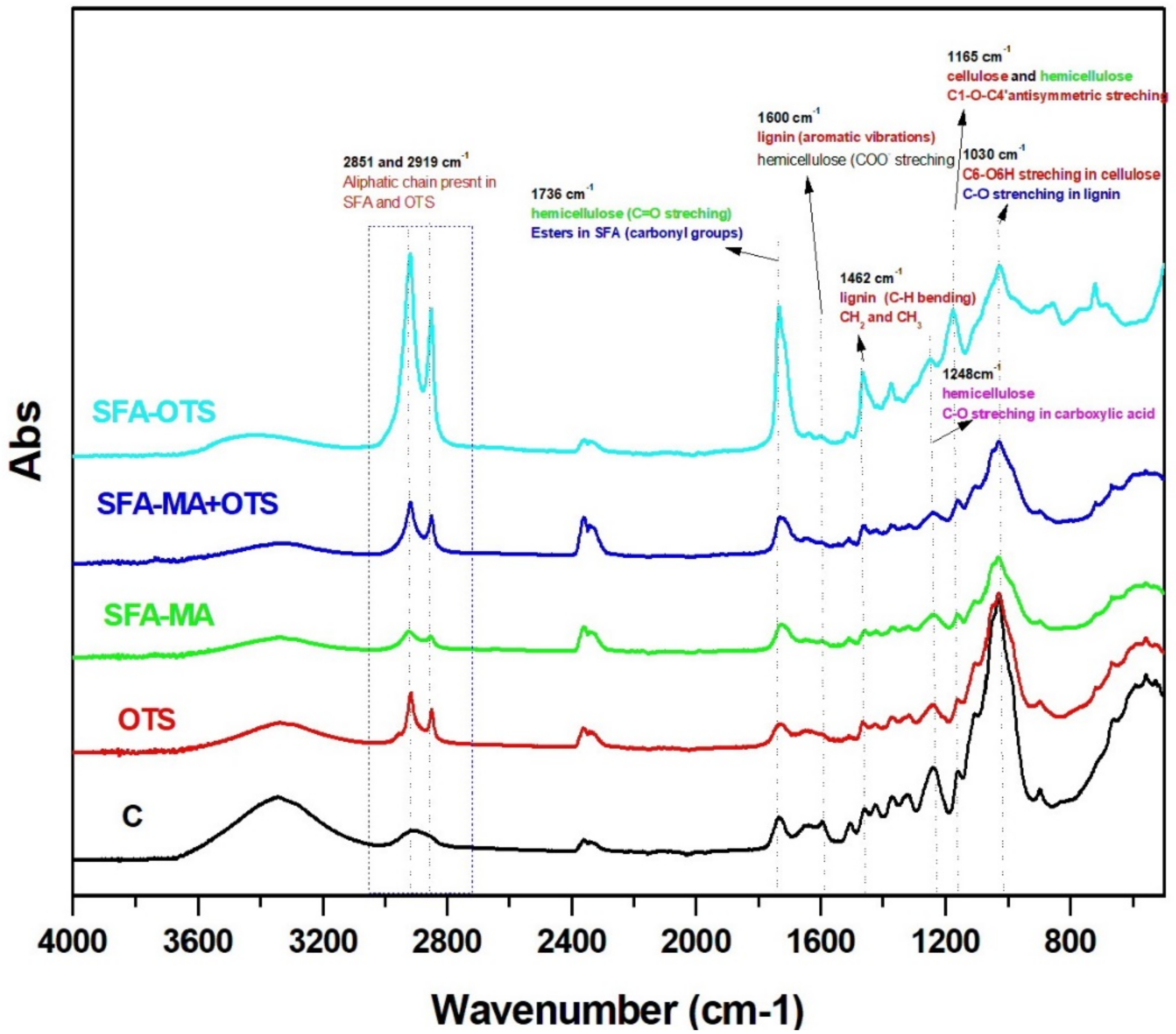
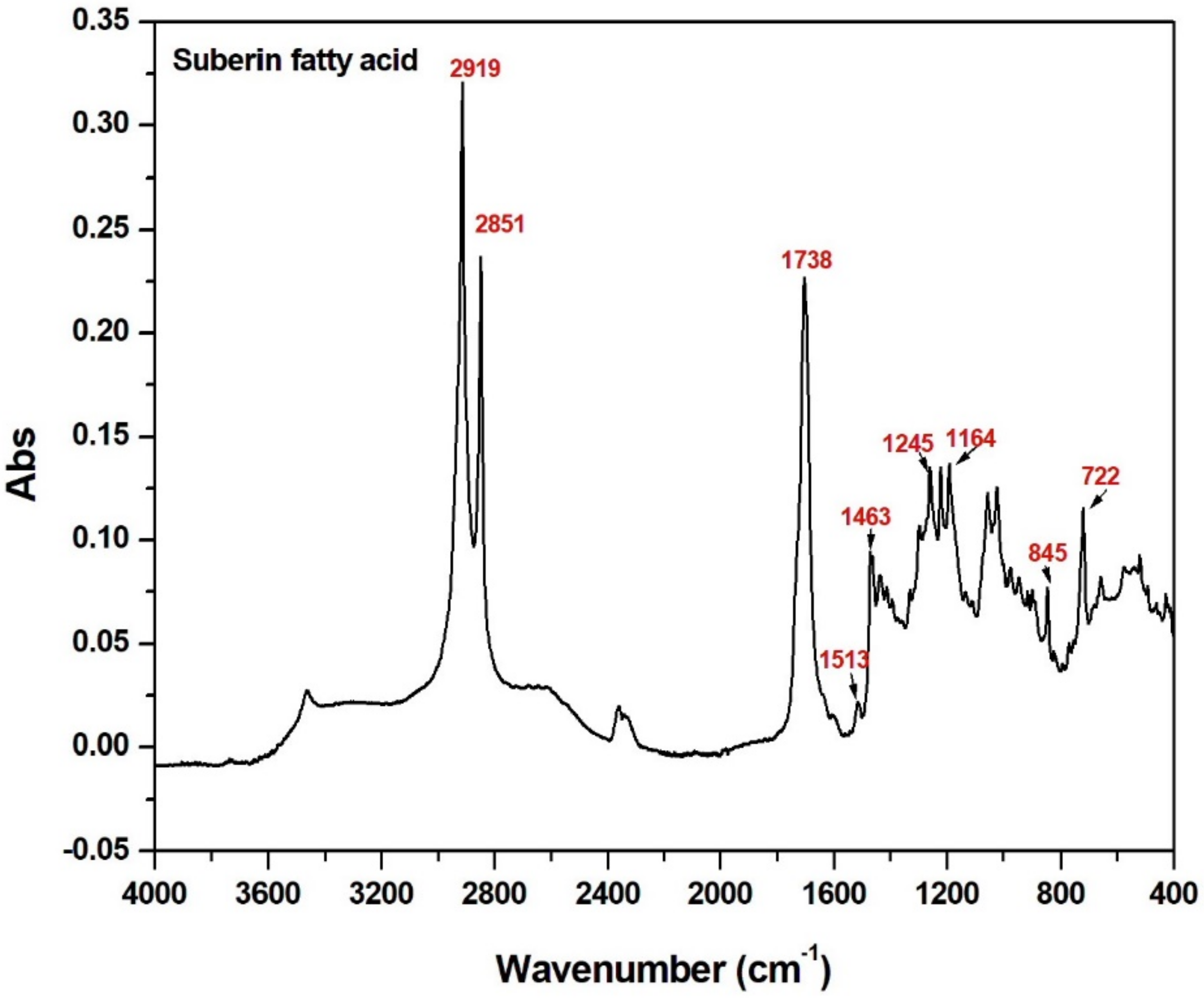
3.2.1. ATR-FTIR
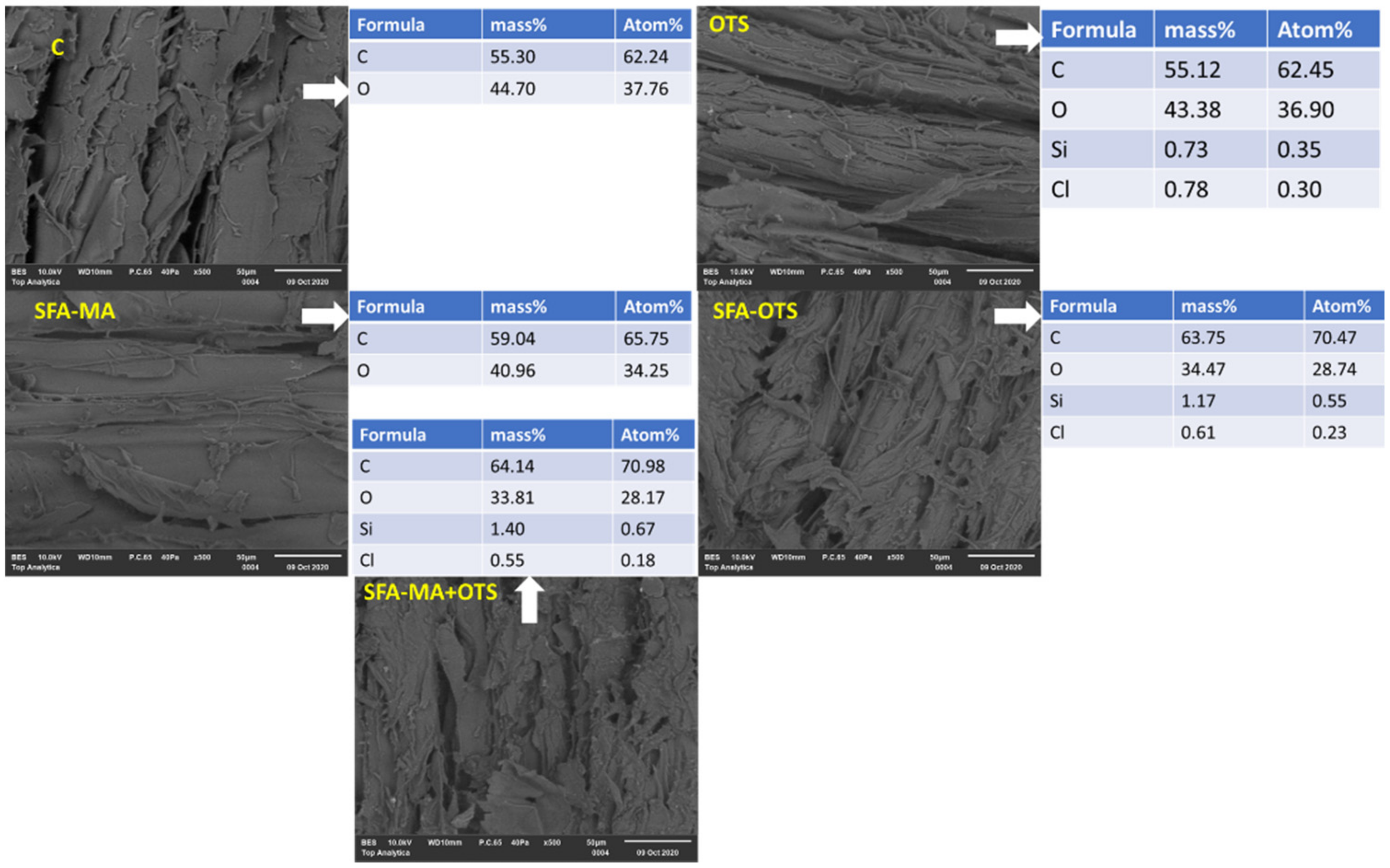
3.2.2. SEM-EDS
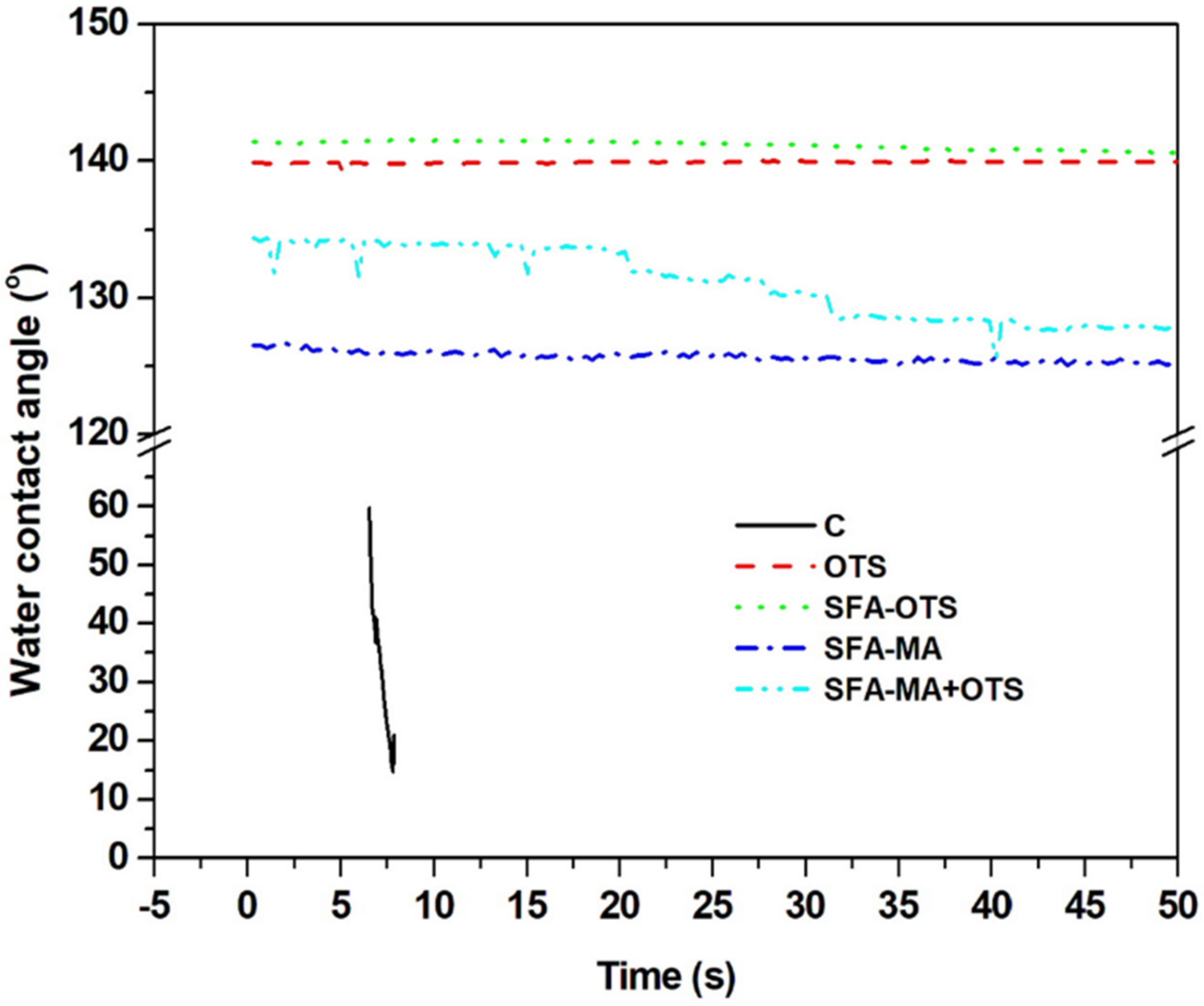
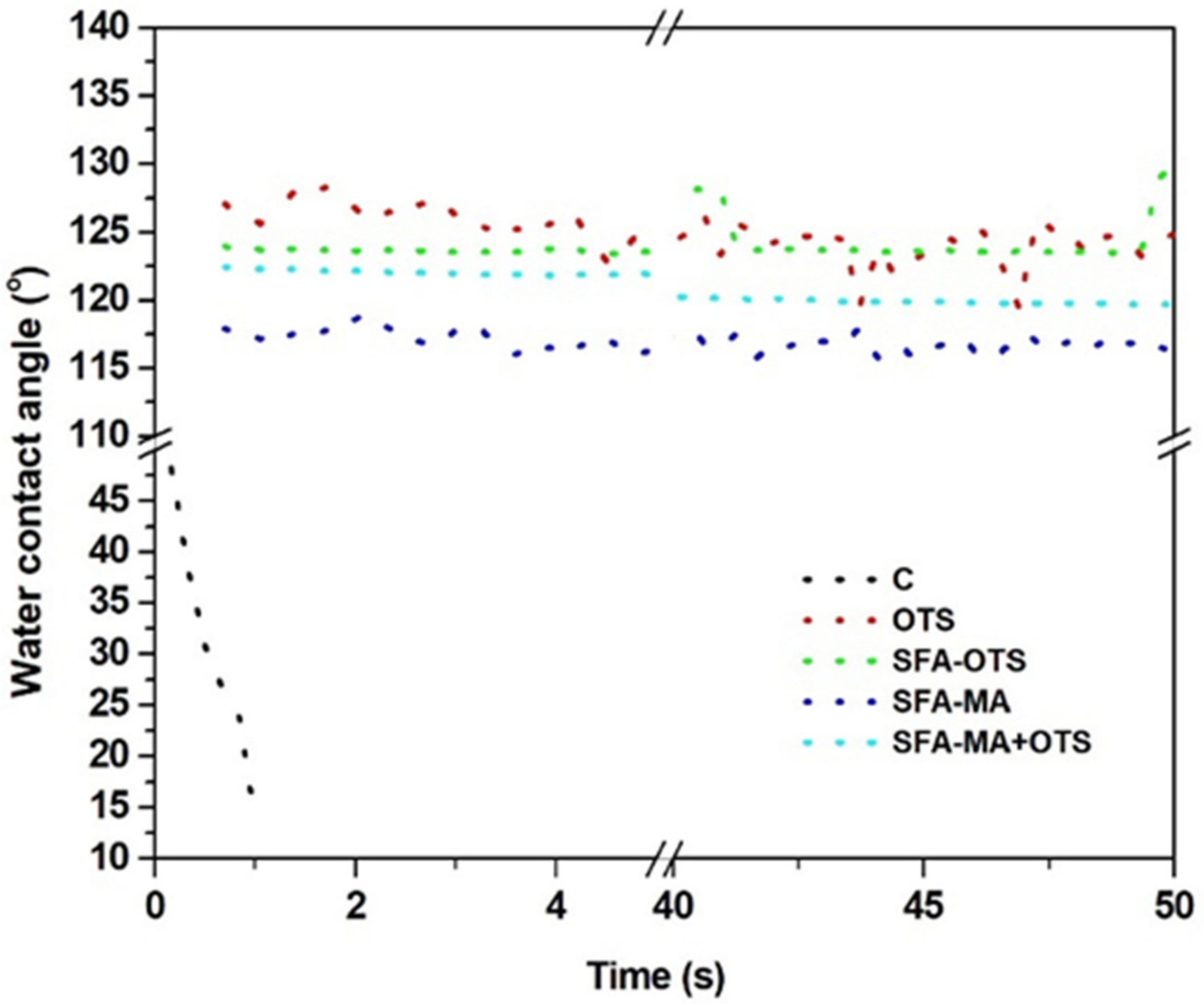
3.2.3. Water Contact Angle (WCA)
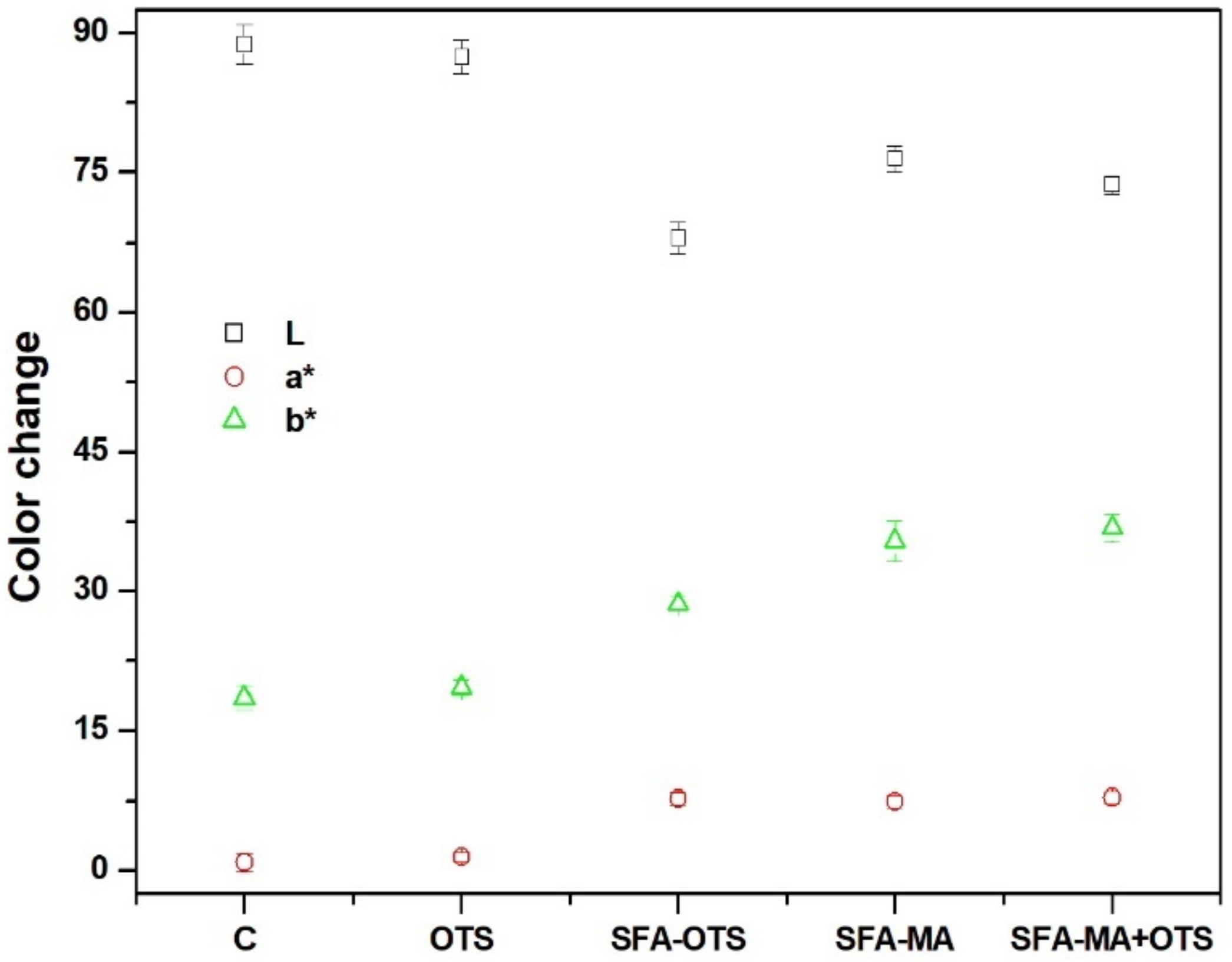
3.2.4. Color
3.3. Artificial Aging
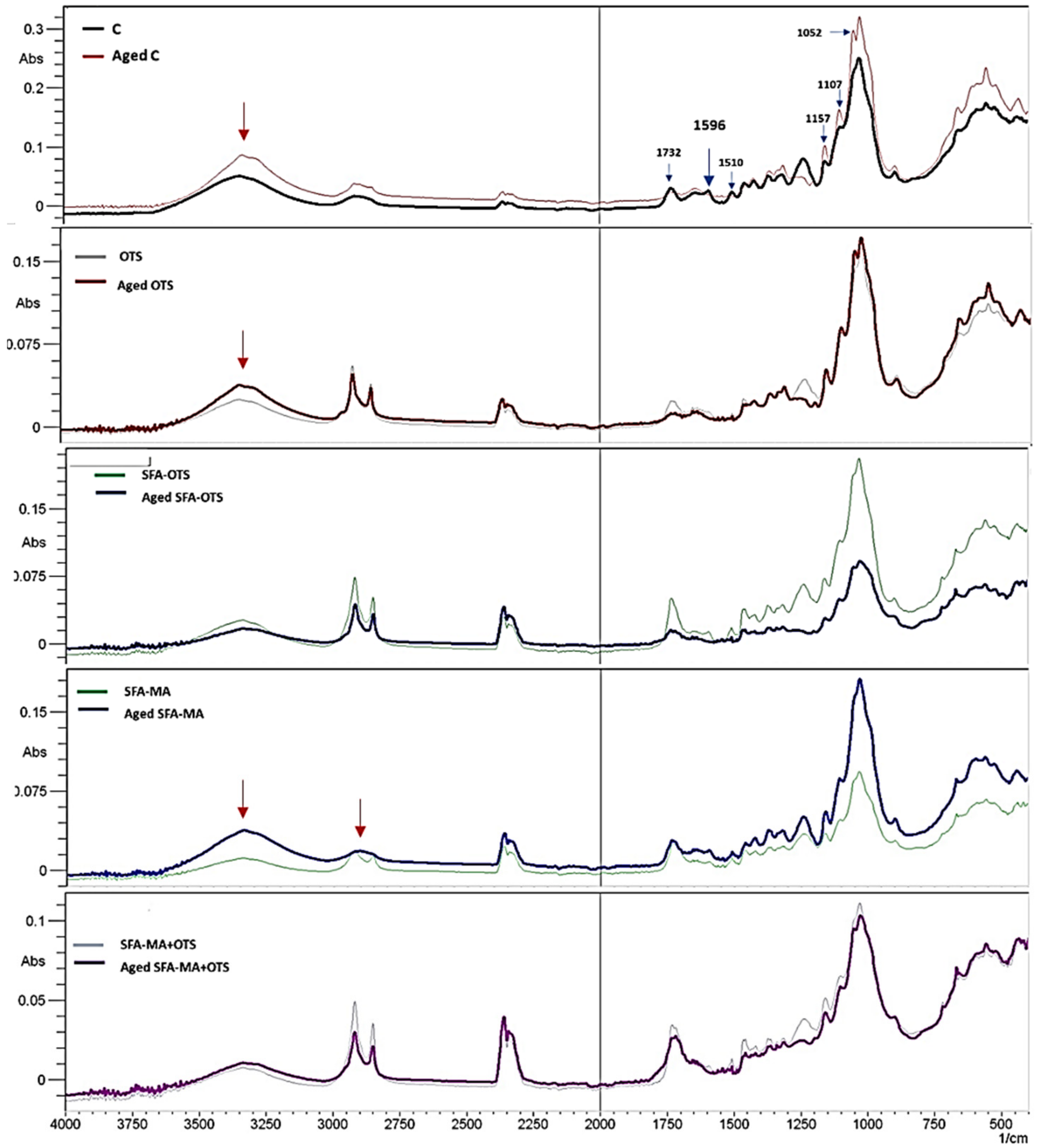
3.3.1. ATR-FTIR
3.3.2. Water Contact Angle
3.3.3. Color
4. Conclusions
Author Contributions
Funding
Informed Consent Statement
Data Availability Statement
Acknowledgments
Conflicts of Interest
References
- Kumar, A.; Richter, J.; Tywoniak, J.; Hajek, P.; Adamopoulos, S.; Šegedin, U.; Petrič, M. Surface modification of Norway spruce wood by octadecyltrichlorosilane (OTS) nanosol by dipping and water vapour diffusion properties of the OTS-modified wood. Holzforschung 2017, 72, 45–56. [Google Scholar] [CrossRef] [Scilit]
- Petrič, M. Surface Modification of Wood. Rev. Adhes. Adhes. 2013, 1, 216–247. [Google Scholar] [CrossRef] [Scilit]
- Hill, C.A. Wood Modification: Chemical, Thermal and Other Processes; John Wiley & Sons: Hoboken, NJ, USA, 2007; Volume 5. [Google Scholar]
- Kumar, A.; Jyske, T.; Petrič, M. Delignified Wood from Understanding the Hierarchically Aligned Cellulosic Structures to Creating Novel Functional Materials: A Review. Adv. Sustain. Syst. 2021, 5, 2000251. [Google Scholar] [CrossRef] [Scilit]
- Petrič, M.; Oven, P. Determination of wettability of wood and its significance in wood science and technology: A critical review. Rev. Adhes. Adhes. 2015, 3, 121–187. [Google Scholar] [CrossRef] [Scilit]
- Rajput, S.D.; Mahulikar, P.P.; Gite, V.V. Biobased dimer fatty acid containing two pack polyurethane for wood finished coatings. Prog. Org. Coat. 2014, 77, 38–46. [Google Scholar] [CrossRef] [Scilit]
- Kumar, A.; Petrič, M.; Kričej, B.; Žigon, J.; Tywoniak, J.; Hajek, P.; Škapin, A.S.; Pavlič, M. Liquefied-Wood-Based Polyurethane–Nanosilica Hybrid Coatings and Hydrophobization by Self-Assembled Monolayers of Orthotrichlorosilane (OTS). ACS Sustain. Chem. Eng. 2015, 3, 2533–2541. [Google Scholar] [CrossRef] [Scilit]
- Gandini, A.; Neto, C.; Silvestre, A.J.D. Suberin: A promising renewable resource for novel macromolecular materials. Prog. Polym. Sci. 2006, 31, 878–892. [Google Scholar] [CrossRef] [Scilit]
- Holmbom, B. Extraction and Utilisation of Non-Structural Wood and Bark Components. In Biorefining of Forest Resources; Paperi ja Puu Oy: Espoo, Finland, 2011. [Google Scholar]
- A Sustainable Bioeconomy for Europe—Strengthening the Connection between Economy, Society and the Environment 2018. Available online: https://ec.europa.eu/research/bioeconomy/pdf/ec_bioeconomy_strategy_2018 (accessed on 20 October 2021).
- Pásztory, Z.; Mohácsiné, I.R.; Gorbacheva, G.; Börcsök, Z. The utilization of tree bark. BioResources 2016, 11, 7859–7888. [Google Scholar] [CrossRef] [Scilit]
- Pinto, P.C.R.O.; Sousa, A.F.; Silvestre, A.J.D.; Neto, C.P.; Gandini, A.; Eckerman, C.; Holmbom, B. Quercus suber and Betula pendula outer barks as renewable sources of oleochemicals: A comparative study. Ind. Crops Prod. 2009, 29, 126–132. [Google Scholar] [CrossRef] [Scilit]
- Kähkönen, M.P.; Hopia, A.I.; Vuorela, H.J.; Rauha, J.-P.; Pihlaja, K.; Kujala, T.S.; Heinonen, M. Antioxidant Activity of Plant Extracts Containing Phenolic Compounds. J. Agric. Food Chem. 1999, 47, 3954–3962. [Google Scholar] [CrossRef] [Scilit]
- Roitto, M.; Siwale, W.; Tanner, J.; Ilvesniemi, H.; Julkunen-Tiitto, R.; Verkasalo, E. Characterization of Extractives in Tree Biomass and By-Products of Plywood and Saw Mills from Finnish Birch in Different Climatic Regions for Value-Added Chemical Products; FPInnovations: Montreal, QC, Canada, 2015; pp. 174–181. [Google Scholar]
- Korpinen, R.I.; Kilpeläinen, P.; Sarjala, T.; Nurmi, M.; Saloranta, P.; Holmbom, T.; Koivula, H.; Mikkonen, K.S.; Willför, S.; Saranpää, P.T. The Hydrophobicity of Lignocellulosic Fiber Network Can Be Enhanced with Suberin Fatty Acids. Molecules 2019, 24, 4391. [Google Scholar] [CrossRef] [Scilit]
- Ferreira, R.; Garcia, H.; Sousa, A.F.; Freire, C.S.R.; Silvestre, A.J.D.; Rebelo, L.P.N.; Pereira, C.S. Isolation of suberin from birch outer bark and cork using ionic liquids: A new source of macromonomers. Ind. Crops Prod. 2013, 44, 520–527. [Google Scholar] [CrossRef] [Scilit]
- Cordeiro, N.; Belgacem, M.N.; Gandini, A.; Neto, C. Urethanes and polyurethanes from suberin 2: Synthesis and characterization. Ind. Crops Prod. 1999, 10, 1–10. [Google Scholar] [CrossRef] [Scilit]
- Rizikovs, J.; Godina, D.; Makars, R.; Paze, A.; Abolins, A.; Fridrihsone, A.; Meile, K.; Kirpluks, M. Suberinic Acids as a Potential Feedstock for Polyol Synthesis: Separation and Characterization. Polymers 2021, 13, 4380. [Google Scholar] [CrossRef] [Scilit]
- Grzybek, J.; Sepperer, T.; Petutschnigg, A.; Schnabel, T. Organosolv Lignin from European Tree Bark: Influence of Bark Pretreatment. Materials 2021, 14, 7774. [Google Scholar] [CrossRef] [Scilit]
- Torron, S.; Semlitsch, S.; Martinelle, M.; Johansson, M. Polymer Thermosets from Multifunctional Polyester Resins Based on Renewable Monomers. Macromol. Chem. Phys. 2014, 215, 2198–2206. [Google Scholar] [CrossRef] [Scilit]
- Heinämäki, J.; Halenius, A.; Paavo, M.; Alakurtti, S.; Pitkänen, P.; Pirttimaa, M.; Kirsimäe, K.; Kogermann, K.; Yliruusi, J. Suberin fatty acids isolated from outer birch bark improve moisture barrier properties of cellulose ether films intended for tablet coatings. Int. J. Pharm. 2015, 489, 91–99. [Google Scholar] [CrossRef] [Scilit]
- Handiso, B.; Valle-Delgado, J.J.; Johansson, L.-S.; Hughes, M. The physicochemical properties of cellulose surfaces modified with (depolymerised) suberin and suberin fatty acid. Ind. Crops Prod. 2021, 159, 113070. [Google Scholar] [CrossRef] [Scilit]
- Rüdiger, A.; Hendil-Forssell, P.; Hedfors, C.; Martinelle, M.; Trey, S.; Johansson, M. Chemoenzymatic Route to Renewable Thermosets Based on a Suberin Monomer. J. Renew. Mater. 2013, 1, 124–140. [Google Scholar] [CrossRef] [Scilit]
- Li, C.; Fan, H.; Aziz, T.; Bittencourt, C.; Wu, L.; Wang, D.-Y.; Dubois, P. Biobased epoxy resin with low electrical permissivity and flame retardancy: From environmental friendly high-throughput synthesis to properties. ACS Sustain. Chem. Eng. 2018, 6, 8856–8867. [Google Scholar] [CrossRef] [Scilit]
- Ekman, R. The Suberin Monomers and Triterpenoids from the Outer Bark of Betula verrucosa Ehrh. Holzforschung 1983, 37, 205–211. [Google Scholar] [CrossRef] [Scilit]
- Wei, X.; Tao, D.; Sheng, X.; Zhang, M. Modification of Poplar Wood Using Polyhexahydrotriazine and Its Effect on Hygroscopicity. J. Wood Chem. Technol. 2018, 38, 214–223. [Google Scholar] [CrossRef] [Scilit]
- Pandey, K. A study of chemical structure of soft and hardwood and wood polymers by FTIR spectroscopy. J. Appl. Polym. Sci. 1999, 71, 1969–1975. [Google Scholar] [CrossRef]
- Pandey, K.K.; Pitman, A.J. Weathering characteristics of modified rubberwood (Hevea brasiliensis). J. Appl. Polym. Sci. 2002, 85, 622–631. [Google Scholar] [CrossRef] [Scilit]
- Kumar, A.; Staněk, K.; Ryparová, P.; Hajek, P.; Tywoniak, J. Hydrophobic treatment of wood fibrous thermal insulator by octadecyltrichlorosilane and its influence on hygric properties and resistance against moulds. Compos. Part B Eng. 2016, 106, 285–293. [Google Scholar] [CrossRef] [Scilit]
- Pandey, K.K.; Vuorinen, T. Comparative study of photodegradation of wood by a UV laser and a xenon light source. Polym. Degrad. Stab. 2008, 93, 2138–2146. [Google Scholar] [CrossRef] [Scilit]



| Compound | MEAN mg g−1 (o.d.) | SD |
|---|---|---|
| 16:0 Fatty acid (palmitic acid) | 0.83 | 0.06 |
| Ferulic acid | 5.48 | 1.42 |
| 17:0 fatty acid | 0.12 | 0.02 |
| 18:2 Fatty acid (linoleic acid) | 0.97 | 0.03 |
| 18:1 Fatty acid (oleic acid) | 0.37 | 0.00 |
| 18:0 Fatty acid (stearic acid) | 0.09 | 0.01 |
| 16-Hydroxy-16:0 acid | 1.38 | 0.11 |
| 20:0 Fatty acid (arachidic acid) | 0.19 | 0.03 |
| 1,16-Dioic-16:0 acid | 3.36 | 0.25 |
| 18-Hydroxy-(9)18:1 acid | 41.55 | 4.36 |
| 9,16- and 10,16-Dihydroxy-16:0 acids | 13.70 | 0.22 |
| 18-Hydroxy-18:0 acid | 1.31 | 0.17 |
| 1,18-Dioic-(9)18:1 acid | 16.64 | 0.42 |
| 22:0 Fatty acid | 0.00 | 0.00 |
| 1,18-Dioic-18:0 acid | 6.93 | 0.53 |
| 9,18-Dihydroxy-(9)18:1 acid | 5.22 | 0.02 |
| 9,10-Epoxy-18-hydroxy-18:0 acid | 138.71 | 28.18 |
| 20-Hydroxy-20:1 acid | 5.07 | 0.48 |
| Dihydroxyoctadecanoic acid | 3.73 | 0.13 |
| 20-Hydroxy-20:0 acid | 8.60 | 1.52 |
| 1,20-Dioic-20:1 acid | 2.89 | 0.04 |
| 24:0 Fatty acid | 0.22 | 0.05 |
| 1,20-Dioic-20:0 acid | 7.44 | 1.17 |
| 9,10,18-Trihydroxy-18:0 acid | 130.53 | 40.72 |
| (9)10-Chloro-10(9),18-dihydroxy-18:0 acid | 22.99 | 11.72 |
| 22-Hydroxy-22:1 acid | 1.21 | 0.08 |
| 22-Hydroxy-22:0 acid | 11.29 | 3.17 |
| 1,22-Dioic-22:0 acid | 13.59 | 7.10 |
| 24-Hydroxy-24:0 acid | 0.00 | 0.00 |
| Lupenone (lup-20(29)-en-3-one) | 0.00 | 0.00 |
| Sitosterol | 0.66 | 0.08 |
| Olean-12-ene-3,28-diol | 0.94 | 0.18 |
| Lupeol | 0.24 | 0.04 |
| Betulinol | 20.49 | 2.22 |
| Betulinic acid | 18.17 | 2.49 |
| Monogynol A (lupane-3b,20-diol) | 0.00 | 0.00 |
| Lupaen-3b,20,28-triol | 0.00 | 0.00 |
| Total identified (mg g−1) | 484.91 | 25.07 |
| Total eluted (mg g−1) | 573.24 | 21.71 |
Publisher’s Note: MDPI stays neutral with regard to jurisdictional claims in published maps and institutional affiliations. |
© 2022 by the authors. Licensee MDPI, Basel, Switzerland. This article is an open access article distributed under the terms and conditions of the Creative Commons Attribution (CC BY) license (https://creativecommons.org/licenses/by/4.0/).
Share and Cite
Kumar, A.; Korpinen, R.; Möttönen, V.; Verkasalo, E. Suberin Fatty Acid Hydrolysates from Outer Birch Bark for Hydrophobic Coating on Aspen Wood Surface. Polymers 2022, 14, 832. https://doi.org/10.3390/polym14040832
Kumar A, Korpinen R, Möttönen V, Verkasalo E. Suberin Fatty Acid Hydrolysates from Outer Birch Bark for Hydrophobic Coating on Aspen Wood Surface. Polymers. 2022; 14(4):832. https://doi.org/10.3390/polym14040832
Chicago/Turabian StyleKumar, Anuj, Risto Korpinen, Veikko Möttönen, and Erkki Verkasalo. 2022. "Suberin Fatty Acid Hydrolysates from Outer Birch Bark for Hydrophobic Coating on Aspen Wood Surface" Polymers 14, no. 4: 832. https://doi.org/10.3390/polym14040832
APA StyleKumar, A., Korpinen, R., Möttönen, V., & Verkasalo, E. (2022). Suberin Fatty Acid Hydrolysates from Outer Birch Bark for Hydrophobic Coating on Aspen Wood Surface. Polymers, 14(4), 832. https://doi.org/10.3390/polym14040832