Article

Antimicrobial Food Packaging Based on Prodigiosin-Incorporated Double-Layered Bacterial Cellulose and Chitosan Composites

1
FibEnTech Research Unit, Faculty of Engineering, University of Beira Interior, 6200-001 Covilhã, Portugal
2
Department of Medical Microbiology and Infection Prevention, Amsterdam UMC, Amsterdam Institute for Infection and Immunity, University of Amsterdam, 1105 AZ Amsterdam, The Netherlands
*
Author to whom correspondence should be addressed.
Polymers 2022, 14(2), 315; https://doi.org/10.3390/polym14020315
Submission received: 2 December 2021 / Revised: 6 January 2022 / Accepted: 10 January 2022 / Published: 13 January 2022
(This article belongs to the Special Issue Fabrication and Application of Electrospun Nanofibers)

Abstract

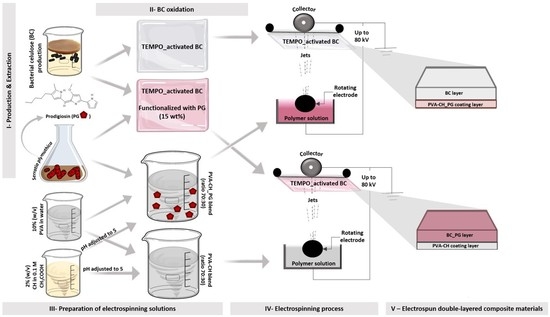
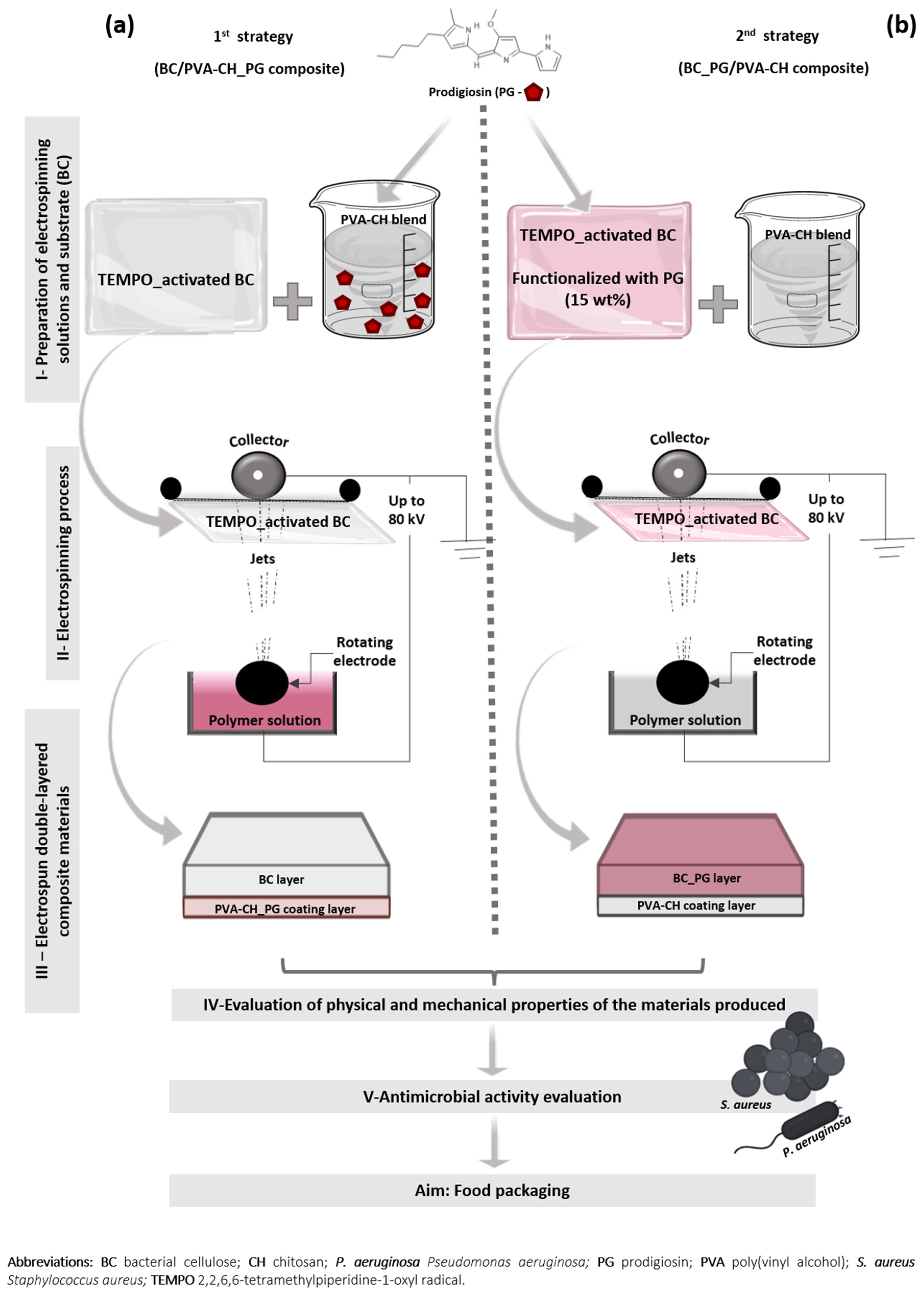
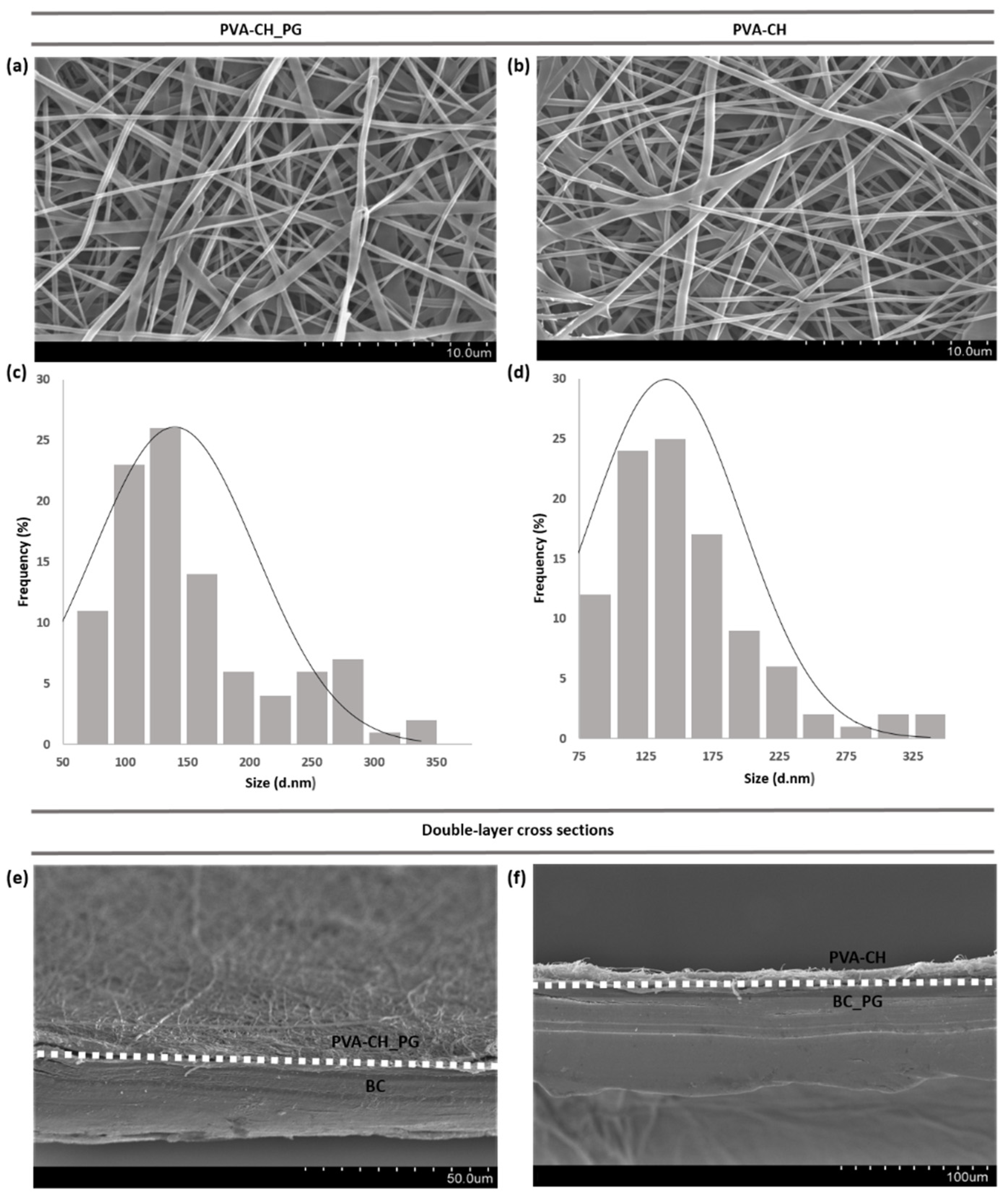
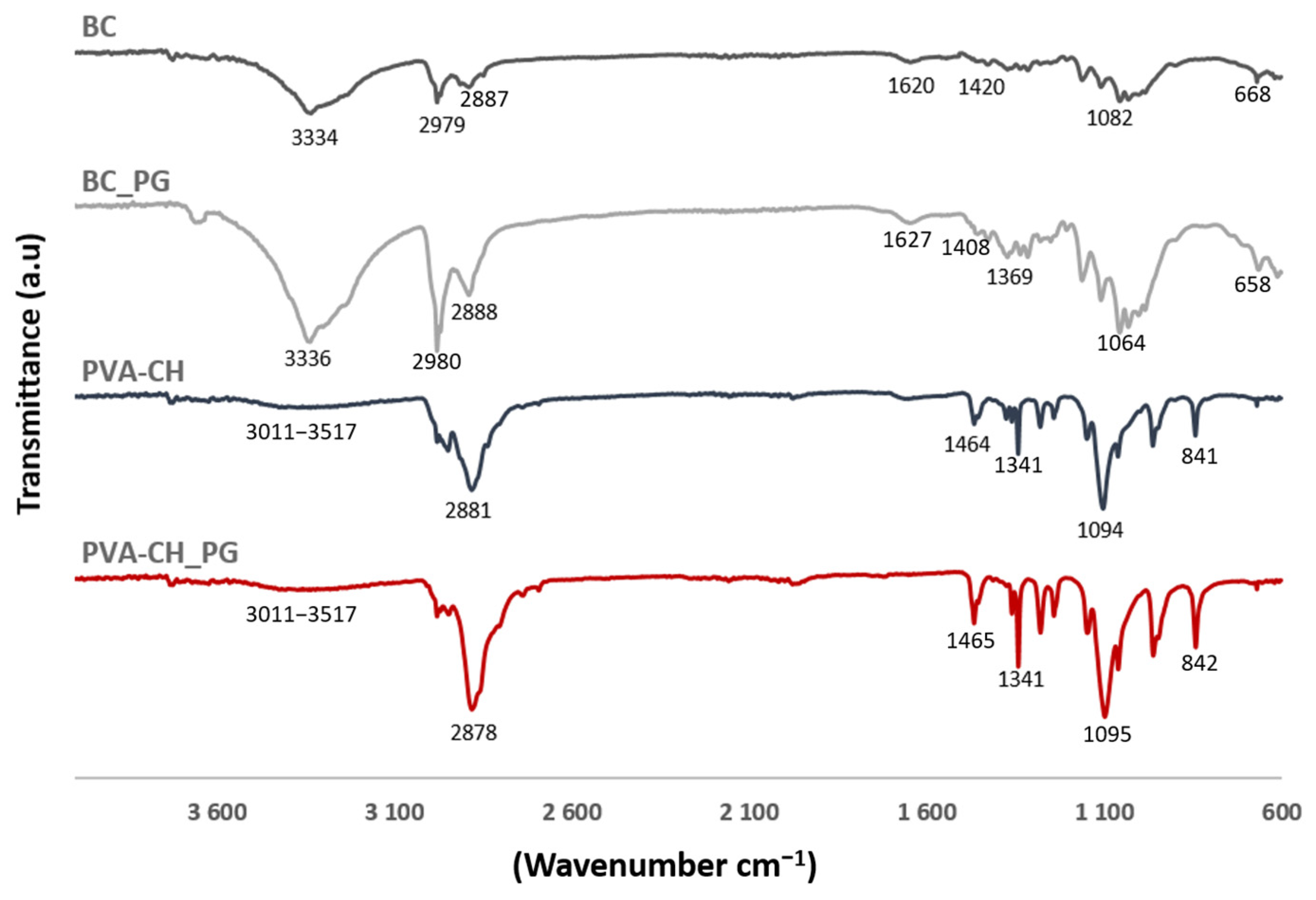
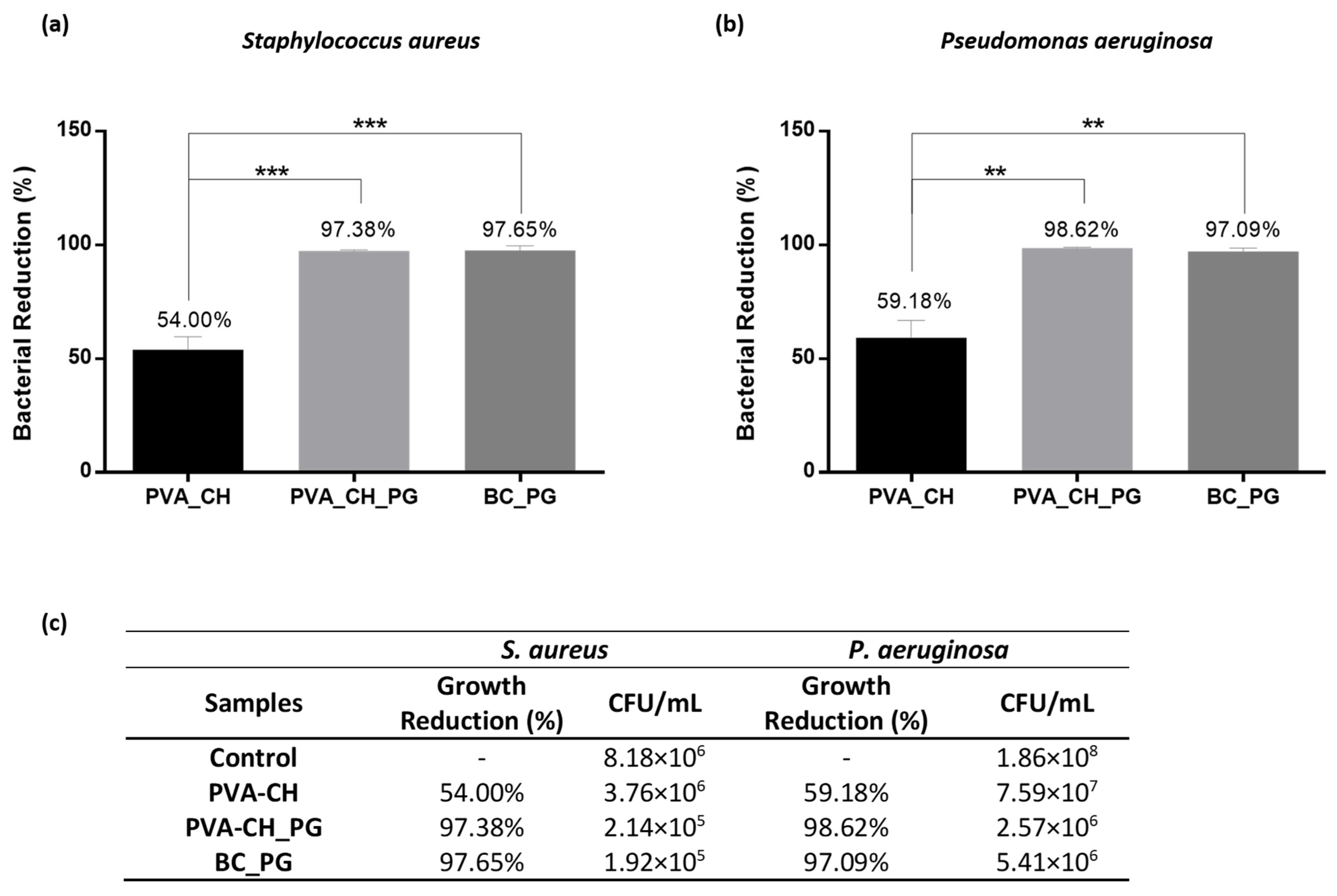
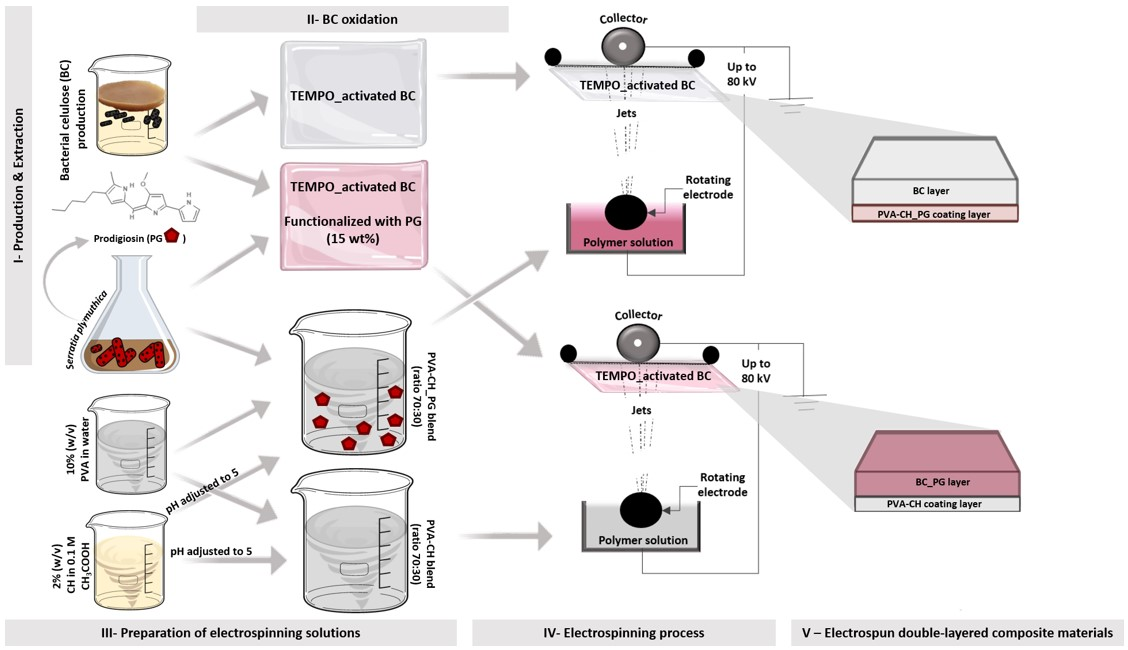
Nowadays, food packaging systems have shifted from a passive to an active role in which the incorporation of antimicrobial compounds into biopolymers can promote a sustainable way to reduce food spoilage and its environmental impact. Accordingly, composite materials based on oxidized-bacterial cellulose (BC) and poly(vinyl alcohol)-chitosan (PVA-CH) nanofibers were produced by needleless electrospinning and functionalized with the bacterial pigment prodigiosin (PG). Two strategies were explored, in the first approach PG was incorporated in the electrospun PVA-CH layer, and TEMPO-oxidized BC was the substrate for nanofibers deposition (BC/PVA-CH_PG composite). In the second approach, TEMPO-oxidized BC was functionalized with PG, and afterward, the PVA-CH layer was electrospun (BC_PG/PVA-CH composite). The double-layer composites obtained were characterized and the nanofibrous layers displayed smooth fibers with average diameters of 139.63 ± 65.52 nm and 140.17 ± 57.04 nm, with and without pigment incorporation, respectively. FTIR-ATR analysis confirmed BC oxidation and revealed increased intensity at specific wavelengths, after pigment incorporation. Moreover, the moderate hydrophilic behavior, as well as the high porosity exhibited by each layer, remained mostly unaffected after PG incorporation. The composites’ mechanical performance and the water vapor transmission rate (WVTR) evaluation indicated the suitability of the materials for certain food packaging solutions, especially for fresh products. Additionally, the red color provided by the bacterial pigment PG on the external surface of a food packaging material is also a desirable effect, to attract the consumers’ attention, creating a multifunctional material. Furthermore, the antimicrobial activity was evaluated and, PVA-CH_PG, and BC_PG layers exhibited the highest antimicrobial activity against Staphylococcus aureus and Pseudomonas aeruginosa. Thus, the fabricated composites can be considered for application in active food packaging, owing to PG antimicrobial potential, to prevent foodborne pathogens (with PG incorporated into the inner layer of the food packaging material, BC/PVA-CH_PG composite), but also to prevent external contamination, by tackling the exterior of food packaging materials (with PG added to the outer layer, BC_PG/PVA-CH composite).
Keywords: bacterial cellulose; prodigiosin; antimicrobial; bacterial pigments; electrospinning; food packaging bacterial cellulose; prodigiosin; antimicrobial; bacterial pigments; electrospinning; food packaging
Graphical Abstract