Article

Extraction and Physico–Chemical Characterization of Chitosan from Mantis Shrimp (Oratosquilla nepa) Shell and the Development of Bio-Composite Film with Agarose


by
Suthasinee Yarnpakdee
1,2,*,
Pimonpan Kaewprachu
2,3,
Chalalai Jaisan
2,3,
Theeraphol Senphan
4,
Muralidharan Nagarajan
5 and
Sutee Wangtueai
3
1
Division of Marine Product Technology, Faculty of Agro-Industry, Chiang Mai University, Chiang Mai 50100, Thailand
2
Cluster of Innovative Food and Agro-Industry, Chiang Mai University, Chiang Mai 50100, Thailand
3
College of Maritime Studies and Management, Chiang Mai University, Samut Sakhon 74000, Thailand
4
Faculty of Engineering and Agro-Industry, Maejo University, Chiang Mai 50290, Thailand
5
Tamil Nadu Dr. J Jayalalithaa Fisheries University, Department of Fish Processing Technology, Dr. MGR Fisheries College and Research Institute, Ponneri 601 204, Tamil Nadu, India
*
Author to whom correspondence should be addressed.
Polymers 2022, 14(19), 3983; https://doi.org/10.3390/polym14193983
Submission received: 4 August 2022 / Revised: 16 September 2022 / Accepted: 20 September 2022 / Published: 23 September 2022
(This article belongs to the Special Issue Application of Biopolymers in the Food Industry)

Abstract

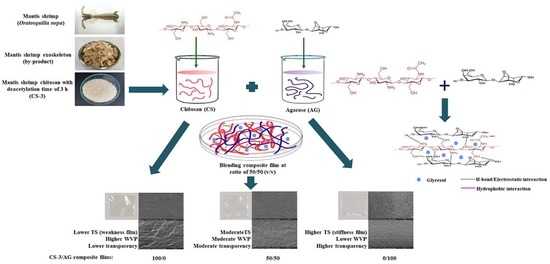
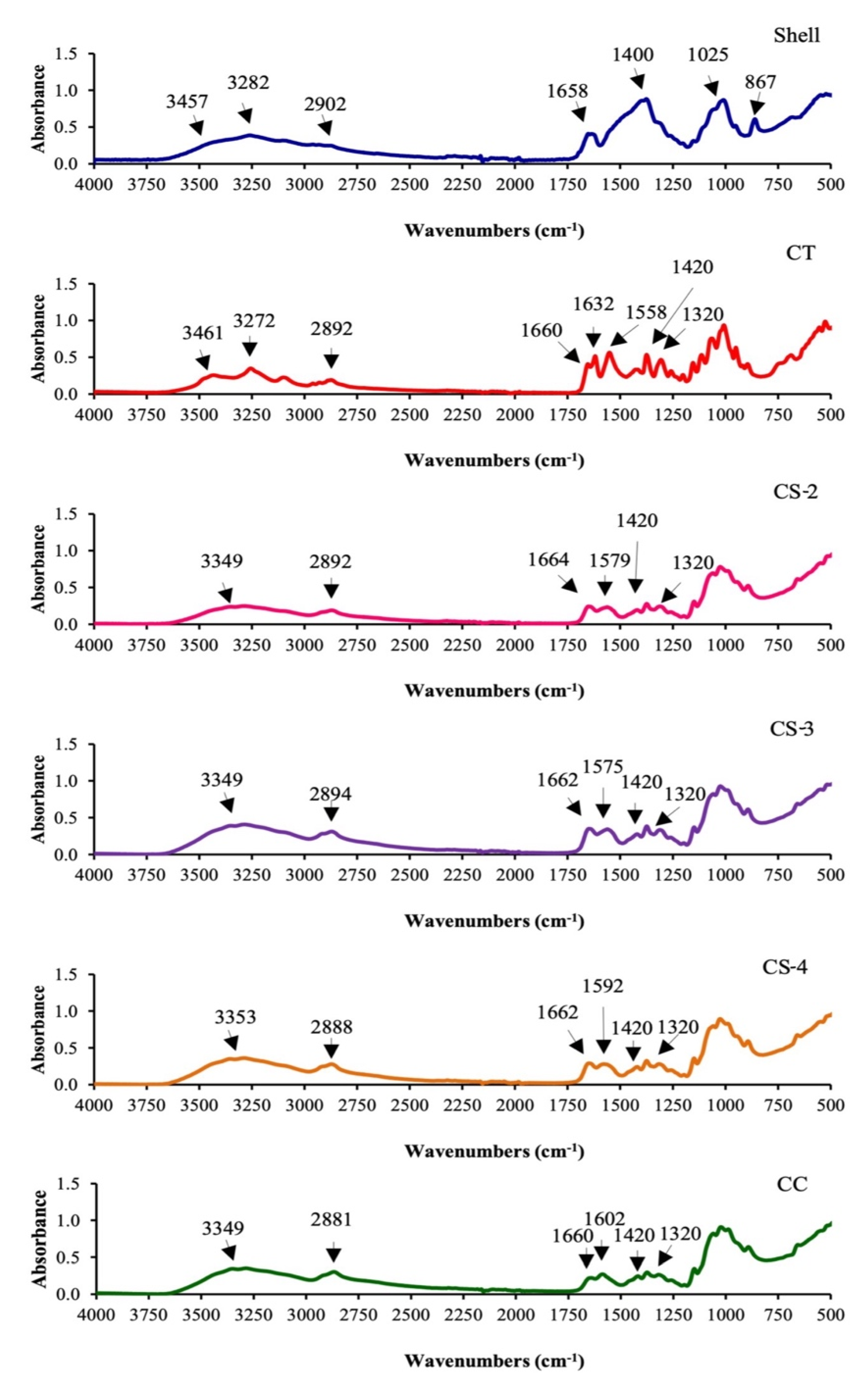
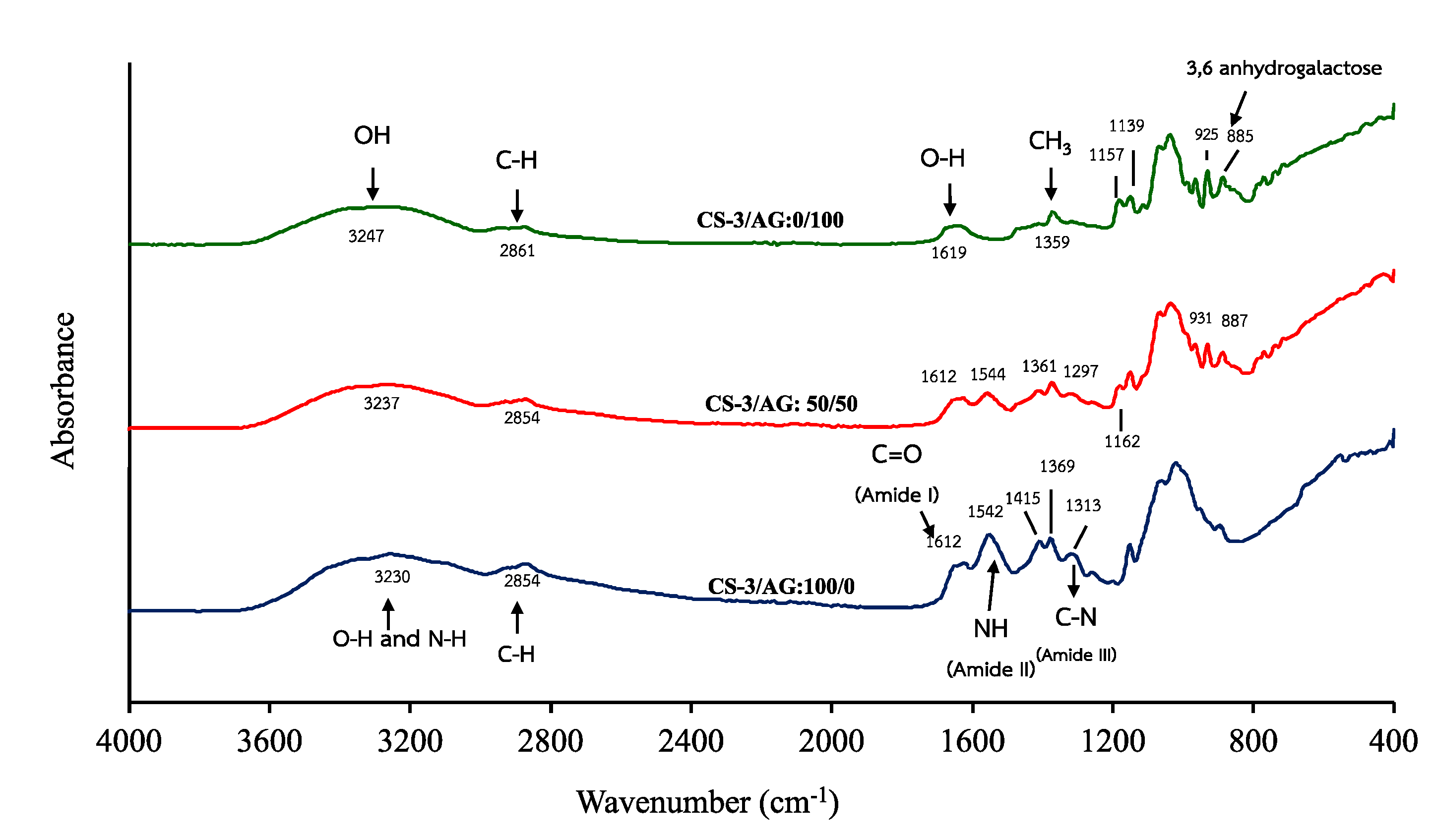
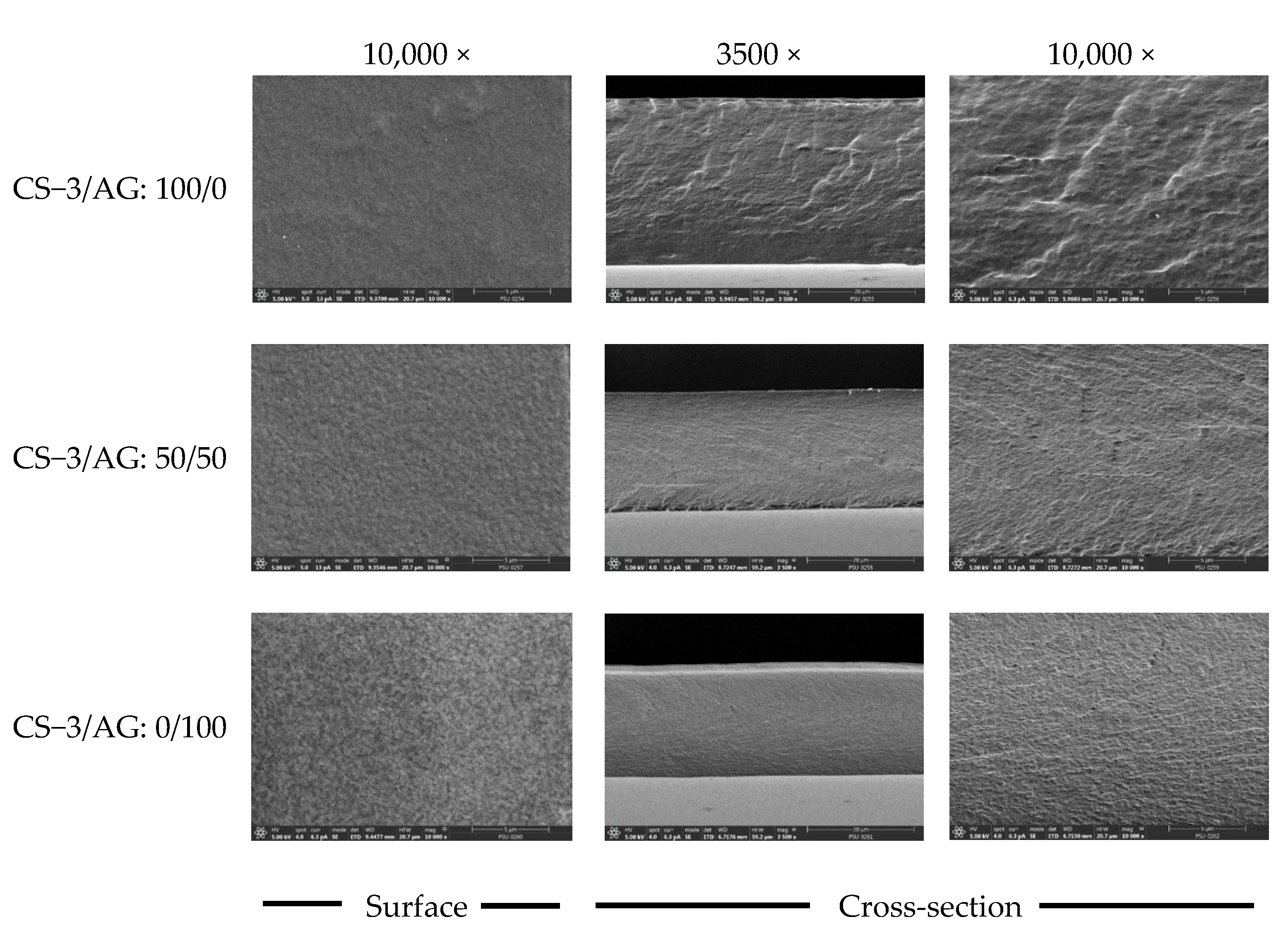
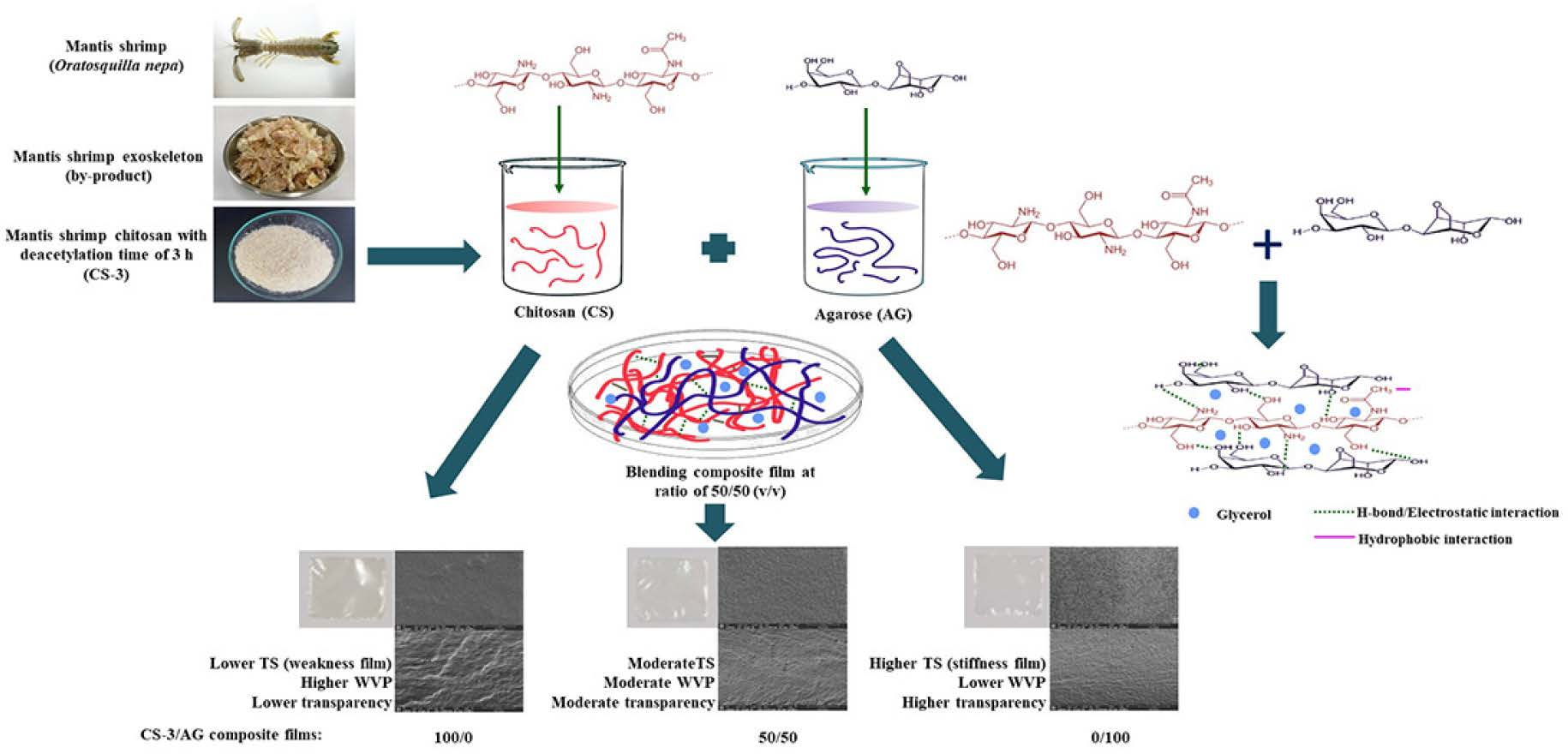
Mantis shrimp (Oratosquilla nepa) exoskeleton, a leftover generated after processing, was used as a starting material for chitosan (CS) production. CS was extracted with different deacetylation times (2, 3 and 4 h), termed CS−2, CS−3 and CS−4, respectively, and their characteristics and antimicrobial and film properties with agarose (AG) were investigated. Prolonged deacetylation time increased the degree of deacetylation (DDA: 73.56 ± 0.09–75.56 ± 0.09%), while extraction yield (15.79 ± 0.19–14.13 ± 0.09%), intrinsic viscosity (η: 3.58 ± 0.09–2.97 ± 0.16 dL/g) and average molecular weight (Mν: 1.4 ± 0.05–1.12 ± 0.08 (×106 Da)) decreased (p < 0.05). FTIR spectra of extracted CS were similar to that of commercial CS. Among all the CS samples prepared, CS−3 had the best yield, DDA, Mν and antimicrobial activity. Therefore, it was chosen for the development of composite films with AG at different ratios (CS−3/AG; 100/0, 75/25, 50/50, 25/75 and 0/100). As the proportion of AG increased, the tensile strength (29.96 ± 1.80–89.70 ± 5.08 MPa) of the composite films increased, while thickness (0.056 ± 0.012–0.024 ± 0.001 mm), elongation at break (36.52 ± 1.12–25.32 ± 1.23%) and water vapor permeability (3.56 ± 0.10–1.55 ± 0.02 (×10−7 g m m−2 s−1 Pa−1)) decreased (p < 0.05). Moreover, lightness of the films increased and yellowness decreased. CS−3/AG (50/50) composite film exhibited high mechanical and barrier properties and excellent compatibility according to FTIR and SEM analyses. According to these finding, mantis shrimp exoskeleton could be used to produce CS. The developed bio-composite film based on an appropriate ratio (50/50) of CS−3 and AG has potential for being used as food packaging material.
Keywords: chitosan; mantis shrimp; deacetylation; agarose; composite film; barrier properties chitosan; mantis shrimp; deacetylation; agarose; composite film; barrier properties
Graphical Abstract