Article

Effects of Filler Functionalization on Filler-Embedded Natural Rubber/Ethylene-Propylene-Diene Monomer Composites
Department of Polymer Engineering, School of Chemical and Materials Engineering, The University of Suwon, Hwaseong 18323, Gyeonggi-do, Korea
*
Author to whom correspondence should be addressed.
These authors contributed equally to this work.
Polymers 2022, 14(17), 3502; https://doi.org/10.3390/polym14173502
Submission received: 31 July 2022 / Revised: 16 August 2022 / Accepted: 17 August 2022 / Published: 26 August 2022

Abstract

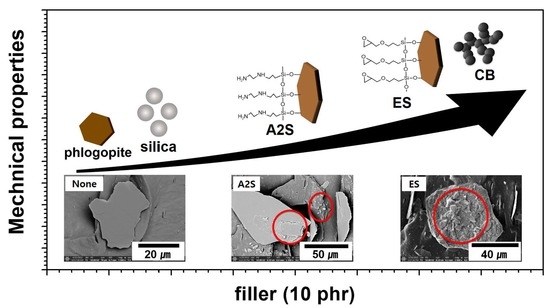
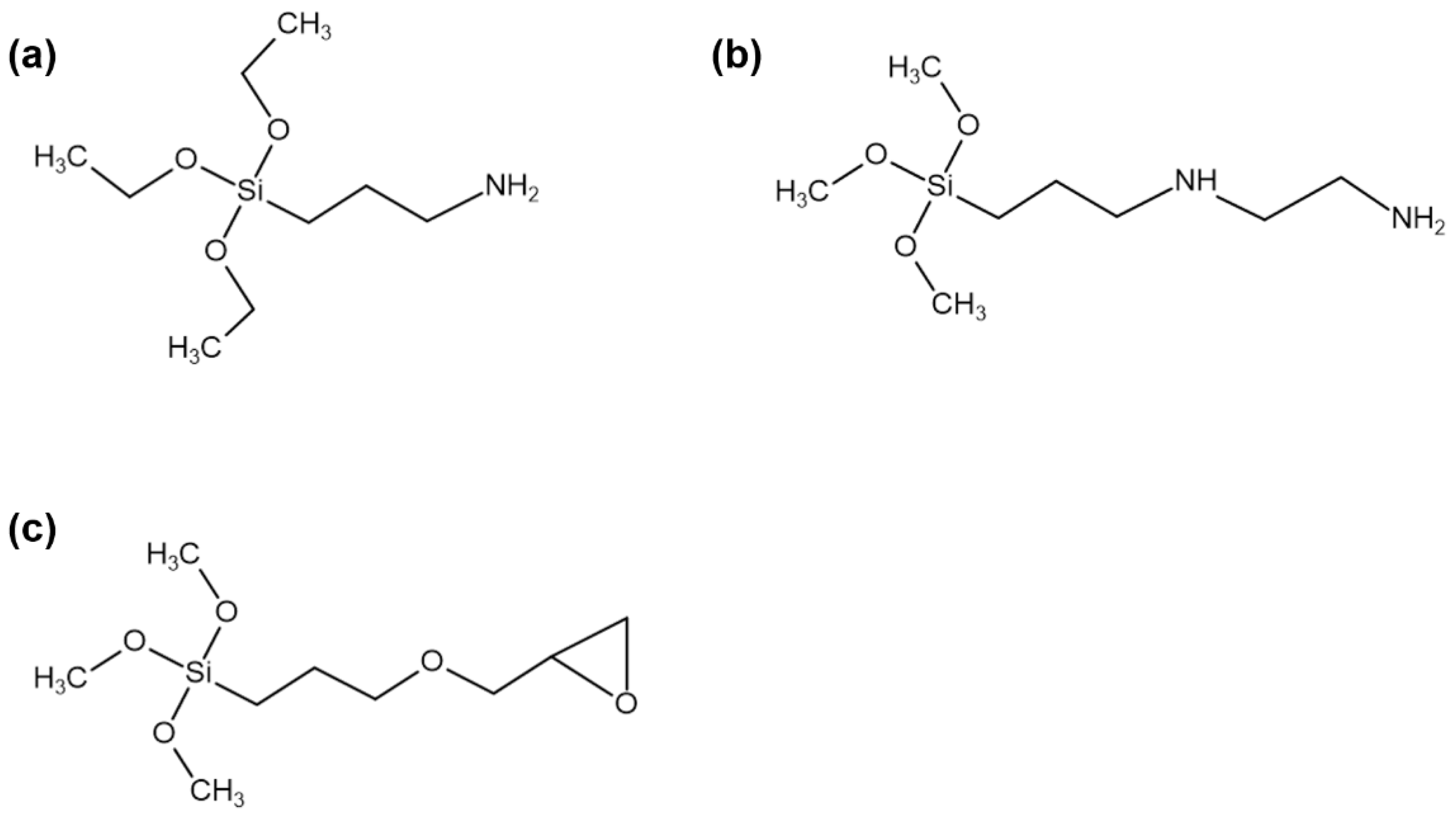
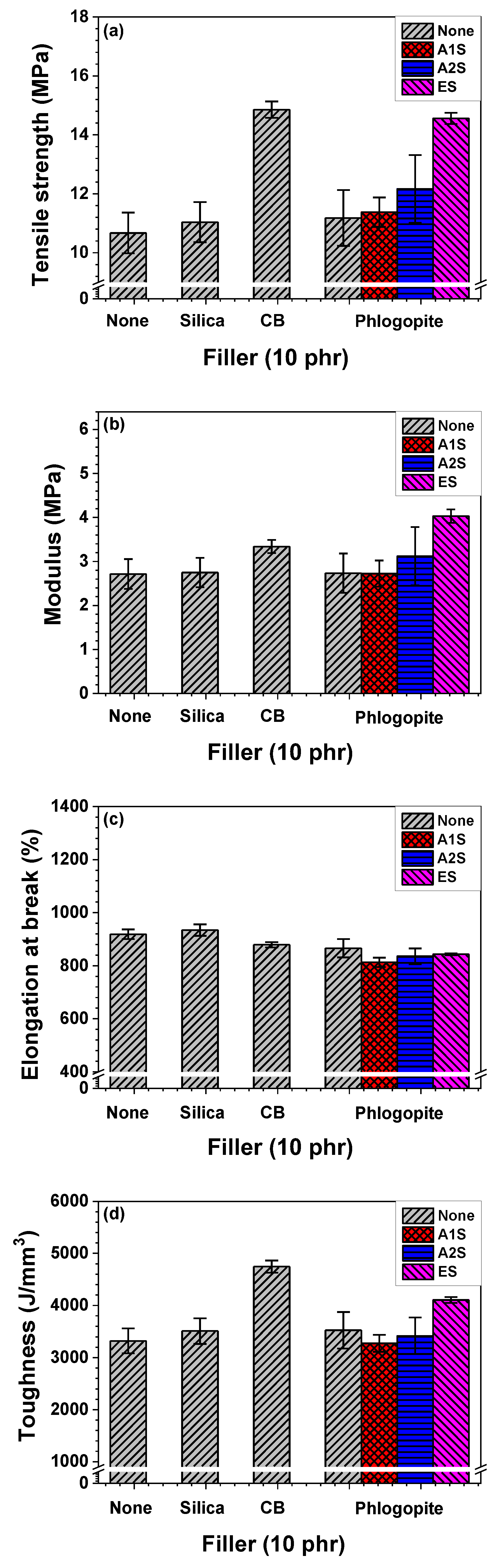
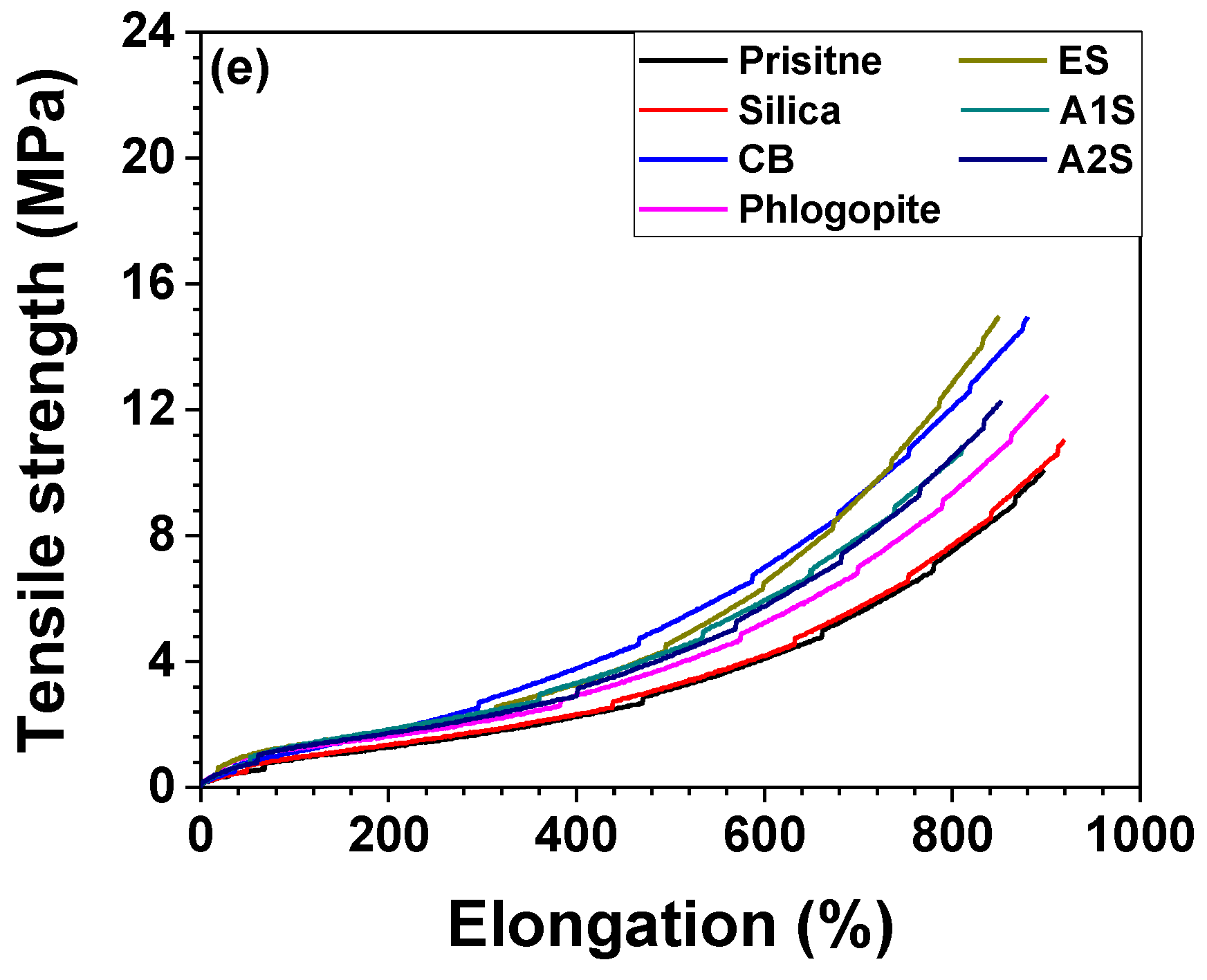
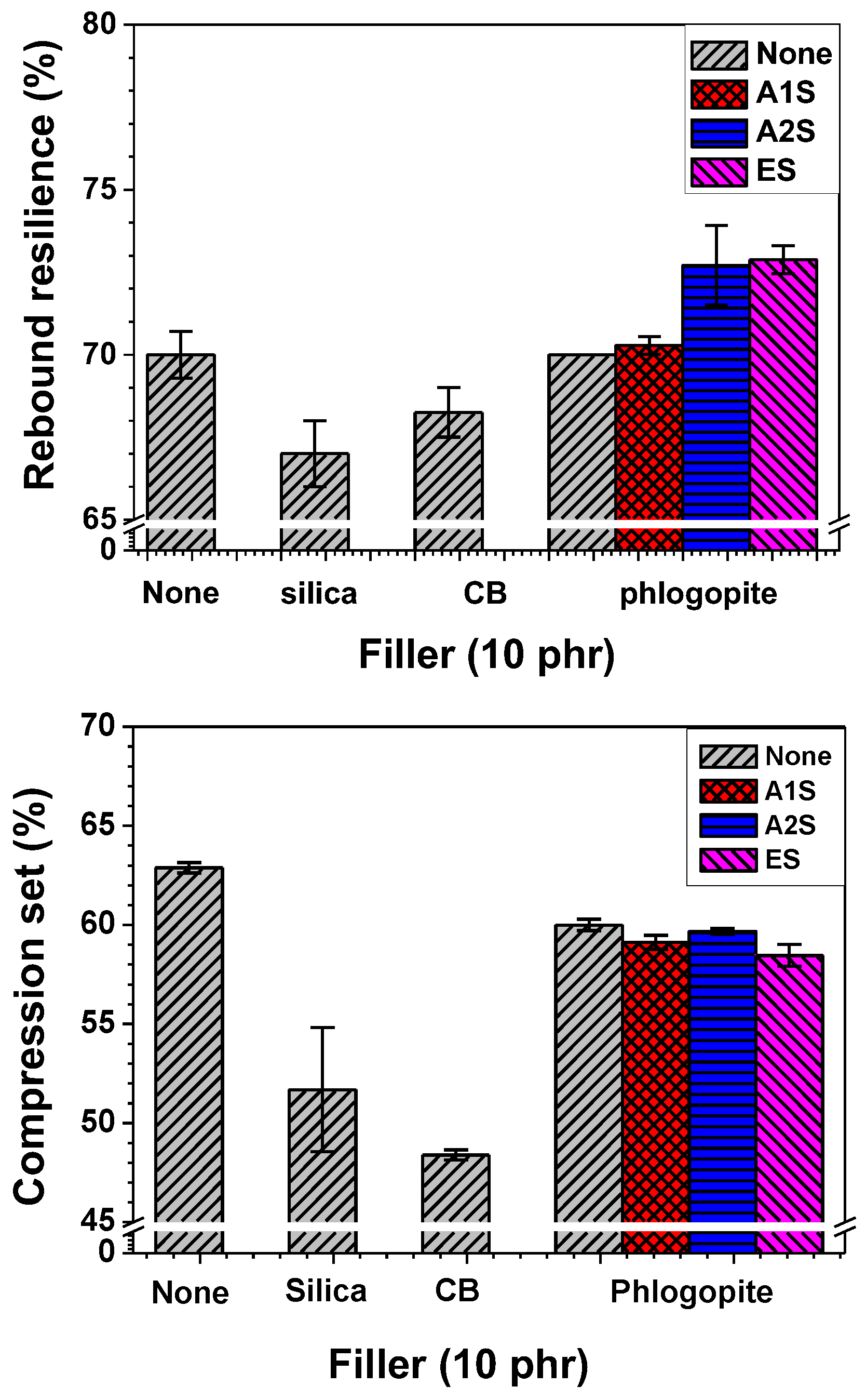
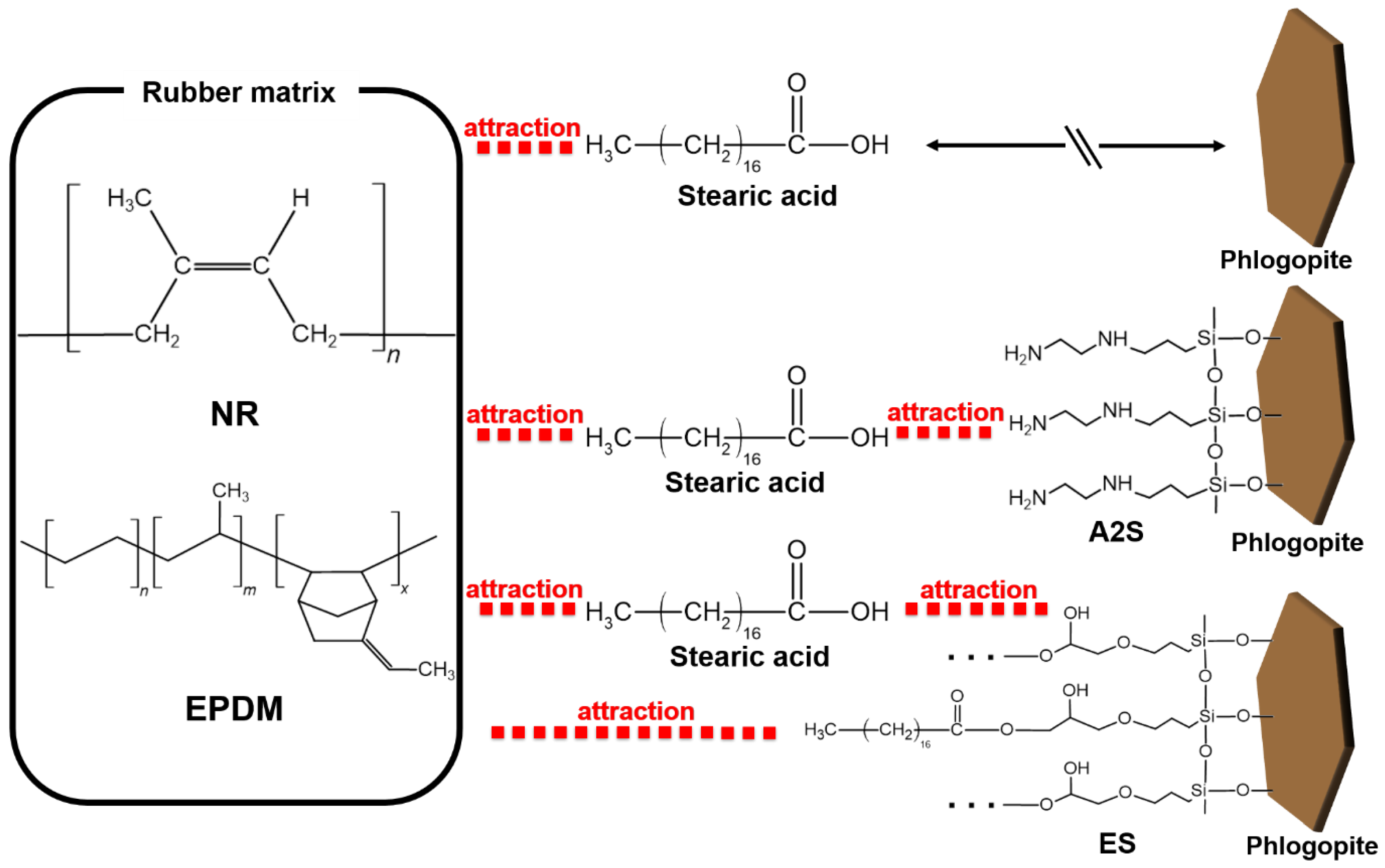
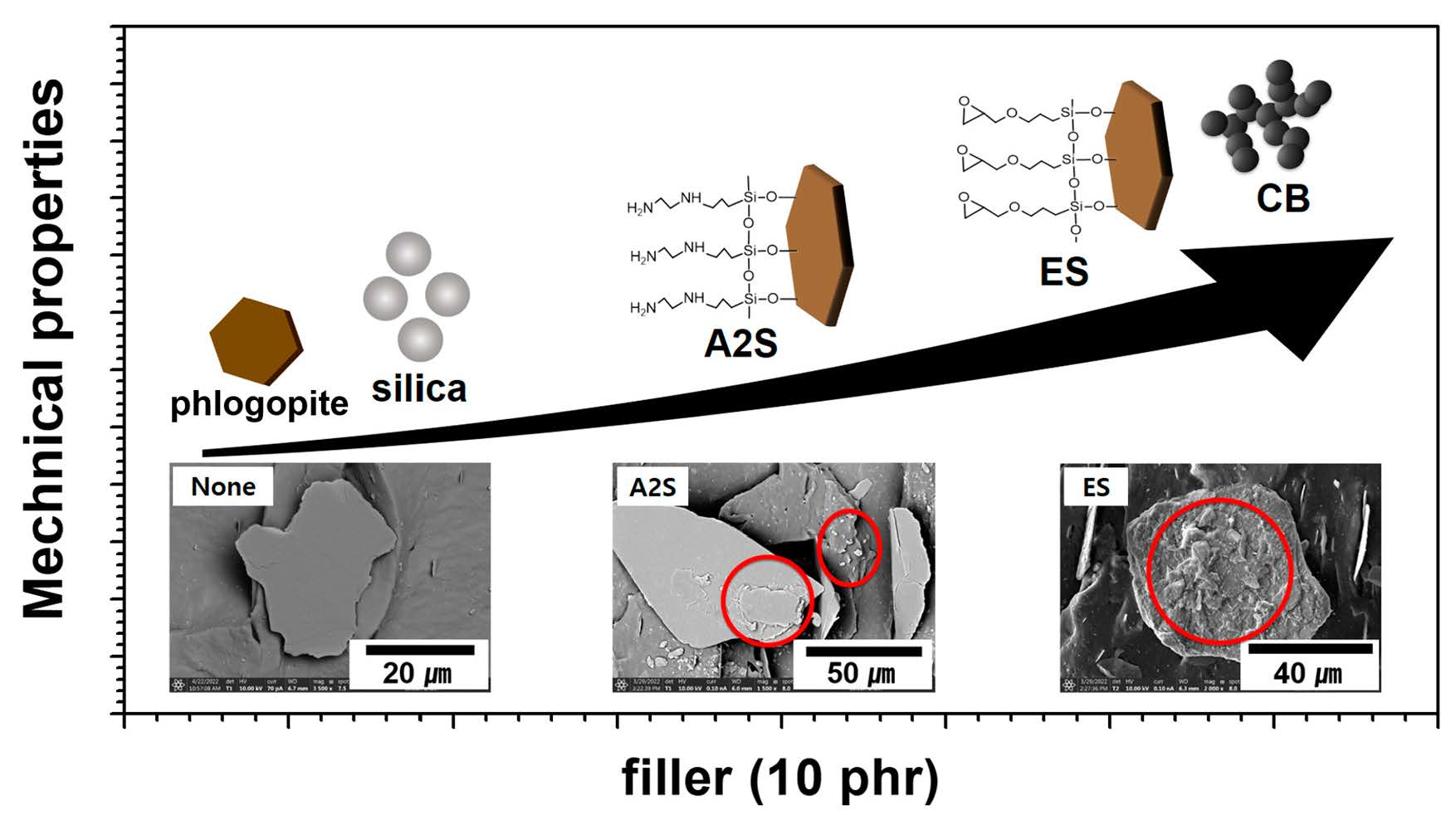
Natural rubber (NR) presents a number of advantages over other types of rubber but has poor resistance to chemicals and aging. The incorporation of ethylene propylene diene monomer (EPDM) into the NR matrix may be able to address this issue. Mineral fillers, such as carbon black (CB) and silica are routinely incorporated into various elastomers owing to their low cost, enhanced processability, good functionality, and high resistance to chemicals and aging. Other fillers have been examined as potential alternatives to CB and silica. In this study, phlogopite was surface-modified using 10 phr of compatibilizers, such as aminopropyltriethoxysilane (A1S), aminoethylaminopropyltrimethoxysilane (A2S), or 3-glycidoxypropyltrimethoxysilane (ES), and mixed with NR/EPDM blends. The effects of untreated and surface-treated phlogopite on the mechanical properties of the rubber blend were then compared with those of common fillers (CB and silica) for rubbers. The incorporation of surface-modified phlogopite into NR/EPDM considerably enhanced various properties. The functionalization of the phlogopite surface using silane-based matters (amino- and epoxide-functionalized) led to excellent compatibility between the rubber matrix and phlogopite, thereby improving diverse properties of the elastomeric composites, with effects analogous to those of CB. The tensile strength and elongation at break of the phlogopite-embedded NR/EPDM composite were lower than those of the CB-incorporated NR/EPDM composite by 30% and 10%, respectively. Among the prepared samples, the ES-functionalized phlogopite showed the best compatibility with the rubber matrix, exhibiting a tensile strength and modulus of composites that were 35% and 18% higher, respectively, compared with those of the untreated phlogopite-incorporated NR/EPDM composite. The ES-functionalized phlogopite/NR/EPDM showed similar strength and higher modulus (by 18%) to the CB/NR/EPDM rubber composite, despite slightly lower elongation at break and toughness. The results of rebound resilience and compression set tests indicated that the elasticity of the surface-modified phlogopite/NR/EPDM rubber composite was higher than that of the silica- and CB-reinforced composites. These improvements could be attributed to enhancements in the physical and chemical interactions among the rubber matrix, stearic acid, and functionalized (compatibilized) phlogopite. Therefore, the functionalized phlogopite can be utilized in a wide range of applications for rubber compounding.
Keywords: phlogopite; natural rubber (NR); ethylene-propylene-diene (EPDM); rubber composite; compatibilizer; coupling agent; mechanical properties phlogopite; natural rubber (NR); ethylene-propylene-diene (EPDM); rubber composite; compatibilizer; coupling agent; mechanical properties
Graphical Abstract