Article

Penetration of Hydrogen into Polymer Electrolyte Membrane for Fuel Cells by Quantum and Molecular Dynamics Simulations

Institute of Fundamental and Advanced Technology, Hyundai Motor Company, 37 Cheoldobangmulgwan-ro, Uiwang-si 16082, Gyeonggi-do, Korea
*
Author to whom correspondence should be addressed.
Polymers 2021, 13(6), 947; https://doi.org/10.3390/polym13060947
Submission received: 24 February 2021 / Revised: 16 March 2021 / Accepted: 17 March 2021 / Published: 19 March 2021
(This article belongs to the Special Issue Advanced Polymer Simulation and Processing)

Abstract

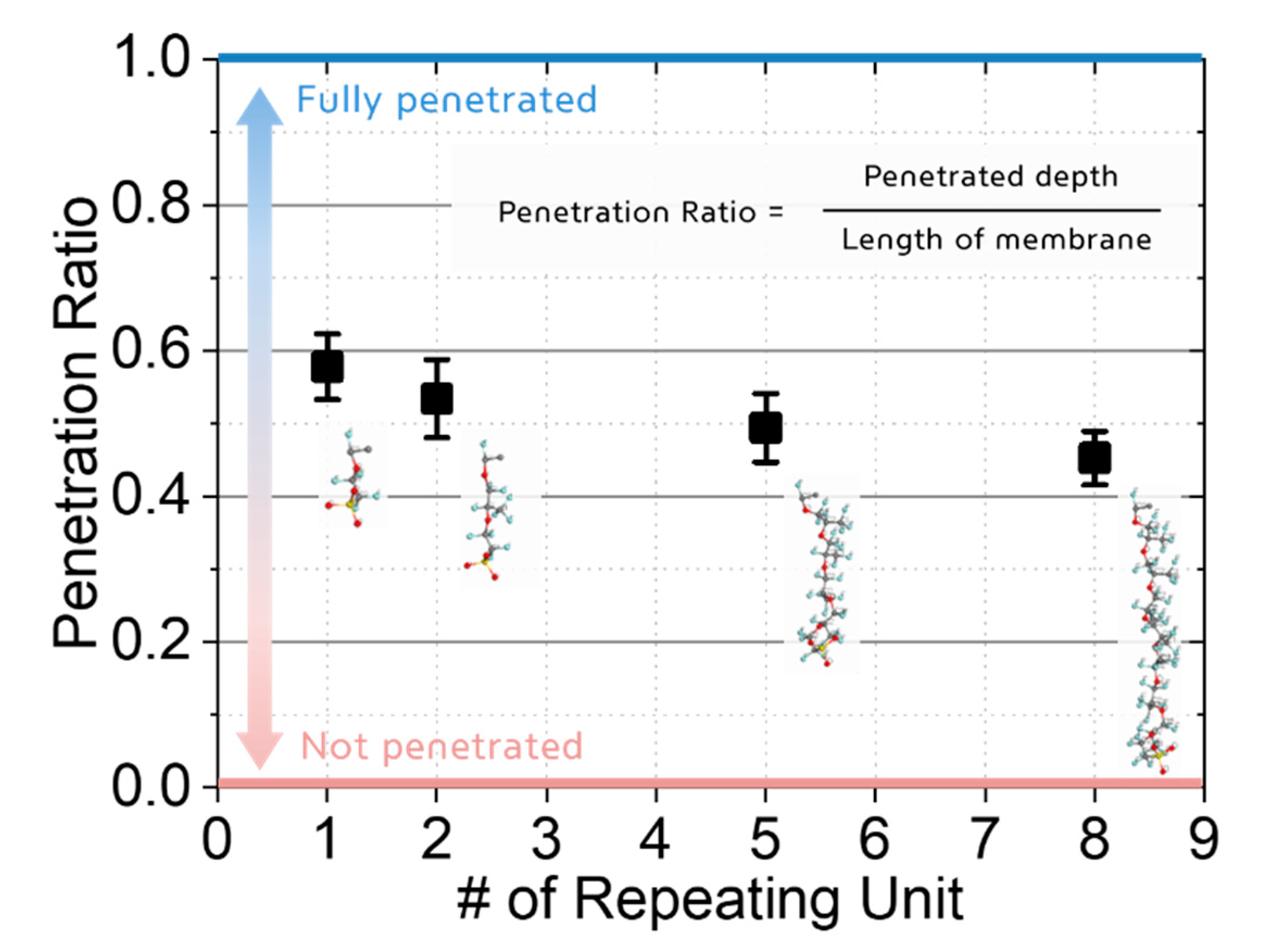
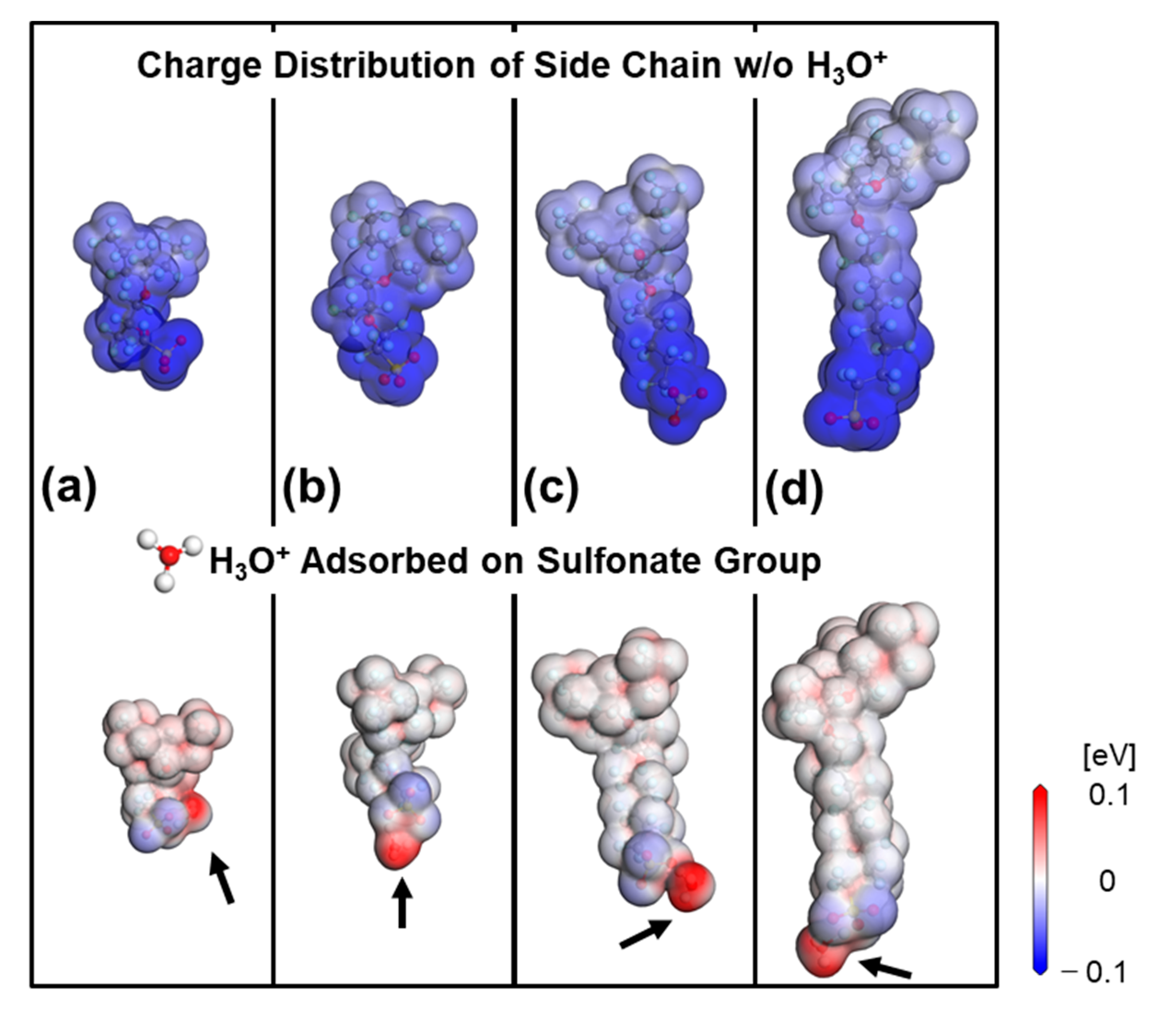
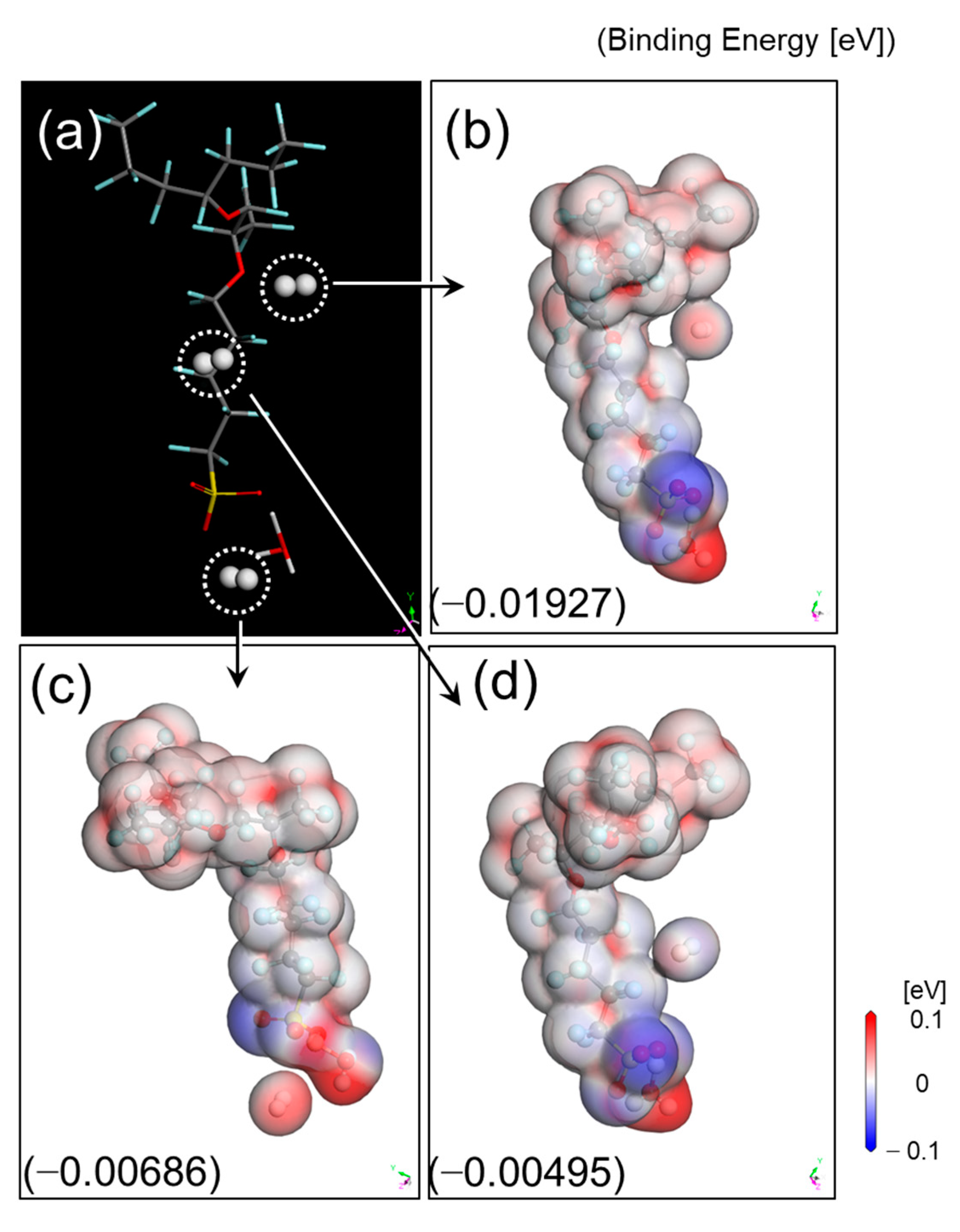
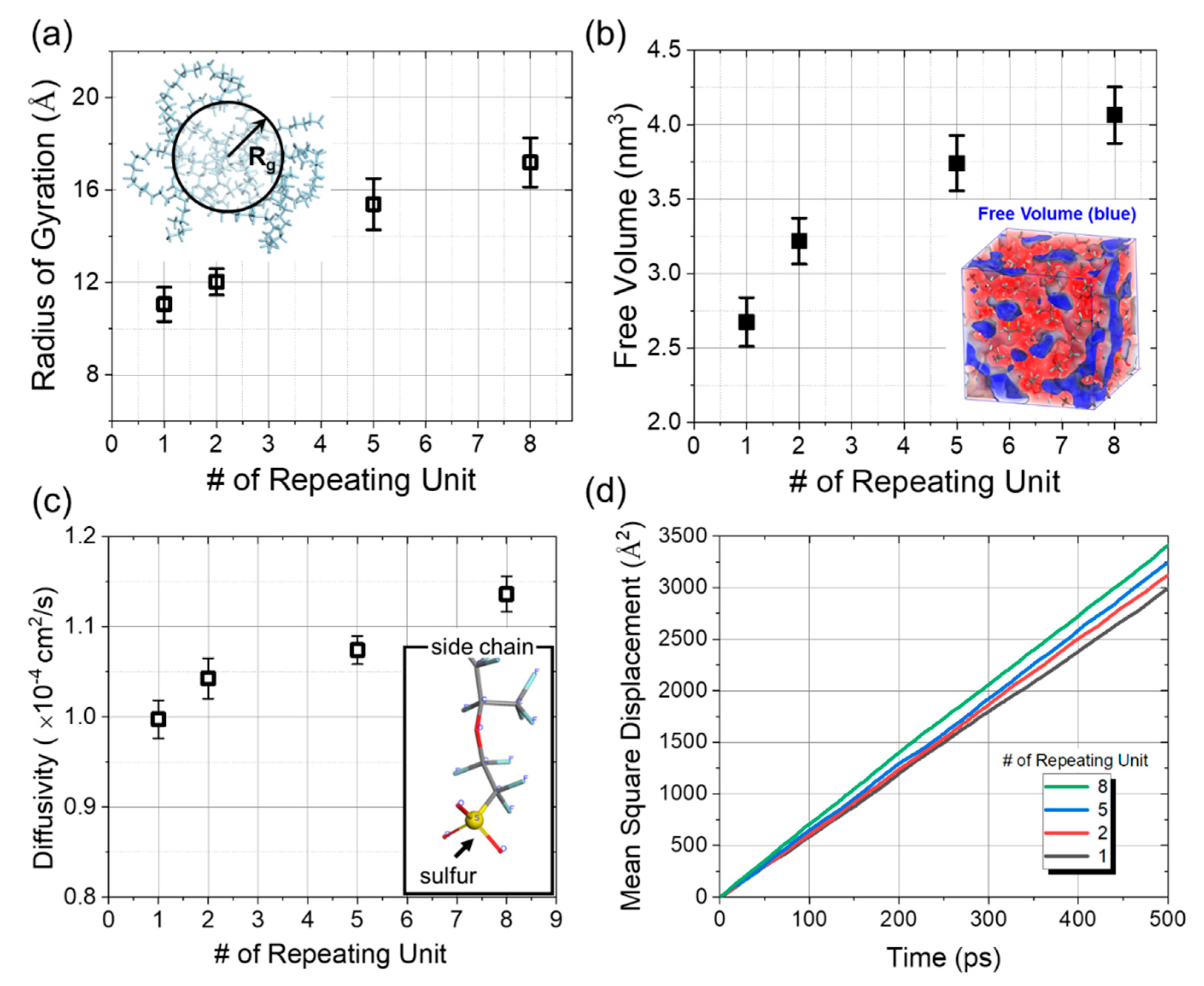
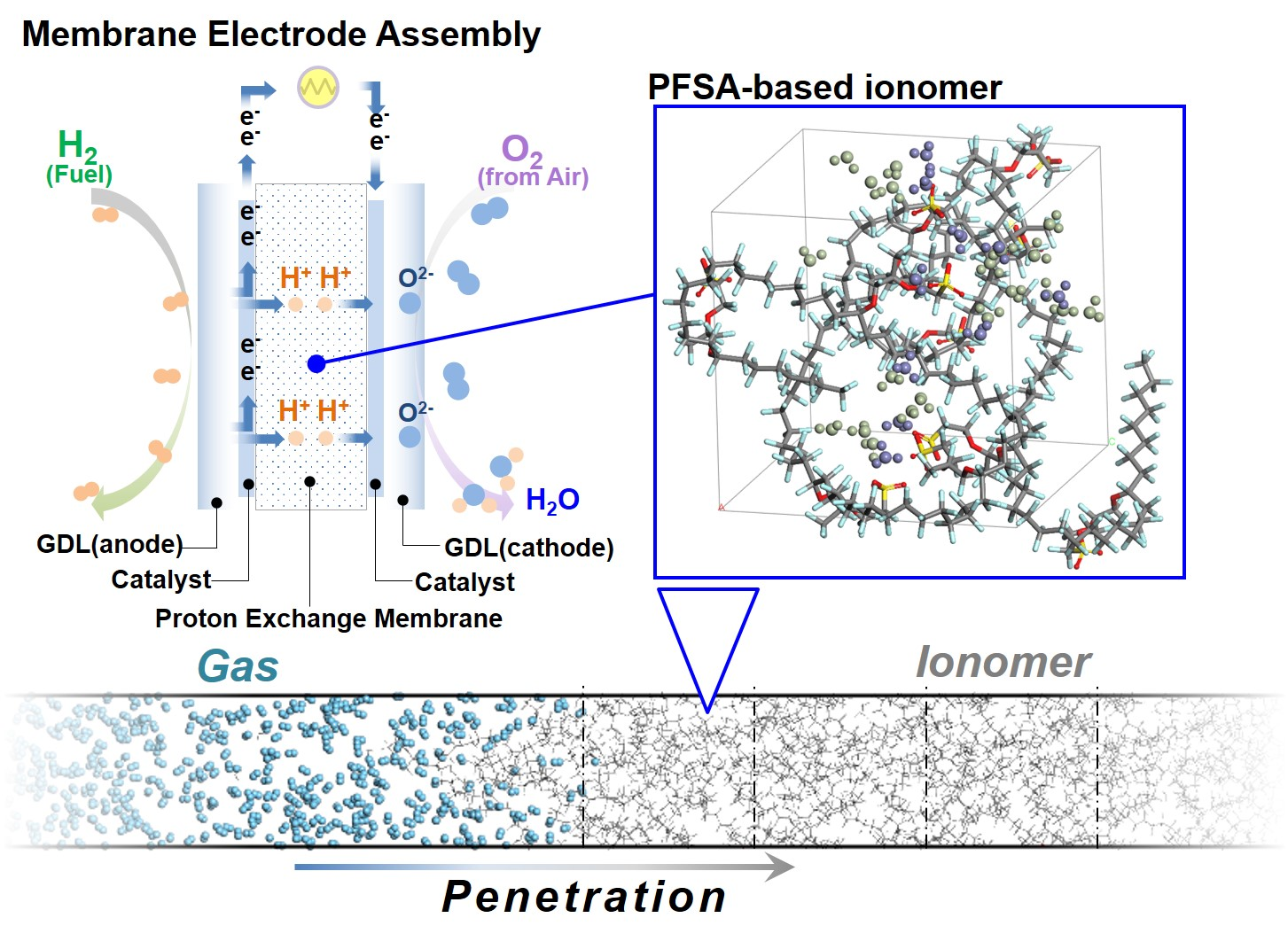
The advent of the Hydrogen Society created great interest around hydrogen-based energy a decade ago, with several types of vehicles based on hydrogen fuel cells already being produced in the automotive sector. For highly efficient fuel cell systems, the control of hydrogen inside a polymer-based electrolyte membrane is crucial. In this study, we investigated the molecular behavior of hydrogen inside a polymer-based proton-exchange membrane, using quantum and molecular dynamics simulations. In particular, this study focused on the structural difference of the pendent-like side chain polymer, resulting in the penetration ratio of hydrogen into the membrane deriving from the penetration depth of the membrane’s thickness while keeping the simulation time constant. The results reveal that the penetration ratio of the polymer with a shorter side chain was higher than that with the longer side chain. This was justified via two perspectives; electrostatic and van der Waals molecular interactions, and the structural difference of the polymers resulting in the free volume and different behavior of the side chain. In conclusion, we found that a longer side chain is more trembling and acts as an obstruction, dominating the penetration of hydrogen inside the polymer membrane.
Keywords: polymer electrolyte membrane for fuel cell; molecular dynamics simulations; side chain; penetration polymer electrolyte membrane for fuel cell; molecular dynamics simulations; side chain; penetration
Graphical Abstract