Article

Membrane Emulsification Process as a Method for Obtaining Molecularly Imprinted Polymers

by
Joanna Wolska
1,* and
Nasim Jalilnejad Falizi
2,3
1
Department of Process Engineering and Technology of Polymeric and Carbon Materials, Faculty of Chemistry, Wroclaw University of Science and Technology, Wybrzeze Wyspianskiego 27, 50-370 Wroclaw, Poland
2
Chemical Engineering Department, Engineering Faculty, Ege University, Izmir 35100, Turkey
3
Biotechnology Division, Graduate School of Sciences, Ege University, Izmir 35100, Turkey
*
Author to whom correspondence should be addressed.
Polymers 2021, 13(16), 2830; https://doi.org/10.3390/polym13162830
Submission received: 25 May 2021 / Revised: 16 August 2021 / Accepted: 18 August 2021 / Published: 23 August 2021
(This article belongs to the Special Issue Functional Polymer Composites for Environmental Protection)

Abstract

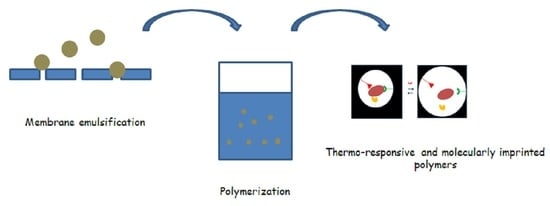
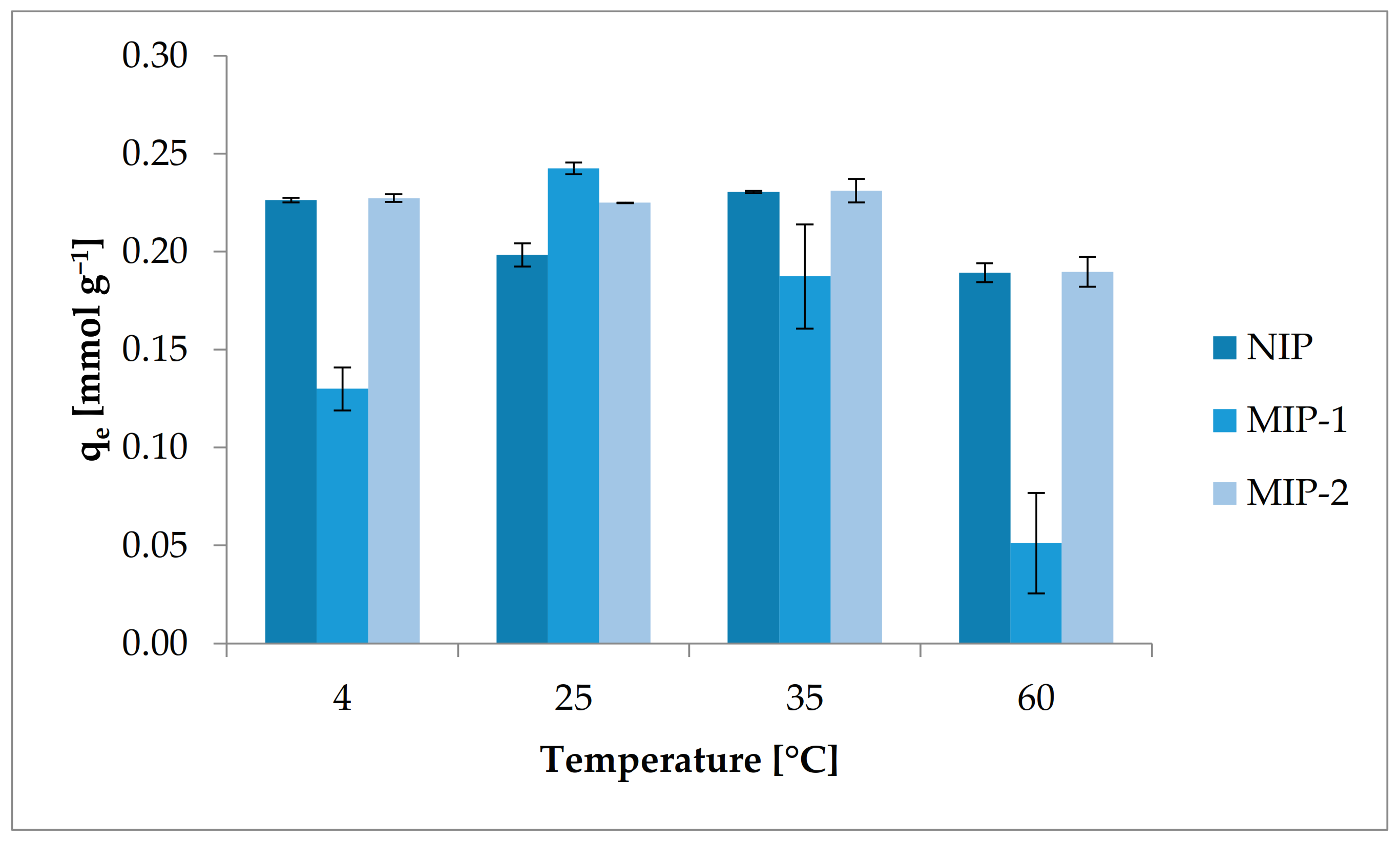
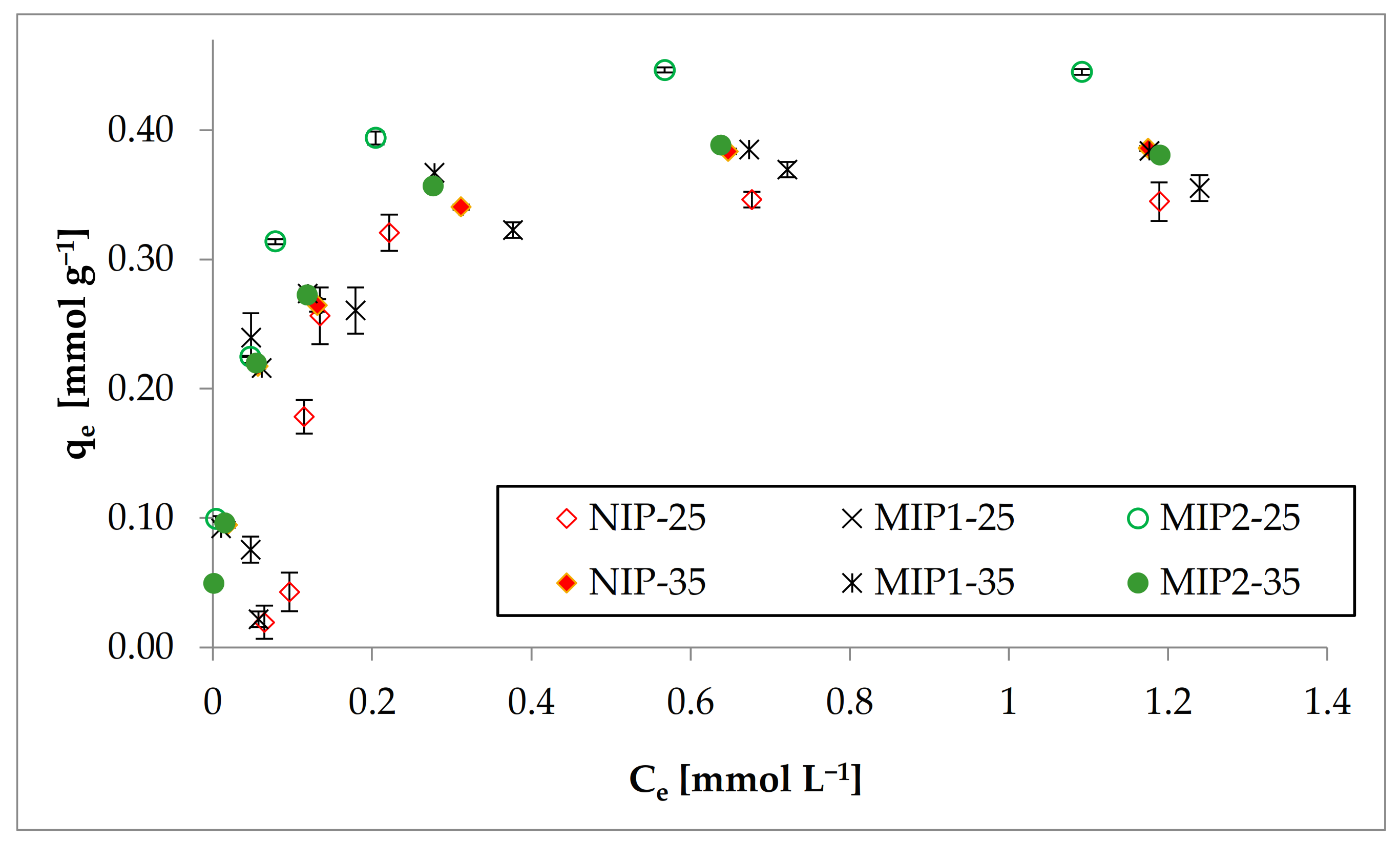
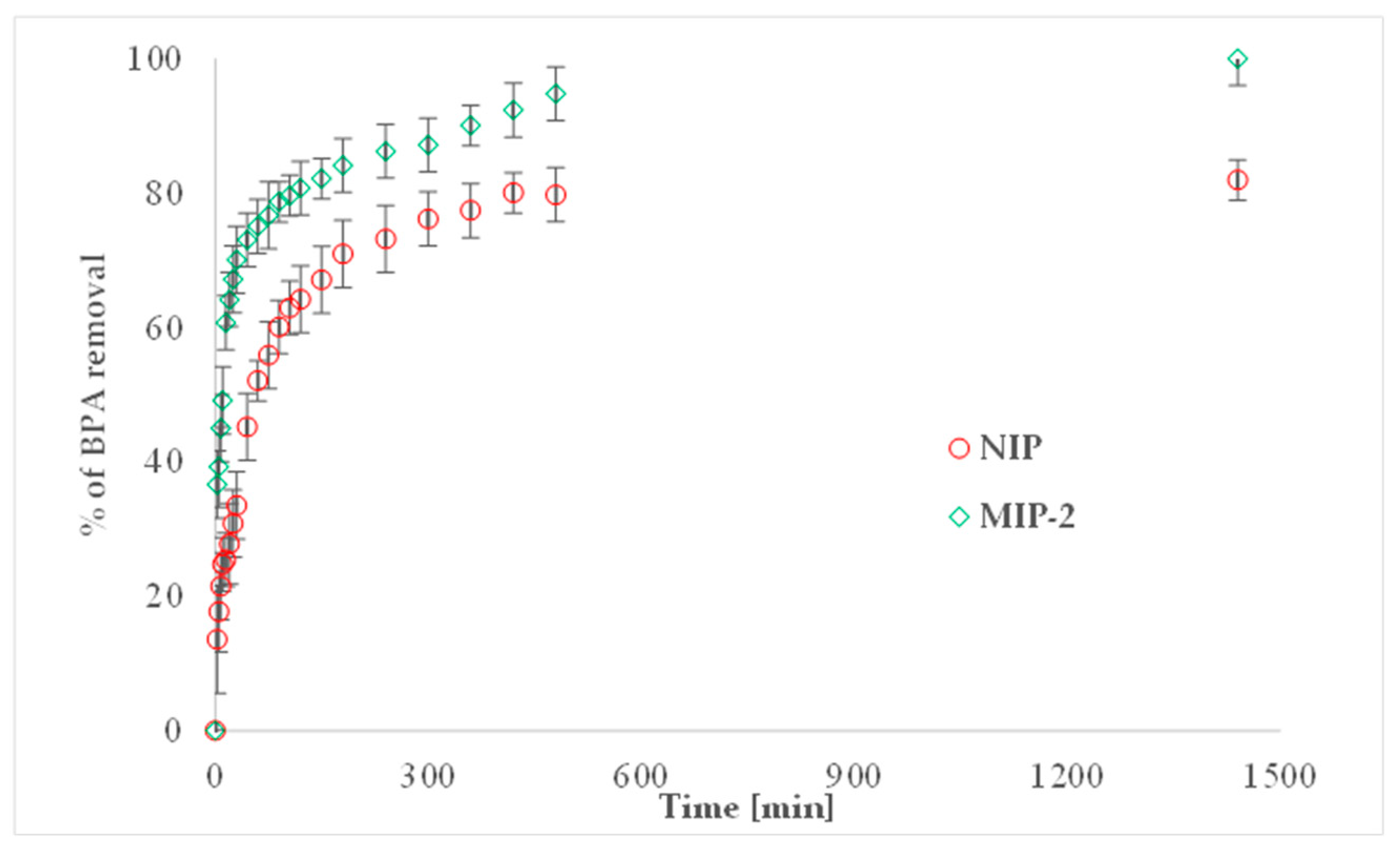
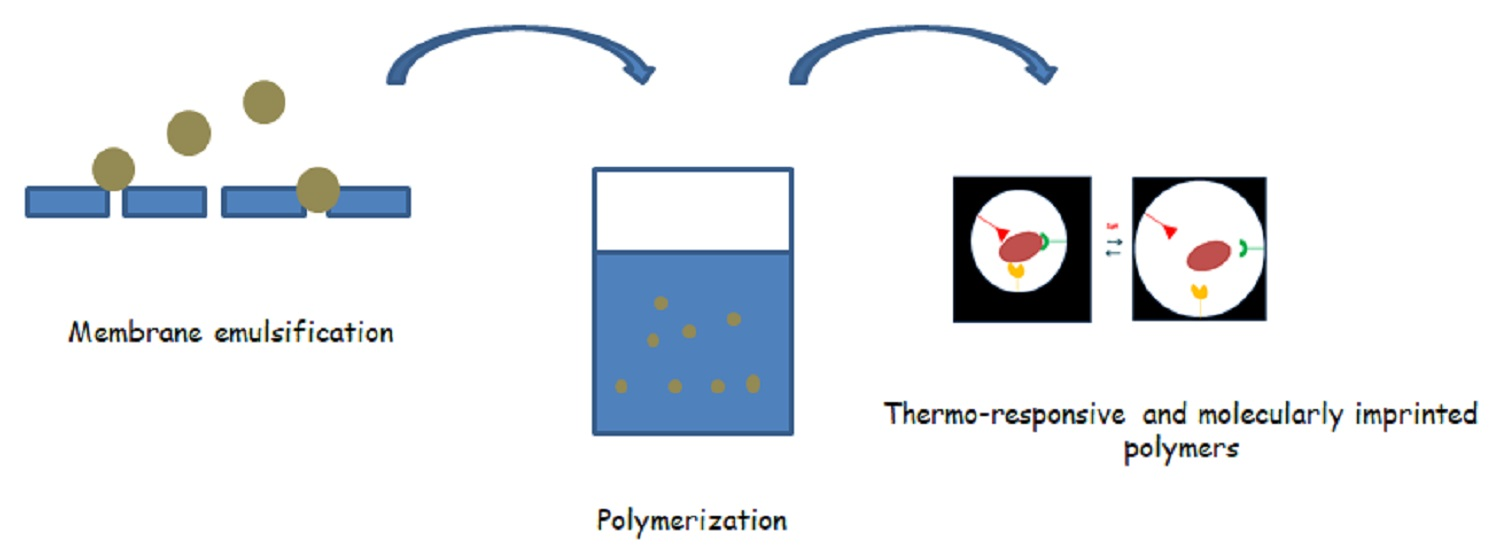
The membrane emulsification process (ME) using a metallic membrane was the first stage for preparing a spherical and monodisperse thermoresponsive molecularly imprinted polymer (TSMIP). In the second step of the preparation, after the ME process, the emulsion of monomers was then polymerized. Additionally, the synthesized TSMIP was fabricated using as a functional monomer N-isopropylacrylamide, which is thermosensitive. This special type of polymer was obtained for the recognition and determination of trace bisphenol A (BPA) in aqueous media. Two types of molecularly imprinted polymers (MIPs) were synthesized using amounts of BPA of 5 wt.% (MIP-2) and 7 wt.% (MIP-1) in the reaction mixtures. Additionally, a non-imprinted polymer (NIP) was also synthesized. Polymer MIP-2 showed thermocontrolled recognition for imprinted molecules and a higher binding capacity than its corresponding non-imprinted polymer and higher than other molecularly imprinted polymer (MIP-1). The best condition for the sorption process was at a temperature of 35 °C, that is, at a temperature close to the phase transition value for poly(N-isopropylacrylamide). Under these conditions, the highest levels of BPA removal from water were achieved and the highest adsorption capacity of MIP-2 was about 0.5 mmol g−1 (about 114.1 mg g−1) and was approximately 20% higher than for MIP-1 and NIP. It was also observed that during the kinetic studies, under these temperature conditions, MIP-2 sorbed BPA faster and with greater efficiency than its non-imprinted analogue.
Keywords: bisphenol A; endocrine disruptors; membrane emulsification process; sorption; thermosensitive molecularly imprinted polymers bisphenol A; endocrine disruptors; membrane emulsification process; sorption; thermosensitive molecularly imprinted polymers
Graphical Abstract