Article

Analysis on Microstructure–Property Linkages of Filled Rubber Using Machine Learning and Molecular Dynamics Simulations

1
Research and Advanced Development Division, The Yokohama Rubber Co., Ltd., 2-1 Oiwake, Hiratsuka 254-8601, Kanagawa, Japan
2
Department of Reasoning for Intelligence, The Institute of Scientific and Industrial Research, Osaka University, 8-1 Mihogaoka, Ibarakishi 567-0047, Osaka, Japan
*
Author to whom correspondence should be addressed.
Polymers 2021, 13(16), 2683; https://doi.org/10.3390/polym13162683
Submission received: 27 July 2021 / Revised: 6 August 2021 / Accepted: 9 August 2021 / Published: 11 August 2021
(This article belongs to the Special Issue Rubber Materials: Processes, Structures and Applications)

Abstract

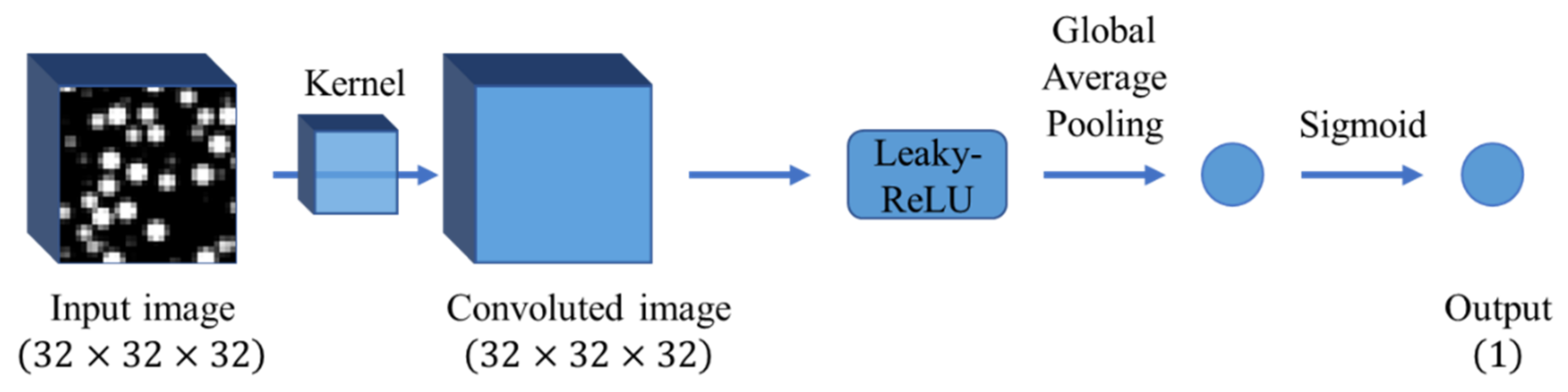
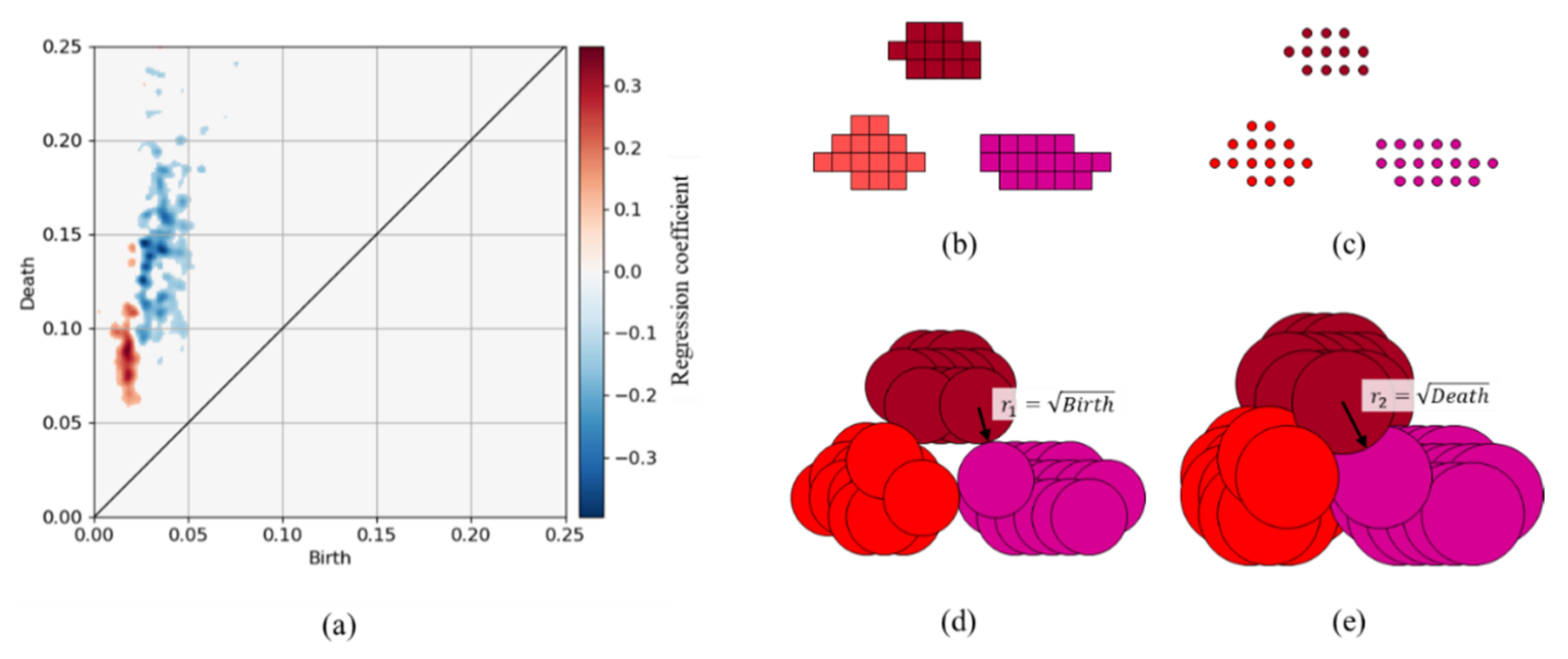
A better understanding of the microstructure–property relationship can be achieved by sampling and analyzing a microstructure leading to a desired material property. During the simulation of filled rubber, this approach includes extracting common aggregates from a complex filler morphology consisting of hundreds of filler particles. However, a method for extracting a core structure that determines the rubber mechanical properties has not been established yet. In this study, we analyzed complex filler morphologies that generated extremely high stress using two machine learning techniques. First, filler morphology was quantified by persistent homology and then vectorized using persistence image as the input data. After that, a binary classification model involving logistic regression analysis was developed by training a dataset consisting of the vectorized morphology and stress-based class. The filler aggregates contributing to the desired mechanical properties were extracted based on the trained regression coefficients. Second, a convolutional neural network was employed to establish a classification model by training a dataset containing the imaged filler morphology and class. The aggregates strongly contributing to stress generation were extracted by a kernel. The aggregates extracted by both models were compared, and their shapes and distributions producing high stress levels were discussed. Finally, we confirmed the effects of the extracted aggregates on the mechanical property, namely the validity of the proposed method for extracting stress-contributing fillers, by performing coarse-grained molecular dynamics simulations.
Keywords: filled rubber; microstructure; filler morphology; molecular dynamics simulations; machine learning; convolutional neural network; persistent homology filled rubber; microstructure; filler morphology; molecular dynamics simulations; machine learning; convolutional neural network; persistent homology