Article

Thermo-Responsive Fluorescent Polymers with Diverse LCSTs for Ratiometric Temperature Sensing through FRET


Faculty of Health Sciences, University of Macau, Macau SAR 999078, China
*
Author to whom correspondence should be addressed.
These authors contributed equally to this work.
Polymers 2018, 10(3), 283; https://doi.org/10.3390/polym10030283
Submission received: 30 January 2018 / Revised: 21 February 2018 / Accepted: 6 March 2018 / Published: 8 March 2018
(This article belongs to the Special Issue Nanoparticle-Reinforced Polymers)

Abstract

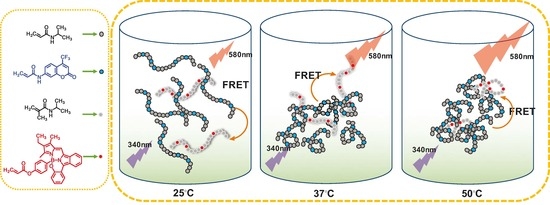
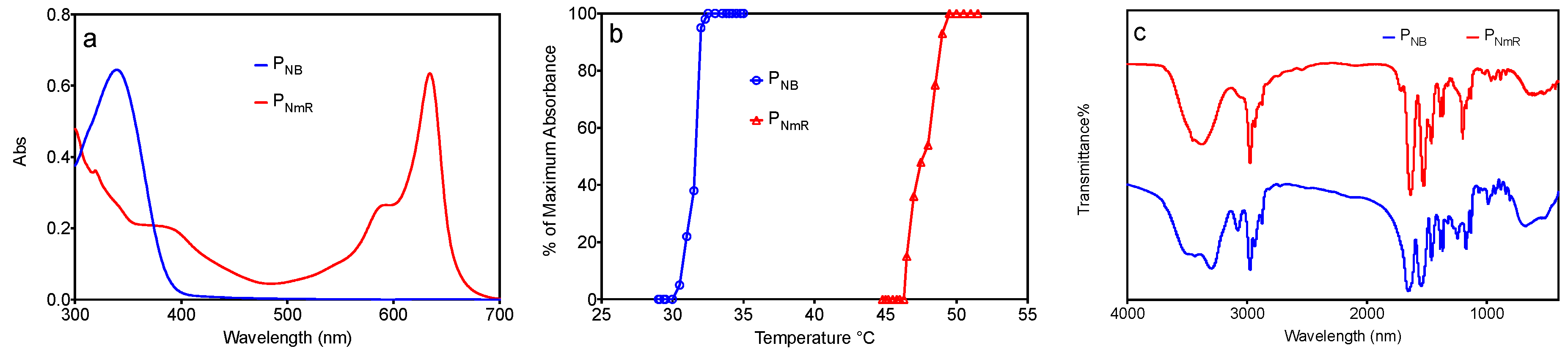
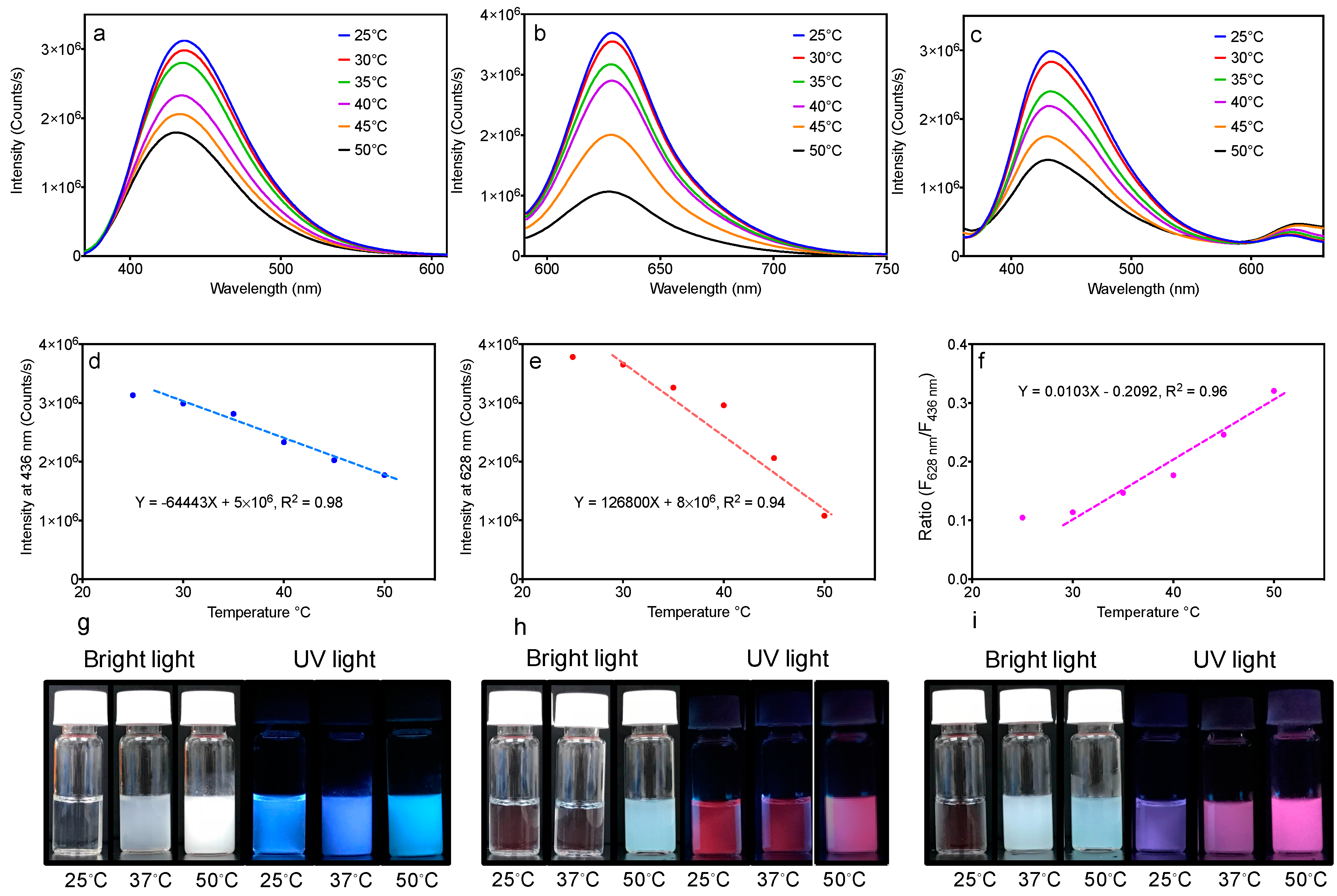
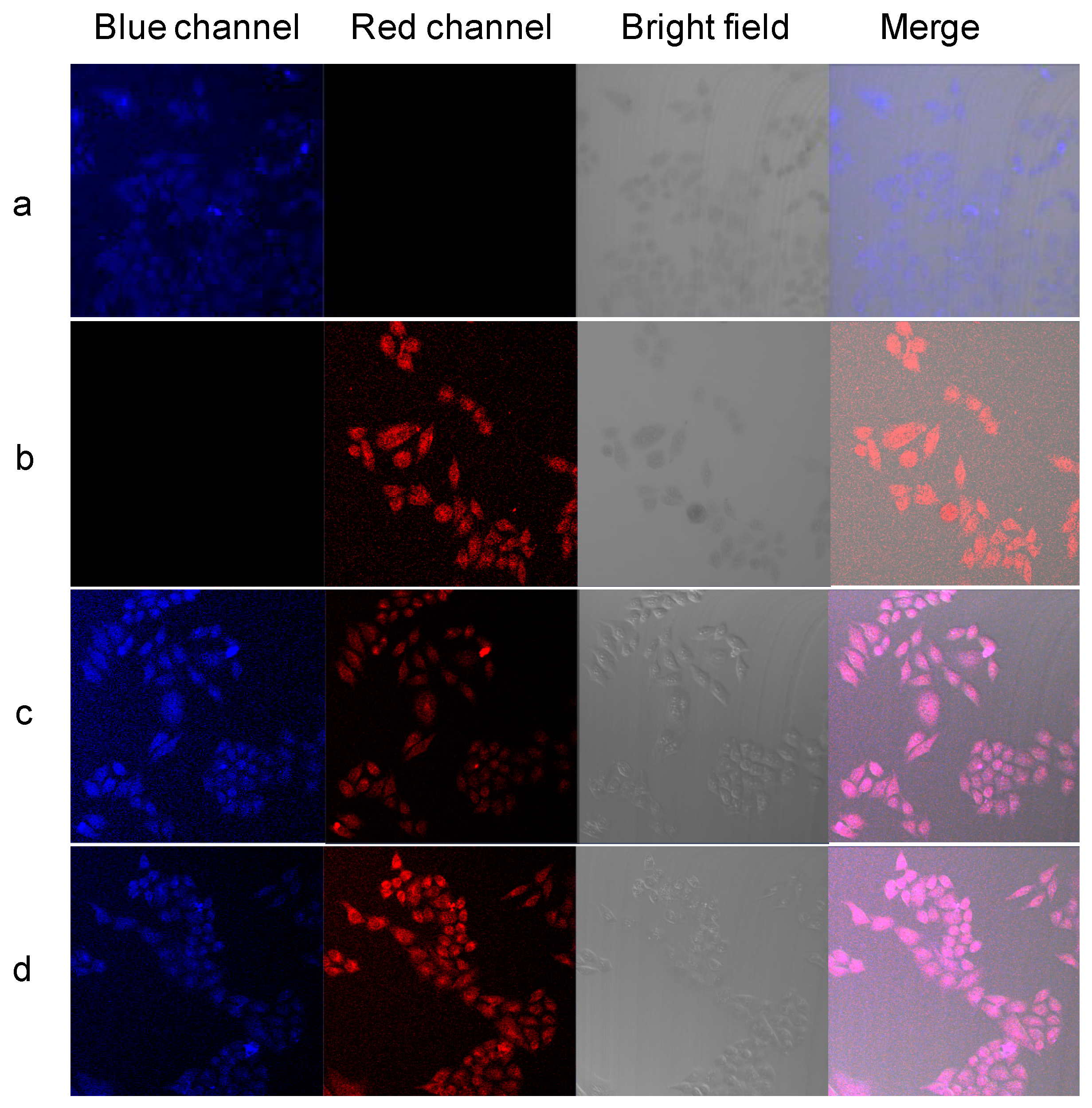
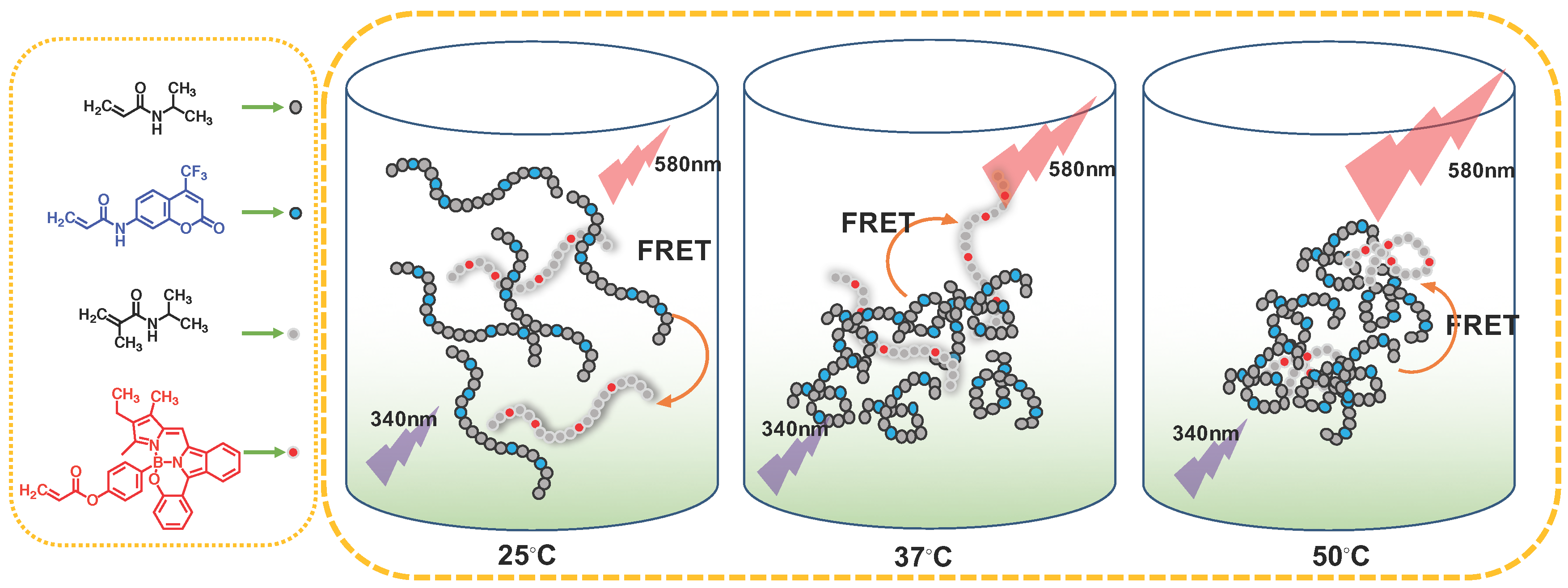
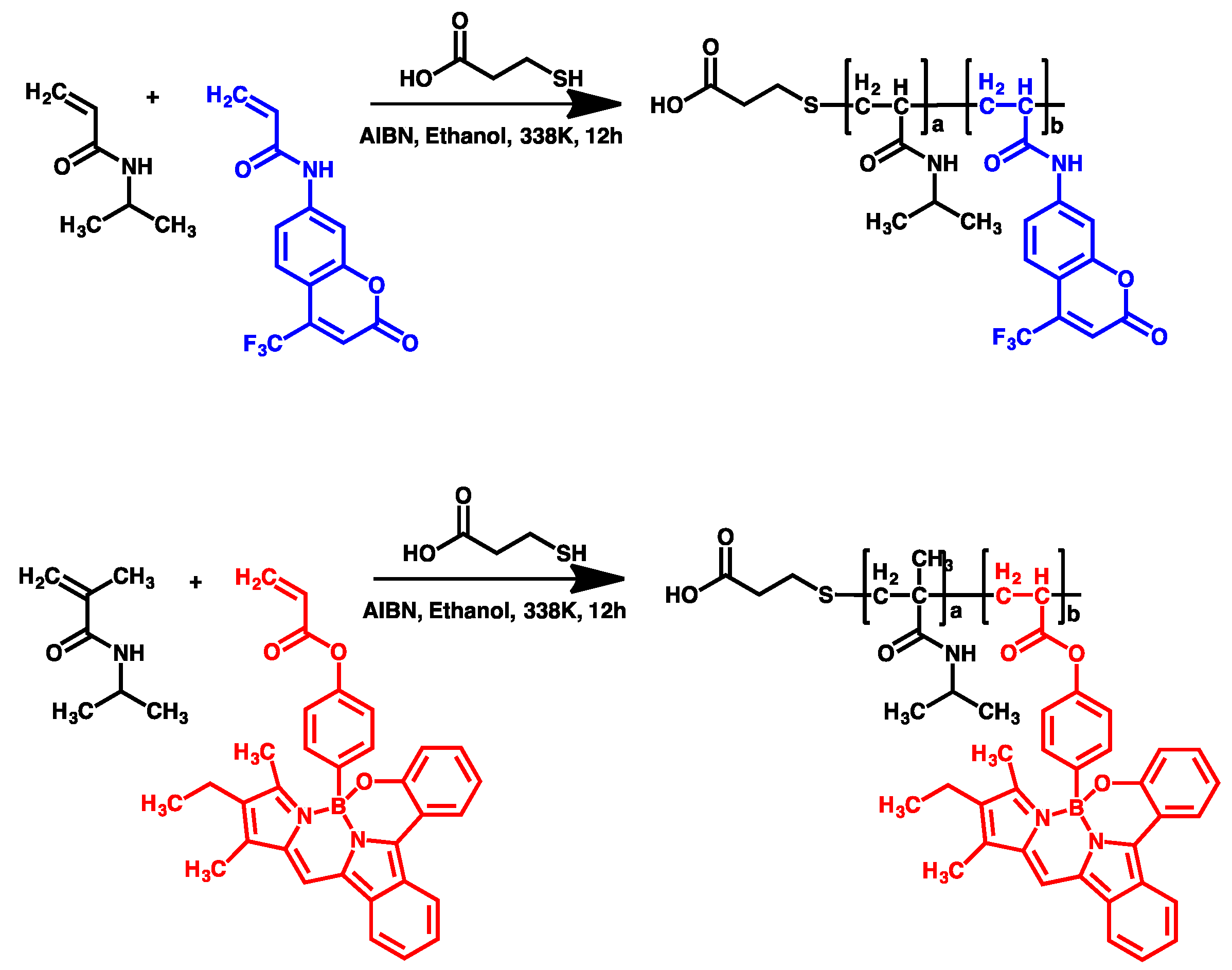
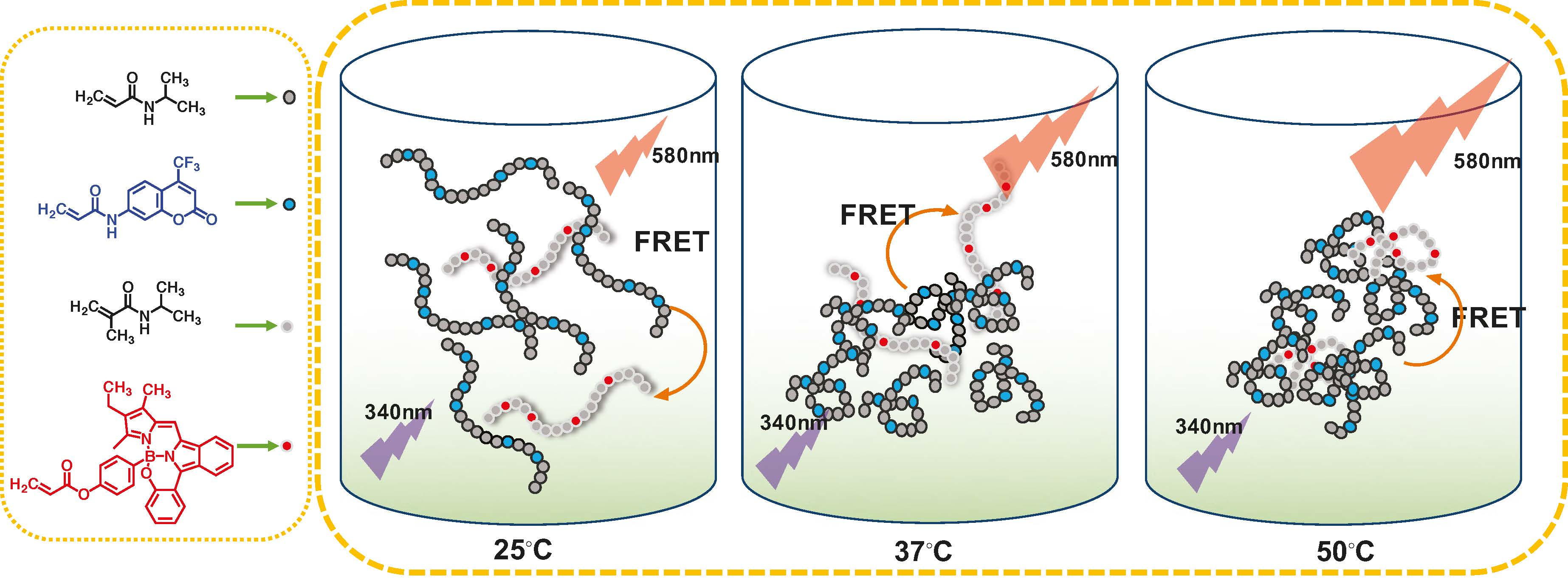
Temperature is a significant parameter to regulate biological reactions and functions inside cells. Sensing the intracellular temperature with a competent method is necessary to understand life science. In this work, an energy-transfer polymeric thermometer was designed for temperature sensing. The thermometer was prepared from two thermo-responsive polymers with different lower critical solution temperatures (LCSTs) of 31.1 °C and 48.6 °C, coupling with blue and red fluorescent molecules, respectively, developed for ratiometric temperature sensing based on the Förster resonance energy transfer (FRET) mechanism. The polymers were synthesized from two monomers, N-isopropylacrylamide (NIPA) and N-isopropylmethacrylamide (NIPmA), which provided different temperature responses. The fluorescent intensity of each polymer (peaked at 436 and 628 nm, respectively) decreased upon the heating of the polymer aqueous solution. While these two polymer aqueous solutions were mixed, the fluorescent intensity decrease at 436 nm and substantial fluorescence enhancement at 628 nm was observed with the increasing temperature due to FRET effect. The cell imaging of HeLa cells by these thermo-responsive polymers was explored. The difference of LCSTs resulting in ratiometric fluorescence change would have a potential impact on the various biomedical applications.
Keywords: N-isopropylacrylamide; N-isopropylmethacrylamide; ratiometric temperature sensing; FRET N-isopropylacrylamide; N-isopropylmethacrylamide; ratiometric temperature sensing; FRET
Graphical Abstract