

Effects of Fast-Frequency Pulsed Twin-TIG Welding on Molten Pool Flow, Mechanical Properties and Microstructure in 316L Austenitic Stainless Steel


Abstract
1. Introduction
2. Welding Experiments and Numerical Simulation of the Molten Pool
2.1. Experimental Materials and Procedures
2.2. Numerical Simulation of the Welding Molten Pool
2.3. Thermo-Mechanical Model of the Welding Molten Pool
2.4. Control Equation
2.5. Boundary Conditions
3. Results and Discussion
3.1. Welding Experiments and Mechanical Properties of the Weld Joints
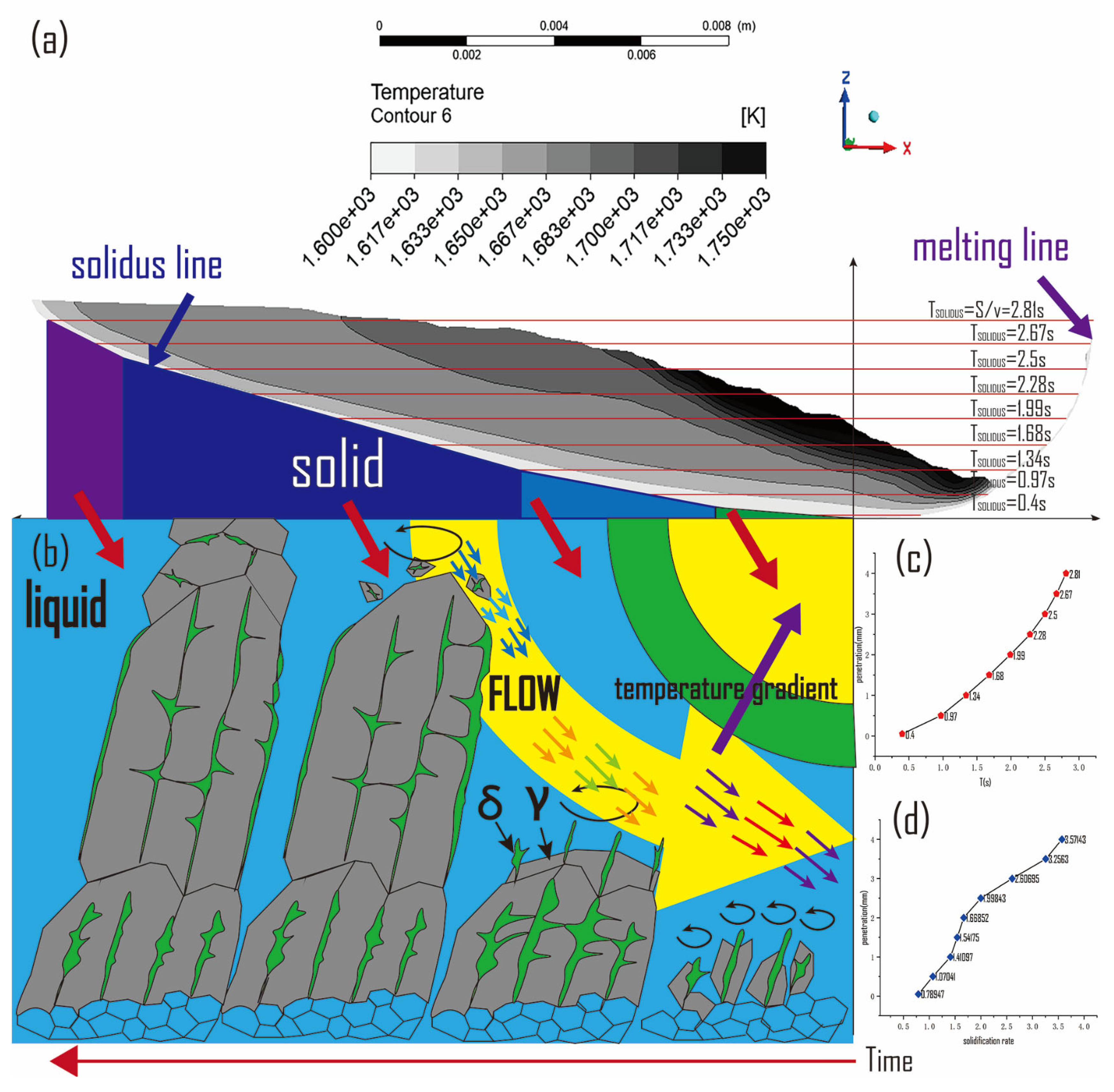
3.2. Flow Behavior of the Welding Molten Pool
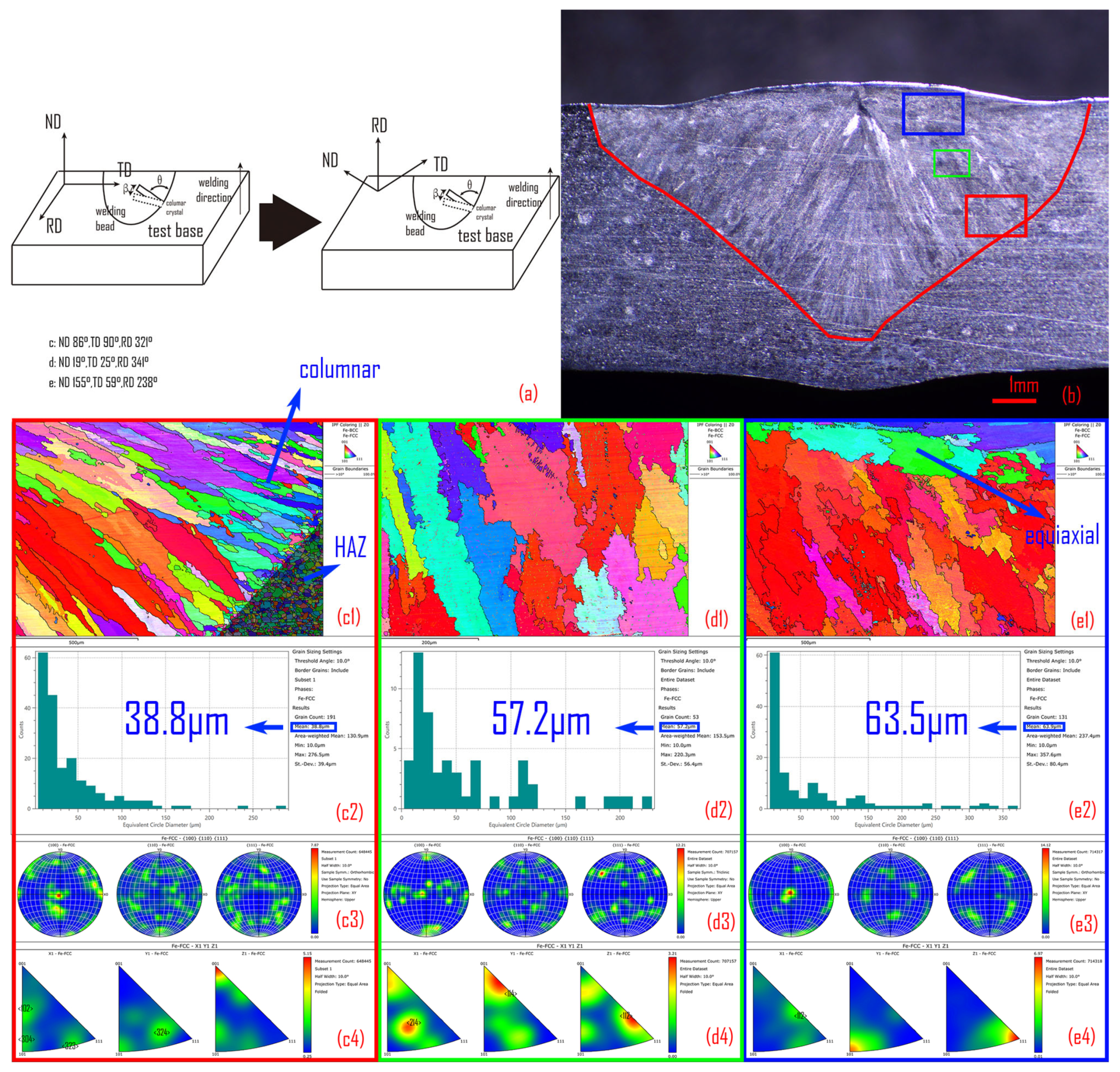
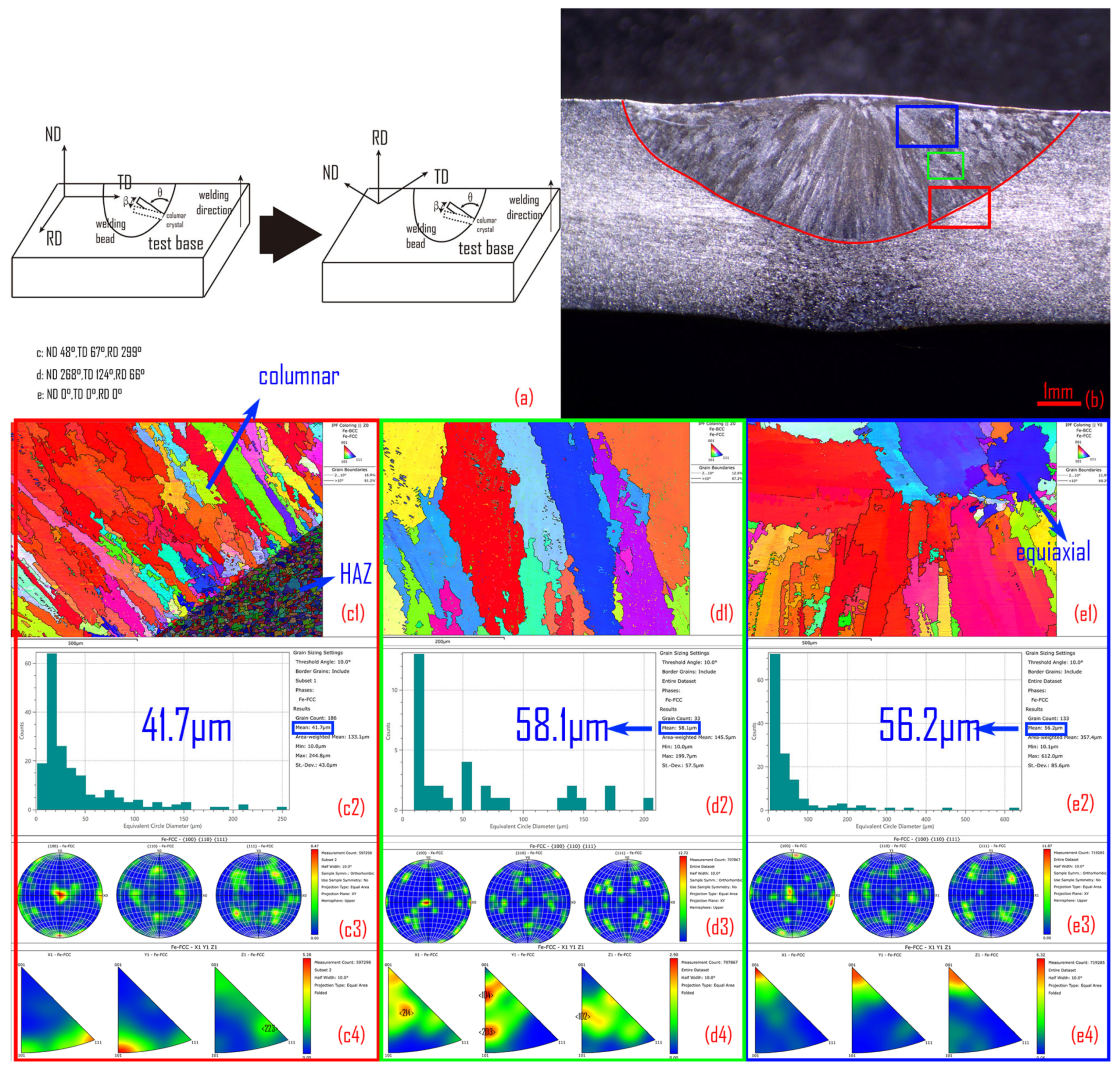
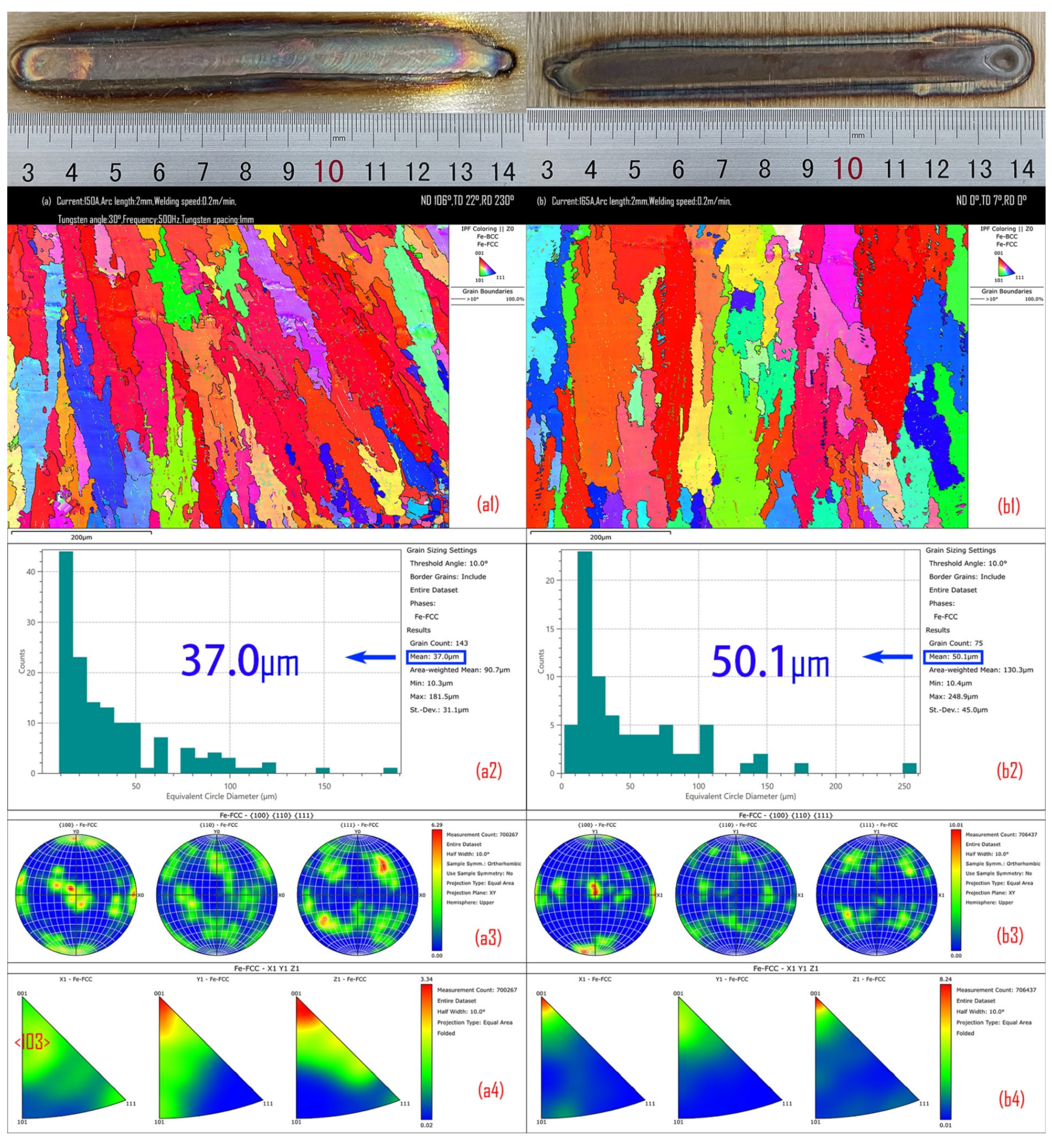
3.3. Microstructure of the Weld Joint
4. Conclusions
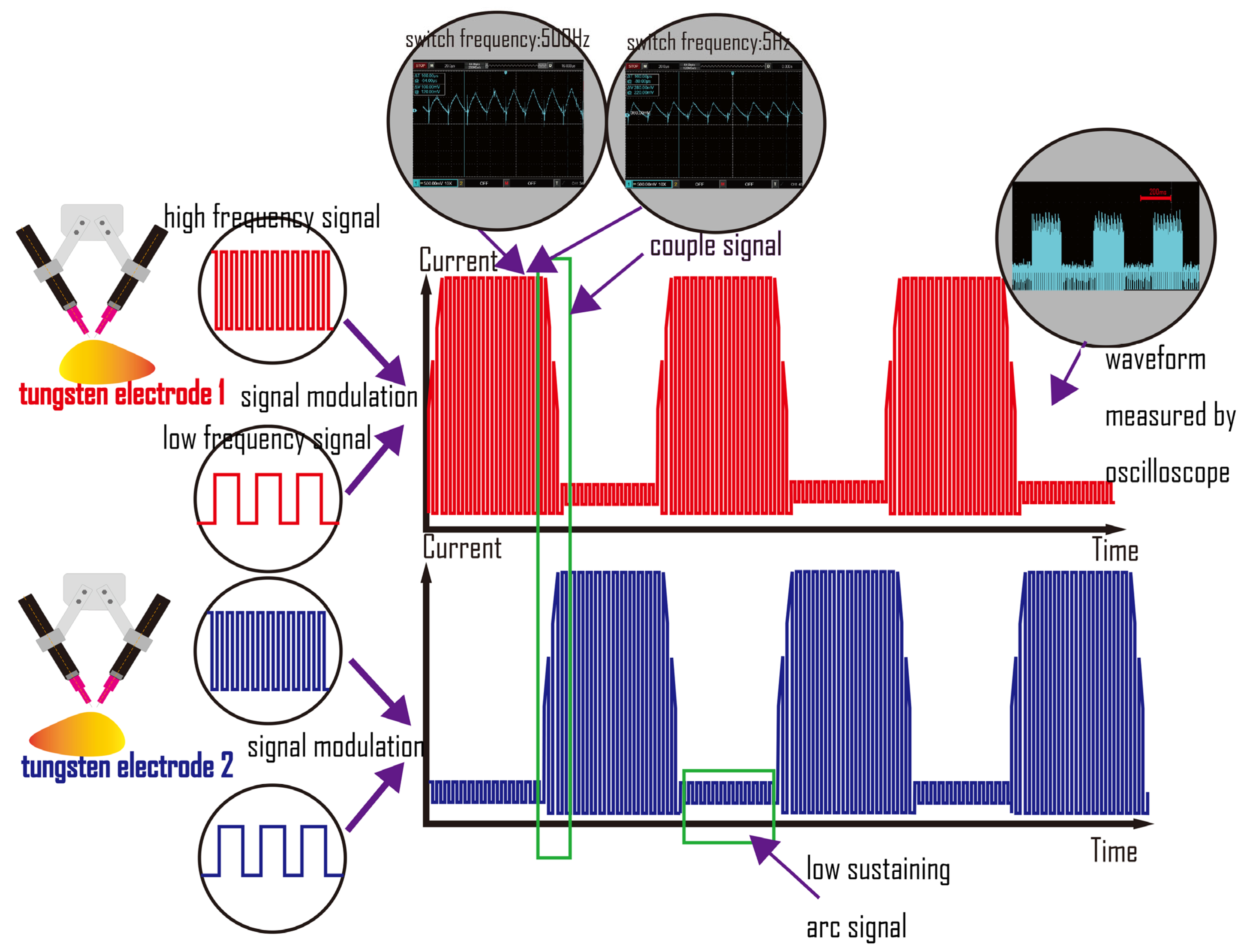
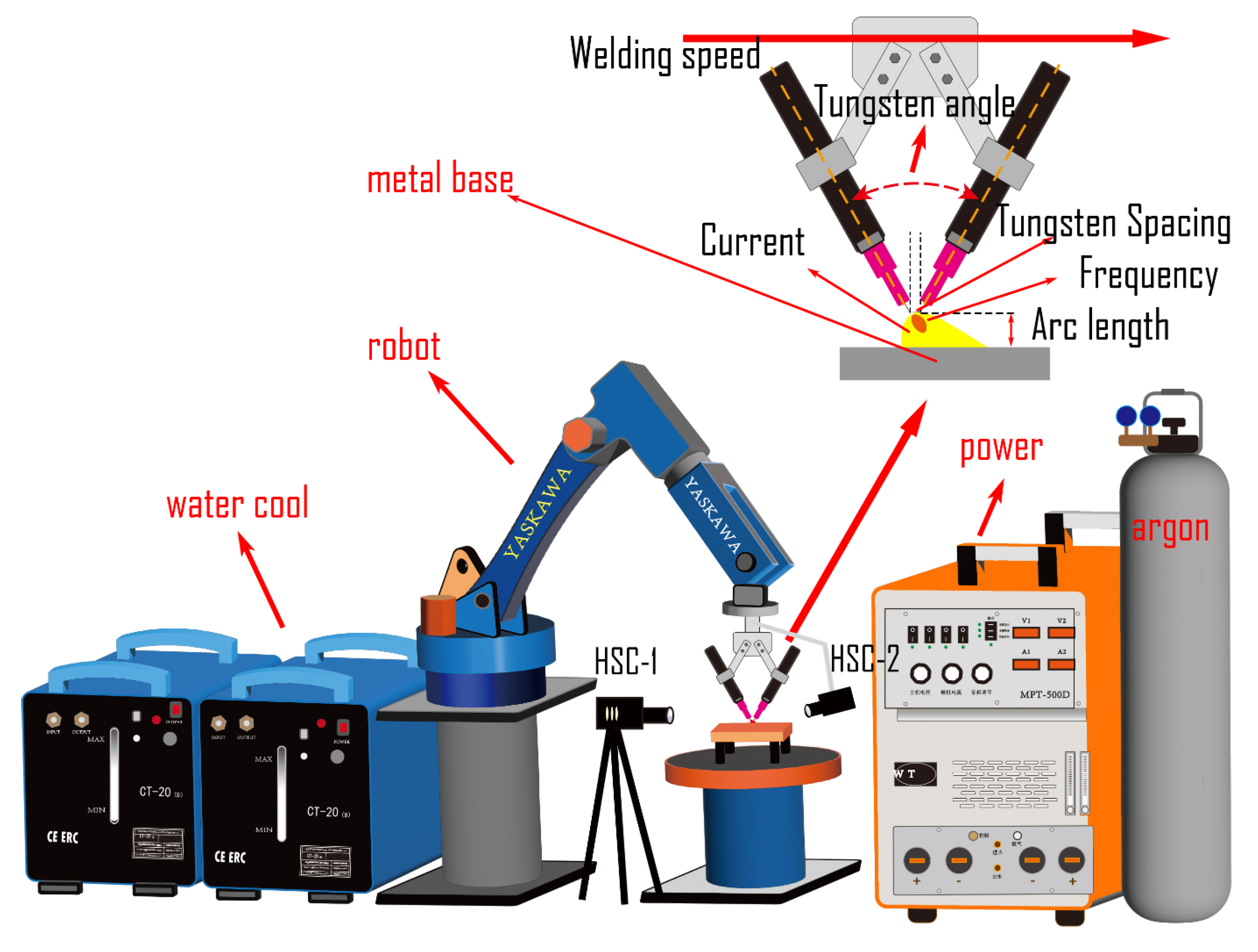
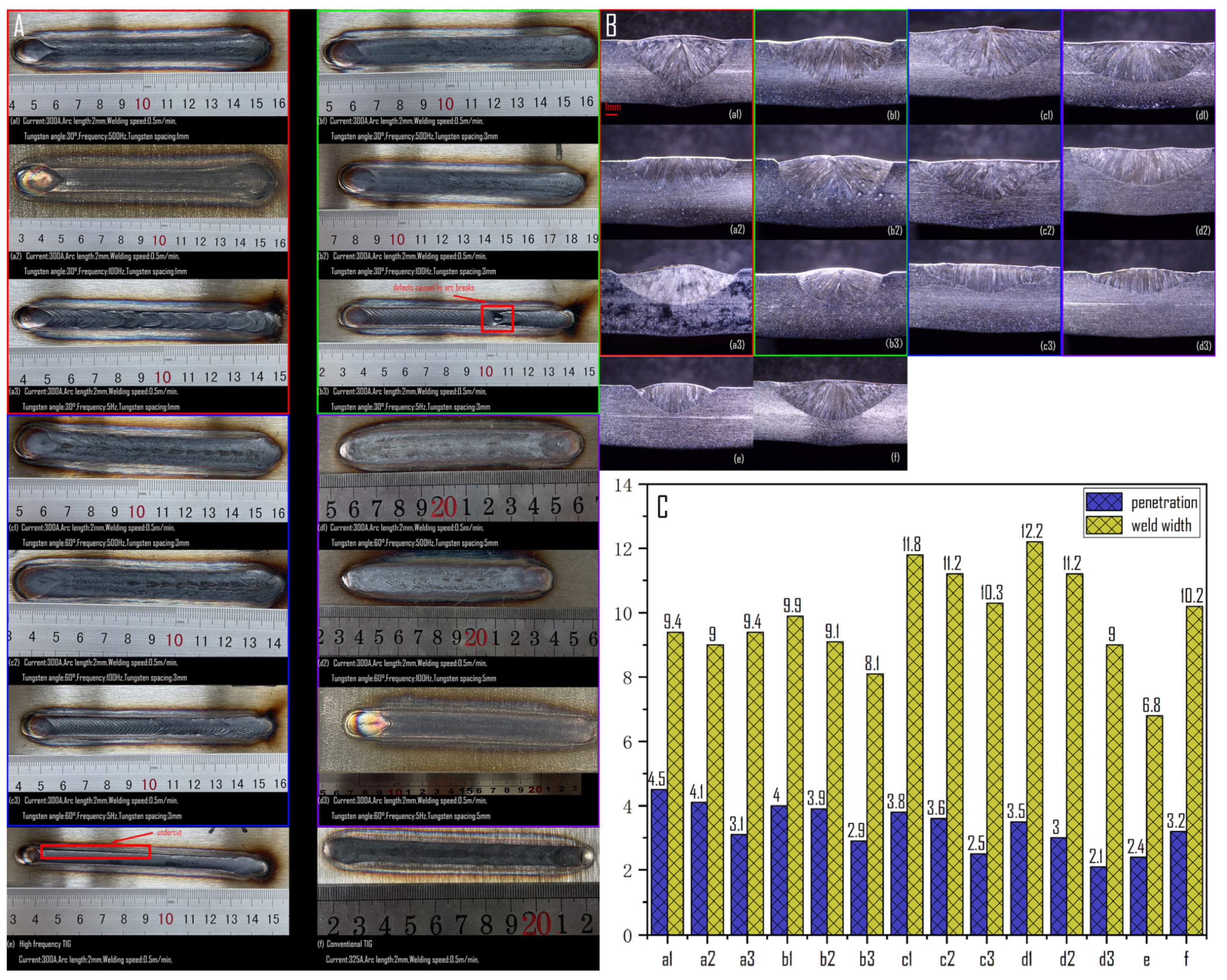
- The newly developed fast-frequency pulsed twin-TIG welding power source provides a highly stable arc output. Under optimized welding parameters, the surface of 316L stainless steel welds is smooth and defect-free. At a relatively high welding speed of 0.5 m/min, the weld penetration reaches up to 4.5 mm, with a depth-to-width ratio of 0.48. Compared to single-output high-frequency pulsed TIG welding and conventional TIG welding under similar parameters, the penetration is increased by 87.5% and 40.6%, respectively, while the depth-to-width ratio is improved by 37% and 55%, demonstrating the high efficiency of this welding method.
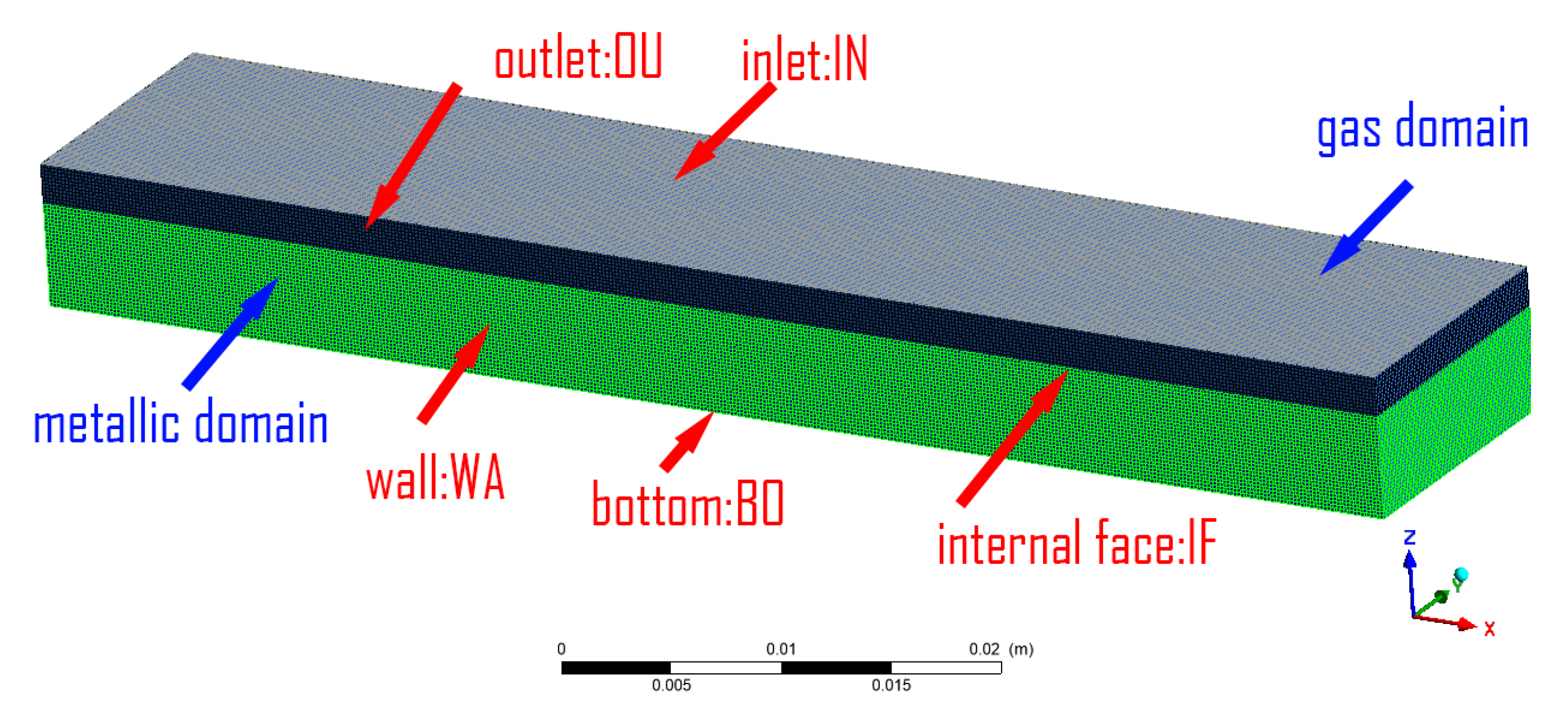
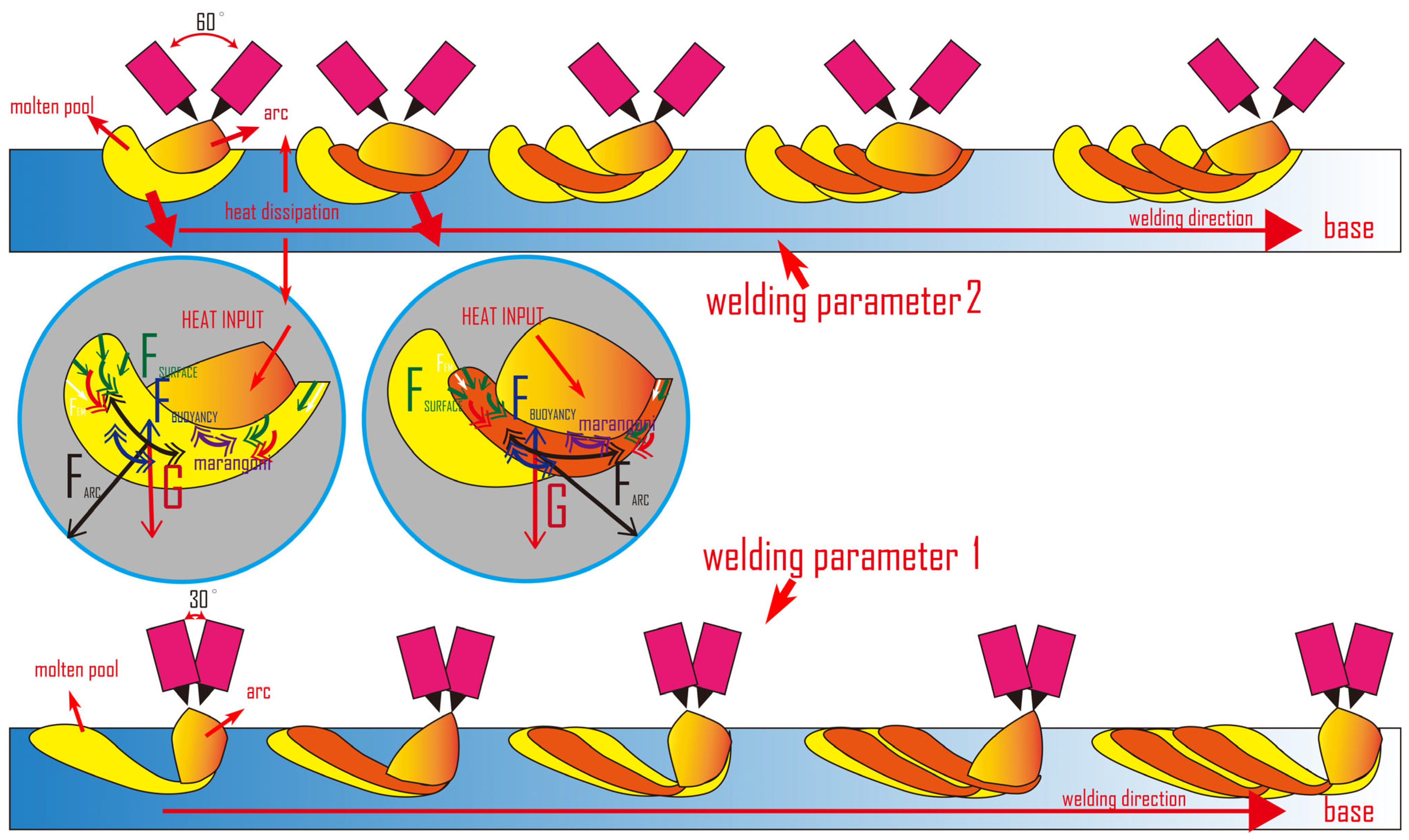
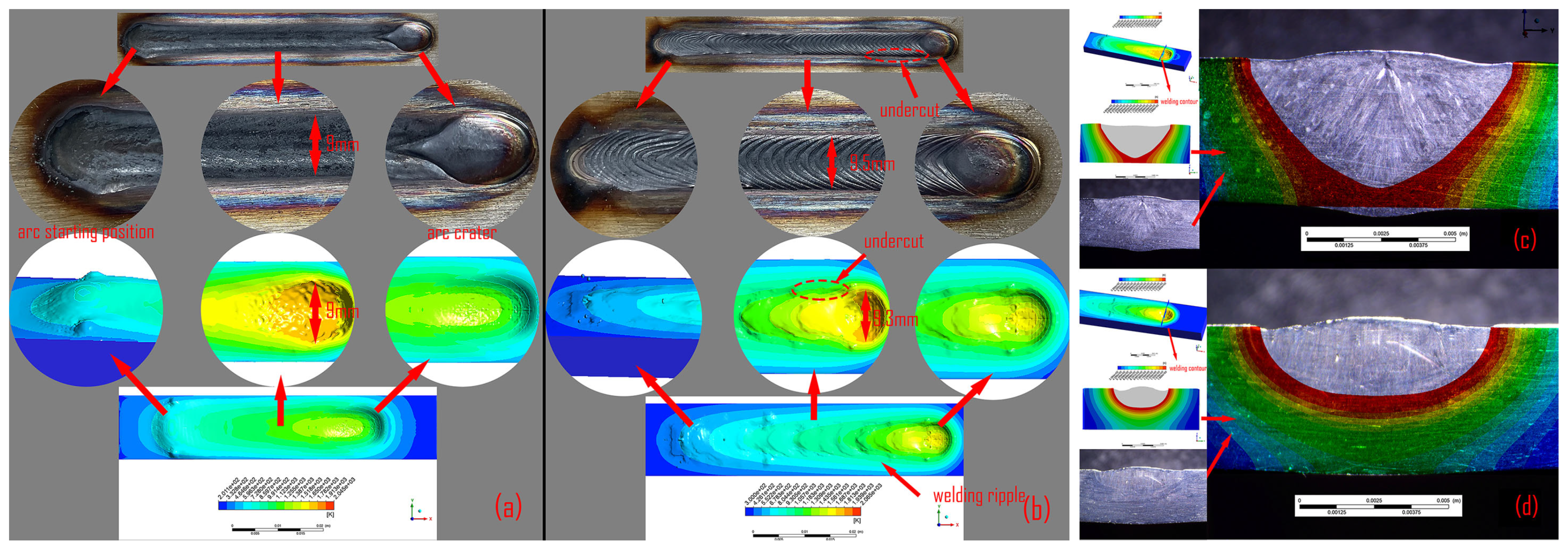
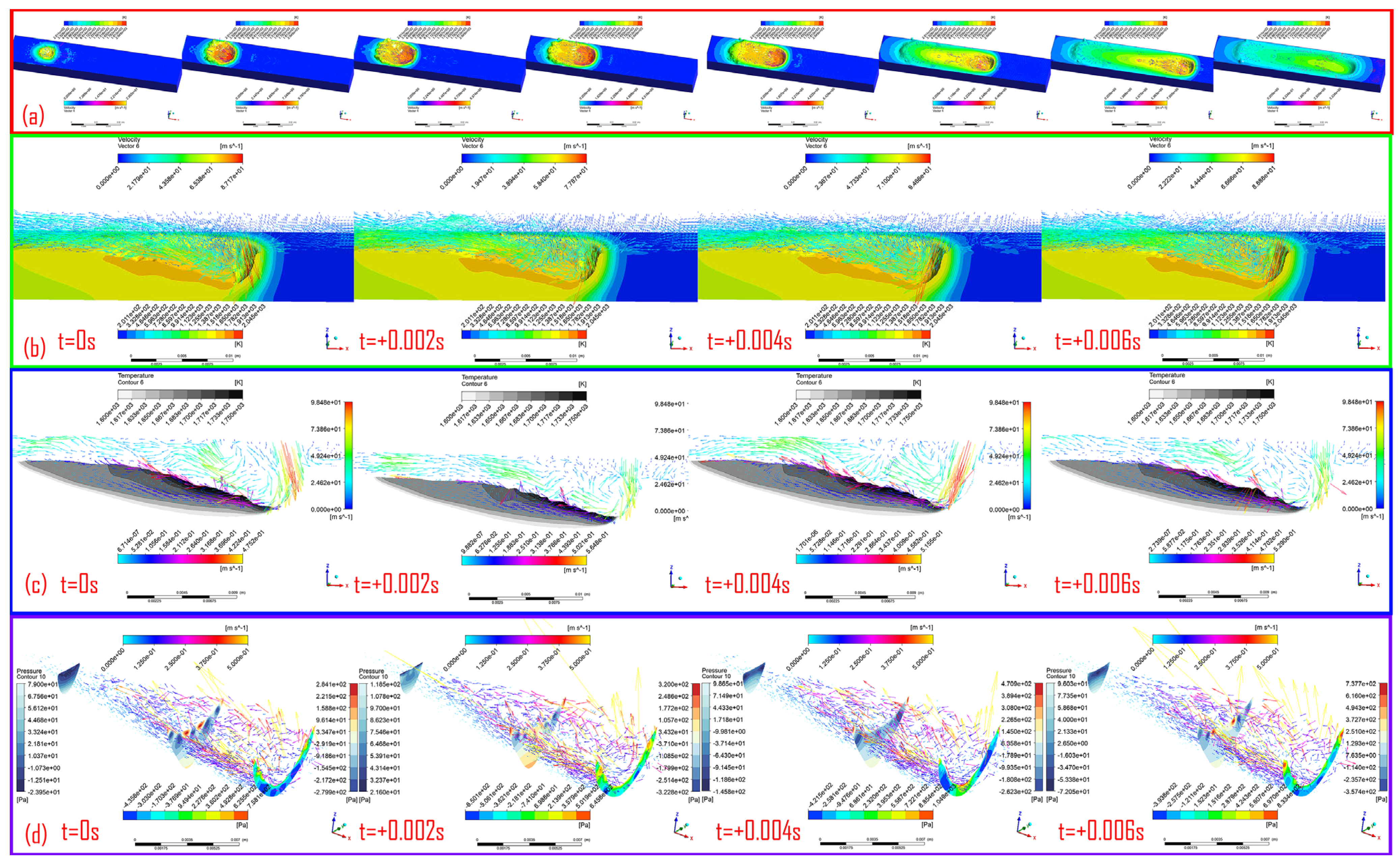
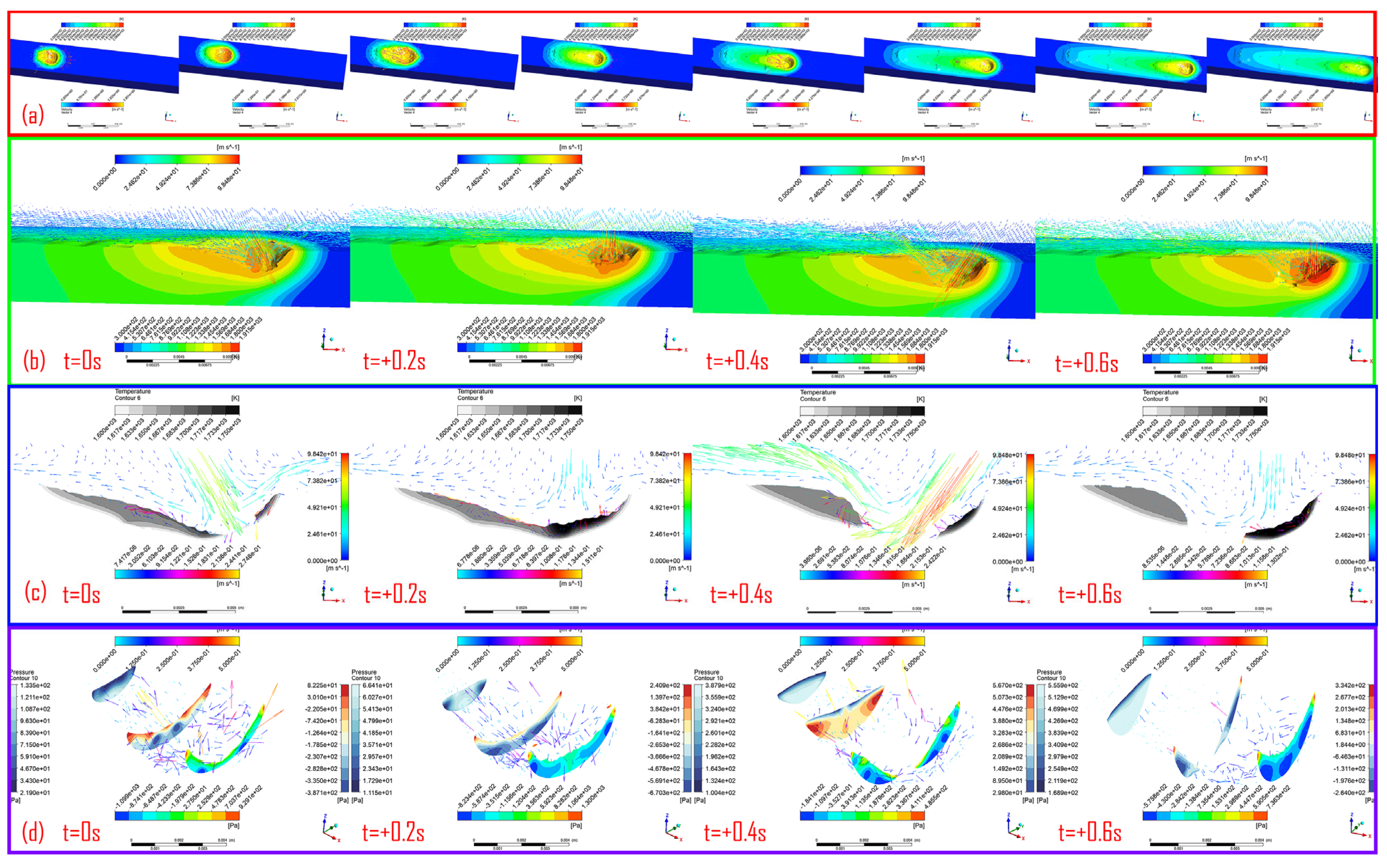
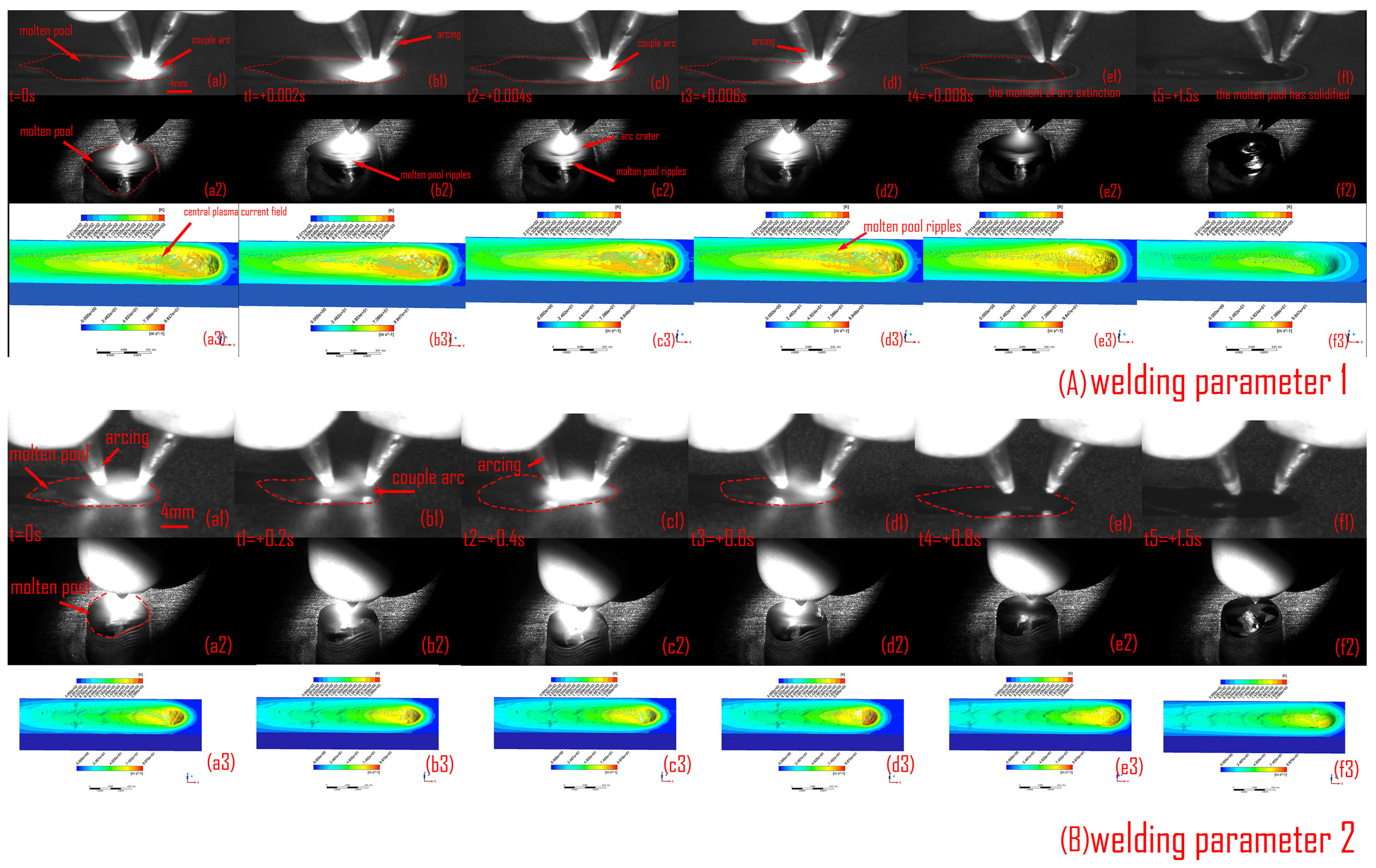
- The established numerical model of the fast-frequency pulsed twin-TIG welding molten pool shows excellent agreement with experimental results in terms of weld morphology, weld cross-sectional dimensions (penetration and width), and molten pool characteristics during welding, confirming the model’s accuracy. Analysis of the model accurately reflects key physical quantities within the molten pool, including the temperature field, velocity field, and force field.
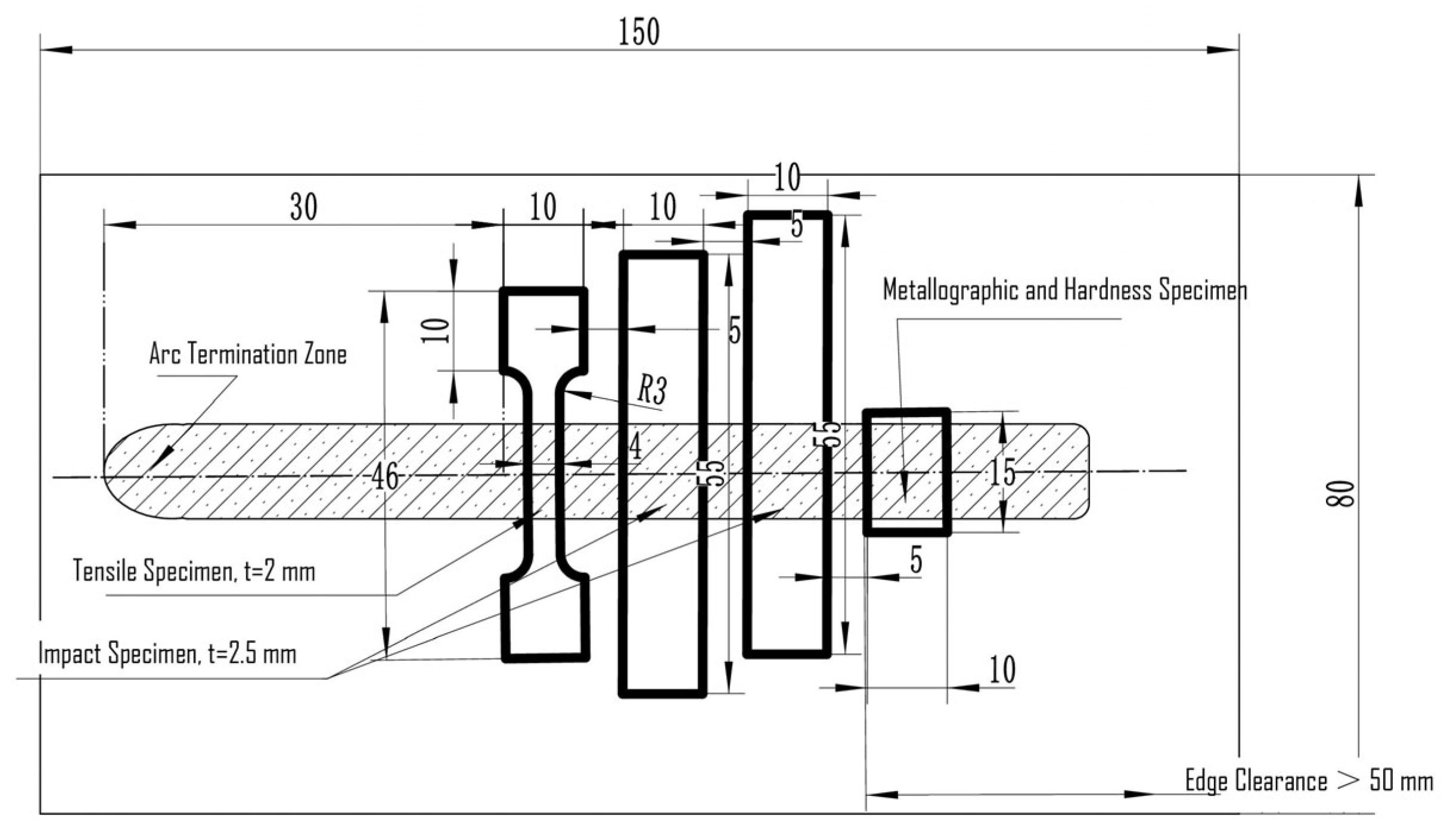
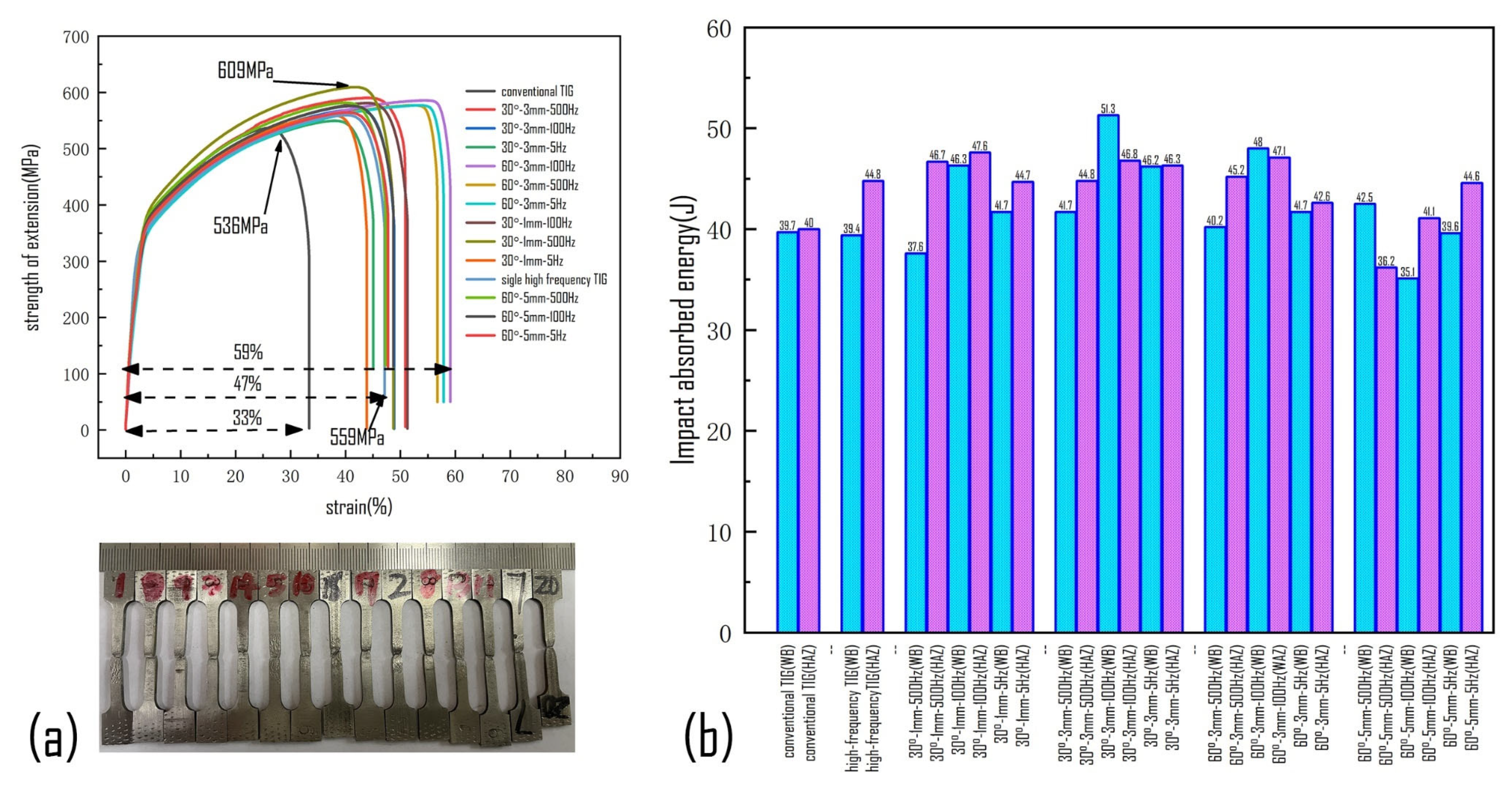
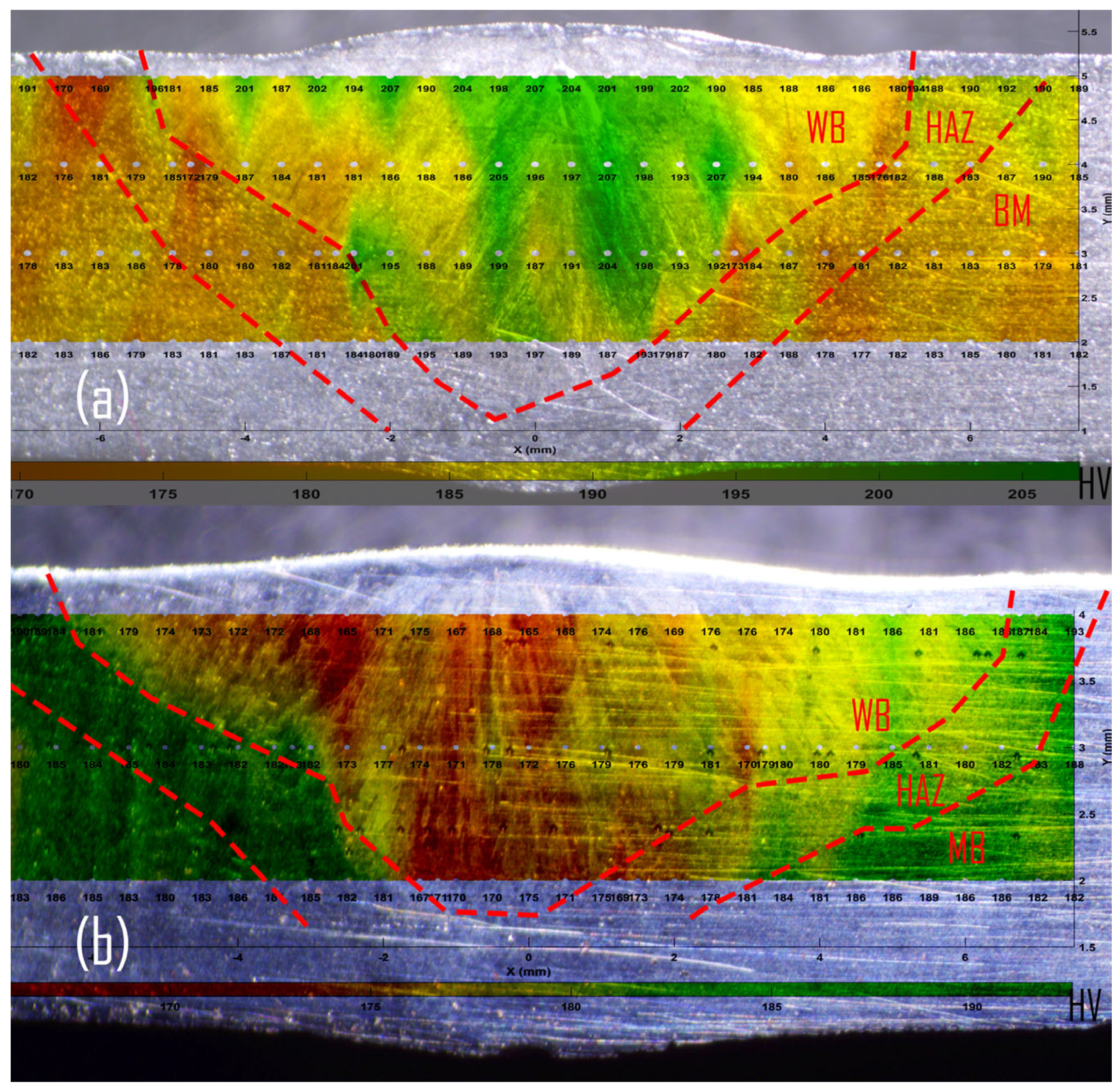
- Mechanical testing of welded specimens indicates that under a high current output of 300 A, fast-frequency pulsed twin-TIG welding achieves simultaneous improvements in tensile strength and toughness compared to conventional TIG welding. The tensile strength increased by 13.6%, elongation by 26%, and the absorbed impact energy of the weld and heat-affected zone improved by 7.5% and 11.2%, respectively, while the Vickers hardness of the weld increased by 10%.
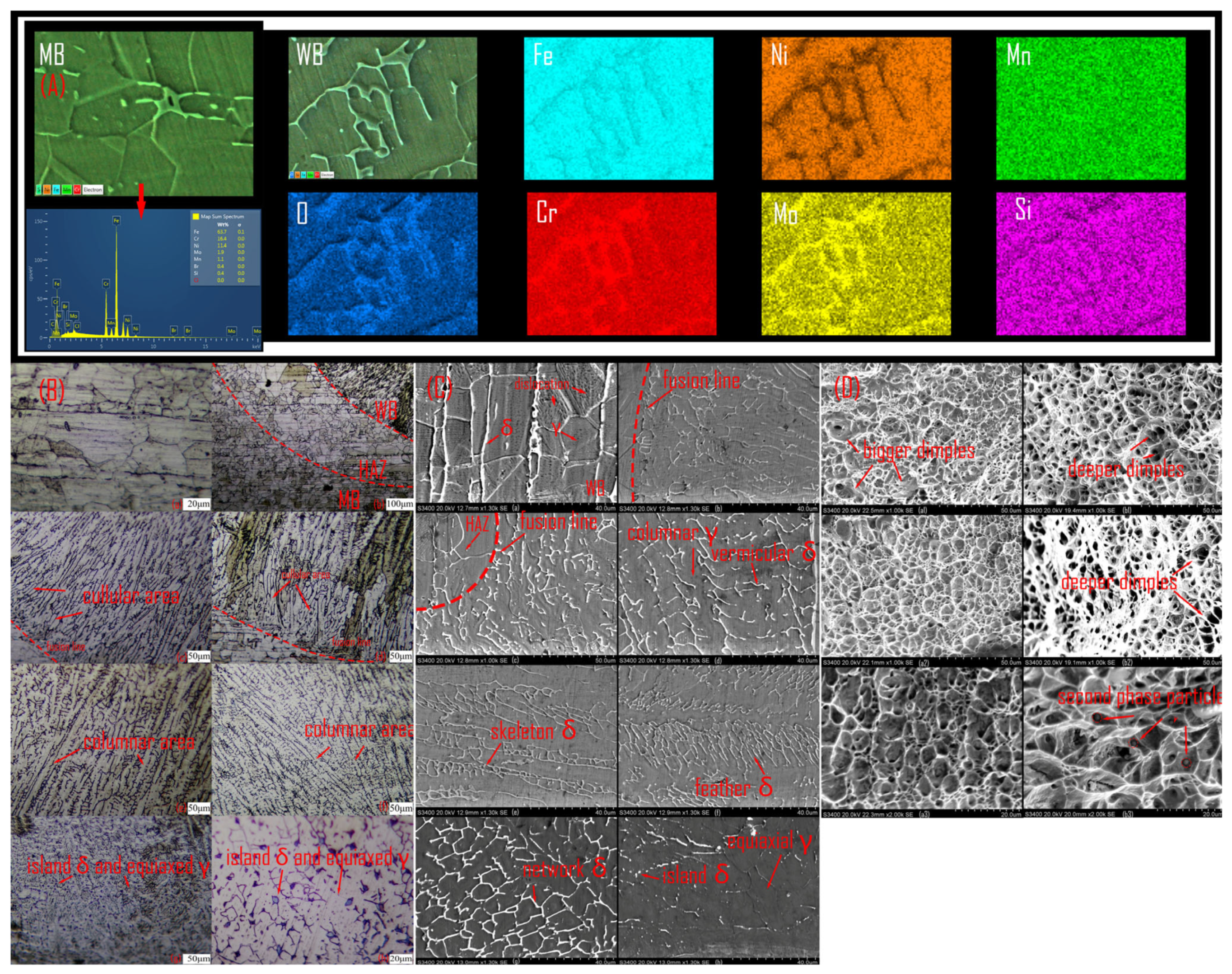
- Microstructural characterization shows that the 316L welds fabricated by fast-frequency pulsed twin-TIG welding are still dominated by columnar grains. Compared with conventional TIG welding, secondary dendrites at the weld root present more dispersed orientations with weaker textures and finer grains. The grain refinement rate is 7.5% under high current and up to 38% under medium current. Combined with molten pool simulation results and crystallization theory, the intense pulsed flow and force fields at the weld root are the core factors adjusting grain orientation and refining grains.
Author Contributions
Funding
Data Availability Statement
Conflicts of Interest
References
- Wu, H.; Chang, Y.; Mei, Q.; Liu, D. Research advances in high-energy TIG arc welding. Int. J. Adv. Manuf. Technol. 2019, 104, 391–410. [Google Scholar] [CrossRef]
- Zhang, S.; Zhao, H.; Li, Y.; Miao, J.; Chang, C.; Chang, Y. TIG-based hybrid arc welding: A review. Int. J. Adv. Manuf. Technol. 2025, 139, 1105–1121. [Google Scholar] [CrossRef]
- Mills, K.C.; Keene, B.J. Factors affecting variable weld penetration. Int. Mater. Rev. 1990, 35, 185–216. [Google Scholar] [CrossRef]
- Singh, A.K.; Dey, V.; Rai, R.N. Techniques to improveweld penetration in TIG welding (A review). Mater. Today Proc. 2017, 4, 1252–1259. [Google Scholar] [CrossRef]
- Jarvis, B.L.; Ahmed, N.U. Development of keyhole mode gas tungsten arc welding process. Sci. Technol. Weld. Join. 2000, 5, 1–7. [Google Scholar] [CrossRef]
- Bao, W.; Liu, H.; Wang, F.; Du, J.; Wang, Y.; Li, H.; Ye, X. Keyhole critical failure criteria and variation rule under different thicknesses and multiple materials in K-TIG welding. J. Manuf. Process. 2024, 126, 48–59. [Google Scholar] [CrossRef]
- Cui, S.; Li, H.; Zhang, B.; Liu, X.; Mo, G. Study of microstructure, mechanical, and corrosion properties of K-TIG welded joints of 2205/316L dissimilar stainless steel. Metals 2025, 15, 910. [Google Scholar] [CrossRef]
- Liu, Z.; Fang, Y.; Cui, S.; Luo, Z.; Liu, W.; Liu, Z.; Yi, S. Stable keyhole welding process with K-TIG. J. Mater. Process. Technol. 2016, 238, 65–72. [Google Scholar] [CrossRef]
- Rosellini, C.; Jarvis, L. The keyhole TIG welding process: A valid alternative for valuable metal joints. Weld. Int. 2009, 23, 616–621. [Google Scholar] [CrossRef]
- Liu, Z.; Chen, S.; Yuan, X.; Zuo, A.; Zhang, T.; Luo, Z. Magnetic-enhanced keyhole TIG welding process. Int. J. Adv. Manuf. Technol. 2018, 99, 275–285. [Google Scholar] [CrossRef]
- Wang, Y.; Qi, B.; Cong, B.; Zhu, M.; Lin, S. Keyhole welding of AA2219 aluminum alloy with double-pulsed variable polarity gas tungsten arc welding. J. Manuf. Process. 2018, 34, 179–186. [Google Scholar] [CrossRef]
- Fang, Y.; Liu, Z.; Cui, S.; Zhang, Y.; Qiu, J.; Luo, Z. Improving Q345 weld microstructure and mechanical properties with high frequency current arc in keyhole mode TIG welding. J. Mater. Process. Technol. 2017, 250, 280–288. [Google Scholar] [CrossRef]
- Howse, D.S.; Lucas, W. Investigation into arc constriction by active fluxes for tungsten inert gas welding. Sci. Technol. Weld. Join. 2000, 5, 189–193. [Google Scholar] [CrossRef]
- Vidyarthy, R.S.; Dwivedi, D.K. Activating flux tungsten inert gas welding for enhanced weld penetration. J. Manuf. Process. 2016, 22, 211–228. [Google Scholar] [CrossRef]
- Baskoro, A.S.; Fauzian, A.; Basalamah, H.; Kiswanto, G.; Winarto, W. Improving weld penetration by employing of magnetic poles’ configurations to an autogenous tungsten inert gas (TIG) welding. Int. J. Adv. Manuf. Technol. 2018, 99, 1603–1613. [Google Scholar] [CrossRef]
- Fande, A.W.; Taiwade, R.V.; Raut, L. Development of activated tungsten inert gas welding and its current status: A review. Mater. Manuf. Process. 2022, 37, 841–876. [Google Scholar] [CrossRef]
- Wang, J.; Sun, Q.; Feng, J.; Wang, S.; Zhao, H. Characteristics of welding and arc pressure in TIG narrow gap welding using novel magnetic arc oscillation. Int. J. Adv. Manuf. Technol. 2017, 90, 413–420. [Google Scholar]
- Yamada, T. Development of High Efficiency TIG Welding Method (1st Report); JWS (Japan Welding Society): Tokyo, Japan, 1998; Volume 63, pp. 24–25. [Google Scholar]
- Yamada, T.; Kobayashi, I. Development of High Efficiency TIG Welding Method (2nd Report); JWS (Japan Welding Society): Tokyo, Japan, 1998; Volume 63, pp. 26–27. [Google Scholar]
- Kobayashi, K.; Nishimura, Y.; Iijima, T.; Ushio, M.; Tanaka, M.; Shimamura, J.; Ueno, Y.; Yamashita, M. Practical Application of High Efficiency Twin-Arc TIG Welding Method (SEDAR-TIG) For PCLNG Storage Tank. Weld. Res. ABROAD 2005, 51, 1. [Google Scholar]
- Leng, X.; Zhang, G.; Wu, L. The characteristic of twin-electrode TIG coupling arc pressure. J. Phys. D Appl. Phys. 2006, 39, 1120. [Google Scholar] [CrossRef]
- Schwedersky, M.B.; Gonçalves e Silva, R.H.; Dutra, J.C.; Reisgen, U.; Willms, K. Two-dimensional arc stagnation pressure measurements for the double-electrode GTAW process. Sci. Technol. Weld. Join. 2016, 21, 275–280. [Google Scholar] [CrossRef]
- Suga, Y.; Ogawa, K.; Matsumoto, H. Erosion characteristics and temperature distribution of tungsten electrodes in TIG welding. Weld. Int. 1992, 6, 362–367. [Google Scholar] [CrossRef]
- Wang, Z.; Jiang, D.; Wu, J.; Xu, M. A review on high-frequency pulsed arc welding. J. Manuf. Process. 2020, 60, 503–519. [Google Scholar] [CrossRef]
- Yang, M.; Li, L.; Qi, B.; Zheng, H. Arc force and shapes with high-frequency pulsed-arc welding. Sci. Technol. Weld. Join. 2017, 22, 580–586. [Google Scholar] [CrossRef]
- Mingxuan, Y.; Hao, Z.; Bojin, Q.; Zhexu, W.; Rainy, L. Pulsed arc light monitoring and temperature reconstruction with arc welding. Sci. Technol. Weld. Join. 2020, 25, 535–542. [Google Scholar] [CrossRef]
- Hua, C.; Lu, H.; Yu, C.; Chen, J.M.; Wei, X.; Xu, J.J. Reduction of ductility-dip cracking susceptibility by ultrasonic-assisted GTAW. J. Mater. Process. Technol. 2017, 239, 240–250. [Google Scholar] [CrossRef]
- Hua, C.; Lu, H.; Yu, C.; Li, D.; Chen, X. Probing Laves phase formation in Ni-alloy during ultrasonic arc-welding with atomistic modelling. Sci. Technol. Weld. Join. 2019, 24, 305–312. [Google Scholar] [CrossRef]
- Wang, Z.; Fan, W.; Xie, F.; Ye, C. An 8kW LLC resonant converter in plasma power supply based on SiC power devices for efficiency improvement. Circuit World 2019, 45, 181–188. [Google Scholar] [CrossRef]
- Wu, J.; Wang, Z.; Lin, S.; Xie, Z.; Xu, M.; Tian, J.; Guo, C. Effect of fast-frequency pulsed waveforms on the microstructure and mechanical properties of Ti–6Al–4V alloy welded by FFP-TIG. J. Mater. Res. Technol. 2022, 20, 516–531. [Google Scholar] [CrossRef]
- Li, L.; Yang, M.; Qi, B.; Liu, H. Study of high frequency pulsed arc on molten pool thermal properties of Ti-6Al-4V. J. Manuf. Process. 2019, 38, 308–312. [Google Scholar] [CrossRef]
- Wu, C.S.; Yan, F. Numerical simulation of transient development and diminution of weld pool in gas tungsten arc welding. Model. Simul. Mater. Sci. Eng. 2003, 12, 13. [Google Scholar] [CrossRef][Green Version]
- Tsao, K.C.; Wu, C.S. Fluid flow and heat transfer in GMA weld pools. Weld. J. 1988, 67, 70–75. [Google Scholar]
- Zhang, S.; Zhao, H.; Li, Y.; Miao, J.; Liu, Y.; Chang, Y. Forming mechanism of humping defects in stainless steel high-speed TIG welding. Weld. World 2026, 70, 75–86. [Google Scholar]
- Kumar, A.; DebRoy, T. Numerical Simulation of Electromagnetically Driven Flow in the Weld Pool During Arc Welding. In Proceedings of the ASME International Mechanical Engineering Congress and Exposition, Washington, DC, USA, 15–21 November 2003; Volume 37165, pp. 833–842. [Google Scholar]
- Hull, F.C. Delta ferrite and martnesite formation in stainless steels. Weld. J. 1973, 52, 193. [Google Scholar]
- DeLong, W.T. Measurement and calculation of ferrite in stainless steel weld metal. Weld. J. 1956, 21, 521–528. [Google Scholar]
- Güzey, B.N.; İrsel, G. Investigation of mechanical and microstructural properties in joining dissimilar P355GH and stainless 316L steels by TIG welding process. Int. J. Press. Vessel. Pip. 2023, 205, 104965. [Google Scholar] [CrossRef]
- Suutala, N.; Takalo, T.; Moisio, T. Ferritic-austenitic solidification mode in austenitic stainless steel welds. Metall. Trans. A 1980, 11, 717–725. [Google Scholar] [CrossRef]
- Wu, C.; Li, S.; Zhang, C.; Wang, X. Microstructural evolution in 316LN austenitic stainless steel during solidification process under different cooling rates. J. Mater. Sci. 2016, 51, 2529–2539. [Google Scholar]
- Zhu, Z.; Ma, X.; Wang, C.; Mi, G.; Zheng, S. The metallurgical behaviors and crystallographic characteristic on macro deformation mechanism of 316 L laser-MIG hybrid welded joint. Mater. Des. 2020, 194, 108893. [Google Scholar] [CrossRef]





| C | Cr | Ni | Mo | Mn | Si | S | P | Fe |
|---|---|---|---|---|---|---|---|---|
| ≤0.03 | 16–18 | 10–14 | 2–3 | ≤2 | ≤0.75 | ≤0.03 | ≤0.045 | Balance |
| Nomenclature/Parameters | Value |
|---|---|
| Density (kg/m3) | 7900 |
| Thermal conductivity (W/m K) | temperature dependent (16.4–30) |
| Viscosity (kg/m s) | temperature dependent (2 × 10⁻³–8 × 10⁻³) |
| Specific heat of solid (J/kg K) | temperature dependent (460–750) |
| Latent heat of fusion (J/kg) | 2.45 × 10⁵ |
| Liquidus temperature (K) | 1650 |
| Solidus temperature (K) | 1600 |
| Heat transfer coefficient (W/m2 K) | 100 |
| Emissivity | 0.4 |
| Welding Parameter 1 | Welding Parameter 2 | |
|---|---|---|
| Welding current (A) | 300 | 300 |
| Arc length (mm)/(Arc voltage) | 2 | 2 |
| Welding speed (m/min) | 0.5 | 0.5 |
| Argon flow (L/min) | 15 | 15 |
| Tungsten electrode diameter (mm) | 4 | 4 |
| Tungsten angle (°) | 30 | 60 |
| Switch frequency (Hz) | 500 | 5 |
| Tungsten spacing (mm) | 1 | 3 |
| Boundary (Shown as in Figure 3) | /m⋅s−1 | T/K |
|---|---|---|
| IN | ||
| OU | ||
| WA | ||
| BO | ||
| IF | - | - |
Disclaimer/Publisher’s Note: The statements, opinions and data contained in all publications are solely those of the individual author(s) and contributor(s) and not of MDPI and/or the editor(s). MDPI and/or the editor(s) disclaim responsibility for any injury to people or property resulting from any ideas, methods, instructions or products referred to in the content. |
© 2026 by the authors. Licensee MDPI, Basel, Switzerland. This article is an open access article distributed under the terms and conditions of the Creative Commons Attribution (CC BY) license.
Share and Cite
Zhang, S.; Zhao, H.; Liu, Y.; Zhang, B.; Chang, Y. Effects of Fast-Frequency Pulsed Twin-TIG Welding on Molten Pool Flow, Mechanical Properties and Microstructure in 316L Austenitic Stainless Steel. Crystals 2026, 16, 406. https://doi.org/10.3390/cryst16070406
Zhang S, Zhao H, Liu Y, Zhang B, Chang Y. Effects of Fast-Frequency Pulsed Twin-TIG Welding on Molten Pool Flow, Mechanical Properties and Microstructure in 316L Austenitic Stainless Steel. Crystals. 2026; 16(7):406. https://doi.org/10.3390/cryst16070406
Chicago/Turabian StyleZhang, Siyu, Honglei Zhao, Yuze Liu, Bo Zhang, and Yunlong Chang. 2026. "Effects of Fast-Frequency Pulsed Twin-TIG Welding on Molten Pool Flow, Mechanical Properties and Microstructure in 316L Austenitic Stainless Steel" Crystals 16, no. 7: 406. https://doi.org/10.3390/cryst16070406
APA StyleZhang, S., Zhao, H., Liu, Y., Zhang, B., & Chang, Y. (2026). Effects of Fast-Frequency Pulsed Twin-TIG Welding on Molten Pool Flow, Mechanical Properties and Microstructure in 316L Austenitic Stainless Steel. Crystals, 16(7), 406. https://doi.org/10.3390/cryst16070406