
Article

Experimental Characterization and Finite Element Simulation of the Microstructure and Mechanical Properties in 0.2% Sc-Modified A242 Aluminum Alloy

by
Mahmoud A. Alzahrani
1,*,
Obaidullah Alfahmi
1,*,
Essam B. Moustafa
2,* and
Ahmed O. Mosleh
3
1
Mechanical Engineering Department, King Abdulaziz University, Jeddah 21589, Saudi Arabia
2
Converging Sciences and Emerging Technology (CoSET) Center, Benha National University (BNU), Al Obour 13518, Egypt
3
Mechanical Engineering Department, Faculty of Engineering at Shoubra, Benha University, Cairo 11629, Egypt
*
Authors to whom correspondence should be addressed.
Crystals 2026, 16(6), 388; https://doi.org/10.3390/cryst16060388 (registering DOI)
Submission received: 6 May 2026 / Revised: 4 June 2026 / Accepted: 9 June 2026 / Published: 12 June 2026
(This article belongs to the Special Issue State of the Art of Crystalline Metals and Alloys)

Abstract

Scandium (Sc) is well recognized as a potent grain refiner, yet optimizing its addition amount in the Al-Cu-Mg-Ni-Fe (A242) system remains a longstanding challenge, critically important for material performance in high-temperature automotive and aerospace applications. The present work, therefore, presents a study of low-Sc modified A242 alloys, demonstrating that 0.2 wt.% Sc microalloying of the system has a pronounced effect on its solidification-driven microstructural evolution, improving the high-temperature formability of the alloy over a 20–200 °C temperature range. The study demonstrates that this addition triggers a dramatic columnar-to-equiaxed grain transition, reducing the average grain size by 90.8% (from 400 ± 100 μm to 37 ± 10 μm) and fragmenting the brittle, continuous intermetallic network into a highly uniform architecture. Uniaxial compression testing revealed that, while the as-cast solid-solution alloy slightly reduces room-temperature strength due to solute trapping, it delivers an exceptional 142% increase in strain-to-failure at 200 °C (exceeding 0.8 mm) compared to the base alloy. This significant enhancement in ductility is driven by thermally stable Al3Sc dispersoids that exert Zener pinning pressure, halting thermal grain coarsening and activating superplastic deformation mechanisms. These findings support the development of advanced thermoforming applications, with the finite element (FE) model predicting process improvements that enhance manufacturing efficiency. This work presents a validation and simulation-ready material framework that substantiates the viability of low-Sc-modified A242 alloys for such operations.

1. Introduction

The as-cast microstructure of A242 aluminum alloy often exhibits coarse grains and a non-uniform distribution of intermetallic phases, which can severely compromise its mechanical properties and subsequent formability [1,2]. To overcome these manufacturing limitations, microalloying with transition and rare-earth elements has emerged as a highly effective metallurgical strategy for grain refinement and precipitation strengthening [3,4,5]. Among these, Scandium (Sc) microalloying has established itself as a cornerstone approach for enhancing the mechanical performance, thermal stability, and weldability of aluminum systems [6]. In conventional alloys, the addition of Sc, typically within the 0.3–1.0 wt.% range, promotes the nucleation of coherent, nanoscale Al3Sc precipitates with an L12 crystal structure, which refines grain morphology during solidification and inhibits recrystallization during thermomechanical processing [7,8].
In this engineering context, the designation “A242” refers strictly to a multi-component Al-Cu-Mg-Ni-Fe cast matrix optimized for high-temperature structural and aerospace applications, distinct from the ASTM A242 weathering steel standard [9]. Recent research indicates that Sc content critically governs the balance between strength and ductility, where sub-optimal or excessive additions can lead to precipitate coarsening or clustering [10]. Generally, scandium acts as a potent grain refiner by forming primary Al3Sc particles in the melt, which serve as highly effective heterogeneous nucleation sites for α-Al dendrites due to their low lattice mismatch with the aluminum matrix [11,12,13]. This structural refinement is crucial for mitigating casting defects, including hot tearing and shrinkage porosity, thereby improving the component’s overall structural integrity [14,15,16].
Standard Sc modification enhances high-temperature performance through a synergistic combination of Hall-Petch grain refinement, Orowan precipitate strengthening, and solid-solution hardening [17,18]. Although literature reports that conventional Sc additions (≥0.3 wt.%) significantly alter yield strength and uniform elongation [19,20,21]. Exploring lower chemical thresholds is highly desirable to lower material costs. Furthermore, although the synergistic addition of Titanium (Ti) or Zirconium (Zr) is traditionally acknowledged to optimize Sc-driven refinement, it was intentionally omitted in this baseline study. This isolation prevents the premature co-precipitation of complex, coarse quaternary intermetallics within the highly saturated A242 matrix, which could otherwise promote premature failure.
Finite element (FE) simulation has become an indispensable computational tool for predicting the mechanical response of aluminum alloys under complex thermal loading conditions [22,23]. Macroscopic FE models implemented in commercial software such as ABAQUS (version 6.10) use advanced constitutive equations to simulate a material’s stress–strain behavior, strain-rate sensitivity, and temperature dependence [24,25]. FE simulations have been employed to predict deformation behavior at both room and elevated temperatures. For example, FE results for a modified A242 alloy showed that it was 9.1% more resistant to deformation at room temperature and 7.6% more resistant at 250 °C than the reference alloy, in close agreement with experimental compression test data [26]. Despite the well-known benefits of Sc in standard binary Al-systems, there remains an active engineering gap regarding its baseline macroscale industrial castability and subsequent high-temperature deformation behavior in complex, multi-component systems such as the A242 (Al-Cu-Mg-Ni-Fe) alloy. Although Sc microalloying and finite element (FE) modeling have been thoroughly examined individually, their integration for microstructure-informed constitutive modeling of cast A242 remains a significant research gap. To address these interconnected gaps, the current study presents an innovative experimental-computational approach evaluating an as-cast 0.2 wt.% Sc-modified A242 alloy. The primary objective and motivation of this investigation are to characterize the solidification-driven microstructural evolution and to quantify the alloy’s mechanical stability under elevated thermal conditions (up to 200 °C). By uniquely coupling conventional metallographic characterization (OM and SEM-EDX) with advanced FE compression simulations, this work establishes a direct empirical correlation between grain refinement and elevated-temperature plastic stability. Ultimately, these experimental findings calibrate a verified numerical model to accurately forecast deformation behavior, providing a foundational framework to expedite the alloy’s integration into high-temperature automotive and aerospace components.

2. Experimental Work

2.1. Alloy Preparation and Casting

To ensure high metallurgical reliability and minimize impurity-driven artifacts, the raw materials were acquired from certified industrial and chemical production companies. The baseline high-purity aluminum matrix and the majority of the binary master alloys were sourced from The Egypt Aluminum Company (Egyptalum), Cairo, Egypt, ensuring compliance with industrial standards. Pure alloying elements (Mg, Zn) and the specialized Al-2 wt.% Sc master alloy were sourced from international chemical suppliers. The chemical compositions of the base A242 aluminum alloy and the Sc-modified alloy (0.2 wt.% Sc) are detailed in Table 1. The experimental alloys were prepared using high-purity aluminum as the base metal matrix. The required alloying elements were systematically added to the melt in the form of pure metals, specifically pure Mg and pure Zn, or via binary master alloys, including Al-53.5 wt.% Cu, Al-20 wt.% Ni, Al-10 wt.% Fe, Al-10 wt.% Mn, Al-10 wt.% Cr, and Al-12 wt.% Si. Finally, the Sc modification was precisely performed by introducing a calculated fraction of an Al-2 wt.% Sc master alloy into the molten batch just before casting. Melting was performed in a Nabertherm electrical resistance furnace under open-air atmospheric conditions maintained at 800 ± 20 °C. To minimize melt oxidation and surface dross formation during open-air heating, a standard protective flux was applied to the melt surface, and accumulated oxides were carefully skimmed off before pouring. To ensure chemical homogeneity, uniform distribution of alloying elements, and a refined as-cast structure, the melt was thoroughly centrifuged during casting. The molten metal was then poured into a copper mold (internal dimensions: 20 × 40 × 120 mm), resulting in a controlled solidification rate of approximately 15 K/s. All characterizations, including microstructural examinations and mechanical testing, were conducted on the specimens in their as-cast condition.

2.2. Metallographic Preparation

Specimens for microstructural analysis were sectioned from the as-cast ingots. The samples underwent a systematic grinding process using SiC grinding papers ranging from 120 to 4000 grit under water lubrication. Final mechanical polishing was performed using a three-stage sequential procedure to achieve a scratch-free, mirror-like finish. The specimens were initially polished using alumina (Al2O3) suspensions with crystallite sizes of 5 µm and 1 µm, respectively, followed by a final polishing step using a 0.02 µm Oxide Polishing Suspension (OPS) colloidal silica alkaline bath. Before etching, all surfaces were thoroughly cleaned and dried.

2.3. Characterization and Microscopy

The polished surfaces were electrochemically etched at 18V using a 10% Barker’s-type electrolyte (saturated solution of H3BO3 in HF). This electrochemical treatment was conducted in a chilled bath maintained at 0 ± 2 °C to control oxidation kinetics and ensure a uniform anodic film thickness across the multi-component matrix. Grain morphology and microstructural evolution were characterized using optical microscopy (OM, Olympus BX51, Tokyo, Japan) and scanning electron microscopy (SEM, Philips XL30, Eindhoven, The Netherlands). The average grain size was quantified using the standard linear intercept method.

2.4. Mechanical Characterization

Uniaxial compression tests were conducted on cylindrical specimens with a diameter of 10 mm and a height of 15 mm using a Zwick/Roell Z250 Allround universal testing machine (Zwick/Roell, Ulm, Germany) in accordance with ASTM E9. To evaluate the alloy’s performance under various thermal conditions, tests were performed at room temperature, 150 °C, and 200 °C using a constant strain rate of 4 mm/min. For the elevated-temperature tests, the specimens were heated to the target temperature at a constant heating rate of 10 °C/min and held for 5 min before loading to ensure complete temperature homogenization throughout the specimen volume. For each alloy condition and temperature, three specimens were tested to ensure reproducibility, with the average values reported in the results.

3. Finite Element Model

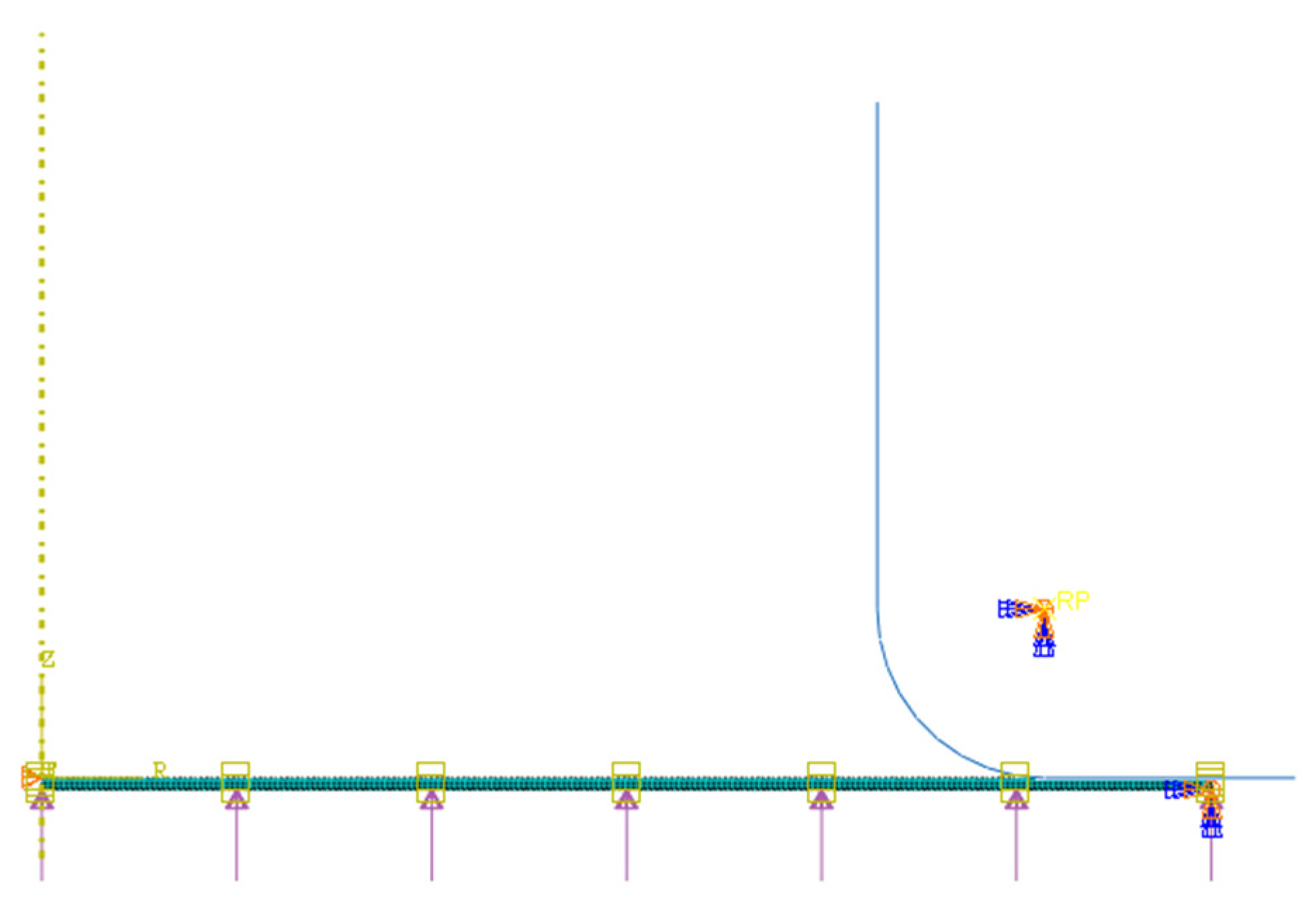
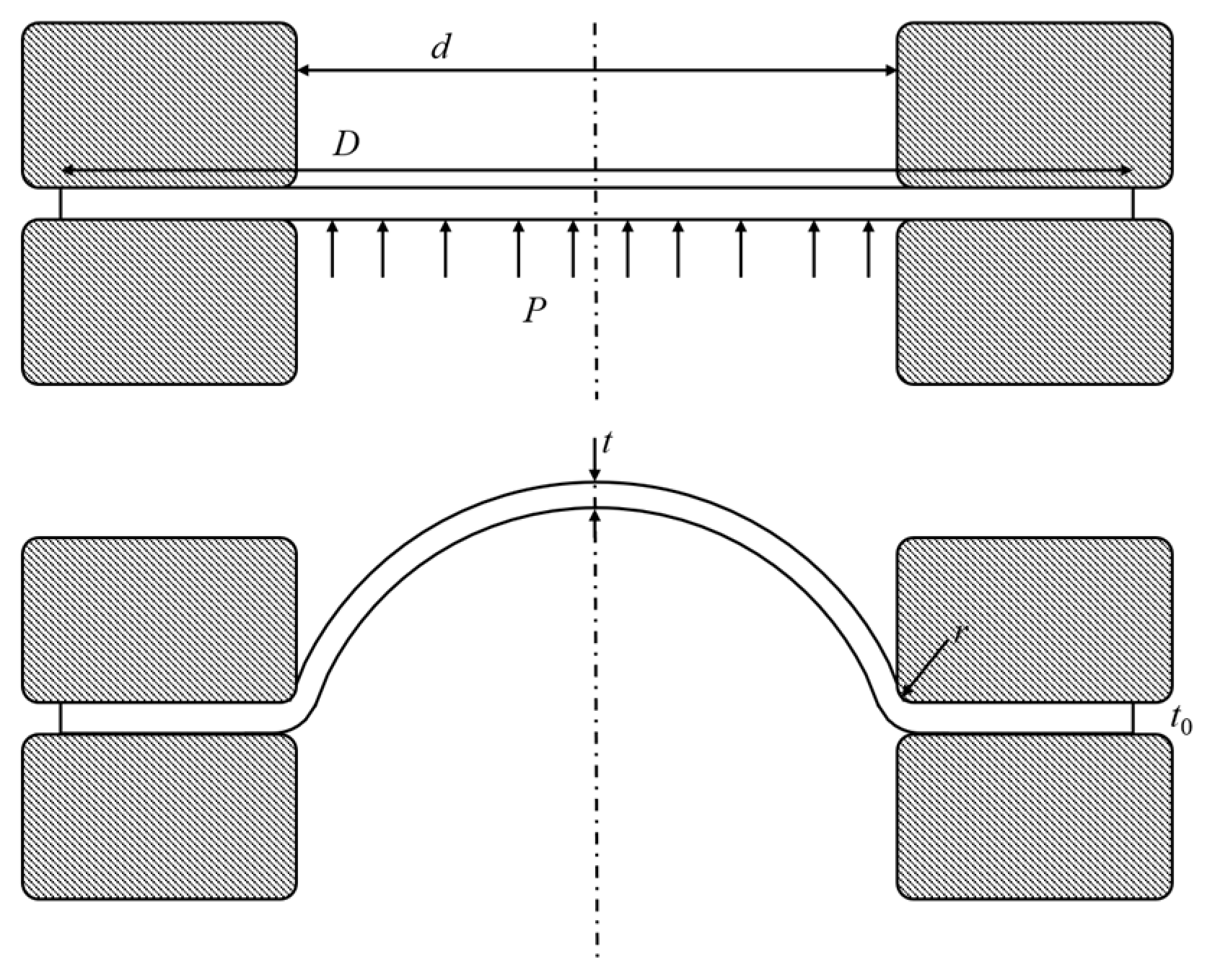
To establish an integrated experimental-computational framework, the empirical flow curves obtained from the physical high-temperature compression tests were directly imported into finite element (FE) software (version 6.10) to define the material’s constitutive behavior and to construct digital deformation models [27]. These integrated models were subsequently used to simulate localized plastic flow behavior and stress distribution within the deformed volume, enabling a systematic numerical evaluation of the effect of 0.2 wt.% Sc addition on the alloy’s elevated-temperature deformation behavior. Temperature-dependent bulging test simulations were performed at 20, 150, and 200 °C for both base and modified A242 using an axisymmetric finite element model shown in Figure 1. The model captures the material’s geometric nonlinearity and the temperature-sensitive plastic response, as thermal softening strongly influences behavior at elevated temperatures and directly affects stress redistribution, dome height, and thinning [28,29].
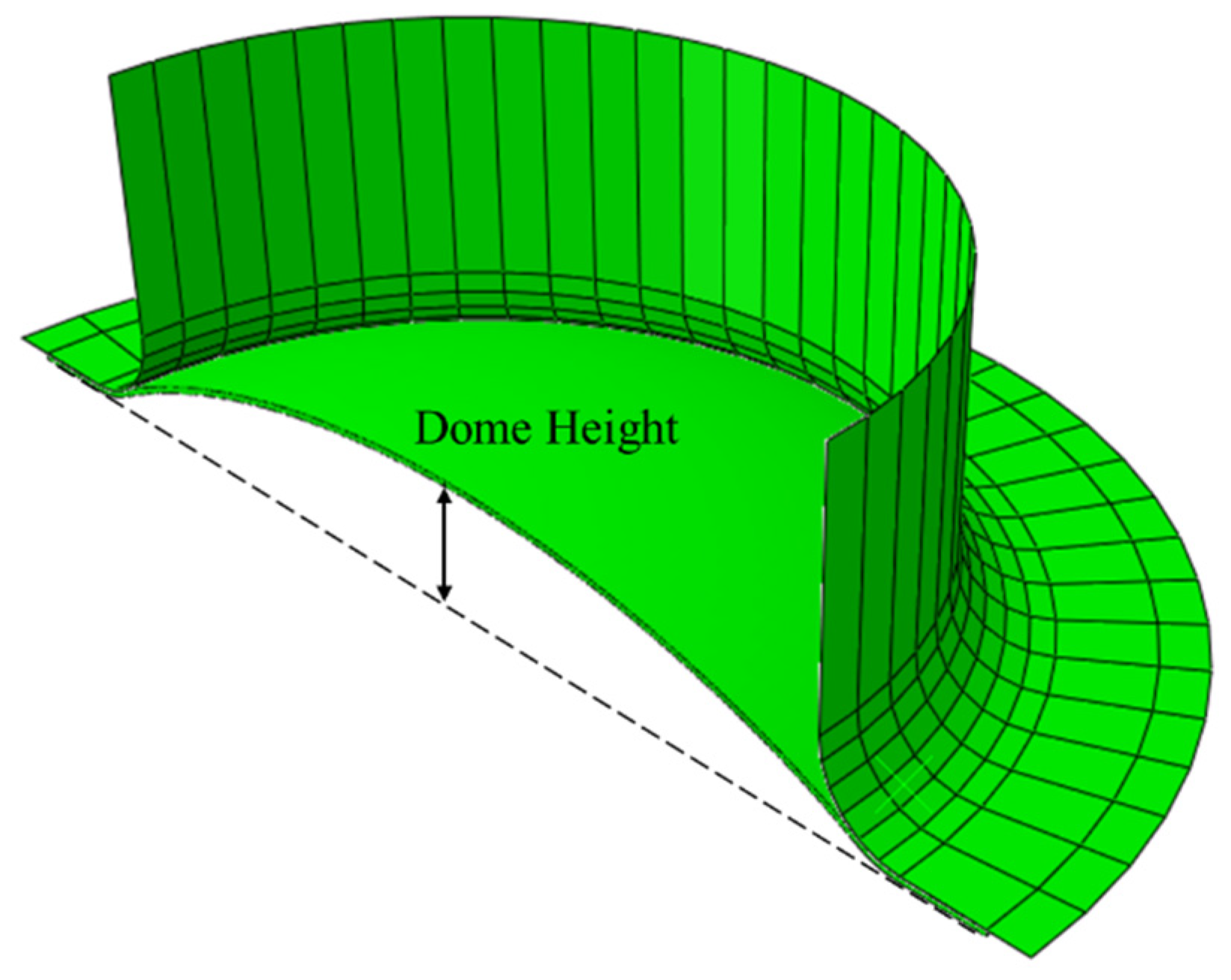
The disk had a diameter D = 140 mm and an initial thickness t0 = 0.7 mm, while the holder had a radius r = 10 mm and an opening d = 100 mm to provide sufficient clamping while still leaving a wide free span for dome formation. The holder was modeled as a rigid body with a fully fixed reference point, and the disk was fixed at the outer edge, away from the symmetry line, and subjected to a bottom pressure P = 5 MPa. The sheet is discretized using 1050 quadratic elements as shown in Figure 2. The dome height is the displacement of the disk’s center from its undeformed position, as shown in Figure 3. In contrast, the thinning of the disk is the difference between the disk’s final thickness after deformation, t, and t0.

4. Results and Discussions

4.1. Microstructure Observation

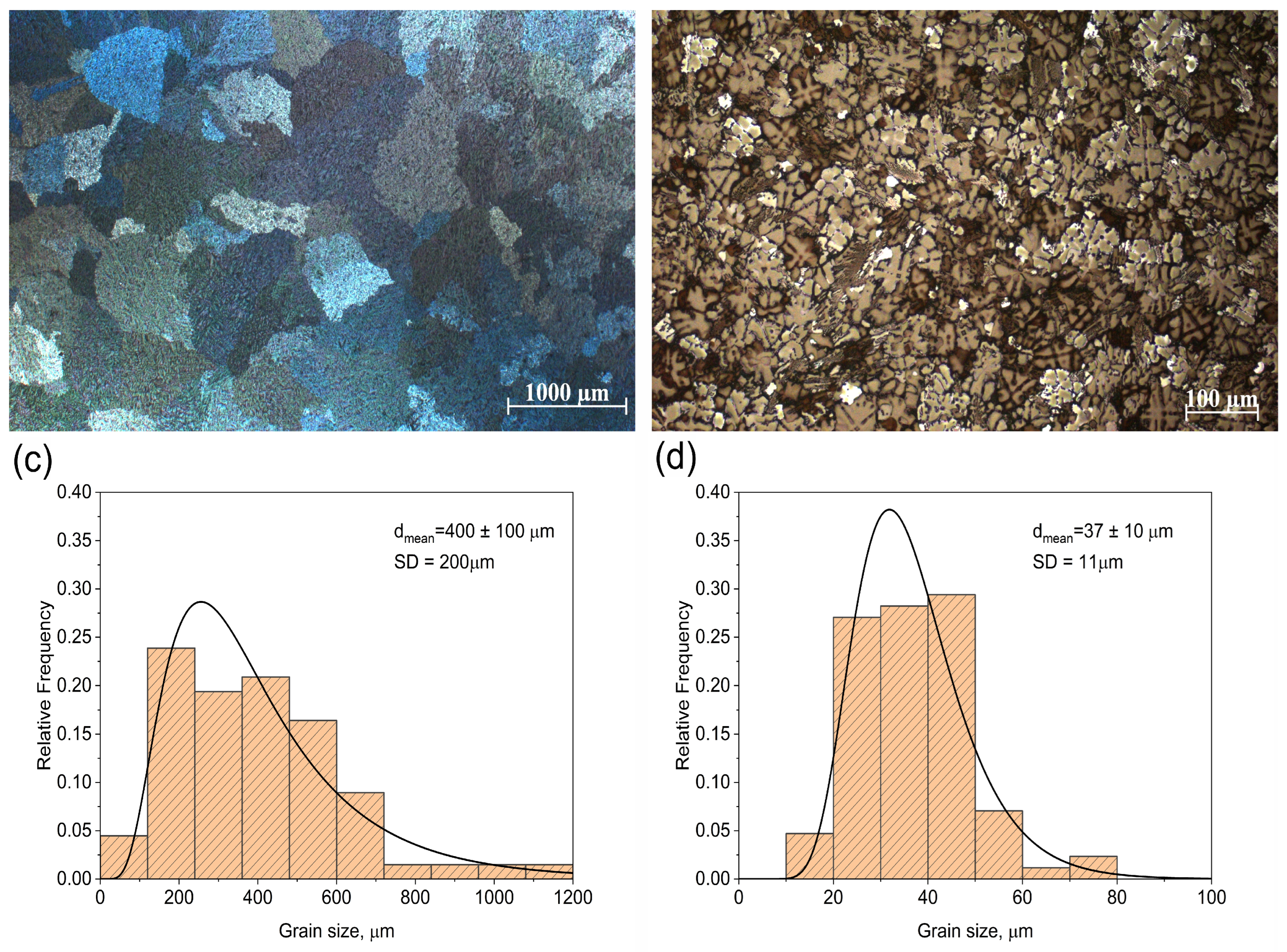
Figure 4 presents the as-cast macrostructures and corresponding grain size distribution histograms for the A242 aluminum alloy (Figure 4a,c) and the A242/0.2% Sc modified alloy (Figure 4b,d). Comparison of the micrographs in Figure 4a,b reveals a dramatic grain refinement effect induced by the 0.2 wt.% Scandium addition. The base A242 alloy displays massive, coarse grains extending several hundred microns. In contrast, the addition of Sc suppresses the formation of the coarse, near-equiaxed dendritic grains observed in the base alloy, facilitating a comprehensive grain refinement that yields a highly homogeneous microstructure dominated by fine, equiaxed dendrites throughout the casting volume. The complex, highly branched morphology of the fine equiaxed dendrites visible in the modified alloy significantly increases the surface area for strengthening intermetallic phase formation at the dendrite arm boundaries.
Quantitative verification of this refinement is provided by the grain-size statistical data shown in Figure 4c,d. The average grain size of the unmodified alloy is 400 ± 100 μm, with a broad distribution reflected in a high standard deviation (SD) of 200 μm. This significant statistical variation underscores the microstructural heterogeneity typical of large-grained castings. Conversely, the Sc-modified alloy exhibits a remarkably fine average grain size of 37 ± 10 μm, representing an order-of-magnitude reduction. This refinement is accompanied by a dramatic narrowing of the distribution curve and a far smaller standard deviation of 11 μm, indicating an exceptionally high degree of microstructural homogeneity across the sample. The dramatic reduction in both mean grain size and statistical variance confirms that Sc acts as a potent grain refiner in the A242 system, likely through the in situ formation of primary Al3Sc particles during the early stages of solidification, which then serve as ideal heterogeneous nucleation sites for the primary α-Al phase [30].
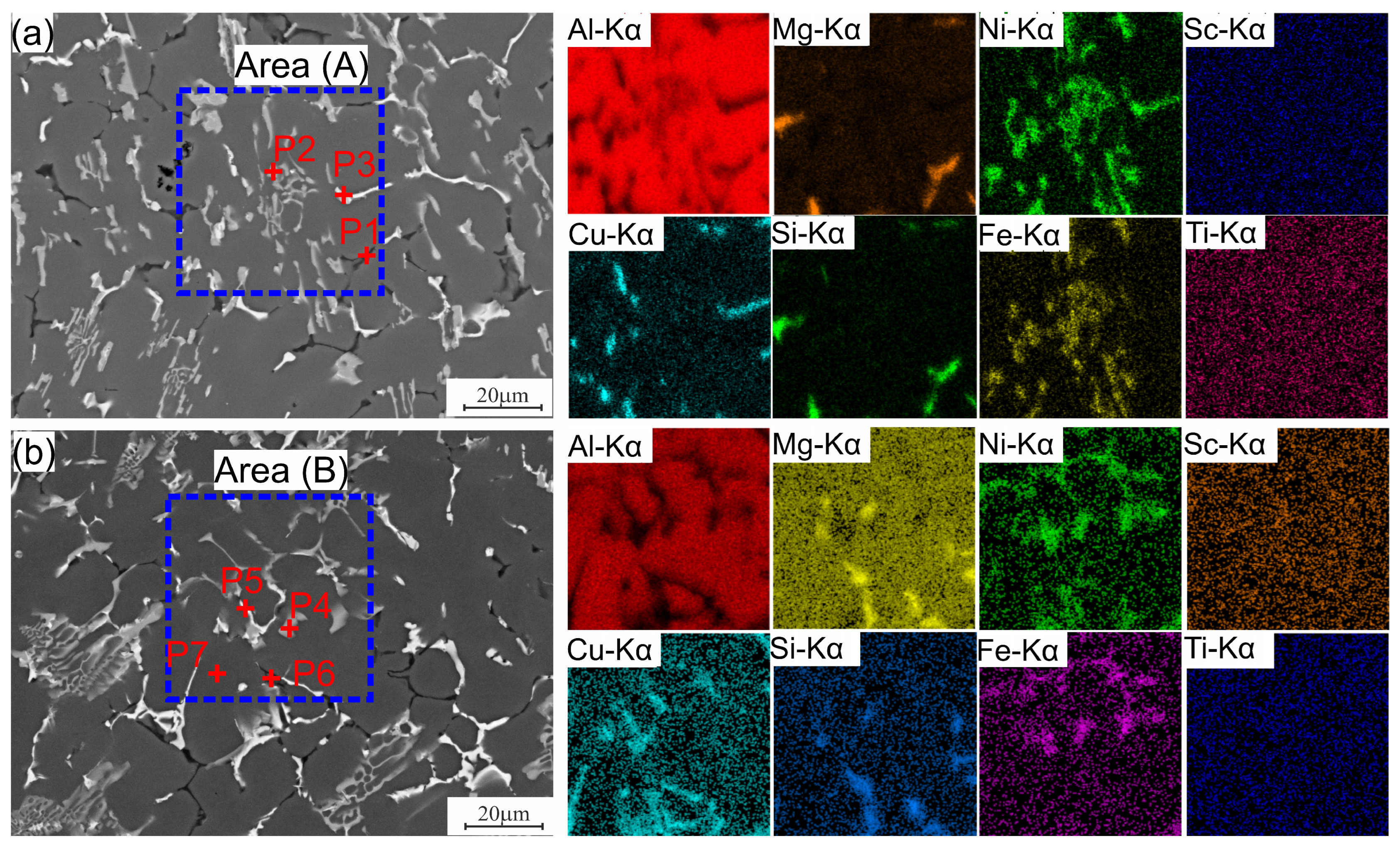
Figure 5 presents the SEM backscattered electron (BSE) images and corresponding EDX elemental maps for the base A242 and Sc-modified alloys, revealing a complex network of intermetallic phases distributed along the dendritic boundaries. In the base A242 alloy (Area A), the microstructure is characterized by coarse, elongated intermetallic compounds, with elemental mapping showing significant segregation of Ni, Fe, and Cu at grain boundaries [31]. The point analysis at P3, showing high concentrations of Cu (24.52%) and Ni (16.57%), suggests the presence of the γAl7Cu4Ni phase or similar Cu-Ni-bearing intermetallic, which are common in these systems. Meanwhile, P1 and P2 indicate the formation of Mg-Si-rich phases and Al-Fe-Ni compounds, likely Al9FeNi, which are essential for high-temperature stability but appear relatively coarse in the unmodified state [32]. The elemental maps for Ti and Sc in this alloy show a random, background-level distribution, consistent with the absence of Sc additions in the base material. It is worth noting that Titanium (Ti) was detected within the EDS elemental mapping and point analysis profiles, despite not being intentionally introduced as an alloying element in the nominal composition of the investigated A242 alloys. This presence is primarily attributed to trace-level residual impurities (≤0.01–0.02 wt.%) naturally existing within the commercial-grade high-purity aluminum ingot feedstock sourced for the melting process. Furthermore, due to the semi-quantitative nature of the EDS technique, these minor localized concentrations function as background-level noise signals captured near the characteristic Ti_Kα X-ray energy spectrum, rather than representing an active microalloying constituent.
The modification with 0.2% Sc (Area B) results in a notable refinement of the secondary phases, which appear more uniformly distributed and more fragmented than in the base alloy. The EDX maps for the modified alloy show a distinct correlation between Sc and the grain interiors, particularly evident at P7 (Figure 5) and in Table 2, where Sc is detected at 0.58 wt.%. This confirms that a portion of the Sc remains in the α-Al solid solution, potentially forming strengthening Al3Sc nanoprecipitates during subsequent processing, such as a post-casting precipitation-hardening T6 treatment. In the present as-cast state of the Sc-modified alloy, this retained Sc has not yet decomposed into a dense population of coherent, nanoscale L12-Al3Sc strengthening precipitates. Instead, the dramatic grain refinement observed in the modified alloy is primarily driven during the initial stages of solidification, when a small fraction of Sc reacts to form primary Al3Sc particles directly from the liquid melt.
Interestingly, P5 shows high concentrations of Cu (38.84%) and Ni (13.86%), which likely correspond to the θ-Al2Cu or Al3(CuNi)2 phases. The Mg and Si mapping in Figure 5b shows a more concentrated clustering at P6, which, combined with the 16.6% Mg and 15.95% Si reported in the EDX table, strongly indicates the presence of the Mg2Si phase. The presence of Fe and Ni at P4 (6.63% Fe and 10.96% Ni) further confirms the persistence of the Al9FeNi intermetallic, which remains a primary skeletal feature of the microstructure.
Comparing the two alloys, the most significant change is the reduction in the scale of the intermetallic network and the redistribution of alloying elements induced by the Sc addition. While the base alloy displays a more continuous, coarser intermetallic morphology, the Sc-modified alloy exhibits a more fragmented, finer distribution of the Al9FeNi and Al-Cu-Ni phases. This refinement of the brittle intermetallic phases, combined with the grain refinement observed in the optical micrographs, is expected to enhance both the alloy’s room-temperature ductility and high-temperature strength. The expected phases in both alloys include the primary α-Al matrix, the skeletal Al9FeNi phase, the Mg2Si phase, and various Al-Cu-Ni compounds, such as Al3Ni and Al7Cu4Ni. In the modified alloy, the detection of Sc at P7 suggests that Sc-rich dispersoids or solid-solution strengthening will play a critical role in the mechanical characterization results at 150 °C and 200 °C.

4.2. Mechanical Properties

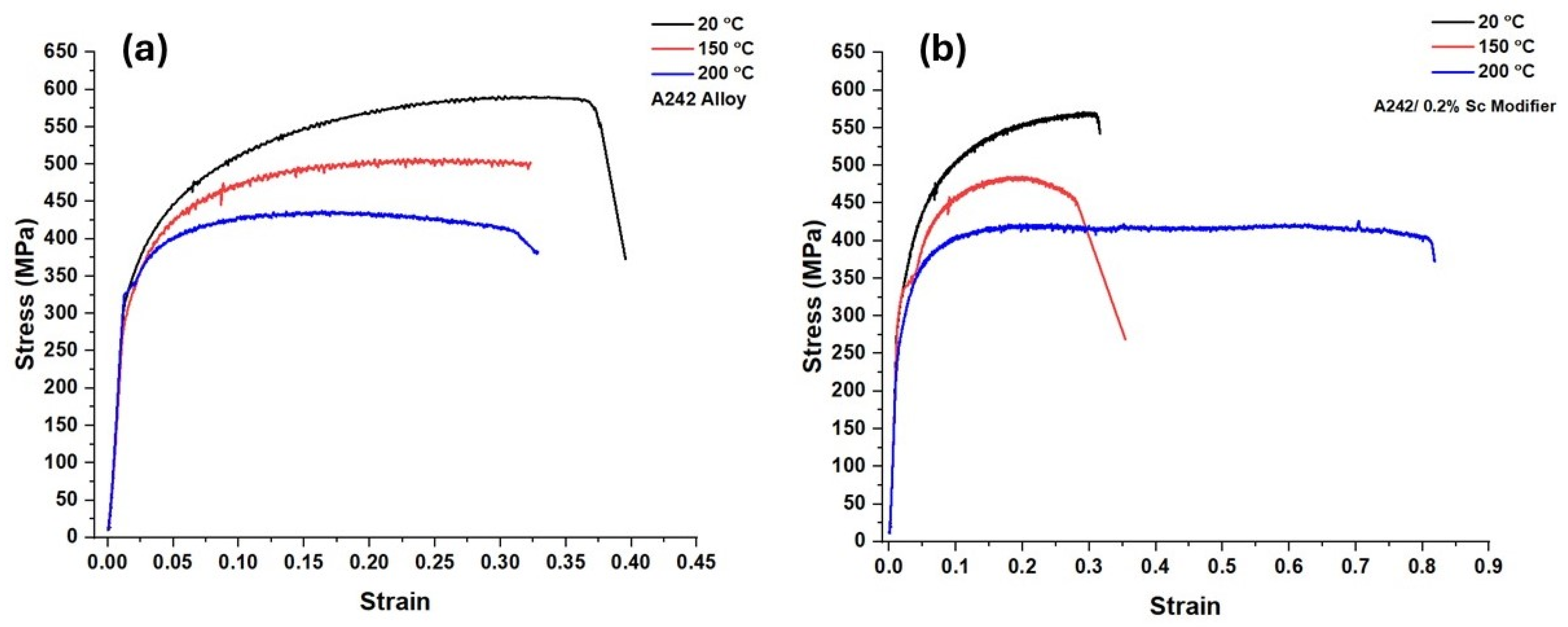
Compression tests show a clear trend of thermal softening in both the A242 base alloy and the A242/0.2% Sc alloy as the testing temperature rises from 20 °C to 200 °C. This is in line with standard metallurgical principles, which say that more thermal energy makes dislocation movement and recovery processes easier [33]. The base alloy (Figure 6a) shows a drop in peak stress from about 590 MPa at 20 °C to 500 MPa and 430 MPa at 150 °C and 200 °C, respectively. Its ductility exhibits a slight reduction from approximately 0.40 mm at 150 °C to 0.33 mm at 200 °C. To rule out potential high-temperature testing artifacts such as localized oxidation or thermal inhomogeneity, the repeatability of these tests was strictly re-verified. This premature failure trend in the base alloy at 200 °C is primarily attributed to rapid thermal coarsening of the coarse as-cast grain architecture and the lack of secondary-phase boundary pinning at higher temperatures. To comprehensively elucidate the underlying micro-damage mechanisms, SEM fractography of the fractured surfaces is being conducted and will be provided to confirm the specific microstructural failure mode. The scandium-modified alloy (Figure 6b) also shows a proportional loss of strength, going from about 570 MPa at 20 °C to about 420 MPa at 200 °C. To comprehensively elucidate the high-temperature mechanical response, it is imperative to analyze the distinct divergence in compressive stress–strain behavior between the unmodified base alloy and the 0.2 wt.% Sc-modified alloy as the testing temperature is elevated from 150 °C to 200 °C. For the unmodified base alloy, exposure to 200 °C induces pronounced thermal softening, accompanied by a marked reduction in strain to failure to approximately 0.33. This degradation is predominantly attributed to rapid thermal coarsening and dynamic recrystallization instabilities within the coarse as-cast dendritic microstructure (mean grain size ≈ 400 μm). In the absence of thermally stable boundary-pinning phases, sustained thermal loading promotes rapid strain localization and intergranular cavitation along coarse intermetallic boundaries, culminating in premature macroscopic fracture under compressive stress. Conversely, the 0.2 wt.% Sc-modified alloy exhibits a highly stable plastic flow regime and a pronounced deformation plateau at 200 °C, wherein the strain to failure increases substantially to >0.80, corresponding to a >142% enhancement in compressive ductility relative to the base counterpart. This marked improvement is microstructurally governed by the activation of elevated-temperature superplastic deformation mechanisms, primarily grain boundary sliding (GBS). The modified alloy features a substantially refined, equiaxed grain architecture (~37 μm), while the trace Sc addition yields thermally stable Al3Sc dispersoids. These precipitates exert a pronounced Zener pinning pressure on grain boundaries, effectively suppressing boundary migration and thermal coarsening at 200 °C. Consequently, the refined microstructure accommodates homogeneous plastic deformation via boundary-mediated sliding, thereby mitigating strain localization, necking, and catastrophic failure.
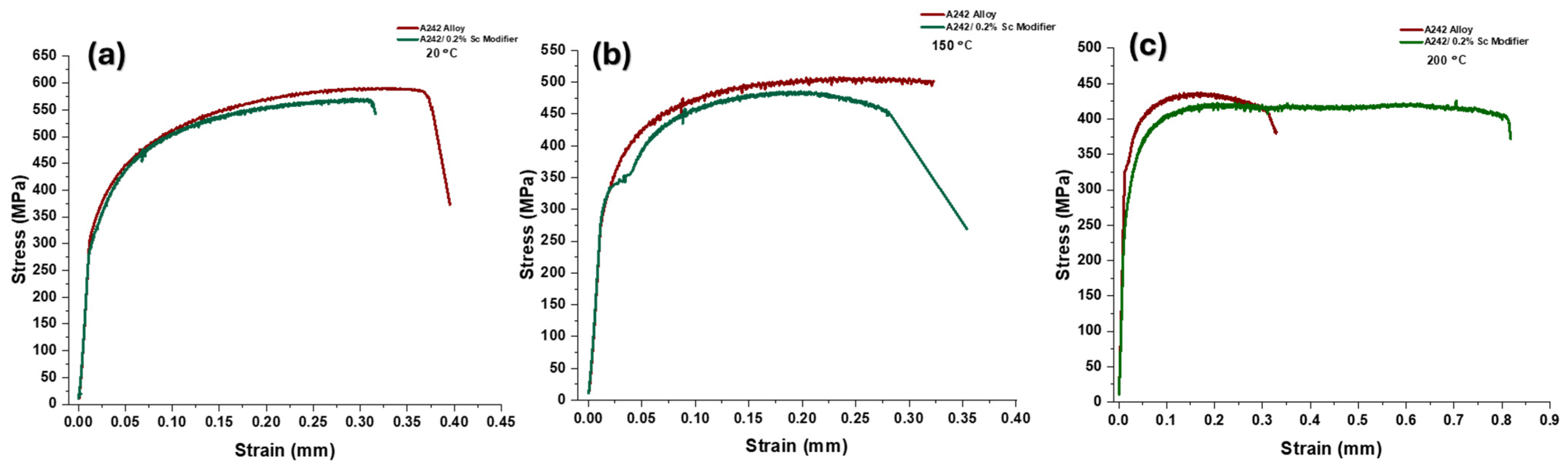
At room temperature (Figure 7), the addition of 0.2% Sc slightly reduces both strength and ductility relative to the base alloy, which is unexpected. Interestingly, a minor horizontal plateau (local serration) is uniquely visible within the initial quasi-elastic loading regime of the 0.2 wt.% Sc-modified alloy at 150 °C (Figure 7b). This localized transient phenomenon is historically linked to short-range solute-dislocation interaction dynamics. At an intermediate thermal regime of 150 °C, the thermal energy provides sufficient lattice diffusivity for the trapped solute Sc atoms (as certified by the EDX matrix data in Table 2, Point P7) to segregate near initial matrix dislocations, forming localized Cottrell solute atmospheres. As the compressive stress approaches a critical threshold near the elastic-plastic transition zone, a sudden, collective unpinning of locked dislocations from these Sc atmospheres occurs, manifesting as a momentary horizontal stress relaxation before steady-state macroplastic flow resumes.
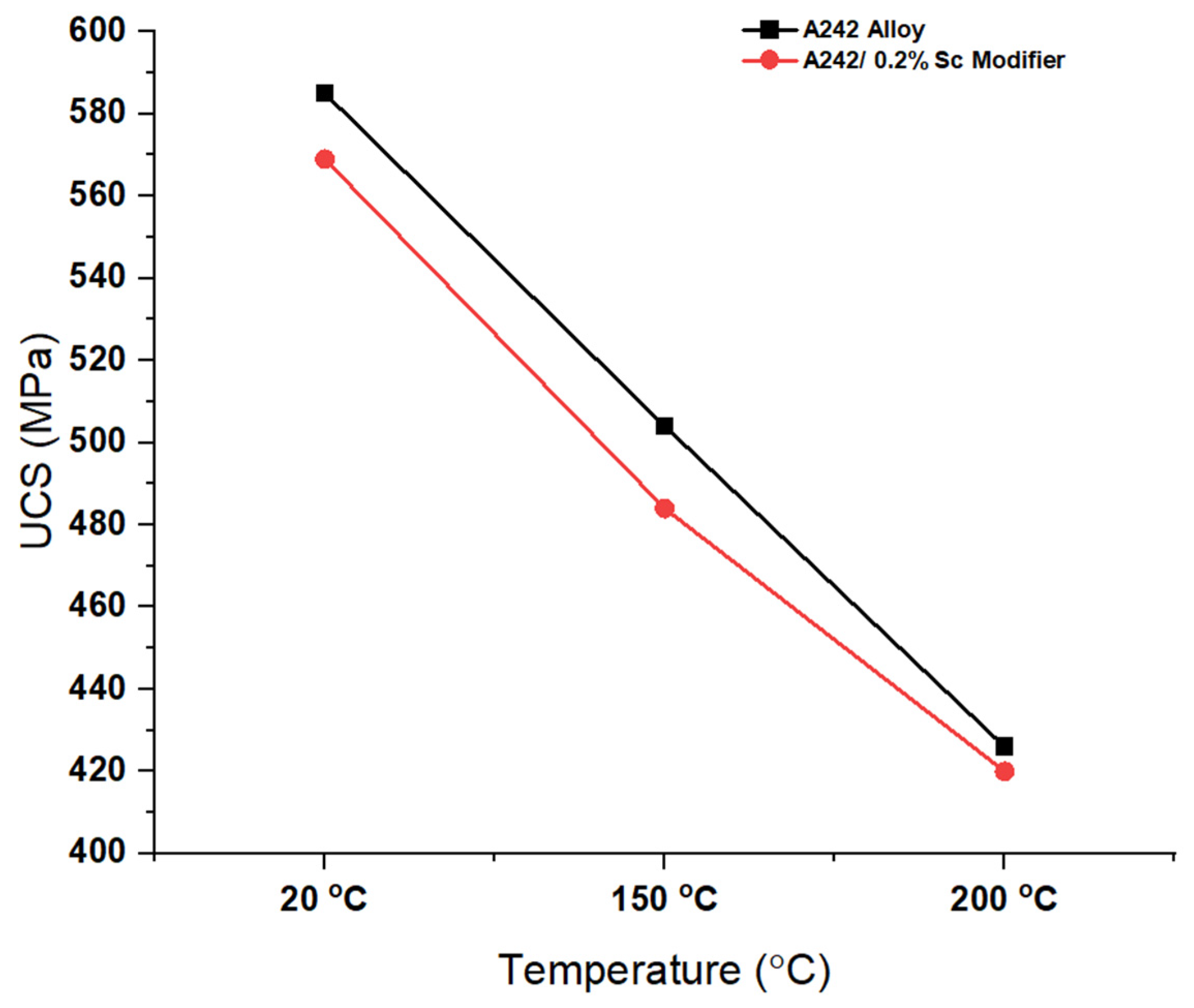
A thorough ultimate-strength analysis (Figure 8) supports this trend across all tested temperatures. It shows that the modified alloy consistently has lower strength than the base alloy (e.g., ~570 MPa at 20 °C, ~485 MPa at 150 °C, and ~420 MPa at 200 °C).
While several studies in the literature, such as those evaluating 0.3–0.5 wt.% Sc-modified aluminum alloys under tensile loading [19,20] reported significant yield strength improvements. The current investigation evaluated a multi-component A242 alloy with a lower Sc content (0.2 wt.%) solely in the as-cast condition under uniaxial compression. This difference in alloy composition, testing mode, and the lack of post-casting heat treatment explains why a marginal compressive strength reduction (~3.4%) was observed in our study, rather than the standard precipitation hardening observed in other studies. Given that the copper content remains identical at 4.46 wt.% and the minor variance in magnesium (from 1.44 wt.% to 1.32 wt.%) is negligible, this slight room-temperature softening is attributed to the as-cast condition of the investigated alloys. Because the materials were tested directly in the as-cast state, without subsequent solution and artificial aging (T6) heat treatment, the Sc addition did not form a high volume fraction of coherent, nanoscale L12-Al3Sc strengthening precipitates. Instead, as confirmed by the EDX matrix analysis (Point P7, Figure 5 and Table 2), a significant portion of the Sc remains trapped within the primary α-Al solid solution, preventing it from contributing effectively to room-temperature precipitation hardening.
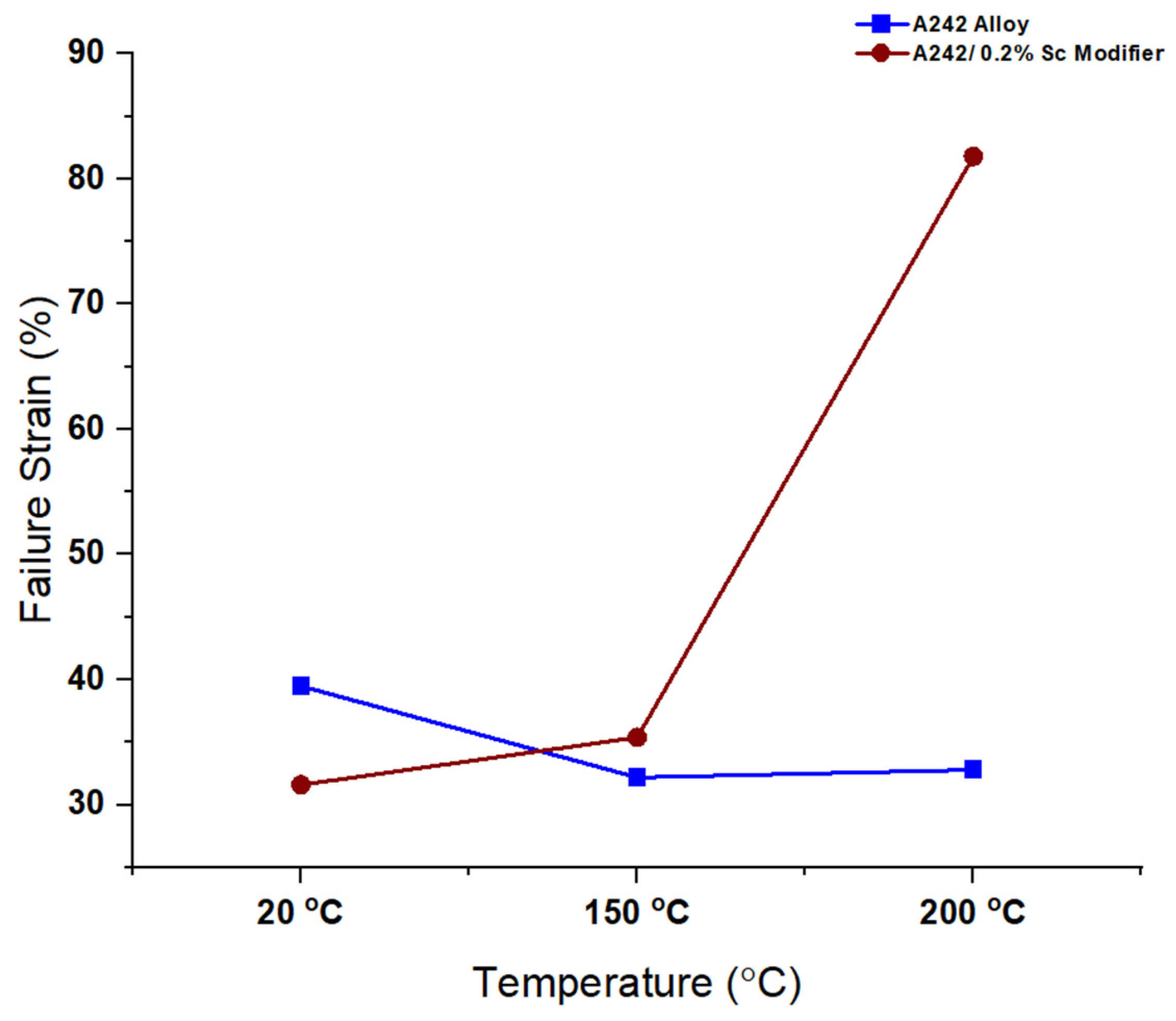
Scandium is usually added to improve grain size and provide precipitation strengthening [34]. However, its presence here suggests that it may be interfering with the natural age-hardening S (Al2CuMg) or θ’ (Al2Cu) phases that are common in Al-Cu-Mg systems. This could be because it scavenges solute atoms, thereby lowering the volume fraction of these strengthening precipitates [35]. Additionally, in the absence of a targeted aging treatment intended to co-precipitate Al3Sc, scandium may act as a dilute solute or form coarse particles, thereby failing to deliver Hall-Petch strengthening and possibly softening the matrix by disrupting effective dislocation pinning mechanisms within the base alloy [36]. The most important benefit of scandium modification, on the other hand, is that it makes the material more ductile and easier to shape at high temperatures (Figure 9). The modified alloy shows slightly lower strength but similar sustained deformation at 150 °C. However, it shows much better ductility at 200 °C, with a maximum strain of over 0.8 mm, compared to the base alloy’s early fracture at ~0.33 mm. This large increase in strain capacity at 200 °C strongly suggests that superplastic deformation mechanisms have been activated. These mechanisms allow grains to slide along their boundaries without breaking or cavitating. This exceptional behavior is attributed to the thermal stability provided by Sc microalloying. Because the alloy was evaluated directly in its as-cast state, this mechanism does not rely on a dense population of artificial, post-aging nanoscale L12\Al3Sc precipitates. Instead, it is governed by the primary Al3Sc particles formed in situ via peritectic reactions during the initial stages of solidification, which served as the primary drivers of the observed 90.8% grain refinement. As supported by the EDX data in Table 2 (Point P7), the portion of Sc retained within the α-Al solid solution prevents rapid high-temperature grain boundary migration. During deformation at 200 °C, these stable primary structures exert localized Zener pinning pressure on the refined grain boundaries, effectively halting rapid thermal grain coarsening and delaying interfacial cavitation, thereby activating superplastic flow pathways.

FEM Results

The material behavior was modeled using the data from the stress–strain curve in Figure 6. The data were fitted to a Johnson–Cook constitutive model to describe the material’s temperature-dependent plastic response.
σ Y = A + B ε p n 1 T T 0 T m T 0 m
where σ Y is the current flow (yield) stress under plastic loading, A is the initial yield stress, B is the hardening modulus, ε p is the equivalent plastic strain, n is the strain-hardening exponent, T is the current temperature, T 0 is the reference temperature (20 °C), T m is the melting temperature (1500 °C) and m is the thermal softening exponent. The strain-rate term was omitted because all tests were conducted at very low rates, making its effects negligible. The fitted material parameters for the model are shown in Table 3.
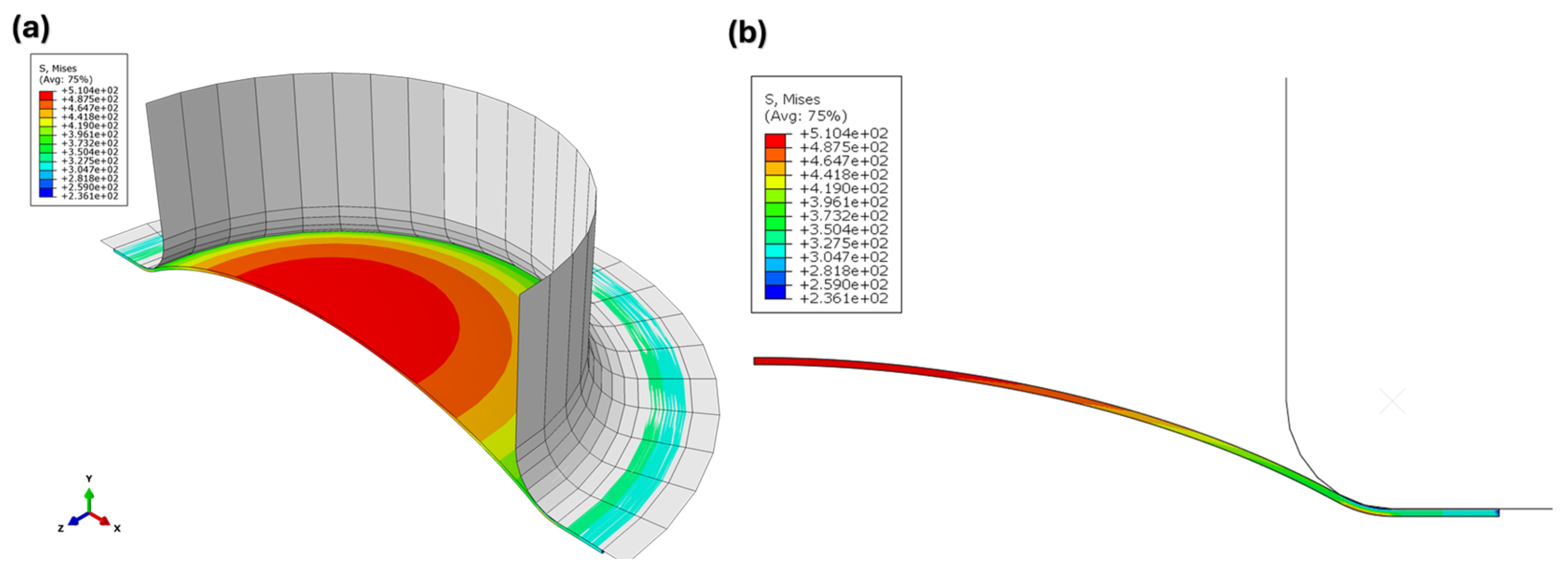
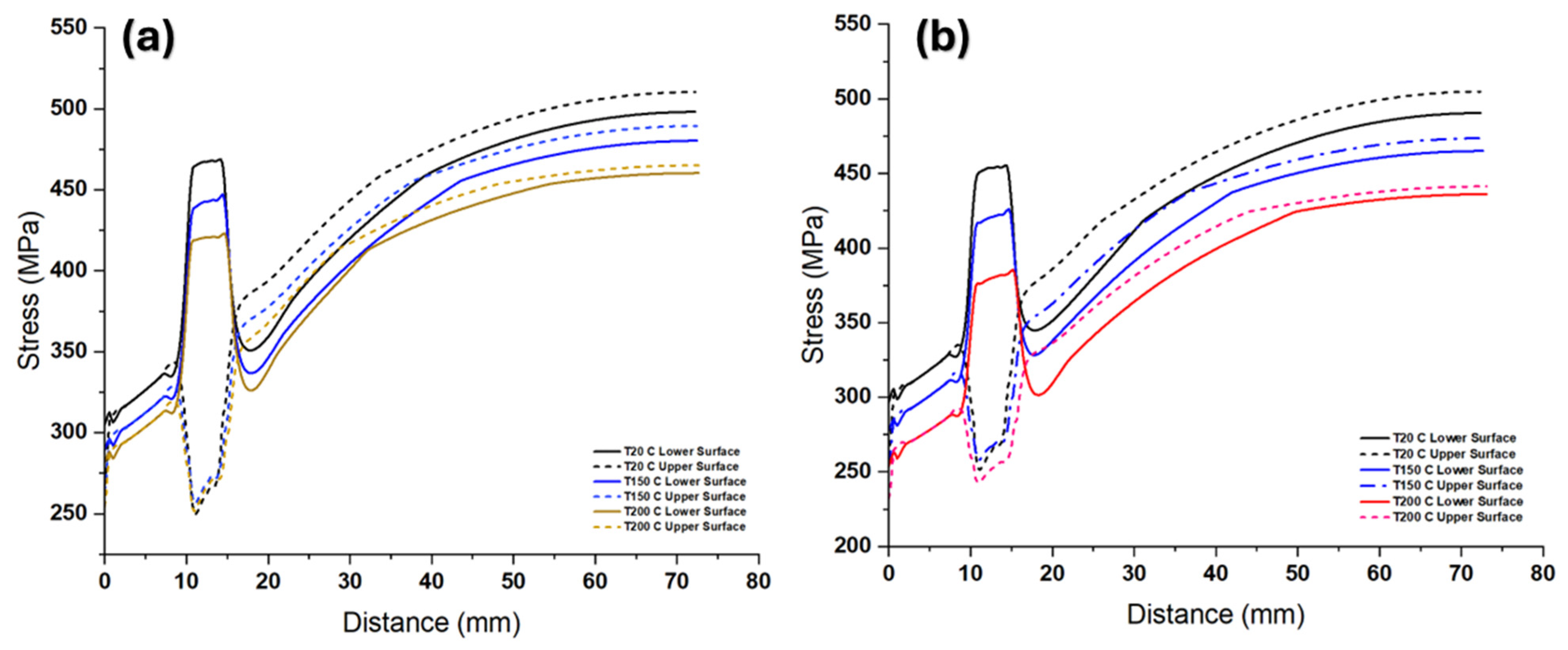
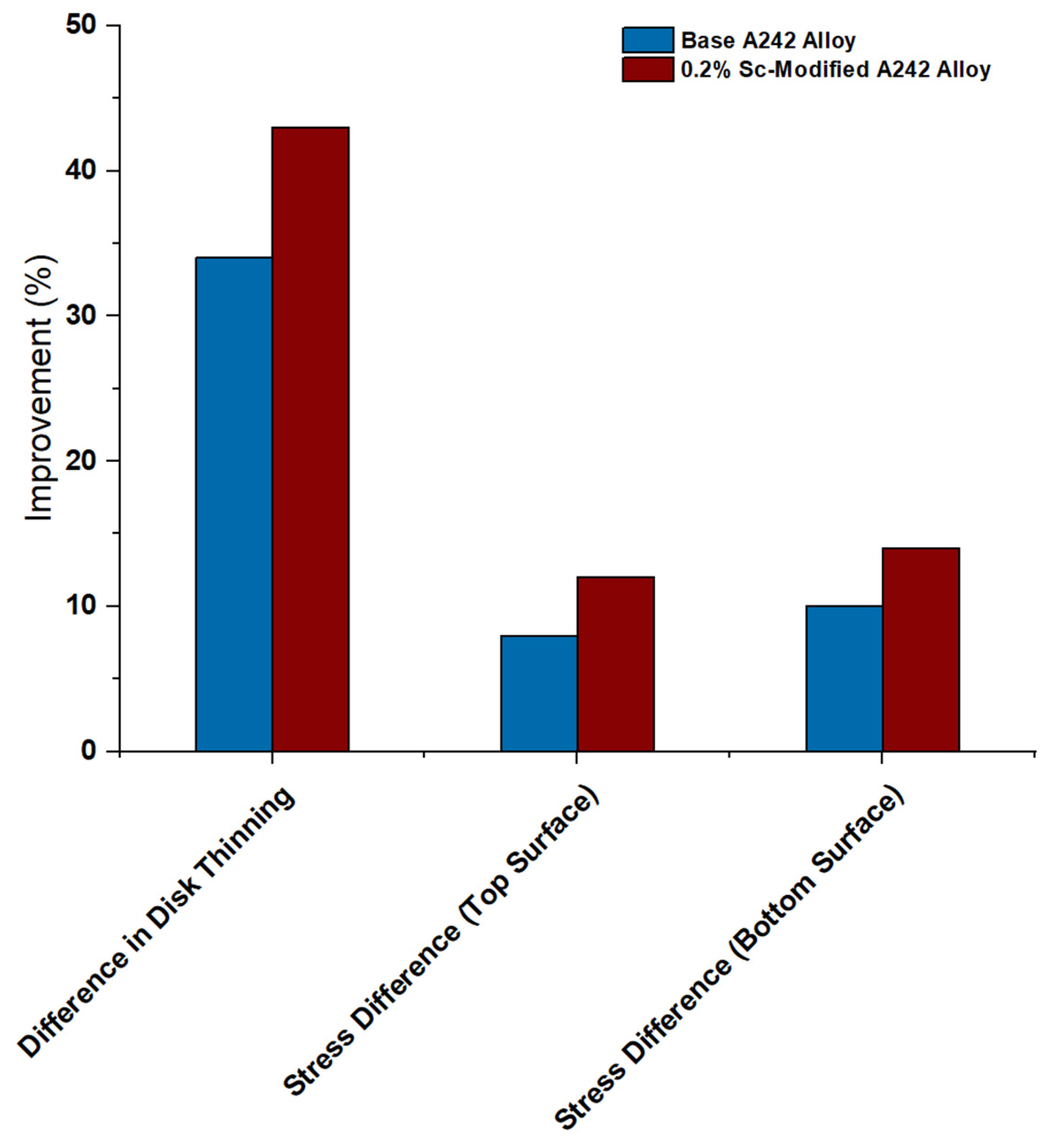
Figure 10 presents the von Mises stress distribution on the base A242 alloy disk at 20 °C. High stresses are observed near the holder on the bottom surface, where the sheet experiences a combined bending-dominated and tensile membrane stress in this region. Figure 11a shows the stress distribution along the top and bottom surfaces of base A242 at different temperatures. As expected, the bottom surface carries higher stress than the top surface, particularly near the holder region. In addition, the stress level decreases with increasing temperature due to thermal softening of the alloy. Figure 11b shows the corresponding response for the modified A242 alloy, where the stresses at the dome region are lower than those of the base material. Overall, the base A242 alloy shows 8% differences in stress at the top surface near the dome region and 10% at the bottom surface. The modified alloy shows a 12% difference on the top surface and a 14% difference on the bottom surface. This indicates improved formability of the modified alloy compared to the base alloy, especially at lower temperatures, where its resistance to deformation remains lower.
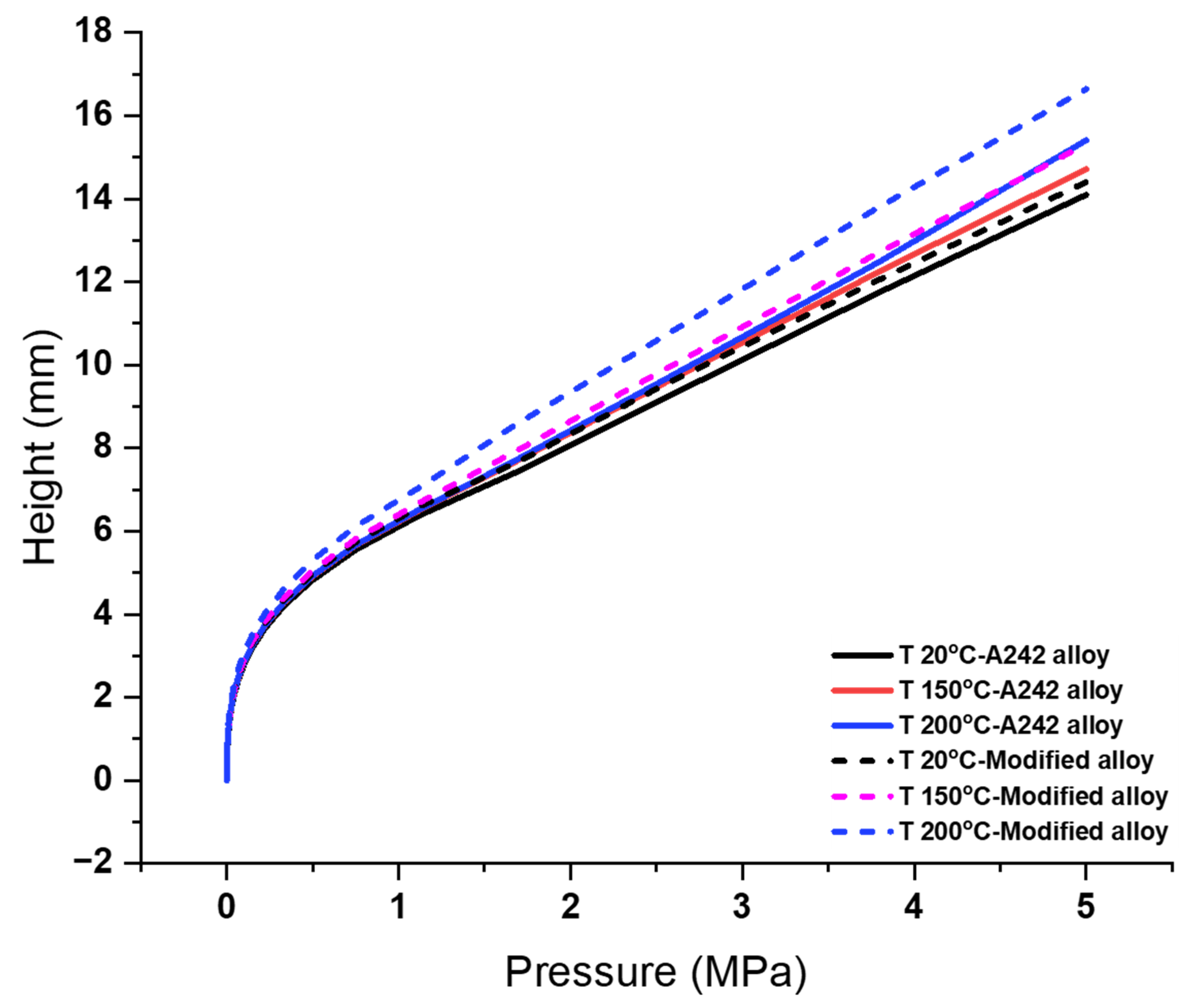
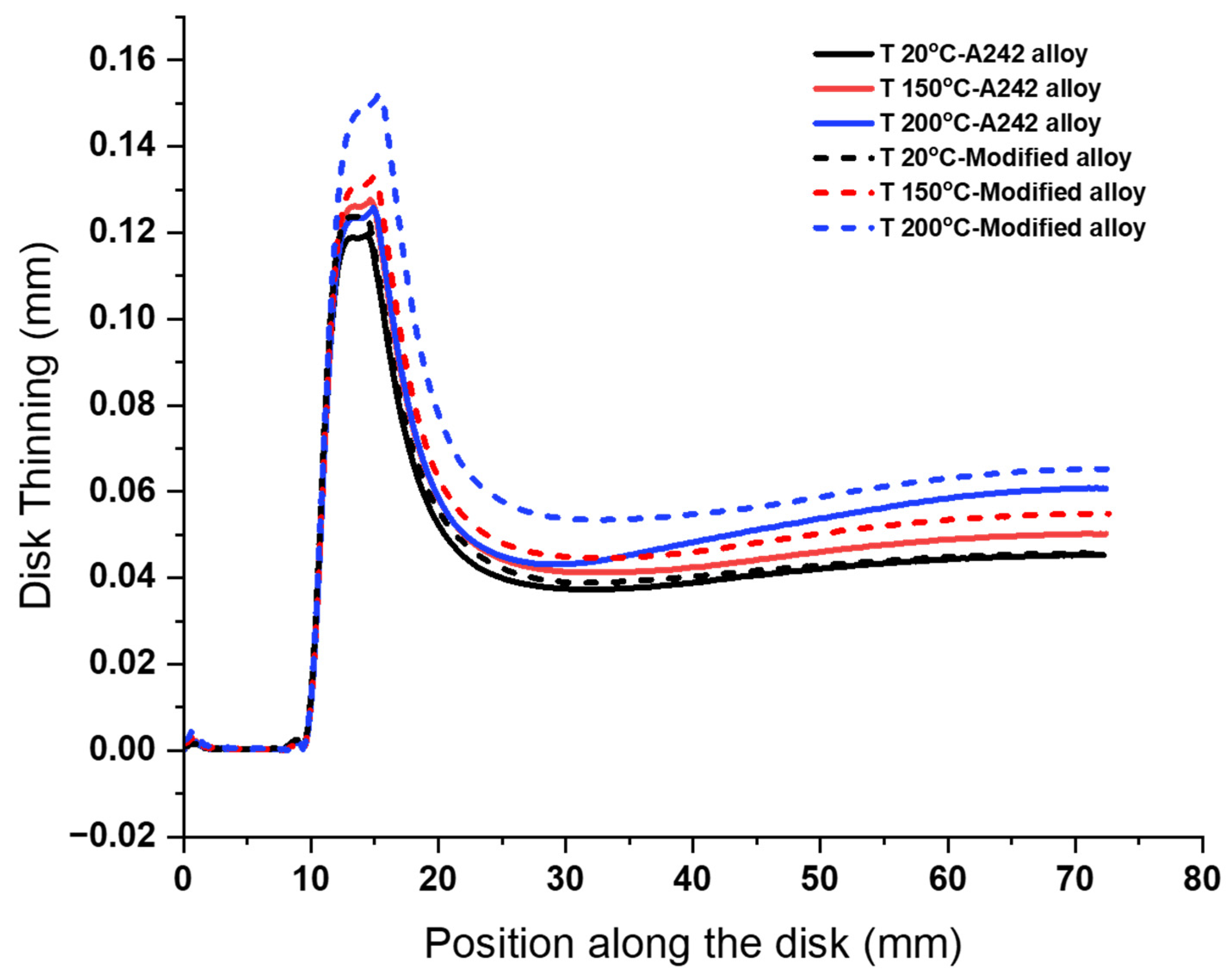
Figure 12 shows the dome height increasing with pressure up to 5 MPa. At elevated temperatures, the modified alloy exhibits greater deformation and lower stress than the base material. The measured difference in dome height was 9% for the base alloy and 16% for the modified alloy. Figure 13 shows the thickness reduction along the disk at maximum pressure. In the dome region, the modified alloy shows greater thinning at higher temperatures, whereas at 20 °C, its thinning is comparable to that of the base material. Between 20 °C and 200 °C, the thinning difference was 34% for the base alloy and 43% for the modified alloy. Thus, further supporting the modified alloy’s increased formability relative to the base alloy.
Adding 0.2% Scandium to the A242 matrix significantly changes its thermomechanical properties. It speeds up superplasticity during high-temperature forming at 200 °C. Both alloys benefit from thermal softening, but the Sc-doped microstructure responds much better, allowing uniform plastic flow across the disk membrane rather than premature localized necking. This phenomenon shifts internal mechanical loads away from critical bending areas, allowing the modified alloy to thin out by 43% (instead of 34%) and to lower stress more than the base material. The scandium modification greatly increases the safe processing window for thermoforming operations by allowing for much higher volumetric expansion before failure. This lets manufacturers stamp deeper, more complex profiles while lowering the risk of microscopic fracture or uneven yielding.
Figure 14 provides direct empirical evidence that the 0.2% Scandium addition facilitates more uniform thinning of the material without failure and substantially diminishes the residual forming stresses concentrated at critical interfaces. The modified alloy has a 43% difference, while the base alloy has a 34% difference. This visual confirmation supports the text’s claim of improved superplastic flow and structural ductility at high temperatures. The chart shows even more clearly how the modified alloy can better handle stress because it softens when heated. It gets a 12% difference in stress on the top surface and a 14% difference on the bottom surface, which is always better than the base alloy’s 8% and 10% reductions.

5. Conclusions

This study experimentally characterizes and computationally models the microstructural evolution and thermomechanical response of an as-cast A242 aluminum alloy modified with 0.2 wt.% Sc. The principal findings, directly supported by the presented data, are summarized as follows:
  • The addition of 0.2 wt.% Sc significantly alters the as-cast solidification structure, reducing the average grain size from 400 ± 100 μm to 37 ± 10 μm and decreasing the variance of the grain size distribution by ~94.5%. Concurrently, SEM-EDX analysis reveals a transition from a coarse, continuous intermetallic network to a more fragmented, uniformly dispersed secondary-phase architecture along dendritic boundaries.
  • Uniaxial compression testing reveals that, in the as-cast condition, the Sc-modified alloy exhibits a marginal reduction in room-temperature compressive strength (~3.4%, from 590 MPa to 570 MPa) relative to the base alloy. However, at 200 °C, the modified alloy sustains a substantially higher strain-to-failure (>0.8 mm versus 0.33 mm for the base alloy), indicating markedly improved deformation capacity and delayed onset of premature thermal softening.
  • Experimental flow curves were used to calibrate a Johnson-Cook constitutive model for axisymmetric bulge simulations. The FE results predict enhanced high-temperature formability for the Sc-modified alloy, characterized by greater dome height expansion and more uniform thickness distribution at 150 °C and 200 °C compared to the base material.

Author Contributions

Conceptualization, M.A.A., O.A. and E.B.M.; methodology, O.A., E.B.M. and A.O.M.; software, M.A.A. and O.A.; validation, M.A.A., E.B.M. and A.O.M.; formal analysis, M.A.A. and E.B.M.; investigation, O.A., E.B.M. and A.O.M.; resources, E.B.M.; data curation M.A.A. and A.O.M.; writing—original draft preparation M.A.A., E.B.M. and O.A.; writing—review and editing, M.A.A., E.B.M. and O.A.; visualization, M.A.A.; supervision, E.B.M. and O.A.; project administration, M.A.A.; funding acquisition, M.A.A. All authors have read and agreed to the published version of the manuscript.

Funding

This Project was funded by the Deanship of Scientific Research (DSR) at King Abdulaziz University, Jeddah, Saudi Arabia, under grant no. (IPP: 238-135-2025).

Data Availability Statement

The original contributions presented in this study are included in the article. Further inquiries can be directed to the corresponding authors.

Acknowledgments

The authors, acknowledge with thanks DSR for technical and financial support. During the preparation of this manuscript, the authors used Perplexity for the purposes of grammar checking. The authors have reviewed and edited the output and take full responsibility for the content of this publication.

Conflicts of Interest

The authors declare no conflict of interest.

References

  1. Alzahrani, M.A.; Moustafa, E.B.; Alsoruji, G.; Mosleh, A.O. The influence of the modifying elements on the microstructure, mechanical, and deformation properties of aluminum alloys. Front. Mater. 2022, 9, 1100566. [Google Scholar] [CrossRef]
  2. Kandemir, S. Effects of TiB2 nanoparticle content on the microstructure and mechanical properties of aluminum matrix nanocomposites. Mater. Test. 2017, 59, 844–852. [Google Scholar] [CrossRef]
  3. Easton, M.; StJohn, D. Grain refinement of aluminum alloys: Part I. the nucleant and solute paradigms—A review of the literature. Metall. Mater. Trans. A 1999, 30, 1613–1623. [Google Scholar] [CrossRef]
  4. Sigworth, G.K.; Kuhn, T.A. Grain Refinement of Aluminum Casting Alloys. Int. J. Met. 2007, 1, 31–40. [Google Scholar] [CrossRef]
  5. Ahmed, H.M.; Ahmed, H.A.M.; Hefni, M.; Moustafa, E.B. Effect of Grain Refinement on the Dynamic, Mechanical Properties, and Corrosion Behaviour of Al-Mg Alloy. Metals 2021, 11, 1825. [Google Scholar] [CrossRef]
  6. Davydov, V.G.; Rostova, T.D.; Zakharov, V.V.; Filatov, Y.A.; Yelagin, V.I. Scientific principles of making an alloying addition of scandium to aluminium alloys. Mater. Sci. Eng. A 2000, 280, 30–36. [Google Scholar] [CrossRef]
  7. Jiang, L.; Zhang, Z.; Bai, Y.; Li, S.; Mao, W. Study on Sc Microalloying and Strengthening Mechanism of Al-Mg Alloy. Crystals 2022, 12, 673. [Google Scholar] [CrossRef]
  8. Cui, L.; Liu, K.; Chen, X.G. Recent advances in cost-effective aluminum alloys with enhanced mechanical performance for high-temperature applications: A review. Mater. Des. 2025, 253, 113869. [Google Scholar] [CrossRef]
  9. Knipling, K.E.; Karnesky, R.A.; Lee, C.P.; Dunand, D.C.; Seidman, D.N. Precipitation evolution in Al–0.1Sc, Al–0.1Zr and Al–0.1Sc–0.1Zr (at.%) alloys during isochronal aging. Acta Mater. 2010, 58, 5184–5195. [Google Scholar] [CrossRef]
  10. Jiang, L.; Wood, K.; Sokolova, A.; Dorin, T. Solute clustering behaviour during natural ageing in Al-Cu alloys containing Sc and Zr. Scr. Mater. 2025, 265, 116764. [Google Scholar] [CrossRef]
  11. Norman, A.F.; Prangnell, P.B.; McEwen, R.S. The solidification behaviour of dilute aluminium–scandium alloys. Acta Mater. 1998, 46, 5715–5732. [Google Scholar] [CrossRef]
  12. Hyde, K.B.; Norman, A.F.; Prangnell, P.B. The effect of cooling rate on the morphology of primary Al3Sc intermetallic particles in Al–Sc alloys. Acta Mater. 2001, 49, 1327–1337. [Google Scholar] [CrossRef]
  13. Dorin, T.; Ramajayam, M.; Vahid, A.; Langan, T. Chapter 12—Aluminium Scandium Alloys. In Fundamentals of Aluminium Metallurgy; Lumley, R.N., Ed.; Woodhead Publishing: Sawston, UK, 2018; pp. 439–494. [Google Scholar]
  14. Deng, J.; Shen, J.; Li, H.; Chen, H.; Xie, F. Investigation on microstructure, mechanical properties and corrosion behavior of Sc-contained Al-7075 alloys after solution-aging treatment. Mater. Res. Express 2020, 7, 096512. [Google Scholar] [CrossRef]
  15. Murty, B.S.; Kori, S.A.; Chakraborty, M. Grain refinement of aluminium and its alloys by heterogeneous nucleation and alloying. Int. Mater. Rev. 2002, 47, 3–29. [Google Scholar] [CrossRef]
  16. Qin, J.; Tan, P.; Quan, X.; Liu, Z.; Yi, D.; Wang, B. The effect of sc addition on microstructure and mechanical properties of as-cast Zr-containing Al-Cu alloys. J. Alloys Compd. 2022, 909, 164686. [Google Scholar] [CrossRef]
  17. Li, X.T.; Liu, R.; Hou, J.P.; Zhang, Z.J.; Zhang, Z.F. Trade-off model for strength-ductility relationship of metallic materials. Acta Mater. 2025, 289, 120942. [Google Scholar] [CrossRef]
  18. Tang, H.; Geng, Y.; Luo, J.; Xu, J.; Ju, H.; Yu, L. Mechanical Properties of High Mg-Content Al-Mg-Sc-Zr Alloy Fabricated by Selective Laser Melting. Met. Mater. Int. 2021, 27, 2592–2599. [Google Scholar] [CrossRef]
  19. Randall, N.X.; Vandamme, M.; Ulm, F.-J. Nanoindentation analysis as a two-dimensional tool for mapping the mechanical properties of complex surfaces. J. Mater. Res. 2009, 24, 679–690. [Google Scholar] [CrossRef]
  20. Saini, D.K.; Gope, R.; Patel, R.; Mandal, A. Aging Behavior Analysis of Al-Ce-Based Alloys Using Hardness and Microstructural Quantification. J. Mater. Eng. Perform. 2025, 34, 17972–17984. [Google Scholar] [CrossRef]
  21. Liu, L.; Wang, S.; Li, G.; Ma, Y. Microstructure Study on Very High Cycle Fatigue of an Additively Manufactured Aluminium Alloy via Advanced Characterization Methods. Appl. Sci. 2024, 14, 2025. [Google Scholar] [CrossRef]
  22. Ramírez, J.F.; Cardona, M.; Velez, J.A.; Mariaka, I.; Isaza, J.A.; Mendoza, E.; Betancourt, S.; Fernández-Morales, P. Numerical Modeling and Simulation of Uniaxial Compression of Aluminum Foams Using FEM and 3D-CT Images. Procedia Mater. Sci. 2014, 4, 227–231. [Google Scholar] [CrossRef]
  23. Zhao, Y.; Zhai, X.; Wang, J. Buckling behaviors and ultimate strengths of 6082-T6 aluminum alloy columns under eccentric compression—Part I: Experiments and finite element modeling. Thin-Walled Struct. 2019, 143, 106207. [Google Scholar] [CrossRef]
  24. Bal, B.; Karaveli, K.K.; Cetin, B.; Gumus, B. The Precise Determination of the Johnson–Cook Material and Damage Model Parameters and Mechanical Properties of an Aluminum 7068-T651 Alloy. J. Eng. Mater. Technol. 2019, 141, 041001. [Google Scholar] [CrossRef]
  25. Yang, X.; Zhu, J.; Nong, Z.; Lai, Z.; He, D. FEM simulation of quenching process in A357 aluminum alloy cylindrical bars and reduction of quench residual stress through cold stretching process. Comput. Mater. Sci. 2013, 69, 396–413. [Google Scholar] [CrossRef]
  26. Cui, G.; Meng, L.; Zhai, X. Buckling behaviors of aluminum foam-filled aluminum alloy composite columns under axial compression. Thin-Walled Struct. 2022, 177, 109399. [Google Scholar] [CrossRef]
  27. Mahnken, R. Identification of Material Parameters for Constitutive Equations. In Encyclopedia of Computational Mechanics, 2nd ed.; John Wiley & Sons, Ltd.: Hoboken, NJ, USA, 2017; pp. 1–21. [Google Scholar]
  28. Fartouh, Y.; el Aoudi, A.; Ouballouch, A.; Nassraoui, M. Study of bimetallic sheets through hydraulic bulge testing. J. Achiev. Mater. Manuf. Eng. 2025, 130, 49–65. [Google Scholar] [CrossRef]
  29. Zhang, Z.; Lin, Y.; Ruan, X.; Liang, J.; Wang, T.; Wang, J.; He, Z. The Prediction of High-Temperature Bulging Deformations in Non-Uniform Welded Tubes and Its Application to Complex-Shaped Tubular Parts. Materials 2025, 18, 2882. [Google Scholar] [CrossRef]
  30. Lee, S.-L.; Wu, C.-T.; Chen, Y.-D. Effects of Minor Sc and Zr on the Microstructure and Mechanical Properties of Al-4.6Cu-0.3Mg-0.6Ag Alloys. J. Mater. Eng. Perform. 2015, 24, 1165–1172. [Google Scholar] [CrossRef]
  31. Chen, H.; Wu, S.; Li, J.; Zhao, D.; Lü, S. Effects of Low Nickel Content on Microstructure and High-Temperature Mechanical Properties of Al-7Si-1.5Cu-0.4Mg Aluminum Alloy. Metals 2024, 14, 223. [Google Scholar] [CrossRef]
  32. An, X.; Jiang, W.; Ni, S.; Chen, Z.; Wang, Z.; Song, M. Origin of {332} <113> twinning and twin-twin intersections in a shock load metastable β Ti-12Mo alloy. Mater. Charact. 2023, 197, 112674. [Google Scholar] [CrossRef]
  33. Callister, W.D., Jr.; Rethwisch, D.G. Materials Science and Engineering: An Introduction, 10th ed.; Wiley: Hoboken, NJ, USA, 2018; p. 992. [Google Scholar]
  34. Røyset, J.; Ryum, N. Scandium in aluminium alloys. Int. Mater. Rev. 2005, 50, 19–44. [Google Scholar] [CrossRef]
  35. Žist, S.; Steinacher, M.; Bončina, T.; Albu, M.; Burja, J.; Vončina, M.; Zupanič, F. The Effect of Scandium on the Microstructure of the Aluminium Alloy AA 6086. Crystals 2022, 12, 973. [Google Scholar] [CrossRef]
  36. Smolej, A.; Skaza, B.; Markoli, B.; Klobcar, D.; Dragojević, V.; Slaček, E. Superplastic Behaviour of AA5083 Aluminium Alloy with Scandium and Zirconium. Mater. Sci. Forum 2012, 706–709, 395–401. [Google Scholar] [CrossRef]
Figure 1. Bulge test model geometry.
Crystals 16 00388 g001
Figure 2. Axisymmetric FEA model.
Crystals 16 00388 g002
Figure 3. Measurement of dome height.
Crystals 16 00388 g003
Figure 4. Microstructural characterization and grain size statistics of the investigated alloys in the as-cast condition: (a) polarized light optical micrograph of the base A242 alloy showing coarse, heterogeneous grain structures; (b) optical micrograph of the A242/0.2% Sc-modified alloy; (c) grain size distribution histogram for the A242 alloy (dmean = 400 ± 100 µm); and (d) grain size distribution histogram for the A242/0.2%Sc alloy (dmean = 37 ±10 µm).
Crystals 16 00388 g004
Figure 5. The as-cast SEM-BSE micrographs and corresponding EDX elemental mapping for: (a) the base A242 alloy (Area A) and (b) the A242/0.2%Sc modified alloy (Area B). The maps illustrate the distribution of Al, Mg, Ni, Sc, Cu, Si, Fe, and Ti.
Crystals 16 00388 g005
Figure 6. Compressive stress–strain curves (a) A242 Alloy at temperatures of 20 °C, 150 °C, and 200 °C, (b) A242 alloy modified with 0.2% Scandium (Sc) at 20 °C, 150 °C, and 200 °C.
Crystals 16 00388 g006
Figure 7. Comparison of compressive stress–strain behavior between the A242 Alloy and the A242/0.2% Sc Modifier (a) 20 °C, (b) 150 °C, (c) 200 °C.
Crystals 16 00388 g007
Figure 8. Comparison of Ultimate Strength (UCS) for the A242 Alloy and A242/0.2% Sc Modifier at temperatures of 20 °C, 150 °C, and 200 °C.
Crystals 16 00388 g008
Figure 9. Maximum Strain of the A242 Alloy and A242/0.2% Sc Modifier at temperatures of 20 °C, 150 °C, and 200 °C.
Crystals 16 00388 g009
Figure 10. Von Mises stress distribution for A242 at 20 C, (a) A visualized 3D model, (b) Axisymmetric Model.
Crystals 16 00388 g010
Figure 11. Von Mises Stress distribution along the disk top and bottom surface for (a) Base material, (b) Modified material.
Crystals 16 00388 g011
Figure 12. Dome height for both materials at different temperatures.
Crystals 16 00388 g012
Figure 13. Thinning along the disk for both materials at different temperatures.
Crystals 16 00388 g013
Figure 14. Percentage improvement in mechanical performance for the base A242 alloy and 0.2% Sc-modified A242 alloy.
Crystals 16 00388 g014
Table 1. Chemical compositions of the A242 alloy and the 0.2% Sc-modified alloy; values are in wt.%.
AlloyCuMgSiZnFeNiMnCrScAl
A2424.46 ± 0.05 1.44 ± 0.03 0.48 ± 0.02 0.46 ± 0.02 1.06 ± 0.04 1.84 ± 0.05 0.39 ± 0.01 0.25 ± 0.01 Balance
A242/0.2% Sc 4.46 ± 0.04 1.32 ± 0.03 0.38 ± 0.02 0.48 ± 0.02 1.10 ± 0.04 1.92 ± 0.05 0.43 ± 0.01 0.23 ± 0.01 0.21 ± 0.01 Balance
Table 2. EDX point analysis (wt.%) corresponding to the positions P1–P7 indicated in Figure 5, identifying the local chemical composition of the primary intermetallic phases and the aluminum matrix.
ElementCuMgSiNiFeMnZnScAl
P11.911.85.3 0.7-80.3
P22.52.91.15.52.60.60.6-84.2
P324.5 16.64.40.6 -53.9
P41.80.50.210.96.60.70.4-78.9
P538.81.50.613.90.4 -44.8
P68.416.615.92.00.20.30.7-55.9
P72.210.10.30.20.40.60.694.6
Table 3. Fitted parameters for the Johnson-Cook model for both base and modified alloy.
MaterialParameterFitted Value
Base alloyA (MPa)319.7
B (MPa)801.2
n0.461
m0.769
Modified alloyA (MPa)299.2
B (MPa)822.1
n0.462
m0.735
Disclaimer/Publisher’s Note: The statements, opinions and data contained in all publications are solely those of the individual author(s) and contributor(s) and not of MDPI and/or the editor(s). MDPI and/or the editor(s) disclaim responsibility for any injury to people or property resulting from any ideas, methods, instructions or products referred to in the content.