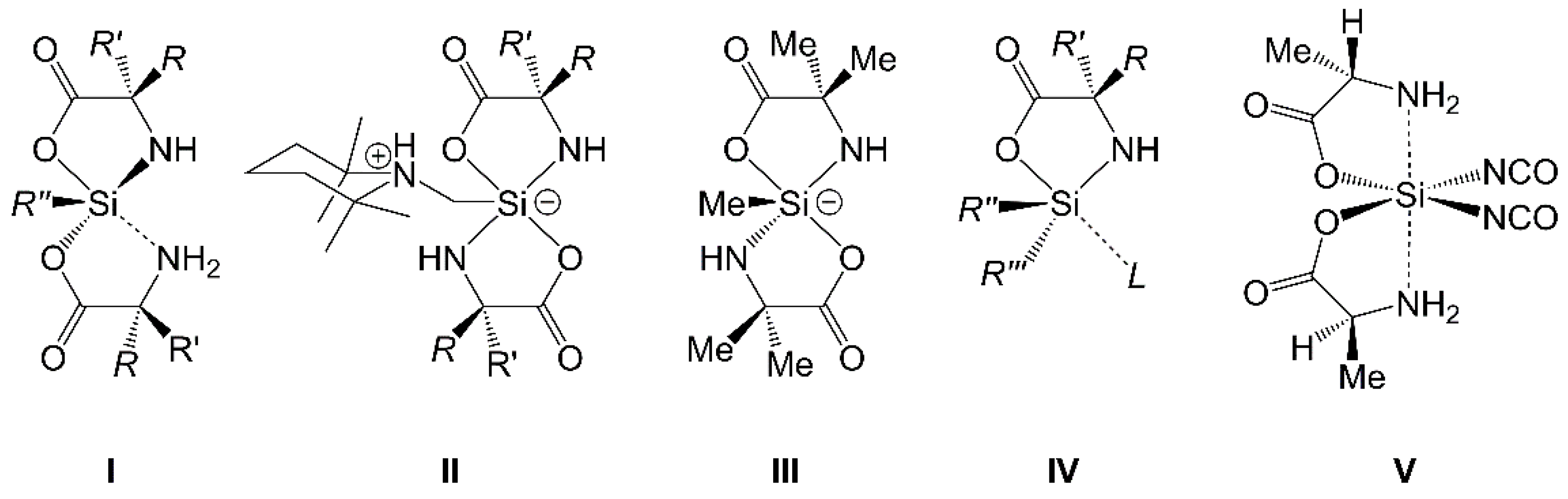

α-Amino Isobutyric Acid-Derived Silacyclopentane Complexes with Penta- and Hexacoordinate Si Atoms


Abstract
1. Introduction
2. Materials and Methods
2.1. General Considerations
2.2. Syntheses and Characterization
3. Results and Discussion
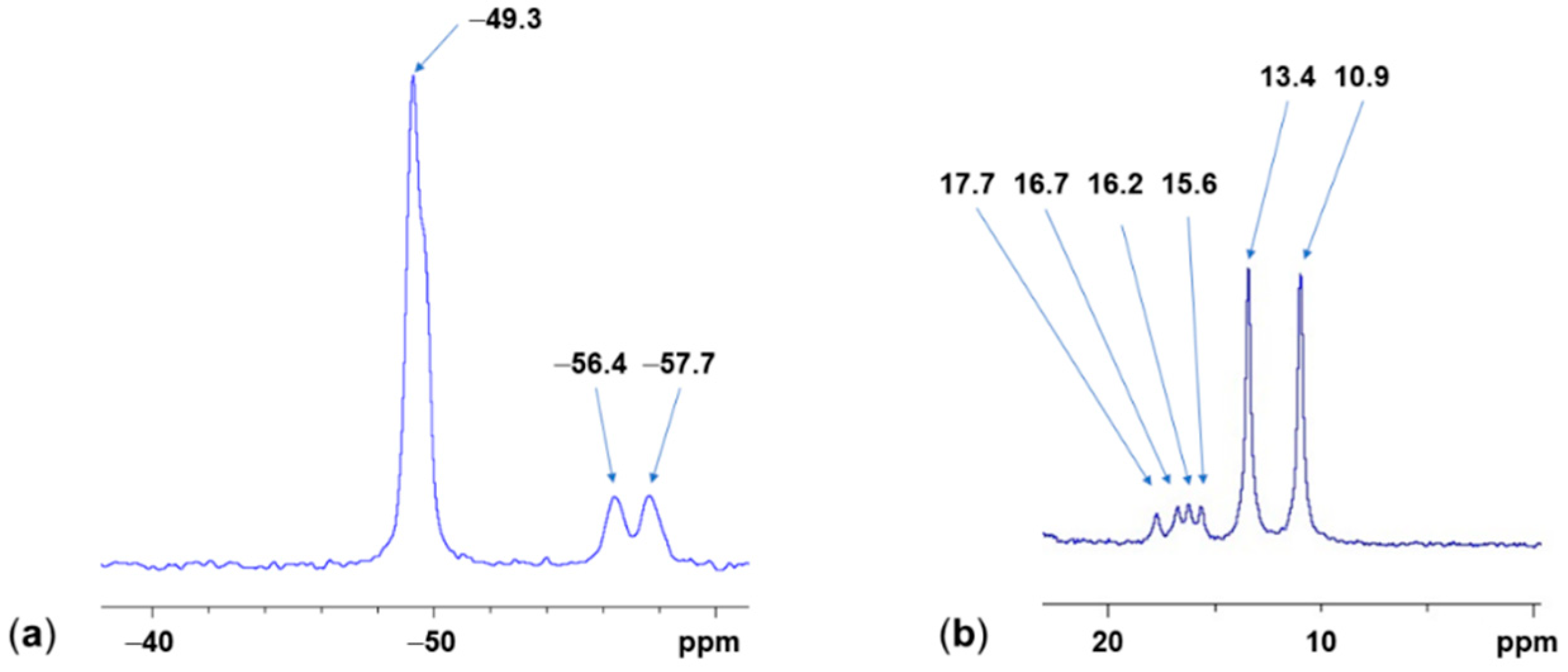
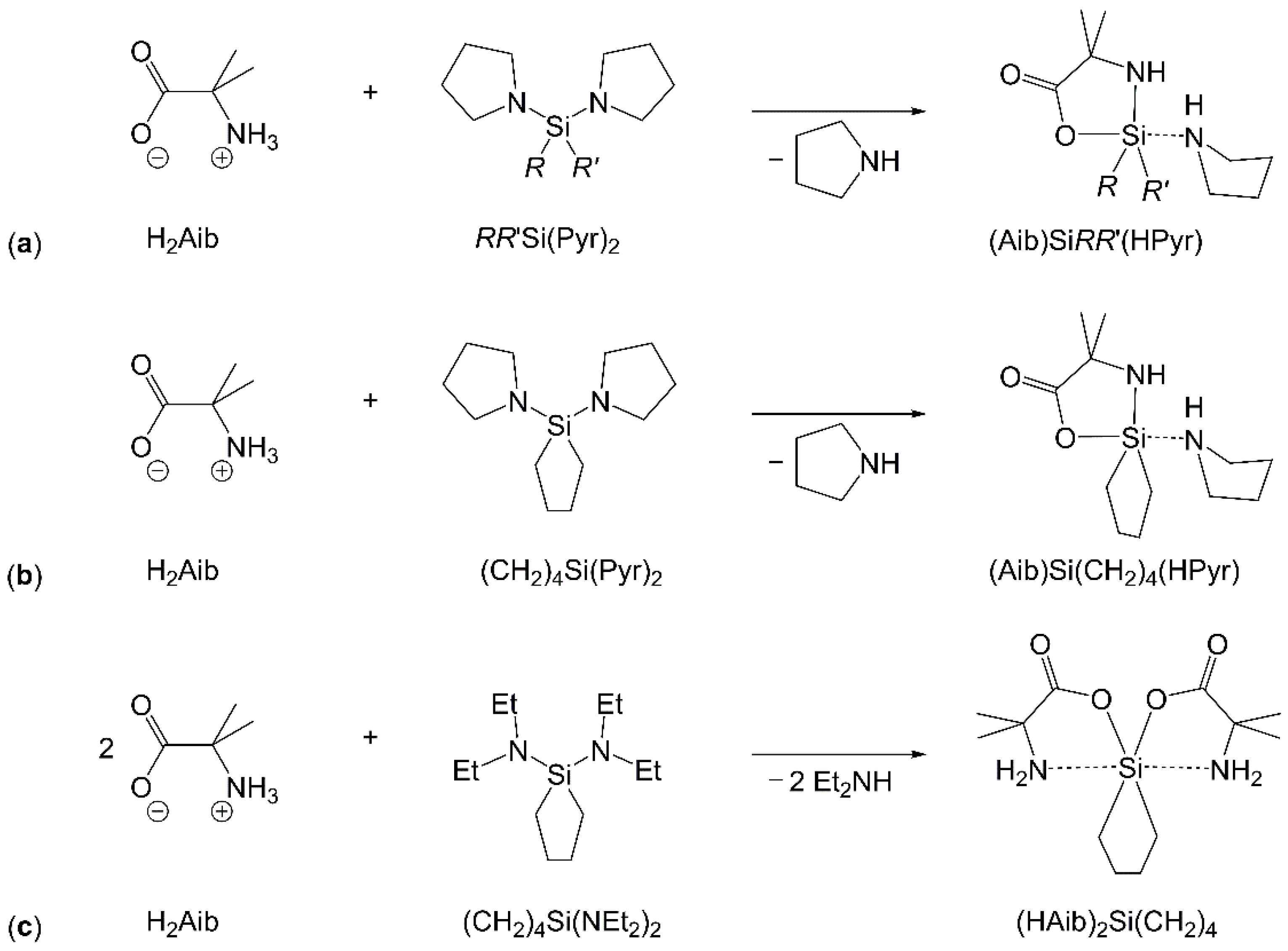
3.1. Synthesis and NMR Spectroscopic Characterization of Compounds (Aib)Si(CH2)4(HPyr) and (HAib)2Si(CH2)4
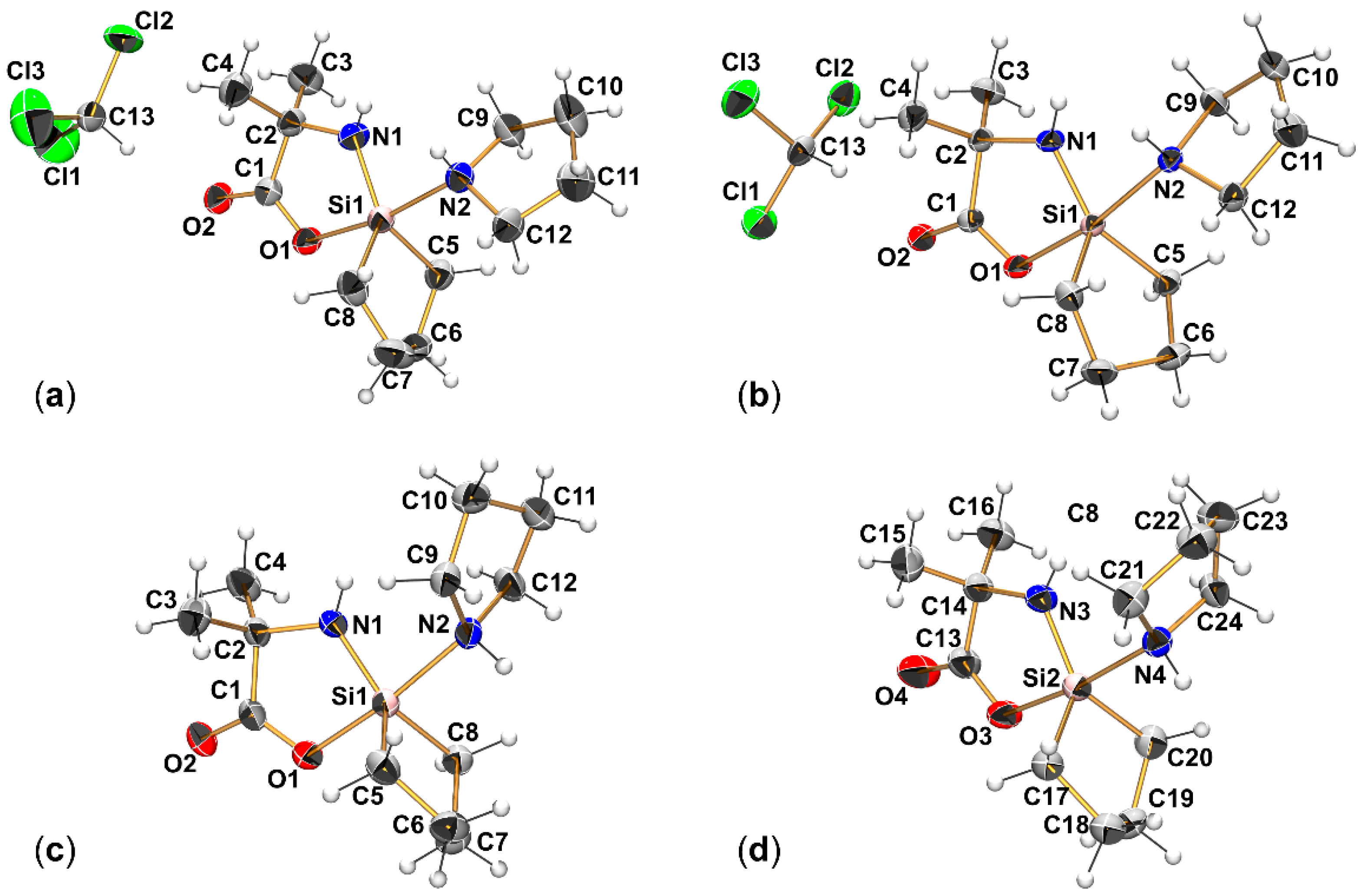
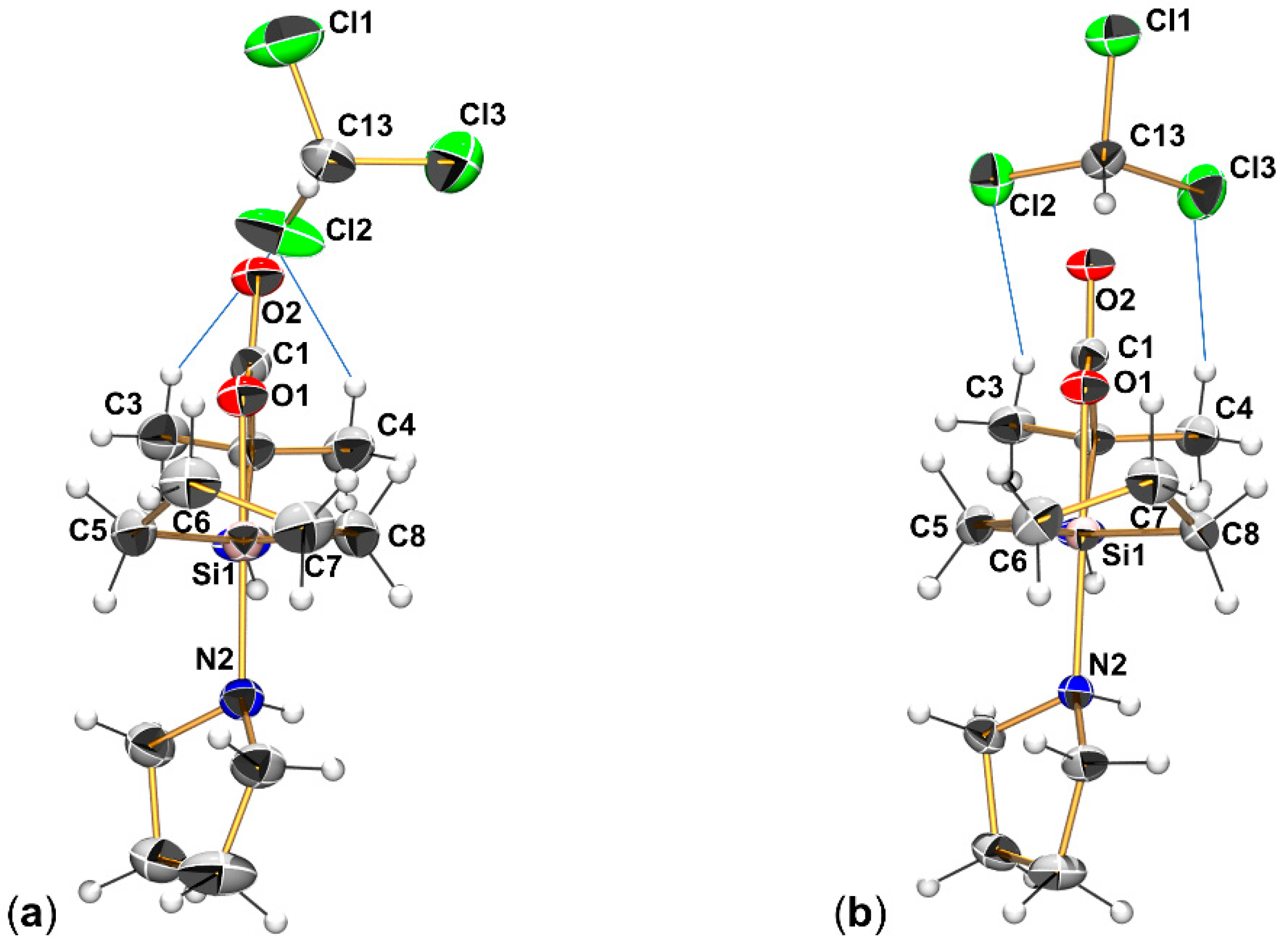
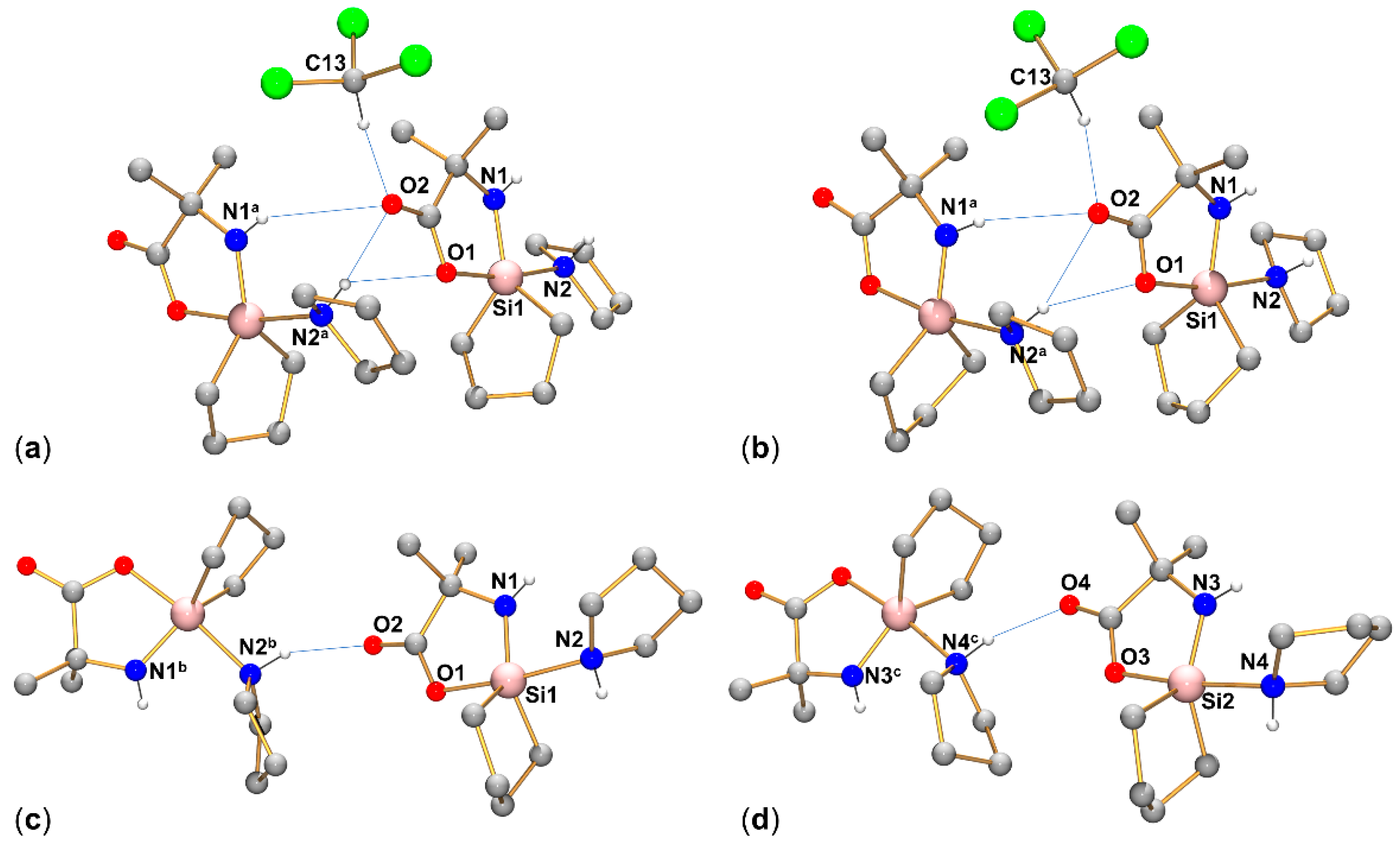
3.2. Crystallographic Analysis of the Molecular Structure of Compound (Aib)Si(CH2)4(HPyr)
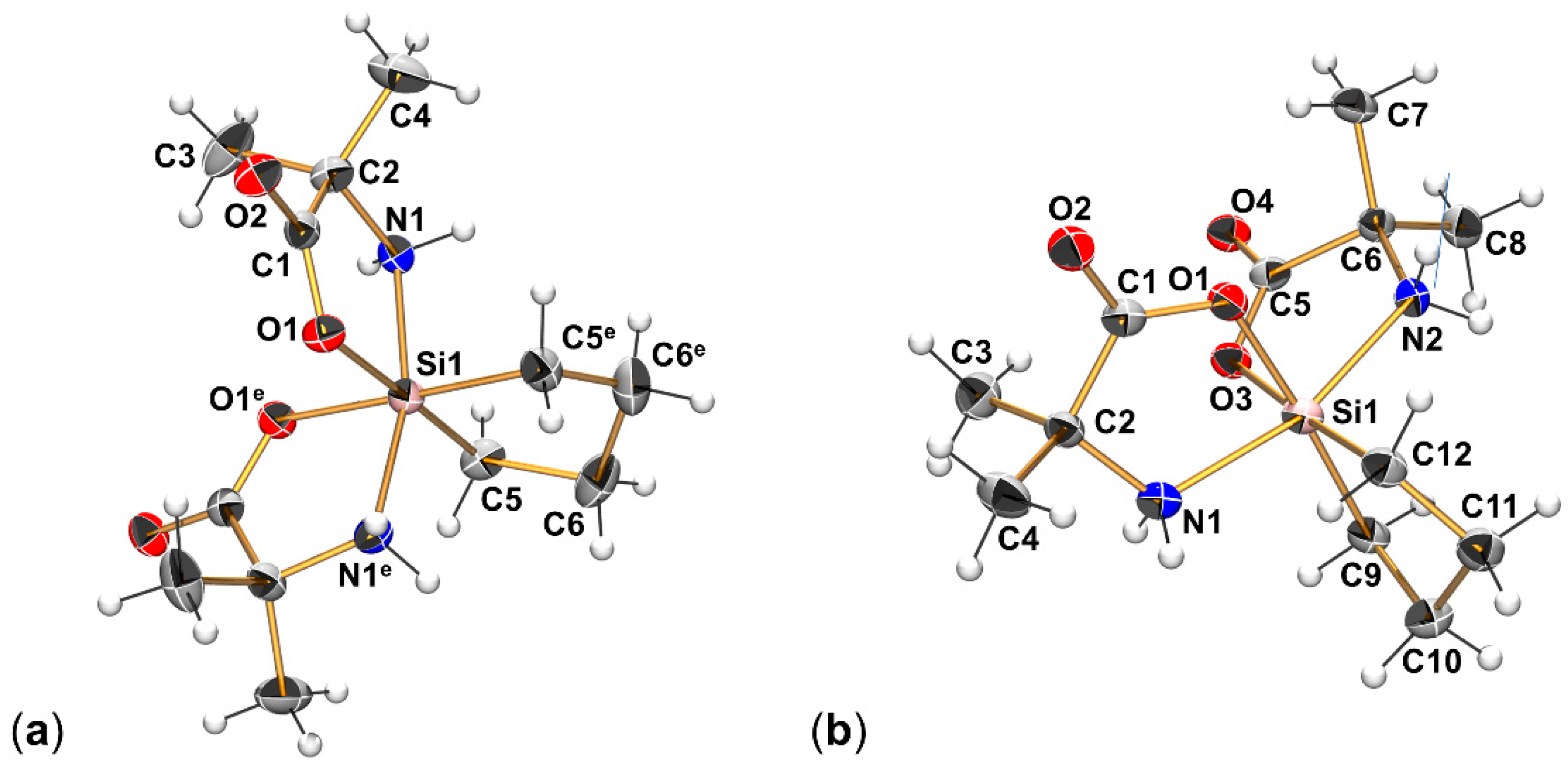
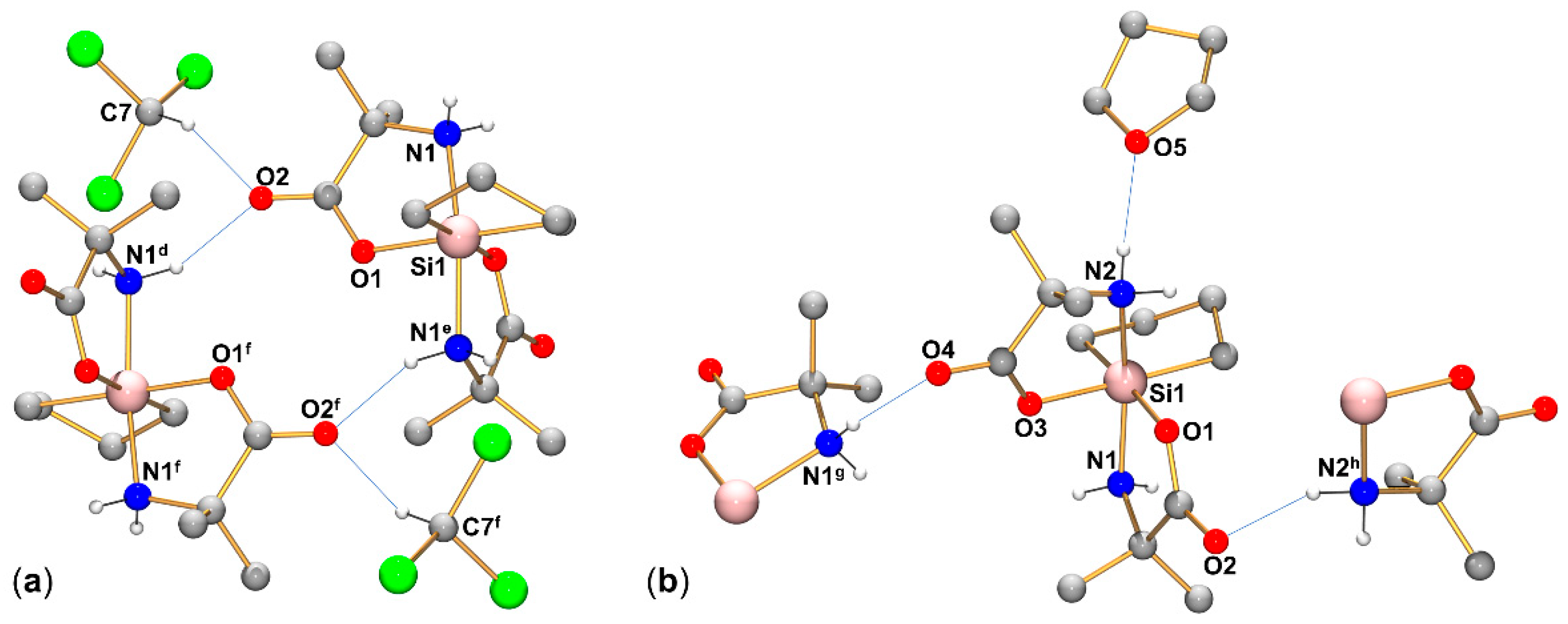
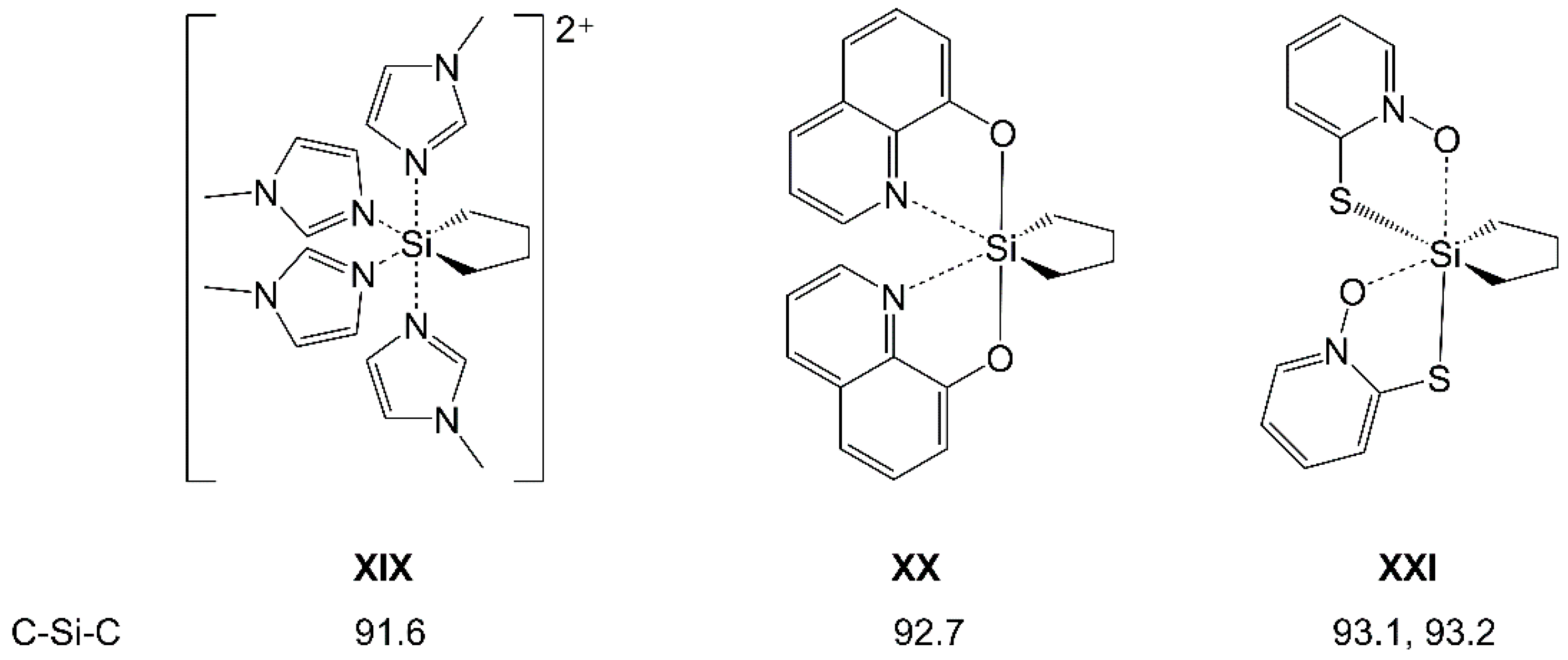
3.3. Crystallographic Analysis of the Molecular Structure of Compound (HAib)2Si(CH2)4
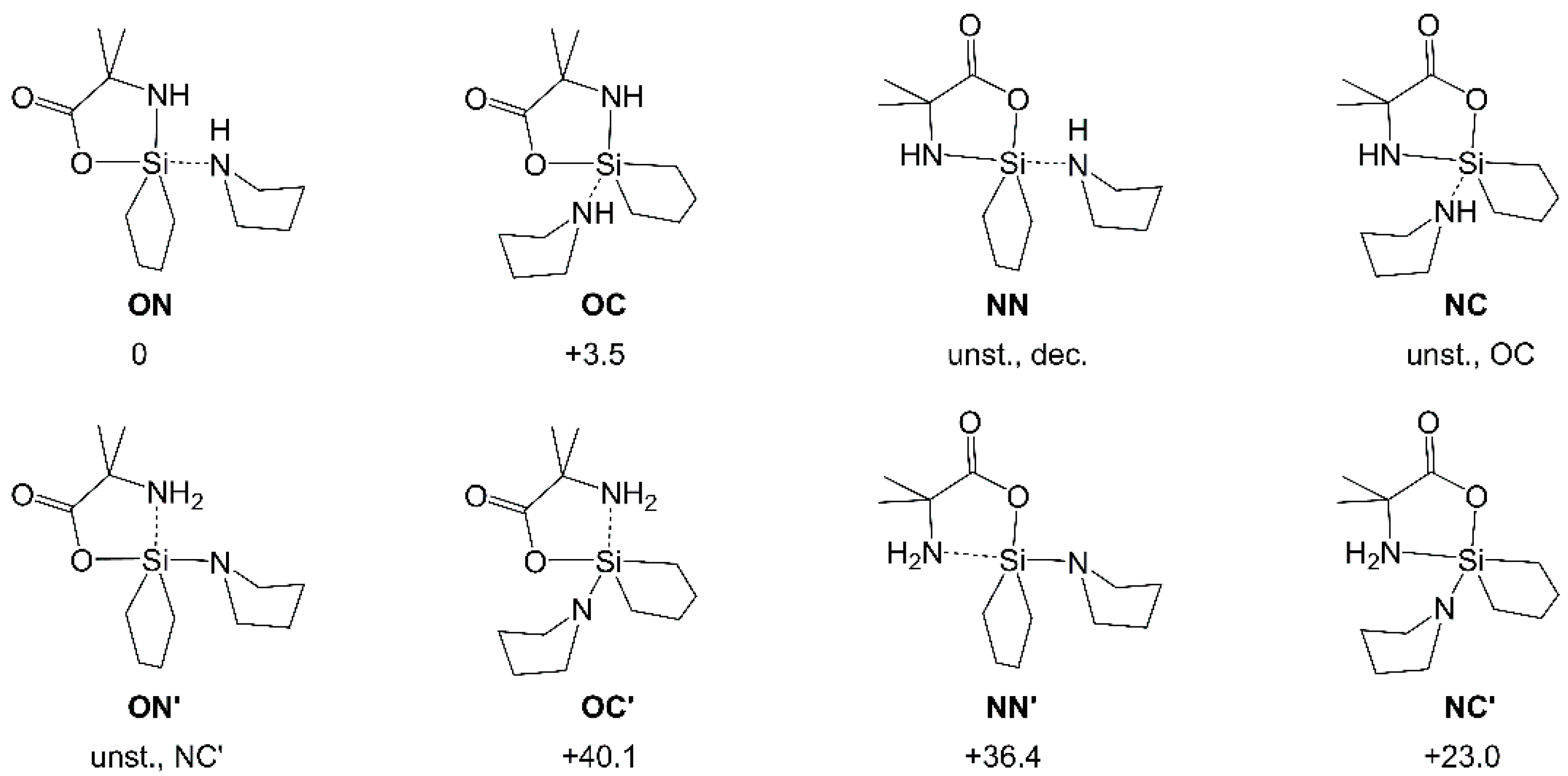
3.4. Computational Analysis of Isomers of Compound (Aib)Si(CH2)4(HPyr)
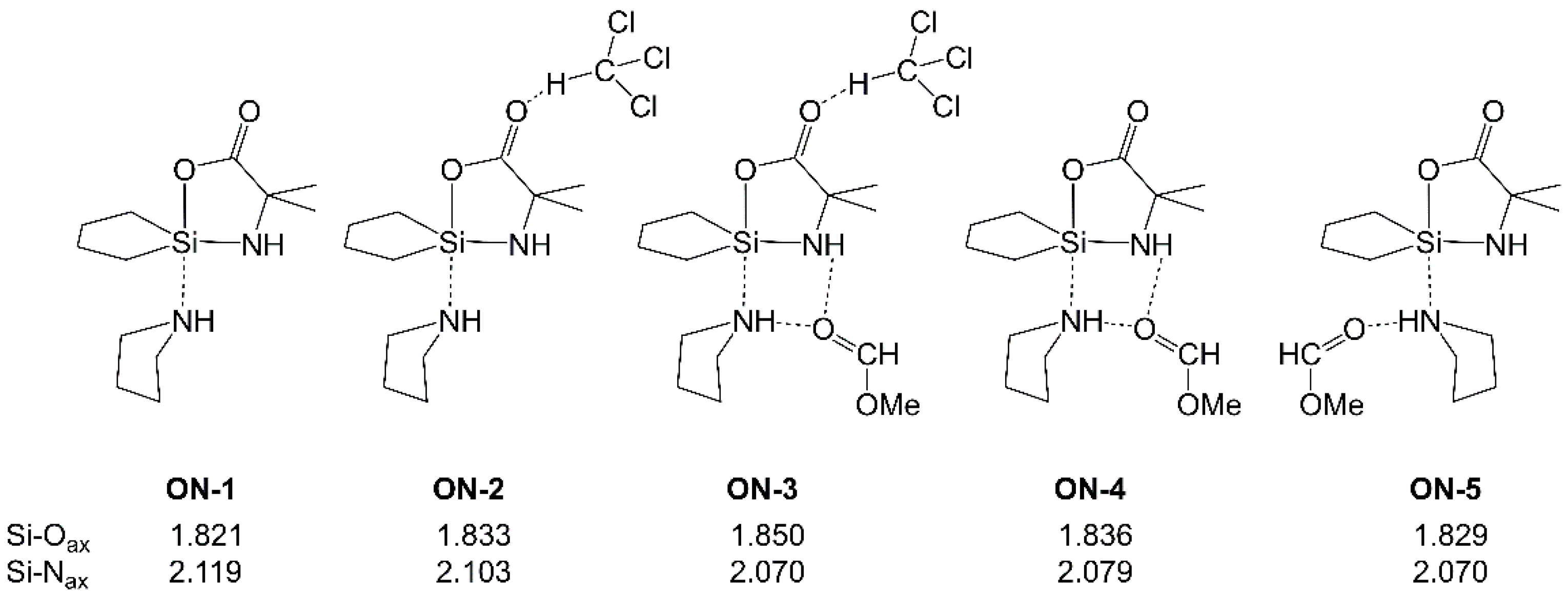
3.5. Computational Analysis of the Influence of External H-Bond Donors and Acceptors on the Axial Si–O and Si–N Bond Lengths of Compound (Aib)Si(CH2)4(HPyr)
4. Conclusions
Supplementary Materials
Author Contributions
Funding
Institutional Review Board Statement
Informed Consent Statement
Data Availability Statement
Acknowledgments
Conflicts of Interest
Appendix A

| Parameter | (Aib)Si(CH2)4(HPyr)·(CHCl3)H 1 | (Aib)Si(CH2)4(HPyr)·(CHCl3)L 1 | (Aib)Si(CH2)4(HPyr) |
|---|---|---|---|
| Formula | C13H25Cl3N2O2Si | C13H25Cl3N2O2Si | C12H24N2O2Si |
| Mr | 375.79 | 375.79 | 256.42 |
| T(K) | 210(2) 1 | 180(2) 1 | 180(2) |
| λ(Å) | 0.71073 | 0.71073 | 0.71073 |
| Crystal system | monoclinic | monoclinic | monoclinic |
| Space group | P21/c | P21/c | P21/c |
| a(Å) | 10.3066(3) | 10.8292(3) | 14.7139(5) |
| b(Å) | 15.5880(3) | 14.6414(5) | 15.3923(5) |
| c(Å) | 11.4717(3) | 11.4137(3) | 14.2576(5) |
| γ(°) | 91.954(2) | 89.534(2) 2 | 118.561(2) |
| V(Å3) | 1841.96(8) | 1809.64(9) | 2836.12(17) |
| Z | 4 | 4 | 8 |
| ρcalc(g·cm−1) | 1.36 | 1.38 | 1.20 |
| μMoKα (mm−1) | 0.6 | 0.6 | 0.2 |
| F(000) | 792 | 792 | 1120 |
| θmax(°), Rint | 27.0, 0.0326 | 27.0, 0.0356 | 26.0, 0.0638 |
| Completeness | 100% | 100% | 99.9% |
| Reflns collected | 35335 | 28465 | 38638 |
| Reflns unique | 4022 | 3959 | 5565 |
| Restraints | 76 3 | 6 4 | 34 5 |
| Parameters | 270 | 213 | 378 |
| GoF | 1.037 | 1.058 | 1.052 |
| R1, wR2 [I > 2σ(I)] | 0.0309, 0.0822 | 0.0284, 0.0715 | 0.0355, 0.0802 |
| R1, wR2 (all data) | 0.0376, 0.0856 | 0.0331, 0.0745 | 0.0568, 0.0866 |
| Largest peak/hole (e·Å−3) | 0.28, −0.19 | 0.35, −0.20 | 0.27, −0.23 |
| Parameter | (HAib)2Si(CH2)4·2(CHCl3) | (HAib)2Si(CH2)4·(THF) 2 |
|---|---|---|
| Formula | C14H26Cl6N2O4Si | C16H32N2O5Si |
| Mr | 527.16 | 360.52 |
| T(K) | 160(2) | 160(2) |
| λ(Å) | 0.71073 | 0.71073 |
| Crystal system | monoclinic | monoclinic |
| Space group | C2/c | P21/n |
| a(Å) | 26.9002(11) | 13.9769(7) |
| b(Å) | 8.2978(4) | 8.9978(5) |
| c(Å) | 11.1868(4) | 15.4565(9) |
| γ(°) | 112.740(3) | 92.777(4) |
| V(Å3) | 2302.93(17) | 1941.55(18) |
| Z | 4 | 4 |
| ρcalc (g·cm−1) | 1.52 | 1.23 |
| μMoKα (mm−1) | 0.8 | 0.1 |
| F(000) | 1088 | 784 |
| θmax(°), Rint | 26.0, 0.0383 | 23.5, 0.1330 2 |
| Completeness | 100% | 99.9% |
| Reflns collected | 14873 | 13732 2 |
| Reflns unique | 2272 | 2857 |
| Restraints | 32 1 | 0 |
| Parameters | 168 | 234 |
| GoF | 1.054 | 0.964 |
| R1, wR2 [I > 2σ(I)] | 0.0245, 0.0600 | 0.0485, 0.0978 |
| R1, wR2 (all data) | 0.0346, 0.0627 | 0.1106, 0.1169 |
| Largest peak/hole (e·Å−3) | 0.26, −0.20 | 0.19, −0.22 |
References
- Chuit, C.; Corriu, R.J.P.; Reye, C.; Young, J.C. Reactivity of Penta- and Hexacoordinate Silicon Compounds and Their Role as Reaction Intermediates. Chem. Rev. 1993, 93, 1371–1448. [Google Scholar] [CrossRef]
- Wagler, J.; Böhme, U.; Kroke, E. Higher-Coordinated Molecular Silicon Compounds. In Functional Molecular Silicon Compounds I—Regular Oxidation States; Scheschkewitz, D., Ed.; Springer: Berlin/Heidelberg, Germany, 2013; Volume 115, pp. 29–105. [Google Scholar] [CrossRef]
- Kost, D.; Kalikhman, I. Hydrazide-based hypercoordinate silicon compounds. Adv. Organomet. Chem. 2004, 50, 1–106. [Google Scholar] [CrossRef]
- Sivaramakrishna, A.; Pete, S.; Mhaskar, C.M.; Ramann, H.; Ramanaiah, D.V.; Arbaaz, M.; Niyaz, M.; Janardan, S.; Suman, P. Role of hypercoordinated silicon(IV) complexes in activation of carbon–silicon bonds: An overview on utility in synthetic chemistry. Coord. Chem. Rev. 2023, 485, 215140. [Google Scholar] [CrossRef]
- Levason, W.; Reid, G.; Zhang, W. Coordination complexes of silicon and germanium halides with neutral ligands. Coord. Chem. Rev. 2011, 255, 1319–1341. [Google Scholar] [CrossRef]
- Peloquin, D.M.; Schmedake, T.A. Recent advances in hexacoordinate silicon with pyridine-containing ligands: Chemistry and emerging applications. Coord. Chem. Rev. 2016, 323, 107–119. [Google Scholar] [CrossRef]
- Denmark, S.E.; Regens, C.S. Palladium-Catalyzed Cross-Coupling Reactions of Organosilanols and Their Salts: Practical Alternatives to Boron- and Tin-Based Methods. Acc. Chem. Res. 2008, 41, 1486–1499. [Google Scholar] [CrossRef]
- Seidel, A.; Wagler, J. Anions of α-Amino Acids as (O,N)-Donor Ligands in Si-, Ge- and Sn-Coordination Chemistry. Molecules 2025, 30, 834. [Google Scholar] [CrossRef]
- Cota, S.; Beyer, M.; Bertermann, R.; Burschka, C.; Götz, K.; Kaupp, M.; Tacke, R. Neutral Penta- and Hexacoordinate Silicon(IV) Complexes Containing Two Bidentate Ligands Derived from the α-Amino Acids (S)-Alanine, (S)-Phenylalanine, and (S)-tert-Leucine. Chem. Eur. J. 2010, 16, 6582–6589. [Google Scholar] [CrossRef]
- Tacke, R.; Bertermann, R.; Burschka, C.; Dragota, S.; Penka, M.; Richter, I. Spirocyclic Zwitterionic λ5Si-Silicates with Two Bidentate Ligands Derived from α-Amino Acids or α-Hydroxycarboxylic Acids: Synthesis, Structure, and Stereodynamics. J. Am. Chem. Soc. 2004, 126, 14493–14505. [Google Scholar] [CrossRef]
- Dragota, S.; Bertermann, R.; Burschka, C.; Penka, M.; Tacke, R. Diastereo- and Enantiomerically Pure Zwitterionic Spirocyclic λ5Si-[(Ammonio)methyl]silicates with an SiO2N2C Skeleton Containing Two Bidentate Chelate Ligands Derived from α-Amino Acids. Organometallics 2005, 24, 5560–5568. [Google Scholar] [CrossRef]
- Seidel, A.; Brendler, E.; Torvisco, A.; Fischer, R.; Wagler, J. Lewis Acid–Base Adducts of α-Amino Isobutyric Acid-Derived Silaheterocycles and Amines. Molecules 2025, 30, 3501. [Google Scholar] [CrossRef]
- Kowalke, J.; Brendler, E.; Wagler, J. Valinate and SiMe2—An interesting couple in pentacoordinate Si-complexes: Templated generation of the dipeptide val-val and formation of an organosilicon-ammonia-adduct. J. Organomet. Chem. 2021, 956, 122126. [Google Scholar] [CrossRef]
- Seidel, A.; Gericke, R.; Kutzner, B.; Wagler, J. Lewis Acid-Base Adducts of α-Amino Acid-Derived Silaheterocycles and N-Methylimidazole. Molecules 2023, 28, 7816. [Google Scholar] [CrossRef]
- Daiss, J.O.; Burschka, C.; Mills, J.S.; Montana, J.G.; Showell, G.A.; Warneck, J.B.H.; Tacke, R. Sila-Venlafaxine, a Sila-Analogue of the Serotonin/Noradrenaline Reuptake Inhibitor Venlafaxine: Synthesis, Crystal Structure Analysis, and Pharmacological Characterization. Organometallics 2006, 25, 1188–1198. [Google Scholar] [CrossRef]
- Sheldrick, G.M. SHELXT—Integrated space-group and crystal-structure determination. Acta Crystallogr. A 2015, 71, 3–8. [Google Scholar] [CrossRef]
- Sheldrick, G.M. Program for the Refinement of Crystal Structures; SHELXL-2019/3; University of Göttingen: Göttingen, Germany, 2019. [Google Scholar]
- Sheldrick, G.M. A short history of SHELX. Acta Crystallogr. A 2008, 64, 112–122. [Google Scholar] [CrossRef]
- Sheldrick, G.M. Crystal structure refinement with SHELXL. Acta Crystallogr. C 2015, 71, 3–8. [Google Scholar] [CrossRef]
- Farrugia, L.J. ORTEP-3 for windows—A version of ORTEP-III with a graphical user interface (GUI). J. Appl. Crystallogr. 1997, 30, 565. [Google Scholar] [CrossRef]
- Farrugia, L.J. WinGX and ORTEP for Windows: An update. J. Appl. Crystallogr. 2012, 45, 849–854. [Google Scholar] [CrossRef]
- POV-RAY, Version 3.7; Trademark of Persistence of Vision Raytracer Pty. Ltd.: Williamstown, VIC, Australia, 2013. Available online: http://www.povray.org/download/ (accessed on 28 June 2021).
- Neese, F. Software update: The ORCA program system—Version 5.0. WIREs Comput. Mol. Sci. 2022, 12, e1606. [Google Scholar] [CrossRef]
- Hanwell, M.D.; Curtis, D.E.; Lonie, D.C.; Vandermeersch, T.; Zurek, E.; Hutchison, G.R. Avogadro: An advanced semantic chemical editor, visualization, and analysis platform. J. Cheminf. 2012, 4, 17. [Google Scholar] [CrossRef]
- Weigend, F.; Ahlrichs, R. Balanced basis sets of split valence, triple zeta valence and quadruple zeta valence quality for H to Rn: Design and assessment of accuracy. Phys. Chem. Chem. Phys. 2005, 7, 3297–3305. [Google Scholar] [CrossRef] [PubMed]
- Weigend, F. Accurate Coulomb-fitting basis sets for H to Rn. Phys. Chem. Chem. Phys. 2006, 8, 1057–1065. [Google Scholar] [CrossRef] [PubMed]
- Caldeweyher, E.; Bannwarth, C.; Grimme, S. Extension of the D3 dispersion coefficient model. J. Chem. Phys. 2017, 147, 34112. [Google Scholar] [CrossRef]
- Klamt, A.; Schüürmann, G. COSMO: A New Approach to Dielectric Screening in Solvents with Explicit Expressions for the Screening Energy and its Gradient. J. Chem. Soc. Perkin Trans. 2 1993, 2, 799–805. [Google Scholar] [CrossRef]
- Böhme, U.; Foehn, I.C. Two modifications of a five-coordinate silicon complex. Acta Crystallogr. C 2007, 63, o613–o616. [Google Scholar] [CrossRef]
- Böhme, U.; Wiesner, S.; Günther, B. Easy access to chiral penta- and hexacoordinate silicon compounds. Inorg. Chem. Commun. 2006, 9, 806–809. [Google Scholar] [CrossRef]
- Herzog, U. Synthesis and NMR Investigation of Selenobutyl Substituted Silanes and Oligosilanes. J. Prakt. Chem. 2000, 342, 379–388. [Google Scholar] [CrossRef]
- Addison, A.W.; Rao, T.N.; Reedijk, J.; van Rijn, J.; Verschoor, G.C. Synthesis, Structure, and Spectroscopic Properties of Copper(II) Compounds containing Nitrogen-Sulphur Donor Ligands; the Crystal and Molecular Structure of Aqua [1,7-bis(N-methylbenzimidazol-2′-yl)-2,6-dithiaheptane]copper(II) Perchlorate. J. Chem. Soc. Dalton. Trans. 1984, 13, 1349–1356. [Google Scholar] [CrossRef]
- Bernstein, J.; Davis, R.E.; Shimoni, L.; Chang, N.-L. Patterns in Hydrogen Bonding: Functionality and Graph Set Analysis in Crystals. Angew. Chem. Int. Ed. 1995, 34, 1555–1573. [Google Scholar] [CrossRef]
- Wagler, J.; Gericke, R. Molecular structures of various alkyldichlorosilanes in the solid state. Dalton Trans. 2017, 46, 8875–8882. [Google Scholar] [CrossRef]
- Corcé, V.; Chamoreau, L.-M.; Derat, E.; Goddard, J.-P.; Ollivier, C.; Fensterbank, L. Silicates as Latent Alkyl Radical Precursors: Visible-Light Photocatalytic Oxidation of Hypervalent Bis-Catecholato Silicon Compounds. Angew. Chem. Int. Ed. 2015, 54, 11414–11418. [Google Scholar] [CrossRef]
- Day, R.O.; Sreelatha, C.; Deiters, J.A.; Johnson, S.E.; Holmes, J.M.; Howe, L.; Holmes, R.R. Anionic Five-Coordinated Cyclic Organofluorosilicates Varying in Ring Size from Five- to Seven-Membered. Organometallics 1991, 10, 1758–1766. [Google Scholar] [CrossRef]
- Maaranen, J.; Andell, O.S.; Vanne, T.; Mutikainen, I. Dimethyl-, diphenyl- and cyclotetramethylene silylchloride derivatives of guanidine, their synthesis and structure. Formation of pentacoordinated silicon compounds and an unexpected diionic disila-diguanidinium dichloride. J. Organomet. Chem. 2006, 691, 240–246. [Google Scholar] [CrossRef]
- Rutt, O.J.; Cowley, A.R.; Clarke, S.J. Bis(ethylamino)tetrafluorosilicon. Acta Crystallogr. E 2007, 63, o3406. [Google Scholar] [CrossRef]
- Fink, W. Silicium-Stickstoff-Heterocyclen. Angew. Chem. 1966, 78, 803–819. [Google Scholar] [CrossRef]
- Carré, F.; Cerveau, G.; Chuit, C.; Corriu, R.J.P.; Reye, C. Comparative study of the reactivity of different hexacoordinate silicon species towards nucleophilic reagents. New J. Chem. 1992, 16, 63–69. [Google Scholar]
- Gostevskii, B.A.; Albanov, A.I.; Vashchenko, A.V.; Smirnov, V.I. Synthesis of 1-Organyl-1-(trimethylsiloxy)-2-(dimethylamino)ethenes and New Hypervalent Silicon Compounds Based Thereon. Russ. J. Org. Chem. 2016, 52, 1385–1389. [Google Scholar] [CrossRef]
- Mitzel, N.W.; Vojinović, K.; Foerster, T.; Robertson, H.E.; Borisenko, K.B.; Rankin, D.W.H. (Dimethylaminomethyl)trifluorosilane, Me2NCH2SiF3—A Model for the α-Effect in Aminomethylsilanes. Chem. Eur. J. 2005, 11, 5114–5125. [Google Scholar] [CrossRef]
- Everett, M.; Jolleys, A.; Levason, W.; Light, M.E.; Pugh, D.; Reid, G. Cationic aza-macrocyclic complexes of germanium(II) and silicon(IV). Dalton Trans. 2015, 44, 20898–20905. [Google Scholar] [CrossRef]
- Kim, B.-K.; Choi, S.-B.; Kloos, S.D.; Boudjouk, P. Synthesis and Characterization of New Cationic Hexacoordinate Silanes. Inorg. Chem. 2000, 39, 728–731. [Google Scholar] [CrossRef]
- Cheng, F.; Hector, A.L.; Levason, W.; Reid, G.; Webster, M.; Zhang, W. Preparation and structure of the unique silicon(IV) cation [SiF3(Me3tacn)]+. Chem. Commun. 2009, 45, 1334–1336. [Google Scholar] [CrossRef]
- Tillmann, J.; Meyer-Wegner, F.; Nadj, A.; Becker-Baldus, J.; Sinke, T.; Bolte, M.; Holthausen, M.C.; Wagner, M.; Lerner, H.-W. Unexpected Disproportionation of Tetramethylethylenediamine-Supported Perchlorodisilane Cl3SiSiCl3. Inorg. Chem. 2012, 51, 8599–8606. [Google Scholar] [CrossRef]
- Belzner, J.; Schär, D.; Herbst-Irmer, R.; Kneisel, B.O.; Noltemeyer, M. Synthesis and Structure of Silicon Compounds Intramolecularly Coordinated by Hydrazino Groups. Tetrahedron 1998, 54, 8481–8500. [Google Scholar] [CrossRef]
- Kalikhman, I.; Kertsnus-Banchik, E.; Gostevskii, B.; Kocher, N.; Stalke, D.; Kost, D. Reversible Neutral Dissociation of the N-Si Dative Bond in Hexacoordinate Hydrido Complexes of Silicon. Organometallics 2009, 28, 512–516. [Google Scholar] [CrossRef]
- Kost, D.; Kingston, V.; Gostevskii, B.; Ellern, A.; Stalke, D.; Walfort, B.; Kalikhman, I. Donor-Stabilized Silyl Cations. 3. Ionic Dissociation of Hexacoordinate Silicon Complexes to Pentacoordinate Siliconium Salts Driven by Ion Solvation. Organometallics 2002, 21, 2293–2305. [Google Scholar] [CrossRef]
- Kalikhman, I.; Krivonos, S.; Stalke, D.; Kottke, T.; Kost, D. Unusual Spin-Spin Interactions across the Coordination Bond in Hexacoordinate Silicon Complexes: Crystal-Structure Coupling Relationship. Orgamometallics 1997, 16, 3255–3257. [Google Scholar] [CrossRef]
- Kost, D.; Kalikhman, I.; Krivonos, S.; Stalke, D.; Kottke, T. Crystal Structures and Stereodynamics of Neutral Hexacoordinate Silicon Chelates: Use of an Optically Active Ligand for Assignment of an Intramolecular Ligand Exchange Process. J. Am. Chem. Soc. 1998, 120, 4209–4214. [Google Scholar] [CrossRef]
- Gostevskii, B.; Adear, K.; Sivaramakrishna, A.; Silbert, G.; Stalke, D.; Kocher, N.; Kalikhman, I.; Kost, D. Neutral and ionic dissociation patterns in hexacoordinate silicon chelates: A model nucleophilic substitution at pentacoordinate silicon. Chem. Commun. 2004, 40, 1644–1645. [Google Scholar] [CrossRef] [PubMed]
- Yakubovich, S.; Gostevskii, B.; Kalikhman, I.; Botoshansky, M.; Gusel’nikov, L.E.; Pestunovich, V.A.; Kost, D. Hexacoordinate Silacyclobutane Dichelate Complexes: Structure, Properties, and Ligand Crossover. Organometallics 2011, 30, 405–413. [Google Scholar] [CrossRef]
- Hensen, K.; Gebhardt, F.; Bolte, M. Synthesis and Crystal Structure Determination of Tetrakis-(N-Methylimidazolium)-silacyclopentanedichloride·2 NMI. Z. Anorg. Allg. Chem. 1997, 623, 633–636. [Google Scholar] [CrossRef]
- Brendler, E.; Wächtler, E.; Wagler, J. Hypercoordinate Silacycloalkanes: Step-by-Step Tuning of N→Si Interactions. Organometallics 2009, 28, 5459–5465. [Google Scholar] [CrossRef]
- Tiede, E.R.; Heckman, M.T.; Brennessel, W.W.; Kraft, B.M. Chelation Equilibria and π-Electron Delocalization in Neutral Hypercoordinate Organosilicon Complexes of Pyrithione. Organometallics 2022, 41, 3522–3537. [Google Scholar] [CrossRef]
- Spek, A.L. PLATON—A Multipurpose Crystallographic Tool. Acta Crystallogr. D 2009, 65, 148–155. [Google Scholar] [CrossRef]


| Bond | (Aib)Si(CH2)4(HPyr) ·(CHCl3)H | (Aib)Si(CH2)4(HPyr) ·(CHCl3)L | (Aib)Si(CH2)4(HPyr) |
|---|---|---|---|
| Si1–O1 | 1.8932(9) | 1.8968(9) | 1.8573(12), 1.8603(12) |
| Si1–N1 | 1.7151(12) | 1.7183(11) | 1.7143(15), 1.7153(15) |
| Si1–N2 | 2.0507(11) | 2.0560(11) | 2.0184(14), 2.0309(14) |
| Si1–C5 | 1.8811(14) | 1.8862(13) | 1.8857(18), 1.8874(18) |
| Si1–C8 | 1.8789(14) | 1.8788(14) | 1.8851(17), 1.8842(19) |
| O1–C1 | 1.2866(15) | 1.2893(15) | 1.297(2), 1.291(2) |
| O2–C1 | 1.2332(15) | 1.2308(16) | 1.224(2), 1.226(2) |
| O1–Si1–N2 | 170.05(4) | 169.73(4) | 173.07(6), 173.01(6) |
| N1–Si1–C5 | 131.69(7) | 133.00(6) | 129.33(9), 129.45(14) |
| N1–Si1–C8 | 130.31(7) | 129.11(6) | 133.74(8), 134.18(13) |
| C5–Si1–C8 | 97.74(7) | 97.67(6) | 96.85(9), 96.34(16) |
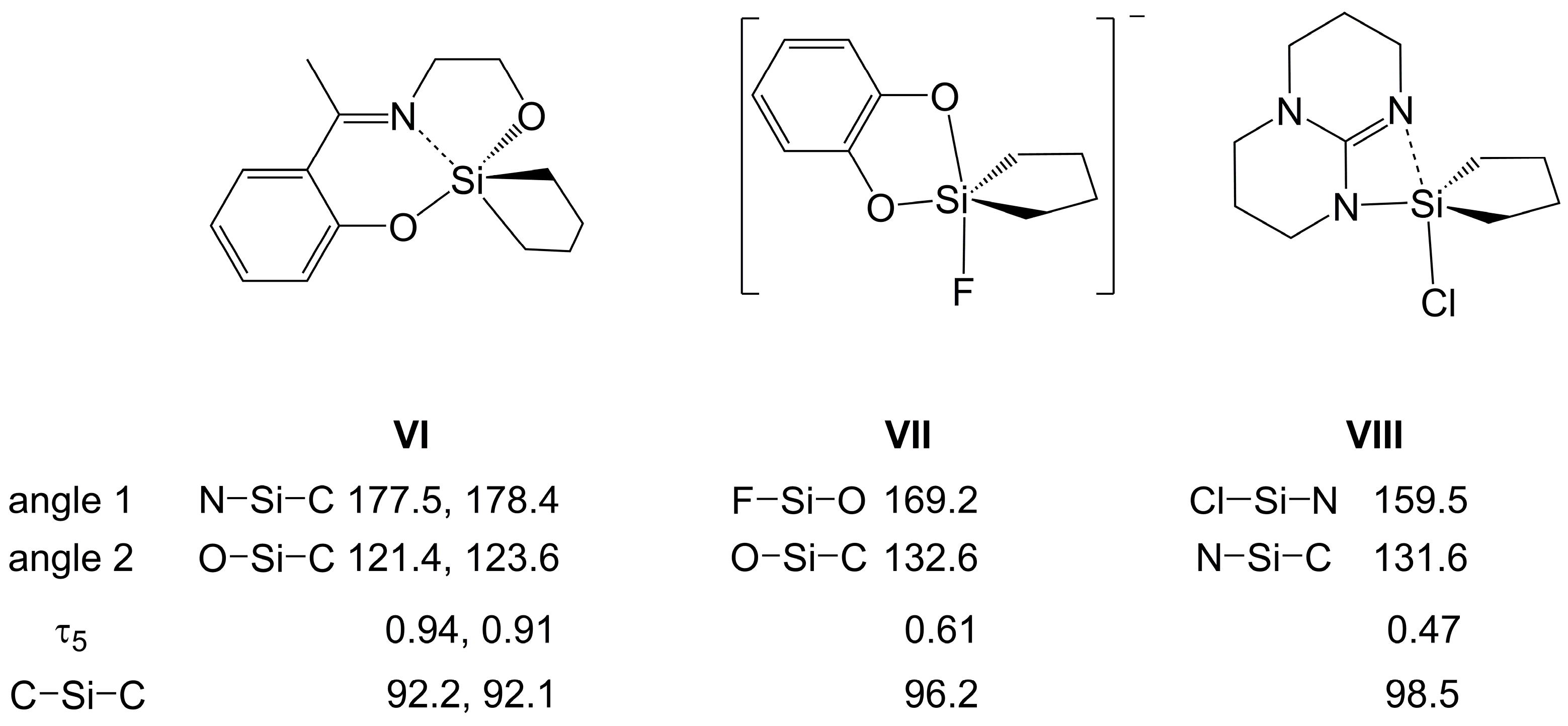
| τ5 | 0.64 | 0.61 | 0.66, 0.65 |
| Compound | C···Ocarbonyl | d(D···O) D–H···O | N···Ocarbonyl | d(D···O) D–H···O | N···Ocarboxylato | d(D···O) D–H···O | Symmetry Operations |
|---|---|---|---|---|---|---|---|
| (Aib)Si(CH2)4(HPyr) ·(CHCl3)H | C13···O2 1 | 3.142(14) 167 | N1a···O2 N2a···O2 | 3.327(2) 137 2.920(2) 174 | N2a···O1 | 3.598(2) 137 | a x, 1.5−y, 0.5+z |
| (Aib)Si(CH2)4(HPyr) ·(CHCl3)L | C13···O2 2 | 3.140(3) 164 | N1a···O2 N2a···O2 | 3.188(2) 154 3.006(2) 150 | N2a···O1 | 3.379(2) 155 | a x, 1.5−y, 0.5+z |
| (Aib)Si(CH2)4(HPyr) molecule 1 | N2b···O2 | 2.810(2) 154 | b 2−x, 0.5+y, 1.5–z | ||||
| (Aib)Si(CH2)4(HPyr) molecule 2 | N4c···O4 | 2.859(2) 161 | c 1−x, 0.5+y, 1.5–z |
| Bond | (HAib)2Si(CH2)4·2(CHCl3) | (HAib)2Si(CH2)4·(THF) |
|---|---|---|
| Si1–O1, Si1–O3 | 1.8425(10) | 1.833(2), 1.859(2) |
| Si1–N1, Si1–N2 | 1.9547(12) | 1.966(3), 1.933(3) |
| Si1–C5 | 1.9202(14) | |
| Si1–C9, Si1–C14 | 1.921(3), 1.920(3) | |
| O1–C1, O3–C5 | 1.2821(16) | 1.291(4), 1.295(4) |
| O2–C1, O4–C5 | 1.2286(16) | 1.224(4), 1.228(4) |
| N–Si–N | 164.07(8) | 163.49(13) |
| O–Si–C(trans) | 177.49(6) | 176.13(14), 176.81(14) |
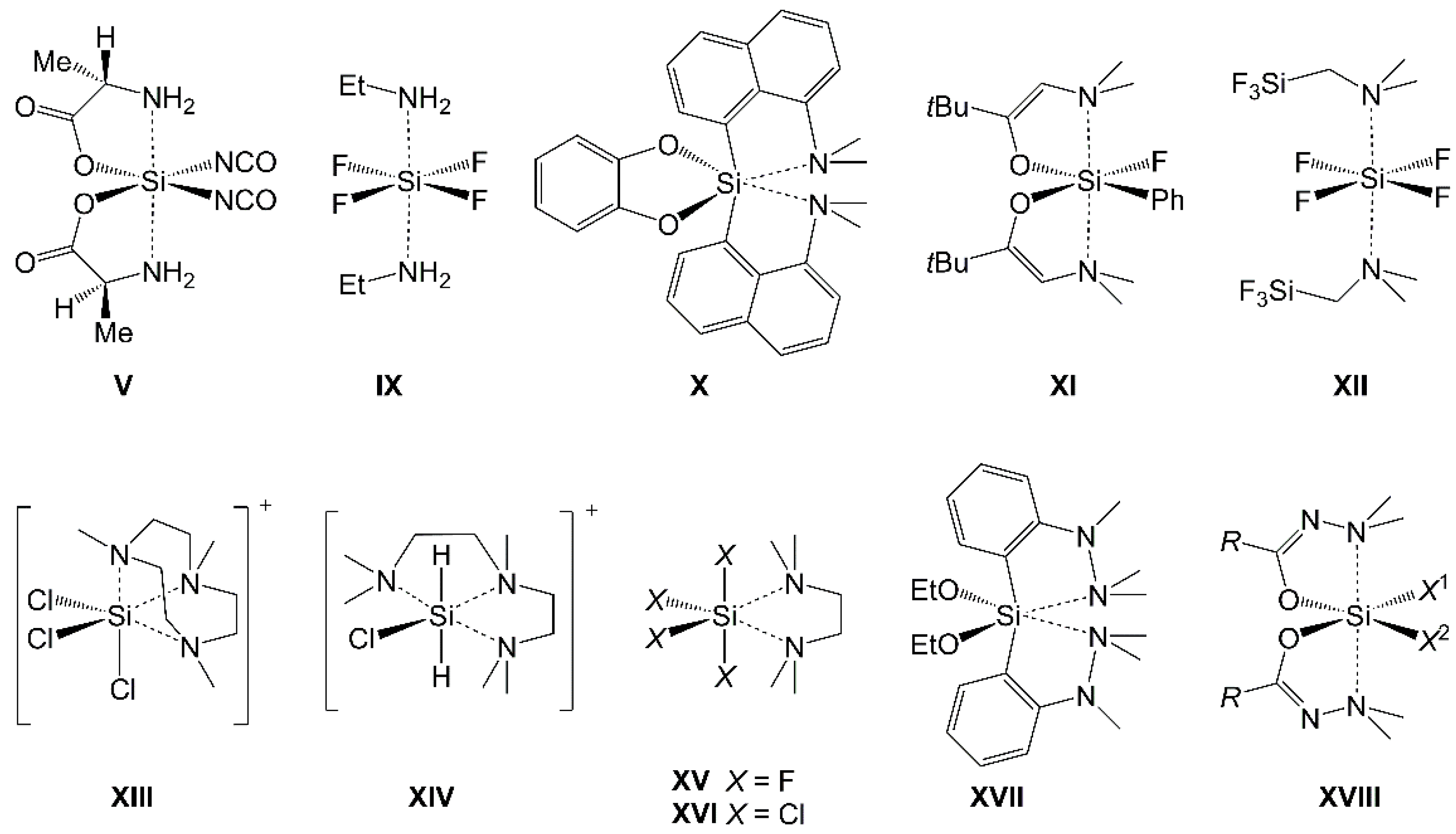
| Entry | Ref. | R | X1 | X2 | d(Si–N) |
|---|---|---|---|---|---|
| XVIII-1 | [48] | CF3 | Ph | H | 2.023(2), 2.026(2) 1 |
| XVIII-2 | [48] | Ph | Ph | H | 2.014(2), 2.032(2) 1 |
| XVIII-3 | [49] | CF3 | Ph | OTf | 2.029(4), 2.037(4) |
| XVIII-4 | [50] | CF3 | Ph | F | 2.021(3), 2.029(3) |
| XVIII-5 | [51] | CF3 | Ph | Cl | 2.042(4), 2.046(4) 2 |
| XVIII-6 | [50] | CF3 | F | F | 1.962(2) 3 |
| XVIII-7 | [51] | CF3 | Cl | Cl | 2.011(2), 2.013(2) 2 |
| XVIII-8 | [52] | CF3 | Cl | Cy | 2.097(2), 2.102(2) 1 |
| XVIII-9 | [53] | CF3 | (CH2)3 | 2.094(2), 2.100(2) 1 | |
| XVIII-10 | [53] | Ph | (CH2)3 | 2.0852(10) 3 | |
| XVIII-11 | [53] | tBu | (CH2)3 | 2.098(2) 1,3 | |
| XVIII-12 | [53] | NMe2 | (CH2)3 | 2.085(2), 2.089(2) 1 |
| Compound | C···Ocarbonyl | d(D···O) D–H···O | N···Ocarbonyl | d(D···O) D–H···O | N···Oother | d(D···O) D–H···O | Symmetry Operations |
|---|---|---|---|---|---|---|---|
| (HAib)2Si(CH2)4·2(CHCl3) | C7···O2 1 | 3.092(6) 155 | N1d···O2 | 2.942(2) 157 | - | - | d x, 1−y, 0.5+z |
| (HAib)2Si(CH2)4·(THF) | - | - | N1g···O4 N2h···O2 | 2.915(4) 165 2.970(4) 158 | N2···O5 | 2.882(4) 169 | g 1.5−x, 0.5+y, 0.5−z h 1−x, 1−y, 1−z |
Disclaimer/Publisher’s Note: The statements, opinions and data contained in all publications are solely those of the individual author(s) and contributor(s) and not of MDPI and/or the editor(s). MDPI and/or the editor(s) disclaim responsibility for any injury to people or property resulting from any ideas, methods, instructions or products referred to in the content. |
© 2026 by the authors. Licensee MDPI, Basel, Switzerland. This article is an open access article distributed under the terms and conditions of the Creative Commons Attribution (CC BY) license.
Share and Cite
Seidel, A.; Knerr, S.; Wagler, J. α-Amino Isobutyric Acid-Derived Silacyclopentane Complexes with Penta- and Hexacoordinate Si Atoms. Crystals 2026, 16, 389. https://doi.org/10.3390/cryst16060389
Seidel A, Knerr S, Wagler J. α-Amino Isobutyric Acid-Derived Silacyclopentane Complexes with Penta- and Hexacoordinate Si Atoms. Crystals. 2026; 16(6):389. https://doi.org/10.3390/cryst16060389
Chicago/Turabian StyleSeidel, Anne, Steven Knerr, and Jörg Wagler. 2026. "α-Amino Isobutyric Acid-Derived Silacyclopentane Complexes with Penta- and Hexacoordinate Si Atoms" Crystals 16, no. 6: 389. https://doi.org/10.3390/cryst16060389
APA StyleSeidel, A., Knerr, S., & Wagler, J. (2026). α-Amino Isobutyric Acid-Derived Silacyclopentane Complexes with Penta- and Hexacoordinate Si Atoms. Crystals, 16(6), 389. https://doi.org/10.3390/cryst16060389