


Abstract
This study investigates nanoscale material removal behavior and its correlation with subsurface damage of (100)-oriented β-Ga2O3 subjected to single-point diamond scratching across a range of normal loads. Using multi-scale characterizations, we elucidate the load-dependent transition from elastic deformation to plasticity-dominated removal and, ultimately, to brittle fracture. Under low-load conditions, β-Ga2O3 exhibits a fully plasticity-dominated removal mechanism, characterized by smooth groove formation with surface pile-up and a crack-free subsurface containing only dislocations and stacking faults, suggesting that ductile-regime processing is achievable under appropriate mechanical conditions. As the normal load increases, the material enters a ductile–brittle transition regime, where plastic flow coexists with the initiation of micro shear cracks, accompanied by unstable fluctuations in the friction coefficient. Under high-load conditions, extensive brittle fracture becomes dominant, characterized by severe subsurface mixed cracking and large-scale material spalling. This research contributes to a deeper understanding of the machinability of β-Ga2O3 materials with high hardness and brittleness in ultraprecision surface processing.
1. Introduction
As a promising fourth-generation ultra-wide bandgap semiconductor, β-Ga2O3 has significant research interest due to its exceptional properties, such as its ultra-wide bandgap, high theoretical breakdown field, and excellent Baliga’s figure of merit, making it highly suitable for ultra-high-voltage power electronics and high-sensitivity solar-blind photodetectors [1,2,3,4,5,6]. The aforementioned applications demand atomically smooth surfaces and near-zero subsurface damage of β-Ga2O3 wafers, which necessitates ultraprecision surface processing techniques essential for semiconductor surface fabrication [7,8]. Chemical mechanical polishing (CMP) is an essential process for achieving such high-quality wafers, and the final polishing results largely depend on the processing quality of preceding machining steps such as ultraprecision mechanical grinding and polishing [9,10,11]. However, due to its high hardness, significant brittleness, and low fracture toughness, β-Ga2O3 is recognized as a typical difficult-to-machine material [12,13]. It is susceptible to surface damage and prone to microcracking or even fracture during mechanical grinding and polishing, which severely compromises the yield of subsequent CMP processes.
Recently, ductile (plastic) regime processing for hard and brittle single-crystal semiconductors has emerged as a key research focus in the field of ultraprecision surface machining [14]. The fundamental principle of achieving ductile-mode removal in such materials lies in precisely controlling the cutting depth, maintaining low-speed machining, and applying accurate load regulation to confine material deformation within the yield strength. This enables nanoscale plastic flow through dislocation motion while preventing crack initiation [15]. Research on the material removal and damage behavior under ductile-regime processing conditions has academic value and practical importance for deepening the understanding of the machinability of β-Ga2O3 and advancing its ultraprecision machining technology. Although previous studies have reported the machining behavior, anisotropic deformation, and assisted-processing characteristics of β-Ga2O3, the load-dependent subsurface damage evolution and the underlying material removal mechanisms across the plastic-dominated regime, the transition regime, and the brittle-fracture regime during mechanical scratching remain insufficiently understood. In particular, the deformation-defect characteristics in the plastic-dominated regime have not been clearly revealed experimentally [16,17]. Addressing this issue requires a fundamental understanding of the mechanical response of β-Ga2O3 under different mechanical loads, as well as the transition from plastic-dominated removal to brittle fracture. Therefore, clarifying the nanoscale removal behavior and subsurface damage evolution in different removal regimes is essential for establishing a theoretical basis for high-efficiency and low-damage polishing and grinding of β-Ga2O3.
The mechanisms of ductile-regime material removal in hard/brittle semiconductors are fundamentally distinct from the dislocation-mediated plasticity that characterizes metallic materials [18]. Whereas dislocation glide and pile-up dominate in metals, the ductile response of hard/brittle semiconductors during ultraprecision machining involves more complex, coupled phenomena, including high-pressure phase transformations, amorphization, and the activation of slip systems under extreme confinement, rather than conventional dislocation motion alone [19]. The complexity inherent in actual mechanical grinding and polishing, stemming from factors such as irregular abrasive geometry, random distribution, dynamic wear, and thermal effects, poses a significant challenge for experimental techniques seeking to reveal the underlying nanoscale material deformation and removal mechanisms. To address this limitation, nanoscratch methods employing a single abrasive or asperity tip have emerged as a powerful auxiliary approach. Consequently, numerous studies have utilized micro/nanoscratch experiments to investigate the deformation, removal, and damage behavior of hard/brittle semiconductors [20,21,22].
Through reciprocal sliding and nanoindentation tests on β-Ga2O3 (001), Zeng et al. investigated its mechanical wear anisotropy and revealed that the [100] direction exhibits evidently higher wear resistance than the [010] direction, with failure occurring preferentially along the latter [23]. Their studies also demonstrate that introducing seeded dislocations via surface scratching along the [100] direction significantly enhances the damage tolerance of (001)-oriented β-Ga2O3 [24]. Li et al. investigated the material removal and damage mechanisms at the atomic level during laser-assisted polishing of β-Ga2O3 through a machine learning molecular dynamics (MD) simulation and experiment, suggesting that increasing laser power can significantly reduce the polishing force and coefficient of friction [25]. Through nanoscratching/grinding, Yang et al. demonstrated that the strong cleavage anisotropy of β-Ga2O3 governs its material removal behavior; they found that machining perpendicular to cleavage planes significantly mitigates subsurface damage, an effect they attribute to cleavage cracking or slip planes coupled with crack deflection under the induced stress field [26]. The above studies have substantially enriched the understanding of material removal mechanisms in Ga2O3 by elucidating its anisotropy-governed deformation and damage behaviors and thereby offering valuable insights and guidance for its ultraprecision machining. To place the nanoscratch behavior of β-Ga2O3 in a broader context, comparisons with other representative hard/brittle semiconductors are also instructive. In Si, ductile-regime scratching is closely associated with stress-induced amorphization, which helps accommodate deformation and suppress crack initiation [18]. In GaN, scratching deformation is mainly governed by slip, dislocation activity, and lattice distortion, and the elastic–plastic transition occurs at a relatively high stress level [27]. In 4H-SiC, the ductile–brittle transition spans a relatively broad load range and is often accompanied by pronounced subsurface cracking [28]. These observations suggest that β-Ga2O3 may exhibit deformation and damage characteristics distinct from those of classical semiconductor materials. Nevertheless, deep elucidation is still lacking regarding the plastic–brittle transition in β-Ga2O3 and the associated nanoscale ductile-regime removal mechanisms, the resulting subsurface structural characteristics, and the mechanical conditions that govern the transition. Compared with previous studies, the present work not only captures the continuous evolution from plastic-dominated deformation to brittle fracture under ramping-load scratching but also provides direct cross-sectional microstructural evidence for the associated subsurface defect evolution.
In this study, the nanoscale material removal and subsurface damage of β-Ga2O3 (100) subjected to single-point diamond scratching were systematically investigated. Using high-resolution scanning electron microscopy (SEM), transmission electron microscopy (TEM), and atomic force microscopy (AFM) characterizations, the scratched surface morphology, debris, crack characteristics, and removal depth/volume at different deformation stages were comprehensively analyzed. Based on these analyses, the transition process from elastic deformation to plastic removal and ultimately to brittle fracture with increasing normal load was elucidated. This study contributes to the theoretical foundation for developing high-efficiency and low-damage ultraprecision surface machining technologies for β-Ga2O3, with an emphasis on achieving material removal in the plastic regime.
2. Materials and Methods
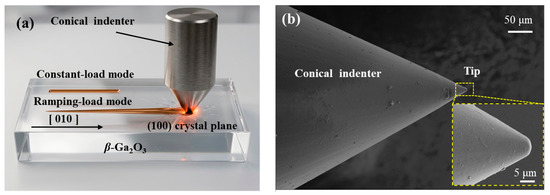
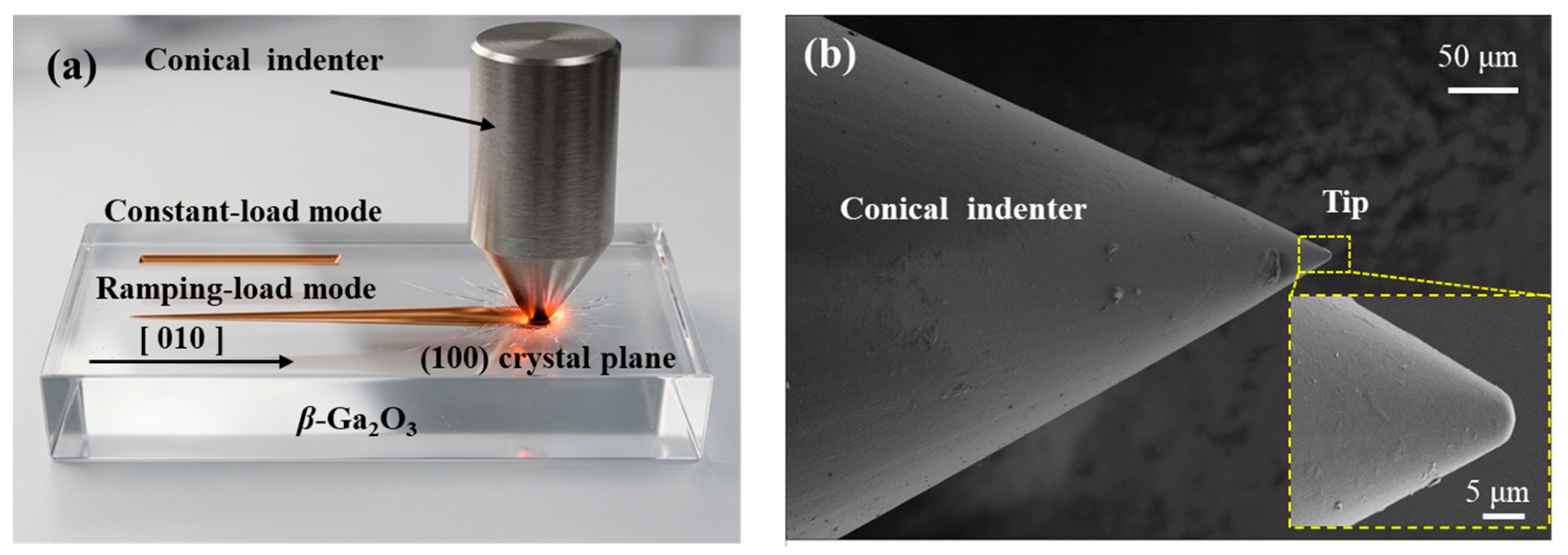
The as-received undoped (100)-oriented β-Ga2O3 samples with a size of 10 mm × 10 mm × 0.5 mm were purchased from Hefei Crystal Technical Material Co., Ltd. (Hefei, China). Before the scratch experiments, these Ga2O3 samples were ultrasonically cleaned in acetone, alcohol, and deionized water successively to remove the surface impurities. The nanoscratch experiments were carried out by using a scratch tester (Micro/nano-Scratcher-1000, Hu Huang Lab, Jilin University, Changchun, China) [29] with a conical diamond indenter (Synton-MDP Inc., Bern, Switzerland). The curvature radius of this indenter (Figure 1b) was approximately 5 μm. Nanoscratch tests were performed under two common modes: constant load and ramping load. In the ramping-load mode, the normal load was linearly increased from 0 to 50 mN over a scratch length of 100 μm. For the constant-load tests, a series of discrete normal loads, i.e., 5, 10, 15, 20, 25, 30, 35, 40, 45, and 50 mN, were each applied over a fixed scratching distance of 50 μm. All scratch processes were performed along the [010] crystal orientation at a constant scratching speed of 1 μm/s. Scratch experiments at each load condition were repeated at least three times to ensure repeatability.
Figure 1.
(a) Schematic diagram of the scratch experiment on β-Ga2O3 (100) surface with a conical diamond indenter; (b) SEM image of the tip of the conical diamond indenter.
Then, the 3D morphologies of the local scratched areas were characterized using an AFM (AFM100 Plus, Hitachi High-Tech Corp., Tokyo, Japan). The surface topographies of the scratched areas on Ga2O3 samples were acquired in contact mode using a silicon probe (SI-DF3) with a spring constant of k = 1.1 N/m. AFM measurements revealed that the as-received Ga2O3 (100) samples exhibited a surface RMS roughness of less than 0.85 nm over a scan area of 120 μm × 120 μm. In addition, the morphology of the scratched surface and the debris generated during scratching were examined using an SEM (ZEISS Sigma 300, Jena, Germany). Scratching-induced lattice damage in the Ga2O3 sample was further characterized by using cross-sectional TEM (Thermofisher Talos F200X, Waltham, MA, USA). A carbon film layer with a thickness of about 20 nm was deposited onto the XTEM sample before Pt deposition and focused ion beam (FIB, Thermo Scientific Scios 2, Waltham, MA, USA) milling to prevent additional structural damage.
3. Results and Discussion
3.1. Scratched Surface Morphology and Material Removal
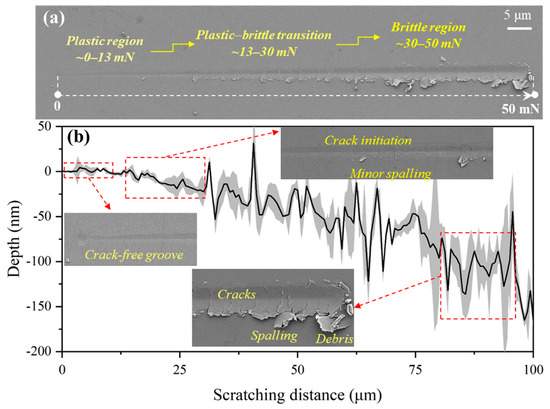
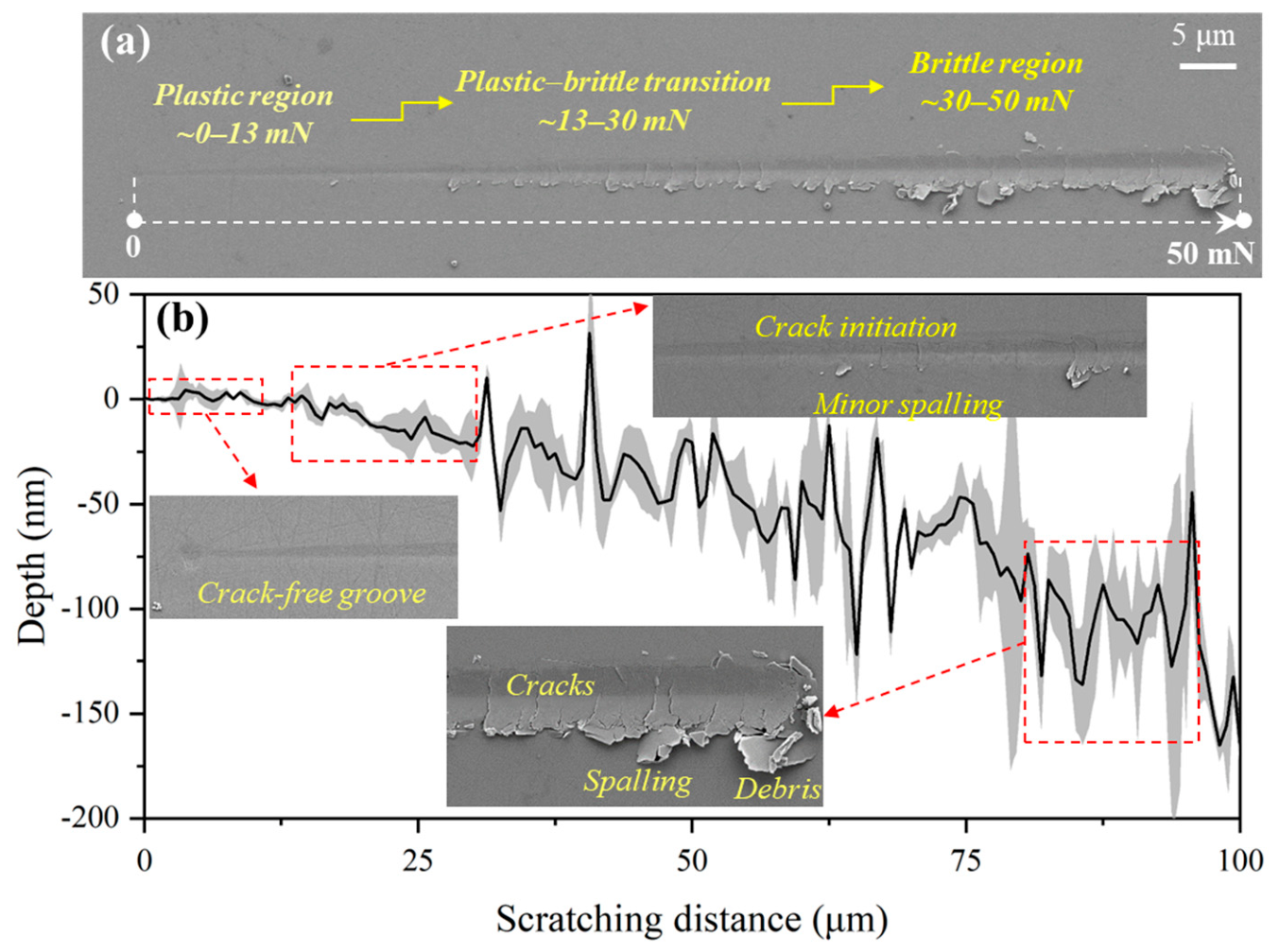
To investigate the material removal behavior and mechanism of β-Ga2O3 under mechanical stress, nanoscratch tests were conducted using a ramping-load mode. In this mode, the normal load was linearly increased from 0 to 50 mN over a scratch distance of 100 μm. Figure 2a displays the SEM morphology of the track in situ scratched (scratched area) with the increase in normal load from 0 to 50 mN. Figure 2b shows the evolution of the detected scratch depth corresponding to the entire process; the insets provide SEM magnified images of scratches within the specific load range. Three deformation and material removal stages of Ga2O3 during scratching can be observed according to the morphological features, i.e., plastic removal (1.5–13 mN), plastic–brittle transition (13–30 mN), and brittle fracture (>30 mN). The minimum normal load required to cause wear (material removal) in the present condition was measured and found to be approximately 1.5 mN, as determined with SEM and AFM characterization of the scratch morphology.
Figure 2.
(a) SEM image of scratch produced under progressively varying loads of 0–50 mN; (b) variation in scratch depth with distance.
Notably, the purely elastic deformation regime was barely distinguishable in the scratch test. Given that this theoretical load threshold under the present scratching conditions was small (~1.5 mN) and fell below the minimum resolvable load in our continuous ramping-load scratch test, the purely elastic regime left no observable trace on the surface. In other words, compared with the overall load range of 0–50 mN, the purely elastic regime, where normal loads were below 1.5 mN, was extremely brief. With the increase in load, Ga2O3 gradually entered the plastic deformation stage and plasticity-dominated material removal occurred on the material surface. In this stage, the scratch depth increased slowly with the scratching distance and a groove with surface pile-up formed on the scratch track, and no debris or cracks could be observed. Once material removal occurred, the width and depth of the groove increased with the increase in load. As the load continued to increase, the scratch depth increased more rapidly with distance, accompanied primarily by crack initiation, marking the transition to the plastic–brittle regime. In the brittle-fracture stage, the scratch depth versus distance curve exhibited extensive fluctuations, indicating unstable and discontinuous propagation of median and lateral cracks beneath the scratch track. This instability led to the formation of evident transverse cracks and resulted in large-scale material spalling, where fragments were forcibly detached from the substrate.
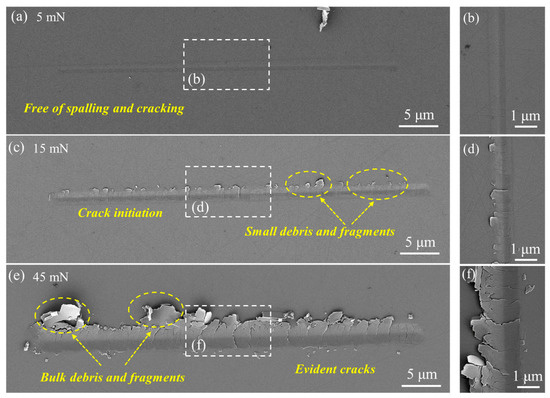
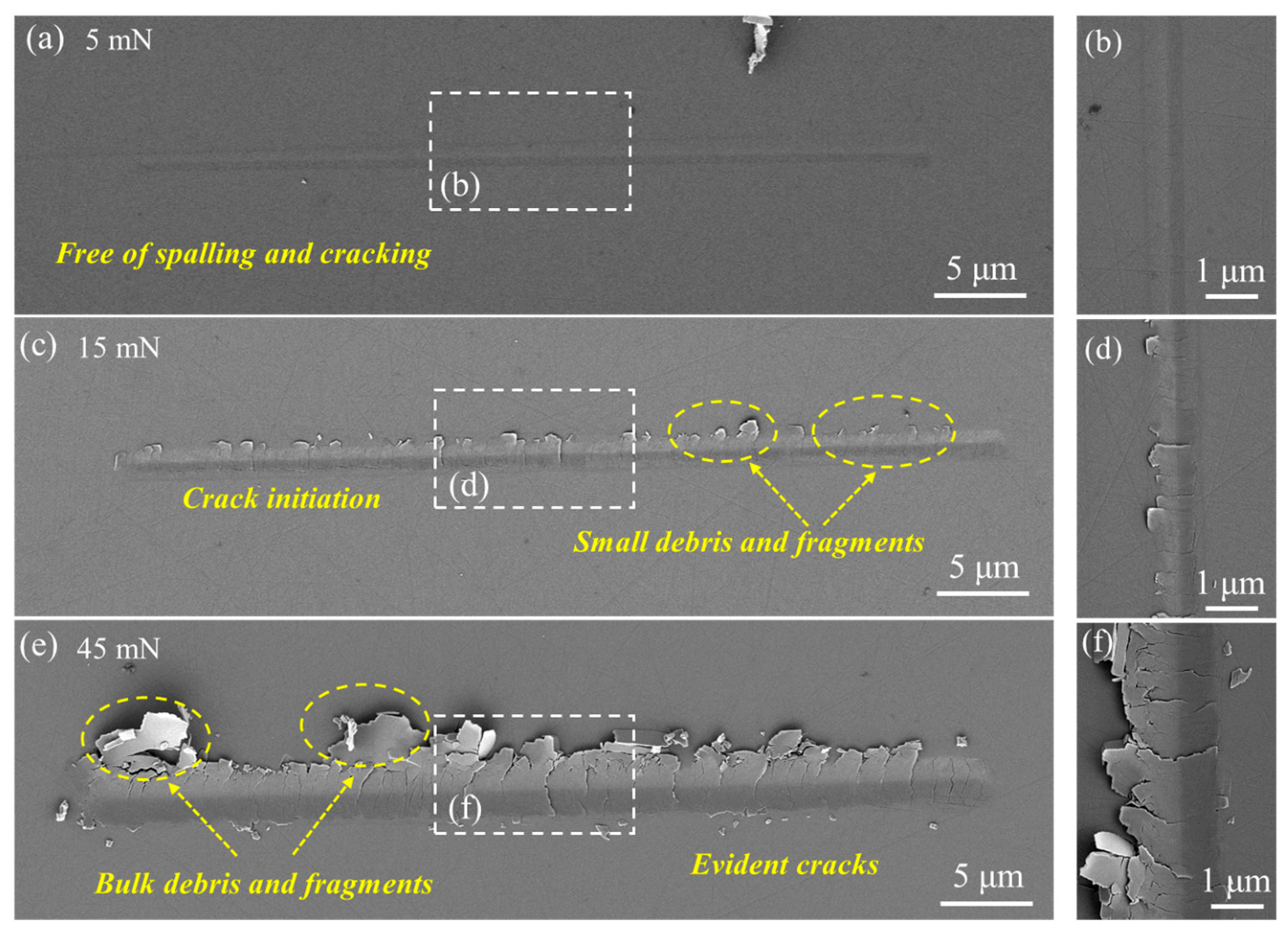
To further elucidate the load-dependent deformation and removal of Ga2O3, constant-load scratch tests were designed based on the preliminary ramping-load test results. Figure 3 shows SEM images of three scratches produced under applied loads of 5, 15, and 45 mN. When the normal load was 5 mN, the scratched surface exhibited a smooth groove free of any surface cracks or debris (Figure 3a,b), revealing features indicative of a plasticity-dominated removal regime. The ductile-regime removal theory posits a crack-free subsurface where dislocation slip and phase transformation govern the plastic flow of atoms [30,31]. In contrast, scratching with a normal load of 15 mN brought pronounced transverse surface microcracks, along with small debris and fragments (Figure 3c,d), demonstrating distinct brittle-regime removal features. When the normal load was further increased to 45 mN, the scratched surface exhibited extensive spalling and a dense network of cracks, accompanied by numerous fragments (Figure 3e,f). This morphology is characteristic of severe brittle fracture, the dominant removal mechanism under this condition.
Figure 3.
SEM images of scratches produced under normal loads of (a) 5 mN, (c) 15 mN, and (e) 45 mN; (b), (d), and (f) are enlarged views of (a), (c), and (e), respectively.
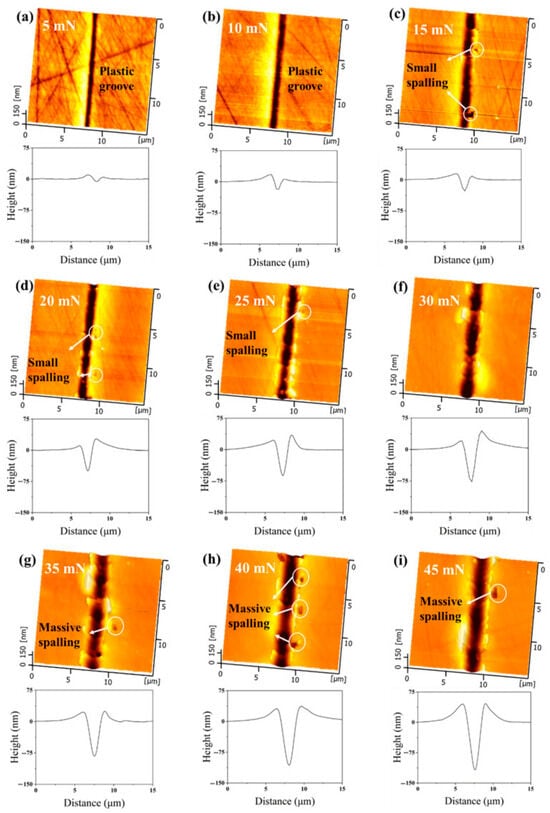
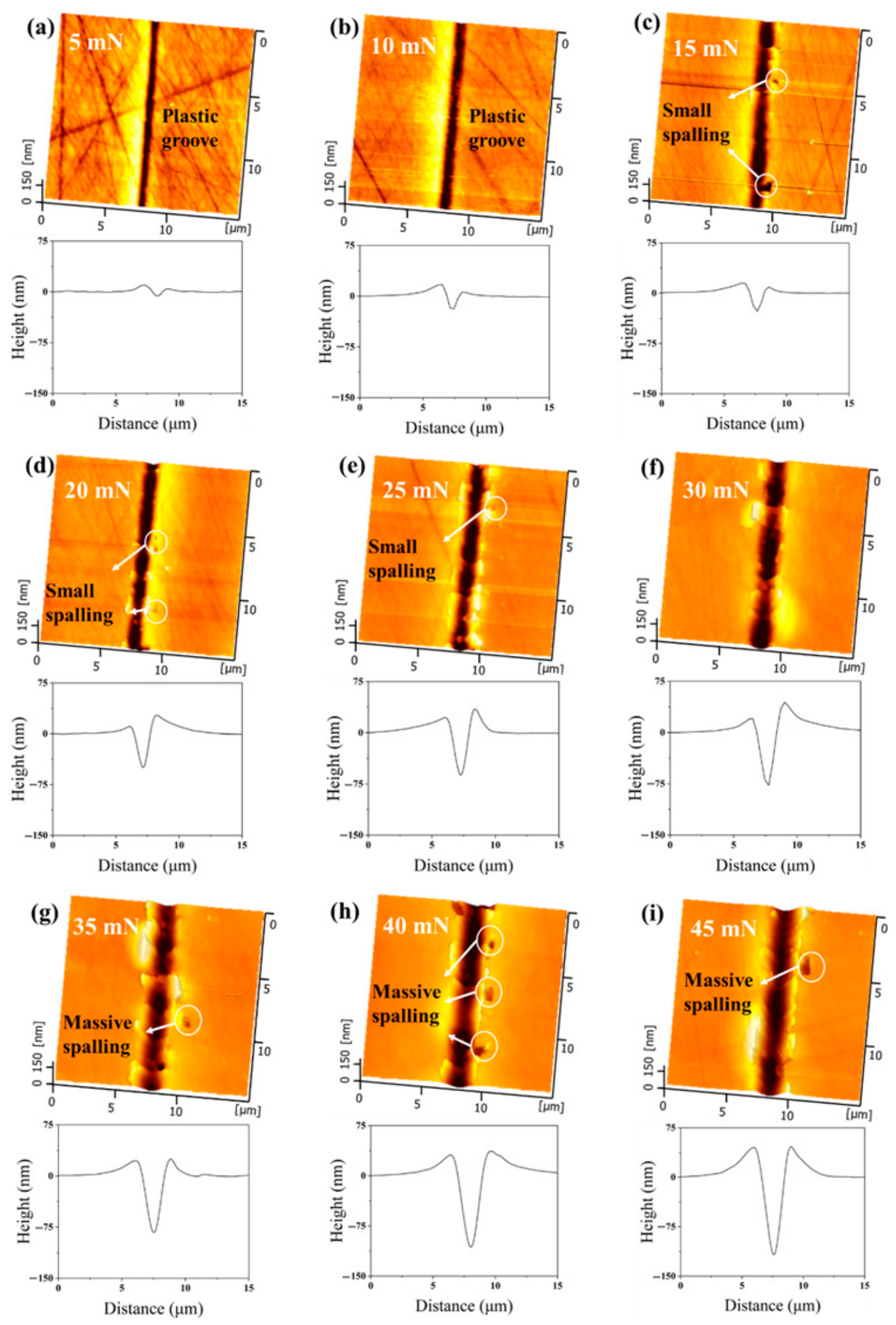
To complement the SEM analysis, the local 3D images and averaged cross-sectional profiles of the above three scratches produced under different normal loads (constant-load mode) were measured using AFM (Figure 4). It should be noted that these images were acquired after cleaning, following the procedure described in Section 2. AFM observations revealed an evolution in material removal mechanisms with increasing normal load. At normal loads below 15 mN, the scratch tracks demonstrated continuous and smooth grooves free of spalling, with pronounced material pile-up formed primarily on one side of the grooves. This indicates that material removal was entirely governed by plastic deformation, with the material ahead of the indenter undergoing plastic flow predominantly to the side. When the normal load increased to the 15–30 mN range, some spalling pits began to appear on the scratched surface. These pits were small in size and discontinuously distributed, marking the onset of brittle fracture involvement, although it had not yet become the dominant removal mechanism. As the load exceeded 30 mN, scratch morphology underwent a fundamental transition: large-scale blocky spalling pits emerged on the scratched surface, exhibiting typical brittle-fracture characteristics. Concurrently, the material pile-up shifted from unilateral protrusions at low normal loads to pronounced bilateral protrusions. This transition is attributed to the initiation and propagation of lateral cracks beneath the surface under high normal loads; as these cracks extended to the surface, they triggered extensive material fragments. At this stage, the material removal mechanism was dominated by brittle fracture resulting from the initiation and propagation of many cracks [32,33,34].
Figure 4.
AFM 3D images and cross-sectional profiles of scratches produced under various normal loads: (a) 5 mN, (b) 10 mN, (c) 15 mN, (d) 20 mN, (e) 25 mN, (f) 30 mN, (g) 35 mN, (h) 40 mN, and (i) 45 mN.
3.2. Scratch Force Analysis
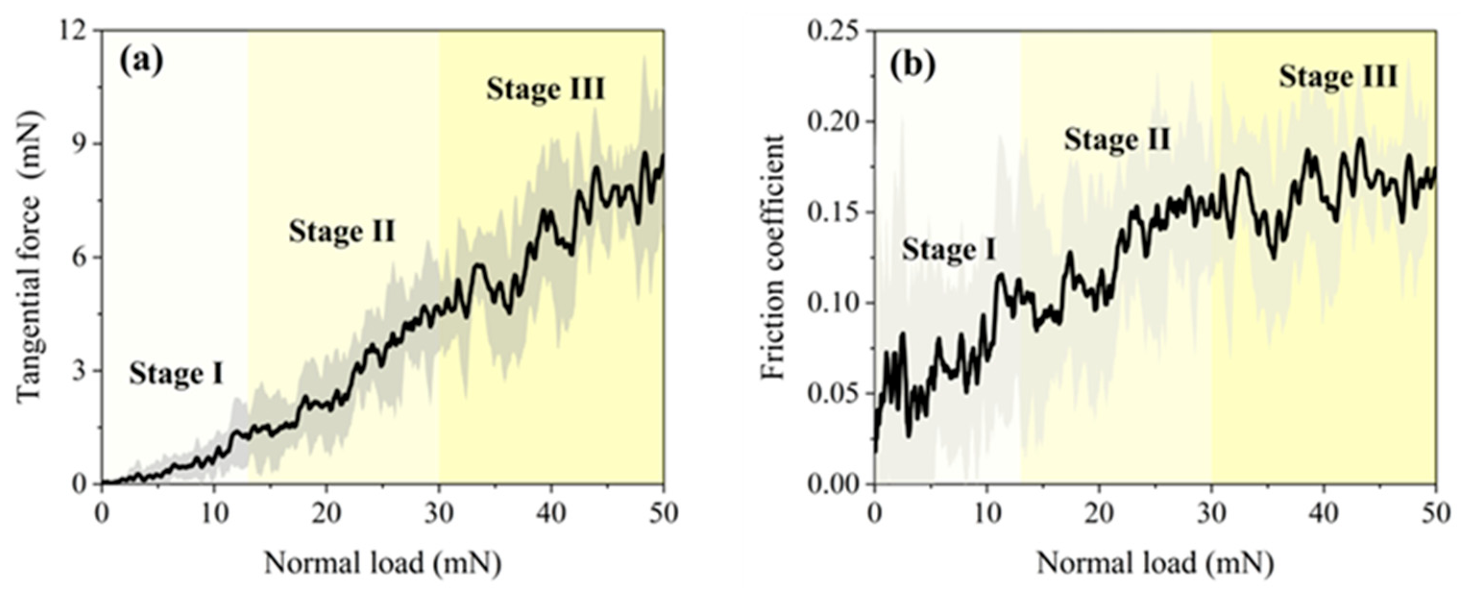
To elucidate the continuous evolution of frictional behavior during scratching, the curves of tangential force and friction coefficient as functions of normal load were extracted from ramping-load mode scratch tests (Figure 5). The results indicate that throughout the scratching process, the tangential force and friction coefficient increased monotonically with normal load, reflecting the progressively enhanced mechanical interaction between the diamond indenter and the β-Ga2O3 crystal. The tangential force exhibited an approximately exponential increase with normal load; that is, its growth rate exceeded that of the normal load, leading to a continuous rise in the friction coefficient. Further analysis reveals that the evolution of tangential force and friction coefficient can be broadly divided into three stages. In the low-load range of approximately 0–13 mN (Stage I), the β-Ga2O3 crystal underwent a rapid transition from elastic to plastic deformation, and the plowing resistance increased sharply, resulting in a steep increase in the tangential force and friction coefficient. In the intermediate-load range of approximately 13–30 mN (Stage II), the growth rate of tangential force with load further increased, whereas the increase in friction coefficient slowed markedly, reflecting an unstable competition between sustained plastic flow and intermittent microcrack initiation. When the normal load exceeded ~30 mN (Stage III), the tangential force increased approximately linearly with normal load but exhibited extensive fluctuations; the friction coefficient also fluctuated while remaining relatively stable overall, which we attributed to the material removal mechanism becoming dominated by brittle fracture. The above results suggest that the evolution characteristics of tangential force and friction coefficient can serve as “signals” for identifying different stages of deformation and removal.
Figure 5.
Evolution of (a) tangential force and (b) friction coefficient with normal load.
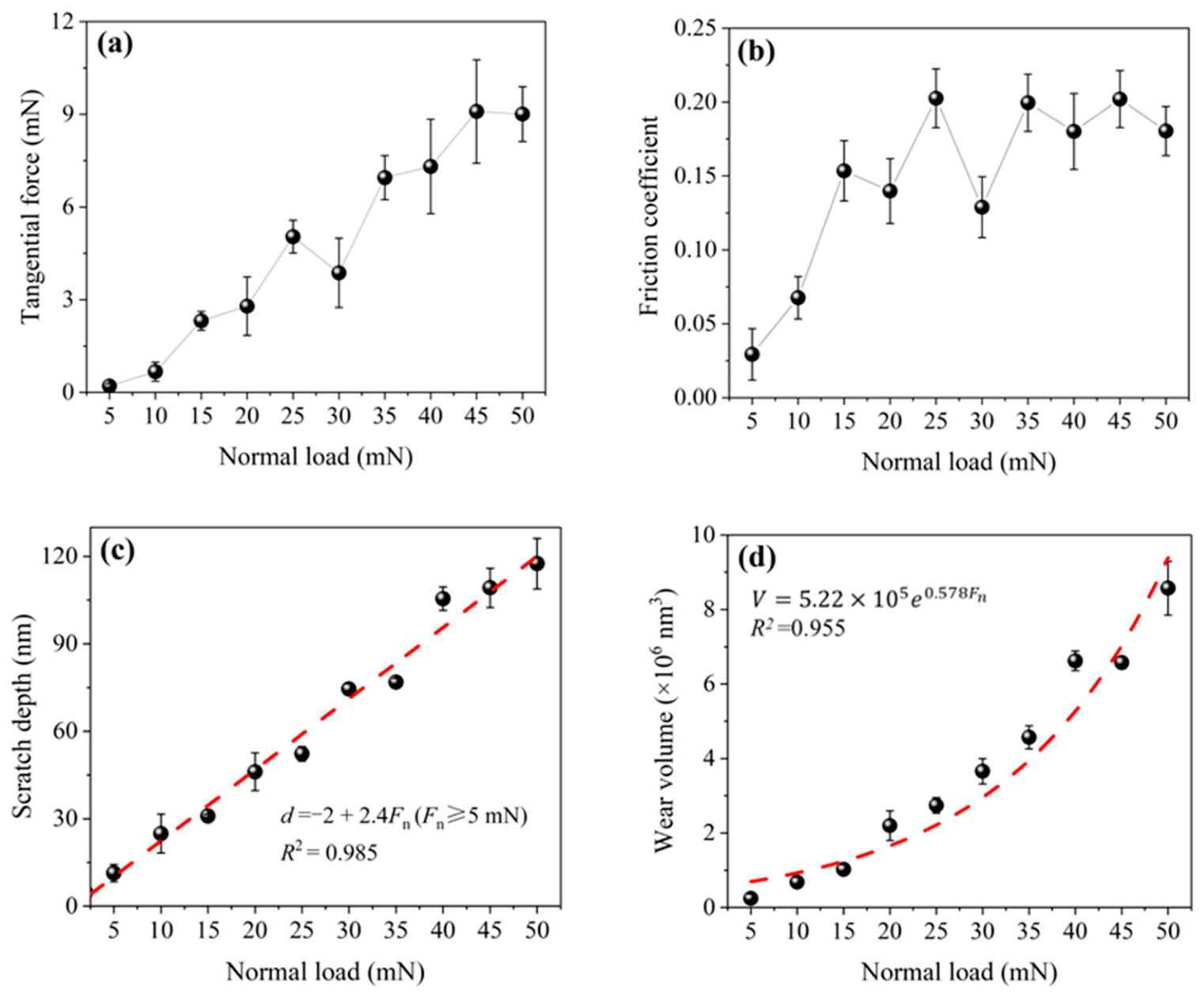
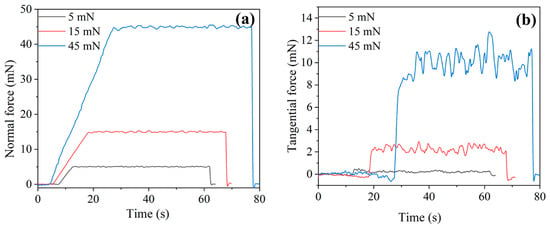
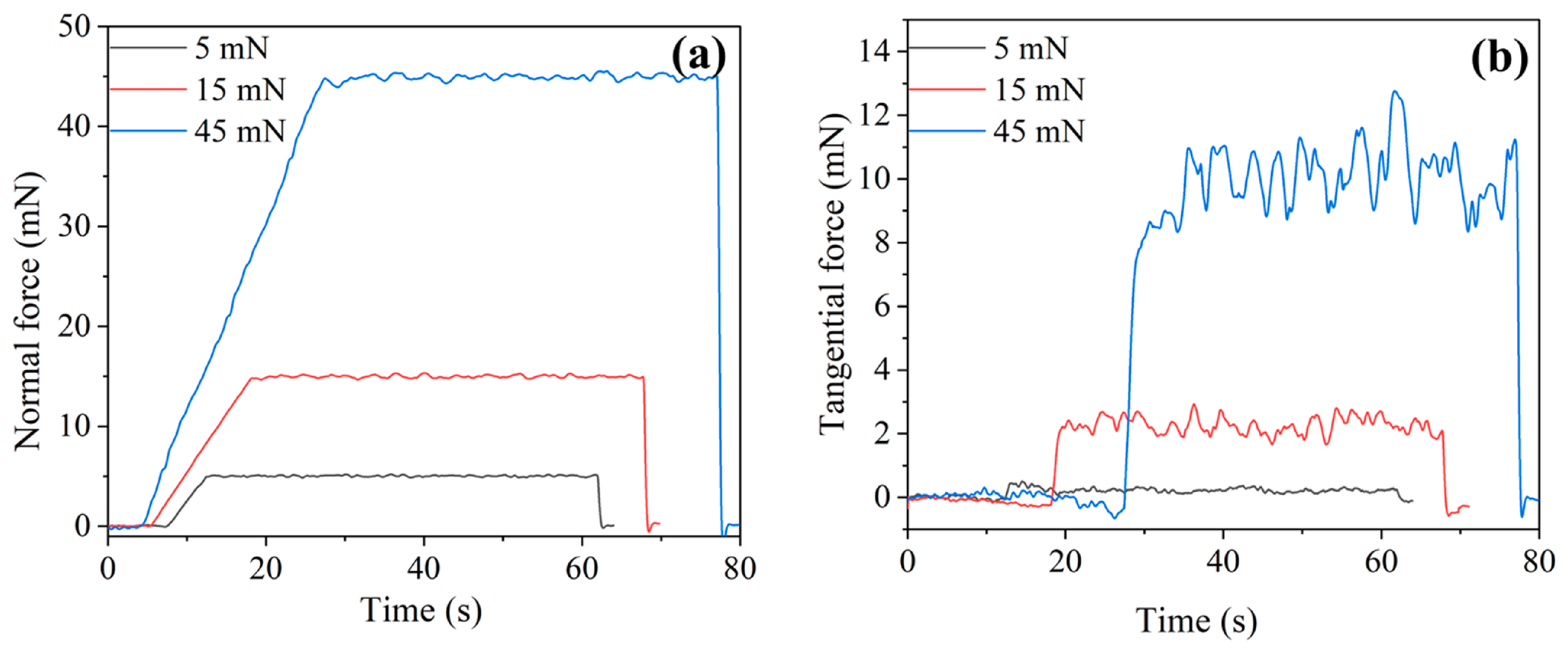
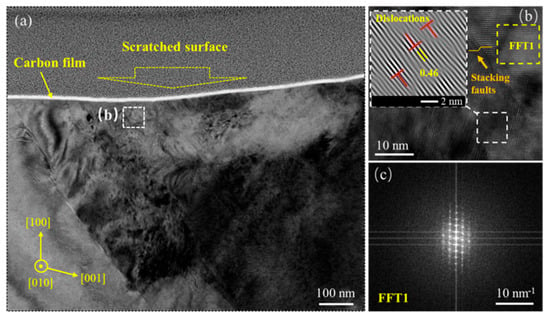
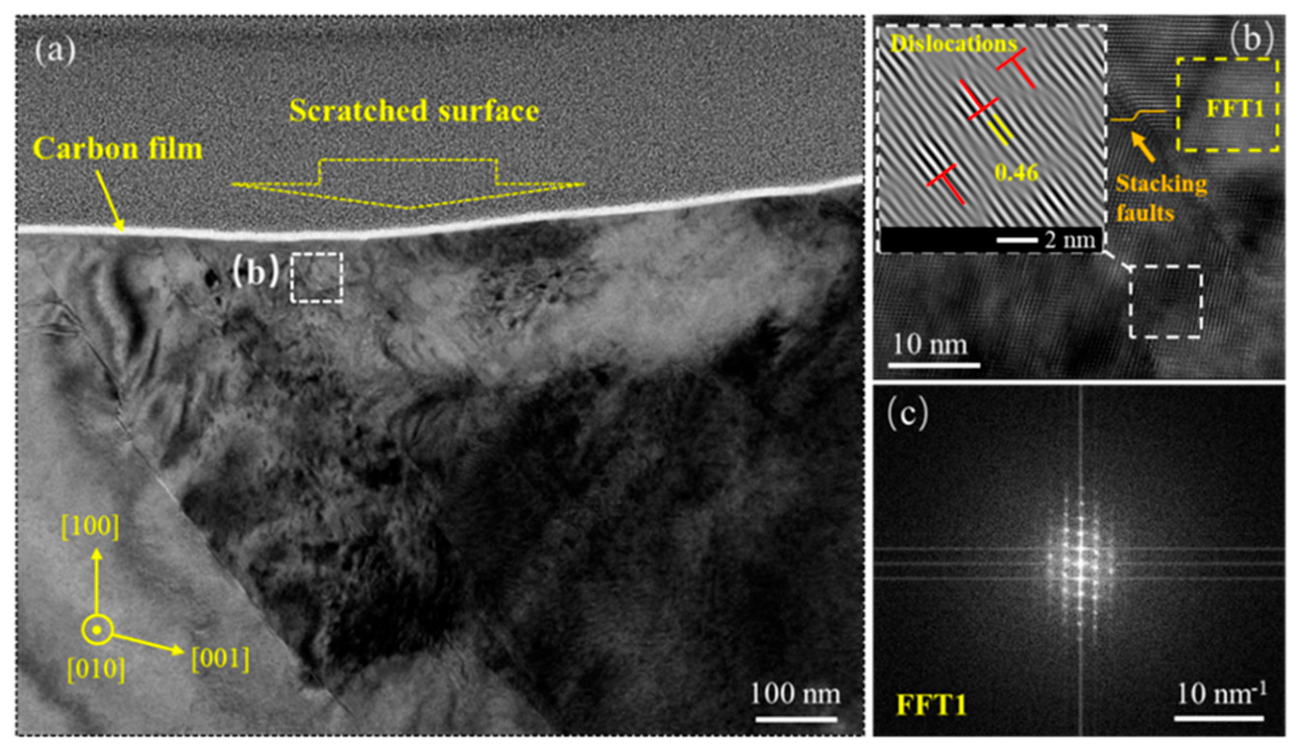
To further investigate the nanotribological properties of the β-Ga2O3 (100) surface during scratching, the scratching data under constant-load mode, including average tangential force and friction coefficient, were collected and calculated over the entire scratching process. For constant-load scratching, the average friction coefficient was calculated from the steady-state segment of each scratch, excluding the initial transient stage. Figure 6a illustrates the relationship between average tangential force and normal load. Overall, the tangential force increased with increasing normal load, although the rate of increase differed from that observed in the tangential force versus normal load curve under ramping-load mode scratching. Figure 6b shows that the average friction coefficient of the Ga2O3/diamond contact interface over the entire scratching process under constant-load mode exhibited a nonlinear dependence on the normal load. Representative raw normal-force and tangential-force signals recorded during the constant-load nanoscratch tests at 5, 15, and 45 mN are presented in Figure 7. Under normal loads of 5–13 mN, the friction coefficient increased rapidly from 0.03 to 0.15. Previous SEM and AFM observations indicated that material removal of β-Ga2O3 crystals subjected to scratching in this load range was dominated by crystal plasticity, characteristic of ductile-regime removal. Subsequent XTEM observation of the subsurface (Figure 8) partially confirmed the presence of a high density of stacking faults dominated by dislocation slip, providing direct evidence of nanoscale plastic strain accommodation. The friction coefficients exhibited the greatest fluctuation in the normal load range of 13–30 mN, due primarily to the transition of the removal mechanism of Ga2O3 from plastic removal to brittle fracture. More specifically, the fluctuation of the friction coefficient reflected the dynamic interplay between these two mechanisms: plastic flow required a continuous consumption of energy to maintain dislocation motion, which tended to elevate the friction coefficient, whereas the unstable propagation of microcracks could instantaneously release energy, resulting in a sharp decrease in frictional resistance. When the normal load further increased to above 30 mN, the friction coefficient stabilized around 0.20 with smaller amplitude. At such high normal loads, large debris/fragments were more likely to form due to the extensive initiation, propagation, and coalescence of subsurface cracks. Once these cracks connected with the free surface, local material could spall off in large pieces, leading to the generation of blocky debris rather than fine wear particles.
Figure 6.
Variation in (a) average tangential force, (b) average friction coefficient, (c) scratch depth, and (d) material removal volume with normal load. The red dashed lines represent the fitted curves, and the black spheres denote the experimental data points.
Figure 7.
Evolution of the normal force and tangential force during the entire scratch process: (a) normal force, (b) tangential force.
Figure 8.
XTEM characterization of subsurface damage generated by scratching at 5 mN: (a) overview TEM image of the scratch region; (b) HRTEM image of the area marked by a white dashed box in (a); (c) FFT pattern from the white dashed box in (b).
Quantitative analysis of the scratch topography with AFM revealed a linear relationship between scratch depth and normal load (Figure 6c). Over the load range of 5–50 mN, the scratch depth increased from 11.34 to 117.53 nm, with a linear fit yielding a slope of approximately 2.4 nm/mN. This linear progression indicates that the normal load directly governs the penetration depth of the indenter, possibly regardless of the prevailing material removal mechanism. Figure 6d illustrates the average material removal volume as a function of normal load over three repeated experiments. The material removal volume increased with increasing normal load overall. From 5 to 15 mN, the material removal volume showed a relatively slow increase due to plastic removal of the Ga2O3 sample. When the load exceeded 15 mN, the growth rate became significantly faster. A slight fluctuation occurred between 40 and 45 mN, but the overall trend remained upward, reaching a maximum value of 8.8 × 10⁶ nm3 at 50 mN. This indicates that within the tested load range, the normal load is a dominant factor affecting material removal volume, and there may be a transition from mild surface damage to intensified material removal related to brittle fracture.
3.3. Subsurface Damage and Its Correlation with Surface Removal
Many studies have found that the surface removal morphology and mechanism of hard/brittle single-crystal semiconductor materials, e.g., GaN, AlN, and SiC, are directly related to the subsurface structural characteristics. For instance, the plastic regime removal is related to structural changes such as dislocations, stacking faults, and phase transitions, while the brittle-regime removal corresponds to the initiation and propagation of cracks. To clarify the lattice structure in the subsurface and hence further study the corresponding removal mechanism, XTEM tests were conducted on the above three scratches. As shown in Figure 8a, TEM analysis of the 5 mN scratch revealed dislocations and stacking faults in the crack-free subsurface, which, together with the SEM observations, confirms a plasticity-dominated removal mechanism at this load. Figure 8c displays the FFT-treated diffraction pattern of the areas in Figure 8b (marked with the yellow dashed box). Unlike the sharp spots expected from a perfect crystal, the FFT pattern exhibits elongated diffuse streaks, clearly indicating the presence of stacking faults. This result indicates that β-Ga2O3 has a low stacking fault formation energy [35]. In particular, the stacking fault formation energy on the (100) plane is as low as 0.03 J/m2, much lower than that on the (010) plane (0.42 J/m2) and the (001) plane (0.57 J/m2), making it easier to accommodate plastic strain through the formation of stacking faults and dislocations even under low-load conditions.
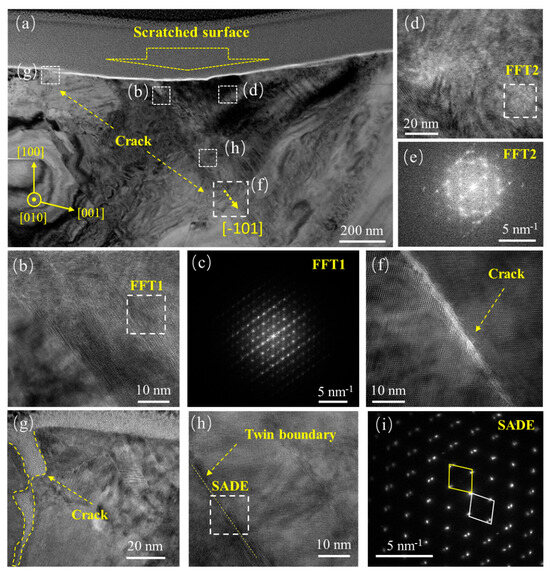
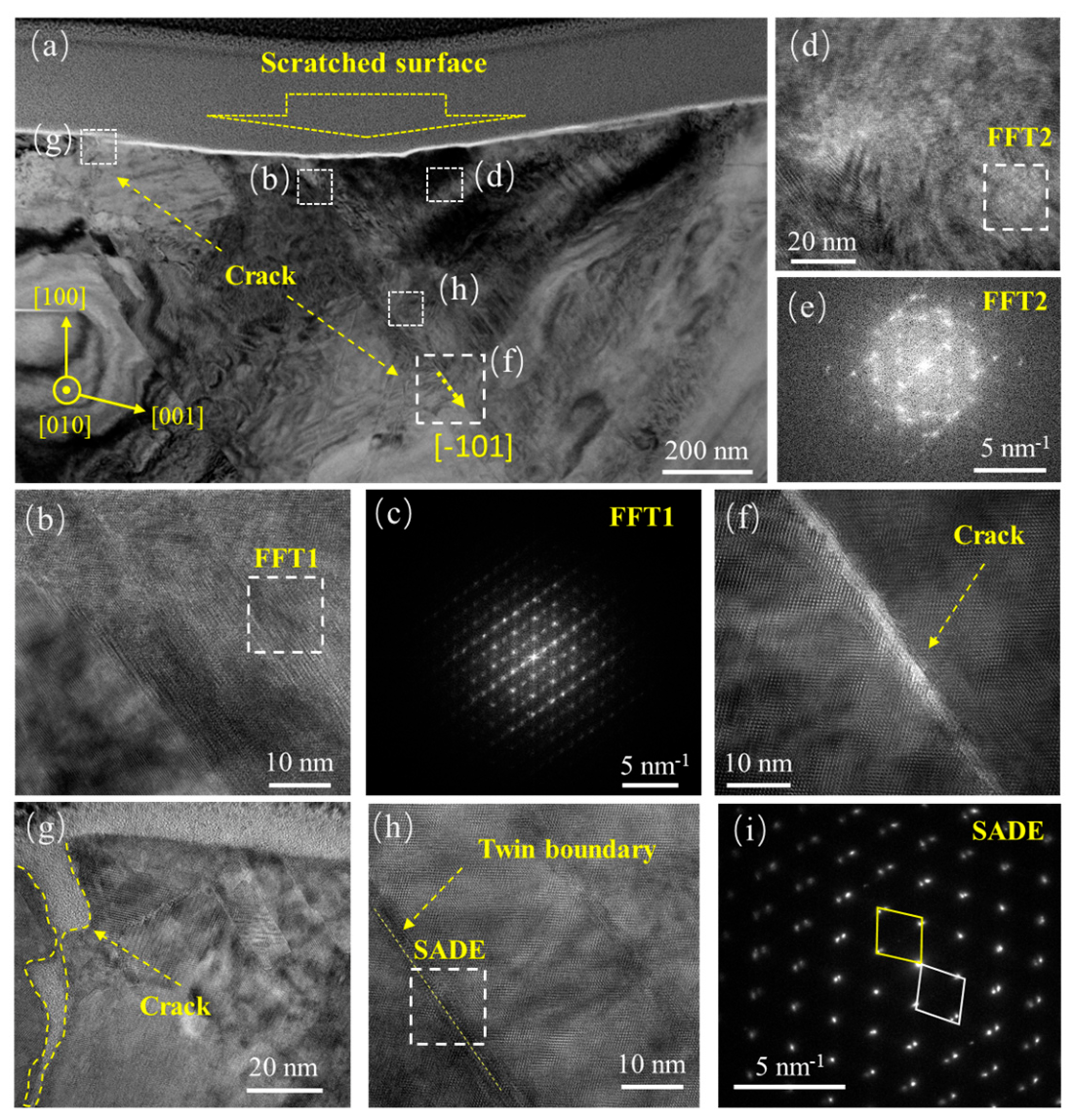
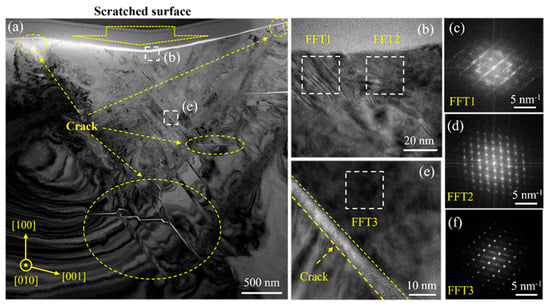
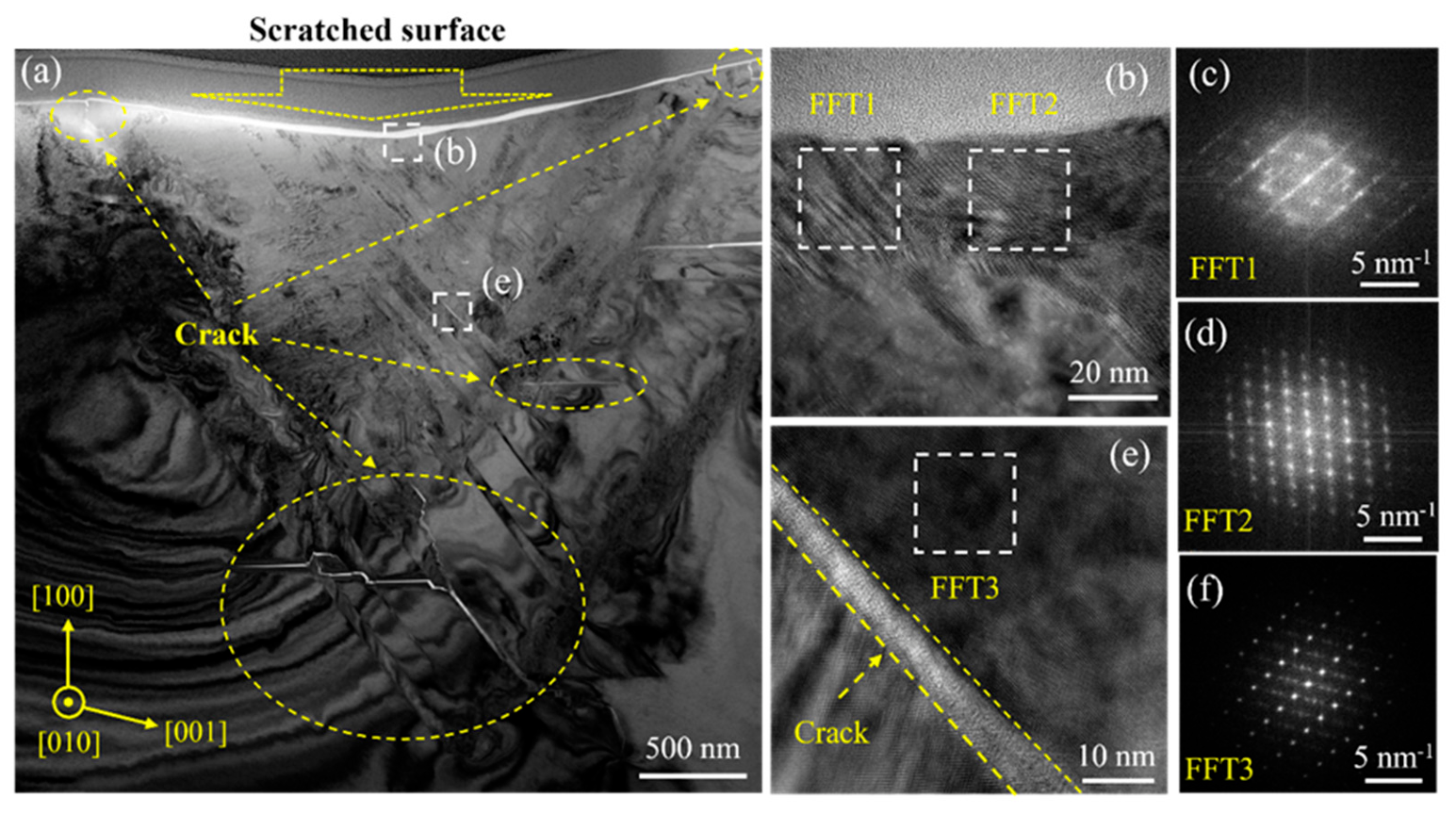
When the scratching load increased to 15 mN, oblique cracks were observed at the edges of the scratch and in the deeper subsurface region (Figure 9a). In addition, high-density stacking faults were observed in the near-surface region beneath the scratch (Figure 9b), which were further confirmed by the FFT pattern in Figure 9c. The HRTEM image (Figure 9d) and the corresponding FFT pattern (Figure 9e) reveal lattice distortion and the formation of nanocrystals within the shallow subsurface region, indicating that the Ga2O3 lattice in this area underwent severe plastic deformation. Once the local stress exceeded the load-bearing limit of the crystal structure, crack initiation and propagation occurred, as shown in Figure 9f,g. Figure 9h presents a local XTEM image of the subsurface, showing a straight twin boundary. The corresponding selected area electron diffraction (SAED) pattern in the inset exhibits two sets of diffraction spots related by a 180° rotation, further confirming the occurrence of twinning. The observed twinning suggests that, in addition to stacking fault formation and dislocation activity, local plastic strain can also be accommodated through lattice reorientation, indicating that twinning acts as an auxiliary deformation mode during the brittle–ductile transition. The coexistence of stacking faults, twinning, and cracks indicates that Ga2O3 was in the brittle–ductile transition regime at 15 mN. When the scratching load was further increased to 45 mN, numerous cracks with different orientations were generated in the subsurface, with some extending deep into the material. This subsurface situation suggested that the scratched Ga2O3 exhibited evident brittle-fracture features under high stress conditions, which is in good agreement with the SEM image of scratch surface morphology (Figure 3). In addition, many high-density stacking faults were distributed in the scratch subsurface (Figure 10b), as confirmed by the FFT patterns in Figure 10c,d.
Figure 9.
XTEM characterization of subsurface damage generated by scratching at 15 mN: (a) overview TEM image of the scratch region; (b) HRTEM image of the area marked by white dashed box in (a); (c) FFT pattern from the white dashed box in (b); (d) HRTEM image of the area marked by the white dashed box in (a); (e) FFT pattern from the white dashed box in (d); (f) HRTEM image of the area marked by white dashed box in (a); (g) HRTEM image of the area marked by white dashed box in (a); (h) HRTEM image of the area marked by white dashed box in (a); (i) SADE pattern from the white dashed box in (b).
Figure 10.
XTEM characterization of subsurface damage generated by scratching at 45 mN: (a) overview TEM image of the scratch region; (b) HRTEM image of the area marked by white dashed box in (a); (c,d) corresponding FFT patterns from the white dashed box in (b); (e) HRTEM image of the area marked by white dashed box in (a); (f) FFT pattern from the white dashed box in (e).
3.4. Load-Dependent Material Removal Mechanisms of β-Ga2O3 (100) Surface
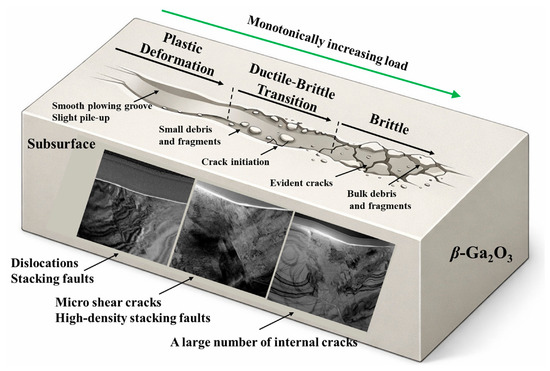
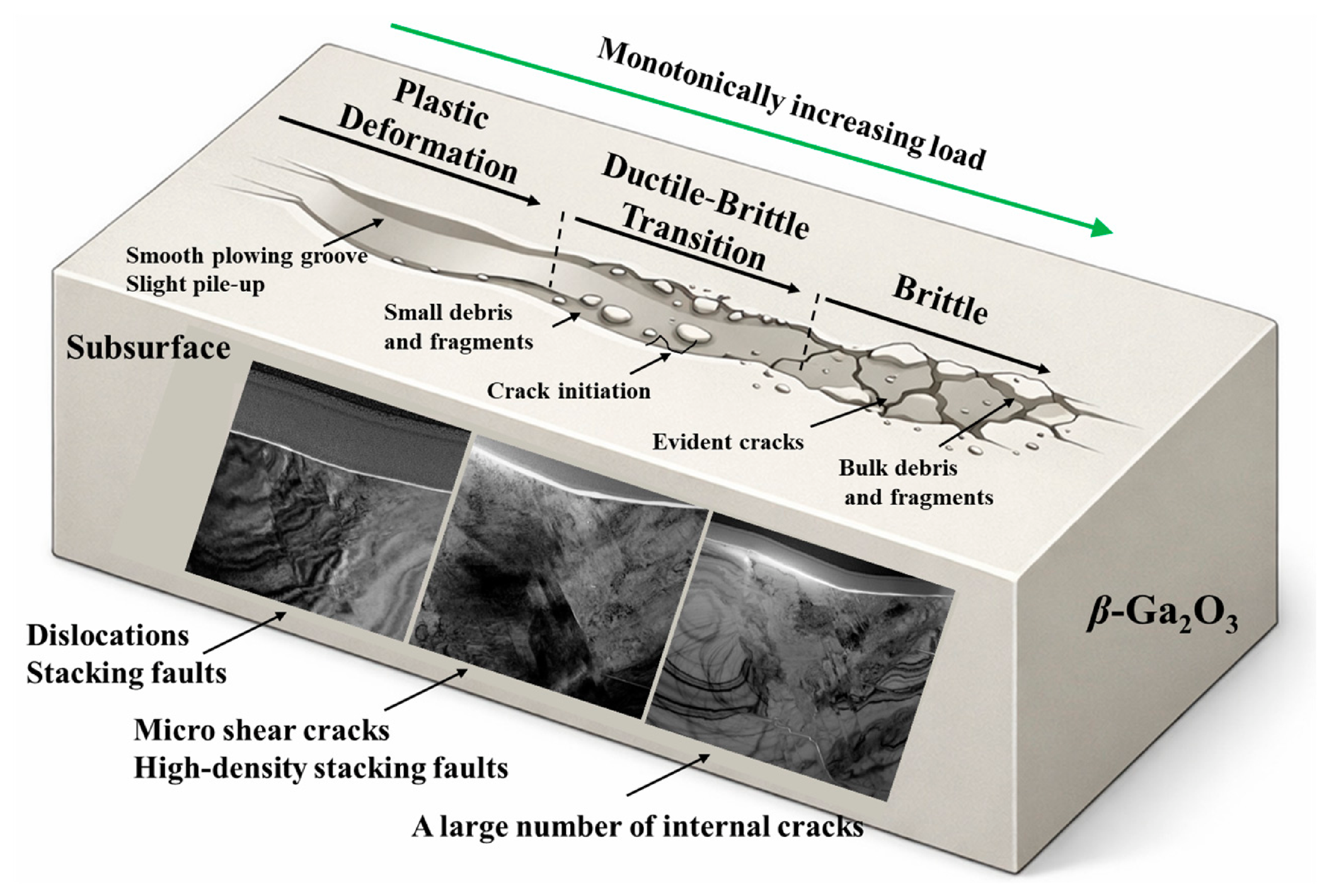
Through a combined analysis of scratch surface morphology and subsurface microstructural characterization, we elucidated the surface material removal and subsurface damage mechanisms of β-Ga2O3 during single-point diamond scratching, as schematically illustrated in Figure 11. Our previous results demonstrated that β-Ga2O3 (100) exhibits distinct deformation and removal characteristics with increasing mechanical load. Specifically, the scratch-induced material removal behavior can be divided into three sequential regimes according to the load-dependent response, namely, plastic deformation, ductile–brittle transition, and brittle fracture, that is, smooth plastic plowing with a crack-free subsurface under low load, coexistence of plastic removal and brittle fracture at intermediate load, and extensive cracking and material spalling at high load.
Figure 11.
Schematic illustration of the load-dependent surface material removal and subsurface damage evolution of β-Ga2O3 during single-point diamond scratching.
In the plastic deformation regime, material removal proceeds through localized plastic flow dominated by the plowing effect, resulting in smooth grooves with minor pile-up and no cracks or spalling. Subsurface deformation is accommodated by crystal defects (e.g., dislocations and stacking faults) without cracking, confirming fully plasticity-dominated ductile-regime removal with minimal damage. In the ductile–brittle transition region, increased load causes unstable removal due to competition between plastic deformation and crack initiation. Surface grooves become less regular, with incipient cracks, small debris, and local spalling. Subsurface damage shifts from purely defect-mediated plasticity to a mixed state involving stacking faults and micro shear cracks. Although plastic flow persists, it cannot fully accommodate the deformation energy, leading to a coexistence of groove formation, defect accumulation, and early-stage fracture. In the brittle-fracture regime under high loads, material removal is governed by crack-dominated fracture instead of plastic plowing. Surface damage becomes severe, characterized by dense crack networks, spalling, and fragmentation. Subsurface damage is also intensified with extensive internal cracking, whose propagation toward the surface results in large-scale spalling and debris detachment.
Figure 11 also reveals a clear correlation between surface material removal and the subsurface structural response during single-point diamond scratching of β-Ga2O3. At low loads, the surface maintains smooth plastic grooves, whereas subsurface structural transformation is dominated by dislocations and stacking faults. With increasing load to the intermediate regime, incipient surface cracks and minor fragments emerge, accompanied by subsurface micro shear cracks together with dense stacking faults, signaling the ductile–brittle transition. Under high loads, severe brittle fracture, large cracks, and spalling dominate the surface, accompanied by extensive internal cracks within the subsurface, indicating unstable crack propagation. These results confirm that the material removal mechanism evolves gradually from plastic plowing to a mixed ductile–brittle mode, and finally to brittle-fracture-dominated removal.
4. Conclusions
β-Ga2O3(100) exhibits distinct deformation and removal stages with increasing mechanical load. Under low-load conditions, the scratch morphology is characterized by smooth grooves with pile-up resulting from plastic flow, with no evidence of surface cracks or spalling debris. High-resolution transmission electron microscopy reveals a crack-free subsurface, where deformation is accommodated solely by dislocations and stacking faults. Such ductile-regime removal represents an ideal material removal mode for mechanical-based ultraprecision polishing and grinding of hard/brittle semiconductors, enabling favorable surface quality with minimal subsurface damage. Under intermediate-load conditions, β-Ga2O3 (100) enters a ductile–brittle transition regime, marked by the dynamic competition and coexistence of plastic removal and brittle fracture. Micro shear cracks initiate on the surface and subsurface, while the subsurface region exhibits a high density of stacking faults, accompanied by unstable fluctuations in friction signals. Under high-load conditions, the material undergoes brittle fracture, with surface damage manifesting as crack networks, spalling, and fragmentation, alongside extensive subsurface cracking. The evolution of tangential force and friction coefficient correlates with deformation features, serving as an indicator of the deformation and removal behavior of β-Ga2O3 during scratching.
Author Contributions
Y.L.: Conceptualization, Investigation, Data curation, Formal analysis, and Writing—original draft. H.F.: Investigation and Data curation. C.W.: Investigation and Data curation. J.W.: Conceptualization, Data curation, and Funding acquisition. J.G.: Project administration, Conceptualization, Formal analysis, Writing—review and editing, Supervision, and Funding acquisition. All authors have read and agreed to the published version of the manuscript.
Funding
This work was financially supported by the National Natural Science Foundation of China (No. 52475195), and the Scientific Research Foundation of the University of South China.
Data Availability Statement
All data generated or analyzed during this study are included in this published article.
Acknowledgments
We gratefully acknowledge the assistance from Shiyanjia Lab (https://www.shiyanjia.com, accessed on 25 April 2026) on SEM analysis and from KAIPLE (https://www.kaiple.com/, accessed on 25 April 2026) on TEM analysis.
Conflicts of Interest
The authors declare no conflicts of interest.
References
- Yang, J.; Liu, K.; Chen, X.; Shen, D. Recent advances in optoelectronic and microelectronic devices based on ultrawide-bandgap semiconductors. Prog. Quantum Electron. 2022, 83, 100397. [Google Scholar] [CrossRef] [Scilit]
- Stepanov, S.; Nikolaev, V.; Bougrov, V.E.; Romanov, A. Gallium OXIDE: Properties and applications—A review. Rev. Adv. Mater. Sci. 2016, 44, 63–86. [Google Scholar]
- Pearton, S.J.; Yang, J.; Cary, P.H., IV; Ren, F.; Kim, J.; Tadjer, M.J.; Mastro, M.A. A review of Ga2O3 materials, processing, and devices. Appl. Phys. Rev. 2018, 5, 011301. [Google Scholar] [CrossRef] [Scilit]
- Pang, Y. β-Ga2O3 Heterojunctions for Power Devices: A Review. Appl. Comput. Eng. 2025, 117, 220–229. [Google Scholar] [CrossRef] [Scilit]
- Wang, C.; Zhang, J.; Xu, S.; Zhang, C.; Feng, Q.; Zhang, Y.; Ning, J.; Zhao, S.; Zhou, H.; Hao, Y. Progress in state-of-the-art technologies of Ga2O3 devices. J. Phys. D Appl. Phys. 2021, 54, 243001. [Google Scholar] [CrossRef] [Scilit]
- Suchikova, Y.; Nazarovets, S.; Popov, A.I. Ga2O3 solar-blind photodetectors: From civilian applications to missile detection and research agenda. Opt. Mater. 2024, 157, 116397. [Google Scholar] [CrossRef] [Scilit]
- A Brief Overview and Outlook on the Progress of III-Nitride Semiconductor Materials. ECS Meet. Abstr. 2024, MA2024-02, 2513. [CrossRef] [Scilit]
- Dong, Z.; Lin, Y. Ultra-thin wafer technology and applications: A review. Mater. Sci. Semicond. Process. 2020, 105, 104681. [Google Scholar] [CrossRef] [Scilit]
- Huang, S.; Li, X.; Zhao, Y.; Sun, Q.; Huang, H. A novel lapping process for single-crystal sapphire using hybrid nanoparticle suspensions. Int. J. Mech. Sci. 2021, 191, 106099. [Google Scholar] [CrossRef] [Scilit]
- Luo, Z.; Zhang, Z.; Zhao, F.; Fan, C.; Feng, J.; Zhou, H.; Meng, F.; Zhuang, X.; Wang, J. Advanced polishing methods for atomic-scale surfaces: A review. Mater. Today Sustain. 2024, 27, 100841. [Google Scholar] [CrossRef] [Scilit]
- Gao, S.; Wang, H.; Huang, H.; Wang, H.; Huang, H.; Dong, Z.; Kang, R. Predictive models for the surface roughness and subsurface damage depth of semiconductor materials in precision grinding. Int. J. Extrem. Manuf. 2025, 7, 035103. [Google Scholar] [CrossRef] [Scilit]
- Wang, T.; Yan, Q.; Xiong, Q.; Yan, Q.; Xiong, Q.; Lin, J.; Lu, J.; Pan, J. Effect of abrasive on tribological behavior and polishing effect of β-Ga2O3 (100) substrate. Mater. Sci. Semicond. Process. 2024, 172, 108059. [Google Scholar] [CrossRef] [Scilit]
- Wang, T.; Xiong, Q.; Yan, Q.; Xiong, Q.; Yan, Q.; Peng, S.; Lin, J.; Lu, J.; Pan, J.; Xia, J. Effects of polishing disc material and substrate surface temperature on the tribological behaviors and machining results of β-Ga2O3 (100). Int. J. Adv. Manuf. Technol. 2024, 134, 765–780. [Google Scholar] [CrossRef] [Scilit]
- Wu, Y.; Mu, D.; Huang, H. Deformation and removal of semiconductor and laser single crystals at extremely small scales. Int. J. Extrem. Manuf. 2020, 2, 012006. [Google Scholar] [CrossRef] [Scilit]
- Li, X.; Mu, D.; Huang, H. Atomistic understanding of ductile-to-brittle transition in single crystal Si and GaAs under nanoscratch. Int. J. Mech. Sci. 2024, 282, 109689. [Google Scholar] [CrossRef] [Scilit]
- Wang, Y.; Li, X.; Wu, Y.; Mu, D.; Huang, H. The removal mechanism and force modelling of gallium oxide single crystal in single grit grinding and nanoscratching. Int. J. Mech. Sci. 2021, 204, 106562. [Google Scholar] [CrossRef] [Scilit]
- Yang, R.; Xia, N.; Ma, K.; Wu, D.; Wang, J.; Jin, Z.; Zhang, H.; Yang, D. The anisotropy of deformation behaviors in (100) and (010) plane of monoclinic β-Ga2O3 single crystals. J. Alloys Compd. 2024, 978, 173556. [Google Scholar] [CrossRef] [Scilit]
- Kovalchenko, A.M. Studies of the ductile mode of cutting brittle materials (A review). J. Superhard Mater. 2013, 35, 259–276. [Google Scholar] [CrossRef] [Scilit]
- Zhang, T.; Jiang, F.; Huang, H.; Jiang, F.; Huang, H.; Lu, J.; Wu, Y.; Jiang, Z.; Xu, X. Towards understanding the brittle–ductile transition in the extreme manufacturing. Int. J. Extrem. Manuf. 2021, 3, 022001. [Google Scholar] [CrossRef] [Scilit]
- Guo, J.; Qiu, C.; Zhu, H.; Wang, Y. Nanotribological properties of Ga- and N-faced bulk gallium nitride surfaces determined by nanoscratch experiments. Materials 2019, 12, 2653. [Google Scholar] [CrossRef] [Scilit]
- Li, C.; Zhang, Y.; Zhou, G.; Zhang, Y.; Zhou, G.; Wei, Z.; Zhang, L. Theoretical modelling of brittle-to-ductile transition load of KDP crystals on (001) plane during nanoindentation and nanoscratch tests. J. Mater. Res. Technol. 2020, 9, 14142–14157. [Google Scholar] [CrossRef] [Scilit]
- Li, C.; Piao, Y.; Meng, B.; Piao, Y.; Meng, B.; Zhang, Y.; Li, L.; Zhang, F. Anisotropy dependence of material removal and deformation mechanisms during nanoscratch of gallium nitride single crystals on (0001) plane. Appl. Surf. Sci. 2022, 578, 152028. [Google Scholar] [CrossRef] [Scilit]
- Li, S.; Gao, P.; Zeng, G. Investigation of the machinability of (001) single-crystal β-Ga2O3 via tribological methodology. Nanotechnol. Precis. Eng. 2025, 8, 033010. [Google Scholar] [CrossRef] [Scilit]
- Cheng, Z.; Zhang, J.; Gao, P.; Zeng, G.; Fang, X.; Lu, W. Toughening β-Ga2O3 via Mechanically Seeded Dislocations. Adv. Funct. Mater. 2025, 36, e22091. [Google Scholar] [CrossRef] [Scilit]
- Li, Y.; Li, M.; Zi, B.; Dong, T. Material Removal and Damage Mechanisms in Laser-assisted Polishing of β-Ga2O3: Atomic-scale Insights. Tribol. Int. 2025, 213, 111090. [Google Scholar] [CrossRef] [Scilit]
- Yang, X.; Dong, Z.; Kang, R.; Gao, S. Cleavage and anisotropy dependence of material removal behavior of monocrystalline β-Ga2O3 in abrasive machining. Wear 2025, 562, 205651. [Google Scholar] [CrossRef] [Scilit]
- Tan, S.; Wang, Y.; Huang, H.; Wu, Y.; Huang, H. Deformation and removal mechanism of single crystal gallium nitride in nanoscratching. Ceram. Int. 2022, 48, 23793–23799. [Google Scholar] [CrossRef] [Scilit]
- Xi, J.; Ban, X.; Hui, Z.; Ba, W.; Deng, L.; Qiu, H. Investigating Surface Morphology and Subsurface Damage Evolution in Nanoscratching of Single-Crystal 4H-SiC. Micromachines 2025, 16, 935. [Google Scholar] [CrossRef] [Scilit]
- Wu, H.; Huang, H.; Xu, Z.; Li, X.; Zhao, H. Development of a vibration-assisted micro/nano scratch tester for evaluating the scratch behaviors of materials under vibration environment. IEEE Trans. Ind. Electron. 2024, 71, 15190–15199. [Google Scholar] [CrossRef] [Scilit]
- Antwi, E.K.; Liu, K.; Wang, H. A review on ductile mode cutting of brittle materials. Front. Mech. Eng. 2018, 13, 251–263. [Google Scholar] [CrossRef] [Scilit]
- Li, C. Research progress of ductile removal mechanism for hard-brittle single crystal materials. J. Mech. Eng. 2019, 55, 181–190. [Google Scholar] [CrossRef] [Scilit]
- Oliver, D.J.; Bradby, J.; Williams, J.S.; Swain, M.V.; Munroe, P. Thickness-dependent phase transformation in nanoindented germanium thin films. Nanotechnology 2008, 19, 475709. [Google Scholar] [CrossRef] [Scilit]
- Wasmer, K.; Gassilloud, R.; Michler, J.; Ballif, C. Analysis of onset of dislocation nucleation during nanoindentation and nanoscratching of InP. J. Mater. Res. 2012, 27, 320–329. [Google Scholar] [CrossRef] [Scilit]
- Guo, J.J.; Reddy, K.M.; Hirata, A.; Fujita, T.; Gazonas, G.; McCauley, J.; Chen, M. Sample size induced brittle-to-ductile transition of single-crystal aluminum nitride. Acta Mater. 2015, 88, 252–259. [Google Scholar] [CrossRef] [Scilit]
- Wang, M.; Mu, S.; Speck, J.S.; Van de Walle, C.G. First-Principles Study of Twin Boundaries and Stacking Faults in β-Ga2O3. Adv. Mater. Interfaces 2025, 12, 2300318. [Google Scholar] [CrossRef] [Scilit]
Disclaimer/Publisher’s Note: The statements, opinions and data contained in all publications are solely those of the individual author(s) and contributor(s) and not of MDPI and/or the editor(s). MDPI and/or the editor(s) disclaim responsibility for any injury to people or property resulting from any ideas, methods, instructions or products referred to in the content. |
© 2026 by the authors. Licensee MDPI, Basel, Switzerland. This article is an open access article distributed under the terms and conditions of the Creative Commons Attribution (CC BY) license.