Article

Crystal-Orientation-Dependent Material Removal and Subsurface Damage of AlN During Laser-Assisted Single-Grit Nanogrinding: An Atomistic Study


School of Mechanical Engineering, University of South China, Hengyang 421001, China
*
Author to whom correspondence should be addressed.
Crystals 2026, 16(5), 293; https://doi.org/10.3390/cryst16050293
Submission received: 31 March 2026 / Revised: 23 April 2026 / Accepted: 26 April 2026 / Published: 29 April 2026
(This article belongs to the Special Issue Nanocrystalline Materials Processing and Characterization)

Abstract

Laser assistance offers a promising pathway for high-efficiency and low-damage ultraprecision grinding for difficult-to-machine hard-brittle semiconductors. This study employs atomistic simulation to investigate the surface removal and subsurface damage mechanisms of C-, M-, and A-plane AlN workpieces during single-grit laser-assisted nanogrinding (LAG). The results indicate that LAG reduces material pileup, thereby decreasing the grit–workpiece contact area and grinding resistance. By leveraging laser-induced thermal effects to enhance atomic plastic flow, LAG evidently achieves a higher material removal rate than conventional grinding (CG). Grinding the C-plane along a <11–20> orientation yields the lowest surface roughness, although this improvement is not useful for the M- and A-planes. Tangential force increases linearly with grinding depth in both methods, but LAG exhibits a lower rate of increase. LAG consistently produces lower grinding forces and friction coefficients and results in lower dislocation densities in C- and A-plane AlN workpieces at nearly all grinding depths. The C-plane exhibits the thinnest damage layer, followed by the M-plane, with the A-plane the thickest. Increasing the laser power density lowers the grinding force and enhances the removal efficiency. Optimal power density minimizes subsurface damage and improves surface quality; however, excessive power density exacerbates damage. This work provides valuable insights for developing high-efficiency, low-damage LAG techniques for hard-brittle semiconductors.

1. Introduction

Wurtzite aluminum nitride (AlN) possesses exceptional properties such as an ultrawide bandgap, high thermal conductivity, high thermal stability, high breakdown field, and good ultraviolet transparency, making it one of the most promising wide-bandgap semiconductor materials [1]. It has demonstrated broad application potential in various fields, such as electronics and electrical engineering, national defense, the military industry, communication systems, and aerospace [2]. In particular, AlN has been proven to be an excellent substrate material for the homoepitaxial growth of wide-bandgap semiconductors such as AlN, gallium nitride (GaN), and aluminum gallium nitride (AlGaN) [3,4]. Single-crystal AlN substrates with atomically smooth surfaces and near-zero subsurface damage are the bases for fabricating high-end semiconductor chips and devices. Chemical mechanical polishing (CMP) is an essential process for achieving such high-quality substrates, and the final polishing results largely depend on the processing quality of preceding machining steps such as ultraprecision cutting, grinding, and lapping [5,6,7].
However, AlN exhibits high hardness and brittleness, categorizing it as a typical difficult-to-machine material. For instance, its processing efficiency is low, and damage—such as cracking and edge chipping—frequently occurs during conventional ultraprecision machining of AlN. Hence, developing high-precision, high-efficiency, and low-damage ultraprecision machining techniques for AlN is of critical engineering significance. Numerous researchers have attempted to introduce external energy fields such as lasers, plasmas, and ultrasonic vibrations to improve processing efficiency and reduce processing-induced damage. They have focused on studying the material removal behavior and the evolution of subsurface damage in these external field-assisted ultraprecision machining processes through microscopic experiments and molecular dynamic (MD) simulations [8,9,10,11,12]. One such process is laser-assisted grinding (LAG), which involves the utilization of a laser beam to apply heat to the workpiece surface in a localized manner, leading to modification in the properties of the workpiece material, and potentially improving grinding quality and precision [13]. Li et al. found that laser induction can reduce the surface roughness and subsurface damage of the SiC workpiece, thereby improving surface processing quality [14]. Ma et al. developed a LAG system consisting of laser heating and cubic boron nitride wheels, and performed LAG experiments for zirconia ceramic. Their results demonstrated that compared with conventional grinding (CG), this method can change the material removal mechanism from brittle fracture to plastic removal, and hence, reduce subsurface damage and improve surface integrity [15,16].
The nanoscale-to-sub-nanoscale material removal behavior and mechanisms during ultraprecision LAG are difficult to precisely describe because of the limitations of experimental and characterization conditions. MD simulation is an effective theoretical method that can be used to dynamically study the nanoscale, or even atomic-scale, deformation and removal of materials under a series of mechanical conditions, and to reveal the subsurface structural transformation [17]. For instance, the MD simulation results presented by Dai et al. revealed that LAG can achieve a lower grinding force, higher surface quality, and higher material removal rate than CG [18]. Meng et al. utilized the MD method to analyze the microdeformation mechanisms of micro-laser-assisted machined 3C-SiC, finding that laser irradiation directly affects its material removal rate and subsurface damage depth [19]. Using MD simulation, Li et al. found that, for the single-grain grinding of monocrystalline GaN, LAG with appropriate laser power can significantly reduce the grinding force, phase transformation, and subsurface damage; however, excessive power will exacerbate the amorphization and damage of the front cutting edge, thus deteriorating surface integrity [20]. Qin et al. studied the surface and subsurface damage behavior of CrCoNi medium-entropy alloys during LAG via MD simulations, and they found that applying laser energy at an appropriate power level can reduce the cutting force by 17–36% and mitigate subsurface damage [21]. However, the nanoscale-to-atomic-scale underlying material removal mechanisms of AlN during LAG remain unclear. The existing MD simulation studies still focus on explaining the enhanced effects of processing rates and quality observed during material removal processes at macro-/micro-scales, and lack quantitative characterization at the atomic removal level [22]. The thermal–mechanical coupling effects induced by laser thermal effects at the processing interface may optimize the formation mechanisms of the processing surface, thereby providing theoretical insights for achieving atomically smooth, ideal surfaces.
Wurtzite AlN crystals exhibit pronounced structural anisotropy. This intrinsic characteristic leads to fundamental differences in atomic arrangement, bond strength, and thermal conductivity [23] across various crystal planes, hence profoundly influencing laser absorption rates and their response under the coupled laser-induced thermal and mechanical loads. These differences govern the material removal mechanisms, grinding forces, and the nucleation and evolution pathways of dislocations and defects. Consequently, comparing simulation results for different crystal planes provides atomic-scale insights into the origins of processing-induced damage, and enables the prediction of subsurface quality. This understanding establishes a critical theoretical foundation for optimizing crystal plane selection and machining paths to achieve high-performance, controllable manufacturing of AlN devices.
In this study, we investigate surface material removal behavior and subsurface damage properties during single-grit nanogrinding on the C-plane (0001), M-plane (10–10), and A-plane (11–20) of AlN via MD simulation. The influence of laser-induced thermal effects on surface nanotribological properties, roughness, and subsurface lattice damage for these three crystal planes is systematically examined across these crystallographic orientations. The material removal mechanism in LAG of AlN is elucidated at the atomic scale by analyzing atomic displacement, structural evolution, and the coupled stress–temperature fields. Furthermore, the effects of laser power density on grinding force, material removal efficiency, and defect generation are quantitatively evaluated. This study can provide theoretical insights for advancing laser-assisted ultraprecision machining strategies for hard and brittle semiconductor materials.

2. Method

2.1. MD Simulation Model and Potential Function

AlN has a hexagonal crystal structure, as illustrated in Figure 1a, with primary planes including the C-plane (0001), M-plane (11–20), and A-plane (10–10). Figure 1b shows the MD model for LAG of single-crystal AlN with a single diamond grit. The AlN workpiece had a size of 280 Å (x-axis) × 242.55 Å (y-axis) ×140 Å (z-axis), consisting of 919,045 atoms, while the diamond grit had a radius of 30 Å, consisting of 19,945 atoms. The directions of the x-, y-, and z-axes were along the [−12–10], [10–10], and [0001] crystal orientations of single-crystal AlN, respectively. The AlN workpiece was divided into boundary, thermostat, and Newtonian layers. The boundary layer with a thickness of 10 Å was fixed to prevent the AlN workpiece from shifting during grinding. The Langevin thermostat bath method was applied to the 20 Å-thick thermostat layer to dissipate the grinding-induced heat [24,25]. The Newtonian layer with a size of 250 Å × 242.55 Å × 110 Å, which followed Newton’s second law, was our primary object of study throughout the entire laser-assisted nanogrinding process. Periodic boundary conditions were imposed in the y-direction to eliminate size effects during grinding; hence, the length in the y-direction (242.55 Å) was set as an integer multiple of the lattice constant. Grit grinding was performed on different surfaces of the C-, M-, and A-planes, as shown in Figure 1c–e. Grinding simulations were performed along specific crystal orientations on designated planes: [−12–10] on the C-plane, [000–1] on the M-plane, and [000–1] on the A-plane.
The Vashishta potential function has been demonstrated to possess prominent advantages in describing the material deformation and removal behavior of AlN at the nano-/sub-nanoscale under mechanical actions [26,27]. Therefore, this study employed the Vashishta potential function to describe the interactions between atoms within the AlN material, encompassing three pairing types: Al–Al, N–N, and Al–N. The Lennard–Jones potential function was utilized to characterize the interaction of C–Al and C–N pairs between the diamond grit and the AlN workpiece [28]. In this study, diamond grit particles were idealized as rigid bodies, so it was assumed that no interaction forces existed between C–C atoms. Consequently, the diamond grit did not undergo plastic deformation or wear in the nanogrinding process.

2.2. Simulation and Analytical Methods

The Large-Scale Atomic/Molecular Massively Parallel Simulator (LAMMPS, version 12 December 2018) was employed to execute all MD simulations. The simulation system was relaxed for 10 ps under the canonical (NVT) ensemble to obtain the initial equilibrium state after energy minimization. Simulations of CG and LAG were conducted in the microcanonical ensemble (NVE). In the simulation of the single-grit LAG process, only the laser thermal effect was considered, achieved by the “fix ehex” command that reduced thermal drift compared with “fix heat.” Given that the laser heating area was considerably small, a cylindrical heat source with a radius of 24 Å (i.e., the laser spot radius) and a height of 25 Å (i.e., the laser penetration depth) was implemented in the AlN workpiece. The radial distance from the grit to the center of the laser spot was 50 Å.
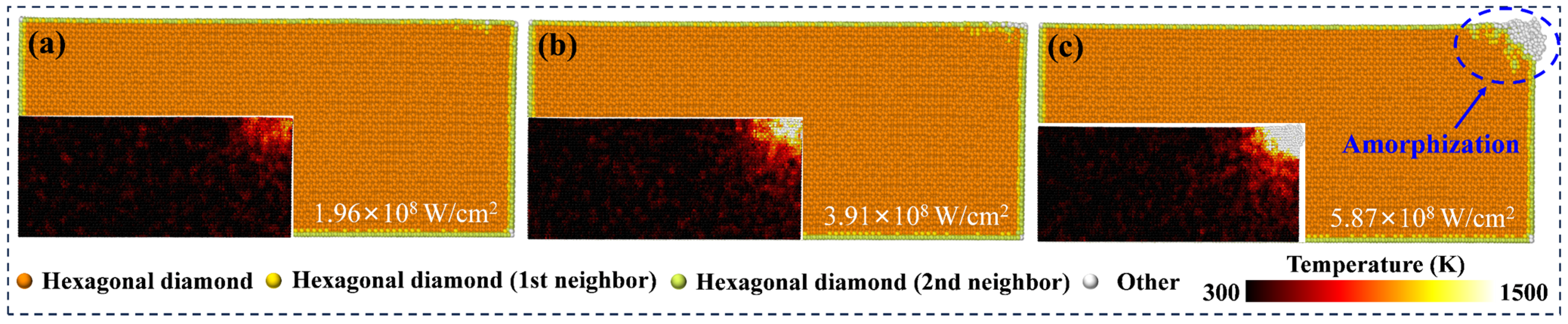
During laser irradiation of the AlN workpiece surface, the workpiece material absorbs laser energy and heats up gradually, with heat diffusing from high- to low-temperature regions inside the AlN. However, excessively high laser power densities can induce strong thermal stress, leading to additional lattice damage [29]. Therefore, before investigating the LAG process, we first conducted preliminary studies to select appropriate laser power densities for subsequent LAG simulations while avoiding laser-induced material damage. As shown in Figure 2, the laser power densities were 1.96 × 10⁸, 3.91 × 10⁸, and 5.78 × 10⁸ W/cm2. At power densities of 1.96 × 10⁸ and 3.91 × 10⁸ W/cm2, the crystal structure of AlN remained intact. However, when the laser power density was increased to 5.78 × 10⁸ W/cm2, the intensified atomic thermal motion led to significant amorphization of the wurtzite AlN crystals.
In our simulation, the laser pulse intensity P(rlaser) was assumed to follow a Gaussian distribution (the schematic diagram is shown in Figure 1b.); it can be expressed as
P r l a s e r = 2 P 0 π r 0 2 exp 2 r l a s e r 2 r 0 2
where rlaser is the radial distance, P0 is the total laser power, and r0 is the laser spot radius [30]. The rigid diamond grit slid on to the AlN workpiece along the [−12–10] crystal orientation at the designed depth (grinding depth, d), and the grinding distance (L) was set to 150 Å. Finally, the diamond grit was lifted along the [0001] crystal orientation and away from the AlN workpiece surface until it returned to its original position. The moving velocity (v) of the laser spot and the diamond grit in the grinding process was set to 0.5 Å/ps. The specific simulation parameters are listed in Table 1.
The Open Visualization Tool (OVITO, Version 3.10.6) open software was used to visualize the atomic simulation results from Large-scale Atomic/Molecular Massively Parallel Simulator (LAMMPS, Version 12 Dec 2018) and obtain various atomic snapshots [31]. The dislocation extraction algorithm [32] and the identify diamond structure (IDS) [33] methods were employed to assess the transformation of atomic structures during grinding and to analyze dislocations and other defects on the subsurface. The atomic displacement vectors and corresponding vector diagrams illustrating the trajectory of each atomic displacement were prepared to analyze the material deformation involving the plastic flow of AlN in the grinding process. The temperature and von Mises stress distribution maps were plotted to evaluate the influence of temperature and shear stress on material removal behavior and subsurface damage. First, the von Mises stress and temperature of each atom were calculated in accordance with the corresponding formula [34,35]. Then, the whole Newtonian layer was divided into a number of unit spheres with a radius of 3.5 Å. Finally, the average von Mises stress and temperature in each sphere space were obtained, and the atoms belonging to a certain sphere were colored in accordance with the calculated average value [36].

3. Results and Discussion

3.1. Grinding Surface Topographies and Material Removal

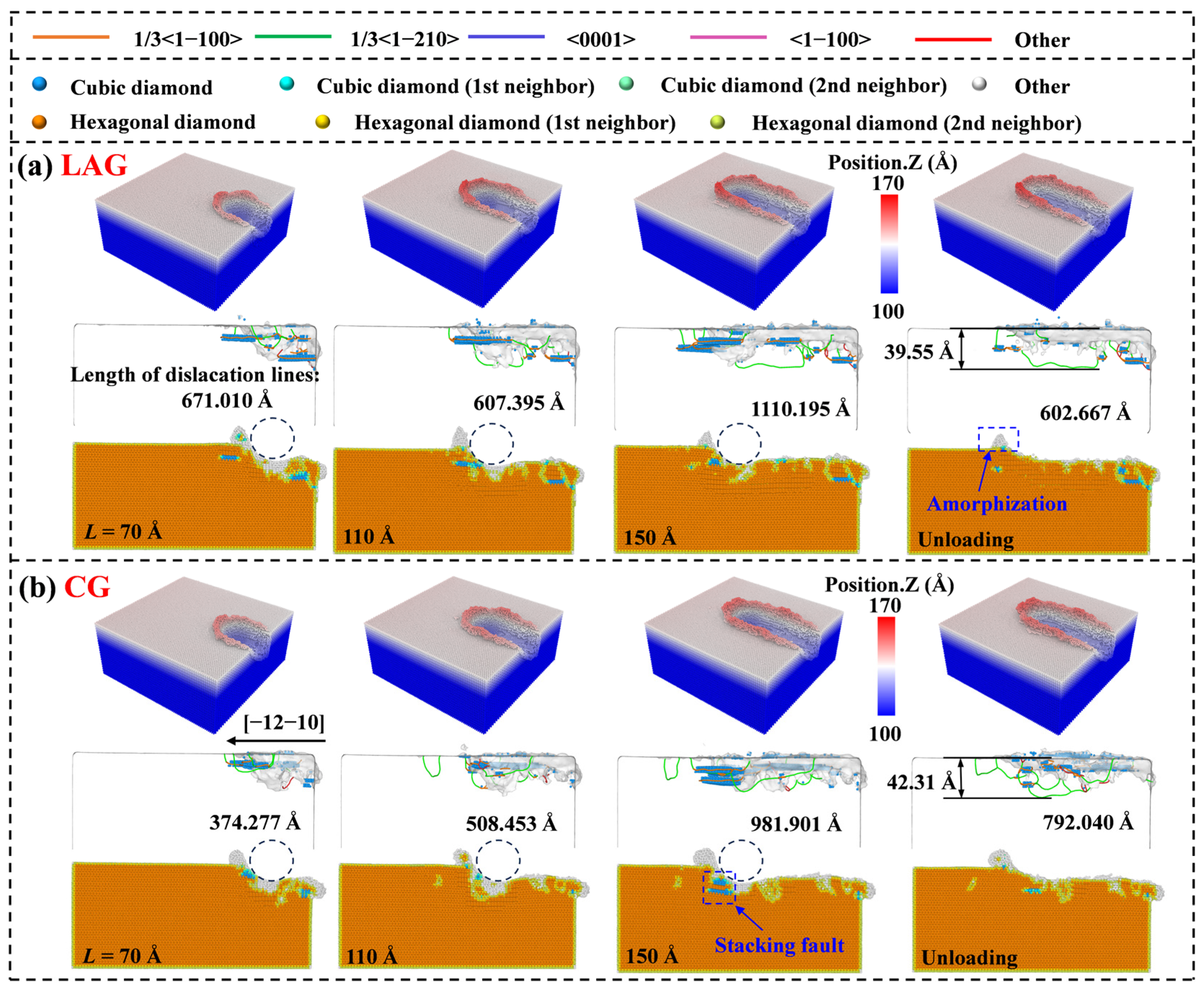
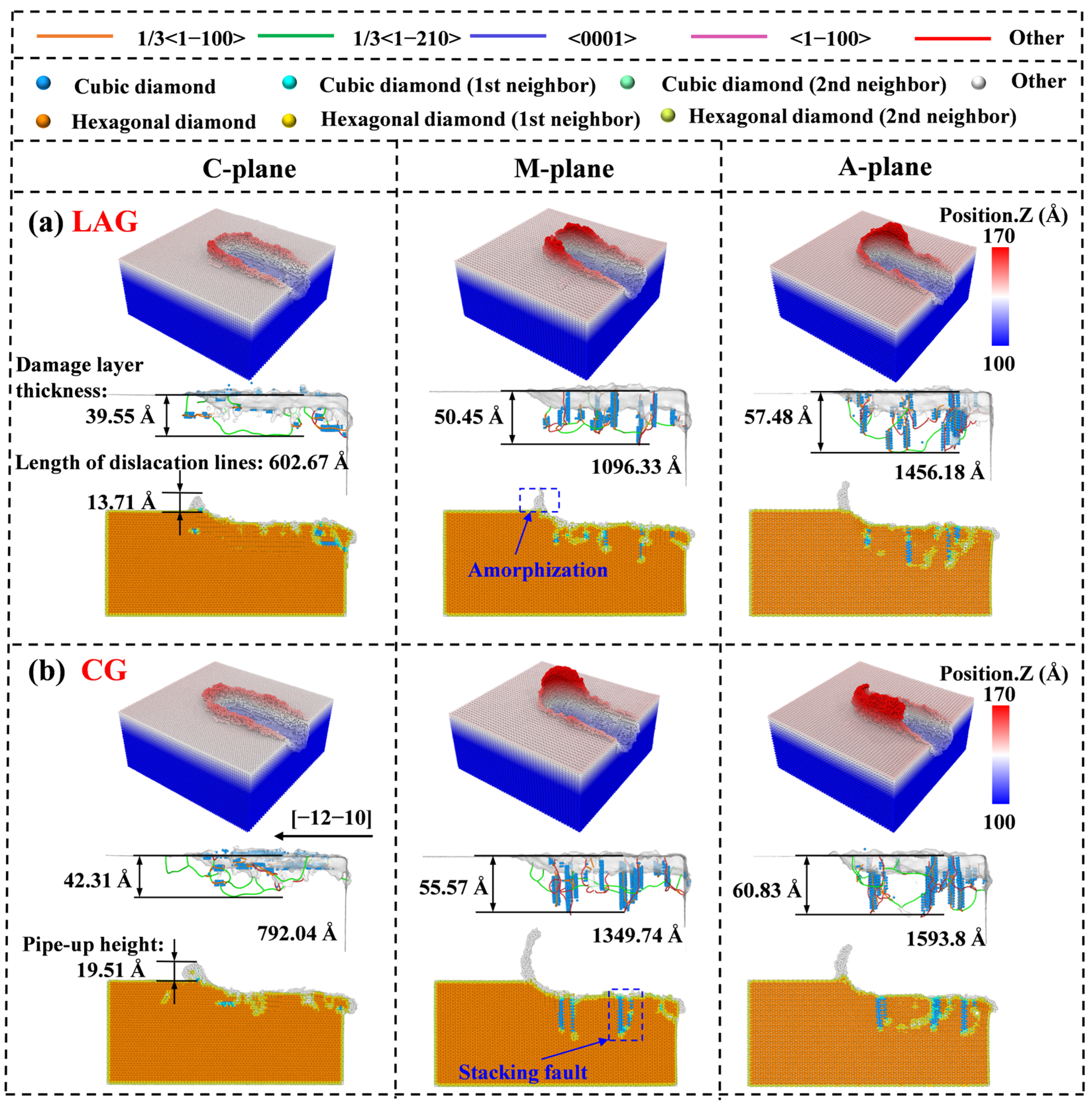
The evolution feature of grinding surface topographies and material removal during LAG on the three crystal planes of AlN was studied. For example, Figure 3 displays the 3D surface topographies and cross-sectional profiles of a C-plane AlN workpiece at different grinding stages for LAG and CG. The grinding depth was 20 Å, and four-row snapshots were obtained when the grinding distance reached 70, 110, and 150 Å and after unloading. For the cross-sectional profiles, the slice thickness was 10 Å, and atoms were colored in accordance with their structural types identified using the IDS method. Each AlN workpiece for LAG and CG exhibited evident surface pileup and material removal volume at this grinding depth. As the grinding distance increased, the surface pileup and material removal volume became increasingly severe. Obvious differences in chip morphology ahead of the grit and the pileup properties on both sides of the grooves existed between LAG and CG. Compared with that in CG, the pileup in LAG was primarily distributed on both sides of the grooves, and the pileup height was lower when grinding along the same [−12–10] direction. The cross-sectional profile indicated that the surface and subsurface of the AlN workpiece underwent amorphization and phase transformation, with a significant reduction in dislocation and stacking fault after unloading. The hexagonal structure partially transformed into a cubic structure, and the cubic phase transition manifested in a lamellar form [20]. Compared with those from CG, the dislocations generated by LAG were more severe during grinding; nevertheless, the dislocations recovered more significantly after unloading. This phenomenon indicated that LAG could facilitate the slip and rearrangement of dislocations, ultimately resulting in less subsurface damage. This phenomenon will be discussed in more detail in Section 3.4. Figure 4 displays the 3D topographies and cross-sectional profiles of different grinding surfaces (i.e., C-, M-, and A-planes) of AlN workpieces after LAG and CG under a grinding depth of 20 Å. In comparison with those on the M- and A-planes, the surface pileup during grinding on the C-plane was more evenly distributed on both sides and in front of the grooves. The cross-sectional profile indicated that the grinding on the C-plane exhibited a lateral distribution of lamellar stacking faults, demonstrating the lowest dislocation line length and damage layer thickness. By contrast, the grinding on the M- and A-planes showed a longitudinal distribution of lamellar stacking faults, with a significantly broader range of phase transformation, resulting in more subsurface damage. In summary, compared with the M- and A-planes, the C-plane was more advantageous for processing owing to its more uniform pileup, more stable material removal, and lower subsurface damage. LAG on these three crystal planes exhibited smaller dislocation line lengths and damage layer thicknesses compared with CG.
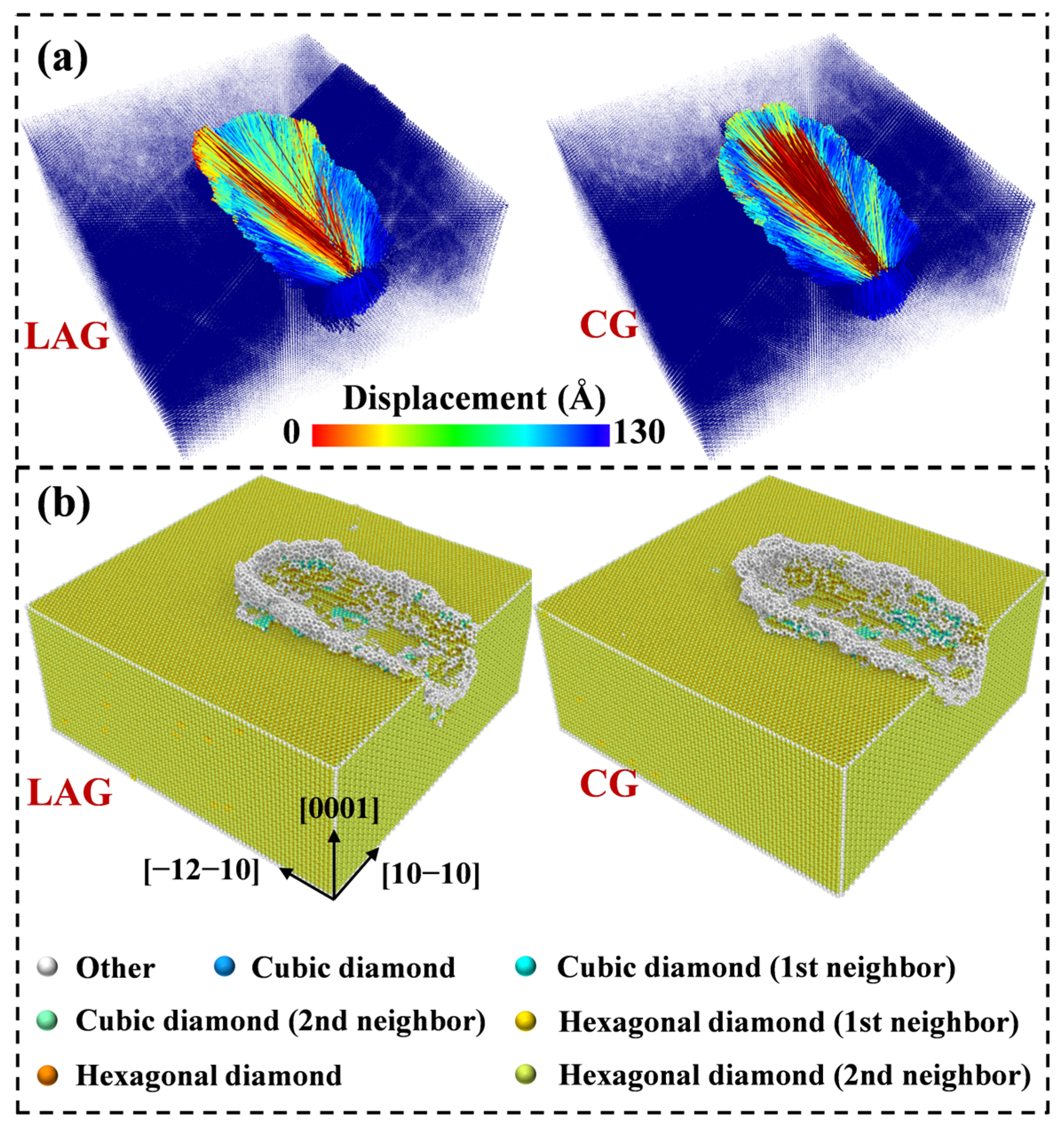
Figure 5a illustrates the atomic flow field during LAG and CG. Because of the pushing effect of the diamond grit, the direction of atomic flow to form pileup and chips was mainly upward on both sides of the grooves and in front of the grit. Compared with those in CG, the atomic displacement vectors were more discretized in LAG, facilitating the plastic flow of workpiece atoms. As a result, the pileup height ahead of the grit was lower for LAG than for CG, reducing the contact area between the grit and the atoms ahead and thus lowering the grinding resistance. Figure 5b depicts the surface pileup on the C-plane under CG and LAG conditions, with atoms colored in accordance with their IDS type. The pileup atoms were predominantly in an amorphous state, but a small number of atoms retained their original wurtzite structure. The laser thermal effect induced plastic deformation in the localized area of the workpiece and facilitated plastic flow, resulting in atoms readily migrating to the sides. Previous studies have suggested dislocation slip as the dominant mechanism of material removal in AlN crystals, which was regarded as a plastic-domain removal approach [22]. As shown in Figure 3, LAG facilitated the slip and rearrangement of subsurface dislocations, ultimately resulting in few dislocations and no cracks in the subsurface layer. Consequently, LAG enabled the easy removal of the plastic deformation zone in the AlN workpiece.
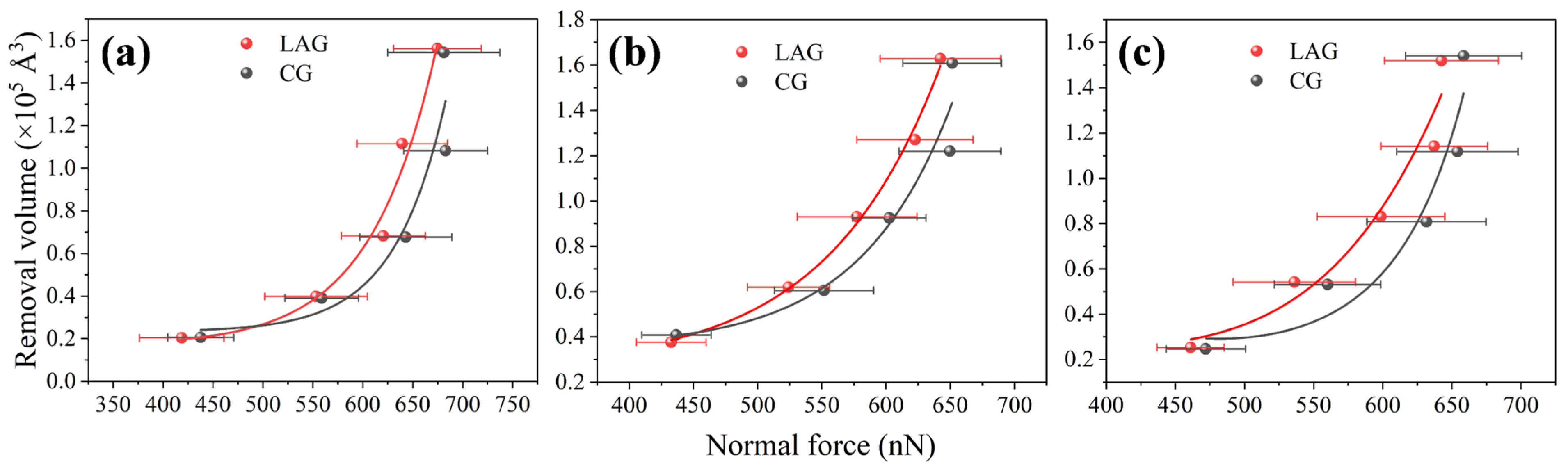
The material removal volumes of AlN were calculated to quantitatively clarify the difference in material removal between LAG and CG for the three crystal planes; we calculated the respective removal volumes at the atomic level. Figure 6 illustrates the removal volume as a function of normal force. For a given normal force, LAG exhibited greater removal volume than CG for each crystal plane, indicating that the introduction of a laser could effectively promote nanoscale material removal in mechanical grinding with a diamond grit. This phenomenon was primarily due to the laser-induced thermal effect that softened the AlN material by intensifying atomic thermal motion, hence weakening the Al–N bonding energy. As a result, the plasticity-dominated material removal was evidently promoted. The rate of increase in removal volume relative to the normal force demonstrated that LAG could achieve higher material removal efficiency compared with CG.
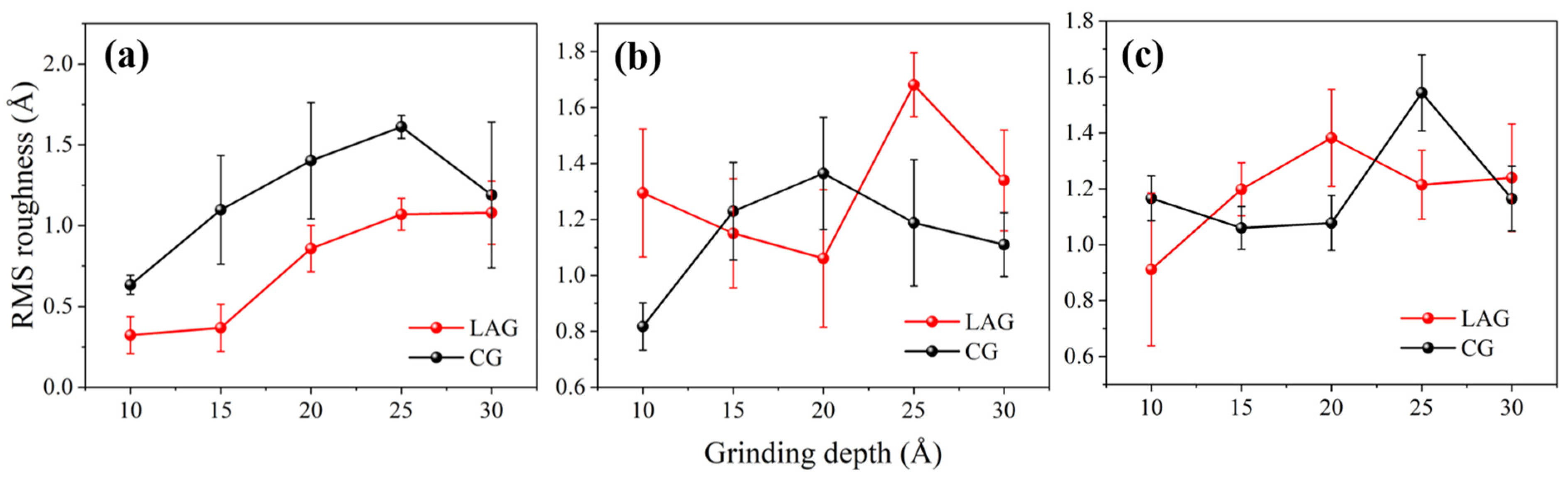
To assess the quality of the grinding surface, we measured the root-mean-square (RMS) roughness at various positions at the center of the grinding surface. The RMS roughness values at different grinding depths are shown in Figure 7a–c, indicating that LAG consistently yielded a superior surface finish (lower roughness) on the C-plane for all grinding depths compared with CG. Unlike the M- and A-planes, the C-plane exhibited high hardness and toughness [37], showing a preference for plastic deformation rather than brittle fracture. Additionally, laser heating could soften AlN, while C-plane AlN, which had a higher thermal conductivity [38], could dissipate heat more effectively, reducing thermal stress and thereby inhibiting crack propagation, resulting in a higher surface energy, which ensured the stability of grinding performance and quality. Accordingly, the thermal–mechanical coupling effects caused by LAG led the AlN workpiece to enter the “plastic domain”, transforming the removal method from brittle fracture to plastic removal, and thus contributing to the generation of ultrasmooth surfaces.

3.2. Grinding Force and Friction Coefficient

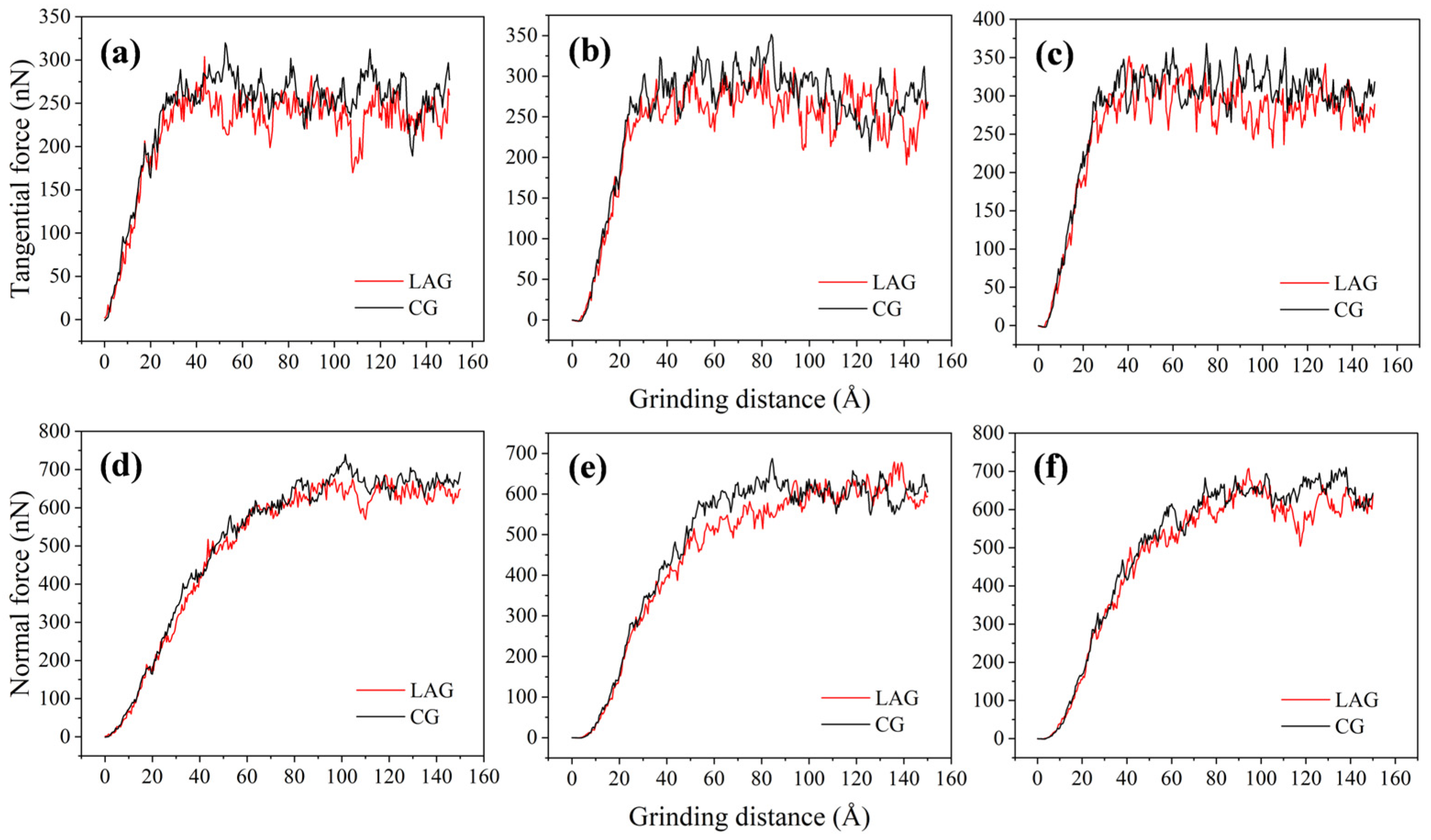
As a direct manifestation of cutting and friction, the grinding force is a key determinant of machining accuracy and final workpiece quality. Generally, low tangential and normal grinding forces are essential for achieving a high-quality surface finish [13,39]. Figure 8 shows the evolution of tangential and normal grinding forces during LAG and CG with a grinding depth of 20 Å on three crystal planes. The entire grinding process can be categorized into two distinct stages on the basis of the grinding force trend: the initial stage and the stable stage. During the initial stage, the contact area between the diamond grits and the AlN workpiece increased progressively, a trend applicable to LAG and CG. This growth directly led to a rapid rise in tangential and normal forces. Subsequently, it entered the stable grinding stage, with the contact area leveling off and the grinding forces fluctuating consistently around a mean value to maintain material removal.
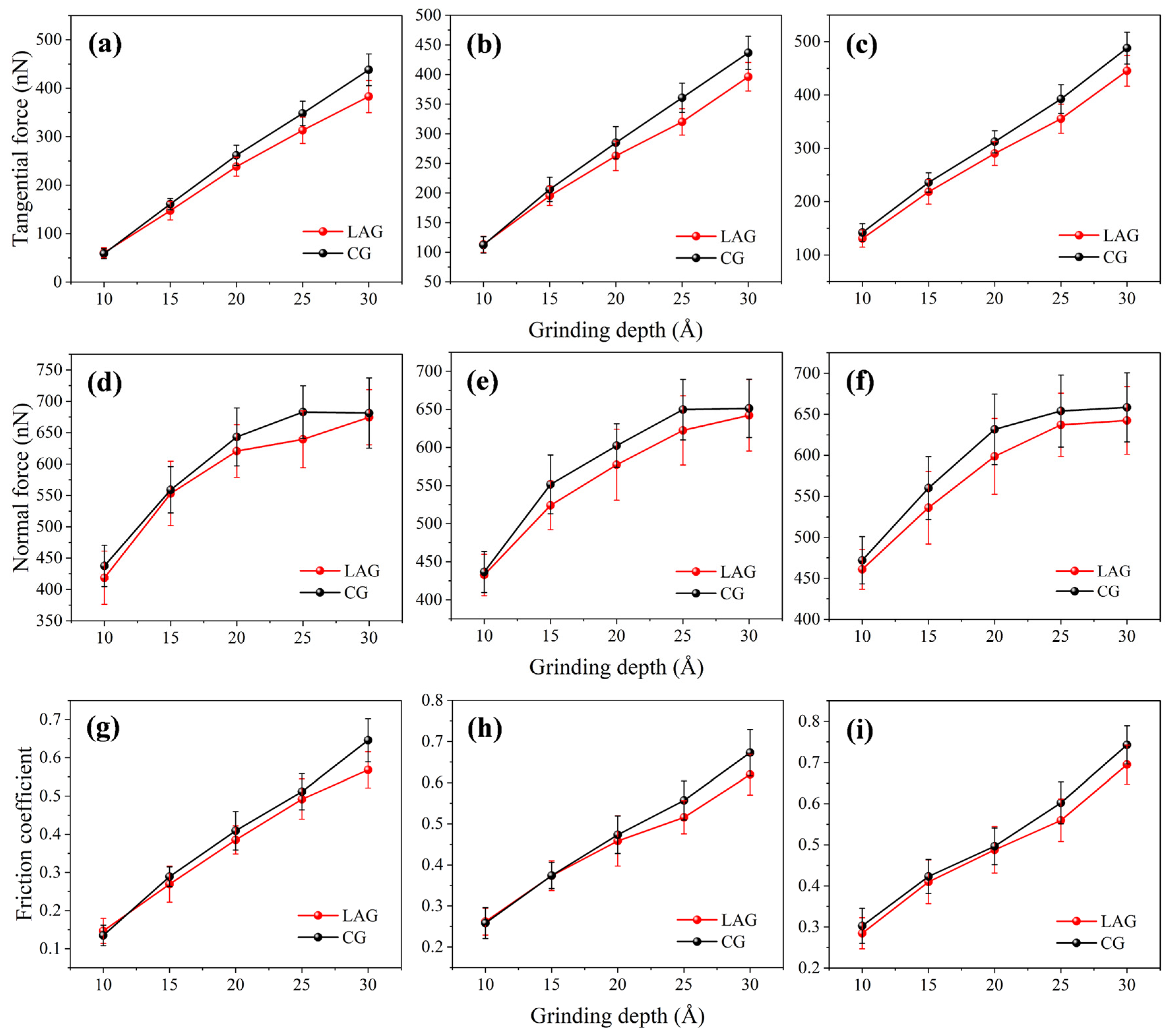
To compare the grinding forces for LAG and CG, we extracted the average grinding force and friction coefficient over the stable grinding stage (grinding distance = 50–150 Å) for analysis. Figure 9a–f illustrate the average tangential and normal forces as functions of grinding depth for LAG and CG on various grinding surfaces of the C-, M-, and A-planes. Compared with CG, LAG demonstrated lower tangential and normal forces for all three crystal planes. The localized laser heating during LAG intensified the thermal motion of atoms in the AlN workpiece ahead of the diamond grit. This intensification resulted in a weakening of the Al–N binding energy, and consequently a reduction in grinding resistance. Meanwhile, the tangential force demonstrated a linear correlation with grinding depth in LAG and CG, with LAG exhibiting a lower rate of increase. The friction coefficient is calculated as the ratio of the tangential force to the normal force [40]. Figure 9g–i show the variations in friction coefficients of the AlN workpiece over the stable grinding stage with grinding depth for LAG and CG on the abovementioned three crystal planes. Overall, LAG exhibited a lower friction coefficient compared with CG, offering a favorable condition for grit movement during the grinding process.

3.3. Temperature Distribution

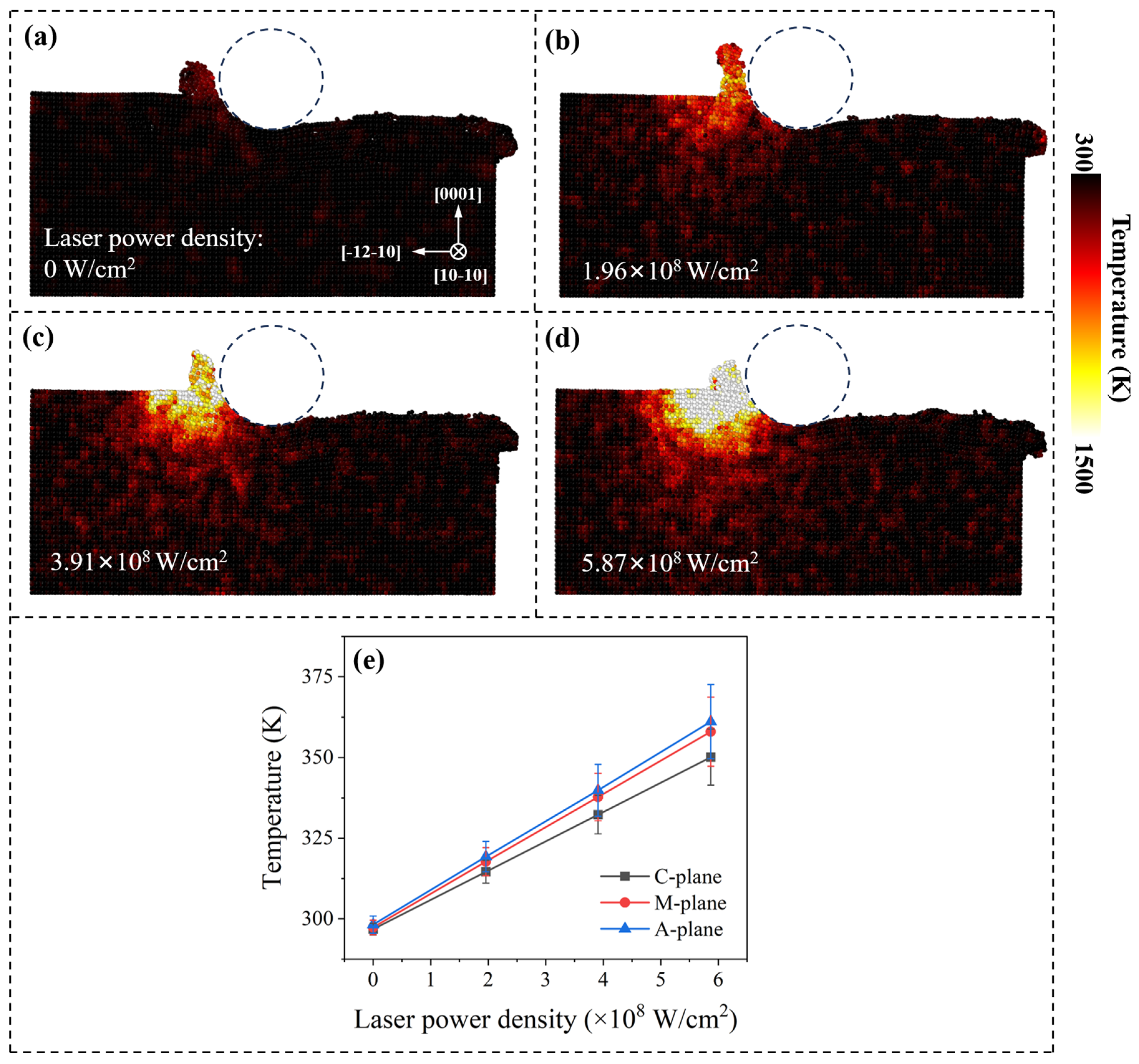
Given that temperature has a significant impact on the material removal process, particularly high temperatures are considered a significant means to enhance the machinability of hard and brittle materials [41,42]. Therefore, understanding the effects of temperature on material removal and subsurface damage is crucial. Figure 10 shows the temperature distribution in the AlN workpiece under LAG and CG at a grinding distance of 150 Å. For LAG, a noticeable localized high-temperature area existed in the contact zone between the diamond grit and the AlN workpiece, primarily located within and beneath the chips. By contrast, the grinding-induced heat was generated in a highly confined region at the grit–workpiece interface; therefore, the temperature was quite lower. The reason was that, after laser irradiation on the AlN surface, AlN absorbed the laser energy and rapidly heated up, with heat diffusing from the high-temperature region to the low-temperature region within the AlN, creating a higher average temperature than that of CG across the entire Newtonian layer (Figure 10e). The thermal effect weakened the Al–N bonds and hence reduced the hardness of AlN, facilitating material removal and resulting in lower grinding forces and higher machining efficiency. Figure 10e illustrates the effect of laser power density on the Newtonian layer temperature of AlN workpieces during LAG. The results indicated that the temperature of the Newtonian layer increased linearly with the increase in laser power density. Under the same power density of laser irradiation, the temperature of the Newtonian layer on the A surface was highest, followed by that on the M surface, whereas the Newtonian layer on the C surface had the lowest temperature. This finding suggested that the absorption rates of laser energy differed across various grinding surfaces (laser absorption rates: A surface > M surface > C surface).

3.4. Subsurface Damage

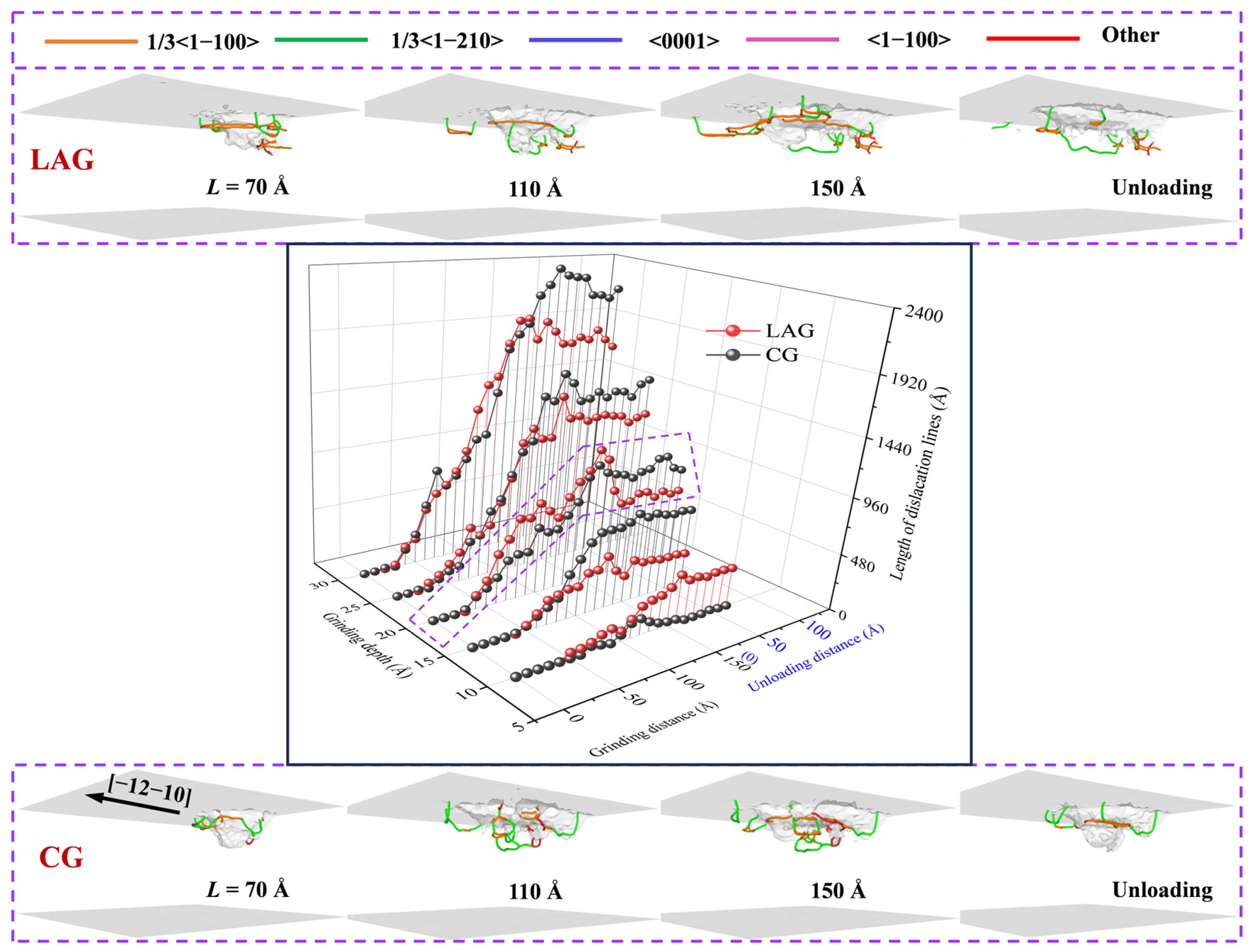
In Figure 3, the subsurface damage of the AlN workpiece during LAG and CG, which is composed of dislocations, stacking faults, and an amorphous structure, is displayed. After grinding, the subsurface damage of the AlN workpiece caused by LAG was characterized by fewer dislocations and stacking faults, along with a thinner damage layer, compared with that under CG. Figure 11 illustrates the variation in dislocation lines of the C-plane AlN workpiece with grinding distance at different grinding depths during LAG and CG. For a grinding depth of 20 Å, Figure 11 compares the dislocation patterns in AlN workpieces at grinding distances of L = 70, 110, and 150 Å, and after unloading under LAG and CG. In the LAG and CG processes, the dislocation line lengths generally increased with an increase in grinding distance, along with some fluctuations within a certain range of grinding distance. The length of dislocation lines in LAG was similar to that in CG, which was attributed to the thermal–mechanical coupling effects in LAG that could promote the formation and development of various dislocations. Nevertheless, after the grinding process was completed, the dislocation line lengths for both the LAG and CG cases decreased, and the decline was more pronounced for the LAG case. The results indicated that the localized high temperatures induced by laser assistance during the grinding process facilitated the formation and development of dislocations. Nonetheless, the grinding force throughout the entire grinding process was significantly low. Once the heat dissipated, many dislocations underwent self-repair, resulting in a dislocation structure and density on the subsurface that were much lower than those obtained by using CG. The dislocation density induced by LAG exceeded that induced by CG, particularly when the grinding depth was 10 Å. This particular effect at 10 Å and the overall subsurface damage will be analyzed in the subsequent paragraph.
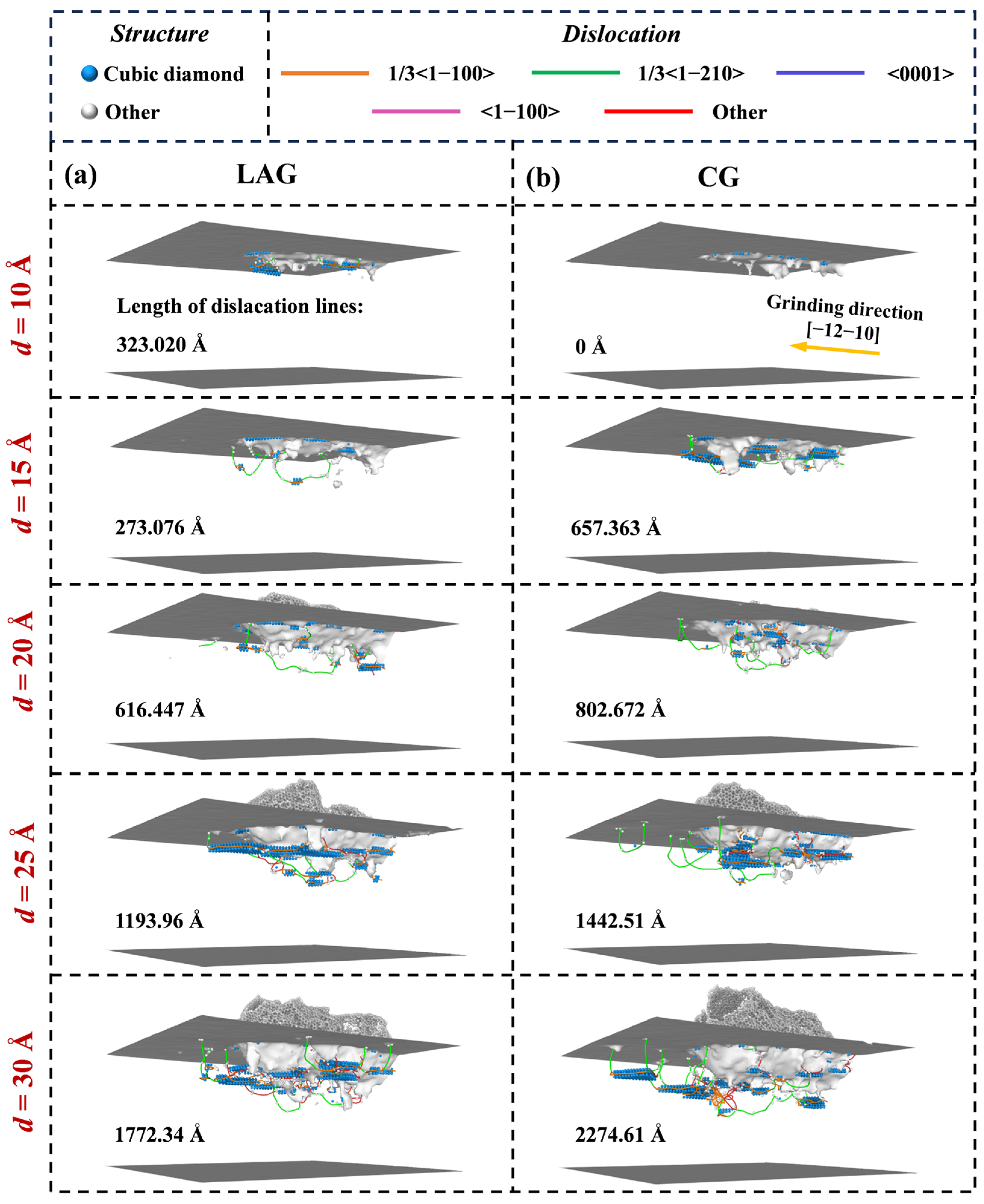
Figure 12 shows the subsurface damage of the AlN workpiece after LAG and CG under different grinding depths on the grinding surface of the C-plane. For the grinding depths of 15, 20, 25, and 30 Å, LAG exhibited evidently shorter dislocation lines compared with CG, suggesting that an induced laser effect could remarkably reduce subsurface damage in the grinding process. In addition, the distribution range of dislocations in LAG was smaller than that in CG. When the grinding depth was 10 Å, a marked change was observed: the length of dislocation lines for the LAG case was ~323 Å, whereas for CG, it was zero (no dislocation). The laser penetration depth (25 Å) was obviously greater than the grinding depth of 10 Å, causing the AlN workpiece to undergo prestrain and promoting the generation of dislocations and stacking faults because of the synergistic effect of laser-induced thermal stress and the mechanical stress by grinding. The grinding process served as a trigger for this pre-existing dislocation and stacking fault networks, thereby leading to pronounced subsurface lattice damage.
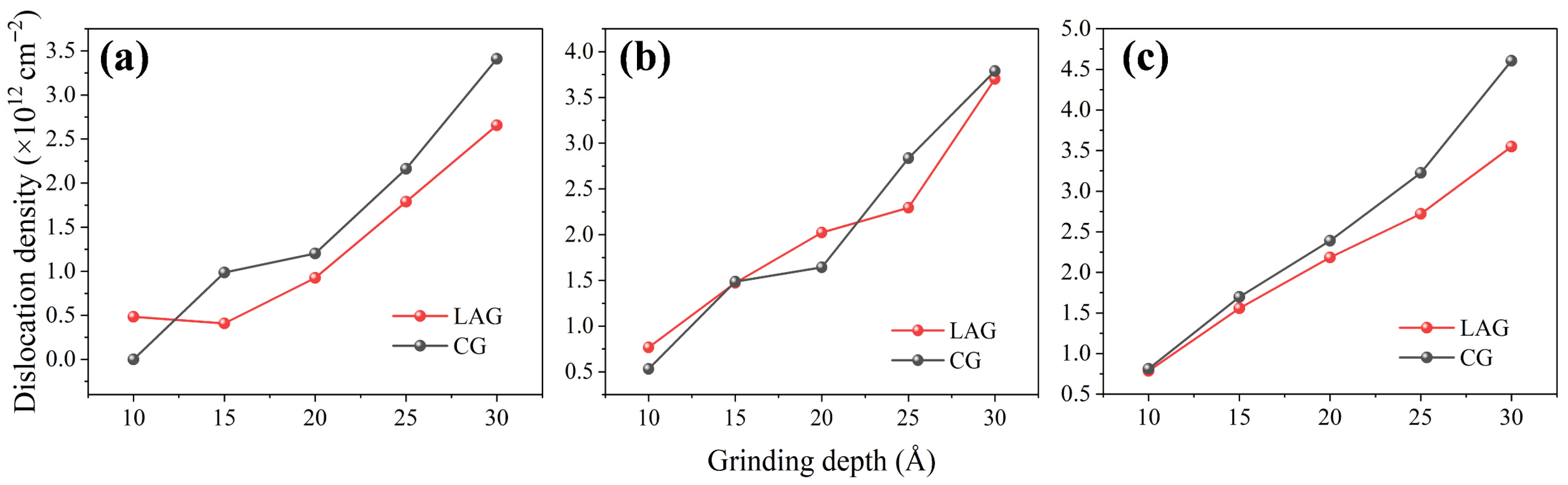
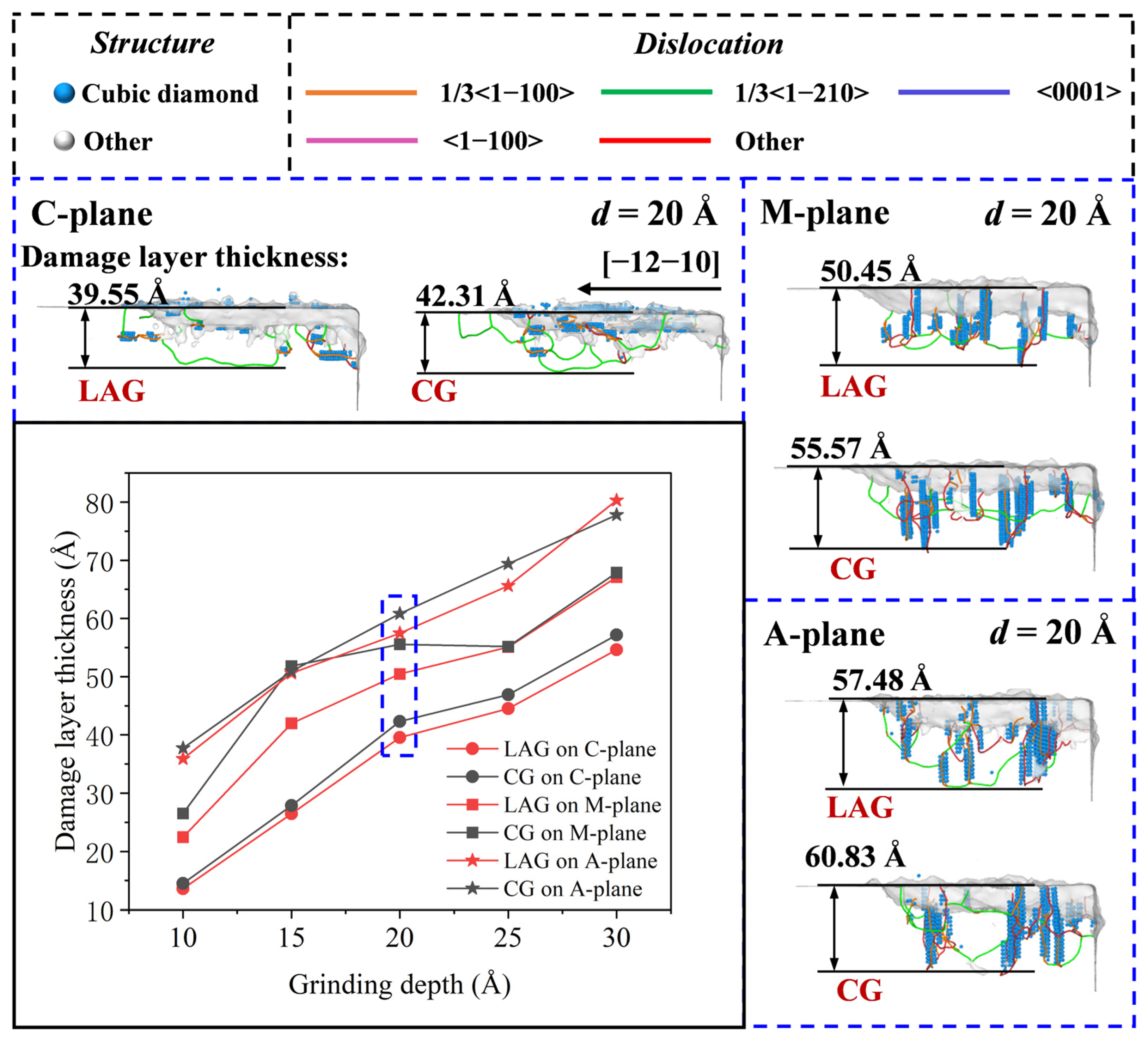
Figure 13 shows the dislocation densities of C-, M-, and A-plane AlN workpieces as a function of grinding depth after LAG and CG. The results indicated that compared with those for CG, the dislocation densities in the C- and A-planes for LAG were significantly reduced. However, the improvement in dislocation density was not significant for the M-plane AlN workpiece. Figure 14 presents the damage layer thickness of the C-, M-, and A-planes as a function of grinding depth after LAG and CG. As the grinding depth increased, the thickness of the damage layer also gradually increased. Among the different grinding surfaces, the thickness of the damage layer on the C-plane was the smallest, followed by that on the M-plane, whereas the A-plane exhibited the largest thickness. This finding suggested that the C-plane AlN workpiece could contribute to achieving lower subsurface damage. Compared with that after CG, the thickness of the damage layer for these three AlN workpieces after LAG was significantly reduced overall, indicating that the laser could also minimize the range of subsurface damage and improve the quality of the grinding surface.
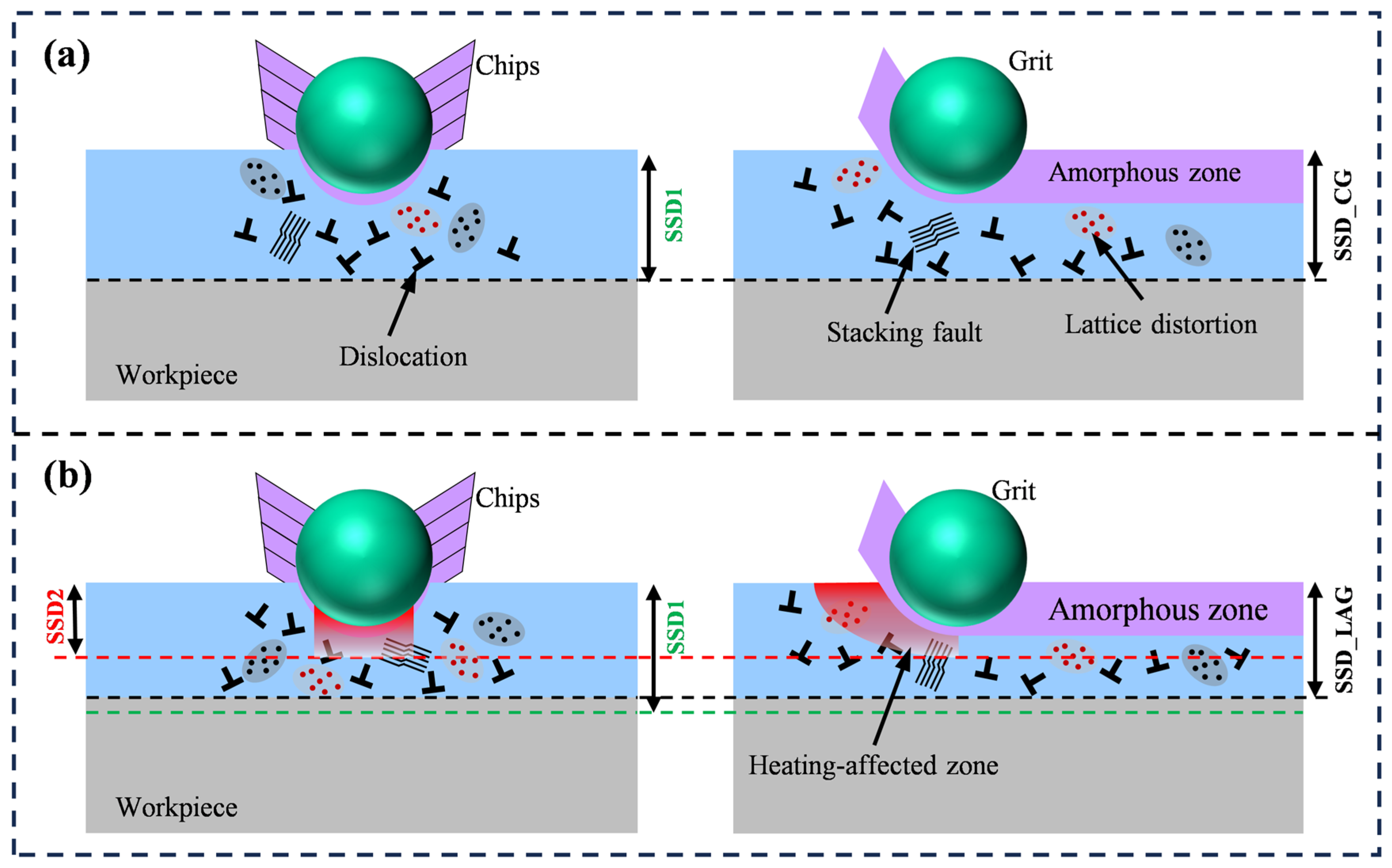
Previous results indicated that LAG produced a thinner subsurface damage (SSD) layer in the C-plane AlN workpieces compared with CG across nearly all grinding depths. This finding demonstrated the effective mitigation of subsurface damage by laser-induced thermal effects. In Figure 15, we provide schematic diagrams to illustrate the different subsurface damage mechanisms of LAG and CG on the C-plane AlN. This situation parallels the findings in the literature regarding subsurface damage in hard-brittle semiconductor materials [43]. In the absence of laser assistance, the damage layer depth for CG (denoted as SSD1, where SSD_CG = SSD1) was influenced solely by mechanical forces. This study, conducted under conditions in which grinding was the primary method and laser preheating served as an auxiliary method, indicated that mechanical action dominated the SSD values (denoted as SSD_LAG). When the laser was introduced, the additional energy field induced by the thermal effect of the laser was considered, resulting in a subsurface damage depth (denoted as SSD2, where SSD2 < SSD_LAG). In this context, localized laser heating accelerated the thermal motion of AlN atoms, leading to a reduction in Al–N bond strength, which in turn diminished the grinding force and suppressed the mechanical action that governed the subsurface damage depth, resulting in SSD_LAG < SSD_CG.

3.5. Effect of Laser Power Density on Grinding Properties

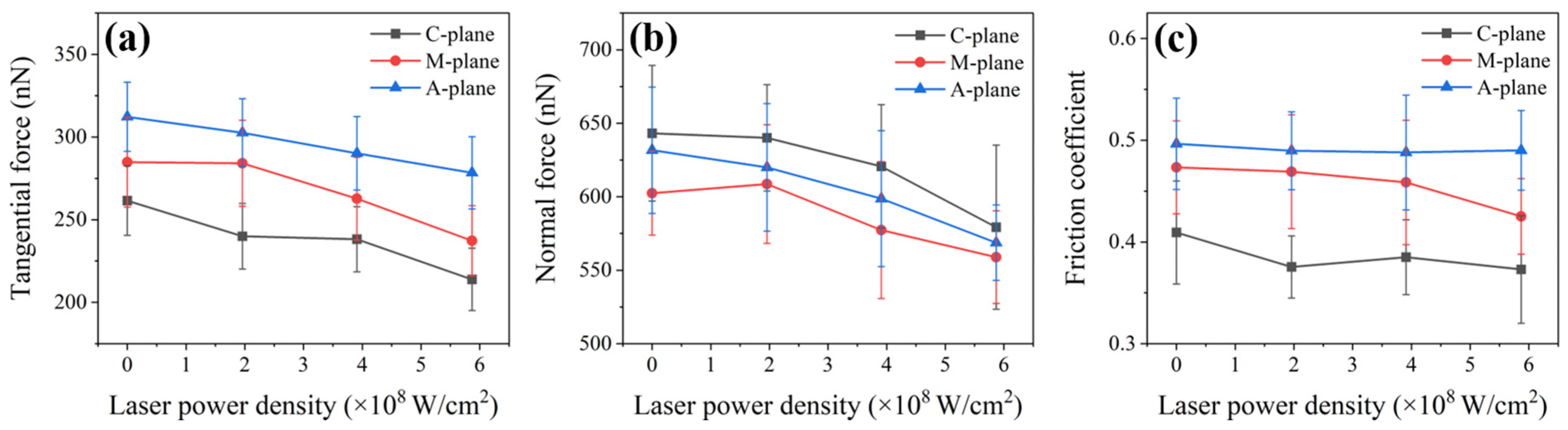
Figure 16 illustrates the effect of laser power density on the grinding forces and friction coefficient of AlN workpieces during LAG. The averaged tangential and normal forces in the stable stage decreased with an increase in laser power density for all three grinding surfaces. This was due to the increase in laser energy, which raised the temperature and intensified the thermal motion of the atoms in the workpiece ahead of the grit particle, leading to a reduction in the binding energy of the Al–N bonds, and consequently resulting in lower grinding forces. Furthermore, as depicted in Figure 16c, the friction coefficient in the stable stage for all three grinding surfaces slightly decreased with increasing laser power densities, providing favorable conditions for improving processing quality.
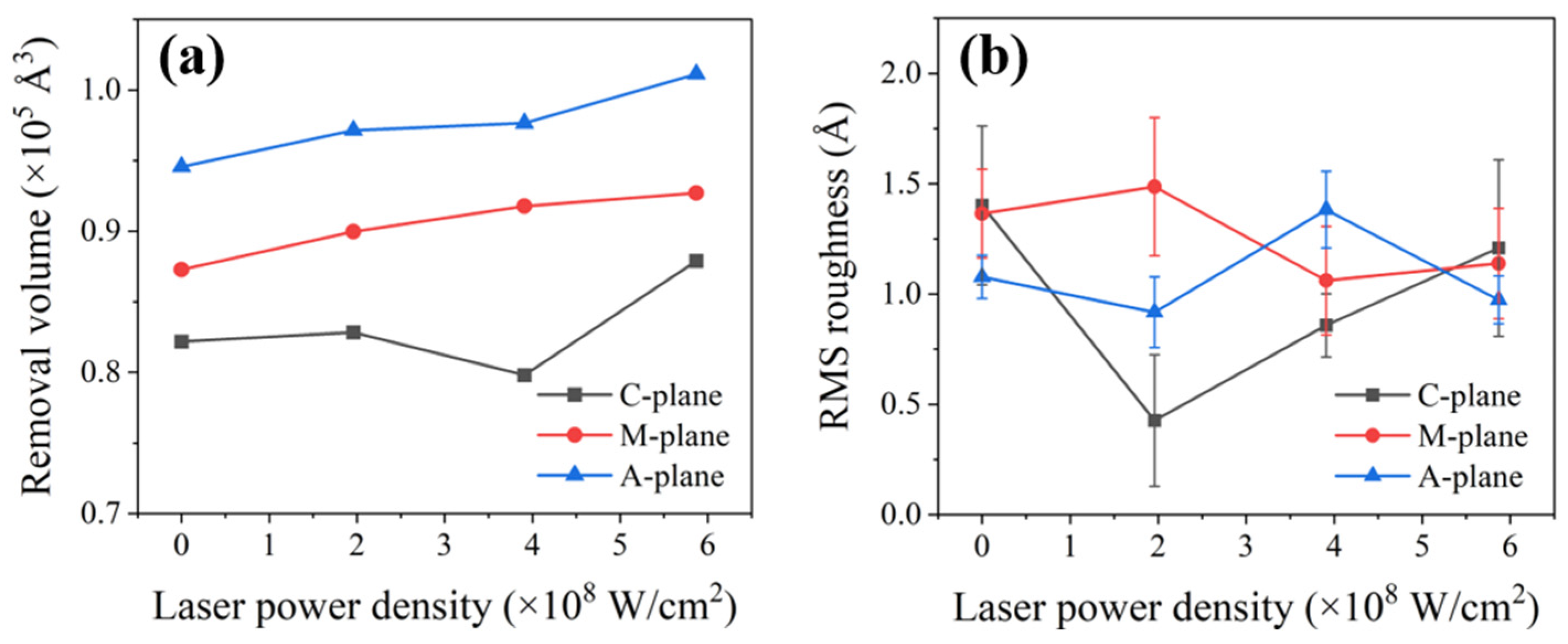
The effects of laser power density on the grinding removal volume and surface roughness of AlN workpieces during LAG for all three grinding surfaces were investigated. As shown in Figure 17a, the removal volume increased with the increase in laser power density for almost all three grinding surfaces. This increase was attributed to the thermal effects of the laser, which reduced the atomic bonding energy, thereby softening the workpiece, and most notably, facilitating plastic material removal. Accordingly, increasing the laser power density could effectively enhance the material removal rate. Figure 17b shows the variation in RMS roughness with the laser power density of AlN workpieces on the three grinding surfaces. The RMS roughness values on the C-plane increased linearly with the increase in laser power density, and all RMS roughness values remained lower than those in CG (P(rlaser) = 0). When the laser power density reached 1.96 × 10⁸ W/cm2, the AlN workpiece achieved the smoothest grinding surface. By contrast, surface roughness did not follow a consistent trend on the M- and A-planes. Hence, while the introduction of laser energy could improve surface quality on the most stable C-plane, excessively high laser energy might have a detrimental effect on surface quality.
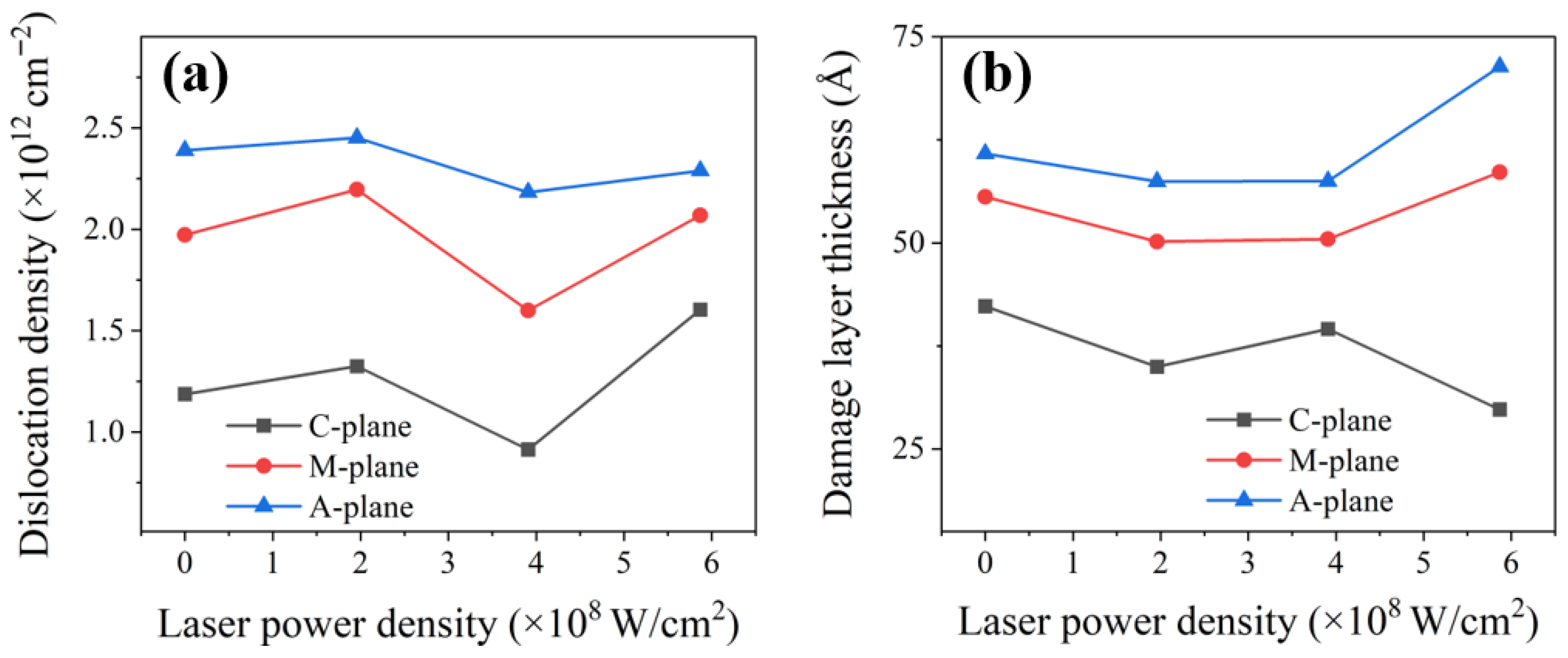
The impact of laser power density on the subsurface damage during LAG was also investigated. Figure 18a presents the dislocation density as a function of laser power density following LAG on three AlN workpieces. A minimum dislocation density was achieved at 3.91 × 10⁸ W/cm2, suggesting that employing an appropriate laser power density is key to substantially reducing dislocations. Figure 18b illustrates the effect of laser power density on the damage layer thickness following LAG on three grinding surfaces. For LAG on all three crystal planes, the damage layer thickness decreased with increasing laser power density up to approximately 4 × 10⁸ W/cm2. While this decreasing trend continued for the C-plane at higher power densities, it was reversed for the M- and A-planes: at an excessive power density of 5.87 × 10⁸ W/cm2, their damage layer thickness increased significantly. This result was attributed to the thermal effect induced by the ultrahigh power density, which caused more severe subsurface damage.

4. Conclusions

This study employed MD simulations to investigate the crystal-orientation-dependent material removal and subsurface damage during single-grit LAG of single-crystal AlN. Compared with CG, LAG can alleviate pileup and decrease the grit–workpiece contact area between the diamond grit and the AlN workpiece, thereby reducing grinding resistance. The laser-induced thermal softening promotes atomic plastic flow and material removal across all three crystal planes. Among all grinding depths, the minimum surface roughness is attained by applying LAG to the C-plane of AlN along the <11–20> crystallographic orientation; however, this reduction in surface roughness is not observed on the M- and A-plane of AlN. Across all three crystal planes, the average tangential force in LAG and CG increases linearly with grinding depth, but with a consistently lower rate for LAG. At all grinding depths, LAG exhibits lower tangential force, normal force, and friction coefficient than CG, primarily due to reduced grinding resistance from the laser-induced thermal effect. LAG reduces grinding-induced subsurface damage in AlN, producing a thinner damage layer than CG across all crystal planes. For LAG and CG, the subsurface damage layer is consistently observed to be thinnest in C-plane AlN, followed by M-plane AlN, and is thickest in A-plane AlN. Despite initially enhancing dislocation nucleation, the laser-irradiation-induced thermal effect in LAG enables rapid recovery after grinding, resulting in lower final dislocation densities in C- and A-plane AlN workpieces. Moreover, this study demonstrates that increasing laser power density effectively reduces grinding forces and friction coefficients in LAG of AlN while enhancing material removal rates. For the most stable C-plane, surface roughness exhibits a linear increase with power density but remains lower than that observed in CG; by contrast, the M- and A-planes do not display a consistent trend. A suitable laser power density can effectively minimize subsurface damage and improve surface quality for C-, M-, and A-plane AlN workpieces. However, excessive power density exacerbates subsurface damage on the M- and A-planes, suggesting that optimizing laser power density is crucial for achieving a balance between machining efficiency and surface quality.
This study can enrich the foundational theory of external energy field-assisted ultraprecision manufacturing, providing a theoretical basis for high-precision, low-damage, and high-efficiency ultraprecision grinding and polishing of hard-brittle semiconductors. Future work should establish a multi-physics field-coupled MD model incorporating realistic abrasive morphology, wear, and random multi-abrasive distribution, to elucidate the synergy or coupling effect of material removal mechanisms under multi-physics fields.

Author Contributions

C.W.: Conceptualization, Investigation, Data curation, Formal analysis, Writing—original draft. F.Y.: Conceptualization, Funding acquisition. H.F.: Investigation, Data curation. Y.L.: Investigation, Data curation. R.Y.: Conceptualization, Formal analysis. J.G.: Project administration, Conceptualization, Investigation, Formal analysis, Writing—review and editing, Supervision, Funding acquisition. All authors have read and agreed to the published version of the manuscript.

Funding

This research was funded by the National Natural Science Foundation of China (No. 52475195), the Natural Science Foundation of Hunan Province (No. 2024JJ7434), and the Scientific Research Foundation of University of South China.

Data Availability Statement

The original contributions presented in this study are included in the article. Further inquiries can be directed to the corresponding author.

Acknowledgments

We would like to acknowledge the HPC Center of University of South China in running the LAMMPS software.

Conflicts of Interest

The authors declare that they have no known competing financial interests or personal relationships that could have appeared to influence the work reported in this paper.

References

  1. Le, P.C.; Do, T.T.; Fang, T.H.; Lee, C.-I. Polishing-induced material attrition in surface-texturing AlN using a nanoscale polishing tool: An atomic-scale understanding. Tribol. Int. 2024, 192, 109254. [Google Scholar] [CrossRef]
  2. He, Y.; Sun, J.T.; Gao, P.; Song, S.; Wang, K.; Tang, M. Atomic removal mechanism of nano polishing for single-crystal AlN substrate via molecular dynamics. Mater. Sci. Semicond. Process. 2023, 156, 107294. [Google Scholar] [CrossRef]
  3. Zhang, H.; Sun, C.; Hong, Y.; Deng, Y.; Ma, L. Aluminum nitride surface modification mechanism by laser ultrasonic-assisted grinding. Tribol. Int. 2024, 196, 109718. [Google Scholar] [CrossRef]
  4. Singhal, J.; Encomendero, J.; Cho, Y.; van Deurzen, L.; Zhang, Z.; Nomoto, K.; Toita, M.; Xing, H.G.; Jena, D. Molecular beam homoepitaxy of N-polar AlN on bulk AlN substrates. AIP Adv. 2022, 12, 095314. [Google Scholar] [CrossRef]
  5. Luo, B.; Li, Y.W.; Miao, J.; Jiao, Z.; Fu, Y.; Shu, R. Research on the material removal mechanism of vibration-assisted nano-scratch on single-crystal GaN by molecular dynamics. J. Mol. Model. 2024, 31, 3. [Google Scholar] [CrossRef]
  6. Zhang, L.F.; Wang, T.Q.; Zhao, D.W.; Lu, X. Study on chemical mechanical polishing of cobalt interconnect wafers with heterogeneous structures in integrated circuits. J. Tsinghua Univ. 2025, 65, 269–279. [Google Scholar] [CrossRef]
  7. Shao, J.; Zhao, Y.; Zhu, J.; Yuan, Z.; Du, H.; Wen, Q. A new slurry for photocatalysis-assisted chemical mechanical polishing of monocrystal diamond. Machines 2023, 11, 664. [Google Scholar] [CrossRef]
  8. Li, W.; Hu, X.L.; Duan, H.G.; Deng, H.; Huang, X.M.; Ren, Y.H.; Ibrahim, A.M.M. Research status analysis of low temperature plasma and its compound processing technology on the surface of hard and brittle components. J. Mech. Eng. 2024, 60, 246–261. [Google Scholar] [CrossRef]
  9. Zhang, H.; Sun, C.; Hong, Y.; Deng, Y.; Ma, L. Aluminium Nitride Surface Characterization by Grinding with Laser–Ultrasonic Coupling. Materials 2024, 17, 3772. [Google Scholar] [CrossRef]
  10. Lin, J.Q.; Wu, M.L.; Liu, S.Y.; Zhou, Y.; Gu, Y.; Zhou, X.Q. Processing Mechanism and Experiment of Ultrasonic Vibration Assisted Cutting of SiCp/Al Composites. China Surf. Eng. 2024, 37, 182–198. [Google Scholar] [CrossRef]
  11. Dai, H.F.; Hu, Y.; Wu, W.L.; Yue, H.; Meng, X.; Li, P.; Duan, H. Molecular dynamics simulation of ultra-precision machining 3C-SiC assisted by ion implantation. J. Manuf. Process. 2021, 69, 398–411. [Google Scholar] [CrossRef]
  12. Zou, Y.; Satou, R.; Yamazaki, O.; Xie, H. Development of a new finishing process combining a fixed abrasive polishing with magnetic abrasive finishing process. Machines 2021, 9, 81. [Google Scholar] [CrossRef]
  13. You, K.; Yan, G.; Luo, X.; Gilchrist, M.D.; Fang, F. Advances in laser assisted machining of hard and brittle materials. J. Manuf. Process. 2020, 58, 677–692. [Google Scholar] [CrossRef]
  14. Li, Z.; Zhang, F.; Luo, X.; Chang, W.; Cai, Y.; Zhong, W.; Ding, F. Material removal mechanism of laser-assisted grinding of RB-SiC ceramics and process optimization. J. Eur. Ceram. Soc. 2019, 39, 705–717. [Google Scholar] [CrossRef]
  15. Ma, Z.; Wang, Z.; Wang, X.; Yu, T. Effects of laser-assisted grinding on surface integrity of zirconia ceramic. Ceram. Int. 2020, 46, 921–929. [Google Scholar] [CrossRef]
  16. Ma, Z.; Wang, Q.; Dong, J.; Wang, Z.; Yu, T. Experimental investigation and numerical analysis for machinability of alumina ceramic by laser-assisted grinding. Precis. Eng. 2021, 72, 798–806. [Google Scholar] [CrossRef]
  17. Guo, J.; Tan, S.; Xiao, C. Atomistic understanding of scratching-induced material attrition of wurtzite single-crystal AlN using nanoscale diamond abrasive. Tribol. Int. 2022, 169, 107483. [Google Scholar] [CrossRef]
  18. Dai, H.; Chen, G. A molecular dynamics investigation into the mechanisms of material removal and subsurface damage of nanoscale high speed laser-assisted machining. Mol. Simul. 2017, 43, 42–51. [Google Scholar] [CrossRef]
  19. Meng, B.; Li, C. Thermal effects on removal mechanism of monocrystal SiC during micro-laser assisted nanogrinding process. Ceram. Int. 2023, 49, 15349–15356. [Google Scholar] [CrossRef]
  20. Li, C.; Hu, Y.; Zhang, F.; Geng, Y.; Meng, B. Molecular dynamics simulation of laser assisted grinding of GaN crystals. Int. J. Mech. Sci. 2023, 239, 107856. [Google Scholar] [CrossRef]
  21. Qin, S.; Zhu, L. Surface and subsurface damage of laser assisted grinding CrCoNi medium-entropy alloy at atomic/nano scale. Tribol. Int. 2024, 191, 109121. [Google Scholar] [CrossRef]
  22. Feng, S.; Guo, J.; Yin, J.; Wu, H.; Qian, L.; Xiao, C. Atomistic study of material removal behavior during ultrasonic vibration-assisted nanoscratching of single-crystal AlN. Friction 2026, 14, 9441097. [Google Scholar] [CrossRef]
  23. Wang, Y.; Liu, A.P.; Yang, X.L.; Zhou, X.Y. Anomalous thermal conductivity anisotropy in bulk hexagonal AlN induced by structural phase transition. Appl. Phys. Lett. 2025, 126, 202207. [Google Scholar] [CrossRef]
  24. Chen, J.Y.; Zhang, W.X.; Tong, K. Effect of twins on scratching behavior of nanotwinned diamond: A molecular dynamics simulation. Appl. Surf. Sci. 2023, 616, 156545. [Google Scholar] [CrossRef]
  25. Wang, Y.H.; Liang, Z.Q.; Zhao, W.X.; Wang, X.B.; Wang, H. Anisotropic cutting mechanisms on the surface quality in ultra-precision machining of R-plane sapphire. Appl. Surf. Sci. 2023, 622, 156868. [Google Scholar] [CrossRef]
  26. Vashishta, P.; Kalia, R.K.; Nakano, A.; Rino, J.P. Interaction potential for silicon carbide: A molecular dynamics study of elastic constants and vibrational density of states for crystalline and amorphous silicon carbide. J. Appl. Phys. 2007, 101, 103515. [Google Scholar] [CrossRef]
  27. Xiang, H.G.; Li, H.T.; Peng, X.H. Comparison of different interatomic potentials for MD simulations of AlN. Comput. Mater. Sci. 2017, 140, 113–120. [Google Scholar] [CrossRef]
  28. Mayo, S.L.; Olafson, B.D.; Goddard, W.A. DREIDING: A generic force field for molecular simulations. J. Phys. Chem. 1990, 94, 897–8909. [Google Scholar] [CrossRef]
  29. Cai, J.M.; Guo, X.G.; Gao, D.S. Probing the surface/subsurface damage mechanism of laser assisted single-grain scratching of 4H-SiC based on molecular dynamics. Appl. Surf. Sci. 2025, 689, 16242. [Google Scholar] [CrossRef]
  30. Li, B.; Wong, C.H. Molecular dynamics simulation of thermal-induced local heating and depletion of ultrathin perfluoropolyether lubricant under moving laser heating. Tribol. Lett. 2014, 55, 303–313. [Google Scholar] [CrossRef]
  31. Stukowski, A. Visualization and analysis of atomistic simulation data with OVITO–the Open Visualization Tool. Model. Simul. Mater. Sci. Eng. 2009, 18, 015012. [Google Scholar] [CrossRef]
  32. Stukowski, A.; Albe, K. Extracting dislocations and non-dislocation crystal defects from atomistic simulation data. Model. Simul. Mater. Sci. Eng. 2010, 18, 085001. [Google Scholar] [CrossRef]
  33. Williams, B.E.; Glass, J.T. Characterization of diamond thin films: Diamond phase identification, surface morphology, and defect structures. J. Mater. Res. 1989, 4, 373–384. [Google Scholar] [CrossRef]
  34. Dai, H.F.; Chen, G.Y.; Zhou, C.; Fang, Q.H.; Fei, X.J. A numerical study of ultraprecision machining of monocrystalline silicon with laser nano-structured diamond tools by atomistic simulation. Appl. Surf. Sci. 2017, 393, 405–416. [Google Scholar] [CrossRef]
  35. Doan, D.-Q.; Fang, T.-H.; Tran, A.-S.; Chen, T.-H. High deformation capacity and dynamic shear band propagation of imprinted amorphous Cu50Zr50/crystalline Cu multilayered nanofilms. J. Phys. Chem. Solids 2020, 138, 109291. [Google Scholar] [CrossRef]
  36. Chen, J.; Chen, K.; Su, X.; Niu, M.; Wang, Q.; Xu, K. Dislocation slip systems in c-plane and m-plane AlN single crystals under nano-indentation. Thin Solid Films 2024, 791, 140240. [Google Scholar] [CrossRef]
  37. Zhou, H.; Chen, K.; Gao, X.; Zheng, S.; Zeng, X.; Wang, C.; Wang, Y.; Pan, Y.; Xu, K. Nanoindentation mechanical studies of bulk AlN single crystals with different orientations. Semicond. Sci. Technol. 2024, 40, 015008. [Google Scholar] [CrossRef]
  38. Song, Y.; Zhang, C.; Lundh, J.S.; Huang, H.-L.; Zheng, Y.; Zhang, Y.; Park, M.; Mirabito, T.; Beaucejour, R.; Chae, C.; et al. Growth-microstructure-thermal property relations in AlN thin films. J. Appl. Phys. 2022, 132, 175108. [Google Scholar] [CrossRef]
  39. Wu, C.; Zhang, T.; Guo, W.; Meng, X.; Ding, Z.; Liang, S.Y. Laser-assisted grinding of silicon nitride ceramics: Micro-groove preparation and removal mechanism. Ceram. Int. 2022, 48, 32366–32379. [Google Scholar] [CrossRef]
  40. Chen, Z.; Xing, X.; Zhang, T.; Zhang, S.; Yang, Q.; Zhang, B.; Gao, K.; Zhou, Y. Friction-induced metastable transformation of amorphous carbon film: Exploration by experimental and molecular dynamics simulations. Appl. Surf. Sci. 2023, 628, 157327. [Google Scholar] [CrossRef]
  41. Niu, Y.; Zhao, D.; Wang, S.B.; Li, S.C.; Wang, Z.X.; Zhao, H.W. Investigations on thermal effects on scratch behavior of monocrystalline silicon via molecular dynamics simulation. Mater. Today Commun. 2021, 26, 102042. [Google Scholar] [CrossRef]
  42. Rao, X.S.; Zhang, F.H.; Luo, X.C.; Ding, F.; Cai, Y.K.; Sun, J.N.; Liu, H.T. Material removal mode and friction behaviour of RB-SiC ceramics during scratching at elevated temperatures. J. Eur. Ceram. Soc. 2019, 39, 3534–3545. [Google Scholar] [CrossRef]
  43. Li, Y.L.; Li, M.; Zi, B.; Dong, T. Material removal and damage mechanisms in laser-assisted polishing of β-Ga2O3: Atomic-scale insights. Tribol. Int. 2026, 213, 111090. [Google Scholar] [CrossRef]
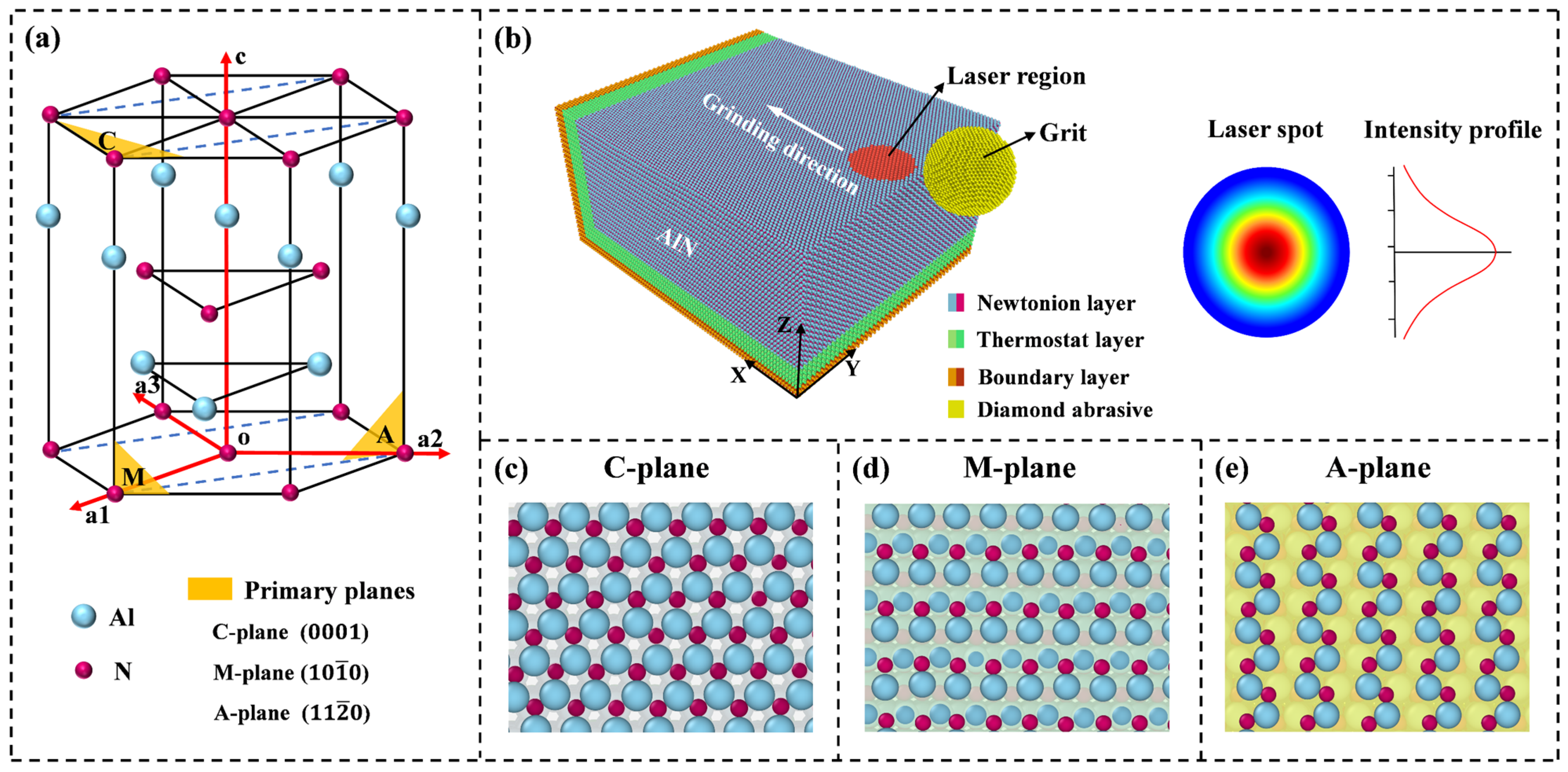
Figure 1. (a) Schematic diagram of the wurtzite AlN crystal structure. (b) MD simulation model for LAG of the AlN workpiece with single diamond grit. Lattice structures of (c) C-plane, (d) M-plane, and (e) A-plane of wurtzite AlN.
Crystals 16 00293 g001
Figure 2. Preheating damage morphologies and temperature distribution on the C-plane under laser power densities of (a) 1.96 × 10⁸ W/cm2, (b) 3.91 × 10⁸ W/cm2, and (c) 5.78 × 10⁸ W/cm2.
Crystals 16 00293 g002
Figure 3. Surface topographies and cross-sectional profiles of the AlN workpiece for (a) LAG and (b) CG on the C-plane, with grinding distance of 70, 110, 150 Å and after unloading. Subsurface damage, consisting of dislocations and structural transformation of the AlN workpiece, is also shown in the figure.
Crystals 16 00293 g003
Figure 4. Surface topographies and cross-sectional profiles of the AlN workpiece for (a) LAG and (b) CG on different grinding surfaces of the C-, M-, and A-planes during grinding and after unloading with a grinding depth of 20 Å. Subsurface damage, consisting of dislocations and structural transformation of the AlN workpiece, is also shown in the figure.
Crystals 16 00293 g004
Figure 5. Grinding-induced (a) atomic displacement and (b) surface pileup for LAG and CG. The grinding surface is the C-plane and the grinding depth is 20 Å.
Crystals 16 00293 g005
Figure 6. Removal volume as a function of normal force for LAG and CG on different grinding surfaces of the (a) C-plane, (b) M-plane, and (c) A-plane AlN workpieces.
Crystals 16 00293 g006
Figure 7. RMS roughness values for LAG and CG at different grinding depths of 10, 15, 20, 25, and 30 Å. The grinding surfaces are (a) C-plane, (b) M-plane, and (c) A-plane.
Crystals 16 00293 g007
Figure 8. Evolution of tangential and normal forces during LAG and CG on different grinding surfaces of (a,d) C-plane, (b,e) M-plane, and (c,f) A-plane AlN workpieces. The grinding depth is 20 Å.
Crystals 16 00293 g008
Figure 9. Tangential force, normal force and friction coefficient as functions of grinding depth for LAG and CG. (a,d,g) The C-plane, (b,e,h) the M-plane, and (c,f,i) the A-plane.
Crystals 16 00293 g009
Figure 10. Temperature distributions in the grit–workpiece contact region for laser power densities of (a) 0, (b) 1.96 × 10⁸, (c) 3.91 × 10⁸, and (d) 5.78 × 10⁸ W/cm2. Results at a grinding depth of 20 Å for a grinding distance of 150 Å are shown. The grinding surface is the C-plane. (e) Average temperature as a function of laser power density.
Crystals 16 00293 g010
Figure 11. Variations in grinding-induced dislocations of the C-plane AlN workpiece at different grinding depths during LAG and CG. The evolution of dislocation patterns caused by LAG and CG with a grinding depth of 20 Å is also displayed in this figure.
Crystals 16 00293 g011
Figure 12. Subsurface damage after (a) LAG and (b) CG on a C-plane AlN workpiece under different grinding depths of 10, 15, 20, 25, and 30 Å.
Crystals 16 00293 g012
Figure 13. Dislocation density as a function of grinding depth for LAG and CG on the (a) C-plane, (b) M-plane, and (c) A-plane AlN workpieces.
Crystals 16 00293 g013
Figure 14. Thickness of damage layer as a function of grinding depth for LAG and CG on the C-, M-, and A-plane AlN workpieces. The inserts display the subsurface damage patterns for the mentioned AlN workpieces.
Crystals 16 00293 g014
Figure 15. Schematic diagram of subsurface damage mechanisms in the C-plane AlN during (a) CG and (b) LAG.
Crystals 16 00293 g015
Figure 16. (a) Tangential force, (b) normal force and (c) friction coefficient as functions of laser power density on different grinding surfaces of C-, M-, and A-plane AlN workpieces.
Crystals 16 00293 g016
Figure 17. (a) Removal volume and (b) RMS roughness as functions of laser power density on different grinding surfaces of C-, M-, and A-plane AlN workpieces.
Crystals 16 00293 g017
Figure 18. (a) Dislocation density and (b) damage layer thickness as functions of laser power density on different grinding surfaces of C-, M-, and A-plane AlN workpieces.
Crystals 16 00293 g018
Table 1. Simulation parameters.
ParameterValues
Total number of atoms in the AlN workpiece919,045
Dimensions of the AlN workpiece (Å3)280 × 242.55 × 140
Radius of the diamond grit (Å)30
Crystal plane for grindingC-, M-, and A-plane.
Specific grinding direction on the designated crystal plane[−12–10] on C-plane, [000–1] on M-plane, and [000–1] on A-plane
Initial temperature (K)293
Time step (ps)0.001
Grinding distance L (Å)150
Grinding depth d (Å)10, 15, 20, 25 30
Grinding velocity v (Å/ps)0.5
Laser spot moving speed v0 (Å/ps)0.5
Laser spot radius r0 (Å)24
Laser power density P(rlaser) (×108 W/cm2)1.96, 3.91, 5.87
Laser penetration depth dp (Å)25
Disclaimer/Publisher’s Note: The statements, opinions and data contained in all publications are solely those of the individual author(s) and contributor(s) and not of MDPI and/or the editor(s). MDPI and/or the editor(s) disclaim responsibility for any injury to people or property resulting from any ideas, methods, instructions or products referred to in the content.