1. Introduction
Fossil fuels, the most widely used energy source, take thousands of years to form but are being consumed at an alarming rate, accelerating global warming. Therefore, a transition to alternative clean energy sources is essential to safeguard both the environment and humanity. In this context, fuel cells represent a promising renewable technology, converting chemical energy directly into electricity. Since the invention of fuel cell, hydrogen (H
2) gas-based fuel cells have been extensively used and studied because of its high energy density per unit mass, almost zero carbon emission and higher practical efficiency [
1,
2,
3,
4]. But storing H
2 gas is a difficult task, and it has very lower volumetric energy density than other liquid fuels and natural gas [
5]. Liquid fuels such as lower alcohols, ethylene glycol, formic acid, etc., have drawn significant admiration as alternative fuel to H
2 gas because of their higher volumetric energy density, convenient storage system, risk-free transportation and refill system [
6,
7,
8,
9]. The utilization of these fuels can also be detrimental, since the final product of their oxidation is carbon dioxide (CO
2), while alcohols possess toxicity, along with other major issues such as fuel crossover through the membrane and swelling of the membrane [
10,
11,
12]. Regarding these points, L-ascorbic acid has drawn widespread attention as a prominent alternative liquid fuel in direct liquid fuel cells. L-ascorbic acid is a natural antioxidant known as vitamin C, which is found in many fruits and vegetables. Using this compound as fuel offers some distinct advantages: being solid, its storage and transportation is convenient, and unlike alcohol, its oxidation product is not toxic [
12,
13]. Furthermore, the relatively larger size of ascorbic acid (AA) inhibits the mixing of the fuel with oxidant via membrane [
12,
13]. For the practical deployment of direct ascorbic acid fuel cells (DAAFCs), the anode catalyst must exhibit high activity, stability, and efficiency in oxidizing the target fuel.
The electrochemical oxidation of ascorbic acid has been thoroughly investigated to develop an electrochemical sensor, where noble metals and transition metal-based materials, such as, Pt, Pd, Au, Ag, Ni, Co, Cu, and so on, are dominant [
14,
15,
16,
17,
18]. Despite extensive investigations on sensors, little effort has been made to develop robust and efficient anode materials based on metals for electro-oxidation of ascorbic acid in the context of fuel cells. For instance, Fujiwara et al. [
13] investigated the electro-oxidation of AA by utilizing Pt, Ru, Pd, Ir, Rh, Pt-Ru, and carbon black (Vulcan XC72) anode materials, recognizing Pd to be the most active catalyst in that scenario. Ganesan et al. [
19] developed a composite of polyaniline and TiO
2 via chemical oxidation polymerization for utilization as an anode material to investigate the ascorbic acid oxidation reaction. Muneeb et al. [
20] used Pd anode materials to study the oxidation reaction by highlighting the effectiveness of anion exchange membrane for direct ascorbate fuel cell. In another investigation, Muneeb et al. [
21] proposed a bimetallic catalyst composed of Pd and Cu for the oxidation of AA in alkaline medium. Hasnat et al. [
22] synthesized an oxide of Ir metal and casted on glassy carbon substrate for the purpose of AA electro-oxidation. Qui et al. [
23] investigated the AA oxidation reaction by utilizing CeO
2/C nanomaterial and performed density functional theory (DFT) analysis to reveal the underlying reason behind the applicability of the developed catalyst as an anode material in direct ascorbic acid fuel cells.
From the preceding discussion, it is evident that investigations on AA electro-oxidation have thus far been limited to a narrow range of metals. To the best of our knowledge, limited studies have been conducted on Au metal-based anode materials in the context of fuel cell applications. Although Au metal alone has excellent catalytic performance in different scenario, including AA oxidation, its performance is further amplified when combined with other metals such as Ni, Cu, Pd, and Pt [
15,
24,
25,
26,
27,
28]. Notably, the combination of Au and Pt are highly admired, since Au alters the electronic structure of Pt, a phenomenon demonstrated in the electro-oxidation of methanol, formic acid [
28,
29,
30]. The catalytic viability of the Au-modified Pt surface for electro-oxidation, attributed to a synergistic effect, is consistent with our group’s previous findings [
28]. We have demonstrated the feasibility of As(III) electro-oxidation on a similar electrode, with its fabrication being comprehensively verified through optical and electrochemical characterization techniques, supported by DFT. Given this precedent, a dedicated morphological study was considered redundant in the present work. The present work therefore aims to explore this Au-Pt bimetallic system as an anode material for the electro-oxidation of AA in fuel cell applications.
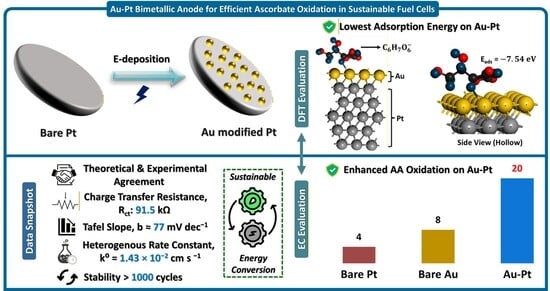
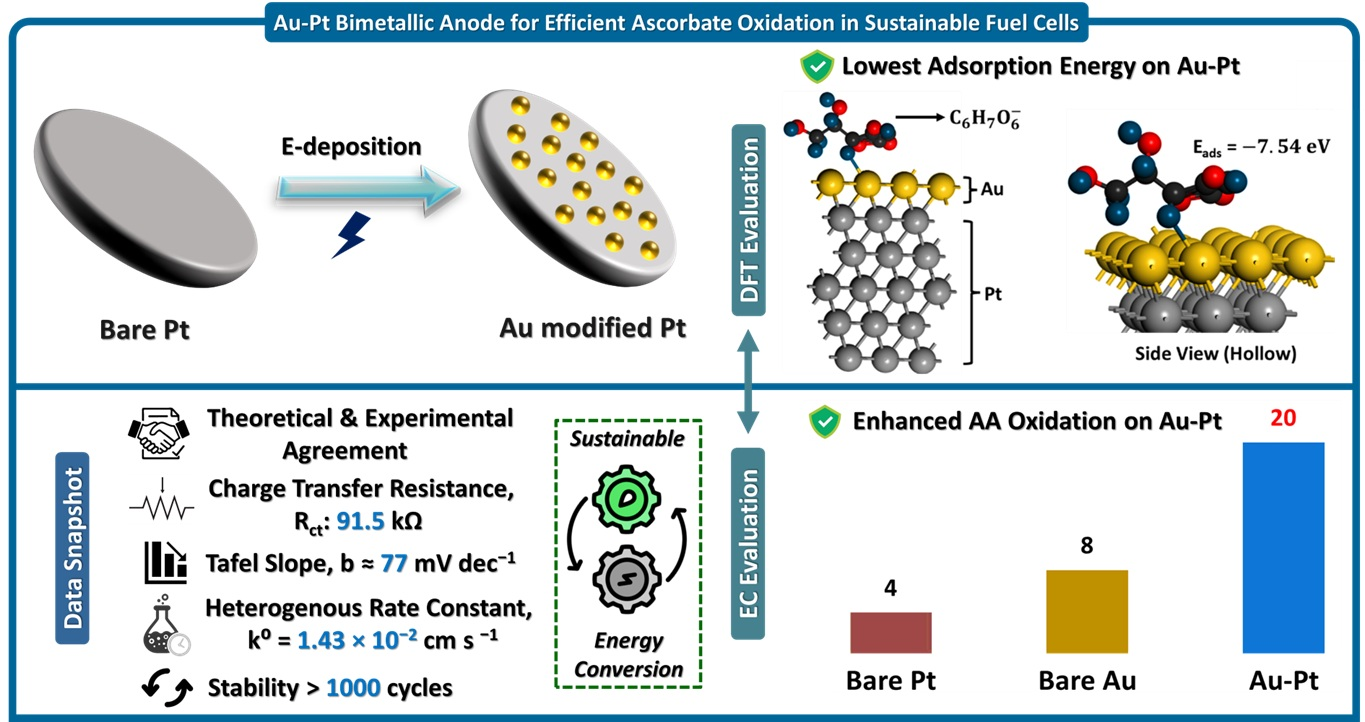
This study explores the electrocatalytic oxidation of AA on an Au-modified Pt electrode in an alkaline medium. DFT calculations were employed to evaluate adsorption energies on Pt and Au-Pt surfaces, offering atomic-level insights into catalytic enhancement. Electrochemical characterization, including open circuit potential (OCP), electrochemical impedance spectroscopy (EIS), and cyclic voltammetry (CV), illustrated improved interfacial properties and elucidated reaction kinetics. The experimental results show strong agreement with theoretical predictions.
2. Materials and Methods
2.1. Chemicals and Reagents
All of the chemicals used were of analytical grade and were applied without further purification, unless otherwise specified. An aqueous AA solution was prepared by dissolving the required amount of sodium L-ascorbate (≥99%, Sigma-Aldrich, St. Louis, MO, USA) in distilled water. For Pt surface modification, tetrachloroauric acid (HAuCl4) (≥99.9%, trace metals basis, Sigma-Aldrich, St. Louis, MO, USA) served as the Au precursor. Additional reagents, including potassium nitrate (KNO3) (≥99.0%, Merck, Darmstadt, Germany), nitric acid (HNO3) (70%, ACS reagent, Sigma-Aldrich, St. Louis, MO, USA), sulfuric acid (H2SO4), sodium hydroxide (NaOH) (≥98%, Sigma-Aldrich, St. Louis, MO, USA), ethanol (EtOH) (≥99.8%, Merck, Darmstadt, Germany), acetone (≥99.5%, Merck, Darmstadt, Germany), and alumina powder (Al2O3) (1.0, 0.3, and 0.06 µm, Sigma-Aldrich, Burlington, MA, USA), were also used as received.
2.2. Electrodes, Electrochemical Cells and Instrumentation
All electrochemical experiments were performed using two potentiostats: a CHI 602E electrochemical workstation (CH Instruments, Inc., Austin, TX, USA) and a PGSTAT 128N (Autolab, Utrecht, The Netherlands), employing a conventional three-electrode configuration. A Pt disk electrode of 0.0314 cm
2 (2 mm diameter) and a Au disk electrode of 0.0201 cm
2 (1.6 mm diameter) were used as working electrodes in separate experiments. An Ag/AgCl (sat. KCl) electrode and a Pt wire served as the reference and counter electrodes, respectively. Unless otherwise stated, all potentials are reported against the Ag/AgCl (sat. KCl) electrode. Electrochemical cells were assembled in sample vials with volumes of approximately 10 mL and 50 mL. Measured potentials versus Ag/AgCl were converted to the reversible hydrogen electrode (RHE) scale according to Equation (1) [
31]:
2.3. Electrode Cleaning, Modification and Measurement
Prior to analysis, the Pt and Au disk electrodes were mechanically polished with ultrafine (0.06 μm) alumina slurry in an aqueous environment, meticulously rinsed with ultrapure water, and subsequently electrochemically cleaned according to established procedures [
32,
33]. The electrodeposition of Au particles onto the Pt electrode was then performed by cycling the potential between
0.3 and
1.0 V for 10 cycles at a scan rate of 100 mV s
−1 in a deoxygenated 0.01 M HAuCl
4 solution. All voltametric experiments were conducted in a fixed 10 mL solution volume. CVs of the NaOH solution were recorded at various scan rates for each electrode type. The number of electrodeposition cycles was optimized by evaluating the electrocatalytic performance towards ascorbate oxidation. Electrodes prepared with 5, 10, and 15 cycles were tested, with the 10-cycle electrode demonstrating superior current density (
Figure S1). This optimal performance suggests that 10 cycles achieve an ideal balance between creating sufficient Au-Pt interfacial sites and maintaining high electroactive surface area. Therefore, this condition was selected for all subsequent experiments.
The evolution of the CV profiles was monitored as a function of both AA concentration and applied scan rate. Long-term stability testing was performed by continuous CV. The Au-Pt electrode was cycled for 1000 cycles between 0.3 and 1.0 V (vs. RHE) at a scan rate of 0.1 V s−1 in a N2-saturated solution of 10 mM ascorbate in 0.1 M NaOH. Furthermore, EIS measurements were carried out in NaOH supporting electrolyte over a frequency range of 0.1 MHz to 0.1 Hz (50 points), with a polarization potential of 0.8 V applied to the Pt, Au, and Pt-Au electrodes in presence of AA solution.
2.4. DFT Study
All of the DFT calculations were performed using the CASTEP (Cambridge Serial Total Energy Package) module [
34]. The package is based on DFT, employing plane waves basis sets and pseudopotentials [
35]. The structural optimization is carried out using generalized gradient approximation (GGA) with the Perdew-Burke-Ernzerhof (PBE) method [
36,
37] for the exchange correlation (XC) function. The OTFG ultrasoft pseudopotentials [
38] were chosen with a plane wave energy cutoff of 321.1 eV and a charge density cutoff of 3061.28 eV. Full cell optimization was initiated using a maximum stress threshold of
. The energy calculations in the first irreducible Brillouin-zone were sampled by using the (6 × 6 × 6) fine k-point grid of the Monkhorst-Pack scheme [
39]. Spin polarization of platinum was included in the calculations to correctly account for its magnetic properties. The geometry optimization was performed at the total energy and force using the LBFGS (Limited-memory Broyden–Fletcher–Goldfarb–Shanno) algorithm [
40]. In addition, before the adsorption process, the ascorbate (
structure was optimized using Forcite module considering the COMPASS (Condensed-phase Optimized Molecular Potentials for Atomistic Simulation Studies) force-field method [
41].
3. Results
3.1. Theoretical Evaluation
The structural and adsorption characteristics of ascorbate ion (
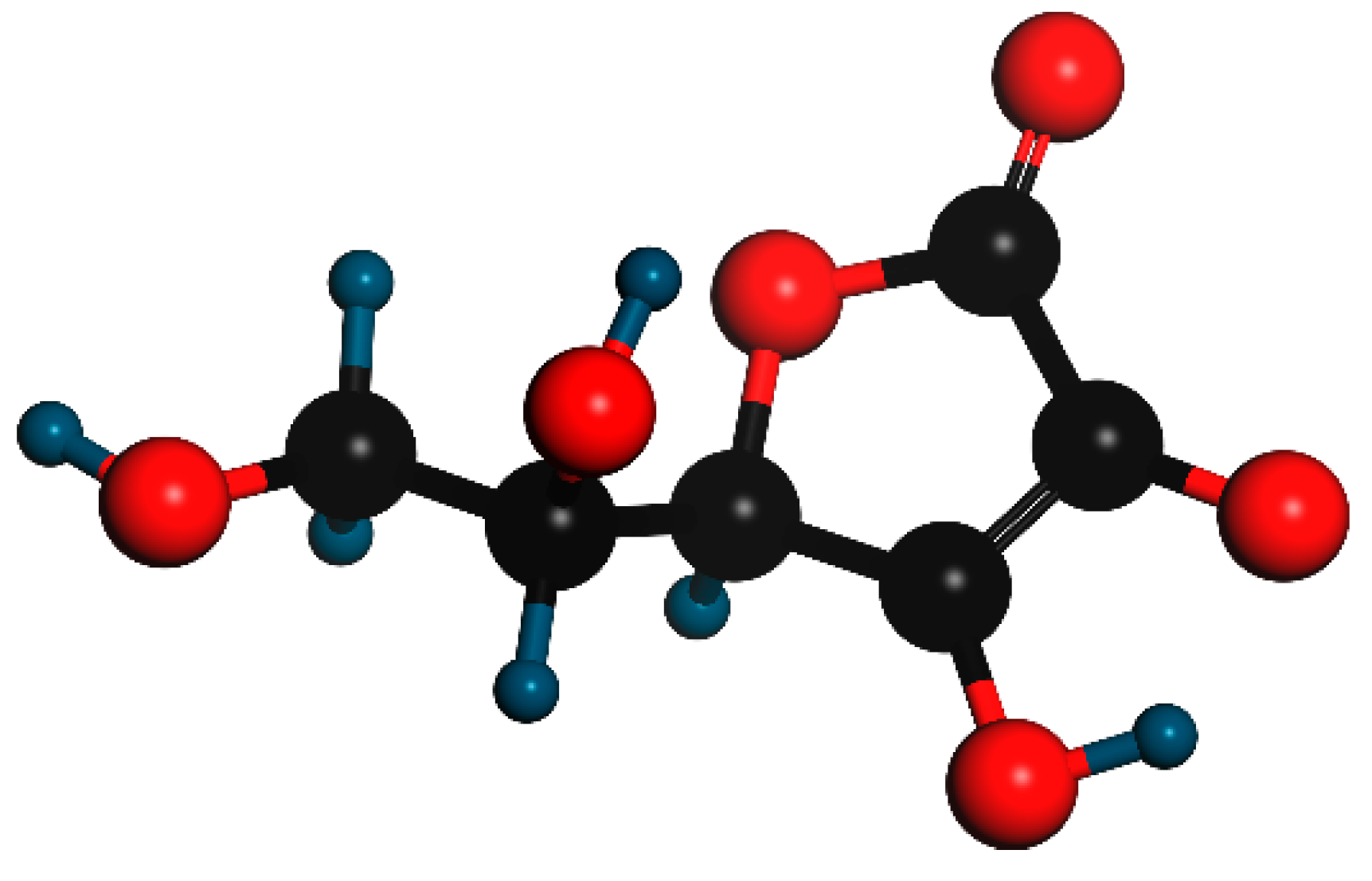
on Pt and Au modified Pt facets were observed using DFT. Herein, we investigated ascorbate interactions with the surface in different configurations. The geometry of the optimized structure of ascorbate is shown in
Figure 1.
The Pt surface was cleaved in the orientation of Miller index (111) plane. The bare Pt slab was modeled containing five layers of atoms composed of a (3 × 3 × 1) supercell. A vacuum spacing of 20 Å along the (111) direction was considered to prevent inter-layer interactions. An additional layer of Au was introduced in the hollow
fcc structure to depict Au deposition. A study conducted by Krupski et al. [
42], revealed the minimum adsorption energy in hollow
fcc structure as tabulated in
Table 1.
In this study, ascorbate was considered as an adsorbate and the adsorption energy was calculated by the following formula:
where
represents the total energy of the optimized structure with the ascorbate,
is the total energy of the respective slabs bare Pt and
is the total energy of the isolated ascorbate. Typically, the value of
indicates how likely a molecule becomes adsorbed on a surface. A large negative value of
indicates stable and spontaneous adsorption.
Depending on the value of the adsorption energy, adsorption phenomenon can be defined as weak, medium, or strong. The stronger adsorption in terms of chemisorption occurs with an energy range from −0.83 to −2.48 eV. By contrast, if the adsorption process occurs by releasing an energy in the range from −0.30 to −0.60 eV is denoted as weaker physisorption [
43]. Our aim was to identify the most stable geometric configuration and the optimal adsorption mode by systematically placing molecules at various sites and orientations on the surface. Several of the adsorption positions that we tried are shown in
Figure S2. For each position, adsorption energies are calculated and shown in
Figure S3A.
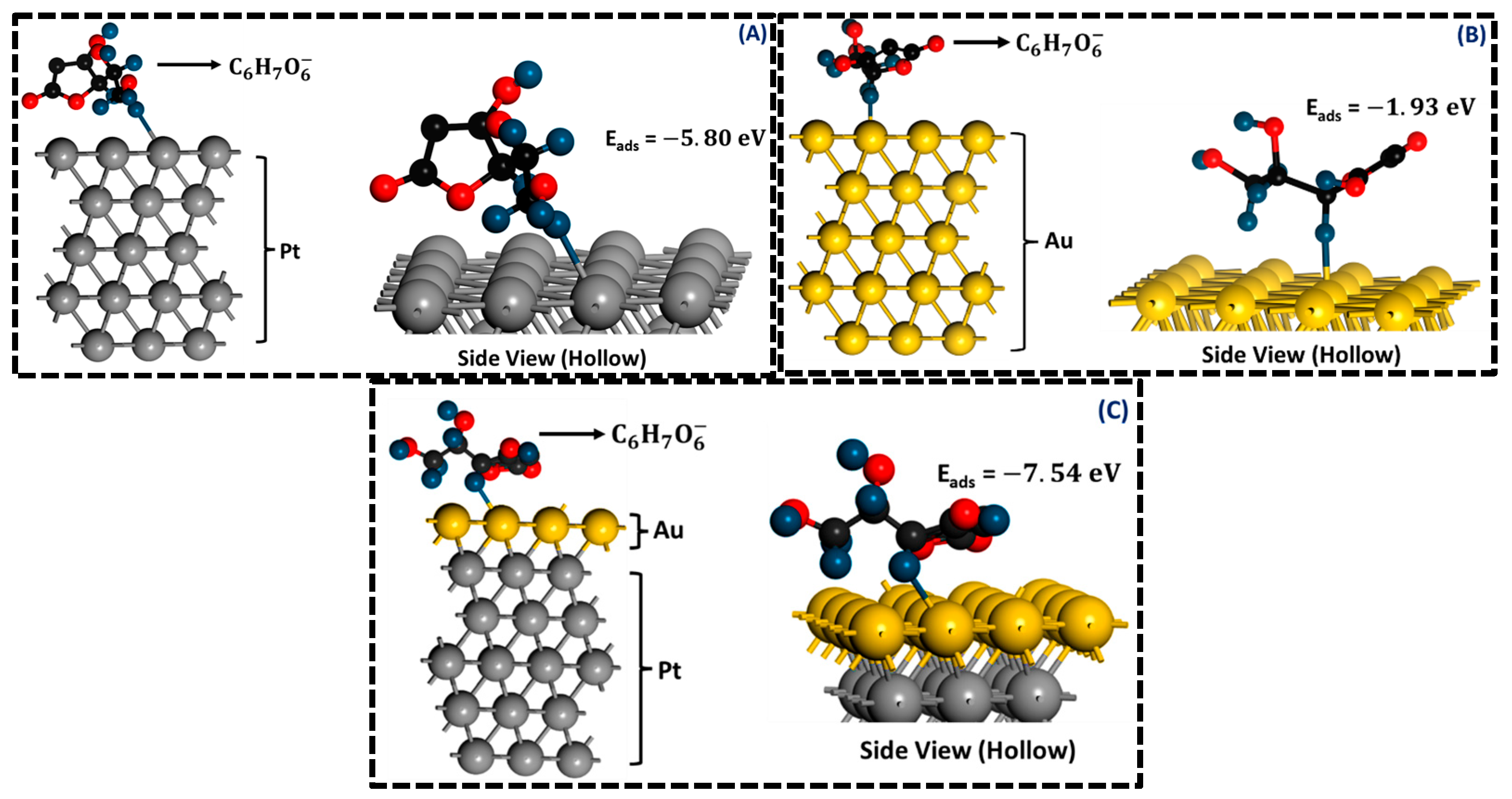
The lowest adsorption energy (−7.54 eV) was obtained at the hollow site of ascorbate on the Au-deposited Pt surface, which is significantly lower than that of bare Pt (−5.80 eV) as well as bare Au (
1.93 eV), as shown in
Figure 2. The deposition of Au was found to enhance both the electronic and geometric properties of Pt, which causes ascorbate to interact more favorably with the surface.
Table 2 summarizes the adsorption energies and hydrogen bond lengths for all surfaces. The shorter hydrogen bond length of 2.455 Å on the Au-Pt surface further indicates the formation of stronger interfacial interactions compared to the longer bonds found on bare Pt (2.54 Å) and bare Au (2.638 Å).
The adsorption strength follows a consistent pattern for both surfaces, where hollow sites are most favorable, followed in order by bridge and on-top sites, as shown in
Figure S3A. On Au deposited Pt, the energy differences between sites are minimal (≤0.02 eV), suggesting a nearly homogeneous environment for adsorption. In contrast, bare Pt exhibited greater variation, with an energy difference up to 1.24 eV between hollow and on-top sites, indicating more site selectivity. This indicates that the Au-Pt surface is more homogeneous in terms of the sites accessible for bonding, which is beneficial for catalytic processes requiring the uniform distribution of adsorbates onto surfaces. On another note, overall adsorption stability is strongly contingent upon how stable the structure is which can be understood by calculating deformation energy,
. It was computed by the difference between the total energy of the system constrained in the adsorption geometry and the sum of the relaxed surface and free adsorbate energies using the following formula,
where
is the total energy of the adsorption system (the slab with the adsorbate attached) after the geometry optimization,
represents the total energy of the isolated bare slab. and
is the total energy of the isolated adsorbate molecule. A small amount of deformation energy suggests favorable adsorption whereas a large value indicates weaker adsorption. From
Figure S3B, the highly negative deformation energies of Au deposited Pt (
7.25 to
7.21 eV) imply that relaxation brings about considerable structural stabilization. Conversely, bare Pt shows significantly large deformation energies (up to −0.21 eV), implying that the surface requires more energy to optimize, and therefore accommodate ascorbate. This suggests that Au-Pt surfaces support higher absorbate mobility as compared to bare Pt which leads to less overall structural change, thus requiring more energy for adsorption. Additionally, the Au–H bond length of 2.455 Å observed in ascorbate adsorption reveal’s unconventional hydrogen bonding, extending beyond typical lengths (1.8–2.2 Å) for electronegative acceptors [
44]. This weaker yet structurally significant interaction arises from relativistic polarizability of Au, stabilizes adsorbates and challenges the conventional perception of gold as chemically inert. For redox-active ascorbate, such binding geometry could modulate electron transfer which is critical for biosensing and catalysis, while also enabling selective adsorption configurations for oxidation or stabilization [
45].
3.2. Electrochemical Characterization
3.2.1. OCP Analysis
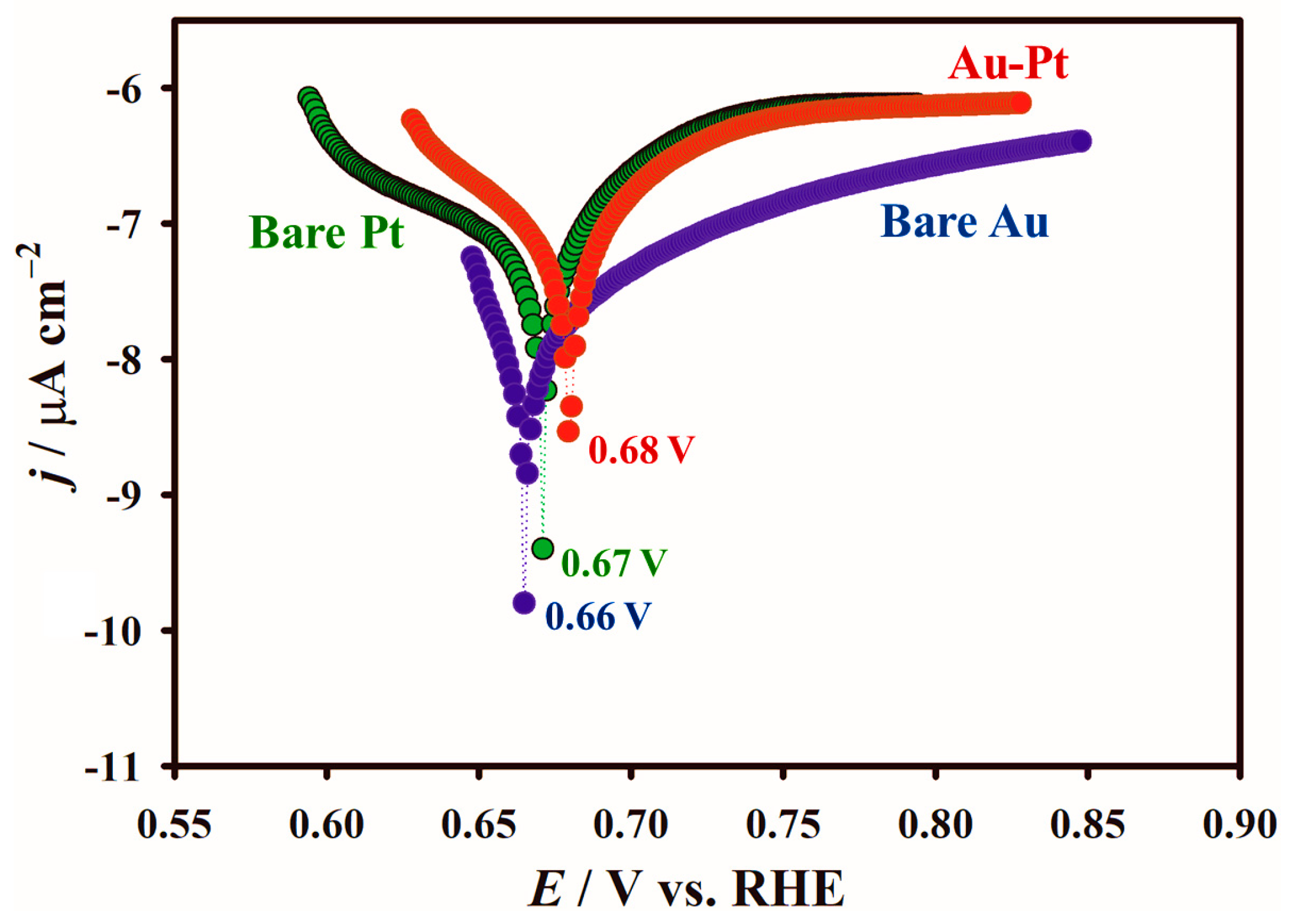
Open circuit potential (OCP) serves as a prime indicator of the intrinsic activity of an electrode surface within the non-faradic region, essentially reflecting its baseline behavior towards AA oxidation. In this study, we compared the OCP responses of Au-modified Pt electrodes with those of bare Au and bare Pt.
The linear polarization curves (
Figure 3) reveal distinct catalytic activities for ascorbate oxidation across the different electrodes. Herein, the bare Au and Pt electrodes exhibit moderately negative onset potentials of 0.66 V and 0.67 V, respectively. Most strikingly, the Au-Pt bimetallic electrode demonstrates a pronounced positive shift in its onset potential to 0.68 V while simultaneously delivering the highest current density. This positive shift suggests that the Au-Pt surface has a heightened propensity to acquire a positive charge, which is likely facilitated by the pre-adsorption of ascorbate species. This unique property, combined with its superior current density, underscores that alloying Pt with Au creates a highly active interface that outperforms either metal alone. The enhanced performance is likely attributable to the synergistic electronic effects that optimize both the adsorption and subsequent oxidation of ascorbate.
3.2.2. EIS Analysis
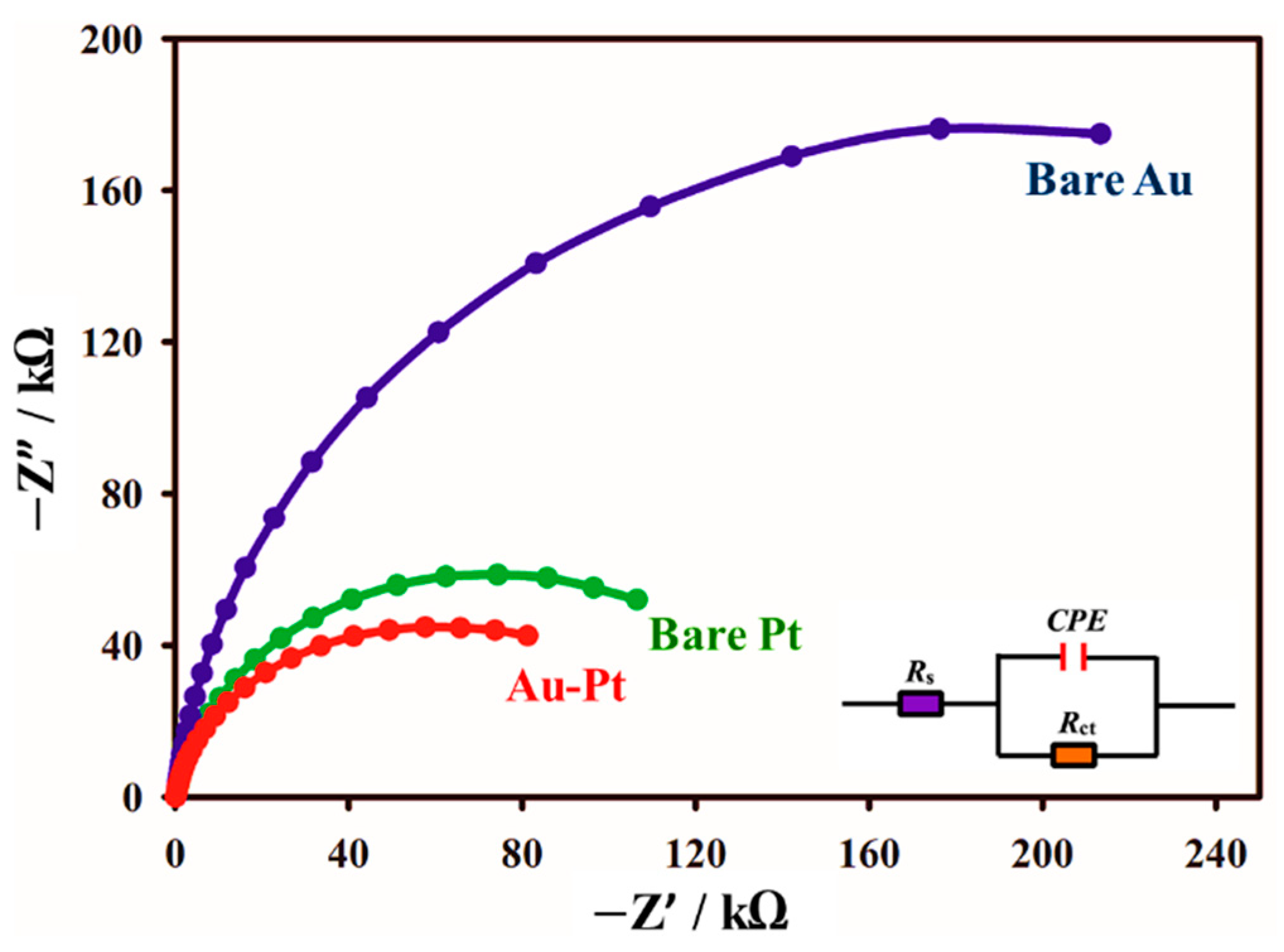
The EIS measurements were performed to evaluate the interfacial charge-transfer behavior of bare Pt, bare Au and Au-Pt modified electrodes in presence of 0.1 M NaOH, as illustrated in
Figure 4. The Nyquist plots for all electrodes display a single depressed semicircle in the high to mid frequency region, which corresponds to the charge transfer process at the electrode-electrolyte interface.
The spectra were fitted using a Randels-type equivalent circuit composed of the solution resistance (
Rs), a constant phase element (CPE) in the parallel with the charge-transfer resistance (
Rct). The absence of a prominent low-frequency Warburg tail suggests that the kinetics are dominated by interfacial charge transfer rather than mass transport limitation [
46].
The fitted parameters from the EIS data, summarized in
Table 3, reveal distinct interfacial properties for the different electrodes. The solution resistance
Rs values are similar and low (0.136–0.159 kΩ) for all electrodes, indicating a consistent and negligible ohmic contribution from the electrolyte. The Au-Pt bimetallic electrode exhibits a significantly lower
Rct (91.5 kΩ) compared to bare Pt (146 kΩ) and bare Au (428 kΩ), corresponding to a reduction of 37.3% and 78.6%, respectively. This substantial decrease confirms that the Au-Pt interface facilitates markedly faster electron-transfer kinetics for ascorbate oxidation. The enhancement is attributed to a synergistic electronic interaction between Au and Pt, which optimizes intermediate adsorption and lowers the activation energy barrier. Furthermore, the higher CPE magnitude (6.17 µMho) for the Au-Pt electrode suggests a greater electroactive surface area, which is characteristic of a nanostructured catalytic surface. The CPE exponent
N values, all close to 0.9, indicate a slightly non-ideal capacitive behavior for all surfaces [
47]. Collectively, the EIS results verify that the Au-Pt bimetallic system provides as superior catalytic interface for ascorbate oxidation.
3.3. Oxidation Performance
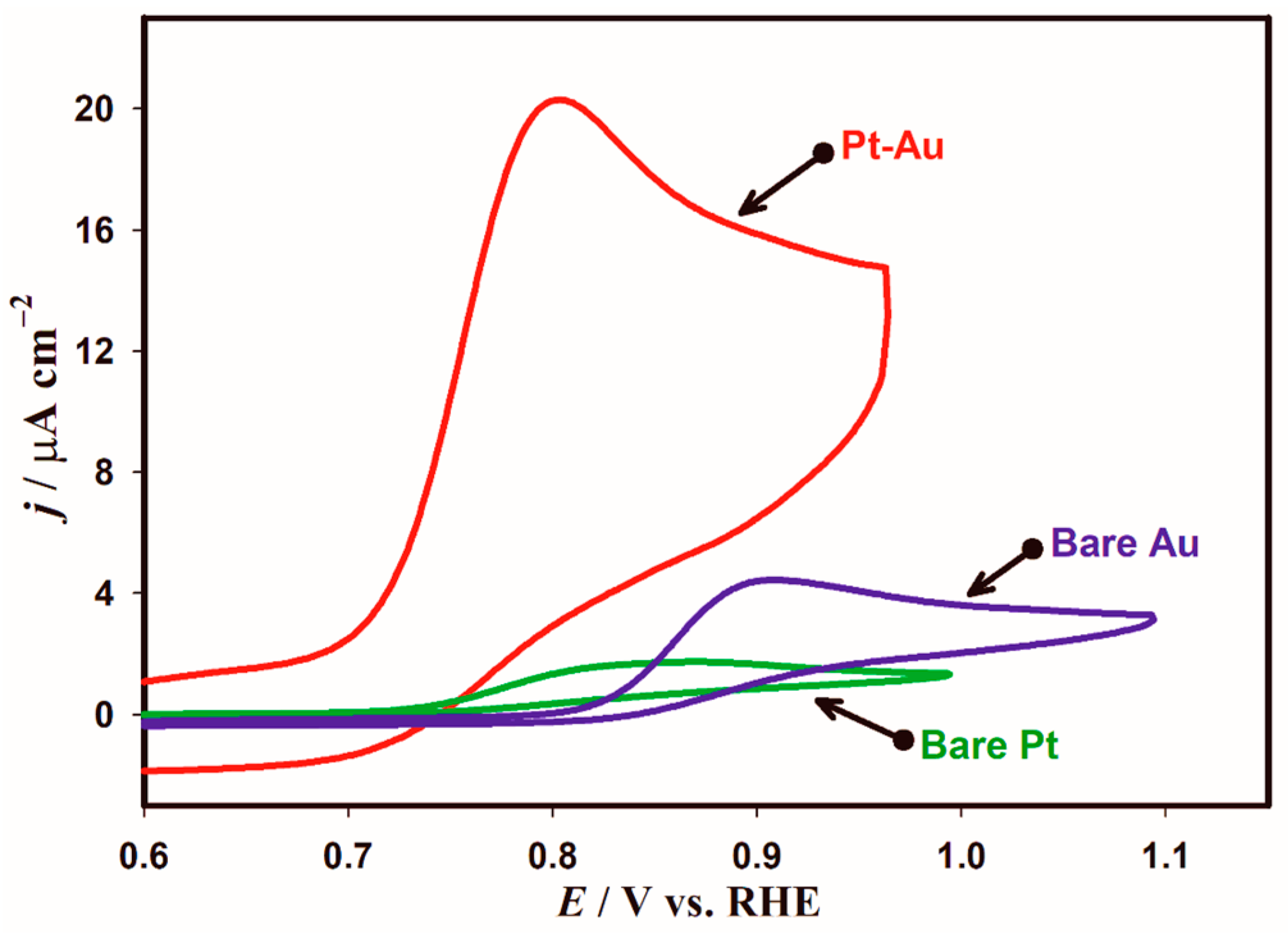
The CV data in
Figure 5 illustrates that the Pt electrode and the bare Au electrode displayed moderate electrocatalytic activity towards AA oxidation in the alkaline medium. In contrast, the Au-Pt electrode demonstrated a markedly enhanced oxidation response. The anodic current increased sharply from around 0.80 V, culminating in a pronounced peak close to 20 µA.
This substantial increase in peak current, along with the earlier onset potential, suggests that the introduction of Au on the Pt substrate significantly improves AA electro-oxidation performance. The improvement can be attributed to the combined effects of Au intrinsic electrocatalytic properties and the synergistic interaction between Au and Pt, which boost surface reactivity and facilitate charge transfer. Overall, these results confirm that surface modification of Pt with Au markedly boosts its electrocatalytic performance toward AA oxidation, outperforming both pure Pt and pure Au under identical conditions.
3.4. Effect of Concentration
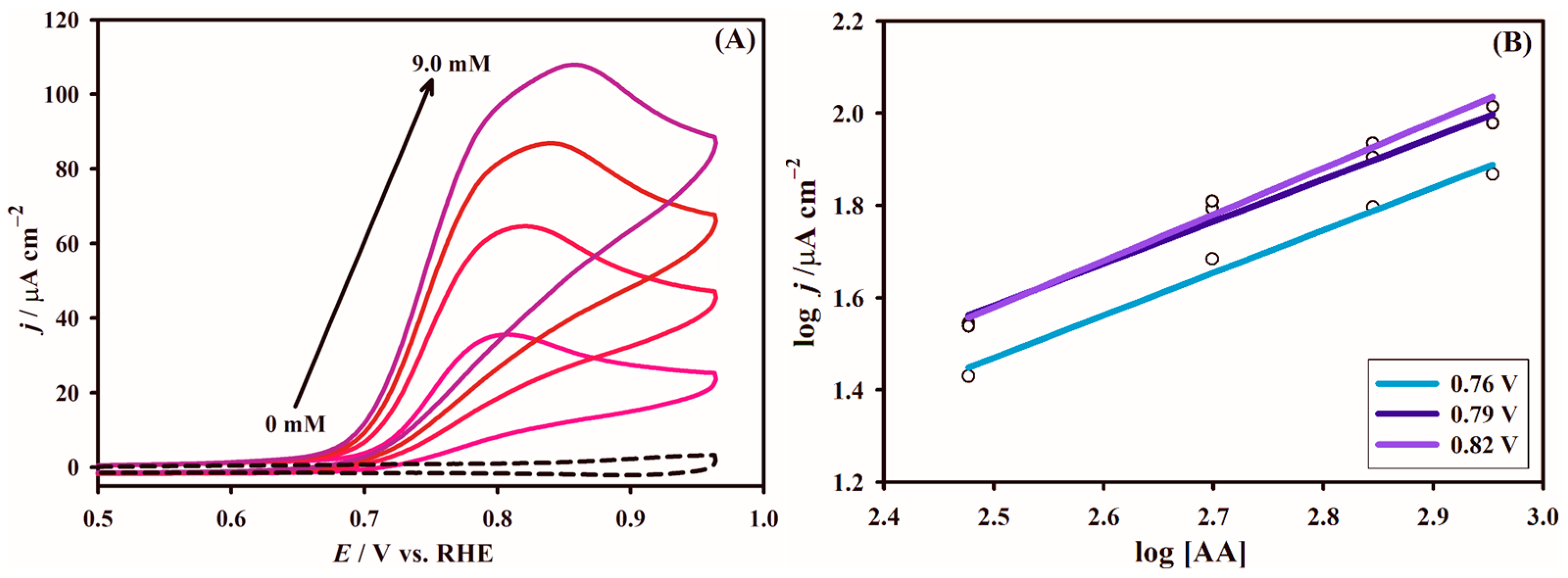
The CV results confirm that AA undergoes distinct oxidation at the Au-Pt electrode within the potential window of (0.5–1.0) V in 0.1 M NaOH solution. With increasing AA concentration, the anodic current grows steadily, while the background scan shows negligible activity, indicating that response originates solely from the analyte. Clear oxidation waves are observed between 0.70 and 0.87 V, reflecting the high catalytic activity and availability of active surface sites on the modified electrode.
As shown in
Figure 6A, increasing the concentration of AA from 0 to 9.0 mM leads to a proportional rise in anodic peak current, accompanied by a sight positive shift in peak potential from 0.76 to 0.86 V. To further evaluate the reaction kinetics, the current density
(j) at three different fixed potentials (0.76, 0.79, and 0.82 V) was extracted and is plotted in
Figure 6B. The resulting linear relation allowed for the determination of kinetic order using the following expression (4):
where
m is the reaction order and
is the rate constant. From this plot, the slope was found to be 0.92, 0.91, and 1.02, respectively, implying that the electrochemical oxidation of AA in alkaline medium follows the first-order kinetics on the Au-modified Pt electrode surface, where the overall reaction is not significantly limited by adsorption processes [
48].
3.5. Effect of Scan Rate
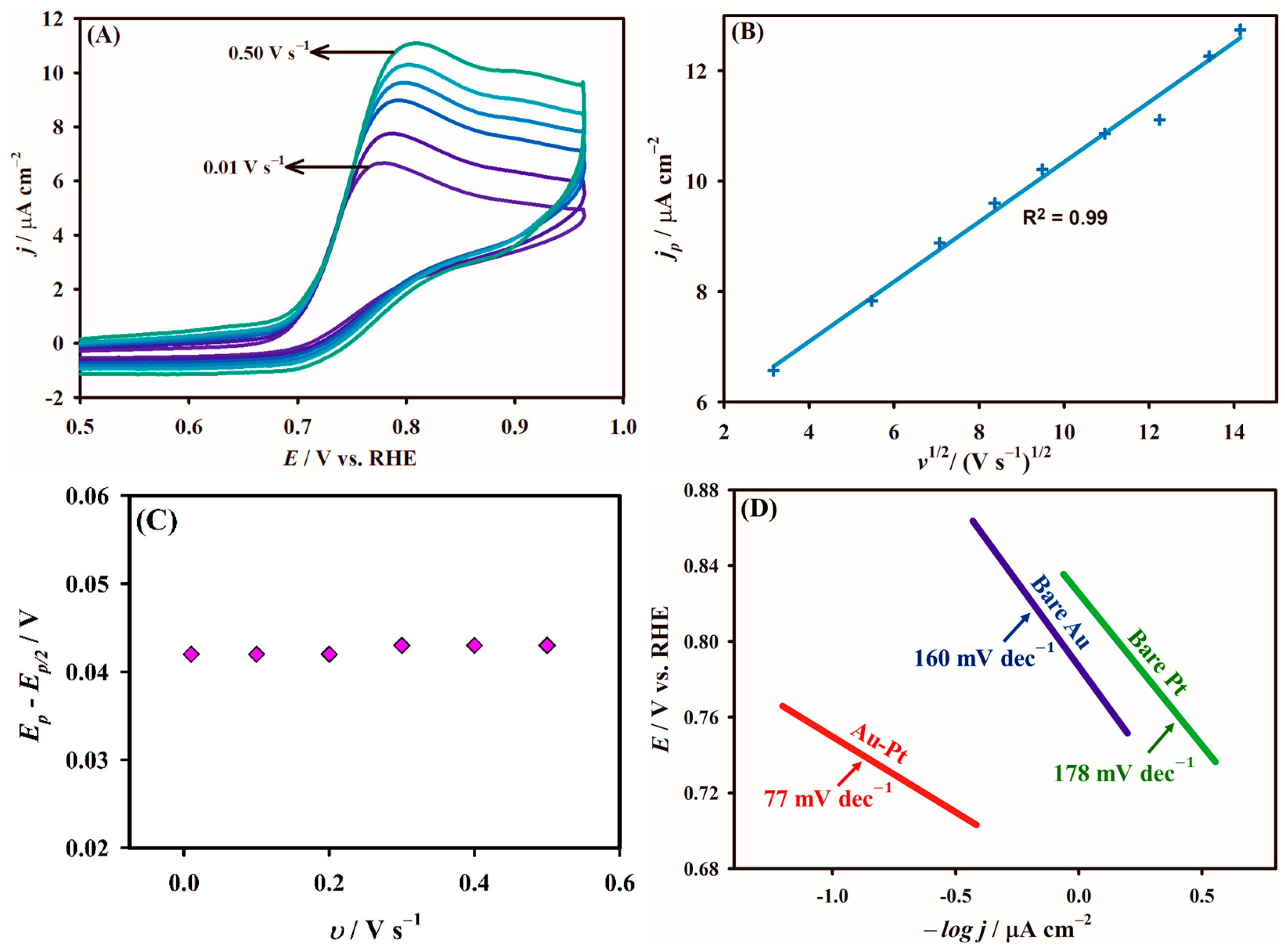
The influence of scan rate plays a critical role in understanding the kinetics and mechanism of electrochemical reactions. As the potential sweep rate (υ) increases, the diffusion layer becomes thinner, which accelerates the transport of species toward the electrode surface. This enhancement in mass transport is reflected by the rise in peak current density (jp). To evaluate the kinetic behavior of AA oxidation at the Au-modified Pt electrode, CV was obtained at scan rates ranging from 0.01 to 0.50 V s−1.
Figure 7A unveils two fundamental features of an irreversible electrode process: a gradual increase in peak current density (
jp) and a positive shift in peak potential (
Ep) with increasing scan rate from 0.01 to 0.50 V s
−1. It is well established that the peak current in an irreversible, diffusion-controlled process [
33] scales linearly with the square root of the scan rate, a behavior that is clearly demonstrated in
Figure 7B. Furthermore, the potential separation between the peak (
Ep) and half-peak (
Ep/2) potentials was calculated (
Figure 7C) for each scan rate and was found to be nearly constant at 0.042 ± 0.001 V. This invariance confirms that the electrode process adheres to the conventional Butler-Volmer kinetic model [
33].
To elucidate the electrochemical behavior of AA, a Tafel analysis was carried out in the kinetic region of the polarization curves [
49]. The relationship governing this analysis expressed as:
In this context,
represents the formal potential,
E refers to the applied potential (vs. RHE), and
=
nFCk0 denotes the exchange current density at
E =
. The term
j corresponds to the measured current density, while
b (
) signifies the Tafel slope. It is well-established that most of the reactions proceed via multi-electron transfer mechanisms. Specifically, for oxidation of AA in an alkaline medium, the electrochemical oxidation of ascorbic acid (AH
2) proceeds overall as a two-electron conversion to dehydroascorbic acid (A):
In the kinetic region of the scan-rate dependent polarization curves, an E vs. log (
j) plot (
Figure 7D) was constructed, resulting Tafel slope of 77 ± 10 mV dec
−1 for the Au-Pt electrode. On the contrary, the Tafel slopes of Pt and Au were found to be 178 and 160 mV dec
−1, respectively, further reflecting sluggish electron transfer. These results indicate that Au-Pt substantially modifies the surface structure and electronic properties, thereby accelerating the AA oxidation process. Overall, the Au-Pt electrode demonstrates superior catalytic activity compared to the unmodified electrodes, confirming its potential as an efficient platform for AA sensing and electro-oxidation.
In addition, the determination of the formal potential from the intercept of Tafel plot requires prior knowledge of the exchange current density (
). However,
can be derived indirectly from the equation
, which shows the direct correlation of
with the standard heterogeneous electron transfer rate constant (
). A vital condition to calculate the value of
from Equation (7) is that the system exhibits kinetic limitations; this is confirmed experimentally when an increase in scan rate does not produces a linear increase in current density:
The modified electrode exhibited a deviation from linearity at a scan rate of 0.50 V s−1. Based on the peak width at this scan rate, the heterogeneous rate constant (k0) was determined to be 1.43 × 10⁻² cm s−1. Using this parameter, the formal electrode potential was calculated as 0.52 V vs. RHE. A lower formal potential indicates a more spontaneous reaction, meaning that the fuel cell can, in principle, operate at a higher voltage and thus deliver more power. The fact that the Au-Pt electrode facilitates the reaction with a formal potential that is favorably low further corroborates its superior catalytic properties, as it suggests that the surface interaction effectively lowers the energy barrier for AA oxidation.
3.6. Stability
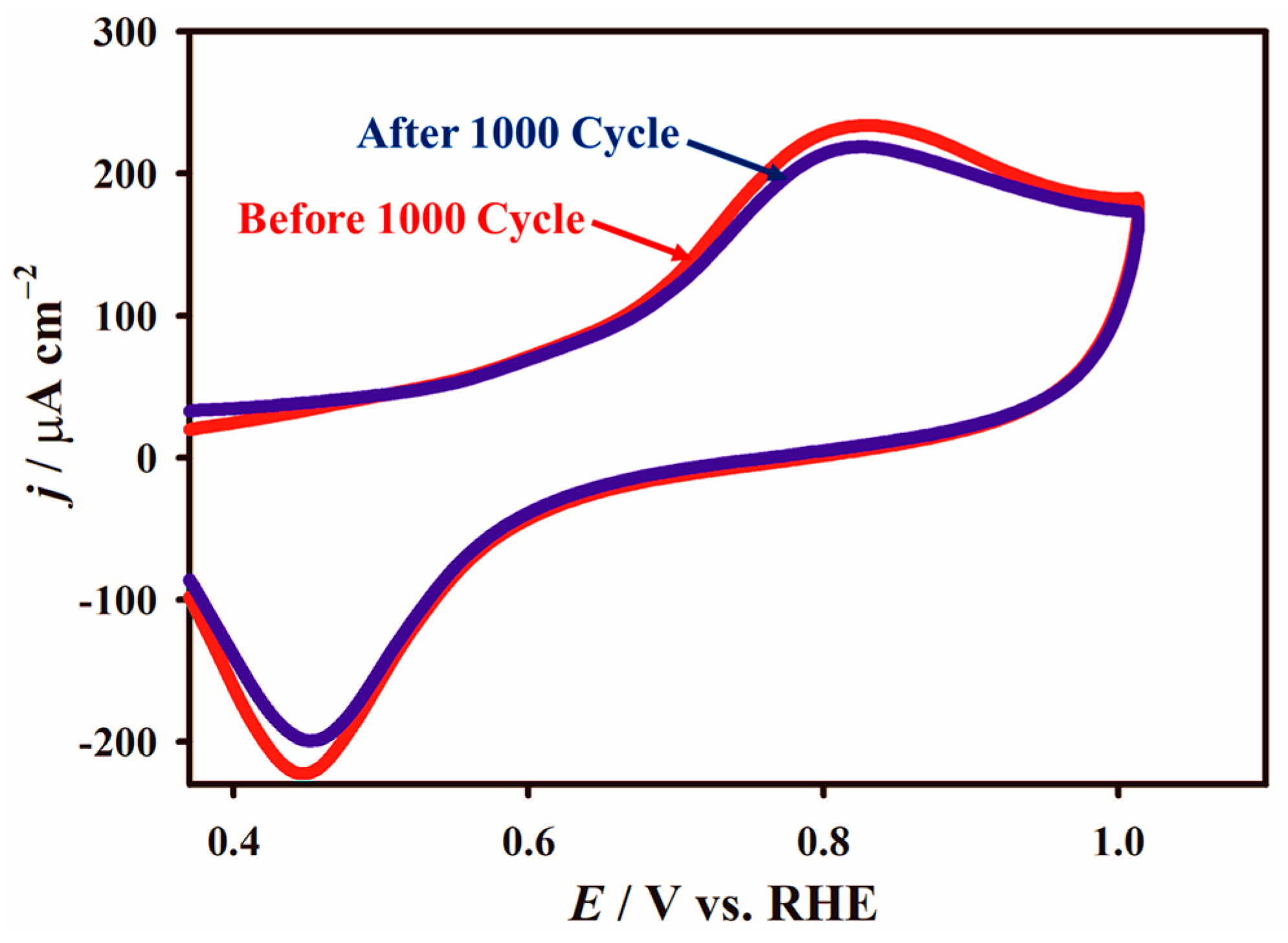
The long-term electrochemical stability of the Au-deposited Pt electrode was investigated by performing 1000 continuous CV cycles under the conditions detailed in
Section 2.3 (
Figure 8).
Initially, the electrode exhibited a sharp and intense oxidation peak at approximately (0.75–0.85) V, with a maximum current density of about 237 µA cm−2. After 1000 continuous cycles, the oxidation peak was still clearly observable at sample potential range, although a slight decrease in current response was noted, with the maximum peak current declining to 219 µA cm−2. This minor reduction suggests partial surface modification or fouling by intermediate products formed during repetitive AA oxidation. The electrode retained a large portion of its initial activity, indicating the good structural stability of the Au-Pt surface. The preservation of peak position with negligible potential shift further supports the robustness of the electrode toward continuous electrochemical cycling.
3.7. Electrochemically Active Surface Area
Electrochemically active surface area (ECSA) is a key parameter in assessing the intrinsic catalytic efficiency of a modified electrode. It enables a more accurate comparison among different electrocatalysts by reflecting the real interfacial sites that actively participate in electrochemical reactions, and it is therefore vital for determining the genuine catalytic activity of materials [
31]. One of the most common methods to determine ECSA is through evaluation of the double-layer capacitance (
Cdl), which arises from non-faradic charging and discharging processes in a potential region where no redox reaction occur. In this approach, the capacitive current (
i) is related to the scan rate (
dv/
dt) according to the following relationship:
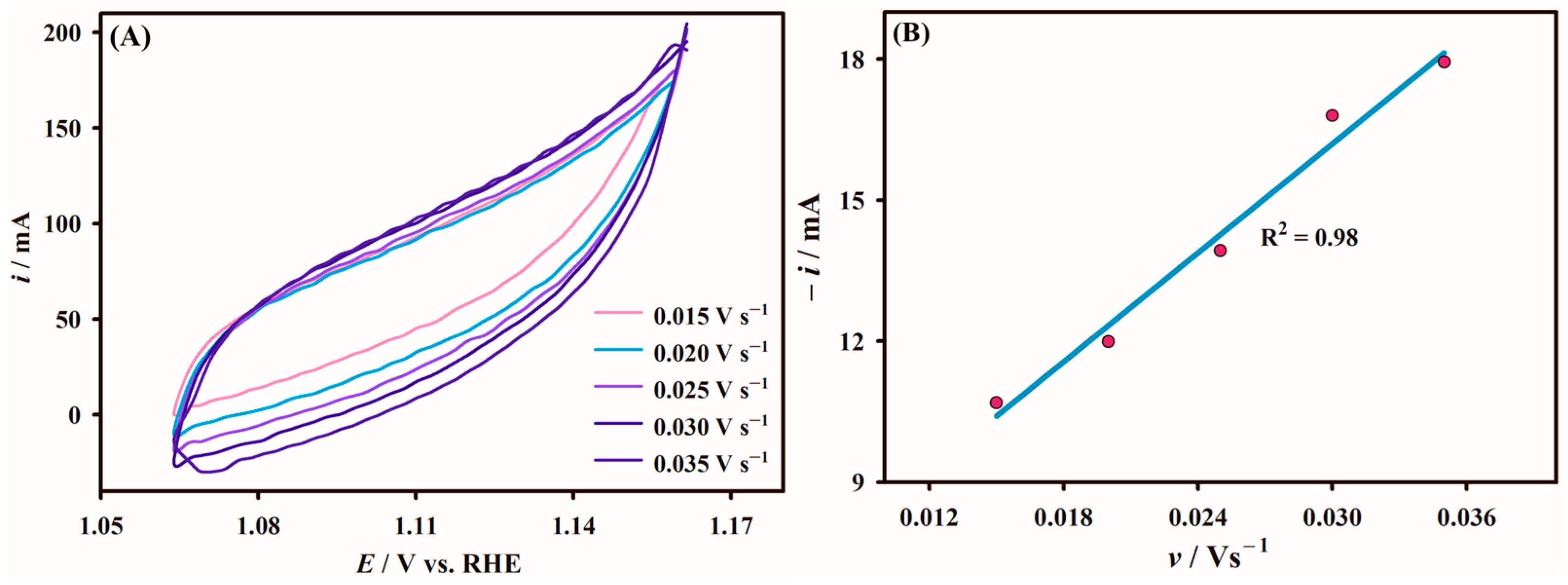
This technique was applied to all tested electrodes: bare Pt, bare Au, and Au-Pt electrode in 0.1 M NaOH solution. The capacitive current response was plotted against various scan rates (
Figure 9B), and the slope of these plots provided the following
Cdl values: 6.0 × 10
−5, 2.0 × 10
−10, and 2.3 × 10
−3 mF cm
−2 for bare Pt, bare Au, and Au-Pt, respectively.
Using the Randles-Sevik equation, the ECSA of bare Pt and bare Au was determined to be 0.0450 and 0.0386 cm
2, respectively [
28]. the ECSA of the modified electrode was determined by:
Based on the ECSA results shown in
Table 4, the electrodeposition of Au onto the Pt surface led to a significant increase in active surface area, reaching 1.2037 cm
2. This enhancement can be attributed to the formation of rough, nanostructured Au layers that provide a greater number of accessible electroactive sites. The applied deposition cycles appear to strike a balance between surface coverage and site availability, thereby ensuring an expanded reactive interface. Such characteristics make the Au-modified Pt electrode highly favorable for AA oxidation, as it preserves a much larger electroactive area compared to the bare Pt electrode.




 ,
,