
Article

Effect of Lapping Parameters on Material Removal Rate and Surface Roughness of GaN (0001) Plane

Department of Materials Science and Engineering, Qilu University of Technology (Shandong Academy of Science), Jinan 250353, China
*
Authors to whom correspondence should be addressed.
Crystals 2026, 16(3), 190; https://doi.org/10.3390/cryst16030190
Submission received: 5 February 2026 / Revised: 9 March 2026 / Accepted: 9 March 2026 / Published: 11 March 2026
(This article belongs to the Special Issue Advances in the Growth and Application of Nitride Crystals)

Abstract

As a critical pretreatment process for chemical and mechanical polishing (CMP), the lapping roughness of gallium nitride (GaN) crystals directly influences the outcome of subsequent polishing and the reliability of final devices. This study systematically investigates the key factors affecting the lapping performance of GaN single crystals, focusing on abrasive type, particle size, and spindle speed, and elucidates their mechanisms in regulating material removal rate (MRR) and surface roughness. Using a micro-thickness gauge and controlled variable method, the material removal depth of the (0001) plane of GaN was accurately measured. The results show that the MRR increases with the increase in abrasive particle size within a certain range, albeit at the cost of increased surface roughness. Meanwhile, the spindle speed and MRR exhibit a positive correlation under specific conditions. Considering these lapping parameters, a balance between high MRR and controlled roughness can be achieved, providing a technical foundation for efficient and precise lapping of GaN crystals and facilitating the fabrication of GaN-based devices.

1. Introduction

As a core functional material in the semiconductor field, GaN occupies an irreplaceable strategic role in optoelectronic devices and power electronics, due to its wide direct bandgap (3.41 eV) [1]. However, lattice and thermal mismatch issues stemming from mainstream heteroepitaxial growth approaches significantly limit the full exploitation of GaN device performance. Despite notable progress in GaN crystal growth technologies such as hydride vapor phase epitaxy (HVPE) [2,3], the Na-flux method [4,5,6], and the ammonothermic method [7,8,9], subsequent processing technologies for high-quality epitaxial substrates remain considerably underdeveloped. This constitutes a critical bottleneck in transforming as-grown GaN crystals into high-performance substrates.
GaN substrate processing typically involves three core steps: thinning, lapping, and polishing. As a key pre-polishing process, lapping exerts a decisive influence on the final surface roughness of the substrate. During lapping, abrasive particles interact with the GaN crystal under applied pressure via relative motion, reducing the planar roughness to the micrometer level and laying a fundamental technical foundation for subsequent polishing.
The (0001) plane of GaN features a wurtzite crystal structure with low surface energy and superior thermodynamic stability [10], and it readily forms atomically flat surfaces. Consequently, this crystallographic plane serves as the preferred orientation for the growth of GaN-based single crystals and the fabrication of epitaxial heterostructures with low defect densities. Previous studies on GaN processing have largely focused on post-processing surface quality and damage evolution [11,12,13,14,15], with limited investigation into the mechanisms governing lapping efficiency [16,17,18]. Current research, including molecular dynamics simulations, predominantly adopts a diagnostic outcome research paradigm [19,20], lacking systematic experimental and mechanistic insights into material removal rate (MRR) and lapping efficiency−key factors that dictate production costs and manufacturing efficiency. Understanding these efficiency−related metrics is essential for reducing GaN substrate costs and enabling large-scale industrial applications.
Although existing literature has extensively explored the influence of lapping parameters (abrasive type, particle size, spindle speed) on the MRR and surface roughness of GaN crystals, most studies predominantly focused on single-parameter analyses or simple two-parameter interactions, and failed to conduct in-depth analysis from the theoretical aspect. As a classical empirical model for describing the correlation between material removal rates and processing parameters, the expression for the Preston equation is as follows:
MRR = k · P · V
where MRR denotes the material removal rate, k represents the Preston coefficient, P stands for the polishing pressure, and V is the relative velocity between the tool and the workpiece. This equation clarifies the fundamental effects of key processing parameters (e.g., polishing pressure and relative velocity) on the material removal efficiency, and also indicates that the Preston coefficient k can be regulated by multiple factors such as abrasive type and particle size. Consequently, it serves as an important theoretical bridge connecting processing parameters and machining outcomes. In traditional research [21,22] on the Preston equation, the formulation of the equation typically relies on simplified assumptions, with no consideration given to the type and particle size of the abrasive. To a certain extent, this processing approach can fulfill fundamental requirements in early-stage research or scenarios where high precision is not imperative. Nevertheless, as technological advancements in related fields continue unabated and the demands for process accuracy escalate, while the precision of this processing method has been enhanced, its inherent limitations are becoming increasingly apparent. In practical applications, the lapping process constitutes a complex multi-parameter coupling system characterized by non-linear interactions among variables, which synergistically determine the final machining outcomes. Consequently, this study accounts for multi-parameter coupling effects, which is of paramount significance for achieving high-efficiency and high-precision machining of GaN crystals.
This study aims to systematically elucidate the key factors and intrinsic mechanisms governing the lapping efficiency of GaN (0001) planes. By comparing the physical and mechanical properties of different abrasives, we clarify why diamond is the preferred abrasive for GaN lapping. A systematic experimental investigation is conducted to examine the effects of diamond abrasive particle size and spindle speed on the material removal rate and surface roughness. Finally, an in-depth analysis from the perspective of material removal mechanisms is presented to explain the intrinsic causes underlying the effects of these parameters on lapping efficiency and surface roughness.

2. Materials and Methods

GaN single crystals were grown by the method reported previously [23,24,25]. The 4-inch GaN single crystal after growth was cut using a Shenyang Kejing STX605 diamond single-wire saw. Multiple GaN slices (5 × 10 mm) were cleaved from the wafer, and all lapping experiments were performed on a UNIPOL-1203 mechanochemical lapping/polishing machine manufactured by Shenyang Kejing Co., Ltd (Shengyang, China). The removal volume of the (0001) plane was quantified via a precision thickness gauge (Shanghai Taiming Optical Instrument Co., Ltd., Shanghai, China). The pressure and time of all lapping experiments were 9 N and 20 min. The lapping plate used in the experiment is made of ceramic material, and the surface is composed of several 10 × 10 mm squares and grooves. The abrasive concentration was 3.5 g/L, and the abrasive was dropped at a flow rate of 40 mL/min.
X-ray diffractometry (XRD, Rigaku Corporation, s martlab SE, Tokyo, Japan) was used for crystal orientation characterization, where the angle increment was 0.03 degrees and the scanning range was 5–80 degrees. In addition, scanning electron microscopy (SEM, ZEISS, G500, Jena, Germany) was employed to characterize the micromorphology of abrasives. The (0001) plane of Wurtzite GaN single crystal was also determined by Raman spectroscopy (LabRAM HR Evolution, Paris, France). And the surface roughness of the polished crystal was tested by a white light interferometer (CHOTEST, W1BW1224050010, Shenzhen, China), where the resolution was 1 nm, the scanning area was 982 × 982 μm, and the eyepiece had a magnification of 10.

3. Results and Discussion

The GaN crystals investigated exhibit a hexagonal wurtzite structure (space group P63mc). In this crystal structure, each Ga atom is tetrahedrally coordinated with four N atoms, and each N atom is equivalently coordinated with four Ga atoms. Figure 1 shows the processed GaN (0001) plane. XRD characterization of the Ga-polar planes revealed only the (002) and (004) diffraction peaks, confirming high c-axis orientation of the (0001) planes (Figure 1a). Raman spectra (Figure 1b) further support the GaN (0001) plane [26,27].
As a core factor governing the material removal mechanism of crystalline materials, abrasive type directly modulates the MRR through its intrinsic physicochemical properties. Distinct abrasives exhibit significant discrepancies in hardness, wear resistance, and particle morphology, which in turn induce entirely different interaction modes with the crystallographic plane during lapping. Because of the hardness, Al2O3, SiC, and diamond play important roles in the lapping and CMP process of GaN single crystals.
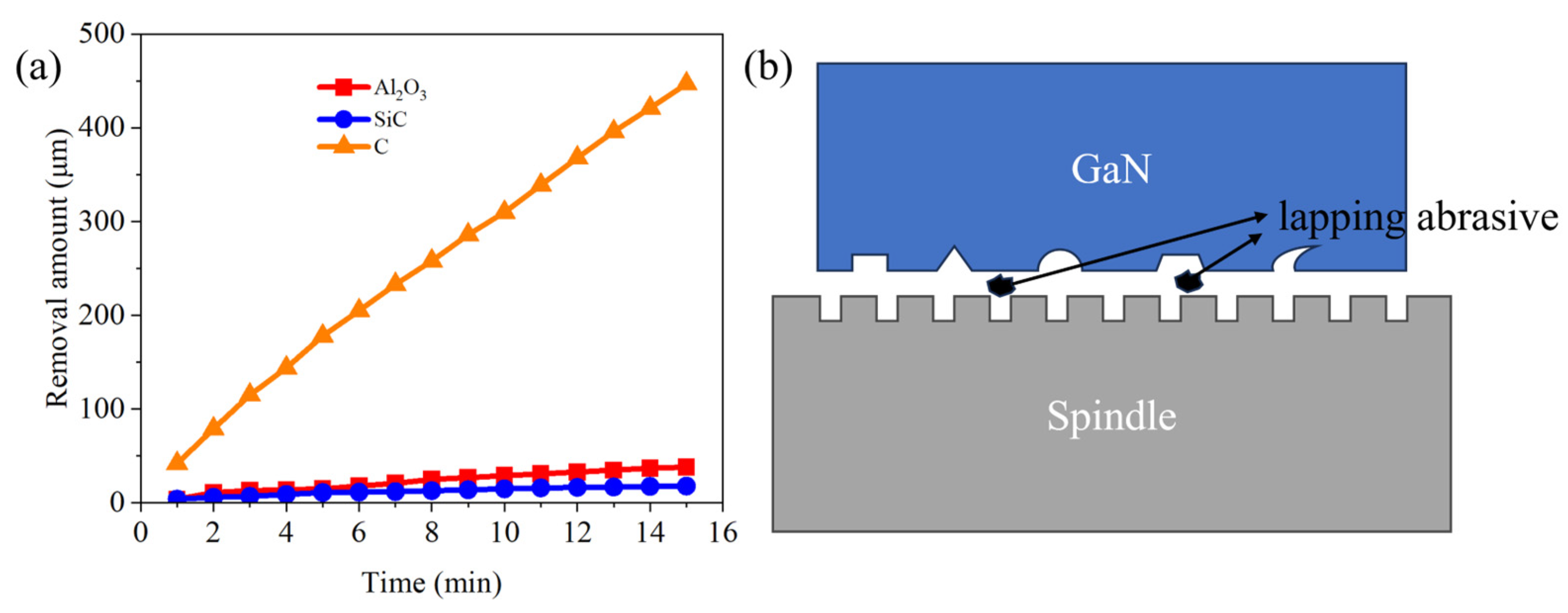
To compare the material removal efficiency of different abrasives and elucidate their intrinsic action mechanisms, several hard abrasives (Al2O3, SiC, and diamond) with identical average particle sizes and morphologies were used. Each experiment was repeated three times and averaged. The total removal amount per unit time is MRR. Under the same experimental conditions, the MRR of diamond abrasives reached 40 μm, while those of SiC and Al2O3 abrasives were less than 3 μm. Under equivalent conditions, diamond abrasives achieved significantly higher total removal than SiC and Al2O3 (Figure 2a). This is attributed to diamond’s superior hardness (Mohs hardness 10) and sharp grain edges, which facilitate mechanical cutting-dominated material removal. In contrast, Al2O3 and SiC exhibit lower hardness and rely on synergistic micro-cutting and abrasion, resulting in lower removal efficiency (Table 1). As illustrated in Figure 2b, harder abrasive particles penetrate more easily into microcracks, enhancing MRR. The low friction coefficient (0.1) and ultra-high wear resistance of diamond with GaN keep its cutting edge sharp throughout [28], while the friction coefficient of SiC/Al2O3 with GaN is as high as 0.35–0.42 and the cutting edge is easy to passivate and crack [29], resulting in a significant decrease in MRR with lapping time [30].
Diamond abrasives—endowed with ultra-high hardness and sharp grain edges and corners—act via a mechanically dominated material removal mechanism. They can rapidly break the atomic bonds on the crystal surface during lapping, rendering them particularly suitable for processing high-hardness crystalline materials such as sapphire and GaN. In contrast, abrasives including Al2O3 and SiC exhibit suboptimal hardness relative to diamond. Beyond mechanical cutting, their material removal process is realized through the synergistic effects of micro-cutting and surface abrasion, resulting in a material removal efficiency that is significantly lower than that of diamond abrasives. Irregularly shaped abrasive particles become embedded in the wafer surface under the extrusion of the lapping plate and adjacent abrasive particles, initiating the generation of microcracks on the wafer (Figure 2b). During machining, abrasive particles dislodge along with crystalline debris, thereby accomplishing material removal from the crystal. In this process, particles with higher hardness can more easily penetrate into microcracks, leading to a higher MRR. Based on the above analysis, higher-hardness abrasives are more suitable for lapping GaN single crystals, with diamond, due to its exceptional hardness (Table 1), being the most commonly used abrasive in GaN lapping processes [28,29].
To study the lapping of GaN (0001) planes with diamond abrasives, we employed abrasives of different particle sizes. Experiments were conducted at different spindle speeds, and the material removal volume was measured for each combination of particle size and speed. Each experiment was repeated three times and averaged. Abrasive particle size is a key parameter controlling crystal removal, as it directly determines the cutting depth during lapping. Within a certain range, increasing the abrasive particle size leads to a significant rise in material removal. Larger particles possess greater mass and cutting-edge dimensions, enabling deeper cuts and more material removal per contact under the same pressure. Additionally, their larger inter-particle spacing reduces agglomeration, allowing more abrasive grains to engage in effective cutting and further enhancing removal efficiency. Diamond abrasives of different sizes exhibit similar morphology but varying dimensions. Larger diamond grains induce larger microcracks during extrusion, and crack propagation results in greater material removal. Consistent with this, Belkhir [31] et al. reported that increased grain size raises both crack extent and scratch depth, thereby influencing the material removal rate.
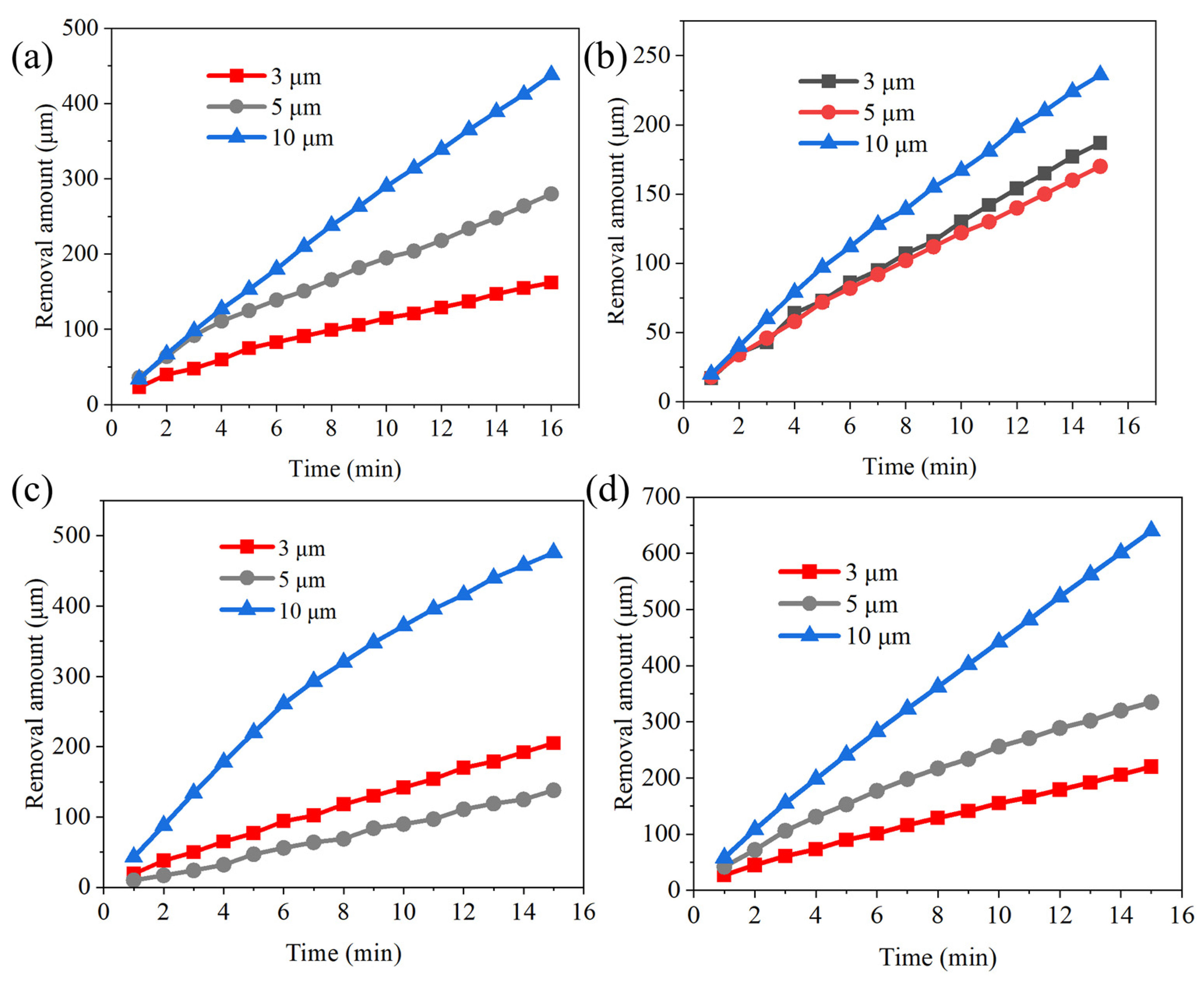
To verify the universality of this finding across different spindle speeds, lapping experiments were conducted using diamond abrasives of varying particle sizes at speeds of 10, 40, 70, and 100 r/min. The material removal amount of the GaN (0001) plane was measured under each combination. As shown in Figure 3, the same trend is observed at all four speeds: removal increases with abrasive grain size. As the slope of the material removal amount versus time curve, the removal rate also increases with increasing abrasive particle size. The calculated average values are presented in Table 2.
Larger diamond grains (10 μm) produced a deeper cutting depth on the GaN (0001) surface than smaller grains, which directly increased the volume of material removed at each abrasive−workpiece contact. For GaN (a typical hard-brittle material), the deeper cutting depth also significantly exceeds the critical brittle fracture depth (about 0.5 μm for GaN) [34], extensive radial/lateral microcrack propagation and large-scale material spalling are initiated. Larger particles produce deeper scratches and remove more material per contact, resulting in a higher macroscopic lapping rate. The slope of the removal−time curve is MRR, which can directly show the difference of the grinding results. These results confirm that, across varying spindle speeds, larger abrasive particle sizes generally lead to a higher MRR. Concurrently, Table 2 demonstrates that larger-sized abrasives exhibit significantly higher MRR than other grain sizes at high rotational speeds. This occurs because the greater mass of larger abrasives makes them more resistant to being flung from the grinding disc by centrifugal force, resulting in their exceptionally high MRR.
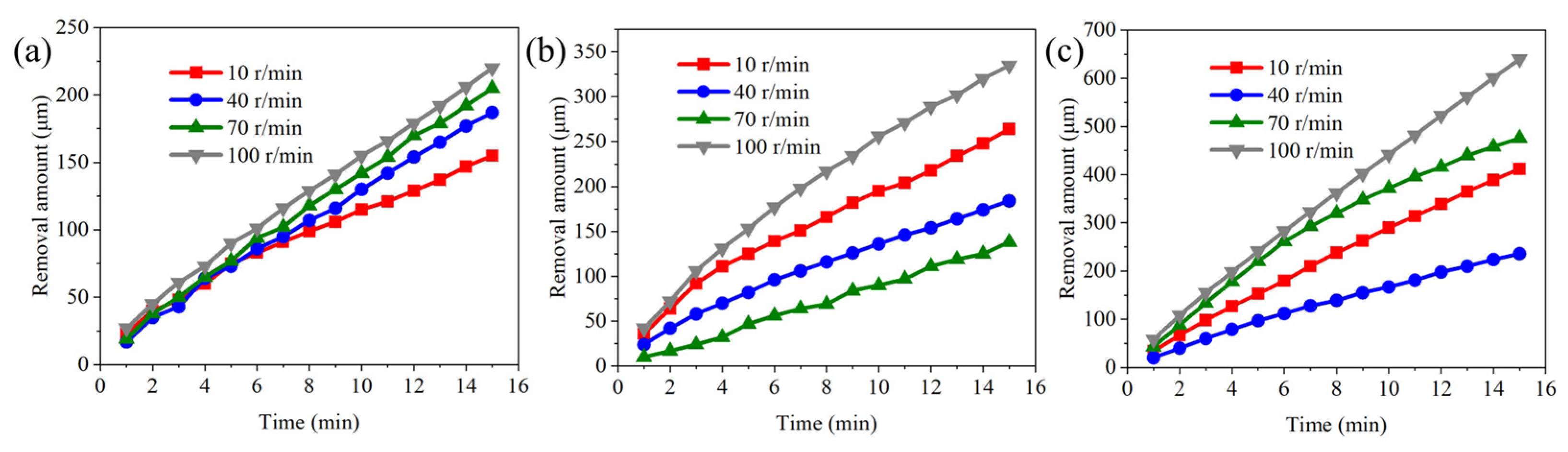
In addition to abrasive type and particle size, spindle speed also significantly influences the material removal behavior of GaN crystals. Figure 4 illustrates the effect of spindle speed on the material removal of GaN (0001) planes using abrasives of different particle sizes. Each experiment was repeated three times and averaged. As shown, the MRR generally increases with spindle speed, although the extent of increase varies among particle size groups and the trend is not strictly monotonic in all cases. Nevertheless, the overall upward tendency remains consistent.
The relationship between spindle speed and MRR can be qualitatively understood within the framework of the Preston equation, which describes MRR as being proportional to the relative velocity between the abrasive particles and the workpiece surface. According to the Preston equation, higher spindle speed corresponds to higher relative sliding velocity, which theoretically contributes to a higher MRR. The effect of spindle speed on GaN material removal is governed by multiple factors. At relatively low speeds, MRR increases linearly with spindle speed, in good agreement with the prediction of the modified Preston equation. However, as speed rises further, MRR may decline, primarily due to abrasive particle blunting and centrifugal migration leading to uneven distribution, both of which deviate from the ideal Preston model. Additionally, abrasive quality (e.g., hardness, wear resistance) and distribution uniformity also influence removal rates. These findings confirm that spindle speed critically regulates GaN removal behavior.
On the GaN (0001) plane, MRR generally rises with speed within a moderate range, a trend shaped by synergistic factors such as abrasive blunting, distribution non-uniformity, and intrinsic abrasive properties. At low speeds, MRR increases linearly as expected by the Preston equation, whereas at high speeds it may decrease due to the aforementioned non-ideal effects. Modifying the Preston equation by incorporating rotational speed, pressure and MRR into the calculation, the comprehensive constants for different abrasives are obtained. The modified Preston equation is as follows:
MRR = k · P · V · f (d)
where f (d) is a function of the type and particle size of the abrasive. On this basis, the comprehensive constants are estimated to be 0.016, 0.028, and 0.044 corresponding to particle sizes of 3 μm, 5 μm, and 10 μm, respectively.
The relationship between spindle speed and the MRR of GaN is consistent with the above analysis and Preston equation. At a certain speed, an increase in spindle speed gives rise to a linear rise in the relative motion frequency between diamond abrasives and the GaN (0001) plane, thereby contributing to improved cutting efficiency of diamond abrasives. This agrees with the theoretically predicted linear correlation between interaction frequency and MRR. This experiment comprehensively considered multiple lapping conditions and provided specific parameter references for the application of this theory in the processing of nitride semiconductors.
In summary, abrasive type, particle size, and spindle speed affect GaN material removal through distinct mechanisms. Abrasive type governs the primary removal mode (e.g., mechanical cutting, chemical-mechanical interaction), setting the baseline MRR. Particle size directly modulates efficiency by influencing cutting depth and the number of effective cutting points. Spindle speed regulates the relative motion velocity and interaction frequency, thereby enhancing or reducing material removal. Notably, these three parameters exhibit significant synergistic effects.
Additionally, while the removal of the GaN (0001) plane increases with lapping time, the surface roughness continuously evolves, highlighting the need to balance removal rate with final surface integrity.
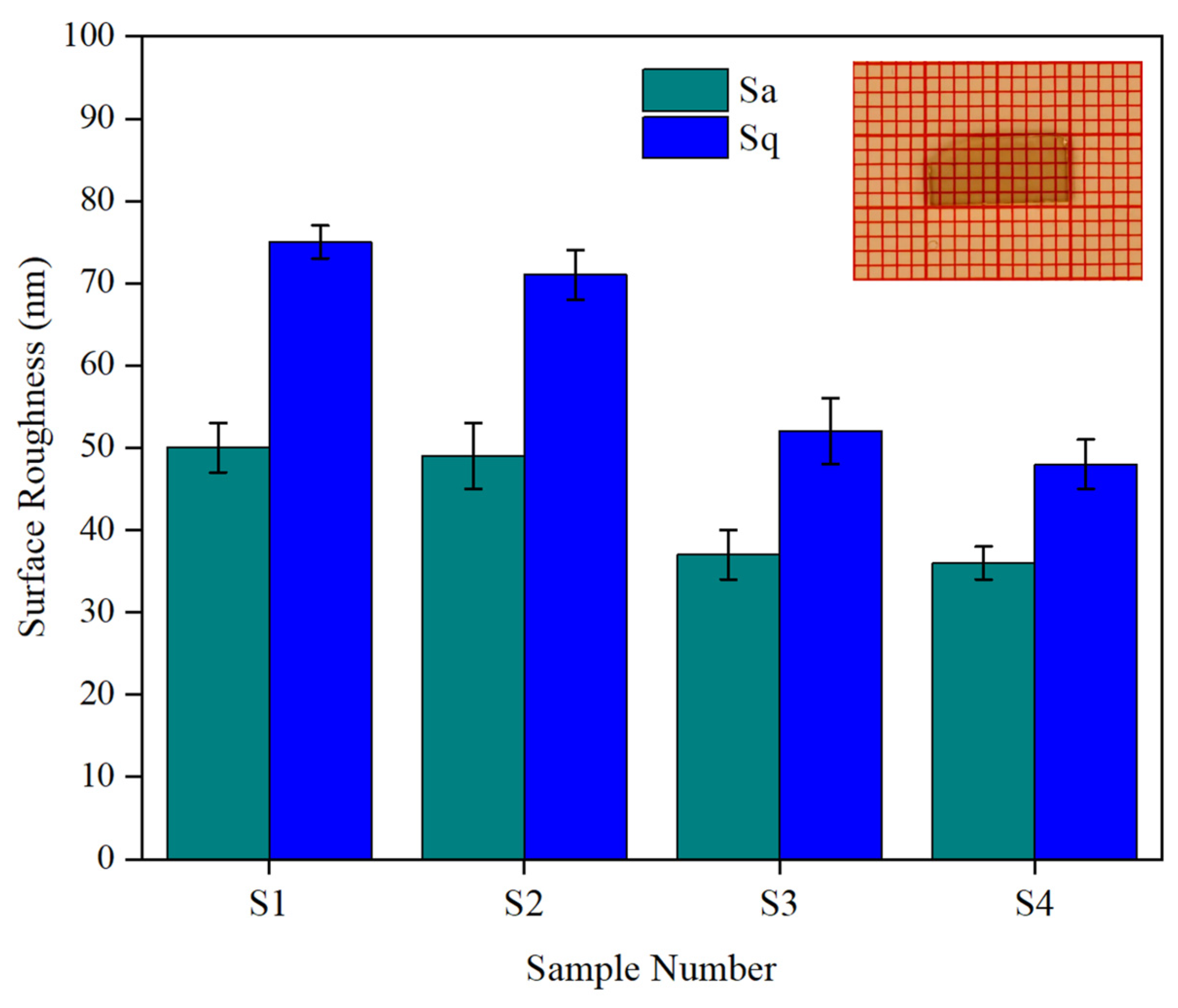
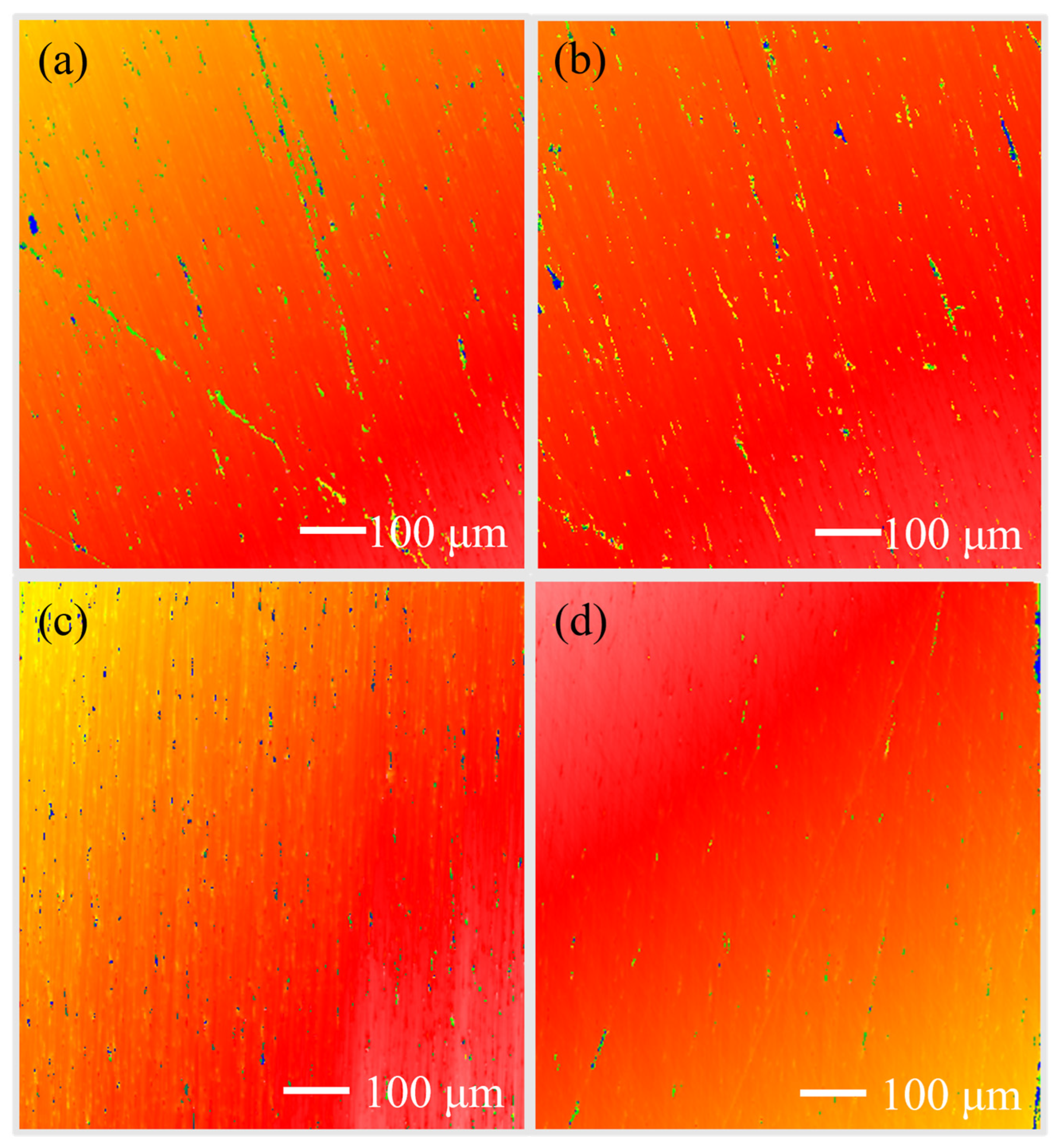
To further investigate the influence of lapping processes on the roughness of crystal planes, a diamond abrasive with a particle size of 0.5 μm was adopted for the finish lapping of GaN (0001) plane, which had undergone rough machining via distinct processes. Each experiment was repeated three times and averaged. With all other process parameters kept constant, the planarity of the GaN (0001) surface was characterized by a white light interferometer (Figure 5). Larger abrasive particles produce deeper surface scratches, significantly degrading crystal roughness and complicating subsequent CMP. Lower rotational speeds impede debris removal by centrifugal force, further worsening surface finish. A better surface roughness is therefore achieved using finer abrasives at higher speeds. As shown in Figure 6, the GaN (0001) surface roughened at lower speeds with coarser abrasives exhibits higher roughness. In contrast, higher speeds with finer abrasives substantially reduce surface roughness.
Based on the experiments, a lapping process was developed to balance material removal rate and surface roughness. This process uses 3 μm diamond abrasives on a lapping disc at 100 r/min, improving processing efficiency by reducing machining time and lowering the technical demands of subsequent CMP.

4. Conclusions

This study investigates the effects of abrasive type, particle size, and spindle speed on the lapping behavior of GaN (0001) planes, focusing on the macroscopic surface morphology and material removal kinetics of GaN lapping. The results demonstrate that abrasive type governs the material removal mechanism: hard abrasives such as diamond yield the highest material removal rate (MRR) through mechanical cutting, making them most suitable for lapping high-hardness GaN crystals. Within a certain range, MRR increases with abrasive particle size, which is attributed to deeper cutting depths and more active cutting points. Spindle speed modulates MRR by altering the relative motion and cutting frequency between abrasives and the GaN surface, exhibiting a near-linear correlation within a threshold range. Notably, the synergistic interactions among these three parameters need to be balanced to achieve both high removal efficiency and fine surface roughness, which can be further optimized by using finer abrasives and higher spindle speeds. These findings enhance the understanding of parameter–property relationships in GaN (0001) plane processing, which in turn influences the subsequent characterization, device yield, and end-performance of GaN-based devices, thereby providing empirical and technical support for the research on GaN machining processes and aiding the development of high-performance GaN device manufacturing. It should be noted that the depth of subsurface damage (SSD), a critical factor in the lapping process, has not been evaluated due to experimental constraints. Therefore, the long-term objective of this research is to establish a multi-objective optimization model that integrates MRR, surface roughness, and SSD depth for the fabrication of high-quality GaN substrates.

Author Contributions

X.H. and Y.W. designed the experiment. H.Z. wrote the main manuscript text. Y.S., B.Z. and H.H. helped with the sample fabrication. All of the authors participated in the discussion and revision of the manuscript. All authors have read and agreed to the published version of the manuscript.

Funding

The authors gratefully acknowledge the financial support from NSFC (52472004, 62404115), Qilu University of Technology (Shandong Academy of Sciences) Science, education and production integration pilot project (2024ZDZX02, 2024RCKY022, 2024GH08), the Taishan Scholar Program of Shandong Province (Grant No. tstp20230631).

Data Availability Statement

The original contributions presented in this study are included in the article. Further inquiries can be directed to the corresponding authors.

Conflicts of Interest

The authors declare no conflicts of interest.

References

  1. Foutz, B.E.; Oleary, S.K.; Shur, M.S.; Eastman, L.F. Transient electron transport in wurtzite GaN, InN, and AlN. J. Appl. Phys. 1999, 85, 7727–7734. [Google Scholar]
  2. Kaneki, S.; Konno, T.; Mori, H.; Fujikura, H. Quartz-free hydride vapor phase epitaxy for production of large size GaN-on-GaN epitaxial wafers. Appl. Phys. Express 2025, 18, 055502. [Google Scholar] [CrossRef]
  3. Qin, T.; Yu, H.; Liu, Q.; Li, Q.; Wang, Z.; Wang, S.; Wang, L.; Wang, G.; Yu, J.; Qi, Z.; et al. Simulation Study on the Effect of Growth Pressure on Growth Rate of GaN. Materials 2025, 18, 4941. [Google Scholar] [CrossRef]
  4. Sasaki, R.; Imanishi, M.; Washida, S.; Murakami, K.; Usami, S.; Maruyama, M.; Yoshimura, M.; Mori, Y. Effects of morphology during coalescence of GaN crystals on dislocation behavior in the Na-flux point seed technique. Jpn. J. Appl. Phys. 2025, 64, 055502. [Google Scholar]
  5. Yang, C.; Huang, G.; Pan, R.; Wang, Z.; Ma, M.; Xia, S.; Zhou, M.; Fan, S.; Li, Z. Influence of Na: Ga ratios under the flux-excess aid on GaN crystal growth using the Na-flux LPE method. CrystEngComm 2025, 27, 400–406. [Google Scholar] [CrossRef]
  6. Wang, B.; Liu, L.; Tian, G.; Wang, G.; Yu, J.; Li, Q.; Sun, D.; Xu, X.; Zhang, L.; Wang, S. Studying the effect of temperature and pressure on GaN crystals via the Na-flux method. CrystEngComm 2024, 26, 3176–3184. [Google Scholar] [CrossRef]
  7. Grabianska, K.; Kucharski, R.; Amilusik, M.; Bockowski, M. Study of GaN solubility in ammonothermal alkaline solution. J. Cryst. Growth 2024, 647, 127864. [Google Scholar] [CrossRef]
  8. Zak, M.; Kempisty, P.; Lucznik, B.; Kucharski, R.; Bockowski, M. The Impact of GaN Crystal Growth on Ammonia Flow Dynamics in Ammonothermal Processes. Crystals 2025, 15, 261. [Google Scholar] [CrossRef]
  9. Schimmel, S.; Tomida, D.; Ishiguro, T.; Honda, Y.; Chichibu, S.F.; Amano, H. Temperature Field, Flow Field, and Temporal Fluctuations Thereof in Ammonothermal Growth of Bulk GaN—Transition from Dissolution Stage to Growth Stage Conditions. Materials 2023, 16, 2016. [Google Scholar] [CrossRef]
  10. Strite, S.; Morkoc, H. GaN, AIN. and InN: A review. J. Vac. Sci. Technol. B Microelectron. Nanometer Struct. Process. Meas. Phenom. 1992, 10, 1237–1266. [Google Scholar]
  11. Xu, Y.; Zhu, F.; Wang, M.; Liu, X.; Liu, S. Molecular dynamics simulation of GaN nano-grinding. In 2018 IEEE 20th Electronics Packaging Technology Conference (EPTC); IEEE: New York, NY, USA, 2018; pp. 468–472. [Google Scholar]
  12. Li, T.; Zhao, P.; Shang, F. Wear behaviors and plastic deformation mechanisms induced by nano-grinding of indium-doped gallium nitride single crystal. Tribol. Int. 2024, 197, 109791. [Google Scholar] [CrossRef]
  13. Zhang, S.; Dai, H. Effect of diamond grain shape on gallium nitride nano-grinding process. Mater. Sci. Semicond. Process. 2024, 171, 108034. [Google Scholar] [CrossRef]
  14. Lin, H.C.; Feng, Z.C.; Chen, M.S.; Shen, Z.X.; Lu, W.J.; Collins, W.E. Anisotropic properties of GaN studied by raman scattering. Mater. Sci. Forum 2006, 527, 1517–1520. [Google Scholar] [CrossRef]
  15. Cheng, Y.; Cai, D.; Wang, H.; Wu, J.; Liu, X.; Zhang, G.; Yu, T. Anisotropic fracture toughness of bulk GaN. Phys. Status Solidi (b) 2018, 255, 1700515. [Google Scholar] [CrossRef]
  16. Li, W.; Wen, L.; Chai, R.; Wang, L. Regrowth characteristics of semipolar (11–22) GaN epitaxial film on corroded semipolar GaN template. Micro Nanostructures 2023, 182, 207649. [Google Scholar] [CrossRef]
  17. Bessolov, V.; Zubkova, A.; Konenkova, E.; Konenkov, S.; Kukushkin, S.; Orlova, T.; Rodin, S.; Rubets, V.; Kibalov, D.; Smirnov, V. Semipolar GaN (10–11) Epitaxial Layer Prepared on Nano-Patterned SiC/Si (100) Template. Phys. Status Solidi (b) 2019, 256, 1800268. [Google Scholar] [CrossRef]
  18. Makinudin, A.H.A.; Al-Zuhairi, O.; Anuar, A.; Zainorin, M.Z.; Abu Bakar, A.S.; DenBaars, S.; Supangat, A. Impact of crystallinity towards the performance of semi-polar (11–22) GaN UV photodetector. Mater. Lett. 2021, 286, 129244. [Google Scholar] [CrossRef]
  19. Lee, T.; Jeong, H.; Lee, S.; Kim, D.; Kim, H. Effect of the lapping platen groove density on the characteristics of microabrasive-based lapping. Micromachines 2020, 11, 775. [Google Scholar] [CrossRef] [PubMed]
  20. Zhao, P.; Gao, X.; Zhao, B.; Wang, S.; Zhang, D.; Wu, X.; Huang, S.; Li, D.; Wu, J. Investigation on nano-grinding process of GaN using molecular dynamics simulation: Nano-grinding parameters effect. J. Manuf. Process. 2023, 102, 429–442. [Google Scholar] [CrossRef]
  21. Xie, D.G.; Gao, B.; Yao, Y.X.; Yuan, Z.J. Study of local material removal model of bonnet tool polishing. Key Eng. Mater. 2006, 304, 335–339. [Google Scholar] [CrossRef]
  22. Alvarez-Nunez, L.C.; Flores-Hernandez, R.B. Relative velocity and loose abrasive wear in conventional grinding machines. Optik 2009, 120, 845–854. [Google Scholar] [CrossRef]
  23. Zhang, B.; Hu, H.; Yao, X.; Wu, Y.; Shao, Y.; Hao, X. Preparation of controllable double-selective etched porous substrate for HVPE growth of GaN crystals with excellent optical properties. CrystEngComm 2023, 25, 6602–6610. [Google Scholar]
  24. Zhang, B.; Wu, Y.; Zhang, L.; Huo, Q.; Hu, H.; Ma, F.; Yang, M.; Shi, D.; Shao, Y.; Hao, X. Growth of high-quality GaN crystals on a BCN nanosheet-coated substrate by hydride vapor phase epitaxy. CrystEngComm 2019, 21, 1302–1308. [Google Scholar] [CrossRef]
  25. Shao, Y.; Zhang, L.; Hao, X.; Wu, Y.; Chen, X.; Qu, S.; Xu, X.; Jiang, M. Influence of GaCl carrier gas flow rate on properties of GaN films grown by hydride vapor-phase epitaxy. J. Alloys Compd. 2011, 509, 6212–6216. [Google Scholar]
  26. Kitamura, T.; Nakashima, S.; Nakamura, N.; Furuta, K.; Okumura, H. Raman scattering analysis of GaN with various dislocation densities. Phys. Status Solidi-C 2008, 5, 1789–1791. [Google Scholar]
  27. Nootz, G.; Schulte, A.; Chernyak, L.; Osinsky, A.; Jasinski, J.; Benamara, M.; Liliental-Weber, Z. Correlations between spatially resolved Raman shifts and dislocation density in GaN films. Appl. Phys. Lett. 2002, 80, 1355–1357. [Google Scholar] [CrossRef]
  28. Xu, M.; Gao, T.; Li, L.; Wang, B.; Chen, Q.; Huang, J.; Xiao, Q. Removal mechanism of double-diamond-abrasive-grinding GaN single crystals under graphene lubrication. Diam. Relat. Mater. 2024, 148, 111381. [Google Scholar] [CrossRef]
  29. Aida, H.; Takeda, H.; Kim, S.W. Evaluation of subsurface damage in GaN substrate induced by mechanical polishing with diamond abrasives. Appl. Surf. Sci. 2014, 292, 531–536. [Google Scholar] [CrossRef]
  30. Belkhir, N.; Bouzid, D.; Herold, V. Surface behavior during abrasive grain action in the glass lapping process. Appl. Surf. Sci. 2009, 255, 7951–7958. [Google Scholar] [CrossRef]
  31. Yonenaga, I. Thermo-mechanical stability of wide-bandgap semiconductors: High temperature hardness of SiC, AlN, GaN, ZnO and ZnSe. Phys. B Condens. Matter 2001, 308, 1150–1152. [Google Scholar]
  32. Yonenaga, I. Hardness of bulk single-crystal GaN and AlN. MRS Int. J. Nitride Semicond. Res. 2002, 7, 6. [Google Scholar] [CrossRef]
  33. Nie, A.; Zhao, Z.; Xu, B.; Tian, Y. Microstructure engineering in diamond-based material. Nat. Mater. 2025, 24, 1172–1185. [Google Scholar] [CrossRef] [PubMed]
  34. Bifano, T.G. Ductile regime grinding of brittle materials. Precis. Eng. 1991, 13, 216–224. [Google Scholar]
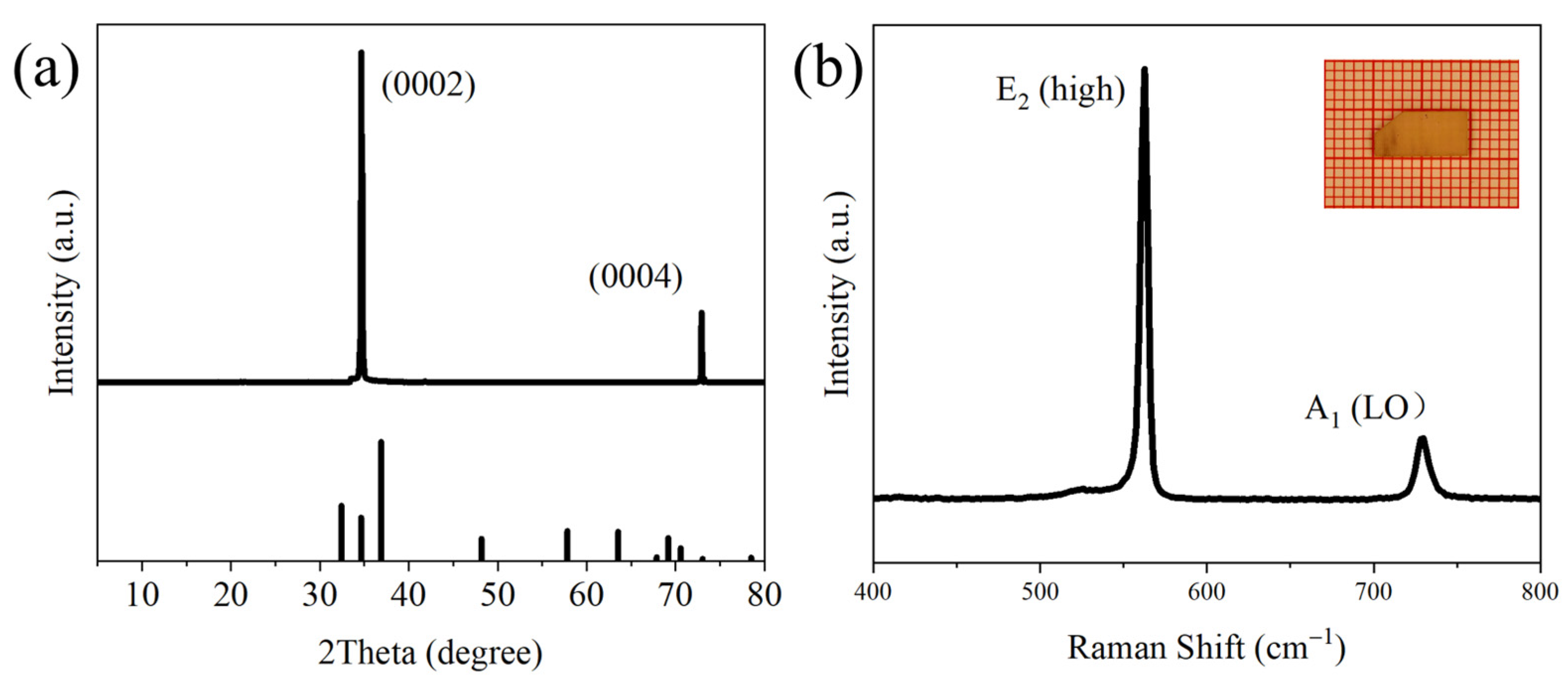
Figure 1. (a) XRD pattern of GaN (0001) plane and (b) Raman spectrum of GaN (0001) plane, where the inset of (b) is GaN crystal in the pre-lapping state.
Crystals 16 00190 g001
Figure 2. (a) Removal amount and (b) lapping mechanism of GaN (0001) plane by different abrasives.
Crystals 16 00190 g002
Figure 3. Effect of spindle speed on the removal amount of GaN (0001) plane: (a) 10 r/min, (b) 40 r/min, (c) 70 r/min and (d) 100 r/min.
Crystals 16 00190 g003
Figure 4. Effect of diamond abrasive grain size on removal amount of GaN (0001) plane: (a) 3 μm, (b) 5 μm and (c) 10 μm.
Crystals 16 00190 g004
Figure 5. The (0001) plane subjected to different rough machining processes was examined using white light interferometry: (a) 3 μm, 10 r/min, (b) 5 μm, 40 r/min, (c) 10 μm, 70 r/min, (d) 10 μm; 100 r/min. The color represents the optical path difference between different coherent lights.
Crystals 16 00190 g005
Figure 6. Crystal planes prepared with distinct coarse lapping parameters yet identical fine lapping processes are denoted as follows: S1: 10 μm, 10 r/min S2: 5 μm, 40 r/min S3: 3 μm, 70 r/min S4: 3 μm; 100 r/min, where the inset crystal is S4.
Crystals 16 00190 g006
Table 1. Comparison of hardness of different hard materials [31,32,33].
Types of CrystalsAl2O3SiCDiamondGaN
Mohs hardness99.15–9.75109
Table 2. MRR of GaN (0001) plane under different abrasive grain size and spindle speed.
Abrasive Grain Size (μm)Spindle Speed (r/min)MRR (μm/min)
31010
34012.3
37013.3
310014.6
51017
54011.6
5708.3
510021.6
101026.6
104014
107030
1010041
Disclaimer/Publisher’s Note: The statements, opinions and data contained in all publications are solely those of the individual author(s) and contributor(s) and not of MDPI and/or the editor(s). MDPI and/or the editor(s) disclaim responsibility for any injury to people or property resulting from any ideas, methods, instructions or products referred to in the content.