Article

Structure and Thermophysical Properties of Phase Change Materials Used in a Lithium-Ion Coin Battery Thermal Management System


National Institute for Research and Development of Isotopic and Molecular Technologies, 400293 Cluj-Napoca, Romania
*
Author to whom correspondence should be addressed.
Crystals 2026, 16(2), 93; https://doi.org/10.3390/cryst16020093
Submission received: 28 December 2025 / Revised: 22 January 2026 / Accepted: 26 January 2026 / Published: 28 January 2026
(This article belongs to the Special Issue Exploring New Materials for the Transition to Sustainable Energy)

Abstract

Phase change materials (PCMs) have emerged as an innovative solution in thermal energy storage and thermal management systems (TMS) owing to their outstanding latent heat of fusion during the phase change process. This study is especially addressed to the battery TMS based on Organic PCMs for fast charging/discharging applications of lithium-ion batteries (LIBs). These fast processes generate excessive heat during operation, degrade battery performance, decrease energy efficiency, and reduce the lifespan and safety of batteries. Organic PCMs exhibit desirable properties, including high latent heat capacity, good thermal characteristics, low cost, and ease of integration. The major challenge for the successful application of organic PCM comprises its low thermal conductivity, which impacts the heat storage and release rates. PCM-based Paraffin Wax (PW) has been designed by including expanded graphite (EG) as a high thermal conductivity additive in high latent heat of paraffin wax. Experiments focused on the effects of heating methods (microwaves/S-type EG composition and conventional electric oven/S′-type EG composition) of expandable graphite on the thermophysical properties of different PW/EG composites. The crystal and chemical structure of the study samples were analyzed by X-ray diffraction and Fourier-Transform Infrared spectroscopy. The battery module created with PW/EG composites were ample examined using charging/discharging experiments at five different C-rates. The effect of current rates on battery surface temperature is investigated in two cases: with PCM cooling and with air cooling. A 20.43% decrease in battery temperature is found at 5C rate with PCM cooling and a maximum reduction in battery charging time of 43.77%.

1. Introduction

The ongoing trend of increasing power levels in silicon-based portable devices over recent years has accelerated research on high-performance battery thermal management systems (BTMS). Smartwatches, LED lights, and small electronic devices typically use coin-type batteries. If the required power generates a great amount of heat, safety concerns are normally raised. Lithium-ion coin battery types have developed rapidly in recent years to allow the storage of increasingly large amounts of electrical energy. Battery Management System (BMS) and battery thermal management system are fundamental components that facilitate the transition to fast-charging and fast-discharging protocols. These two systems must be well-sized and carefully dimensioned. As the charging power has been continuously increased, the safety and the stability of the Li-ion battery were influenced accordingly [1]. Internal resistance is a key parameter for power and heat losses calculation and is strongly dependent upon state of charge (SOC), state-of-health (SOH), and charge/discharge currents. Internal resistance is the sum of all process resistances within the battery and is an important factor in capacity fade as a result of the generated heat [2,3].
In the discharge process of Li-ion batteries, the heat generation is influenced by the reaction heat, ohmic resistance heat, polarization heat, and heat from side reactions [4]. The heat generated by the ohmic resistance and polarization resistance is part of irreversible reactions, while reaction heat is determined with chemical reactions [5]. Charge and discharge current rates (C-rates) also have a major influence on the battery degradation. Current rate and operating temperature are the main issues that lead to the lithium-ion battery degradation [6]. As low-current charging is being replaced by fast-charging protocols, battery temperature reduction methods remain the most viable solution. Battery capacity is highly affected by the discharge rates due to the increased internal resistance, heat generation, and mechanical stress that lead to irreversible capacity loss [7]. The safety and performance of Li-ion batteries are seriously affected by high-temperature ranges. In [8], it was stated that the battery’s increased temperature affected battery power more than its capacity. High temperatures increase side reactions within the battery and interrupt internal chemical stability, which significantly reduces the battery lifespan [9]. Several methods of temperature reduction in Li-ion batteries have been intensively studied: air cooling, water cooling, refrigerant-based systems, phase-change materials cooling, and any combination of these methods [10,11,12,13]. As the first three methods require additional components that increase weight, costs, and energy consumption of the TMS, battery cooling systems based on PCMs provide an efficient passive cooling solution and are gaining popularity due to their reduced complexity and easy-to-implement design [14]. Furthermore, phase-change transparent materials are now successfully used in the thermal management of modern transparent electronics [15]. PCMs are substances that absorb and release large amounts of thermal energy during the transition without significant temperature variation.
Phase change material, particularly the paraffin-based, is one of the most outstanding organic PCMs used as a medium in low-temperature latent heat storage due to its many advantages, like non-toxicity, stability, high enthalpy, availability, and low cost [16]. However, the low thermal conductivity of paraffin, which is about 0.3 W/mK, limits its large-scale applications due to inefficient heat transfer when absorbing or releasing thermal energy. Low conductivity of paraffin prolongs the heat charging/discharging phases and lowers the energy system efficiency. To address these limitations, researchers have focused on integrating high-conductivity additives in paraffin. While metal-based fillers have been explored [17], carbon-based materials are increasingly preferred due to their superior thermal performance [18,19,20]. Among these, expanded graphite (EG) is an ideal porous matrix material with a “worm-like” structure [21], which may provide a high specific surface area that facilitates phonon vibration for enhanced heat transfer and prevents leakage of paraffin by capillary action [22]. The thermal conductivity of the PCM composites depends not only on the EG content, but also on the effective dispersion of the EG in the paraffin, which is the key to producing a continuous conductive path [23]. However, the preparation processes of expandable graphite remain a critical challenge to the extent of achieving a high thermal conductivity at a reduced expanded graphite content that ensures structural integrity. The experimental research on the effect of expanded graphite content, processed by different heating methods (microwaves and conventional electrical oven), on the structure, thermophysical properties, and thermal management of PCM composites in lithium-ion coin-type battery is rather limited.
In light of the above, the scope of the paper is to investigate the efficiency of the highest-EG-content PCM on the temperature increase during fast-discharge of a Li-ion coin battery. Crystal and chemical structure of the study samples were investigated by X-ray diffraction (XRD) and Fourier-Transform Infrared spectroscopy (FTIR). Also, the thermophysical properties of the study samples were ample analyzed, and the sample that highlights the most exacerbated thermal properties is further analyzed within a Li-ion coin battery setup with five different discharge rates. The effect of current rates on battery surface temperature is investigated in two cases: with PCM cooling and with air cooling. Throughout this study, air cooling refers to the natural convection cooling during battery measurements at room temperature.

2. Materials and Methods

2.1. Raw Materials

Paraffin, pure granular wax (PW) with a melting point between 58 °C and 62 °C (Thermo Fisher Scientific, Waltham, MA, USA) was used as the main Phase Change Material (PCM) for storing heat, and expandable graphite, with expansion volume 300 mL/g and an average particle size of 50 mesh, was employed as a precursor for expanded graphite. Due to its high thermal conductivity, expandable graphite creates an efficient PCM composite for battery thermal management systems. Before thermal processing, expandable graphite was dried at 70 °C in a drying oven for 12 h to remove moisture. To achieve a comprehensive look at the synthesis mechanism and to determine the influence on the final thermophysical properties and structural integrity of the expanded graphite, the expandable graphite was thermally processed using two distinct methods: microwave irradiation at 900 W and conventional heating in an electric oven at 900 °C. The time processing was set at 60 s in both methods. Both methods yielded a porous, worm-like material, designed as S-type EG, the EG processed in a microwave, and S′-type EG, the EG processed in an electric oven, respectively.

2.2. Sample Preparation

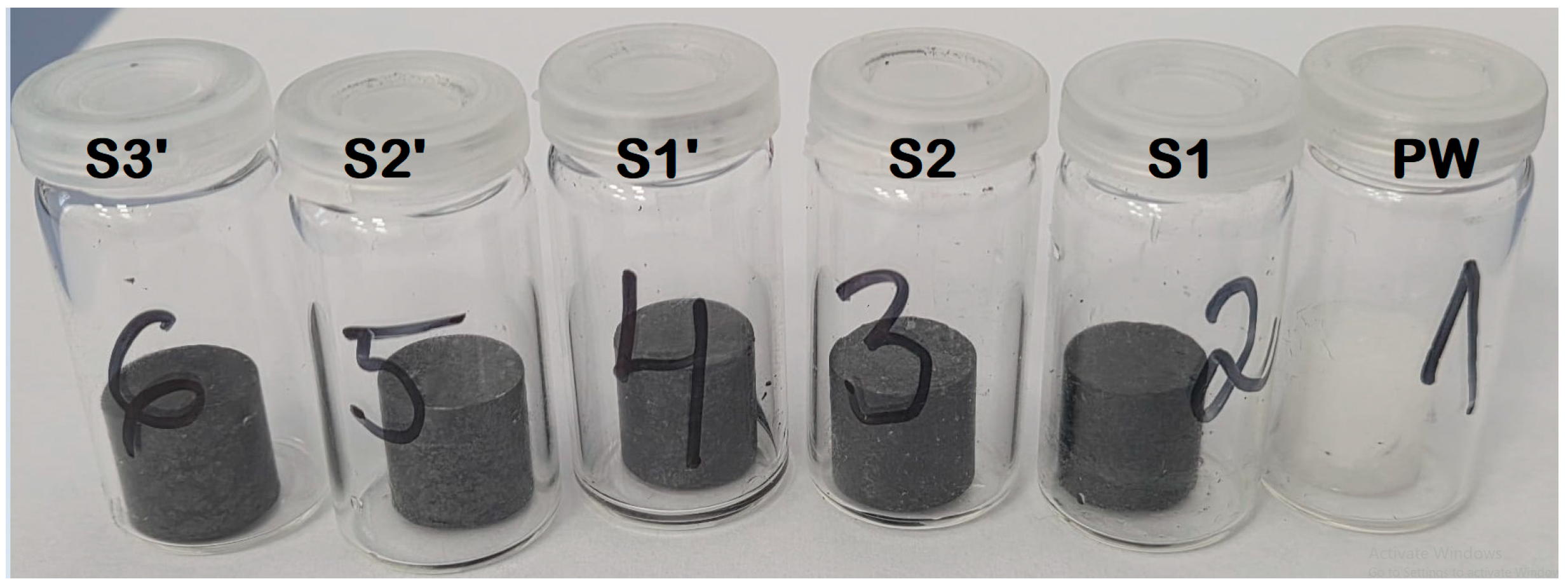
To prepare PW/EG composites, paraffin wax was first melted on a thermostatic water bath in a glass beaker, then uniformly mixed and magnetically stirred (200 r/min). Different mass percentages of S-S′-type EG were added to a constant water bath at 80 °C for 2 h to ensure uniform mixing of the composite and consistent dispersion of EG into liquid PW. Then, the molten material was quickly cooled at room temperature by compression into a cylindrical stainless-steel shape with a size of Φ 25 mm × 6 mm. The obtaining PW/EG composites with 2.5, 5, and 10 wt% expanded graphite content were denoted as S1, S2 for S-type EG composition and S1′, S2′, and S3′ for S′-type EG composition. The samples are displayed in Figure 1.

2.3. Characterization Technique

To evaluate the crystalline structures of paraffin wax (PW), expandable graphite, expanded graphite (EG), and the PW/EG composites, X-ray diffraction was performed using a Bruker D8 Advance X-ray diffractometer with CuKα radiation (λ = 1.54 Å) in a 2θ 10°–60° range. For phase identification, the XRD patterns were compared with the data available in the JCPDS (Joint Committee on Powder Diffraction Standards).
The compatibility and chemical function groups of PW/EG composites were investigated by Fourier-Transform Infrared spectroscopy, in the 400–4000 cm−1 region, using an Attenuated Total Reflectance Fourier transform infrared (ATR-FTIR) spectrometer, Melbourne, Australia.
The Hot Disk TPS 2500S instrument, Gothenburg, Sweden with high precision (better than 2% for conductivity, 5% for diffusivity/specific heat), based on the Transient Plane Source (TPS) technique, was used to determine the thermal conductivity, diffusivity, and specific heat properties of the studied samples.

2.4. Measurement Setup

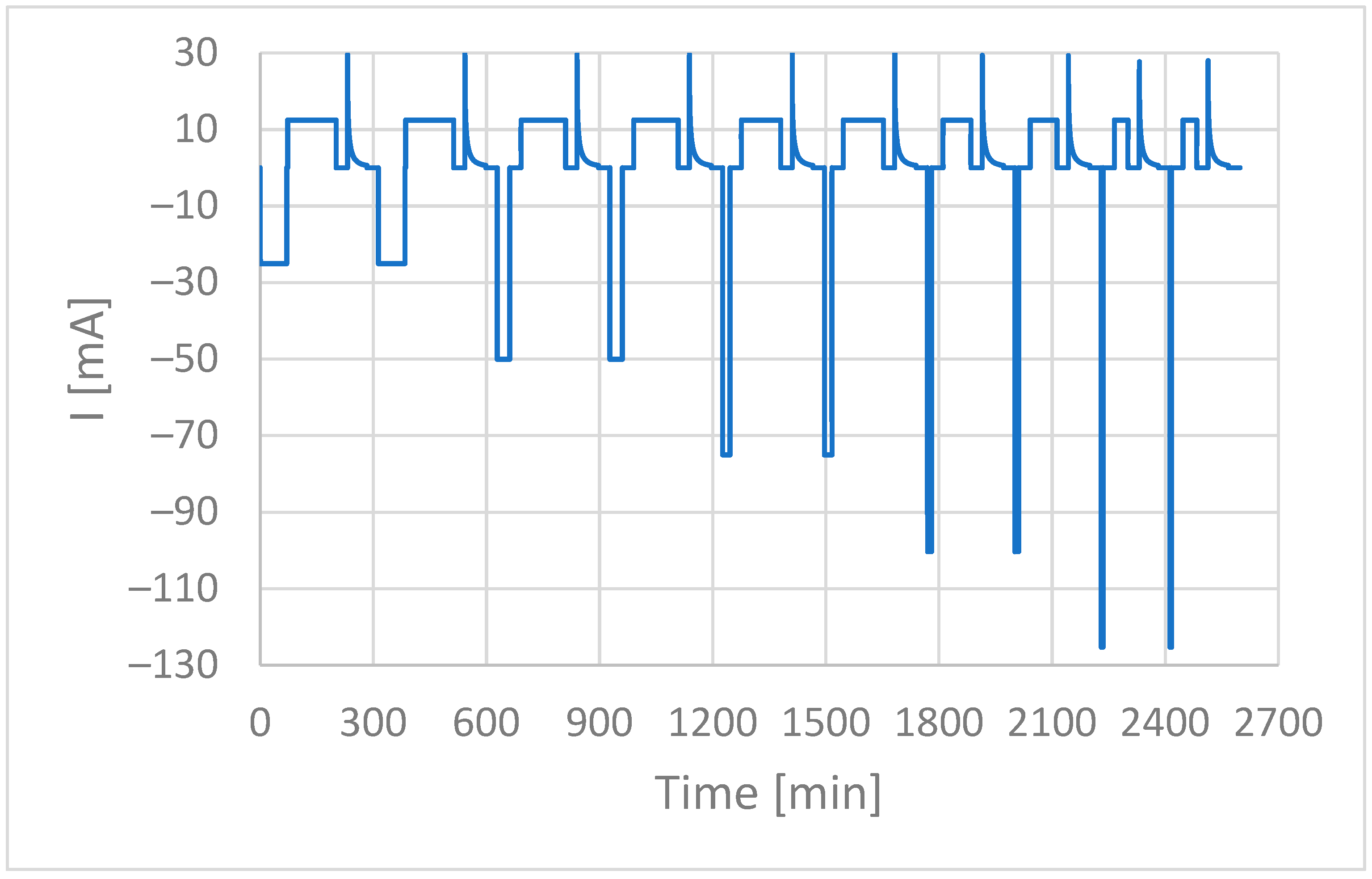
In this study, a LIR 2025 Lithium-Ion coin battery with a nominal capacity of 25 mAh and a rated voltage of 3.6 V has been considered. The battery’s internal resistance is less than 800 mOhm. The manufacturer recommends a maximum charging current of 12.5 mA and a maximum discharging current of 25 mA. In order to determine the thermal efficiency of the PCMs, a predefined testing protocol has been established. The battery measurements in air cooling were taken at room temperature and were set as a reference in comparison with PCM cooling, tested in the same room temperature conditions. VSP multi-channel potentiostat from BioLogic, France, has been used for the charging/discharging cycles. The recordings and data processing were available within the Ec-Lab software, v.11.71. The Modulo Bat technique was employed to build the protocol, as it allows various control modes to be particularly sequenced. The lower limit of the discharge voltage was set to 2.8 V. The battery was charged with the standard CC-CV protocol for all measurements range so that the discharge time at high rates is sufficiently large to capture the temperature increase. After thirty minutes of rest, a constant voltage of 4.2 V was applied down to 0.6 mA. The discharge current was gradually increased from 1C up to 5C, with a 1C step, as seen in Figure 2. After each sequence, thirty minutes rest time was initialized. For each current rate, two measurements were taken.
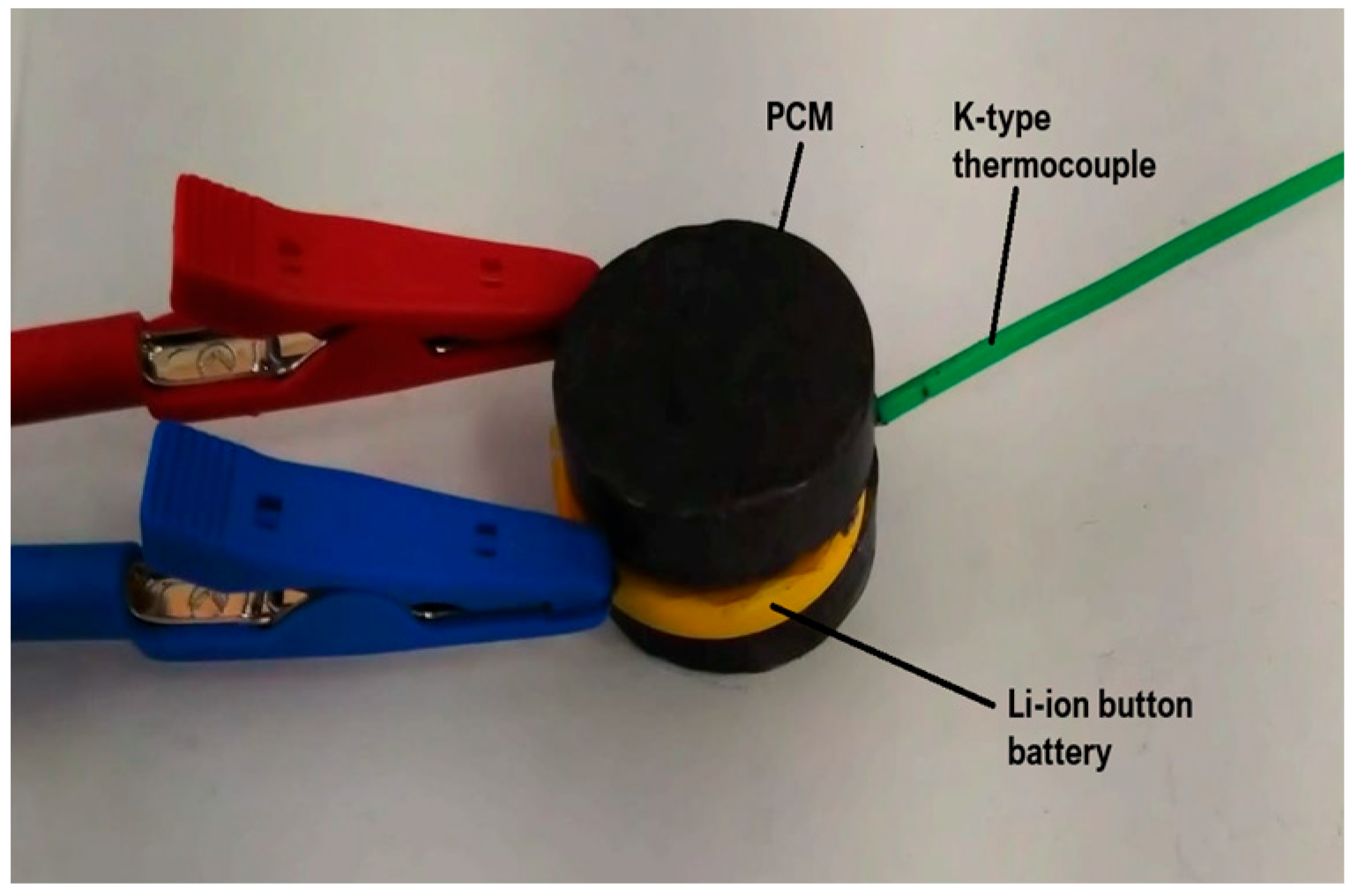
The temperature probe is a K-type thermocouple and was placed in the middle of the battery. The battery has been sandwiched between two 6 mm-thick PCMs with thermal insulation plaster in between to avoid current loss. The setup is shown in Figure 3.

3. Results and Discussion

3.1. Structural Properties of Study Samples

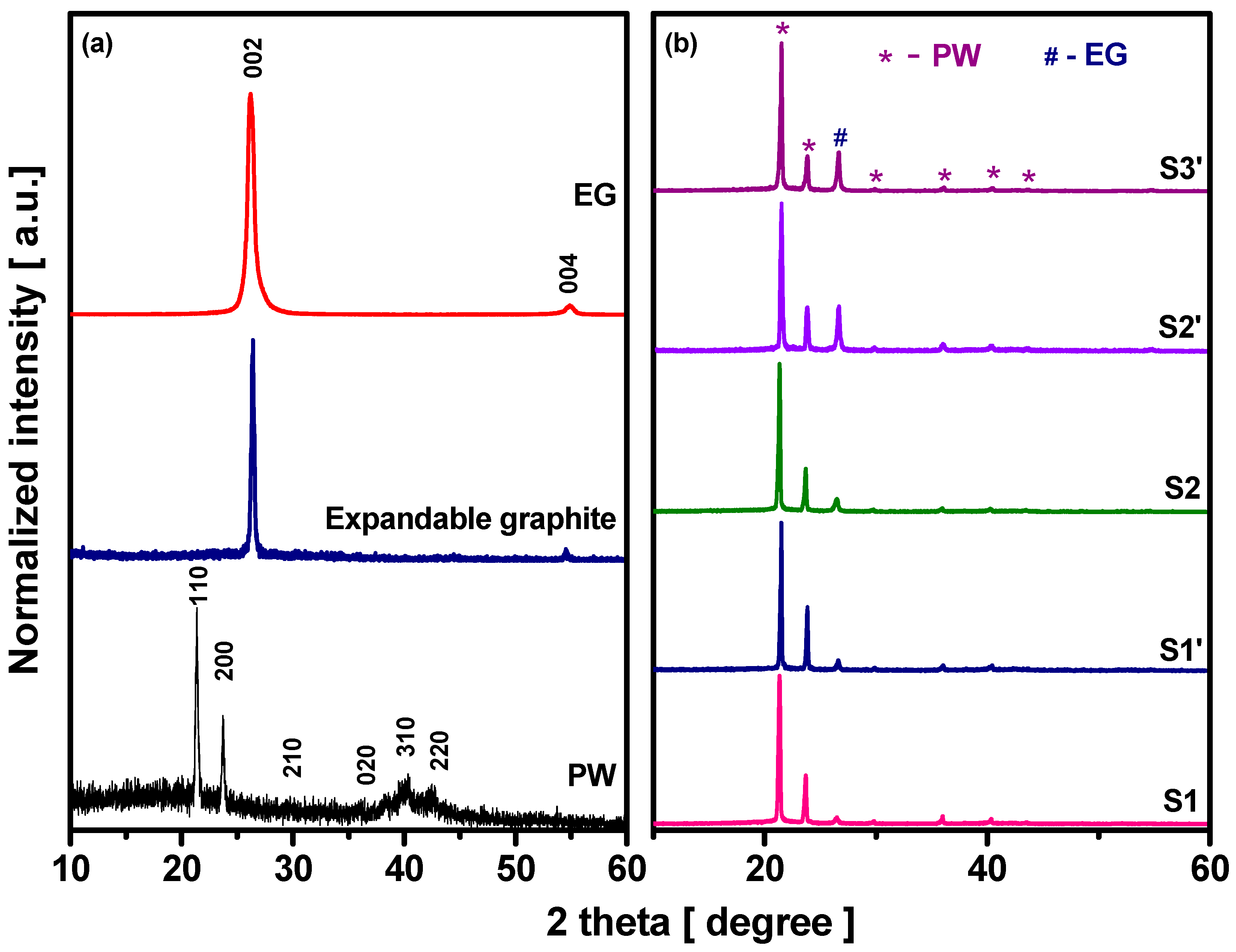
Figure 4a shows the XRD patterns of paraffin wax (PW), expandable graphite, and newly obtained expanded graphite (EG). The presence of the two prominent peaks in the XRD pattern of PW for 2θ at approximately 21.48° and 23.85° corresponding to the (110) and (200) crystallographic planes, respectively [24], confirm the presence of a well-defined orthorhombic crystalline phase, which is a common structure for aliphatic compounds like the long-chain n-alkanes (CH2)x found in paraffin wax [25].
The broadness pattern reflects that the PW also possesses a certain degree of structural disorder, or a less ordered state, which is typical for a technical-grade wax that is a mixture of alkanes with various chain lengths. These different chain lengths prevent the molecules from forming a perfectly ordered crystal lattice, resulting in a less uniform structure. The XRD patterns of both expandable graphite and expanded graphite (EG) exhibit a prominent and sharp diffraction peak at around 26.50° and a lower intensity peak at 54.81° corresponding to (002) and (004) crystallographic planes of hexagonal graphite structure [22]. The presence of these peaks, in both samples, confirms that the hexagonal graphite structure was retained in expanded graphite; however, the expansion process leads to a significant reduction in the maximum intensity of XRD peaks.
Figure 4b illustrates X-ray diffraction patterns of the EG/paraffin wax composites with varying EG contents and S, S′-type EG composition. The XRD patterns displayed sharp and well-defined peaks consistent with their highly ordered layered structure. It can be seen that the structural integrity of both phases of the constituents was maintained, and no new crystalline phases were formed during the processing. The XRD patterns contain only characteristic peaks of PW and EG, with the main peak located at 21.48°, 23.85°, and 26.50°, respectively. Lack of new peaks in the XRD patterns, along with the preservation of fundamental crystal structure of the constituents, supports the hypothesis that the interaction between PW and EG is a pure physical phenomenon, potentially involving capillary force, surface tension, and/or adsorption. XRD analysis confirms that chemical reaction does not occur between EG and PW, leading to stable and effective EG/paraffin wax composites with good interaction and compatibility, ideal as a thermal energy storage material. The average crystallite sizes were estimated using the Scherrer equation [26] (Equation (1)). The calculation was performed using the diffraction peak indexed as (110) for the PW phase and the (002) reflection for graphite. In Equation (1), λ denotes the wavelength of the incident X-ray radiation, β corresponds to the full width at half maximum (FWHM) of the selected diffraction peak, and θ represents the Bragg diffraction angle. The calculated crystallite size values are summarized in Table 1.
d = 0.9 λ β c o s θ
The analysis of the results indicates that EG exhibits crystallite sizes of approximately 341 Å, which are significantly larger than those of expandable graphite, for which a value of 139 Å was obtained. Considering the set of samples S1, S1′, S2, S2′, and S3′, the crystallite size associated with the expanded graphite phase shows a slight increasing trend, starting from 316 Å for sample S1 and reaching 449 Å for sample S3′. In contrast, the crystallites corresponding to the paraffin wax phase (PW) exhibit the largest sizes in samples S1 and S1′ (768 and 845 Å, respectively). The smallest wax crystallite sizes are observed for samples S2 and S2′ (563 and 528 Å, respectively), while the samples PW and S3′ are showing intermediate graphite crystallite dimensions of approximately 528 and 650 Å, respectively.
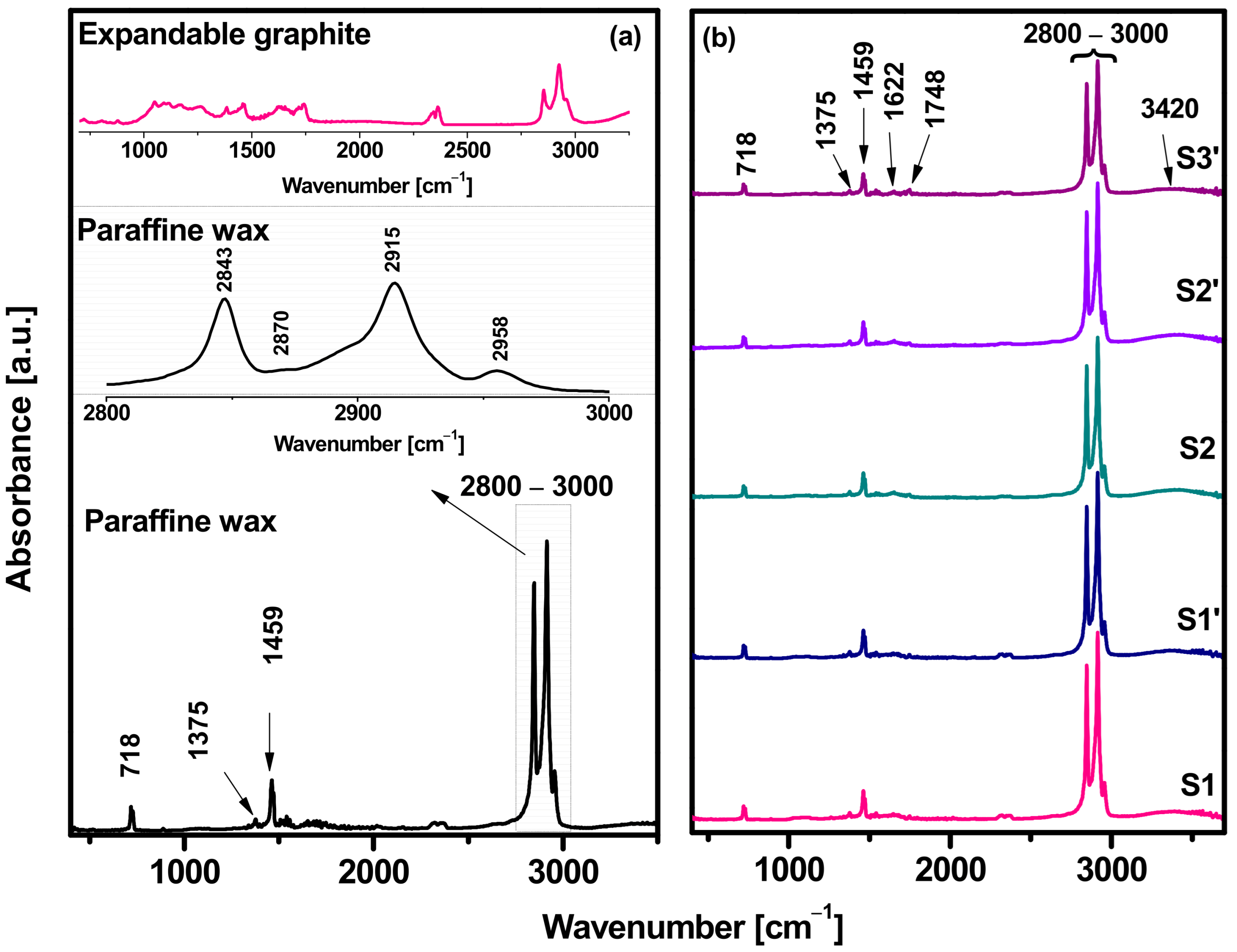
Figure 5 shows the mid-IR spectra of PW and EG/paraffin wax composites with different EG contents. The FTIR spectra of PW (Figure 5a) reveal the presence of narrow absorption bands characteristic of saturated aliphatic (alkanes) structure of the paraffin wax.
The absorption bands between 2800 and 3000 cm−1 are attributed to symmetric and asymmetric stretching vibrations of CH3 (2870, 2958 cm−1) and CH2 (2843, 2915 cm−1) groups, respectively, while the absorption peaks located at 1459 cm−1 and 1375 cm−1 correspond to in-plane bending deformation (scissoring) of CH2 groups and bending vibration of the CH3 group, respectively. Absorption peak centered at 725 cm−1 is ascribed to rocking vibration of long-chain CH2 [27,28]. As can be seen in FTIR spectra, presented in Figure 5b), all prepared EG/paraffin wax composites retained the alkane C-H stretching, bending, and rocking functional groups of paraffin wax, which is a crucial factor for thermal energy storage applications. The FTIR absorption bands of expanded graphite (EG) were found to contain a prominent broad band in the 3400–3450 cm−1 region, corresponding to the stretching vibrations of OH groups. Two intense absorption peaks at 2850 and 2915 cm−1 were attributed to CH2 stretching vibration [29], similar to paraffin wax, a strong peak around 1710–1740 cm−1 was ascribed to C=O stretching vibration, and a medium absorption peak in the 1590–1630 cm−1 region corresponded to C=C skeletal vibrations of the hexagonal graphite structure [30]. The FTIR spectra of EG/paraffin wax composites exhibited a weak broad band centered at 3420 cm−1 in all samples, indicating the presence of hydroxyl groups attached to the graphite [31]. The absorption peaks centered at 1622 and 1748 cm−1 were very weak and more evident in the S3′ sample, which contains the highest EG concentration (10 wt%). FTIR absorption spectra showed that all EG/paraffin wax composites exhibit the characteristic peaks of individual constituents, PW and EG, without peaks shifting or bond formation between the PW and EG, as no new absorption peaks appeared. Therefore, the interaction between PW and EG is due to the physical nature of the composite, where the liquid paraffin is absorbed into the porous network of the EG matrix. Both methods are effective for creating a stable and functional material which successfully combines the features of both constituents: phase change properties (latent heat storage/release) inherent to the paraffin wax and structural stability (liquid paraffin is absorbed into the porous network of the EG matrix, preventing leakage), and thermal conductivity provided by the EG.

3.2. Thermophysical Properties of Paraffin and Paraffin/EG Composites

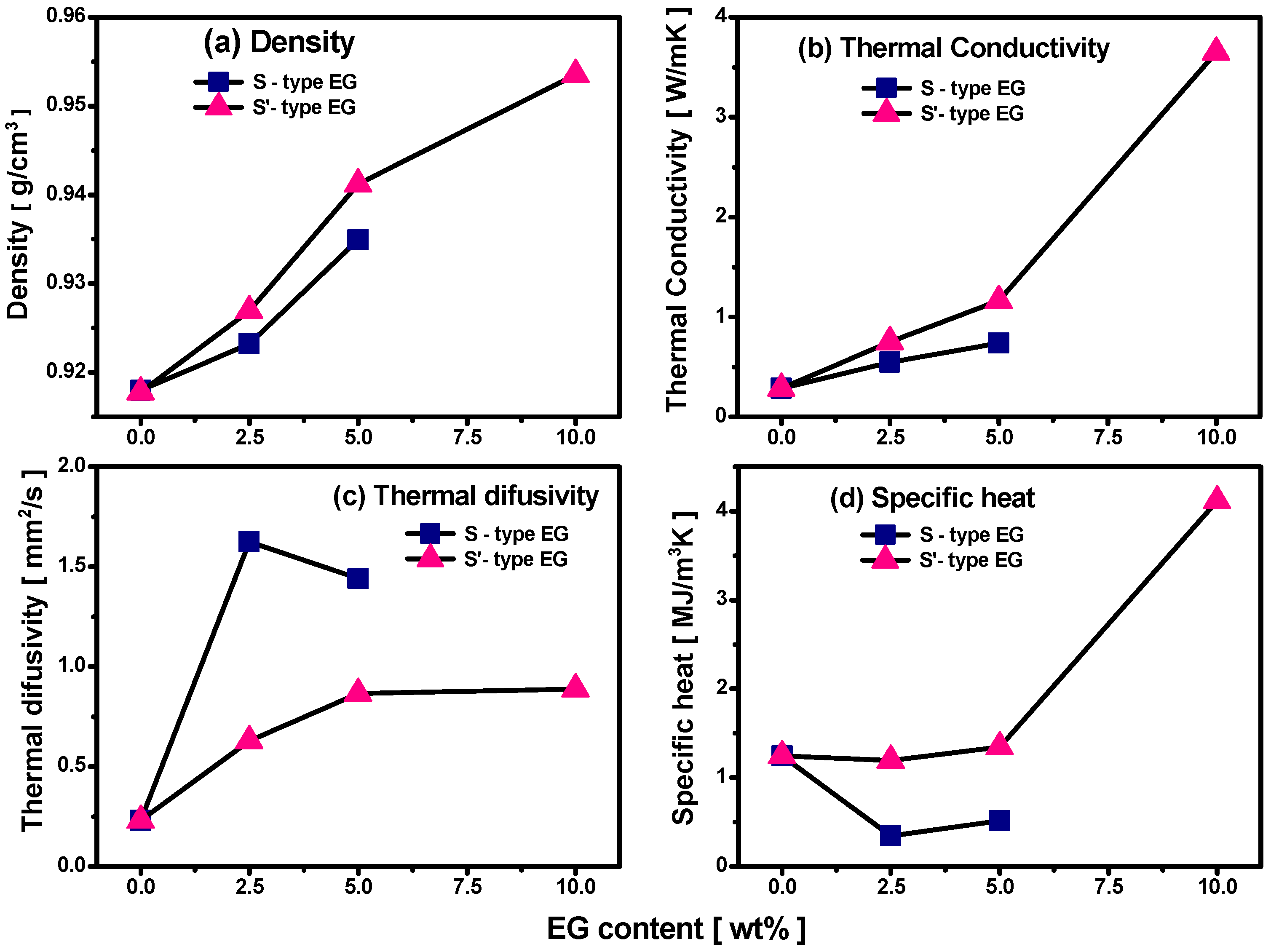
Figure 6 illustrates the influence of the expandable graphite processing method on the density, thermal conductivity, thermal diffusivity, and specific heat of paraffin/EG composites, as well as the variation in these thermophysical properties with increasing EG weight percentage in the composites.
The density of the lightweight samples, which typically float on water, was determined according to Archimedes’ principle using ethanol (≥99.5% purity) as the immersion liquid. Ethanol, with a density of approximately 0.789 g/cm3 at 20 °C, was selected because it is less dense than water. The results indicate that the thermophysical properties of the paraffin/EG composites depend not only on the EG content but also on the processing method. Figure 6a presents the density of study samples.
The results showed a linear increase in density from 0.9178 g/cm3, for pure PW, up to a maximum of 0.9535 g/cm3 for the S3′ sample. As is observed in Figure 6a, the use of the conventional electric oven (S′-type EG samples) leads to higher densities of the PCM composites. The thermal conductivity of PW/EG composites is plotted as a function of EG content and different processing methods in Figure 6b. The results indicate that the thermal conductivity of pure PW is significantly enhanced with increasing expanded graphite content, rising from 0.287 W/(m·K) (pure PW) to 0.545 W/(m·K) and 0.738 W/(m·K) for S1 and S2 samples, respectively. For S′-type EG composition, the thermal conductivity significantly increases with the amount of EG: from an initial value of 0.287 W/(m·K) (PW) to 0.752 W/(m·K), 1.165 W/(m·K), and 3.650 W/(m·K) for samples S1′, S2′ and (S3′), respectively. This improvement is attributed to the highly conductive EG, which forms continuous thermal pathways within the low-conductivity PW matrix, thereby markedly enhancing heat storage and release rates in the composite [32]. The enhancement performance of PW by different amounts of EG corresponds to the enhancement ratios 1.89, 2.57, 2.62, 4.06, and 12.72, respectively. It was also observed that, at the same EG content, the thermal conductivity enhancement ratios of composites containing S′-type EG were 1.38 times higher at 2.5 wt% EG and 1.58 times higher at 5 wt% EG compared to those of S-type EG composites. The results indicate a linear relationship between density and thermal conductivity in PW/EG composites. The values of thermal conductivity were observed to gradually increase from 0.545 to 0.752 W/(mK) (S1-S1′ samples) and 0.738 to 1.165 W/(mK) (S2-S2′ samples) as density grows from 0.9238 to 0.9390 g/cm3 (S1-S1′ samples) and from 0.9270 to 0.9414 g/cm3 (S2-S2′ samples). Higher density may offer a better physical contact between particles (EG) and the PW, improving heat transfer pathways in composites and creating an effective thermal storage composite [33,34].
Figure 6c illustrates the effect of EG content and expandable graphite processing methods (S- and S′-type) on the thermal diffusivity of PW/EG composites. It was found that the thermal diffusivity of PW enhances as the EG content increases in PW/EG composites. In Figure 6c, it is seen that the S′-type EG composites provide a higher rate at which heat spreads through the material, and thermal diffusivity increases from 0.231 to 1.624 (mm2/s), compared to S′ type EG composites, which recorded a rise from 0.231 to 0.865 (mm2/s) for the same EG content. However, it was observed that increasing the EG content leads to a decrease in thermal diffusivity for S-type EG composites, whereas S′-type EG composites exhibit a linear rise in thermal diffusivity with increasing EG content, rising from 0.629 to 0.865 mm2/s for the S1 and S2 samples and reaching 0.887 mm2/s for the S3 sample.
The specific heat of the studied PW/EG composites is displayed in Figure 6d. It can be noticed that the specific heat of PW decreases in S-type EG composition and significantly increases in S′-type EG composites. The specific volumetric heat capacity values show that the material’s ability to store thermal energy per unit volume increases from 1.11 to 1.267 and 3.92 MJ m−3 K−1, respectively, with the addition of EG in S′-type EG composition.
To highlight the PCM effect in battery cooling, the S3s sample was chosen, as it exhibited superior thermal conductivity properties.

3.3. Thermal Performance of PW and PW/EG Composites by Monitoring the Cooling State in the Energy Release Process

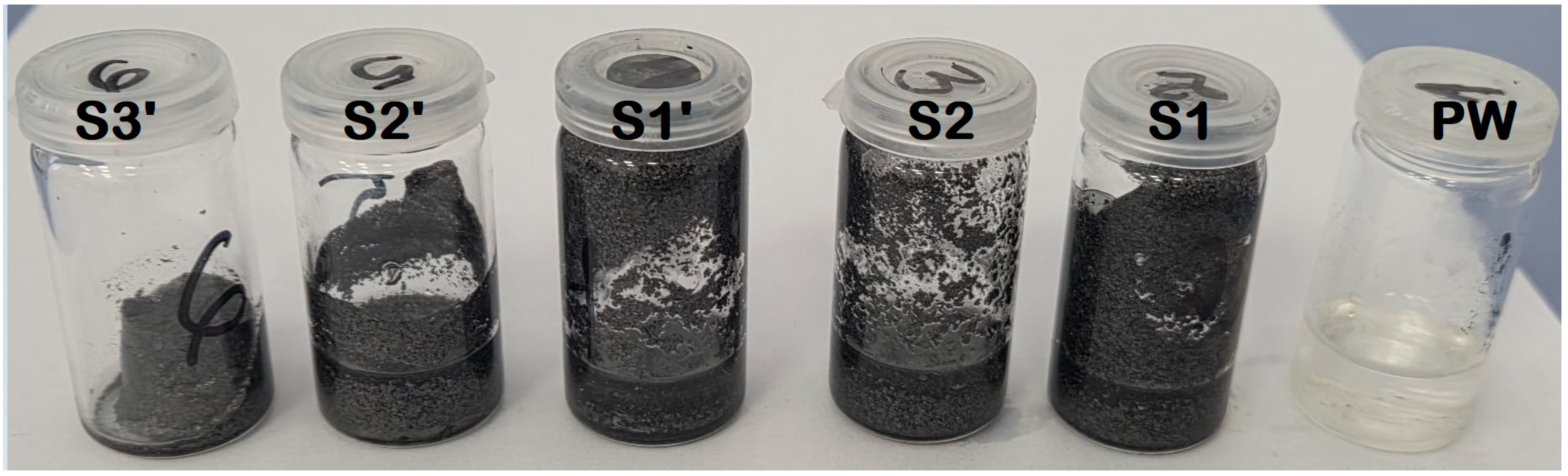
Figure 7 shows photographs of the PW and PW/EG composites after being heated at 80 °C. All samples have the same shape and weight.
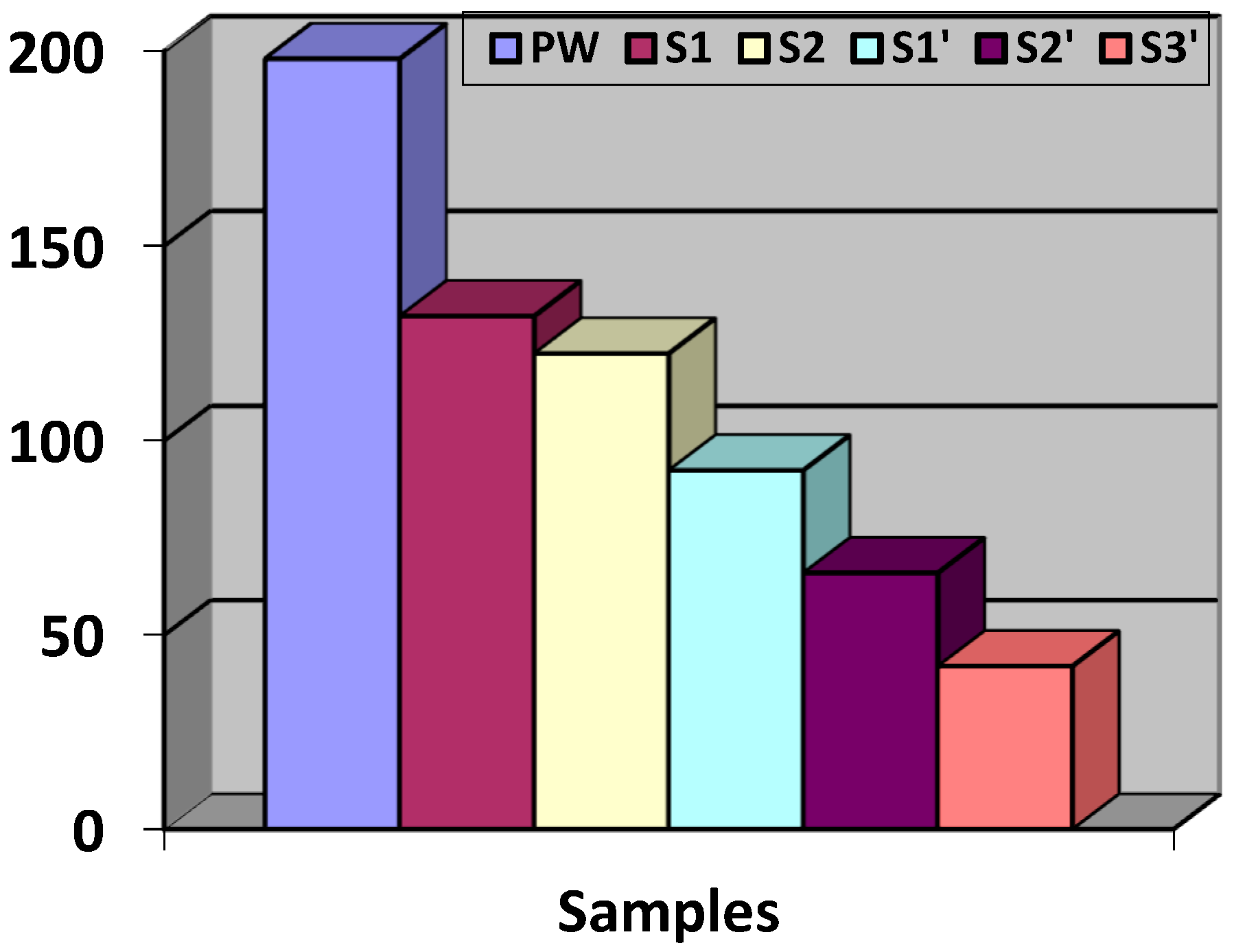
The estimated time for phase change from solid to liquid, at 80 °C, was 198 s for pure PW. As it is observed in Figure 8, the estimated time for phase change in all PCMs composites was significantly reduced compared with that of paraffin.
After the heat storage has been completed, it took only 132 s for sample S1, and 122.4 s for sample S2 to drop its temperature from 80 to 30 °C (heat release process). For S′-type EG compositions, the time required for the heat release process was reduced to 92.4 s for sample S1′, 66 s for sample S2′, and only 42 s for sample S3′, respectively. Our experimental results indicate that the heat release rate in the heat release process of all PCMs compositions was much higher than that of the paraffin. It can be stated that the thermal conductivity of the PCMs has a significant enhancement effect on the heat transfer in the heat release process. The inclusion of expanded graphite in PW reduced solidification time compared to pure paraffin wax, ensuring practical application as a thermal energy storage medium in industries such as construction, solar energy, and battery temperature-control systems. Also, as it is observed in Figure 9, the S3 sample effectively acts as a shape-stabilized composite PCM by retaining its solid form during melting at high temperature (80°) and preventing the common issue of paraffin wax leakage during phase transitions, which is crucial for effective heat management in electronics and batteries.

3.4. Experimental Validation

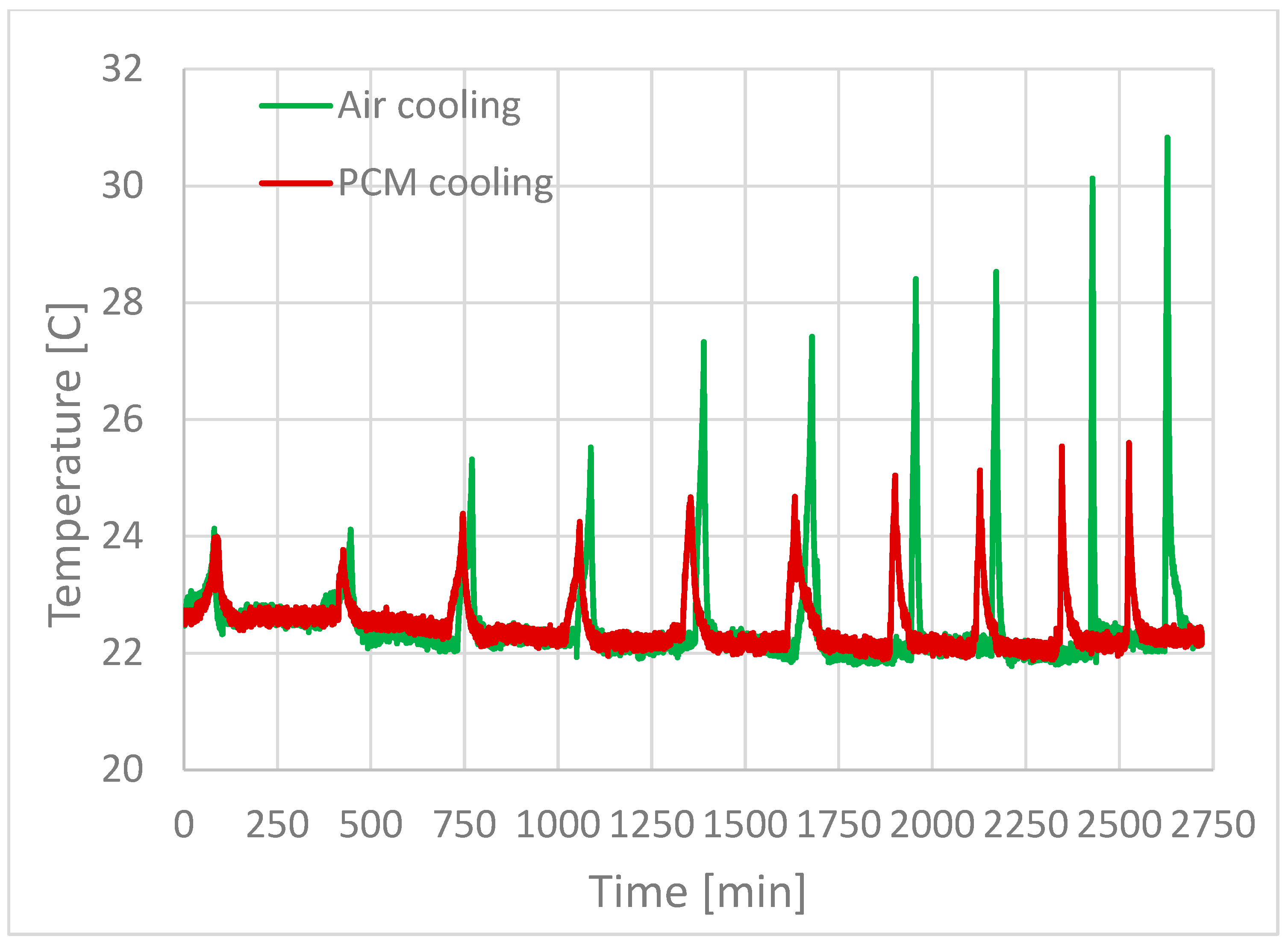
In this study, the discharging current rate was varied up to 5C in order to capture the temperature increase on the surface of the battery under air cooling and PCM cooling conditions. The room temperature was set to 22 °C. The temperature evolution during the charge/discharge cycles is presented in Figure 10.
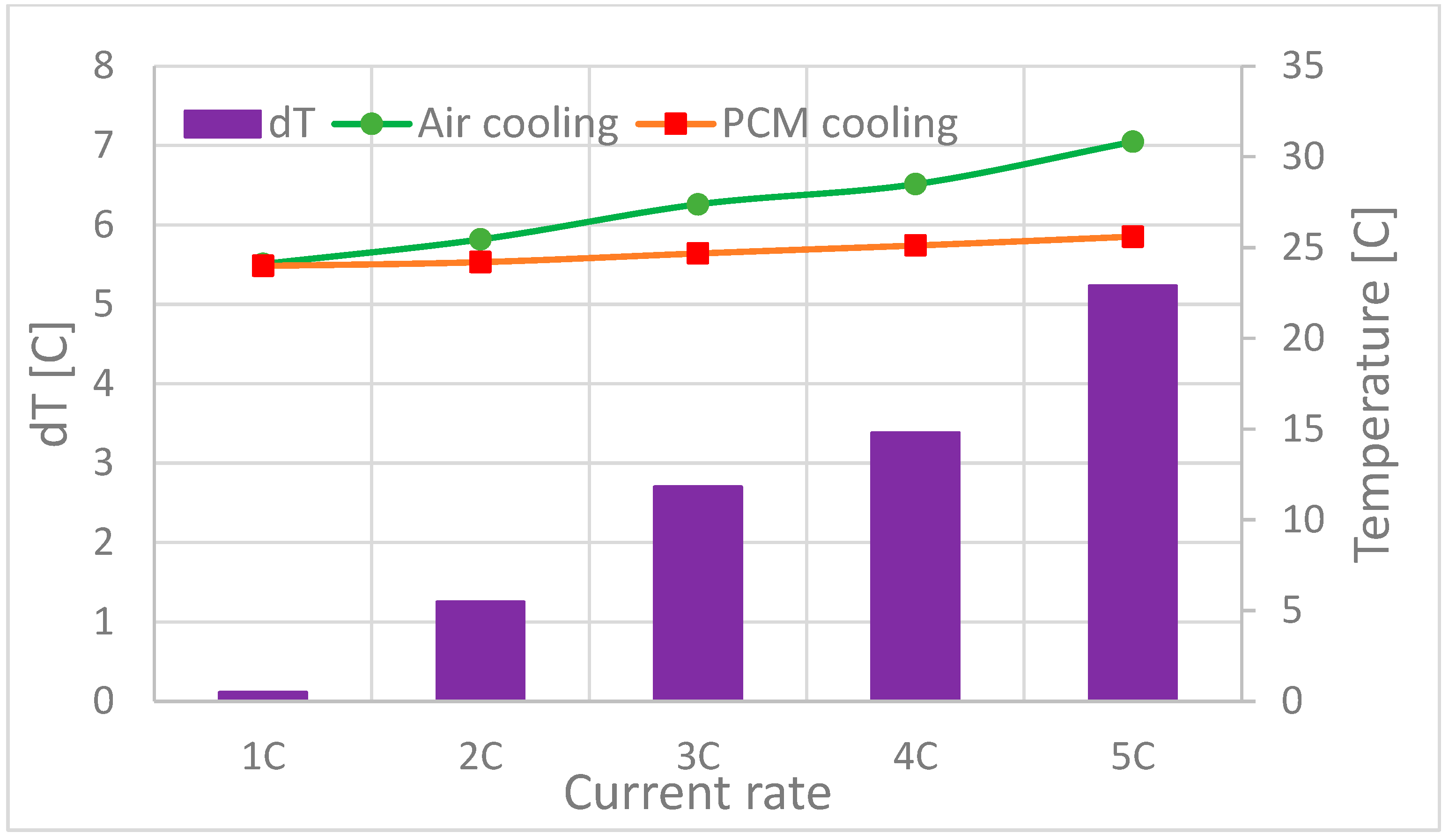
Even if the current charging rate is kept at 12.5 mA for all measurements, as the discharge rate increases, the charging time and consequently the battery usable capacity are greatly reduced. This is due to the lithium plating and dendrite formation that increase the internal resistance of the battery. The heat generation is also an important factor in capacity reduction. The highest temperature increase is towards the end of discharge, when the battery resistance is maximum. As the battery discharge rate rises to 5C, the surface temperature increases proportionally with the current rate. In Figure 11, the maximum temperature reached towards the end of the discharge cycles for both air and PCM cooling is presented, whereas dT is the difference between these maximum temperatures. In the case of air cooling, the battery increases in its temperature by 2.7 °C at a 3C discharge rate and reaches 5.2 °C at 5C. At 1C rate, the temperature difference between the two cases is minimal (0.46%), whereas at a 5C rate the increase extends to 20.43%. With PCM cooling, the temperature increase at 3C is less than 1 °C, and at 5C goes as high as 1.61 °C. The maximum temperature on the battery surface was 25.6 °C. If at a 1C discharge rate, the temperature peaks are almost equal and overlapping, starting with a 2C rate, the temperature difference can be clearly noticed.
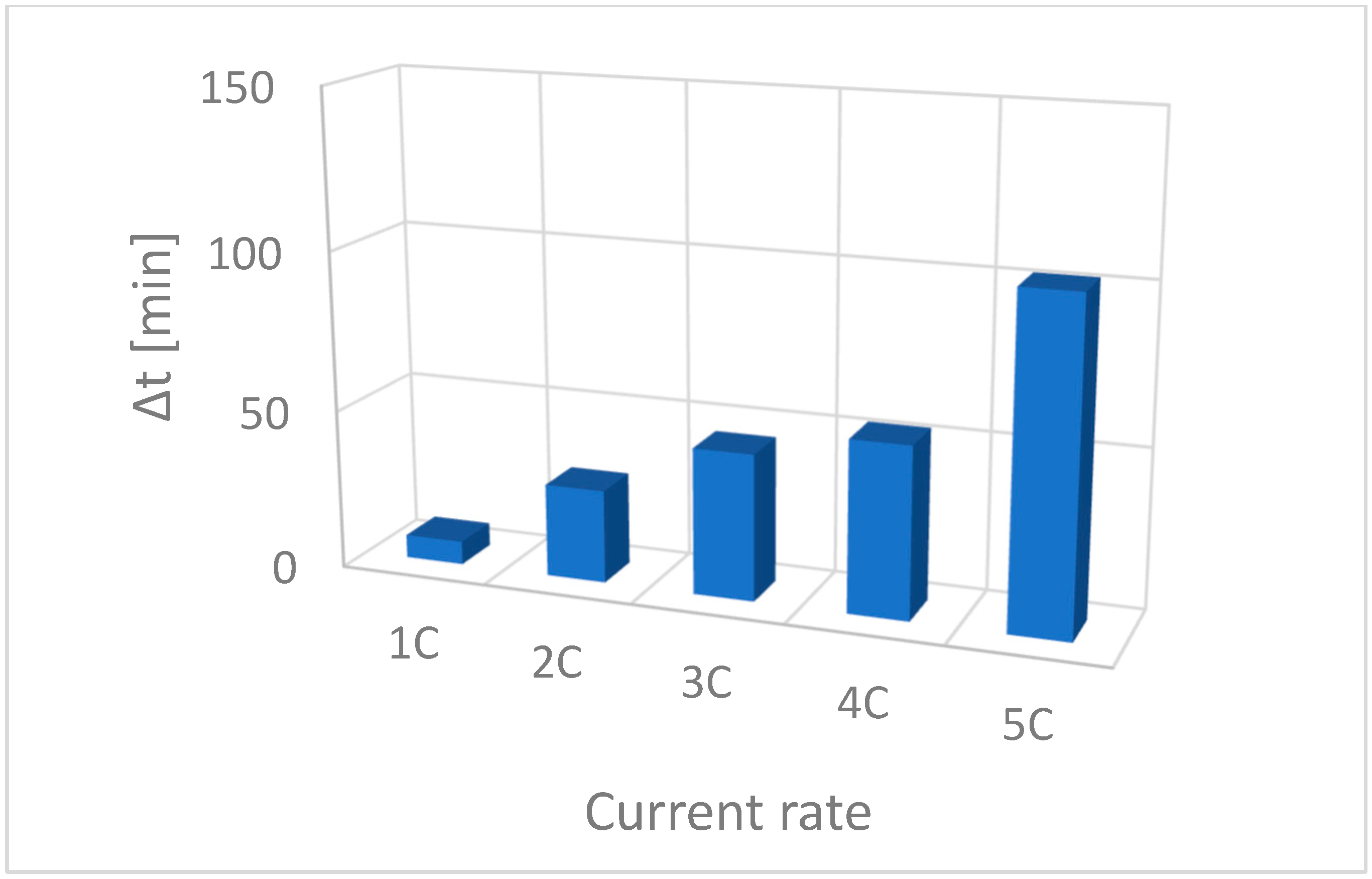
It is further observed that the presence of PCM leads to a significant reduction in battery charging duration, as seen in Figure 12. At 1C, a 7 min delay is detected in air cooling conditions towards PCM cooling at the same C-rate, meanwhile at 5C the delay reaches 102 min. The total charging time considered for comparison in this paper was as follows: CC, then rest, and then CV. The difference between the charging time at a 5C-rate between air and PCM cooling methods was 43.77%. Overall, PCM cooling gain is reflected in a much shorter charging time, even if the capacity of the Li-ion battery is significantly diminished at high discharge rates.

4. Conclusions

In this paper, expandable graphite was thermally processed using two distinct methods: microwave irradiation (S-type EG) and conventional heating (S′-type EG). Both methods yielded a porous, worm-like material. The structure and chemical compatibility in PW/EG composites, prepared by the melt blending method, with the 2.5, 5, and 10 wt% EG content, were characterized by XRD analysis and FTIR spectroscopy. Also, the effect of EG content and S-S′-type EG composition on the density, thermal conductivity, thermal diffusivity, and specific heat performance of PW was investigated. XRD confirms that the hexagonal graphite structure was retained in expanded graphite, and the fundamental crystal structure of the constituents is preserved in both S-S′-type EG composition; however, the characteristic XRD peak of EG, 2θ 26.50°, was more evident in the S′-type EG composition. The thermophysical analysis of results indicates that the properties of the paraffin/EG composites depend not only on the EG content but also on the processing method. S′-type EG samples provide higher densities, thermal conductivity, diffusivity, and specific heat in the resulting composites. The inclusion of expanded graphite in PW reduced the solidification time required for the heat release process compared with pure paraffin wax.
Sample S3′ was further tested within a Li-ion coin battery setup. A battery testing protocol was established in Ec-Lab software to investigate the temperature increase on the battery surface with PCM cooling and air cooling. Discharge current rates up to 5C were set to observe the temperature evolution.
The temperature registered with PCM does not exceed 25.6 degrees at the highest current rate (5C). In the conditions of air cooling, the maximum temperature measured on the battery surface at 5C discharge rate reached 30.83 °C. The temperature growth rate at 5C where the generated heat is maximum, was with 76.6% higher than the value with PCM cooling.
The experimental findings demonstrated that the PW/EG composite, S3′ sample, respectively, provides a rapid conductive/sensible heat, making the system overall effective even at sub-melting temperatures of paraffin wax, offering an innovative solution especially for BTMS.

Author Contributions

Conceptualization, O.-R.B. and M.Z.; methodology, M.Z. and O.-R.B.; validation, O.-R.B. and V.R.; formal analysis, M.Z.; investigation, T.R. and A.T.; data curation, M.Z.; writing—original draft preparation, O.-R.B. and M.Z.; writing—review and editing, O.-R.B. and M.Z.; supervision, O.-R.B. All authors have read and agreed to the published version of the manuscript.

Funding

This research was funded by the “Nucleu” Program within the National Research Development and Innovation Plan 2022–2027, Romania, carried out with the support of MEC, project no. 27N/03.01.2023, component project code PN 23 24 02 01, and Project “Cluster inovativ pentru tehnologii avansate pilot în energii alternative—CITAT-E”, cod MySMIS 103720, ID P_35_468.

Data Availability Statement

Research data is available upon request to the corresponding author.

Conflicts of Interest

The authors declare no conflicts of interest.

References

  1. Nam, G.W.; Park, N.-Y.; Park, K.-J.; Yang, J.; Liu, J.; Yoon, C.S.; Sun, Y.-K. Capacity Fading of Ni-Rich NCA Cathodes: Effect of Microcracking Extent. ACS Energy Lett. 2019, 4, 2995–3001. [Google Scholar] [CrossRef]
  2. Shen, W.; Wang, N.; Zhang, J.; Wang, F.; Zhang, G. Heat Generation and Degradation Mechanism of Lithium-Ion Batteries during High-Temperature Aging. ACS Omega 2022, 7, 44733–44742. [Google Scholar] [CrossRef] [PubMed]
  3. Schweiger, H.G.; Obeidi, O.; Komesker, O.; Raschke, A.; Schiemann, M.; Zehner, C.; Gehnen, M.; Keller, M.; Birke, P. Comparison of Several Methods for Determining the Internal Resistance of Lithium Ion Cells. Sensors 2010, 10, 5604–5625. [Google Scholar] [CrossRef]
  4. Ma, T.; Sun, Z.; Han, C.; Wang, Y.; Zhang, B.; Zhang, J.; Chen, L.; Dai, X.; Zhang, S.; Shen, S. Study on the evolution of internal resistance and entropy-thermal coefficients during the aging process of lithium-ion traction batteries. E-Prime Adv. Electr. Eng. Electron. Energy 2025, 12, 100962. [Google Scholar] [CrossRef]
  5. Liu, Z.; Wang, C.; Guo, X.; Cheng, S.; Gao, Y.; Wang, R.; Sun, Y.; Yan, P. Thermal characteristics of ultrahigh power density lithium-ion battery. J. Power Sources 2021, 506, 230205. [Google Scholar] [CrossRef]
  6. Qu, J.G.; Jiang, Z.Y.; Zhang, J.F. Investigation on lithium-ion battery degradation induced by combined effect of current rate and operating temperature during fast charging. J. Energy Storage 2022, 52, 104811. [Google Scholar] [CrossRef]
  7. Liu, S.; Chen, J.; Zhang, C.; Jin, L.; Yang, Q. Experimental study on lithium-ion cell characteristics at different discharge rates. J. Energy Storage 2022, 45, 103418. [Google Scholar] [CrossRef]
  8. Park, S.H.; Park, J.; Ryou, M.-H.; Lee, Y.M. Sensitivity of power of lithium-ion batteries to temperature: A case study using cylindrical- and pouch-type cells. J. Power Sources 2020, 465, 228238. [Google Scholar] [CrossRef]
  9. Zhang, L.; Liu, J.; Du, L.; Fan, P.; Xu, X.; Ma, Y.; Zuo, P.; Qu, B.; Yin, G.; Fu, Q. LiNi0.5Co0.2Mn0.3O2/graphite batteries storing at high temperature: Capacity fading and raveling of aging mechanisms. J. Power Sources 2021, 496, 229858. [Google Scholar] [CrossRef]
  10. Calborean, A.; Máthé, L.; Bruj, O. Phase Change Materials for Thermal Management in Lithium-Ion Battery Packs: A Review. Batteries 2025, 11, 432. [Google Scholar] [CrossRef]
  11. Hyun, S.W.; Kim, J.H.; Shin, D.H. Hybrid PCM–Liquid Cooling System with Optimized Channel Design for Enhanced Thermal Management of Lithium–Ion Batteries. Energies 2025, 18, 4996. [Google Scholar] [CrossRef]
  12. Yu, X.K.; Tao, Y.B.; Deng, Q.Q. Experimental study on thermal management of batteries based on the coupling of metal foam-paraffin composite phase change materials and air cooling. J. Energy Storage 2024, 84, 110891. [Google Scholar] [CrossRef]
  13. Bian, X.; Tao, H.; Li, Y.; Chu, Z.; Bai, X.; Xian, Y.; Yang, L.; Zhang, Z. Heat pipe/phase change material passive thermal management of power battery packs under different driving modes. Appl. Therm. Eng. 2024, 248, 123172. [Google Scholar] [CrossRef]
  14. Zhelezny, V.; Ivchenko, D.; Hlek, Y.; Khliyeva, O.; Shestopalov, K. Experimental study of phase transition heat of composite thermal energy storage materials paraffin wax/expanded graphite. J. Energy Storage 2024, 77, 110174. [Google Scholar] [CrossRef]
  15. Zhang, Y.; Wang, K.; Sun, Y.; Xu, M.; Cheng, Z. Novel Biphasically and Reversibly Transparent Phase Change Material to Solve the Thermal Issues in Transparent Electronics. ACS Appl. Mater. Interfaces 2022, 14, 31245–31256. [Google Scholar] [CrossRef] [PubMed]
  16. He, Z.; Li, R.; Yang, L.; Mikulčić, H.; Wang, J.; Čuček, L. Performance analysis of a battery thermal management system based on phase change materials with micro heat pipe arrays. Energy Convers. Manag. 2024, 311, 118506. [Google Scholar] [CrossRef]
  17. Balasubramanian, D.; Venugopal, I.P.; Subramanian, M.; Raja, V.; Kale, U.; Matijošius, J. Study on the battery thermal management system for cylindrical lithium-ion battery with nano-doped phase change material and liquid cooling. Sci. Rep. 2025, 15, 24053. [Google Scholar] [CrossRef] [PubMed]
  18. Zou, D.; Ma, X.; Liu, X.; Zheng, P.; Hu, Y. Thermal performance enhancement of composite phase change materials (PCM) using graphene and carbon nanotubes as additives for the potential application in lithium-ion power battery. Int. J. Heat Mass Transf. 2018, 120, 33–41. [Google Scholar] [CrossRef]
  19. Almousa, N.H.; Alotaibi, M.R.; Alsohybani, M.; Radziszewski, D.; AlNoman, S.M.; Alotaibi, B.M.; Khayyat, M.M. Paraffin Wax [As a Phase Changing Material (PCM)] Based Composites Containing Multi-Walled Carbon Nanotubes for Thermal Energy Storage (TES) Development. Crystals 2021, 11, 951. [Google Scholar] [CrossRef]
  20. Emeema, J.; Murali, G.; Venkateswara Reddi, B.; Mangesh, V.L. Investigations on paraffin wax/CQD composite phase change material—Improved latent heat and thermal stability. J. Energy Storage 2024, 85, 111056. [Google Scholar] [CrossRef]
  21. Darabut, A.M.; Lobko, Y.; Yakovlev, Y.; Rodríguez, M.G.; Veltruská, K.; Šmíd, B.; Kúš, P.; Nováková, J.; Dopita, M.; Vorokhta, M.; et al. Influence of thermal treatment on the structure and electrical conductivity of thermally expanded graphite. Adv. Powder Technol. 2022, 33, 103884. [Google Scholar] [CrossRef]
  22. Coetzee, D.; Rojviroon, T.; Niamlang, S.; Militký, J.; Wiener, J.; Večerník, J.; Melicheríková, J.; Müllerová, J. Effects of expanded graphite’s structural and elemental characteristics on its oil and heavy metal sorption properties. Sci. Rep. 2024, 14, 13716. [Google Scholar] [CrossRef]
  23. Wu, Y.; Lv, L.; Li, H.; Wei, L.; Wu, F.; Zhou, H. Development of a multifunctional composite phase change material with superior thermal conductivity, stability, and flame retardancy for battery thermal management. J. Energy Storage 2025, 131, 117577. [Google Scholar] [CrossRef]
  24. Zhao, Y.; Huang, S.; Jin, Z.; Xie, Z.; Guo, H.; Xie, H. Thermally Conductive Shape-Stabilized Phase Change Materials Enabled by Paraffin Wax and Nanoporous Structural Expanded Graphite. Nanomaterials 2025, 15, 110. [Google Scholar] [CrossRef] [PubMed]
  25. Lu, B.; Zhang, Y.; Sun, D.; Jing, X. Experimental investigation on thermal properties of paraffin/expanded graphite composite material for low temperature thermal energy storage. Renew. Energy 2021, 178, 669–678. [Google Scholar] [CrossRef]
  26. Waseda, Y.; Matsubara, E.; Shinoda, K. X-Ray Diffraction Crystallography; Springer: New York, NY, USA, 2011. [Google Scholar]
  27. Goudarzi, R.; Hashemi Motlagh, G. The effect of graphite intercalated compound particle size and exfoliation temperature on porosity and macromolecular diffusion in expanded graphite. Heliyon 2019, 5, e02595. [Google Scholar] [CrossRef] [PubMed]
  28. Zhou, D.; Xiao, S.; Liu, Y. The Effect of Expanded Graphite Content on the Thermal Properties of Fatty Acid Composite Materials for Thermal Energy Storage. Molecules 2024, 29, 3146. [Google Scholar] [CrossRef]
  29. Suciu, R.-C.; Zagrai, M.; Popa, A.; Toloman, D.; Berghian-Grosan, B.; Tudoran, C.; Stefan, M. The Influence of Ag+/Ti4+ Ratio on Structural, Optical and Photocatalytic Properties of MWCNT–TiO2–Ag Nanocomposites. Inorganics 2023, 11, 249. [Google Scholar] [CrossRef]
  30. Wong, T.L.; Vallés, C.; Nasser, A.; Abeykoon, C. A critical experimental evaluation of hexagonal boron nitride, graphene oxide and graphite as thermally conductive fillers in organic PCMs. J. Energy Storage 2023, 72, 108523. [Google Scholar] [CrossRef]
  31. Ao, C.; Yan, S.; Zhao, S.; Hu, W.; Zhao, L.; Wu, Y. Stearic acid/expanded graphite composite phase change material with high thermal conductivity for thermal energy storage. Energy Rep. 2022, 8, 4834–4843. [Google Scholar] [CrossRef]
  32. Dananjaya, V.; Bao, X.; Hansika, N.; Abeykoon, C. Structural and thermal properties of paraffin-based graphene and carbon fibre composite phase change materials. Int. J. Heat Mass Transf. 2026, 255, 127696. [Google Scholar] [CrossRef]
  33. Kenisarin, K.; Mahkamov, F.; Kahwash, I.; Makhkamova, I. Enhancing thermal conductivity of paraffin wax 53–57 °C using expanded graphite. Sol. Energy Mater. Sol. Cells 2019, 200, 110026. [Google Scholar] [CrossRef]
  34. Ling, Z.; Chen, J.; Xu, T.; Fang, X.; Gao, X.; Zhang, Z. Thermal conductivity of an organic phase change material/expanded graphite composite across the phase change temperature range and a novel thermal conductivity model. Energy Convers. Manag. 2015, 102, 202–208. [Google Scholar] [CrossRef]

Figure 1. Images with paraffin wax and PW/EG composites.
Crystals 16 00093 g001
Figure 2. Battery current rate in charging/discharging cycles.
Crystals 16 00093 g002
Figure 3. The Li-ion coin battery setup with PCM: the red crocodile clip is connected to the positive electrode and the blue crocodile clip is connected to the negative electrode.
Crystals 16 00093 g003
Figure 4. X-ray diffraction of (a) paraffin wax (PW), expandable graphite, and obtained expanded graphite (EG), and (b) EG/paraffin wax composites.
Crystals 16 00093 g004
Figure 5. FTIR spectra of: (a) raw materials and (b) EG/paraffin wax composites.
Crystals 16 00093 g005
Figure 6. (a) Density, (b) thermal conductivity, (c) thermal diffusivity, and (d) specific heat of study samples.
Crystals 16 00093 g006
Figure 7. Photographs of the PW and PW/EG composites before heating (the handwritten numbers 1 to 6 correspond to PW, S1, S2, S1′, S2′ and S3′ samples, respectively).
Crystals 16 00093 g007
Figure 8. Evolution of thermal storage performance of PW and PW/EG composites.
Crystals 16 00093 g008
Figure 9. Photographs of the PW and PW/EG composites after being heated at 80 °C (the handwritten numbers 1 to 6 correspond to PW, S1, S2, S1′, S2′, S3′ samples).
Crystals 16 00093 g009
Figure 10. Temperature evolution from 1C to 5C current rate.
Crystals 16 00093 g010
Figure 11. Temperature increase difference.
Crystals 16 00093 g011
Figure 12. Time difference between PCM and air-cooling peaks at the same C-rate discharge.
Crystals 16 00093 g012
Table 1. Crystallite sizes of the studied samples.
SamplePW Crystallite Size (Å)EG Crystallite Size (Å)
Expandable Graphite-139.8
Expanded graphite (EG)-341.2
PW528.1-
S1768.3316.0
S1′845.2355.5
S2563.3371.0
S2′528.0406.0
S3′650.2449.1
Disclaimer/Publisher’s Note: The statements, opinions and data contained in all publications are solely those of the individual author(s) and contributor(s) and not of MDPI and/or the editor(s). MDPI and/or the editor(s) disclaim responsibility for any injury to people or property resulting from any ideas, methods, instructions or products referred to in the content.