Article

Microstructures and Mechanical Properties of TiC-Reinforced Red Mud–Alumina Composite Ceramics

1
School of Resources, Environment and Materials, Guangxi University, Nanning 530004, China
2
State Key Laboratory of Featured Metal Materials, Guangxi University, Nanning 530004, China
*
Author to whom correspondence should be addressed.
Crystals 2026, 16(1), 15; https://doi.org/10.3390/cryst16010015
Submission received: 11 November 2025 / Revised: 18 December 2025 / Accepted: 23 December 2025 / Published: 25 December 2025
(This article belongs to the Section Polycrystalline Ceramics)

Abstract

TiC-reinforced red mud–alumina composite ceramics were fabricated by spark plasma sintering. The materials exhibited excellent mechanical properties when incorporating 4 wt.% TiC and sintering at 1100 °C, achieving a flexural strength of 675.81 MPa, Vickers hardness of 2137.2 HV, relative density of 96.79%, and fracture toughness of 7.65 MPa·m1/2. Microstructural characterization reveals that the enhanced mechanical performance is attributed to the in situ formation of CaAl12O19 and the development of a unique intragranular microstructure with Al2O3 grains. The composites demonstrated non-wetting behavior against molten copper, maintaining interfacial stability without detectable reactions or elemental interdiffusion at elevated temperatures. This work provides an effective strategy for valorizing red mud in fabricating high-performance ceramics suitable for electronic packaging applications.

1. Introduction

Red mud, a highly alkaline solid waste generated during alumina production, poses serious threats to land resources, water bodies, soil, and ecological security due to its massive stockpiling [1,2]. In recent years, promoting the resource utilization of red mud has become a research hotspot, and several scholars have attempted to use it as a raw material for ceramic preparation, achieving preliminary progress [3,4]. Pan et al. [5] successfully produced glass-ceramics using Dexing copper tailings, coal slag, and red mud in a mass ratio of 35/25/40. After crystallization treatment at 880 °C, the sample exhibited a bulk density of 2.87 g/cm3, water absorption of 0.018%, Vickers hardness of 6.96 GPa, and flexural strength of 118.53 MPa. Wang et al. [6] prepared ceramic floor tiles using red mud and kaolin as raw materials, with ammonium molybdate as a catalyst. After sintering at 1180 °C, the samples achieved a flexural strength of 185.6 MPa, bulk density of 1.45 g/cm3, and water absorption of 5.5%. However, the high content of alkaline components such as Na2O and CaO in red mud reduces the sintering temperature but also compromises the mechanical properties and chemical stability of the ceramics, limiting their application in high-performance components [7]. To address this challenge, research efforts worldwide have focused on enhancing the mechanical properties of red mud-based ceramics through second-phase reinforcement [8].
Among various reinforcing phases, TiC has attracted significant attention due to its high hardness, excellent thermal stability, and favorable physical compatibility with alumina. Studies have demonstrated that the incorporation of TiC effectively refines Al2O3 grains and enhances fracture toughness and flexural strength through mechanisms such as grain boundary pinning and the induction of transgranular fracture [9,10,11]. Lee et al. [12] successfully fabricated MSZ-TiC composite samples with outstanding mechanical properties by incorporating MgO and ZrO2 with TiC and sintering at 1400 °C via spark plasma sintering, achieving a hardness of up to 16.3 GPa and a fracture toughness of 5.2 MPa·m1/2. However, current research has predominantly focused on modifying Al2O3 ceramics with conventional oxide additives (e.g., Cr2O3) [13,14,15], while systematic investigations into the role of TiC in red mud–Al2O3 composite systems remain limited, particularly regarding microstructural control, interface optimization, and reinforcement mechanisms.
Based on this, and in response to the demand for high-performance structural ceramics [16], this study investigates the fabrication and mechanical properties of TiC-reinforced red mud–alumina ceramics. The research aims to elucidate the influence of TiC content on the microstructure, densification behavior, and fracture mechanisms of the ceramics, thereby providing theoretical insights and technical support for the high-value utilization of red mud and the development of advanced ceramic materials [17].

2. Materials and Methods

2.1. Raw Materials

Al2O3 powder (200 nm, purity ≥ 99.9%) and TiC powder (40 μm, purity ≥ 99.9%) were supplied by Zhongzhi New Materials Co., Ltd. (Suzhou, China). The red mud (pre-treated by strong magnetic separation to remove Fe3O4) was provided by Guangxi Huayin Aluminum Co., Ltd. (Baise, China). The red mud was dried at 120 °C for 24 h and subsequently pulverized using a crusher. Its chemical composition was determined by X-ray fluorescence spectroscopy (XRF), as summarized in Table 1. Copper cubes (3 mm × 3 mm × 3 mm) with a purity of ≥99.95% were procured from CMT New Materials Co., Ltd. (Attleboro, MA, USA) and machined by wire cutting.

2.2. Preparation of Composites

According to Table 2, the powder constituents were blended in specified proportions. The mixed powders were milled for 24 h in a high-energy planetary ball mill at 300 rpm [18] using absolute ethanol as the grinding medium. The resulting slurry was vacuum-dried at 75 °C for 8 h. The dried agglomerates were then crushed to obtain homogeneous composite powders. The samples were sintered in a spark plasma sintering furnace with a heating rate of 70 °C/min from room temperature to the target temperature, followed by a 10-min holding period. Subsequently, the samples were cooled inside the furnace. To remove carbon infiltrated into the samples during sintering, each specimen was maintained at 800 °C for 2 h.

2.3. Composite Characterization

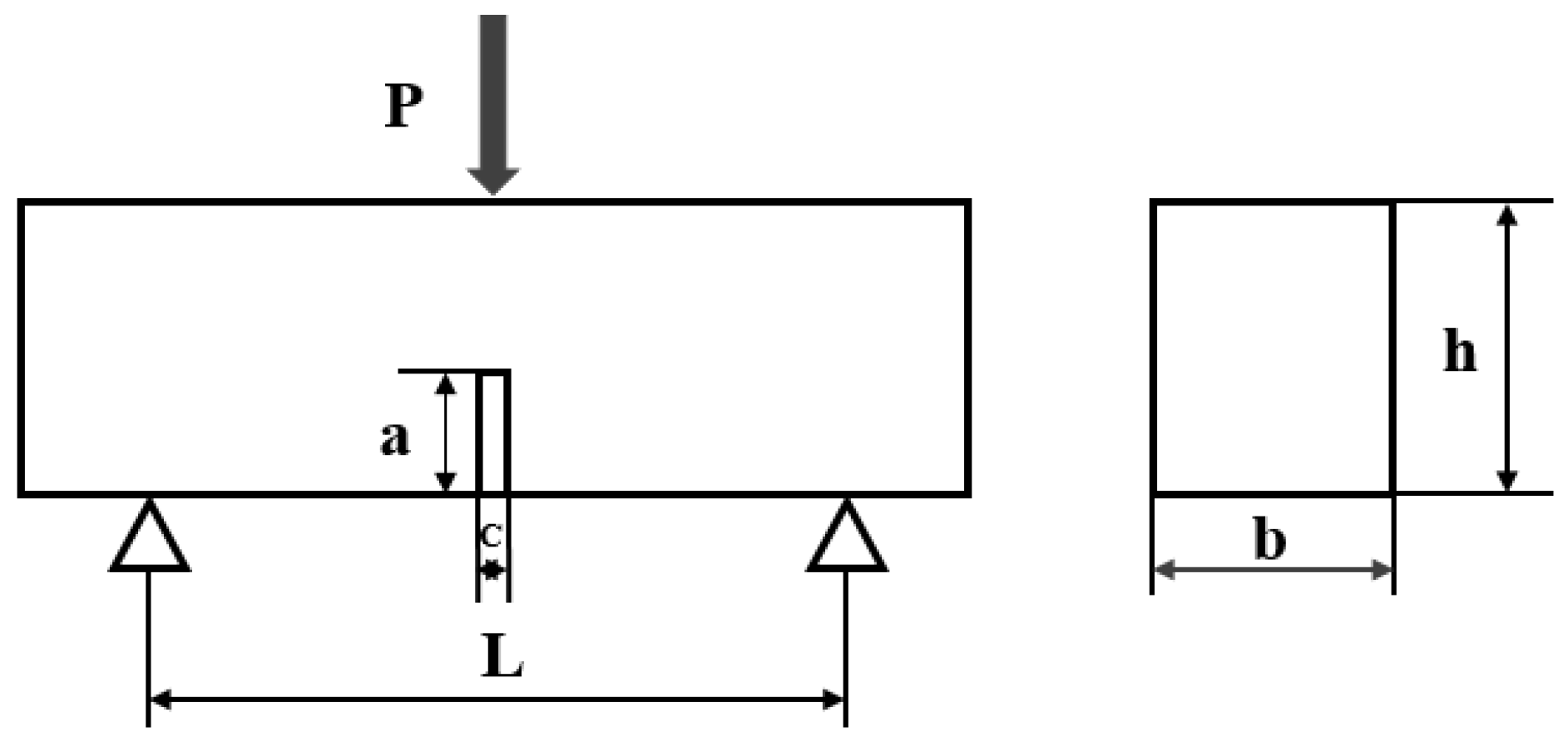
Prior to testing, the samples underwent pretreatment. Ceramic specimens were ground with 3000-grit sandpaper and subsequently polished using 2.5 μm and 1 μm abrasive pastes. The polished samples were ultrasonically cleaned with absolute ethanol and dried. To remove the glass phase, the ceramic surfaces intended for morphological observation were etched for 1 min with a corrosive solution (3% HF, 5% HNO3). The elemental composition of the red mud was determined by X-ray fluorescence spectrometry (XRF, S8 TIGER, Bruker, Berlin, Germany). Phase analysis was conducted via X-ray diffraction (XRD, MiniFlex600-C, Rigaku Co., Ltd., Akishima, Japan) under operating conditions of 40 kV and 15 mA, with a 2θ scanning range of 10–85° and a scanning rate of 5°/min. Microstructural characterization was performed using scanning electron microscopy (SEM, SU 8020, Hitachi High-Technologies, Tokyo, Japan) to examine surface and fracture morphologies. The apparent density of the composite ceramics was measured by the Archimedes method, with densification expressed as the ratio of apparent density to theoretical density. Vickers hardness was measured under a load of 5 kg with a dwell time of 15 s; four specimens per group were tested, with ten measurements taken on each specimen and averaged. Samples were cut into 40 mm × 3 mm × 6 mm specimens using diamond wire cutting. Fracture toughness was evaluated by the single-edge notched beam (SENB) method, as illustrated in Figure 1, at a loading rate of 0.5 mm/min. The fracture toughness (KIC) was calculated using Equation (1):
K I C = Y 3 P L 2 b h 2 a
In the equation, Y represents the shape factor, P denotes the fracture load, L indicates the support span, a corresponds to the notch depth, b signifies the specimen width, h represents the specimen thickness, and c refers to the notch width. When the span-to-thickness-to-width ratio is 8:2:1, the shape factor Y is given by the following Equation (2):
Y = 1.96 2.75 a h + 13.66 a h 2 23.98 a h 3 + 25.22 ( a h ) 4
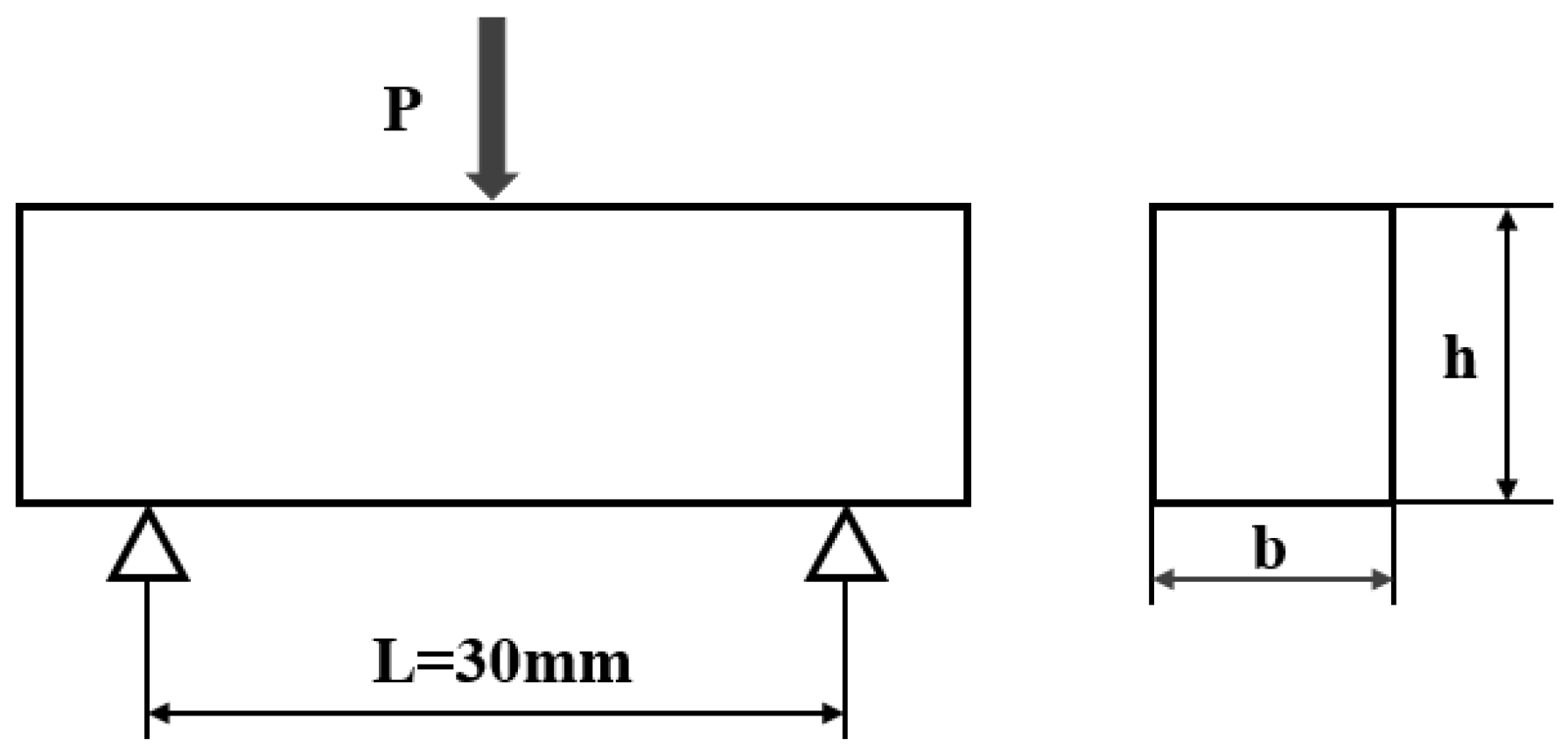
The flexural strength was measured by the three-point bending method illustrated in Figure 2. Specimens with dimensions of 36 mm × 4 mm × 3 mm were tested at a loading rate of 0.5 mm/min. The flexural strength was calculated using Equation (3):
σ = 3 P L 2 B h 2
where P is the fracture load, L is the support span, B is the width, and h is the thickness.
High-temperature wettability tests between copper and ceramics were conducted using a self-developed “Research Platform for Thermal Effects at Heterogeneous Interfaces in Non-ferrous Materials.” Prior to testing, copper samples underwent surface pretreatment: physical removal of surface oxide layers via sandpaper grinding, followed by ultrasonic cleaning in absolute ethanol to eliminate metallic debris and impurities, ensuring surface cleanliness met experimental requirements. The pretreated copper particles were then carefully positioned on ceramic substrates, and the assembly was loaded into the reaction chamber of a vacuum tube furnace.
The furnace was programmed with a heating rate of 10°C/min to predetermined temperatures, followed by a 10-min isothermal holding period to ensure complete melting of copper and stabilization of the molten droplet. Upon stabilization of the droplet morphology, high-resolution imaging was performed to capture the solid–liquid interface. Contact angle measurements were conducted at five temperature nodes (1133 °C, 1183 °C, 1233 °C, 1283 °C, and 1333 °C) to analyze the temperature-dependent wetting behavior [19].

3. Results and Discussion

3.1. Phase Composition

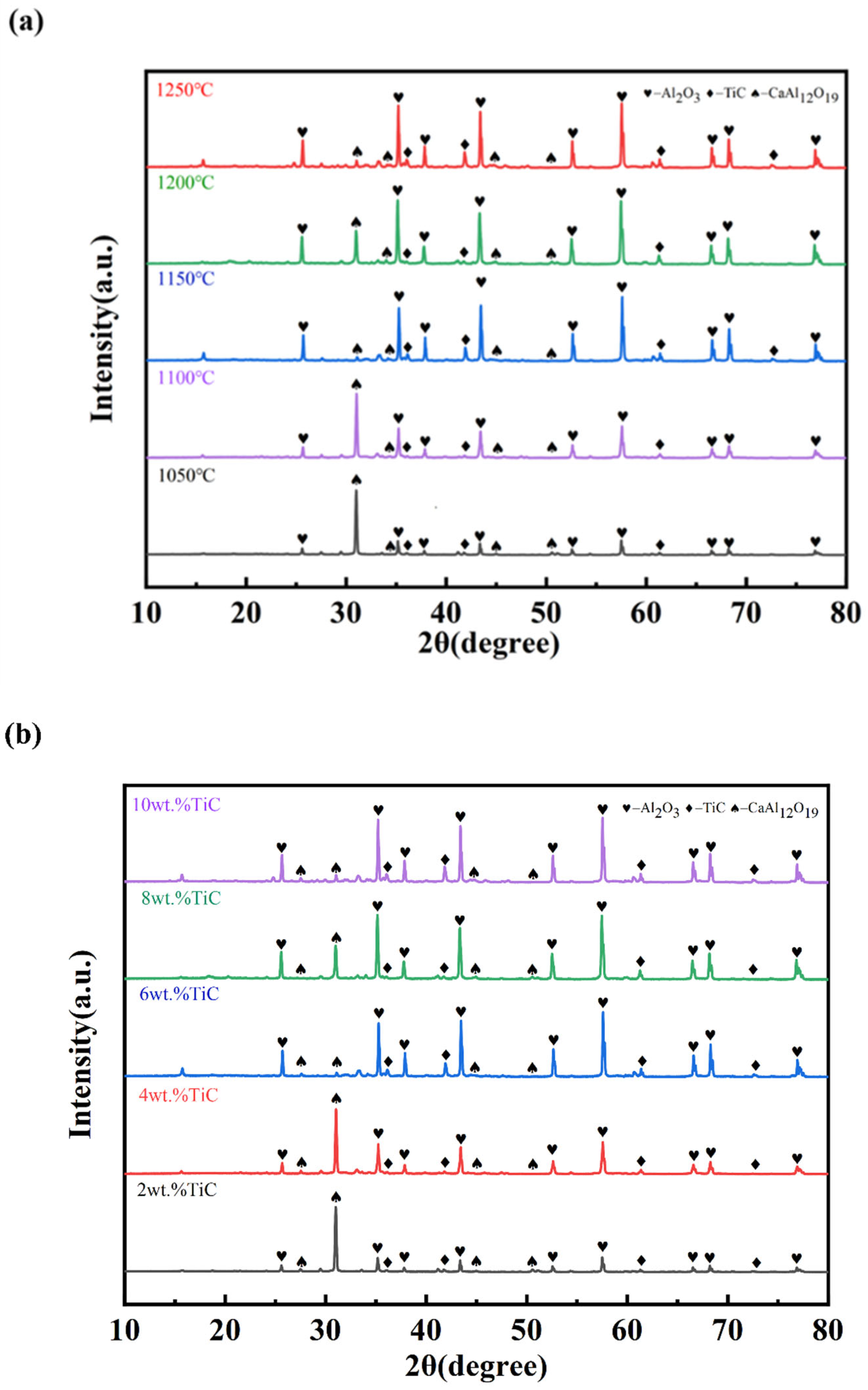
Figure 3a presents the XRD patterns of sample ART2 sintered via SPS for 10 min at different temperatures. The primary phases identified are Al2O3, TiC, and CaAl12O19 (CA6) [20]. With increasing sintering temperature, most silicate phases are progressively eliminated. Figure 3b shows the XRD patterns of samples ART1–ART5 sintered at 1100 °C for 10 min. The phase composition remains consistent across all specimens. Notably, the diffraction peak intensity of CA6 is strongest in ART2 at 1100 °C and gradually decreases beyond 6 wt.% TiC addition. This behavior is attributed to the formation mechanism of CA6, which requires calcium from red mud to react with alumina. At 4 wt.% TiC, the highly conductive TiC particles act as localized current concentrators during SPS, creating micro-scale high-temperature zones that lower the reaction energy barrier. The uniformly dispersed TiC particles also optimize diffusion pathways for Ca2+ and Al3+ ions while inhibiting excessive sintering of alumina, thereby preserving reactant activity and promoting extensive CA6 formation. In contrast, at ≥6 wt.% TiC, particle agglomeration physically blocks ion diffusion paths. Excessive TiC further triggers side reactions with alumina, consuming the aluminum source required for CA6 formation. Additionally, the altered chemical potential of the system reduces the thermodynamic driving force for CA6 generation, collectively leading to diminished CA6 content and corresponding diffraction peak intensity.
The maximum CA6 diffraction intensity at 1100 °C indicates optimal kinetics for its formation, with sufficient solid-state diffusion enabling extensive crystallization. At temperatures ≥ 1150 °C, the attenuation of CA6 peaks is primarily due to its elevated thermal instability. TiC exhibits enhanced chemical reactivity at high temperatures, potentially reacting with CA6 or its decomposition products. For instance, TiC may be oxidized by CA6 or trace oxygen, forming TiO2, which can further react with Al2O3 or CaO to produce secondary phases such as perovskite (CaTiO3). This complex reaction sequence consumes the CA6 phase, leading to peak weakening and eventual dissolution into the low-melting-point liquid phase within the system.
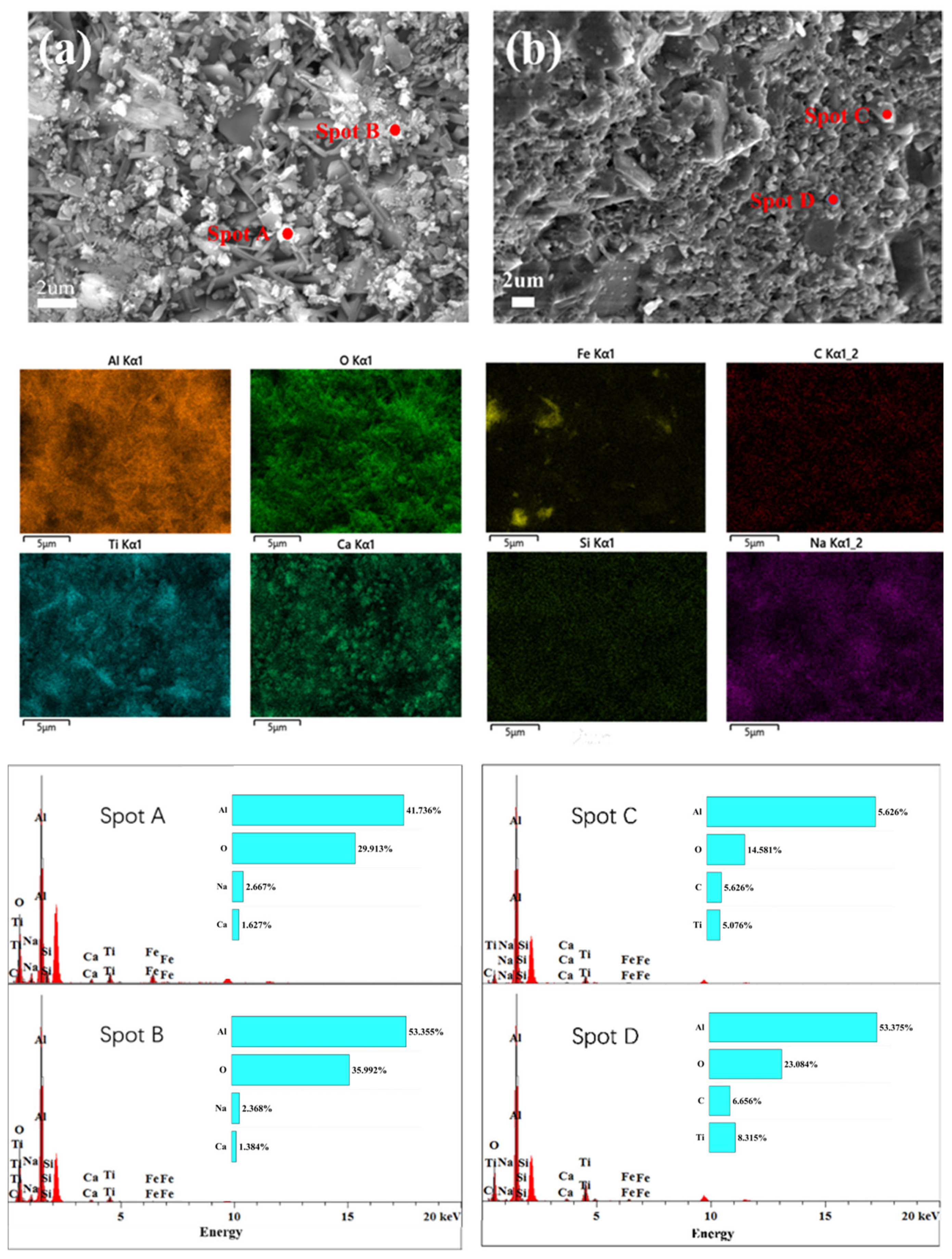
Figure 4a shows the EDS data of the etched ARC2 sample. Based on the point analysis results, the columnar crystals in the matrix are identified as alumina, while the hexagonal platelet particles correspond to CaAl12O19. Surface spectral analysis reveals that Ca is concentrated in these hexagonal platelets, and the bright contrasting phases are TiC. Figure 4b presents the EDS data of the unetched AR sample. Surface elemental mapping indicates that Na, Si, and Fe are predominantly segregated at grain boundaries. Point analysis further confirms that the silicate phases are mainly amorphous, distributed between alumina grains and filling the intergranular spaces.

3.2. Microstructural Characterization

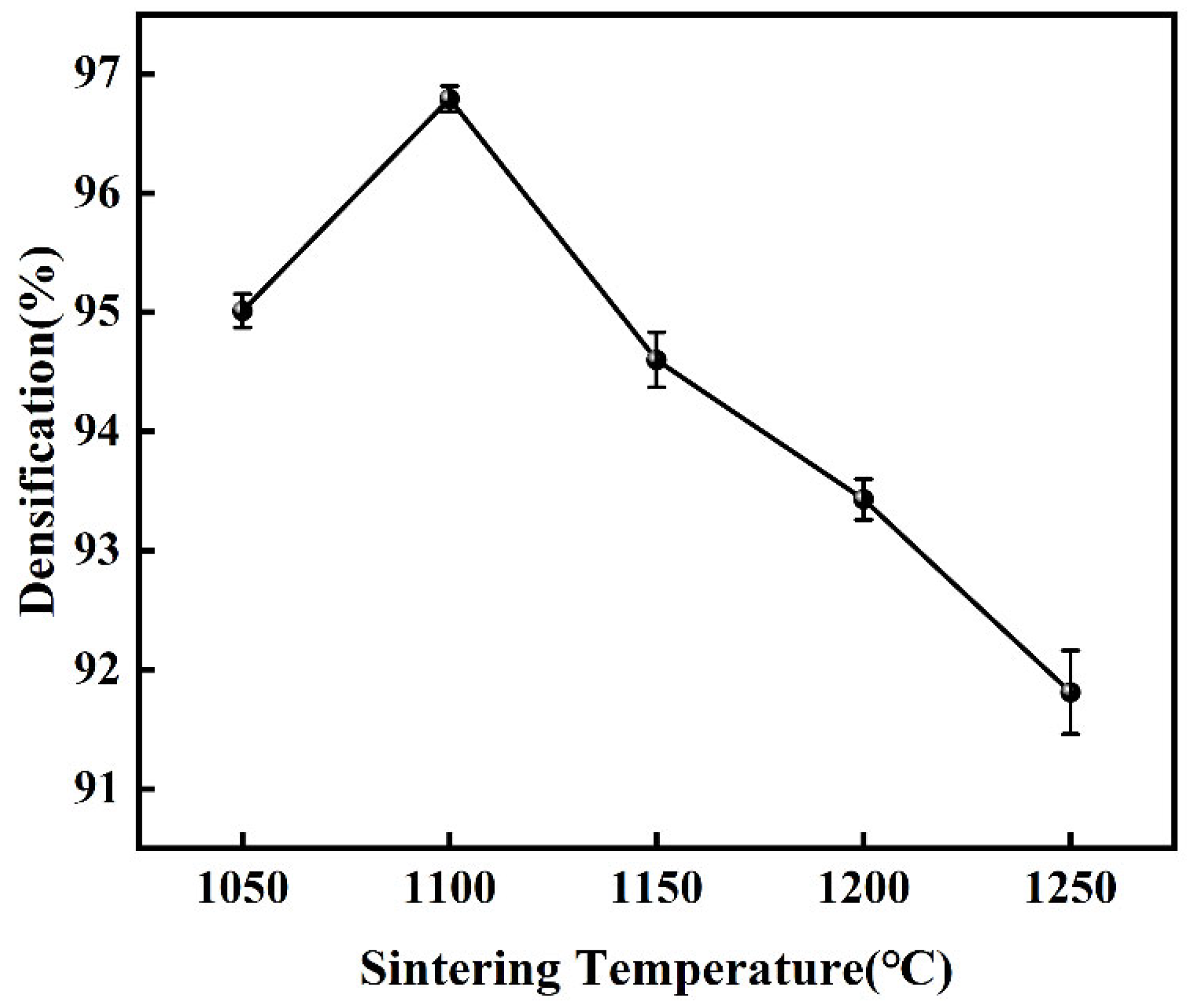
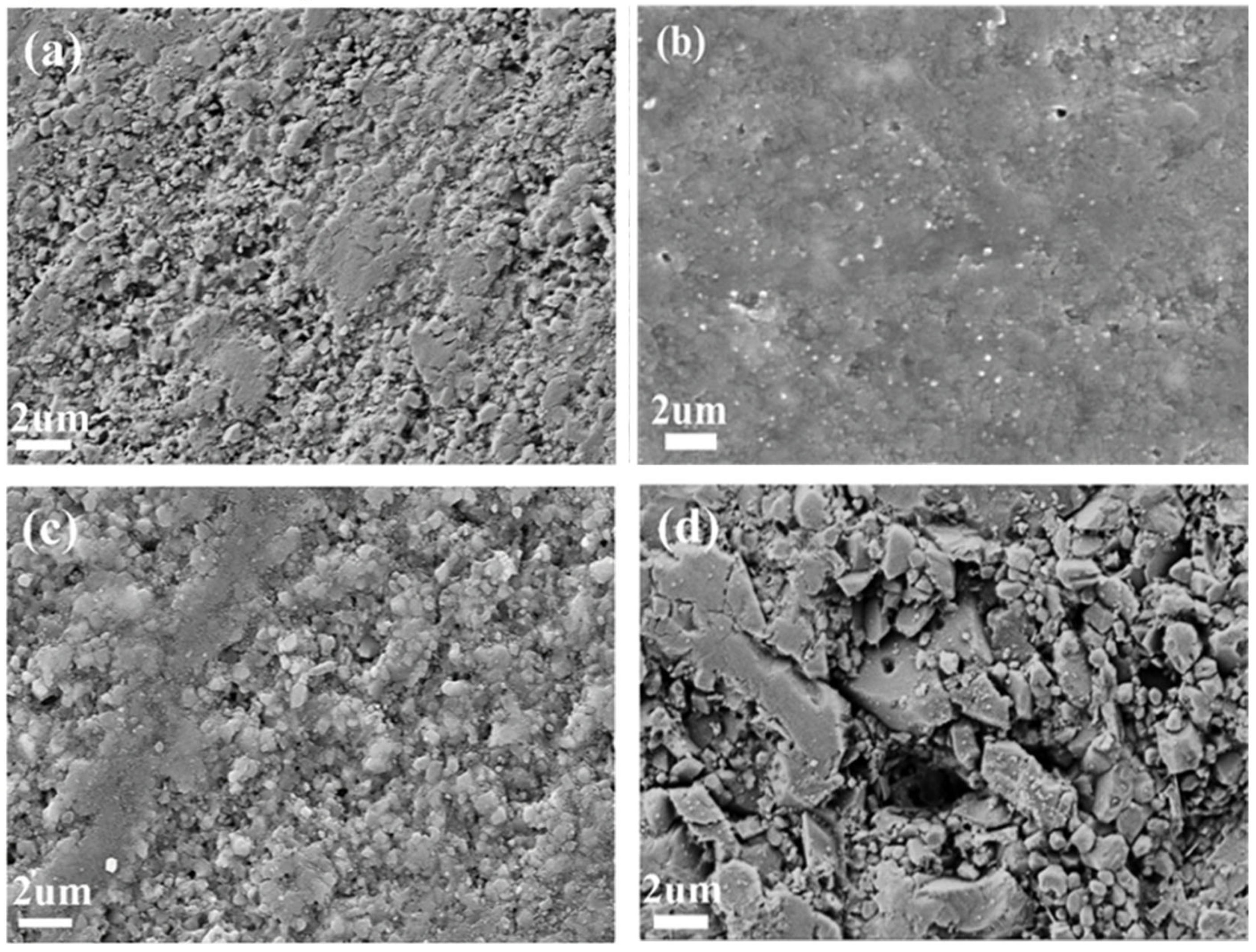
Figure 5 shows the relative density of ART2 sintered at different temperatures. Figure 6a–d present SEM images of ART2 sintered at different temperatures. The sample sintered at 1050 °C exhibits numerous internal pores and insufficient densification, with a microstructure composed of fine equiaxed grains and a small amount of hexagonal platelet CA6. CA6 demonstrates preferential growth along the basal plane. This growth anisotropy leads to the orientation of CA6 grains with their basal planes perpendicular to the reaction front. The sample sintered at 1100 °C shows abnormally grown grains and surface pores, attributed to a sharp decrease in glass phase viscosity, which promotes gas diffusion through the liquid phase and subsequent escape to the surface. A similar grain morphology is observed in the 1150 °C sintered sample, resulting from the formation of a small amount of liquid phase due to low-melting-point oxides in the red mud. The uneven distribution of the liquid phase creates coexisting dry/wet interfaces, altering the interfacial energy of different Al2O3 grain surfaces and leading to varied growth rates and anisotropic growth.
The relative density of red mud–alumina ceramics sintered at different temperatures exhibits a characteristic trend of initial increase followed by decrease. As the sintering temperature rises from 1050 °C to 1100 °C, the relative density increases significantly, reaching a peak value of 96.79% at 1100 °C. This stage of densification is primarily attributed to the lubricating effect of the liquid phase formed by low-melting-point impurities in the red mud and the electric field-enhanced mass transport during the SPS process. The liquid phase fills interparticle gaps under capillary force, promoting particle rearrangement and dissolution-reprecipitation, while the axial pressure induces plastic flow of particles, collectively facilitating efficient pore elimination.
However, when the temperature further increases to 1200 °C, the relative density decreases to 93.43% instead of continuing to rise. This anomalous phenomenon is closely associated with abnormal grain growth, as described by the grain growth kinetics equation (shown in Equation (4)), and the Arrhenius relationship (as shown in Equation (5)).
G n G 0 n = K t
In this equation, G represents the grain size, G0 is the initial grain size, n is the growth exponent, K is a temperature-dependent constant, and t is the sintering time. This equation indicates that the grain size increases with both time and temperature.
K = K 0 e x p ( Q R T )
K is the grain growth rate constant, K0 is the frequency factor related to the material itself, Q represents the activation energy for grain boundary migration, R is the universal gas constant, and T is the thermodynamic temperature.
The grain growth rate constant K increases exponentially with temperature. At the elevated temperature of 1200 °C, the activation energy Q for grain boundary migration is overcome, enabling selective grains to acquire dominant growth momentum, allowing them to rapidly consume surrounding finer grains and form an abnormally coarsened microstructure.
Such abnormal growth exerts dual negative effects on densification: firstly, rapidly migrating grain boundaries bypass pores, trapping them within grains as isolated closed pores that are difficult to eliminate; secondly, incompatible grain boundary migration between differently sized grains facilitates the formation of V-shaped pores at triple junctions. Concurrently, excessive liquid phase with reduced viscosity at high temperatures may be extruded or volatilized, leaving behind channels and defects. These mechanisms collectively lead to structural degradation manifested as decreased density and increased porosity after high-temperature sintering.
The results demonstrate that 1100 °C serves as the favorable sintering temperature for this material system, achieving an optimal balance between densification and grain growth. Upon entering the over-sintering stage at 1200 °C, although grain growth continues, the density deteriorates due to microstructural instability, reflecting the competition between densification and coarsening mechanisms during sintering.
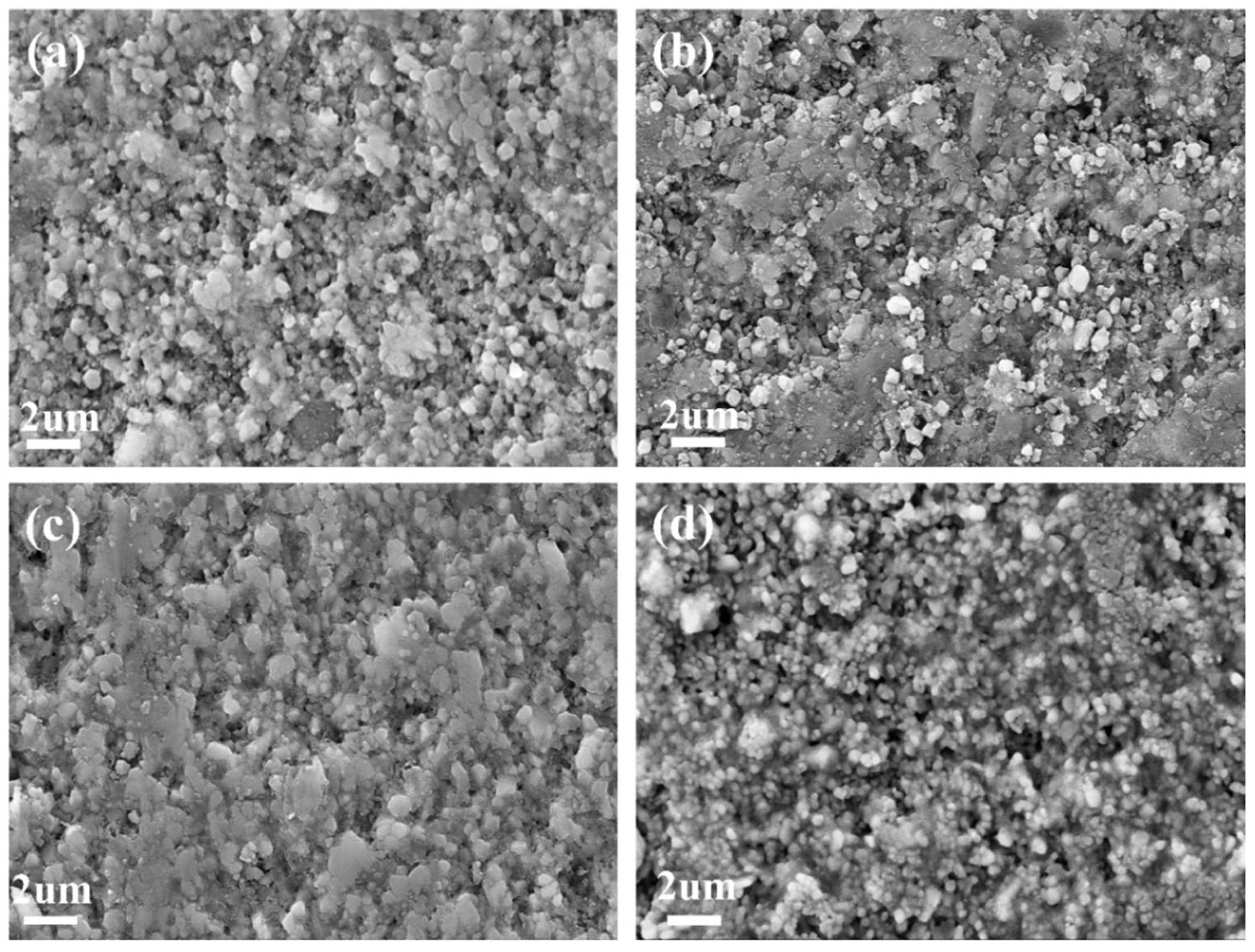
Figure 7a–d display the surface morphologies of ART1–ART4. Overall, the grain size gradually decreases with increasing TiC content, attributable to the effective inhibition of grain boundary migration through TiC pinning effects, resulting in grain refinement. Appropriately dispersed TiC (4 wt.%) enhances mass transport and pore filling during sintering while strengthening grain boundaries. However, excessive TiC triggers particle agglomeration, creating stress concentration sites that impede densification and introduce defects, thereby generating increased porosity.

3.3. Mechanical Properties

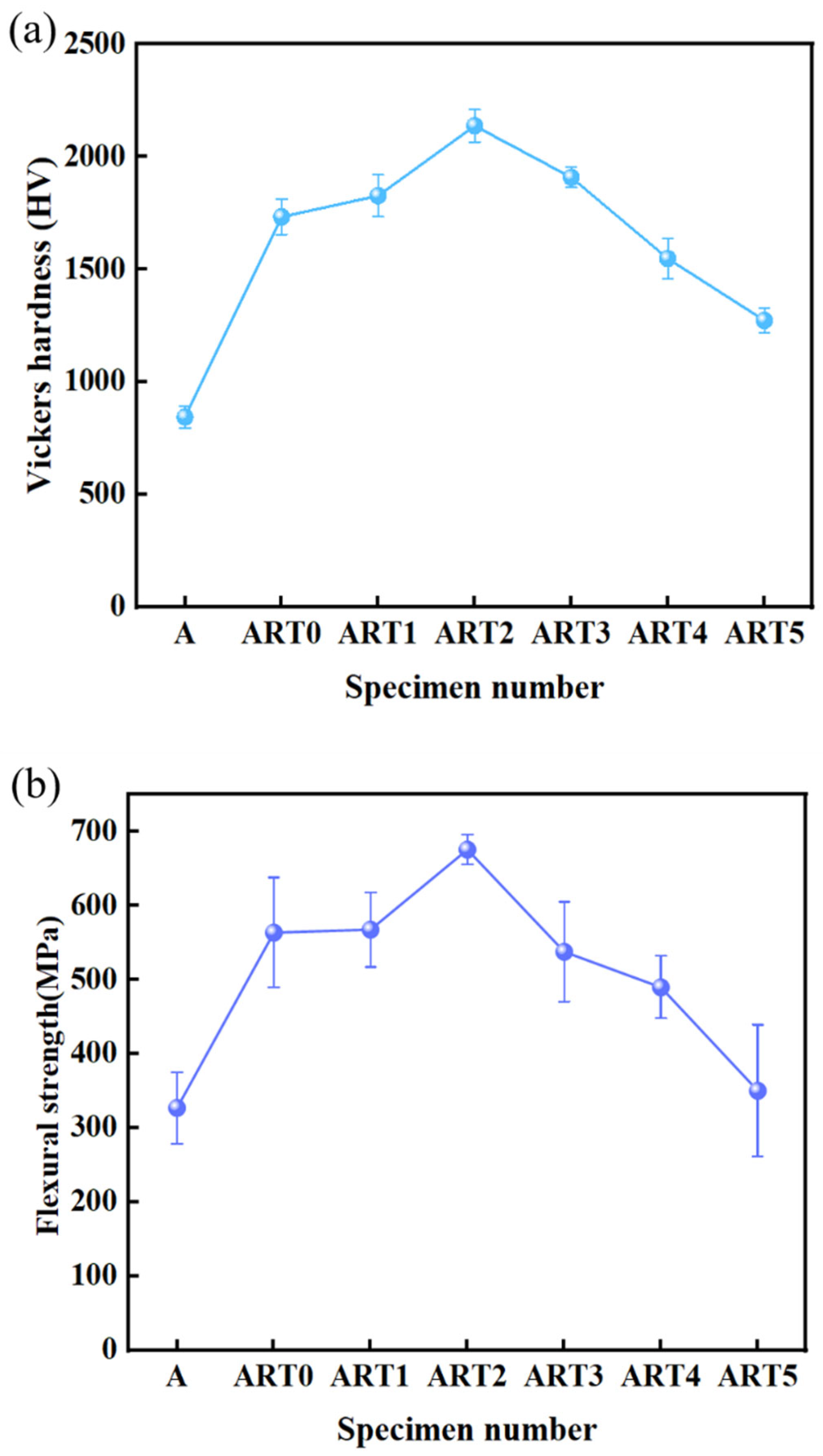
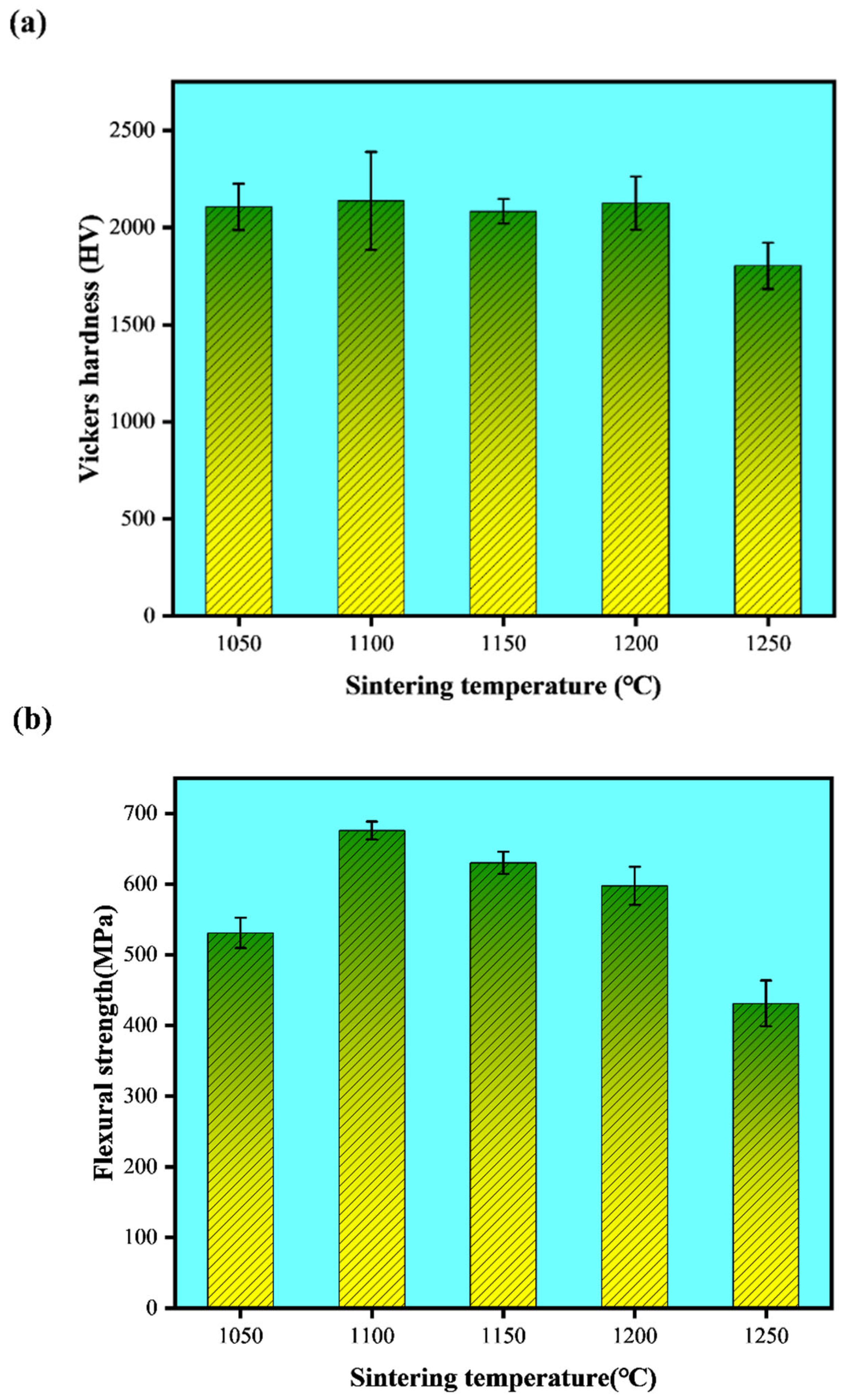
Figure 8a,b show the flexural strength and hardness of samples ART1–ART5 sintered at 1100 °C. As the sintering temperature increases, both the flexural strength and Vickers hardness first increase and then decrease, with the maximum values observed in sample ART2: a flexural strength of 675.81 MPa and a hardness of 2137.2 HV.
The mechanical properties of TiC-doped red mud–alumina ceramics exhibit a similar trend of initial improvement followed by degradation with increasing TiC content, which stems from the transition between the reinforcing and detrimental effects of TiC. At 4 wt.% TiC, finely dispersed TiC particles inhibit grain growth via grain boundary pinning and enhance matrix strength and hardness through dispersion strengthening (Orowan mechanism and load transfer effect), while simultaneously optimizing the sintering densification process, leading to peak performance. However, when the doping level exceeds 6 wt.%, the high surface energy of TiC promotes severe particle agglomeration. These aggregates act as microscopic defects and stress concentration sites, significantly reducing flexural strength. Moreover, excessive TiC increases interfacial area, amplifies residual thermal mismatch stress, and may hinder densification, resulting in notable performance deterioration. Thus, 4 wt.% represents the favorable doping content, beyond which detrimental effects dominate and properties decline.
For red mud–alumina ceramics doped with 4 wt.% TiC, 1100 °C corresponds to the optimal sintering temperature, achieving favorable densification and uniform TiC dispersion, where grain refinement and dispersion strengthening effects are maximized. The decline in flexural strength and hardness beyond 1100 °C is primarily due to coarsening of the matrix grains, which weakens the grain boundary pinning effect of TiC. Additionally, elevated temperatures promote the dissolution of fine TiC particles and their attachment to larger grains, leading to inhomogeneous distribution and coarsening of the reinforcing phase, thereby significantly diminishing their strengthening effect. Furthermore, increased thermal residual stress readily induces microcracking. The combined action of these factors ultimately degrades the mechanical properties of the material.
Figure 9a,b display the flexural strength and hardness of ART2 sintered for 10 min at different temperatures. As the sintering temperature increases, both the flexural strength and Vickers hardness of the samples first increase and then decrease, reaching maximum values at 1100 °C with a flexural strength of 675.81 MPa and a hardness of 2137.2 HV.
For red mud–alumina ceramics doped with 4% titanium carbide (TiC), 1100 °C represents the performance optimum, where optimal densification and uniform dispersion of TiC particles are achieved, maximizing the effects of grain refinement and dispersion strengthening. The decline in flexural strength and hardness beyond 1100 °C is primarily attributed to two factors: excessive temperature causes coarsening of the matrix grains, weakening the grain boundary pinning effect of TiC; simultaneously, high temperature promotes the dissolution of fine TiC particles and their attachment to larger grains, resulting in inhomogeneous distribution and coarsening of the reinforcing phase, which significantly compromises its strengthening effectiveness.
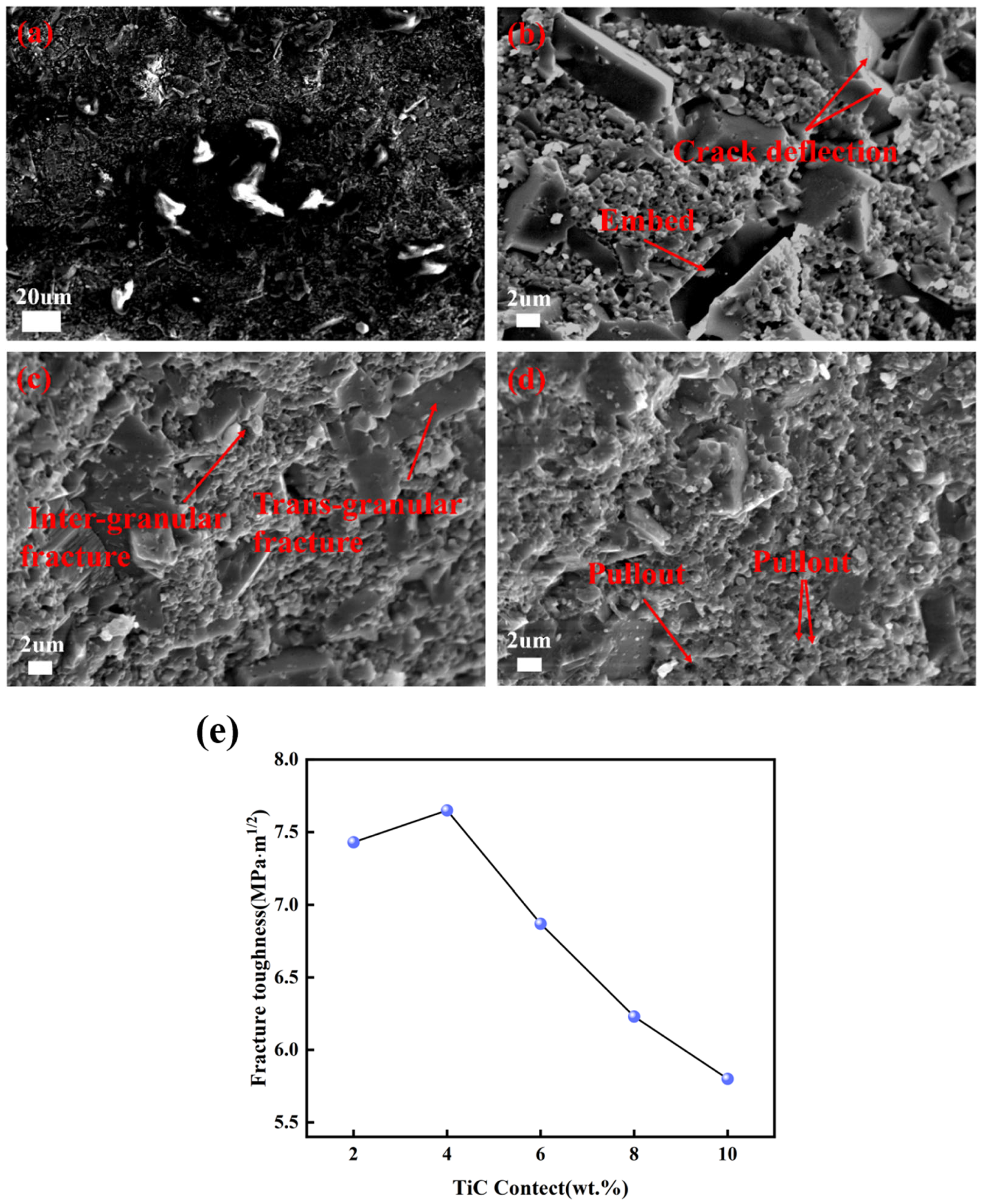
As shown in Figure 10a, the uniform distribution of red mud synergistically enhances both the fracture toughness and flexural strength of red mud–alumina ceramics through multiple mechanisms, including microstructure optimization, crack propagation behavior regulation, and stress state improvement. This homogeneous distribution not only reduces material defects but also activates various toughening and strengthening mechanisms, resulting in superior mechanical performance under load.
The fracture morphology of the samples exhibits a mixed transgranular and intergranular mode. The CA6 phase shows significant preferential orientation, primarily controlled by the diffusion of Ca2+ into Al2O3. This phase distributes in three distinct forms within the matrix: first, located at grain boundaries where it fills pores, promotes densification, reduces porosity, and thereby enhances material strength; second, growing epitaxially along Al2O3 grain surfaces, which prolongs crack propagation paths and dissipates more fracture energy, contributing to improved toughness—though the strengthening effect is limited due to the thin CA6 formation resulting from constrained Ca content.
Most notably, in the third distribution form, CA6 embeds at Al2O3 grain boundaries at various angles, forming an “intragranular” structure. Although CA6 and Al2O3 have similar overall coefficients of thermal expansion (8.0 × 10⁻⁶ °C−1 and 8.6 × 10⁻⁶ °C−1, respectively) and show good compatibility, both phases exhibit thermal expansion anisotropy. When CA6 embeds with specific orientations, localized thermal mismatch microcracks still initiate in subgrain boundary regions. These microcracks can disperse main grain boundary stress, inhibit dislocation movement, pin crack propagation, and induce crack deflection, consequently leading to a transition in fracture mode from intergranular to transgranular.

3.4. Wetting Behavior

Al2O3 ceramics have been widely used in ceramic substrates [21] and cutting tools [22] due to their excellent properties. With increasing cost-control demands in semiconductor packaging, developing low-cost bonding materials has become an important research direction. This study systematically investigated the wetting behavior and interfacial reactions between molten copper and ART1–ART5 composite ceramics to evaluate their suitability for high-temperature applications, providing experimental evidence for potential use in electronic packaging.
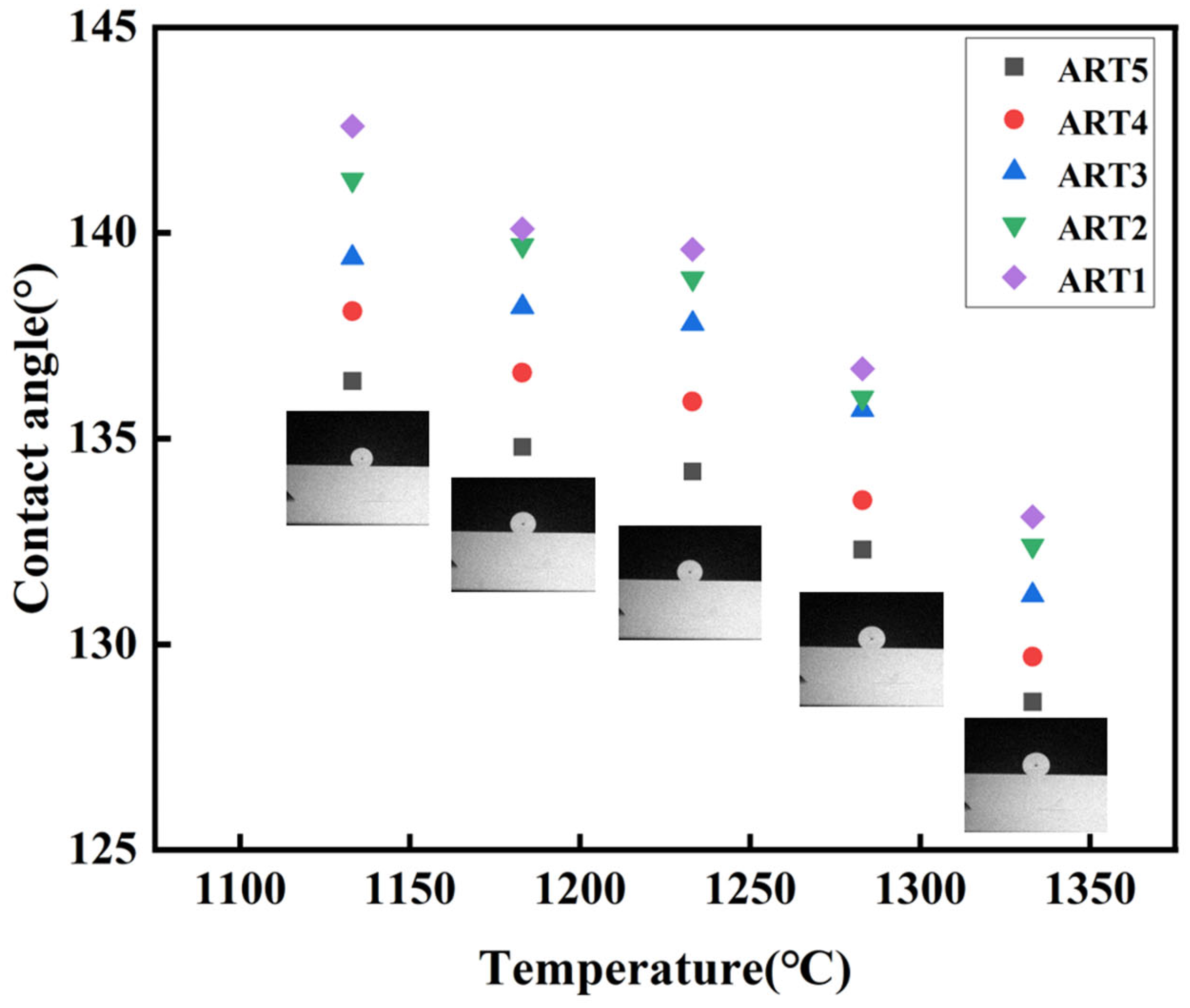
As shown in Figure 11, the contact angle of molten copper on the material surface gradually decreases with increasing temperature. However, at all temperatures above the copper melting point, the contact angle remains greater than 90°, indicating poor wettability and characterizing a non-wetting system. Even at elevated temperatures, elements such as iron, nickel, sodium, calcium, and silicon from the red mud show no significant diffusion into the copper melt, while no copper penetration into the ceramic side is observed. The clear interface without contamination demonstrates excellent interfacial stability and chemical inertness.
As shown in Figure 11, the increase in TiC content improves the wettability between red mud–alumina ceramics and copper, manifested by a continuous decrease in contact angle with increasing TiC addition. This is primarily attributed to the higher surface energy of TiC compared to alumina and its limited mutual solubility tendency with copper: The distribution of TiC particles on the ceramic surface increases the overall surface energy of the system, enhancing the adsorption and spreading driving force of the copper melt. Simultaneously, the weakly bonded transition layer formed at the interface between TiC and molten copper at elevated temperatures reduces the interfacial energy, collectively promoting the optimization of wetting behavior.

4. Discussion

High-performance red mud–alumina matrix composite ceramics were fabricated via spark plasma sintering using red mud, alumina, and titanium carbide as raw materials:
(1)
This study has achieved clear progress in the high-value utilization of red mud resources by replacing traditional Cr2O3 with TiC as the reinforcing phase and combining it with spark plasma sintering technology [23]. At a significantly lower sintering temperature (1100 °C), the comprehensive mechanical properties were notably enhanced: the flexural strength reached 675.81 MPa, and the fracture toughness was 7.65 MPa·m1/2. Compared to the previous work (sintered at 1500 °C, with a strength of 297.03 MPa and toughness of 6.57 MPa·m1/2), these data demonstrate the dual advantages of the TiC-SPS system in energy efficiency and performance enhancement. Mechanistically, this study clarifies for the first time the critical role of TiC as a local current concentrator in promoting the formation of the CaAl12O19 intragranular structure and systematically reveals the optimization mechanism of TiC content on high-temperature copper wetting behavior. This provides a novel technical pathway and theoretical foundation for the preparation of high-performance red mud-based ceramics.
(2)
Reaction-formed calcium hexaluminate (CaAl12O19, CA6). XRD and EDS analyses indicate that the formation of CA6 relies on the solid-state reaction between Ca2+ from red mud and Al2O3 during sintering, with its content and crystallinity significantly influenced by the TiC addition and sintering temperature. Under the condition of 1100 °C and 4 wt.% TiC, the strongest CA6 diffraction peaks were observed, indicating that this composition-temperature combination is most favorable for the formation and stable existence of CA6. In contrast, when the TiC content is too high (≥6 wt.%) or the temperature exceeds 1150 °C, the CA6 content decreases markedly due to TiC agglomeration impeding mass transfer, side reactions consuming the aluminum source, and thermal instability at elevated temperatures.
(3)
The composite material exhibits excellent high-temperature interfacial stability and non-wetting behavior against molten copper. As the TiC content increases, the contact angle of copper on the ceramic surface gradually decreases, indicating improved wettability. No significant elemental interdiffusion or chemical reactions were observed at the interface, demonstrating the material’s potential applicability in ceramic–metal sealing for electronic packaging devices.

Author Contributions

Conceptualization, Z.W. and A.L.; methodology, Z.W.; investigation, Z.W.; formal analysis, Z.W.; writing—original draft, Z.W. and Y.S.; funding acquisition, A.L.; resources, A.L.; supervision, A.L.; writing—review and editing, A.L.; data curation, Y.S. All authors have read and agreed to the published version of the manuscript.

Funding

This project is supported by the Special Fund for Science and Technology Development of Guangxi (Grant No. AD25069078), Key research and development plan project of Guangxi (Grant No. Guike AB22080015) Specific Research Project of Guangxi for Research Bases and Talents in 2022 (Grant No. GuiKeAD21238010), and special funds for local scientific and technological development under the guidance of the central government in 2021 (Grant No. GuiKeZY21195030).

Data Availability Statement

Data are contained within the article.

Conflicts of Interest

The authors declare no conflicts of interest.

References

  1. Innocenzi, V.; Veglio, F. Recovery of rare earths and base metals from spent nickel-metal hydride batteries by sequential sulphuric acid leaching and selective precipitations. J. Power Sources 2012, 211, 184–191. [Google Scholar] [CrossRef]
  2. Jia, K.; Zhou, Z.; Singh, S.V.; Wang, C. A review of the engineered treatment of red mud: Construction materials, metal recovery, and soilization revegetation. Results Eng. 2024, 24, 102927. [Google Scholar] [CrossRef]
  3. Pasechnik, L.A.; Medyankina, I.S.; Pereverzev, D.I.; Chufarov, A.Y.; Suntsov, A.Y. Scandium modified zirconia extracted from red mud as a waste of alumina production. Nanosyst. Phys. Chem. Math. 2024, 15, 768–773. [Google Scholar] [CrossRef]
  4. Pasechnik, L.A.; Pereverzev, D.I.; Shamsutov, I.V.; Medyankina, I.S.; Antonova, E.P.; Suntsov, A.Y. Assessment of electrical conductivity and thermal expansion in scandium-zirconium ceramic directly derived from red mud. Inorg. Chem. Commun. 2025, 176, 114227. [Google Scholar] [CrossRef]
  5. Pan, Z.; Wang, Q.; Wang, H.; Yang, L.; Zhu, X.; Lin, S.; Lv, Y.; Zheng, J.; Duan, W.; Liu, J. Crystallization, structure-property evolution, and solidification of heavy metals of glass-ceramics based on copper tailing/coal slag/red mud. J. Non-Cryst. Solids 2024, 646, 123263. [Google Scholar] [CrossRef]
  6. Wang, W.; Chen, W.; Liu, H.; Han, C. Recycling of waste red mud for production of ceramic floor tile with high strength and lightweight. J. Alloys Compd. 2018, 748, 876–881. [Google Scholar] [CrossRef]
  7. Pei, J.; Pan, X.; Wang, Y.; Lv, Z.; Yu, H.; Tu, G. Effects of alkali and alkaline-earth oxides on preparation of red mud based ultra-lightweight ceramsite. Ceram. Int. 2023, 49, 18379–18387. [Google Scholar] [CrossRef]
  8. Li, J.; Yin, Y.; Shi, R.; Ma, L.; Li, J. Microstructure and mechanical properties of Al2O3–TiC–4vol.%Co composites prepared from cobalt coated powders. Surf. Coat. Technol. 2006, 200, 3705–3712. [Google Scholar] [CrossRef]
  9. Chen, H.M.; Yu, H.S.; Zhang, J.; Zhang, L.; Min, G.H. Microstructure and Mechanical Properties of Al2O3-TiC/Al in Situ Composites. Key Eng. Mater. 2006, 326–328, 1857–1860. [Google Scholar] [CrossRef]
  10. Zhang, X.; Liu, C.; Zhang, J. Preparation of titanium carbide/alumina composites by hot-press sintering process. J. Chin. Ceram. Soc. 2005, 33, 806–810. [Google Scholar]
  11. Miloserdov, P.A.; Gorshkov, V.A.; Andreev, D.E.; Yukhvid, V.I.; Miloserdova, O.M.; Golosova, O.A. Metallothermic SHS of Al2O3–Cr2O3 + TiC ceramic composite material. Ceram. Int. 2023, 49, 24071–24076. [Google Scholar] [CrossRef]
  12. Lee, J.; Jang, K.; Lee, S.; Mo, C.B.; Kim, H.; Park, K.R.; Kim, J.; Bang, J.; Jung, I.C.; Kim, J.C.; et al. Mechanical properties of TiC reinforced MgO–ZrO2 composites via spark plasma sintering. Ceram. Int. 2023, 49, 6. [Google Scholar] [CrossRef]
  13. Nath, M.; Kumar, P.; Maldhure, A.V.; Sinhamahapatra, S.; Dana, K.; Ghosh, A.; Tripathi, H.S. Anomalous densification behavior of Al2O3–Cr2O3 system. Mater. Charact. 2016, 111, 8–13. [Google Scholar] [CrossRef]
  14. Yıldız, B.K.; Yılmaz, H.; Tür, Y.K. Evaluation of mechanical properties of Al2O3–Cr2O3 ceramic system prepared in different Cr2O3 ratios for ceramic armour components. Ceram. Int. 2019, 45, 20575–20582. [Google Scholar] [CrossRef]
  15. Azhar, A.Z.; Choong, L.C.; Mohamed, H.; Ratnam, M.M.; Ahmad, Z.A. Effects of Cr2O3 addition on the mechanical properties, microstructure and wear performance of zirconia-toughened-alumina (ZTA) cutting inserts. J. Alloys Compd. 2012, 513, 91–96. [Google Scholar] [CrossRef]
  16. Kuwahara, Y. Research Activities for High-Performance Structural Ceramics in National Industrial Institute of Nagoya. J. Gas Turbine Soc. Jpn. 1999, 27, 374–376. [Google Scholar]
  17. Randhawa, K.S. A state-of-the-art review on advanced ceramic materials: Fabrication, characteristics, applications, and wettability. Pigment Resin Technol. 2024, 53, 768–785. [Google Scholar] [CrossRef]
  18. Zhang, Y.; Wang, L.; Jiang, W.; Bai, G.; Chen, L. Effect of Fabrication Method on Microstructure and Properties of Al2O3–TiC Composites. Mater. Trans. 2005, 46, 2015–2019. [Google Scholar] [CrossRef]
  19. Chen, Y.; Li, A.; Jiang, S. Wettability and Mechanical Properties of Red Mud–Al2O3 Composites. Materials 2024, 17, 1095. [Google Scholar] [CrossRef]
  20. Domı, C.; Chevalier, J.; Torrecillas, R.; Fantozzi, G. Microstructure development in calcium hexaluminate. J. Eur. Ceram. Soc. 2001, 21, 381–387. [Google Scholar] [CrossRef]
  21. Liu, W.; Shen, Y.; Li, D.; Ouyang, X.; Liu, Q.; Wang, S. Preparation of 99.6% alumina ceramic substrates with high thermal conductivity by tape casting and warm pressing process. Ceram. Int. 2025, 51, 5000–5010. [Google Scholar] [CrossRef]
  22. Wu, H.; Liu, W.; Lin, L.; Chen, Y.; Xu, Y.; Wu, S.; Sun, Z.; An, D.; Wei, S.; Xie, Z. Realization of complex-shaped and high-performance alumina ceramic cutting tools via Vat photopolymerization based 3D printing: A novel surface modification strategy through coupling agents aluminic acid ester and silane coupling agent. J. Eur. Ceram. Soc. 2023, 43, 1051–1063. [Google Scholar] [CrossRef]
  23. Jiang, S.; Li, A.; Wang, Z. Toughening Mechanism of CaAl12O19 in Red Mud–Al2O3 Composite Ceramics. Crystals 2024, 14, 924. [Google Scholar] [CrossRef]
Figure 1. Schematic diagram of fracture toughness test.
Crystals 16 00015 g001
Figure 2. Schematic diagram of flexural strength test.
Crystals 16 00015 g002
Figure 3. XRD patterns of the samples: (a) ART2 sintered at different temperatures; (b) ART1–ART5 sintered at 1100 °C.
Crystals 16 00015 g003
Figure 4. EDS results of the composite ceramics: (a) ARC2 after 1 min in the etching solution; (b) ARC4 after 1 min in the etching solution.
Crystals 16 00015 g004
Figure 5. Relative density of ART2 sintered at different temperatures.
Crystals 16 00015 g005
Figure 6. SEM micrographs of ART2 sintered at different temperatures: (a) 1050 °C, (b) 1100 °C, (c) 1150 °C, (d) 1200 °C.
Crystals 16 00015 g006
Figure 7. SEM micrographs of different samples sintered at 1100 °C: (a) ART1, (b) ART2, (c) ART3, (d) ART4.
Crystals 16 00015 g007
Figure 8. Mechanical properties of samples A–ART5 sintered at 1100 °C: (a) Vickers hardness, (b) flexural strength.
Crystals 16 00015 g008
Figure 9. Mechanical properties of sample ART2 at different temperatures: (a) Vickers hardness, (b) flexural strength.
Crystals 16 00015 g009
Figure 10. Fracture morphologies of selected samples: (a) ART2 sintered at 1100 °C, (b) ART4 sintered at 1100 °C, (c) ART3 sintered at 1100 °C, (d) ART2 sintered at 1150 °C, (e) fracture toughness of ART1–ART5.
Crystals 16 00015 g010
Figure 11. Contact angles between Cu and ART1–ART5 samples sintered at 1100 °C.
Crystals 16 00015 g011
Table 1. The chemical composition of red mud (wt.%).
Fe2O3Al2O3SiO2CaONa2OTiO2Loss
29.6018.9016.9015.6011.105.782.12
Table 2. Chemical composition of the samples (wt.%).
SampleAl2O3RMTiC
A10000
ART09550
ART193.14.92
ART291.24.84
ART389.34.76
ART487.44.68
ART585.54.510
Disclaimer/Publisher’s Note: The statements, opinions and data contained in all publications are solely those of the individual author(s) and contributor(s) and not of MDPI and/or the editor(s). MDPI and/or the editor(s) disclaim responsibility for any injury to people or property resulting from any ideas, methods, instructions or products referred to in the content.