


Quantitative Analysis of Mineral Textures in the Mapeng Pluton (Central Taihang Mountains) and Its Implications for Magmatic Processes

Abstract
1. Introduction
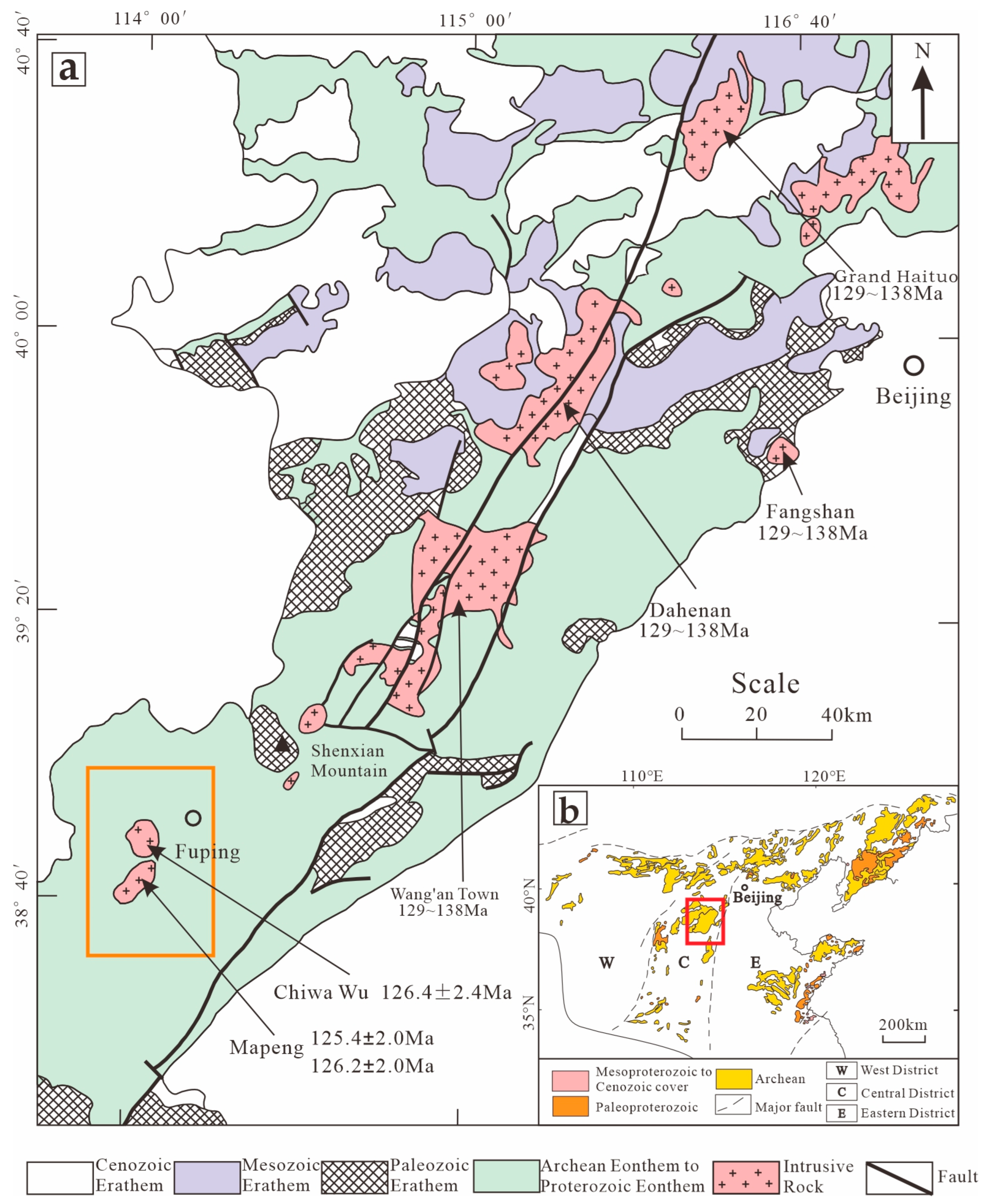
2. Geological Background and Petrography
2.1. Geological Background
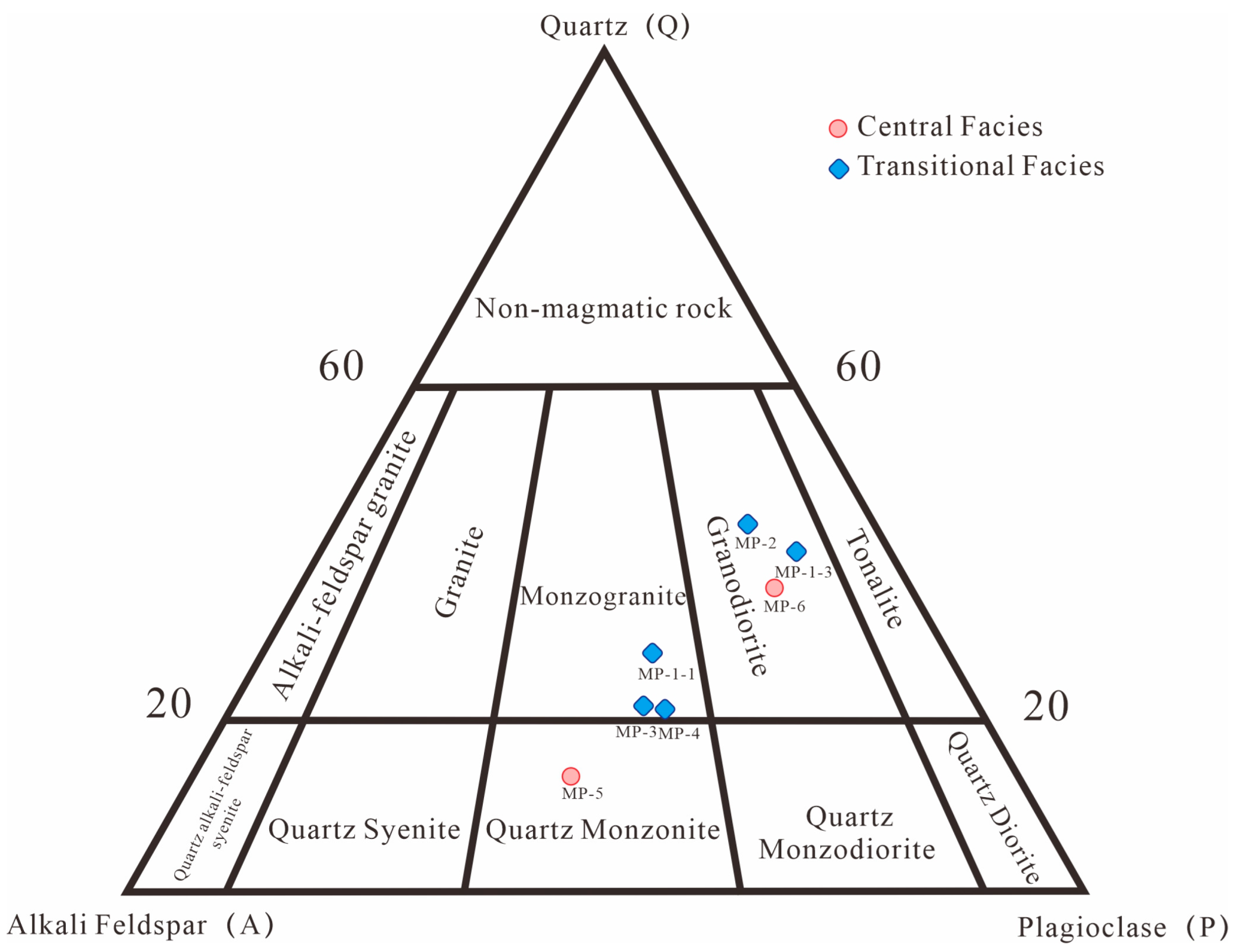
2.2. Petrographic Features
- (1)
- Central Facies
- (2)
- Transitional Facies
- (3)
- Marginal Facies
3. Materials and Methods
3.1. Crystal Grain Size Distribution Theory
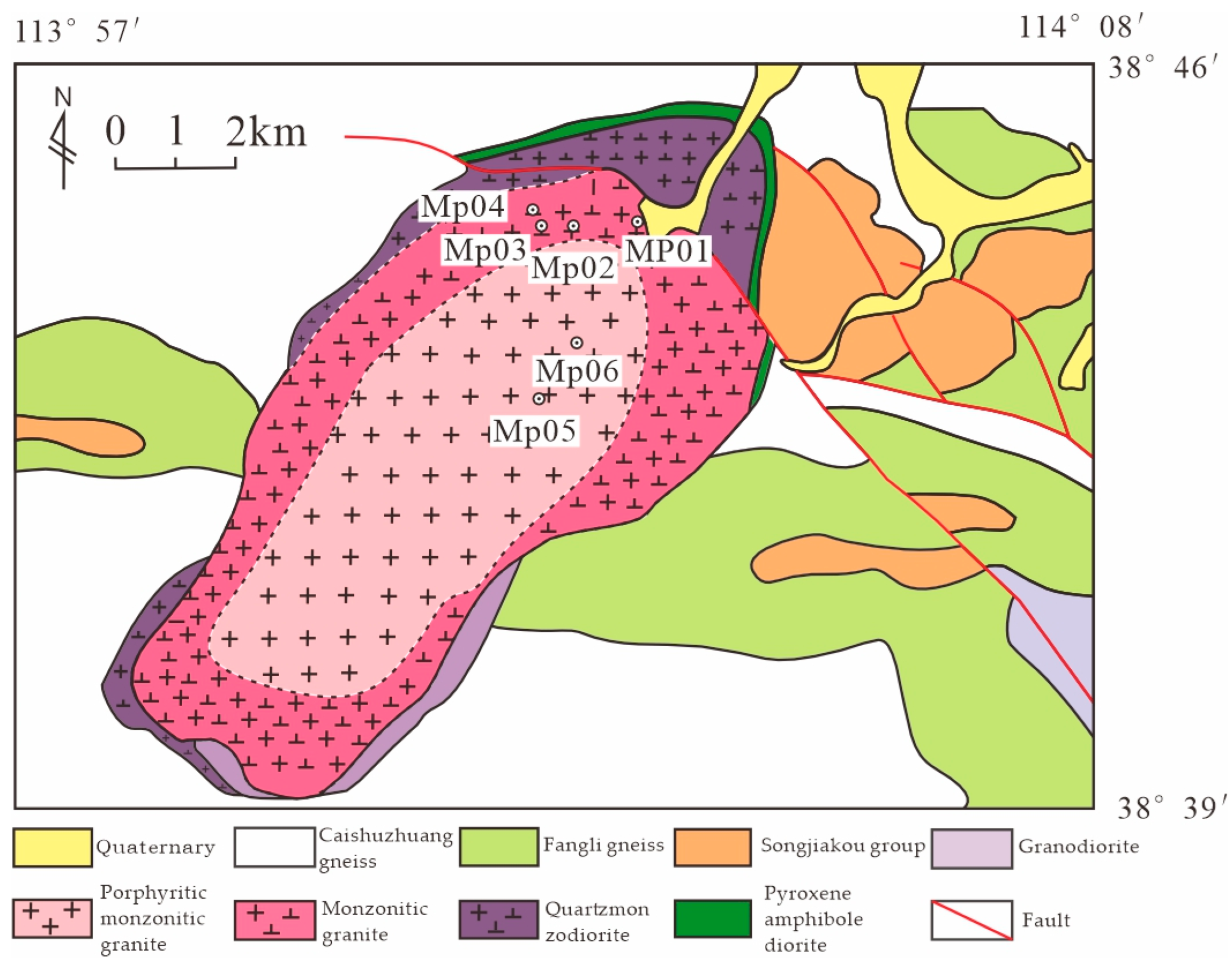
- To investigate the mineralogical characteristics and textures of the Mapeng pluton, thin sections were prepared from rock samples collected at multiple locations (Figure 2). The sampling sites were carefully chosen to capture the lithological heterogeneity of the pluton. To account for the observed textural variability, thin sections were cut in two orientations—parallel to the dominant foliation and perpendicular to the main layering—ensuring that mineralogical and textural variations across the pluton were adequately represented. Preparing thin sections in different orientations provided a more representative view of the overall rock composition and texture, reflecting the natural heterogeneity of the Mapeng pluton.
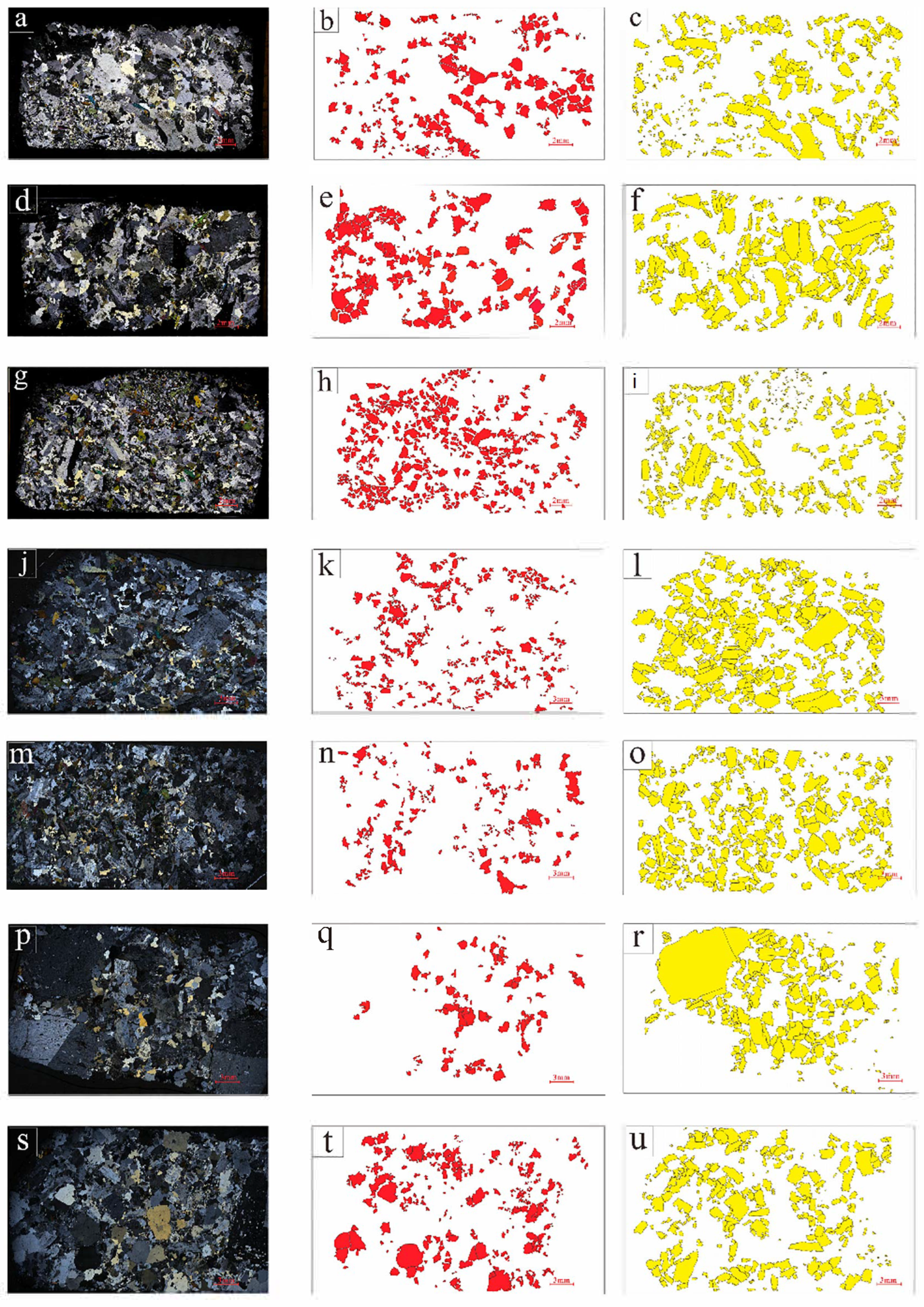
- CorelDRAW 2024 (v25) software was used to outline the crystals of quartz and plagioclase. Figure 6 shows the full scan image of the sample thin section and the outlined crystal profiles.
- ImageJ (1.54g) software was used to acquire quantitative parameters, allowing for the analysis of area, centroid, circularity, long axis, and short axis (the long and short axes of an ellipse with the same area as the phenocrysts) of each particle in the two-dimensional plane, thereby obtaining magma crystallization dynamics. The 2D thin-section method is a well-established technique that provides crystal orientation, spatial distribution, and grain size distribution characteristics.
- The CSD data exported from ImageJ were imported into CSDCorrections (1.5) to obtain the three-dimensional parameters of the crystals. Its working principle is similar to that of the SEM-based automated mineralogy workflow; both achieve unbiased estimation of crystal size distribution through high-resolution mineral boundary identification and three-dimensional stereology conversion [42].
3.2. Crystal Spatial Distribution Theory
3.3. Crystal Orientation Degree Theory
4. Results and Discussion
4.1. Quantitative Structural Features
4.2. Crystal Spatial Distribution Characteristics and Orientation Degree Analysis
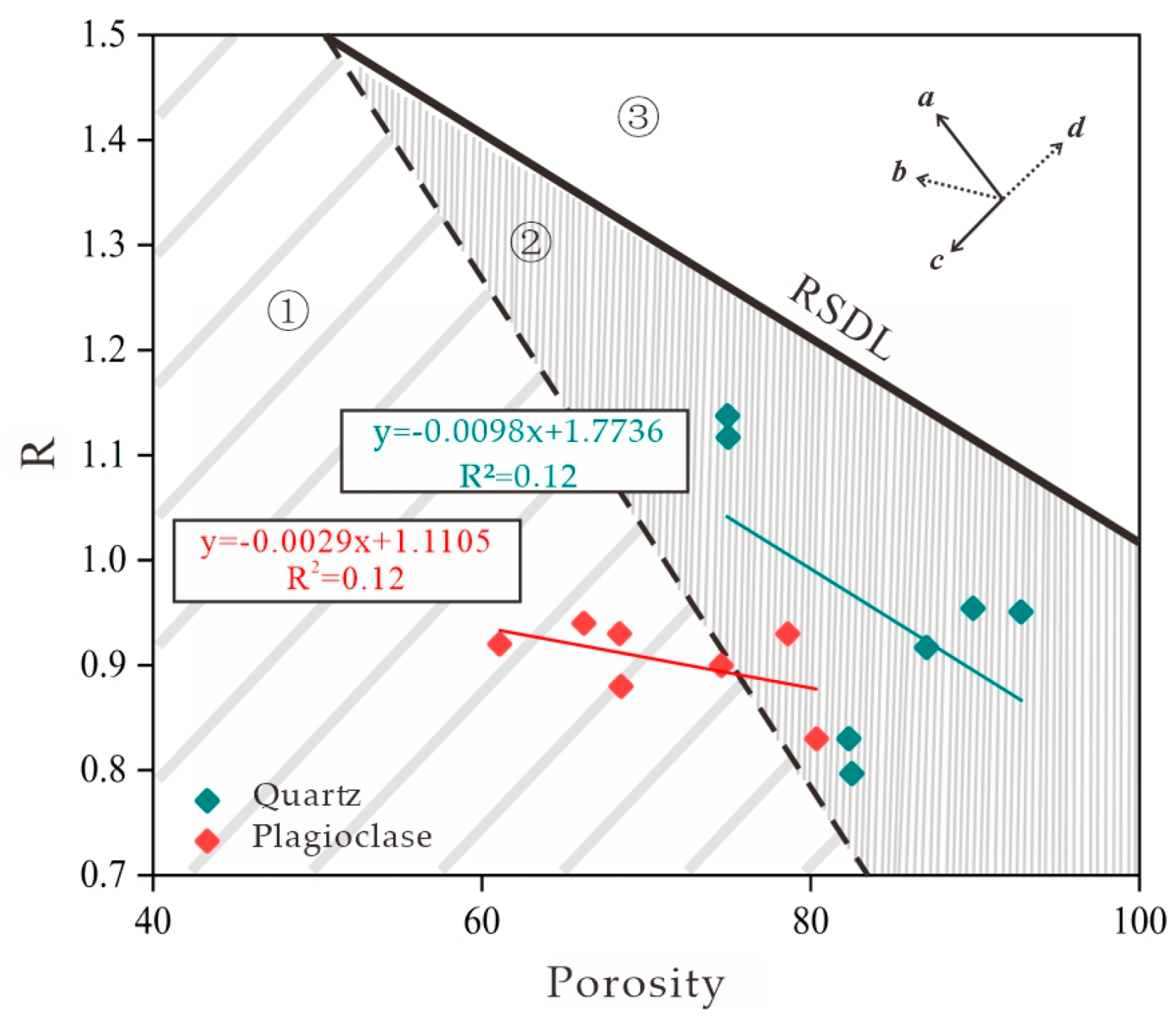
4.3. Dynamics of Magma Consolidation
5. Conclusions
- (1)
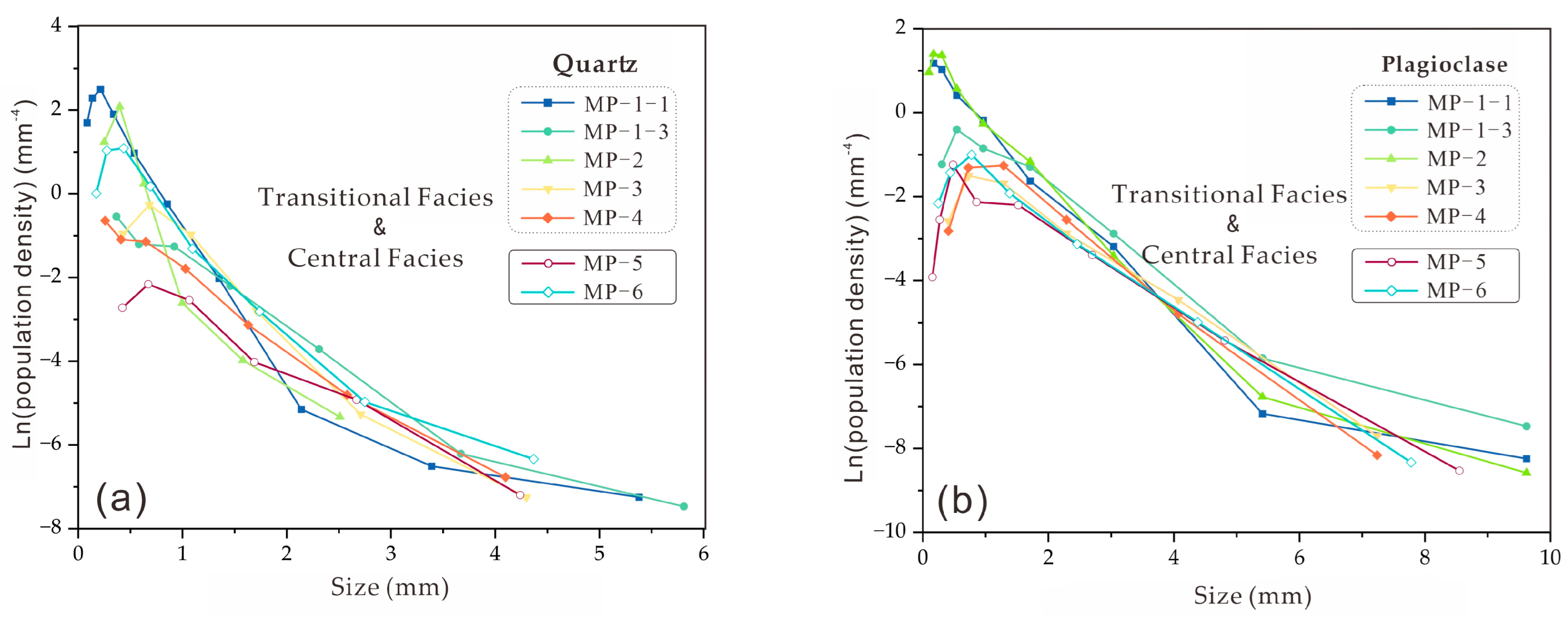
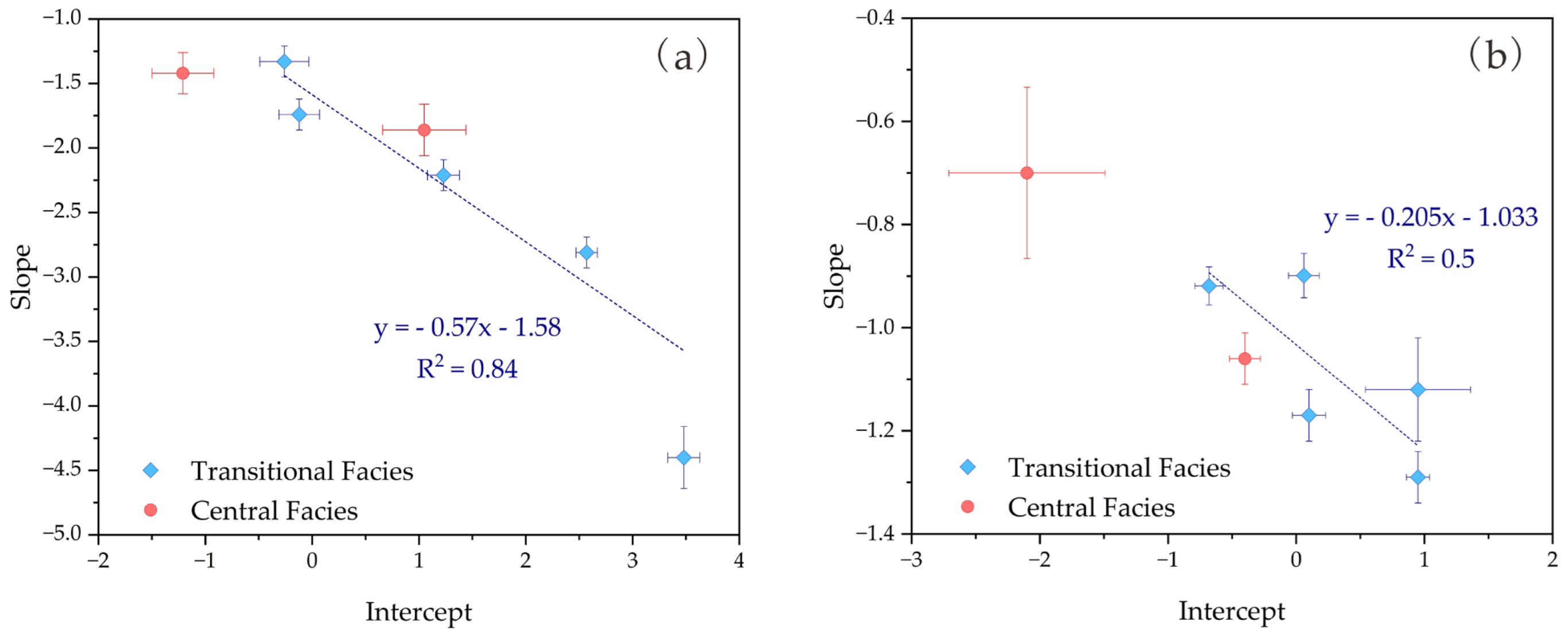
- Quantitative analysis of crystal size distributions (CSDs) and spatial structural parameters demonstrates that the crystallization of the Mapeng pluton occurred under a non-steady-state magmatic system. The concave-upward CSD curves of quartz and plagioclase reflect cyclic fluctuations in nucleation and growth rates. The scarcity of small crystals and the dominance of coarse grains suggest that, during certain stages, the magma evolved in a relatively closed environment characterized by low undercooling, where crystal growth prevailed and nucleation was significantly suppressed.
- (2)
- The strong negative correlation between the slopes and intercepts of the CSD curves reveals a kinetic coupling between crystal growth and nucleation. During the early cooling phase, crystallization was dominated by nucleation, whereas in the later stage, as the system approached thermal stability, nucleation progressively ceased and crystal growth accelerated, shifting the system toward a growth-dominated regime. This negative correlation quantitatively reflects a coarsening process in which larger crystals grew at the expense of smaller ones, marking a transition toward near-equilibrium crystallization conditions.
- (3)
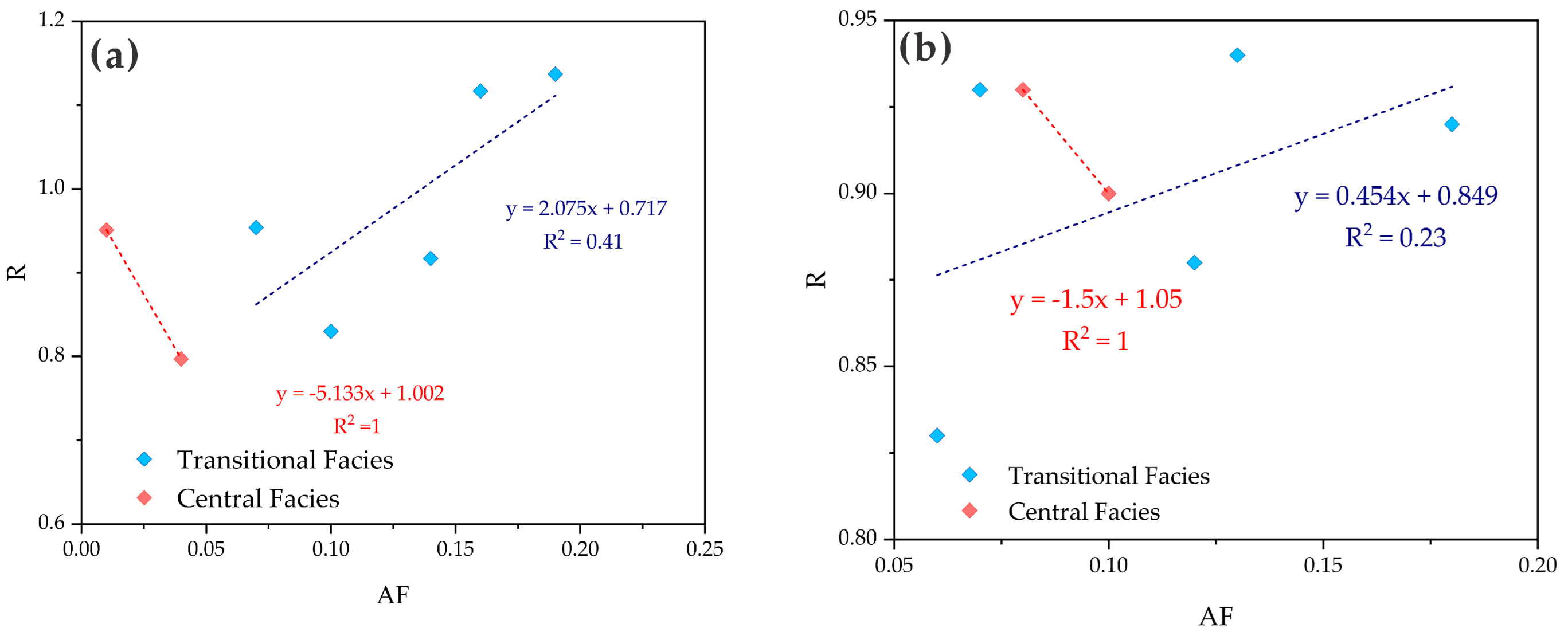
- The lithologic zoning, grain-size heterogeneity, and R–AF spatial distribution characteristics indicate that the magma chamber underwent cyclic alternations between open- and closed-system behavior. During closed-system stages, the magma cooled slowly under stable thermal conditions, promoting continuous crystal growth and coarsening. In contrast, during open-system stages, injections of hotter magma disrupted pre-existing crystallization equilibria, causing local temperature increases and chemical disequilibrium. These perturbations led to the dissolution of small crystals, accelerated growth of larger ones, and a progressive flattening of the CSD slopes.
- (4)
- The lithologic transition from central quartz monzonite to marginal quartz diorite indicates significant chemical zoning within the pluton. Later magma batches were relatively more mafic and enriched in Fe, Mg, and volatiles, supplying additional heat and material to the system. This multistage replenishment triggered repeated cycles of dissolution, recrystallization, and chemical re-equilibration, producing complex zoning and resorption textures that record the dynamic nature of magma mixing and recharge within the chamber.
- (5)
- From a kinetic perspective, crystal coarsening, compositional differentiation, and magma replenishment acted synergistically to control the solidification dynamics of the Mapeng pluton. Closed-system stages facilitated crystal growth and volatile concentration, whereas magma recharge reopened the system, promoting volatile exsolution and the generation of Au–As–S-bearing hydrothermal fluids. These fluids migrated along structural conduits and precipitated gold through wall-rock reactions, indicating that the crystallization of the Mapeng pluton not only recorded the physicochemical evolution of multistage magmatic activity but also directly influenced subsequent hydrothermal mineralization.
- (6)
- In summary, the solidification of the Mapeng pluton was governed by the coupled effects of crystal coarsening, magma compositional contrast, and multistage replenishment. The integrated evidence from CSDs and spatial distribution parameters documents a dynamic transition from closed-system equilibrium to open-system recharge. This evolutionary pattern highlights the intricate feedbacks among thermal, compositional, and kinetic processes in the magma chamber, providing quantitative insights into the coupling between crystallization dynamics and mineralization in granitic systems.
Author Contributions
Funding
Data Availability Statement
Acknowledgments
Conflicts of Interest
References
- Marsh, B.D. Crystal size distribution (CSD) in rocks and the kinetics and dynamics of crystallization. Contrib. Mineral. Petrol. 1988, 99, 277–291. [Google Scholar] [CrossRef] [Scilit]
- Higgins, M.D. Origin of anorthosite by textural coarsening: Quantitative measurements of a natural sequence of textural development. J. Petrol. 1998, 39, 1307–1323. [Google Scholar] [CrossRef]
- Higgins, M.D. Origin of megacrysts in granitoids by textural coarsening: A crystal size distribution (CSD) study of microcline in the Cathedral Peak Granodiorite, Sierra Nevada, California. Geol. Soc. Lond. Spec. Publ. 1999, 168, 207–219. [Google Scholar] [CrossRef] [Scilit]
- Higgins, M.D.; Roberge, J. Crystal size distribution of plagioclase and amphibole from Soufrière Hills volcano, Montserrat: Evidence for dynamic crystallization–textural coarsening cycles. J. Petrol. 2003, 44, 1401–1411. [Google Scholar] [CrossRef] [Scilit]
- Mills, R.D.; Ratner, J.J.; Glazner, A.F. Experimental evidence for crystal coarsening and fabric development during temperature cycling. Geology 2011, 39, 1139–1142. [Google Scholar] [CrossRef] [Scilit]
- Mills, R.D.; Glazner, A.F. Experimental study on the effects of temperature cycling on coarsening of plagioclase and olivine in an alkali basalt. Contrib. Mineral. Petrol. 2013, 166, 97–111. [Google Scholar] [CrossRef] [Scilit]
- Boorman, S.; Boudreau, A.; Kruger, F.J. The lower zone–critical zone transition of the Bushveld Complex: A quantitative textural study. J. Petrol. 2004, 45, 1209–1235. [Google Scholar] [CrossRef] [Scilit]
- Yang, Z. Combining quantitative textural and geochemical studies to understand the solidification processes of a granite porphyry: Shanggusi, East Qinling, China. J. Petrol. 2012, 53, 1807–1835. [Google Scholar] [CrossRef] [Scilit]
- Higgins, M.D. Quantitative Textural Measurements in Igneous and Metamorphic Petrology; Cambridge University Press: Cambridge, UK, 2006; pp. 1–276. [Google Scholar]
- Cashman, K.V.; Marsh, B.D. Crystal size distribution (CSD) in rocks and the kinetics and dynamics of crystallization II: Makaopuhi lava lake. Contrib. Mineral. Petrol. 1988, 99, 292–305. [Google Scholar] [CrossRef] [Scilit]
- Wang, D.; Wang, X.; Bindeman, I.N.; Du, D.; Li, J.; Jiang, C. Ephemeral magma reservoirs during the incremental growth of the Neoproterozoic Jiuling composite batholith in South China. J. Geophys. Res. Solid Earth 2021, 126, e2021JB022758. [Google Scholar] [CrossRef] [Scilit]
- Peng, N.; Cui, Y.; Liu, Y.; Qiao, X.; Zhu, X.; Nie, B.; Hu, Y. Study on crystallization dynamics of potassic basaltic lava of Laoheishan volcano in Wudalianchi area, NE China. Acta Petrol. Sin. 2020, 36, 2035–2046, (Chinese with English Abstract). [Google Scholar]
- Cheng, Z.; Lu, F. Crystal size distribution of volcanic rocks in the Laoshangou of junggar basin and significance of crystallization kinetics. Geoscience 1997, 11, 20–27, (Chinese with English Abstract). [Google Scholar]
- Alves, A.; de Souza Pereira, G.; de Assis Janasi, V.; Higgins, M.D.; Polo, L.A.; Juriáans, O.S.; Ribeiro, B.V. The origin of felsic microgranitoid enclaves: Insights from plagioclase crystal size distributions and thermodynamic models. Lithos 2015, 239, 33–44. [Google Scholar] [CrossRef] [Scilit]
- Bergantz, G.W.; Schleicher, J.M.; Burgisser, A. Open-system dynamics and mixing in magma mushes. Nat. Geosci. 2015, 8, 793–796. [Google Scholar] [CrossRef] [Scilit]
- Morgan, D.J.; Jerram, D.A. On estimating crystal shape for crystal size distribution analysis. J. Volcanol. Geotherm. Res. 2006, 154, 1–7. [Google Scholar] [CrossRef] [Scilit]
- Gualda, G.A.R.; Ghiorso, M.S. The Bishop Tuff giant magma body: An alternative to the Standard Model. Contrib. Mineral. Petrol. 2013, 166, 755–775. [Google Scholar] [CrossRef] [Scilit]
- Zhao, G.; Wilde, S.A.; Cawood, P.A.; Lu, L. Petrology and P–T path of the Fuping mafic granulites: Implications for tectonic evolution of the central zone of the North China Craton. Metamorph. Geol. 2000, 18, 375–391. [Google Scholar] [CrossRef] [Scilit]
- Yang, J.; Wu, F.; Wilde, S.A.; Zhao, J. A review of the geodynamic setting of large-scale Late Mesozoic gold mineralization in the North China Craton: An association with lithospheric thinning. Ore Geol. Rev. 2003, 23, 125–152. [Google Scholar]
- Wang, Q.; He, P.; Wang, X. Study on Geological Characteristics and Geology Practical Value about MiddleTaihang Mountains, Hebei Province, China. Hebei GEO Univ. 2019, 42, 12–19, (Chinese with English Abstract). [Google Scholar]
- Liu, X. Genetic Mineralogy Study of Accessory Minerals of Granitoid Rocks of Mapeng Rock Mass in Mid-Taihang Mountain. Ph.D. Thesis, China University of Geosciences (Beijing), Beijing, China, 2009. (Chinese with English Abstract). [Google Scholar]
- Wang, T.; Guo, L.; Zheng, Y.; Donskaya, T.; Gladkochub, D.; Zeng, L.; Li, J.; Wang, Y.; Mazukabzov, A. Timing and processes of late Mesozoic mid-lower-crustal extension in continental NE Asia and implications for the tectonic setting of the destruction of the North China Craton: Mainly constrained by zircon U–Pb ages from metamorphic core complexes. Lithos 2012, 154, 315–345. [Google Scholar] [CrossRef] [Scilit]
- Cheng, H.; Wang, X.; Zhang, Y. Geochemistry, zircon U–Pb age and Hf isotope of the high Ba–Sr Mapeng granitoids in the Taihang Mountains and their geological significance. Int. Geol. Rev. 2024, in press. [Google Scholar]
- Liu, Y.; Li, C.; Zheng, J.; Huang, F.; Sun, H.; Tang, Y.; Xu, B. Zircon SHRIMP U–Pb age of Mapeng granite complex and its implication in Northern Taihang Mountains. Geol. Explor. 2010, 46, 622–627, (Chinese with English Abstract). [Google Scholar]
- Men, W.; Liu, J.; Zhang, H.; Zhang, S.; Wang, J.; Wu, J. LA-ICP-MS Zircon U-Pb Geochronology and Genesis of Dark Diorite Enclaves in the Mapeng Batholith, Shihu Gold Field. Acta Miner. Sin. 2014, 34, 487–495, (Chinese with English Abstract). [Google Scholar]
- Zhang, M. Petrogenesis and Solidification Condition of Early Cretaceous Mapeng Pluton in the North Taihang Mountain. Ph.D. Thesis, China University of Geosciences (Beijing), Beijing, China, 2020. (Chinese with English Abstract). [Google Scholar]
- Cheng, H.; Du, L.; Yang, C.; Su, R.; Meng, Q.; Liu, G.; Wang, M.; Zhang, Z.; Jing, J.; Wang, X. Geochemistry, zircon U-Pb age and Hf isotope characteristies of high-Ba-Srgranites in Mapeng area, Taihang Mountains and their geological significance. Acta Petrol. Miner. 2024, 43, 719–736, (Chinese with English Abstract). [Google Scholar]
- Gao, S.; Rudnick, R.L.; Yuan, H.; Liu, X.; Liu, Y.; Xu, W.; Ling, W.; Ayers, J.; Wang, X.; Wang, Q. Recycling lower continental crust in the North China craton. Nature 2004, 432, 892–897. [Google Scholar] [CrossRef] [Scilit]
- Jiang, N.; Liu, Y.; Zhou, W.; Yang, J.; Zhang, S. Derivation of Mesozoic adakitic magmas from ancient lower crust in the North China craton. Geochim. Cosmochim. Acta 2007, 71, 2591–2608. [Google Scholar] [CrossRef] [Scilit]
- Xiao, L.; Rapp, R.P.; Xu, J. The role of deep processes controls on variation of compositions of adakitic rocks. Acta Petrol. Sin. 2004, 20, 219–228, (Chinese with English Abstract). [Google Scholar]
- Davis, G.; Zheng, Y.; Wang, C.; Darby, B.J.; Zhang, C.; Gehrels, G. Geometry and geochronology of Yanshan Belt tectonics. In Collected Works of International Symposium on Geological Science; Seismological Press: Beijing, China, 1998; pp. 275–292. [Google Scholar]
- Li, L.; Han, B.; Miao, G.; Shu, G.; Chen, J.; Yang, J.; Yang, Y.; Zhang, Y. The age, emplacement depth, and tectonic significance of the Mapeng-Chiwawu pluton in the Fuping region of the Taihang Mountains. Acta Petrol. Sin. 2012, 31, 289–306. [Google Scholar]
- Li, Z. Petrology, Geochemistry, Zircon Genetic Mineralogy, U-Pb Geochronology of the dykes around Shihu gold mine, Hebei Province and Its Implication on Gold Mineralization. Master’s Thesis, China University of Geosciences (Beijing), Beijing, China, 2009. (Chinese with English Abstract). [Google Scholar]
- Zhang, Y.; Hu, X. Research on the characteristics of Mapeng granitic intrusion and its contribution to the gold ore metallogeny. Cent. South Inst. Min. Metall. 1994, 25, 275–281. [Google Scholar]
- Li, Q.; Santosh, M.; Li, S.; Zhang, J. Petrology, geochemistry and zircon U–Pb and Lu–Hf isotopes of the Cretaceous dykes in the central North China Craton: Implications for magma genesis and gold metallogeny. Ore Geol. Rev. 2015, 67, 57–77. [Google Scholar] [CrossRef] [Scilit]
- Streckeisen, A.L. To each plutonic rock its proper name. Earth-Sci. Rev. 1976, 12, 1–33. [Google Scholar] [CrossRef] [Scilit]
- Xia, S.; Qi, Y.; Yu, S.; Jiang, X.; Gao, X.; Wang, Y.; Li, C.; Wang, Q.; Wang, L.; Peng, Y. Magma Mixing Origin for the Menyuan Granodioritic Pluton in the North Qilian Orogenic Belt, China. Minerals 2025, 15, 391. [Google Scholar] [CrossRef] [Scilit]
- Marsh, B.D. On the interpretation of crystal size distributions in magmatic systems. J. Petrol. 1998, 39, 553–599. [Google Scholar] [CrossRef]
- Marsh, B.D. Crystallization of silicate magmas deciphered using crystal size distributions. J. Am. Ceram. Soc. 2007, 90, 746–757. [Google Scholar] [CrossRef] [Scilit]
- Xu, Z.; Yang, Z.; An, X.; Xu, R.; Qi, J. Relationship between the texture and composition of titanomagnetite and its implications for magma dynamics in the Hannuoba basalt. Minerals 2022, 12, 1412. [Google Scholar] [CrossRef] [Scilit]
- Yang, Z.; Luo, Z.; Lu, X. Quantitative textural analysis of igneous rocks and the kinetics and dynamics of magma solidification processes. Earth Sci. Front. 2010, 17, 246–266, (Chinese with English Abstract). [Google Scholar]
- Schulz, B.; Sandmann, D.; Gilbricht, S. SEM-based automated mineralogy and its application in geo- and material sciences. Minerals 2020, 10, 1004. [Google Scholar] [CrossRef] [Scilit]
- Bindeman, I.N.; Davis, A.M. Trace element partitioning between plagioclase and melt: Investigation of dopant influence on partition coefficients. Geochim. Cosmochim. Acta 2000, 64, 2863–2878. [Google Scholar] [CrossRef] [Scilit]
- Jerram, D.A.; Cheadle, M.J.; Hunter, R.H.; Elliott, M.T. The spatial distribution of grains and crystals in rocks. Contrib. Mineral. Petrol. 1996, 125, 60–74. [Google Scholar] [CrossRef] [Scilit]
- Williams, E.; Boudreau, A. Textures of orthopyroxenites from the Burgersfort bulge of the eastern Bushveld Complex, Republic of South Africa. Contrib. Mineral. Petrol. 2006, 151, 480–492. [Google Scholar] [CrossRef] [Scilit]
- Higgins, M.D. Measurement of crystal size distributions. Am. Mineral. 2000, 85, 1105–1116. [Google Scholar] [CrossRef] [Scilit]
- Sobolev, S.N.; Ariskin, A.A.; Nikolaev, G.S.; Pshenitsyn, I.V. Three types of olivine crystal size distribution in dunites from the Yoko-Dovyren layered massif as signals of their different crystallization history. Petrology 2024, 32, 534–550. [Google Scholar] [CrossRef] [Scilit]
- Ariskin, A.; Danyushevsky, L.; Nikolaev, G.; Kislov, E.; Fiorentini, M.; Mcneill, A.; Kostitsyn, Y.; Goemann, K.; Feig, S.T.; Malyshev, A. The Dovyren Intrusive Complex (Southern Siberia, Russia): Insights into dynamics of an open magma chamber with implications for parental magma origin, composition, and Cu–Ni–PGE fertility. Lithos 2018, 302–303, 242–262. [Google Scholar] [CrossRef] [Scilit]
- Barnes, S.J. The effect of trapped liquid crystallization on cumulus mineral compositions in layered intrusions. Contrib. Mineral. Petrol. 1986, 93, 524–531. [Google Scholar] [CrossRef] [Scilit]
- Suhendro, I.; Yuliawan, E.; Zen, R.; Rahmawati, Z.Y.; Priyana, P.E.; Diwijaya, S.; Suhartono, M.A.T.S.P.; Jonathan, A.; Latief, A.E.Z. Petrology, geochemistry, and crystal size distribution of the basaltic andesite–dacite association at Mt. Sumbing, Central Java, Indonesia: Insights to magma reservoir dynamics and petrogenesis. Acta Geochim. 2024, 43, 838–855. [Google Scholar] [CrossRef] [Scilit]
- Jerram, D.A.; Cheadle, M.J.; Philpotts, A.R. Quantifying the building blocks of igneous rocks: Are clustered crystal frameworks the foundation. J. Petrol. 2003, 44, 2033–2051. [Google Scholar] [CrossRef] [Scilit]
- Higgins, M.D. Origin of anorthosite by textural coarsening: Quantitative CSD evidence from the Laramie anorthosite. Contrib. Mineral. Petrol. 1998, 131, 231–244. [Google Scholar]
- Jerram, D.A.; Dobson, K.J.; Morgan, D.J.; Pankhurst, M.J. The petrogenesis of magmatic systems: Using igneous textures to understand magmatic processes. In Volcanic and Igneous Plumbing Systems; Burchardt, S., Ed.; Elsevier: Amsterdam, The Netherlands, 2018; pp. 191–229. [Google Scholar]
- Holness, M.B.; Anderson, A.T.; Martin, V.M.; Maclennan, J.; Passmore, E.; Schwindinger, K. Textures in partially solidified crystalline nodules: A window into the pore structure of slowly cooled mafic intrusions. J. Petrol. 2007, 48, 1243–1264. [Google Scholar] [CrossRef] [Scilit]
- Zhao, Z.; Wang, C.; Dou, J.; Wei, B. A mush-facilitated magma mixing process revealed by complex zoning of plagioclase in mafic magmatic enclaves of the early Cretaceous Sanguliu granitic pluton, East China. J. Petrol. 2023, 64, egad048. [Google Scholar] [CrossRef] [Scilit]
- Higgins, M.D. Closure in crystal size distributions (CSD), verification of CSD calculations, and the significance of CSD fans. Am. Miner. 2002, 87, 171–175. [Google Scholar] [CrossRef] [Scilit]
- Yuguchi, T.; Ogita, Y.; Kato, T.; Yokota, R.; Sasao, E.; Nishiyama, T. Crystallization processes of quartz in a granitic magma: Cathodoluminescence zonation pattern controlled by temperature and titanium diffusivity. J. Asian Earth Sci. 2020, 192, 104289. [Google Scholar] [CrossRef] [Scilit]
- Perugini, D.; Poli, G. The mixing of magmas in plutonic and volcanic environments: Analogies and differences between outcrop and experimental evidence. Lithos 2012, 153, 142–164. [Google Scholar] [CrossRef] [Scilit]
- Sparks, R.S.J.; Marshall, L.A. Thermal and mechanical constraints on mixing between mafic and silicic magmas. J. Volcanol. Geotherm. Res. 1986, 29, 99–124. [Google Scholar] [CrossRef] [Scilit]
- Billon, M.; Auwera, J.V.; Namur, O.; Faure, F.; Holness, M.B.; Charlier, B. Plagioclase crystal size distributions, growth and nucleation rates in an anhydrous arc basaltic andesite. Contrib. Mineral. Petrol. 2025, 180, 26. [Google Scholar] [CrossRef] [Scilit]
- Wark, D.A.; Watson, E.B. TitaniQ: A titanium-in-quartz geothermometer. Contrib. Mineral. Petrol. 2006, 152, 743–754. [Google Scholar] [CrossRef] [Scilit]
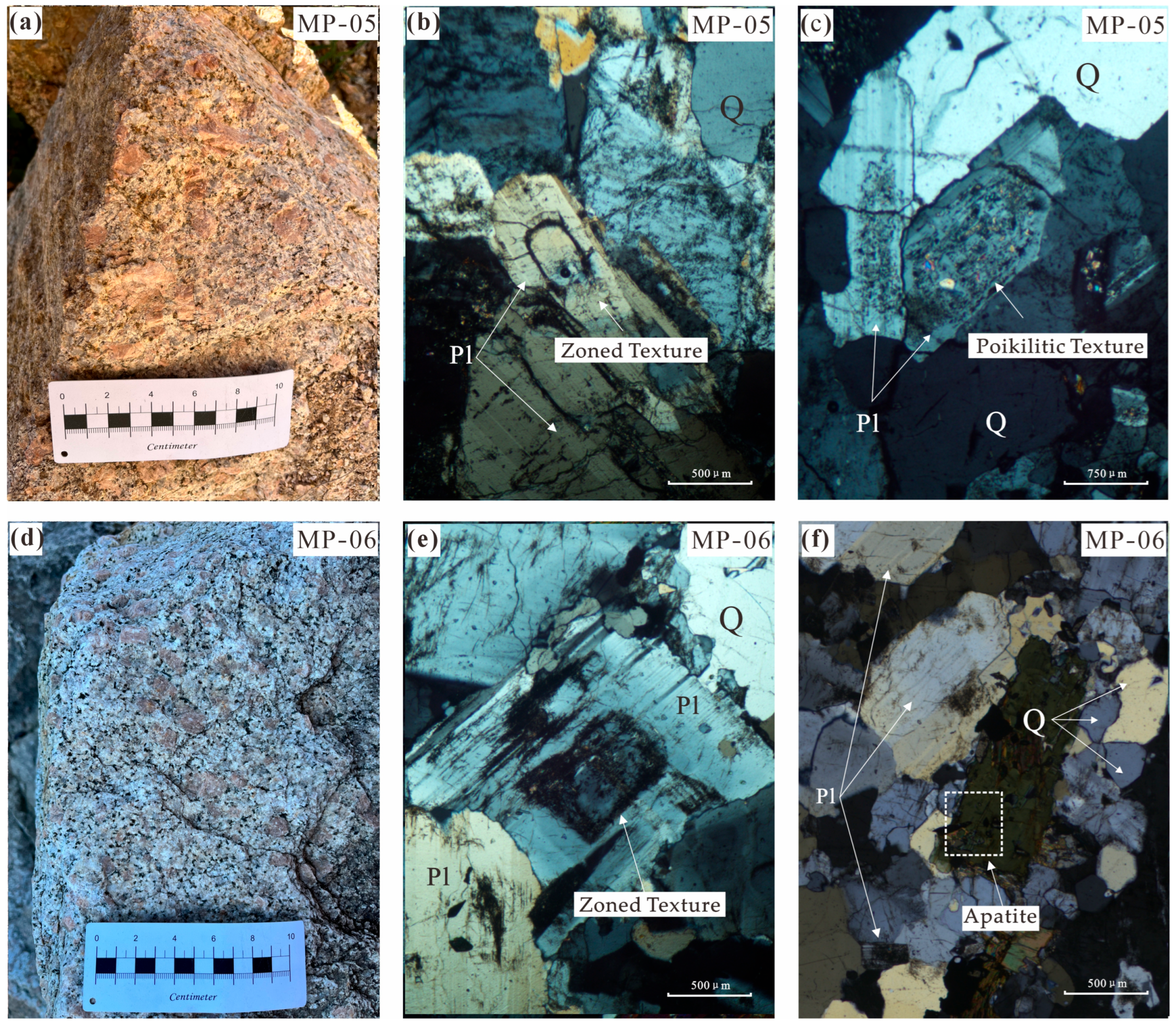
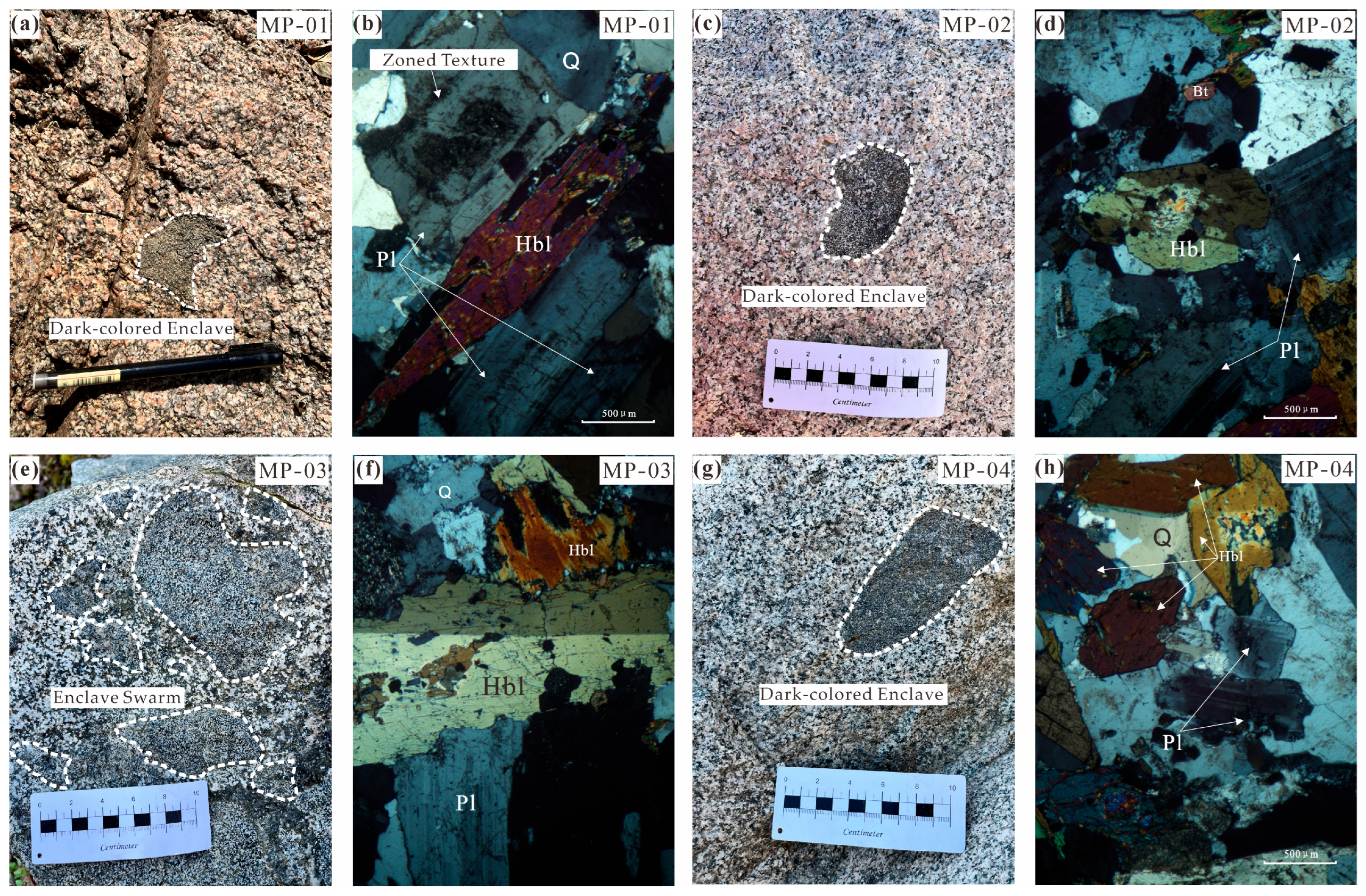

| Rock Name | Main Mineral Composition | Mineral Content (Volume Percentage) | Accessory Minerals | Mineral Contact Relationships and Textural Characteristics |
|---|---|---|---|---|
| Quartz Diorite | Fsp, Am, Q | Pl: 30–50% | Bt, Ms, Opx, etc. | Pl, Am, and Q often show subhedral-anhedral granular interweaving; Am occurs in radial or elongated forms, closely interlocking with Pl. |
| Granodiorite | Pl, Kfs, Q, Am | Pl: 30–50% | Bt, Ms, Zr, etc. | Kfs grows adjacent to Pl; Q often forms replacement rims around Fsps; Am occurs in acicular or short columnar forms, showing poikilitic texture with Fsps. |
| Quartz Monzonite | Kfs, Pl, Q | Kfs: 30–40% | Ms, Bt, Am, etc. | Kfs and Pl interlock with each other, showing fine–medium-grained texture; Q mostly occurs as anhedral grains, filling between Fsp particles, forming granular texture. |
| Monzogranite | Kfs, Pl, Q | Kfs: 30–50% | Ms, Bt, Zircon, etc. | Kfs and Pl show granular interweaving; Kfs often develops good crystal forms; Q occurs as anhedral grains, closely interlocking with Fsps, with uniform texture. |
| Serial Number | Quantity | Crystal Morphology | AF | Roundness | Area/mm2 | R | Lmax (mm) | Volume Content/% | CSD Volume Content/% | Regression Volume Content/% | Intercept | 1σ | Slope | 1σ | CL/mm | QL |
|---|---|---|---|---|---|---|---|---|---|---|---|---|---|---|---|---|
| MP-1-1 | 372 | 1:1.6:3.6 | 0.07 | 0.7 | 324.23 | 0.93 | 3.42 | 21.39 | 42.5 | 46.19 | 0.95 | 0.09 | −1.29 | 0.05 | 0.78 | 0 |
| MP-1-3 | 277 | 1:1.6:3.6 | 0.12 | 0.7 | 298.68 | 0.88 | 4.06 | 31.51 | 70.8 | 79.95 | 0.06 | 0.12 | −0.899 | 0.043 | 1.11 | 0 |
| MP-2 | 409 | 1:1.6:3.6 | 0.13 | 0.7 | 301.24 | 0.94 | 3.20 | 19.64 | 42.3 | 81.46 | 0.95 | 0.41 | −1.12 | 0.1 | 0.89 | 0 |
| MP-3 | 428 | 1:1.3:2.2 | 0.18 | 0.7 | 903.74 | 0.92 | 6.10 | 38.91 | 81.9 | 81.9 | −0.68 | 0.11 | −0.919 | 0.037 | 1.09 | 0.02 |
| MP-4 | 386 | 1:1.3:2.2 | 0.06 | 0.7 | 669.97 | 0.94 | 3.84 | 33.79 | 62.4 | 64.02 | 0.1 | 0.13 | −1.17 | 0.05 | 0.85 | 0.03 |
| MP-5 | 251 | 1:1.4:2.8 | 0.08 | 0.7 | 711.49 | 0.93 | 5.77 | 31.64 | 40.2 | 36.49 | −2.1 | 0.61 | −0.7 | 0.166 | 1.43 | 0 |
| MP-6 | 312 | 1:1.4:2.6 | 0.1 | 0.7 | 699.81 | 0.9 | 3.77 | 25.44 | 45.8 | 44.65 | −0.4 | 0.12 | −1.06 | 0.05 | 0.94 | 0.3 |
| Serial Number | Quantity | Crystal Morphology | AF | Roundness | Area/mm2 | R | Lmax (mm) | Volume Content/% | CSD Volume Content/% | Regression Volume Content/% | Intercept | 1σ | Slope | 1σ | CL/mm | QL |
|---|---|---|---|---|---|---|---|---|---|---|---|---|---|---|---|---|
| MP-1-1 | 388 | 1.0:1.42:1.52 | 0.1 | 0.91 | 83.43 | 0.83 | 6.31 | 17.68 | 3.69 | 37.3 | 2.57 | 0.1 | −2.81 | 0.12 | 2.5 | 0 |
| MP-1-3 | 98 | 1.0:1.34:1.67 | 0.16 | 0.85 | 95.938 | 1.117 | 5.06 | 25 | 4 | 25.5 | −0.26 | 0.23 | −1.33 | 0.12 | 1.49 | 0.449 |
| MP-2 | 247 | 1.0:1.42:1.78 | 0.19 | 0.83 | 75.467 | 1.137 | 2.01 | 25.076 | 3.1 | 9.75 | 3.48 | 0.15 | −4.4 | 0.24 | 0.56 | 0.013 |
| MP-3 | 307 | 1.0:1.35:1.82 | 0.14 | 0.87 | 95.696 | 0.917 | 3.19 | 12.93 | 2.8 | 12.3 | 1.23 | 0.15 | −2.21 | 0.12 | 0.59 | 0 |
| MP-4 | 150 | 1.0:1.34:1.72 | 0.07 | 0.93 | 67.662 | 0.954 | 3.19 | 10.14 | 3.1 | 10.3 | −0.12 | 0.19 | −1.74 | 0.12 | 0.88 | 0.679 |
| MP-5 | 70 | 1.0:1.46:1.94 | 0.01 | 0.99 | 51.647 | 0.951 | 3.19 | 7.194 | 2.85 | 7.59 | −1.21 | 0.29 | −1.42 | 0.16 | 0.89 | 0.704 |
| MP-6 | 497 | 1.0:1.33:1.82 | 0.04 | 0.96 | 122.15 | 0.797 | 3.19 | 17.483 | 17.1 | 32.6 | 1.05 | 0.39 | −1.86 | 0.2 | 0.85 | 0 |
Disclaimer/Publisher’s Note: The statements, opinions and data contained in all publications are solely those of the individual author(s) and contributor(s) and not of MDPI and/or the editor(s). MDPI and/or the editor(s) disclaim responsibility for any injury to people or property resulting from any ideas, methods, instructions or products referred to in the content. |
© 2025 by the authors. Licensee MDPI, Basel, Switzerland. This article is an open access article distributed under the terms and conditions of the Creative Commons Attribution (CC BY) license (https://creativecommons.org/licenses/by/4.0/).
Share and Cite
Rong, H.; Huang, J.; Zhu, S.; Xu, W.; Li, Z.; Yu, Z. Quantitative Analysis of Mineral Textures in the Mapeng Pluton (Central Taihang Mountains) and Its Implications for Magmatic Processes. Crystals 2025, 15, 968. https://doi.org/10.3390/cryst15110968
Rong H, Huang J, Zhu S, Xu W, Li Z, Yu Z. Quantitative Analysis of Mineral Textures in the Mapeng Pluton (Central Taihang Mountains) and Its Implications for Magmatic Processes. Crystals. 2025; 15(11):968. https://doi.org/10.3390/cryst15110968
Chicago/Turabian StyleRong, Hui, Jingyi Huang, Siyu Zhu, Wentan Xu, Zhenzhen Li, and Zihan Yu. 2025. "Quantitative Analysis of Mineral Textures in the Mapeng Pluton (Central Taihang Mountains) and Its Implications for Magmatic Processes" Crystals 15, no. 11: 968. https://doi.org/10.3390/cryst15110968
APA StyleRong, H., Huang, J., Zhu, S., Xu, W., Li, Z., & Yu, Z. (2025). Quantitative Analysis of Mineral Textures in the Mapeng Pluton (Central Taihang Mountains) and Its Implications for Magmatic Processes. Crystals, 15(11), 968. https://doi.org/10.3390/cryst15110968

