
Article

Influence of Scanning Speed on the Electrochemical and Discharge Behavior of a CeO2/Al6061 Anode for an Al–Air Battery Manufactured via Selective Laser Melting
1
School of Control Engineering, Wuxi University of Technology, Wuxi 214122, China
2
School of Mechanical Engineering, Wuxi University of Technology, Wuxi 214122, China
*
Authors to whom correspondence should be addressed.
Crystals 2025, 15(11), 947; https://doi.org/10.3390/cryst15110947
Submission received: 7 June 2025 / Revised: 30 September 2025 / Accepted: 28 October 2025 / Published: 31 October 2025
(This article belongs to the Section Materials for Energy Applications)

Abstract

This study investigates how scanning speed influences the electrochemical performance and discharge behavior of aluminum–air (Al–air) batteries with CeO2/Al6061 anodes fabricated through selective laser melting (SLM). Al–air batteries, celebrated for their exceptional energy density and eco-friendliness, encounter hurdles in their widespread application due to anode self-corrosion and the formation of passivation films. To address these challenges, this study integrates CeO2-reinforcing phases into Al6061 alloys and leverages SLM technology to enhance anode performance. A comprehensive analysis was conducted on the effects of varying scanning speeds (800, 900, 1000, 1100, and 1200 mm/s) on the surface morphology, density, self-corrosion rate, electrochemical performance, and discharge behavior of the anodes. The findings reveal that a scanning speed of 1000 mm/s produces anodes with optimal density, minimal self-corrosion, and outstanding electrochemical and discharge performance. Specifically, this scanning speed leads to a high discharge voltage of 1.575 V and an anode utilization rate of 72.2%, which can be attributed to the complete melting of the powder and the formation of a uniform microstructure. These insights offer valuable guidance for the development of high-performance Al–air batteries, promising extended lifespans and enhanced efficiency.

1. Introduction

Al–air batteries, an emerging energy technology, offer numerous significant advantages. From an energy density standpoint, their theoretical specific energy substantially surpasses that of traditional lithium batteries, thereby delivering more enduring power support for devices. This makes them particularly well-suited for applications demanding high endurance [1,2,3]. In terms of cost, aluminum is abundant in the Earth’s crust, resulting in low raw material acquisition costs [4]. Additionally, the battery structure is relatively simple, and the production process is uncomplicated [5]. These factors contribute to a cost advantage that will become even more pronounced with large-scale production. Moreover, Al–air batteries are environmentally friendly. The primary byproduct is aluminum hydroxide, which can be recycled and reused, minimizing environmental pollution [6,7,8]. Regarding application prospects, Al–air batteries hold immense potential. In the transportation sector, they are poised to become an ideal power source for electric vehicles, addressing the issue of range anxiety and facilitating the wider adoption of electric vehicles [9,10]. In energy storage systems, they can serve as large-scale energy storage devices to balance grid load and enhance energy utilization efficiency. In the military domain, their high energy density and long-lasting power capabilities can provide reliable power support for military equipment [11,12].
However, the anodes of Al–air batteries face certain challenges. Aluminum anodes are prone to self-corrosion reactions in electrolytes, leading to the wasteful consumption of aluminum [13,14,15]. This reduces the battery’s energy conversion efficiency and Coulombic efficiency, thereby diminishing its actual usable capacity. Furthermore, the hydrogen gas generated by self-corrosion poses a safety risk, compromising the battery’s stability and reliability [16,17]. Additionally, during the discharge process, a passivation film forms on the surface of the aluminum anode. This film impedes the further dissolution of aluminum, increasing the battery’s internal resistance and degrading its discharge performance. As a result, it limits the battery’s applicability in high-current discharge and other demanding operating conditions. To achieve widespread adoption of aluminum–air batteries, it is crucial to focus on overcoming anode-related challenges [18,19,20].
A prevalent approach to enhancing the performance of aluminum anodes involves incorporating reinforcing phases. Common metallic reinforcing phases, such as copper, zinc, and magnesium, can form alloy phases with aluminum, thereby modulating its electrochemical behavior [21,22,23]. Non-metallic reinforcing phases, including carbon nanotubes, graphene, and aluminum oxide, have also demonstrated promising effects. Carbon nanotubes and graphene, characterized by their exceptional conductivity and large specific surface area, can augment the electronic conductivity of the anode and facilitate the dissolution of aluminum ions. Ceramic particles, like alumina, can refine the anode grains, thereby improving their corrosion resistance and mechanical properties [24,25,26]. In addition to introducing reinforcing phases, modifying the preparation process represents another viable strategy for enhancing anode performance, with SLM (Selective Laser Melting) technology being a notable example. Researchers have innovatively employed SLM technology to fabricate aluminum anodes, aiming to enhance their performance and drive the advancement of aluminum–air batteries [27]. Studies have revealed that SLM technology has introduced numerous breakthroughs in the preparation of aluminum anodes. Firstly, SLM technology enables the precise manufacturing of complex structures, allowing for the design of anodes with specialized pore structures and channel configurations tailored to battery performance requirements. This increases the contact area between the anode and electrolyte, promoting the dissolution and diffusion of aluminum ions, and consequently improving the battery’s discharge performance. Secondly, SLM technology eliminates the need for molds, enabling rapid sample fabrication. This significantly shortens the research and development cycle and reduces costs. Moreover, this technology facilitates the gradient distribution of materials, allowing different regions of the anode to possess distinct properties, thereby meeting the diverse needs of the battery under varying operating conditions. By optimizing printing parameters such as laser power and scanning spacing, aluminum anodes with superior electrochemical and discharge capabilities have been successfully produced. For instance, researchers have utilized SLM technology to print aluminum anodes with controllable porosity and a uniform internal structure. In specific electrolyte systems, these anodes exhibit a significantly lower self-corrosion rate compared to traditional casting anodes, along with markedly improved discharge performance [28,29].
Building upon this foundation, integrating SLM technology with reinforcement strategies can further elevate the performance of aluminum anodes. In terms of discharge performance, the SLM-printed anode, featuring a specialized structure, synergistically boosts the open-circuit voltage of the battery. This results in a smoother discharge platform and a notable increase in energy conversion efficiency. Aluminum anodes reinforced with carbon nanotubes were fabricated using SLM printing technology. Under identical discharge conditions, these anodes exhibited a discharge capacity that was nearly 30% higher than that of traditional anodes. Regarding corrosion resistance, the enhanced protective film that forms on the anode surface, coupled with the SLM-printed structure, restricts the diffusion of the electrolyte. This effectively mitigates the self-corrosion rate of the anode and prolongs the battery’s service life. Moreover, the incorporation of reinforcing phases exhibits a synergistic interaction with the SLM process parameters [30]. By optimizing these parameters, the reinforcing phase can be uniformly distributed within the aluminum matrix, thereby maximizing its reinforcing effect. For instance, under appropriate laser power and scanning speed settings, the reinforcing phase can fully integrate with the aluminum powder, forming a robust interface bond. This, in turn, enhances the overall performance of the anode. Such advancements pave the way for the development of high-performance aluminum–air batteries with extended lifespans and improved efficiency [31,32].
Although significant progress has been made in SLM preparation of aluminum anodes and addition of reinforcing phases, there are still some challenges. Based on this, this work added reinforcing phases (CeO2) to aluminum alloys and prepared aluminum–air battery anodes using SLM technology. The forming quality (Surface morphology and density), self-corrosion rate (SCR), electrochemical performance and discharge behavior of the anodes were tested to provide data support for the research of high-performance Al–air batteries.

2. Materials and Methods

2.1. Material and Sample Preparation

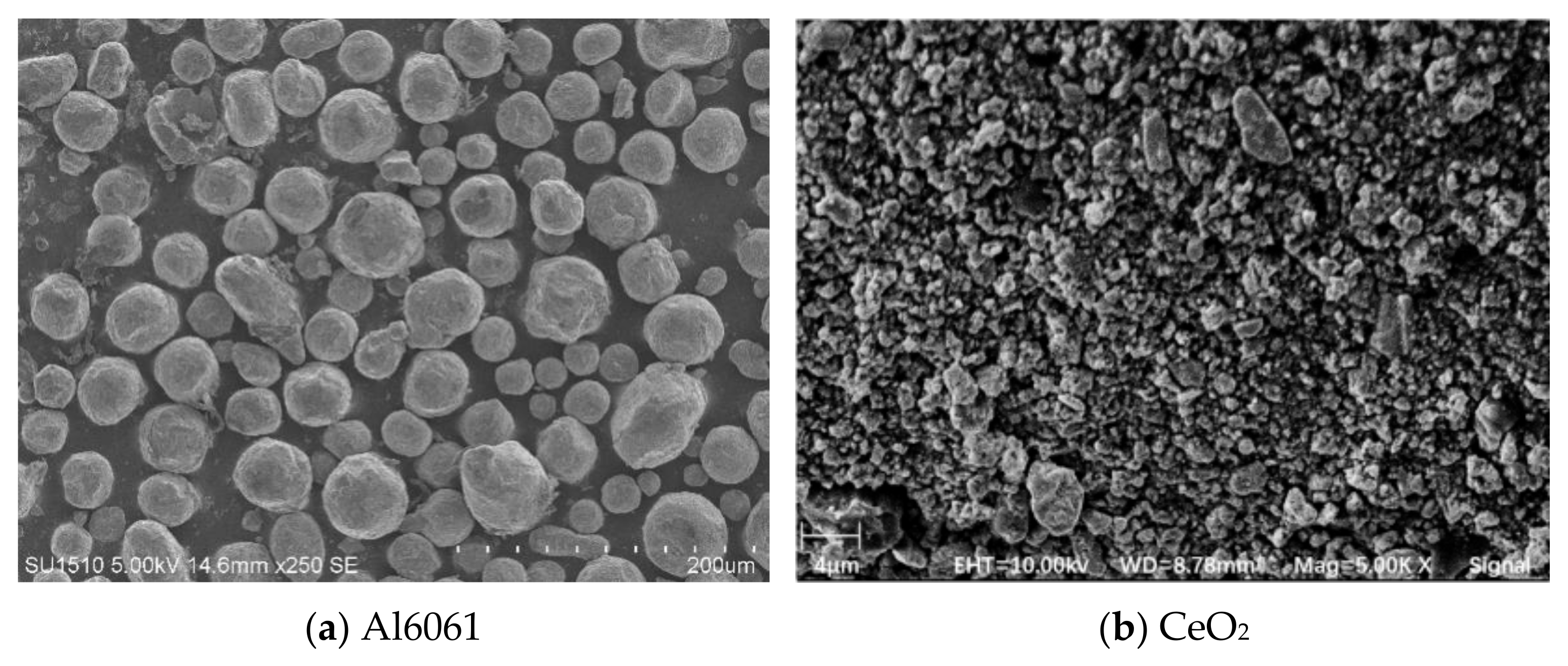
The 6061 aluminum alloy (Al6061) metal powder was sourced from Avimetal Powder Metallurgy Technology Co., Ltd., located in Beijing, China, while the CeO2 powder was obtained from Bangrui New Material Technology Co., Ltd., based in Anqing, China. Building on the exceptional performance demonstrated by the 1.0 wt.% CeO2/Al6061 composite powder in prior research, we prepared a mixture adhering to this specific composition ratio. To optimize the quality of specimen formation, we utilized a planetary ball mill (Model: QM-3SP2, manufactured by Nanjing Nanda Instrument Co., Ltd., in Nanjing, China) to mechanically blend the two types of powders. The ball milling process was conducted at a rotational speed of 200 rpm for a duration of 2 h, with a ball-to-powder ratio of 2.5:1. To ensure uniform distribution of the mixed powders, the ball mill was programmed to rotate forward for 15 min during the blending process, followed by a 5-min pause for static cooling. Subsequently, it operated in reverse for another 15 min, with an additional 5-min cooling interval. This alternating cycle of forward and reverse rotation was maintained throughout the entire mixing procedure. To examine the surface characteristics of these two distinct powders, we employed a scanning electron microscope (SEM), specifically the SU1510 model produced by Hitachi, Ltd. in Tokyo, Japan. The SEM findings are presented in Figure 1.
The anode sample, measuring 10 mm × 10 mm × 10 mm, was produced via the BLT-A300+ Selective Laser Melting (SLM) machine, which was supplied by Bolite Additive Technology Co., Ltd., located in Xi’an, China. Based on our preliminary research and investigation, it was found that researchers used commercial 6061 aluminum alloy (Al6061) and CeO2 powder as raw materials to prepare 1.0 wt.% CeO2/Al6061 composite powder through ball milling technology, and used SLM technology to shape the sample into 10 mm × 10 mm × 10 mm. During the experiment, researchers controlled laser parameters such as laser power, scanning spacing, and powder layer thickness. Based on this, during this printing process, the sole variable that was adjusted was the scanning speed, with values set at 800, 900, 1000, 1100, and 1200 mm/s. The laser power, scan spacing, and powder layer thickness were kept constant throughout. The detailed SLM laser parameters are explicitly presented in Table 1.
Upon completing the printing process, wire cutting was utilized to separate the sample from the substrate. To thoroughly assess the microstructure and surface attributes of various samples, this research also employed a metallographic microscope (Type: DM2700M, crafted by LEICA Instruments in Wetzlar, Germany). Prior to the metallographic inspection, all samples underwent a meticulous polishing step. This polishing was conducted on a grinding and polishing machine, namely the MASTERLAM 3.0 model from Jiexing Biotechnology Co., Ltd., located in Shanghai, China. The polishing regimen involved using sandpaper with grit sizes ranging from 200 to 2000, progressing in 200-grit intervals.

2.2. XRD Test

The phase composition of the formed samples was tested using an X-ray diffractometer (XRD) produced by Bruker AXS in Karlsruhe, Germany. The test current was set to 10 mA, the scanning angle range was set to 20~90°, and the acceleration voltage was set to 30 KV.

2.3. Porosity and Relative Density Measurement

The surface morphology of a sample was measured using a 3D profilometer (MFD-D, Rtec Company, San Jose, CA, USA) and the surface roughness was analyzed. To determine the porosity and relative density of those samples, the two-dimensional surface morphology images of the sample captured by the metallographic microscope were imported into Image Pro Plus software v7.1, and image processing was performed using the image method. The relative density of the sample was calculated using Equation (1). To ensure the accuracy of the experimental results, the relative density of the sample was randomly selected from three different areas for measurement, and the average value was taken as the final result.
D = 1 S p o r o s i t y S t o t a l × 100 %
where Sporosity is total pore area in the region, Stotal is total area of measurement area, and D is relative density.

2.4. Self-Corrosion Rate

The weight-loss method stands as one of the most frequently employed techniques for evaluating the corrosion resistance of alloys. In this study, the self-corrosion rate (SCR) of the sample was determined using the weight loss method. Initially, the CeO2/Al6061 sample was placed in an ethanol solution and underwent ultrasonic cleaning for 0.5 h. After that, it was immersed in a 4 M NaOH solution at room temperature for 1 h. Once the test was completed, the sample was submerged in a solution containing 2% CrO3 and 5% H3PO4 at 80 °C for 5 min to eliminate any surface corrosion products. During the entire process, the weight of the samples was recorded at 10 min intervals. The initial mass was labeled as M0, and the subsequent masses after each corrosion interval were recorded as Mᵢ (where i = 1, 2, 3, 4, 5, 6). Subsequently, the SCR was calculated using the formula presented below [32].
S C R = M 0 M i S · T ( i = 1,2 , 3,4 , 5,6 )
where Wi is the weight loss (mg/cm3), M0 and Mi are the weight of the sample before/after soaking (mg), S denotes the surface area of the sample, and T represents the duration time.

2.5. Electrochemical Test

Electrochemical testing was carried out utilizing a three-electrode configuration, which featured the CHI750E electrochemical workstation from Shanghai Chenhua Instrument Co. Ltd., based in Shanghai, China. This setup comprised a Pt sheet as the counter electrode, a Hg/HgO electrode as the reference electrode, and the sample itself acting as the working electrode. A 4 M NaOH solution served as the electrolyte for the tests. Before conducting the electrochemical measurements, all alloy samples underwent a meticulous surface preparation procedure. Initially, they were sanded with sandpaper and subsequently cleansed in an ultrasonic bath filled with an ethanol solution for a duration of 30 min. The testing commenced with the measurement of the open circuit potential (OCP), which was allowed to reach a stable state. Before starting the measurement, connect the assembled electrodes correctly to the electrochemical workstation. The working electrode is connected to the working electrode interface of the electrochemical workstation, the counter electrode is connected to the counter electrode interface, and the reference electrode is connected to the reference electrode interface. Leave the system idle for 30 min, then select the open circuit voltage measurement mode, set the sampling interval to 1 min, and test for 1 h. Following this, electrochemical impedance spectroscopy (EIS) was conducted across a frequency spectrum ranging from 105 to 10−1 Hz. Lastly, dynamic potential polarization was assessed at a 1 mV/s scanning rate. For the purpose of analyzing the obtained data, the Zsimpwin software v 3.7 was employed.

2.6. Discharge Performance

The discharge capabilities of the Al–air battery were assessed via constant current discharge tests. These tests were conducted at current densities of 10 mA/cm2 using the CT3001AU Land battery testing system (Wuhan Land Company, Wuhan, China). In this experimental configuration, the anode consisted of the CeO2/Al6061 sample. The cathode utilized was a gas diffusion layer equipped with a MnO2 catalytic active layer, boasting an effective area of 25 cm2. A 4 M NaOH solution served as the electrolyte, and the discharge period was fixed at 1 h. After that, SEM was applied to detect the surface morphology of the anode after discharge.

3. Results and Discussion

3.1. XRD Characterization

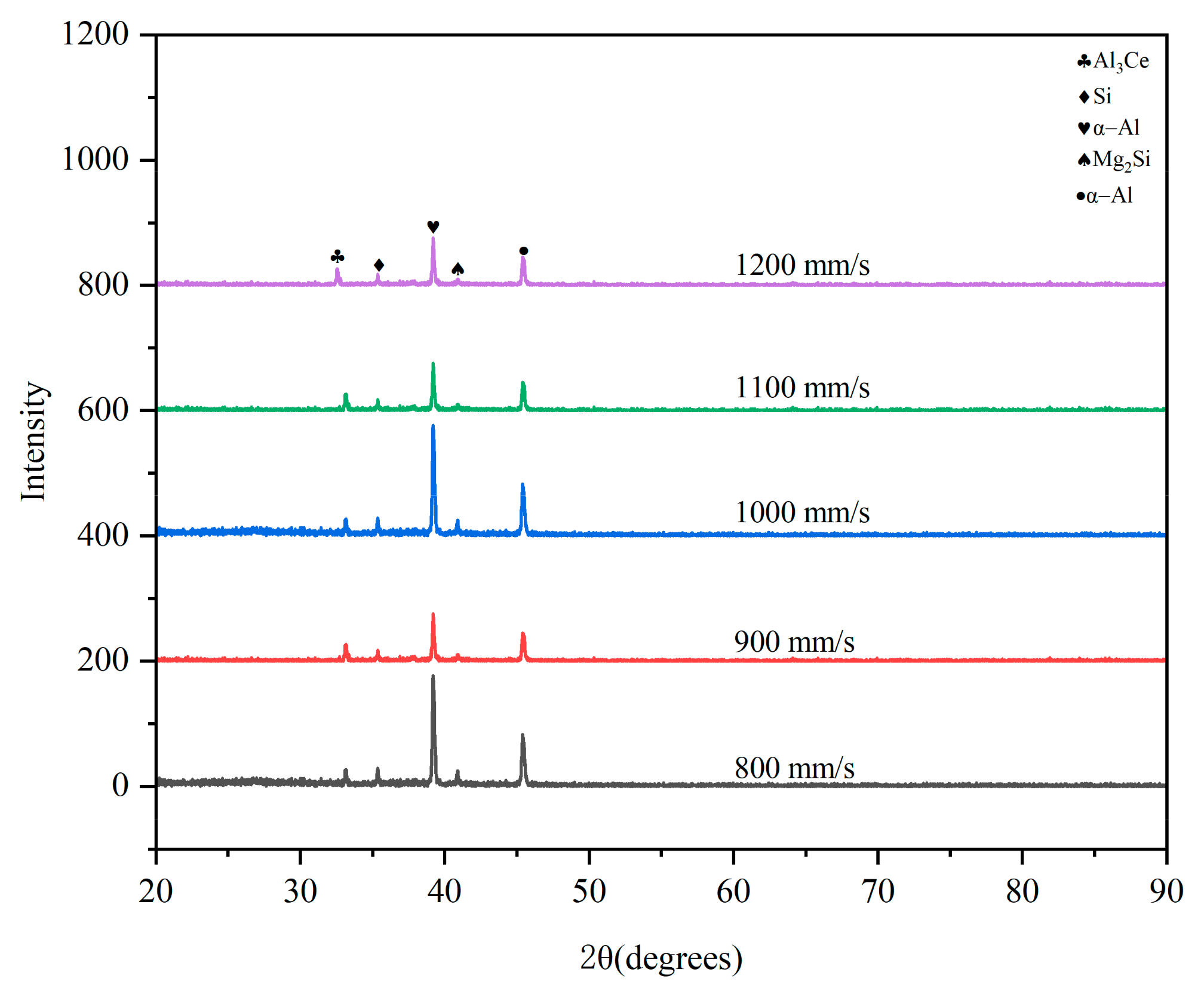
The XRD diffraction patterns of composites at different scanning speeds are shown in Figure 2. Observing the phase calibration in this figure, it can be found that changes in scanning speed will cause changes in the types and contents of phase components in Al6061 alloy composites. It can be seen that there are two distinct α-Al diffraction peaks in the XRD pattern. In addition, diffraction peaks of β’ strengthening phase Mg2Si were observed in the composite materials, which is due to the high temperature of the molten pool during the SLM forming process. At this time, the aluminum matrix transitions from supersaturated state to aged state, which can promote the precipitation of β’ strengthening phase from the aluminum matrix. The corrosion potential of this phase is lower than that of the aluminum matrix, and it can act as an anode to preferentially corrode in alkaline solution, slowing down the hydrogen evolution self-corrosion rate of the aluminum matrix. In addition, Mg2Si phase was also detected. This is because the higher melt temperature increases the solubility of Mg, Si and other elements in the aluminum matrix. Although a certain amount of Mg2Si strengthening phase will precipitate during the rapid cooling and solidification process, there are still some Mg, Si and other elements that cannot be precipitated in time. They form supersaturated α-Al solid solutions containing Mg and Si with the aluminum matrix, causing lattice distortion and changes in lattice constants. In addition, Al3Ce phase was also detected, indicating that CeO2 can undergo in situ reaction with the aluminum matrix during SLM forming to form Al Ce compounds, which can act as heterogeneous nucleation points and refine the grain structure by increasing the undercooling of the system, reducing the occurrence of hot cracks. The above results indicate that at different scanning speeds, the added CeO2 can react with the anode substrate material and exist stably.

3.2. Porosity and Relative Density

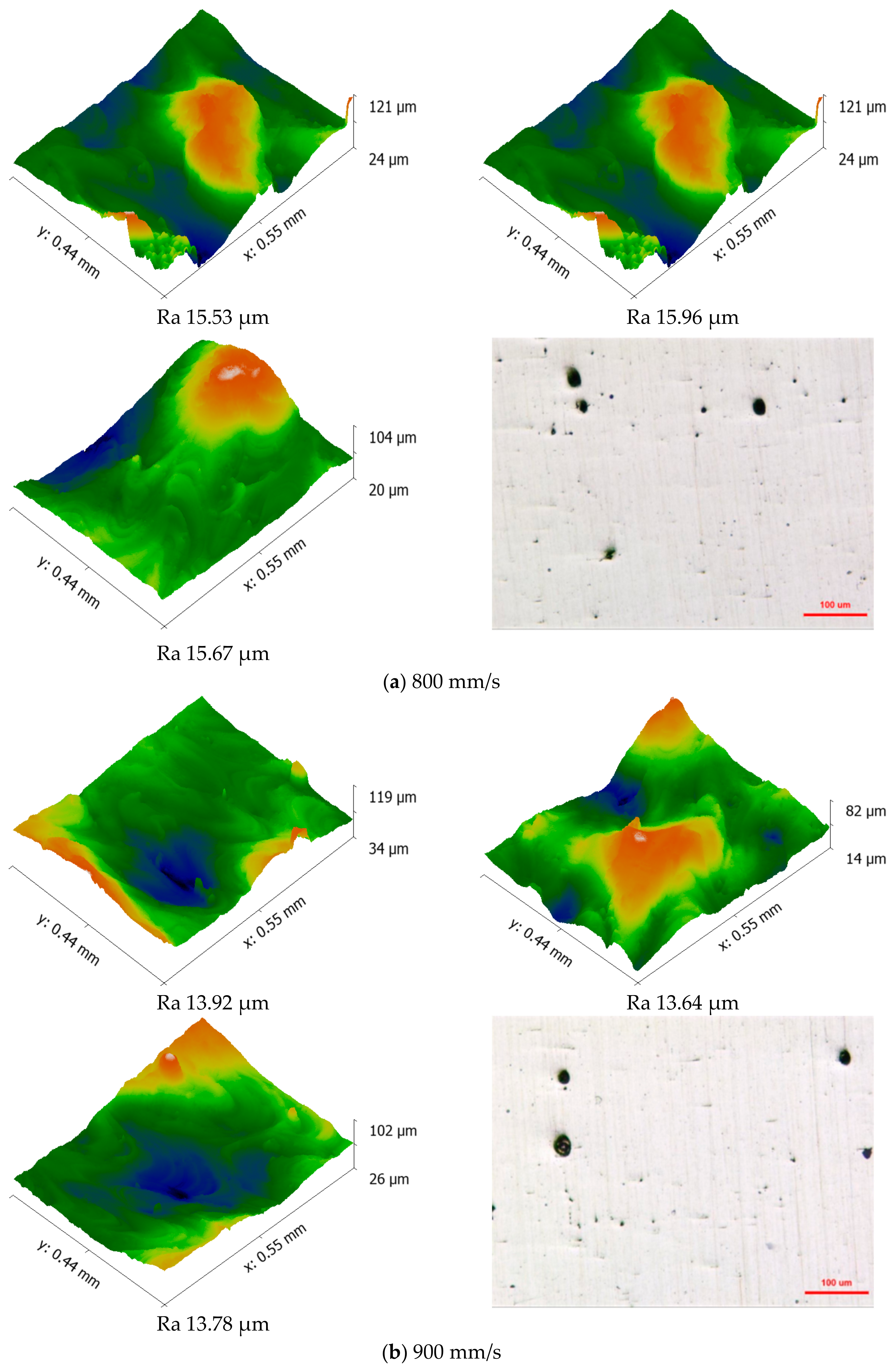
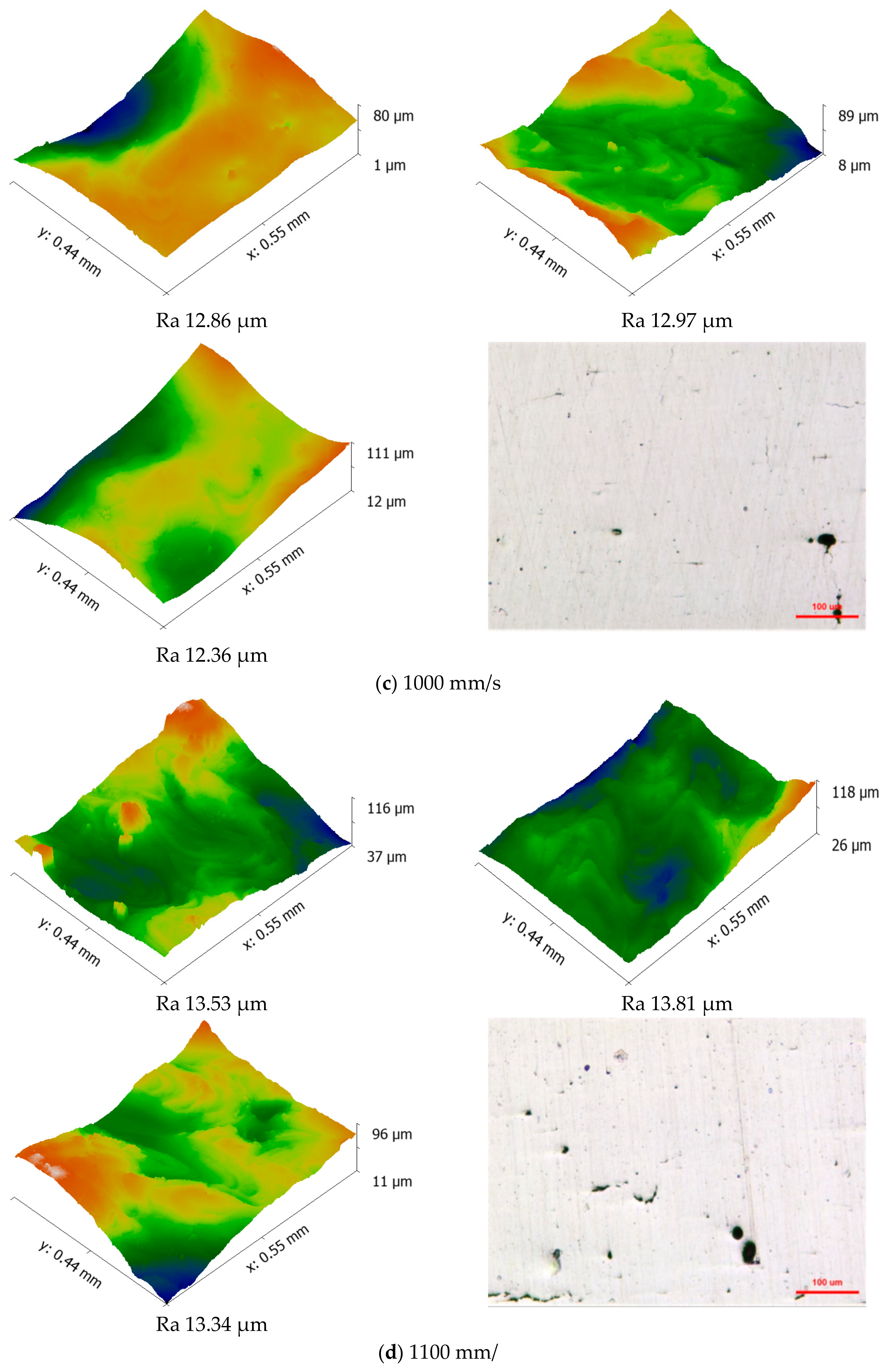
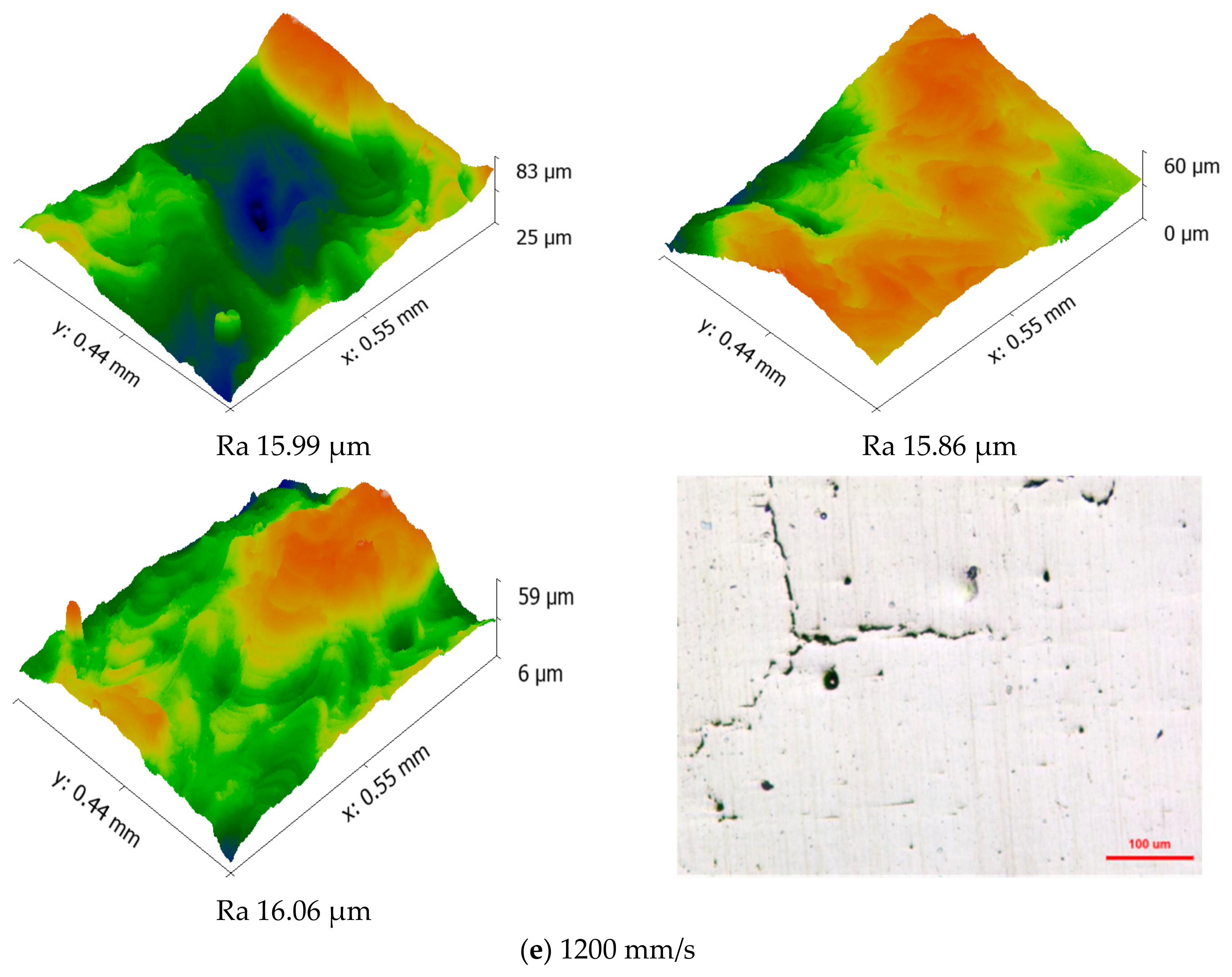
The surface morphologies of samples subjected to different scanning speeds before/after polishing are depicted in Figure 3. Based on the experimental data, the surface roughness values of the samples were recorded as 15.72 ± 0.22 μm, 13.78 ± 0.14 μm, 12.73 ± 0.32 μm, 13.56 ± 0.27 μm, and 15.97 ± 0.11 μm at scanning speeds of 800 mm/s, 900 mm/s, 1000 mm/s, 1100 mm/s, and 1200 mm/s, respectively. Based on the surface morphology map and surface roughness data, the overall trend can be divided into two stages. Phase 1 (800 mm/s to 1000 mm/s): Roughness significantly decreases with increasing scanning speed. The scanning speed increased from 800 mm/s to 1000 mm/s, and the average roughness decreased from 15.72 μm to 13.78 μm (a decrease of about 12.3%), and further decreased to 12.73 μm (a decrease of about 7.6%). At a speed of 1000 mm/s, the lowest roughness (average 12.73 μm) was achieved within the entire speed range, and the Ra value dispersion in each test area was relatively small (12.36–12.97 μm) at this speed, indicating good uniformity of surface roughness. The corresponding surface morphology in Figure 3c was also smoother (with smaller micro surfacing, such as a height difference of only 1–12 μm in some areas). Phase 2 (1000 mm/s to 1200 mm/s): The roughness continues to rise with increasing scanning speed. After the scanning speed exceeds 1000 mm/s, the roughness begins to increase in reverse. At 1100 mm/s, the average value rises to 13.56 μm (an increase of about 6.5% compared to 1000 mm/s), and further increases to 15.97 μm at 1200 mm/s (an increase of about 25.4% compared to 1000 mm/s). The average roughness at 1200 mm/s (15.97 μm) has exceeded the level at 800 mm/s (15.72 μm), and the Ra values in each test area at this speed (15.86–16.06 μm) have small dispersion and stable values, corresponding to the significant increase in surface morphology micro fluctuations in Figure 3e (some areas have a height difference of up to 25 μm), which is similar to the morphology characteristics at 800 mm/s (height difference of 24–121 μm). From this, it can be seen that within the speed range of 800~1200 mm/s in this experiment, 1000 mm/s is the optimal speed to achieve the lowest surface roughness--below this speed, the roughness increases with decreasing speed, and above this speed, the roughness increases with increasing speed, showing an overall trend of first decreasing and then increasing. When the scanning speed is low, the interaction time between the laser and the powder is long, the energy input is sufficient, and the fluidity of the melt pool is enhanced, which is conducive to the complete melting of the powder and the formation of a smooth surface. Adequate energy can reduce the splashing of unmelted particles, decrease the number of adhered particles on the surface, and thus reduce roughness. In addition, under low-speed scanning, the thermal gradient is smaller, residual stress is reduced, and surface cracks or warping caused by thermal stress are reduced. During high-speed scanning, the energy input per unit area decreases, and the depth of the molten pool becomes shallower, which may result in incomplete melting of the powder and the formation of pores or adhesive particles. High-speed scanning may result in insufficient input energy, causing powder particles to splash and adhere to the surface of the sample due to local overheating, increasing roughness. Under high-speed scanning, the solidification rate of the molten pool increases, which may result in step effects or wavy surfaces due to insufficient flow of liquid metal.
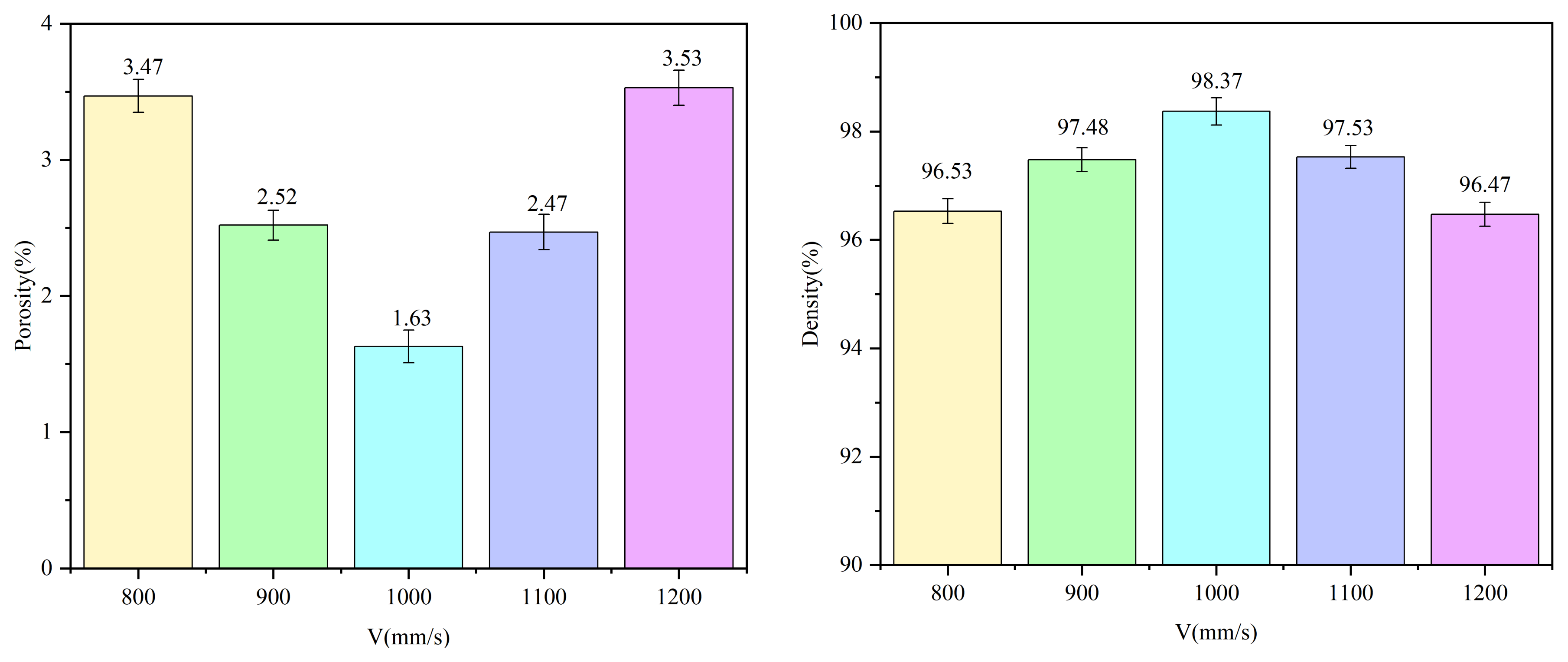
Figure 4 shows the porosity and relative density values calculated using software. It can be seen that during the process of increasing the scanning speed from 800 mm/s to 1200 mm/s, the porosity of the sample first decreases and then increases, while the relative density first increases and then decreases. When the scanning speed is 700 mm/s, the porosity is 3.47%, while the relative density is only 96.53%. The reason for this phenomenon is that the interaction time between the laser and the powder during the forming process is prolonged by the decrease in scanning speed, which will cause the temperature gradient between different areas inside the melt pool to expand. The increase in temperature gradient will enhance the surface tension gradient, thereby intensifying Marangoni convection and increasing liquid phase splashing. Splashing forms larger spherical particles after cooling, causing significant spheroidization defects and affecting the uniformity of the powder layer, which in turn has a negative impact on the metallurgical bonding quality between layers. In addition, gases captured during the melting and solidification processes can also form pores in the sample. Overall, when the scanning speed is too low, issues such as splashing, spheroidization, and porosity can significantly reduce the relative density of the sample and increase its porosity. As the scanning speed increased to 900 mm/s and 1000 mm/s, the porosity of the samples decreased to 2.52% and 1.63%, respectively, while the relative density increased to 97.48% and 98.237%, respectively. Because the laser energy input is more appropriate at this time, the fluctuation of the melt pool is reduced, thereby avoiding the phenomenon of fracture spheroidization. In addition, the good overlap between adjacent scanning tracks is due to the sufficient outward flow of molten metal, which is driven by the surface tension difference caused by the temperature difference between the center and edge areas of the molten pool, and the relative density of the sample is improved. As the scanning speed continues to increase to 1100 mm/s and 1200 mm/s, the porosity of the samples increases to 2.47% and 3.53%, respectively, while the relative density decreases to 97.53% and 96.47%, respectively. Excessively fast scanning speed will reduce the energy input of the laser into the melt pool. In addition to causing an increase in the dynamic viscosity of the melt, which affects the metallurgical bonding between scanning paths, it will also make it difficult to damage the oxide film at the top of the melt pool, thereby affecting wetting properties, reducing the relative density of the sample, and increasing porosity.

3.3. Self-Corrosion Test

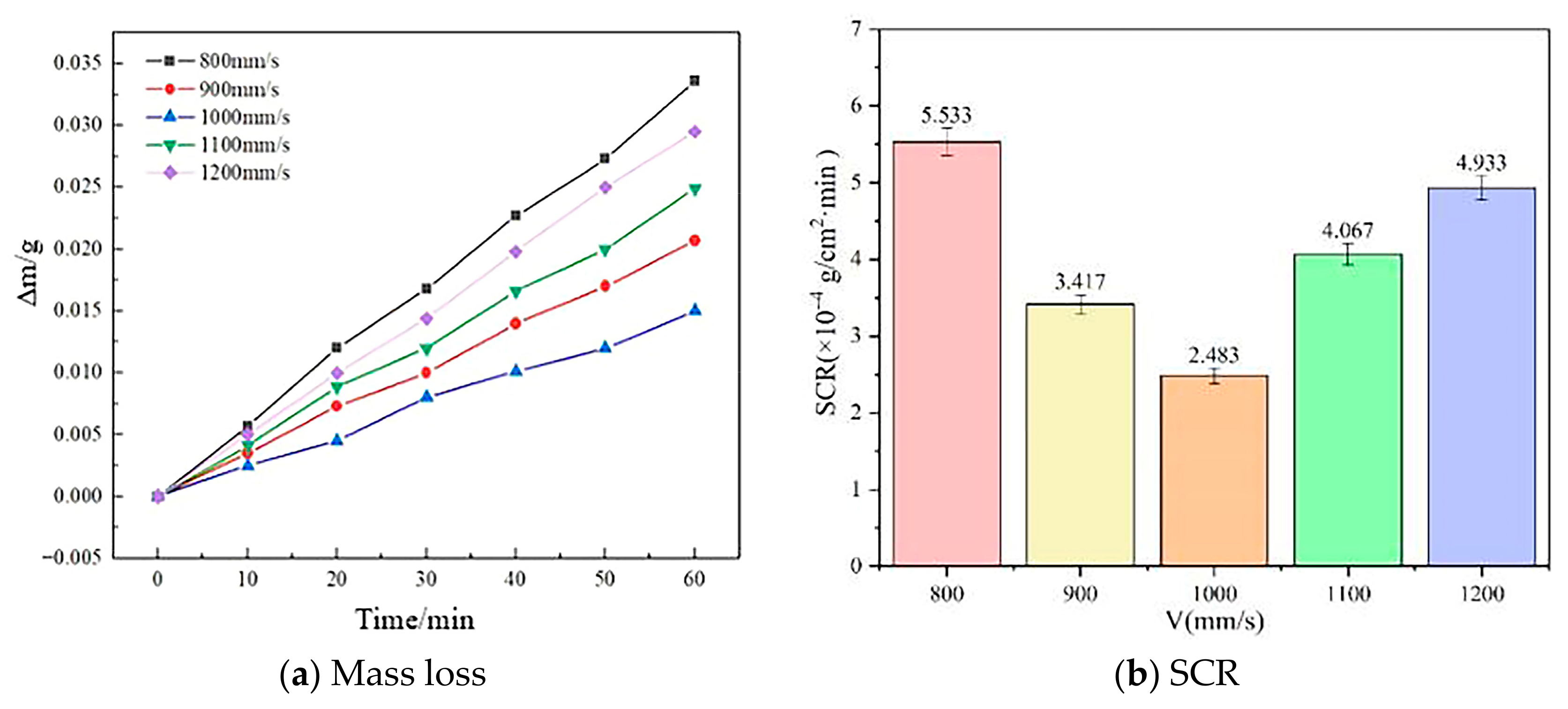
Figure 5 illustrates the self-corrosion situation of alloy samples in varying scanning speeds, clearly demonstrating that the scanning speed significantly influences the sample’s self-corrosion. As the scanning speed increases from 800 to 1200 mm/s, the weight loss initially increases and then subsequently decreases. At a scanning speed of 800 mm/s, numerous pore defects are present on the sample’s surface, which augment the contact area with the solution. Consequently, this sample experiences the highest weight loss, with a corresponding self-corrosion rate (SCR) of (5.533 ± 0.322) × 10−4 g/cm2·min. In contrast, when it is set at 1000 mm/s, the alloy sample exhibits the least weight loss, which was (2.483 ± 0.272) × 10−4 g/cm2·min. This improvement can be attributed to the optimal laser action time at this speed, which ensures complete powder melting and the formation of a high-density sample. As a result, the sample demonstrates superior corrosion resistance.

3.4. Electrochemical Performance

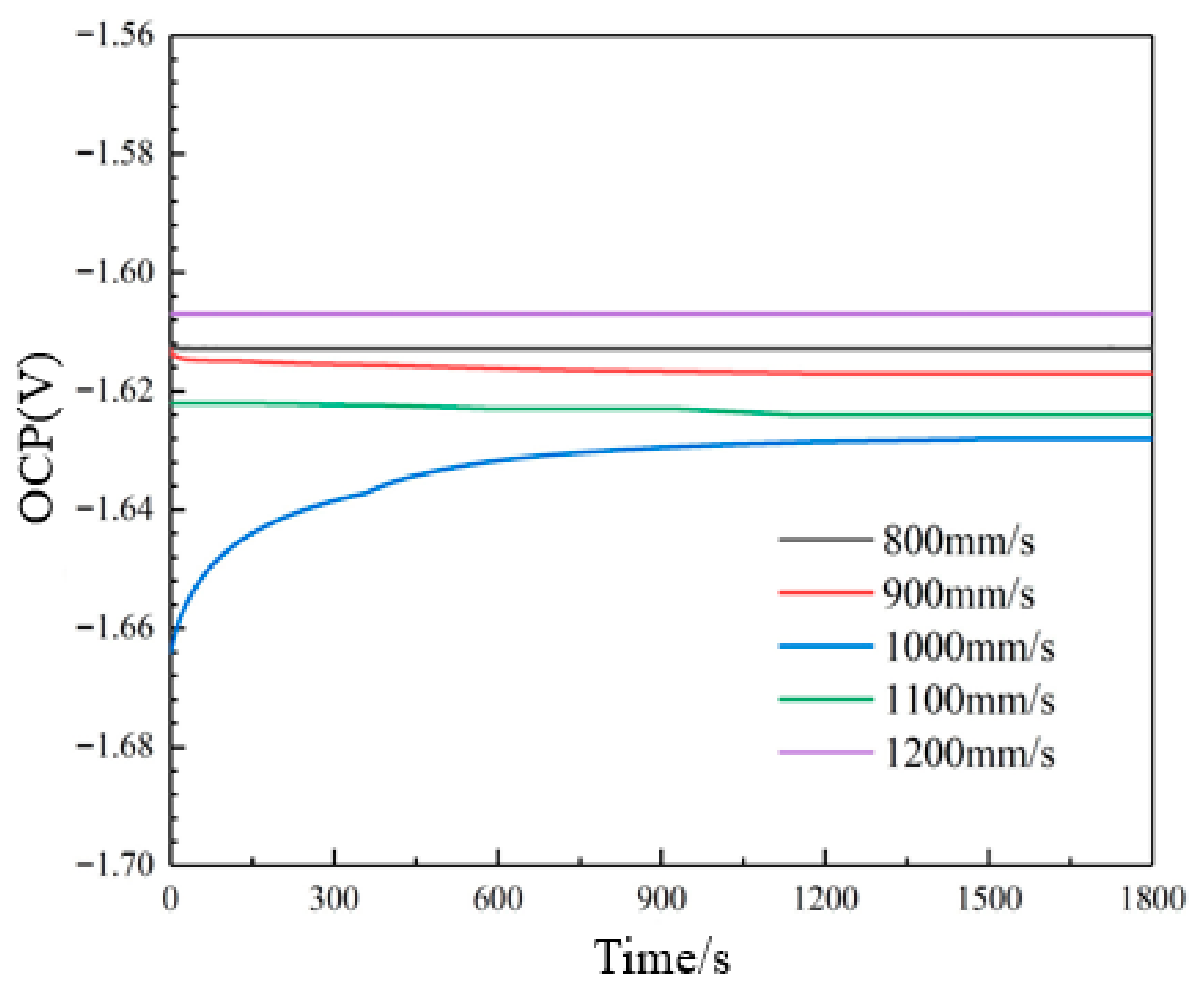
Figure 6 presents the temporal evolution of the Open Circuit Potential (OCP) for the alloy sample in various laser parameters. Despite the anode surface being meticulously polished and cleaned prior to the experiment, the alloy sample surface still retains a certain degree of roughness, which contributes to minor fluctuations in the OCP readings. Notably, when the scanning speed is set at 1000 mm/s, there is a discernible tendency for the OCP to normalize during the initial stages. This phenomenon can be attributed to the heightened activity observed in certain regions of the sample, which initially manifests as a negative OCP. However, as the reaction progresses and the system attains equilibrium, the OCP gradually stabilizes at a consistent value. Upon analyzing the OCP values as the scanning speed increases from 800 to 1200 mm/s, the respective values recorded are −1.613, −1.618, −1.629, −1.624, and −1.607 V. These findings underscore that an optimal scanning speed facilitates the sample in achieving superior electrochemical activity.
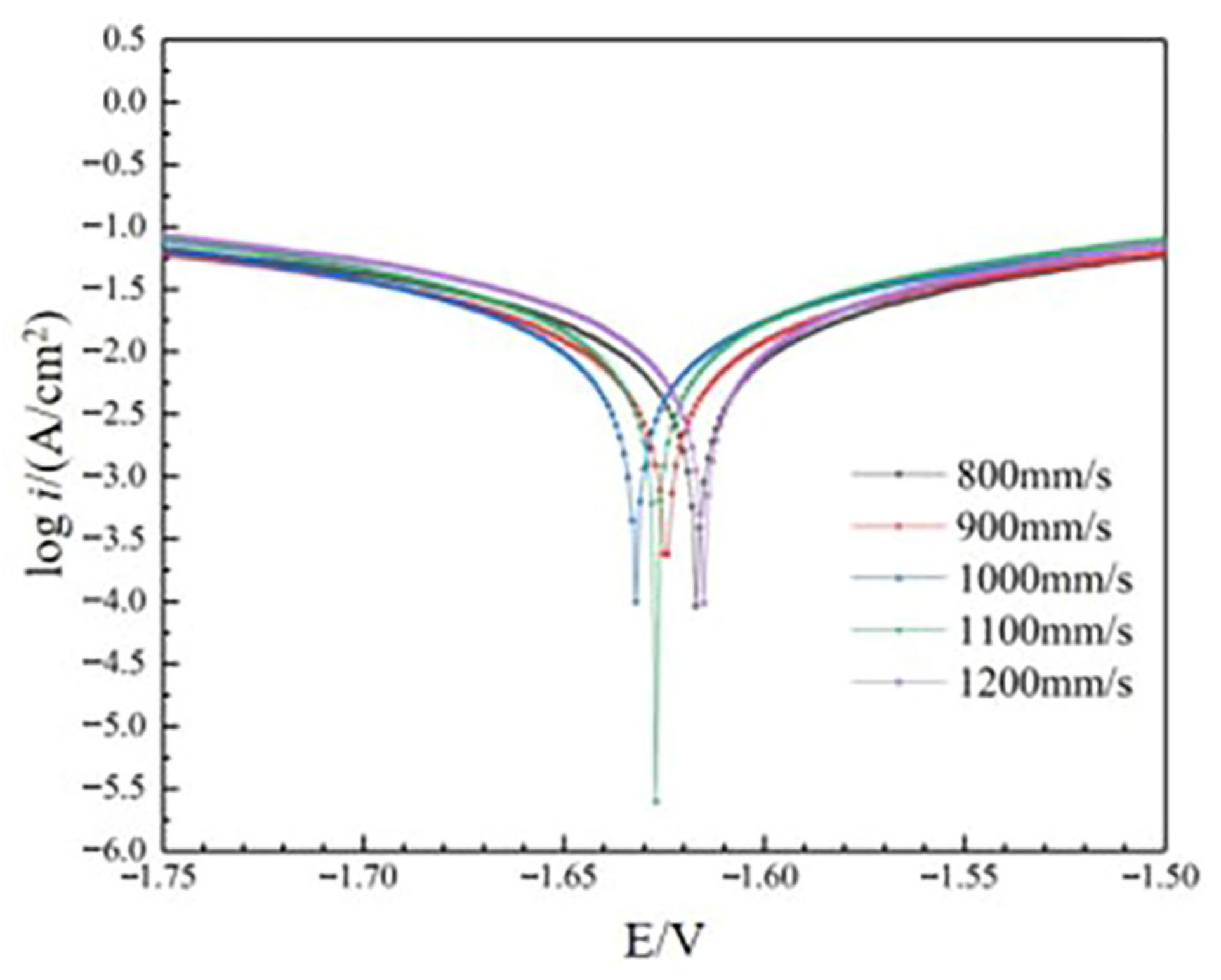
Figure 7 shows the polarization curves of the samples tested at different scanning speeds, and Table 2 shows their corresponding electrochemical parameters. In Table 2, the symbol E is corrosion potential, the symbols Icorr and Rp represent corrosion current density and polarization resistance, respectively. A positive corrosion potential typically indicates low electrochemical activity of the anode, making it prone to polarization during chemical reactions, which adversely affects the discharge performance of Al–air batteries. At a scanning speed of 800 mm/s, the sample exhibits a corrosion potential of −1.617 V. As the scanning speed increases, the corrosion potential undergoes notable changes. Specifically, at scanning speeds of 900 mm/s, 1000 mm/s, 1100 mm/s, and 1200 mm/s, the corrosion potentials are recorded as −1.624, −1.632, −1.627 and −1.615 V. This trend of initial negative shift followed by a positive shift suggests that the electrochemical activity first increases and then decreases. The most negative corrosion potential is observed at a scanning speed of 1000 mm/s, indicating the highest electrochemical activity at this speed.
As the scanning speed increases from 800 mm/s to 1200 mm/s, the corrosion current densities of the anode are measured as 2.731 × 10⁻² A/cm2, 9.406 × 10⁻² A/cm2, 6.861 × 10⁻² A/cm2, 2.200 × 10⁻² A/cm2, and 2.224 × 10⁻² A/cm2, respectively. The overall trend shows a decrease followed by an increase, aligning with the trends observed in self-corrosion rate (SCR) testing. This phenomenon can be attributed to the fact that an optimal scanning speed allows the powder to absorb sufficient energy without overheating, leading to more complete powder melting, a uniform microstructure within the solidified material, finer grain size, and enhanced electrochemical activity. Furthermore, an appropriate scanning speed can mitigate the self-corrosion reaction rate by minimizing defects and increasing the density of the formed samples. When scanned at a rate of 1000 mm/s, the alloy anode sample displays the most negative corrosion potential and the lowest corrosion current density, indicating outstanding electrochemical characteristics that make it an ideal anode material for Al–air batteries.
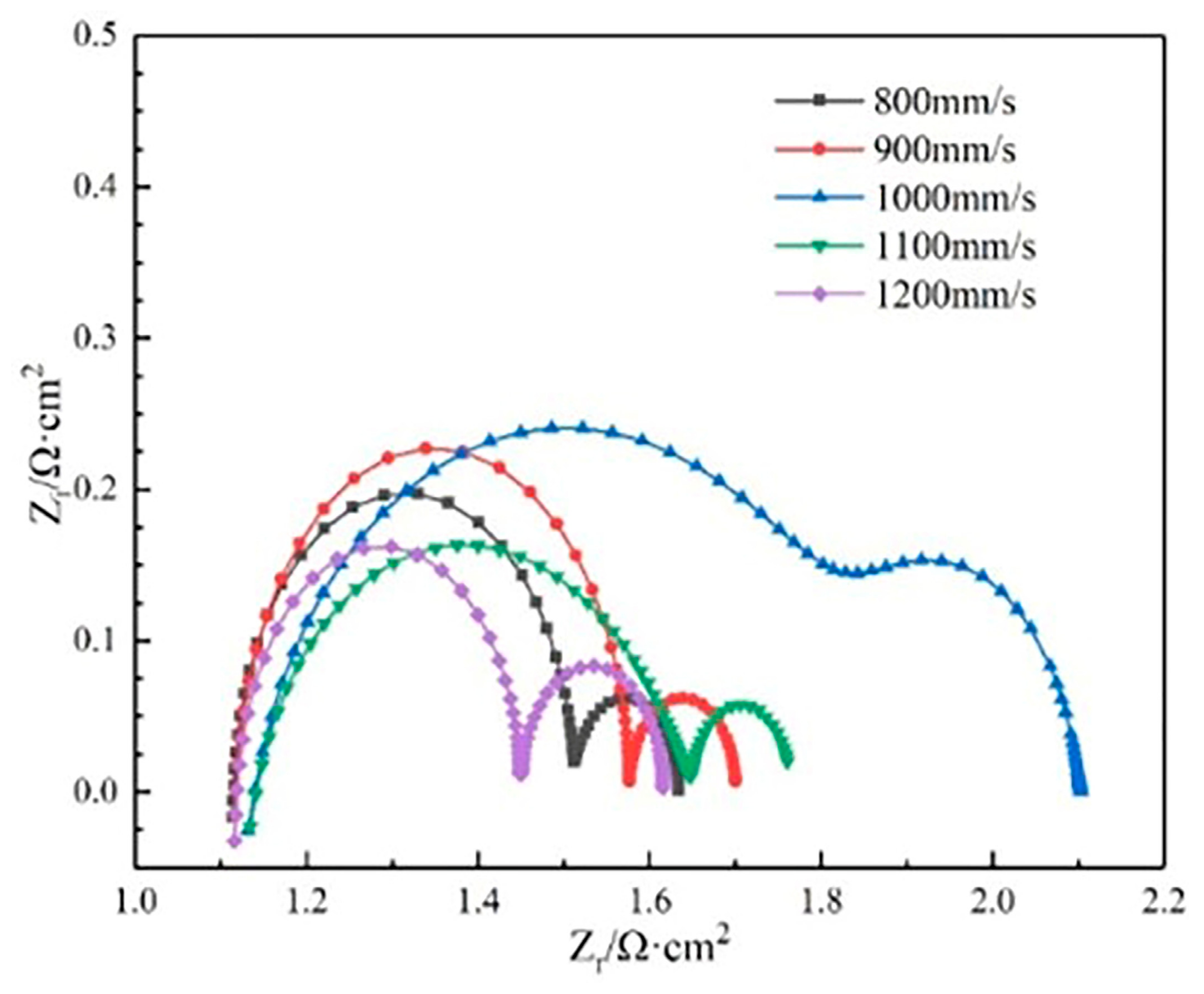
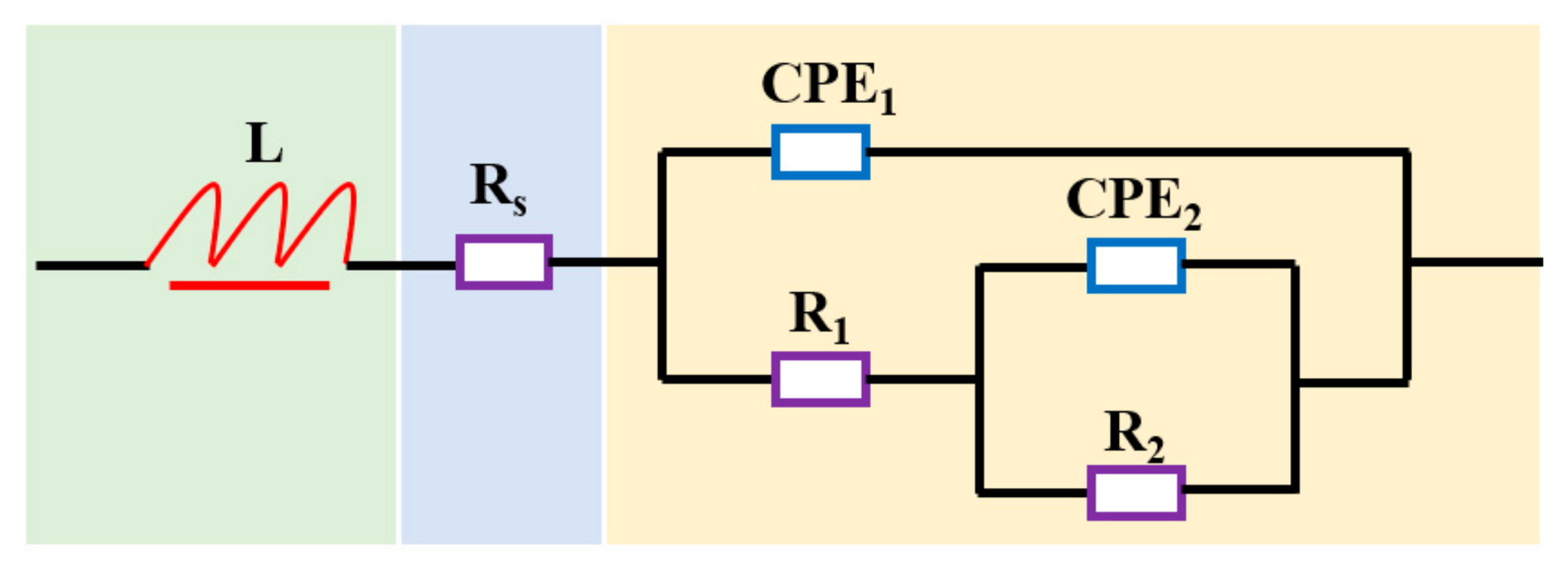
Figure 8 displays the Electrochemical Impedance Spectroscopy (EIS) of the samples tested at various scanning speeds, with the equivalent circuit diagram presented in Figure 9. In Figure 9, the symbol L denotes the inductance. Rs stands for the solution resistance. The pair R1 and CPE1 corresponds to the charge transfer resistance and double-layer capacitance present on the alloy surface, while R2 and CPE2 represent the charge transfer resistance and double-layer capacitance within the passivation film formed on the alloy surface [31,32,33,34]. Table 3 enumerates the corresponding fitting parameters. It is evident that the EIS of each sample exhibits two capacitive arcs in the first quadrant, with the diameter of the left capacitive arc being larger than that of the right one. The radius of the capacitive impedance arc initially increases and then decreases as the scanning speed escalates. Furthermore, despite the continuous variation in the diameters of each arc in the EIS with increasing scanning speed, the spectral shape remains highly consistent, and no Weber impedance straight line is observed in the low-frequency region. The high-frequency capacitive impedance arc consistently represents the largest half arc, indicating that the electrochemical reaction process of each sample remains unchanged.
According to the polarization resistance (R1) data, the anode’s polarization resistance is the smallest at a scanning speed of 800 mm/s, measuring 3.364 × 10⁻¹ Ω·cm2. The inductance resistance (L) triggered by the hydrogen evolution reaction is 9.990 × 10⁻⁷ Ω·cm2, which is the maximum value among all inductive resistances. Both values suggest poor corrosion resistance for the sample. Conversely, at a scanning speed of 1000 mm/s, the anode’s polarization resistance reaches its highest value, at 8.171 × 10⁻¹ Ω·cm2. The inductance resistance (L) is 6.869 × 10⁻⁷ Ω·cm2, which is the minimum value among all inductive resistances, indicating that the sample exhibits the lowest hydrogen evolution rate. This aligns with the conclusions drawn from the self-corrosion test. The self-corrosion reaction typically initiates at anode defects. At an appropriate scanning speed, the powder can absorb sufficient energy to melt completely, the molten pool can spread effectively, and the sample attains good density, thereby reducing the number of active sites and the reaction rate during self-corrosion.
CeO2 is well-known for its unique electrochemical properties. In our system, when CeO2 is added to the aluminum anode material, it can act as an oxygen storage and release center. During the electrochemical process, CeO2 can undergo reversible redox reactions. For instance, Ce4+ in CeO2 can be reduced to Ce3+ under certain electrochemical conditions. This redox process is associated with the uptake and release of oxygen ions. The presence of CeO2 creates local regions with a different electrochemical environment compared to the pure aluminum matrix. These regions can facilitate the exchange of ions at the anode -electrolyte interface. The oxygen ions released from CeO2 can participate in the formation of a more stable oxide layer on the aluminum anode surface. This oxide layer acts as a barrier, regulating the ion exchange between the anode and the electrolyte. It can selectively allow the passage of ions necessary for the discharge process while hindering the transport of aggressive ions that may cause self-corrosion [32].
Surface roughness and density are pivotal factors influencing the electrochemical performance of the anode in aluminum–air batteries, exerting distinct yet interrelated impacts on battery performance. Surface roughness significantly affects the electrochemical behavior of the anode. An appropriate degree of surface roughness can augment the contact area between the anode and the electrolyte, providing more active sites for electrochemical reactions. During the discharge process, an oxidation reaction occurs at the aluminum anode. A larger contact area implies that a greater number of aluminum atoms can participate in the reaction, thereby accelerating the reaction rate and enhancing the battery’s discharge current density and power output. Meanwhile, a rough surface facilitates the penetration and diffusion of the electrolyte, improving mass transfer, reducing concentration polarization, and promoting the reaction. However, excessive roughness has its drawbacks. Surface defects and stress concentration areas on highly rough surfaces are prone to becoming corrosion initiation sites, accelerating anode corrosion, increasing self-discharge, and diminishing energy efficiency and cycle life. Additionally, uneven roughness can lead to an imbalanced potential distribution across the anode surface, resulting in localized excessive corrosion while certain areas experience insufficient reactions, thereby compromising the overall performance and stability of the battery. Density also plays a crucial role in the electrochemical behavior of the anode. High-density anode materials can effectively prevent electrolyte penetration, minimizing direct contact between the aluminum anode and the electrolyte, thereby reducing the self-corrosion rate and enhancing the battery’s Coulombic efficiency and energy density. A dense structure also reinforces the mechanical strength of the anode, minimizing volume changes and powdering during charge–discharge cycles, and extending the battery’s service life. Nevertheless, an overly dense anode may impede ion diffusion and transport, increasing the battery’s internal resistance and degrading its discharge performance.
In practical applications, it is necessary to comprehensively consider the impacts of surface roughness and density. By optimizing the preparation process, a balance between the two can be found to fabricate an aluminum–air battery anode with excellent electrochemical performance, thereby improving the overall performance and reliability of the battery. Overall, when the laser scanning speed is 1000 mm/s, the aluminum anode exhibits the best electrochemical behavior.

3.5. Discharge Behavior

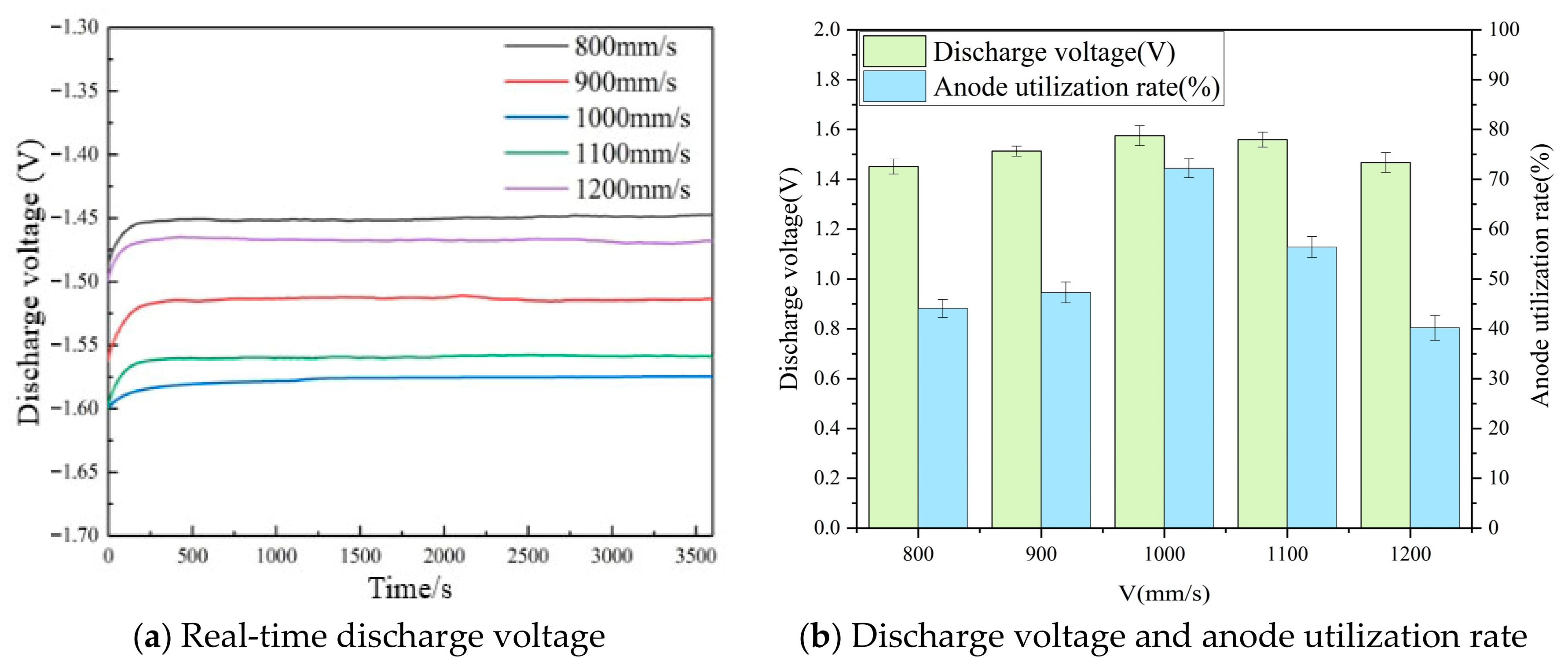
Figure 10 illustrates the discharge curve variations of the sample at different scanning speeds. It is evident that each anode achieves a relatively stable discharge platform at approximately the same time. At a scanning speed of 800 mm/s, the discharge voltage registers at 1.451 ± 0.046 V, which is the lowest observed among all alloys. Conversely, at a scanning speed of 1200 mm/s, the anode utilization rate stands at 40.2 ± 0.4%, marking the lowest among all alloys. This phenomenon can be attributed to the fact that when the scanning speed is either excessively slow or rapid, the laser energy absorbed by the powder becomes either too high or too low, thereby impeding the uniform flow and solidification of the molten pool. Consequently, this leads to a compromised sample forming quality and an inability to fully harness the fine crystal effect of CeO2, resulting in an increased number of pore defects within the formed parts. These defects, in turn, diminish the discharge voltage and utilization rate. At a scanning speed of 1000 mm/s, however, the discharge voltage soars to 1.575 ± 0.043 V, and the anode utilization rate reaches an impressive 72.2 ± 0.3%. This outstanding performance is attributed to the moderate laser energy, which ensures complete melting of the powder, yielding better surface quality and density of the formed parts. Compared to other samples, this scanning speed significantly enhances the overall discharge performance.
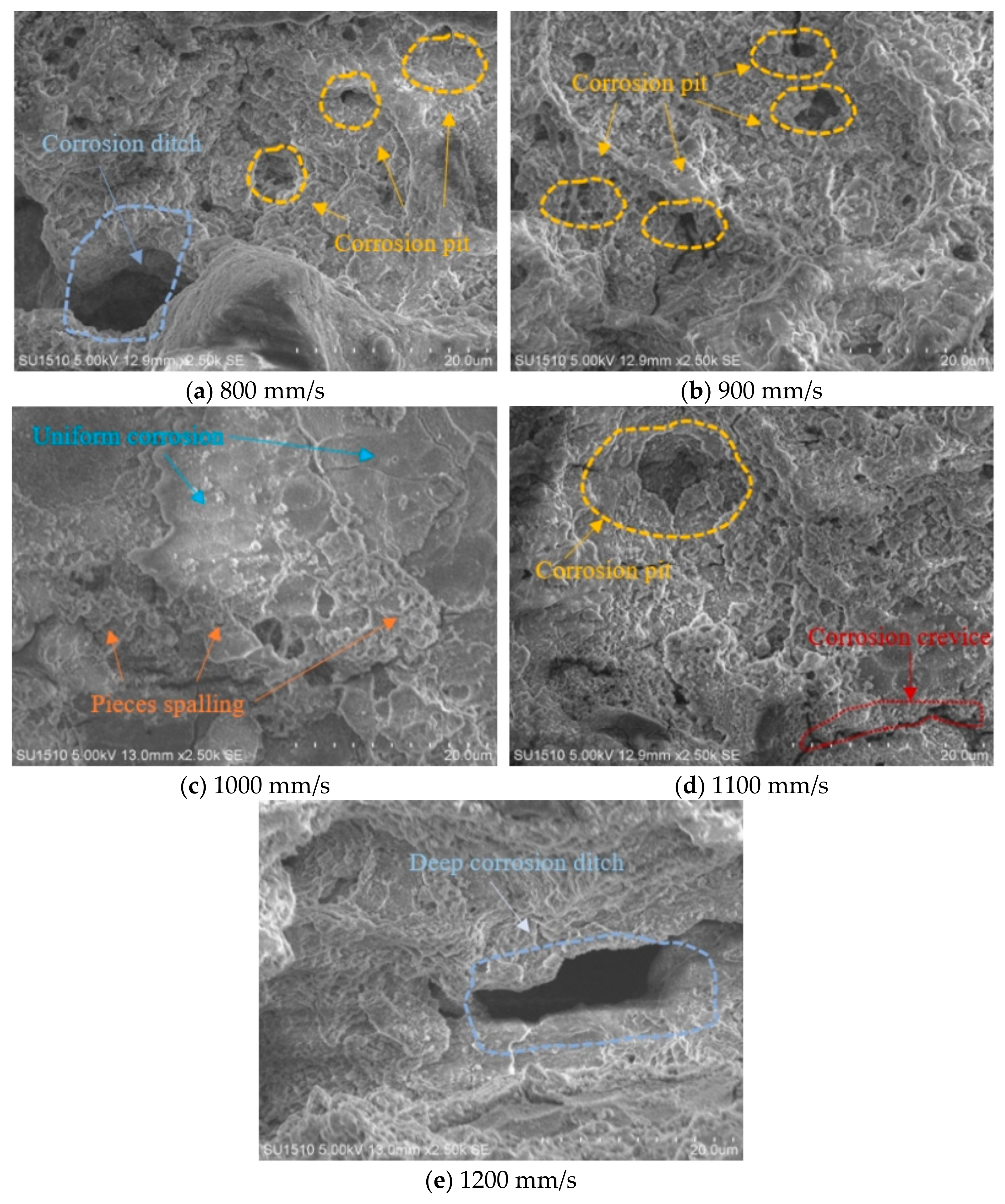
Examining the discharge surface of the anode, as depicted in Figure 11, reveals distinct differences in corrosion morphology at varying scanning speeds. At scanning speeds of 800 mm/s and 1200 mm/s, the corrosion morphology appears notably rough, characterized by the presence of ditch corrosion areas and corrosion pits. During the discharge process, the electrolyte tends to accumulate within these corrosion ditches and crevices, promoting longitudinal dissolution and corrosion of the anode. This accelerates the self-corrosion of the anode, leading to increased participation of aluminum in hydrogen evolution reactions. Consequently, the anode experiences a lower discharge voltage and reduced anode utilization rate under these conditions. In contrast, at the scanning speed of 1000 mm/s, the corrosion morphology exhibits a relatively flat surface with only a few shallow gaps, and the overall corrosion pattern appears as uniform layered corrosion. At this optimal scanning speed, the anode demonstrates a higher discharge voltage, improved anode utilization rate, and diminished self-corrosion. These characteristics collectively indicate excellent comprehensive discharge behavior.
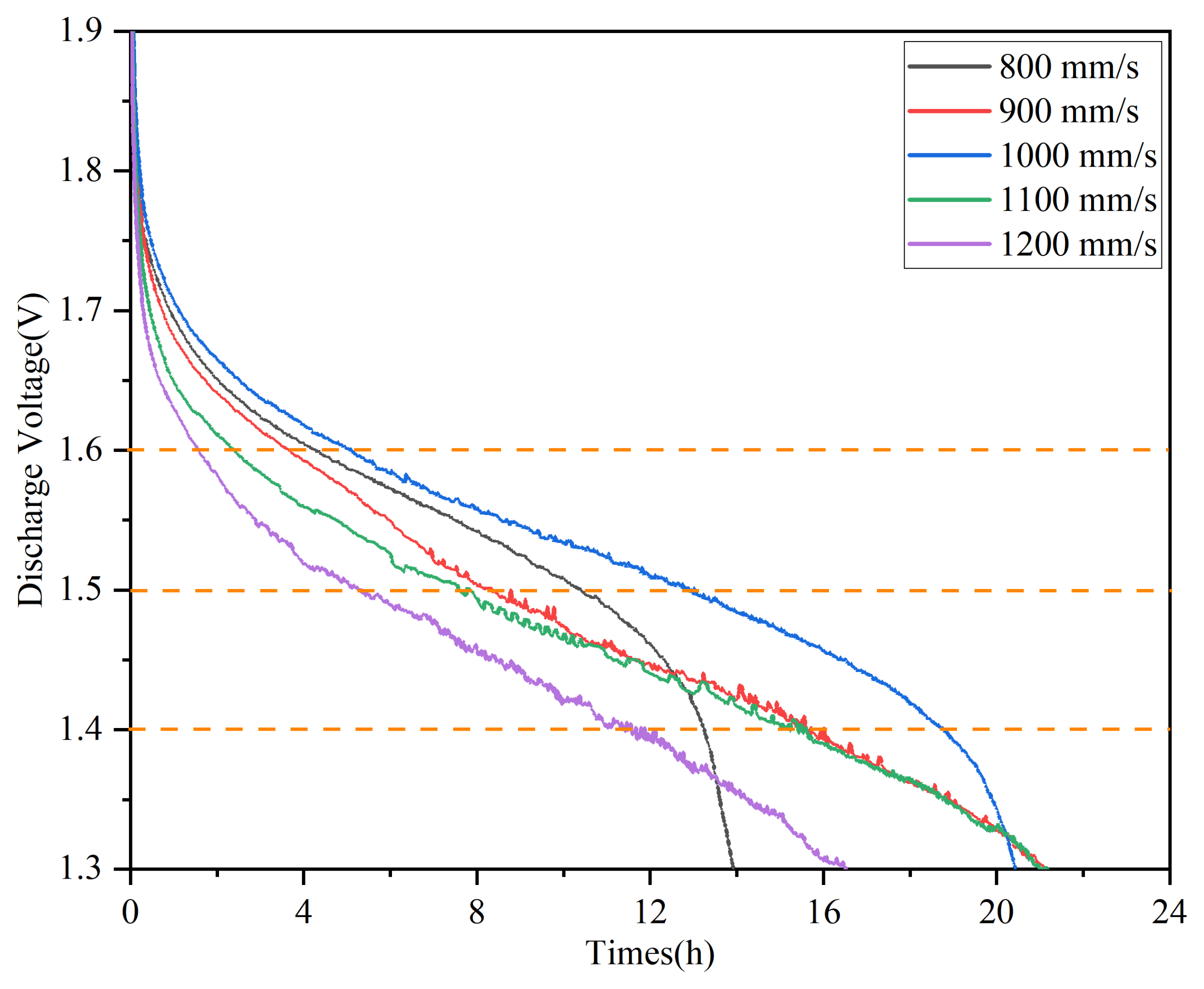
Figure 12 shows the discharge parameters of anode samples in different scanning speeds over 24 h. It can be seen, when the time is 0, the discharge voltage of all curves is close to 1.9 V, indicating that the initial discharge voltage at different speeds is basically the same at the beginning of the experiment. Over time, the discharge voltage of all curves shows a decreasing trend. Samples with higher scanning speeds have relatively faster voltage drop rates. After about 12 h, the descent rate of each curve gradually slows down. After 24 h, the discharge voltage of all curves approached 1.4 V. Overall, the scanning speed had a significant impact on the change in discharge voltage, and the higher the scanning speed, the faster the discharge voltage decreased. At the initial stage of the experiment, the discharge voltage was almost the same at different speeds, but over time, the difference in scanning speed led to a significant change in the rate of voltage drop. For aluminum–air batteries, they may not function properly when their discharge voltage is below 1.4 V. Therefore, for this task, they can be used normally within 12 h.
On this basis, the discharge voltage and anode utilization rate index were used to compare and analyze the research results with those of existing literature, which applied other Ce-based or unreinforced Al anodes, as shown in Table 4. It can be seen, Table 4 presents information on different anode materials and their related discharge voltages, anode utilization rates, preparation processes, and literature sources. It can be seen that the CeO2/Al6061 composite anode performs well in terms of discharge voltage and anode utilization, with values of 1.57 V and 72.2%, respectively. The anode utilization rate of the TiB2/Al6061 composite anode is relatively low, at 62.2%, and the discharge voltage is not given. The discharge voltage and anode utilization rate of Al6061 pure aluminum alloy vary under different conditions. The discharge voltage of the sample prepared by SLM process is lower, while the discharge voltage of the sample prepared by casting and heat treatment is higher. The discharge voltage of the Al Mg Sn alloy is the highest, at 1.78 V, but the anode utilization rate is not given. In addition, it can be found that the preparation process has a significant impact on the performance of anode materials, and heat treatment or the addition of corrosion inhibitors are beneficial for further improving the discharge performance of aluminum anodes.

4. Conclusions

In this work, we fabricated CeO2/Al6061 anodes for Al–air batteries using SLM technology and investigated the influences of varying scanning speeds on their electrochemical and discharge behavior. The conclusions are as follows:
(1)
The scanning speed significantly influences the surface morphology and density of the anodes. At a scanning speed of 1000 mm/s, the anodes exhibit the highest density (98.37%) and relatively smooth surface morphology, with minimal pore defects.
(2)
The SCR of the anodes is lowest at the scanning speed of 1000 mm/s (2.483 × 10⁻⁴ g/cm2·min), indicating improved corrosion resistance due to the complete melting of the powder and uniform microstructure formation.
(3)
Electrochemical testing reveals that the anodes fabricated at 1000 mm/s scanning speed exhibit the most negative corrosion potential of −1.632 V and the smallest corrosion current density of 6.861 × 10⁻³ A/cm2, indicating superior electrochemical activity and reduced self-corrosion reactions.
(4)
The discharge performance of the anodes is optimized at a scanning speed of 1000 mm/s, achieving a high discharge voltage of 1.575 V and an anode utilization rate of 72.2%. This is attributed to the moderate laser energy, which ensures full melting of the powder, resulting in better forming quality of the alloy anode.
In conclusion, our study has demonstrated the promising performance of the CeO2-based reinforced aluminum anode at different scanning speeds, with a specific discharge voltage value. Based on our findings, we recommend a scanning window of 900~1100 mm/s for future SLM-fabricated anodes. This scanning window has been shown to optimize the anode’s discharge performance. On this basis, the scanning speed of 1000 mm/s is identified as the optimal parameter for fabricating CeO2/Al6061 anodes via SLM technology, offering significant improvements in both electrochemical and discharge performance.

Author Contributions

Conceptualization, methodology, supervision, writing—original draft preparation and writing—review and editing: S.D. and W.D.; Investigation, software, validation, formal analysis: G.Z. and X.C.; Funding acquisition, S.D. All authors have read and agreed to the published version of the manuscript.

Funding

This work was supported in part by the National Natural Science Foundation of China (No. 42104142), University Science and Technology Innovation Team Project of Jiangsu Province and Research and Innovation Team for Machine Vision and Inspection Technology of Wuxi University of Technology (No. 804914250604/503).

Data Availability Statement

The original contributions presented in this study are included in the article. Further inquiries can be directed to the corresponding authors.

Conflicts of Interest

The authors declare no conflicts of interest.

References

  1. El-Alouani, M.; Kharbouch, O.; Dahmani, K.; Errahmany, N.; Saber, I.; Galai, M.; Benzekri, Z.; Boukhris, S.; Touhami, M.E.; Al-Sadoon, M.K.; et al. Enhancing Al–Air Battery Performance with Beta-d-Glucose and Adonite Additives: A Combined Electrochemical and Theoretical Study. Langmuir 2025, 41, 431–449. [Google Scholar] [CrossRef] [PubMed]
  2. Liu, C.; Lai, G.; Gu, J.; Liu, Z.; Wang, J. High specific capacity microfluidic Al-air battery with the double-side reactive anode. J. Power Sources 2024, 5, 611. [Google Scholar] [CrossRef]
  3. Wei, M.; Wang, K.; Pei, P.; Zhong, L.; Züttel, A.; Pham, T.H.M.; Shang, N.; Zuo, Y.; Wang, H.; Zhao, S. Zinc carboxylate optimization strategy for extending Al-air battery system’s lifetime. Appl. Energy 2023, 350, 121804. [Google Scholar] [CrossRef]
  4. Gao, Y.; Zhao, Q.; Liu, W.; Guo, F.; Yin, Y.; Zheng, X.; Wu, J.; Qiang, Y.; Wang, W. A green electrolyte additive based on Toona Sinensis extract for enhanced performance of alkaline Al-air battery. Corros. Sci. 2025, 252, 112952. [Google Scholar] [CrossRef]
  5. Dovidio, L.; Harakas, G.N. A New Design of the Air-Aluminum Battery, Optimized for STEM Activities. J. Chem. Educ. 2024, 101, 1747–1749. [Google Scholar] [CrossRef]
  6. Wei, M.; Wang, K.; Zuo, Y.; Zhong, L.; Züttel, A.; Chen, Z.; Zhang, P.; Wang, H.; Zhao, S.; Pei, P. A Prussian-Blue Bifunctional Interface Membrane for Enhanced Flexible Al–Air Batteries. Adv. Funct. Mater. 2023, 33, 11. [Google Scholar] [CrossRef]
  7. Guo, L.; Zhang, Q.; Huang, Y.; Sun, R.; Zhang, R.; Saji, V.S.; Chang, J.; Zheng, X.; Adam, A.M.M. Regulating the Helmholtz plane by trace ionic liquid additive for advanced Al-air battery. J. Power Sources 2025, 625, 235672. [Google Scholar] [CrossRef]
  8. Sheng, L.; Fu, L.; Su, L.; Shen, H.; Zhang, Z. Method to characterize thermal performances of an aluminum-air battery. Energy 2024, 301, 131757. [Google Scholar] [CrossRef]
  9. Zhu, J.; Xu, S.; Wu, J.; Yin, Y.; Cheng, S.; Zhang, C.; Qiang, Y.; Wang, W. Probing corrosion protective mechanism of an amide derivative additive on anode for enhanced alkaline Al-air battery performance. J. Power Sources 2024, 593, 233957. [Google Scholar] [CrossRef]
  10. Wagh, N.K.; Shinde, S.S.; Lee, J.H. Atomically modulated Cu single-atom catalysts for oxygen reduction reactions towards high-power density Zn- and Al-air batteries. Chem. Commun. 2024, 60, 15015–15018. [Google Scholar] [CrossRef]
  11. Yang, T.; Yan, H.; Zhao, Z.; Wang, W.; Yin, S.; Du, W.; Wang, Z. Regulation of self-corrosion behaviors of Al in Al-air gel electrolyte batteries. J. Mater. Sci. 2025, 60, 6354–6368. [Google Scholar] [CrossRef]
  12. Sikang, W.; Zhaohui, H.; Yang, X.; Xu, L. Microwave-assisted smelting to improve the corrosion and discharge performance of Al-anodes in Al-air batteries. J. Mater. Sci. 2023, 58, 12433–12449. [Google Scholar]
  13. Wu, G.-X.; Wei, Z.-S.; Li, S.-Q.; Cui, L.-Y.; Zhang, G.-X.; Zeng, R.-C. Corrosion inhibition of polyelectrolytes to the Al anode in Al-air battery: A comparative study of functional group effect. J. Power Sources 2024, 592, 233907. [Google Scholar] [CrossRef]
  14. Mishra, K.K.; Maurya, P.K.; Mishra, A.K. Dual electrolyte based aluminium air battery using NiCo2O4–MoSe2 hybrid nanocomposite. Int. J. Hydrogen Energy 2024, 69, 252–260. [Google Scholar] [CrossRef]
  15. Zhang, Z.; Wang, Y.; Wei, X.; Feng, J.; Xin, Y.; Wang, X.; Wei, Y. High energy efficiency and high discharge voltage of 2N-purity Al-based anodes for Al-air battery by simultaneous addition of Mn, Zn and Ga. J. Power Sources 2023, 563, 232845. [Google Scholar] [CrossRef]
  16. Huang, Y.; Shi, W.; Guo, L.; Zhang, Q.; Wang, K.; Zheng, X.; Verma, C.; Qiang, Y. Corrosion inhibition of L-tryptophan on Al-5052 anode for Al-air battery with alkaline electrolyte. J. Power Sources 2023, 564, 232866. [Google Scholar] [CrossRef]
  17. Li-Lai, L.U.; Qing-Shan, L.I.; Sun, Y.N.; Kuang, K.-B.; Li, Z.; Wang, T.; Gao, Y.; Wang, J.-B. Research progress on biomass carbon as the cathode of a metal-air battery. Carbon 2024, 218, 118675. [Google Scholar] [CrossRef]
  18. Zhang, Q.; Guo, L.; Huang, Y.; Zhang, R.; Ritacca, A.G.; Leng, S.; Zheng, X.; Yang, Y.; Singh, A. Influence of an imidazole-based ionic liquid as electrolyte additive on the performance of alkaline Al-air battery. J. Power Sources 2023, 564, 232901. [Google Scholar] [CrossRef]
  19. Zhang, Z.; Xiong, L.; Wang, S.; Xie, Y.; You, W.; Du, X. A review of the Al-gas batteries and perspectives for a “Real” Al-air battery. J. Power Sources 2023, 580, 233375. [Google Scholar] [CrossRef]
  20. Zhu, C.; Yan, L.; Han, Y.; Luo, L.; Guo, J.; Xiang, B.; Zhou, Y.; Zou, X.; Guo, L.; Bai, Y. Synergistic modulation of alkaline aluminum-air battery based on localized water-in-salt electrolyte towards anodic self-corrosion. Chem. Eng. J. 2024, 485, 149600. [Google Scholar] [CrossRef]
  21. Liu, Y.; Gao, Z.; Li, Z.; Zhang, J.F.; Wu, Z.; Hu, W. Tailoring Non-Polar Groups of Quaternary Ammonium Salts for Inhibiting Hydrogen Evolution Reaction of Aluminum-Air Battery. Adv. Funct. Mater. 2024, 34, 15747. [Google Scholar] [CrossRef]
  22. Tong, Y.; Liu, Y.; Gao, Z.; Li, Z.; Zhang, J.; Qin, Z.; Tang, Y.; Xu, Y.; Liu, Y.; Wu, Z.; et al. Effect of oxidant additive on enhancing activation property of NaCl-based electrolyte aluminum-air battery. J. Power Sources 2024, 606, 234558. [Google Scholar] [CrossRef]
  23. Li, S.; Miao, D.; Liu, Y.; Qu, J.; Yan, W. Constructing composite protective interphase in situ for high-performance aluminum-air batteries. J. Power Sources 2025, 640, 236750. [Google Scholar] [CrossRef]
  24. Tan, W.C.; Saw, L.H.; Yew, M.C.; Sun, D.; Chen, W.-H. High performance aluminum-air battery for sustainable power generation. Int. J. Hydrogen Energy 2023, 11, 247. [Google Scholar] [CrossRef]
  25. Lu, Y.; Zhu, Y.; Chen, Z.; Chen, C.; Li, X.; Yu, H.; Peng, K.; Tian, Z. Boosting the Performance of Aluminum-Air Batteries by Interface Modification. ACS Appl. Mater. Interfaces 2024, 16, 11. [Google Scholar] [CrossRef]
  26. Ma, Y.; Li, K.; Li, C.; Miao, X.; Araki, T.; Wu, M. Corrosion behavior of selective laser melted 6061 aluminum alloy electrodes for aluminum-air battery. J. Power Sources 2024, 594, 233999. [Google Scholar] [CrossRef]
  27. Wang, K.; Hu, Z.; Yin, C.; Qin, S.; Li, P.; Guan, J.; Zhu, K.; Li, Y.; Tang, S.; Han, J. Influence of Laser Process Parameters on the Forming Quality and Discharge Performance of 3D-Printed Porous Anodes for Al–Air Batteries. Materials 2024, 17, 16. [Google Scholar] [CrossRef]
  28. Han, J.; Zhu, K.; Duan, W. A comprehensive study on the overall performance of aluminum-air battery caused by anode structure. Mater. Chem. Phys. 2023, 309, 128334. [Google Scholar] [CrossRef]
  29. Xia, Q.; Li, Y.; Sun, N.; Song, Z.; Zhu, K.; Guan, J.; Li, P.; Tang, S.; Han, J. A Multi-Objective Genetic Algorithm-Based Predictive Model and Parameter Optimization for Forming Quality of SLM Aluminum Anodes. Crystals 2024, 14, 4070608. [Google Scholar] [CrossRef]
  30. Peng, G.; Geng, Y.; Niu, C.; Yang, H.; Duan, W.; Cao, S. Corrosion Inhibition of PAAS/ZnO Complex Additive in Alkaline Al-Air Battery with SLM-Manufactured Anode. Crystals 2024, 14, 4111002. [Google Scholar] [CrossRef]
  31. Li, Y.; Duan, W. The Effect of Hatch Spacing on the Electrochemistry and Discharge Performance of a CeO2/Al6061 Anode for an Al-Air Battery via Selective Laser Melting. Crystals 2024, 14, 4090797. [Google Scholar] [CrossRef]
  32. Peng, G.; Niu, C.; Geng, Y.; Duan, W.; Cao, S. Multi-Objective Optimization for the Forming Quality of a CeO2/Al6061 Alloy as an Aluminum–Air Battery Anode Manufactured via Selective Laser Melting. Crystals 2024, 14, 784. [Google Scholar] [CrossRef]
  33. Wu, Z.; Zhang, H.; Nagaumi, H. Effect of Microstructure Evolution on the Discharge Characteristics of Al-Mg-Sn-based Anodes for Al-air. J. Power Sources 2022, 521, 230928. [Google Scholar] [CrossRef]
  34. Wei, M.; Wang, K.L.; Kang, L. Zn-dominated Interphase Inhibits the Anodic Parasitic Reactions for Al-air Batteries Using Zn2+@Agar Hydrogel Membrane. J. Power Sources 2022, 545, 231974. [Google Scholar] [CrossRef]
Figure 1. SEM results of Al6061 and CeO2.
Crystals 15 00947 g001
Figure 2. XRD of samples in different scanning speeds.
Crystals 15 00947 g002
Figure 3. Surface morphology of samples at different scanning speeds.
Crystals 15 00947 g003aCrystals 15 00947 g003bCrystals 15 00947 g003c
Figure 4. Porosity and relative density of samples at different scanning speeds.
Crystals 15 00947 g004
Figure 5. Self-corrosion situation under different scanning speeds.
Crystals 15 00947 g005
Figure 6. OCP of alloy samples in different scanning speeds.
Crystals 15 00947 g006
Figure 7. Polarization curves of alloy samples under different scanning speeds.
Crystals 15 00947 g007
Figure 8. EIS of samples under different scanning speeds.
Crystals 15 00947 g008
Figure 9. Equivalent circuit of sample of different scanning speeds.
Crystals 15 00947 g009
Figure 10. Discharge parameters of anode samples in different scanning speeds.
Crystals 15 00947 g010
Figure 11. Surface morphology after discharge of anode under different scanning speeds.
Crystals 15 00947 g011
Figure 12. Discharge parameters of anode samples in different scanning speeds during 24 h.
Crystals 15 00947 g012
Table 1. The scanning speeds and other laser parameters.
Scanning Speed (mm/s)Laser Power (W)Scan Spacing (mm)Powder Thickness (mm)
800, 900, 1000, 1100, 12003000.130.03
Table 2. Electrochemical parameters of alloy samples under different scanning speeds.
Scanning SpeedElectrochemical Parameters
E (v)Icorr (A/cm2)Rp (Ω∙cm2)
800 mm/s−1.6172.731 × 10−21.6
900 mm/s−1.6249.406 × 10−34.7
1000 mm/s−1.6326.861 × 10−36.4
1100 mm/s−1.6272.200 × 10−22.1
1200 mm/s−1.6152.224 × 10−22.0
Table 3. EIS fitting parameters of samples under different scanning speeds.
Scanning Speed800 mm/s900 mm/s1000 mm/s1100 mm/s1200 mm/s
L/Ω·cm29.990 × 10−78.350 × 10−76.869 × 10−78.961 × 10−77.030 × 10−7
Rs/Ω·cm21.426 × 10−11.150 × 10−11.260 × 10−11.093 × 10−11.232 × 10−1
CPE1/F·cm−29.612 × 10−44.269 × 10−43.018 × 10−34.778 × 10−35.164 × 10⁻⁵
R1/Ω·cm23.364 × 10−14.631 × 10−18.171 × 10−15.569 × 10−13.991 × 10−1
CPE2/F·cm−21.515 × 10−17.172 × 10−13.940 × 10−22.518 × 10−11.654 × 10⁻¹
R2/Ω·cm21.215 × 10−11.242 × 10−12.064 × 10−11.140 × 10−11.662 × 10−1
22.974 × 10−48.862 × 10−42.464 × 10−43.846 × 10−48.945 × 10⁻⁴
Table 4. Comparison of the research results of this article with other literature.
No.AnodeDischarge Voltage (V)Anode Utilization Rate (%)ProcessLiterature
1CeO2/Al60611.5772.2SLMThis work
2TiB2/Al6061/62.2SLM30
3Al60611.56/SLM28
4Al60611.5470.3SLM27
5Al60611.76/Cast + Heat treatment34
6Al-Mg-Sn1.78/Cast + Corrosion inhibitors35
Disclaimer/Publisher’s Note: The statements, opinions and data contained in all publications are solely those of the individual author(s) and contributor(s) and not of MDPI and/or the editor(s). MDPI and/or the editor(s) disclaim responsibility for any injury to people or property resulting from any ideas, methods, instructions or products referred to in the content.