Article

First-Principles Study of Ti-Doping Effects on Hard Magnetic Properties of RFe11Ti Magnets

1
Institute of Advanced Magnetic Materials, College of Materials and Environmental Engineering, Hangzhou Dianzi University, Hangzhou 310012, China
2
Guangdong Provincial Key Laboratory of Rare Earth Development and Application, Institute of Resources Utilization and Rare Earth Development, Guangdong Academy of Sciences, Guangzhou 510650, China
*
Authors to whom correspondence should be addressed.
Crystals 2024, 14(6), 507; https://doi.org/10.3390/cryst14060507
Submission received: 23 April 2024 / Revised: 22 May 2024 / Accepted: 23 May 2024 / Published: 27 May 2024
(This article belongs to the Special Issue The Synthesis and Prospects of Magnetic Materials)

Abstract

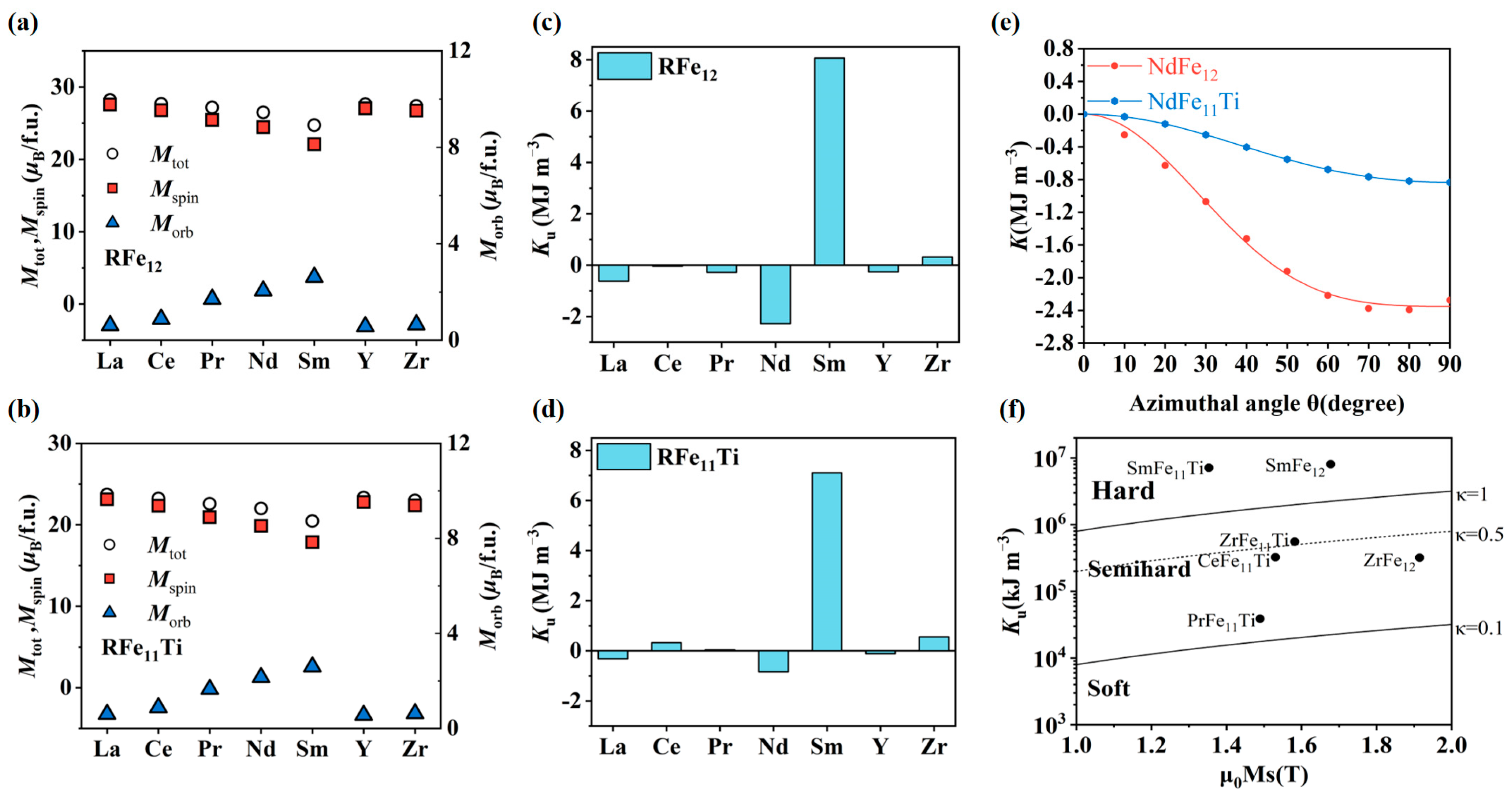
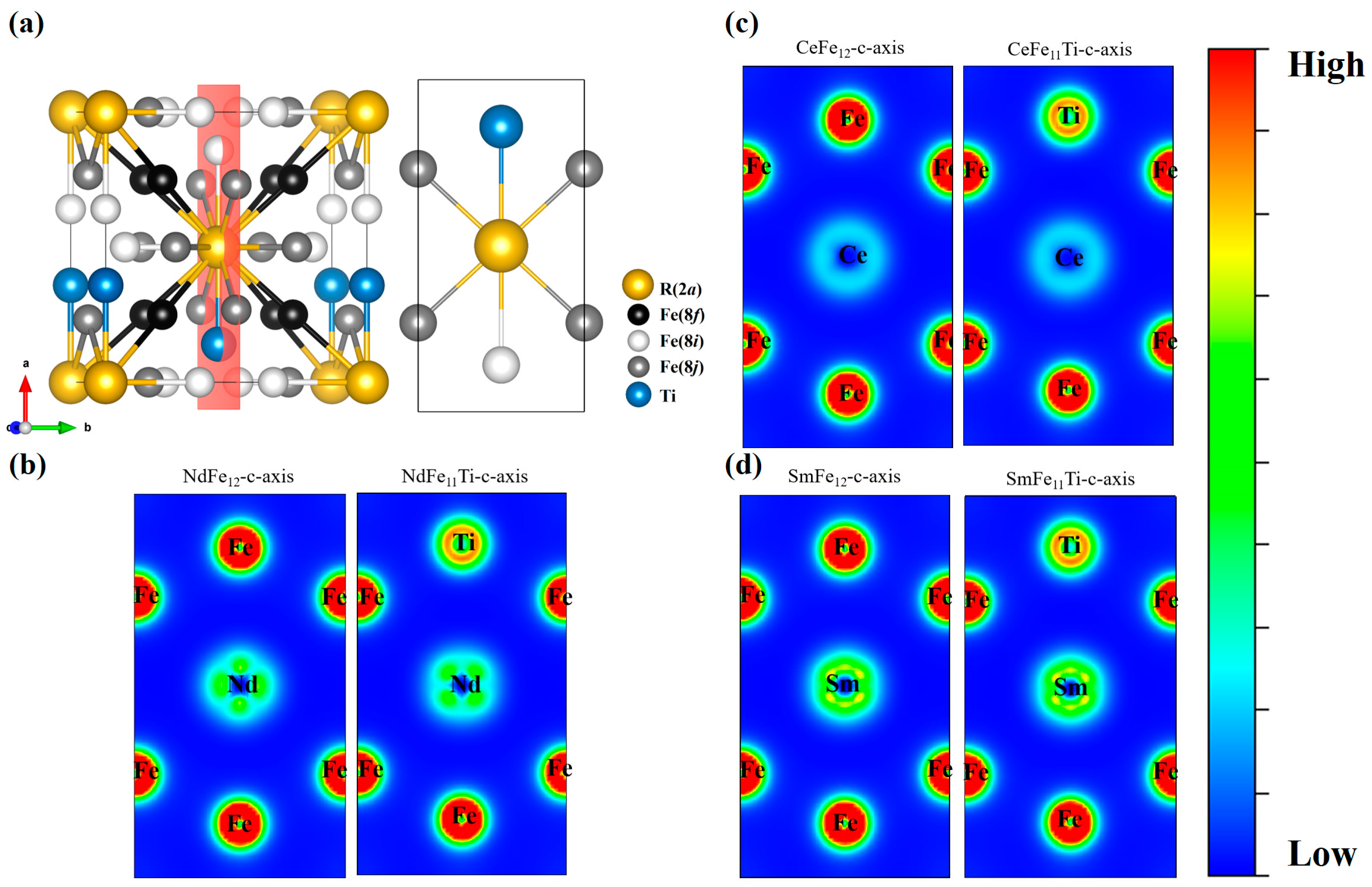
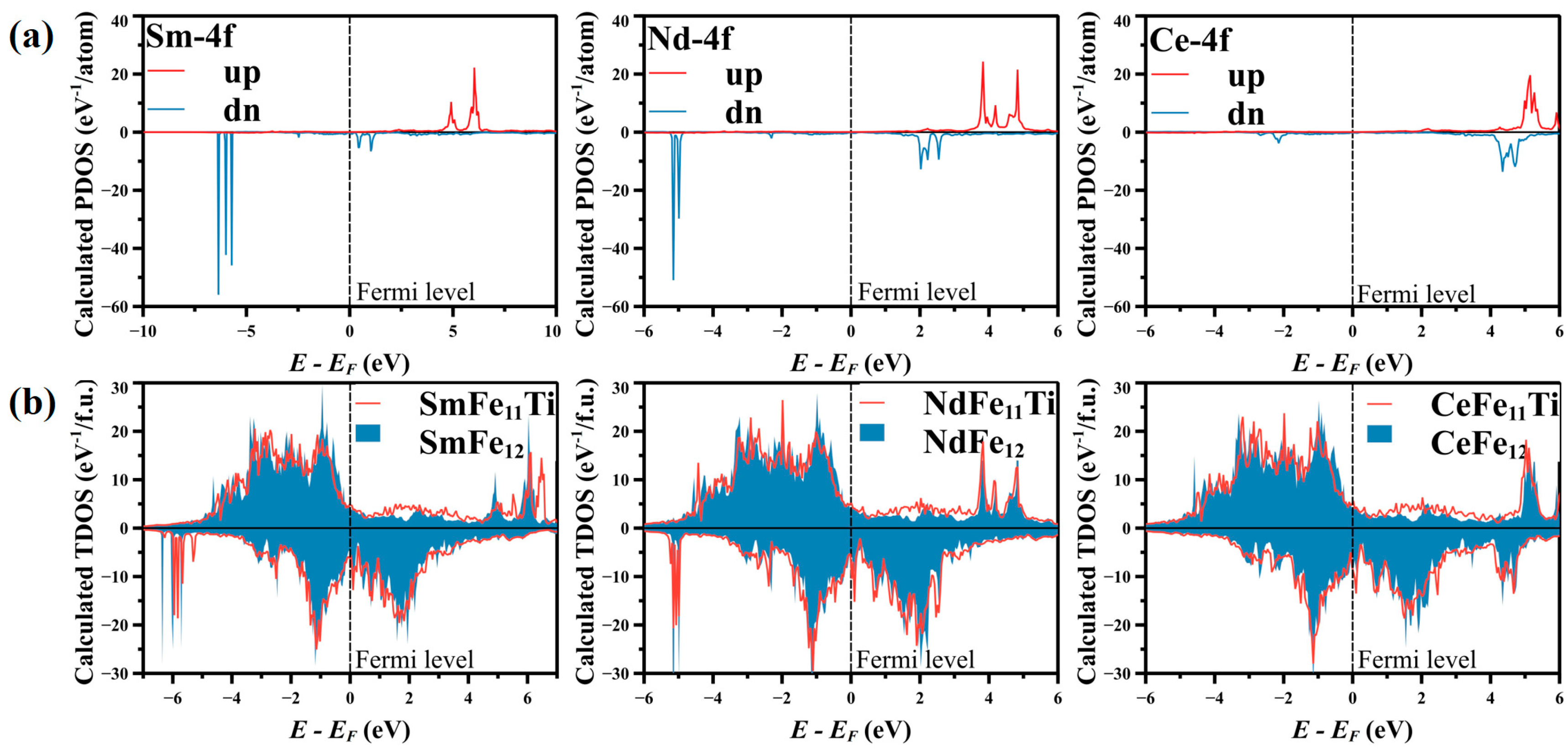
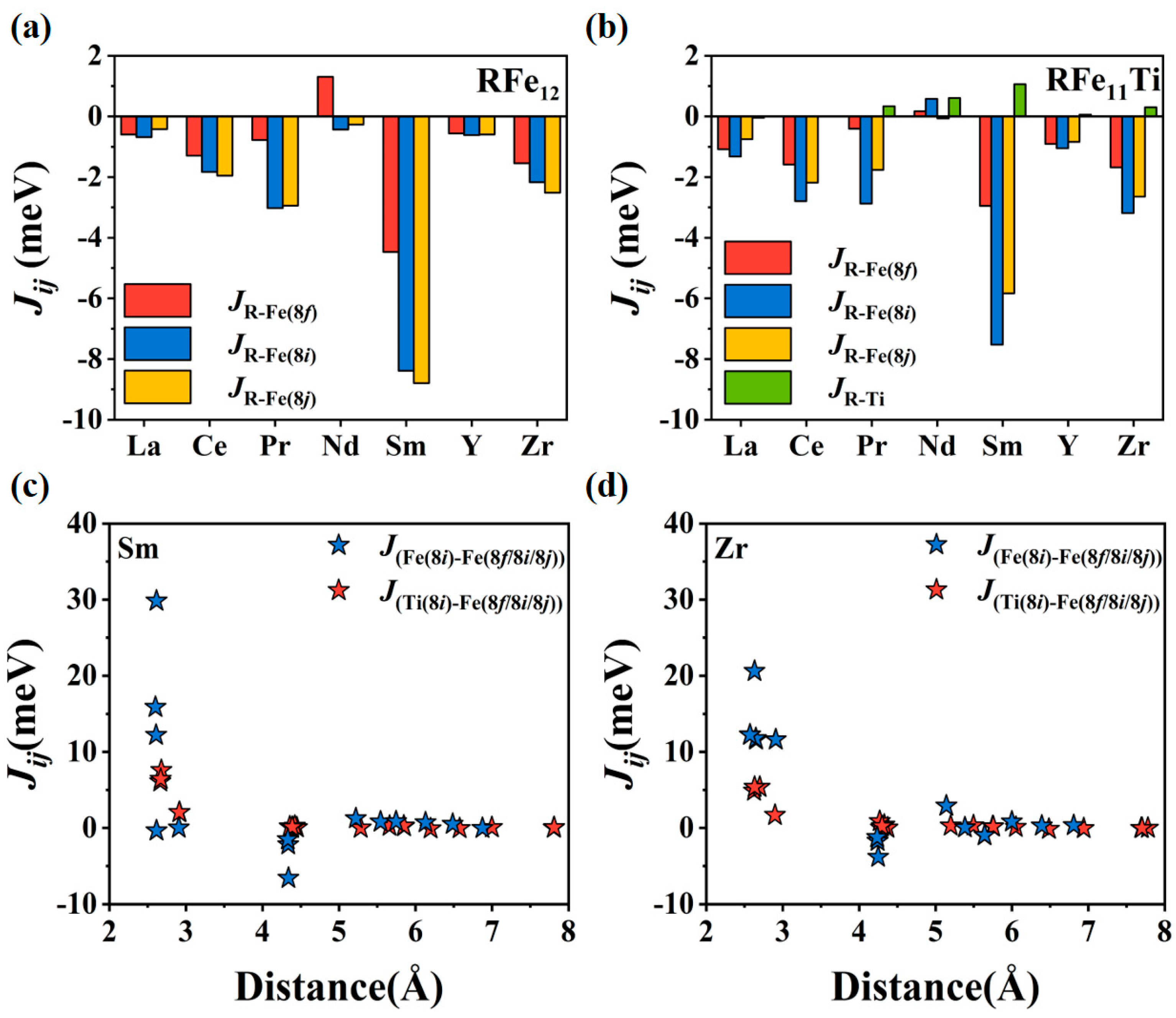
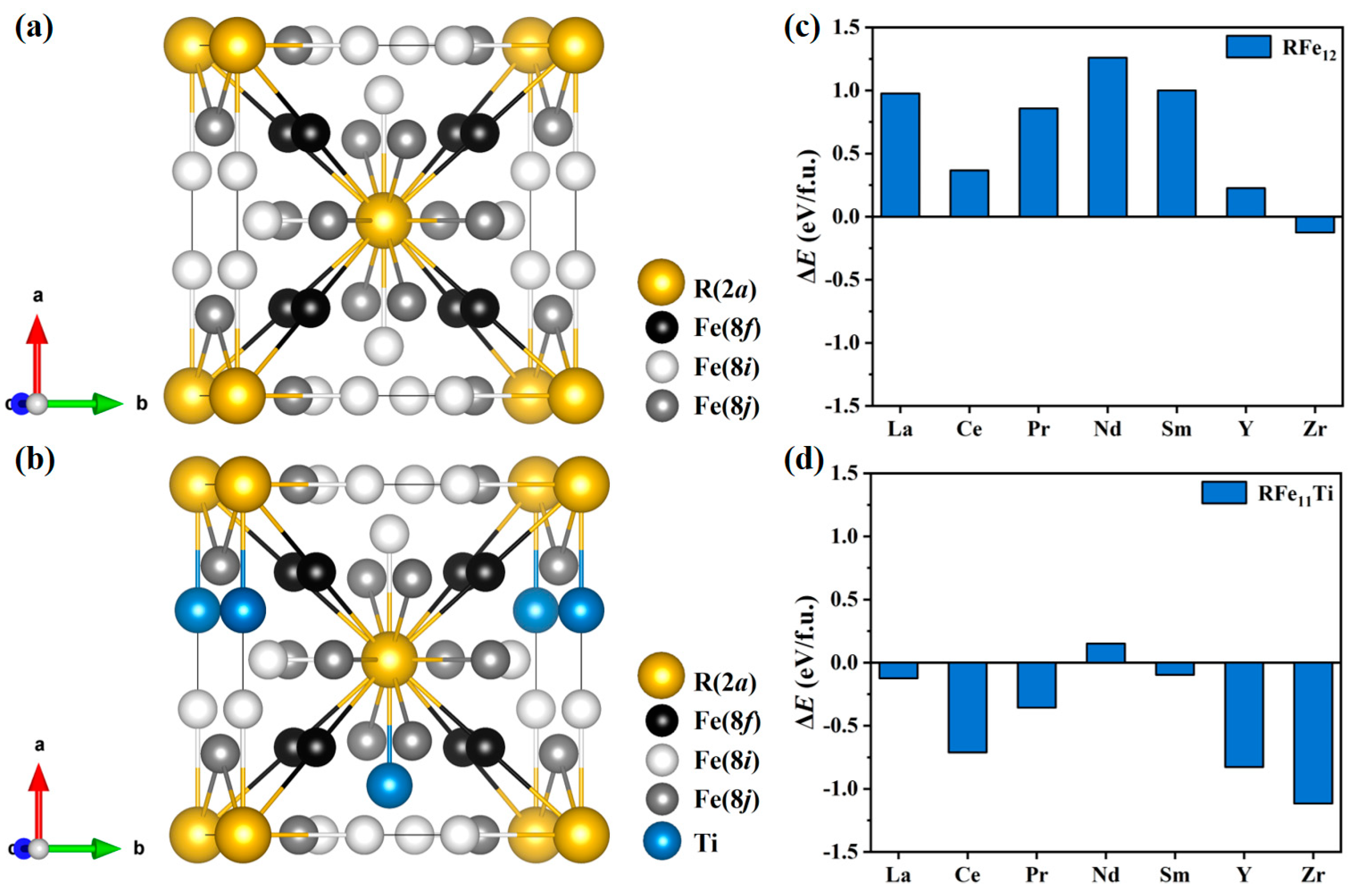
Due to the rare earth supply shortage, ThMn12-type RFe12-based (R is the rare earth element) magnets with lean rare earth content are gaining more concern. Most ThMn12-type RFe12 structures are thermodynamically metastable and require doping of the stabilizing element Ti. However, the Ti-doping effects on the hard magnetic properties of RFe11Ti have not been thoroughly investigated. Herein, based on density functional theory calculations, we report the Ti-doping effects on the phase stability, intrinsic hard magnetic properties and electronic structures of RFe11Ti (R = La, Ce, Pr, Nd, Sm, Y, Zr). Our results indicate that Ti-doping not only increases their phase stability, but also enhances the magnetic hardness of ground-state RFe12 phases. Particularly, it leads to the transition of CeFe11Ti and PrFe11Ti from easy-plane to easy-axis anisotropy. Charge density distributions demonstrate that Ti-doping breaks the original symmetry of the R-site crystal field, which alters the magnetic anisotropy of RFe11Ti. Projected densities of states reveal that the addition of Ti results in the shift of occupied and unoccupied f-electron energy levels of rare earth elements, affecting their magnetic exchange. This study provides an insight into regulating the hard magnetic properties of RFe12-based magnets by Ti-doping.
Keywords: ThMn12-type magnets; first-principles calculations; hard magnetic properties; electronic structures ThMn12-type magnets; first-principles calculations; hard magnetic properties; electronic structures